

Key Takeaways
Drip irrigation systems save water by delivering it directly to plant roots, minimizing waste.
Integrating solar panels with drip irrigation can significantly reduce energy costs and reliance on the grid.
Monocrystalline solar panels offer high efficiency, while polycrystalline panels are more cost-effective.
Initial setup costs for solar-powered drip irrigation systems can be high but are offset by long-term savings.
Regular maintenance of both solar panels and drip irrigation components ensures optimal performance.
Importance of Drip Irrigation Systems For Farming
Drip irrigation systems have revolutionized farming by offering a precise and efficient way to water crops. Unlike traditional methods, which can waste a lot of water, drip irrigation delivers water directly to the roots of plants. This method ensures that plants get the right amount of water without any wastage.
Water Efficiency
One of the biggest advantages of drip irrigation is its water efficiency. By delivering water directly to the plant roots, drip irrigation minimizes evaporation and runoff. This is especially important in areas where water is scarce. Farmers can save up to 50% more water compared to traditional irrigation methods.
Impact on Crop Yield
Drip irrigation not only saves water but also improves crop yield. When plants receive water directly at their roots, they grow healthier and produce more. Studies have shown that crops irrigated with drip systems can yield up to 30% more than those irrigated with traditional methods.
Reduction in Labor Costs
Another benefit of drip irrigation is the reduction in labor costs. Traditional irrigation methods require a lot of manual labor to set up and maintain. With drip irrigation, the system can be automated, reducing the need for manual intervention. This saves time and money for farmers.
Minimizing Soil Erosion
Drip irrigation also helps in minimizing soil erosion. Traditional irrigation methods can cause soil erosion due to the high volume of water used. In contrast, drip irrigation delivers water slowly and directly to the roots, reducing the risk of soil erosion.

Integration of Solar Panels with Drip Irrigation
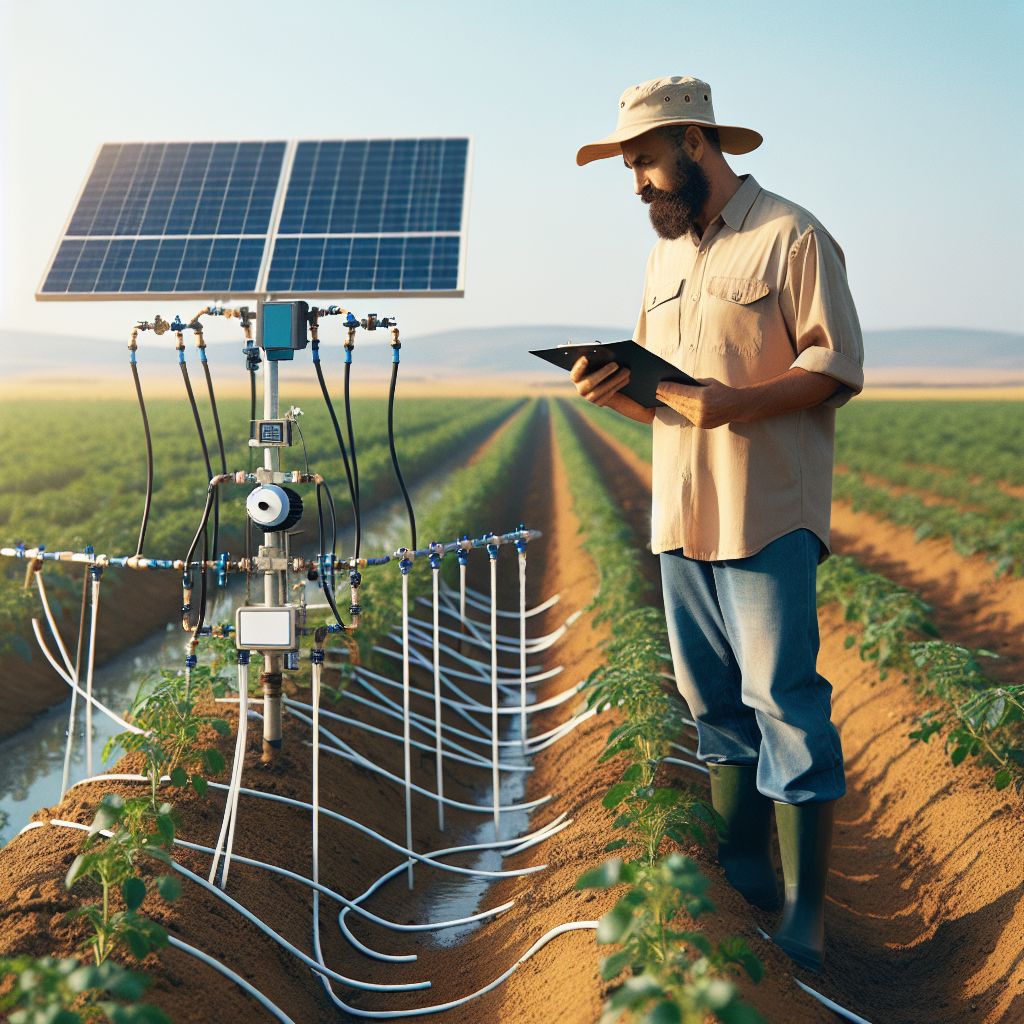
Integrating solar panels with drip irrigation systems can further enhance the benefits of drip irrigation. Solar panels provide a renewable source of energy, reducing the reliance on grid electricity. This is especially beneficial for farmers in remote areas where access to electricity is limited.
Best Solar Panels a Farmer can Use
Monocrystalline Solar Panels: High Efficiency in Limited Spaces
Monocrystalline solar panels are known for their high efficiency and durability. They are made from a single crystal structure, which allows them to convert sunlight into electricity more efficiently. These panels are ideal for farmers with limited space but a high energy requirement.
Polycrystalline Solar Panels: Cost-Effective Energy Solution
Polycrystalline solar panels are made from multiple crystal structures, making them less efficient than monocrystalline panels. However, they are more cost-effective and still provide a reliable source of energy. These panels are suitable for farmers looking for a budget-friendly option.
Thin-Film Solar Panels: Flexibility and Versatility
Thin-film solar panels are made from a variety of materials, including cadmium telluride and amorphous silicon. They are flexible and lightweight, making them easy to install in various locations. Although they are less efficient than crystalline panels, their versatility makes them a good option for farmers with unique installation needs.
Here’s a table describing the three types of solar panels and their advantages and disadvantages for powering an irrigation system on a farm:1
|
Solar Panel Type |
Advantages |
Disadvantages |
|---|---|---|
|
Monocrystalline |
– Highest efficiency (15-22%) 2, 3 |
– Most expensive option 2, 3 |
|
Polycrystalline |
– More affordable than monocrystalline 1, 3 |
– Lower efficiency compared to monocrystalline 3 |
|
Thin-Film |
– Cheapest option 1, 4 |
– Lowest efficiency (10-13%) 1, 4 – Shortest lifespan 4 |
Choosing the Right Solar Panels
When choosing solar panels for your drip irrigation system, consider factors such as efficiency, cost, and installation requirements. Monocrystalline panels offer the highest efficiency but come at a higher cost. Polycrystalline panels are more affordable but less efficient. Thin-film panels offer flexibility but may require more space due to their lower efficiency.
Installation Process
Installing a solar-powered drip irrigation system involves several steps. For more details on how solar panels can benefit farm operations, check out this article on solar panel benefits and efficiency.
Assess your energy needs and determine the size of the solar panel system required.
Choose the type of solar panels that best meet your needs and budget.
Install the solar panels in a location that receives maximum sunlight throughout the day.
Connect the solar panels to a solar-powered water pump that will drive the drip irrigation system.
Set up the drip irrigation system to deliver water directly to the plant roots.
Monitor and maintain the system regularly to ensure optimal performance.
Types of Solar-Powered Water Pumps
Solar-powered water pumps are essential components of a solar drip irrigation system. They convert solar energy into mechanical energy to pump water from a source to the irrigation system. There are several types of solar-powered water pumps to consider:
Surface Pumps: These pumps are installed above ground and are ideal for shallow water sources like ponds and rivers. They are easy to install and maintain but are less efficient for deep water sources.
Submersible Pumps: Submersible pumps are installed underwater and are suitable for deep wells. They are more efficient for deep water sources but require more complex installation and maintenance.
Floating Pumps: Floating pumps are designed to float on the water surface and draw water from ponds, lakes, or reservoirs. They are easy to move and adjust but may not be suitable for very deep water sources.
Monitoring and Maintenance
Maintaining a solar-powered drip irrigation system is crucial to ensure its longevity and efficiency. Regular monitoring and maintenance help prevent issues and ensure optimal performance:
Inspect Solar Panels: Regularly check solar panels for dirt, dust, or debris that may block sunlight. Clean them with a soft cloth and water to maintain their efficiency.
Check Water Pumps: Ensure that the water pumps are functioning correctly. Listen for unusual noises and check for any leaks or blockages in the system.
Examine Drip Lines: Inspect the drip lines for clogs, leaks, or damage. Replace or repair any damaged components to maintain proper water flow.
Monitor Water Levels: Regularly check the water source levels to ensure there is enough water for irrigation. Adjust the system as needed to prevent overuse or depletion of the water source.

What Are the Advantages and Disadvantages of Using a Solar Drip Irrigation System Over a Drip Irrigation System
Using a solar-powered drip irrigation system offers several advantages and some disadvantages compared to traditional drip irrigation systems. Understanding these can help farmers make informed decisions.
The Advantages
Solar-powered drip irrigation systems provide numerous benefits:
Energy Independence: Solar-powered systems reduce reliance on grid electricity, making them ideal for remote areas with limited access to power.
Cost Savings: Although the initial setup cost is high, solar-powered systems have low operating costs as they rely on free sunlight. Over time, this can result in significant savings.
Environmental Benefits: Solar energy is renewable and reduces carbon emissions, contributing to a more sustainable farming practice.
Water Efficiency: Combining solar power with drip irrigation maximizes water efficiency, ensuring crops receive the right amount of water without wastage.
The Disadvantages
Despite their benefits, solar-powered drip irrigation systems have some drawbacks:
High Initial Cost: The equipment and setup costs for solar-powered systems can be high, which may be a barrier for some farmers.
Weather Dependence: Solar panels require sunlight to generate power, which can be a limitation during cloudy days or at night.
Technical Knowledge: Installing and maintaining a solar-powered system requires specialized knowledge, which may necessitate training or hiring professionals.
Here’s a table comparing the advantages and disadvantages of using a Solar Drip Irrigation System over a traditional Drip Irrigation System:
|
Solar Drip Irrigation System |
Traditional Drip Irrigation System |
|---|---|
|
Advantages |
Advantages |
|
– Renewable energy source, reducing operational costs. Over time, this can result in significant savings. 1, 3, 6 |
– Lower initial installation cost |
|
– Environmentally friendly, minimizing carbon footprint. 3, 5, 6 |
– Can be used in areas with reliable grid electricity |
|
– Consistent water pressure and flow rate | |
|
– No dependence on weather conditions for operation | |
|
– Familiar technology with widespread expertise | |
|
Disadvantages |
Disadvantages |
|
– Ongoing electricity or fuel costs for pump operation | |
|
– Vulnerable to power outages affecting irrigation schedule | |
|
– May require energy storage solutions for consistent operation. 4 |
– Potential for higher long-term operational costs |
|
– Limited pump capacity compared to grid-powered systems. 4 |
– Environmental impact from non-renewable energy use |
|
– Requires specialized knowledge for maintenance and repairs. 3, 6 |
– Reliance on external power sources limits flexibility |
Case Studies and Examples
To understand the practical applications and benefits of solar-powered drip irrigation systems, let’s look at some real-world examples.
Successful Implementations
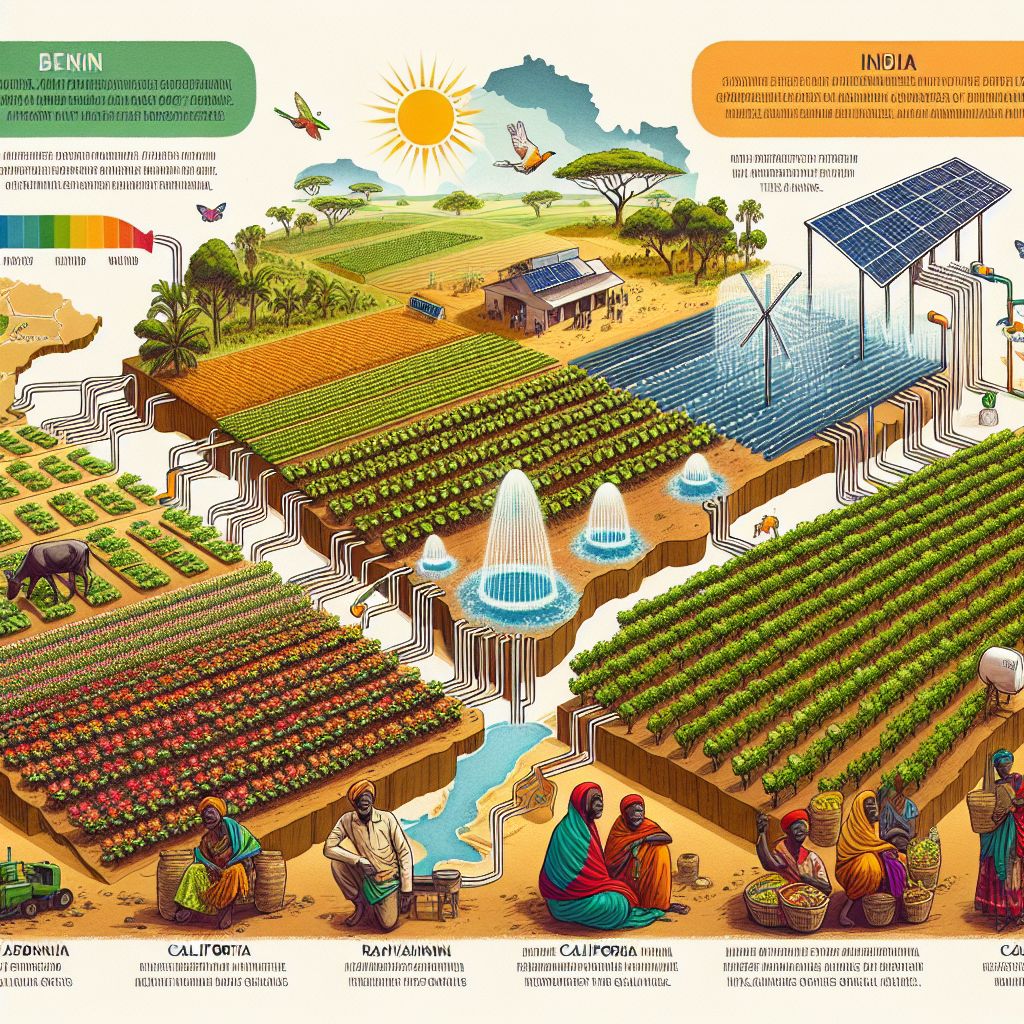
In the Kalalé District of Benin, West Africa, solar-powered drip irrigation systems have transformed farming practices. Farmers in this region faced challenges with water scarcity and unreliable electricity. By implementing solar-powered systems, they have increased crop yields and improved food security.
“The solar-powered drip irrigation system has changed our lives. We can now grow crops year-round, even during the dry season. Our yields have increased, and we no longer worry about water shortages.” – Local Farmer, Kalalé District
Lessons from Different Regions
In India, solar-powered drip irrigation systems have been successfully implemented in various states, including Gujarat and Rajasthan. These regions face extreme weather conditions and water scarcity. By adopting solar-powered systems, farmers have reduced their dependence on monsoon rains and increased their agricultural productivity.
Adaptation to Various Crop Types
Solar-powered drip irrigation systems are versatile and can be adapted to various crop types. For example, in California, vineyards have adopted these systems to efficiently water grapevines, resulting in higher-quality grapes and reduced water usage.
Challenges Faced and Overcome
While implementing solar-powered drip irrigation systems, farmers may face challenges such as high initial costs and technical difficulties. However, many have overcome these challenges through government subsidies, grants, and training programs. In Kenya, for instance, the government has provided financial support to small-scale farmers to adopt solar-powered systems, resulting in increased agricultural productivity and improved livelihoods.

Environmental and Economic Benefits of a Solar Drip Irrigation System
Solar-powered drip irrigation systems offer numerous environmental and economic benefits that make them an attractive option for sustainable farming.
Cost Savings Over Time
While the initial investment in solar-powered systems can be high, the long-term cost savings are significant. By relying on free solar energy, farmers can reduce their electricity bills and save money on fuel for diesel pumps. Over time, these savings can offset the initial setup costs.
Reduction in Carbon Footprint
Solar-powered systems reduce the reliance on fossil fuels and grid electricity, leading to a lower carbon footprint. By using renewable energy, farmers contribute to reducing greenhouse gas emissions and mitigating climate change. Learn more about the basics of solar-powered drip irrigation and its benefits.
Benefits to Local Communities
Implementing solar-powered drip irrigation systems can have positive impacts on local communities. These systems can improve food security by increasing crop yields and providing a reliable source of water for irrigation. Additionally, they can create job opportunities in the installation, maintenance, and operation of the systems.
Long-Term Sustainability
Solar-powered drip irrigation systems promote long-term sustainability by conserving water and reducing energy consumption. By adopting these systems, farmers can ensure the continued productivity of their land while minimizing their environmental impact.
Implementing solar-powered drip irrigation systems can have positive impacts on local communities. These systems can improve food security by increasing crop yields and providing a reliable source of water for irrigation. Additionally, they can create job opportunities in the installation, maintenance, and operation of the systems.
Solar-powered drip irrigation systems promote long-term sustainability by conserving water and reducing energy consumption. By adopting these systems, farmers can ensure the continued productivity of their land while minimizing their environmental impact.
Challenges and Solutions for Using Solar Drip Irrigation System
While solar-powered drip irrigation systems offer numerous benefits, they also come with challenges that farmers need to address to ensure successful implementation and operation.
Initial Investment Costs
The initial cost of setting up a solar-powered drip irrigation system can be high. This includes the cost of solar panels, water pumps, drip lines, and installation. However, farmers can overcome this challenge by seeking government subsidies, grants, and low-interest loans specifically designed for renewable energy projects in agriculture.
Weather Dependence
Solar panels rely on sunlight to generate power, which can be a limitation during cloudy days or at night. To mitigate this, farmers can use battery storage systems to store excess energy generated during sunny days for use during cloudy periods or nighttime. Additionally, hybrid systems that combine solar power with other renewable energy sources, such as wind or hydro, can provide a more reliable energy supply.
Technical Knowledge and Training
Installing and maintaining a solar-powered drip irrigation system requires specialized knowledge. Farmers may need training to understand how to operate and maintain the system effectively. Local agricultural extension services, non-governmental organizations, and solar technology companies often offer training programs to help farmers acquire the necessary skills.
Long-Term Maintenance
Regular maintenance is crucial to ensure the optimal performance of a solar-powered drip irrigation system. This includes cleaning solar panels, checking water pumps for leaks or blockages, and inspecting drip lines for clogs or damage. Farmers should establish a maintenance schedule and keep spare parts on hand to address any issues promptly.

Conclusion
Solar-powered drip irrigation systems offer a sustainable and efficient solution for modern farming. By integrating renewable energy with water-efficient irrigation methods, farmers can achieve higher crop yields, reduce operational costs, and minimize their environmental impact.
Drip irrigation systems save water and improve crop yields.
Solar panels provide a renewable energy source, reducing reliance on grid electricity.
Monocrystalline, polycrystalline, and thin-film solar panels each offer unique advantages.
Initial setup costs are offset by long-term savings and environmental benefits.
Regular maintenance ensures the optimal performance of the system.
Recap of Benefits and Opportunities
Solar-powered drip irrigation systems combine the best of both worlds: efficient water usage and renewable energy. Farmers can save water, increase crop yields, and reduce their carbon footprint. While the initial investment may be high, the long-term savings and environmental benefits make it a worthwhile investment.
“The solar-powered drip irrigation system has changed our lives. We can now grow crops year-round, even during the dry season. Our yields have increased, and we no longer worry about water shortages.” – Local Farmer, Kalalé District
Final Recommendations for Farmers
For farmers considering solar-powered drip irrigation systems, start by assessing your energy and water needs. Choose the right type of solar panels and water pumps based on your specific requirements. Seek financial assistance through government programs and subsidies to offset initial costs. Most importantly, invest in training and regular maintenance to ensure the system’s long-term success.
FAQ
How much does a solar-powered drip irrigation system cost?
The cost of a solar-powered drip irrigation system can vary widely based on the size of the system and the type of components used. On average, a small-scale system can cost between $2,000 and $5,000, while larger systems can range from $10,000 to $20,000. It’s essential to consider both the initial setup cost and the long-term savings when evaluating the investment. For more details, you can check out this setup guide for solar-powered irrigation systems.
Can solar panels power drip irrigation systems in all climates?
Solar panels can generate power in most climates, but their efficiency can be affected by factors such as sunlight availability and weather conditions. In regions with limited sunlight, farmers may need to use battery storage systems or hybrid systems that combine solar power with other renewable energy sources.
“In areas with limited sunlight, battery storage systems can store excess energy generated during sunny days for use during cloudy periods or nighttime.” – Solar Energy Expert
What is the lifespan of a solar-powered drip irrigation system?
The lifespan of a solar-powered drip irrigation system depends on the quality of the components and the level of maintenance. Solar panels typically have a lifespan of 25 to 30 years, while water pumps and drip lines may need replacement every 5 to 10 years. Regular maintenance can help extend the lifespan of the system.
Are there government incentives for using solar-powered irrigation?
Many governments offer incentives to encourage the adoption of renewable energy in agriculture. These incentives can include subsidies, grants, tax credits, and low-interest loans. Farmers should check with their local agricultural extension services or government agencies to find out what incentives are available in their region. For more information on the benefits and setup of solar panels for farm operations, you can read this guide on solar panel benefits and setup.







Leave a Reply