
Key Takeaways
- Solar power systems can reduce farm energy costs by 70-90% while creating additional revenue through net metering programs
- Agricultural solar installations qualify for significant federal tax incentives, USDA grants, and state-specific rebates that dramatically lower initial investment costs
- Agrivoltaics—the practice of combining solar panels with crop production—has been shown to increase yields for certain crops while conserving water
- Modern solar equipment is designed to withstand harsh farm conditions with warranties typically exceeding 25 years
- BrightSpark Energy helps farmers design custom solar solutions that address unique agricultural power needs while maximizing available incentives
Farm Energy Revolution: The Solar Power Advantage
Farming operations face rising energy costs that eat into already thin profit margins. The agricultural industry’s shift toward solar power isn’t just a trend—it’s a financial necessity. Today’s farm operations require consistent, affordable electricity to power everything from irrigation systems to climate-controlled barns, making energy one of the largest operational expenses after land and equipment.
Solar power offers an increasingly attractive solution to this persistent challenge. Unlike traditional energy sources that come with unpredictable rate hikes, solar provides cost stability and energy independence that today’s farms need to remain competitive. The technology has matured significantly over the past decade, with efficiency improvements and cost reductions making solar particularly well-suited for agricultural applications.
The numbers tell a compelling story: farms implementing solar power systems typically see energy cost reductions between 70-90%, with many achieving complete payback within 5-7 years. These economics have transformed solar from an environmental nice-to-have into a strategic business decision for forward-thinking agricultural operations across the country.
Why are Farmers Turning to Solar Power
The agricultural sector’s embrace of solar technology stems from a perfect storm of economic pressures, technological advancements, and policy incentives. Farm operations consume substantial electricity for irrigation, climate control, refrigeration, and processing—costs that continue climbing year after year. With commodity prices frequently fluctuating, farmers need predictable expenses wherever possible, making solar’s fixed energy costs particularly attractive.
Environmental considerations also drive solar adoption. Modern consumers increasingly support sustainable farming practices, creating market advantages for operations that can demonstrate renewable energy usage. Many farmers view solar investments as aligning with their long-standing role as environmental stewards while simultaneously strengthening their bottom line.
The third major factor accelerating agricultural solar adoption is the unprecedented availability of financial incentives. The federal Investment Tax Credit currently allows farmers to deduct 30% of solar system costs from their taxes, while USDA Rural Energy for America Program (REAP) grants can cover up to 25% of project costs. Combined with accelerated depreciation benefits and state-specific incentives, these programs have transformed the economics of farm solar projects. BrightSpark Energy helps farmers navigate these complex incentives, ensuring maximum financial benefit while designing systems optimized for agricultural use cases. For more insights on how solar panels impact farm profits, visit Growing Solar Mist.
The Science Behind Solar’s Agricultural Benefits
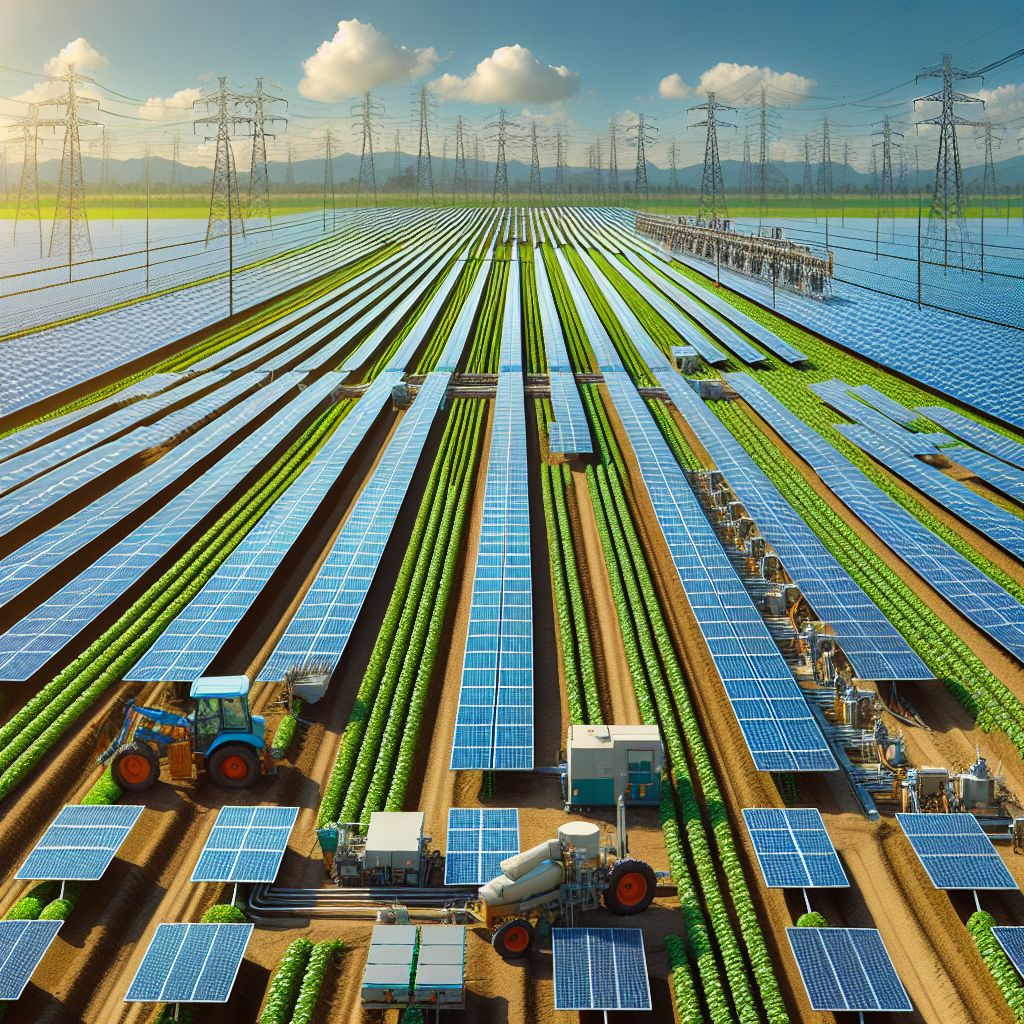
The science of solar power aligns remarkably well with agricultural needs. Farms typically have abundant open space, unobstructed sun exposure, and high daytime energy demands—creating ideal conditions for solar electricity generation. Modern photovoltaic technology converts sunlight directly into electricity without moving parts, providing decades of reliable operation with minimal maintenance requirements.
Beyond simple electricity generation, emerging research demonstrates that solar installations can actually enhance certain agricultural practices. Studies from the National Renewable Energy Laboratory show that partial shading from elevated solar arrays can reduce water requirements by 14-29% in hot, arid regions while protecting sensitive crops from excessive sun exposure. This practice, known as agrivoltaics, represents the next evolution in farm solar utilization.
“Our dairy operation’s electric bill dropped from $4,200 to just $380 per month after installing solar. The system will completely pay for itself in under six years, then provide essentially free electricity for another two decades.” — James Henderson, Fourth-generation dairy farmer, Wisconsin
How Solar Panels Generate Farm-Ready Electricity
The photovoltaic effect that powers farm solar systems works by allowing photons (light particles) to knock electrons free from atoms, generating an electrical flow. Farm-grade solar panels contain silicon cells specially designed to maximize this electron movement, creating direct current (DC) electricity. An inverter then converts this DC power into alternating current (AC) that powers standard farm equipment and buildings. Learn more about the benefits of solar energy for farms.
Agricultural solar installations typically use either fixed-mount or tracking systems. Fixed systems maintain a permanent tilt angle optimized for the farm’s specific latitude, offering simplicity and reliability. Tracking systems that follow the sun’s movement produce 20-30% more energy but require more maintenance—an important consideration in dusty farm environments. Most agricultural operations choose fixed systems unless available space is limited or maximum production is essential.
Farm solar systems connect to the electrical grid through a bidirectional meter that allows excess electricity to flow outward during peak production periods. This arrangement, known as net metering, essentially turns the utility company into a giant battery that credits the farm for surplus electricity. During evening hours or cloudy days, the farm draws conventionally generated power, using accumulated credits to offset these costs.
Energy Storage Solutions for 24/7 Farm Operations
While grid-tied systems work well for many agricultural applications, certain farm operations require uninterrupted power regardless of grid conditions. Modern battery storage systems now make it possible to capture excess solar energy for use during nighttime hours or power outages. These systems prove particularly valuable for livestock operations where ventilation or temperature control interruptions could prove catastrophic.
Weather Resistance and Durability in Rural Settings
Agricultural environments present unique challenges for any equipment installation, but modern solar systems are specifically engineered to withstand harsh farm conditions. Today’s solar panels are tested to withstand 1-inch hailstones traveling at terminal velocity, extreme temperature fluctuations, and wind loads exceeding 140 mph—conditions that exceed what most agricultural regions experience.
The durability of farm solar installations stems from advanced materials science and rigorous certification standards. Tempered glass coverings, aluminum frames with stainless steel components, and specialized sealants protect critical electrical components from moisture, dust, and chemical exposure. Most agricultural-grade solar panels carry IP65 or higher ratings, indicating complete protection against dust ingress and resistance to water jets from any direction.
Maintenance requirements remain minimal despite these challenging conditions. Most systems require only occasional panel cleaning and annual electrical inspections, with inverters typically representing the only major component requiring replacement during the system’s 25-30 year lifespan. This longevity translates to decades of reliable power generation with predictable, minimal upkeep costs—a significant advantage in agricultural settings where equipment maintenance already consumes substantial resources.

“Farms Solar Power Usage: Applications …” from growingsolarmist.com and used with no modifications.
5 Ways Solar Power Transforms Farm Economics
The financial advantages of agricultural solar extend far beyond simple utility bill reduction. When evaluated comprehensively, solar power creates multiple economic benefits that strengthen farm operations’ long-term viability. Understanding these various financial impacts helps farmers make informed decisions about renewable energy investments that align with their specific operational goals and challenges.
1. Significant Reduction in Monthly Energy Costs
The most immediate economic benefit comes from reduced electricity bills, which typically drop 70-90% following solar installation. For energy-intensive operations like dairies, poultry farms, or irrigated crop production, these savings often represent thousands of dollars monthly. A 100-kilowatt system—suitable for a medium-sized farm operation—generally produces around 150,000 kilowatt-hours annually, offsetting approximately $18,000-$22,500 in annual electricity costs at current national average rates.
These savings compound over time as utility rates continue their historical upward trajectory. Analysis of USDA data shows agricultural electricity rates increased approximately 37% over the past decade, a trend expected to accelerate as utilities invest in grid infrastructure improvements and phase out aging generation facilities. Solar installations effectively lock in electricity costs for decades, providing budget certainty that simplifies long-term operational planning.
2. Protection Against Rising Utility Rates
While initial cost savings prove compelling, solar’s greatest financial benefit may be the protection it provides against future rate increases. Agricultural operations typically cannot quickly adjust production practices or pass increased energy costs to consumers, making them particularly vulnerable to utility rate fluctuations. By generating electricity on-site, farms insulate a major operational expense from market volatility.
This rate protection functions essentially as an inflation hedge for a significant farm input cost. Financial models comparing projected utility rate increases against fixed solar generation costs typically show accelerating returns in later years as the gap between grid and solar electricity costs widens. For multi-generational farm operations, this long-term perspective makes solar particularly attractive as part of succession and estate planning strategies.
3. New Revenue Streams Through Net Metering
Beyond expense reduction, properly sized solar installations create entirely new revenue opportunities through net metering programs. These arrangements allow farms to sell excess electricity back to utilities, receiving either credits or direct payments for their contributions to the grid. During peak growing seasons when daylight hours are longest, many agricultural operations generate substantial surplus electricity that can significantly offset winter months’ higher energy demands.
Some states have implemented specialized agricultural net metering provisions with higher compensation rates or expanded system size limits specifically for farm operations. These programs recognize agriculture’s unique energy usage patterns and land availability, creating particularly favorable economics for farm solar projects. Additionally, certain utilities offer time-of-use rate structures that increase the value of solar electricity generated during afternoon peak demand periods—precisely when farm solar systems produce maximum output.
“Our 200kW ground-mounted system not only eliminated our irrigation electricity costs but also generates about $7,200 annually in excess production credits that offset our winter utility bills. The system has performed better than projected for five consecutive years.” — Maria Rodriguez, Orchard owner, California Central Valley
4. Increased Property Value and Marketability
Solar installations typically increase agricultural property values, creating additional equity and collateral capacity for farm operations. Studies from the Lawrence Berkeley National Laboratory suggest that properties with owned (not leased) solar installations command premium values averaging 4.1% higher than comparable properties without renewable energy systems. For farms with significant infrastructure, this appreciation can represent substantial value creation independent of energy savings.
Beyond simple valuation increases, solar-equipped properties often enjoy improved marketability when sold or transferred. As sustainability becomes increasingly important to consumers, processors, and distributors, farms demonstrating renewable energy adoption gain marketplace advantages. Many food processors and national retailers now actively seek suppliers implementing sustainable practices, creating potential premium pricing opportunities for solar-powered farms.
5. Tax Incentives and Agricultural Solar Grants
The current financial landscape for agricultural solar projects includes unprecedented incentive opportunities that dramatically improve project economics. The federal Investment Tax Credit allows farm operations to deduct 30% of solar system costs directly from tax liability—not merely from taxable income. For profitable operations with sufficient tax appetite, this incentive alone can reduce payback periods by years. For more information on how solar energy can benefit your farm, visit this guide on solar energy for farms.
Additional tax benefits come through accelerated depreciation provisions that allow farms to depreciate the remaining system cost (after applying the ITC) over just five years instead of the system’s actual 25+ year lifespan. This acceleration creates significant near-term tax advantages while the system simultaneously generates operational savings. When combined with USDA REAP grants covering up to 25% of project costs and various state-specific incentives, many agricultural solar projects now achieve payback periods under five years while delivering 25+ years of benefits.
- Federal Investment Tax Credit: 30% of system cost (direct tax liability reduction)
- USDA REAP Grants: Up to 25% of project costs for rural agricultural producers
- Accelerated Depreciation: 5-year MACRS schedule for remaining system value
- State-Specific Incentives: Vary by location but often include production-based incentives, sales tax exemptions, and property tax exclusions
- Utility Programs: Many rural electric cooperatives offer additional rebates or favorable net metering terms
Solar-Powered Agricultural Applications
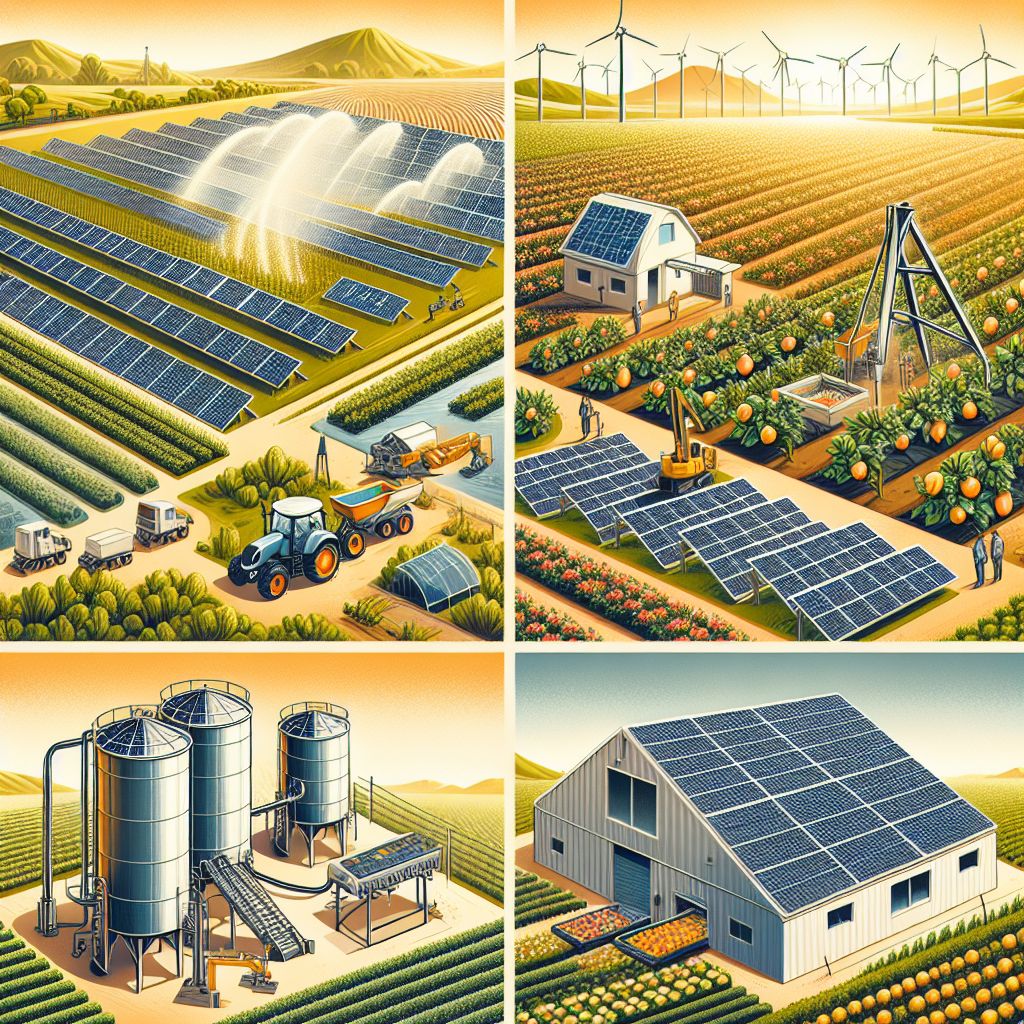
The versatility of solar power makes it suitable for virtually every aspect of modern agricultural operations. From field to storage to processing, solar electricity can power the entire production chain while providing reliability advantages over conventional grid connections. Understanding these specific applications helps farmers identify their operation’s most promising solar opportunities.
Irrigation Systems and Water Pumping
Solar power perfectly suits agricultural irrigation needs, as peak water requirements typically align with maximum sunlight availability. Traditional grid-powered irrigation systems create substantial demand charges during summer months, precisely when solar production reaches its height. Solar-powered pumps eliminate these expenses while providing consistent pressure regardless of utility conditions.
Modern variable frequency drive (VFD) controllers enable solar-direct pumping systems that operate without batteries, adjusting pump speed based on available sunlight. These systems can deliver between 40-60 gallons per minute from a standard 10-horsepower pump powered by a 10kW solar array—sufficient for many small to medium operations. Larger systems incorporating battery storage or hybrid designs can support extensive irrigation networks spanning hundreds of acres. For more insights, discover how solar panels save farmers energy costs and boost farm profits.
The reliability advantage of solar-powered irrigation proves particularly valuable in remote locations or regions with unstable grid conditions. Many farmers report that eliminating irrigation interruptions during critical growth stages has improved crop quality and yield beyond the direct energy savings. This reliability premium, while difficult to quantify precisely, represents a significant value component in agricultural solar ROI calculations.
Barn Climate Control and Ventilation
Livestock operations face particular energy challenges, as proper ventilation and temperature control directly impact animal welfare and productivity. Confined animal feeding operations typically consume enormous electricity for fans, heating systems, and air circulation equipment. Solar power’s daytime generation profile aligns exceptionally well with ventilation needs, which increase during daylight hours as ambient temperatures rise.
Dairy facilities particularly benefit from solar integration, as both milk cooling and equipment sanitation require substantial energy inputs. A medium-sized dairy operation processing 5,000 gallons daily typically requires 100-150 kilowatt-hours for cooling alone. Solar systems sized to accommodate these loads often achieve payback periods under six years while providing critical operational resilience during grid outages.
When combined with energy storage systems, solar power can maintain critical ventilation systems during power interruptions that might otherwise threaten animal welfare. This reliability aspect has driven many livestock producers to implement solar+storage solutions as insurance against increasingly frequent weather-related grid disruptions.
Greenhouse Operations and Season Extension
Solar electricity transforms greenhouse economics by powering essential climate control systems while potentially providing passive heating benefits. Greenhouse operations require consistent power for ventilation, irrigation, supplemental lighting, and temperature management—all functions well-suited to solar generation. Systems can be designed with bifacial panels that allow some light transmission while generating electricity, creating dual-purpose installations. For more insights, explore why solar energy is a good option for your farm.
Innovative designs now incorporate solar panels directly into greenhouse structures, with semitransparent modules or strategic panel placement maintaining necessary light levels for plant growth. These integrated approaches maximize space utilization while providing both electricity and growing area within the same footprint. For operations in northern climates, solar thermal systems can supplement heating systems, further reducing propane or natural gas expenses during winter months.
The combination of solar electricity and controlled environment agriculture enables year-round production in virtually any climate, creating significant market advantages through extended growing seasons. Farms implementing these systems report premium pricing opportunities by supplying fresh produce during traditional off-seasons when competition decreases and market prices rise.
Dairy Equipment and Milk Cooling
Modern dairy operations face particularly intensive energy requirements for milk cooling, equipment sanitization, and vacuum pumping systems. These loads create substantial demand charges and operational expenses that directly impact profitability. Solar installations sized to address these specific loads typically achieve payback periods of 5-7 years while providing decades of reliable power.
Milk cooling represents the largest energy consumer in most dairy operations, requiring approximately 0.3 kilowatt-hours per gallon processed. By coupling solar generation with thermal storage systems (such as ice banks or chilled water reservoirs), dairies can shift cooling loads to align perfectly with solar production patterns. This load-shifting strategy maximizes solar utilization while maintaining critical cooling requirements regardless of weather conditions. For more insights on how solar panels can impact farm profit, explore the effects and benefits of solar energy on farms.

Agrivoltaics: Combining Crops and Solar Production
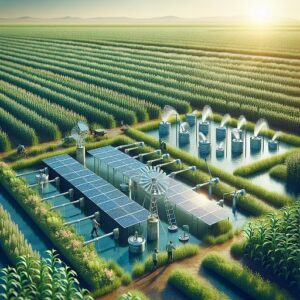
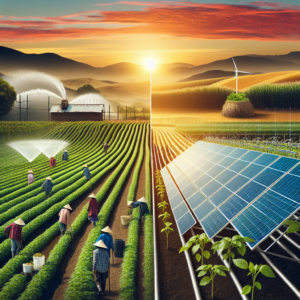
The emerging field of agrivoltaics—the practice of co-locating solar panels and agricultural production—represents perhaps the most exciting development in farm solar implementation. Rather than viewing land use as an either/or proposition between energy and food production, this integrated approach creates synergistic benefits that can increase total farm output per acre while improving resource efficiency.
Dual-Use Land Management Strategies
Agrivoltaic systems strategically position solar panels to allow sufficient light transmission for plant growth beneath or between array rows. Modern elevated mounting systems typically raise panels 8-12 feet above ground level, creating usable agricultural space that maintains 60-80% of ambient light levels depending on panel density and arrangement. This partial shading creates microclimates that benefit many crop varieties, particularly in hot or drought-prone regions.
The land use efficiency of agrivoltaic systems proves particularly valuable for farms facing development pressure or operating with limited acreage. Rather than dedicating land exclusively to either energy or crop production, these dual-use approaches allow simultaneous harvests of solar electricity and agricultural products from the same land area. Research from the National Renewable Energy Laboratory suggests that properly designed agrivoltaic systems can achieve combined land productivity increases of 60-70% compared to separate solar and agricultural production.
Crop-Specific Benefits Under Solar Arrays
Certain crops thrive in the modified growing conditions created beneath solar arrays. Shade-tolerant varieties like leafy greens, herbs, root vegetables, and berries often show improved quality and yield when grown under partial solar shading. Research from the University of Massachusetts found that broccoli, Swiss chard, and peppers grown under solar panels required 20% less irrigation while maintaining similar or improved yields compared to full-sun control plots.
The altered microclimate beneath solar arrays provides particular advantages in hot, arid regions by reducing evapotranspiration rates and moderating temperature extremes. Studies from the University of Arizona demonstrated that tomato yields doubled and required 65% less water when grown in agrivoltaic systems compared to traditional open-field cultivation. These water conservation benefits create particular value in drought-prone regions facing irrigation restrictions or declining aquifer levels.
|
Crop Type |
Benefits Under Solar Arrays |
Optimal Panel Configuration |
|---|---|---|
|
Leafy Greens (Lettuce, Spinach, Kale) |
Reduced bolting, longer harvest window, less water needed |
50-60% light transmission, east-west tracking |
|
Root Vegetables (Potatoes, Carrots) |
More consistent soil moisture, reduced sunscald |
60-70% light transmission, fixed tilt |
|
Berries (Blueberries, Blackberries) |
Extended growing season, improved quality, bird protection |
40-50% light transmission, higher mounting |
|
Herbs (Basil, Mint, Cilantro) |
Slower bolting, increased essential oil content |
30-40% light transmission, adjustable shading |
Livestock Shelter and Grazing Integration
Agrivoltaic systems provide valuable shade and weather protection for grazing livestock while allowing animals to control vegetation around solar infrastructure. Sheep grazing represents the most common integration, with animals efficiently managing vegetation height without damaging panel systems. This symbiotic relationship eliminates mowing expenses while providing shade that reduces heat stress and improves animal welfare during summer months.
Poultry operations have successfully incorporated solar arrays into free-range production systems, with chicken tractors or managed rotational grazing systems positioned beneath elevated panels. The shade benefits reduce heat stress while protecting birds from aerial predators. Some innovative farmers have created mobile henhouses that follow the shade patterns created by tracking solar arrays, maximizing both energy production and animal comfort throughout the day.
How to Size a Solar System for Your Farm
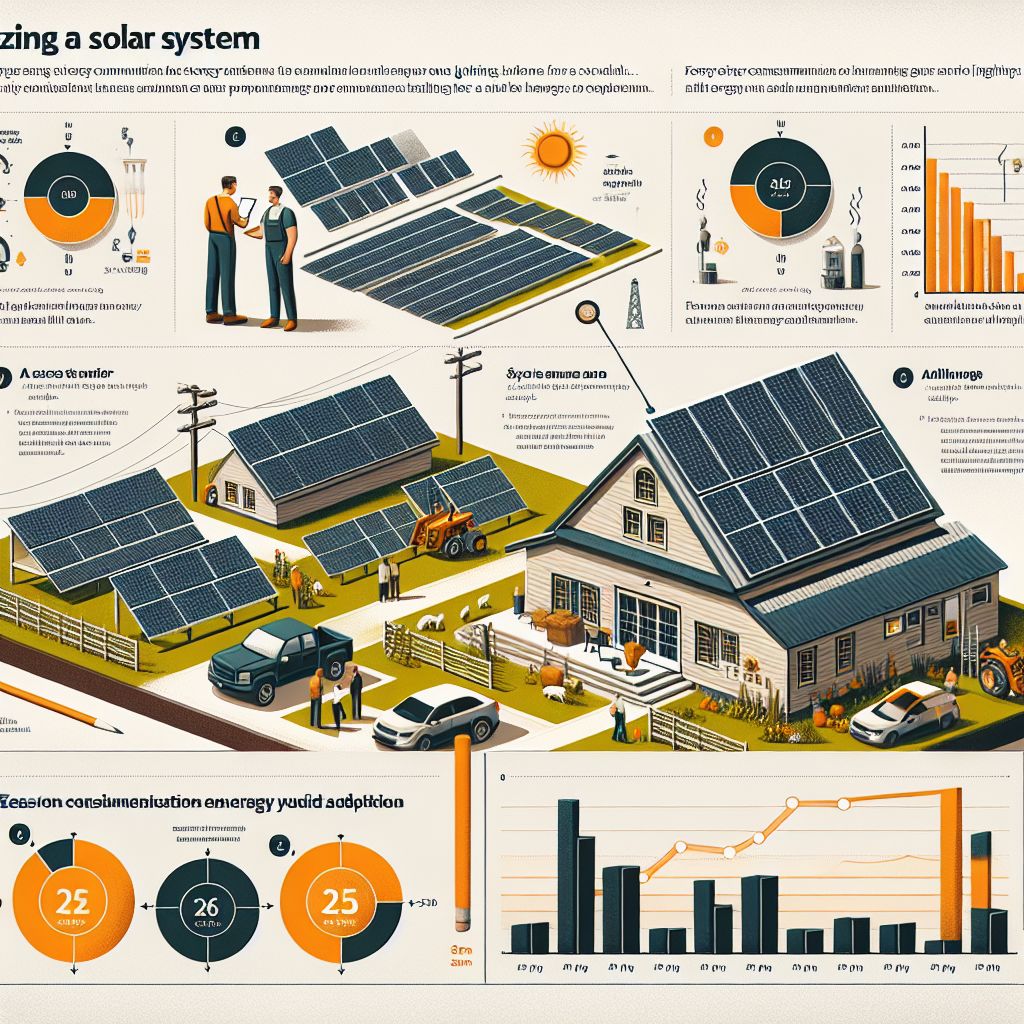
Proper system sizing represents the most critical factor in agricultural solar success. Undersized systems fail to capture available savings, while oversized installations may face unfavorable net metering terms or exceed available incentive caps. The sizing process requires careful analysis of historical energy consumption patterns, future operational plans, and site-specific generation potential.
Energy Audit: The Essential First Step
Before sizing any farm solar system, a comprehensive energy audit identifies consumption patterns and efficiency opportunities that might reduce required system capacity. Professional audits typically analyze 12-36 months of utility bills to establish baseline usage while identifying seasonal variations unique to the specific operation. This historical data provides essential context for projecting future needs and right-sizing solar installations.
The audit process should identify potential efficiency improvements that might reduce overall energy requirements before solar sizing. Simple measures like LED lighting conversions, VFD controllers for motors, or improved insulation often reduce energy needs by 15-30% with minimal investment. Implementing these efficiency measures before solar installation allows for properly sized systems that maximize financial returns while avoiding unnecessary capacity investments.
Most agricultural operations benefit from retaining USDA-certified energy auditors specializing in farm systems, as they understand the unique loads and operational patterns of different agricultural enterprises. Many rural electric cooperatives and extension services offer subsidized farm energy audits specifically to support renewable energy planning. These specialized assessments identify load profiles and consumption patterns that generic commercial audits might overlook.
Matching System Capacity to Seasonal Demands
Agricultural operations typically experience pronounced seasonal energy consumption patterns that require careful consideration during solar system design. Irrigation-dependent crop production might see 70-80% of annual electricity usage concentrated in summer months, while greenhouse operations often peak during shoulder seasons. Understanding these patterns helps optimize system sizing to maximize financial returns while minimizing excess production during low-consumption periods. For more insights, explore the benefits of solar energy for agriculture.
Most agricultural solar installations aim to offset 70-90% of annual electricity consumption rather than achieving 100% offset. This approach minimizes excess production during low-consumption periods while maximizing financial returns under net metering arrangements. The ideal sizing balance depends on specific utility net metering policies, available interconnection capacity, and the operation’s load profile variability throughout the year.
Expansion Options for Growing Operations
Forward-thinking farm solar designs incorporate expansion capabilities to accommodate future operational growth or electrification of processes currently using fossil fuels. Inverter systems can be oversized initially to allow additional panel capacity without replacing central components. Similarly, ground-mount racking systems often permit additional array sections without modifying existing installations.
Many agricultural operations implement phased installation approaches that align with tax planning strategies, available incentives, or operational expansion timelines. Initial installations might target high-consumption processes with predictable loads, while subsequent phases address seasonal or variable demands. This staged approach allows farms to build institutional knowledge about solar performance while distributing capital investments across multiple tax years.

Real-World Solar Success: Case Studies from American Farms
The economics of agricultural solar investments become most compelling when examining real-world implementations across diverse farming operations. Woolrich Family Farms in Oregon installed a 75kW ground-mounted solar array to power their irrigation systems and processing facility, reducing annual electricity costs from $14,200 to just $1,800. The $210,000 system qualified for a $63,000 federal tax credit and $52,500 USDA REAP grant, reducing net investment to $94,500. With annual savings of $12,400, the system achieved payback in 7.6 years while providing inflation protection against rising utility rates for decades to come.
Your Solar Installation Roadmap
Implementing solar power for farm operations involves a structured process that typically spans 4-8 months from initial consultation to system commissioning. The journey begins with site assessment and energy analysis to determine optimal system size and configuration based on your operation’s specific energy requirements and available installation locations.
After establishing system parameters, the design phase develops engineered plans that meet local building codes, utility interconnection requirements, and specific agricultural needs. This technical documentation serves both permitting purposes and provides the blueprint for physical installation. Most agricultural systems require multiple permits, including electrical, structural, and occasionally zoning approvals depending on jurisdiction and system size.
Finding Qualified Agricultural Solar Installers
The specialized requirements of farm solar installations demand contractors with specific agricultural experience. Qualified installers should demonstrate familiarity with rural electrical systems, agricultural structures, and agrivoltaic implementations beyond generic commercial solar experience. Request agricultural project references and inquire specifically about their experience with farm-specific considerations like irrigation systems, dairy operations, or agrivoltaic implementations.
Permitting and Interconnection Process
Agricultural solar projects typically require multiple permits and approvals before installation can begin. Local building departments typically review structural and electrical plans, while utilities evaluate interconnection applications to ensure grid compatibility. Larger systems may require additional environmental reviews or special use permits, particularly for ground-mounted arrays exceeding certain size thresholds.
Financing Options for Farm Solar Projects
Farm operations can access several specialized financing options beyond conventional business loans. USDA’s Rural Energy for America Program (REAP) offers both grants and guaranteed loans specifically for agricultural renewable energy projects. Many states operate agricultural-specific clean energy funds providing low-interest financing, while specialized agricultural lenders increasingly offer solar-specific loan products with terms aligned to system productive lifespan.
Property Assessed Clean Energy (PACE) financing provides another option for agricultural properties in participating jurisdictions, allowing system costs to be repaid through property tax assessments. This approach creates positive cash flow from installation while transferring remaining obligations with the property if sold. Some solar developers also offer Power Purchase Agreements (PPAs) that eliminate upfront costs entirely, though these arrangements may not capture all available tax benefits compared to direct ownership.
Installation Timeline and What to Expect
Physical installation of agricultural solar systems typically requires 2-4 weeks depending on system size and complexity. Ground-mounted systems begin with foundation work—either driven piers or concrete footings depending on soil conditions and local building requirements. Racking systems and panels follow, with electrical work including inverter installation and interconnection typically completed last. Most installers coordinate directly with utility representatives for final interconnection and permission to operate, minimizing farm operational disruption.

Solar Power: The Future of Sustainable Farming
The integration of solar power into agricultural operations represents more than just an energy solution—it embodies agriculture’s continuing evolution toward sustainability and resilience. As climate challenges intensify and energy markets face increasing volatility, on-farm solar generation provides both economic and operational stability that strengthens rural communities. Forward-thinking farmers recognize that renewable energy represents the next frontier in agricultural innovation, building on centuries of progress in crop science, mechanization, and resource management.
Frequently Asked Questions
As you consider solar power for your farm operation, you likely have specific questions about implementation, economics, and practical considerations. These answers address the most common inquiries from agricultural producers evaluating renewable energy investments.
How long does a farm solar system typically last?
Agricultural solar systems are designed for 25+ years of productive operation, with most manufacturers providing 25-year power production warranties guaranteeing at least 80% of original output at the warranty’s end. The physical components typically last significantly longer, with many systems from the 1980s still producing at 70-75% of their original capacity despite using vastly inferior technology compared to modern installations.
Inverters generally require replacement every 10-15 years, representing the only major maintenance expense during the system’s lifespan. Modern microinverter or optimizer-based systems often carry 25-year warranties matching panel guarantees, simplifying long-term maintenance planning. Most agricultural installations include monitoring systems that continuously track performance, allowing immediate identification of any production anomalies requiring attention.
The economic lifespan of farm solar installations typically extends well beyond warranty periods, with degradation rates averaging just 0.5% annually. This gradual decline means that 35-year-old systems often maintain 80%+ production capacity, creating decades of virtually free electricity after the initial investment recovery period. To learn more about how solar panels save farmers energy costs and boost farm profits, explore further insights.
- Solar panels: 25-35+ years (production warranties typically 25 years)
- Inverters: 10-25 years depending on technology (string inverters vs. microinverters)
- Mounting systems: 30+ years (engineered for local wind/snow loads)
- Wiring and electrical components: 25+ years when properly installed
- Monitoring systems: 10-15 years (typically upgraded during inverter replacement)
Can I install solar panels on my barn roof instead of ground-mounting them?
Barn roofs often provide excellent solar mounting locations, offering existing structures with suitable orientation and minimal additional land requirements. For rooftop installations to be viable, structures must meet specific structural, orientation, and condition requirements. Engineers typically verify that roof structures can support approximately 3-5 pounds per square foot of additional dead load, with consideration for snow loads in northern climates. Metal roofing in good condition generally provides ideal mounting surfaces requiring minimal penetrations using specialized clamps that attach directly to standing seams.
While roof-mounted systems typically cost 10-15% less than ground-mounted alternatives due to reduced racking requirements, they present certain limitations. Roof orientation and pitch cannot be optimized as precisely as ground installations, potentially reducing energy production by 5-20% if not ideally aligned. Additionally, roof-mounted systems operate at higher temperatures than ground-mounted alternatives, which can reduce efficiency by 5-8% during summer months. The decision between roof and ground mounting should balance these factors against land-use considerations and available installation budget.
Will my solar panels work during power outages?
Standard grid-tied solar systems automatically shut down during power outages as a safety requirement to prevent backfeeding electricity onto utility lines where workers may be making repairs. However, agricultural operations requiring uninterrupted power can implement battery storage systems or specialized inverters that enable solar production during grid outages. These systems typically add 20-40% to project costs but provide critical resilience for operations where power interruptions might threaten livestock welfare or damage sensitive equipment. For more information on how solar panels save farmers energy costs, consider exploring additional resources.
How does snow or dust affect solar panel performance on farms?
Agricultural environments frequently expose solar installations to dust, pollen, and weather conditions that might affect performance. Modern panels incorporate self-cleaning glass technologies that use rainfall to remove most accumulations, maintaining 97-99% of optimal performance with minimal intervention. In dusty environments like grain handling facilities or during harvest operations, occasional cleaning may provide performance benefits, though most agricultural installations perform adequately with natural cleaning alone. Snow typically slides off panels mounted at angles exceeding 30 degrees, while even covered panels resume full production once cleared naturally as temperatures rise.
What’s the typical payback period for a farm solar installation?
Agricultural solar installations typically achieve financial payback in 5-8 years depending on electricity costs, available incentives, and system design. Operations with high daytime energy consumption patterns—such as dairies, irrigation systems, or processing facilities—generally experience faster returns than those with primarily evening usage. When accounting for projected utility rate increases (historically 3-5% annually), the effective payback period often shortens by 0.5-1.5 years compared to simple calculations based on current rates. For more insights on how solar panels save farmers energy costs, explore the benefits and reasons for adding solar panels to your farm.
The comprehensive return on investment extends beyond simple payback metrics when considering the 25+ year productive lifespan of solar assets. A system achieving payback in 6 years will provide approximately 19 additional years of warrantied production and likely continue generating valuable electricity for decades beyond. This extended value creation represents a compelling advantage compared to many traditional farm capital investments.

Leave a Reply