
Key Takeaways
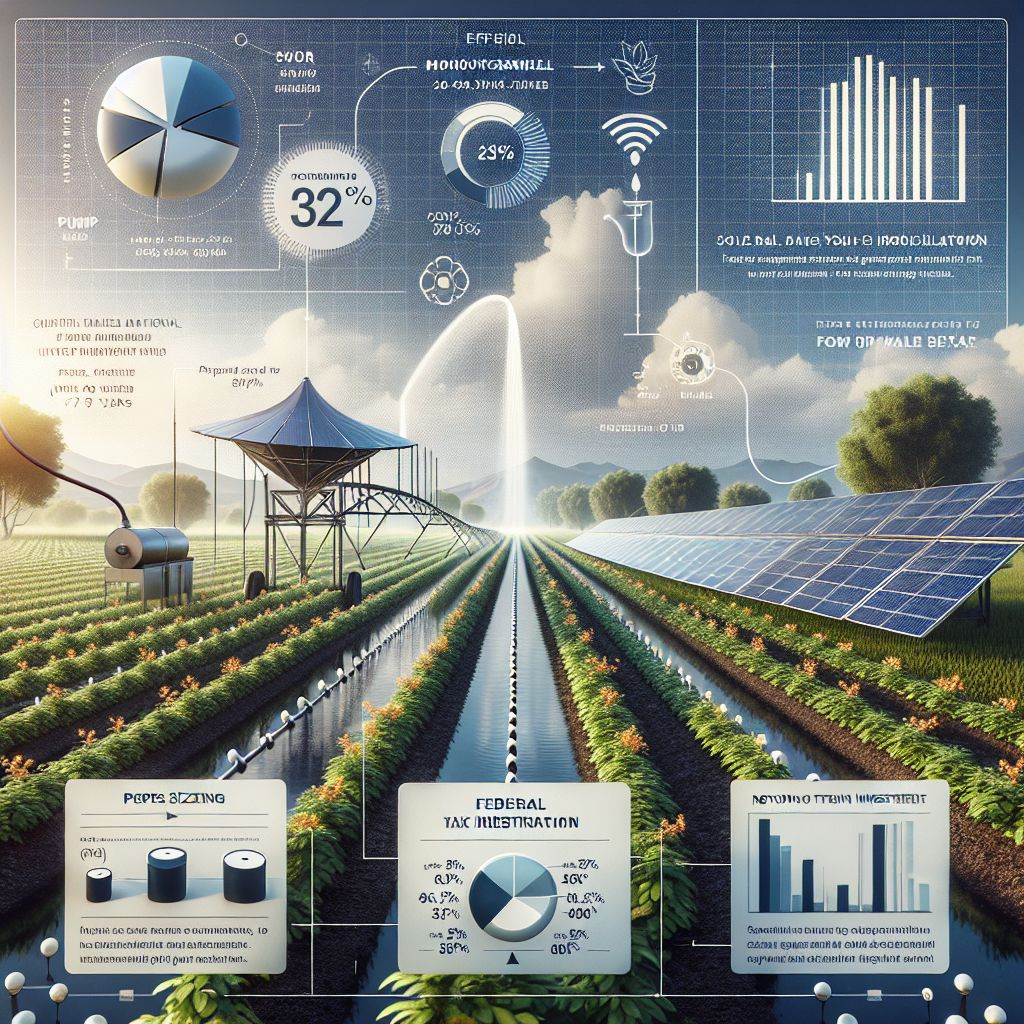
- Solar-powered irrigation systems can reduce farm energy costs by up to 80% while providing a sustainable water management solution for crop production.
- Monocrystalline solar panels offer the highest efficiency (20-22%) for irrigation systems but require more investment than polycrystalline or thin-film alternatives.
- Drip irrigation paired with solar power creates the most water-efficient system, saving up to 70% more water than conventional irrigation methods.
- Properly sized solar irrigation systems require matching panel capacity to water requirements, pump specifications, and seasonal crop needs.
- With federal tax incentives covering up to 30% of installation costs, most farmers see complete return on investment within 3-7 years depending on system size.
Farming is evolving rapidly in our changing climate, and water management has never been more critical. Solar-powered irrigation represents the intersection of renewable energy and water conservation technology that modern agriculture desperately needs. By harnessing the sun’s energy to pump and distribute water, these systems eliminate dependence on fossil fuels while providing reliable crop irrigation even in remote locations.
Why Solar-Powered Irrigation Transforms Modern Farming
The marriage between solar energy and irrigation creates a powerful solution for today’s agricultural challenges. Traditional irrigation systems rely on grid electricity or diesel generators, both carrying significant operational costs and environmental impacts. Solar irrigation systems from qualified providers eliminate these ongoing expenses while reducing carbon emissions. During peak growing seasons when water demands are highest, sunlight is also most abundant – creating a natural synchronization between energy supply and irrigation needs.
Beyond the obvious environmental benefits, solar irrigation provides flexibility that conventional systems cannot match. These systems can operate in remote locations without access to electrical infrastructure, opening up previously unviable land for productive farming. The modular nature of solar panels also allows for scalable solutions that grow with your operation, whether you’re managing a small market garden or hundreds of acres.
Perhaps most importantly, solar irrigation provides resilience against increasingly unpredictable weather patterns. When drought conditions strike, having a reliable, cost-effective irrigation system can mean the difference between crop failure and success. Systems equipped with smart controllers can further optimize water usage by delivering precisely what crops need based on soil moisture readings, weather forecasts, and plant development stages.

Top Solar Panel Systems for Agricultural Irrigation
Selecting the right solar panels forms the foundation of an effective irrigation system. Not all solar technology is created equal, and agricultural applications have specific requirements that differ from residential installations. The harsh outdoor conditions of farm environments demand durable, high-performance panels that can withstand dust, moisture, and temperature fluctuations while maintaining reliable power output.
Monocrystalline Panels: Premium Efficiency for Limited Space
Monocrystalline solar panels represent the gold standard for agricultural applications where space efficiency matters. These panels achieve 17-22% efficiency ratings by using single-crystal silicon that allows electrons to flow more freely, generating more power per square foot than other technologies. This higher efficiency means farmers can generate more pumping power with fewer panels – a crucial advantage when space is limited or when mounting panels on existing structures. Despite their higher initial cost (typically $1.00-1.50 per watt), monocrystalline panels often provide better long-term value through their 25+ year lifespan and superior performance in partial shade conditions that commonly occur in agricultural settings.
Polycrystalline Options: Budget-Friendly Solutions
Polycrystalline panels strike an attractive balance between cost and performance for many agricultural irrigation systems. These panels typically achieve 13-17% efficiency ratings – slightly lower than monocrystalline alternatives – but come with a more affordable price tag of approximately $0.70-1.00 per watt. The manufacturing process creates panels with a distinctive blue speckled appearance and multiple silicon crystals, which slightly reduces electron flow compared to single-crystal designs.
The cost advantage makes polycrystalline panels particularly suitable for larger irrigation systems where panel quantity can offset the modest efficiency difference. Many commercial farming operations find that polycrystalline technology delivers the best return on investment, especially when land constraints aren’t a primary concern. These panels still offer impressive durability with 25-year warranties being standard across quality manufacturers.
For farms in regions with consistently strong sunlight, the performance gap between polycrystalline and monocrystalline narrows considerably, making the more affordable option even more attractive. Successful integration of polycrystalline panels with existing irrigation systems has been well-documented across diverse agricultural settings.
Thin-Film Solar: Flexible Installation for Unique Farm Settings
Thin-film solar technology offers unique advantages for specialized agricultural applications despite its lower efficiency ratings of 10-13%. These lightweight, flexible panels can be integrated into curved surfaces or non-traditional mounting locations that rigid panels cannot accommodate. Their superior performance in high-temperature environments makes them well-suited for desert or tropical agricultural operations where conventional panels might experience significant efficiency drops during extreme heat. For more insights on optimizing solar panel performance, check out this article on solar panel efficiency best practices.
The reduced material requirements for thin-film panels translate to lower manufacturing costs, making them an economical choice for large-scale deployment across extensive farming operations. Their ability to generate electricity even in low-light conditions can extend daily pumping hours during critical growing periods. While requiring approximately twice the surface area of monocrystalline panels for equivalent power output, thin-film technology remains viable for farms with abundant space and budget constraints.
PERC Solar Panels: Newer Technology
Passivated Emitter and Rear Cell (PERC) technology represents the latest advancement in solar panel design with particular benefits for agricultural applications. These panels incorporate an additional reflective layer on the back surface that captures light which would otherwise pass through the cell unused. The result is efficiency ratings of 19-22% or higher. While maintaining costs close to Monocrystalline panels.
PERC technology demonstrates superior performance during the morning and evening hours when sunlight strikes at lower angles – extending the effective irrigation window each day. This improved weak-light performance translates to 5-10% greater annual energy production compared to conventional panels of similar wattage. For irrigation systems that need to maximize daily water delivery, this consistent performance across varying light conditions can significantly improve crop outcomes during critical growing phases.
Choosing the right type of solar panel for your system is crucial. Consider the specific needs of your operations, the available space, and your budget. This below table will help you choose the right one:
|
Type of Solar Panel |
Advantages |
Disadvantages |
|---|---|---|
|
Monocrystalline Solar Panels | ||
|
– Performance drops slightly in extreme heat. 1 | ||
|
– Performs well in low-light conditions (cloudy days, mornings). 1, 2 | ||
|
Polycrystalline Solar Panels |
– Cost-effective option, suitable for large-scale installations. 1, 3 |
– Lower efficiency (13-17%) compared to monocrystalline panels. 1, 3 |
|
– Durable and handles heat well. 3 |
– Requires more space for the same energy output as monocrystalline panels. 3 | |
|
– Affordable initial investment, often offset by government incentives. 3 | ||
|
Thin-Film Solar Panels |
– Lightweight, flexible, and easy to install on unconventional surfaces (e.g., curved roofs)1, 5, 7 |
– Lowest efficiency (10-13%) among the options, requiring more space for equivalent output.5, 7 |
|
– Performs well in high temperatures and low-light conditions, ideal for diverse climates. 5, 7 |
– Shorter lifespan (10-20 years) compared to crystalline panels. 5, 7 | |
|
– Cost-effective with lower production and installation costs. 5, 7 |
– Bulkier installations needed for larger-scale energy production.5 | |
|
PERC Solar Panels |
– Enhanced efficiency (Up to 22% or higher) due to passivation layer, capturing more sunlight. 4 |
– Higher cost than traditional Monocrystalline panels, but prices are becoming comparable. 4 |
|
– Performs well in low-light and high-temperature conditions, ideal for varied climates. 2, 4 |
– Technology may be less familiar, requiring specialized installation expertise. 4 | |
|
– Maximizes energy output in limited space, suitable for farms with restricted installation areas. 4 |
Best Irrigation Systems Powered by Solar Energy
The irrigation component of your system requires just as much consideration as the solar elements. Different crops, soil types, and farm layouts demand specific watering approaches to maximize efficiency and yield. When powered by renewable solar energy, these irrigation methods become both environmentally and economically sustainable, addressing the twin challenges of water conservation and energy consumption that modern agriculture faces.
1. Drip Irrigation: Water Conservation Champion
Drip irrigation represents the gold standard for water efficiency when powered by solar energy. This precision system delivers water directly to the root zone through emitters spaced along tubing, reducing evaporation losses to a minimum. Water savings typically range from 30-70% compared to conventional irrigation methods, making drip systems ideal for water-scarce regions or high-value crop production. The low pressure requirements of drip irrigation (typically 15-30 PSI) align perfectly with solar pumping capabilities, allowing for smaller panel arrays and reduced system costs.
High-value crops like vegetables, berries, vineyards, and tree fruits benefit particularly from solar-powered drip irrigation. The consistent moisture levels prevent stress cycles in plants while minimizing weed growth and foliar diseases that thrive in wet conditions. Modern drip systems can be separated into zones controlled by automated solar-powered timers, creating a fully autonomous irrigation solution that optimizes both water and energy usage throughout the growing season.
2. Center Pivot Systems: Ideal for Large Fields
Center pivot irrigation systems transformed large-scale agriculture, and when powered by solar energy, they become considerably more sustainable. These systems feature a rotating arm that distributes water over circular fields up to a quarter-mile in radius. Modern center pivots achieve 85-95% application efficiency – approaching drip irrigation performance while covering substantially larger areas. The higher energy demands of center pivot systems typically require larger solar arrays (30-75kW depending on size), often supplemented with battery storage to maintain consistent operation.
Row crops like corn, soybeans, wheat, and cotton are perfectly suited for solar-powered center pivot irrigation. The uniform water application promotes even crop development while the elevated sprinklers minimize canopy wetting that can contribute to disease pressure. Advanced systems incorporate Variable Rate Irrigation (VRI) technology that adjusts water application based on soil mapping and crop sensing data, further improving efficiency and yield potential when powered by clean solar energy.
3. Micro-Sprinklers: Precision Watering for Specialty Crops
Micro-sprinkler systems bridge the gap between high-efficiency drip irrigation and broader coverage sprinkler methods. These low-volume emitters spray water in patterns ranging from 3-25 feet in diameter, providing excellent root zone coverage for crops with larger root systems. Operating at 20-30 PSI, micro-sprinklers pair efficiently with solar pumping systems of modest size. The elevated spray pattern creates humidity in the plant microclimate that benefits many fruit and nut tree varieties while providing frost protection during critical blooming periods.
Orchards, nurseries, berries and tree farms achieve optimal results with solar-powered micro-sprinkler systems. The ability to control droplet size and spray pattern allows for customization based on crop stage and weather conditions. When combined with solar automation, these systems can be programmed to deliver precisely timed irrigation cycles that work in harmony with natural plant processes and daily solar energy availability, maximizing both water and energy efficiency.
4. Linear Move Systems: Maximum Coverage for Rectangular Fields
Linear move irrigation systems address the limitations of center pivots by traveling in straight lines across rectangular fields, potentially irrigating 100% of available acreage. These systems typically require guidance systems such as buried cables or GPS technology to maintain straight travel. The energy requirements exceed those of center pivots due to the additional drive mechanisms, necessitating substantial solar arrays (50-100kW) with sophisticated energy storage solutions to maintain reliable operation. For more information on the integration of irrigation systems and solar panels, you can explore further resources.
Large commercial operations growing high-value vegetables, potatoes, or sugar beets benefit most from solar-powered linear systems. The complete field coverage eliminates the corner losses associated with center pivots while maintaining similar water application efficiency. Advanced linear systems can be programmed to vary application rates automatically as they traverse different soil types or crop varieties, creating a highly responsive irrigation solution powered entirely by renewable solar energy.
Matching Solar Capacity to Irrigation Demands
The success of any solar irrigation system depends on proper sizing that aligns energy generation with water pumping requirements. An undersized system will fail to deliver adequate water during peak demand periods, while oversizing wastes capital that could be better invested elsewhere in the operation. This critical balance requires careful assessment of crop water needs, pumping specifications, and local solar potential before finalizing system design.
Calculating Water Requirements by Crop Type
Different crops have vastly different water requirements that directly impact solar system sizing. Leafy greens might require 1-2 inches of water weekly, while deep-rooted nut trees can demand 4-6 inches during peak production periods. Understanding your specific crop’s evapotranspiration rate (ET) – the combined water loss through evaporation and plant transpiration – provides the foundation for accurate system sizing. Local agricultural extension offices often provide region-specific ET data that accounts for your unique climate conditions.
Soil type also significantly influences irrigation requirements. Sandy soils drain quickly and may require more frequent watering with smaller volumes, while clay soils hold moisture longer but need slower application rates to prevent runoff. A comprehensive soil analysis should inform your irrigation strategy and subsequently, your solar capacity needs. For diversified farms growing multiple crop types, zoning your irrigation system allows for customized watering schedules powered by a centralized solar array sized to accommodate peak demand periods.
Determining Pump Size and Energy Needs
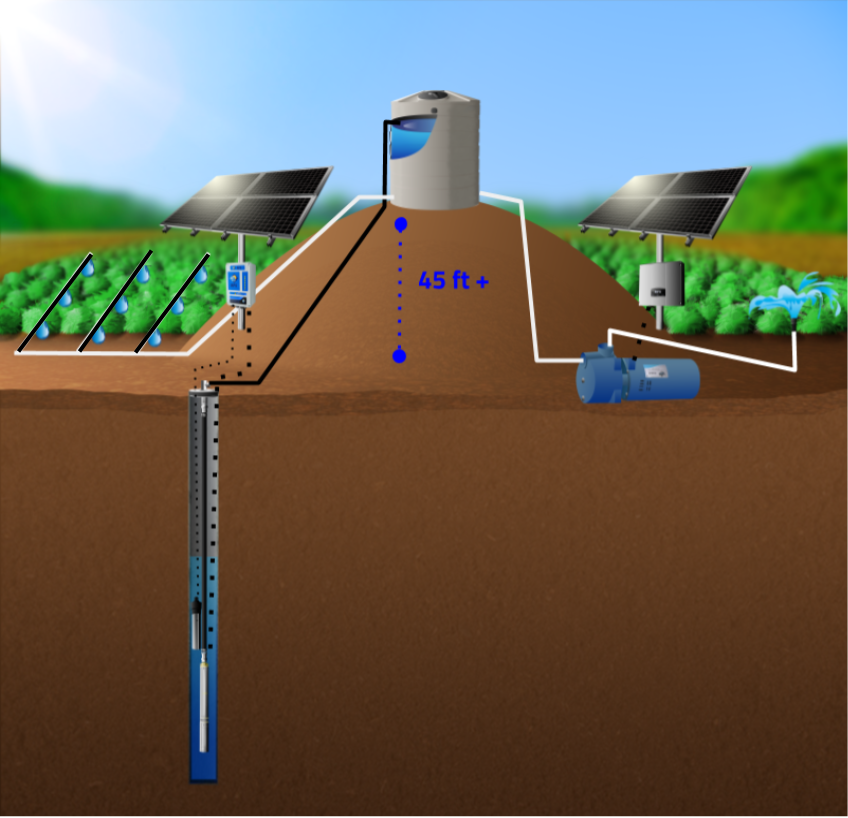
The heart of any irrigation system is the pump, and its specifications directly determine your solar requirements. Three critical factors influence pump selection and energy consumption: total dynamic head (the vertical distance plus friction losses water must travel), flow rate (gallons per minute needed), and operating pressure (PSI required by your irrigation method). Once these parameters are established, pump power requirements can be calculated in horsepower or kilowatts. For more insights, you might want to consider the solar panel placement guide to optimize your energy needs.
As a general rule, solar arrays should be sized 20-30% larger than the theoretical minimum to account for efficiency losses and variable solar conditions. For example, a 2HP pump drawing approximately 1.5kW would require a minimum 2kW solar array to operate reliably during peak sunlight hours. Pump efficiency ratings are equally important – premium efficiency models may cost more initially but significantly reduce the required solar capacity, often paying for themselves within 1-2 growing seasons through reduced panel requirements.
Battery Storage Options for Consistent Operation
Battery storage transforms an intermittent solar irrigation system into a reliable water delivery solution regardless of cloud cover or time of day. Modern lithium-ion batteries offer exceptional performance for agricultural applications with their compact size, high discharge capabilities, and 10+ year lifespan. Though adding approximately 30-40% to system costs, batteries enable strategic irrigation timing outside peak sunlight hours – often at night when evaporation losses are minimized and plants absorb water most efficiently.
For most agricultural operations, sizing battery storage to provide 1-3 days of autonomy strikes the optimal balance between reliability and cost-effectiveness. This capacity allows continued irrigation during brief cloudy periods without oversizing the system for rare extended low-light conditions. Hybrid systems that incorporate minimal battery storage primarily for stable pump operation, rather than extended autonomy, represent an increasingly popular middle-ground approach that maximizes the solar investment while ensuring irrigation consistency.
Real-World Solar Irrigation Success Stories
Small-Scale Vegetable Farm Case Study
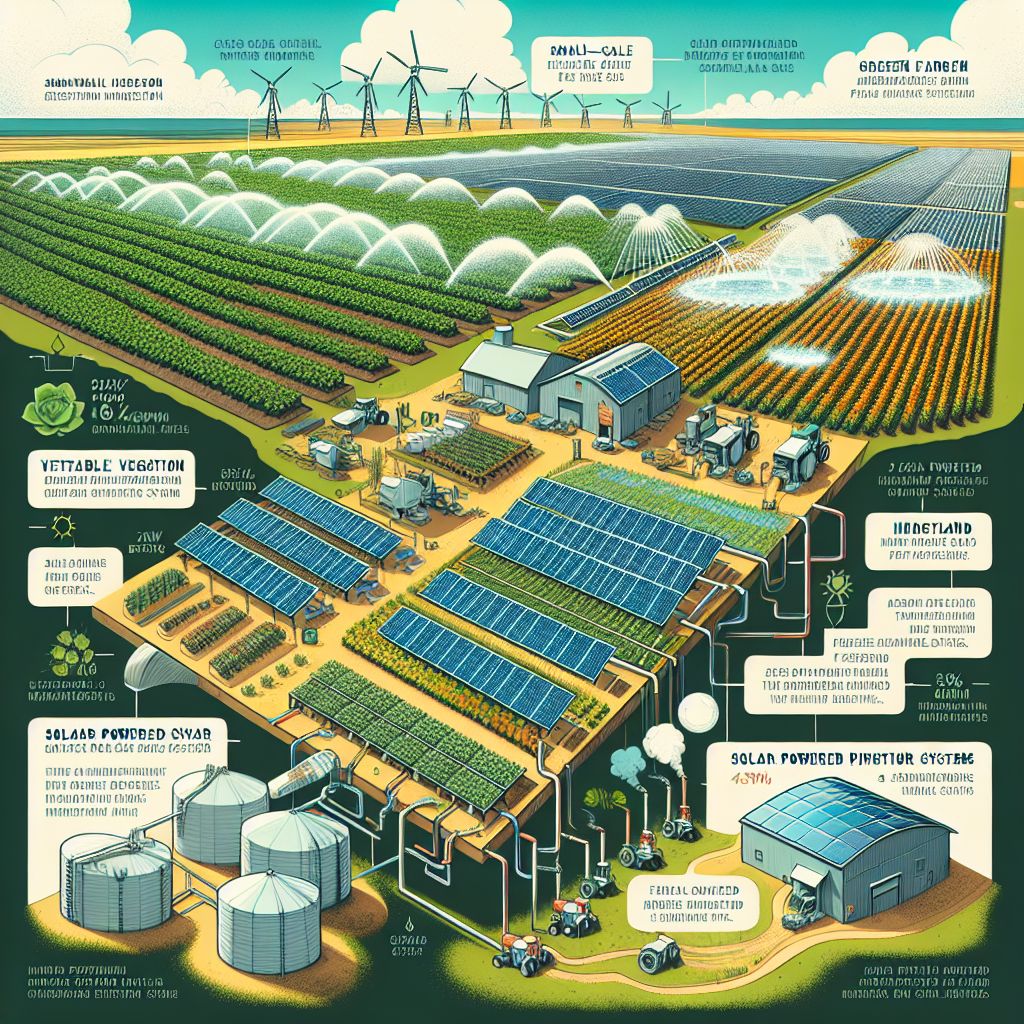
Green Valley Organics, a 5-acre diversified vegetable operation in California, transitioned to solar-powered drip irrigation in 2019 with remarkable results. Their 8.5kW monocrystalline system powers a 2HP pump that delivers precisely timed irrigation to 12 separate zones through a controller programmed for crop-specific watering schedules. Owner Maria Gonzalez reports a 65% reduction in water usage compared to their previous overhead sprinkler system, alongside complete elimination of their $3,600 annual electricity bill for irrigation.
The $25,000 system qualified for a 30% federal tax credit and a local agricultural water conservation grant covering an additional $5,000, bringing net costs to $12,500. With annual savings exceeding $4,200 (combining water and electricity), the system achieved complete payback in just under three years. Beyond the financial benefits, Green Valley has documented a 22% increase in marketable yield due to the consistent soil moisture levels maintained by their solar-powered precision irrigation system.
Large Commercial Grain Operation Transformation
Heartland Farms, a 1,200-acre corn and soybean operation in Nebraska, implemented a comprehensive solar irrigation solution for their existing center pivot systems. The 75kW ground-mounted array powers three center pivots through dedicated solar pumping stations, with a centralized 100kWh battery bank providing consistency during brief cloudy periods. After three full growing seasons, farm manager Robert Johnson calculates annual fuel savings of approximately $42,000 previously spent on diesel pumps, alongside a 15-20% yield increase attributed to more consistent irrigation capabilities during critical growth stages.
While the $320,000 system represented a significant capital investment, combined tax incentives, USDA rural energy grants, and depreciation benefits reduced effective costs to approximately $195,000. With annual operational savings and yield improvements valued at $67,000, the system achieved payback in less than three years. Perhaps most significantly, Heartland now markets their crops as “sustainably irrigated,” commanding premium prices from environmentally conscious buyers who value their carbon footprint reduction equivalent to removing 90 cars from the road annually.

“Solar Power Savings Impact Farmer …” from growingsolarmist.com and used with no modifications.
Financial Benefits Beyond Energy Savings
While immediate electricity savings are the most obvious financial benefit of solar irrigation, sophisticated agricultural operations recognize numerous additional value streams that contribute to remarkable return on investment. These extended benefits include operational advantages, marketing premiums, and various financial incentives that collectively transform solar irrigation from a simple cost-saving measure into a comprehensive business enhancement strategy.
Available Tax Incentives and Agricultural Grants
The federal Investment Tax Credit currently provides a 30% tax credit on qualified solar installations through 2032, substantially reducing effective system costs for tax-paying farm operations. This dollar-for-dollar reduction in tax liability represents one of the most significant financial incentives available for agricultural solar adoption. Beyond federal incentives, many states offer additional tax credits, property tax exemptions, or sales tax exemptions specifically for renewable energy systems used in agricultural production.
The USDA Rural Energy for America Program (REAP) provides both grants and guaranteed loans specifically for agricultural renewable energy projects, potentially covering up to 25% of project costs through grants and securing favorable financing terms for the remainder. Conservation-focused programs like EQIP (Environmental Quality Incentives Program) may provide additional funding for water-conserving irrigation systems when paired with renewable energy. Local soil and water conservation districts frequently offer supplemental grants targeting sustainable agricultural practices, creating opportunities to stack multiple incentives into a comprehensive funding package.
ROI Timeline Expectations
Return on investment timelines for solar irrigation systems vary based on system size, crop value, and available incentives, but most operations achieve complete payback within 3-7 years. High-value specialty crop producers often experience the fastest returns, sometimes achieving payback in as little as 2-3 years when combining energy savings, yield improvements, and available incentives. Even commodity crop producers typically achieve full payback within 5-7 years while securing operational benefits that extend for the 25+ year system lifespan.
Beyond direct payback, solar irrigation systems provide significant protection against future energy price volatility – essentially pre-purchasing decades of irrigation energy at a fixed, predictable cost. This long-term cost stability allows for more accurate crop production budgeting and potentially improves access to favorable financing terms for other farm operations. The enhanced property value associated with installed renewable energy infrastructure represents additional return that may not appear in standard ROI calculations but provides significant benefit when properties change hands or are refinanced.
Increased Crop Value Through Precision Irrigation
Solar-powered irrigation systems equipped with advanced controls consistently deliver water based on actual crop requirements rather than arbitrary schedules or energy availability constraints. This precision approach manifestly improves crop quality metrics including size consistency, color development, sugar content, and shelf-life – all factors that directly impact marketable value. Premium pricing for sustainably produced crops further enhances revenue potential, with eco-conscious markets willing to pay 10-30% premiums for products using verified sustainable production methods including solar irrigation.
Conclusion
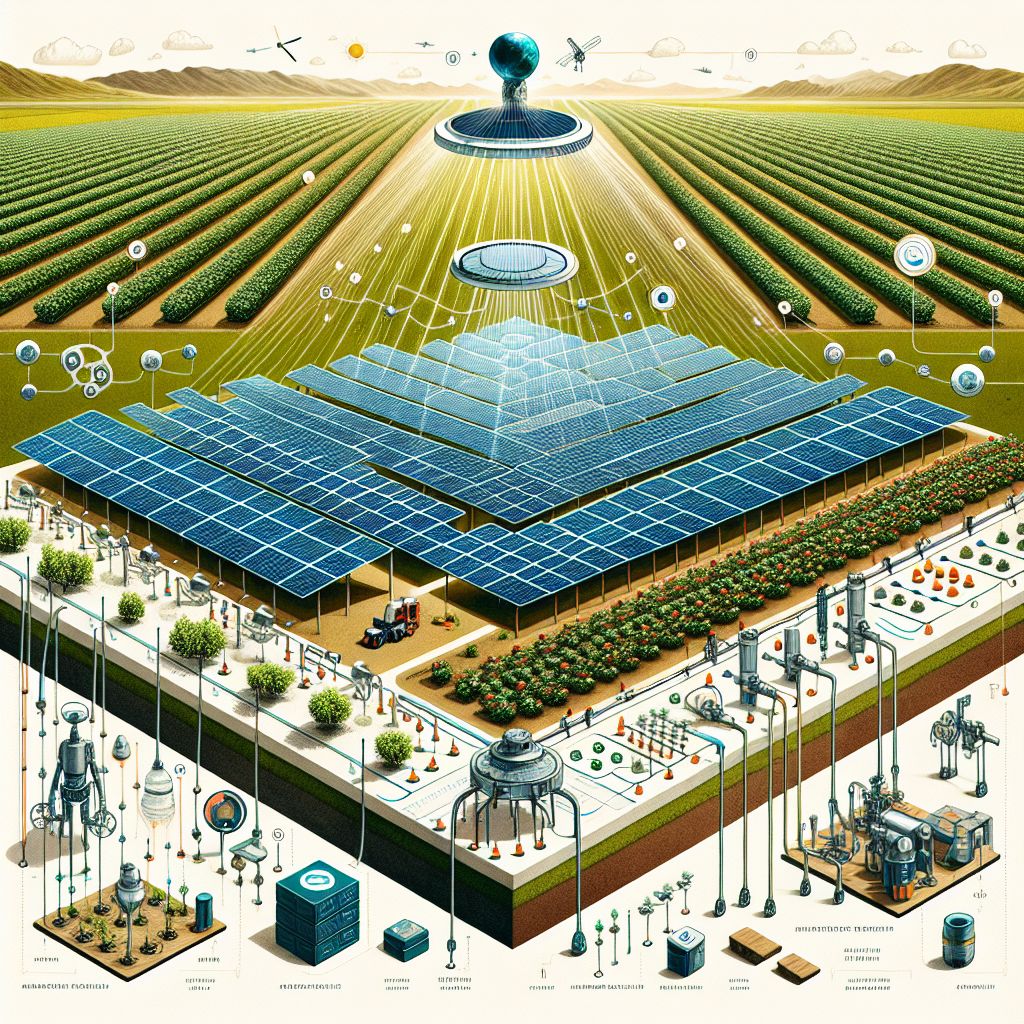
Solar-powered irrigation represents a transformative approach to agriculture that addresses multiple challenges simultaneously – reducing operational costs, improving water use efficiency, enhancing crop quality, and minimizing environmental impact. The continued advancement of both solar and irrigation technologies ensures that these systems will become increasingly accessible and effective for operations of all sizes. As climate variability intensifies and water resources face growing pressure, farmers who implement these integrated sustainable systems position themselves for long-term resilience and profitability.
The initial investment in quality components and proper system design pays substantial dividends through decades of reliable operation with minimal ongoing costs. By eliminating the volatility of fuel and electricity expenses, solar irrigation provides budget certainty that enhances overall farm financial planning. When combined with precision water delivery methods, these systems create a virtuous cycle of resource conservation that benefits both farm balance sheets and the broader environment.
Most Efficient Combination of Solar Panel and Irrigation System
For most agricultural applications, the optimal system combines high-efficiency monocrystalline or PERC solar panels with drip irrigation or micro-sprinklers based on specific crop requirements. This pairing maximizes both energy and water efficiency while providing the precise moisture delivery that promotes optimal plant development. The modular nature of both technologies allows for phased implementation and future expansion, enabling farms to scale their investment in pace with demonstrated results and available capital. For operations seeking the absolute pinnacle of sustainable agriculture, these integrated systems represent not just best practice, but the foundation for a regenerative approach to food production that will define successful farming in the decades ahead. To learn more about implementing the perfect solar irrigation system for your specific needs, 8M Solar offers comprehensive design and installation services backed by agricultural expertise.
Frequently Asked Questions
As solar irrigation systems become more prevalent in modern agriculture, many farmers have common questions about implementation, performance, and maintenance. These systems represent a significant shift from conventional approaches, and understanding their nuances helps ensure successful adoption. The following questions address the most common concerns we encounter when helping farmers transition to solar-powered irrigation.
Beyond these specific questions, remember that each agricultural operation has unique requirements and constraints. Custom system design that accounts for your specific crops, climate, water source, and energy needs will always deliver superior results compared to one-size-fits-all solutions. Professional consultation during the planning phase typically pays for itself many times over through improved system performance and longevity.
For ongoing guidance beyond these common questions, agricultural extension services, solar irrigation specialists, and sustainable farming organizations provide valuable resources for both new and experienced system operators. Connecting with other farmers who have implemented similar systems can also provide practical insights into real-world performance and optimization strategies.
Typical Solar Irrigation System Costs by Farm Size
Farm Size
System Type
Approximate Cost Range
Typical Annual Savings
Estimated Payback Period*
Small (1-5 acres)
1-3kW with DC pump, drip irrigation
$7,000-$15,000
$800-$2,500
3-5 years
Medium (5-20 acres)
5-15kW with AC pump, mixed irrigation
$15,000-$45,000
$2,500-$8,000
4-6 years
Large (20-100+ acres)
20-75kW with multiple pumps, pivot systems
$50,000-$250,000
$8,000-$50,000
5-7 years
*After applicable tax incentives and grants. Actual figures may vary based on local conditions, crop types, and energy costs.
How much does a complete solar irrigation system typically cost?
Complete solar irrigation system costs vary significantly based on acreage, crop water requirements, and existing infrastructure. Small market garden systems (1-5 acres) typically range from $7,000-$15,000 for a complete installation including panels, mounting, pump, controls, and basic drip irrigation components. Medium-sized operations (5-20 acres) generally invest $15,000-$45,000 depending on water requirements and system complexity. Large commercial operations implementing solar for pivot irrigation or extensive drip systems may invest $50,000-$250,000, though these systems often qualify for substantial incentives that can reduce net costs by 30-50%. For more information on the financial benefits of solar panel systems, you can explore various savings options.
Component quality significantly impacts both initial cost and long-term performance. Premium efficiency pumps may add 15-25% to initial pump costs but reduce solar capacity requirements by similar percentages. Similarly, higher-efficiency solar panels cost more per watt but require less overall array size to achieve the same pumping capacity. When calculating total system cost, remember to factor in site preparation, potential well modifications, and backup power provisions if continuous operation is critical regardless of weather conditions.
Can solar irrigation systems work in cloudy or northern climates?
Solar irrigation systems remain viable in cloudy or northern climates with appropriate design modifications and expectations. These regions typically require 20-40% larger solar arrays compared to sunny locations to compensate for reduced insolation (sunlight energy). Strategic implementation of battery storage becomes more critical in these environments, allowing energy harvesting during available sunlight for later irrigation use. Hybrid systems that combine solar with grid connection or generator backup provide reliable operation during extended cloudy periods while still capturing significant energy savings during favorable conditions. Many successful solar irrigation implementations exist throughout the Pacific Northwest, Upper Midwest, and Northeast regions where careful system sizing and storage integration effectively overcome reduced solar resources.
What maintenance do solar panels require in dusty farm environments?
Farm environments present unique challenges for solar panel maintenance due to dust, pollen, crop residue, and agricultural chemicals that can accumulate on panel surfaces. Regular cleaning becomes essential to maintain optimal performance, typically at 2-8 week intervals depending on local conditions and seasonal activities. A 25-degree minimum tilt angle helps promote natural cleaning during rainfall events, though supplemental cleaning remains necessary during dry periods or following particularly dusty operations like harvesting or field cultivation. Using soft brushes, non-abrasive cloths, and panel-safe biodegradable detergents prevents micro-scratching that can permanently reduce panel efficiency, while conducting cleaning activities during early morning hours prevents thermal shock to hot panels exposed to cool cleaning water.
How long do agricultural solar irrigation systems typically last?
Quality solar irrigation systems deliver exceptional longevity compared to conventional power sources, with properly maintained solar panels retaining at least 80% of their original production capacity after 25-30 years of agricultural service. Most manufacturers provide 25-year performance warranties reflecting this durability. Pumps and controllers typically require replacement after 7-15 years depending on water quality and operating conditions, while drip irrigation components generally need replacement every 5-10 years. The modular nature of these systems allows for component upgrades over time without replacing the entire infrastructure, enabling farms to benefit from technology improvements while maintaining their original investment. With appropriate maintenance and periodic component renewal, the core solar generation infrastructure often remains productive for 30+ years, spanning multiple generations of irrigation equipment.
Can I connect my solar irrigation system to the grid for backup power?
Grid-connected solar irrigation systems offer excellent reliability by drawing from utility power when solar production is insufficient for irrigation demands. These grid-tied systems typically incorporate net metering, allowing excess solar production to offset other farm electrical usage or generate credits during non-irrigation seasons. The additional components required for grid connection add approximately 10-15% to system costs but eliminate the need for extensive battery storage while providing continuous operation regardless of weather conditions. Many farms implement grid-connected systems with minimal battery backup, using the batteries primarily to stabilize power quality rather than for extended autonomy. This hybrid approach provides the reliability benefits of grid connection while still capturing the majority of potential solar savings with a more modest investment than fully off-grid systems with extensive battery capacity. For more insights on how solar panels save farmers energy costs, explore further details.
For remote locations where grid connection is impractical, generator backup represents an alternative reliability strategy. Modern hybrid inverters can automatically start generators when battery reserves fall below critical thresholds, then return to solar operation when sufficient energy becomes available. This approach minimizes generator runtime while ensuring irrigation continuity during extended low-solar periods.







Leave a Reply