

Key Takeaways
With the right battery storage, solar-powered irrigation systems can work efficiently at night.
Water loss due to evaporation is reduced by nighttime irrigation.
Successful nighttime irrigation requires proper planning and equipment selection.
Long-term sustainability is ensured through regular maintenance and monitoring.
Solar-powered irrigation is a smart choice for farmers due to cost savings and environmental benefits.
Solar Powered Irrigation System: Nighttime Operation & Tips
Just because the sun has set doesn’t mean you can’t harness its power. With solar-powered irrigation systems, you can keep your crops hydrated even at night. This method not only saves energy, but also takes advantage of the cooler nighttime temperatures, reducing water loss from evaporation. Let’s explore how these systems operate and what you need to know to get started.
Benefits of Nighttime Irrigation
One of the biggest reasons to irrigate at night is that it reduces water loss. When you water during the day, especially in hot climates, a lot of the water evaporates before it even gets to the plant roots. If you water at night, more of the water is soaked up by the soil and used by your plants.
Moreover, watering your plants at night can help alleviate plant stress. During the day, plants are already battling with heat and sunlight. Adding the stress of water can make it more difficult for them to flourish. Nighttime watering provides plants with the hydration they need without the added stress of daytime conditions.
The Role of Solar Technology in Nighttime Irrigation
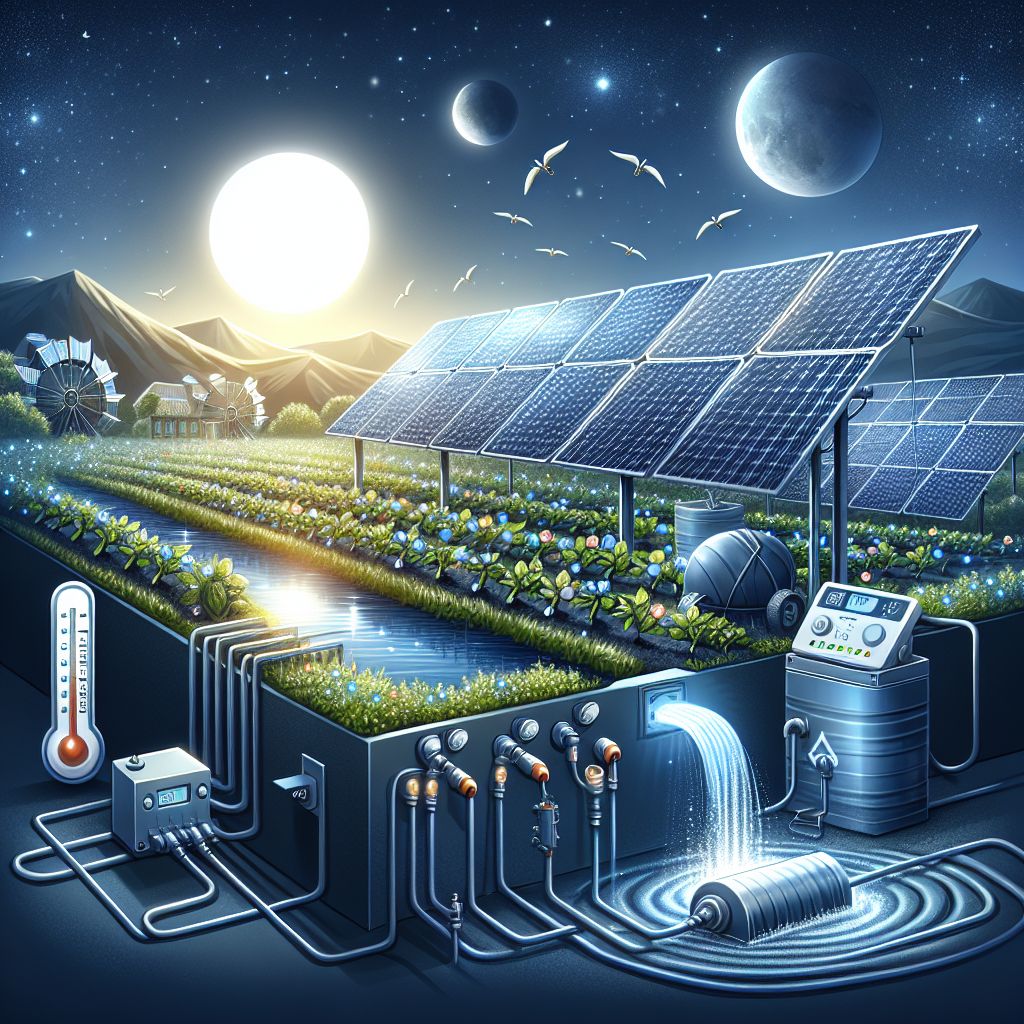
Solar power is a key factor in enabling nighttime watering. Solar panels absorb energy from the sun throughout the day, and this energy can be stored in batteries for later use. This stored energy then powers the watering system, providing a consistent flow of water no matter what time it is.
Moreover, solar technology has evolved to become more affordable and user-friendly for farmers. With the correct equipment, you can utilize solar power to keep your crops watered 24/7.
How Solar-Powered Irrigation Systems Work at Night
Knowing how these systems operate is crucial to getting the most out of them. The energy storage component is the core of a solar-powered irrigation system. Let’s dive deeper into this.
Energy Storage: The Key Component
Storing energy is the crucial element that allows for nighttime operation. Solar panels convert sunlight into electrical energy during the day. This energy is then stored in batteries, which can be used to power the irrigation system when the sun isn’t out.
“A solar water pump that is paired with a 10 kWh lithium-ion battery is capable of operating continuously throughout the night, providing a dependable water source for agricultural purposes.”
Solar Battery Systems: Components and Functions
There are several crucial parts in a standard solar battery system:
Solar Panels: They absorb sunlight and transform it into electrical power.
Charge Controller: It controls the energy flow from the solar panels to the batteries, avoiding overcharging and maintaining the batteries in good condition.
Batteries: They store the energy gathered by the solar panels for nighttime use.
Inverter: It changes the stored energy from DC (direct current) to AC (alternating current), which is the type of energy most irrigation systems use.
Here’s a table discussing the components and functions of solar battery systems for a farmer’s irrigation system:
|
Component |
Function |
|---|---|
|
Solar Panels |
Convert sunlight into electrical energy to power the irrigation system and charge batteries. 3 |
|
Charge Controller |
Regulates the flow of electricity from solar panels to batteries, preventing overcharging and extending battery life. 1 |
|
Battery Bank |
Stores excess energy for use during cloudy days or nighttime, ensuring consistent power supply. 5 |
|
Inverter |
Converts DC power from batteries to AC power for operating AC pumps and other equipment. 5 |
|
Water Pump |
Draws water from the source (well, river, etc.) and distributes it through the irrigation system. 2 |
|
Variable Frequency Drive (VFD) |
Adjusts pump speed based on available solar power, optimizing energy use and water flow. 5 |
|
Monitoring System |
Tracks system performance, energy production, and consumption for efficient management. 4 |
|
Backup Generator |
Provides power during extended periods of low sunlight (optional). 5 |
Optimizing Battery Life and Efficiency
For the best results from your solar battery system, you should ensure it is running as efficiently as possible. Here are some tips to help you achieve that: efficient solar-powered irrigation systems.
Regular Upkeep: Make sure to keep your batteries clean and free from debris to guarantee they work effectively.
Appropriate Charging: Refrain from overcharging or deep discharging your batteries, as this can reduce their lifespan.
Temperature Management: Keep your batteries in a cool, dry environment to prevent overheating and damage.
Here’s a table discussing even more in-depth tips in how to help achieve optimizing battery life and efficiency for solar-powered irrigation systems:
|
Strategy |
Description |
Benefits |
|---|---|---|
|
Depth of Discharge Management |
Avoid deep discharges by recharging before batteries reach low levels. Set charge thresholds within recommended limits. 1 |
Prolongs battery lifespan and maintains optimal performance. 1 |
|
Temperature Control |
Install batteries in well-ventilated areas away from direct sunlight. Use insulation or cooling systems if necessary. 1 |
Prevents temperature-related damage and extends battery life. 1 |
|
Smart Charging |
Maximize solar charging during peak production hours. Run high-energy irrigation tasks when solar output is highest. 2 |
Reduces reliance on grid power and increases energy savings. 2 |
|
Load Management |
Schedule irrigation cycles during off-peak hours or when battery charge is high. Use energy-efficient pumps and equipment. 2 |
Optimizes energy usage and reduces strain on the battery system. 2 |
|
Regular Maintenance |
Conduct periodic inspections, clean solar panels, and check connections. Update system software when available. 2 |
Ensures optimal system performance and early detection of issues. 2 |
|
Performance Monitoring |
Use monitoring tools to track energy production, consumption, and battery status in real-time. 1, 2 |
Allows for data-driven adjustments to improve efficiency. 1, 2 |
|
Seasonal Adjustments |
Modify system settings based on changing weather patterns and irrigation needs throughout the year. 3 |
Adapts the system to varying energy production and consumption levels. 3 |
|
Battery Sizing |
Properly size the battery bank based on irrigation demands and solar energy availability. |
Prevents oversizing or under sizing, optimizing cost and performance. |
Adhering to these guidelines, you can ensure that your solar battery system stays dependable and efficient for many years.
Picking the Best Gear
It’s critical to choose the best gear for your solar-powered irrigation system to work well. Here are a few things to keep in mind.
Choosing the Right Solar Water Pump
Just like with any product, not all water pumps are made the same. When you’re choosing a solar water pump, you want to make sure you’re choosing one that is energy-efficient and designed to work with solar power. This will help you get the most out of your system and ensure that it works reliably.
Selecting Suitable Solar Batteries
The batteries you select will greatly influence how your system functions. Here are a few things to keep in mind:
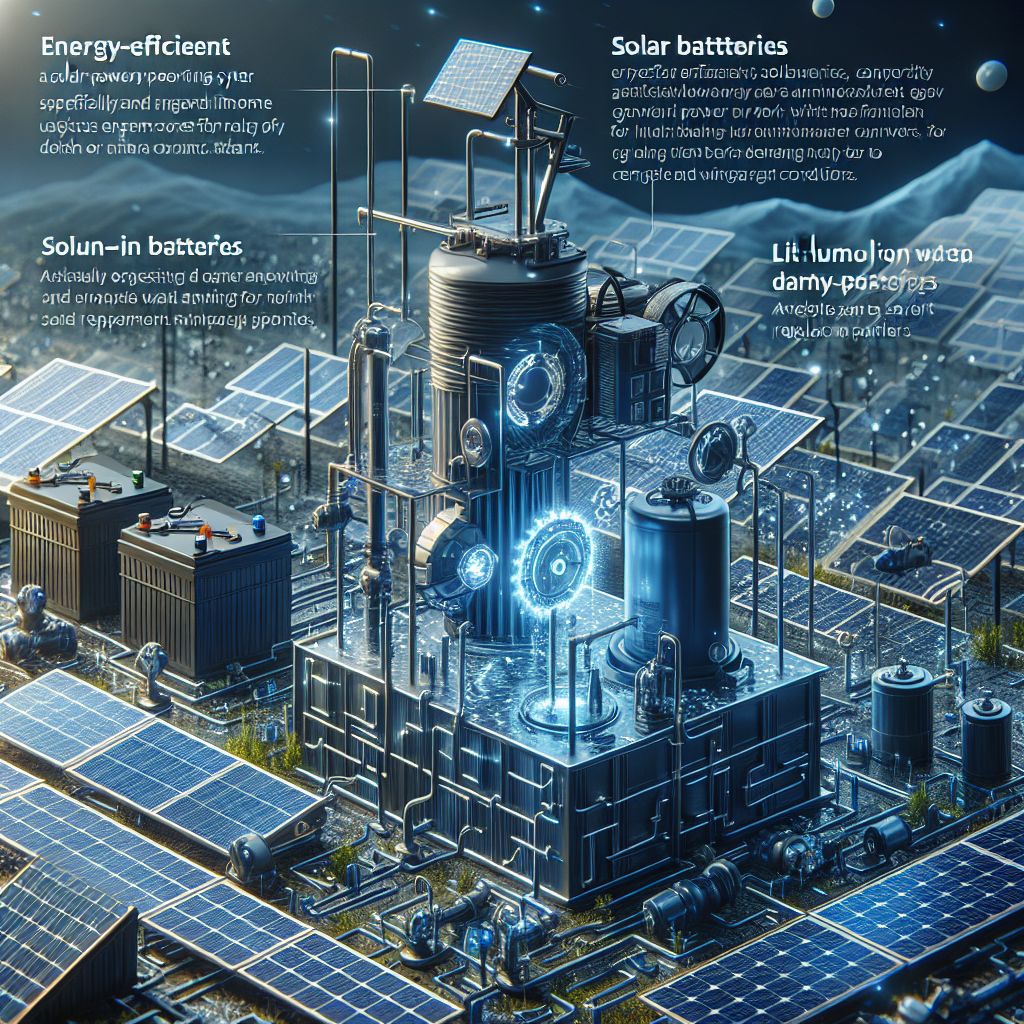
Capacity: Make sure the batteries can store enough power for nighttime irrigation.
Type: Lithium-ion batteries are usually more efficient and last longer than lead-acid batteries.
Durability: Choose batteries that can handle the conditions they’ll be used in, like extreme temperatures or humidity.
Importance of Quality Solar Panels
It is essential to invest in top-notch solar panels for your solar-powered irrigation system to work effectively. With high-quality panels, you can harness the maximum sunlight, even during cloudy weather. This results in more energy being stored in your batteries, enabling more dependable irrigation at night.
Moreover, top-notch panels are more robust and can endure severe weather conditions. This lessens the necessity for regular replacements and repairs, which saves you cash over time. Thus, it’s valuable to spend a little extra initially to acquire panels that will endure.

Maximizing Nighttime Irrigation Efficiency
To get the most out of your solar-powered irrigation system, you need to ensure it’s running as efficiently as possible. This requires some careful planning and the right technology. Here are a few strategies that can help you achieve optimal results, including understanding the benefits and setup guide for solar panels in irrigation systems.
Firstly, think about your watering schedule. The time you choose to water your plants can greatly affect how well they take in water. Also, adding time-based controls can help make the process automatic, making sure your system works well even when you’re not there.
“Farmers who arrange their irrigation timetables and incorporate time-based controls frequently see a substantial increase in water efficiency and crop production.”
Planning Your Irrigation Schedule
Planning is the foundation of an efficient irrigation system. Begin by evaluating your farm’s particular water requirements. Different crops necessitate different quantities of water, and the timing can also differ. Investigate the best watering times for your crops and devise a timetable that matches these requirements. For additional insights, explore solar-powered irrigation systems and their benefits.
First and foremost, take into account the weather. Change your schedule according to the weather forecast to prevent overwatering when it’s rainy or underwatering when it’s dry. This adaptability will allow you to maximize your water resources.
Implementing Time-Based Controls
Set up programmable timers to automate your watering schedule.
Employ moisture sensors to modify watering based on soil conditions.
Incorporate weather forecasts to make real-time modifications.
By applying these controls, you can make sure that your irrigation system works at maximum efficiency, giving the correct quantity of water at the appropriate time.
In addition, these controls can aid in water conservation and cost reduction, making your agricultural activities more sustainable. Learn more about solar power usage in farms and its benefits.
Low-Energy LED Lights for Nighttime Operations
One of the best ways to get the most out of your system is to use low-energy LED lights. These lights use less power than regular bulbs, which means they won’t drain your battery system as quickly. Plus, they provide enough light for you to see what you’re doing at night, so you can keep an eye on your irrigation system and do any maintenance that’s needed.
Moreover, LED lights last longer, so you don’t have to replace them as often. This saves you money and also results in less waste, making your farming operation more sustainable.
Maintenance and Monitoring for Longevity
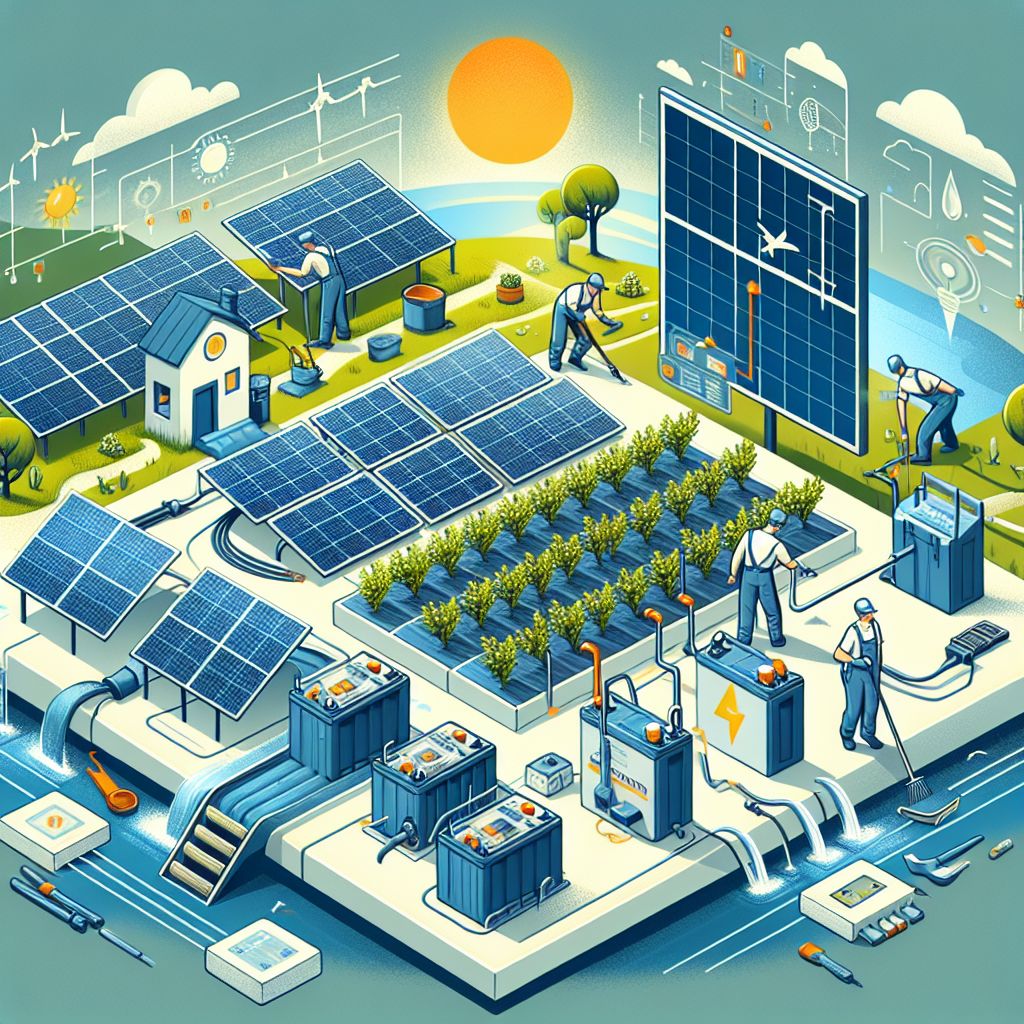
If you want your solar-powered irrigation system to last as long as possible, you need to take care of it. That means regular maintenance and monitoring. Here are some key tasks that will help you keep your equipment running smoothly and efficiently.
Regular Maintenance
It’s important to regularly check your system for any issues that may arise. This includes looking at your solar panels for any dirt, debris, or damage and cleaning them if necessary. You should also check your batteries for any signs of wear or corrosion and replace them if needed. Finally, make sure your irrigation system is free from any clogs or leaks.
Monitoring Battery Health
Keeping an eye on your battery health is key to the reliable operation of your system. Use a battery monitoring system to keep track of the charge and discharge cycles. This will help you spot any potential issues before they turn into big problems. Regularly check the connections and make sure they are secure and free of corrosion. For more information, you can read about solar battery-powered nighttime irrigation strategies.
Maintaining Solar Panel Efficiency
Keep your solar panels clean and clear of obstructions to maintain their efficiency. Dust, dirt, and bird droppings can decrease their effectiveness, so clean them regularly. Also, trim any nearby trees or plants that might cast shadows on the panels, reducing their ability to absorb sunlight.
Financial and Environmental Benefits
There are numerous economic and ecological advantages to investing in a solar-powered irrigation system. Let’s take a closer look at how this technology can help you save money and promote a more sustainable future.
Cost Savings from Solar Irrigation Systems
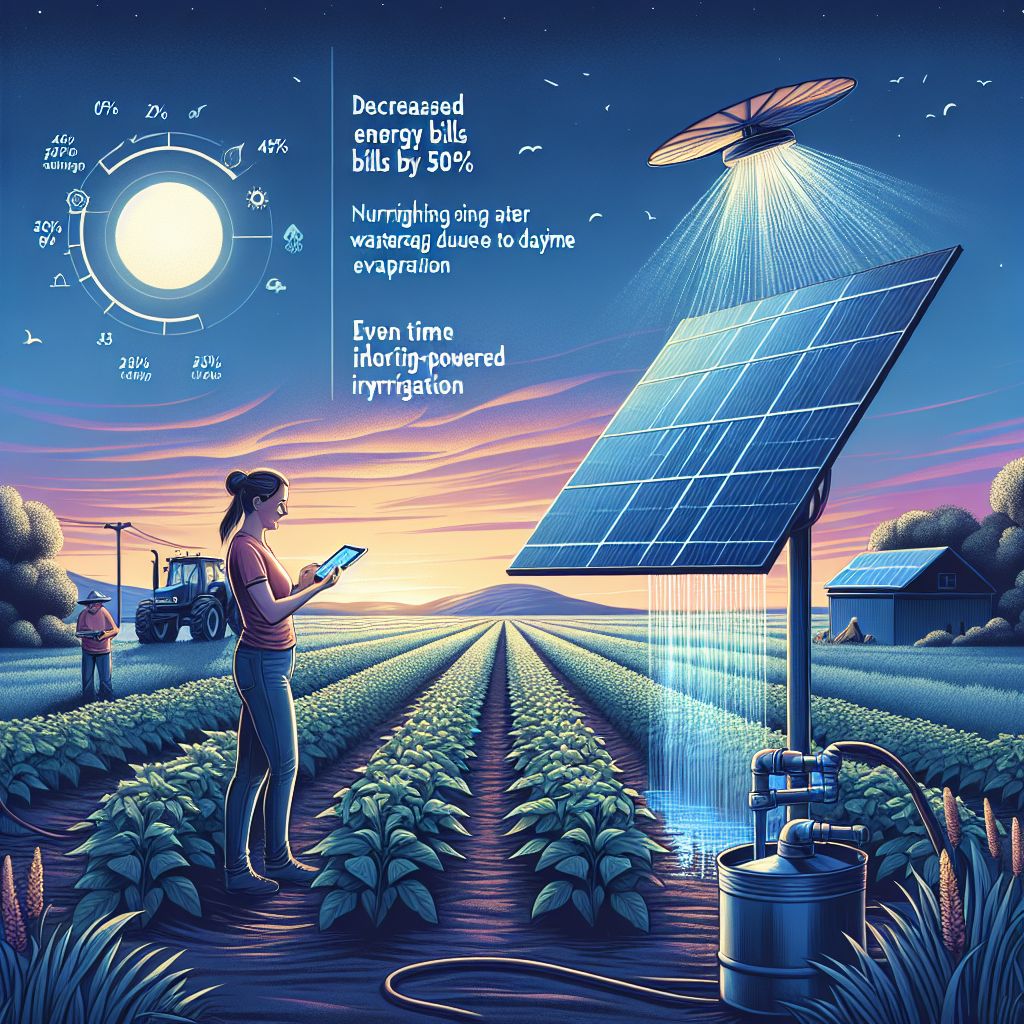
One of the main advantages of using solar-powered irrigation is the amount of money you can save. By using the sun’s energy, you can cut down on the amount of expensive fossil fuels and electricity you use. This can result in substantial savings on your energy bills.
“Farmers who make the switch to solar-powered irrigation systems often experience a decrease in their energy bills by as much as 50%.”
In addition, solar-powered systems need less upkeep than conventional irrigation systems, which further lowers your expenses.
Minimized Water Waste
Watering your crops at night can help to decrease the amount of water that is wasted due to evaporation. This allows more water to reach your crops, making your irrigation system more efficient. By using water more effectively, you can reduce your overall water usage, saving you money and conserving this precious resource. For more information on nighttime irrigation strategies, visit Growing Solar Mist.
Sustainable Farming Practices
Implementing solar-powered irrigation systems is a move towards greener agricultural techniques. By decreasing your dependence on fossil fuels and reducing water waste, you can decrease your environmental footprint. This not only aids the earth but also assists you in establishing a more robust and sustainable agricultural operation. For more strategies, check out solar battery-powered nighttime irrigation strategies.
So, putting your money into solar-powered irrigation systems is not only a wise financial move, but also a pledge to sustainable farming.
Common Challenges and Troubleshooting
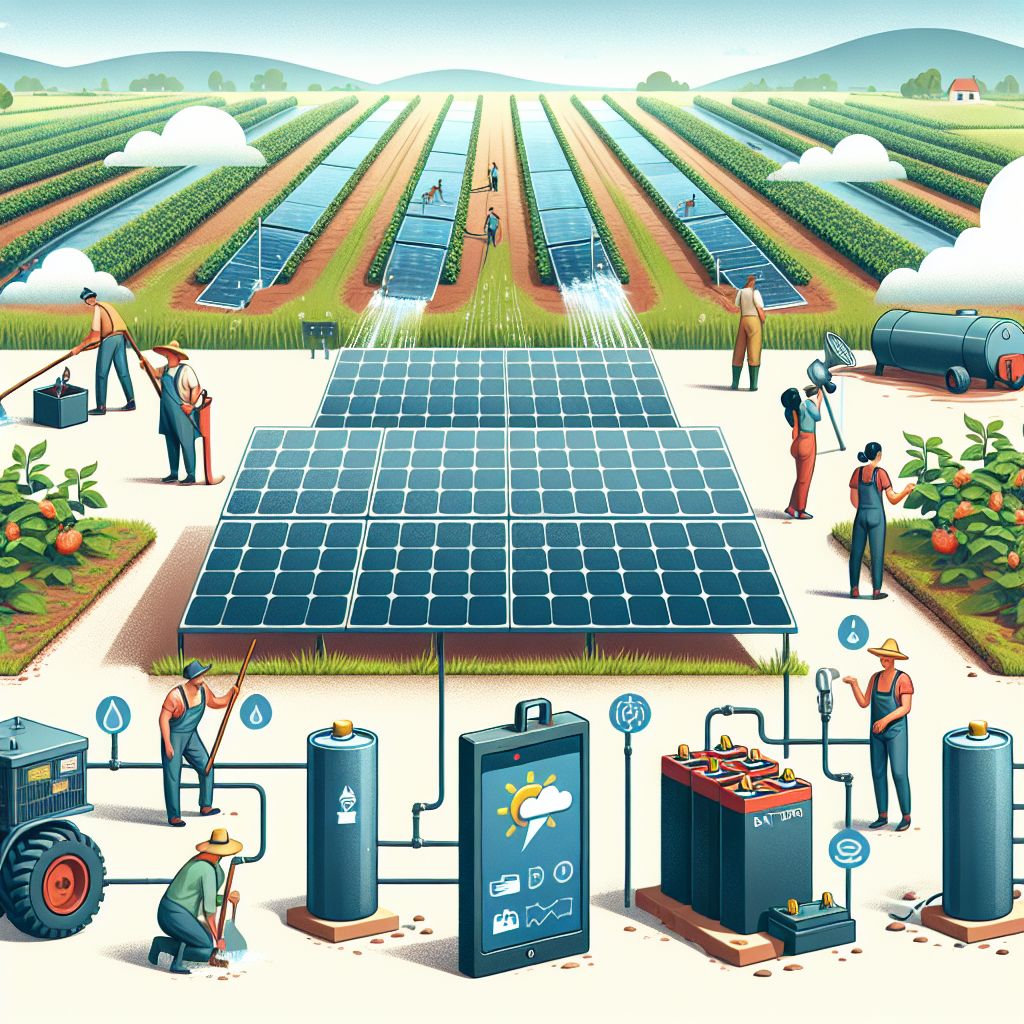
Solar-powered irrigation systems have a lot of upsides, but they also have some downsides. If you know what these downsides are and how to fix them, you can make your system work better for you. For example, understanding the use of solar panels to power a water pump can be crucial in addressing common issues.
Addressing Power Storage Issues
Power storage is a frequent problem with solar-powered irrigation systems. If your batteries don’t store enough energy, your system may not work well at night. To fix this problem, use batteries that are the correct size and type for your system. Check your batteries often and maintain them so they work right.
When you notice your batteries aren’t retaining power, it’s likely they need to be swapped out. Batteries can lose their efficiency at holding power over time. To avoid this, consider purchasing high-quality, long-lasting batteries.
Handling Weather-Related Issues
The weather can also affect how well your solar-powered irrigation system works. For instance, if it’s cloudy for a long time, your solar panels might not be able to collect as much energy. You could add more panels to collect more energy. Or you could use a backup generator to keep your system running when it’s cloudy for a long time.
In addition to this, high and low temperatures can have an impact on the performance of batteries. You should make sure that your batteries are kept in an environment where the temperature is regulated to avoid them getting damaged and to keep them working efficiently. For more information, check out these solar power farm heating solutions.
Maintaining Equipment Performance
It’s important to perform regular maintenance on your solar-powered irrigation system to keep it running at peak performance. This includes tasks like cleaning your solar panels, checking on your batteries, and making sure your irrigation system is free of clogs and leaks. Regular maintenance can help you catch small problems before they turn into big ones.
Here are some maintenance tips to keep your system running smoothly:
Regularly clear your solar panels of dust, dirt, and debris.
Regularly inspect your batteries for signs of wear or corrosion and replace them as necessary.
Regularly check your irrigation system for clogs, leaks, and other problems that could affect its performance.
Regularly monitor your system’s overall performance and address any problems promptly.
Real-World Applications and Case Studies
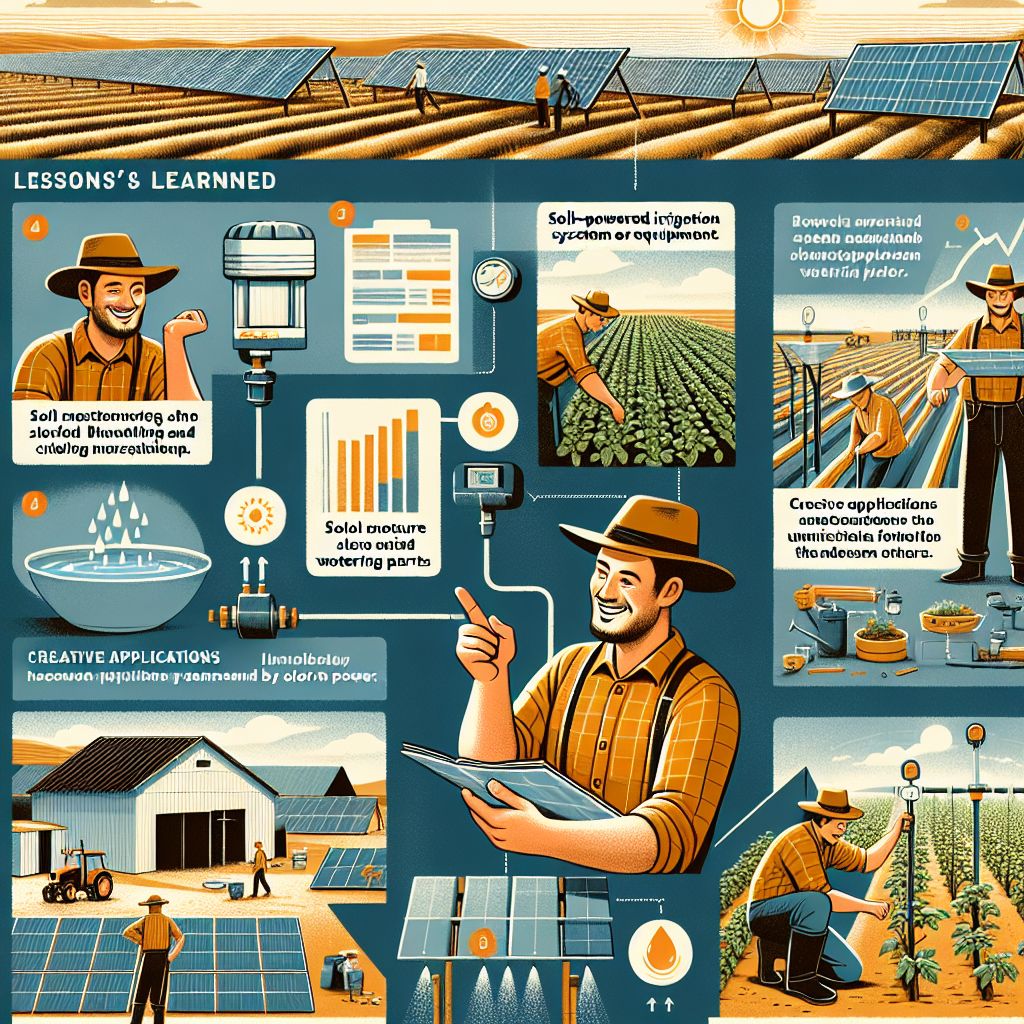
To gain a better understanding of the benefits and challenges of solar-powered irrigation systems, let’s look at some real-world uses and case studies. These examples show how farmers have successfully used these systems and the lessons they’ve learned in the process.
Success Stories from Farmers
There are numerous examples of farmers who have successfully switched to solar-powered irrigation systems. They have enjoyed the benefits of lower energy bills and more efficient water use. For instance, a farmer in California made the switch to solar power and experienced a 40% drop in their energy bills. This allowed them to use the money they saved to invest in other parts of their farm, thereby increasing both productivity and sustainability.
Lessons Learned from Practical Implementations
Those farmers who have already set up solar-powered irrigation systems have a few key lessons to share. One of the most important is that careful planning and choosing the right equipment is crucial. By selecting the correct components and designing a system that fits their unique needs, farmers can ensure their irrigation systems are both efficient and reliable.
Another thing to consider is the significance of routine upkeep and supervision. Farmers who keep up with their maintenance duties and handle problems quickly can make sure their systems keep running smoothly and successfully.
Creative Applications of Solar-Powered Irrigation
Beyond conventional irrigation, solar-powered systems can be employed creatively to enhance agricultural operations. For instance, a few farmers have combined solar-powered irrigation with precision farming technologies like soil moisture sensors and automated watering systems. This enables them to fine-tune water consumption and guarantee their crops get the necessary amount of water when they need it.
In addition, solar-powered irrigation systems can be used in remote areas where there is limited access to electricity. By using the power of the sun, farmers in these areas can sustain productive and sustainable farming operations without depending on expensive and unreliable energy sources.
Frequently Asked Questions (FAQ)
Here are some typical questions about solar-powered irrigation systems and how they work at night:
What is the length of time a solar battery can power an irrigation pump during the night?
The length of time a solar battery can power an irrigation pump during the night is dependent on the capacity of the battery and the energy consumption of the pump. Usually, a battery that is the right size can provide power for several hours, ensuring your crops get enough water throughout the night.
Which crops gain the most from nighttime irrigation?
There are numerous crops that gain from nighttime irrigation, particularly those that are vulnerable to water stress, such as fruits, vegetables, and leafy greens. By providing these crops with water during the night, you can minimize water loss from evaporation and ensure they get the hydration they require to flourish.
How does the solar battery system work with the irrigation pump to ensure smooth operation and reduce energy loss?
The solar battery system works with the irrigation pump via a charge controller and an inverter. The charge controller manages the energy flow from the solar panels to the batteries, and the inverter changes the stored energy from DC to AC, which the pump uses. This configuration ensures smooth operation and reduces energy loss.
How does the system transition between solar power and battery power to keep the irrigation pump running smoothly and without interruption?
The charge controller handles the transition between solar power and battery power. The controller sends energy from the solar panels to the pump and the batteries during the day. At night, it changes to use the stored energy in the batteries to power the pump. This automatic transition keeps the operation running smoothly and without interruption.
What kind of maintenance is required for the solar batteries to ensure optimal performance of the irrigation pump at night?
To ensure optimal performance of your solar batteries, regular maintenance is essential. For more information on effective strategies, you can refer to this article on solar battery-powered nighttime irrigation. This includes:
Make sure to clean the battery terminals to avoid corrosion.
Always check the battery charge levels. They should not be overcharged or deeply discharged.
Look for signs of wear or damage on the batteries and replace them when necessary.
The batteries should be kept in a temperature-controlled environment to avoid overheating or freezing.
By keeping these maintenance tips in mind, you can ensure that your solar batteries remain reliable and efficient, providing the power needed for nighttime irrigation.







Leave a Reply