
Key Takeaways
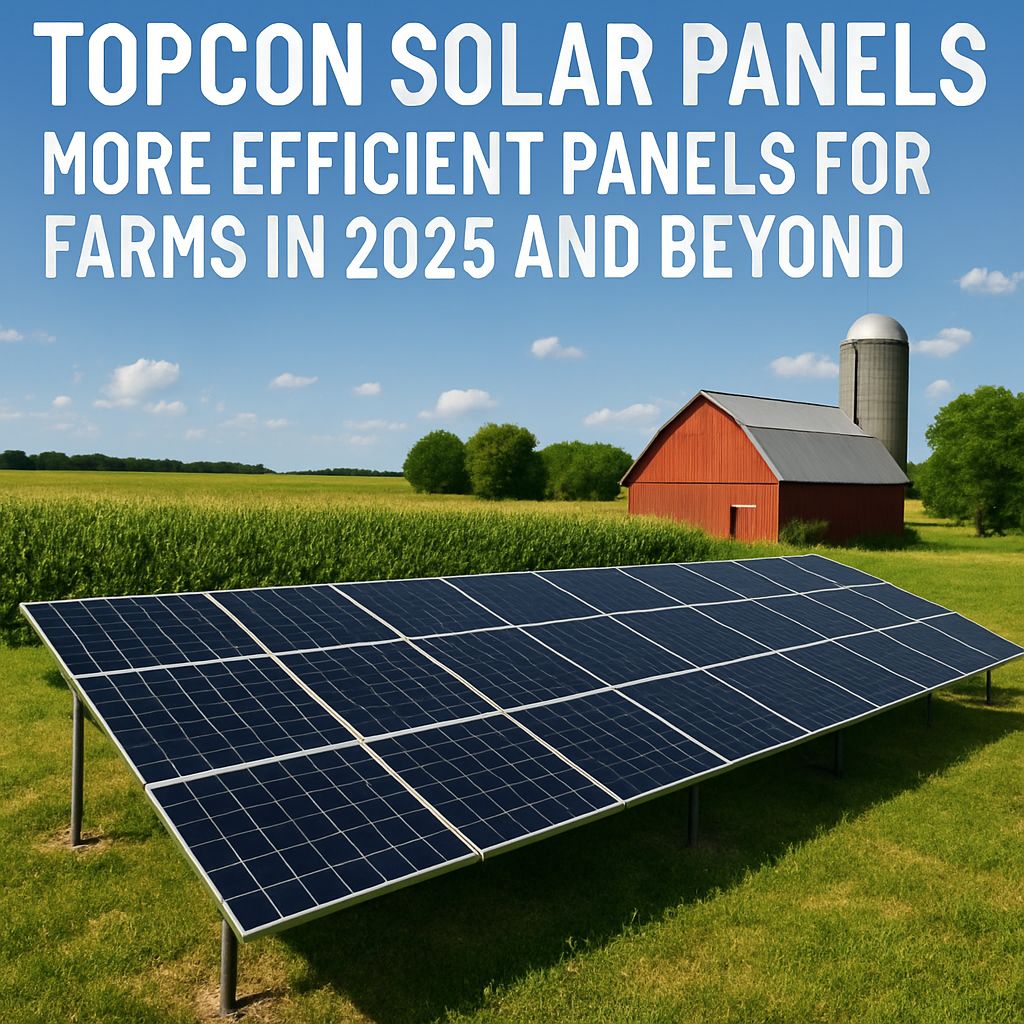
- TOPCon solar panels convert more sunlight into electricity than older panel types, making them one of the most efficient choices for powering farm operations in 2025 and beyond.
- Farms can offset 70–100% of their electricity needs with a properly sized TOPCon system, using 15–20% less space than conventional panels for the same power output.
- The bifacial design of TOPCon panels captures reflected light from the ground beneath them — a major advantage on open farmland where albedo effect is significant.
- TOPCon panels are built to last 25–30+ years, aligning with the long-term investment horizons that define most agricultural operations.
- Keep reading to find out how agrivoltaics — growing crops and generating solar power on the same land — could transform how your farm operates.
Energy costs are quietly draining farm profits, and TOPCon solar panels are one of the most effective tools available right now to stop that leak. TOPCon technology, and the results speak for themselves — lower overhead, greater energy independence, and systems that hold up under real farm conditions.
What Are TOPCon Solar Panels
TOPCon stands for Tunnel Oxide Passivated Contact. It is a solar cell architecture that adds an ultra-thin layer of tunnel oxide and a doped polysilicon layer to the rear of an n-type silicon cell. This design dramatically reduces the energy lost at the cell’s surface — what engineers call “recombination loss” — and allows more electrons to flow freely and generate electricity.
In practical terms, TOPCon panels achieve efficiency ratings between 22% and 24%, compared to 19–21% for standard PERC panels. That gap may sound small, but across a full farm installation, it translates to significantly more kilowatt-hours from the same footprint.

TOPCon Solar Panels Are Changing How Farms Use Energy
The future of farming isn’t just about what grows in your fields — it’s also about how you power those operations. American farms face unique energy challenges: seasonal demand swings, remote locations far from reliable grid infrastructure, and exposure to weather conditions that would degrade lesser equipment. Standard solar solutions were never designed with these realities in mind.
TOPCon technology addresses these challenges directly. Major manufacturers including Trina Solar, JinkoSolar, and Canadian Solar now offer agricultural-specific TOPCon product lines engineered for farm environments — with mounting systems designed to preserve cropland and performance specs tested against real-world agricultural conditions.
As grid electricity prices continue to climb, the economics of on-site solar generation have never been more compelling for farm operators. TOPCon panels don’t just reduce your energy bill — they position your operation for the shift toward electric farm vehicles and machinery, insulating your bottom line from volatile fuel prices that have significantly impacted farm profitability in recent years.
Why TOPCon Panels Outperform Standard Solar on Farms
Not all solar panels perform the same way in agricultural environments. Farms demand more from their equipment — longer hours, broader temperature swings, and less tolerance for underperformance. Here’s where TOPCon technology separates itself from older panel types.
Higher Efficiency Ratings Than Conventional Panels
TOPCon panels consistently deliver 22–24% cell efficiency, outperforming standard PERC panels which typically cap out around 21%. For farms where rooftop or ground space is at a premium — whether due to existing structures, cropping systems, or terrain — that efficiency advantage means you can generate more power without consuming more land.
The degradation rate is equally important. TOPCon panels degrade at approximately 0.4% per year, compared to 0.5–0.7% for older PERC technology. Over a 25-year system life, that difference preserves significantly more generating capacity — and more dollars in your operating budget.
Better Performance in Low Light and Overcast Conditions
Farms don’t stop operating when clouds roll in, and neither do well-designed TOPCon systems. The tunnel oxide passivated contact design enhances electron flow even under diffuse light conditions — meaning your system keeps generating meaningful power during overcast mornings, hazy afternoons, and the low-angle sunlight of early spring and late fall harvests. This is a direct performance advantage over conventional panels, which see sharper output drops under the same conditions.
Bifacial Design Boosts Output on Open Farmland
Most TOPCon panels are manufactured with a bifacial design — solar cells on both the front and rear of the panel. The rear side captures sunlight reflected off the ground surface below, a phenomenon known as the albedo effect. Open farmland, light-colored soil, gravel pathways, and even snow cover all reflect meaningful amounts of light back up toward the panel’s underside.
Real-World Example: A ground-mounted TOPCon bifacial array installed over light sandy soil on a Midwest grain farm can see rear-side energy gains of 10–20% compared to a monofacial installation of identical panel count. Over a 25-year system life, that additional output compounds into substantial cost savings — without adding a single extra panel to the installation.
The Real Cost Benefits for Agricultural Operations
The upfront cost of TOPCon panels runs slightly higher than PERC equivalents, but the total cost picture over a system’s lifetime shifts decisively in TOPCon’s favor. For agricultural operations planning energy infrastructure that will serve the farm for decades, the long-term math matters far more than the initial invoice.
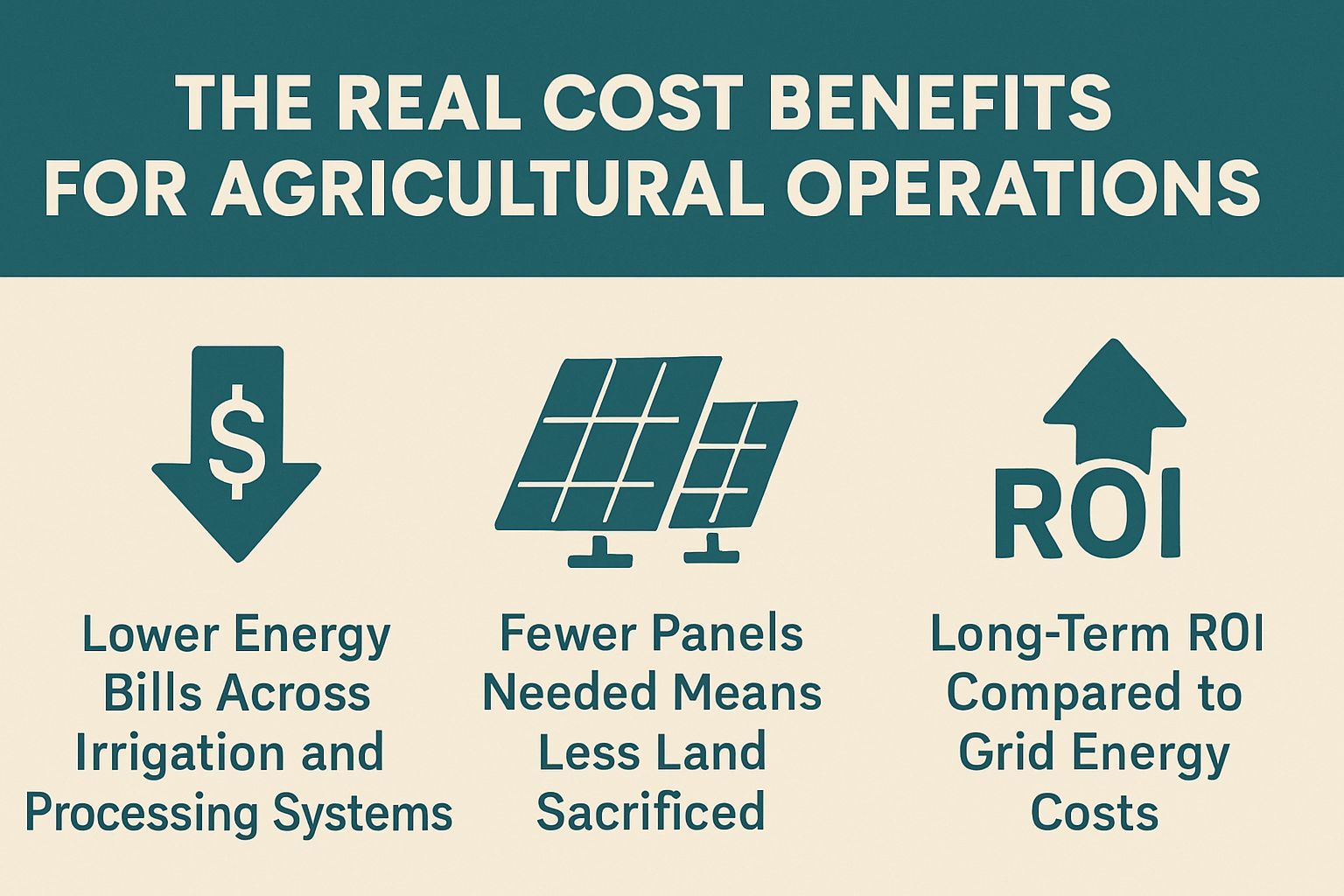
Lower Energy Bills Across Irrigation and Processing Systems
Irrigation pumps, grain dryers, refrigeration units, ventilation systems, and crop processing equipment all draw significant and consistent electrical loads. These are exactly the kinds of high-consumption applications where TOPCon solar generation delivers the fastest and most measurable return. Farms that generate their own electricity at the point of use eliminate transmission losses and insulate themselves from rate increases that have consistently outpaced general inflation.
Fewer Panels Needed Means Less Land Sacrificed
Because TOPCon panels generate more power per square meter, farms can offset the same energy load with 15–20% fewer panels compared to a conventional PERC installation. That means less ground-mounted infrastructure, fewer structural loads on barns and outbuildings, and less visual and physical disruption to working farm operations. For farms where every acre of productive land carries economic value, this efficiency advantage has real meaning beyond the energy bill.
Long-Term ROI Compared to Grid Energy Costs
The return on investment for TOPCon solar on farms comes from multiple directions simultaneously. Lower energy bills are the most visible benefit, but the calculation also includes reduced degradation over time, lower maintenance costs compared to generator-based backup systems, and the ability to lock in your energy cost at installation rather than absorbing annual utility rate increases.
Most farms can expect to offset 70–100% of their electricity needs with an appropriately sized TOPCon system. Payback periods for agricultural solar installations typically range from 6 to 10 years, after which the system generates effectively free electricity for another 15–20+ years of its operational life.
- Grid electricity rates for commercial agricultural users have risen steadily, making on-site generation increasingly competitive year over year
- Federal Investment Tax Credit (ITC) currently allows eligible farms to deduct a significant percentage of system cost from federal taxes
- USDA REAP grants (Rural Energy for America Program) provide additional financial support specifically for agricultural solar installations
- Net metering programs in many states allow farms to sell excess generation back to the grid, further improving the economics
- Accelerated depreciation under MACRS allows farm businesses to depreciate solar assets quickly, improving early-year cash flow
When stacked together, these incentives can reduce the effective net cost of a TOPCon installation by 40–60% in many cases, dramatically shortening payback timelines and improving overall project economics.
The comparison to continuing grid dependency becomes even clearer when you factor in the long-term trajectory of energy prices. Every year you delay solar installation is another year of full exposure to utility rate increases — costs that a TOPCon system would have eliminated from your operating budget.
Durability Built for Harsh Farm Environments
Farm equipment gets tested in ways that suburban and commercial installations never experience. Dust, chemical exposure from fertilizers and pesticides, hail, high winds, temperature extremes from baking summer afternoons to frozen winter nights — TOPCon panels are engineered to handle all of it without meaningful performance loss.
Weather and Temperature Resistance
TOPCon panels carry standard certifications including IEC 61215 and IEC 61730, covering mechanical load resistance, hail impact, humidity, and temperature cycling. Most agricultural-grade TOPCon panels are rated to withstand hailstones up to 25–35mm in diameter at impact speeds common during severe weather events — a critical specification for farms in hail-prone regions like the Great Plains and Midwest.
The temperature coefficient of TOPCon panels also works in your favor during hot summer months. TOPCon panels typically carry a temperature coefficient of around -0.29% per °C, meaning they lose less output as panel surface temperatures climb under intense summer sun compared to older PERC panels, which often carry coefficients of -0.35% per °C or worse. On a hot July afternoon with panels reaching 65°C surface temperature, that difference translates directly into more kilowatt-hours harvested during your highest-demand season.
Longer Lifespan Than Standard Solar Panels
TOPCon panels are rated for operational lifespans of 25 to 30+ years, with leading manufacturers including Trina Solar and JinkoSolar offering product warranties that match this expectation. The lower annual degradation rate of approximately 0.4% per year means that at year 25, a TOPCon panel is still operating at roughly 90% of its original rated capacity — a meaningful advantage over older technologies that may have degraded to 80% or below by the same point. For farm infrastructure decisions that are planned on decade-long horizons, this longevity matters.
Top Uses of TOPCon Solar Panels on Farms
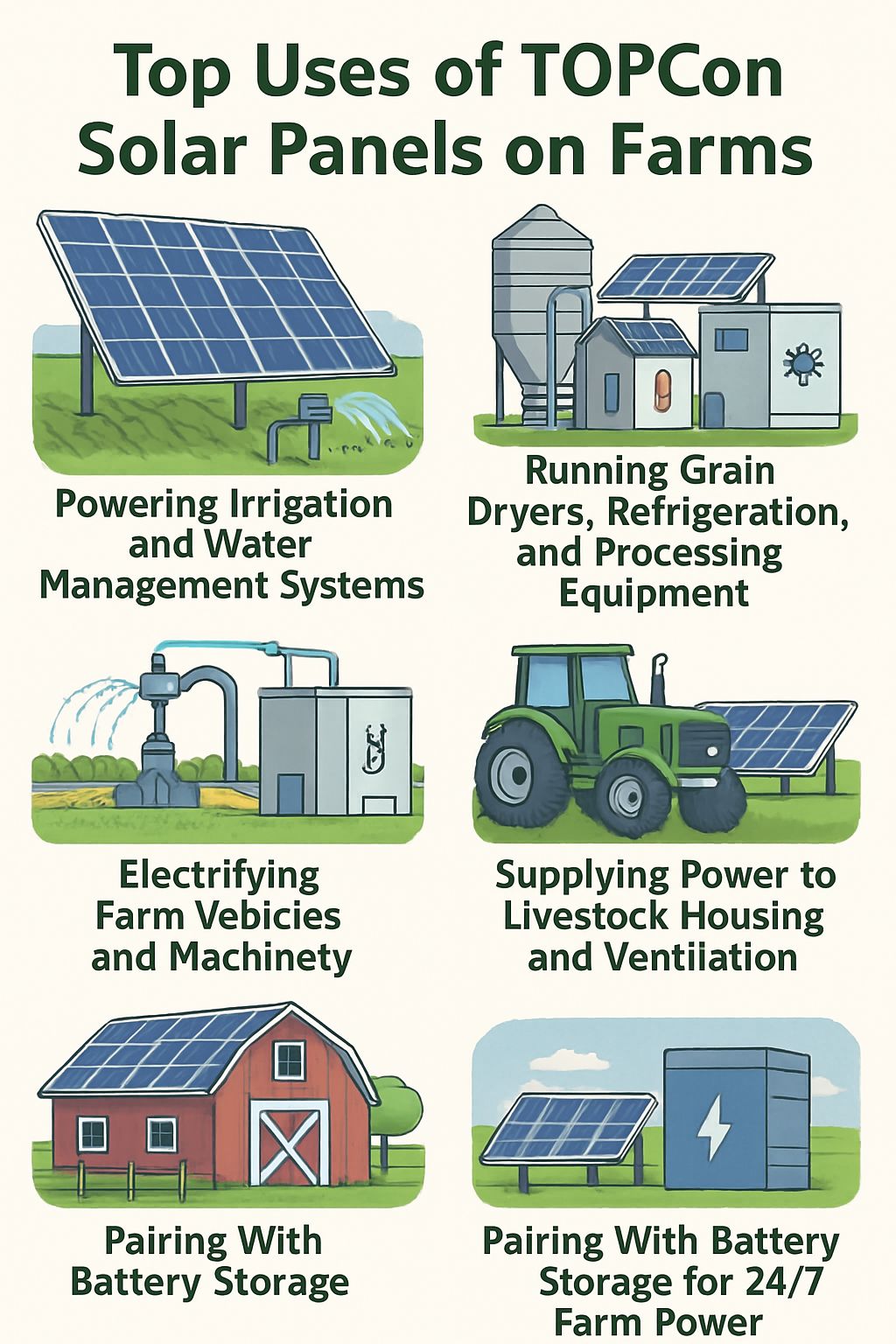
TOPCon solar technology is versatile enough to power virtually every corner of a modern agricultural operation. From water management to post-harvest processing, here are the five highest-impact applications farmers are deploying right now.
1. Powering Irrigation and Water Management Systems
Irrigation is one of the largest and most consistent electrical loads on any farm that relies on pumped water. Solar-powered irrigation using TOPCon panels is a natural fit — peak solar generation aligns closely with peak irrigation demand during hot, dry growing seasons, reducing or eliminating the need for grid draw or diesel generator operation during those high-cost periods.
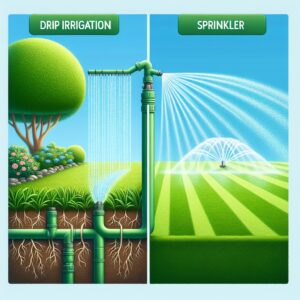
TOPCon’s superior low-light performance means irrigation pumps can begin operating earlier in the morning and continue later into the evening than systems powered by lower-efficiency panels. For farms managing drip irrigation, center pivots, or livestock water systems across large acreages, this extended daily generation window delivers real operational advantages.
2. Running Grain Dryers, Refrigeration, and Processing Equipment
Post-harvest processing represents one of the most energy-intensive phases of farm operations. Grain dryers alone can consume enormous amounts of electricity during harvest season — exactly when utility demand charges are often at their highest. TOPCon solar systems sized to offset these loads can deliver some of the fastest payback periods of any on-farm solar application.
Cold storage and refrigeration for perishable crops, dairy operations, and fresh produce represent continuous loads that benefit from solar generation paired with battery storage. A TOPCon system feeding a properly sized battery bank can keep refrigeration running through the night and during brief grid outages — protecting both your product and your profit margin.
3. Electrifying Farm Vehicles and Machinery
The shift toward electric farm vehicles is accelerating, with major equipment manufacturers expanding their electric tractor and utility vehicle lineups. A TOPCon solar installation provides the on-site generation capacity to charge these vehicles at cost far below grid electricity rates — and at zero cost once the system has paid itself back.
Charging infrastructure for electric farm equipment requires careful load planning, but TOPCon’s higher output per panel simplifies the math. Fewer panels are needed to meet the same charging demand, preserving barn roof capacity and minimizing structural modifications to existing buildings.
Beyond tractors, smaller electric utility vehicles, ATV-style farm workhorses, and electric fencing energizers all benefit from reliable on-site solar generation. As battery technology continues to improve alongside electric drivetrain options, having robust solar infrastructure already in place positions your operation to adopt new equipment without additional energy infrastructure investment.
Comparison: TOPCon vs. PERC for Farm Vehicle Charging
Specification
TOPCon Panel
Standard PERC Panel
Average Efficiency
22–24%
19–21%
Annual Degradation Rate
~0.4%
0.5–0.7%
Temperature Coefficient
-0.29% / °C
-0.35% / °C
Panels Needed (50kW system)
~125 panels
~145–155 panels
Estimated System Lifespan
25–30+ years
20–25 years
4. Supplying Power to Livestock Housing and Ventilation
- Ventilation fans in poultry houses and hog barns run continuously during warm months, drawing significant and predictable electrical loads that align well with solar generation peaks
- Lighting systems for dairy barns, farrowing houses, and laying hen operations can be fully offset by on-site TOPCon generation
- Heating systems for young livestock and waterfowl operations can be powered or supplemented by solar, especially when paired with battery storage for overnight operation
- Automated feeding and watering systems draw modest but continuous loads that are easily handled within a farm-scale TOPCon installation
- Biosecurity and monitoring equipment including cameras, sensors, and alarm systems benefit from solar-backed power that remains operational during grid outages
Livestock operations are particularly well-suited to TOPCon solar because their energy loads are consistent and predictable year-round. Unlike crop farming where energy demand spikes seasonally, livestock facilities maintain relatively stable consumption — making system sizing straightforward and financial projections reliable.
Ventilation is especially critical in intensive livestock housing. During summer heat events, ventilation failure can result in catastrophic animal losses within hours. A TOPCon solar system with battery backup provides an additional layer of resilience that diesel generators alone cannot match — continuous, automatic, and fuel-independent.
The combination of lower operating costs and improved animal welfare outcomes makes TOPCon solar investment particularly compelling for livestock producers. Healthier animals in well-ventilated, properly lit housing perform better — and a solar system that helps maintain those conditions pays dividends beyond the energy bill.
5. Pairing With Battery Storage for 24/7 Farm Power
TOPCon panels generate power during daylight hours, but farm energy demands don’t stop at sunset. Pairing a TOPCon solar array with a battery storage system — such as the Tesla Powerwall 3, SolarEdge Home Battery, or commercial-scale systems like the LG RESU Prime — gives your operation true energy independence around the clock. Excess generation during peak daylight hours charges the battery bank, which then supplies power through the night and during periods of low solar production.
For farms in regions prone to grid outages — whether from storm damage, wildfire risk, or aging rural infrastructure — battery-backed TOPCon systems provide a resilience layer that diesel generators cannot match. There’s no fuel to run out of, no startup delay, and no emissions inside or near livestock housing. The system transitions automatically, keeping critical loads like refrigeration, ventilation, and water pumps running without interruption.
Agrivoltaics: Growing Crops and Generating Power on the Same Land
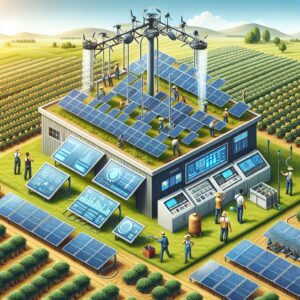
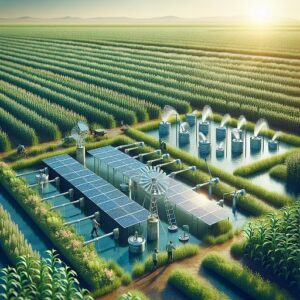
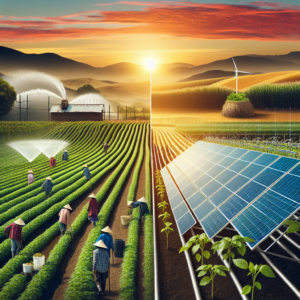
Agrivoltaics is the practice of co-locating solar panels and crop production on the same piece of land — and TOPCon technology is making it more viable than ever. Because TOPCon panels generate more power per square meter than older technologies, agrivoltaic installations can be designed with wider panel spacing, allowing more sunlight to reach the crops below while still hitting energy generation targets. Research from institutions including the National Renewable Energy Laboratory (NREL) has shown that certain crops — including leafy greens, berries, and some root vegetables — can actually perform as well or better under the partial shade of elevated solar panels, especially in hot, dry climates where afternoon sun stress reduces yield.
- Shade-tolerant crops like lettuce, spinach, kale, and herbs show strong yield results under agrivoltaic panel arrays, often with reduced water demand due to lower evapotranspiration
- Berry crops including strawberries and blueberries benefit from the moderated temperature environment created beneath elevated TOPCon panels
- Pasture grass and forage crops used in rotational grazing systems can be grown beneath ground-mounted TOPCon arrays, allowing livestock to graze between and under the panel rows
- Pollinator habitat established beneath solar arrays creates biodiversity benefits while reducing mowing and maintenance requirements for the installation
- Specialty vegetable operations with high land costs per acre benefit most from the dual-income model that agrivoltaics enables — generating revenue from both crop production and energy generation on a single land parcel
The financial case for agrivoltaics strengthens further when you consider land economics. In high-value agricultural regions, dedicating ground to solar-only generation represents a real opportunity cost. Agrivoltaic design eliminates that tradeoff — the same acre generates electricity income, continues producing crop revenue, and in some configurations, reduces irrigation demand through the microclimate effect created beneath the panels. Learn more about the benefits of TOPCon solar panels and how they can enhance agricultural productivity.
TOPCon’s bifacial capability also adds a layer of performance advantage in agrivoltaic configurations. When panels are elevated and tilted at appropriate angles over cropped rows, the rear side of each panel captures reflected light from both the soil surface and the crop canopy below — squeezing additional generation from the same installed capacity. For farms evaluating whether the numbers work on an agrivoltaic project, TOPCon’s superior efficiency and bifacial output are two of the strongest arguments in favor of moving forward.
TOPCon Solar Is a Sound Long-Term Investment for Farmers
The combination of 22–24% efficiency, ~0.4% annual degradation, 25–30+ year lifespan, bifacial output gains, superior low-light performance, and stacked financial incentives makes TOPCon solar panels one of the most strategically sound infrastructure investments available to agricultural operations today. Farms that install TOPCon systems now lock in decades of reduced energy costs, gain resilience against grid instability, and position themselves to adopt the next generation of electric farm equipment without additional energy infrastructure investment. The question for most farm operators is no longer whether solar makes sense — it’s whether they can afford to keep waiting.
Frequently Asked Questions
Below are answers to the most common questions farm operators ask when evaluating TOPCon solar for their agricultural operations.
What makes TOPCon solar panels different from standard solar panels?
TOPCon panels use a Tunnel Oxide Passivated Contact cell architecture that adds an ultra-thin tunnel oxide layer and doped polysilicon to the rear of an n-type silicon cell. This design reduces electron recombination loss at the cell surface, allowing more generated electrons to contribute to usable electricity output. The result is higher efficiency ratings (22–24% vs. 19–21% for PERC), lower annual degradation (~0.4% vs. 0.5–0.7%), better low-light performance, and longer operational lifespan — all of which matter significantly in agricultural energy applications where systems are expected to perform reliably for decades.
Are TOPCon solar panels worth the higher upfront cost for small farms?
Yes — especially when the full financial picture is considered. The premium over standard PERC panels has narrowed significantly as TOPCon manufacturing has scaled globally. When you account for fewer panels needed to hit the same generation target, lower degradation over the system’s life, and longer warranty coverage, the total cost of ownership for a TOPCon installation is often lower than a larger PERC installation that achieves equivalent output.
For small farms, the calculus also involves the available incentive stack. USDA REAP grants can cover up to 50% of eligible project costs for agricultural renewable energy installations. Combined with the federal Investment Tax Credit and potential state-level incentives, a small farm can often bring the net installed cost down to a level where payback occurs within 5–8 years — leaving 20+ years of near-free electricity generation ahead.
How many TOPCon panels does a typical farm need to power its operations?
System sizing depends on your farm’s total annual energy consumption, local solar irradiance, and how much of your load you want to offset. As a general benchmark, a farm consuming 100,000 kWh per year — typical for a mid-size operation with irrigation, livestock housing, and processing equipment — would require approximately 60–80 TOPCon panels rated at 400–450W each in a high-irradiance region like the Southwest, or closer to 90–110 panels in lower-irradiance regions like the Pacific Northwest or Upper Midwest. A qualified solar installer can model your specific load profile and local conditions to determine the right system size.
Can TOPCon panels work in cloudy or cold farming regions?
Yes, and they outperform older panel types in these conditions. TOPCon’s enhanced electron flow design captures more energy from diffuse light — the scattered, indirect light present on overcast days — than conventional PERC panels. Farms in cloudy agricultural regions including the Pacific Northwest, the Great Lakes area, and the Northeast can still generate substantial solar energy across the year, even without the intense daily irradiance of sunnier states.
Cold temperatures actually improve solar panel output. Solar panels generate electricity more efficiently in cold conditions than in hot ones — it’s heat, not cold, that reduces solar panel performance. TOPCon’s lower temperature coefficient of -0.29% per °C means that even on hot summer days, TOPCon panels outperform PERC equivalents that carry higher temperature penalties.
Snow is manageable in most agricultural solar installations. Ground-mounted arrays can be positioned at steeper tilt angles in northern regions to encourage snow shedding. Roof-mounted systems on barn slopes naturally shed snow as the panel surface warms. Brief periods of snow cover represent minimal generation losses over a full year’s output, and the reflective effect of snow-covered ground around ground-mounted TOPCon bifacial arrays can actually boost rear-side generation during the sunny winter days that follow snowfall events.
What government incentives are available for farmers installing TOPCon solar panels?
The USDA Rural Energy for America Program (REAP) is the most direct and substantial incentive available specifically to agricultural operations. REAP provides grants covering up to 50% of eligible project costs and loan guarantees for the remainder, making it possible for farms to install high-quality TOPCon systems with significantly reduced upfront capital requirements. Applications are accepted on a rolling basis, and the program has historically been well-funded — though applying early in each funding cycle improves your chances of award.
The federal Investment Tax Credit (ITC) under the Inflation Reduction Act allows eligible farm businesses to claim a tax credit equal to a significant percentage of solar system installation costs in the year the system is placed in service. Farm operations structured as pass-through entities — LLCs, S-Corps, partnerships — can pass this credit through to individual owners’ tax returns. Combined with MACRS accelerated depreciation, which allows farm businesses to depreciate solar assets over a 5-year schedule, the early-year tax benefits of a TOPCon installation can be substantial.
Many states offer additional incentives layered on top of federal programs, including property tax exemptions for solar installations, sales tax exemptions on solar equipment purchases, and state-level grant or rebate programs targeted at agricultural producers. Net metering policies in most states allow farms that generate more power than they consume to receive credit on their utility bills for excess generation returned to the grid — further improving the financial return on a well-sized TOPCon installation. A local agricultural solar installer or your state’s energy office can provide a current summary of available incentives in your specific location.

Leave a Reply