
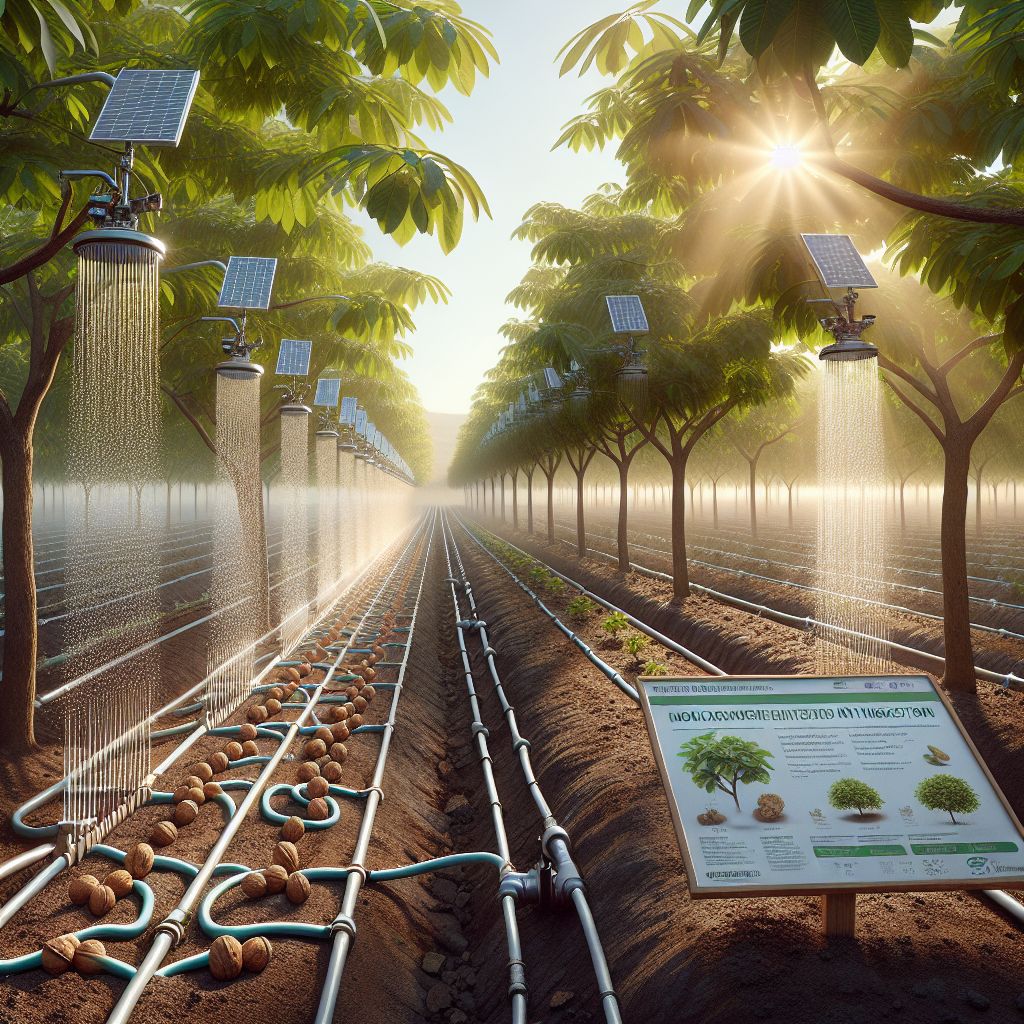
Key Takeaways
Drip irrigation is the most efficient method for watering walnut trees, reducing water wastage significantly.
Monocrystalline solar panels are highly efficient and ideal for powering irrigation systems on walnut farms.
Initial costs for solar-powered irrigation systems are high but offer long-term savings and environmental benefits.
Choosing the right irrigation method depends on factors such as soil type, climate, and farm size.
Government incentives can help offset the costs of installing solar-powered irrigation systems.
Why You Should Use Solar Panels with an Irrigation System for Growing Walnuts
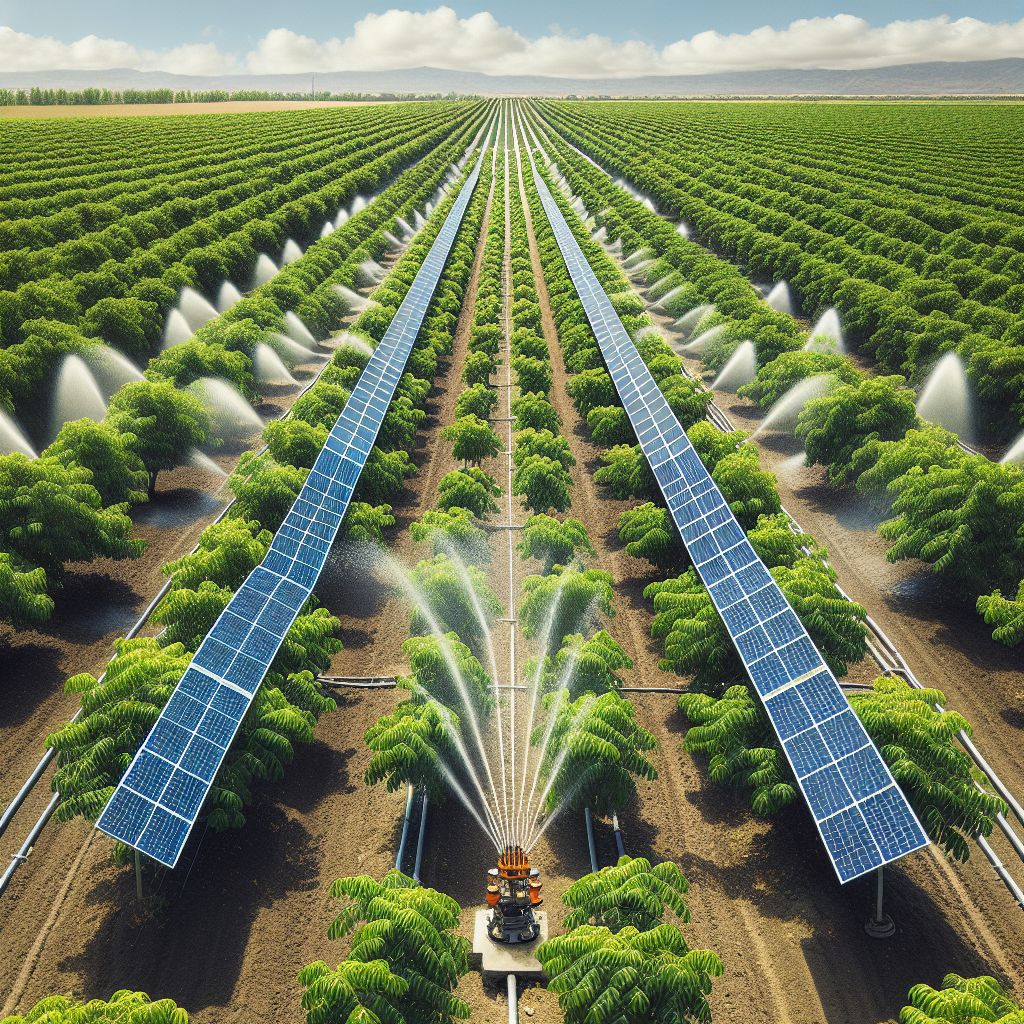
Integrating solar panels with your walnut orchard’s irrigation system offers numerous advantages. It’s not only an environmentally friendly option but also a financially smart decision. By harnessing the power of the sun, you can ensure a consistent and reliable water supply for your trees while reducing your carbon footprint.
Environmental Benefits
Using solar panels to power your irrigation system significantly reduces your reliance on fossil fuels. This helps decrease greenhouse gas emissions, making your farm more sustainable. Additionally, solar energy is a renewable resource, ensuring that you have a long-term, eco-friendly solution for your irrigation needs.
Consider this: Traditional irrigation systems often rely on electricity from the grid, which is typically generated from non-renewable sources. By switching to solar power, you are directly contributing to a cleaner environment.
“Switching to solar-powered irrigation can reduce your farm’s carbon footprint by up to 30%.”
Long-Term Cost Savings
Although the initial investment for solar panels can be high, the long-term savings are substantial. Solar panels have low maintenance costs and can last for 25 years or more. Over time, the savings on your energy bills will outweigh the initial costs, making it a worthwhile investment.
For instance, a traditional irrigation system may cost you hundreds of dollars in electricity bills annually. In contrast, a solar-powered system, once installed, harnesses free energy from the sun, drastically cutting down your operational costs.
Reliability and Energy Independence
Solar-powered irrigation systems offer greater reliability and energy independence. You won’t be affected by power outages or fluctuations in electricity prices. This means that your walnut trees will always have a consistent water supply, regardless of external factors. For more insights, explore solar-powered irrigation for growing cauliflower.
Moreover, in remote areas where access to the power grid is limited, solar panels provide a viable and dependable solution for irrigation.
Government Incentives
Many governments offer incentives and rebates for installing solar-powered systems. These incentives can significantly reduce the initial cost of setting up your solar irrigation system. It’s worth researching the specific incentives available in your area to take full advantage of these financial benefits.
For example, the federal solar tax credit in the United States allows you to deduct a significant percentage of the installation cost from your federal taxes, making the investment more affordable. Learn more about irrigation systems you can connect to solar panels for more efficiency.
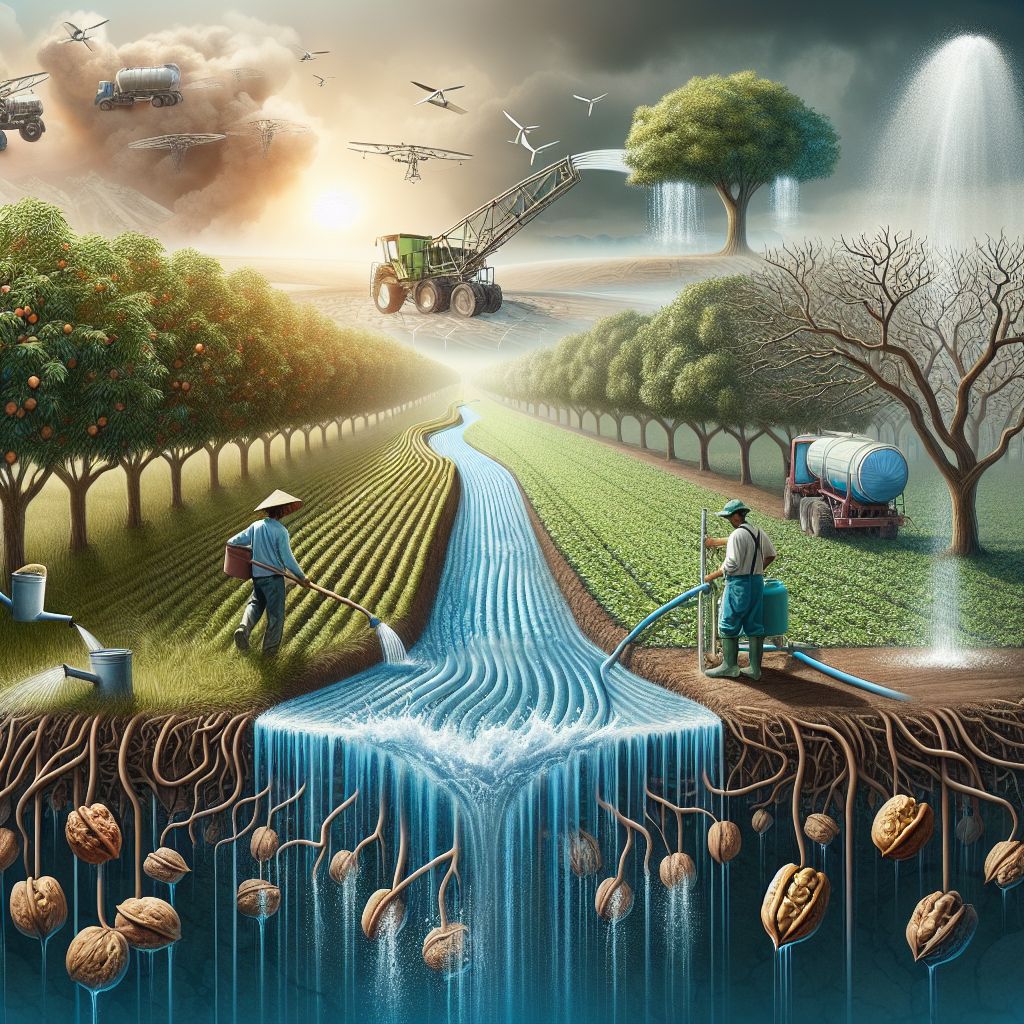
Top Irrigation Methods Used by Walnut Farmers
Choosing the right irrigation method is crucial for the health and productivity of your walnut trees. Each method has its own set of advantages and is suitable for different conditions. Let’s explore the most commonly used irrigation techniques by walnut farmers.
Drip Irrigation
Drip irrigation is one of the most efficient methods for watering walnut trees. This system delivers water directly to the root zone of each tree, minimizing water wastage due to evaporation or runoff. It ensures that the trees receive a consistent and adequate water supply, promoting healthy growth. For more information, check out this Walnut Plantation-Drip-Irrigation System.
Drip irrigation systems are relatively easy to install and can be automated to save time and labor. They are particularly effective in areas with limited water resources, as they use water more efficiently compared to other methods.
“Drip irrigation can reduce water usage by up to 50% compared to traditional methods.”
Sprinkler Systems
Sprinkler systems are another popular choice among walnut farmers. These systems distribute water evenly across the orchard, simulating natural rainfall. They are suitable for a variety of soil types and can cover large areas efficiently.
However, sprinkler systems may result in higher water wastage due to evaporation and wind drift. They also require more maintenance compared to drip irrigation systems.
Flood Irrigation
Flood irrigation involves flooding the entire orchard with water, allowing it to soak into the soil. This method is less efficient than drip or sprinkler systems, as it can lead to significant water wastage through runoff and evaporation.
Flood irrigation is typically used in areas with abundant water resources and flat terrain. It requires minimal infrastructure and is relatively easy to implement.
Choosing the Right Method
When deciding on the best irrigation method for your walnut orchard, consider the following factors:
Soil type: Different soils have varying water retention capacities.
Climate: Consider the local climate and weather patterns.
Farm size: Larger farms may benefit from sprinkler systems, while smaller farms might find drip irrigation more suitable.
Water availability: In areas with limited water resources, drip irrigation is the most efficient choice.
By carefully evaluating these factors, you can choose the most effective irrigation method for your walnut orchard, ensuring healthy and productive trees.
Now that we took a look at irrigation systems, let’s take a look at the solar panels that will power them.
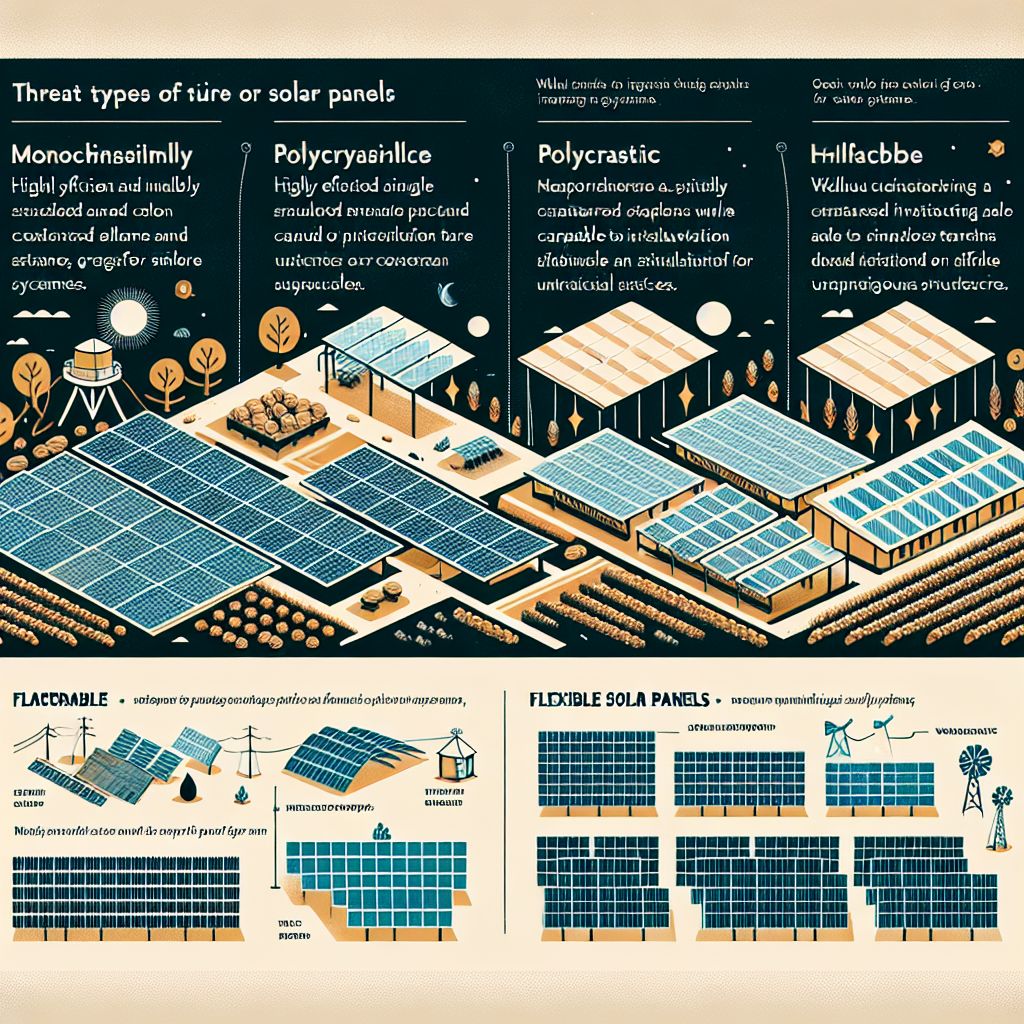
Top Solar Panels for Your Walnut Farmers Irrigation System
Choosing the right type of solar panels for your irrigation system is essential for maximizing efficiency and cost savings. Here are some of the top solar panel options for walnut farmers.
Monocrystalline Panels: High Efficiency in Limited Spaces
Monocrystalline solar panels are known for their high efficiency and long lifespan. They are made from a single crystal structure, which allows them to convert sunlight into electricity more effectively than other types of panels.
These panels are ideal for walnut farms with limited space, as they produce more power per square foot. Although they are more expensive upfront, their higher efficiency can lead to greater long-term savings. For more information on efficient watering techniques, check out solar irrigation for growing pineapples.
Polycrystalline Panels: Cost-Effective Energy Solution
Polycrystalline solar panels are made from multiple crystal structures, making them less efficient than monocrystalline panels. However, they are more affordable and still provide a reliable source of energy for your irrigation system.
These panels are a good option for farmers looking to balance cost and efficiency. They are suitable for larger farms where space is not a constraint.
Thin-Film Panels: Flexibility and Versatility
Thin-Film panels are lightweight and can be installed on a variety of surfaces. They are less efficient than monocrystalline and polycrystalline panels but offer greater versatility.
These panels are an excellent choice for farms with uneven terrain or unconventional structures. They can be easily moved and adjusted to optimize sunlight exposure. For more information on optimizing your farm’s energy use, check out this guide on solar panels for farms.
Here is a table showing the pros and cons of using different types of solar panels with an irrigation system on a farm:
|
Panel Type |
Pros |
Cons |
|---|---|---|
|
Monocrystalline Panels |
– High efficiency (15-22%), producing more power per square foot. 1, 2, 4 | |
|
Polycrystalline Panels |
– Lower upfront cost than monocrystalline. 1, 2 |
– Lower efficiency and shorter lifespan than monocrystalline. 2, 4 |
|
Thin-Film Solar Panels |
– Lowest upfront cost. 1, 2 |
– Lowest efficiency (7-13%). 2, 4 |
What is the Best Solar Panels to Use on a Walnuts Orchard
When selecting the best solar panels for your walnut orchard, consider the following: efficient watering techniques and systems.
Efficiency: Higher efficiency panels produce more power in less space.
Cost: Balance the initial investment with long-term savings.
Space: Consider the available space for panel installation.
Durability: Choose panels with a long lifespan and low maintenance requirements.
By evaluating these factors, you can select the most suitable solar panels for your walnut orchard, ensuring an efficient and sustainable irrigation system.
Choosing the Right Method
Choosing the right irrigation method for your walnut orchard can make a significant difference in water usage efficiency and tree health. It’s important to consider factors like soil type, climate, and farm size to determine the most suitable method. For example, drip irrigation is highly efficient in areas with limited water resources, while sprinkler systems can cover larger areas more uniformly.

Cost and Efficiency Comparison: Solar Irrigation Systems Versus Traditional Irrigation Systems for Growing Walnuts
Comparing the costs and efficiency of solar irrigation systems with traditional irrigation systems is crucial for making an informed decision. Here’s a breakdown of the key factors to consider.
Initial Investment for Both Systems
The initial investment for a solar-powered irrigation system is generally higher than that of a traditional system. This includes the cost of solar panels, installation, and any additional equipment needed for integration.
For instance, the cost of installing a solar-powered irrigation system can range from $10,000 to $30,000, depending on the size of your farm and the type of panels used. In contrast, a traditional electric-powered system may cost between $5,000 and $15,000.
However, it’s important to consider the long-term savings and environmental benefits that come with a solar-powered system.
Solar-powered system: $10,000 – $30,000
Traditional electric-powered system: $5,000 – $15,000
Operational Costs for Both Systems
Operational costs for solar-powered irrigation systems are significantly lower than those for traditional systems. Once installed, solar panels harness free energy from the sun, reducing or eliminating electricity bills.
Traditional systems, on the other hand, incur ongoing costs for electricity, which can add up over time. Maintenance costs for solar panels are also relatively low, further contributing to long-term savings.
Efficiency of Water use for Both Systems
|
System Type |
Water Efficiency |
Energy Efficiency |
|---|---|---|
|
Solar-powered Drip Irrigation |
High (up to 90%) |
High (renewable energy) |
|
Traditional Drip Irrigation |
High (up to 90%) |
Medium (depends on electricity source) |
|
Solar-powered Sprinkler System |
Medium (70-80%) |
High (renewable energy) |
|
Traditional Sprinkler System |
Medium (70-80%) |
Medium (depends on electricity source) |
As seen in the table, solar-powered systems generally offer higher energy efficiency, while water efficiency depends on the type of irrigation method used.
Break-even Point Analysis for Both Systems
The break-even point for a solar-powered irrigation system is the time it takes for the savings on electricity bills to offset the initial investment. This period can vary depending on factors such as the cost of electricity, the efficiency of the solar panels, and the amount of sunlight received.
On average, the break-even point for a solar-powered irrigation system can range from 5 to 10 years. After this period, the system will continue to provide savings, making it a cost-effective long-term solution.
Here is a table comparing the cost and efficiency of an irrigation system with and without solar panels:
|
Aspect |
Without Solar Panels |
With Solar Panels |
|---|---|---|
|
Initial Cost | ||
|
Operating Cost |
Very low or zero fuel/electricity costs after installation. 1, 4 | |
|
Efficiency |
Depends on energy source efficiency. 4 |
Depends on solar radiation, temperature, system design. 1, 4 |
|
Environmental Impact |
Higher carbon footprint. 1 |
Lower carbon footprint, renewable energy. 1 |
|
Location Flexibility |
Limited to grid-connected or fuel access areas. 3 |
Can be used in remote off-grid areas. 3 |
|
Maintenance | ||
|
Lifespan |
Shorter for fuel-based systems. 1 | |
|
Long-term Costs |
Higher due to recurring fuel/electricity bills. 1 |
Lower total 20-year costs by 50-60% compared to traditional systems. 1 |
|
Government Incentives |
Generally none |
Many governments provide tax credits, subsidies for solar irrigation. 1 |
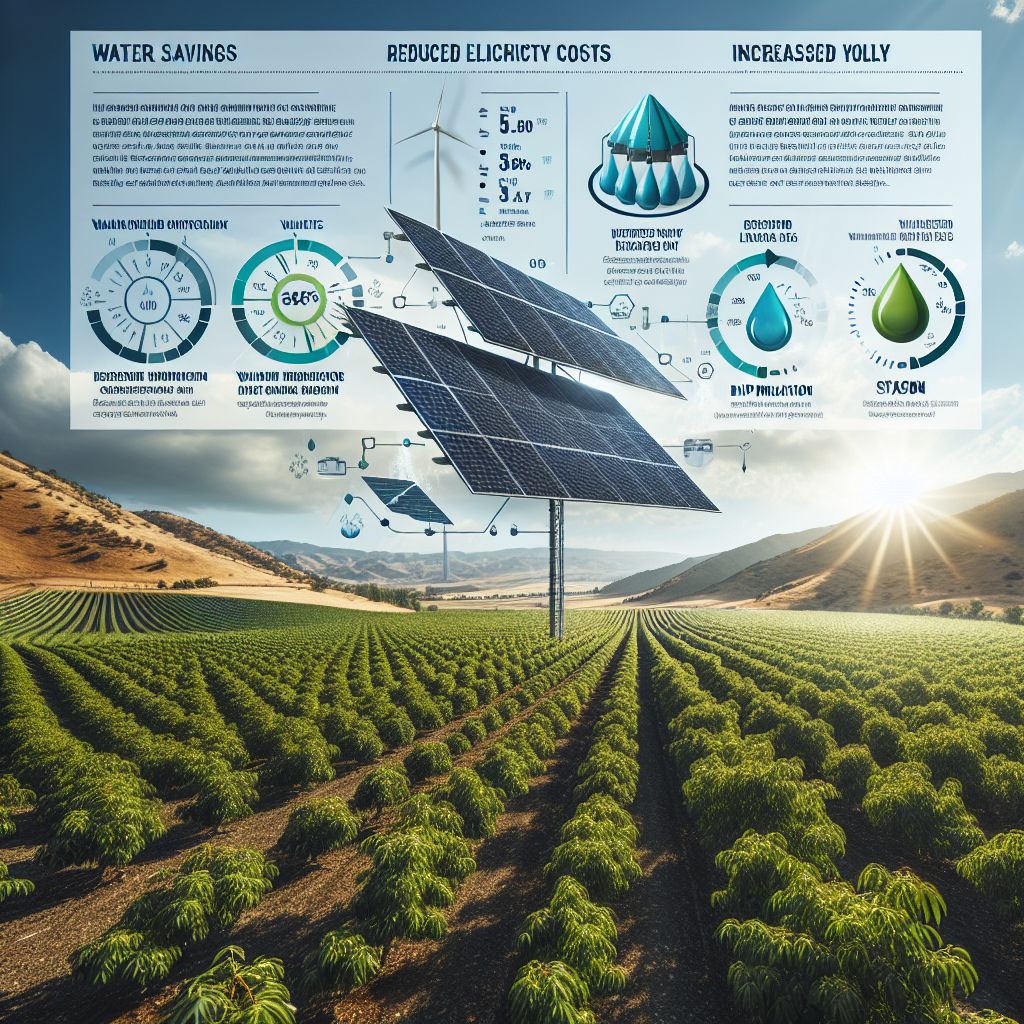
Which Combination of Solar Panels and Irrigation Systems Make the Most Efficient System for Your Walnut Orchards
“The best combination for most walnut orchards is monocrystalline solar panels paired with a drip irrigation system.”
This combination offers the highest efficiency in terms of both energy and water usage. Monocrystalline panels provide reliable power, while drip irrigation ensures that water is delivered directly to the root zone, minimizing wastage.
Best System: Monocrystalline Panels Combined with Drip Irrigation Pairings
Monocrystalline panels, with their high efficiency and long lifespan, are the ideal choice for powering drip irrigation systems. Drip irrigation, in turn, is the most water-efficient method, ensuring that your walnut trees receive the right amount of water without wastage.
This combination is particularly effective in areas with limited water resources and high sunlight exposure. It ensures that your irrigation system is both sustainable and cost-effective, providing long-term benefits for your walnut orchard.
By investing in this combination, you can maximize the productivity of your walnut trees while minimizing your environmental impact and operational costs. For instance, consider using solar irrigation systems to achieve these benefits.
Real-world Case Studies
Real-world examples can provide valuable insights into the effectiveness of solar-powered irrigation systems for walnut orchards. Here are a few case studies that highlight the benefits and challenges of implementing these systems.
One walnut farmer in California decided to switch to a solar-powered drip irrigation system. The farm, covering 50 acres, previously relied on a traditional electric-powered sprinkler system. By making the switch, the farmer reduced water usage by 40% and saw a significant decrease in electricity costs. The initial investment was recouped in just six years, thanks to the savings on energy bills and water efficiency.
Case Study 1: A 50-acre walnut farm in California reduced water usage by 40% and recouped the initial investment in six years.
Case Study 2: A walnut orchard in Spain installed flexible solar panels and a drip irrigation system, leading to a 30% increase in yield and a 50% reduction in water usage.
Case Study 3: A small walnut farm in Australia used polycrystalline panels and a sprinkler system, achieving a balance between cost and efficiency, with a break-even point of eight years.
These case studies demonstrate that solar-powered irrigation systems can offer substantial benefits, including cost savings, water efficiency, and increased yield. However, the success of these systems depends on careful planning and consideration of factors such as climate, soil type, and farm size.
Conclusion: Is it a Smart Decision to Add Solar-Power to an Irrigation System for Your Walnuts Orchards
In conclusion, adding solar power to your irrigation system can be a smart decision for your walnut orchard. The benefits of reduced operational costs, increased water efficiency, and environmental sustainability make it an attractive option for many farmers.
Summary of Benefits
Solar-powered irrigation systems offer numerous advantages:
Reduced electricity costs: Solar energy is free and renewable, reducing your reliance on the grid.
Water efficiency: Drip irrigation systems minimize water wastage, ensuring that your trees receive the right amount of water.
Environmental benefits: Solar power reduces your carbon footprint and contributes to a cleaner environment.
Long-term savings: Although the initial investment is high, the long-term savings on energy bills make it a worthwhile investment.
Government incentives: Various incentives and rebates can help offset the initial costs of installing a solar-powered system.
Challenges and Considerations
While the benefits are significant, there are also challenges and considerations to keep in mind:
Initial investment: The upfront cost of solar panels and installation can be high, which may be a barrier for some farmers. However, the long-term savings can offset these costs over time.
Maintenance: Although solar panels require minimal maintenance, regular checks and cleaning are necessary to ensure optimal performance. For more details on solar panels for farms, check out this guide.
Weather dependency: Solar power generation is dependent on sunlight, which can be affected by weather conditions. It’s important to have a backup plan for periods of low sunlight.
Final Recommendation
Overall, integrating solar power with your walnut orchard’s irrigation system is a smart and sustainable choice. The long-term benefits far outweigh the initial costs, making it a worthwhile investment for the future of your farm. By carefully selecting the right combination of solar panels and irrigation methods, you can maximize efficiency, reduce costs, and contribute to a healthier environment.
Frequently Asked Questions (FAQ)
Here are some common questions about solar-powered irrigation systems for walnut orchards:
Can solar panels power an entire walnut orchard’s irrigation system?
- Yes, solar panels can provide enough power to run an entire irrigation system, depending on the size of the orchard and the efficiency of the panels.
How much does it cost to install a solar-powered irrigation system?
- The cost can range from $10,000 to $30,000, depending on the size of the farm and the type of solar panels used.
What maintenance is required for solar panels used in irrigation?
- Regular cleaning and periodic checks to ensure optimal performance are necessary. Solar panels generally require minimal maintenance.
Are there any government incentives for solar-powered irrigation?
- Yes, many governments offer incentives and rebates that can help offset the initial costs of installing a solar-powered system. It’s important to research the specific incentives available in your area.
How does weather affect the efficiency of solar-powered irrigation systems?
- Solar power generation is dependent on sunlight, so weather conditions can impact efficiency. It’s important to have a backup plan for periods of low sunlight to ensure a consistent water supply for your orchard. For more information on improving your irrigation system, check out this setup guide for solar panels on farm







Leave a Reply