
Key Takeaways
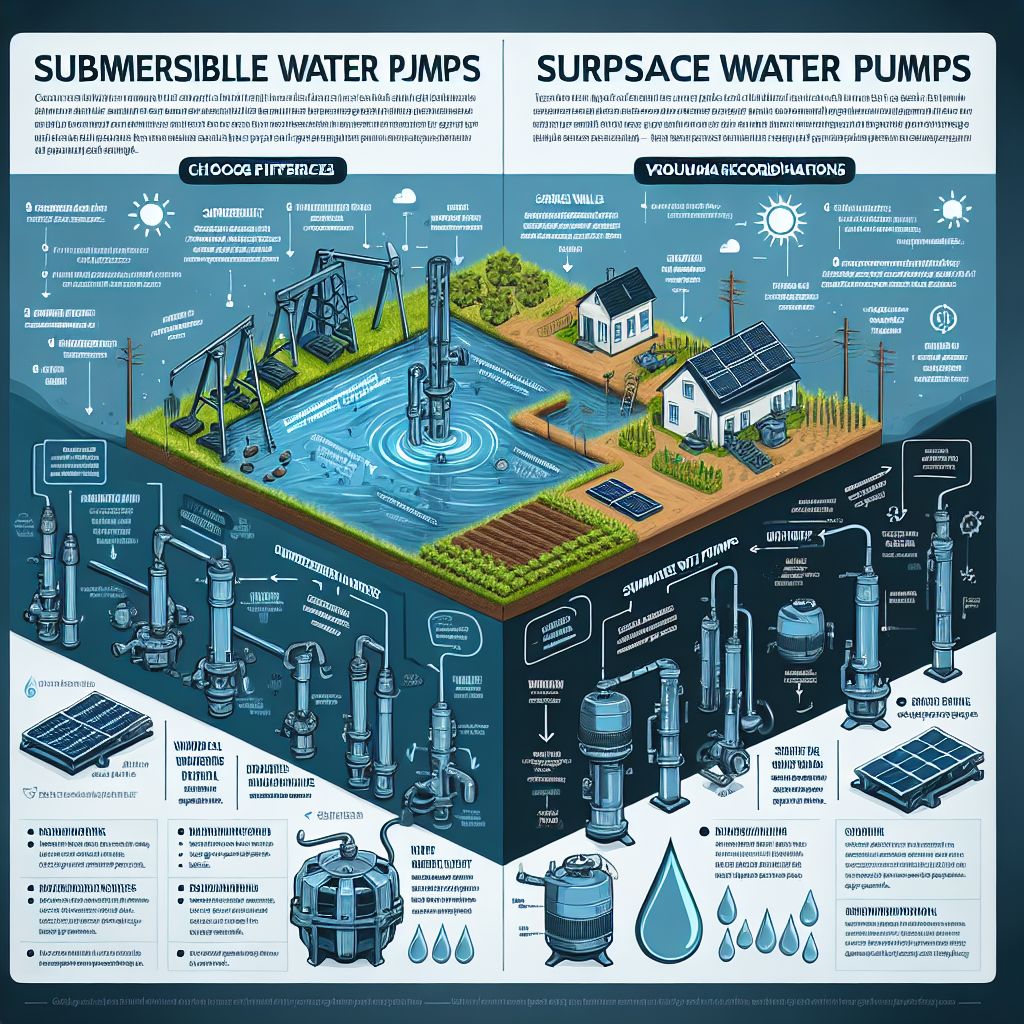
Submersible water pumps are ideal for deep wells and can operate efficiently even at great depths.
Surface water pumps are best for shallow water sources and large-scale irrigation.
Choosing between submersible and surface pumps depends on factors like water source depth, volume needs, and budget constraints.
Solar irrigation systems can reduce reliance on grid power and lower operational costs for farmers.
Understanding the specifics of each pump type empowers farmers to make informed decisions that can lead to sustainable farming practices.
Choosing the Right Solar Water Pump for Farming
When it comes to sustainable farming, choosing the right solar water pump is crucial. The right pump ensures your crops get the water they need while keeping operational costs low. Most importantly, it helps reduce your carbon footprint. Let’s dive into the key differences between submersible and surface pumps, and how to decide which is best for your farm.
Key Differences Between Submersible and Surface Pumps
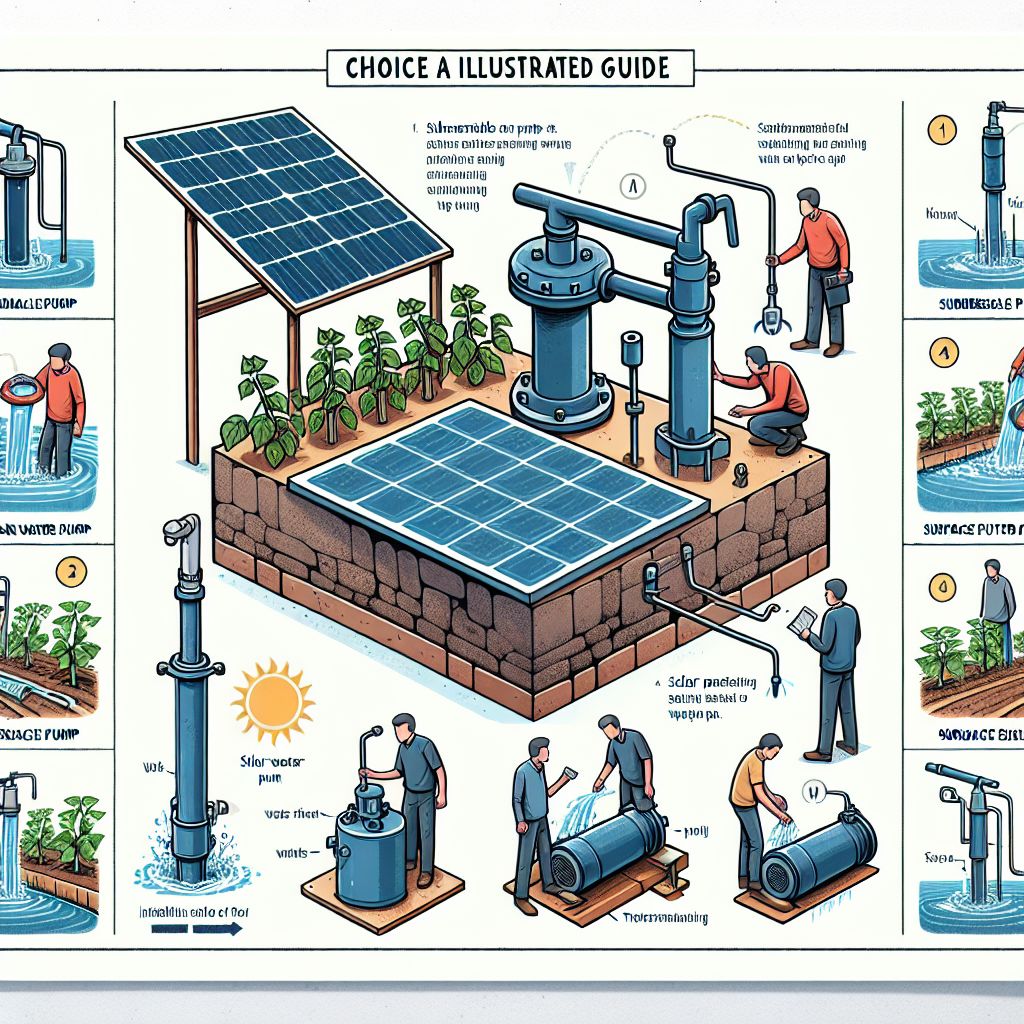
Submersible and surface pumps serve different purposes and are suited to different types of water sources. Submersible pumps are designed to operate underwater and are ideal for deep wells. They can push water to the surface efficiently from great depths. On the other hand, surface pumps are placed above the water source and are better suited for shallow water sources, like ponds or rivers.
Here are the main differences:
Submersible Pumps: Operate underwater, suitable for deep wells, more efficient for deep water sources.
Surface Pumps: Operate above water, suitable for shallow water sources, easier to maintain.
Comparing Initial Investment and Long-term Costs
When it comes to costs, both initial investment and long-term expenses are important to consider. Submersible pumps often have a higher initial cost due to their complex design and installation requirements. However, they can be more energy-efficient in the long run, especially for deep water sources.
Surface pumps, while generally cheaper to install, might incur higher operational costs if they need to lift water from significant depths. Therefore, understanding your water source’s depth and your farm’s specific needs is crucial in making an informed decision.
Solar Power Benefits for Agricultural Irrigation
Solar-powered water pumps offer numerous benefits for farmers. By harnessing the sun’s energy, you can significantly reduce your reliance on grid power and lower your operational costs. Solar pumps are also more environmentally friendly, contributing to a reduced carbon footprint.
Besides that, solar irrigation systems can provide a reliable water supply even in remote areas where grid power is unavailable. This makes them an excellent choice for off-grid farming operations.
Submersible Solar Water Pumps
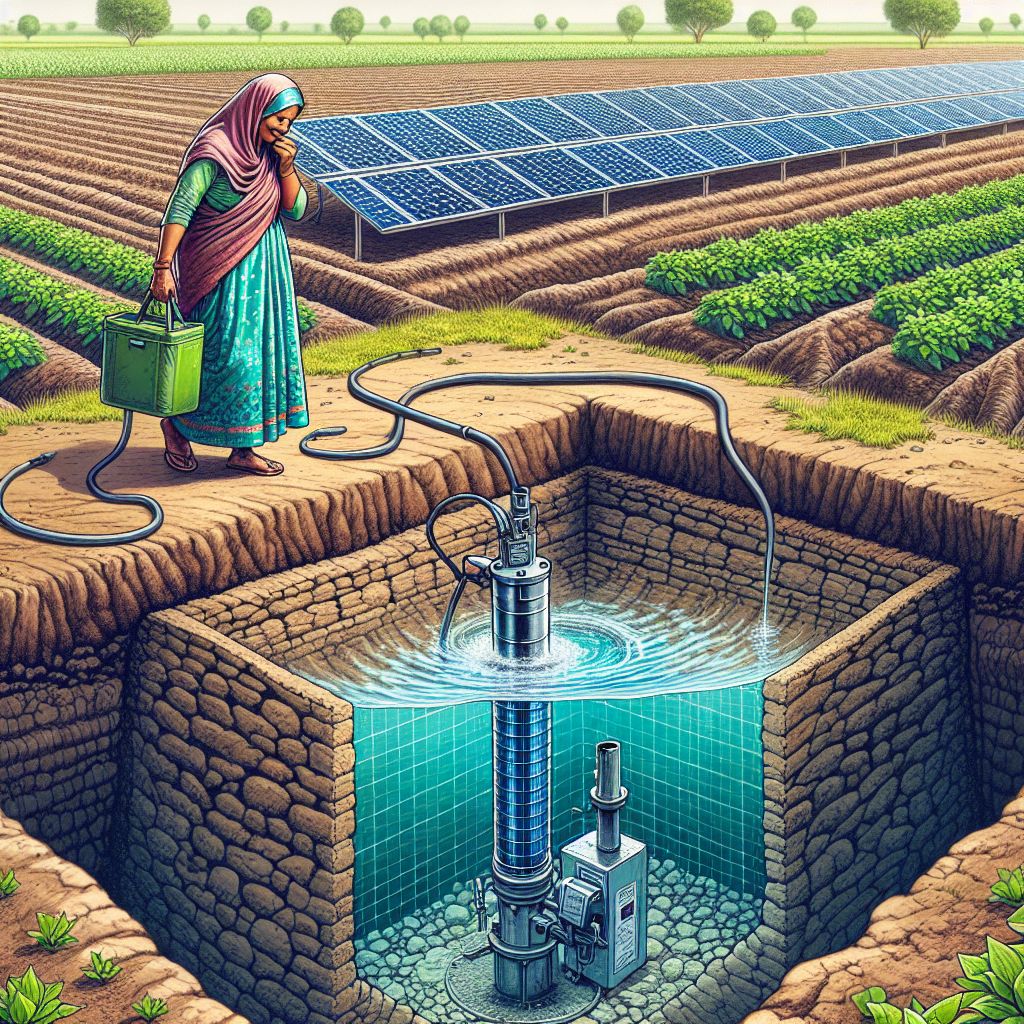
Submersible solar water pumps are a popular choice for farmers with deep water sources. These pumps operate underwater, making them highly efficient for deep wells and underground water sources.
How Submersible Pumps Work
Submersible pumps are designed to be submerged in water. They use a hermetically sealed motor close-coupled to the pump body. When powered by solar panels, the motor drives the pump, pushing water to the surface.
Because they operate underwater, submersible pumps are less prone to cavitation—a problem that can occur when pumps are not fully submerged. This makes them more efficient for deep water extraction.
Ideal Applications for Submersible Pumps
Submersible pumps are best suited for deep wells and underground water sources. If your farm relies on a well that is more than 20 feet deep, a submersible pump is likely your best option. These pumps can handle high volumes of water, making them suitable for large-scale irrigation.
For example, if you have a well that is 200 feet deep and you need to irrigate a large field, a submersible pump powered by solar panels can provide a reliable and sustainable water supply.
Pros and Cons of Using Submersible Pumps
Submersible pumps offer several advantages, but they also come with some drawbacks. Here are the key pros and cons:
Pros:
-
Efficient for deep water sources
Less prone to cavitation
Can handle high volumes of water
Cons:
-
Higher initial cost
More complex installation
Maintenance can be challenging
Submersible solar water pumps are a popular choice for farmers with deep water sources. These pumps operate underwater, making them highly efficient for deep wells and underground water sources.
Surface Solar Water Pumps
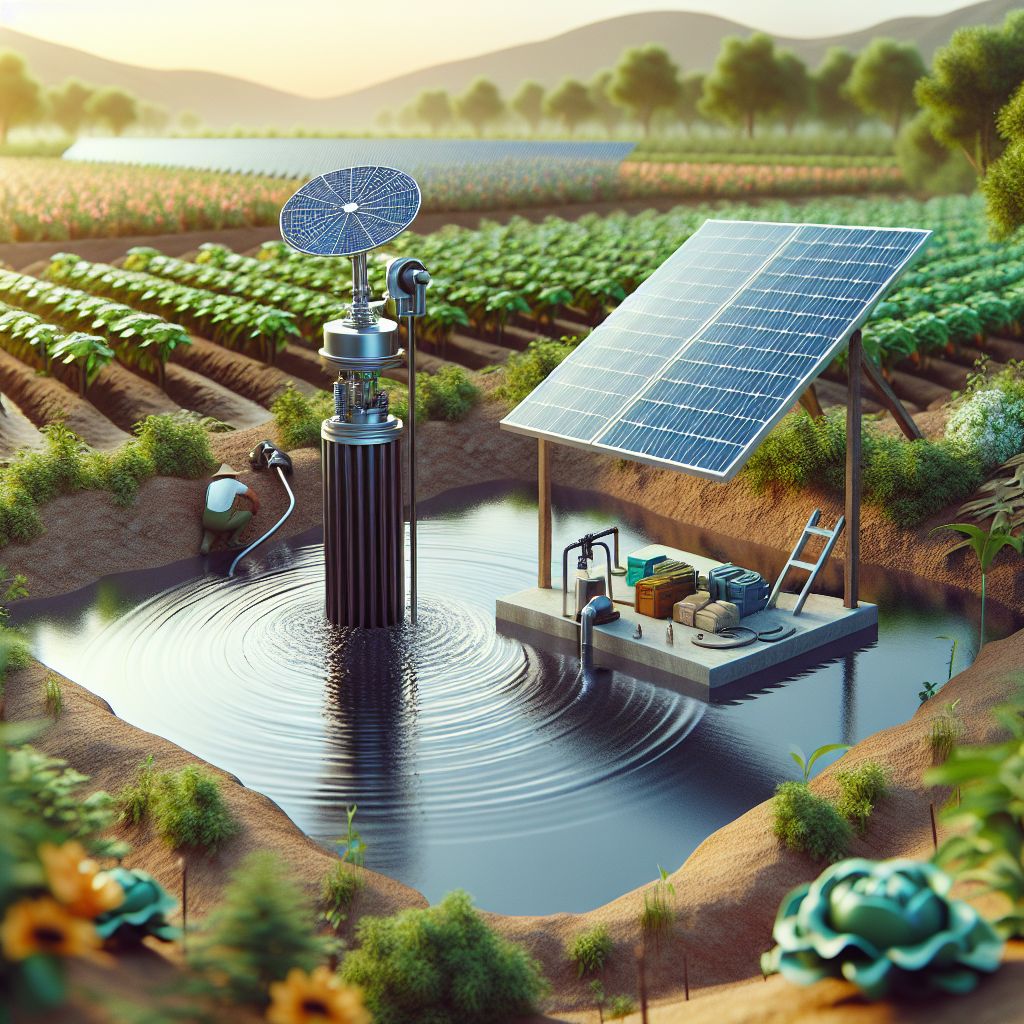
Surface solar water pumps are another great option for farmers, especially those with shallow water sources. These pumps are installed above the water source and are easier to access for maintenance and repairs.
How Surface Pumps Operate
Surface pumps draw water from a source that is relatively close to the surface, such as a pond, river, or shallow well. They use a motor to create suction, pulling water up and pushing it through the irrigation system. For more detailed differences between pump types, you can read this article on the differences between submersible and surface pumps.
These pumps are typically mounted on the ground or a platform near the water source. Solar panels provide the necessary power to operate the motor, making them an eco-friendly choice for irrigation.
Best Use Cases for Surface Pumps
Surface pumps are ideal for situations where the water source is less than 20 feet deep. They are commonly used for irrigation systems that draw water from ponds, lakes, or shallow wells.
For instance, if you have a small pond on your farm and need to irrigate a nearby vegetable garden, a surface pump powered by solar panels can efficiently meet your needs.
Advantages and Disadvantages of Surface Pumps
Like submersible pumps, surface pumps have their own set of pros and cons. Here are the key pros and cons:
Pros:
-
Lower initial cost
Easier to install and maintain
Suitable for shallow water sources
Cons:
-
Less efficient for deep water sources
More prone to cavitation
Limited to lower water volumes
Here’s a comparison of the pros and cons of using Submersible Solar Water Pumps and Surface Solar Water Pumps for a farmer’s irrigation system:
|
Pump Type |
Pros |
Cons |
|---|---|---|
|
Submersible Solar Water Pumps |
– Efficient for deep wells 1, 2, 3 |
– More difficult to access for maintenance 1, 3 |
|
Surface Solar Water Pumps |
– Easier to install and maintain 3, 5 |
– Less efficient for deep wells 3, 5 |
Factors to Consider When Choosing Between Submersible and Surface Pumps
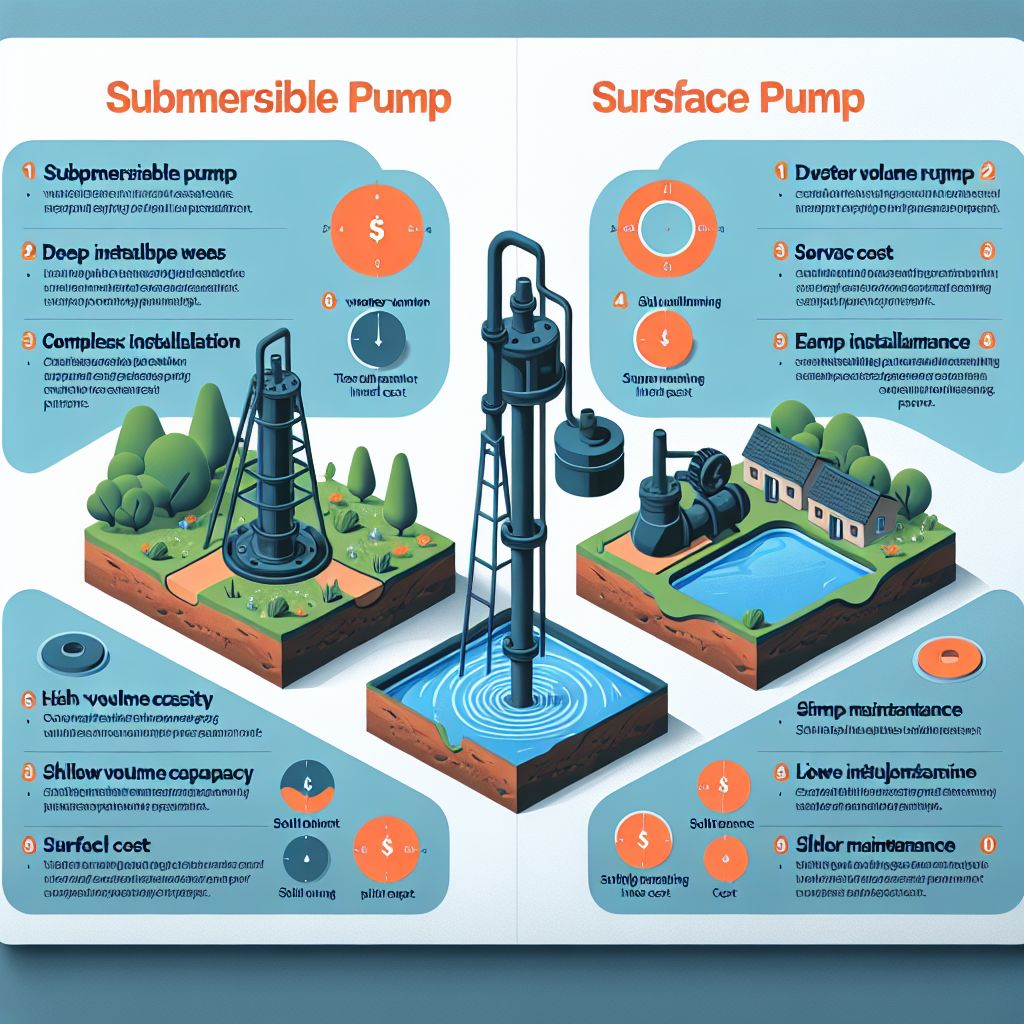
Choosing the right pump for your farm involves considering several factors. Here are the most important ones:
Depth of Water Source
The depth of your water source is a crucial factor in deciding between a submersible and a surface pump. Submersible pumps are designed for deep wells and underground sources, while surface pumps are best for shallow water sources.
For example, if your water source is a deep well over 50 feet, a submersible pump is more efficient and reliable. Conversely, if you have a pond or river on your property, a surface pump would be more suitable.
Volume of Water Needed
The amount of water you need to pump also plays a significant role in your decision. Submersible pumps can handle higher volumes of water, making them ideal for large-scale irrigation projects.
If you have a small garden or a few acres of crops, a surface pump might be sufficient. However, for larger farms with extensive irrigation needs, a submersible pump is likely the better choice.
Here’s a quick comparison:
|
Factor |
Submersible Pump |
Surface Pump |
|---|---|---|
|
Water Source Depth |
Best for deep wells |
Best for shallow sources |
|
Water Volume |
High volume |
Low to moderate volume |
|
Installation |
More complex |
Easier |
|
Maintenance |
Challenging |
Simple |
|
Cost |
Higher initial cost |
Lower initial cost |
Budget Constraints
Your budget is another essential factor to consider. Submersible pumps generally have a higher initial cost due to their design and installation requirements. However, they can be more cost-effective in the long run, especially for deep water sources.
Surface pumps, on the other hand, are less expensive to purchase and install. They are a good option if you have budget constraints and a shallow water source. Keep in mind, though, that operational costs might be higher if the pump needs to lift water from significant depths. For more information on solar panel options for irrigation, check out best solar panels for farmers.
Steps to Implementing Solar Water Pumps on Your Farm
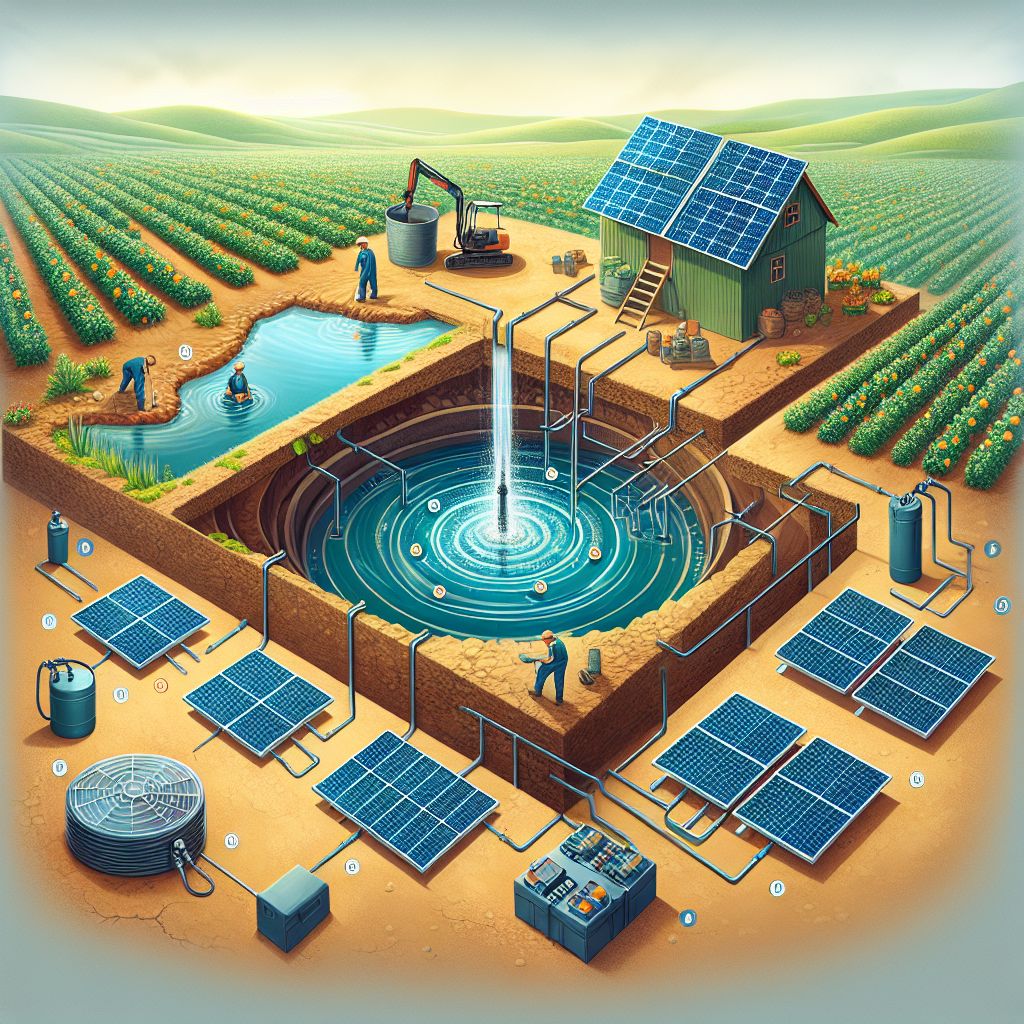
Implementing a solar water pump system on your farm involves several steps. Here’s a comprehensive guide to help you get started, including the reasons to add batteries to solar irrigation systems.
Assessment of Water Needs and Source
The first step is to assess your water needs and the source of your water. Determine the depth of your water source, the volume of water you need, and the type of crops you are growing.
For example, if you have a deep well and need to irrigate a large field, a submersible pump might be the best choice. On the other hand, if you have a shallow pond and a small garden, a surface pump would be more suitable.
Here’s what you need to do: check out the best reasons to add batteries to solar irrigation systems.
Measure the depth of your water source.
Calculate the volume of water needed for your crops.
Identify the type of water source (well, pond, river, etc.).
Choosing the Right Solar Panel Setup
Once you have assessed your water needs and source, the next step is to choose the right solar panel setup. The size and number of solar panels you need will depend on the power requirements of your pump.
For instance, a submersible pump for a deep well will require more power than a surface pump for a shallow pond. Therefore, you will need more solar panels to generate the necessary power.
Here are some tips for choosing the right solar panel setup:
Calculate the power requirements of your pump.
Determine the number of solar panels needed to meet these requirements.
Consider the orientation and tilt of the panels to maximize solar exposure.
Installation Process Overview
The installation process for solar water pumps involves several steps. First, install the solar panels in a location that receives maximum sunlight. Next, connect the panels to a charge controller and battery system (if using batteries). Finally, connect the pump to the solar power system and install it in the water source.
Here’s a step-by-step guide to understand the benefits of adding batteries to solar irrigation systems:
Install the solar panels in a sunny location.
Connect the panels to a charge controller and battery system.
Connect the pump to the solar power system.
Install the pump in the water source (submersible or surface).
Test the system to ensure it is working correctly.
Maintenance and Long-term Care
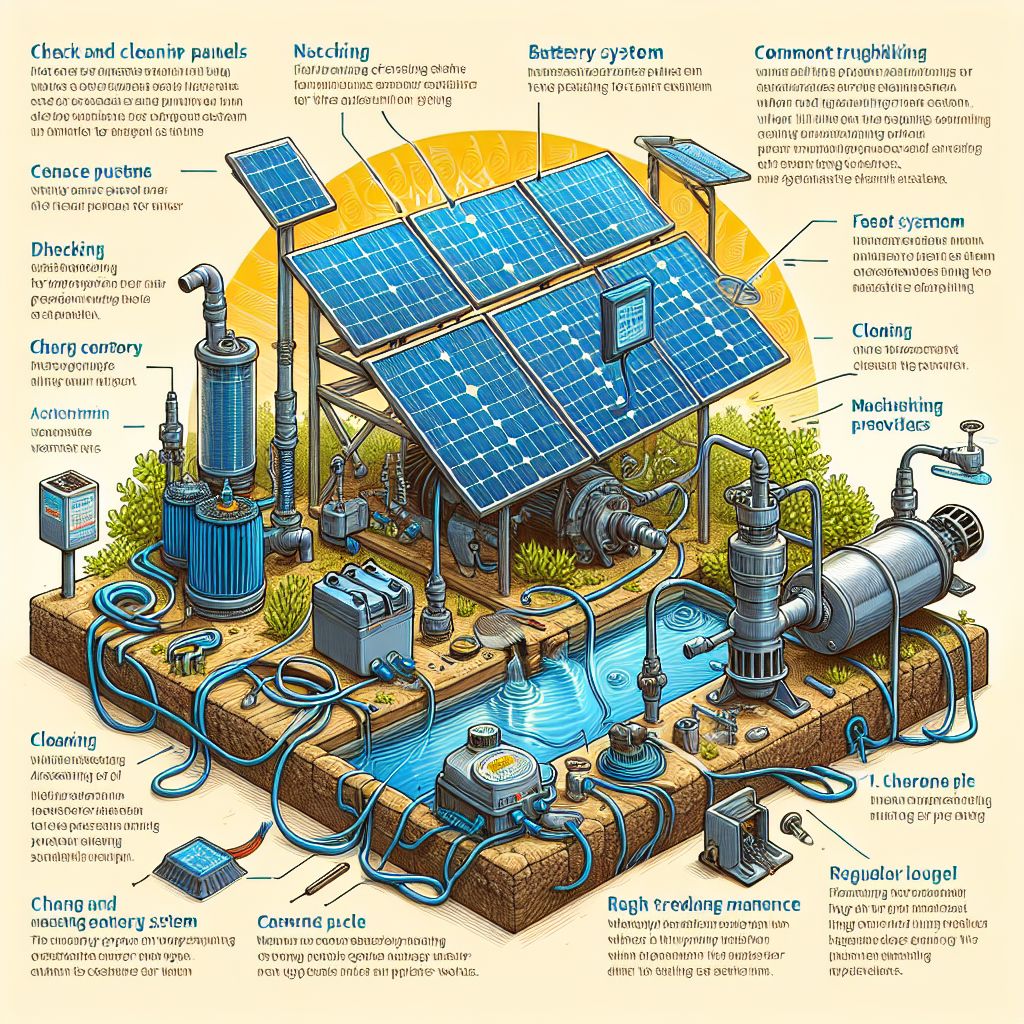
Proper maintenance is crucial to ensure the longevity and efficiency of your solar water pump system. Regular check-ups and cleaning can prevent issues and extend the lifespan of your pump.
Regular Check-ups and Cleaning
Regular maintenance involves checking the solar panels, charge controller, battery system, and pump for any issues. Cleaning the panels and pump can also improve efficiency. For more details on maintaining your solar pump, you can refer to this comprehensive guide.
Here are some maintenance tips:
Inspect the solar panels for dirt and debris. Clean them regularly to ensure maximum sunlight absorption.
Check the charge controller and battery system for any issues. Replace batteries if necessary.
Inspect the pump for any signs of wear or damage. Clean the pump regularly to prevent clogs.
Troubleshooting Common Issues
Despite regular maintenance, issues can still arise. Here are some common problems and how to troubleshoot them:
Pump not working: Check the solar panels, charge controller, and battery system for any issues. Ensure the pump is properly connected to the power system.
Low water flow: Inspect the pump for clogs or damage. Clean the pump and check for any blockages in the irrigation system.
Solar panels not generating enough power: Clean the panels and ensure they are oriented correctly. Check for any shading or obstructions that might be blocking sunlight.
Maximizing the Lifespan of Your Pump
To maximize the lifespan of your solar water pump system, follow these best practices:
Perform regular maintenance and cleaning.
Monitor the system for any issues and address them promptly.
Use high-quality components to ensure reliability and durability.
Keep a log of maintenance activities and any issues encountered.
By following these steps, you can ensure your solar water pump system operates efficiently and lasts for many years, providing a sustainable and reliable water supply for your farm.

Environmental Impact and Sustainability Benefits
Solar water pumps offer significant environmental benefits, making them an excellent choice for sustainable farming. By reducing reliance on grid power and using renewable energy, farmers can lower their carbon footprint and contribute to a healthier planet. For instance, understanding the benefits of solar flow batteries in agriculture can further enhance the sustainability of farming practices.
Reducing Carbon Footprint with Solar Pumps
Traditional water pumps powered by fossil fuels contribute to greenhouse gas emissions. Solar pumps, on the other hand, use clean energy from the sun, significantly reducing carbon emissions.
“Switching to solar-powered water pumps can reduce a farm’s carbon footprint by up to 90% compared to diesel-powered pumps.”
Water Conservation and Efficiency
Solar water pumps can also improve water conservation and efficiency. By using advanced irrigation systems, farmers can optimize water usage and reduce waste.
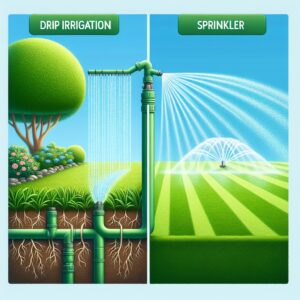
For example, drip irrigation systems powered by solar pumps deliver water directly to the plant roots, minimizing evaporation and runoff. This method can save up to 60% more water compared to traditional irrigation methods.
Long-term Benefits for Farming Communities
In addition to environmental benefits, solar water pumps offer long-term advantages for farming communities. They provide a reliable and cost-effective water supply, reducing operational costs and increasing farm productivity. For more information on enhancing solar irrigation systems, check out the best reasons to add batteries to solar irrigation systems.
Moreover, solar pumps can improve access to water in remote areas, supporting sustainable agriculture and improving the livelihoods of farmers.
Conclusion and Final Recommendations
Choosing the right solar water pump for your farm is essential for sustainable and efficient irrigation. By understanding the differences between submersible and surface pumps, assessing your water needs, and considering your budget, you can make an informed decision that benefits both your farm and the environment. For a deeper understanding of solar panels, check out the science behind monocrystalline solar panels.
Summary of Key Points
Submersible pumps are ideal for deep wells and high water volumes.
Surface pumps are suitable for shallow water sources and easier to maintain.
Consider factors like water source depth, volume needs, and budget constraints when choosing a pump.
Implementing solar water pumps involves assessing water needs, choosing the right solar panel setup, and proper installation.
Regular maintenance and troubleshooting can maximize the lifespan of your pump.
Making the Best Choice for Your Farm
Ultimately, the best solar water pump for your farm depends on your specific needs and circumstances. By carefully evaluating your options and following best practices, you can ensure a reliable and sustainable water supply for your crops. For more detailed comparisons, you can read about the differences between submersible and surface pumps.
Frequently Asked Questions (FAQs)
What factors should I consider when choosing between a submersible and a surface pump?
Consider the depth of your water source, the volume of water needed, and your budget. Submersible pumps are best for deep wells, while surface pumps are suitable for shallow sources. For more information on the types of solar panels that can be used with these pumps, check out best solar panels for farmers irrigation.
How much does the installation of a solar water pump typically cost?
The cost can vary depending on the type of pump and the complexity of the installation. Submersible pumps generally have a higher initial cost, while surface pumps are less expensive to install.
Can solar water pumps work during cloudy or rainy days?
Yes, solar water pumps can still work during cloudy or rainy days, although their efficiency may be reduced. Using a battery system can help store energy for use during low sunlight conditions.
How much can farmers save by switching to solar irrigation?
Farmers can save significantly on operational costs by switching to solar irrigation. The exact savings depend on factors like the size of the farm, water needs, and local electricity rates.
Choosing the best solar water pump for farmers’ irrigation needs can be challenging. There are two main types of solar water pumps: submersible and surface pumps. Submersible pumps are installed underwater and are ideal for deep wells, whereas surface pumps are placed above the water source and are suitable for shallow wells. Understanding the differences between these types of pumps can help farmers make an informed decision. Additionally, considering the benefits of adding batteries to solar irrigation systems can further enhance efficiency and reliability.


Leave a Reply