
Article-at-a-Glance
Solar panels can significantly reduce farm operating costs by providing a renewable energy source.
Initial installation costs for solar panels can range from $15,000 to $50,000 depending on the system size and location.
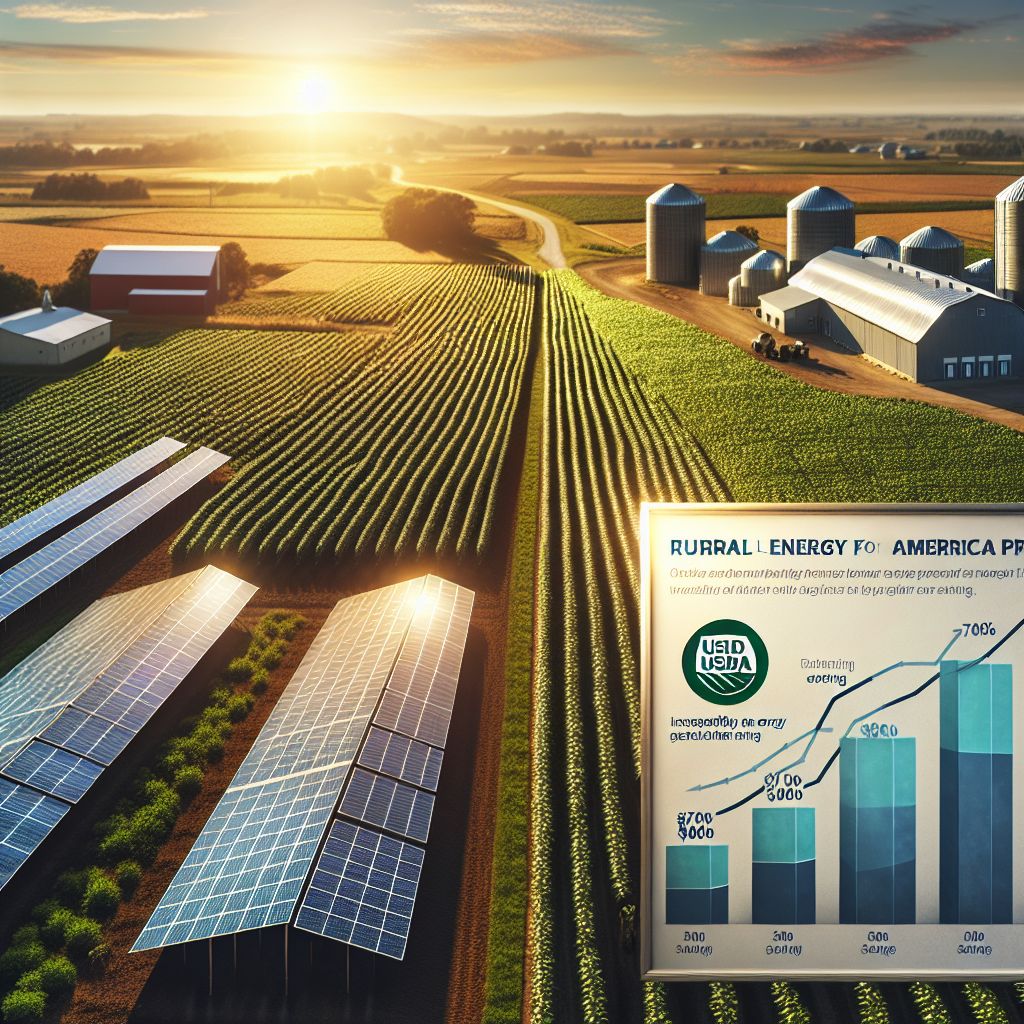
Farmers can access funding through government grants, such as the USDA’s Rural Energy for America Program (REAP).
Solar panels not only provide energy but can also enhance crop yield by providing shade and reducing water evaporation.
Long-term savings from solar energy can offset the initial costs, making it a viable investment for sustainable farming.
Exploring Solar Panel Integration in Agriculture
Incorporating solar panels into agriculture isn’t just about reducing electricity bills. It’s a strategic move towards sustainable farming. Solar panels provide clean energy, which helps to lower carbon footprints and offers a reliable power source. This is particularly beneficial for farms in remote areas where electricity access can be unreliable or expensive.
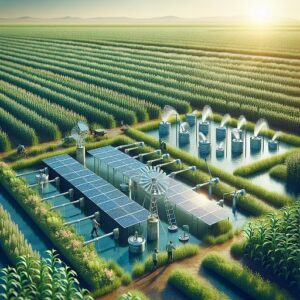
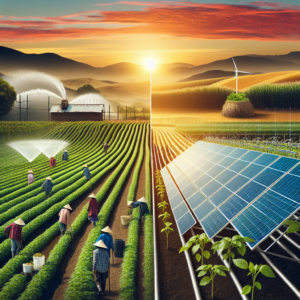
Solar panels can be installed on rooftops, open fields, or even above crops—a practice known as agrivoltaics. This dual-use of land maximizes resources, allowing farmers to grow crops and harvest energy simultaneously. This integration is a testament to how technology and nature can coexist to benefit the environment and agricultural productivity.
Benefits of Solar Panels for Farmers
There are numerous benefits to integrating solar panels into agricultural operations. First and foremost, they provide a sustainable energy source that can power various farm activities, from irrigation systems to processing facilities. This independence from fossil fuels not only reduces costs but also protects farmers from fluctuating energy prices.
Economic and Environmental Advantages
Economically, solar panels can significantly lower operating costs. By generating their own electricity, farmers can reduce or even eliminate their utility bills. Over time, these savings can offset the initial investment in solar technology. Moreover, some regions offer financial incentives, such as tax credits and rebates, which further enhance the economic viability of solar panels.
Environmentally, solar panels contribute to a cleaner planet. By reducing reliance on fossil fuels, they help decrease greenhouse gas emissions, aligning agricultural practices with global sustainability goals. This transition to renewable energy also enhances the farm’s reputation, attracting eco-conscious consumers.
Enhancing Farm Productivity
Solar panels can enhance farm productivity in unexpected ways. For instance, when installed above crops, they provide shade, which can protect plants from extreme heat and reduce water evaporation. This microclimate can lead to improved crop yields and more efficient water usage, which are critical factors in regions prone to drought.
Besides that, solar panels can power advanced technologies like automated irrigation systems and climate control in greenhouses, further boosting productivity. These systems ensure that crops receive optimal care, leading to healthier plants and increased yields.
Diversifying Revenue Streams
Installing solar panels also opens up new revenue streams for farmers. They can sell excess electricity back to the grid, generating additional income. This practice, known as net metering, allows farmers to make money from their solar investments, providing financial stability even when crop yields are low.
Furthermore, solar farms can attract agritourism. Visitors interested in sustainable practices may pay to tour a farm that integrates renewable energy, offering farmers another way to diversify their income.
Costs Associated with Solar Panels in Agriculture
While the benefits of solar panels are clear, the costs can be a significant consideration for farmers. Understanding these costs is crucial for making informed decisions about solar investments.
Initial Installation Expenses
The initial installation of solar panels can be a substantial investment. Costs vary based on factors like system size, location, and installation complexity. On average, farmers might expect to pay between $15,000 and $50,000. This figure includes the cost of panels, inverters, mounting systems, and labor.
It’s important to note that while this may seem high, the long-term savings and potential income from selling excess energy can make solar panels a financially sound decision. Additionally, grants and incentives can help offset these initial expenses.
The journey to solar energy in agriculture begins with the initial installation costs. These expenses can vary widely between $15,000 and $50,000 based on several factors, including the size of the solar system, location, and specific installation requirements.
System Size and Capacity: The most significant factor affecting installation costs is the size of the solar array. Larger farms will typically require larger systems with greater output capacity—this translates to higher upfront costs. Preliminary assessments and energy audits, necessary for determining the appropriate system size, can also incur additional costs.
Type of Solar Technology: Different solar technologies—such as photovoltaic (PV) panels, concentrated solar power (CSP), or solar thermal systems—carry differing installation costs. PV panels, which are the most common for agricultural uses, offer various options in terms of efficiency and price.
Site Preparation: Depending on the land’s condition, costs related to preparing the site for solar installation can vary. This might include grading the land, installing electrical infrastructure, or removing obstacles like trees.
Permitting and Incentives: Navigating the permitting process and understanding local regulations can lead to additional expenses. However, it’s crucial to explore available incentives—such as federal tax credits or state-specific grants—that can significantly offset installation costs.
Maintenance and Operational Costs
After installation, ongoing maintenance is critical to ensure the solar panels operate at peak efficiency. Fortunately, solar panels are generally low maintenance, but there are still some costs to consider.
Cleaning and Inspection: Dust, debris, and natural accumulation can affect the efficiency of solar panels, making regular cleaning essential, especially in agricultural settings where debris from farming might be prevalent. Inspections should also be conducted periodically to identify any potential system issues.
Inverter Replacement: While the solar panels themselves can last 25 years or more, their inverters—which convert the direct current (DC) electricity generated by the panels into alternating current (AC) electricity—typically need to be replaced every 5-10 years. This is an important consideration in long-term budgeting.
Energy Management Systems: Farmers may choose to invest in energy management systems (EMS) to optimize solar energy use, which could incur additional operational costs. These systems analyze energy consumption and generation to enhance efficiency.
Long-Term Financial Impacts and Savings
The true beauty of incorporating solar panels into agricultural operations lies in the long-term financial impacts that often outweigh the initial costs.
Energy Cost Savings: Once installed, solar panels provide a significant source of renewable energy which can drastically reduce electricity bills. For farms that consume large amounts of energy, the savings can be impressive over the decades to come, especially with rising energy costs.
Increased Property Value: Investing in renewable energy can increase the value of agricultural property. Farms equipped with solar panel systems may be viewed as more attractive investments, especially for buyers seeking sustainable operations.
Revenue Generation: In some regions, farmers can take advantage of net metering or power purchase agreements (PPAs), allowing them to sell excess energy generated back to the grid. This can create additional revenue streams and further improve the financial outlook for solar investment.
Environmental and Social Benefits: While harder to quantify, the environmental benefits of reducing dependency on fossil fuels contribute to a more sustainable operation. Additionally, tapping into clean energy enhances a farm’s reputation among consumers increasingly focused on sustainability.
It’s important to note that while this may seem high, the long-term savings and potential income from selling excess energy can make solar panels a financially sound decision. Additionally, grants and incentives can help offset these initial expenses.

Funding Options for Agricultural Solar Projects
Transitioning to solar energy is not only a progressive step toward sustainable farming, but it can also lead to significant long-term savings and increased resilience in an era of fluctuating energy costs. By leveraging government grants, state-specific incentives, and private financing options, agricultural producers can make solar installations a viable and rewarding investment.
Government Grants and Incentives
To make solar panel installations more affordable, numerous government grants and incentives are available to farmers. These programs are designed to reduce the financial burden of transitioning to renewable energy. They can significantly lower the upfront costs associated with solar installations, making it easier for farmers to adopt sustainable practices.
One of the most well-known incentives is the federal Investment Tax Credit (ITC), which allows farmers to deduct a significant percentage of their solar installation costs from their federal taxes. This credit can make a substantial difference in the overall financial feasibility of a solar project. Additionally, some states offer their own incentives, such as tax credits, rebates, or performance-based incentives that reward energy production over time.
USDA Rural Energy for America Program (REAP)
The USDA’s Rural Energy for America Program (REAP) is a key funding source for farmers looking to install solar panels. REAP provides grants and loan guarantees to agricultural producers and rural small businesses for renewable energy systems and energy efficiency improvements. The grants can cover up to 25% of the total project costs, while loan guarantees can cover up to 75%. For more information on how solar panels can reduce carbon footprint and promote environmental sustainability on farms, explore additional resources.
To apply for REAP, farmers must demonstrate the potential energy savings and environmental benefits of their proposed projects. The application process involves submitting detailed project plans, cost estimates, and energy audits. Despite the paperwork, the financial support from REAP can make a significant difference in the affordability of solar projects.
State-Specific Solar Incentives
In addition to federal programs, many states offer their own incentives to encourage solar adoption. These can include state tax credits, rebates, and grants. For example, California’s Solar Initiative offers rebates for solar installations, while New York’s NY-Sun program provides financial incentives and technical assistance to solar projects. For more information on how solar panels can be cost-efficient solutions for farm operations, explore our guide.
It’s essential for farmers to research the specific incentives available in their state, as these programs can vary widely in terms of eligibility, application requirements, and funding amounts. Local utility companies may also offer additional incentives, such as net metering, which allows farmers to sell excess electricity back to the grid.
Private Financing and Loans
For farmers who may not qualify for government programs or need additional funding, private financing options are available. Many financial institutions offer loans specifically for renewable energy projects, often with favorable terms compared to traditional loans. These loans can help cover the upfront costs of solar installations, making it easier for farmers to transition to solar energy.
Besides loans, some solar companies offer power purchase agreements (PPAs) or solar leases. With a PPA, the solar provider installs and maintains the solar panels, and the farmer agrees to purchase the electricity generated at a set rate. This arrangement allows farmers to benefit from solar energy without the initial capital investment, though they won’t own the system. For more information on solar power facts and myths, visit our detailed guide.
Here’s a table looking at funding options for agricultural solar panels:
|
Funding Option |
Details |
|---|---|
|
Government Grants and Incentives |
– Federal Investment Tax Credit (ITC): 30% of total system cost 1,4 |
|
– Accelerated depreciation (MACRS) 2 | |
|
– Property tax exemptions for solar installations 3 | |
|
– Sales tax exemptions on solar equipment 3 | |
|
USDA Rural Energy for America Program (REAP) |
– Grants covering up to 25% of total eligible project costs 6, 7 |
|
– Loan guarantees for up to 75% of total eligible project costs 6, 7 | |
|
– Combined grant and loan guarantee funding up to 75% of total costs 6, 7 | |
|
– Available for rural small businesses and agricultural producers 7 | |
|
State-Specific Solar Incentives |
– Rebate programs (e.g., Minnesota’s Solar Energy Incentive Program) 5 |
|
– Performance-based incentives | |
|
– State-specific grant programs | |
|
Private Financing and Loans |
– Solar-specific loan programs from banks and credit unions 10 |
|
– Power Purchase Agreements (PPAs) 7 | |
|
– Solar leases 9 | |
|
– Energy Savings Performance Contracts (ESPCs) 8 | |
|
– Green bonds 11 |
Practical Steps for Implementing Solar Panels on Farms
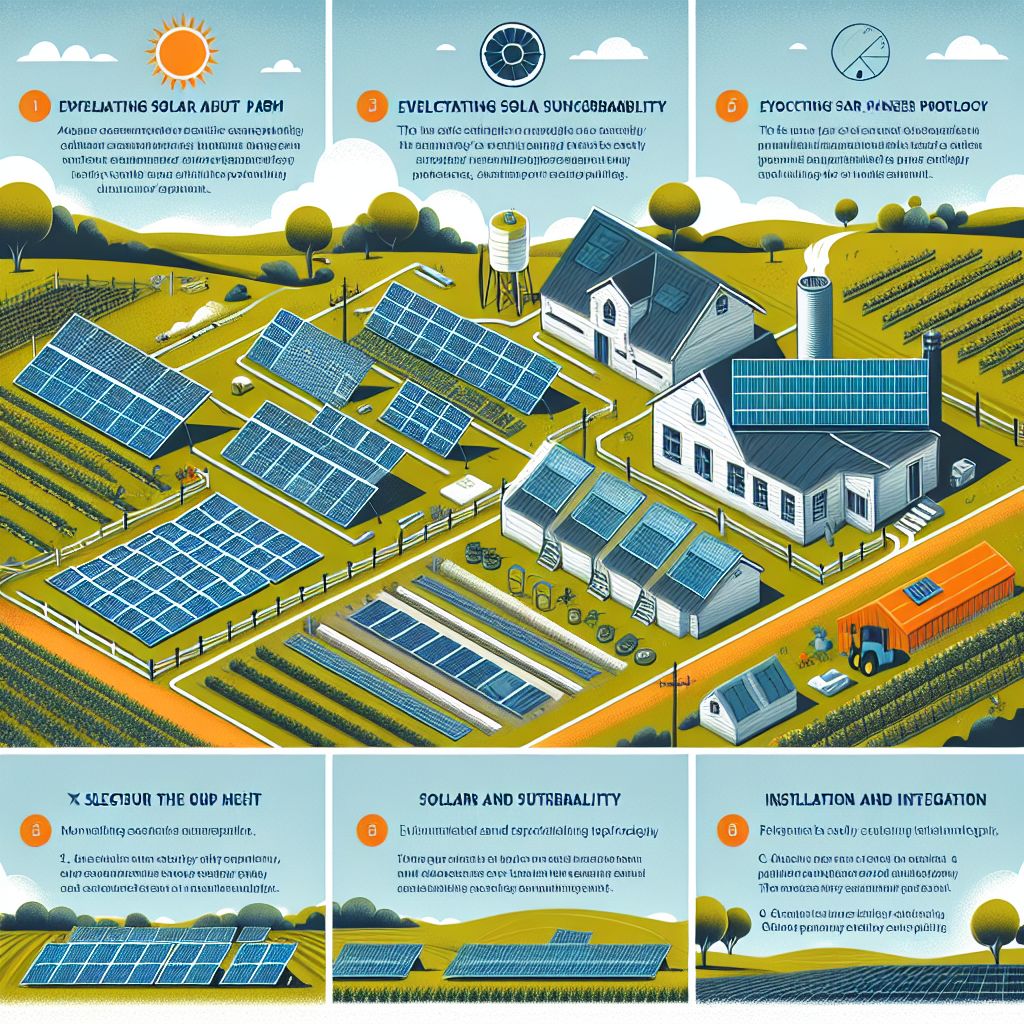
Transitioning to solar energy involves several practical steps that farmers need to consider. Proper planning and evaluation are crucial to ensure the success of the solar project and to maximize the benefits of renewable energy.
Before diving into installation, it’s essential to assess the farm’s current energy usage and determine the potential savings and benefits of switching to solar power. This evaluation will help farmers make informed decisions about the size and type of solar system that best suits their needs.
Conducting an Energy Audit
An energy audit is the first step in implementing solar panels on a farm. This audit involves a thorough assessment of the farm’s energy consumption patterns, identifying areas where energy is being wasted, and evaluating opportunities for efficiency improvements.
By understanding the farm’s energy usage, farmers can determine the appropriate size of the solar system needed to meet their energy demands. The audit will also highlight potential cost savings from energy efficiency measures, such as upgrading equipment or improving insulation, which can complement the benefits of solar energy.
Evaluating Solar Suitability of Farm Land
Not all farm land is suitable for solar panel installations. Factors such as sunlight exposure, shading from trees or buildings, and land topography can affect the efficiency and effectiveness of solar panels. Therefore, it’s crucial to evaluate the solar suitability of the farm land before proceeding with installation.
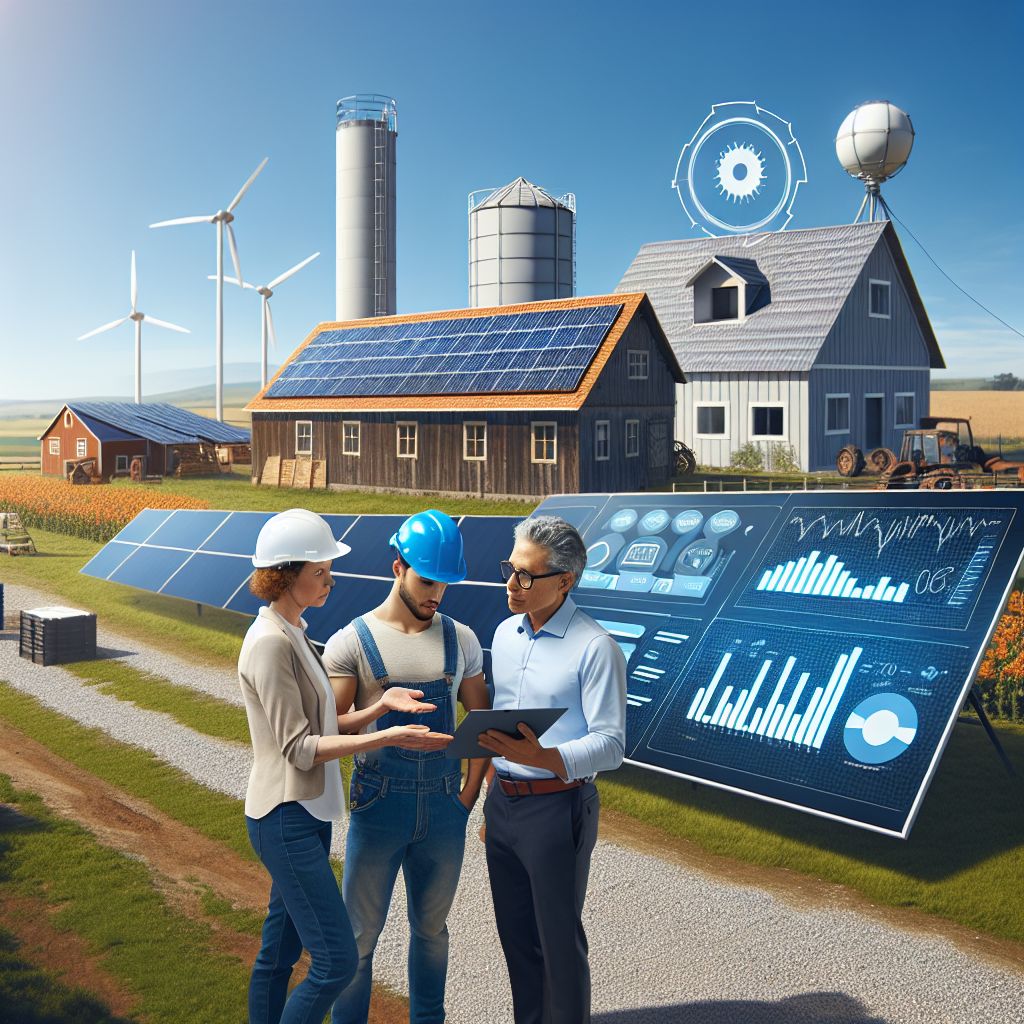
Farmers should work with solar professionals to conduct a site assessment, which will determine the optimal location for solar panels and ensure that the system will operate at peak efficiency. This assessment will also help identify any potential obstacles or challenges that may need to be addressed during the installation process. For more information, check out this guide on solar energy for farmers.
Selecting the Right Solar Technology
Choosing the right solar technology is another critical step in the implementation process. There are different types of solar panels available, each with its own advantages and disadvantages. For example, monocrystalline panels are highly efficient and space-saving, while polycrystalline panels are more affordable but slightly less efficient.
Besides solar panels, farmers need to consider other components of the solar system, such as inverters, mounting systems, and battery storage options. These components can impact the system’s performance and overall cost. Consulting with solar experts can help farmers select the best technology for their specific needs and budget.
Once the right technology is selected, farmers can proceed with the installation and integration process, ensuring that the solar system is properly connected to the farm’s electrical infrastructure and optimized for maximum performance.
Installation and Integration Process
The installation and integration of solar panels involve several steps, from obtaining necessary permits to connecting the system to the grid. Farmers should work with experienced solar installers who can handle these tasks efficiently and ensure compliance with local regulations. For a comprehensive guide on solar irrigation, which is an essential part of farm implementation, consider exploring additional resources.
During the installation, it’s important to monitor the progress and address any issues that arise promptly. Once the system is installed, regular maintenance and monitoring are crucial to ensure optimal performance and longevity of the solar panels.
Real Examples of Solar-Powered Farms
To illustrate the benefits and feasibility of solar panels in agriculture, let’s look at some real examples of farms that have successfully integrated solar energy into their operations. These case studies demonstrate the potential for cost savings, increased productivity, and environmental sustainability.
Case Studies of Successful Implementations
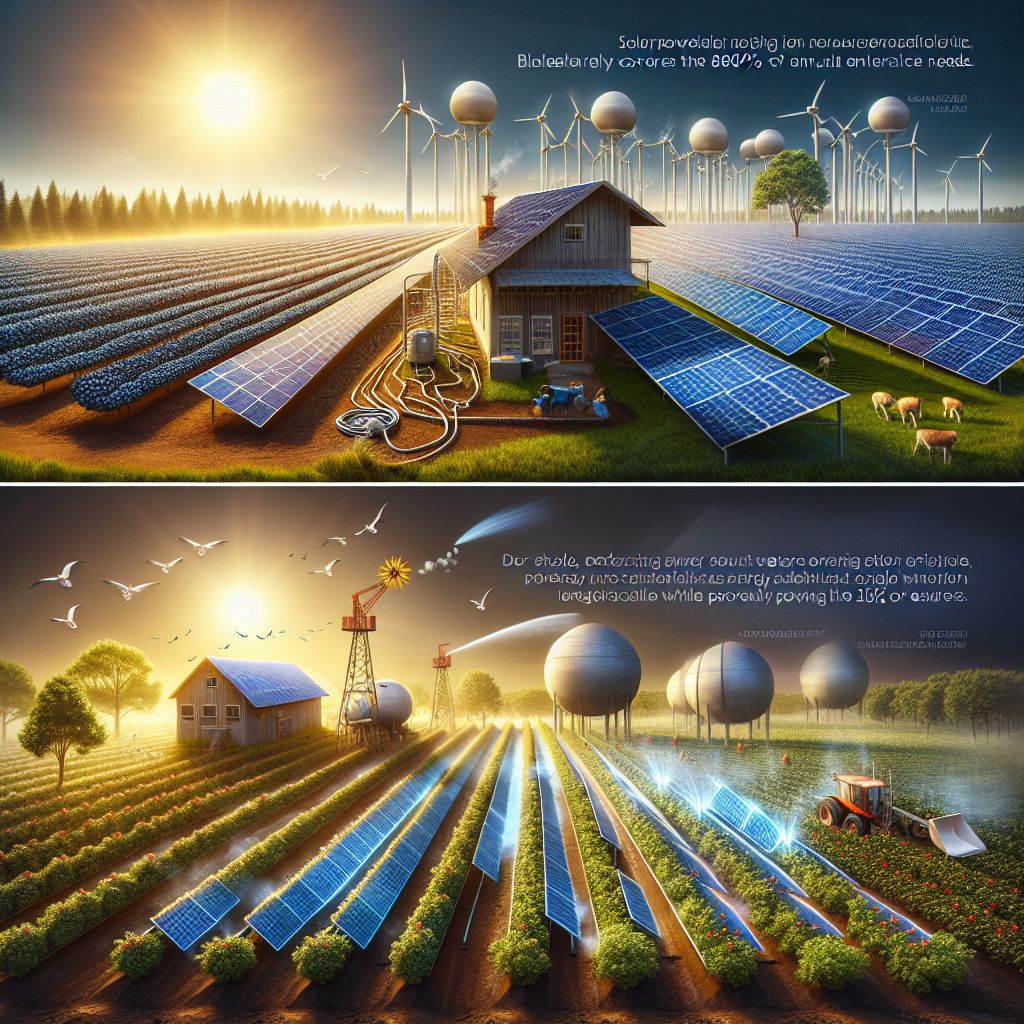
One notable example of a successful solar-powered farm is the Blueberry Hill Farm in Maine. The farm installed a 100-kilowatt solar system, which covers about 80% of its annual energy needs. By doing so, they have significantly reduced their electricity costs and carbon footprint. The solar panels also power their irrigation systems, ensuring efficient water usage during dry spells.
Another inspiring case is the Zonneveld Farm in the Netherlands. This farm uses agrivoltaics, where solar panels are installed above the crops. The panels provide shade, reducing water evaporation and protecting crops from extreme weather. This dual-use approach has increased crop yield by 10% while generating clean energy for the farm’s operations.
Lessons Learned from Early Adopters
Early adopters of solar energy in agriculture have learned several valuable lessons. First, it’s crucial to conduct a thorough energy audit and site assessment to ensure the solar system is appropriately sized and located. This step helps maximize the system’s efficiency and financial benefits.
Moreover, regular maintenance is essential to keep the solar panels operating at peak performance. Cleaning the panels and checking for any technical issues can prevent energy losses and prolong the system’s lifespan. Finally, engaging with local communities and educating them about the benefits of solar energy can foster support and acceptance for renewable energy projects.
Conclusion and Final Thoughts
Integrating solar panels into agriculture is a forward-thinking approach that benefits both farmers and the environment. By harnessing the power of the sun, farmers can reduce their reliance on fossil fuels, lower their operating costs, and contribute to a more sustainable future.
Making Informed Decisions About Solar Investment
When considering solar investment, it’s essential to evaluate the farm’s energy needs, available incentives, and financial capacity. Conducting an energy audit and consulting with solar experts can provide valuable insights into the most suitable solar solutions for the farm.
Additionally, farmers should explore funding options, such as government grants and private financing, to alleviate the initial financial burden. These resources can make solar projects more accessible and financially viable.
The Future of Solar in Sustainable Agriculture
“As solar technology continues to evolve, its role in sustainable agriculture will only grow. Innovations like agrivoltaics and solar-powered irrigation systems are paving the way for more efficient and environmentally friendly farming practices.”
In the future, we can expect to see more farms adopting solar energy as part of their sustainability strategies. This shift will not only reduce greenhouse gas emissions but also enhance food security by ensuring reliable energy sources for agricultural operations.
Furthermore, the integration of solar energy with other technologies, such as precision farming and smart irrigation, will optimize resource use and increase agricultural productivity. This synergy will help address global challenges, such as climate change and food scarcity.
Overall, solar panels offer a promising solution for promoting sustainable agriculture and securing a greener future for generations to come.
Frequently Asked Questions (FAQ)
Here are some common questions about solar panels in agriculture, along with concise answers to help you make informed decisions about solar investments.
How long do solar panels last on a farm?
Solar panels typically have a lifespan of 25 to 30 years. During this time, they can operate efficiently with minimal maintenance. However, their efficiency may gradually decrease over time, and it’s essential to monitor their performance and address any issues promptly. To understand more about the effects of weather conditions on solar panel reliability, consider exploring additional resources.
What is the typical return on investment for agricultural solar projects?
The return on investment (ROI) for solar projects can vary depending on factors such as system size, location, and available incentives. On average, farmers can expect an ROI within 5 to 10 years. The long-term savings on electricity bills and potential income from selling excess energy contribute to this return.
Consider available incentives and grants to offset installation costs.
Conduct an energy audit to determine the appropriate system size.
Engage with experienced solar professionals for installation and maintenance.
By following these steps, farmers can maximize their solar investment and enjoy long-term benefits.
Can solar panels work in all types of weather conditions?
Yes, solar panels can work in various weather conditions. While they generate the most energy on sunny days, they can still produce electricity on cloudy or rainy days. However, their efficiency may be slightly reduced during overcast conditions. To learn more about the types and efficiencies of solar panels, check out this guide on solar panel types and efficiencies.
It’s important to note that solar panels are designed to withstand harsh weather conditions, such as strong winds and heavy snow. Regular maintenance and monitoring can ensure their optimal performance throughout the year.
Are there any downsides to installing solar panels on a farm?
While solar panels offer numerous benefits, there are some potential downsides to consider. The initial installation costs can be high, although incentives and financing options can help mitigate this expense. Additionally, solar panels require space, which may be a concern for farms with limited land availability.
Moreover, the energy production of solar panels can be affected by shading from trees or buildings, so careful site assessment and planning are crucial. Despite these challenges, the long-term benefits of solar energy often outweigh the drawbacks, making it a worthwhile investment for many farmers.


Leave a Reply