
Key Takeaways
- Solar panels provide essential shade, reducing heat stress in farm animals and improving their well-being.
- Installing solar panels can significantly cut energy costs, saving farmers money in the long run.
- Farmers can benefit from government incentives and subsidies for adopting solar energy solutions.
- Using solar energy can decrease a farm’s carbon footprint, contributing to environmental sustainability.
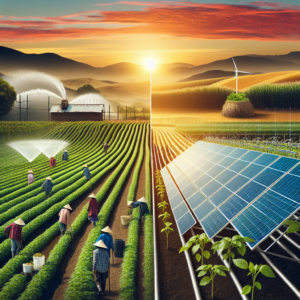
- Agrivoltaics allows farmers to maximize land use by combining solar energy production with agricultural activities.
Solar Energy Enhances Animal Welfare on Farms
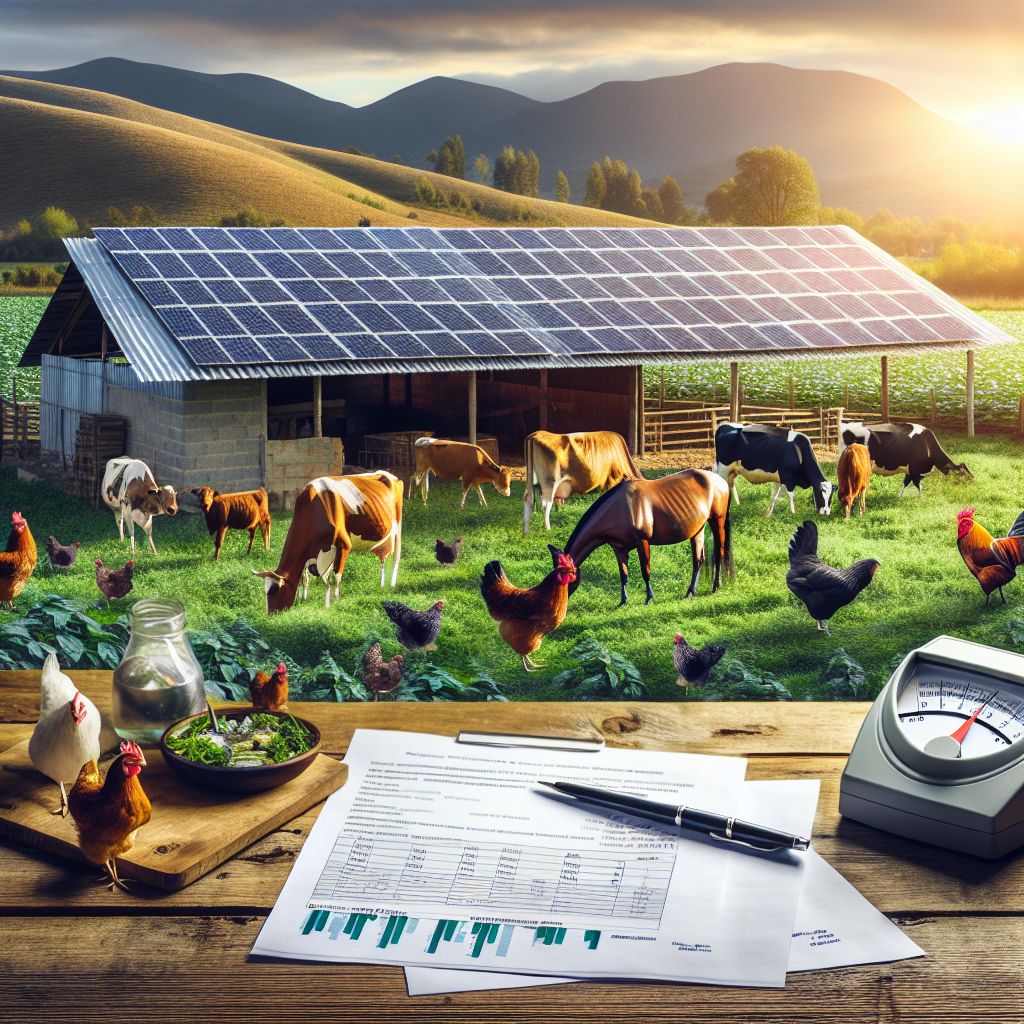
As we look towards sustainable farming practices, solar energy stands out as a powerful ally in improving animal welfare on farms. Most importantly, solar panels not only supply clean energy but also offer practical benefits for livestock. For instance, they provide much-needed shade for animals, especially during scorching summer months.
By integrating solar panels into farm operations, farmers can create a more comfortable environment for their animals. This transition to renewable energy is not just about reducing costs; it’s about enhancing the quality of life for farm animals. Therefore, embracing solar technology can lead to healthier, more productive livestock.
Overview of Solar Installations for Livestock
Solar installations on farms are becoming increasingly popular due to their dual benefits of energy generation and livestock welfare. These systems typically consist of photovoltaic panels installed in strategic locations across the farm. When positioned correctly, they provide ample shade and protection for animals from the elements.
Besides that, solar panels can power various farm operations, such as water pumps and lighting, ensuring that essential services remain uninterrupted. This reliability is crucial for maintaining optimal conditions for livestock care. By investing in solar technology, farmers can enhance their operational efficiency and animal welfare simultaneously.
Many farmers are discovering the advantages of solar installations beyond energy savings. The ability to offer their animals a more comfortable and stress-free environment is a compelling reason to adopt this technology. As more farms transition to solar power, the benefits become even more apparent.
Key Benefits for Animal Health and Comfort
The health and comfort of farm animals are paramount for any farmer. Solar panels play a significant role in achieving these goals. By providing shade, they help regulate the temperature in livestock areas, reducing the risk of heat stress and related health issues.
Moreover, solar panels can minimize the impact of harsh weather conditions on animals. For example, during hot days, shaded areas created by solar panels can significantly lower the temperature, allowing animals to stay cool and hydrated. This environment not only improves animal welfare but also boosts productivity.
Furthermore, the presence of solar panels can lead to a calmer atmosphere for livestock. Reduced heat stress means animals are less likely to become agitated or distressed. This translates to better growth rates and overall health, which are critical for a successful farming operation.
Here’s a table discussing the benefits of using solar panels for animals on a farm:
|
Animal |
Benefits |
Notes |
|---|---|---|
|
Sheep |
– Natural vegetation management |
– Perfect height for grazing under panels |
|
Cattle |
– Increased comfort level |
– Cows grazing under panels had 0.5°C lower internal temperature 1, 4 |
|
Chickens |
– Access to mixed sun and shade |
– Free-range chickens benefit from panel installations 1 |
|
General Livestock |
– Shelter from sun and elements |
– Panels must be elevated at least 7 feet for larger animals 1 |
Solar panels on farms provide multiple benefits for animals, including improved comfort, enhanced grazing conditions, and potential increases in productivity. This integration of solar energy with animal husbandry, known as agrivoltaics, allows farmers to optimize land use while promoting animal welfare and sustainable farming practices (2, 7)

Improving Animal Environments with Solar Panels
Implementing solar panels on farms is a strategic move towards creating better living conditions for animals. By offering shade and reducing exposure to extreme weather, these panels contribute to a more stable and comfortable environment for livestock.
Let’s delve into how solar panels can enhance the well-being of farm animals through improved environmental conditions.
Shade Provision and Temperature Regulation
One of the primary benefits of solar panels for farm animals is the provision of shade. When strategically placed, solar panels can cast shadows over large areas, offering protection from the sun’s intense heat. This is particularly beneficial for animals that are vulnerable to heat stress.
By regulating the temperature in livestock areas, solar panels help maintain a cooler environment. This is crucial for preventing heat-related illnesses and ensuring that animals remain healthy and comfortable. Therefore, the integration of solar panels into farm operations is an effective way to enhance animal welfare.
In addition to providing shade, solar panels can also improve air circulation in livestock areas. This helps to further reduce temperatures and create a more pleasant environment for animals. As a result, farmers can expect healthier and more productive livestock.
Minimized Stress Levels for Livestock
Stress is a significant factor that can impact the health and productivity of farm animals. By offering shade and a cooler environment, solar panels can help minimize stress levels in livestock. This leads to better overall health and improved growth rates.
When animals are less stressed, they are more likely to thrive and reach their full potential. This is essential for farmers who rely on livestock for their livelihood. By investing in solar technology, farmers can create a more harmonious and productive farm environment.
Impact on Animal Productivity and Well-Being
Solar panels significantly impact animal productivity and well-being by creating an environment that reduces stress and promotes health. When livestock are less stressed, they eat better, grow faster, and have fewer health problems. This means farmers can expect higher yields from their livestock, whether it be milk, meat, or other animal products.
Moreover, the consistent shade provided by solar panels keeps animals comfortable throughout the day. This is crucial during peak summer months when temperatures can soar, causing heat stress. By maintaining a cooler environment, solar panels help animals regulate their body temperatures more efficiently, leading to increased productivity and better overall health.
Besides the physical benefits, solar panels can also contribute to a more peaceful environment on the farm. Reduced stress levels mean that animals are less likely to exhibit aggressive behaviors, which can further enhance their well-being and productivity. Therefore, solar panels are not just an energy solution but a vital component of modern, sustainable livestock management.
Powering the Irrigation System to Deliver Water
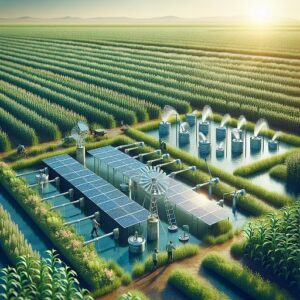
Another crucial benefit of solar panels on farms is their ability to power irrigation systems. Water is essential for both crops and livestock, and solar energy provides a reliable and cost-effective way to ensure a consistent water supply. By using solar-powered pumps, farmers can efficiently distribute water to their fields and livestock, regardless of their proximity to traditional power sources.
Solar-powered irrigation systems are particularly beneficial in remote areas where access to electricity is limited. These systems harness the sun’s energy to pump water from wells, rivers, or reservoirs, ensuring that livestock always have access to clean drinking water. This is vital for maintaining the health and productivity of animals, as dehydration can lead to severe health issues. For more information on how solar panels can be integrated into agriculture, explore the benefits of agrivoltaics.
Furthermore, solar irrigation systems reduce the reliance on fossil fuels, leading to cost savings and a smaller carbon footprint. By investing in solar technology, farmers can ensure a sustainable water supply for their operations, contributing to a more efficient and environmentally friendly farming practice.
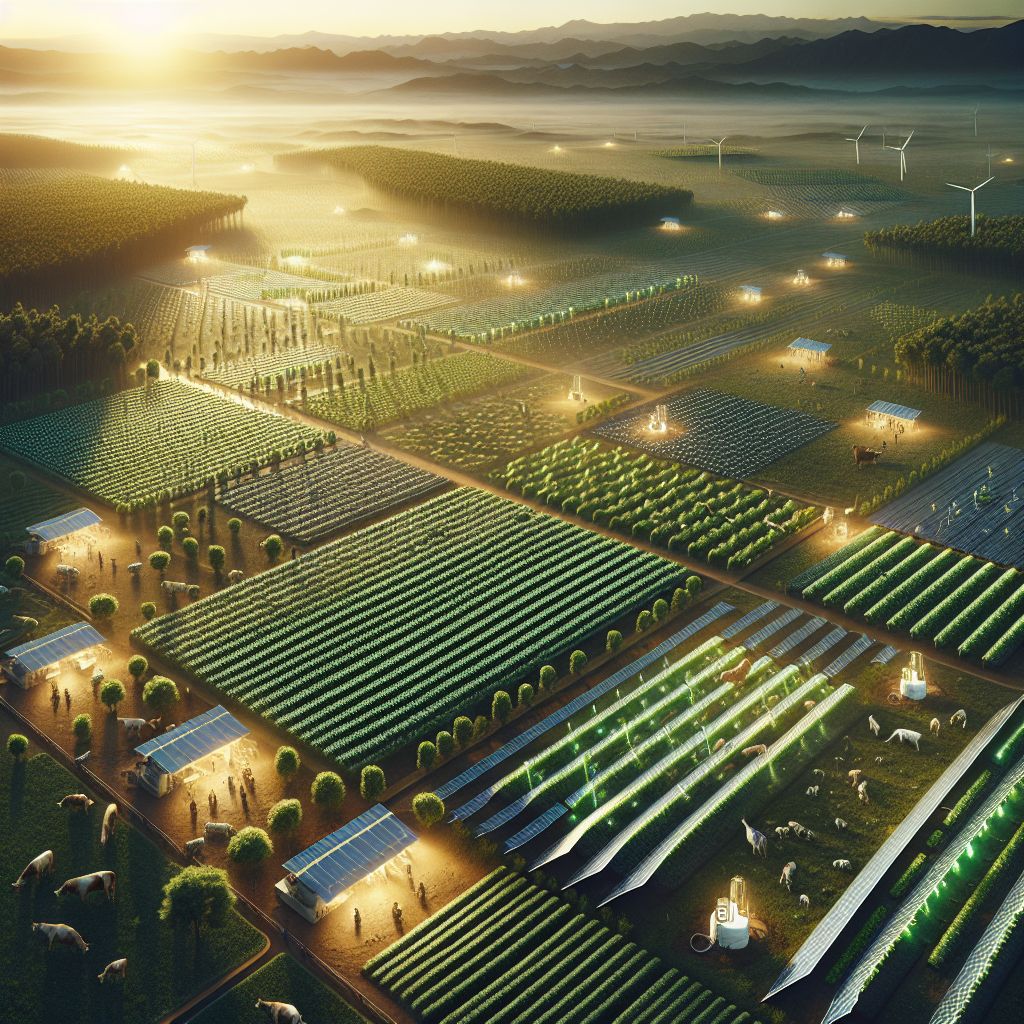
Cost-Effective and Sustainable Farming Practices
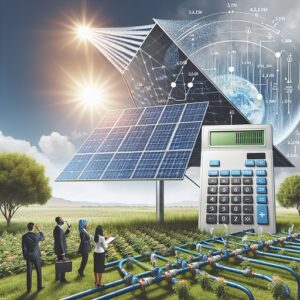
Solar panels offer a cost-effective solution for farmers looking to implement sustainable practices. The initial investment in solar technology may seem daunting, but the long-term financial benefits far outweigh the upfront costs. Solar panels can significantly reduce energy bills, allowing farmers to allocate resources to other essential areas of their operations.
Long-Term Financial Benefits for Farmers
One of the most compelling reasons for farmers to invest in solar panels is the long-term financial benefits. Once installed, solar panels can drastically reduce or even eliminate electricity costs. This can lead to substantial savings over time, allowing farmers to reinvest in their operations and improve overall productivity.
Additionally, solar panels have a long lifespan, often lasting 25 years or more. This means that farmers can enjoy the benefits of reduced energy costs for decades, making solar technology a wise investment for the future of their farms. As energy prices continue to rise, the cost savings associated with solar power will only become more significant.
Grid Independence and Energy Cost Reductions
Solar panels provide farmers with greater independence from the grid, reducing their reliance on traditional energy sources. This independence means that farmers are less vulnerable to fluctuations in energy prices and supply disruptions. By generating their own electricity, farmers can better control their energy costs and ensure a reliable power supply for their operations. For more insights on how solar power is transforming agriculture, explore agrivoltaics.
Furthermore, solar panels can be combined with battery storage systems to store excess energy generated during the day. This stored energy can then be used at night or during periods of low sunlight, ensuring a continuous power supply. By achieving grid independence, farmers can enhance the resilience of their operations and reduce their overall energy expenses.
Potential Government Incentives and Subsidies
Many governments offer incentives and subsidies to encourage the adoption of solar energy. These programs can significantly offset the initial costs of installing solar panels, making the transition to renewable energy more affordable for farmers. By taking advantage of these incentives, farmers can reduce their upfront investment and enjoy the long-term benefits of solar power.
Incentives may include tax credits, grants, or rebates, depending on the region and specific programs available. Farmers should research the options available in their area and take advantage of any financial assistance offered. By doing so, they can maximize the return on their investment and make solar technology a viable option for their farming operations.
Improved Habitat for Local Wildlife
Solar panels do more than just benefit farm animals; they also enhance habitats for local wildlife. By providing shade and creating cooler microclimates, solar installations can attract various species of birds and small mammals. These creatures find refuge under the panels, which can also serve as nesting sites and safe havens from predators.
Preservation of Soil and Water Resources
The implementation of solar panels contributes significantly to the preservation of soil and water resources. By reducing the amount of direct sunlight on the ground, solar panels help maintain soil moisture levels, which is crucial for plant growth and preventing soil erosion. This is particularly beneficial in areas prone to drought, where water conservation is essential.
Additionally, solar panels can aid in water management by powering irrigation systems. By utilizing solar energy, farmers can efficiently distribute water to their crops and livestock, ensuring that these vital resources are used sustainably. This not only supports agricultural productivity but also helps maintain the ecological balance of the farm environment.
Solar panels offer farmers a cost-effective solution by reducing operational costs, creating new revenue streams, and promoting sustainability. These benefits make solar energy a strategic investment for long-term profitability and environmental stewardship. This below table will discuss it more.
|
Aspect |
Benefits of Solar Panels for Farmers |
Details |
|---|---|---|
|
Reduced Energy Costs |
Significant reduction in electricity expenses |
Solar panels allow farmers to generate their own power, reducing reliance on grid electricity and lowering utility bills over time. 1, 3 |
|
Energy Independence |
Reliable and self-sufficient energy supply |
Farmers can shield themselves from volatile energy prices by producing electricity on-site, ensuring a stable energy source for critical operations like irrigation and refrigeration. 4, 5 |
|
Additional Revenue |
Income generation through surplus energy sales |
Excess electricity can be sold back to the grid via net metering programs, creating an additional revenue stream for farms. 1, 2, 3 |
|
Environmental Benefits |
Reduced carbon footprint and support for sustainable agriculture |
Solar power eliminates greenhouse gas emissions associated with fossil fuels, helping farmers decrease their environmental impact and promote biodiversity. 2, 4 |
|
Tax Incentives & Grants |
Financial assistance for installation costs |
Programs like the USDA REAP Grant and federal tax credits help offset upfront costs, making solar installations more affordable for farmers. 1 |
|
Increased Property Value |
Enhanced market value of farms |
Solar-equipped farms are seen as more sustainable and efficient, making them attractive to buyers or investors. 1 |
|
Low Maintenance Costs |
Minimal operational expenses over the system’s lifespan |
Solar panels require little maintenance and have long lifespans (25-30 years), ensuring consistent savings after the initial investment is recovered. 3 |
|
Agrivoltaics Potential |
Dual land use for energy production and farming |
Combining solar panels with crop production or livestock grazing optimizes land use, reduces water evaporation, and improves animal welfare while generating renewable energy. 2, 8 |

Future Trends in Renewable Energy Use on Farms
As the world shifts towards more sustainable energy solutions, the use of renewable energy on farms is expected to grow significantly. Solar technology, in particular, will play a crucial role in this transition, offering numerous benefits for both farmers and the environment.
Technological Innovations Enhancing Farm Operations
Technological advancements are continuously enhancing the capabilities of solar panels and other renewable energy systems. Innovations such as bifacial solar panels, which capture sunlight from both sides, and advanced energy storage solutions are making solar technology more efficient and accessible for farmers.
Growing Global Adoption and Best Practices
The adoption of solar energy on farms is not limited to any one region; it is a global trend. Countries around the world are recognizing the benefits of renewable energy for agriculture and are implementing policies to support its integration. Sharing best practices and successful case studies will further accelerate this adoption, helping farmers worldwide embrace sustainable energy solutions.
Pathways to a Sustainable Agricultural Future
To achieve a sustainable agricultural future, it is essential for farmers to continue exploring and implementing renewable energy solutions. Solar panels offer a practical and effective way to enhance farm operations, improve animal welfare, and reduce environmental impact. By embracing these technologies, farmers can pave the way for a more resilient and sustainable agricultural industry.
Furthermore, collaboration between farmers, researchers, and policymakers is crucial for advancing renewable energy adoption on farms. By working together, stakeholders can develop innovative solutions and create supportive frameworks that facilitate the transition to a more sustainable future, such as through the integration of agrivoltaics.
Ultimately, the integration of solar energy into farming practices represents a significant step towards achieving environmental sustainability and ensuring the long-term viability of agricultural operations.
Frequently Asked Questions (FAQ)
Here are some common questions farmers may have about using solar panels on their farms:
How do solar panels provide shade for farm animals?
Solar panels are installed in strategic locations across the farm to cast shadows over areas where animals congregate. This shade helps reduce heat stress and provides a cooler environment for livestock, particularly during hot summer months. For more insights on integrating solar technology in agriculture, explore the benefits of solar agriculture integration.
What financial advantages do solar panels offer to farmers?
Solar panels can significantly reduce or eliminate electricity costs, leading to substantial savings over time. Additionally, government incentives and subsidies can offset the initial investment, making solar technology more affordable for farmers. For more information on the role of solar panels in agriculture, explore the impact of solar panels on smart farming.
Can solar panels impact the health of crops grown nearby?
When properly integrated, solar panels can have a positive impact on crop health. By providing partial shade, they help maintain soil moisture levels and reduce water evaporation, benefiting crops that thrive in such conditions. For more information on how solar panels can be used in agriculture, consider exploring agrivoltaics.
Are there any risks associated with solar panels on farms?
While solar panels are generally safe, there are potential risks, such as damage from severe weather or livestock interference. However, these risks can be mitigated through proper installation, maintenance, and protective measures.
What incentives are available for farmers to install solar panels?
Incentives vary by region but may include tax credits, grants, or rebates. Farmers should research available programs in their area to take advantage of financial assistance for adopting solar energy solutions.
“Installing solar panels has been one of the best decisions for our farm. Not only have we reduced our energy costs, but our livestock are healthier and more productive thanks to the shade and cooler environment the panels provide.” – Farmer John Doe, Solar-Powered Farm Owner
By leveraging solar technology, farmers can create more sustainable and efficient operations, benefiting both their livestock and the environment. Embracing renewable energy is a critical step towards a brighter, more sustainable future for agriculture.
As we continue to explore innovative solutions and share best practices, the potential for solar energy on farms will only grow. Farmers who adopt these technologies today are not only improving their operations but also contributing to a more sustainable and prosperous future for the agricultural industry.

Leave a Reply