
Key Takeaways
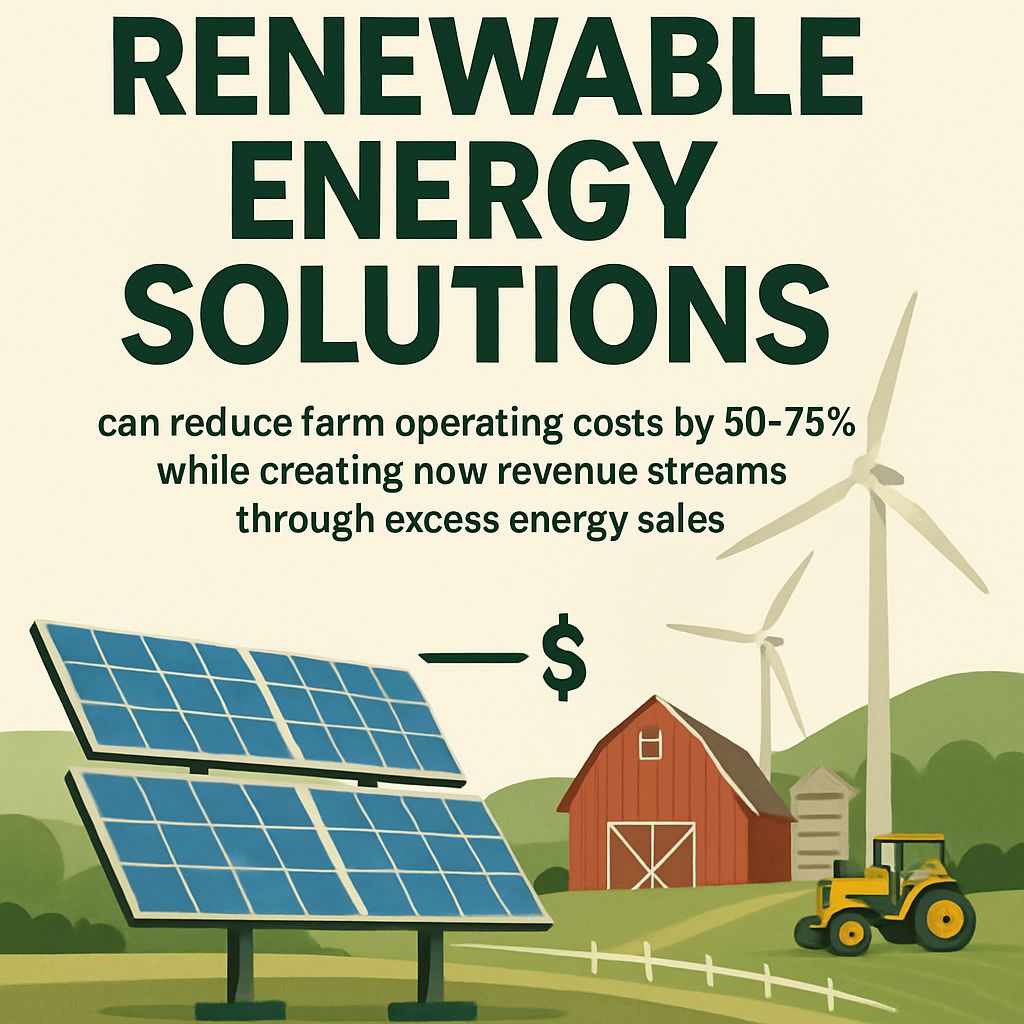
- Implementing renewable energy solutions can reduce farm operating costs by 50-75% while creating new revenue streams through excess energy sales
- Solar power systems offer versatile applications for farms including irrigation, lighting, and climate control with payback periods as short as 3-5 years
- The USDA Rural Energy for America Program (REAP) can cover up to 25% of renewable energy project costs for qualifying agricultural producers
- Hybrid energy systems combining solar, wind, and storage solutions provide farms with the most reliable year-round power generation capability
- SustainableFarmPower.org provides comprehensive resources for farmers seeking to transition to renewable energy systems with personalized assessment tools
Farm Energy Costs Are Skyrocketing: Why You Need Alternative Power
Rising energy costs are quietly eating away at farm profits across the country. The average farm now spends over $2,400 per month on electricity alone—a figure that’s increased nearly 30% in just five years. For livestock operations with climate control needs or irrigated crops, these costs can run exponentially higher. This growing expense is creating an urgent need for farmers to rethink their energy strategies.
Sustainable energy solutions aren’t just environmentally friendly—they’re becoming economically essential for farm viability. By implementing renewable power systems, agricultural operations can both slash current expenses and insulate themselves against future rate increases. The payback periods for these investments have shortened dramatically in recent years, with many farmers achieving complete return on investment in 3-7 years.
“Our dairy operation was spending over $4,500 monthly on electricity. After installing our solar array and biogas system, we’ve cut that bill by 75% and created a new revenue stream by selling excess power back to the grid.” – James Wilson, Clearview Farms
Beyond immediate savings, agricultural energy independence brings resiliency benefits that traditional power can’t match. When severe weather disrupts the grid, farms with their own generation capacity can maintain critical operations. This protection is particularly valuable for livestock operations where climate control failures can be catastrophic, or for crop producers relying on timely irrigation. The strategic advantages of farm energy autonomy extend far beyond simple cost calculations.

Solar Power Systems That Actually Work for Farm Operations
Solar energy has evolved far beyond the basic rooftop panels of years past. Today’s agricultural solar solutions are specifically engineered for the unique demands of farming operations, offering unparalleled flexibility and efficiency. Modern farm solar installations can be configured to power everything from irrigation systems to grain drying operations, with specialized equipment designed to withstand agricultural environments.
Grid-Tied Systems: Slash Your Monthly Bills
Grid-tied solar systems represent the most straightforward path to reducing farm energy costs. These systems connect to the existing utility infrastructure, allowing farmers to generate their own electricity while maintaining the reliability of grid connection. The true genius of grid-tied systems lies in net metering policies, which enable farmers to receive credit for excess power they produce during sunny periods.
|
System Size |
Typical Cost Range |
Annual Energy Production |
Estimated Annual Savings |
Typical Payback Period |
|---|---|---|---|---|
|
10kW |
$20,000-30,000 |
12,000-16,000 kWh |
$1,500-2,000 |
5-7 years |
|
25kW |
$45,000-65,000 |
30,000-40,000 kWh |
$3,600-4,800 |
4-6 years |
|
50kW |
$85,000-120,000 |
60,000-80,000 kWh |
$7,200-9,600 |
3-5 years |
Installation flexibility makes grid-tied systems particularly valuable for farms. Panels can be mounted on barn roofs, equipment sheds, or even as shade structures over livestock areas, creating dual-purpose installations. Ground-mounted arrays can be positioned to avoid prime agricultural land, utilizing marginal areas or integrating with grazing pastures. Some innovative farmers are even exploring elevated mounting systems that allow crop production to continue underneath the panels—a practice called agrivoltaics that maximizes land productivity.
Off-Grid Solutions for Remote Agricultural Areas
For farming operations in remote locations where utility connections are unreliable or prohibitively expensive, off-grid solar provides a game-changing alternative. These standalone systems combine solar panels with robust battery storage to deliver consistent power regardless of grid availability. The independence these systems provide can transform previously unviable land into productive agricultural space.
Solar Water Pumping: Save Thousands on Irrigation
Solar-powered irrigation systems represent one of the most impactful applications of renewable energy for crop farmers. These systems harness solar energy to pump water from wells, ponds, or rivers directly to fields, eliminating the substantial electricity or diesel costs of traditional pumping. Modern solar pumps can lift water from depths of up to 650 feet and deliver flow rates suitable for operations of any size. Learn more about how solar panels improve farm water efficiency and the benefits they bring.
The economics of solar irrigation are particularly compelling because the systems produce most power during sunny periods when irrigation needs are highest. A typical 5-horsepower solar pumping system can save $2,500-4,000 annually in energy costs compared to grid electricity, with even greater savings when replacing diesel pumps. Installation costs range from $7,000 for basic setups to $25,000 for larger operations, with payback periods commonly between 3-5 years after incentives.
Beyond direct cost savings, solar irrigation provides scheduling flexibility that conventional systems cannot. By incorporating water storage tanks or ponds, farmers can pump during peak solar hours and distribute water throughout the day or night, optimizing both energy capture and water use efficiency. This approach also eliminates vulnerability to power outages during critical growing periods when irrigation timing can determine crop success or failure.
Solar-Powered Lighting for Barns and Outbuildings
Agricultural lighting demands can be substantial, particularly for livestock operations requiring extended lighting periods. Solar lighting systems for barns and outbuildings offer reliable illumination without trenching expenses for power lines or monthly utility bills. Today’s LED fixtures combined with efficient solar generation provide brightness equivalent to conventional systems while consuming 75% less energy.
The most practical solar lighting installations for farms include dedicated small solar panels for individual buildings, eliminating the complexity of wiring between structures. Battery storage sized for 3-5 days of autonomy ensures consistent lighting through cloudy periods. Installation costs typically range from $1,500-3,000 per building, delivering complete return on investment within 2-4 years while eliminating the fire risks associated with aging conventional wiring.
Wind Energy: Harness What’s Already Blowing Across Your Fields
Agricultural lands often possess ideal conditions for wind energy generation, with open landscapes and minimal obstructions. Modern wind turbines can convert this abundant resource into substantial power for farm operations or revenue through utility sales. Unlike solar, wind systems frequently generate power day and night, providing complementary production patterns that enhance overall energy reliability.
The key to successful farm wind projects lies in proper site assessment. Wind resource mapping has advanced significantly, allowing precise prediction of generation potential at specific locations. Most viable agricultural wind sites have average wind speeds of at least 10 mph at turbine height, with higher speeds dramatically increasing production. Professional wind assessment services can determine if your property has suitable conditions before making significant investments.
Small-Scale Turbines for Farm Buildings
Small wind turbines rated between 1-20 kilowatts provide targeted power generation for individual farm buildings or operations. These systems typically stand 30-120 feet tall with rotor diameters of 12-25 feet, making them manageable installations for most properties. Modern small turbines incorporate advanced features like automatic storm protection, remote monitoring, and minimal maintenance requirements with service intervals of 3-5 years.
Installation costs for farm-scale wind systems range from $3,000-$8,000 per kilowatt of capacity, with typical 10kW systems providing 800-1,800 kWh monthly depending on wind resources. When properly sited, these systems can achieve payback periods of 7-10 years while providing 20+ years of operation. Farms with high, consistent wind speeds may see returns in as little as 5 years after applicable incentives.
Commercial-Scale Wind Options for Larger Properties
Farmers with substantial acreage can explore commercial-scale wind development, either through direct ownership or land lease arrangements with wind developers. Modern commercial turbines generate 2-5 megawatts each and can provide transformative income streams while allowing agricultural operations to continue underneath. A single utility-scale turbine typically requires only half an acre of land including access roads, leaving 99% of surrounding land available for farming. For those interested in diversifying income, solar panels can also provide revenue streams for farmers.
Lease arrangements typically pay landowners $5,000-8,000 annually per megawatt of capacity, providing stable supplemental income for 20-30 years. Farmer-owned commercial turbines require capital investment of $1-3 million per megawatt but can generate annual returns of $100,000-200,000 through power sales agreements. These projects generally require minimum properties of 35+ acres and specialized financing, but represent one of the most lucrative land diversification strategies available to larger farms.
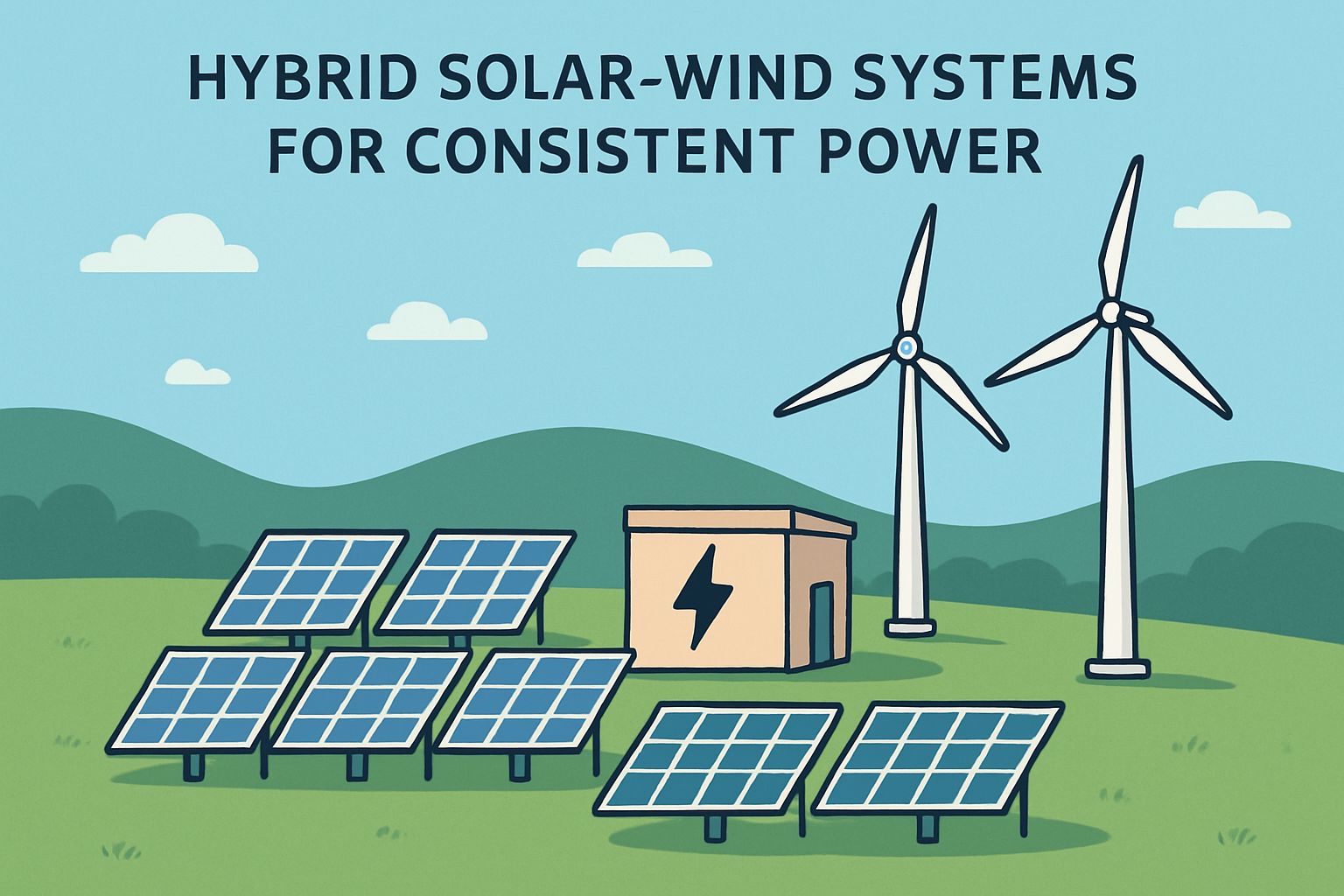
Hybrid Solar-Wind Systems for Consistent Power
The most resilient farm energy systems combine both solar and wind generation, leveraging their complementary production patterns. Wind speeds typically peak during morning, evening, and winter months, while solar generation maximizes during midday and summer—creating a more consistent year-round energy profile when combined. These hybrid systems can reduce battery storage requirements by 25-40% compared to single-source renewable installations.
Modern power controllers specifically designed for hybrid installations automatically optimize generation from multiple sources while managing battery charging cycles for maximum efficiency and component lifespan. For farms seeking maximum energy independence, these integrated systems provide the most reliable performance across all seasons and weather conditions, with redundancy that ensures critical operations remain powered even if one generation source is compromised.
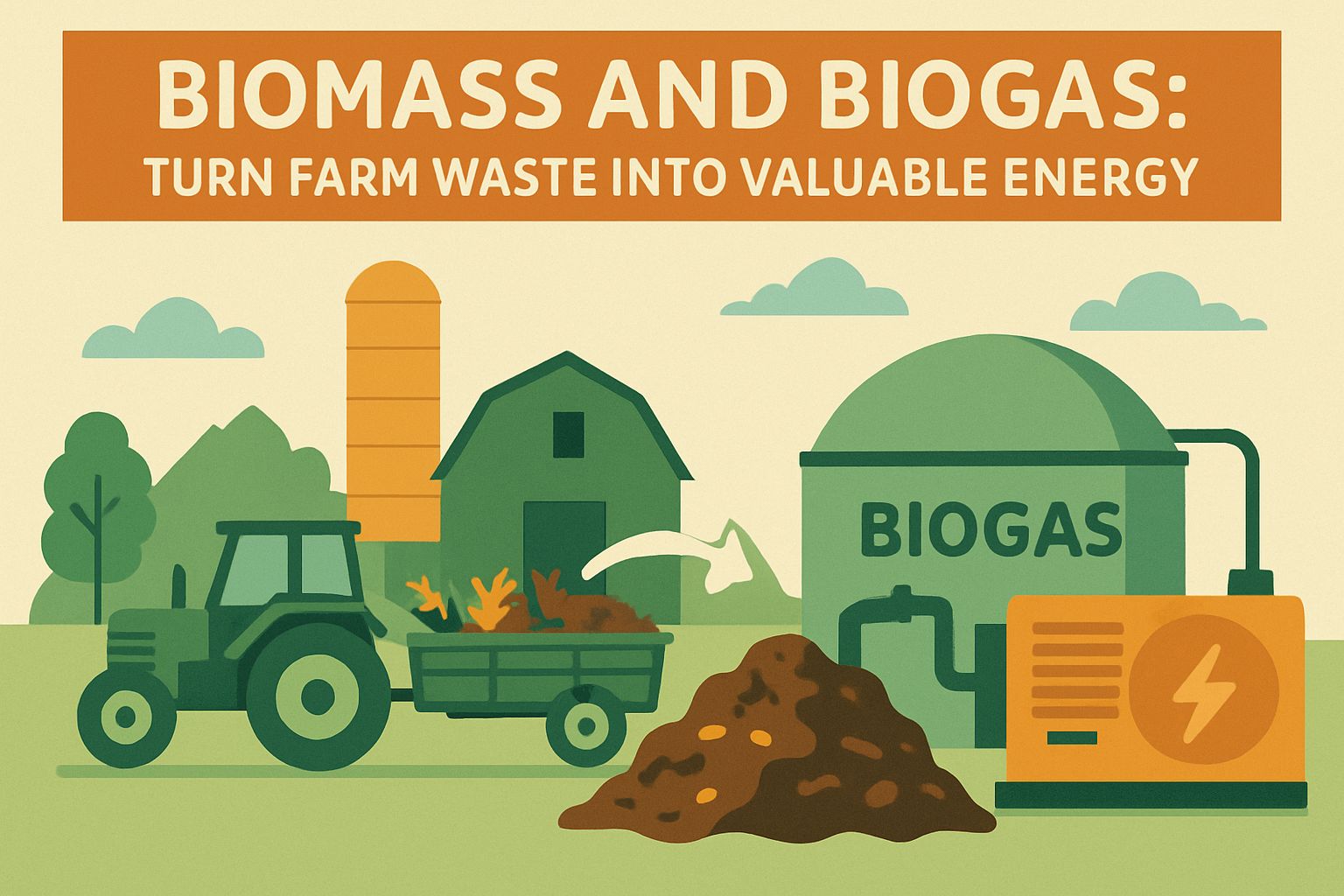
Biomass and Biogas: Turn Farm Waste into Valuable Energy
Agricultural operations produce substantial biomass byproducts that contain untapped energy potential. Converting these waste streams into usable power transforms disposal challenges into valuable assets while closing nutrient cycles on the farm. Biomass energy systems can process everything from animal manure to crop residues, producing electricity, heat, and improved soil amendments simultaneously.
Converting Animal Waste to Electricity and Heat
Livestock operations generate significant manure volumes that can fuel biogas digesters, creating a continuous energy source while solving waste management challenges. These systems capture methane—a potent greenhouse gas—and convert it into usable energy through a controlled biological process. A typical 200-cow dairy can produce enough biogas to generate 50-80 kW of continuous electricity, powering farm operations while providing surplus heat for buildings or processes.
Modern biogas systems incorporate automated feeding and monitoring equipment that minimizes labor requirements while maximizing gas production. Anaerobic digestion not only produces energy but also creates nutrient-rich effluent that can be applied as fertilizer, with reduced odor and improved nutrient availability compared to raw manure. Investment costs range from $400,000-$600,000 for mid-sized operations, with payback periods of 5-7 years when accounting for energy savings, bedding recovery, and potential carbon credits.
Crop Residue Systems That Generate Reliable Power
Crop farmers can convert abundant field residues like corn stover, wheat straw, and orchard prunings into valuable energy through combustion or gasification systems. These technologies extract stored solar energy from plant materials that would otherwise decompose, creating heat, electricity, or both through proven conversion processes. Depending on equipment capacity and biomass availability, farm-scale systems can generate 10-100 kW of electricity while providing substantial thermal energy for grain drying, greenhouse heating, or space conditioning.
Direct combustion systems represent the most established approach, burning agricultural residues in specialized boilers to produce steam for heat or power generation. More advanced gasification technology converts biomass into combustible syngas before final energy conversion, offering higher efficiency and cleaner emissions. Both approaches require approximately 1-2 tons of dry biomass daily per 10 kW of electrical capacity, making them practical for operations with access to substantial crop residues or dedicated energy crops grown on marginal land.
Small-Scale Biodigesters Anyone Can Install
Small farms can access biomass energy benefits through simplified digester systems designed for modest waste volumes. These modular units process manure from as few as 10-20 cattle equivalents or food waste from small livestock operations, producing sufficient gas for cooking, water heating, or small generator operation. Prefabricated systems start at $15,000-$30,000 and can be installed with minimal site preparation, offering accessibility to operations unable to justify commercial-scale digesters.
Low-cost digester designs developed specifically for small farms emphasize simplicity and reliability over maximum efficiency. These systems require only basic maintenance and can be constructed using locally available materials with simplified plumbing and controls. While not producing grid-scale electricity, they effectively address smaller energy needs like water heating for washing facilities, maintaining winter water troughs above freezing, or providing cooking gas for farm residences—all while improving waste management practices.
Geothermal Solutions: Steady Heat and Cooling for Farm Buildings
Unlike weather-dependent renewables, geothermal systems leverage the earth’s constant underground temperature to provide remarkably consistent heating and cooling for agricultural buildings. This technology can reduce HVAC energy consumption by 40-70% while delivering precise temperature control critical for livestock facilities, greenhouse operations, and crop storage. Modern geothermal heat pumps achieve efficiency ratings 3-5 times higher than conventional systems, dramatically reducing farm operating costs over their 20-25 year lifespan.
Ground Source Heat Pumps for Barns and Greenhouses
Ground source heat pump systems circulate fluid through buried loops to exchange heat with the stable earth temperature 6-10 feet below surface. During winter, these systems extract warmth from the ground; in summer, they reverse to discharge heat underground. This efficiency makes geothermal particularly valuable for climate-controlled agricultural buildings with significant heating or cooling loads, including dairy barns, poultry houses, and year-round greenhouses.
Installation costs typically range from $2,500-$3,500 per ton of capacity, with most agricultural buildings requiring 5-20 tons depending on size and insulation quality. While representing higher initial investment than conventional HVAC systems, geothermal delivers annual energy savings of 40-70% with minimal maintenance requirements. For operations with high thermal loads, these systems often achieve full payback within 5-10 years while providing superior temperature stability and operational reliability.
Water-Based Geothermal Options for Properties with Ponds
Farms with access to ponds, lakes, or flowing water can implement water-based geothermal systems that offer simplified installation and reduced costs compared to ground-loop configurations. These open-loop systems circulate water directly from the source through heat exchangers, eliminating the expense of extensive excavation or drilling. A one-acre pond at least 8 feet deep can typically support 10-15 tons of geothermal capacity—sufficient for multiple farm buildings or intensive greenhouse operations.
Water-source systems cost approximately 20-30% less to install than ground-loop alternatives while delivering equivalent efficiency benefits. The most economical applications combine geothermal with existing agricultural water features like irrigation ponds or livestock water supplies. Careful filtration and materials selection prevent biological fouling and ensure decades of reliable operation with minimal intervention beyond standard heat pump maintenance.
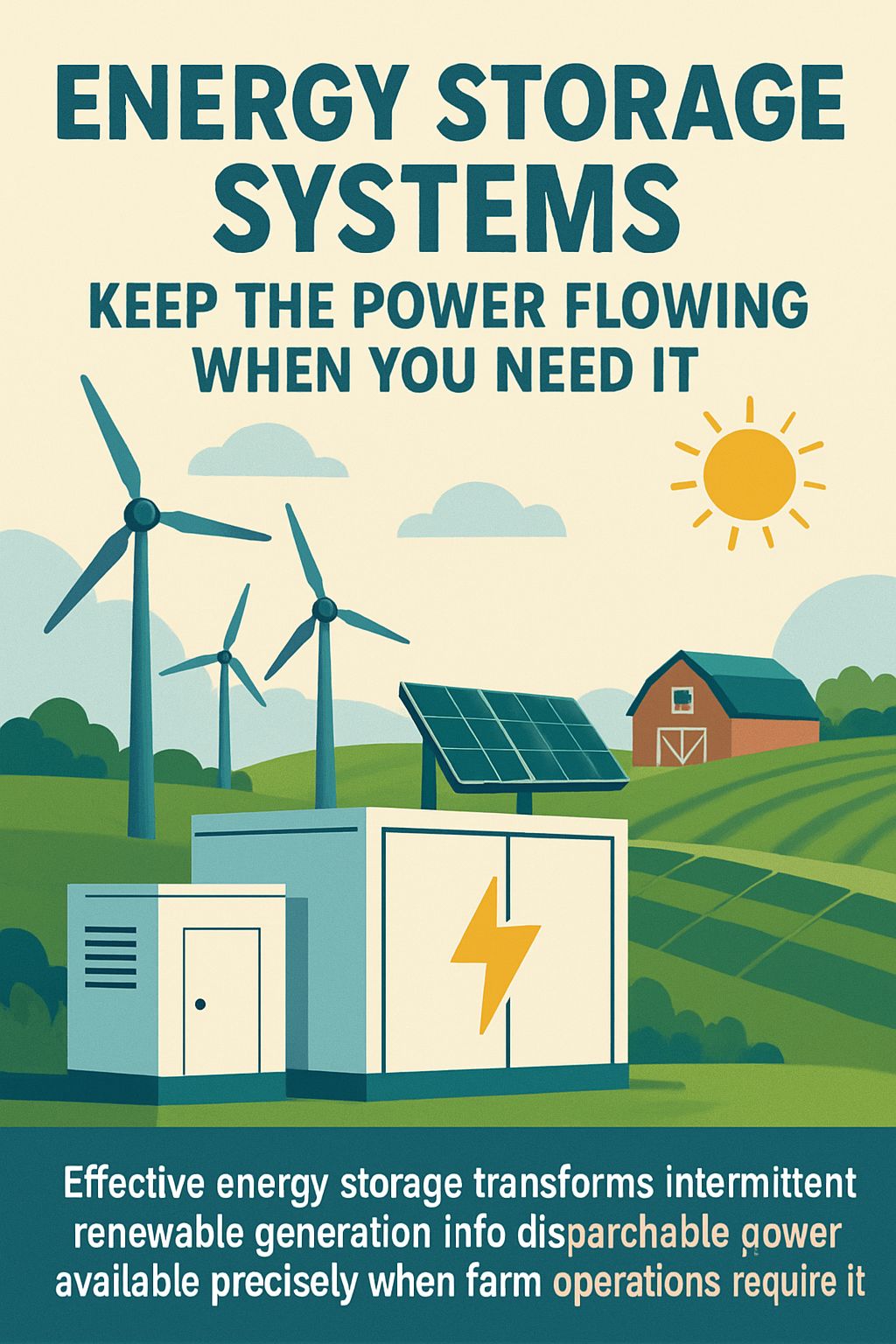
Energy Storage Systems: Keep the Power Flowing When You Need It
Effective energy storage transforms intermittent renewable generation into dispatchable power available precisely when farm operations require it. Modern agricultural storage solutions range from advanced battery systems to innovative mechanical and thermal storage options tailored to specific farm needs. When properly integrated with generation sources, these technologies provide the reliability of conventional power with the economics and sustainability of renewables.
Battery Banks That Make Sense for Agricultural Use
Battery technology has evolved dramatically, with new lithium iron phosphate (LFP) and advanced lead-acid options offering agricultural durability at increasingly affordable prices. Farm-specific battery systems are designed to withstand extreme temperatures, dust exposure, and the deep cycling common in agricultural applications. Current prices range from $400-700 per kilowatt-hour of usable capacity, with batteries typically sized to provide 1-3 days of critical load support.
The most cost-effective battery implementations focus on specific high-value applications rather than whole-farm backup. Strategic uses include powering irrigation controls during peak rate periods, maintaining critical ventilation in livestock facilities, or operating essential equipment during brief grid outages. When combined with smart load management, modest battery capacity can deliver disproportionate operational benefits while avoiding oversized system costs.
Mechanical Energy Storage Options
Farms with suitable topography can implement pumped hydro storage, using renewable energy to pump water to elevated tanks when power is abundant, then releasing it through micro-hydro generators when additional electricity is needed. This approach provides substantial capacity at lower cost than batteries for operations with existing water infrastructure. Even modest elevation differences of 50-100 feet can store significant energy, with each acre-foot of water at 100-foot elevation storing approximately 300 kWh of retrievable electricity. For those interested in alternative energy solutions, solar panels offer benefits for farmers’ operations and power solutions.
Innovative compressed air storage systems represent another mechanical option gaining traction in agricultural settings. These systems use renewable electricity to compress air in reinforced tanks or underground chambers, later releasing it through expansion turbines to generate power when needed. With lower environmental concerns than batteries and decades-long operational life, these systems offer compelling alternatives for farms seeking long-duration storage for seasonal operations.
Smart Energy Management Systems for Farms
Advanced energy management platforms specifically designed for agricultural operations can reduce storage requirements by 30-50% through intelligent load control and predictive balancing. These systems continuously monitor generation, storage levels, and consumption patterns while automatically shifting flexible loads to periods of renewable abundance. Modern controllers can prioritize critical systems during limited power availability while deferring pumping, heating, or cooling operations with inherent thermal inertia. Discover how solar panels benefit farms by reducing energy costs and enhancing sustainability.
Cloud-connected farm energy management platforms provide comprehensive monitoring and control through smartphone interfaces, allowing operators to view real-time performance and make adjustments remotely. These systems typically cost $2,000-5,000 depending on complexity, but deliver return on investment within 1-2 years through optimized self-consumption, reduced peak demand charges, and extended battery lifespan. For farms balancing multiple energy sources and storage systems, these intelligent controls become essential for maximizing economic benefits while ensuring operational reliability. For instance, utilizing LiFePO4 batteries can enhance the efficiency of solar panel systems on farms.
Financial Incentives That Make Farm Energy Projects Affordable
The economic viability of farm energy projects improves substantially through strategic use of available incentive programs. A comprehensive approach to project funding can reduce initial costs by 40-75% through grants, tax benefits, and specialized financing. Understanding the full incentive landscape represents one of the highest-return investments of time for farmers considering renewable energy adoption.
Federal Tax Credits and Grants for Renewable Energy
The federal Investment Tax Credit (ITC) currently provides a 30% tax credit for solar installations and certain biomass systems, directly reducing tax liability for qualifying farm businesses. This dollar-for-dollar tax reduction effectively discounts system costs by nearly a third, dramatically improving project economics. The federal Production Tax Credit (PTC) offers similar benefits for wind energy systems based on actual electricity generation. These tax incentives can be carried forward for up to 20 years if immediate tax liability is insufficient to capture full benefits. For more information on sustainable energy practices, explore sustainable production and use of on-farm energy.
Beyond tax credits, the Environmental Quality Incentives Program (EQIP) administered by the Natural Resources Conservation Service offers direct financial assistance for energy-related conservation practices. EQIP can provide cost-share funding for renewable energy systems that deliver documented environmental benefits, with payment rates typically covering 50-75% of implementation costs up to program limits. These non-competitive funds require conservation planning but offer accessibility to smaller operations that might not qualify for larger grant programs.
State-Specific Agricultural Energy Programs
State-level incentives for agricultural energy projects vary dramatically by location but often provide substantial additional support beyond federal programs. Many agricultural states offer specialized grant programs specifically for farm energy projects, with funding levels ranging from 25-50% of project costs. These programs frequently target specific agricultural sectors or energy technologies aligned with state economic and environmental priorities.
Property tax exemptions represent another valuable state-level incentive, with many jurisdictions excluding renewable energy equipment from farm property tax assessments. Some states also provide sales tax exemptions for renewable energy components, reducing project costs by 4-10% depending on local rates. Farmers should consult their state departments of agriculture and energy for comprehensive information on available incentives, as programs are frequently updated and may have limited application windows.
USDA Rural Energy for America Program (REAP)
The USDA’s Rural Energy for America Program stands as one of the most significant funding sources for agricultural energy projects. REAP provides both grants and guaranteed loans specifically for rural small businesses and agricultural producers implementing renewable energy or energy efficiency improvements. Grants can cover up to 25% of eligible project costs, with guaranteed loans available for up to 75% of costs, creating potential for complete project financing through combined funding mechanisms.
REAP applications require detailed energy assessments and project planning but offer substantial rewards for thorough preparation. The program evaluates projects based on technical merit, energy generation/savings, and economic benefits, with higher scores for innovative or especially impactful implementations. While competitive, REAP consistently funds hundreds of agricultural energy projects annually, with particular emphasis on supporting smaller operations and historically underserved producers. For farmers looking to enhance their operations, exploring solar panels benefits for farmers can be a valuable consideration.
Power Purchase Agreements and Net Metering
Power Purchase Agreements (PPAs) enable farmers to host renewable energy systems owned by third-party developers, receiving discounted electricity without capital investment. These arrangements typically guarantee energy costs 10-20% below utility rates while eliminating maintenance responsibilities and technical risks. For farms with suitable land but limited investment capital, PPAs offer immediate energy savings with zero upfront cost, though they provide smaller long-term benefits than direct ownership.
Net metering policies require utilities to credit farms for excess renewable electricity sent to the grid, effectively using the grid as free battery storage. This arrangement dramatically improves economics for systems that produce more than the farm consumes during generation hours. While specific policies vary by state and utility, most provide retail-rate credits for net excess generation up to 100% of annual consumption. Farms should carefully evaluate net metering terms when sizing systems, as optimal configurations typically offset 90-110% of annual consumption to maximize financial returns within program constraints.
Real Farmers, Real Results: Success Stories from Across the Country
The most convincing evidence for farm energy solutions comes from peers who have successfully implemented these technologies under real-world conditions. Across diverse agricultural sectors and geographic regions, farmers are documenting substantial economic and operational benefits from renewable energy adoption. These case studies provide both inspiration and practical guidance for operations considering similar transitions.
Successful implementations consistently demonstrate that renewable energy delivers benefits beyond simple cost savings. Operational reliability frequently improves through reduced dependence on aging rural grid infrastructure. Product quality often benefits from more precise environmental control enabled by abundant, affordable energy. Many farms also report marketing advantages as sustainability-minded consumers and supply chain partners increasingly favor products from operations with demonstrated environmental commitments.
The most successful farm energy projects share common elements: thorough planning, appropriate scale, professional installation, and systematic monitoring. Rather than pursuing maximum capacity or cutting-edge technology, these operations prioritize proven solutions sized to actual farm needs. They typically begin with energy efficiency improvements to reduce baseline demand, then implement renewable generation matched to optimized consumption patterns. This methodical approach consistently delivers the strongest financial performance and operational benefits.
“The key to our success was starting with a professional energy audit that identified exactly where our electricity was going. Once we understood our consumption patterns, we designed a right-sized renewable system that’s delivered exactly as promised for five straight years.” – Maria Rodriguez, Suncrest Orchards
Dairy Farm Cuts Energy Bills by 75% with Solar
Heartland Dairy in Wisconsin installed a 200kW ground-mounted solar array combined with comprehensive energy efficiency upgrades, reducing monthly electricity costs from $4,200 to under $1,100. The system powers milk cooling, vacuum pumps, and automated feeding systems while excess generation during sunny periods offsets evening consumption through net metering. A 30% federal tax credit combined with USDA REAP funding covered 55% of project costs, delivering complete payback within 4.5 years against a system designed for 30+ years of operation. Beyond financial benefits, the farm reports enhanced resilience during grid disturbances and positive consumer response to their sustainability initiatives.
Poultry Operation Goes Off-Grid with Wind and Battery Storage
Mountain Ridge Poultry in rural Colorado implemented a hybrid renewable system after calculating that traditional grid extension would cost over $175,000 for their remote operation. Their integrated solution combines three 20kW wind turbines with a 40kW solar array and 200kWh battery storage system, completely eliminating the need for utility connection or backup generators. The system maintains critical ventilation, lighting, and automated feeding for six poultry houses through all weather conditions while requiring only quarterly maintenance visits.
Total implementation costs of $320,000 were partially offset by $110,000 in grants and tax incentives, making the renewable system less expensive than the grid extension alternative even before considering ongoing energy savings. The operation reports additional benefits from precise control over barn conditions, resulting in improved feed conversion ratios and reduced mortality compared to their previous facilities. Insurance costs have also decreased due to reduced fire risks associated with traditional electrical systems and propane heating.
Crop Farm Turns Corn Stalks into Electricity
Midwest Grains converted previously unmarketable corn stover into valuable energy through a 75kW biomass gasification system that powers grain drying operations and provides winter heating for equipment maintenance facilities. The system processes 2-3 tons of agricultural residue daily during peak operation, displacing propane previously used for thermal applications while generating electricity that offsets farm consumption. Annual energy cost savings exceed $65,000 while creating valuable biochar as a system byproduct, which the operation applies to fields as a soil amendment.
The project’s $425,000 implementation cost was partially offset by $180,000 in combined incentives from federal tax credits and state agricultural development grants. Beyond direct energy savings, the operation reports significant logistical benefits from energy self-sufficiency during harvest, when propane deliveries were often delayed during peak agricultural demand. The system’s modular design allows for gradual capacity expansion, with plans to increase power generation as older farm equipment is replaced with electric alternatives.
Energy Independence: The Ultimate Goal for Modern Farms
The path to farm energy independence involves more than simply generating power—it requires integrating production, storage, and consumption into a balanced system that functions reliably regardless of external conditions. Advanced farms are achieving 90-100% energy self-sufficiency through layered approaches that combine multiple generation sources with strategic storage and intelligent load management. This independence shields operations from utility rate increases, service disruptions, and fuel supply uncertainties while creating operational resilience impossible with traditional energy approaches. As extreme weather events become more common and rural infrastructure ages, energy autonomy represents not just economic advantage but essential risk management for forward-thinking agricultural operations.
Conclusion: What is the Most Efficient and Cost Saving Way to Power the Farm
The most cost-effective approach to farm energy typically involves a phased implementation starting with efficiency improvements, followed by appropriately scaled renewable generation matched to actual farm consumption patterns. While specific technologies vary based on geographic location and agricultural activities, hybrid systems combining complementary generation sources consistently deliver the strongest performance across diverse settings. Financial optimization demands thorough exploration of incentive programs and careful system sizing to maximize benefits under applicable net metering or utility interconnection policies. For most operations, the journey to energy independence represents not a single project but a strategic progression of investments yielding cumulative benefits that transform both farm economics and environmental impact. For comprehensive planning assistance tailored to your specific agricultural operation, the experts at SustainableFarmPower.org provide customized assessment tools and implementation guidance for farms of all types and sizes. Additionally, exploring solar panels benefits and savings can offer significant insights into reducing farm energy costs.
Frequently Asked Questions
The transition to renewable farm energy inevitably raises important questions about implementation, economics, and practical considerations. The following responses address the most common concerns raised by farmers evaluating sustainable energy options for their operations.
Understanding these factors helps agricultural producers make informed decisions aligned with their specific operational needs and financial objectives. While each farm’s optimal energy solution will be unique, these foundational insights apply broadly across different agricultural sectors and geographic regions. For example, exploring solar panels benefits for farmers can provide insights into sustainable energy solutions.
For situations beyond these general guidelines, professional assessment remains the most reliable approach to developing tailored energy strategies that maximize both economic and operational benefits for your specific agricultural enterprise.
|
System Type |
Farm Application |
Typical Payback Period |
Maintenance Requirements |
Expected Lifespan |
|---|---|---|---|---|
|
Solar PV |
General electricity, irrigation |
5-8 years |
Annual inspection |
25-30 years |
|
Wind Turbine |
General electricity |
7-10 years |
Biannual service |
20-25 years |
|
Biogas Digester |
Livestock operations |
5-7 years |
Monthly monitoring |
15-20 years |
|
Geothermal |
Heating/cooling buildings |
8-12 years |
Annual service |
25-50 years |
How much does a solar system for a typical farm cost?
Farm solar system costs vary primarily by size and mounting configuration, with current prices ranging from $1.75-2.50 per watt installed after available federal tax credits. A midsized 50kW system suitable for many diversified farming operations typically costs $87,500-125,000 before incentives, or $61,250-87,500 after the 30% federal tax credit. Additional state incentives and USDA grants can further reduce net costs by 25-50% in many regions. Ground-mounted systems generally cost 10-15% more than roof installations but offer easier maintenance access and optimal positioning. Tracking systems that follow the sun increase costs by approximately 20% but can increase energy production by 25-35% in suitable locations, improving overall economics for many farm applications.
Will installing renewable energy affect my farm insurance?
Renewable energy installations typically require notification to farm insurance carriers and may necessitate policy adjustments, but rarely cause significant premium increases when properly implemented. Most carriers now have established protocols for covering solar, wind and other renewable technologies without specialized riders. The most important consideration is ensuring that installation contractors meet all relevant certifications and code requirements, as non-compliant systems can create coverage issues. Some farmers actually experience insurance benefits from renewable energy, particularly when systems include features like improved lightning protection or replacement of outdated electrical infrastructure. For operations implementing substantial renewable capacity, enterprise-level energy production insurance is available to protect against revenue losses from system damage or underperformance.
Can I sell excess energy back to the utility company?
Most farms can indeed sell excess renewable energy to utilities, though compensation mechanisms vary significantly by location. Net metering programs provide the most favorable terms, crediting excess production at retail rates against future consumption. Approximately 38 states currently mandate some form of net metering, though specific provisions differ regarding system size limits and credit expiration. In regions without net metering, feed-in tariffs or avoided cost payments typically provide lower compensation ranging from 30-70% of retail rates. For larger farm installations, dedicated power purchase agreements can establish guaranteed payment rates for 10-25 year terms, providing revenue predictability for significant investments. Farms considering substantial excess generation should investigate interconnection requirements early, as utility capacity limitations or equipment upgrades can sometimes create unexpected costs for larger systems.
What’s the typical ROI timeframe for farm energy projects?
Return on investment for farm energy projects typically ranges from 3-10 years depending on system type, available incentives, and current energy costs. Solar installations in high-rate utility territories often achieve payback in 4-6 years, while wind systems generally require 6-9 years due to higher maintenance requirements. Biomass and biogas systems for livestock operations with abundant feedstock can see returns in as little as 3-5 years when accounting for waste management benefits and potential carbon credits. The economic analysis should incorporate all value streams, including direct energy savings, capacity charge reductions, avoided waste management costs, and potential revenue from renewable energy credits.
The most favorable ROI scenarios typically involve operations with high daytime energy consumption patterns closely matched to solar production curves, or consistent 24-hour loads that can leverage hybrid generation systems. Agricultural operations with seasonal processing facilities often achieve exceptionally strong returns due to peak production coinciding with maximum solar output. Energy-intensive livestock operations benefit particularly from combined heat and power systems that maximize overall efficiency by utilizing thermal energy alongside electricity production.
Do renewable energy systems require a lot of maintenance?
Modern agricultural renewable energy systems are engineered for reliability with minimal maintenance requirements. Solar installations typically require only annual inspection and occasional cleaning, with panel washing needed only in unusually dusty environments or locations without regular rainfall. Fixed solar systems contain no moving parts and maintain 95% of original output after 25 years of operation. Wind turbines require more regular attention with biannual inspection and lubrication of mechanical components, typically performed by service contractors under maintenance agreements costing $0.01-0.02 per kWh produced.
Biomass and biogas systems demand the highest maintenance commitment, requiring weekly to monthly monitoring of biological processes and mechanical components. However, these tasks often integrate smoothly with existing livestock or crop management routines on farms already handling organic materials. Geothermal systems require only standard heat pump maintenance similar to conventional HVAC equipment, with ground loops functioning reliably for 50+ years with essentially zero attention. For all system types, remote monitoring technology has dramatically simplified maintenance by providing real-time performance alerts and predictive diagnostics, enabling proactive intervention before minor issues develop into costly repairs.
The most successful farm energy systems typically incorporate monitoring platforms that track both generation and consumption, providing operational insights beyond simple maintenance requirements. These systems help identify both production anomalies and consumption patterns that might indicate equipment inefficiency or operational improvements. For more insights on sustainable energy practices, explore the sustainable production and use of on-farm energy. While adding modest cost ($1,500-3,000), comprehensive monitoring typically pays for itself through improved system performance and extended equipment lifespan.
“After five years running our solar and biomass systems, I’ve spent less time on renewable energy maintenance than I previously spent just arranging propane deliveries and dealing with power outages. Modern systems are remarkably hands-off when properly installed.” – Thomas Jenkins, Riverview Agricultural Enterprises
Farmers are increasingly turning to renewable energy sources to power their operations. One popular choice is solar panels, which offer numerous benefits, including cost savings and increased efficiency. These panels can significantly reduce energy expenses while providing a reliable power source. For more information on how solar panels can benefit farmers’ operations, check out this article on solar panels benefits for farmers.







Leave a Reply