
Article-At-A-Glance
- Lithium-ion batteries offer 10-15 years of reliable service for agricultural solar systems, significantly outlasting traditional lead-acid alternatives
- With 85-95% round-trip efficiency, lithium-ion technology maximizes the usable energy captured by farm solar arrays
- These battery systems provide crucial resilience against power outages, ensuring critical farm operations continue uninterrupted
- Growing Solar Mist provides specialized lithium-ion solar solutions designed specifically for agricultural applications
- Farmers can achieve complete energy independence while reducing operational costs through strategic battery system sizing
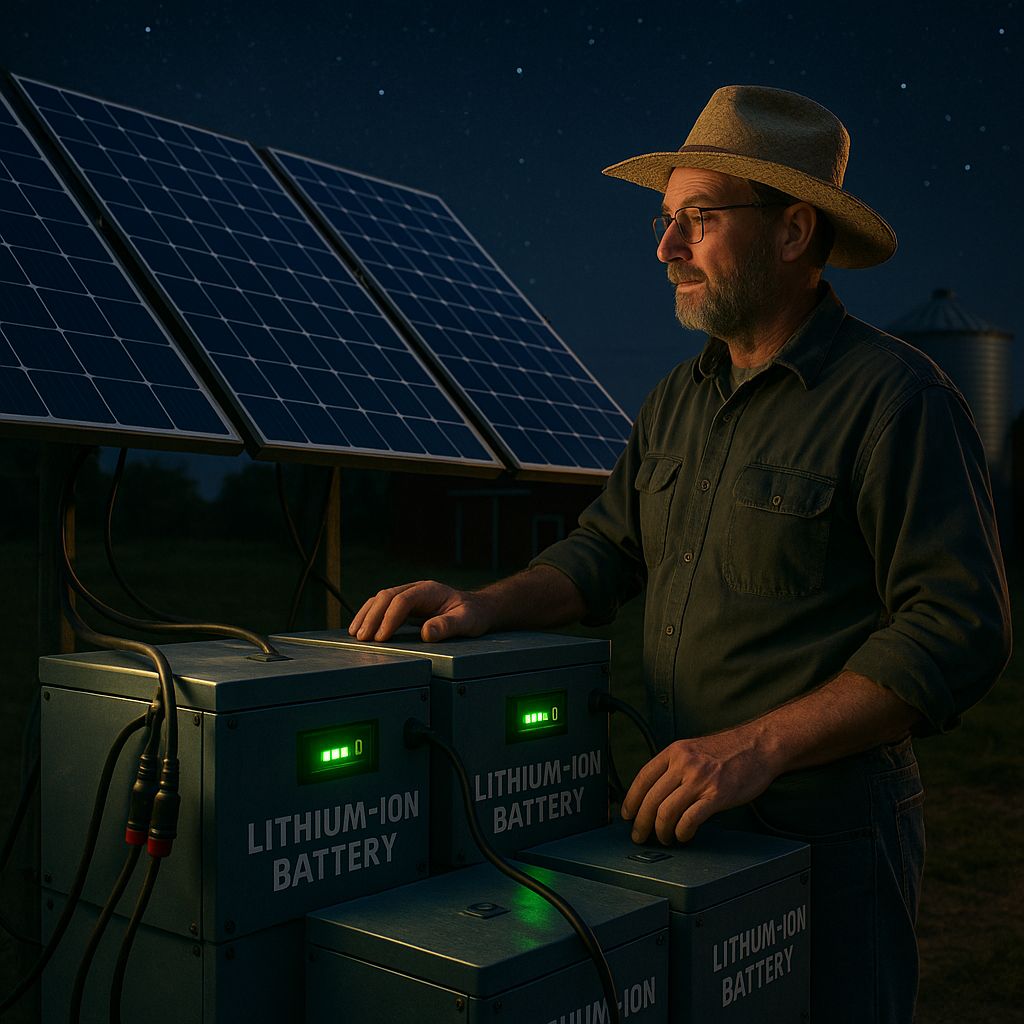
Solar power has revolutionized agriculture, but the sun doesn’t always shine when farmers need power most. That’s where lithium-ion batteries change everything. These powerhouse energy storage solutions bridge the gap between energy production and consumption, transforming intermittent solar power into reliable, on-demand electricity for critical farm operations.
Growing Solar Mist specializes in agricultural energy solutions that combine solar panels with lithium-ion battery technology to create truly independent power systems for farms of all sizes. These systems eliminate the uncertainty of traditional solar setups and provide farmers with complete control over their energy usage regardless of weather conditions or time of day.
Why Lithium-Ion Batteries Are Transforming Farm Solar Systems
The agricultural sector faces unique energy challenges that lithium-ion batteries are perfectly positioned to solve. Farms require reliable power for critical operations like irrigation, climate control, and cold storage—often during evening hours or cloudy days when solar panels alone fall short. Traditional battery technologies like lead-acid have historically filled this role, but their limitations in lifespan, efficiency, and maintenance requirements have held back widespread adoption.
Lithium-ion batteries have fundamentally changed this equation. With their exceptional combination of energy density, cycle life, and decreasing costs, they’ve emerged as the clear leader for commercial agricultural applications. These systems typically achieve 85-95% round-trip efficiency, meaning very little energy is wasted during the storage and discharge process—a critical advantage when every kilowatt-hour counts.
Farm operations experience significant seasonal variations in both energy production and consumption. During peak growing seasons, irrigation systems may run continuously while cold storage facilities work overtime. Lithium-ion batteries provide the flexibility to bank excess solar energy during low-demand periods and deploy it precisely when needed, creating a perfectly balanced energy ecosystem that maximizes self-sufficiency.
How Lithium-Ion Batteries Work with Agricultural Solar Panels
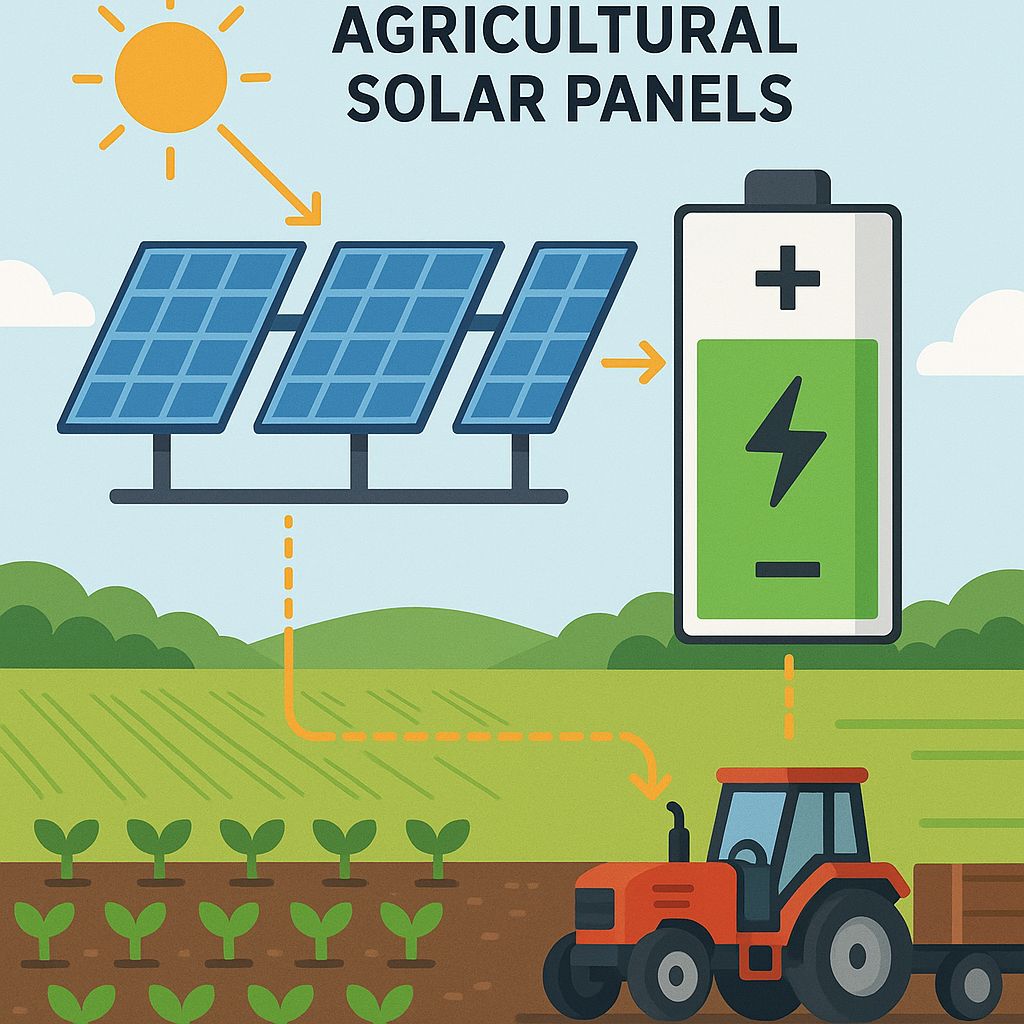
A complete agricultural solar battery system consists of several key components working in harmony. Solar panels capture sunlight and convert it to electricity, which then flows through charge controllers that regulate the voltage and current. This carefully managed power charges the lithium-ion battery bank, where it’s stored until needed. When farm equipment requires energy—whether during nighttime, cloudy weather, or peak usage periods—an inverter converts the stored DC electricity to AC power that runs standard farm equipment.
Energy Storage Basics for Farm Applications
Lithium-ion batteries store electrical energy through a chemical process that moves lithium ions between positive and negative electrodes. This elegant mechanism allows for exceptional energy density—storing more power in less space than traditional batteries. For space-conscious farm installations, this means more capacity without sacrificing valuable real estate that could otherwise be used for production. Learn more about the necessity of battery use in off-grid farm solar panels.
The capacity of lithium-ion battery systems is measured in kilowatt-hours (kWh), representing how much energy can be stored and later discharged. Farm systems typically range from 10kWh for small operations to 100kWh or more for large commercial farms with substantial power requirements. This scalability allows for precise matching between a farm’s energy needs and storage capacity, eliminating unnecessary expenditure while ensuring sufficient backup power. For more information on battery use in agriculture, check out this article on off-grid farm solar panels and battery use.
Charge/Discharge Cycles in Agricultural Settings
The daily rhythm of farm operations creates natural charge and discharge cycles that lithium-ion batteries handle exceptionally well. During daylight hours, solar panels generate electricity that powers immediate farm needs while simultaneously charging the battery system. As the sun sets or during cloudy periods, the batteries seamlessly transition to discharge mode, providing continuous power without interruption.
Unlike older battery technologies that degrade quickly with deep discharges, modern lithium-ion systems can routinely handle deep cycling without significant capacity loss. This characteristic is particularly valuable for agricultural applications where seasonal variations might require batteries to provide extended power during low-production periods. Many agricultural-grade lithium-ion batteries maintain 80% or more of their original capacity even after thousands of discharge cycles—translating to 10-15 years of reliable service. For more insights on choosing the right power storage, explore the types of battery you can use with a solar irrigation system.
Battery Management Systems for Farm Environments
The intelligence behind lithium-ion battery performance comes from sophisticated Battery Management Systems (BMS). These electronic guardians monitor and regulate every aspect of battery operation—from individual cell voltages and temperature to overall system health and safety parameters. For farm environments that often experience temperature extremes and challenging conditions, these management systems provide critical protection against overcharging, overheating, and other potential issues.
Advanced BMS units also offer farmers valuable data and remote monitoring capabilities. Through mobile apps or web interfaces, farm operators can track energy production, storage levels, and consumption patterns in real-time. This visibility enables better energy management decisions, such as scheduling high-consumption activities during peak solar production periods or conserving stored energy when weather forecasts predict extended cloudy conditions. For more information on energy storage, explore the necessity of battery use in off-grid farming.
5 Major Benefits of Lithium-Ion Batteries for Agricultural Solar Systems
1. Longer Lifespan Than Traditional Batteries
Lithium-ion batteries typically deliver 10-15 years of reliable service in agricultural settings, dramatically outlasting lead-acid alternatives that may require replacement every 3-5 years. This extended lifespan transforms the economics of solar storage for farms, reducing the total replacement costs and maintenance interruptions over the system’s life. When properly maintained, these batteries experience gradual capacity degradation rather than sudden failure, allowing farmers to plan for eventual replacement without unexpected downtime for critical systems.
2. Higher Energy Density for Compact Installation
The superior energy density of lithium-ion technology means farms can store significantly more power in less space—a crucial advantage for operations where every square foot matters. A typical lithium-ion battery system requires only about one-third the space of an equivalent lead-acid setup, freeing up valuable farm real estate for productive use. This compact footprint also creates more installation flexibility, allowing batteries to be placed in convenient locations closer to critical equipment, reducing power transmission losses and simplifying system design.
3. Reduced Maintenance Requirements
Unlike traditional batteries that demand regular maintenance checks, water refilling, and terminal cleaning, lithium-ion systems operate virtually maintenance-free. This hands-off reliability is particularly valuable in agricultural settings where labor resources are already stretched thin across multiple priorities. Modern lithium-ion batteries require only occasional visual inspections and electronic monitoring through their built-in management systems, eliminating the time-consuming maintenance routines associated with older battery technologies.
4. Better Performance in Temperature Extremes
Agricultural environments often experience harsh temperature variations that challenge battery performance. Lithium-ion batteries maintain efficient operation across a much wider temperature range than traditional alternatives, with many agricultural-grade models functioning effectively from -4°F to 122°F (-20°C to 50°C). This temperature resilience ensures consistent power availability during both winter cold snaps and summer heat waves—critical periods when farm operations cannot afford energy disruptions. Advanced thermal management systems in modern lithium-ion batteries actively regulate internal temperatures to maintain optimal performance regardless of ambient conditions.
5. Lower Total Cost of Ownership
While the initial investment in lithium-ion technology exceeds that of traditional batteries, the total cost of ownership over the system’s lifespan tells a dramatically different story. When factoring in longer service life, higher efficiency, minimal maintenance, and greater depth of discharge capabilities, lithium-ion systems typically cost 20-30% less than lead-acid alternatives over a 10-year period. For budget-conscious farm operations, this long-term value proposition transforms lithium-ion batteries from a luxury option to a financially prudent investment that delivers predictable returns through reliable energy availability and reduced replacement cycles.
Here is a table outlining the 5 major benefits of lithium-ion batteries for agricultural solar systems:
|
Benefit |
Explanation |
|---|---|
|
Longer Lifespan Than Traditional Batteries |
Lithium-ion batteries typically last 10–15 years, significantly longer than lead-acid batteries which average 3–5 years. This reduces the frequency of replacements, ensuring consistent energy storage capacity over time. |
|
Higher Energy Density for Compact Installation |
Lithium-ion batteries can store more energy per unit of weight or volume, allowing farmers to install compact systems that save space, an advantage in agricultural facilities where land and storage areas are valuable. |
|
Reduced Maintenance Requirements |
Unlike lead-acid batteries that require regular water refilling and equalization, lithium-ion batteries are nearly maintenance-free. This saves labor costs and minimizes downtime in farm operations. |
|
Better Performance in Temperature Extremes |
Lithium-ion batteries handle a wider temperature range, maintaining efficiency in hot climates and cold storage environments, which are common in agriculture. This reliability ensures critical farm equipment continues to run without interruption. |
|
Lower Total Cost of Ownership |
While the upfront cost is higher, lithium-ion batteries deliver better long-term value due to fewer replacements, reduced maintenance, and greater energy efficiency, making them more cost-effective over their lifetime. |
Real-World Farm Applications for Lithium-Ion Solar Storage
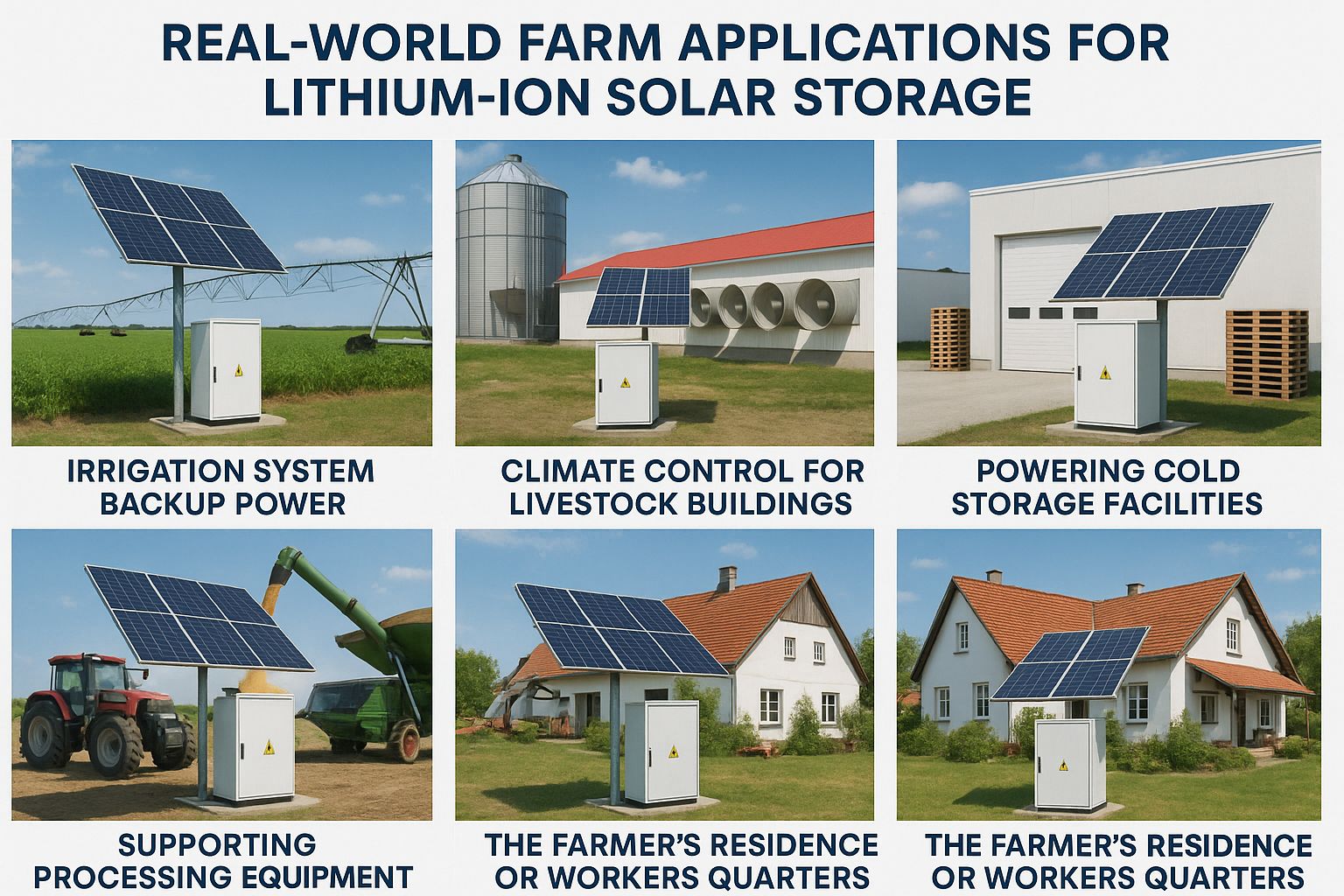
Irrigation System Backup Power
Modern agricultural productivity depends heavily on precise irrigation timing, often requiring power when sunlight isn’t available. Lithium-ion battery systems ensure irrigation pumps, controllers, and distribution systems operate consistently regardless of weather conditions or time of day. This reliability prevents crop stress and yield losses that could otherwise occur during extended cloudy periods or nighttime watering cycles. Many farmers report that irrigation backup alone justifies their battery investment, as even short interruptions during critical growth stages can significantly impact harvest quality and quantity.
Climate Control for Livestock Buildings
Temperature management in livestock facilities requires constant, reliable power to maintain animal health and productivity. Lithium-ion batteries provide uninterrupted backup for ventilation systems, heating elements, cooling fans, and automated feeding equipment—all critical components that cannot tolerate power interruptions. This application is particularly valuable during extreme weather events when grid outages are most likely to occur precisely when climate control is most essential. The rapid response time of lithium-ion systems means there’s no perceptible transition when switching from grid to battery power, maintaining the stable environment livestock require.
Powering Cold Storage Facilities
Post-harvest preservation represents a critical vulnerability for farm operations, where power interruptions can quickly lead to substantial product losses. Lithium-ion battery systems provide reliable backup power for refrigeration units, ensuring temperature-sensitive produce remains at optimal conditions regardless of grid status. The high-power delivery capabilities of lithium-ion technology handle the significant initial current draws refrigeration compressors require during startup cycles—a demanding application that often overwhelms lesser battery systems. Many producers of high-value perishable crops consider cold storage battery backup an essential insurance policy against catastrophic inventory losses that could otherwise wipe out an entire season’s profit.
Supporting Processing Equipment
On-farm processing equipment transforms raw agricultural products into higher-value outputs, but often requires substantial power during operation. Lithium-ion batteries support everything from grain dryers and milk processing systems to nut hullers and fruit sorting lines, maintaining operational continuity even when grid power fluctuates or fails entirely. The ability to schedule energy-intensive processing during off-peak utility hours while running on battery power can significantly reduce operational costs through demand charge avoidance. For farms involved in direct-to-consumer sales, battery backup ensures processing commitments can be met regardless of external energy challenges, maintaining critical business relationships and delivery schedules. Learn more about off-grid farming solutions that enhance energy efficiency.
The Farmers Residence or workers quarters
Beyond strictly commercial applications, lithium-ion systems increasingly power farm residences and worker housing, creating truly self-sufficient agricultural communities. These residential applications typically prioritize lighting, refrigeration, communication systems, and basic climate control—ensuring comfortable living conditions regardless of grid status. The psychological benefit of energy security shouldn’t be underestimated, as farmers report significant stress reduction knowing their families and workers have reliable power during emergencies. Many agricultural operations leverage this residential backup capability as a valuable recruitment and retention tool for skilled farm labor in competitive rural markets.
Sizing Your Lithium-Ion Battery System for Farm Needs
Creating an effective farm energy storage solution begins with accurate sizing based on your specific operational requirements. The ideal battery capacity balances sufficient power reserves against unnecessary investment, ensuring every dollar spent delivers maximum value. Start by analyzing your farm’s electricity consumption patterns across different seasons and operational phases to identify both average and peak demands.
While every agricultural operation has unique energy needs, most farms benefit from a system that can store at least 1-2 days of critical power requirements. This provides sufficient buffer for typical weather variations while maintaining reasonable system costs. Larger operations often segment their battery systems to prioritize mission-critical functions like irrigation and cold storage, ensuring these systems receive uninterrupted power even during extended low-production periods. For more insights on how batteries can enhance solar irrigation, check out this article on battery efficiency in solar irrigation.
Calculating Daily Energy Requirements
Begin by listing all essential equipment that requires backup power, noting both the wattage draw and typical hours of operation. Multiply these figures to determine daily kilowatt-hour (kWh) requirements for each system. For equipment with variable power demands, like irrigation pumps with different pressure settings, calculate based on maximum draw to ensure sufficient capacity during peak needs. Remember to account for inverter efficiency losses, typically 5-10%, when converting from DC battery power to AC equipment operation.
For example, a 2-horsepower irrigation pump drawing approximately 1,500 watts and operating 6 hours daily requires 9 kWh of energy (1.5kW × 6 hours). When combined with other critical systems—perhaps ventilation fans, refrigeration, and essential lighting—a modest farm might need 20-30 kWh of daily battery capacity to maintain core operations during low solar production periods. This targeted approach ensures investment goes toward genuinely essential power needs rather than oversized systems with excess capacity. For more information on enhancing solar irrigation efficiency, consider exploring how a battery can add to the efficiency of a solar irrigation system.
Accounting for Seasonal Variations
Agricultural energy demands fluctuate dramatically with growing seasons, making seasonal variation analysis crucial for proper battery sizing. Many farms experience peak power requirements during summer irrigation seasons that may be 3-5 times higher than winter baseline needs. Rather than sizing batteries for worst-case scenarios, consider supplemental power sources like generators for extreme situations while designing your lithium-ion system to handle 80-90% of typical annual variations.
Winter presents the dual challenge of potentially lower solar production combined with critical heating needs for livestock buildings or greenhouses. When sizing systems for year-round operations, factor in these reduced production periods by analyzing historical solar radiation data for your specific location. Many successful agricultural installations include seasonal adjustment capabilities, allowing battery capacity to be reallocated toward different farm systems as seasonal priorities shift throughout the year.
Planning for Critical Power Needs
Not all farm operations carry equal importance when designing battery backup systems. Create a hierarchical list of equipment based on criticality—identifying systems where even brief power interruptions cause significant damage or loss. Cold storage facilities, incubation systems, and critical ventilation typically top this priority list, while processing equipment or general lighting might accept occasional interruptions with minimal consequence.
For mission-critical systems, consider building in redundancy through multiple battery strings or hybrid approaches combining lithium-ion storage with backup generators. This layered protection ensures essential operations continue regardless of circumstances, while less critical systems might temporarily suspend during extended low-production periods. Many sophisticated farm energy systems now incorporate automated load-shedding capabilities that progressively disconnect non-essential equipment as battery reserves decline, preserving power for truly critical applications.
Installation Considerations for Farm Solar Battery Systems
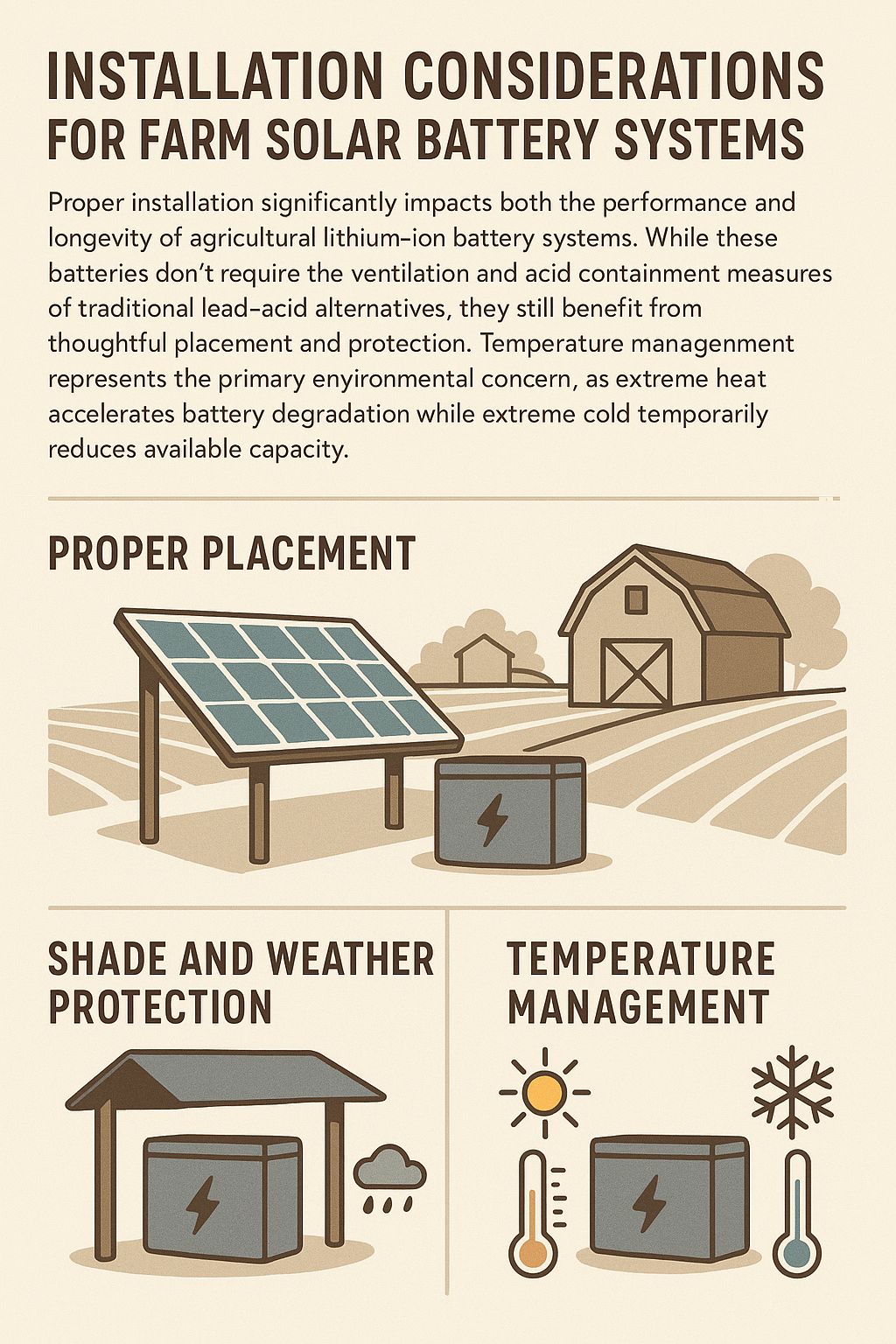
Proper installation significantly impacts both the performance and longevity of agricultural lithium-ion battery systems. While these batteries don’t require the ventilation and acid containment measures of traditional lead-acid alternatives, they still benefit from thoughtful placement and protection. Temperature management represents the primary environmental concern, as extreme heat accelerates battery degradation while extreme cold temporarily reduces available capacity.
Placement and Environmental Protection
Install lithium-ion battery systems in clean, dry environments protected from direct weather exposure and extreme temperatures. Many farms utilize dedicated equipment rooms, repurposed outbuildings, or purpose-built enclosures with basic climate control features. Maintain ambient temperatures between 50-85°F (10-29°C) when possible for optimal performance, though most agricultural-grade systems function effectively across much wider temperature ranges when necessary.
Physical protection from farm equipment, livestock, and potential impact damage remains important, particularly in high-traffic areas. Elevated mounting on secure racking systems prevents water damage during heavy rain or flooding events while maintaining accessibility for occasional visual inspections. For remote installations, consider enhanced security measures like locked enclosures, as the high value of lithium-ion systems can unfortunately attract theft in isolated locations.
Integration with Existing Solar Arrays
Retrofitting battery storage to existing solar installations requires careful evaluation of current system components. The charge controller represents a critical connection point, with many older models requiring replacement to support lithium-ion charging profiles. Similarly, existing inverters might need upgrading to hybrid models that manage bidirectional power flow between panels, batteries, and farm equipment. These component upgrades typically add 10-15% to total battery installation costs but ensure seamless integration and optimal system performance.
System location also influences integration complexity, with batteries ideally positioned close to both solar arrays and main electrical distribution panels to minimize wire runs and transmission losses. In distributed farm operations with multiple buildings, consider whether centralized or decentralized battery placement better serves operational needs. Some larger operations benefit from multiple smaller battery installations positioned strategically near critical equipment rather than a single large centralized system requiring extensive power transmission across the property.
Backup Generator Compatibility
Even the most robust solar-plus-storage systems benefit from generator backup during extended low-production periods or extraordinary demand situations. Modern lithium-ion systems easily integrate with standby generators through automatic transfer switches and intelligent energy management controllers that determine optimal power sourcing based on available resources. This hybrid approach provides ultimate reliability while minimizing generator runtime, fuel consumption, and associated maintenance costs. For more insights on using batteries with solar systems, explore how batteries are a necessity for off-grid solar setups.
When incorporating generators, ensure compatible communication protocols between battery management systems and generator controls to prevent charging conflicts. Many agricultural installations utilize a hierarchical approach where batteries handle normal fluctuations, generators activate only when battery reserves fall below predetermined thresholds, and the system automatically returns to solar charging when conditions improve. This intelligent orchestration maximizes renewable energy utilization while maintaining absolute power reliability for critical farm operations. To learn more about the types of batteries you can use with a solar irrigation system, check out this guide.
Cost Analysis: Are Lithium-Ion Batteries Worth the Investment?
The economic case for lithium-ion battery systems in agricultural applications has strengthened dramatically as technology costs have declined while performance and longevity have improved. While initial purchase prices remain higher than traditional battery technologies, the comprehensive financial analysis reveals a compelling value proposition when considering total lifecycle benefits. For most commercial agricultural operations, the question has shifted from whether lithium-ion technology makes financial sense to how quickly the investment can be implemented. For further insights into suitable battery types, you can explore battery options for solar irrigation systems.
Beyond direct financial returns, these systems deliver substantial risk-mitigation value by protecting farms from increasingly volatile energy markets and growing weather extremes that threaten grid reliability. The resilience provided during critical operational periods—particularly harvest, irrigation, and cold storage—creates business continuity protection that transcends simple payback calculations. For many farmers, the combination of economic benefits and operational security transforms lithium-ion battery systems from optional upgrades to essential infrastructure investments.
Initial Investment vs. Traditional Batteries
Lithium-ion battery systems typically require 2-3 times the upfront investment of comparable lead-acid alternatives when measured by nameplate capacity. However, this simplistic comparison ignores crucial performance differences that dramatically alter the true cost equation. Lithium-ion batteries routinely deliver 80-100% depth of discharge without damage, compared to 50% practical limits for lead-acid systems—effectively doubling the usable capacity from each kilowatt-hour purchased.
Installation costs also favor lithium-ion technology, with simplified mounting requirements, no ventilation systems, and reduced space needs contributing to lower setup expenses. Many agricultural installations report 15-20% lower installation costs compared to equivalent lead-acid systems when accounting for all related infrastructure. Maintenance expenses show even more dramatic differences, with lithium-ion systems operating virtually maintenance-free while traditional batteries demand regular service, water replenishment, and terminal cleaning—all representing ongoing costs and operational interruptions.
When comparing complete 10-year ownership scenarios for 30kWh systems (a typical size for medium farm applications), lithium-ion technology typically demonstrates 20-30% lower total costs despite higher initial investment. This advantage grows even more pronounced when accounting for the productivity benefits of higher reliability, better cold-weather performance, and reduced maintenance interruptions that directly impact farm operations.
- Initial purchase: $15,000-$25,000 for lithium-ion vs. $6,000-$10,000 for lead-acid
- Installation: $3,000-$5,000 for lithium-ion vs. $4,000-$7,000 for lead-acid
- Lifetime maintenance: $500-$1,000 for lithium-ion vs. $3,000-$5,000 for lead-acid
- Replacement cycles: 1 lithium-ion system vs. 2-3 lead-acid replacements over 10 years
- Usable capacity: 25-28kWh from lithium-ion vs. 15-18kWh from lead-acid (30kWh nameplate)
Payback Period Calculations
Most agricultural lithium-ion systems achieve financial payback within 5-8 years depending on specific usage patterns, local utility rates, and available incentives. Operations with high energy costs (over $0.15/kWh), frequent demand charges, or critical reliability requirements often see payback periods closer to 4-5 years. The calculation improves further when accounting for increasing utility rates over time—effectively accelerating payback as the value of each stored kilowatt-hour grows throughout the system’s lifespan.
Available Agricultural Incentives and Tax Credits
The financial equation for agricultural battery storage has improved dramatically through expanded incentive programs specifically targeting farm energy independence. The federal Investment Tax Credit (ITC) now applies to battery systems when charged primarily through renewable sources, providing a 30% tax credit against system costs through 2032. Many states offer additional incentives, including property tax exemptions, sales tax waivers, and direct rebates that can reduce effective system costs by an additional 10-25% depending on location.
Energy Independence Value During Grid Outages
Perhaps the most compelling yet difficult-to-quantify benefit comes from operational continuity during grid outages—increasingly common events in many agricultural regions. A single extended power interruption during critical periods can cause crop losses far exceeding the entire battery system cost. For operations with cold storage, irrigation timing requirements, or livestock life-support systems, this insurance value alone often justifies investment regardless of normal operational savings.
Is it worth the Investment for a Farmer to Use Lithium-Ion Battery as a Backup to Solar Panels
For most commercial agricultural operations, lithium-ion battery systems represent not just worthwhile investments but increasingly essential infrastructure components. The combination of operational reliability, reduced energy costs, extended equipment life through stable power quality, and protection against grid vulnerabilities creates a compelling multi-dimensional value proposition. As extreme weather events continue increasing while grid infrastructure ages, the security provided by independent energy systems becomes less a luxury and more a fundamental risk management strategy for forward-thinking agricultural operations.
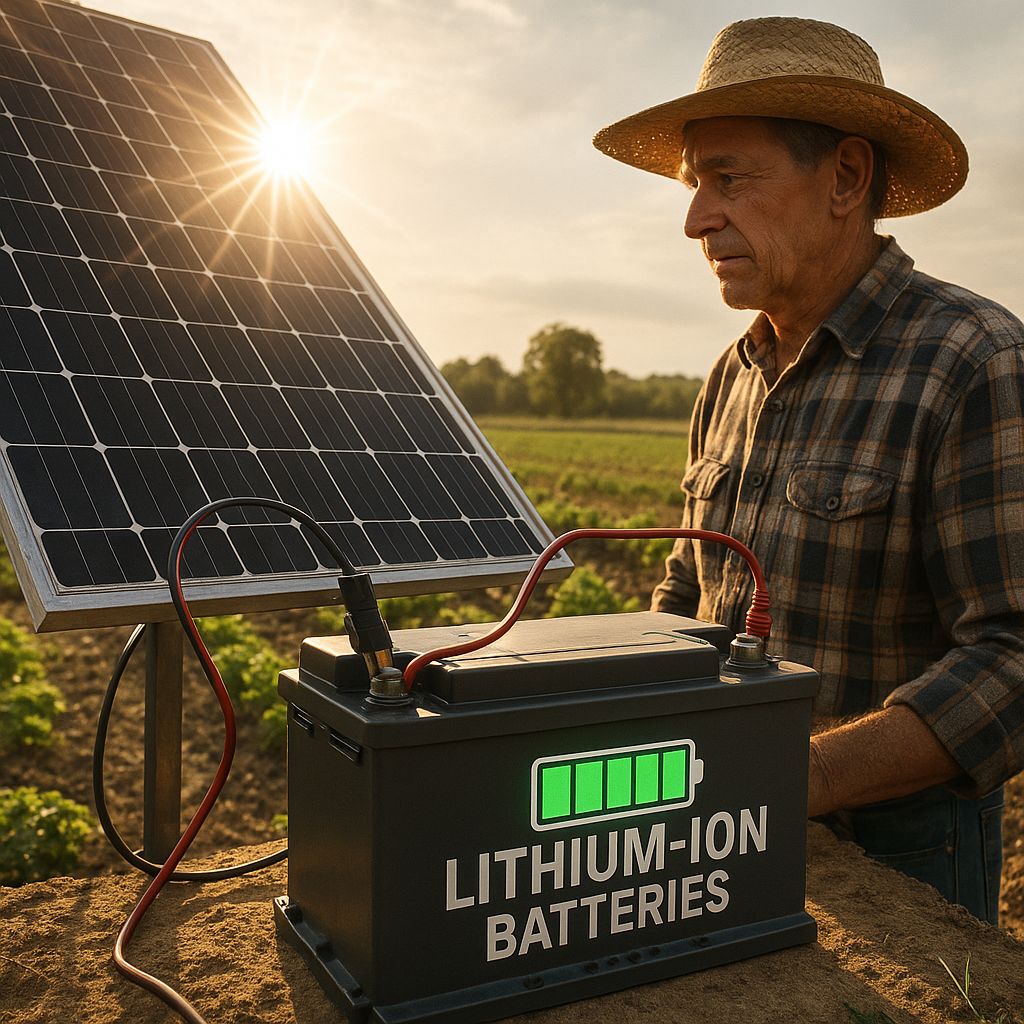
Future-Proof Your Farm with Lithium-Ion Solar Storage
The agricultural sector stands at a pivotal energy crossroads, with lithium-ion battery technology offering a clear path toward true energy independence and operational resilience. These advanced storage systems transform intermittent solar generation into reliable, dispatchable power that matches farm operational patterns rather than depending on external grid conditions. As climate volatility increases while energy markets experience growing uncertainty, the ability to generate, store, and control your own power resources becomes a defining competitive advantage for sustainable farm operations. By investing in properly-sized lithium-ion battery systems integrated with solar generation, today’s farmers aren’t just reducing current operating costs—they’re building lasting energy security that will benefit their operations for decades to come.
Frequently Asked Questions
These common questions address the primary concerns farmers typically raise when evaluating lithium-ion battery systems for agricultural applications. While every farm has unique characteristics that influence specific system design and economics, these general guidelines provide a starting framework for understanding key considerations.
How long do lithium-ion batteries last in agricultural solar applications?
In typical agricultural settings, quality lithium-ion battery systems deliver 10-15 years of productive service when properly maintained and operated within manufacturer specifications. Most systems maintain 80% or more of their original capacity after 10 years of regular cycling—a dramatic improvement over traditional batteries that might require replacement after just 3-5 years under identical conditions.
Actual lifespan varies based on several factors including cycling frequency, depth of discharge patterns, ambient temperature conditions, and quality of the battery management system. Agricultural installations in moderate climates with regular but not extreme cycling patterns typically experience the longest service life. Many manufacturers now offer 10-year warranties with guaranteed minimum capacity retention, providing farms with predictable performance expectations for financial planning purposes.
Can lithium-ion batteries power my entire farm operation?
While technically possible, powering an entire commercial farm exclusively through solar-plus-storage systems requires substantial investment and careful system sizing. Most practical installations prioritize critical operations—irrigation, refrigeration, ventilation, and essential processing equipment—while maintaining grid connections for extreme demand periods or extended low-production situations. For more information on integrating solar panels and lithium batteries in agriculture, check out this resource.
The most cost-effective approach typically involves a hybrid strategy where lithium-ion batteries handle daily solar smoothing, peak-shaving, and short-term outage protection while maintaining grid connectivity for supplemental power when needed. This balanced approach delivers most sustainability and resilience benefits without requiring the massive overcapacity a completely off-grid system would demand to handle worst-case production scenarios.
Are lithium-ion batteries safe to use in barns and other farm buildings?
Modern lithium-ion battery systems designed for agricultural applications incorporate multiple redundant safety features that make them appropriate for most farm installations when properly installed. Quality systems include multi-level protection against thermal runaway, with sophisticated battery management systems continuously monitoring cell temperatures, charging rates, and other critical parameters. Physical protections including flame-resistant enclosures, thermal isolation between cells, and automatic disconnect capabilities provide additional safety layers.
For installations in sensitive environments like barns with combustible materials, additional precautions may include dedicated fire-resistant enclosures, thermal barriers, and strategic placement away from critical areas. Always follow manufacturer installation guidelines and local building codes, which may require specific ventilation, access clearances, or fire suppression considerations based on system size and placement location.
What happens to lithium-ion batteries during winter months with less sunlight?
Lithium-ion batteries maintain functionality during winter months, though two distinct factors influence system performance. First, reduced solar production means less energy available for storage, potentially requiring more careful energy management or supplemental power sources during extended low-light periods. This production challenge affects any solar system regardless of battery type, though effective seasonal planning can mitigate impacts by adjusting farm operations to match available energy resources. For more information on maintaining solar panel efficiency, check out these solar panel efficiency maintenance tips.
The second winter challenge involves battery performance in cold temperatures. While lithium-ion chemistry performs significantly better than lead-acid alternatives in cold conditions, extreme temperatures below freezing can temporarily reduce available capacity by 10-20% until the battery warms during operation. Many agricultural-grade systems incorporate thermal management features that maintain battery temperature within optimal ranges regardless of ambient conditions.
For operations in extremely cold climates, consider insulated or climate-controlled battery enclosures that maintain temperatures within the ideal 50-85°F (10-29°C) range. These environmental protections not only improve winter performance but also extend overall system lifespan by avoiding temperature extremes throughout all seasons.
How do I properly dispose of or recycle lithium-ion batteries when they reach end-of-life?
Responsible end-of-life management represents an important environmental consideration for all battery technologies. Unlike lead-acid batteries that contain highly toxic materials, lithium-ion systems present fewer environmental hazards but still require proper handling. Never dispose of commercial lithium-ion batteries in general waste streams, as they contain valuable recoverable materials and require specialized processing. For more information on battery use and management, check out our guide on off-grid farm solar panels and battery use.
Most lithium-ion battery manufacturers now offer take-back programs that facilitate proper recycling when systems reach end-of-life, typically after 10-15 years of service. These programs recover valuable materials including lithium, cobalt, copper, and aluminum for reuse in new battery production. Many agricultural battery suppliers include end-of-life recycling services in their original purchase agreements, simplifying the eventual transition process.
For systems without established manufacturer recycling programs, specialized battery recycling services now operate throughout most agricultural regions. These services typically charge modest processing fees based on system size, though the cost is often offset by recovered material value, particularly for batteries containing cobalt and other valuable elements.
Before disposal, many agricultural lithium-ion batteries retain sufficient capacity for second-life applications with lower performance demands. Systems that no longer meet primary farm requirements might still provide years of service in less demanding roles like backup lighting, small equipment charging, or remote power applications. This cascading utilization maximizes the environmental and economic value derived from the original investment. For more information on solar panel and lithium battery technologies, visit SunGarner’s blog.
Growing Solar Mist provides comprehensive recycling support for all battery systems we supply, ensuring environmentally responsible handling throughout the complete product lifecycle while recovering valuable materials for future renewable energy solutions.



Leave a Reply