
Key Takeaways
- Lithium-ion batteries offer the highest efficiency and longest lifespan for solar irrigation systems but come with a higher upfront cost compared to other options
- Lead-acid batteries remain the most cost-effective solution for farmers with budget constraints, despite requiring more maintenance and having shorter lifespans
- Flow batteries provide exceptional scalability for large agricultural operations, allowing for independent sizing of power and energy capacity
- Proper battery sizing based on irrigation demands, weather patterns, and future expansion plans is crucial for system reliability
- Growing Solarmist helps farmers implement sustainable irrigation solutions that reduce operational costs while minimizing environmental impact
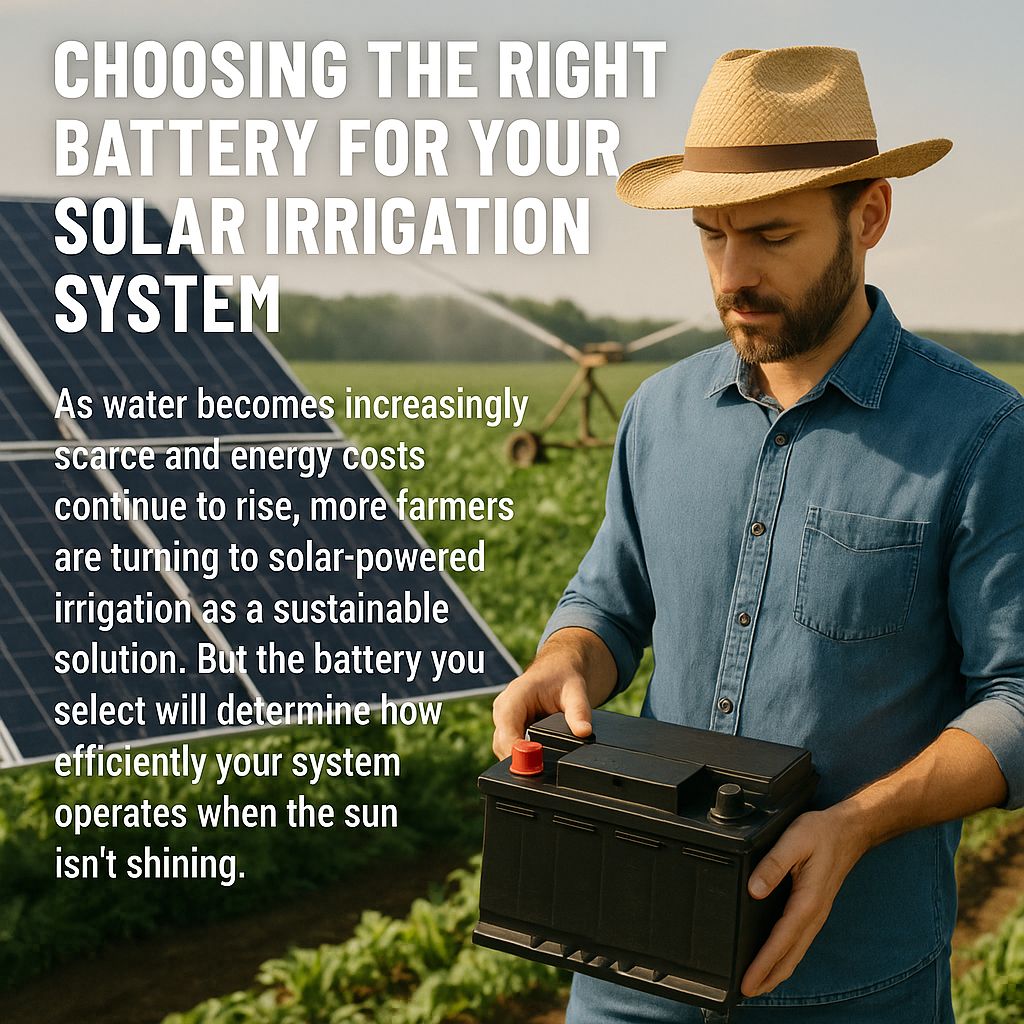
Choosing the right battery for your solar irrigation system can be the difference between a flourishing crop and a failed harvest. As water becomes increasingly scarce and energy costs continue to rise, more farmers are turning to solar-powered irrigation as a sustainable solution. But the battery you select will determine how efficiently your system operates when the sun isn’t shining.
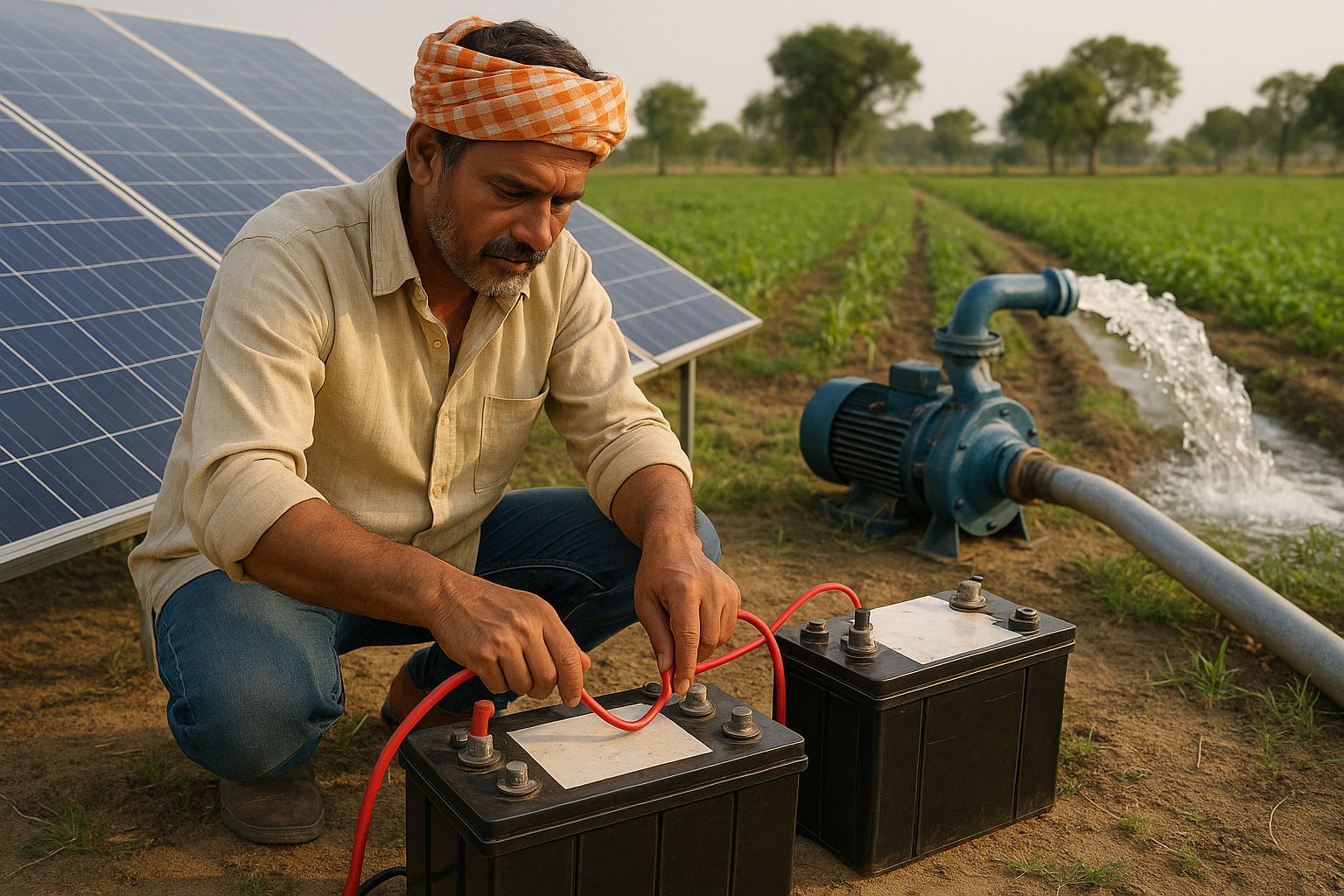
The battery component acts as the heart of any off-grid or hybrid solar irrigation setup, storing excess energy produced during sunny periods for use during cloudy days or nighttime irrigation cycles. Growing Solarmist has found that farmers who properly match their battery technology to their specific irrigation needs can reduce operational costs by up to 70% compared to diesel pumps while ensuring reliable water supply throughout growing seasons.
Why Your Solar Irrigation System Needs the Right Battery
Solar panels generate electricity only when the sun is shining, but crops need water according to their growth cycle, not the weather. A properly sized battery bank bridges this gap, ensuring your irrigation system operates reliably regardless of solar conditions. Without adequate storage, you’d be limited to daytime irrigation or forced to rely on backup generators, defeating the purpose of your sustainable system.
Different farming operations have vastly different energy storage requirements. A small vegetable farm might need just enough capacity to run a modest pump for a few hours, while a large orchard could require substantial storage to maintain consistent pressure across extensive drip irrigation networks. The right battery technology balances initial investment against long-term operational costs, maintenance requirements, and system reliability.
Environmental conditions also play a crucial role in battery selection. Extreme temperatures, humidity levels, and installation locations all affect battery performance and longevity. Farms in hot regions may need batteries with better heat tolerance, while those in remote locations benefit from low-maintenance options that don’t require frequent attention.
The following table compares Lead-Acid Batteries, Lithium-Ion Batteries, Flow Batteries, and Saltwater Batteries for use with a farmer’s solar irrigation system, focusing on their key advantages, disadvantages, and typical scenarios.
|
Battery Type |
Pros |
Cons |
Best Use Case |
|---|---|---|---|
|
Lead-Acid | |||
|
Lithium-Ion | |||
|
Flow | |||
|
Saltwater |
Non-toxic, recyclable, safe, environmentally friendly. 1 |
Limited commercial availability, lower energy density, higher cost. 1 |
Eco-friendly systems, areas with recycling concerns. 1 |
Each battery choice fits different farm requirements. Saltwater batteries present a green option if environmental impact is a priority, while lead-acid is well-tested for affordable solutions and lithium-ion leads in performance and durability.
Lead-Acid Batteries: The Budget-Friendly Workhorses
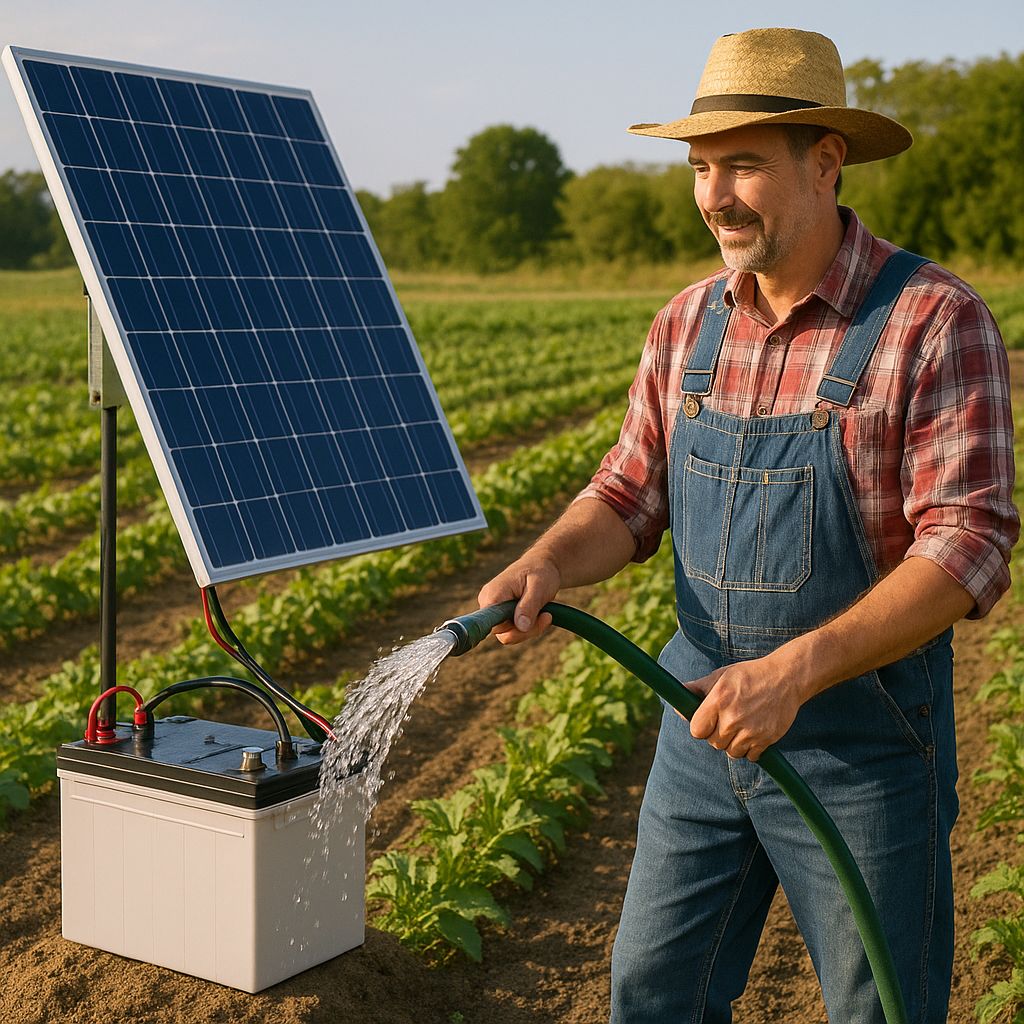
For decades, lead-acid batteries have been the default choice for off-grid power systems, including solar irrigation. Their relatively low upfront cost makes them particularly attractive for farmers operating on tight budgets or implementing their first solar irrigation system. Despite being older technology, these batteries remain popular because they’re widely available, easily replaced, and supported by a robust recycling infrastructure.
Flooded Lead-Acid: Traditional and Reliable
Flooded lead-acid batteries (also called wet cells) represent the most basic and affordable battery option for solar irrigation systems. They consist of lead plates submerged in an electrolyte solution of water and sulfuric acid. Their primary advantage is cost-effectiveness – typically priced at $100-150 per kilowatt-hour of storage, roughly half the cost of sealed alternatives.
These batteries require regular maintenance, including checking electrolyte levels monthly and adding distilled water as needed. They also need well-ventilated installation spaces due to hydrogen gas emissions during charging. For farmers with technical knowledge and the discipline to perform regular maintenance, flooded lead-acid batteries offer excellent value, often lasting 5-7 years when properly maintained.
AGM Batteries: Maintenance-Free Alternative
Absorbent Glass Mat (AGM) batteries represent a significant upgrade from flooded lead-acid models, offering maintenance-free operation that many farmers find worth the 40-60% price premium. These sealed batteries contain electrolyte absorbed in fiberglass mats between the lead plates, eliminating the need for water refills and preventing spills or leaks – a major advantage for installations near crops or water sources. For more information on different types of solar batteries, you can explore further resources.
Lead-Acid Battery Comparison for Solar Irrigation
|
Cost per kWh |
Cycle Life* |
Maintenance |
Temperature Tolerance |
Best For |
|---|---|---|---|---|
|
$100-150 |
500-1,000 |
High |
Moderate |
Budget-conscious farms with regular maintenance capacity |
|
$200-250 |
600-1,200 |
Very Low |
Good |
Installations near crops or water sources |
|
$250-300 |
800-1,500 |
Very Low |
Excellent |
Extreme climate regions |
Gel Batteries: Durable in Extreme Temperatures
Gel batteries use a silica additive to thicken the electrolyte solution, creating a gel-like consistency that prevents stratification and reduces the impact of vibration. This design makes them particularly suitable for irrigation systems in areas with temperature extremes, where they outperform both flooded and AGM batteries. With operational temperature ranges from -4°F to 140°F (-20°C to 60°C), gel batteries maintain performance in conditions that would rapidly degrade other lead-acid types.
The drawback to gel batteries is their higher cost and specific charging requirements. They require precisely controlled charging voltages to prevent damage – overcharging can create irreversible pockets in the gel, while undercharging leads to sulfation. For farmers in regions with extreme seasonal temperature variations, however, this added complexity is often justified by their superior durability and consistent performance.
Lithium-Ion Batteries: Premium Performance for Modern Farmers
Lithium-ion technology represents the gold standard for solar irrigation systems where performance and longevity outweigh initial cost considerations. These batteries have revolutionized renewable energy storage with their exceptional efficiency, minimal maintenance requirements, and impressive cycle life. For farmers looking at the long-term economics of their irrigation system, lithium batteries typically deliver the lowest cost per kilowatt-hour over their lifetime despite higher upfront investment.
Lithium Iron Phosphate (LiFePO4): The Safest Option
Lithium iron phosphate (LiFePO4) batteries have emerged as the preferred lithium chemistry for agricultural applications due to their outstanding safety profile. Unlike other lithium chemistries, LiFePO4 batteries remain stable even when damaged, overcharged, or exposed to high temperatures, virtually eliminating fire risks. This stability makes them ideal for installations in remote barns, pump houses, or field locations where monitoring might be limited.
With typical lifespans of 3,000-7,000 cycles at 80% depth of discharge, a quality LiFePO4 battery bank can reliably power irrigation systems for 10-15 years – roughly double the service life of premium lead-acid alternatives. This extended lifespan, combined with minimal voltage drop during discharge, ensures consistent pump performance throughout irrigation cycles, leading to more uniform water distribution and potential water savings of 15-20% compared to systems powered by lead-acid batteries.
Lithium NMC: Higher Energy Density
Lithium nickel manganese cobalt oxide (NMC) batteries offer the highest energy density among lithium chemistries, providing more storage capacity in a smaller footprint. For farms with limited installation space or mobile irrigation systems, NMC batteries can deliver up to 30% more energy storage per cubic foot compared to LiFePO4 alternatives. This space efficiency comes with trade-offs, however, including slightly reduced cycle life (2,000-5,000 cycles) and stricter temperature management requirements.
The compact size of NMC batteries makes them particularly valuable for powering remote irrigation zones or portable systems that need to be relocated throughout the growing season. Their lighter weight – typically half that of equivalent lead-acid capacity – reduces transportation challenges and enables installation in locations where weight limitations might otherwise restrict battery capacity.
5 Benefits of Lithium Batteries for Solar Irrigation
- Deeper discharge capacity – Lithium batteries can safely utilize 80-100% of their rated capacity without damage, compared to 50% for lead-acid, effectively doubling usable capacity per kWh
- Temperature resilience – Maintain performance across wider temperature ranges, critical for outdoor agricultural installations exposed to seasonal extremes
- Faster charging – Accept higher charging currents, fully recharging in 2-3 hours compared to 6-8 hours for lead-acid when solar production is optimal
- Minimal maintenance – No water addition, equalization charges, or terminal cleaning required over their entire lifespan
- Higher round-trip efficiency – Convert 90-95% of input energy back to usable output, compared to 70-80% for lead-acid, maximizing solar harvest
When Lithium Isn’t Worth the Cost
Despite their impressive performance characteristics, lithium batteries aren’t always the most economical choice for every farming operation. For seasonal irrigation systems that operate only a few months annually, the higher upfront cost of lithium (typically 2-3 times that of lead-acid) may not be justified by their longer lifespan. Similarly, farms with established expertise in lead-acid maintenance might find better value in continuing with familiar technology, especially for smaller systems where the absolute cost difference is substantial relative to overall system investment.
Flow Batteries: The Large-Scale Solution
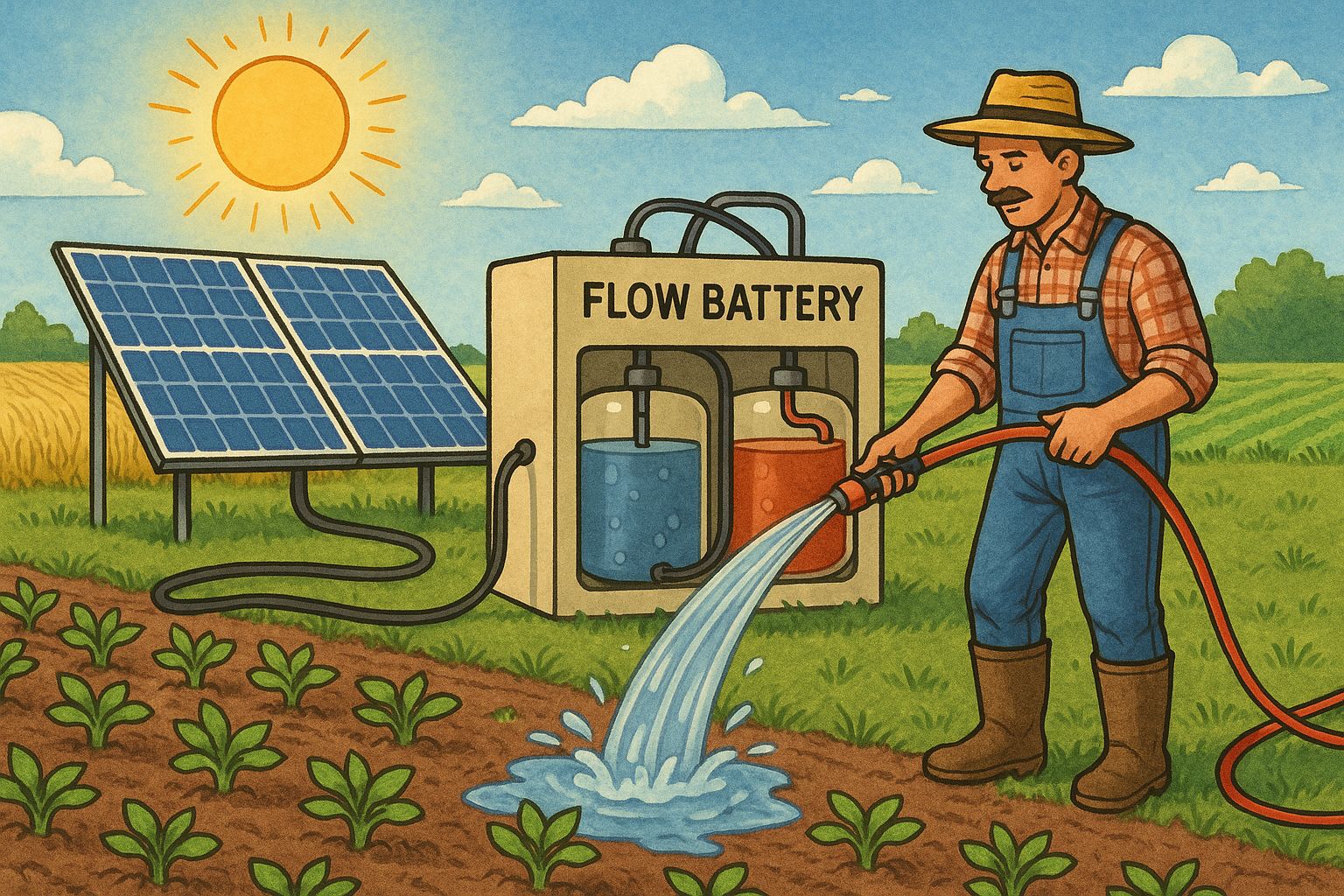
For extensive agricultural operations requiring massive energy storage capacity, flow batteries offer unique advantages that conventional battery technologies cannot match. Unlike lead-acid or lithium-ion batteries where energy capacity and power output are intrinsically linked, flow batteries separate these functions, enabling independent scaling of energy storage capacity without corresponding increases in power handling components. For those interested in sustainable farming solutions, solar-powered drip irrigation systems can complement the use of flow batteries in large-scale agricultural setups.
Vanadium Redox Flow Batteries
Vanadium redox flow batteries (VRFBs) store energy in liquid electrolyte solutions contained in separate tanks, which are pumped through electrochemical cells during charging and discharging cycles. This architectural difference from conventional batteries creates several distinct advantages for large-scale irrigation applications, particularly the ability to store massive amounts of energy at relatively low incremental cost by simply increasing tank size. For more information on how batteries can enhance solar irrigation systems, visit this guide on solar irrigation efficiency.
- Unlimited cycling – VRFBs can undergo 20,000+ full charge-discharge cycles with minimal degradation, equivalent to 30+ years of daily cycling
- Independent power/energy scaling – Can increase storage capacity (tank size) without upgrading power conversion equipment
- Complete discharge capability – Function at 0-100% state of charge without damage, maximizing usable capacity
- Simple maintenance – Require only periodic electrolyte monitoring and pump maintenance
These systems excel for centralized irrigation networks serving multiple fields or crops with different watering schedules. The ability to store several days’ worth of irrigation energy provides invaluable resilience during extended cloudy periods without requiring oversized solar arrays. For operations irrigating 100+ acres, this technology can transform water management strategies by enabling flexible scheduling independent of daily solar production. Learn more about battery efficiency in solar irrigation systems.
The primary limitations of flow battery technology are high initial cost ($400-600/kWh), larger physical footprint, and system complexity. Installation typically requires professional engineering and dedicated housing structures with appropriate containment measures for the electrolyte tanks. These factors make flow batteries practical only for larger agricultural enterprises with capital budgets exceeding $100,000 for energy storage alone.
Despite these limitations, forward-thinking large-scale operations increasingly view flow batteries as infrastructure investments rather than equipment purchases. With potential lifespans measured in decades rather than years, these systems can fundamentally restructure irrigation economics over the long term while providing unmatched resilience against grid outages or fuel supply disruptions.
Why Flow Batteries Work for Extensive Irrigation
Flow batteries shine in scenarios requiring extended irrigation cycles across large acreage, particularly for operations with significant elevation changes or high-pressure requirements. Their ability to deliver consistent power output over many hours enables pressure stability throughout complex irrigation networks, ensuring uniform water distribution even at the furthest sprinkler heads or drip lines. This consistent performance eliminates the voltage sag common with other battery types during extended discharge, which can cause pressure fluctuations and uneven watering.
For operations in regions with highly seasonal rainfall patterns, flow batteries provide the capacity to store substantial energy during sunny periods for use during extended cloudy stretches. This energy buffer can be sized cost-effectively to bridge multi-day weather patterns that would otherwise require massive overcapacity in conventional battery banks. Some agricultural operations have implemented systems capable of storing 5-7 days of typical irrigation energy needs, effectively drought-proofing their water delivery system regardless of daily solar conditions.
Saltwater Batteries: The Eco-Friendly Option
Saltwater batteries represent one of the newest and most environmentally friendly energy storage options available to farmers. Using a sodium-ion chemistry with a saltwater electrolyte, these batteries contain no heavy metals, toxic materials, or caustic chemicals. For farmers committed to fully sustainable agricultural practices, saltwater batteries align perfectly with ecological values while providing reliable performance for moderate irrigation demands.
Their non-toxic nature eliminates concerns about chemical leaks or spills that could contaminate crops or soil. This makes them ideal for certified organic operations where maintaining environmental integrity is paramount. With no risk of fire or explosion even if damaged, these batteries can be safely installed in any farm building without special ventilation or containment systems.
Performance-wise, saltwater batteries occupy a middle ground between lead-acid and lithium technologies. They typically deliver 2,000-3,000 cycles at moderate depths of discharge, translating to 5-8 years of service in seasonal irrigation applications. Their round-trip efficiency of 80-85% exceeds lead-acid but falls short of lithium systems, making them most suitable for farms with adequate solar capacity where maximum energy conversion isn’t the primary concern.
Smart Battery Management: Getting the Most from Your System
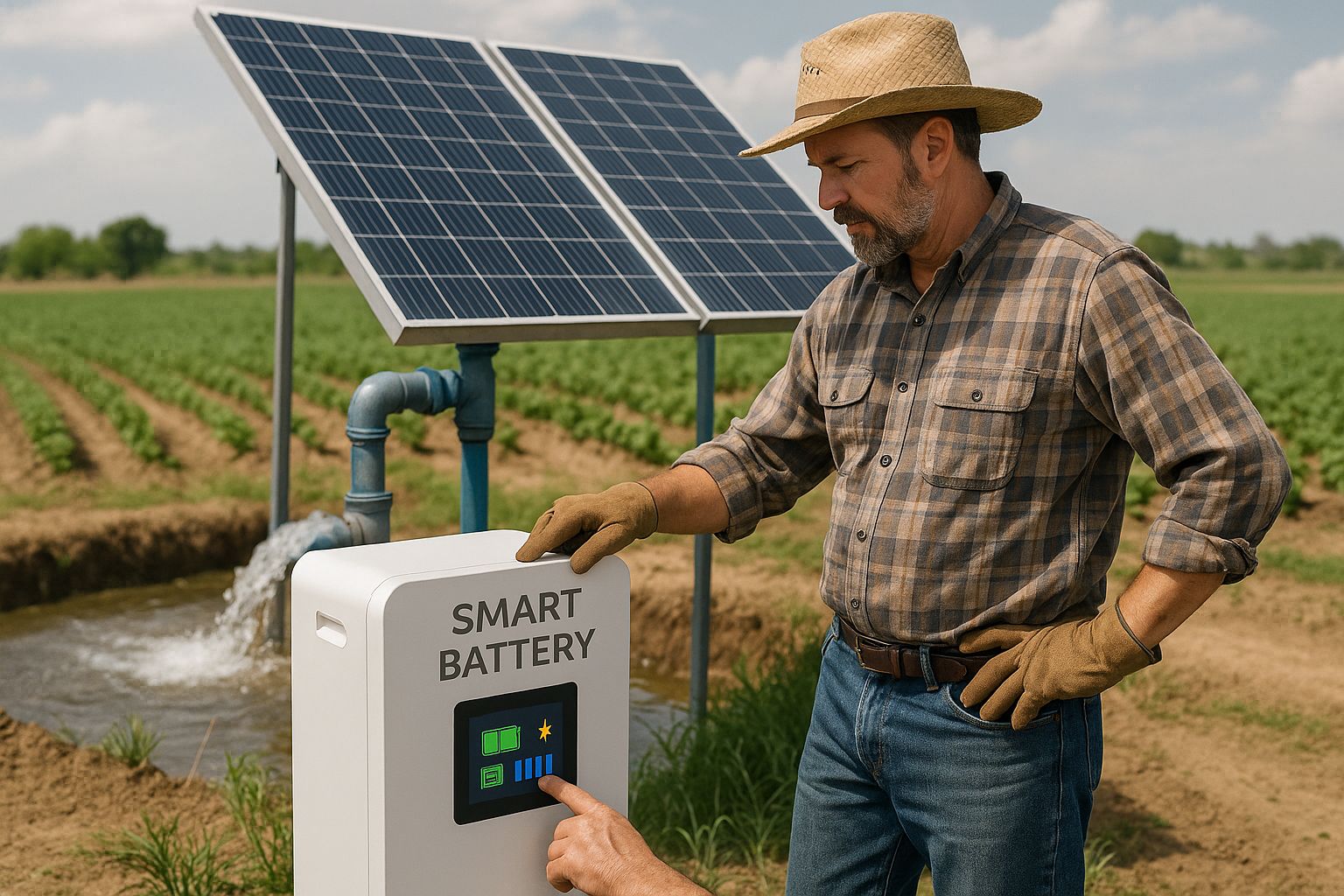
Regardless of battery chemistry, incorporating intelligent management systems dramatically improves performance, reliability, and lifespan. Modern battery monitoring systems provide real-time insights into system health while automated protection features prevent damaging conditions that could shorten battery life. For those interested in maximizing efficiency, consider exploring ways to increase solar panels’ efficiency for your farm irrigation system.
Battery Monitoring Systems
Advanced battery monitors track critical parameters including state of charge, temperature, charging/discharging rates, and cycle history. For agricultural operations where regular visual inspection might be impractical during busy seasons, these systems provide invaluable protection through automated alerts when intervention is needed. Many modern systems offer smartphone connectivity, enabling farmers to check battery status remotely while working elsewhere on the property.
The most sophisticated monitoring solutions incorporate machine learning algorithms that analyze usage patterns and weather forecasts to optimize irrigation scheduling around expected solar production. These predictive capabilities ensure batteries maintain optimal charge levels for upcoming irrigation needs while maximizing their useful lifespan through intelligent charge management.
Charge Controllers for Battery Protection
Quality charge controllers represent the single most important investment for protecting battery investments, regardless of chemistry. These devices regulate the flow of energy from solar panels to batteries, preventing overcharging while optimizing the charging process based on battery type, temperature, and state of charge. For lead-acid batteries, advanced controllers implement multi-stage charging profiles that significantly extend battery life through proper absorption and float charging.
MPPT (Maximum Power Point Tracking) controllers extract the maximum available energy from solar panels under all conditions, delivering 15-30% more charging power compared to simpler PWM controllers. This increased efficiency can be particularly valuable during partly cloudy conditions or morning/evening hours when solar intensity is reduced but irrigation needs remain. For systems powering critical irrigation infrastructure, this additional energy harvest can mean the difference between adequate water delivery and crop stress during challenging weather periods.
Sizing Your Battery Bank for Irrigation Needs
Properly sizing your battery bank is perhaps the most critical decision in creating a reliable solar irrigation system. Undersized systems lead to insufficient watering during cloudy periods, while oversized banks waste capital that could be better invested elsewhere on the farm. The right approach balances initial investment against the risk tolerance for irrigation disruptions during adverse weather.
Calculate Your Daily Energy Requirements
Begin by determining your pump’s energy consumption in kilowatt-hours per day of operation. Multiply the pump’s power rating (in kilowatts) by the number of hours it needs to run to deliver adequate water. For example, a 2kW pump running for 4 hours consumes 8kWh daily. Then factor in system inefficiencies – including inverter losses, wire resistance, and battery conversion losses – by adding 15-20% to this figure, bringing our example to approximately 9.5kWh.
Next, determine how many days of autonomy (operation without solar recharging) your system requires. This depends on local weather patterns, crop sensitivity to missed irrigation, and your risk tolerance. Most systems target 2-3 days of autonomy in moderate climates, while farms in regions with frequent cloudy periods or growing drought-sensitive crops might need 4-5 days. Multiplying daily requirements by desired autonomy days provides your total storage need – in our example, 19-28.5kWh for 2-3 days.
Account for Weather Patterns and Seasonal Changes
Regional weather patterns dramatically impact battery sizing requirements. Farms in the arid Southwest might prioritize daily capacity over autonomy days due to reliable sunshine, while operations in the Pacific Northwest need larger battery banks to bridge frequent overcast periods. Historical weather data for your specific location can inform this decision, particularly looking at the longest typical stretches without adequate sunshine during your growing season.
Seasonal irrigation changes should also influence capacity planning. If your water requirements vary significantly throughout the growing season, size the system for the most demanding period while implementing flexible scheduling during lower-demand times. This approach ensures reliability when needed most while maximizing battery lifespan through shallower cycling during less critical periods.
Planning for Future Expansion
When designing your battery system, consider likely expansions to your irrigation needs over the next 5-10 years. Adding capacity to existing battery banks can be challenging and sometimes impossible depending on the technology chosen. Lead-acid systems generally allow for easier expansion with additional parallel strings, while some lithium systems require careful matching of new and existing cells.
For operations likely to expand irrigated acreage or transition to more water-intensive crops, investing in modular battery solutions offers valuable flexibility. Systems designed with expansion capability might cost slightly more initially but avoid the significant expense of complete replacement when needs increase. Some manufacturers offer scalable designs specifically engineered for gradual expansion, with common electrical connections and compatible battery management systems.
Installation and Maintenance Tips for Solar Irrigation Batteries
Proper installation and maintenance significantly impact battery performance and longevity. Even the highest quality batteries will fail prematurely if subjected to inappropriate installation conditions or neglected maintenance requirements. Following manufacturer guidelines while adapting to your specific farm environment ensures maximum return on your battery investment.
Proper Ventilation and Temperature Control
Battery performance and lifespan are strongly influenced by operating temperature. Most battery chemistries perform optimally between 60-80°F (15-27°C), with significant capacity reduction and accelerated degradation outside this range. When selecting an installation location, prioritize spaces with minimal temperature fluctuations and protection from extreme heat. Underground pump houses, insulated outbuildings, or purpose-built enclosures often provide ideal environments. For more information on battery options, consider exploring battery options for solar irrigation systems.
Adequate ventilation is essential, particularly for lead-acid batteries that release hydrogen gas during charging. Ensure installation areas have sufficient airflow to prevent gas accumulation while also protecting batteries from dust, moisture, and direct sunlight. In locations with extreme seasonal temperatures, consider thermostatically controlled ventilation fans or even basic climate control systems for battery enclosures – the investment often pays for itself through extended battery life.
Regular Maintenance Schedule by Battery Type
Implementing a regular maintenance schedule tailored to your specific battery type prevents premature failures while identifying potential issues before they affect irrigation reliability. For flooded lead-acid batteries, monthly maintenance should include checking electrolyte levels, cleaning terminals, measuring specific gravity with a hydrometer, and performing equalization charges as needed. AGM and gel batteries require less frequent attention, but quarterly inspections should verify proper charging voltages, clean connections, and check for any physical damage or swelling. Lithium and flow batteries benefit from semi-annual inspections focusing on connection integrity, ventilation system function, and verification of monitoring system accuracy.
Real-World Battery Costs and ROI for Farmers
Understanding the true cost of different battery technologies requires looking beyond purchase price to consider installation requirements, maintenance expenses, replacement frequency, and efficiency impacts. For agricultural operations, the return on investment calculation must also factor in the reliability value – what crop losses might occur if irrigation is interrupted during critical growth stages due to battery failure. To explore more about solar-powered irrigation systems, check out this efficient use of solar energy in drip irrigation systems.
Initial Investment Breakdown
Initial system costs vary dramatically based on capacity and technology choice. Lead-acid systems typically range from $150-300 per kilowatt-hour of capacity installed, including auxiliary components and basic monitoring. Lithium systems command $400-800/kWh installed, with variations based on specific chemistry, warranty terms, and management system sophistication. Flow battery installations for large operations start at approximately $500/kWh but decrease significantly at scale, often reaching $350-400/kWh for systems exceeding 100kWh capacity.
Beyond the batteries themselves, budget for quality charge controllers ($300-1,200), appropriately sized inverters if powering AC pumps ($500-3,000+), monitoring systems ($200-1,500), and proper enclosures ($500-2,500). Professional installation adds 15-25% to component costs but significantly reduces the risk of configuration errors that could damage expensive batteries or create safety hazards.
Lifetime Value Comparison
When evaluated over their complete lifecycle, premium battery technologies often deliver superior economics despite higher upfront costs. Quality lithium batteries delivering 4,000+ cycles at 80% depth of discharge provide approximately 3,200 kWh of lifetime energy throughput per kilowatt-hour of capacity. At $600/kWh installed, this translates to roughly $0.19 per kilowatt-hour delivered over the battery’s life. Comparable lead-acid systems might cost $250/kWh but deliver only 1,000 cycles at 50% depth of discharge, providing 500 kWh of lifetime throughput per kilowatt-hour of capacity – approximately $0.50 per kilowatt-hour delivered.
This lifecycle cost advantage becomes even more pronounced when considering operational benefits. Lithium systems’ higher efficiency means more of your solar production reaches your irrigation pumps rather than being lost to battery inefficiency. Their consistent voltage delivery ensures pumps operate at optimal pressure throughout discharge cycles, potentially reducing water usage through more efficient delivery. For many agricultural operations, these operational advantages, combined with reduced maintenance requirements, tip the economic balance toward premium technologies despite higher initial investment. For further insights, explore how a battery can enhance the efficiency of a solar irrigation system.
Making the Right Choice for Your Farm
The optimal battery solution for your solar irrigation system depends on your specific operational needs, budget constraints, technical capabilities, and long-term farm planning. For smaller operations with limited capital and technical expertise, quality flooded lead-acid batteries offer a practical entry point with reasonable performance when properly maintained. Mid-sized farms with greater reliability requirements and some capital flexibility often find the best value in lithium iron phosphate systems, where longer lifespan and reduced maintenance offset higher initial costs. Large-scale operations with substantial irrigation demands across multiple fields should consider flow battery technology for its unmatched scalability and exceptional cycle life, particularly if planning infrastructure investments with 20+ year horizons.
Frequently Asked Questions
Farmers considering solar irrigation batteries often share common questions about these systems. The following responses address the most frequent concerns based on practical field experience across diverse agricultural settings.
How long do batteries for solar irrigation systems typically last?
Battery lifespan varies significantly by chemistry and usage patterns. Well-maintained flooded lead-acid batteries typically last 4-6 years in irrigation applications with proper charging and regular maintenance. AGM and gel variants generally provide 5-7 years of service before capacity degradation necessitates replacement. Quality lithium iron phosphate batteries deliver 8-15 years of reliable operation, with many manufacturers offering 10-year warranties. Flow battery systems can function for 20+ years with periodic electrolyte replacement and pump maintenance. For more information on how a battery can enhance the efficiency of your solar irrigation system, check out this article on battery efficiency in solar irrigation.
Actual lifespan is heavily influenced by cycling depth, operating temperature, and charging practices. Systems regularly discharged beyond recommended limits or exposed to extreme temperatures will experience accelerated degradation regardless of chemistry. Implementing appropriate battery management systems and following manufacturer guidelines can extend useful life by 20-40% compared to poorly managed installations.
Can I mix different types of batteries in my solar irrigation system?
Mixing different battery technologies within the same bank is strongly discouraged as it leads to charging conflicts, performance issues, and premature failure. Each battery chemistry requires specific charging parameters, and when connected in the same circuit, no single charging profile can adequately serve multiple types. Even mixing different ages or models of the same chemistry can create imbalances that reduce system capacity and lifespan. When expanding or replacing batteries, always use identical units or completely separate the new bank with dedicated charging equipment. For more information on optimizing your solar irrigation setup, you might find this guide on increasing solar panel efficiency helpful.
What’s the most cost-effective battery for a small solar irrigation system?
For small systems irrigating less than 5 acres with modest water requirements, quality flooded lead-acid batteries often provide the best balance of cost and performance when properly maintained. Their lower upfront cost enables farmers to allocate more budget toward quality solar panels and efficient pumps, which typically offer more immediate operational benefits. As system size increases beyond 10kWh of storage, the maintenance burden of flooded batteries becomes more significant, shifting the economic advantage toward sealed AGM or lithium options despite their higher initial cost.
How do extreme temperatures affect battery performance in irrigation systems?
Temperature extremes significantly impact all battery technologies, though the specific effects vary by chemistry. High temperatures (above 95°F/35°C) accelerate chemical reactions within batteries, temporarily increasing capacity but dramatically shortening lifespan – each 15°F (8°C) above optimal temperature typically reduces battery life by 50%. Low temperatures (below 40°F/4°C) temporarily reduce available capacity by increasing internal resistance, with lead-acid batteries losing up to 50% of rated capacity at freezing temperatures. Lithium batteries maintain better cold-weather performance, typically retaining 80-90% capacity at 32°F (0°C), making them preferred for regions with cold irrigation seasons.
Are there any government incentives for installing batteries with solar irrigation?
Several federal and state programs offer financial incentives for agricultural battery storage when paired with renewable generation. The federal Investment Tax Credit (ITC) currently allows qualifying agricultural businesses to claim 30% of battery system costs when charged primarily (80%+) by on-site solar. USDA’s Rural Energy for America Program (REAP) provides grants covering up to 25% of project costs and loan guarantees for the remainder. Many states offer additional tax incentives, rebates, or preferential financing for agricultural energy storage projects that reduce grid dependency or support renewable integration. Consult with a renewable energy financial advisor familiar with agricultural applications to identify all available incentives for your specific location and operation type.
When evaluating potential incentives, consider not just the immediate financial benefits but also how program requirements might influence system design and operation. Some incentive programs require specific monitoring capabilities, professional installation, or minimum performance guarantees that should be factored into project planning.
There are various types of batteries you can use with a solar irrigation system. Choosing the right battery depends on factors like cost, efficiency, and lifespan. Solar-powered drip irrigation systems are popular because they efficiently use the sun’s energy, making them a sustainable choice for farmers. Other options include lead-acid, lithium-ion, and nickel-cadmium batteries, each with its own advantages and disadvantages. Understanding these options will help you make an informed decision for your agricultural needs.



Leave a Reply