
Key Takeaways
- Solar-powered drip irrigation systems can reduce water usage by up to 70% compared to conventional irrigation methods while eliminating electricity costs.
- These systems combine photovoltaic panels, pumps, and precise drip emitters to deliver water directly to plant roots, minimizing waste and maximizing crop yields.
- Initial investment in solar drip irrigation typically pays for itself within 2-5 years through water, energy, and labor savings.
- Smart controllers can automate irrigation schedules based on soil moisture, weather conditions, and crop needs, optimizing water application even when you’re not present.
- GrowingSolarMist offers specialized consultation services to help farmers design and implement custom solar drip irrigation systems for any scale operation.
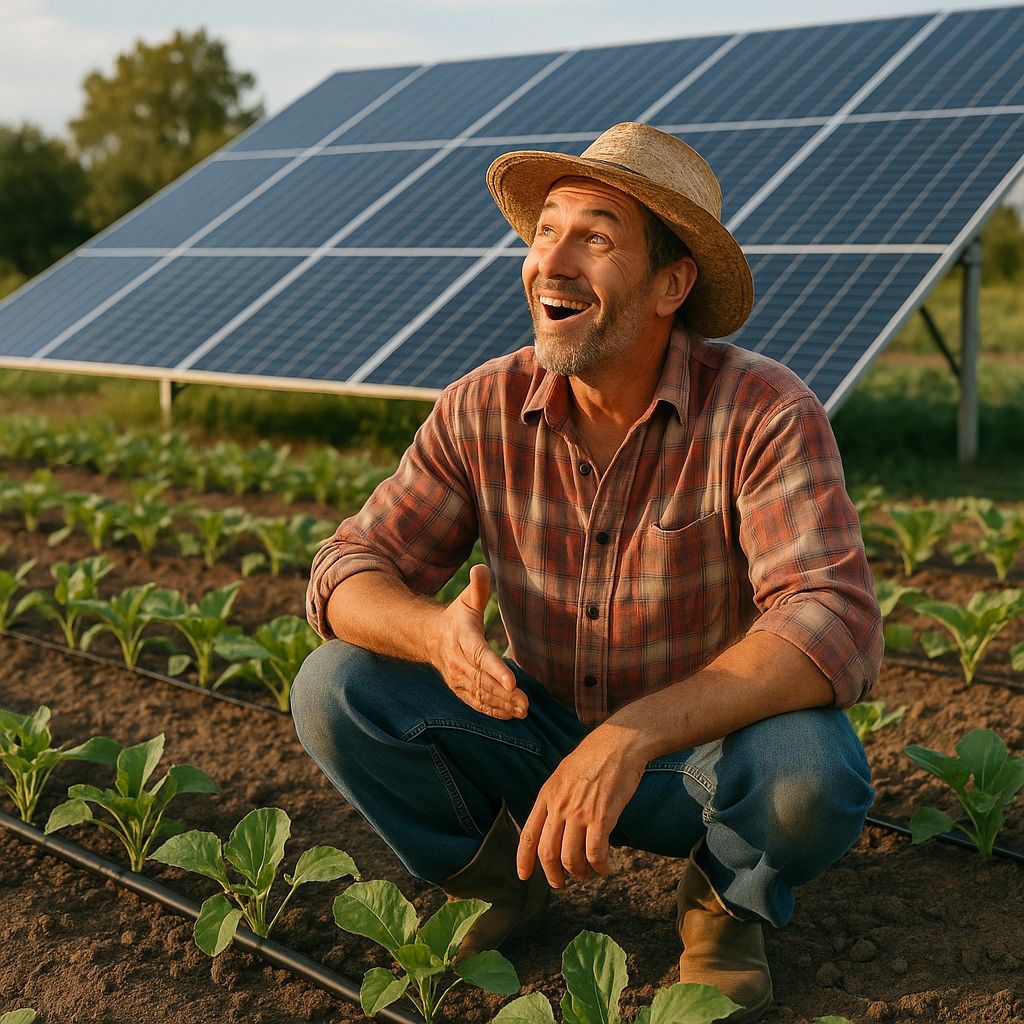
Solar-powered drip irrigation transforms traditional farming by combining two revolutionary technologies: renewable solar energy and water-efficient drip irrigation. This sustainable approach delivers precisely measured water directly to plant roots, powered entirely by the sun. GrowingSolarMist has been at the forefront of helping farmers implement these systems, resulting in dramatic water conservation and operational cost reductions while improving crop quality and yields.
The beauty of solar drip systems lies in their elegant simplicity and remarkable efficiency. Instead of relying on fossil fuels or grid electricity that generate ongoing costs and environmental impacts, these systems harness free, abundant sunshine to power the entire irrigation process. For farmers in remote locations or areas with unreliable electricity, this self-sufficiency is particularly valuable, eliminating power outages that could devastate crops during critical growth periods.
How Solar-Powered Drip Irrigation Systems Work
Solar-powered drip irrigation operates on a straightforward principle: solar panels convert sunlight into electricity, which powers a pump that draws water from a source (well, reservoir, or tank) and distributes it through a network of tubes with emitters that deliver water directly to plant roots. This targeted approach minimizes evaporation and runoff while ensuring each plant receives precisely the amount of water it needs.
Unlike conventional irrigation methods that flood fields or spray water indiscriminately, drip irrigation releases water slowly and directly to the root zone. The solar component eliminates reliance on grid electricity or diesel generators, making the entire system self-sufficient and environmentally friendly. When properly designed, these systems can continue functioning for decades with minimal maintenance.
Key Components of a Complete System
A comprehensive solar-powered drip irrigation system consists of several essential components working in harmony. The solar array, typically featuring photovoltaic panels mounted on frames, captures sunlight and converts it to usable electricity. This powers the pumping system, which moves water from the source through filters that prevent clogging of the narrow drip lines. The water then travels through main lines, sub-main lines, and lateral lines equipped with emitters that deliver precise amounts of water to individual plants. Most advanced systems also incorporate controllers that automate operation based on timers or environmental sensors.
- Photovoltaic panels (typically 100-300W per panel, scaled to system needs)
- Solar pump controller with MPPT technology
- DC water pump (submersible or surface)
- Filtration system (screen, disk, or media filters)
- Pressure regulators and gauges
- Main lines, sub-mains, and lateral drip lines
- Drip emitters (varying flow rates from 0.5-8 liters per hour)
- Optional battery storage system for cloudy days
- Smart irrigation controllers and soil moisture sensors
Solar Panel Setup and Positioning
Proper positioning of solar panels is crucial for system efficiency. Panels should face true south in the Northern Hemisphere (true north in the Southern Hemisphere) and be tilted at an angle approximately equal to your latitude for optimal year-round performance. For seasonal adjustments, increasing the tilt by 15° in winter and decreasing by 15° in summer can maximize energy capture. Consider mounting options carefully – pole mounts allow for easy adjustment but require sturdy foundations, while ground mounts are more stable but less adjustable. Many farmers opt for simple tracking systems that follow the sun’s path, increasing energy production by 25-45% compared to fixed installations.
Water Pumping Mechanism
The heart of any solar irrigation system is the pumping mechanism. Most systems utilize specialized DC pumps designed to operate directly from solar power without requiring batteries or inverters, though AC pumps with inverters are also viable options. Pump selection depends on your water source depth, required flow rate, and pressure needs. Surface pumps work well when water sources are less than 20 feet deep, while submersible pumps are necessary for deeper wells. The pump must be properly sized based on your specific irrigation requirements – calculating the necessary flow rate (gallons per minute) and pressure (psi) based on irrigated area, crop water needs, and emitter specifications is essential for system efficiency.
Drip Line Configuration and Emitters
Drip line configuration forms the distribution network of your irrigation system and requires careful planning based on crop spacing and water requirements. Main lines (typically 1-2 inches in diameter) distribute water from the pump to submains, which then feed into lateral lines (usually 16-20mm) that run along crop rows. The placement of lateral lines depends on soil type and crop root patterns – sandy soils may require closer spacing than clay soils due to limited lateral water movement. For more information on how to optimize your system, you can explore the benefits of a solar-powered drip irrigation system.
Emitters are the precision delivery points that release water directly to plants, and their selection significantly impacts irrigation efficiency. Flow rates typically range from 0.5 to 8 liters per hour depending on crop needs and soil conditions. Pressure-compensating emitters maintain consistent flow regardless of terrain variations, making them ideal for sloped fields. Non-compensating emitters are more economical for flat terrain. For row crops, emitter spacing generally aligns with plant spacing, while orchards often utilize multiple emitters per tree based on canopy size and root spread. For those interested in different irrigation methods, explore our guide on furrow irrigation.
Smart Controllers and Automation Options
Modern solar irrigation systems benefit tremendously from automation technology that optimizes water delivery based on actual crop needs rather than rigid schedules. Basic timer-based controllers offer simple programming for daily irrigation cycles, while advanced systems incorporate soil moisture sensors, weather stations, and even satellite data to make real-time adjustments. Smart controllers can communicate wirelessly with sensors throughout your field, automatically activating irrigation only when soil moisture drops below predetermined thresholds for specific crop types.
The most sophisticated systems now offer remote monitoring and control via smartphone apps, allowing farmers to manage irrigation from anywhere with internet access. These systems provide alerts for potential problems, detailed water usage reports, and historical data for analyzing irrigation efficiency. While adding complexity and cost, automation dramatically improves water conservation and can reduce labor requirements by eliminating manual system operation and monitoring.

Water and Energy Savings That Transform Farms
The transformative impact of solar-powered drip irrigation becomes immediately apparent when examining resource efficiency. Traditional flood irrigation typically achieves only 40-50% efficiency, meaning half the water never benefits crops. Sprinkler systems improve this to 75-85% efficiency, but still lose significant water to evaporation and wind drift. Drip irrigation, by contrast, delivers water directly to the root zone with minimal exposure to air, achieving remarkable 90-95% efficiency.
Comparative Water Efficiency by Irrigation Method
Flood Irrigation: 40-50% efficiency (50-60% water wasted)
Sprinkler Systems: 75-85% efficiency (15-25% water wasted)
Drip Irrigation: 90-95% efficiency (5-10% water wasted)
This efficiency translates to tangible water savings, with most farmers reporting 30-70% reduction in water usage compared to previous irrigation methods. For a typical 10-acre vegetable operation, this can mean conserving millions of gallons annually while maintaining or improving crop production. The environmental impact extends beyond the farm boundary, reducing pressure on aquifers and surface water sources while minimizing agricultural runoff that can carry fertilizers into watersheds.
Up to 70% Reduction in Water Usage
The precision of drip irrigation allows farmers to apply water exactly where and when plants need it. By delivering moisture directly to root zones rather than broadcasting it across fields, these systems eliminate the substantial losses that occur through evaporation, runoff, and deep percolation with conventional methods. Sandy soils, which typically require frequent irrigation due to poor water retention, benefit particularly from drip irrigation’s slow, measured application that maintains optimal moisture without wasteful leaching. Learn more about solar-powered irrigation systems and how they can enhance water efficiency on farms.
Water conservation extends beyond the obvious environmental benefits to provide practical advantages in water-scarce regions. Many agricultural areas face increasing water restrictions and rising costs for irrigation water. By dramatically reducing consumption, solar drip systems enable farmers to expand production within existing water allocations or maintain current production despite reduced water availability. This efficiency creates resilience against drought conditions and positions operations for long-term sustainability in the face of climate change.
Eliminating Electricity Bills from Irrigation
The energy requirements for pumping irrigation water represent a significant operational cost for many farms. Conventional electric pumps running on grid power generate monthly bills that can reach thousands of dollars during peak growing seasons. Diesel or gasoline pumps avoid these bills but create their own substantial fuel costs while requiring frequent maintenance and generating emissions. Solar-powered systems eliminate these ongoing expenses entirely, with the sun providing free energy for the system’s entire operational life.
For remote farms without reliable grid access, solar power solves the fundamental problem of energy availability. These locations previously relied on expensive generator systems requiring constant refueling and maintenance. With properly sized solar arrays, irrigation can function independently and reliably without fuel deliveries or power line extensions that might cost tens of thousands of dollars to install. This autonomy is particularly valuable in developing regions where energy infrastructure remains limited and fuel supply chains are unreliable.
Return on Investment Timeline
While the initial investment in solar-powered drip irrigation exceeds conventional systems, the return on investment timeline makes a compelling financial case. Most farmers recover their costs within 2-5 years through combined savings on water, energy, labor, and fertilizer, along with potential yield improvements. The economics become even more favorable when factoring in available tax incentives, grants, and the steadily decreasing cost of solar technology.
Long-term financial benefits accumulate significantly over the system’s 25+ year lifespan. Solar panels typically carry 25-year performance warranties, while properly maintained drip components can function effectively for 10-15 years before requiring replacement. This durability translates to decades of irrigation without energy costs, creating a substantial competitive advantage and insulating operations from rising utility rates that affect conventionally irrigated farms.
Maintenance Requirements for Long-Term Performance
Maintaining solar-powered drip irrigation systems is remarkably straightforward compared to conventional irrigation methods. With fewer moving parts and no fossil fuel components, these systems require minimal attention to deliver decades of reliable service. Most maintenance focuses on preventing rather than repairing issues, with regular inspections proving far more valuable than reactive repairs.
Establishing a seasonal maintenance schedule ensures optimal system performance throughout the growing season. Early spring preparation should include thorough inspection of all components before the irrigation season begins, while end-of-season winterization prevents freeze damage in colder climates. Regular monitoring during operation allows for quick identification and resolution of any developing issues before they impact crop health. For those interested in sustainable solutions, exploring solar-powered irrigation systems can be a valuable addition to your maintenance strategy.
Solar Panel Cleaning Schedule
Solar panels require minimal but consistent maintenance to operate at peak efficiency. Dust, pollen, bird droppings, and other debris can accumulate on panel surfaces, reducing energy production by 5-25% if left unaddressed. In most agricultural environments, cleaning panels 2-4 times annually using soft brushes and non-abrasive cleaners is sufficient. Areas prone to heavy dust, near dirt roads, or with high pollen counts may require monthly cleaning during peak seasons.
The ideal cleaning method involves soft water (rainwater or filtered water) and a gentle soap solution applied with a soft-bristled brush on an extension pole, followed by a clean water rinse. Avoid cleaning hot panels during midday to prevent thermal shock and potential glass cracking. Many farmers schedule panel cleaning early morning or late evening when panels are cooler and irrigation demands are lower. For large arrays, consider professional cleaning services or investing in automated cleaning systems that can significantly reduce maintenance time.
Preventing and Clearing Drip Line Clogs
Clogging represents the primary maintenance challenge for drip irrigation components. Mineral deposits, organic matter, and soil particles can gradually block emitters and reduce water flow to plants. Prevention begins with proper filtration—mesh or disc filters appropriate to your water source and emitter size are essential. Regular filter cleaning (weekly to monthly depending on water quality) prevents system-wide issues and extends component life.
When clogs do occur, flushing the system by opening end caps on lateral lines allows accumulated particles to be expelled. For more stubborn blockages, periodic chemical treatment with diluted chlorine solution, phosphoric acid, or commercial drip line cleaners can dissolve mineral buildup and organic matter. Physical inspection of emitters across the field helps identify problematic areas that may require emitter replacement or line cleaning. Advanced systems incorporate automatic flush valves that periodically clear lines without manual intervention.
Seasonal System Adjustments
Irrigation requirements vary dramatically throughout the growing season, necessitating regular adjustments to system operation. Early-season irrigation often requires less frequent but deeper watering to encourage deep root development. As plants mature and temperatures rise, increasing frequency while maintaining appropriate run times ensures consistent soil moisture. Smart controllers can automate these seasonal adjustments, but even manual systems benefit from monthly reassessment of irrigation schedules.
In regions with freezing winters, proper winterization prevents damage to system components. This process typically involves draining all water from lines, removing filters and pressure regulators for indoor storage, and protecting vulnerable components from freeze damage. Solar panels for farm irrigation systems generally require no special winter protection but may benefit from steeper tilt angles to maximize limited winter sunlight and shed snow accumulation. Spring recommissioning should include pressure testing all lines before full operation resumes.
Real-World Results: Crop Yields and Quality Improvements
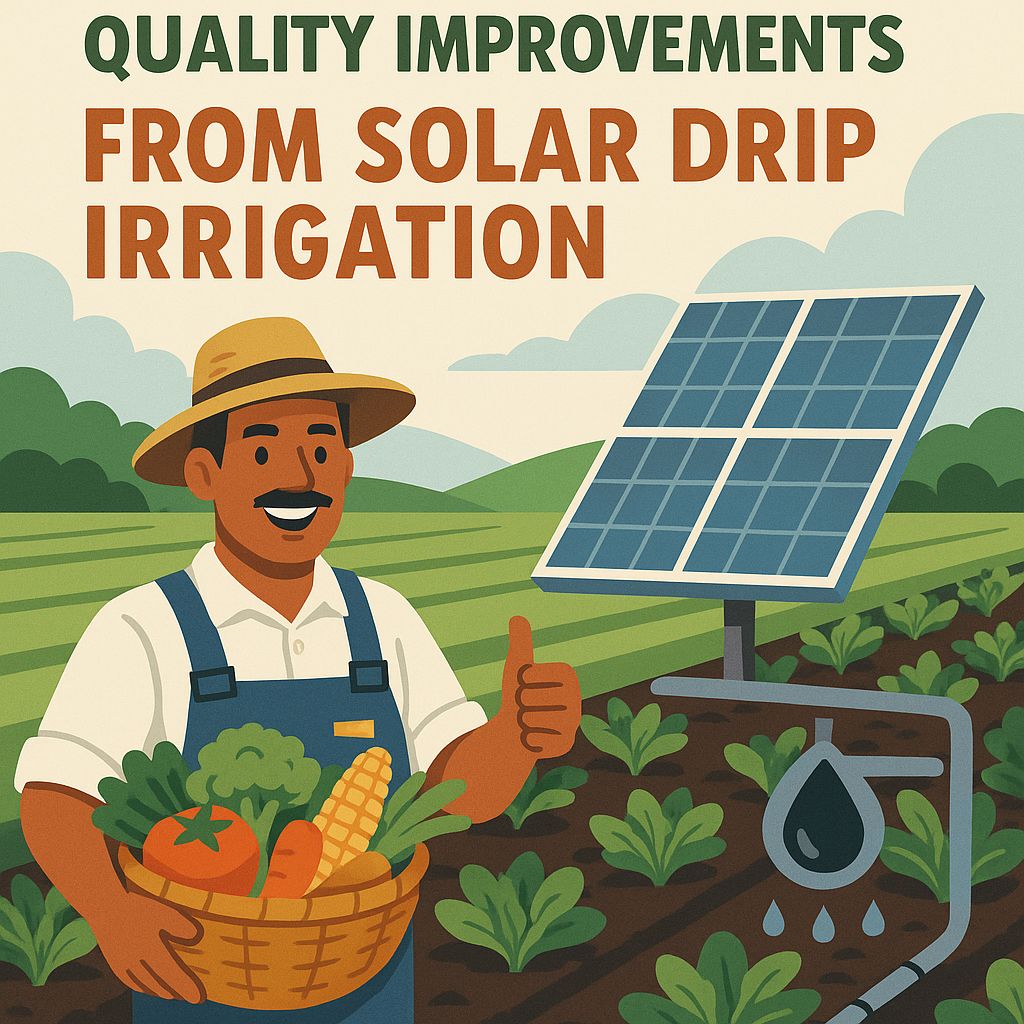
The ultimate measure of any agricultural technology lies in its impact on crop production. Solar-powered drip irrigation consistently delivers impressive results across diverse farming operations, with most growers reporting 20-50% yield increases after switching from conventional irrigation methods. These gains stem from precise water delivery that maintains optimal soil moisture without the stress cycles of flood or sprinkler irrigation that can stunt growth and reduce fruiting.
Beyond raw yield numbers, quality improvements often prove equally valuable. Fruits and vegetables grown with drip irrigation typically exhibit better size uniformity, enhanced flavor development, and longer shelf life. These quality factors can significantly impact market value, especially for direct-to-consumer operations where appearance and taste command premium prices. For specialty crop producers, these qualitative improvements often translate to higher returns than simple yield increases.
Case Study: California Tomato Operation
A 25-acre organic tomato farm in Central California converted from sprinkler to solar-powered drip irrigation in 2019.
• Water usage: Reduced by 62% (from 1.2 acre-feet to 0.45 acre-feet per acre)
• Energy costs: Eliminated $4,800 annual electricity expense
• Yield impact: Increased production by 32% (from 22 to 29 tons per acre)
• Quality improvement: Grade A tomatoes increased from 65% to 89% of harvest
• ROI: System paid for itself in 2.7 years through combined savings and increased revenue
Vegetable Production Gains
Vegetable crops show particularly dramatic responses to drip irrigation’s precision water delivery. The consistent moisture levels prevent the stress cycles that trigger physiological disorders like blossom end rot in tomatoes and peppers, cracking in root vegetables, and tip burn in leafy greens. Farmers consistently report harvest periods extending 2-3 weeks longer than with conventional irrigation, increasing total seasonal production and market availability windows. For high-value crops like specialty peppers, heirloom tomatoes, and fresh herbs, these extensions can capture premium early or late-season pricing.
Water delivery precision also creates significant advantages for nutrient management through fertigation—applying liquid fertilizers directly through the irrigation system. This approach places nutrients precisely in the root zone when plants need them, improving uptake efficiency and reducing fertilizer costs by 25-40%. The combined effect of optimal water and nutrient delivery creates ideal growing conditions that maximize genetic potential across vegetable varieties while minimizing input costs.
Fruit Tree Applications
Orchard crops benefit tremendously from solar drip systems, with mature trees showing improved fruit set, size consistency, and quality. Unlike conventional irrigation that wets the entire orchard floor, drip systems target water directly to root zones, reducing weed pressure between rows and minimizing disease issues caused by foliage wetting. This targeted approach proves particularly valuable during bloom and fruit development stages when precise moisture management directly impacts quality outcomes.
The long-term nature of orchard investments makes solar power particularly attractive, as energy savings accumulate substantially over decades of operation. Many orchardists report water savings of 40-60% compared to sprinkler systems, with corresponding reductions in pumping costs. These efficiencies allow for expansion of planted acreage within existing water allocations, maximizing land productivity while conserving resources. For tree nuts like almonds and pistachios, which face increasing scrutiny over water usage, solar drip systems provide both environmental and public relations benefits alongside operational improvements.
Row Crop Success Stories
While traditionally associated with specialty crops, drip irrigation increasingly proves viable for larger-scale row crop production. Cotton growers implementing solar drip systems report water savings of 30-50% alongside yield increases of 15-25% and improved fiber quality. These systems allow precise irrigation timing during critical boll development stages, preventing stress-related quality issues. For corn production, particularly sweet corn and specialty varieties, drip irrigation significantly improves pollination success and kernel development by maintaining optimal soil moisture during tasseling.
Solar power provides particular advantages for row crops grown in areas with irregular field shapes or limited electrical infrastructure. The modular nature of solar arrays allows systems to scale precisely to irrigation requirements without the constraints of power line access. This flexibility enables precision agriculture in previously challenging locations, expanding productive acreage while maintaining sustainable water usage. Forward-thinking row crop producers increasingly view these systems as competitive advantages that simultaneously address resource constraints and market demands for sustainable production practices.
Costs and Financing Options
Initial investment in solar-powered drip irrigation varies widely based on system scale, water source depth, and technical complexity. Small market garden systems (1-3 acres) typically range from $3,000-$10,000 complete, while commercial operations (10+ acres) might invest $2,000-$5,000 per acre depending on crop type and automation level. While these figures exceed conventional irrigation costs, the elimination of ongoing energy expenses and substantial water savings create compelling long-term economics.
Component costs break down roughly as follows: solar panels and mounting (25-30%), pumping system (20-25%), filtration and controls (15-20%), and drip irrigation components including pipe, fittings, and emitters (30-35%). Economies of scale significantly reduce per-acre costs as system size increases, particularly for solar components that can be centralized. This scalability makes staged implementation viable for many farms, beginning with high-value crops before expanding to additional acreage as returns are realized.
Initial Investment Breakdown
Understanding the cost components of solar drip systems helps farmers budget effectively for implementation. Solar panels typically cost $0.70-$1.00 per watt of capacity, with most systems requiring 1,000-3,000 watts per irrigated acre depending on water source depth and crop water requirements. Specialized DC solar pumps range from $800 for small surface models to $2,500+ for deep well submersibles capable of high volume delivery. Filtration systems, essential for preventing emitter clogging, generally account for $300-$1,200 of system cost depending on water quality challenges and required flow rates.
Drip irrigation components represent the final major cost category, with main lines, sub-mains, laterals, fittings, and emitters typically totaling $1,000-$2,000 per acre. This figure varies significantly based on plant spacing and system design—widely spaced orchard trees require less total drip line than densely planted vegetable rows. Advanced automation adds $500-$3,000 depending on desired capabilities, from simple timers to comprehensive sensor networks with remote monitoring and control. Professional design and installation services may add 15-25% to material costs but often deliver substantial value through optimized system efficiency. For more information on powering these systems, explore solar panels for farm irrigation systems.
Available Agricultural Subsidies and Tax Credits
Various government programs significantly reduce the effective cost of solar drip irrigation implementation. The federal Rural Energy for America Program (REAP) offers grants covering up to 25% of renewable energy system costs and guaranteed loans for remaining expenses. Many states provide additional incentives through renewable energy tax credits, water conservation rebates, and agricultural improvement grants that can collectively offset 30-50% of system costs. The federal Investment Tax Credit (ITC) allows businesses to deduct 26% of solar system costs from federal taxes, further improving project economics.
Conservation-focused programs through the Natural Resources Conservation Service (NRCS) offer technical assistance and cost-sharing specifically for water-efficient irrigation systems. These Environmental Quality Incentives Program (EQIP) funds target resource conservation outcomes and can cover 50-75% of eligible costs for qualifying farmers. Some irrigation and water districts provide additional incentives to reduce agricultural water consumption, particularly in water-stressed regions. Consulting with local USDA Service Centers or agricultural extension offices helps identify all available programs for your specific location and operation type. For more insights on sustainable irrigation, explore the benefits of solar-powered drip irrigation systems.
Financing Programs for Sustainable Farm Equipment
Beyond grants and tax incentives, specialized financing programs make solar irrigation systems accessible with minimal upfront investment. Agricultural equipment loans typically offer 5-10 year terms with competitive interest rates based on farm financials and project economics. Many solar installers partner with financial institutions to offer payment plans aligned with projected energy savings, allowing systems to generate positive cash flow from the first season. For operations with limited capital, these financing pathways eliminate the primary barrier to adoption while preserving working capital for other farm needs.
Some regions now offer Property Assessed Clean Energy (PACE) financing that attaches renewable energy investments to property rather than business entities. This approach provides longer repayment terms (often 15-20 years) with fixed interest rates and transfers to new owners if the property is sold. Community solar programs represent another emerging option, allowing farmer cooperatives or multi-stakeholder groups to jointly fund larger solar installations that benefit multiple operations. These collaborative approaches often qualify for enhanced incentives while distributing both costs and risks across multiple participants.
Lease-to-own arrangements provide another pathway requiring minimal upfront investment. These programs typically involve 5-7 year terms with monthly payments offset by energy savings, concluding with system ownership transfer. This approach shifts maintenance responsibility to the leasing company during the initial period while allowing farmers to capture the long-term benefits of ownership. For operations prioritizing cash flow management, these structured financing options remove barriers to implementing technology that delivers both environmental and economic benefits.

Environmental Benefits Beyond the Farm
While economic advantages drive most adoption decisions, solar-powered drip irrigation delivers environmental benefits that extend far beyond individual farm boundaries. Agricultural irrigation accounts for approximately 70% of global freshwater withdrawals, making efficiency improvements critical for water resource sustainability. By reducing water consumption 30-70% compared to conventional methods, these systems directly address one of agriculture’s most significant environmental impacts.
Environmental Impact of Solar Drip Irrigation (Per 100 Acres)
• Water conservation: 15-30 million gallons annually compared to conventional irrigation
• Carbon emissions reduction: 30-50 metric tons CO₂ equivalent annually by eliminating grid electricity or diesel fuel
• Reduced fertilizer leaching: 25-40% less nitrogen and phosphorus entering waterways
• Soil health improvement: Minimized salt accumulation and reduced soil erosion
• Biodiversity support: Habitat preservation through reduced water extraction from natural systems
These environmental benefits create value beyond immediate farm operations. Many regions now recognize ecosystem services through formal credit systems that can provide additional revenue streams for sustainable practices. Carbon offset markets, water quality trading programs, and sustainability certifications increasingly offer financial compensation for quantifiable environmental improvements. Forward-thinking farmers leverage these systems to monetize the broader societal benefits their operational improvements generate.
The cumulative impact of widespread adoption could substantially address agricultural sustainability challenges. If implemented across just 15% of irrigated farmland globally, solar drip systems could conserve more water annually than the entire volume of Lake Erie while eliminating millions of tons of carbon emissions. This potential for system-level improvement makes these technologies central to agricultural resilience strategies as climate change intensifies resource pressures.
Carbon Footprint Reduction
Conventional irrigation systems generate substantial carbon emissions through electricity consumption or diesel fuel use for pumping. By replacing these energy sources with solar power, drip irrigation systems eliminate both direct emissions from fuel combustion and indirect emissions from grid electricity generation. For a typical 100-acre farm, this conversion prevents 30-50 metric tons of CO₂ equivalent emissions annually—comparable to removing 6-10 cars from the road permanently. These reductions compound over the system’s multi-decade lifespan, representing significant climate impact mitigation.
Groundwater Conservation Impact
Groundwater depletion represents one of the most serious resource challenges facing agricultural regions worldwide. In many major growing areas, aquifer levels are declining at alarming rates, threatening long-term water availability and causing subsidence that damages infrastructure. Solar drip irrigation addresses this challenge by dramatically reducing extraction volumes while maintaining or improving crop production. This efficiency allows aquifers recovery time between irrigation cycles and helps preserve these critical water resources for future generations.
Beyond quantity concerns, drip irrigation significantly reduces fertilizer leaching into groundwater compared to flood or sprinkler methods. By applying water slowly and precisely at root zones, these systems minimize deep percolation that can carry nitrates and other agricultural chemicals into aquifers. This protection of groundwater quality delivers public health benefits far beyond farm boundaries, particularly in regions where rural communities rely on well water for domestic use.
Here is a table summarizing the key benefits of using a solar-powered drip irrigation system:
|
Benefit |
Description |
|---|---|
|
Water efficiency |
Delivers up to 70–90% of water directly to plant roots, minimizing evaporation and runoff. |
|
Cost savings |
Reduces or eliminates electricity and fuel costs by using free solar energy for pumping water. |
|
Enhanced crop yields |
Provides precise water delivery for healthier plants, improved yields, and higher crop quality. |
|
Environmental impact |
Lowers carbon emissions by replacing fossil fuel use and promotes sustainable agriculture. |
|
Energy independence |
Allows for irrigation in off-grid or remote locations thanks to solar-powered pumps. |
|
Flexible & scalable |
Easily adapted or expanded to suit various farm sizes and crop types. |
|
Low maintenance |
Requires minimal upkeep once installed compared to traditional powered systems. |
These benefits make solar-powered drip irrigation a sustainable, cost-effective, and environmentally friendly solution for modern agriculture.
Take Your Farm Into the Future With Solar Drip Irrigation
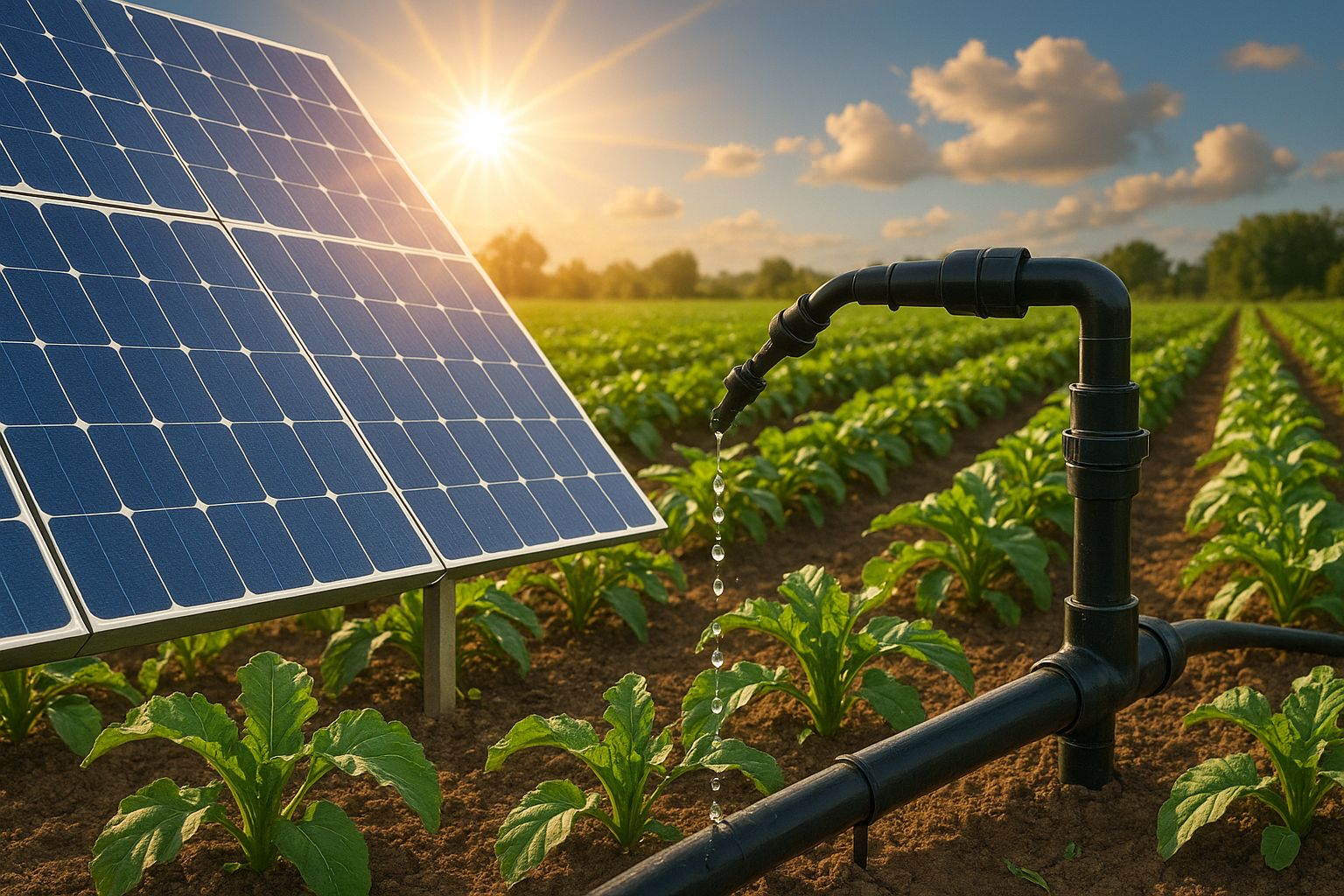
Solar-powered drip irrigation represents not merely an incremental improvement but a fundamental transformation in agricultural resource management. By combining renewable energy with precision water delivery, these systems simultaneously address the major resource challenges facing modern farming: water scarcity, energy costs, labor availability, and environmental impact. For operations seeking both sustainability and profitability, few technologies offer comparable returns on investment across so many dimensions. Explore how GrowingSolarMist can help design a custom system tailored to your specific growing conditions and crop requirements.
Frequently Asked Questions
As you consider implementing solar-powered drip irrigation, you likely have specific questions about how these systems would work in your particular situation. The following answers address the most common inquiries we receive from farmers evaluating this technology for their operations. For more information, explore how solar panels power a farm’s irrigation system.
How much land can a typical solar-powered drip system irrigate?
System capacity depends primarily on solar array size, water source depth, and crop water requirements. A basic 1kW system (3-4 panels) can typically irrigate 1-3 acres of vegetables or 3-5 acres of tree crops, assuming average water requirements and moderate well depths (under 100 feet). Larger operations can scale linearly by increasing solar capacity and pump size—a 5kW system might irrigate 10-15 acres of vegetables or 20-25 acres of efficient orchard configurations.
The beauty of solar systems lies in their modularity—you can start with a capacity that matches your current needs and budget, then expand incrementally as you verify performance and returns. Many farmers begin with high-value crops that deliver the quickest payback before expanding to additional acreage. For very large operations, multiple pump stations may prove more efficient than a single centralized system, allowing for zone-specific pressure management and redundancy benefits.
Do solar drip systems work during cloudy days?
Solar irrigation systems continue functioning during cloudy conditions, though at reduced capacity—typically 10-30% of rated output depending on cloud density. Most agricultural solar systems address this variability through one of three approaches: oversizing the solar array to ensure sufficient power even in suboptimal conditions; incorporating battery storage to collect energy during peak sun hours for use during cloudy periods; or implementing water storage that allows pumping during sunny periods while distributing irrigation throughout the day. Many sophisticated systems combine these strategies, with smart controllers automatically adjusting irrigation schedules based on available solar energy and crop water needs. For more information on the best power solutions, explore solar panels for farm irrigation systems.
What’s the typical lifespan of solar panels in agricultural settings?
Quality solar panels used in agricultural applications typically carry 25-year performance warranties and can function effectively for 30+ years with minimal degradation. Most manufacturers guarantee at least 80% of original output after 25 years, with actual performance often exceeding these specifications. The robust nature of modern solar technology makes panels surprisingly durable in farm environments—they withstand hail, high winds, temperature extremes, and other challenging conditions while requiring minimal maintenance beyond occasional cleaning. This longevity creates exceptional lifetime value, as panels continue producing free electricity decades after their initial cost has been recovered through operational savings.
Can I convert my existing drip system to solar power?
Existing drip irrigation systems can generally be converted to solar power with minimal modification, particularly if they already use electric pumps. The conversion process typically involves installing appropriately sized solar panels, mounting hardware, and a compatible pump controller, then connecting this solar generation system to your existing pump or replacing it with a DC-powered model optimized for solar operation. Most conversions can be completed in 1-3 days with minimal disruption to irrigation schedules. The retrofit approach allows farmers to leverage their existing investment in drip infrastructure while eliminating ongoing energy costs, often achieving payback periods of 2-4 years depending on current electricity rates and system usage patterns.
Are solar-powered drip systems suitable for all crop types?
Solar-powered drip irrigation works effectively for virtually all crop types, though system design must be tailored to specific crop needs. Vegetables, fruits, nuts, ornamentals, and even field crops like cotton and corn thrive under properly designed drip irrigation. Root crops require careful emitter placement to prevent directly wetting the harvest zone, while tall crops like corn may benefit from drip tape positioned for optimal root zone coverage as plants mature. Tree crops typically utilize multiple emitters per plant positioned to encourage proper root development based on tree age and size. Working with experienced designers ensures your system addresses the specific requirements of your crop mix, soil conditions, and climate challenges. For more information on different types of irrigation systems, explore solar-powered irrigation systems.
The versatility of these systems extends beyond conventional crops to specialty applications including greenhouse production, nursery operations, and even landscape management. The precision water delivery inherent in drip irrigation proves particularly valuable for crops with specific moisture requirements or sensitivity to foliar diseases exacerbated by overhead watering. For diversified operations growing multiple crop types, zone-specific controls allow customized irrigation programs tailored to each crop’s unique needs while still operating from a single solar power source.
The economics of solar drip irrigation vary somewhat by crop value and water requirements. High-value specialty crops typically generate the fastest return on investment due to yield and quality improvements, while water-intensive crops show the greatest resource savings. However, virtually any irrigated crop can benefit from the precision, efficiency, and operational cost reductions these systems provide, making them increasingly standard technology for forward-thinking agricultural operations across diverse sectors.
Ready to transform your irrigation approach? GrowingSolarMist specializes in custom solar drip irrigation solutions tailored to your specific growing conditions, crop requirements, and business goals.
Solar-powered drip irrigation systems are revolutionizing the way farmers manage water resources. By harnessing the sun’s energy, these systems provide a sustainable and efficient solution for watering crops. The integration of solar panels not only reduces the dependency on traditional power sources but also minimizes operational costs. For farmers looking to implement such systems, understanding the different types and methods of solar-powered irrigation systems is crucial for maximizing their benefits.







Leave a Reply