
Key Takeaways
- Solar-powered irrigation systems can reduce farm operating costs by up to 80% compared to diesel pumps or grid electricity.
- Farmers who install solar irrigation systems typically see a return on investment within 3-7 years, while the systems last 25+ years.
- Solar panels eliminate the unpredictability of fuel costs and grid outages, providing reliable water access even in remote areas.
- 8M Solar helps farmers transition to renewable energy with customized solar irrigation solutions that integrate with existing farm infrastructure.
- Combining solar irrigation with water storage tanks creates a powerful dual-storage system that maximizes both water and energy efficiency.
Solar-Powered Irrigation: The Modern Farmer’s Secret Weapon
Water and energy costs are silently draining farm profits across America. As a farmer myself, I’ve watched irrigation expenses climb year after year, threatening the sustainability of operations both large and small. After implementing solar-powered irrigation on my own farm, I’ve seen firsthand how this technology transforms agricultural operations by addressing both challenges simultaneously. Solar panels for farm irrigation aren’t just an environmental choice – they’re a strategic business decision that’s reshaping modern agriculture.
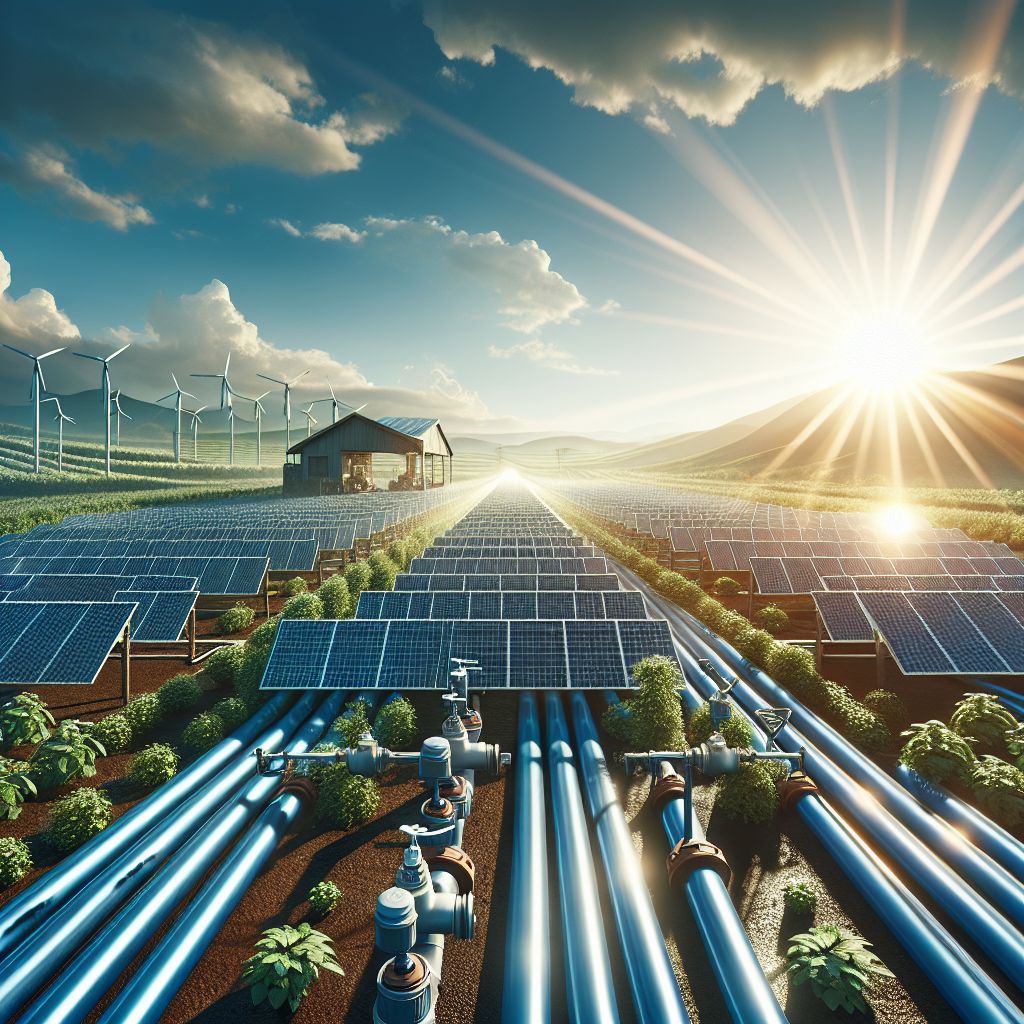
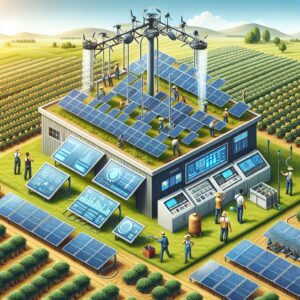
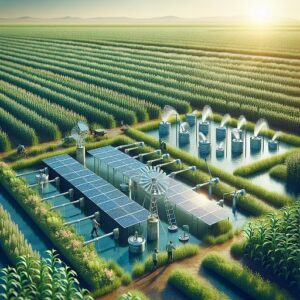
Solar-powered irrigation systems harness free sunlight to power water pumps, drastically reducing or eliminating conventional energy costs. These systems can be customized to match any farm’s water needs, from small market gardens to thousand-acre operations. By integrating renewable energy with your irrigation strategy, you’re essentially prepaying decades of electricity bills at a fixed cost, creating budget certainty in an industry known for volatile expenses. With 8M Solar providing tailored solar solutions for agricultural applications, farms of all sizes can now access this game-changing technology.
Why Traditional Power Sources Are Draining Farm Profits
The economics of traditional irrigation power sources have become increasingly problematic for agricultural operations. As profit margins tighten across the farming sector, energy costs represent one of the few major expenses farmers can effectively control through strategic investment. Understanding these cost drivers reveals why solar has become such an attractive alternative.
Rising Electricity Costs Hit Farmers Hardest
Grid electricity prices have increased by an average of 3-5% annually over the past decade, with agricultural rates often higher than residential in many regions. For irrigation-intensive operations, electricity can represent 20-30% of variable production costs, creating significant pressure on already tight margins. Most concerning for farm planning, these costs are unpredictable and largely beyond a farmer’s control. With solar irrigation, you effectively lock in your energy costs for 25+ years at a known rate, converting a variable expense into a fixed investment that improves with inflation.
Diesel Pumps: The Hidden Expense of Fuel and Maintenance
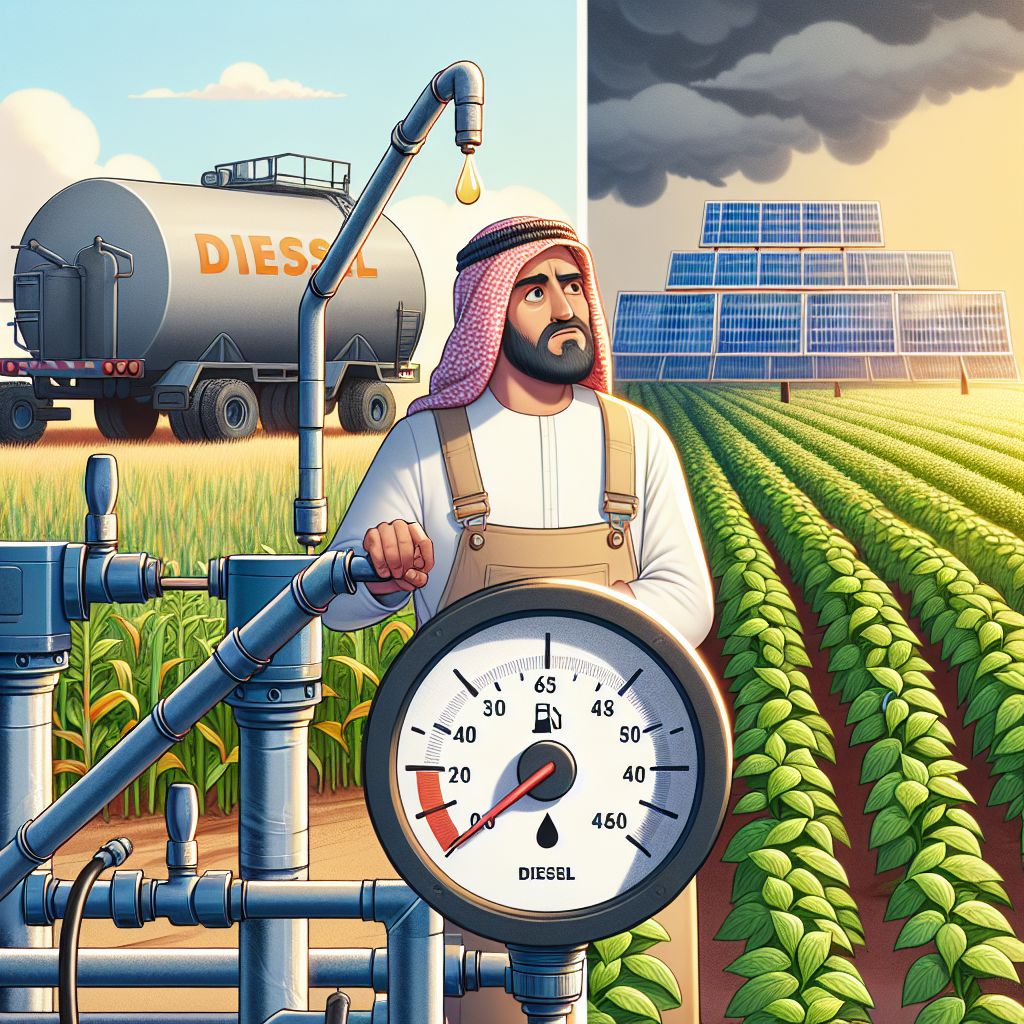
Diesel-powered irrigation systems come with cascading expenses that extend far beyond fuel costs. A typical 30-horsepower diesel pump consumes approximately 1.5 gallons per hour, which at current prices means $7-10 per hour just for fuel. Add in regular maintenance, oil changes, filters, and eventual engine rebuilds, and the true cost of operation can exceed $15-20 per hour. Most critically, diesel engines require constant attention and monitoring, pulling farmers away from other essential tasks. Solar pumping systems, with their near-zero maintenance requirements and zero fuel costs, eliminate these hidden expenses while freeing up valuable time.
Grid Unreliability in Rural Areas
Rural power infrastructure often leaves agricultural operations vulnerable to outages precisely when irrigation is most critical. During summer heat waves, when crops need water most urgently, electric utilities may implement rolling blackouts or experience equipment failures due to high demand. For farmers with perishable crops, even short interruptions in irrigation schedules can lead to significant yield losses worth thousands of dollars. Independent solar power systems operate regardless of grid conditions, ensuring water availability during critical growing periods when temperatures rise and water needs peak.
Power quality issues in rural areas further complicate matters for farmers using sensitive irrigation equipment. Voltage fluctuations, harmonic distortion, and other power anomalies common in rural electrical service can damage variable frequency drives and pump controllers. These problems are completely eliminated with properly designed solar irrigation systems that deliver clean, consistent power to your equipment, extending the lifespan of expensive pumps and controls.
How Solar Panels Transform Farm Irrigation
Solar irrigation systems fundamentally change the economics and reliability of agricultural water delivery. Rather than treating energy and water as separate farm inputs, solar irrigation creates an integrated approach that optimizes both resources simultaneously. This integration unlocks new possibilities for farm management that simply aren’t possible with traditional energy sources.
Direct Pumping Systems for Daytime Irrigation
The simplest solar irrigation configuration directly connects photovoltaic panels to DC pumps, creating a water delivery system that automatically adjusts to available sunlight. These systems pump most vigorously during peak sunlight hours, naturally aligning water delivery with periods of highest evaporation and plant stress. For many crops, this natural synchronization with daylight cycles improves water utilization efficiency compared to fixed-schedule irrigation. Direct systems offer the lowest installation cost and highest reliability, with virtually no maintenance due to their minimal components and lack of batteries.
Battery Storage Solutions for 24/7 Water Access
For farms that need consistent water delivery regardless of sunlight conditions, battery-coupled systems provide the perfect solution. These systems store excess solar energy produced during peak daylight hours for use during early mornings, evenings, or cloudy periods. Modern lithium iron phosphate (LiFePO4) batteries have revolutionized these systems, offering 10+ year lifespans and deeper discharge capabilities than traditional lead-acid alternatives. The ability to program precise irrigation schedules regardless of weather conditions gives farmers complete control over water management.
When designing a battery-coupled system, proper sizing is critical to balance performance with cost-effectiveness. For most mid-sized operations, a battery bank capable of running pumps for 24-48 hours without sun provides optimal resilience without excessive investment. Battery systems also enable farms to take advantage of smaller, more efficient pumps that run longer hours rather than oversized units that operate intermittently, further reducing the overall system cost.
Hybrid Systems: Combining Solar with Existing Power
Many established farms benefit most from hybrid approaches that integrate solar with existing power infrastructure. These systems use solar as the primary power source but seamlessly switch to grid or generator backup when needed for continuous operation. The intelligent controllers in modern hybrid systems prioritize renewable energy usage, only drawing from conventional sources when absolutely necessary. For farms with existing diesel pumps, adding solar doesn’t mean abandoning functional equipment – it means dramatically reducing how often you need to start that generator. Learn more about how solar power applications can enhance your farm’s efficiency.
Hybrid systems offer the most flexible migration path to renewable energy, allowing farms to phase in solar capacity as budget allows. You might start by offsetting 50% of your pumping energy with an initial solar array, then expand capacity in subsequent seasons as the savings from the first phase provide capital for expansion. This gradual approach minimizes financial risk while still delivering immediate energy cost reductions.
Water Storage as Energy Storage
Perhaps the most elegant solution for many farms is combining solar pumping with elevated water storage. By pumping water to tanks or reservoirs during peak sun hours, you effectively store energy in the form of gravitational potential, ready to be released through gravity-fed irrigation whenever crops need water. This approach eliminates the need for expensive batteries while providing similar scheduling flexibility. For farms with natural elevation differences, this system can be remarkably cost-effective while providing tremendous irrigation security.
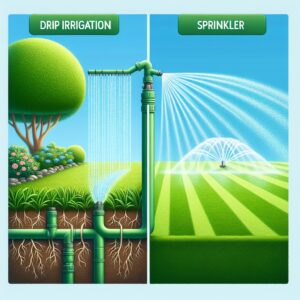
The water storage approach also creates valuable redundancy in farm water systems. During extended cloudy periods or emergency situations, the reserve water supply provides critical backup that can sustain crops until normal operations resume. Many farmers find that having several days of water storage delivers peace of mind that far exceeds the value of the storage infrastructure itself. When combined with modern drip irrigation or precision sprinklers, even modest storage capacity can support multiple irrigation cycles.
Case Study: Willow Creek Farms
After installing a solar-powered irrigation system with 10,000 gallons of elevated storage, Willow Creek Farms reduced irrigation energy costs by 94% while improving watering consistency. Their 15kW system powers a 7.5HP pump that fills storage tanks during daylight hours, providing gravity-fed irrigation for 35 acres of mixed vegetables. Total system cost after incentives: $28,500. Annual savings: $8,200. Payback period: 3.5 years.

“Best Solar Panels for Farm Power: Types …” from growingsolarmist.com and used with no modifications.
Best Solar Panel Types for Agricultural Applications
Not all solar panels perform equally in agricultural environments. The harsh conditions of farm settings – including dust, humidity, temperature fluctuations, and potential mechanical impacts – require thoughtful equipment selection. Each panel technology offers distinct advantages that may align better with specific farm operations and budgets.
Monocrystalline: High Efficiency for Limited Space
Monocrystalline panels represent the premium tier of solar technology, offering the highest efficiency rates typically ranging from 17-22%. These panels extract more energy per square foot than any other option, making them ideal for installations where space is limited or valuable. Their superior performance in high-temperature conditions makes them particularly well-suited for hot, arid farming regions where panel efficiency would otherwise degrade during summer months. Though they command a price premium of roughly 15-20% over other technologies, their enhanced production often justifies the investment for serious agricultural operations.
The durability of monocrystalline panels also stands out in farm environments. With stronger silicon cell structures and typically more robust framing, these panels better withstand mechanical stresses from wind, hail, and other hazards common in agricultural settings. For installation on existing farm structures like barns or equipment sheds, where roof reinforcement might be limited, their lighter weight per watt of production minimizes structural engineering concerns. For more information on enhancing solar panel efficiency for farms, check out this guide.
Polycrystalline: Budget-Friendly Options
Polycrystalline panels offer a compelling middle ground, delivering 13-17% efficiency at a more accessible price point. For farms with adequate installation space and budget constraints, these panels typically provide the best return on investment, especially for larger systems where equipment costs dominate the project budget. Their distinctive blue color comes from the multiple silicon crystals in each cell, which create reflecting surfaces that give them their characteristic appearance. Learn more about solar power benefits in agriculture.
The manufacturing process for polycrystalline panels produces less silicon waste, making them not only more affordable but also slightly more environmentally friendly. For irrigation systems requiring substantial power – like those supporting pivot systems or large pumps – the ability to deploy more total wattage for the same budget often makes polycrystalline the most practical choice. Many agricultural solar installations utilize these panels specifically because they hit the sweet spot between performance and affordability that aligns with farm economics.
Thin-Film: Flexible Installation for Unusual Spaces
Thin-film panels sacrifice some efficiency (ranging from 10-13%) in exchange for remarkable installation flexibility. These lightweight, often bendable panels can be mounted on curved surfaces, integrated into portable systems, or deployed in applications where traditional rigid panels won’t work. For specialized agricultural applications like remote livestock watering stations, movable irrigation systems, or oddly-shaped mounting locations, thin-film technology opens possibilities that other panel types simply can’t accommodate.
The performance characteristics of thin-film technology also offer unique advantages in certain farm environments. These panels maintain better efficiency in partial shading conditions and at high temperatures, making them surprisingly productive in less-than-ideal installations. Their lower profile and light weight also make them less susceptible to wind damage, an important consideration for exposed rural installations.
- Excellent low-light performance – produces more power during early morning and late afternoon
- Superior heat tolerance – maintains better efficiency when temperatures exceed 90°F
- Flexible mounting options – can be installed on non-rigid surfaces
- Lower efficiency means more panels needed for equivalent power output
- Typically requires 2.5-3x more space than crystalline panels for the same energy production
Despite their specialized benefits, thin-film systems generally require significantly more space for equivalent power production, making them impractical for many mainstream irrigation applications. They’re best viewed as a specialized solution for unique challenges rather than a default choice for standard farm solar projects.
Bifacial Panels: Capturing Reflected Light for Maximum Output
Bifacial solar panels represent the cutting edge of agricultural solar technology, with their ability to generate electricity from both sides of the panel. These innovative panels capture direct sunlight on the front while simultaneously harvesting reflected light from the ground on the rear surface. In agricultural settings with highly reflective surroundings like sandy soil, light-colored gravel, or even snow, bifacial panels can boost energy production by 5-30% compared to traditional one-sided panels. This dual-collection capability makes them particularly valuable for irrigation systems that need to maximize power production from limited installation space. Learn more about how solar power benefits agriculture in various ways.
The mounting configuration of bifacial panels requires special consideration to maximize their unique capabilities. Elevated installations with at least 3-4 feet of clearance above reflective surfaces generate the most additional power from back-side collection. Many farmers are discovering innovative dual-use approaches, such as mounting bifacial panels above reflective white ground cover in areas between crop rows, creating what amounts to solar-powered alleyways that produce both food and energy. The premium cost of bifacial technology (typically 10-15% more than standard monocrystalline) is often justified by their enhanced production in well-designed agricultural installations.
Here is a table summarizing the main types of solar panels for agricultural applications, highlighting their key characteristics, benefits, and limitations:
|
Solar Panel Type |
Key Features |
Best Uses in Agriculture |
Advantages |
Limitations |
|---|---|---|---|---|
|
Monocrystalline |
Single-crystal silicon, high efficiency, dark appearance |
Limited roof/land space; high-demand farms |
Highest efficiency (up to 22%), longest lifespan (25–30 years), reliable in smaller spaces |
Highest upfront cost, slightly less efficient in extreme heat |
|
Polycrystalline |
Multiple silicon crystals, bluish tone, moderate efficiency |
Large farm roofs/land, budget-conscious projects |
Lower cost per watt, stable performance, good for large-scale installations |
Lower efficiency (13–17%), needs more space, drops in high heat |
|
Thin-Film |
Flexible modules, thin, low weight, lower efficiency |
Curved/irregular surfaces, barns, greenhouse roofs |
Flexible installation, lightweight, better in low light/cloudy regions |
Shorter lifespan, lowest efficiency (<14%), requires most area |
|
Bifacial |
Absorbs sunlight from both sides, transparent back |
Open fields, reflective surfaces, agrivoltaics |
Can boost power output by up to 30% with good reflectivity (albedo); efficient land use |
Higher initial investment, requires careful ground preparation and mounting |
Real-World Payback Periods and ROI
The economics of solar irrigation systems vary significantly based on farm size, water requirements, electricity rates, and available incentives. However, clear patterns emerge when analyzing actual installations across diverse agricultural operations. The most important insight is that solar irrigation consistently delivers strong financial returns alongside its operational and environmental benefits.
Small Farms: Breaking Even in 3-5 Years
For small to medium farms (under 50 acres), solar irrigation systems typically achieve complete payback in 3-5 years. This rapid return is driven by the elimination of expensive electricity bills or diesel fuel costs that quickly accumulate with conventional pumping. A typical small-farm system powering a 5HP pump costs approximately $15,000-25,000 before incentives, potentially dropping below $10,000 after applying available tax credits and grants. With annual energy savings of $2,000-4,000, the investment recovers quickly while the system continues producing free energy for decades thereafter.
Small farms also benefit from simpler system designs that often don’t require battery storage. By using water storage tanks or planning irrigation during daylight hours, many small operations can implement direct-pumping systems that minimize both initial investment and long-term maintenance. The relatively modest water volumes required for small acreage make this approach particularly viable, with elevated storage tanks providing sufficient pressure for drip irrigation systems.
Large Agricultural Operations: Economies of Scale
Large farms implement solar irrigation at scale, typically seeing payback periods of 4-7 years while dramatically reducing operational costs. These larger systems benefit from economies of scale, with per-watt installation costs decreasing as system size increases. A 50kW system powering multiple pumps or a large central irrigation system might cost $100,000-150,000 before incentives, but saves $15,000-25,000 annually in energy costs. For operations with high water demands and significant pumping loads, these savings transform irrigation from a major expense into a manageable, predictable cost.
The long-term financial picture becomes even more compelling when considering the 25+ year lifespan of quality solar equipment. After the initial payback period, these systems effectively provide free irrigation energy for decades, creating a significant competitive advantage. Large farms also benefit from custom-engineered solutions that can integrate with existing infrastructure, allowing phased implementation that aligns with capital improvement schedules and cash flow considerations.
Hidden Savings Beyond Electricity Bills
The full financial benefits of solar irrigation extend far beyond the obvious electricity savings. Reduced maintenance requirements translate to fewer emergency repairs and less downtime during critical growing periods. Solar-powered systems eliminate the need for fuel deliveries, reducing both direct costs and administrative overhead associated with managing fuel supplies. For farms in areas with time-of-use electricity rates or demand charges, solar generation during peak afternoon hours can avoid the highest tier of energy costs, magnifying savings beyond simple kilowatt-hour calculations.
Many farmers report that the consistent water delivery enabled by properly designed solar systems improves crop yields and quality. Even modest improvements in production – often 5-10% in water-sensitive crops – can generate additional revenue that substantially accelerates system payback. The elimination of irrigation-related fuel emissions can also open premium marketing opportunities for crops promoted as sustainably grown, potentially commanding higher market prices in appropriate distribution channels.
“Advanced Controllers & Sensors Boost …” from growingsolarmist.com and used with no modifications.
Smart Controllers: Irrigation Intelligence
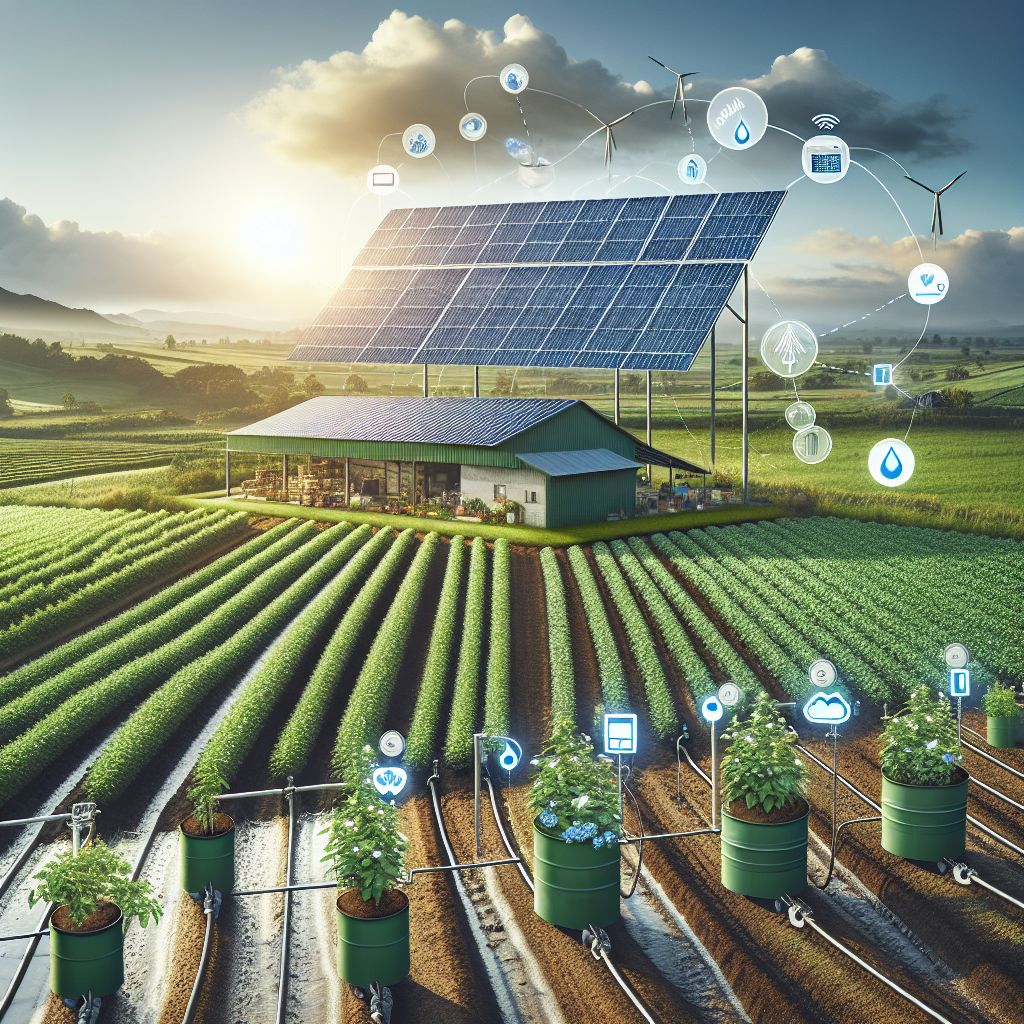
Modern solar irrigation systems pair renewable energy with advanced control technologies that maximize both water and energy efficiency. These intelligent systems transform traditional irrigation from a manual, labor-intensive process into a precision operation that optimizes resource utilization while reducing farmer workload.
Weather-Based Adjustments Save Water and Energy
Smart irrigation controllers connected to internet weather services automatically adjust watering schedules based on local conditions. These systems analyze evapotranspiration rates, recent rainfall, temperature trends, and wind conditions to deliver precisely the right amount of water when plants need it most. By eliminating unnecessary irrigation cycles during periods of natural moisture adequacy, these controllers can reduce water consumption by 20-50% compared to timer-based systems while simultaneously conserving solar energy for when it’s truly needed.
The integration of weather intelligence with solar production forecasting creates particularly powerful synergies. Advanced controllers can prioritize irrigation during periods of predicted high solar output, ensuring pumps operate when the most free energy is available. This intelligent scheduling maximizes the direct utilization of solar power, reducing reliance on batteries or backup power sources and improving overall system economics.
Remote Monitoring Through Smartphone Apps
Today’s solar irrigation systems offer unprecedented visibility and control through smartphone applications that connect farmers to their equipment from anywhere. These apps provide real-time system performance data, allowing immediate identification of any operational issues before they impact crops. Farmers can monitor water flow rates, pump pressure, battery charge levels, and energy production from their phones, eliminating time-consuming physical inspections. The ability to remotely adjust irrigation schedules or system parameters provides flexibility that was impossible with conventional systems, allowing rapid response to changing weather forecasts or crop conditions.
These monitoring platforms also generate valuable historical performance data that helps optimize future operations. By analyzing patterns in water usage, energy production, and crop response, farmers can continuously refine their irrigation strategies. Many systems provide automated alerts for unusual conditions like pressure drops (indicating potential leaks) or extended low-flow situations (suggesting possible blockages), enabling proactive maintenance that prevents crop damage.
Soil Moisture Sensors for Precision Watering
The integration of soil moisture sensors with solar irrigation creates closed-loop systems that deliver water based on actual root zone conditions rather than predetermined schedules. These sensors, installed at various depths throughout fields, provide continuous data on available soil moisture, allowing irrigation to activate automatically when levels drop below crop-specific thresholds. This precision approach eliminates both under-watering (which reduces yields) and over-watering (which wastes resources and can promote disease), optimizing crop production while conserving both water and energy.
Advanced systems utilize multiple sensor zones to create irrigation micro-zones that receive customized water delivery based on soil type, slope, sun exposure, and crop variety. This capability is particularly valuable for farms with variable soil conditions or diverse crops with different water requirements. The sensors also provide valuable agronomic data for general farm management, helping identify soil compaction issues, drainage problems, or irrigation system inefficiencies that might otherwise go undetected.
Funding Your Solar Irrigation Project
The economics of solar irrigation have never been more favorable, thanks to a convergence of declining equipment costs and generous incentive programs. Understanding available funding options can transform what might seem like an expensive infrastructure project into an affordable investment with near-immediate positive cash flow.
USDA REAP Grants Cover Up to 25% of Costs
The USDA’s Rural Energy for America Program (REAP) provides agricultural producers with grants covering up to 25% of renewable energy project costs, with maximum awards of $500,000. These grants are specifically designed for agricultural operations implementing energy-efficient improvements, making solar irrigation systems ideal candidates. The application process requires detailed project planning, energy audits, and financial projections, but the non-repayable funds make the effort worthwhile. Competition for these grants is significant, so applications demonstrating both energy savings and agricultural productivity improvements typically receive priority consideration.
Federal Tax Credits Slash Investment by 30%
The federal Investment Tax Credit (ITC) for solar energy systems currently provides a direct tax credit equal to 30% of the installed system cost. This dollar-for-dollar reduction in tax liability dramatically improves project economics for farm operations with tax appetite. Unlike deductions that merely reduce taxable income, this credit directly reduces the tax bill, effectively providing a 30% discount on the entire solar irrigation system.
The Business Energy Investment Tax Credit applies to both battery storage and solar generation equipment when they’re part of an integrated system. For farms structured as pass-through entities like partnerships or S-corporations, these credits flow directly to the owners’ personal tax returns. Unused credits can generally be carried forward for up to 20 years, ensuring the full benefit is captured even if current year tax liability is insufficient.
Recent legislation has extended this valuable credit at the 30% level through 2032, providing long-term certainty for farm planning. When combined with USDA grants and accelerated depreciation benefits, these incentives can reduce the effective cost of solar irrigation systems by 50-65%, dramatically improving return on investment calculations.
State-Specific Agricultural Solar Incentives
Beyond federal programs, many states offer additional incentives specifically targeting agricultural solar applications. These range from direct rebates and grants to property tax exemptions and specialized low-interest loan programs. Several states with strong agricultural sectors have developed dedicated funding streams for farm energy projects, recognizing both their economic and environmental benefits. These state-level programs often have simplified application processes compared to federal grants, making them accessible to smaller farm operations with limited administrative resources.
Equipment Financing Options with No Money Down
Specialized agricultural equipment financing programs allow farmers to implement solar irrigation with minimal upfront investment. Many solar installers partner with agricultural lenders to offer terms specifically structured around farm cash flow patterns, with payments aligned to harvest cycles or other seasonal considerations. With proper structuring, the monthly payment on a financed solar system is often less than the electricity or fuel costs being replaced, creating immediate positive cash flow even before accounting for increased crop yields or quality improvements. This approach preserves farm capital for other operational needs while still capturing the long-term benefits of solar irrigation.
“Solar-Powered Irrigation Systems …” from growingsolarmist.com and used with no modifications.
Conclusion
Solar-powered irrigation represents one of the most impactful investments available to modern farmers seeking both economic sustainability and operational resilience. By converting an unpredictable, ever-increasing expense into a fixed, manageable investment, these systems provide budget certainty in an industry often defined by volatility. The technology has matured to the point where reliability concerns have been thoroughly addressed, with modern components designed specifically for agricultural applications delivering decades of dependable service.
The environmental benefits – reduced carbon emissions, elimination of fuel spills, and decreased pressure on grid infrastructure – align perfectly with growing market demand for sustainably produced agricultural products. As climate-smart agriculture becomes increasingly incentivized through both market premiums and government programs, early adopters of solar irrigation position themselves advantageously for the future of farming.
Are Solar Panels a Good Investment for a Farm’s Bottom Line
For the vast majority of irrigation-dependent farms, solar panels represent not just a good investment, but a superior one compared to most available alternatives. The combination of 30% federal tax credits, USDA grants, accelerated depreciation, and state incentives creates financial returns that consistently outperform most other farm capital improvements. With system lifespans exceeding 25 years and performance warranties typically guaranteeing at least 80% of original output even after two decades, the long-term economics are exceptionally favorable. When properly sized and configured for specific farm operations, solar irrigation systems consistently deliver internal rates of return between 15-25%, outperforming many traditional farm investments while simultaneously reducing operational complexity and environmental impact.
Frequently Asked Questions
The transition to solar-powered irrigation naturally raises questions about system capabilities, limitations, and implementation considerations. Having guided dozens of farms through this transition, I’ve compiled the most common questions that arise during the planning process. Understanding these fundamental aspects helps set appropriate expectations and ensures successful implementation.
These practical considerations often determine whether a solar irrigation project will fully meet a farm’s operational needs or create unexpected challenges. Addressing them early in the planning process leads to more successful implementations with fewer mid-course corrections.
How many solar panels do I need to power my irrigation pump?
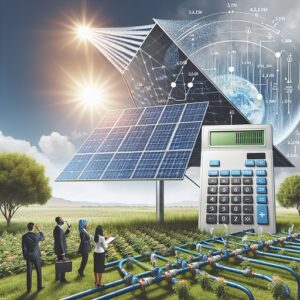
The number of solar panels required depends primarily on your pump’s horsepower, daily runtime, and regional solar conditions. As a general rule, each horsepower requires approximately 1,000 watts of solar capacity for direct-drive systems operating during peak sunlight. For example, a 5HP pump typically requires a 5kW system consisting of about 12-15 standard 400W panels. Systems designed to operate in morning or evening hours or on cloudy days will need additional capacity or battery storage. For precision sizing, multiply your pump’s wattage by daily operating hours, then divide by average peak sun hours in your location (typically 4-6 hours) to determine the necessary system size. Learn more about how solar power benefits agriculture and enhances farm operations.
Can solar irrigation systems work during cloudy days?
Yes, solar irrigation systems can operate during cloudy conditions, though with reduced capacity depending on system design. Direct-drive systems without batteries will run at lower output proportional to available sunlight – typically 10-30% of rated capacity on heavily overcast days. Battery-coupled systems provide consistent power regardless of cloud cover until battery reserves are depleted. Many farmers implement hybrid designs that combine moderately-sized battery banks with water storage, creating systems that can maintain irrigation through 3-5 days of unfavorable weather without requiring oversized battery capacity. The most resilient designs incorporate small backup generators that automatically engage only when both solar production and battery reserves are insufficient, ensuring irrigation continuity through extended unfavorable conditions.
What’s the typical lifespan of a solar irrigation system?
Quality solar irrigation systems deliver exceptional longevity, with solar panels typically warranted for 25-30 years and routinely exceeding 35 years of productive operation. The panels themselves have no moving parts, with degradation rates averaging just 0.5% annually, meaning they’ll still produce 80-85% of their original output after 30 years. Pump controllers and inverters generally last 10-15 years before requiring replacement, while modern lithium iron phosphate batteries typically provide 10+ years of service. The water pumps themselves often outlast their grid-powered counterparts due to the gentle ramp-up and consistent power delivery characteristic of solar systems, which eliminates the harmful power surges that damage conventional pumps. With basic maintenance and occasional component replacement, a well-designed solar irrigation system can provide reliable service for 25+ years, delivering exceptional return on investment.
Do I need batteries with my solar irrigation system?
Batteries are optional for solar irrigation, with necessity depending on your specific watering requirements and farm operations. Direct-drive systems without batteries work well for daytime-only irrigation where schedule flexibility allows pumping when the sun shines. These battery-free systems maximize simplicity and minimize initial investment. For operations requiring specific irrigation timing regardless of sunlight conditions – like early morning watering to reduce evaporation or overnight irrigation to maintain consistent soil moisture – battery storage becomes essential. Many farms find that water storage tanks provide a more cost-effective alternative to large battery banks, effectively storing energy in the form of elevated water that can be released through gravity-fed systems whenever needed.
The decision to include batteries should consider both operational requirements and economic factors. Battery costs have fallen dramatically in recent years, making smaller storage systems increasingly viable even for budget-conscious operations. For critical irrigation needs where water timing directly impacts crop yield or quality, the production benefits of scheduling flexibility often justify the additional investment in energy storage.
Will solar panels work with my existing irrigation infrastructure?
Yes, solar power can be integrated with most existing irrigation infrastructure through proper system design and component selection. AC pumps already in service can be powered through grid-tie inverters or battery inverters that convert solar DC electricity to standard AC power matching your existing equipment. DC-powered solar pump controllers can operate specialized solar pumps that directly replace conventional units in many installations. For pivot irrigation systems, solar arrays can feed power through appropriate controllers to existing motors, potentially with battery backup to ensure consistent operation. In nearly all cases, the integration preserves your investment in water delivery infrastructure (pipes, sprinklers, drip lines) while replacing only the energy source and possibly the pump itself. Learn more about the benefits of solar power in agriculture.
The most successful integrations begin with a comprehensive assessment of current system specifications, including pump type, power requirements, pressure needs, and control mechanisms. This evaluation identifies the most cost-effective approach to solar conversion – whether retrofitting existing pumps or strategically replacing components to optimize for solar operation. Many farmers find that a phased approach works best, perhaps starting with a solar system that offsets a portion of irrigation energy needs while maintaining grid connection, then expanding renewable capacity over time as capital becomes available and system performance is verified.
|
System Type |
Typical Cost Range (5HP) |
Best For |
Limitations |
|---|---|---|---|
|
Direct Drive (No Battery) |
$12,000-18,000 |
Daytime irrigation, water storage capacity |
Only operates during daylight |
|
Battery Coupled |
$18,000-30,000 |
24/7 operation, precise scheduling |
Higher initial cost, battery replacement |
|
Grid Hybrid |
$15,000-25,000 |
Locations with existing grid, backup needs |
More complex, still has some grid dependency |
|
Water Storage System |
$16,000-28,000 (including tanks) |
Flexible irrigation timing, simplicity |
Requires elevated storage or pressure tanks |
The transition to solar-powered irrigation represents more than just an energy choice – it’s a strategic farm management decision that impacts operations, maintenance, crop quality, and long-term economics. By reducing or eliminating energy costs that typically increase 3-5% annually, these systems create predictable operating expenses that improve farm financial planning. The environmental benefits extend beyond the farm itself, potentially opening markets for sustainably-grown products that command premium prices.
As weather patterns become increasingly unpredictable and traditional energy costs continue rising, the resilience provided by solar irrigation becomes even more valuable. Farms equipped with properly designed renewable energy systems gain independence from utility rate fluctuations and fuel supply disruptions, ensuring water availability even during regional energy challenges. This operational security, combined with compelling economics and environmental benefits, makes solar irrigation one of the most impactful investments available to forward-thinking agricultural operations.
Ready to explore how solar irrigation could transform your farm operations? 8M Solar specializes in custom agricultural solar solutions designed specifically for the unique needs of modern farming operations.
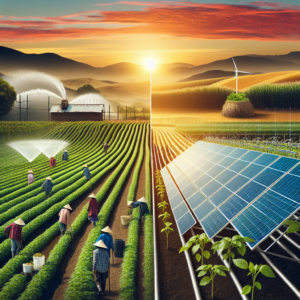
Solar panels have become a crucial component in modern agriculture, providing an efficient and sustainable energy source for farm irrigation systems. By harnessing solar power, farmers can reduce their reliance on traditional energy sources, lowering costs and minimizing environmental impact. This shift towards renewable energy is transforming how farms operate, making them more resilient and eco-friendly. For those interested in exploring the benefits and advantages of solar power in agriculture, you can learn more about how solar power is transforming modern farming.

Leave a Reply