

Key Takeaways
- Solar power can reduce farm energy costs by 50-80%, with payback periods often under 7 years through various tax incentives and rebates
- Agricultural operations benefit from energy independence, particularly in remote areas where grid connections are unreliable or unavailable
- Solar-powered irrigation systems can increase water efficiency by 30% while reducing operational costs
- Implementing solar technology on farms contributes to environmental sustainability by reducing carbon emissions by up to 20 tons annually per installation
- 8M Solar helps farmers implement dual-use systems where crops can be grown underneath solar panels, maximizing land productivity while generating clean energy
Solar Power Is Transforming Modern Farming
Agriculture and energy have always been intrinsically linked. From the dawn of farming, harnessing natural energy sources has been crucial to agricultural success. Today, solar power represents the next evolution in this relationship, offering unprecedented opportunities for modern farmers.
The agricultural sector consumes significant energy for irrigation, heating, cooling, and various farm operations. With rising utility costs and environmental concerns, farmers across the globe are turning to solar energy as a sustainable, cost-effective alternative. The integration of solar technology into farming practices isn’t just a trend—it’s a transformative approach that addresses multiple challenges facing today’s agricultural producers.
Solar power installations on farms have increased by over 300% in the last decade, with agricultural applications now representing one of the fastest-growing segments in the solar industry. This rapid adoption is backed by compelling economics and practical benefits that make solar an ideal match for farming operations. Whether you’re managing a small family farm or overseeing large-scale agricultural production, solar power offers tangible advantages that can improve your bottom line while supporting sustainable farming practices.
“Solar energy represents one of the most significant opportunities for farmers to reduce operational costs while maintaining or increasing productivity. The average farm can offset 70-90% of its electricity needs through properly sized solar installations.” – American Farm Bureau Federation
How Does Solar Power Work
Solar power systems convert sunlight directly into electricity through photovoltaic (PV) panels. These panels contain semiconductor materials (typically silicon) that exhibit the photovoltaic effect—when sunlight hits these materials, it knocks electrons loose, generating an electric current. This direct current (DC) electricity is then converted to alternating current (AC) through an inverter, making it usable for standard farm equipment and buildings.
Modern agricultural solar systems typically include four main components: solar panels, inverters, mounting structures, and optional battery storage. The panels capture sunlight and generate electricity, inverters convert the power to usable form, mounting structures secure the system (either on rooftops, ground mounts, or specialized agricultural mounts), and batteries store excess energy for use during nighttime or cloudy periods.
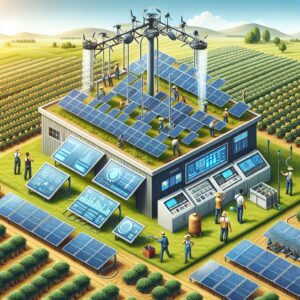
For farms, solar installations can be configured in various ways to match specific needs and available space. Ground-mounted systems can be installed in unused areas, on grazing land with panels raised to allow animal movement underneath, or even integrated with crop production in innovative agrivoltaic systems. Roof-mounted systems utilize existing structures like barns and equipment sheds, requiring no additional land. The flexibility of these installation options makes solar particularly adaptable to diverse farming operations and land constraints.
How Would Solar Power Help a Farmer
Solar power addresses multiple critical challenges that today’s farmers face. First and foremost, it significantly reduces energy costs—often one of the largest operational expenses in modern agriculture. Many farms see 50-80% reductions in electricity bills after installing appropriately sized solar systems. For operations with high energy demands like dairy farms, poultry houses, or irrigated crop production, these savings can translate to tens of thousands of dollars annually.
Beyond direct cost savings, solar provides farmers with energy independence and reliability. Rural areas often experience more frequent power outages and may have less reliable grid connections. With solar power, particularly systems that include battery storage, critical farm operations can continue uninterrupted during outages. This reliability is especially valuable for livestock operations where ventilation, heating, or cooling must function continuously to maintain animal health and productivity.
Solar power also enables agricultural innovation through powering technology that might otherwise be impractical. Remote monitoring systems, precision irrigation controls, and automated equipment can all be powered by distributed solar installations, even in fields far from grid connections. As a partner in this agricultural revolution, 8M Solar specializes in custom solar solutions that address the unique energy challenges farmers face while maximizing available incentives to reduce upfront costs.
|
Farm Type |
Common Energy Needs |
Potential Solar Savings |
|---|---|---|
|
Dairy Farm |
Milk cooling, ventilation, lighting |
$15,000-$25,000 annually |
|
Poultry Operation |
Climate control, lighting, feed systems |
$12,000-$20,000 annually |
|
Irrigated Crops |
Pumping, cooling, processing |
$8,000-$15,000 annually |
|
Greenhouse |
Heating, cooling, lighting |
$10,000-$18,000 annually |
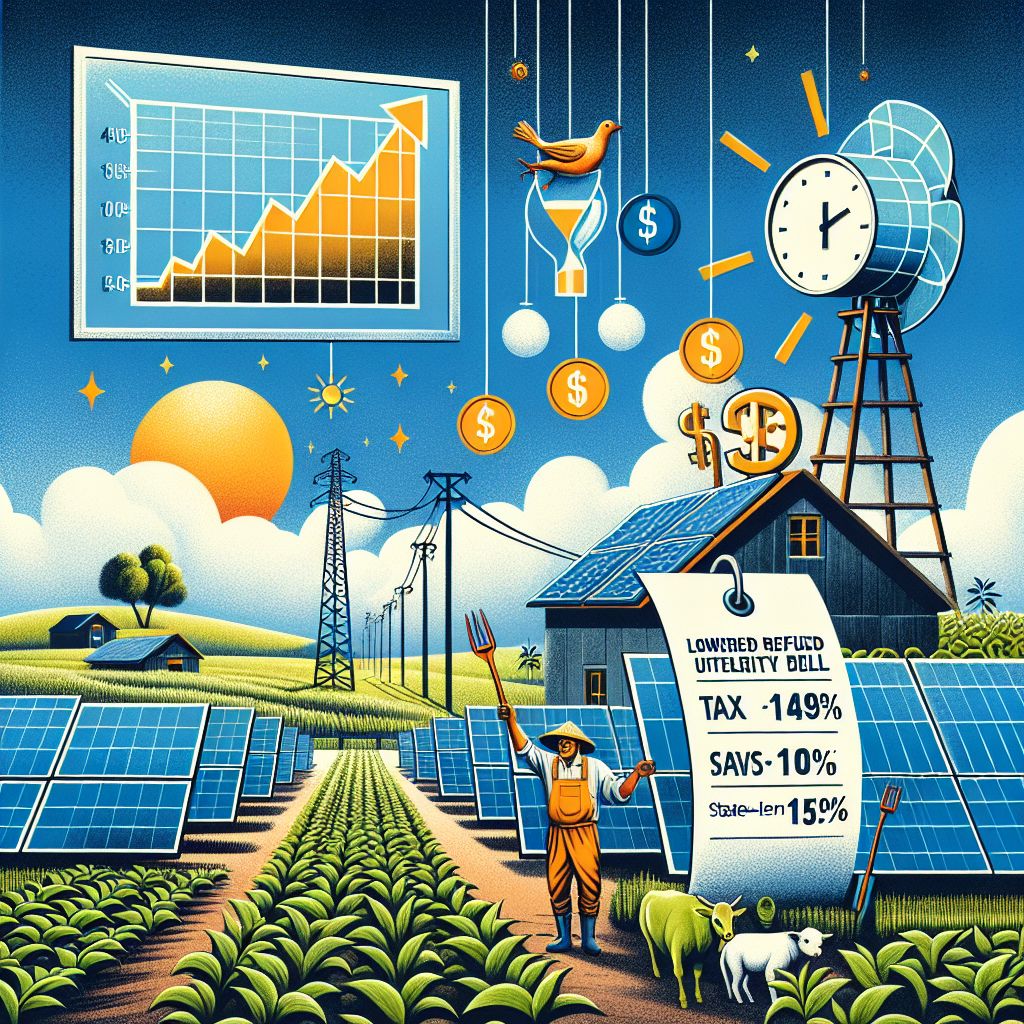
7 Major Cost Benefits of Solar Power for Farmers
The economic advantages of solar power for agricultural operations extend far beyond simple utility bill reduction. When properly implemented, solar installations create multiple financial benefits that significantly improve farm profitability and sustainability. These benefits compound over time, making solar one of the most financially sound investments available to modern farmers.
Agricultural operations typically see a complete return on their solar investment within 5-10 years, after which the system continues producing virtually free electricity for decades. With panels warrantied for 25-30 years and actual lifespans often exceeding 35 years, the long-term economics are compelling. Let’s examine the seven major financial benefits that make solar power particularly advantageous for farming operations.
Slash Your Monthly Energy Bills by 50-80%
The most immediate and obvious benefit of solar power is the dramatic reduction in monthly utility bills. Agricultural operations typically see electricity cost reductions of 50-80% after installing appropriately sized solar systems. For energy-intensive operations like dairy farms, which use electricity for milk cooling, water heating, and ventilation, these savings can amount to thousands of dollars monthly. The exact savings depend on your current electricity rates, energy consumption patterns, and the size of your solar installation.
Federal Tax Credits Cover 30% of Installation Costs
The federal Investment Tax Credit (ITC) represents one of the most significant financial incentives for agricultural solar adoption. Currently, the ITC allows farmers to deduct 30% of the total cost of their solar installation directly from their federal tax liability. This substantial tax benefit effectively reduces the upfront cost of going solar by nearly one-third, dramatically improving project economics and shortening the payback period. For more insights on how solar panels can save farmers energy costs, explore our detailed guide.
Unlike tax deductions that merely reduce taxable income, the ITC is a dollar-for-dollar reduction in the actual taxes owed. For a $100,000 agricultural solar installation, this translates to $30,000 in direct tax savings. Importantly, if you can’t use the entire credit in one year, the remainder can be carried forward to future tax years, ensuring you capture the full benefit regardless of your farm’s annual tax situation. To learn more about the advantages of using solar power in agriculture, visit this article on solar power benefits.
The ITC applies to all components of your solar energy system, including panels, inverters, mounting hardware, and installation labor. For farmers concerned about upfront costs, this substantial tax incentive often makes the difference between a marginal return on investment and a compelling financial opportunity that’s difficult to ignore.
State-Level Incentives Add Extra Savings
Beyond federal incentives, many states offer additional financial benefits specifically for agricultural solar installations. These state-level programs vary widely but can include production-based incentives, rebates, property tax exemptions, and specialized agricultural grants. In some states, these incentives can reduce project costs by an additional 10-40%, further enhancing the economics of farm solar installations.
Many states have implemented net metering policies that allow farmers to receive full retail credit for excess electricity they send back to the grid. This arrangement effectively lets you use the utility grid as a battery, drawing credited power back when needed and maximizing the value of your solar production. For seasonal agricultural operations with varying energy needs throughout the year, net metering can be particularly valuable in optimizing financial returns.
Accelerated Depreciation for Farm Businesses
Agricultural businesses can take advantage of the Modified Accelerated Cost Recovery System (MACRS) to depreciate their solar investments over just 5 years, rather than the system’s 25+ year lifespan. This accelerated depreciation schedule allows farmers to realize tax benefits much more quickly, improving cash flow during the early years of system ownership when it matters most.
When combined with first-year bonus depreciation provisions, which currently allow businesses to deduct 80% of qualifying asset costs in the first year, the tax advantages become even more substantial. For farm operations in higher tax brackets, these depreciation benefits can reduce the effective cost of a solar system by an additional 15-25%, working alongside the ITC to make solar remarkably affordable. Learn more about farmers adding solar panels to fields and the benefits they reap.
Protection From Rising Utility Rates
Solar power effectively locks in your electricity costs for decades, providing insurance against ever-increasing utility rates. While agricultural electricity rates have risen by an average of 3-5% annually over the past decade, solar system owners enjoy consistent, predictable energy costs throughout the system’s lifetime. This price stability is particularly valuable for agricultural operations with thin profit margins and significant exposure to input price volatility.
By generating your own electricity, you’re essentially prepaying for decades of power at a fixed rate, creating budgetary predictability that would be impossible when relying solely on utility power. For irrigation-intensive operations or climate-controlled livestock facilities where electricity represents a major expense, this long-term price protection can translate to hundreds of thousands of dollars in savings over the system’s lifetime.

How Solar Improves Farm Operations
Beyond pure financial benefits, solar power enhances agricultural operations through improved reliability, access to remote power, and support for precision farming techniques. These operational advantages often prove as valuable as the direct cost savings, enabling new farming approaches and technologies that would otherwise be impractical or prohibitively expensive.
Power Remote Areas Without Grid Access
Solar power eliminates the need for expensive utility line extensions to remote agricultural areas. Grid connection costs can run $15,000-$50,000 per mile, making many remote agricultural projects economically unfeasible. With strategically placed solar installations, farmers can power irrigation pumps, monitoring stations, and equipment in fields far from existing infrastructure.
These distributed power solutions are particularly valuable for livestock watering systems, remote crop monitoring, and security installations across large agricultural properties. By eliminating the need for generator fuel, maintenance, and frequent visits to remote locations, solar significantly reduces the operational burden of managing distant farm assets while improving reliability.
Run Irrigation Systems More Efficiently
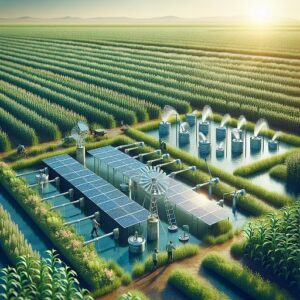
Solar-powered irrigation represents one of the most impactful agricultural applications of photovoltaic technology. Traditional irrigation often relies on diesel generators or grid electricity, both creating significant ongoing expenses. Solar irrigation systems eliminate fuel costs and reduce maintenance requirements while providing power precisely when it’s most needed—during sunny, dry periods when crops require the most water.
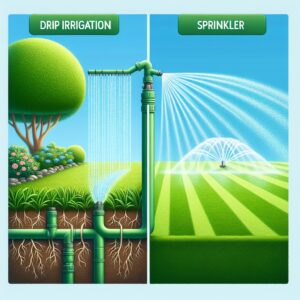
Modern solar irrigation systems can incorporate advanced features like variable-frequency drives that adjust pump speed based on actual water needs, weather-responsive controllers that optimize watering schedules, and remote monitoring capabilities that alert farmers to system issues. These smart irrigation approaches not only save energy but also conserve water by delivering precise amounts when and where needed, reducing waste and improving crop outcomes. For more insights, check out the benefits of solar panels on farms.
Maintain Consistent Power During Outages
For agricultural operations, power outages can have devastating consequences—from spoiled milk in dairy operations to heat stress in poultry houses or crop losses in greenhouse production. Solar systems with battery backup provide crucial resilience, maintaining essential functions during grid failures and protecting valuable agricultural products and livestock. This reliability becomes increasingly valuable as climate change drives more frequent extreme weather events and grid disruptions.
Environmental Advantages That Matter
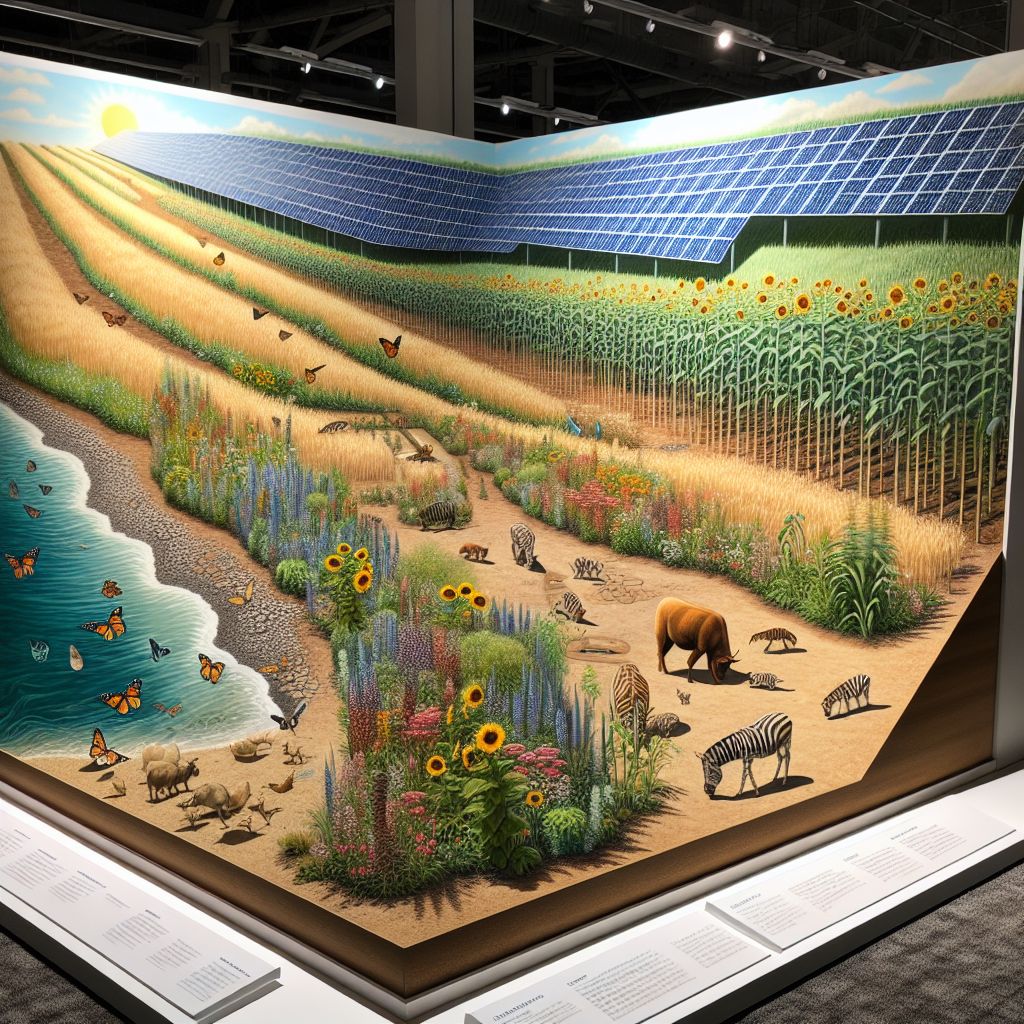
The environmental benefits of agricultural solar extend far beyond carbon reduction, though that remains significant. Solar installations support multiple aspects of environmental stewardship that align with sustainable farming practices, enhancing soil health, water conservation, and biodiversity. For farmers committed to responsible land management, these environmental advantages provide additional value beyond the direct financial returns.
Reduce Your Farm’s Carbon Footprint
Agricultural operations that transition to solar power typically reduce their carbon emissions by 15-40 tons annually per installed megawatt. This substantial carbon reduction helps farmers meet sustainability goals, qualify for eco-certification programs, and respond to market demands for environmentally responsible products. As carbon markets develop and mature, these emissions reductions may also create additional revenue streams through carbon credit generation.
The emissions benefits extend beyond the farm itself, reducing upstream pollution from power plants and their associated environmental impacts. For farmers marketing directly to consumers or selling to environmentally conscious distributors, these verifiable sustainability improvements can create marketing advantages and price premiums that further enhance the return on solar investments.
Preserve Farmland Quality
Solar installations on farms can actually improve soil health when properly managed. Unlike conventional energy sources that may contribute to soil contamination through fuel spills or emissions, solar systems operate cleanly. With raised mounting systems, the ground beneath panels often experiences less erosion from heavy rainfall, as the panels themselves provide a buffering effect against direct precipitation impact.
Agricultural land under solar panels typically requires less herbicide application and experiences reduced soil compaction since it’s not subjected to regular equipment traffic. This protected environment allows soil organisms to thrive, building organic matter and improving soil structure over time. Many farmers report improved soil quality in areas beneath and adjacent to solar installations compared to continuously cultivated fields. Learn more about dual land use with solar panels for enhanced agricultural benefits.
Create Pollinator-Friendly Habitats Under Panels
Innovative farmers are transforming the spaces beneath solar panels into pollinator habitats, planting native wildflowers and grasses that support bees, butterflies, and other beneficial insects. These pollinator-friendly solar installations deliver dual benefits—generating clean energy while supporting the insects essential for crop pollination. Studies show farms with nearby pollinator habitat can see yield increases of 10-30% in pollinator-dependent crops.
This integration of ecological principles with renewable energy represents a win-win approach that enhances both energy production and agricultural productivity. The shade created by panels can also protect these pollinator plants during extreme heat events, creating microhabitats that remain viable even during challenging weather conditions. For farms producing fruits, vegetables, or other pollinator-dependent crops, these benefits can translate directly to improved yields and crop quality.

Solar Applications for Different Farm Usage
The versatility of solar power makes it adaptable to virtually every type of agricultural operation. From livestock facilities to greenhouses, each farm type can leverage solar technology in ways specifically tailored to its unique energy needs and operational patterns. Understanding these specialized applications helps farmers identify the most valuable solar opportunities for their particular situation.
Solar-Powered Livestock Operations
Livestock facilities, particularly dairy and poultry operations, have high, consistent energy demands that make them ideal candidates for solar power. Dairy farms require electricity for milk cooling, pasteurization, water heating, and ventilation—processes that consume 800-1,200 kWh per cow annually. A well-designed solar system can offset 60-90% of these energy costs while providing reliable power for critical animal welfare systems.
Poultry houses similarly benefit from solar installations, with their substantial heating, cooling, ventilation, and lighting requirements. Modern poultry operations can consume 5-8 kWh per bird annually, creating significant energy expenses. Solar systems not only reduce these costs but also provide crucial backup power capabilities that protect flocks during grid outages when ventilation failures could quickly become catastrophic.
Greenhouse Climate Control Systems
Greenhouse operations face unique energy challenges, requiring precise temperature and humidity control throughout changing seasons. Solar panels can power greenhouse heating, cooling, ventilation, and irrigation systems while reducing operating costs. For operations with significant cooling needs during sunny periods, solar production aligns perfectly with peak energy demands, maximizing the value of each kilowatt generated.
Advanced greenhouse solar applications include semi-transparent photovoltaic panels that generate electricity while allowing sufficient light transmission for plant growth. These dual-purpose installations maximize space efficiency by combining energy and crop production in the same footprint. For greenhouse operators dealing with high energy costs, these innovative solar solutions can transform both sustainability and profitability.
Cold Storage and Processing Facilities
Agricultural processing and storage facilities often require substantial electricity for refrigeration, freezing, and equipment operation. These high-consumption applications can benefit tremendously from properly sized solar installations, particularly when operations coincide with daylight hours. For seasonal processing facilities, solar can significantly reduce peak demand charges during the busiest production periods, often saving thousands in utility costs.
Solar-plus-storage systems provide particular value for cold storage applications, maintaining critical refrigeration during power outages and potentially preventing catastrophic product losses. The ability to shift loads to battery power during peak rate periods also creates additional savings opportunities through energy arbitrage—charging batteries when electricity is inexpensive and using stored power when rates are highest.
Agrivoltaics: Growing Crops Under Solar Panels
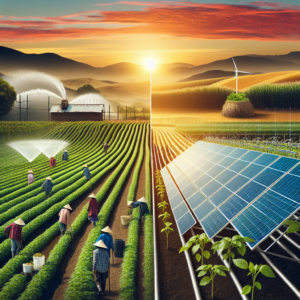
One of the most exciting developments in agricultural solar is agrivoltaics—the practice of growing crops directly beneath solar panels. This dual-use approach maximizes land productivity by generating both food and energy from the same acreage. Research has shown that certain crops, particularly leafy greens, herbs, and shade-tolerant berries, actually perform better under the partial shade provided by solar panels, especially in hot climates where excessive sun exposure can stress plants. Learn more about dual-use growing with solar panels for farmers.
Agrivoltaic systems can be designed with adjustable panel heights and spacing to optimize light conditions for specific crops. These systems create beneficial microclimates that reduce water requirements by 20-40% through decreased evaporation and provide protection from extreme weather events. For farmers concerned about taking land out of production for solar, agrivoltaics offers a compelling solution that enhances rather than competes with agricultural productivity.
Alarm Systems and All the Lighting for the Farm
Solar power provides an ideal solution for farm security, monitoring, and lighting systems, particularly in remote locations. These relatively low-power applications can often be supported by small, dedicated solar installations that operate independently from the main electrical system. Solar-powered security lights, cameras, and alarm systems continue functioning during grid outages, maintaining protection for valuable equipment and livestock when conventional systems would fail.
For farms with extensive nighttime operations or security requirements, solar systems with battery storage can power reliable lighting throughout the night, enhancing safety and extending productive hours. These systems eliminate the need for expensive trenching and wiring to remote areas, making it economical to secure even distant parts of large agricultural properties.
The Farmers House
The farmhouse itself represents another opportunity for solar integration, with residential systems typically ranging from 5-15kW depending on home size and energy requirements. Incorporating the farm residence into a comprehensive solar plan often improves overall economics through economies of scale in installation and equipment costs. Many agricultural solar incentives can be applied to the entire property, including the farmhouse, creating additional savings opportunities not available to standard residential installations.
Real-World Solar Success on Farms
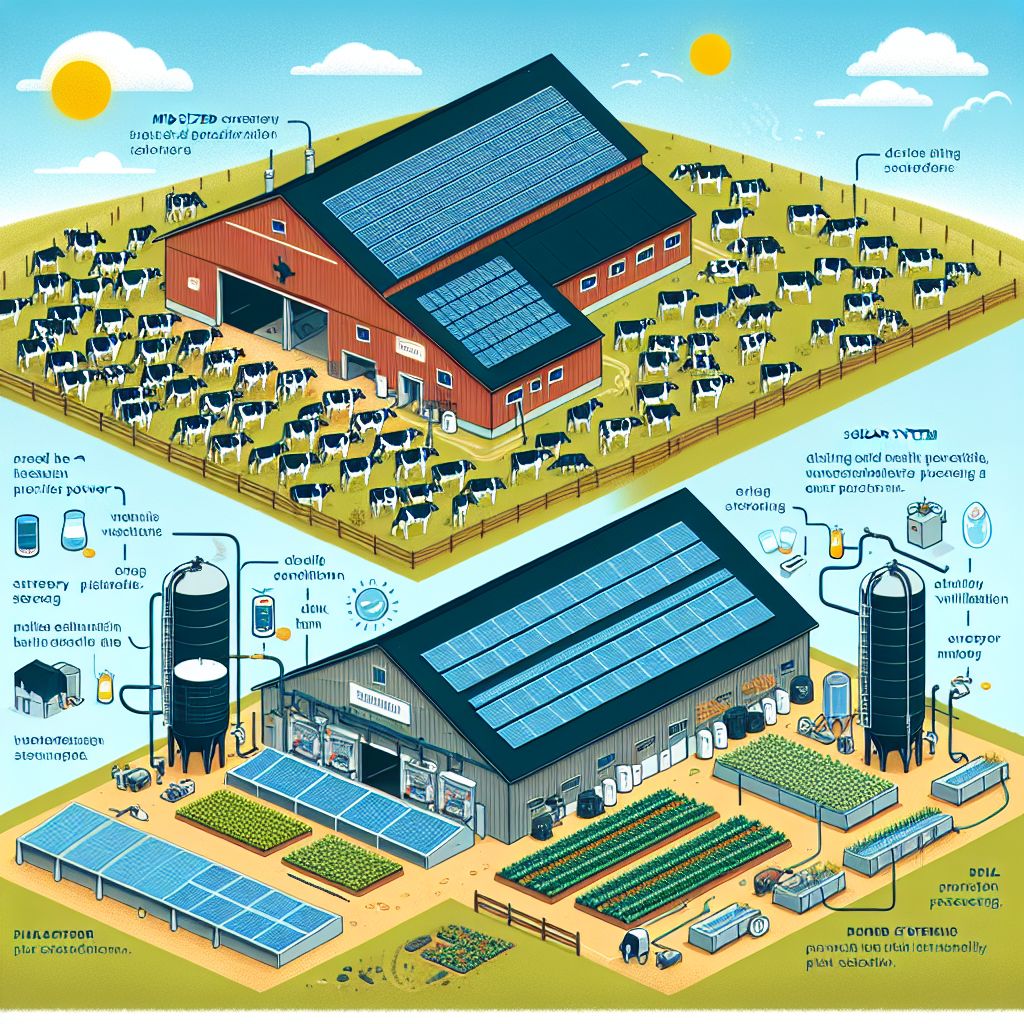
The theoretical benefits of agricultural solar become tangible through the experiences of farmers who have successfully implemented these systems. Across diverse farm types, sizes, and geographic regions, agricultural producers are reporting significant positive outcomes from their solar investments, with many expressing only one regret—not installing solar sooner.
These real-world examples demonstrate how solar power adapts to specific agricultural contexts, addressing unique challenges while delivering consistent financial and operational benefits. For farmers considering solar installations, these case studies provide valuable insights into potential outcomes and best practices for implementation.
Case Study: Dairy Farm Cuts Energy Costs by 70%
Hillcrest Dairy in Wisconsin installed a 200kW solar array to offset the substantial electricity demands of their 300-cow operation. Before solar, the farm faced monthly electricity bills averaging $3,800, primarily from milk cooling, pasteurization, and barn ventilation. Within the first year of operation, their solar installation reduced monthly utility costs to approximately $1,100—a 70% decrease that significantly improved the farm’s operating margins.
The installation qualified for the 30% federal tax credit, accelerated depreciation, and a state-level production incentive that together reduced the effective system cost by more than half. With these incentives, Hillcrest Dairy achieved complete payback on their investment in just 4.5 years, after which the system began generating essentially free electricity. Beyond the financial benefits, the farm’s solar installation has prevented approximately 180 tons of carbon emissions annually, supporting their sustainability goals and creating marketing advantages for their dairy products.
Small Vegetable Farm Achieves Energy Independence
Green Valley Farms, a 15-acre organic vegetable operation in California, faced unique challenges with unreliable rural grid service and high irrigation costs. Their 30kW solar system with battery storage has transformed their operation, powering efficient drip irrigation, cold storage, and processing equipment without dependence on the utility grid. The farm reports annual savings of approximately $7,500 compared to previous utility costs, with additional value from avoiding crop losses during the region’s increasingly frequent power outages.
Take Your Farm into the Future with Solar Power
“The decision to install solar was the best investment we’ve made in our farm in the last decade. It’s rare to find an improvement that simultaneously reduces costs, increases reliability, and aligns with our environmental values. Our only regret is not doing it sooner.” – James Wilson, 4th generation farmer
As agriculture continues evolving to meet 21st-century challenges, solar power stands out as a uniquely beneficial technology that addresses multiple farming needs simultaneously. Beyond the immediate financial benefits, solar installations position agricultural operations for long-term success in a changing energy landscape. With electricity costs projected to continue rising and climate considerations becoming increasingly important to consumers and regulators, solar-equipped farms gain significant competitive advantages.
The technology continues improving as well, with panel efficiency increasing and system costs decreasing. Today’s agricultural solar installations typically cost 60-70% less than equivalent systems from just a decade ago, while generating more electricity from the same footprint. This improved performance and economics make solar increasingly accessible to farms of all sizes and types, from small specialty crop producers to large commercial operations. For those interested in affordable solutions, cost-effective polycrystalline solar panels offer significant benefits.
Planning your agricultural solar installation begins with a professional assessment of your energy needs, available space, and specific operational requirements. Working with experienced agricultural solar providers ensures your system is properly sized and configured to maximize both financial returns and operational benefits for your unique farm situation. For more insights, explore how farmers are adding solar panels to fields and the benefits they experience.
Should Solar Power be the Future of Farming
The evidence strongly suggests that solar power will play an increasingly central role in agricultural success moving forward. As energy costs rise, weather patterns become more volatile, and consumers demand more sustainable products, farms with integrated solar systems will enjoy significant advantages in both production costs and market positioning. The question for most agricultural operations is not whether solar makes sense, but rather how to implement it most effectively for their specific situation and goals.
Frequently Asked Questions
As you consider solar power for your agricultural operation, you likely have questions about system performance, compatibility with farming activities, and practical implementation details. Here are answers to the most common questions farmers ask when evaluating solar installations.
How long do solar panels last on a farm?
Modern agricultural solar panels typically carry manufacturer warranties of 25-30 years, guaranteeing at least 80% of their original production capacity throughout this period. In practice, quality solar installations often perform effectively for 30-40 years, with gradual efficiency declines of approximately 0.5% annually. This exceptional longevity makes solar particularly valuable for farm operations, where investments must deliver returns over extended periods.
The durability of agricultural solar installations has improved substantially over the past decade, with modern systems engineered to withstand harsh farm environments including dust, temperature extremes, and severe weather events. Mounting systems for agricultural applications are typically designed with higher wind and snow load ratings than residential installations, ensuring reliability in challenging conditions common to farm environments. For those interested in how solar technology is being integrated into agriculture, farmers adding solar panels to fields is a great resource to explore the benefits and reasons behind this growing trend.
Can I still farmland with solar panels installed?
Yes, many modern agricultural solar installations are specifically designed to allow continued farming activities. Elevated mounting systems can maintain clearances of 8-12 feet, permitting grazing animals, small equipment, and even some crop production underneath the panels. Agrivoltaic systems intentionally integrate crop production with solar generation, often improving growing conditions for certain plants through partial shading and reduced evaporation.
The compatibility of solar with continued agricultural use depends largely on system design and specific farm activities. Working with solar providers experienced in agricultural applications ensures your installation accommodates your farming practices rather than competing with them. Many farms find they can maintain 80-95% of their original agricultural productivity while generating substantial solar energy, creating significantly higher combined land value than either use alone.
What maintenance do agricultural solar systems require?
Agricultural solar installations require minimal maintenance, typically limited to occasional panel cleaning, monitoring system performance, and very rare component replacements. In many agricultural settings, natural rainfall provides sufficient panel cleaning, though dusty environments may benefit from periodic washing to maintain optimal efficiency. The absence of moving parts in photovoltaic systems eliminates most maintenance concerns, with modern inverters and electronic components designed for 15-25 years of trouble-free operation.
Will solar panels work during winter or cloudy days?
Solar panels continue generating electricity during winter and cloudy periods, though at reduced capacity compared to ideal sunny conditions. Modern panels operate at approximately 10-25% of their rated capacity during heavy overcast, with higher outputs during partial cloud cover. Cold temperatures actually improve solar panel efficiency, often offsetting the reduced daylight hours of winter months. Agricultural solar systems are typically designed to account for seasonal production variations, with annual production estimates including these expected fluctuations.
How quickly will I see a return on investment for my farm solar system?
Most agricultural solar installations achieve complete payback within 5-10 years, depending on electricity costs, available incentives, and system configuration. Farms with high energy consumption often see faster returns, sometimes recouping their investment in as little as 3-5 years when combining federal tax credits, accelerated depreciation, and state incentives. After reaching payback, systems typically provide 15-25+ additional years of effectively free electricity, delivering exceptional long-term returns on investment.
Beyond direct financial payback, agricultural solar installations create additional value through enhanced operational reliability, protection from utility rate increases, and potential marketing advantages for sustainably produced farm products. When these benefits are included in return calculations, the effective payback period often shortens considerably. For more insights, explore the benefits of solar panels on farms.

Leave a Reply