
Key Takeaways
- Solar power systems can reduce farm operating costs by up to 70% through reduced electricity bills and potential income from selling excess power back to the grid.
- Modern agricultural solar applications include water pumping, electric fencing, lighting, crop drying, and climate control systems that operate independently from the grid.
- Agrivoltaics—combining solar panels with active farming—can create dual-income streams while improving crop yields in certain conditions.
- Solar-powered systems increase farm resilience by continuing to function during grid outages and extreme weather events.
- EFS Energy helps farmers implement custom solar solutions that maximize both energy production and agricultural productivity.
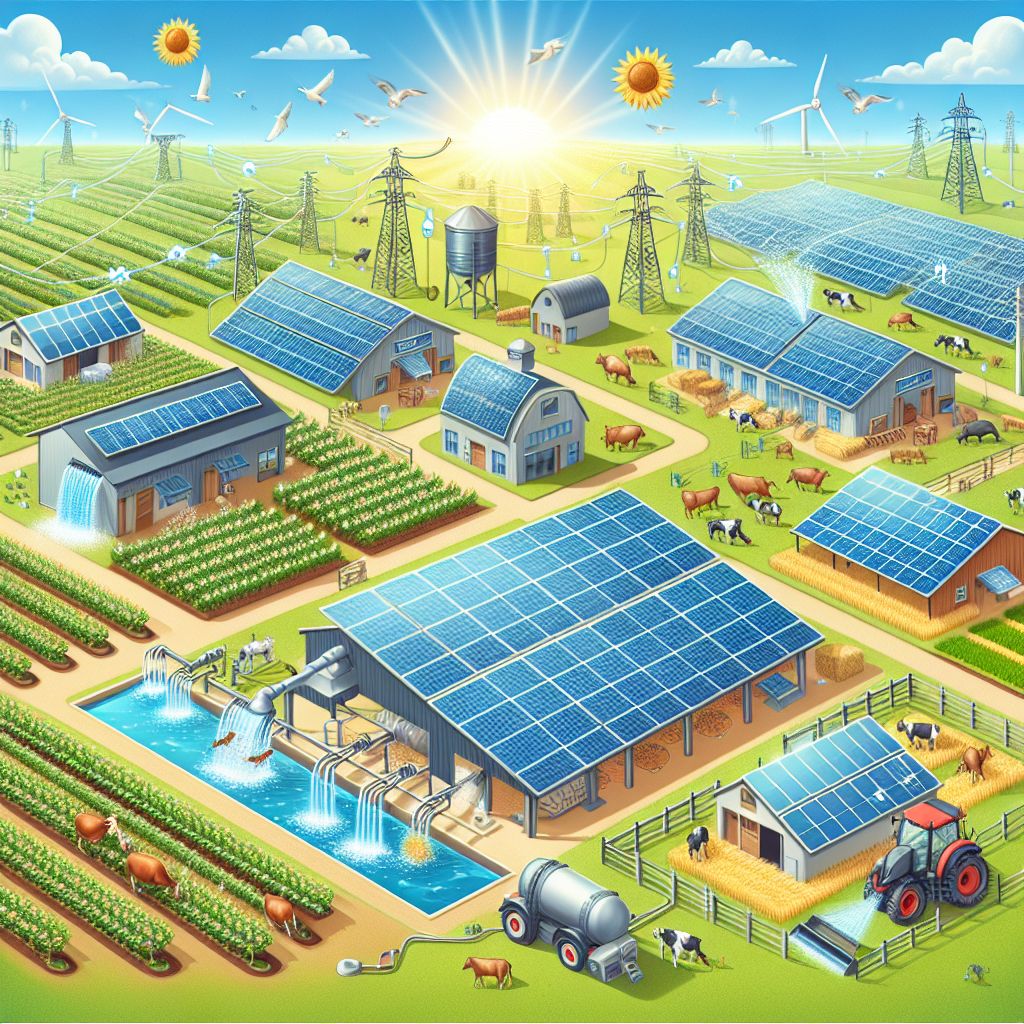
Imagine walking through your farm on a sunny afternoon, with irrigation systems pumping water to your crops, electric fences securing your livestock, and equipment processing your harvest—all powered by the sun. This isn’t a futuristic dream; it’s the reality for a growing number of farms embracing solar power applications. The integration of solar technology into agricultural operations is revolutionizing how farms operate, cutting costs, and creating more sustainable food production systems.
How Does Solar Power Work on Farms
Solar power harnesses energy from the sun using photovoltaic (PV) panels that convert sunlight directly into electricity. These panels contain silicon cells that create an electric current when exposed to sunlight. For farms, this electricity can be used immediately to power equipment, stored in batteries for later use, or even sold back to the utility grid for credit.
Farm solar systems typically include panels mounted on rooftops, ground-mounted arrays in unused areas, or innovative designs like solar trackers that follow the sun throughout the day. The electricity generated flows through an inverter, which converts the direct current (DC) produced by solar panels into alternating current (AC) that powers standard farm equipment. Modern systems often include battery storage solutions that ensure power availability even when the sun isn’t shining.
What makes solar particularly suitable for farms is the abundance of available space and unobstructed access to sunlight. Many agricultural operations have large roof areas on barns and outbuildings or marginal land that’s perfect for ground-mounted systems. This combination of ample space and high energy demands creates an ideal scenario for solar adoption.
How Solar Power Helps Farmers with Daily Operations
Solar energy provides farmers with reliable, renewable power that significantly reduces operational costs while increasing farm resilience. Unlike traditional grid electricity, which can be expensive and vulnerable to outages, solar power gives farmers energy independence. This means irrigation systems can continue running during grid failures, ensuring crops receive water even during critical periods.
The financial benefits extend beyond simple utility savings. Modern farms face increasingly thin profit margins, making energy costs a significant concern. Solar installations can reduce electricity bills by 50-70% or more, directly improving a farm’s bottom line. Additionally, excess energy production can be sold back to utility companies through net metering programs, creating a new revenue stream for farmers.
“Solar projects on agricultural lands create the opportunity to balance food security with renewable energy production. When implemented thoughtfully, these systems can boost farm sustainability while mitigating fossil fuel use and addressing climate change.” — Research findings from the National Renewable Energy Laboratory
Why Solar Power is a Game-Changer for Modern Farms
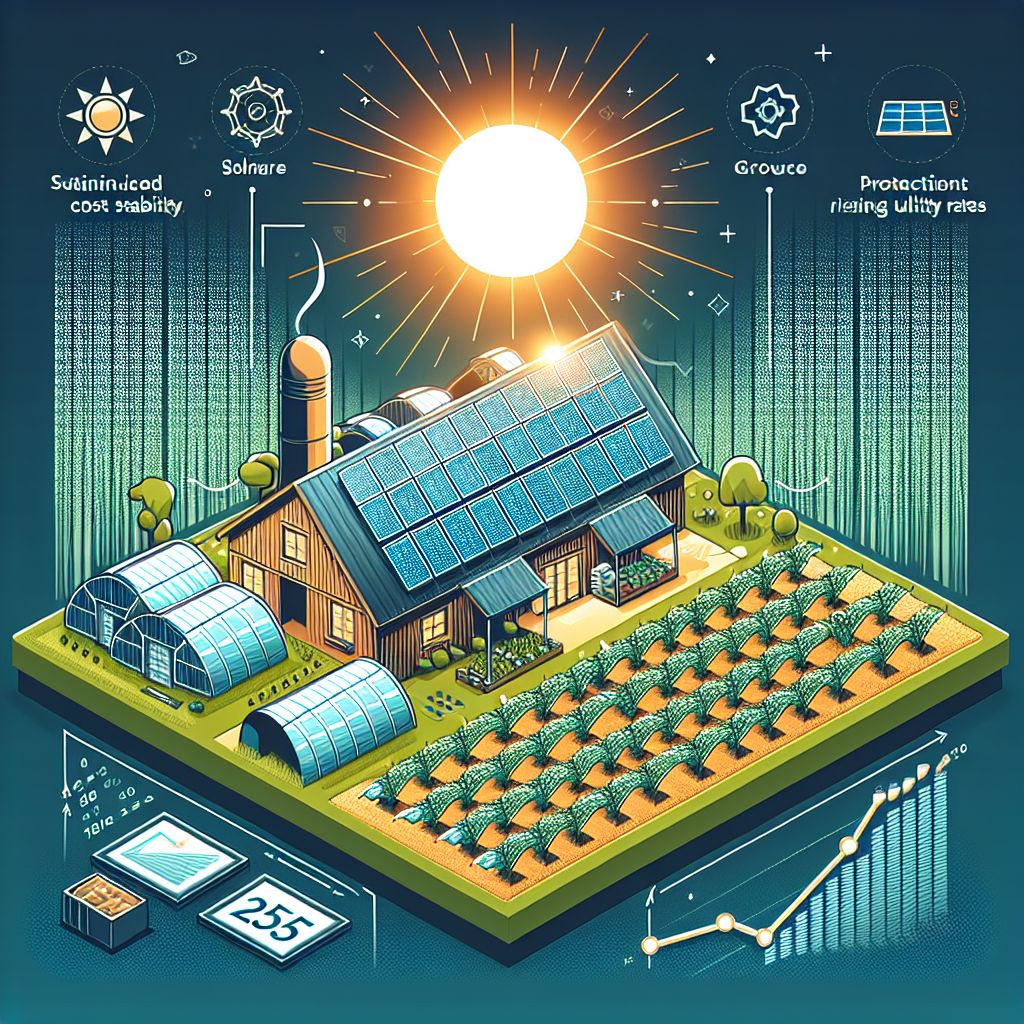
The agricultural sector faces unique challenges: unpredictable weather patterns, rising input costs, and increasing pressure to adopt sustainable practices. Solar power addresses these challenges head-on. Unlike fossil fuels with fluctuating prices, solar provides energy cost stability, allowing farmers to budget more effectively. Once installed, solar systems typically produce power at the same rate for 25-30 years, protecting against rising utility rates.
Cost Savings Beyond Your Electric Bill
The financial benefits of farm solar extend far beyond reduced utility bills. Federal tax incentives currently allow farmers to deduct 30% of solar system costs through the Investment Tax Credit, significantly reducing upfront expenses. Many states offer additional incentives, grants, and low-interest financing specifically for agricultural solar projects. These programs can dramatically improve project economics and accelerate return on investment. For more information on optimizing solar systems, explore how drones help farmers optimize solar panels efficiency.
Solar installations also qualify for accelerated depreciation, allowing farmers to recover their investment faster through tax benefits. When combined with rising property values associated with renewable energy improvements, solar becomes more than an energy solution—it’s a smart financial investment. Some farmers report complete system payback in 5-7 years, with decades of free electricity afterward.
Environmental Benefits That Matter to Your Bottom Line
Sustainable farming isn’t just good for the planet—it’s increasingly good for business. Consumers and food companies are prioritizing products from environmentally responsible operations. By reducing carbon emissions through solar adoption, farmers can access premium markets and potentially command higher prices for their products.
Solar power helps farms reduce their environmental impact by eliminating greenhouse gas emissions associated with conventional electricity. A typical 25kW farm solar system prevents approximately 30 tons of carbon dioxide emissions annually—equivalent to planting over 550 trees each year. These environmental benefits translate into marketable advantages as more buyers seek sustainably produced agricultural products.
Farm Resilience During Power Outages
Power interruptions can devastate farm operations. Irrigation systems shut down, climate control in livestock buildings fails, and processing equipment stops—potentially causing significant losses. Solar systems with battery storage provide critical backup power during outages, ensuring essential systems remain operational.
This resilience is particularly valuable during extreme weather events, which are becoming more frequent due to climate change. When grid power fails during storms or heat waves, solar-plus-storage systems can maintain critical functions like water pumping, refrigeration, and ventilation. This reliability protects both animal welfare and crop production during vulnerable periods.
This table is a summary of why solar power is a game-changer for modern farms:
|
Reason Solar Power is a Game-Changer |
Explanation |
Supporting Details |
|---|---|---|
|
Lower Operating Costs |
Solar panels dramatically reduce or even eliminate farm electricity bills by providing free, renewable energy after installation. |
Cost savings are significant over time, offsetting the initial investment. 1, 2, 4, 5 |
|
Energy Independence |
Farms can generate their own electricity, lessening reliance on external utilities and protecting operations from rising or fluctuating energy prices. |
Especially benefits remote farms with unreliable grid access. 1, 2, 5 |
|
New Income Sources |
Excess electricity can be sold back to the grid through net metering, creating a new revenue stream for farms. |
In certain states and with proper setup, this can supplement farm income. 5 |
|
Government Incentives |
Tax credits, grants, and rebates for solar installation reduce the upfront cost, speeding payback periods and increasing affordability. |
Federal and state incentive programs are widely available. 1, 2, 5 |
|
Environmental Sustainability |
Solar power is clean and renewable, helping farms shrink their carbon footprint and reduce greenhouse gas emissions. |
Contributes to climate goals and environmentally friendly agriculture. 1, 2 |
|
Land Use Efficiency (Agrivoltaics) |
Solar panels can be installed above crops (agrivoltaics), providing shade, lowering soil evaporation, and improving panel efficiency. |
Increases total farm productivity and can improve crop quality in some cases. 3 |
|
Reliable & Low Maintenance Technology |
Solar systems have few moving parts, minimal maintenance requirements, and last over 25 years, ensuring steady operation with little upkeep. |
Durable even in tough weather conditions, reducing operational hassle and costs. 1 |
|
Supports Sustainable Innovation |
Enables solar-powered irrigation, greenhouses, and off-grid operations, diversifying how energy is used across farm activities. |
Innovations help boost efficiency and resilience of agricultural operations. 1 |
|
Added Property Value |
Installing solar can enhance the long-term value and attractiveness of the farm property. |
An appealing prospect for buyers/investors due to future energy savings. 1 |
|
Climate Resilience & Crop Protection |
Solar shading from panels helps maintain soil moisture and shields crops from extreme weather, reducing irrigation costs and crop stress. |
Example: shade helped boost broccoli quality and water savings in field studies. 3 |

Top Solar Applications That Transform Farm Operations
Farms present unique opportunities for solar integration due to their diverse energy needs and available space. The versatility of solar power means it can be adapted to almost any agricultural application, from the smallest family farm to large commercial operations. Modern solar technology has evolved to meet these specific needs with systems designed for durability in agricultural settings, resistance to dust and moisture, and efficiency even in variable weather conditions.
Water Pumping and Irrigation Systems
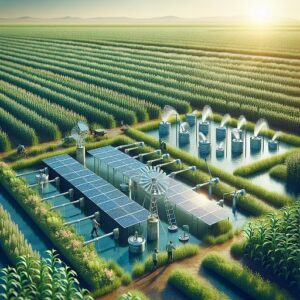
Water management represents one of the most critical and energy-intensive aspects of farming. Traditional irrigation systems rely on grid electricity or diesel generators, which can be costly and unreliable, especially in remote areas. Solar-powered irrigation systems eliminate these ongoing fuel costs while ensuring consistent water delivery to crops, even in locations far from utility lines. These systems typically include solar panels, a controller, and a specialized DC pump designed to operate efficiently with variable power input.
How Does Adding Solar Power Help a Farmer with This
Solar-powered irrigation delivers substantial benefits for farmers beyond simple cost savings. These systems can be programmed to pump water during peak sunlight hours, storing it in tanks for use when needed. This means irrigation can continue even when the sun isn’t shining, providing flexibility in water management. For farms in regions with inconsistent rainfall, solar irrigation ensures crop hydration without the unpredictability of fuel deliveries or grid power availability.
The return on investment is particularly compelling for irrigation applications. Farmers using solar pumping systems report 40-60% reductions in irrigation costs compared to diesel pumps, with systems paying for themselves within 2-4 years in many cases. Additionally, solar pumping systems require minimal maintenance, with many components designed to last 20+ years with only basic upkeep. This reliability is crucial during growing seasons when equipment downtime can threaten crop yields.
Electric Fencing for Livestock Management
Livestock management requires reliable fencing solutions that can be challenging to implement across large pastures, especially in remote areas without easy access to grid power. Solar-powered electric fencing systems provide an elegant solution, combining small solar panels with battery storage and fence energizers to deliver consistent protection. These systems can be easily relocated as grazing patterns change, offering flexibility that traditional fencing can’t match.
How Does Adding Solar Power Help a Farmer with This
The independence from grid connections makes solar electric fencing ideal for rotational grazing systems, which improve pasture health and livestock productivity. Farmers can quickly establish temporary paddocks in remote fields without running electrical lines or constantly replacing batteries. Modern solar fence controllers include intelligent features like adaptive power output based on fence conditions and battery management systems that prevent complete discharge during cloudy periods, ensuring continuous operation even in less-than-ideal weather.
Barn and Outbuilding Lighting
Proper lighting in agricultural buildings is essential for productivity, safety, and animal welfare. Farm buildings often require lighting during early morning and evening hours when work typically begins and ends. Solar lighting systems capture energy during daylight hours and store it in batteries for use when natural light is insufficient. These systems can be designed with motion sensors and timers to conserve energy while providing light exactly when and where it’s needed.
How Does Adding Solar Power Help a Farmer with This
Solar lighting eliminates the need for expensive electrical wiring in outbuildings, making it particularly valuable for structures far from existing power infrastructure. For livestock operations, consistent lighting is crucial for animal health and productivity—research shows proper light cycles can increase milk production in dairy operations by up to 15%. Solar systems ensure this lighting remains available even during grid outages, protecting animal welfare and maintaining production schedules.
The modular nature of solar lighting allows farmers to start small and expand as needed, adding fixtures incrementally without major infrastructure changes. Advanced LED fixtures paired with solar power use up to 80% less energy than traditional lighting while providing better illumination quality, improving visibility and safety during early morning or late evening farm activities. This combination of energy efficiency and reliability makes solar lighting one of the easiest solar technologies to implement on farms of any size.
Crop Drying and Processing Equipment
Post-harvest processing represents a significant energy cost for many farming operations. Drying grains, fruits, nuts, and other crops traditionally requires large amounts of electricity or fossil fuels. Solar thermal systems can provide the necessary heat for drying operations at a fraction of the cost, while photovoltaic systems can power mechanical handling equipment, fans, and conveyor systems. These applications are particularly valuable because harvest periods often coincide with optimal solar energy production.
How Does Adding Solar Power Help a Farmer with This
Solar crop drying systems improve product quality by providing consistent, controlled drying conditions that reduce spoilage and contamination. Unlike traditional methods, solar drying doesn’t introduce smoke or combustion byproducts that can affect flavor profiles or food safety. For specialty crop producers, this quality advantage can translate to premium pricing and access to higher-value markets.
The economic impact is especially significant for farms in developing regions or remote areas where fuel delivery is inconsistent or prohibitively expensive. Solar-powered processing equipment provides independence from these supply chains, allowing farmers to process crops on their own schedule rather than rushing to complete operations while fuel supplies last. This control over timing often results in higher-quality products and reduced post-harvest losses, which can reach 30-40% with inadequate drying capabilities.
Greenhouse Climate Control
Maintaining optimal growing conditions in greenhouses requires precise temperature, humidity, and ventilation control—all energy-intensive processes. Greenhouses traditionally rely on grid electricity or propane for heating, cooling, and ventilation systems, representing a significant ongoing expense. Solar power offers a sustainable alternative that can dramatically reduce these operating costs while providing greater environmental control. A well-designed solar greenhouse system integrates photovoltaic panels for electricity generation with passive solar design elements that maximize natural heat collection and retention.
How Does Adding Solar Power Help a Farmer with This
Solar-powered greenhouse systems provide farmers with unprecedented control over growing environments while reducing energy costs. Automated systems powered by solar electricity can monitor temperature, humidity, and soil moisture, adjusting ventilation, shade cloths, and irrigation accordingly. This precision management creates ideal growing conditions that can extend growing seasons, improve crop quality, and increase yields—sometimes by as much as 25% compared to conventional greenhouses.
The combination of active solar systems (PV panels) with passive solar design principles creates particularly effective greenhouse environments. South-facing orientations with proper thermal mass elements store solar heat during the day and release it at night, reducing or eliminating the need for supplemental heating in many climates. For farms in colder regions, solar thermal systems can provide additional heating capacity by circulating solar-heated water through radiant floor systems or heat exchangers. This integrated approach allows year-round production even in northern latitudes, dramatically increasing a farm’s productive capacity and revenue potential.
Security for the Farm
Farm security presents unique challenges due to remote locations, valuable equipment, and limited surveillance infrastructure. Solar-powered security systems offer an ideal solution, providing reliable monitoring without requiring extensive wiring or grid connections. These systems typically include motion-activated lighting, security cameras, gate controllers, and perimeter alarms—all powered independently by the sun. The flexibility of solar security systems allows protection for even the most remote farm areas, from equipment storage to livestock paddocks, crop fields, and water sources.
How Does Adding Solar Power Help a Farmer with This
Solar security systems provide protection without the vulnerability of grid-dependent solutions. During power outages when farms might otherwise be exposed to theft or vandalism, solar security continues functioning normally. Advanced systems include cellular or satellite communication capabilities that can alert farmers to suspicious activity via smartphone notifications, allowing real-time monitoring from anywhere. This constant vigilance protects not just against theft but also helps monitor livestock health and safety, providing peace of mind during off-farm activities. For more insights, explore the benefits of adding solar panels to fields.
The economic benefits extend beyond theft prevention. Many insurance companies offer reduced premiums for farms with comprehensive security systems, recognizing the lower risk profile these protections provide. For operations with valuable specialized equipment or breeding stock, these insurance savings alone can justify the investment in solar security. Additionally, the same solar infrastructure supporting security systems can often be expanded to power other farm applications, creating a flexible, modular approach to farm electrification that grows with changing needs.
The Farmers House and Workers Quarters
Residential energy needs represent a significant expense for farm operations, particularly those with worker housing or on-site living quarters. Solar power can substantially reduce these costs while providing reliable electricity for essential home functions. Residential solar systems are typically grid-connected with battery backup options, allowing seamless power transitions during outages. This residential application often serves as an entry point for broader farm solar adoption, demonstrating the technology’s benefits on a smaller scale before expanding to production applications.
How Does Adding Solar Power Help a Farmer with This
Solar power for farm residences creates financial stability through predictable energy costs, protecting household budgets from utility rate increases. For farms providing worker housing, solar installations can significantly reduce labor costs while improving worker retention by offering comfortable, reliable accommodations. The ability to maintain power during grid outages is particularly valuable in rural areas where power restoration may be delayed, ensuring that basic needs like refrigeration, water pumping, and communications remain available. Learn more about the benefits of adding solar panels to fields.
From a whole-farm perspective, residential solar often provides the most straightforward financial return due to higher residential electricity rates compared to agricultural rates. This makes the farmhouse an excellent starting point for solar adoption, with systems frequently paying for themselves in 6-8 years while providing 25+ years of clean energy. The experience gained from residential installation builds farmer confidence in the technology, often leading to expanded solar applications throughout the operation as benefits become apparent.
Conclusion
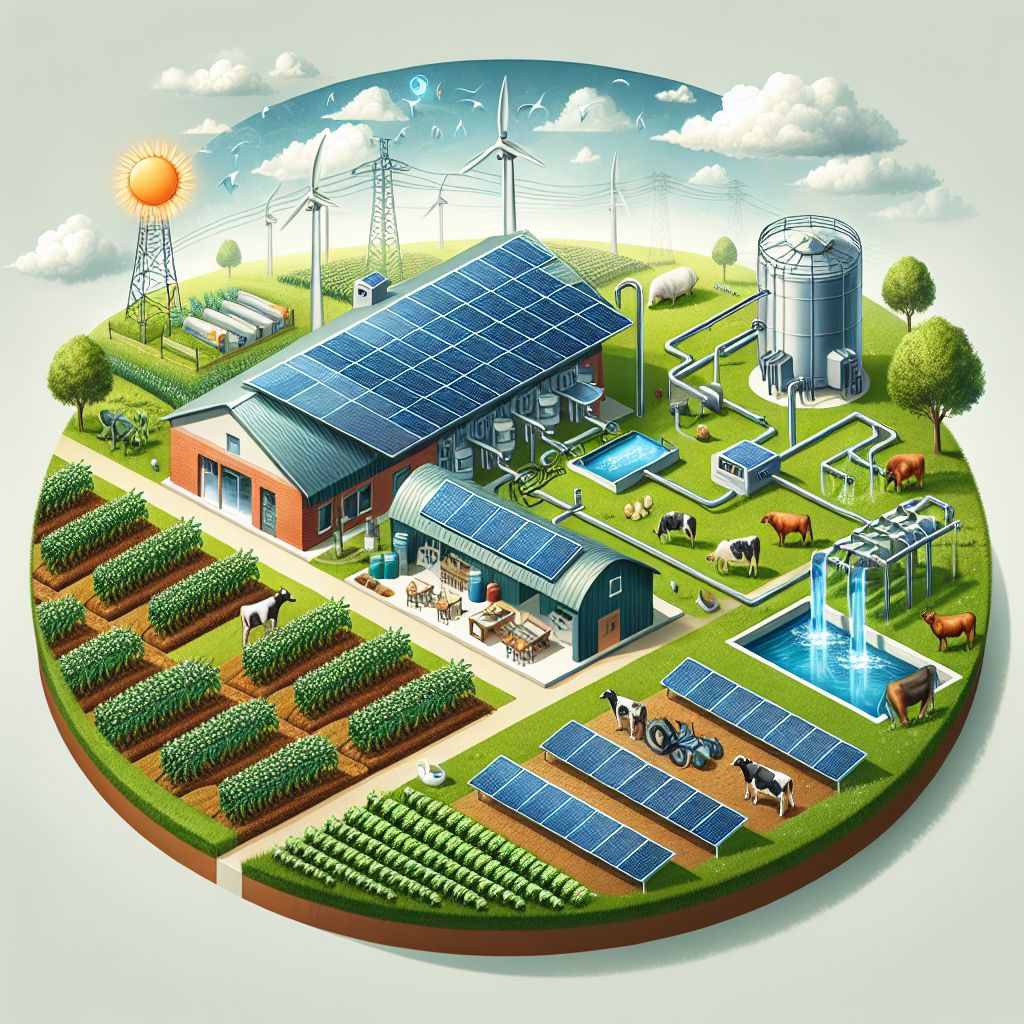
Solar power represents a transformative opportunity for modern farms, offering solutions that address energy costs, operational reliability, and environmental sustainability simultaneously. From water pumping and livestock management to crop processing and security, solar applications touch every aspect of agricultural production. As technology continues advancing and costs decline, solar power is becoming less an alternative and more a mainstream approach to farm energy management. Farmers who embrace these technologies position themselves advantageously for a future where energy independence and sustainable practices will increasingly define agricultural success.
Does Adding Solar Power Help a Farmer with His Farm Operations
The evidence overwhelmingly confirms that solar power enhances farm operations across multiple dimensions. Beyond the immediate benefits of reduced energy costs, solar systems provide reliability during grid outages, flexibility for remote operations, and environmental advantages that increasingly translate to market premiums. The modular nature of solar technology allows farmers to start small and expand incrementally, adapting systems to their specific needs and financial capacity. Whether powering irrigation in drought-prone regions or extending growing seasons with greenhouse climate control, solar applications directly address critical agricultural challenges while building farm resilience and sustainability. For forward-thinking farmers looking to thrive amid changing climate conditions and energy markets, solar power has moved beyond optional—it’s becoming essential infrastructure for competitive, sustainable farming.
Frequently Asked Questions
As solar adoption in agriculture accelerates, farmers naturally have questions about implementation, economics, and practical considerations. The following answers address the most common concerns based on real-world agricultural solar applications and current industry data.
How much farmland do I need to dedicate to solar panels?
The land requirements for farm solar systems depend entirely on your energy needs and installation approach. Roof-mounted systems on existing structures like barns and equipment sheds require no additional land, making them ideal for space-constrained operations. A typical 25kW roof-mounted system needs approximately 1,600-2,000 square feet of suitable roof area.
For ground-mounted systems, a rule of thumb is 100-150 square feet per kilowatt of capacity, including space between panel rows for maintenance access. A 100kW system would therefore require about a quarter-acre of land. However, this land need not be taken entirely out of production.
Agrivoltaic systems—which combine solar production with continued agricultural use—minimize the production impact by elevating panels and spacing them to allow sufficient light for crops or grazing underneath. Research shows certain crops like lettuce, spinach, and some berries actually perform better in the partial shade created by properly designed agrivoltaic systems.
For livestock operations, solar grazing represents another dual-use approach, with sheep or certain cattle breeds maintaining vegetation under and around solar arrays while benefiting from the shade panels provide during hot weather. This symbiotic relationship reduces vegetation management costs for solar while providing quality grazing area.
“A 1-megawatt solar array typically requires 5-10 acres depending on panel efficiency and layout. However, with agrivoltaic designs, up to 70% of this land can remain agriculturally productive. The key is finding the right balance between energy and agricultural outputs based on your specific farm needs and conditions.” – Research findings from agricultural solar demonstration projects
Will solar panels work during cloudy or winter conditions on my farm?
Solar panels continue producing electricity during cloudy conditions, typically generating 10-25% of their rated capacity depending on cloud density. Modern solar systems are designed with these variations in mind, incorporating battery storage or grid connections to ensure consistent power availability. Winter production varies by location but remains significant in most farming regions, with panels often performing more efficiently in cooler temperatures despite shorter daylight hours.
For seasonal agricultural operations like many crop farms, the production pattern of solar energy often aligns well with energy needs. Summer months with higher solar production typically coincide with peak irrigation, ventilation, and cooling demands. Battery storage systems can bridge shorter periods of low production, while grid-tied systems with net metering allow farmers to build credit during high-production periods for use during lower-production times. This seasonal balance makes solar particularly suitable for farms with predictable annual energy patterns.
Can I still farm underneath or around solar panel installations?
Absolutely—and the emerging field of agrivoltaics is demonstrating impressive results from combining solar energy with active farming. Research shows that certain crops actually benefit from the partial shade provided by elevated solar arrays, which reduce water stress and protect plants from extreme heat. Leafy greens, certain berries, and shade-tolerant herbs have shown yield increases of 20-30% in agrivoltaic systems compared to full-sun cultivation in hot climates.
For livestock operations, solar grazing programs use sheep or certain cattle breeds to maintain vegetation around solar installations. The animals benefit from the shade panels provide during hot weather, while their grazing eliminates the need for mechanical vegetation management around the arrays. This symbiotic relationship creates dual income streams from the same land while reducing maintenance costs.
Solar installations can also be designed with higher clearances and wider row spacing to accommodate farm equipment, allowing continued mechanical cultivation. Specialized mounting systems like single-axis trackers can be configured with sufficient clearance for tractors and harvesters to pass underneath. While these accommodations may slightly increase installation costs, they maintain the land’s agricultural productivity while adding energy generation as a complementary revenue stream.
What maintenance do farm solar systems require?
Solar systems for farms require minimal maintenance compared to conventional farm equipment. The most basic maintenance involves occasionally cleaning panels to remove dust, pollen, or bird droppings that might reduce efficiency. In many locations, natural rainfall provides sufficient cleaning, though systems in very dusty areas or near bird populations may benefit from periodic washing. This cleaning typically requires just water and a soft brush, with specialized equipment available for larger installations or roof-mounted systems.
Beyond cleaning, maintenance primarily involves simple visual inspections and monitoring system performance through the inverter display or monitoring software. Most inverters and charge controllers include diagnostic capabilities that alert owners to any performance issues, allowing proactive maintenance before problems affect energy production.
- Panel cleaning: 1-4 times annually depending on local conditions
- Visual inspection of mounting hardware: twice yearly
- Inverter filter cleaning (if applicable): annually
- Battery maintenance (if applicable): quarterly checks of connections and specific gravity
- Vegetation management around ground-mounted systems: as needed seasonally
Most reputable solar installers offer maintenance packages that include regular professional inspections and performance monitoring. These services typically cost $200-$500 annually depending on system size and complexity, representing a fraction of the system’s energy value. With this minimal maintenance, farm solar systems reliably operate for 25-30 years, with panel degradation of less than 0.5% annually.
How long will it take to recoup my investment in farm solar?
Payback periods for agricultural solar systems typically range from 3-10 years depending on several factors including system size, local electricity rates, available incentives, and specific farm energy use patterns. Irrigation applications often show the fastest returns, with many systems reaching payback in 3-5 years when replacing diesel pumps. Greenhouse and barn applications typically reach payback in 5-8 years, while whole-farm systems average 7-10 years to full cost recovery.
The economics have improved dramatically in recent years due to declining equipment costs and enhanced incentives. The federal Investment Tax Credit currently allows farmers to deduct 30% of solar system costs, while USDA’s Rural Energy for America Program (REAP) offers grants covering up to 25% of project costs and loan guarantees for the remainder. Many states offer additional incentives, further accelerating payback periods. For those interested in specific technologies, PERC solar panels offer distinct advantages for agricultural applications.
|
Application |
Typical Payback Period |
Key Financial Benefits |
|---|---|---|
|
Irrigation Pumping |
3-5 years |
Eliminates fuel costs, reduces maintenance, increases reliability |
|
Greenhouse Operations |
5-7 years |
Extends growing season, reduces heating/cooling costs, improves crop quality |
|
Barn/Outbuilding Power |
5-8 years |
Eliminates need for grid extensions, provides reliable power for critical systems |
|
Whole-Farm Systems |
7-10 years |
Comprehensive energy management, potential for income from excess production |
It’s important to evaluate solar investments based on their complete lifecycle economics rather than just initial payback. A typical farm solar system continues producing power for 25-30 years after reaching payback, representing two decades or more of essentially free electricity. When financing is structured properly, many systems achieve positive cash flow from the first year, with monthly loan payments lower than the displaced electricity costs. For more information, explore the benefits of adding solar panels to fields.
Beyond direct energy savings, solar investments often deliver additional financial benefits including increased property values, potential income from carbon credits, and marketing advantages for sustainably produced agricultural products. For many farm operations, these secondary benefits significantly enhance the overall return on investment beyond simple energy cost savings.
Every farm’s energy needs and financial situation are unique, making customized assessment essential for accurate payback calculations. Reputable solar providers specializing in agricultural applications can provide detailed financial analysis based on your specific farm operation, local incentives, and energy usage patterns.

Leave a Reply