

Key Takeaways
- Solar-powered irrigation systems reduce energy costs significantly by using free solar energy.
- Solar panels come in different types: monocrystalline, polycrystalline, and thin-film, each offering unique benefits.
- Drip, sprinkler, and flood/furrow are the main types of solar irrigation systems available for farms.
- Solar irrigation systems have a lower environmental impact compared to traditional fossil fuel-based systems.
- Choosing the right solar irrigation system depends on water requirements, crop types, and farm size.
Introduction to Solar-Powered Irrigation Systems
Solar-powered irrigation systems are transforming the agricultural landscape by offering a sustainable and cost-effective solution for water management. By harnessing the sun’s energy, these systems can provide a reliable water supply to crops, even in remote locations where traditional power sources are unavailable or too costly. This shift not only helps in reducing carbon footprints but also in cutting down on operational costs, allowing farmers to invest more in other aspects of their farms.
Why Solar is Ideal for Farms
Most importantly, solar energy is abundant and renewable, making it an ideal choice for farms that require constant energy input. The sun provides an endless supply of energy that can be tapped into almost anywhere on the planet. By converting sunlight into electricity, solar panels can power water pumps and irrigation systems efficiently and sustainably.
Besides that, solar systems are relatively easy to maintain once installed. With fewer moving parts compared to diesel or electric-powered systems, the risk of mechanical failure is significantly reduced. This means less downtime and more consistent water delivery to crops, which can lead to increased yields.
“In areas where electricity is unreliable or expensive, solar-powered irrigation systems offer a dependable alternative, enabling farmers to maintain their crops without interruption.”
Benefits over Traditional Power Sources
Traditional irrigation systems often rely on fossil fuels or grid electricity, both of which come with significant environmental and financial drawbacks. Diesel pumps, for example, emit greenhouse gases and require a constant supply of fuel, which can be both costly and logistically challenging in remote areas.
On the other hand, solar-powered systems eliminate the need for fuel and reduce greenhouse gas emissions, making them a more environmentally friendly option. The initial investment in solar technology can be offset by the savings on fuel and maintenance over time, making it a financially sound choice for many farmers.

Types of Irrigation Systems
Understanding the different types of irrigation systems is crucial for selecting the right one for your farm. Each system has its own set of advantages and is suited to different farming conditions and requirements.
Drip Irrigation
Drip irrigation is one of the most efficient ways to deliver water directly to the plant’s root zone. This method minimizes water wastage by ensuring that only the necessary amount of water is used. It’s particularly beneficial in arid regions where water conservation is critical. For more information on solar irrigation systems, check out this resource.
Sprinkler Systems
Sprinkler systems are versatile and can cover large areas, making them suitable for a variety of crops. They work by pumping water through a network of pipes and spraying it over the crops. This method is ideal for farms with uniform crop layouts. For those looking to reduce their carbon footprint, these systems can also reduce carbon emissions significantly.
“A farm in California switched to a sprinkler system and reported a 30% reduction in water usage while maintaining crop yields.”
Sprinkler systems are not only efficient but also help in maintaining soil moisture levels, which is crucial for healthy crop growth. With adjustable spray patterns, these systems can be tailored to suit different types of crops and field conditions.
Flood/Furrow Irrigation
While many advanced irrigation methods exist today, flood and furrow irrigation remain significant for their historical prominence and ongoing use in various agricultural settings. These surface irrigation techniques, characterized by the flooding of fields or the channeling of water through furrows, are both efficient and inefficient in different ways.
Here’s a table comparing different types of irrigation systems used on farms:
|
Irrigation System |
Description |
Advantages |
Disadvantages |
Best Suited For |
|---|---|---|---|---|
|
Drip Irrigation |
Uses a network of tubes with small holes or emitters to slowly drip water into the soil 1, 4, 5 |
– Uses 30-50% less water |
– Higher initial cost | |
|
Sprinkler Irrigation |
Delivers water in a fine spray through a series of pipes 1, 5 |
– Affordable and easy to set up |
– Less efficient than drip irrigation | |
|
Flood/Furrow Irrigation |
Gravity-fed system using canals and furrows to distribute water 2, 4 |
– Low initial cost |
– Water-intensive |
This table provides a comprehensive overview of the main irrigation systems used in farming, highlighting their key features, benefits, drawbacks, and most suitable applications.
Picking the Right Solar Panels for the Job
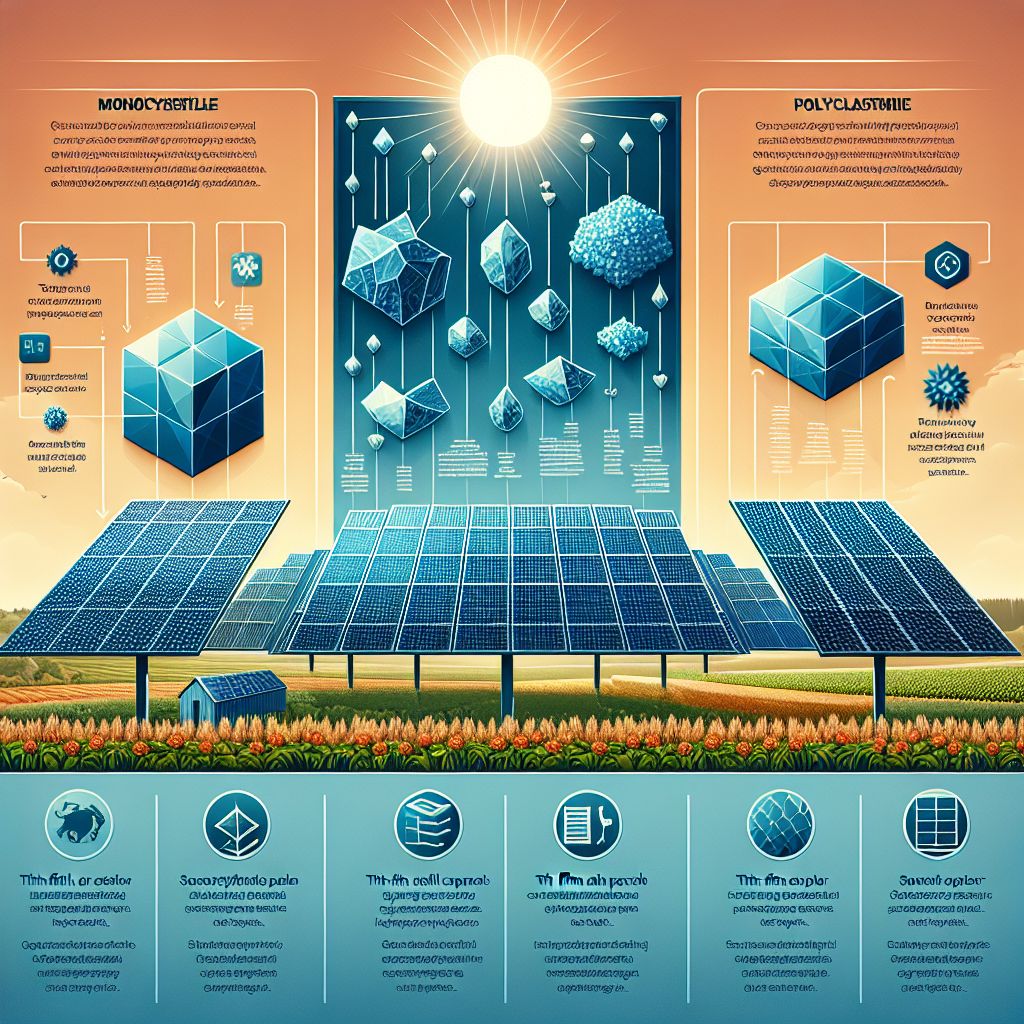
Choosing the right type of solar panel is essential for maximizing the efficiency of your irrigation system. Different panels offer various benefits, and the choice depends on factors such as budget, space availability, and energy requirements. For more insights, consider integrating solar panels with existing irrigation systems on your farm.
Monocrystalline Solar Panels: High Efficiency in Limited Spaces
Monocrystalline panels are known for their high efficiency and long lifespan. They are made from a single crystal structure, which allows them to convert sunlight into electricity more effectively than other types. This makes them an excellent choice for farms with limited space but high energy demands.
Because of their efficiency, monocrystalline panels can provide more power per square foot, making them ideal for farms looking to maximize their energy production in a confined area.
Polycrystalline Solar Panels: Cost-Effective Energy Solution
Polycrystalline panels are made from multiple silicon crystals and are generally less expensive than monocrystalline panels. While they are slightly less efficient, they offer a good balance between cost and performance, making them a popular choice for many farmers. For those interested in integrating these panels, here’s a guide on integrating solar panels with existing irrigation systems on a farm.
Thin-film Solar Panels: Flexibility and Versatility
Thin-film panels are lightweight and flexible, making them easy to install in a variety of settings. Although they are less efficient than crystalline panels, their versatility can be an advantage in certain applications, such as on uneven or mobile surfaces. For more on how solar panels can be used in agriculture, read about their basic understanding and benefits.
Here’s a table comparing the different solar panel you can use with an irrigation system on a farm:
|
Solar Panel Type |
Efficiency |
Cost per Watt |
Pros |
Cons |
|---|---|---|---|---|
|
Monocrystalline |
17-22% |
$1.00 – $1.50 |
– Highest efficiency. 1, 3 |
– Most expensive option. 1, 3 |
|
Polycrystalline |
13-17% |
$0.90 – $1.20 |
– Lower cost than monocrystalline. 1, 3 |
– Slightly lower efficiency. 1, 3 |
|
Thin-Film |
10-13% |
$0.70 – $1.00 |
– Lowest cost. 1, 3 |
– Lowest efficiency. 1, 3 |
Monocrystalline panels are highly efficient and durable, making them ideal for high-performance irrigation systems that require consistent power output. Their higher cost is often offset by their superior performance in the long run 3.
Polycrystalline panels offer a good balance between cost and efficiency, making them suitable for medium-scale irrigation projects. They perform well in most conditions and are a popular choice for many agricultural applications 3.
Thin-film panels, while less efficient, are more affordable and flexible. They can be a good option for portable irrigation systems or installations where weight is a concern. Their lower efficiency means you may need more panels to achieve the same power output as crystalline options 3.

Components of a Solar-Powered Irrigation System
|
Component |
Function |
|---|---|
|
Solar Panels |
Convert sunlight into electricity to power the irrigation system. 1 |
|
Water Pumps |
Draw water from a source and deliver it to the irrigation system. 2 |
|
Controllers and Batteries |
Manage energy flow and store excess energy for later use. 5, 6 |
|
Reservoir |
Stores water for consistent supply to the irrigation system. 4 |
|
Irrigation System |
Distributes water to crops through various methods like drip or sprinkler. 3 |
Each component of a solar-powered irrigation system plays a vital role in ensuring efficient water delivery to crops. The solar panels are the heart of the system, converting sunlight into the electrical energy needed to power the water pumps. These pumps then draw water from a source, such as a well or a river, and deliver it to the irrigation system.
Controllers and batteries are crucial for managing the energy produced by the solar panels. Controllers regulate the flow of electricity, ensuring that the system operates efficiently, while batteries store excess energy for use during cloudy days or at night. This ensures a continuous water supply, regardless of the weather conditions.
A reservoir acts as a buffer, storing water that can be used when the natural water source is low or during peak irrigation times. This helps in maintaining a consistent water supply, which is essential for crop health and yield.
The irrigation system itself can be configured in various ways, depending on the type of crops and the specific needs of the farm. Options include drip, sprinkler, or flood irrigation, each with its own set of advantages and considerations.
Solar Panels
Solar panels are the backbone of any solar-powered irrigation system. They capture sunlight and convert it into electricity, which powers the water pumps. The choice of solar panel type—monocrystalline, polycrystalline, or thin-film—will depend on the farm’s specific energy needs and budget.
Monocrystalline panels are highly efficient and suitable for farms with limited space, while polycrystalline panels offer a more cost-effective solution with slightly lower efficiency. Thin-film panels provide flexibility and can be used in unique installations where traditional panels might not fit.
Water Pumps
Water pumps are responsible for moving water from the source to the crops. They come in various types, including submersible, surface, and booster pumps, each designed for different water sources and delivery methods. Selecting the right pump depends on factors like water depth, distance to the crops, and the overall system design. For more information on choosing the right irrigation method, visit this guide on irrigation methods.
Controllers and Batteries
Controllers ensure that the solar panels and pumps work together seamlessly. They regulate the flow of electricity and prevent overcharging of the batteries, protecting the system from damage. In addition to controllers, batteries store excess solar energy, providing a reliable power source during non-sunny periods.
Choosing the right battery type—lead-acid or lithium-ion—depends on factors such as cost, lifespan, and energy requirements. Lithium-ion batteries, although more expensive, offer longer life and better performance.
Reservoir
A reservoir serves as a storage unit for water, ensuring a steady supply even when the natural water source is low. It acts as a buffer, providing water during peak irrigation times or when the pumps are not running at full capacity. Properly sizing and maintaining the reservoir is crucial for optimal system performance.
Irrigation System
The irrigation system distributes water to the crops and can be configured in several ways, including drip, sprinkler, or flood irrigation. Each method has its own benefits and is suited to different crop types and field conditions.
Drip irrigation is highly efficient, delivering water directly to the plant roots, while sprinkler systems cover larger areas and are suitable for uniform crop layouts. Flood irrigation, though less efficient, can be beneficial for certain crops and soil types.
Benefits of Solar Irrigation for Farmers
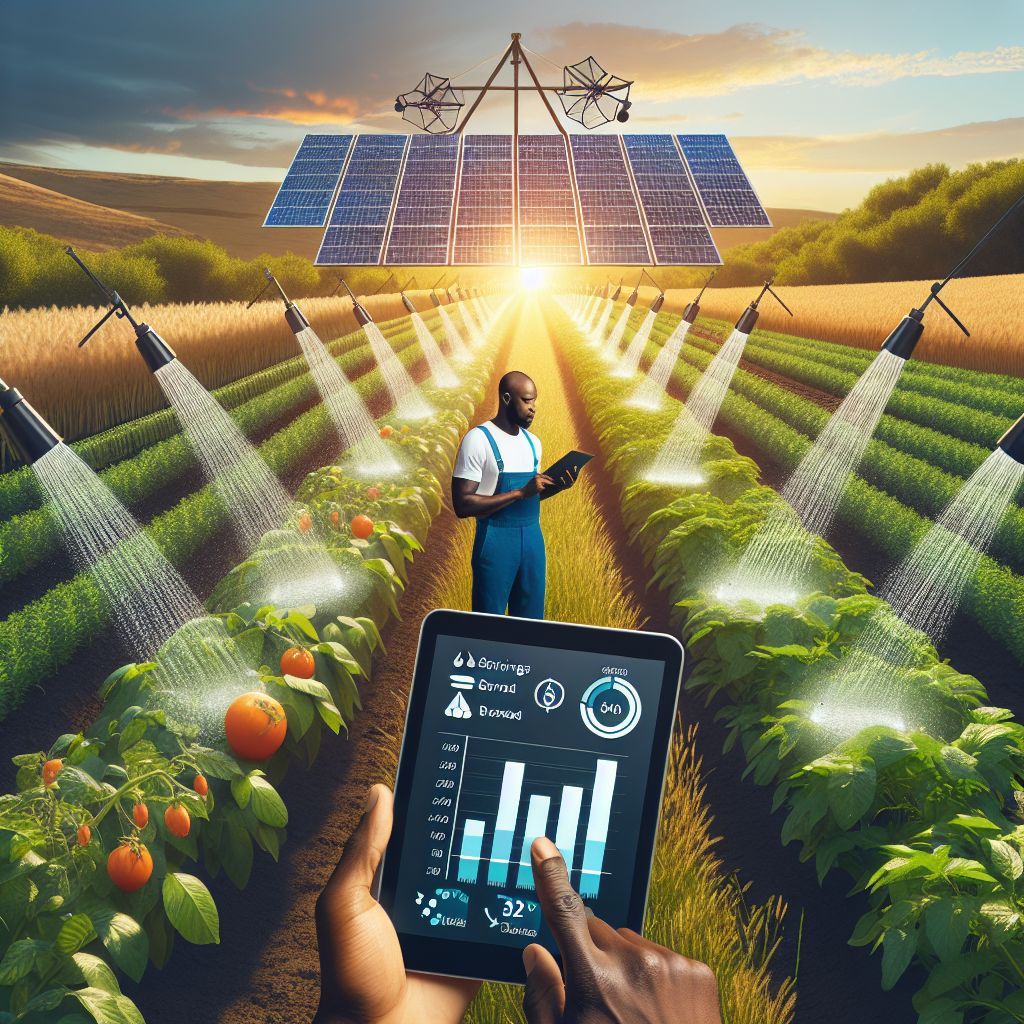
Solar irrigation systems offer numerous benefits that make them an attractive option for modern farmers. From cost savings to environmental impact, these systems provide a sustainable and efficient way to manage water resources.
Energy Cost Reduction
One of the most significant advantages of solar-powered irrigation is the reduction in energy costs. By utilizing free solar energy, farmers can save money on fuel and electricity, allowing them to allocate resources to other critical areas of their operations. For more insights, explore how integrating solar panels with existing irrigation systems can enhance farm efficiency.
In regions where electricity is unreliable or expensive, solar systems provide a dependable alternative, ensuring that crops receive the necessary water without interruption. This stability can lead to increased yields and improved crop quality.
“A farmer in India reported saving over $1,000 annually on diesel costs after switching to a solar-powered irrigation system.”
These savings can offset the initial investment in solar technology, making it a financially viable option for many farmers. With government incentives and grants often available, the transition to solar can be even more affordable.
Environmental Impact
Solar-powered irrigation systems have a lower environmental impact compared to traditional fossil fuel-based systems. By reducing reliance on diesel or grid electricity, these systems help decrease greenhouse gas emissions and promote sustainable farming practices.
Increased Efficiency and Crop Yields
Besides reducing costs, solar irrigation systems can enhance farm efficiency and increase crop yields. With a reliable and consistent water supply, crops can grow healthier and produce more, contributing to a more profitable farming operation.
The ability to tailor water delivery to the specific needs of each crop type allows farmers to optimize their irrigation practices, further improving yields and reducing water wastage. For insights into future advancements, explore the future prospects of solar irrigation systems.

“Solar-Powered Irrigation Systems …” from growingsolarmist.com and used with no modifications.
Case Studies: Success Stories from the Field
To illustrate the effectiveness of solar-powered irrigation systems, let’s explore some real-world success stories from the field. These examples demonstrate the practical benefits and challenges faced by farmers who have implemented solar irrigation on their farms.
In Kenya, a smallholder farmer installed a solar drip irrigation system and saw a 40% increase in crop yields within the first year. The system allowed for precise water delivery, reducing wastage and ensuring that each plant received the optimal amount of water.
In Australia, a large-scale farm replaced its diesel pumps with solar-powered ones and experienced significant cost savings. The farm reported a 50% reduction in energy costs, which allowed them to invest in other areas of their operations, such as expanding their crop varieties.
Smallholder Success Stories
In the heart of Kenya, a smallholder farmer named James decided to switch from traditional diesel pumps to a solar drip irrigation system. The results were nothing short of transformative. Within the first year, James reported a 40% increase in crop yields. This was largely due to the system’s precision in water delivery, ensuring that each plant received the exact amount of water it needed, reducing wastage significantly.
Moreover, the solar system reduced James’ reliance on expensive and unreliable diesel fuel, saving him substantial costs and allowing him to reinvest in his farm. The environmental benefits were also clear, as the farm’s carbon footprint decreased, aligning with global sustainability goals.
Large-Scale Farm Implementations
In Australia, a large-scale farm took the bold step of replacing its entire fleet of diesel pumps with solar-powered alternatives. The transition was smooth, and the benefits were immediately noticeable. The farm experienced a 50% reduction in energy costs, which translated into significant financial savings. These savings were then funneled into expanding their operations, including diversifying their crop varieties.
The solar-powered system also provided a more consistent water supply, which was crucial for maintaining crop health across the vast expanse of the farm. The environmental impact was equally positive, with a substantial decrease in greenhouse gas emissions, contributing to the farm’s reputation as a leader in sustainable agriculture.

“Solar-Powered Irrigation: Farm …” from growingsolarmist.com and used with no modifications.
Conclusion
Solar-powered irrigation systems represent a beacon of hope for farmers seeking sustainable and cost-effective solutions for water management. By harnessing the power of the sun, these systems offer a reliable, environmentally friendly alternative to traditional methods. The benefits are clear: reduced energy costs, increased efficiency, and a positive environmental impact.
Look at the Key Facts
Solar-powered irrigation systems can reduce energy costs by up to 50%, increase crop yields by 40%, and significantly lower carbon emissions. These systems are suitable for both smallholder and large-scale farms, offering a versatile solution to meet diverse agricultural needs.
Is it worth the Investment for a Farmer to Add Solar Panels to an Existing Irrigation System
Absolutely. The initial investment in solar technology is often offset by the long-term savings on energy costs and the increase in crop yields. Furthermore, with various government incentives and grants available, the transition to solar can be made more affordable. Farmers should carefully assess their specific needs and conditions to determine the best type of solar system for their farm.
Frequently Asked Questions (FAQ)
As farmers consider transitioning to solar-powered irrigation systems, several common questions often arise. Here are answers to some of the most frequently asked questions.
How do solar-powered irrigation systems work?
Solar-powered irrigation systems work by converting sunlight into electricity using solar panels. This electricity powers water pumps that draw water from a source, such as a well or river, and deliver it to the crops through an irrigation system. The setup often includes controllers and batteries to manage energy flow and store excess energy for use during non-sunny periods.
What are the initial costs involved in setting up a solar irrigation system?
The initial costs of setting up a solar irrigation system can vary widely depending on the size of the farm, the type of solar panels used, and the complexity of the irrigation system. On average, small systems can start at around $5,000, while larger, more complex systems can exceed $20,000. However, these costs can be offset by long-term savings on energy and maintenance.
Are there any grants available for farmers to install solar irrigation systems?
Yes, many governments and organizations offer grants and incentives to encourage the adoption of solar technology in agriculture. These can include tax credits, rebates, and low-interest loans. Farmers should research available programs in their region to take advantage of these opportunities.
For example, the U.S. Department of Agriculture offers the Rural Energy for America Program (REAP), which provides financial assistance to farmers looking to implement renewable energy systems.
How do solar irrigation systems compare to traditional diesel pumps?
Solar irrigation systems offer several advantages over traditional diesel pumps. They are more environmentally friendly, reducing greenhouse gas emissions and reliance on fossil fuels. Solar systems also tend to have lower operating costs, as they eliminate the need for fuel and reduce maintenance requirements.
“A comparison study showed that solar-powered systems can reduce energy costs by up to 60% compared to diesel pumps, making them a more sustainable and economical choice for farmers.”
While the initial investment for solar systems can be higher, the long-term benefits often outweigh these costs, making solar a compelling option for many farmers. For those interested in reducing their environmental impact, solar-powered irrigation systems offer a significant reduction in carbon emissions.
What maintenance is required for solar-powered irrigation systems?
Maintenance for solar-powered irrigation systems is relatively low compared to traditional systems. Regular cleaning of the solar panels is essential to ensure maximum efficiency. This involves removing dust, dirt, and debris that can accumulate on the panels over time.
Additionally, periodic checks of the system’s components, such as pumps and controllers, are recommended to ensure they are functioning correctly. Batteries, if used, should also be inspected regularly to ensure they are holding a charge and not showing signs of wear.
Overall, the reduced maintenance requirements contribute to the cost-effectiveness and reliability of solar-powered irrigation systems, making them an attractive option for sustainable agriculture.







Leave a Reply