

Key Takeaways
- Monofacial solar panels are cost-effective, usually cheaper than bifacial panels, making them a budget-friendly option for farmers.
- They are straightforward to install and maintain, reducing labor and maintenance costs.
- Monofacial panels are efficient in direct sunlight, which is abundant in most farming areas.
- They offer a reliable energy source for farm operations, reducing dependency on traditional energy sources.
- Farmers should consider their specific needs, such as location and shading, before choosing monofacial panels.
Introduction to Monofacial Solar Panels for Farming
Farming is not just about growing crops and raising livestock; it’s about managing resources efficiently and sustainably. As farmers, we are constantly looking for ways to reduce costs and increase productivity. One of the most promising solutions is solar energy, specifically monofacial solar panels. These panels have become a popular choice due to their cost-effectiveness and simplicity.
Basics of Monofacial Solar Panels
Monofacial solar panels are designed to capture sunlight on one side. They are the traditional type of solar panels that most people are familiar with. These panels are typically installed facing the sun, ensuring they capture as much sunlight as possible. The energy captured is then converted into electricity, which can be used to power various farm operations.
Unlike bifacial panels, which can capture sunlight from both sides, monofacial panels focus all their energy on one side. This makes them easier to install and maintain, as there are fewer components to worry about. Most importantly, they are generally more affordable, which is a significant consideration for farmers working within tight budgets.
Monofacial panels are known for their reliability and efficiency. They perform well in most sunlight conditions, making them a practical choice for farms located in sunny areas. Their straightforward design also means that they require less maintenance, which can save time and money in the long run.
- Single-sided design
- Cost-effective
- Easy installation and maintenance
- Reliable energy production
Why Farmers Are Interested in Solar Energy
Farmers are always looking for ways to cut costs and increase efficiency. Solar energy provides a renewable and sustainable solution that aligns perfectly with these goals. By harnessing the power of the sun, farmers can reduce their reliance on traditional energy sources, which are often costly and subject to price fluctuations. Learn more about the impact of solar power on farmers’ costs.
Besides that, solar energy is environmentally friendly. It reduces the carbon footprint of farm operations, contributing to a healthier planet. For farmers committed to sustainability, this is a crucial consideration. Moreover, solar energy can provide a reliable source of power, ensuring that essential operations continue even in the event of power outages. Learn more about how solar-powered irrigation systems reduce carbon emissions.

Advantages of Using Monofacial Panels on Farms
Monofacial solar panels offer several advantages that make them an attractive option for farmers. Let’s delve into these benefits to understand why they are becoming increasingly popular in the agricultural sector. For more insights on solar power’s impact on farming, check out how solar power savings impact the farmer’s bottom line.
Cost-Effectiveness for Budget-Conscious Farmers
One of the most compelling reasons to choose monofacial panels is their cost-effectiveness. They are generally cheaper than bifacial panels, making them an excellent choice for farmers who need to manage their budgets carefully. The lower initial investment means that farmers can start benefiting from solar energy without a significant financial outlay. For more on how solar panels can benefit agricultural practices, explore our guide on solar panels in agriculture.
Efficiency in Energy Production
Monofacial panels are highly efficient in capturing sunlight and converting it into electricity. They are particularly effective in direct sunlight, which is abundant in many farming regions. This efficiency ensures that farmers can maximize their energy production, reducing the need to rely on other energy sources.
Moreover, the energy generated by monofacial panels can be used to power a wide range of farm operations, from irrigation systems to lighting and heating. This versatility makes them a valuable addition to any farm looking to enhance its sustainability.
Simple Installation and Maintenance
One of the standout features of monofacial solar panels is their straightforward installation process. Farmers can often install these panels with minimal assistance, which is particularly beneficial for those who prefer a hands-on approach. The simplicity of the installation process reduces labor costs and minimizes the time required to get the system up and running.
Maintenance is equally uncomplicated. With fewer components to monitor, farmers can easily keep the panels clean and functioning efficiently. Regular cleaning to remove dust and debris is usually sufficient to maintain optimal performance. This ease of maintenance ensures that farmers can continue focusing on their primary tasks without being burdened by complex upkeep requirements.
Here’s a table discussing the advantages of using monofacial solar panels on farms over bifacial solar panels:
|
Advantage |
Description |
|---|---|
|
Lower cost |
Monofacial panels are generally less expensive due to their simpler manufacturing process and materials. 1, 6 |
|
Lighter weight |
Monofacial panels are typically lighter (about 20 kg) compared to bifacial panels (about 24 kg), making them easier to install and handle on farm structures. 7 |
|
Simpler installation |
Monofacial panels have less stringent installation requirements, as they can be fixed on any rooftop, mounted structure, or ground mounts with direct sunlight exposure. 6 |
|
Proven technology |
As the more traditional and widely used option, monofacial panels have a longer track record of performance and reliability in agricultural settings. 6 |
|
Suitable for various surfaces |
Monofacial panels perform well on non-reflective surfaces, making them versatile for different farm environments where reflective ground conditions may not be available. 2 |
|
Lower initial investment |
The lower cost of monofacial panels allows farmers to invest in solar energy with a smaller upfront capital expenditure. 1 |
While bifacial panels offer higher efficiency in certain conditions, monofacial panels remain a practical and cost-effective choice for many farm applications, especially when budget constraints and ease of installation are primary concerns. 6

Challenges with Monofacial Panels in Agricultural Settings
While monofacial solar panels offer numerous benefits, they also present certain challenges that farmers must consider. Understanding these challenges can help in making informed decisions about solar energy adoption.
Dependence on Direct Sunlight
Monofacial panels are most efficient in direct sunlight, which means their performance can be affected by weather conditions and geographic location. In areas with frequent cloud cover or limited sunlight, energy production may not meet expectations. Farmers in such regions need to assess whether monofacial panels can provide sufficient energy for their needs.
Impact of Shading and Obstructions
Another challenge is the impact of shading and obstructions on energy production. Trees, buildings, and other structures can cast shadows on the panels, reducing their efficiency. To maximize energy capture, panels should be installed in open areas with minimal obstructions. Farmers must carefully plan the placement of panels to avoid potential shading issues.
Despite these challenges, many farmers find that the benefits of monofacial panels outweigh the drawbacks, particularly in sunny regions where direct sunlight is abundant.
Comparative Limitations with Bifacial Panels
When compared to bifacial panels, monofacial panels have certain limitations. Bifacial panels can capture sunlight from both sides, potentially increasing energy output in certain conditions. However, they are often more expensive and complex to install. Farmers must weigh these factors against their specific needs and budget constraints.
For many, the simplicity and cost-effectiveness of monofacial panels make them a preferable choice, despite the potential limitations in energy capture compared to bifacial alternatives.

Real-World Applications and Case Studies
Understanding the practical applications of monofacial solar panels in real-world farming scenarios can provide valuable insights for those considering this technology. Let’s explore some examples of successful implementations, such as the benefits of solar panels in agriculture.
Successful Implementations on Farms
One notable example is a family-owned farm in California that installed monofacial solar panels to power their irrigation system. By harnessing the abundant sunlight in the region, they were able to significantly reduce their electricity costs while maintaining efficient water management for their crops. This transition not only lowered operational expenses but also aligned with their commitment to sustainable farming practices.
Another case involves a dairy farm in Texas that adopted monofacial panels to power their milking equipment and refrigeration units. The reliable energy supply ensured uninterrupted operations, even during peak demand periods. The farm reported a noticeable decrease in energy bills and an increase in overall efficiency, demonstrating the tangible benefits of solar energy adoption.
These examples highlight the potential of monofacial solar panels to transform farm operations, providing both economic and environmental benefits.
Lesson Learned from Current Farm Solar Projects
From various successful farm solar projects, one key lesson stands out: thorough planning is crucial. Many farms that have successfully integrated monofacial solar panels into their operations took the time to assess their specific energy needs and site conditions. This careful planning ensured that the solar installations met their energy demands effectively, leading to significant cost savings and increased efficiency. For more insights, consider integrating solar panels with existing irrigation systems on a farm.
Another important lesson is the value of ongoing maintenance. Regular cleaning and inspection of the panels can prevent efficiency losses and prolong the lifespan of the solar system. Farmers who have adopted a proactive approach to maintenance report fewer issues and greater energy output over time.
Conclusion: Assessing Suitability for Your Farm
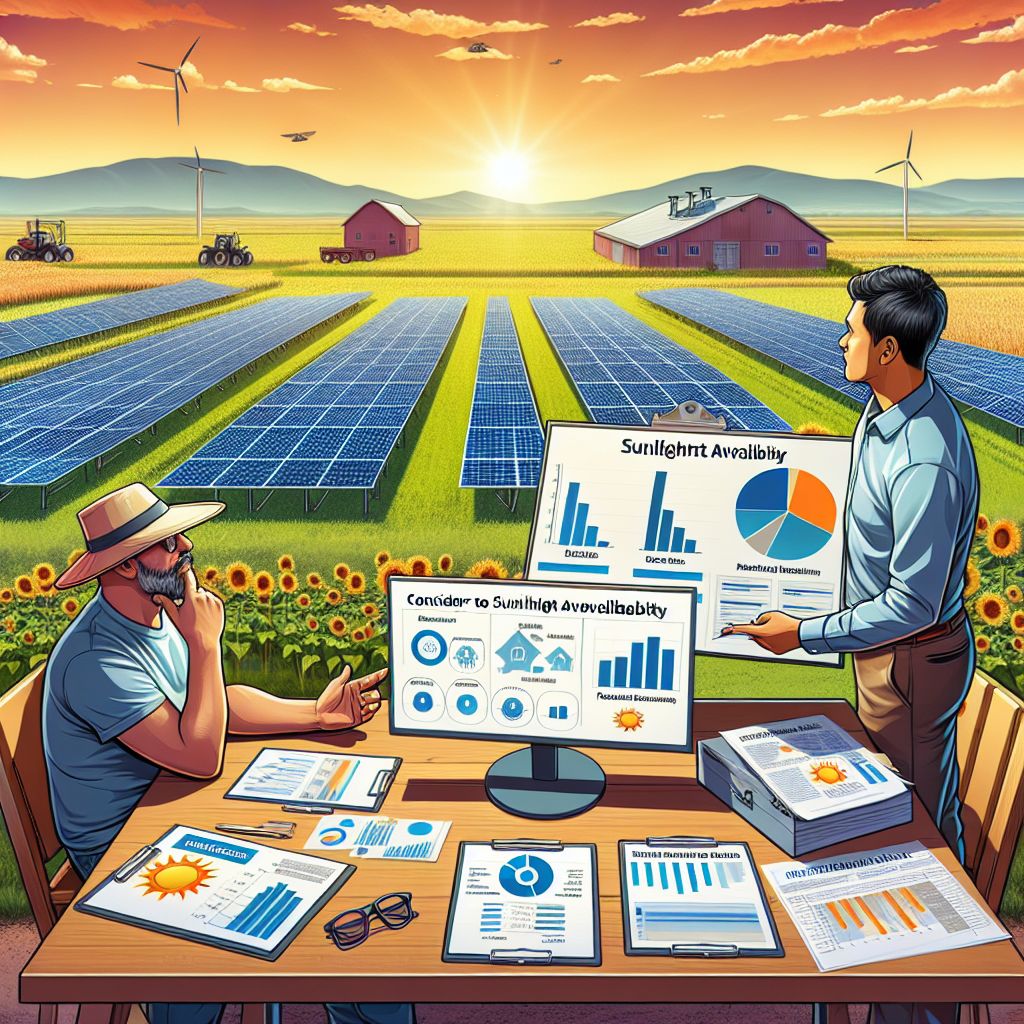
Monofacial solar panels offer a promising solution for farmers looking to enhance sustainability and reduce energy costs. However, their suitability depends on various factors, including location, sunlight availability, and specific farm operations. By carefully evaluating these factors, farmers can make informed decisions about whether monofacial panels are the right choice for their needs.
Evaluating Farm-Specific Needs and Conditions
Before deciding on solar energy, farmers should conduct a thorough evaluation of their farm’s specific needs and conditions. This includes assessing the available sunlight, potential shading issues, and energy requirements. Consulting with solar energy experts can provide valuable insights and recommendations tailored to the farm’s unique situation.
Recommendations for Farmers Considering Solar
For farmers considering solar energy, here are some actionable recommendations:
- Conduct a detailed energy audit to understand your current energy usage and future needs.
- Evaluate the sunlight availability and potential shading issues on your farm.
- Consider the initial investment costs and potential savings on energy bills.
- Explore financing options and incentives available for solar installations.
- Consult with solar energy experts to determine the best solar solution for your farm.
Frequently Asked Questions (FAQ)
Below are some common questions farmers have when considering monofacial solar panels for their farms.
What are the main benefits of monofacial solar panels on farms?
- Cost-effective compared to other solar panel types.
- Simple installation and maintenance.
- Efficient energy production in direct sunlight.
- Reliable power source for various farm operations.
Monofacial solar panels are particularly beneficial for farms located in sunny regions. Their cost-effectiveness and simplicity make them an attractive option for farmers looking to reduce energy costs and enhance sustainability.
These panels are designed to perform optimally in direct sunlight, which is abundant in many agricultural areas. This efficiency ensures that farmers can generate sufficient electricity to power essential operations.
Overall, the combination of affordability, ease of installation, and reliable energy production makes monofacial solar panels a practical choice for many farmers.
How do monofacial solar panels differ from bifacial ones?
Monofacial solar panels capture sunlight on one side, while bifacial panels can capture sunlight from both sides, potentially increasing energy output in certain conditions. However, bifacial panels are often more expensive and complex to install. For those interested in the impact of solar power savings on costs, understanding the differences between these panel types is crucial.
Monofacial panels are simpler and more cost-effective, making them a popular choice for budget-conscious farmers. Bifacial panels, on the other hand, may offer higher energy output but come with higher costs and installation complexity.
Farmers should consider their specific needs, budget, and site conditions when choosing between monofacial and bifacial panels. For many, the simplicity and affordability of monofacial panels make them a preferable choice.
What should I consider before installing solar panels on my farm?
Before installing solar panels, farmers should consider several factors, including:
- Available sunlight and potential shading issues.
- Energy requirements and current energy usage.
- Initial investment costs and potential savings.
- Financing options and available incentives.
- Long-term maintenance and upkeep requirements.
By carefully evaluating these factors, farmers can determine the most suitable solar solution for their farm’s needs. For more information on integrating solar panels with existing systems, visit our guide on integrating solar panels with irrigation systems.
Can monofacial panels work in areas with partial shading?
Monofacial panels are most efficient in direct sunlight, so partial shading can impact their performance. However, strategic placement and careful planning can minimize shading issues and optimize energy capture. Farmers should assess potential shading from trees, buildings, and other structures before installation. For more insights, explore the benefits of solar panels in agriculture.
Are there incentives for farmers to install solar panels?
Yes, many regions offer incentives for solar installations, including tax credits, rebates, and grants. These incentives can significantly reduce the initial investment costs and make solar energy more accessible to farmers. It’s important for farmers to research and explore the available incentives in their area, such as those for monofacial PV modules.
Additionally, some financial institutions offer favorable financing options for renewable energy projects, further easing the financial burden of solar installations. These options can significantly impact a farmer’s bottom line by reducing upfront costs and increasing savings over time.







Leave a Reply