

Key Takeaways
- Solar-powered irrigation systems can reduce farm energy costs by up to 75% while providing reliable water delivery to crops
- Drip irrigation paired with solar power offers the highest water efficiency, using up to 80% less water than conventional irrigation methods
- Different irrigation systems (from drip to center pivot) can be powered by solar, giving farmers flexible options based on their specific needs
- Initial investment in solar irrigation is offset by minimal maintenance costs and operational savings over the system’s 25+ year lifespan
- SunHub provides customized solar irrigation solutions that can be tailored to farms of any size and crop type
Water is the lifeblood of agriculture, but pumping it requires energy – and lots of it. As energy costs rise and environmental concerns grow, farmers are turning to solar-powered irrigation systems as a sustainable alternative to traditional grid-powered or diesel pumps. These systems harness the sun’s abundant energy to deliver water precisely when and where crops need it most, without the ongoing fuel costs or emissions. SunHub has been at the forefront of developing reliable solar irrigation solutions that help farmers reduce costs while improving crop yields.
Solar irrigation represents a perfect marriage between renewable energy and agriculture, two sectors that naturally complement each other. The sun that grows your crops can also power the water systems that nourish them. For farmers in remote areas without reliable grid access, solar irrigation eliminates the need for expensive power line extensions or constant refueling of diesel generators. Even for farms with grid connectivity, solar offers protection against rising electricity rates and power outages during critical growing periods.
Solar-Powered Irrigation: The Sustainable Water Solution for Farmers
Solar-powered irrigation systems convert sunlight into electricity through photovoltaic panels, powering pumps that draw water from wells, rivers, or reservoirs to irrigate fields. Unlike traditional irrigation methods that rely on fossil fuels or grid electricity, solar systems operate with minimal environmental impact and significantly lower operating costs. The initial investment is offset by years of nearly free operation, as sunshine costs nothing and maintenance requirements are minimal.
These systems shine brightest in regions with abundant sunlight – precisely where water is often most scarce and irrigation most necessary. In developing regions, solar irrigation has proven transformative, enabling farmers to grow more food with less labor and environmental impact. The technology is scalable, working equally well for small family farms and large commercial operations, though the specific components and configurations will vary based on needs and conditions.
Beyond the economic benefits, solar irrigation contributes to climate resilience in agriculture. By reducing dependence on fossil fuels, these systems lower carbon emissions while helping farmers adapt to changing weather patterns. The ability to pump water without fuel costs encourages more optimal irrigation practices, potentially increasing yields while conserving this precious resource.

“Solar-Power Irrigation for Growing …” from growingsolarmist.com and used with no modifications.
6 Types of Irrigation Systems That Work With Solar Power
Solar power can be integrated with virtually any irrigation method, but some pairings are more efficient than others. The key is matching the water delivery system to both your crops’ needs and the capabilities of your solar power system. Here are six irrigation methods that work particularly well with solar power applications:
1. Drip Irrigation Systems
Drip irrigation represents the perfect partner for solar power due to its remarkable efficiency in both water and energy use. These systems deliver water directly to the plant’s root zone through a network of tubes, emitters, and drippers. Because drip systems operate at lower pressure than sprinklers (typically 15-30 PSI), they require less pumping power, making them ideal candidates for solar operation. A properly designed solar-powered drip system can reduce water usage by up to 80% compared to flood irrigation while delivering higher yields through consistent moisture levels.
2. Center Pivot Irrigation
Center pivot systems – those large rotating structures that create circular crop patterns visible from airplanes – can be powered by solar energy despite their larger energy requirements. These systems rotate around a central pivot point, delivering water through sprinklers mounted on the elevated pipeline. Solar-powered center pivot systems typically require larger solar arrays and often incorporate battery storage to maintain consistent operation. For large-scale operations covering hundreds of acres, this combination offers significant fuel savings while maintaining the high-volume water delivery needed for row crops.
- Best for large, flat fields with row crops like corn, wheat, and soybeans
- Requires significant solar capacity (often 5-15kW depending on size and lift requirements)
- May need battery backup to maintain consistent operation
- Can be retrofitted to existing pivot systems by replacing grid/diesel power with solar
3. Sprinkler Irrigation Systems
Conventional sprinkler systems can be adapted to solar power, though they require more energy than drip irrigation due to their higher operating pressure. These systems distribute water through overhead sprinklers that simulate rainfall. The advantage of sprinklers is their versatility across different crop types and field layouts. Solar-powered sprinkler systems work best when designed with energy efficiency in mind – using low-pressure sprinkler heads and optimizing operating schedules to match peak solar production.
Modern solar sprinkler systems often incorporate smart controllers that adjust watering schedules based on available solar power, weather conditions, and soil moisture readings. This intelligence helps maximize the efficiency of the available solar energy while preventing under or over-watering. For crops that benefit from overhead irrigation, solar sprinklers provide an effective middle ground between high-efficiency drip systems and traditional irrigation methods.
4. Surface Irrigation (Furrow and Basin)
Surface irrigation methods like furrow and basin irrigation can be effectively powered by solar energy. These traditional techniques rely on gravity to distribute water across fields through channels or basins. The solar component powers the pumps that lift water from the source to the highest point of the field. Surface irrigation paired with solar pumps offers a low-tech, affordable entry point into renewable-powered irrigation for many farmers, especially in developing regions.
Despite being one of the oldest irrigation methods, surface irrigation remains popular worldwide due to its simplicity and low implementation cost. When combined with solar pumping, these systems eliminate fuel costs while maintaining familiar irrigation practices. The main energy requirement is simply lifting water to the field’s high point, after which gravity takes over—making them quite compatible with solar power’s intermittent nature.
5. Micro-Sprinkler Systems
Micro-sprinklers offer a middle ground between drip and conventional sprinkler systems, making them well-suited for solar power applications. These systems use small sprinklers positioned closer to the ground than conventional systems, operating at lower pressures (20-30 PSI) while providing wider coverage than drip emitters. For orchards and vineyards, micro-sprinklers powered by solar energy provide efficient irrigation with lower power requirements than full sprinkler systems.
The reduced pressure requirements of micro-sprinklers mean they can operate effectively with smaller solar arrays compared to conventional overhead sprinklers. Many growers find this combination particularly effective for tree crops, where the wider wetting pattern encourages broader root development while still maintaining reasonable water efficiency. The modular nature of both micro-sprinkler and solar systems allows for gradual expansion as budgets permit or as young orchards mature and require more water.
6. Subsurface Drip Irrigation
Subsurface drip irrigation (SDI) represents the most advanced and efficient irrigation method compatible with solar power. By placing drip lines below the soil surface, these systems deliver water directly to root zones with minimal evaporation or runoff losses. The exceptional water efficiency of SDI translates to lower pumping requirements, making it highly compatible with solar power systems. For high-value crops in water-scarce regions, this combination offers unmatched resource efficiency and crop performance.
“Subsurface drip irrigation powered by solar energy represents the pinnacle of irrigation efficiency, reducing water usage by up to 90% compared to flood irrigation while eliminating ongoing energy costs. On our test farms, we’ve seen yield increases of 15-25% alongside water savings when converting to solar-powered SDI systems.”
Below is a comparative table outlining the six main types of irrigation systems that work well with solar power applications:
|
Irrigation System |
Solar Integration |
Efficiency |
Ideal For |
Key Advantages |
Considerations |
|---|---|---|---|---|---|
|
Drip Irrigation |
Powers low-pressure pumps for direct root delivery |
Very high |
Vegetables, orchards, gardens |
Precise water control; minimal waste; adapts easily to solar |
May require frequent filter cleaning |
|
Center Pivot |
Large solar arrays drive pivot motors and pumps |
Moderate-High (large scale) |
Grains, broad-acre crops |
Automated, covers large areas; scalable with solar |
High initial investment |
|
Sprinkler Systems |
Solar panels power pumps/controller units |
Moderate |
Lawns, potatoes, corn |
Mimics rainfall; automated scheduling; adaptable |
Can have high evaporation losses |
|
Surface Irrigation (Furrow/Basin) |
Solar pumps lift and distribute water via gravity |
Variable (depends on land) |
Rice, wheat, traditional fields |
Simple setup; low-tech compatibility |
May be less water-efficient |
|
Micro-Sprinkler |
Solar pumps & timers energize low-pressure sprinklers |
High |
Orchards, vineyards |
Gentle, targeted watering; energy savings |
Pipes/emitters may clog |
|
Subsurface Drip |
Solar-powered controllers automate underground emitters |
Very high |
High-value crops, greenhouses |
Reduces evaporation; delivers water directly to roots |
Complex installation |
- Drip irrigation systems are often the most efficient combination for solar power, minimizing water use and three key energy losses by delivering water precisely where needed.
- Center pivot systems—when paired with ample solar arrays—enable solar-powered irrigation on a commercial scale.
- Sprinkler systems and micro-sprinkler systems can be automated and powered with solar controllers or pumps, providing flexibility for various farm sizes.
- Surface irrigation methods such as furrow, basin, or border rely on solar pumps for water lifting and are simple for traditional or extensive crop fields.
- Subsurface drip delivers maximum water efficiency and is increasingly automated via solar-powered smart controllers.
When choosing a system for solar integration, the balance between water delivery speed, control, crop needs, and the available solar energy should drive the selection. Most modern smart irrigation systems, such as solar-powered controllers and remote app scheduling, are compatible with multiple irrigation types for tailored, responsive watering
Components of a Solar-Powered Irrigation System
A complete solar irrigation system consists of several key components working in harmony to deliver water efficiently to crops. Understanding these components helps farmers make informed decisions when designing or purchasing a system. While configurations vary based on specific needs and conditions, most solar irrigation setups include these essential elements:
Solar Panels: The Heart of the System
Solar panels (photovoltaic modules) form the foundation of any solar irrigation system, converting sunlight into electrical energy. Modern agricultural solar panels typically achieve 18-22% efficiency and come in various sizes and configurations. Most irrigation systems use multiple panels connected in series and/or parallel to achieve the necessary voltage and current for powering pumps. Panel selection depends on several factors including pump specifications, daily water requirements, and available sunlight hours.
For irrigation purposes, monocrystalline panels generally offer the best combination of efficiency and durability in agricultural settings. These panels perform better in high-temperature conditions often found in farming regions and require less surface area for the same power output compared to polycrystalline alternatives. Mounting options include fixed ground mounts, pole mounts, or tracking systems that follow the sun’s movement to maximize energy production—particularly valuable for high-demand irrigation systems.
Water Pumps: DC vs. AC Options
Irrigation pumps powered by solar energy come in two main varieties: DC (direct current) pumps that run directly off solar panels, and AC (alternating current) pumps that require an inverter to convert the DC electricity from solar panels. DC pumps offer greater efficiency for smaller systems since they eliminate conversion losses and typically start working with less sunlight. They’re ideal for consistent, lower-volume applications like drip irrigation systems where the pump can run directly proportional to available sunlight.
AC pumps, while requiring an inverter (which introduces some energy loss), offer greater power and compatibility with existing irrigation infrastructure. They’re typically preferred for larger systems that need high flow rates or high pressure, such as center pivot systems or large sprinkler arrays. The choice between DC and AC depends on water requirements, depth of water source, distance to fields, and whether the system needs to integrate with existing equipment.
Controllers and Automation Equipment
Modern solar irrigation systems incorporate sophisticated controllers that manage water delivery based on available solar power, programmed schedules, soil moisture readings, and even weather forecasts. These smart controllers optimize irrigation timing to match peak solar production while ensuring crops receive adequate water. Advanced systems may include remote monitoring capabilities via smartphone apps, allowing farmers to adjust irrigation parameters from anywhere and receive alerts about system performance or potential issues.
Storage Solutions: Batteries vs. Water Tanks
Solar irrigation systems address the intermittent nature of solar energy through two primary storage methods: batteries for storing electrical energy or elevated water tanks for storing the pumped water itself. Battery storage allows pumping during non-sunny periods but adds significant cost to the system. Water storage—pumping to elevated tanks during peak sun hours for later gravity-fed irrigation—often provides a more cost-effective solution for many farms. Many systems combine both approaches, using a small battery bank to stabilize power supply while primarily relying on water storage for overnight or cloudy-day irrigation needs.

“Solar-Powered Drip Irrigation Systems …” from growingsolarmist.com and used with no modifications.
Drip Irrigation: Most Efficient Use of Solar Power
Drip irrigation represents the gold standard for solar-powered water delivery, offering unmatched efficiency in both water and energy use. By operating at lower pressures (typically 15-30 PSI compared to 40-70 PSI for sprinklers), drip systems require substantially less pumping power—making them ideal companions for solar energy. This perfect pairing allows farmers to maximize the effectiveness of both limited water resources and solar power generation capacity, particularly in regions facing water scarcity or lacking reliable grid connectivity.
The precision of drip irrigation prevents water waste through evaporation, runoff, and overspray—problems common with conventional irrigation methods. By delivering water directly to the root zone in small, frequent doses, drip systems maintain optimal soil moisture levels without the energy-intensive pressure requirements of other irrigation methods. For vegetable growers, orchardists, and vineyard operators, solar-powered drip irrigation often provides the quickest return on investment among renewable energy farm improvements.
How Drip Systems Conserve Water
Drip irrigation systems deliver water directly to the plant’s root zone through a network of tubes with small emitters or drippers. This precision targeting eliminates the wasteful overspray, evaporation, and runoff common with conventional irrigation methods. Studies show that well-designed drip systems can achieve water use efficiency of 90-95%, compared to just 50-70% for sprinkler systems and even lower rates for flood irrigation.
The slow, steady application rate of drip irrigation matches the soil’s absorption capacity, preventing surface runoff while maintaining ideal moisture levels in the root zone. By keeping foliage dry, these systems also reduce fungal disease pressure and weed growth between rows. For solar-powered applications, this water efficiency translates directly into energy efficiency – less water pumped means less power required, allowing smaller solar arrays to irrigate larger areas.
Solar Requirements for Different Farm Sizes
Solar requirements for drip irrigation vary based on water needs, pumping depth, and system pressure. For a small market garden of 1-2 acres using drip irrigation, a 1-2kW solar array typically provides sufficient power for daily irrigation needs when pumping from shallow sources. Medium-sized operations of 5-10 acres might require 3-5kW systems, while larger 20+ acre operations using drip may need 7-15kW or more depending on crop water requirements and local solar conditions.
The beauty of solar-powered drip systems lies in their scalability. Farmers can start with a system sized for current needs and expand both the irrigation infrastructure and solar capacity as their operation grows. Unlike other irrigation methods that require substantial pressure to function properly, drip systems can operate effectively even with variable power input, making them more forgiving when solar conditions aren’t optimal.
Cost Comparison: Solar vs. Grid-Powered Drip Systems
While the initial investment in solar-powered drip irrigation exceeds grid-connected alternatives, the lifetime economics tell a different story. A typical 5-acre vegetable farm might spend $8,000-15,000 for a complete solar drip system, compared to $3,000-7,000 for a grid-connected setup. However, the solar system eliminates monthly electricity bills of $100-300 during the growing season, creating payback periods typically ranging from 3-7 years depending on local electricity rates and available incentives.
|
System Type |
Initial Cost (5 acres) |
Annual Operating Cost |
10-Year Total Cost |
|---|---|---|---|
|
Grid-Powered Drip |
$5,000 |
$1,200 |
$17,000 |
|
Solar-Powered Drip |
$12,000 |
$200 |
$14,000 |
|
Diesel-Powered Drip |
$4,500 |
$1,800 |
$22,500 |
Center Pivot Systems: Solar Solutions for Large Fields
Center pivot irrigation systems have transformed large-scale agriculture, but their substantial energy requirements have traditionally tied them to grid electricity or diesel generators. Today, solar power is changing this equation, making these efficient irrigation systems viable even in remote locations. Modern solar-powered center pivot systems combine the water distribution efficiency of pivots with the operating cost benefits of renewable energy.
The circular fields created by center pivot systems are iconic in agricultural regions, and now many are being powered by rectangular solar arrays positioned nearby. This marriage of technologies allows large-scale operations to maintain high productivity while dramatically reducing operating costs and environmental impact. For row crop producers with suitable terrain, solar-powered pivot systems represent one of the most significant opportunities to improve both sustainability and profitability.
Power Requirements for Different Field Sizes
Center pivot systems require significantly more energy than drip irrigation due to their higher operating pressure and water volume. A typical quarter-section pivot (covering approximately 120-130 acres) may require a 10-25kW solar array depending on pumping depth, pressure requirements, and daily operating hours. Larger half-section pivots covering 240+ acres might need 20-40kW systems or more – substantial investments that necessitate careful planning and often battery integration.
The power demands of center pivot systems depend heavily on local factors including lift (vertical distance water must be pumped), system pressure requirements, and water application rates. Many solar-powered pivot systems are designed to operate at slightly lower pressures than conventional setups, using more efficient sprinkler packages to reduce energy needs without sacrificing irrigation quality. This optimization allows smaller solar arrays to power larger systems, improving the economics of renewable conversion.
Battery Backup Options for Cloudy Days
Unlike drip systems that can often operate intermittently with direct solar power, center pivots generally require more consistent energy input to maintain proper operation. Battery storage systems allow pivots to continue functioning during cloudy periods or to operate outside peak solar production hours. Modern lithium iron phosphate (LiFePO4) batteries offer the reliability and cycle life needed for agricultural applications, though they add 20-40% to system costs.
Alternative approaches include hybrid systems that combine solar with grid connection or backup generators, providing flexibility during extended cloudy periods while still capturing substantial renewable energy benefits. Some innovative farmers use variable frequency drives (VFDs) that allow pivots to slow down during lower power periods rather than stop completely, maintaining more consistent soil moisture while adapting to available solar energy.
ROI Timeline for Solar-Powered Pivot Systems
The return on investment for solar-powered center pivot systems typically ranges from 5-10 years, longer than drip systems due to their higher initial costs. A 130-acre pivot might require a $30,000-70,000 solar installation depending on water source, local conditions, and whether battery storage is included. However, this investment eliminates annual energy costs of $5,000-15,000, creating compelling long-term economics, especially in areas with high electricity rates or unreliable grid service.
Additional ROI acceleration comes from various incentives including the federal Investment Tax Credit (currently 30%), USDA REAP grants, and state-specific renewable energy programs. Many solar-powered pivot systems achieve positive cash flow from day one when these incentives are combined with financing options specifically designed for agricultural renewable energy projects.

“Solar-Powered Sprinkler Irrigation …” from growingsolarmist.com and used with no modifications.
Sprinkler Systems: Balancing Water Distribution and Energy Use
Conventional sprinkler irrigation offers flexibility across various crops and field layouts, making it a popular choice for farmers transitioning to solar power. These systems distribute water through overhead sprinklers that simulate rainfall, providing uniform coverage that works well for closely spaced crops and germinating seeds. When powered by solar energy, sprinkler systems require careful design to balance their higher pressure requirements with the available renewable energy.
The key to successful solar-powered sprinkler irrigation lies in system optimization – using lower-pressure sprinkler heads, efficient pumps, and smart controllers that match operation to available solar power. While requiring more energy than drip irrigation, modern solar sprinkler systems can still deliver excellent efficiency when properly designed and operated. For more insights on improving farm operations with solar technology, explore the benefits of solar panels for farmers.
Types of Sprinklers Compatible With Solar Power
- Low-pressure impact sprinklers (25-35 PSI) offer wide coverage with moderate energy requirements
- Rotator-type sprinklers provide excellent uniformity while operating at pressures as low as 20 PSI
- MP Rotator nozzles deliver multiple streams of water at very uniform rates with reduced pressure needs
- Micro-sprinklers combine the efficiency of drip with broader coverage, perfect for solar applications
- Pressure-compensating sprinklers maintain consistent output even with variable power input
The choice of sprinkler type significantly impacts the size and cost of the required solar system. By selecting efficient, low-pressure options, farmers can reduce their solar capacity needs by 30-50% compared to conventional high-pressure sprinklers. This optimization makes solar-powered sprinkler irrigation financially viable for a much wider range of operations.
Pressure Requirements and Solar Sizing
Sprinkler system pressure requirements directly determine the size and cost of the solar array needed. Traditional impact sprinklers operating at 50-60 PSI demand substantially more pumping power than modern low-pressure alternatives running at 20-30 PSI. For solar-powered systems, this pressure difference translates directly into array size – a 5-acre field might require a 5kW system with low-pressure sprinklers versus 8-10kW for traditional high-pressure heads.
Many farmers retrofitting existing sprinkler systems for solar power choose to replace high-pressure sprinkler heads with low-pressure alternatives as part of the conversion. This upgrade often improves water distribution uniformity while dramatically reducing the solar capacity required. When combined with pressure regulators and appropriately sized piping, these systems can achieve excellent performance even with the variable power input inherent to solar energy.
Surface Irrigation: Low-Tech Options for Solar Integration
Surface irrigation methods including furrow, basin, and border systems remain among the most widely used worldwide due to their simplicity and low implementation cost. These gravity-based approaches require energy primarily for pumping water to field elevation, making them relatively straightforward to adapt to solar power. For many farmers, especially in developing regions, solar-powered surface irrigation offers an accessible entry point to renewable energy.
The primary advantage of pairing solar with surface irrigation is the modest power requirement – once water reaches the high point of the field, gravity handles distribution. This compatibility allows smaller solar systems to irrigate larger areas compared to pressurized methods, improving financial returns and making renewable conversion more accessible to farms with limited capital.
Solar Pumps for Furrow Irrigation
Furrow irrigation – where water flows through parallel channels between crop rows – requires pumps capable of delivering high volume at relatively low pressure. Solar-powered surface pumps or submersible models rated for 3-10 horsepower typically provide sufficient capacity for small to medium operations. These systems can lift water from canals, ponds, or shallow wells and deliver it to field ditches or pipes for gravity distribution through siphon tubes or gated pipe.
For larger operations, solar pump arrays can be configured to match specific water delivery requirements. Many farmers find that solar-powered furrow systems allow them to precisely control water delivery timing, irrigating during daylight hours when solar production is highest and labor is available for monitoring. This synchronization of energy availability with irrigation needs creates natural efficiency without requiring battery storage.
Automated Gates and Controls
Modern solar-powered surface irrigation systems often incorporate automated gates and controls that improve efficiency while reducing labor requirements. Solar-powered actuators can automatically open and close gates based on soil moisture readings, timers, or remote commands, ensuring each section of the field receives appropriate irrigation without constant manual adjustment. These systems typically require minimal power, easily supplied by small dedicated solar panels with battery backup.
The combination of traditional gravity-based water distribution with solar pumping and automated controls represents an ideal middle ground for many farms – leveraging centuries-old irrigation principles while eliminating fuel costs and reducing labor through strategic automation. For fields with appropriate slope and soil characteristics, this approach often delivers the fastest return on renewable energy investment.

“Solar Irrigation System for a Farm: Top …” from growingsolarmist.com and used with no modifications.
Choosing the Right System for Your Farm
Selecting the optimal solar irrigation system requires balancing multiple factors including crop needs, field characteristics, water availability, and budget constraints. The ideal system varies dramatically between operations – a vegetable farm in the Northeast has very different requirements than an almond orchard in California or a corn operation in the Midwest. By methodically evaluating these key factors, farmers can identify the solar irrigation approach that best fits their specific situation.
Climate Considerations
Local climate conditions significantly impact both irrigation requirements and solar energy production. Regions with high solar insolation (sunlight intensity) generate more power per panel, improving system economics. Similarly, precipitation patterns determine supplemental irrigation needs throughout the growing season. Areas with high evapotranspiration rates and limited rainfall require more robust irrigation systems, potentially increasing the size and cost of the solar array needed.
Climate extremes also influence system design – regions experiencing frequent high winds may require reinforced panel mounting systems, while areas with heavy snowfall benefit from adjustable mounts that allow steeper winter angles to shed snow. Temperature considerations affect both panel efficiency (which decreases slightly as panels heat up) and battery storage options if included in the system.
Crop-Specific Requirements
Different crops have vastly different irrigation needs in terms of timing, frequency, and application method. Deep-rooted perennials like trees and vines benefit from slow, deep watering provided by drip systems, while shallow-rooted vegetables may require more frequent irrigation with either drip or sprinklers. Row crops traditionally irrigated by center pivot or furrow methods can adapt to solar power, though system sizing must account for their typically higher water volumes.
Critical growth stages also influence system design – crops requiring precise irrigation during flowering or fruit development may benefit from battery storage or hybrid systems that ensure consistent water delivery regardless of solar conditions. The economic value of the crop plays a major role too, with higher-value specialty crops often justifying more sophisticated solar irrigation investments than commodity crops with thinner profit margins.
Land Size and Topography Factors
Field size and layout significantly impact which solar irrigation method makes the most sense. Small, irregularly shaped fields often work best with drip systems that can conform to various configurations, while large, flat fields may be ideal candidates for solar-powered center pivot systems. Sloping terrain might leverage gravity through solar-powered surface irrigation, particularly if the water source is positioned above field level.
Topography also affects solar panel placement – south-facing slopes in the Northern Hemisphere provide ideal panel positioning, while heavily shaded areas reduce system efficiency. Some farms find creative dual-use solutions, mounting solar arrays on barn roofs, over equipment yards, or even on floating platforms in irrigation ponds to maximize land utilization while providing power for irrigation. Learn more about the benefits for farmers using solar panels.
Water Source Location and Quality
The location and characteristics of your water source dramatically impact solar irrigation system design. Pumping depth (the vertical distance water must be lifted) is often the largest single factor determining required solar capacity – a system pumping from a shallow pond requires far less power than one drawing from a deep well. For every additional 10 feet of lift, pumping power requirements increase significantly, sometimes doubling the necessary solar array size.
Water quality considerations include filtration needs for drip systems (which require clean water to prevent emitter clogging) and potential corrosion issues with certain water chemistries. High sediment levels may necessitate additional filtration, increasing system pressure requirements and thus solar capacity. The reliability and seasonal variability of the water source also influence design decisions, particularly regarding storage options.
Cost Analysis and ROI of Solar Irrigation
The economics of solar-powered irrigation have improved dramatically in recent years as panel costs have fallen while energy prices have risen. Most systems now achieve payback periods of 3-10 years depending on design, local conditions, and available incentives. After this breakeven point, solar irrigation systems continue providing essentially free pumping power for decades, creating substantial long-term value beyond the initial investment recovery. For more insights, explore the economic benefits of solar panels for farmers.
Looking beyond simple payback calculations, solar irrigation offers additional financial benefits including protection against rising energy costs, potential carbon credits in some regions, and increased property values. For farms seeking organic certification or marketing sustainability credentials, solar irrigation provides tangible evidence of environmental commitment that may command premium pricing for produce. Explore the economic benefits of solar panels for farmers to understand how this investment can be a smart choice.
Initial Investment Breakdown
The initial cost of a solar irrigation system typically ranges from $2,000-5,000 per kilowatt of capacity installed, with economies of scale for larger systems. For a typical 5kW system sufficient for 3-7 acres of drip-irrigated vegetables, total investment might range from $10,000-25,000 before incentives. This investment breaks down approximately as 40-50% for solar panels, 20-30% for pumping equipment, 10-20% for mounting and electrical components, and 10-15% for installation labor.
Maintenance Costs Compared to Traditional Systems
Solar irrigation systems require minimal maintenance compared to conventional alternatives. With no fuel costs and few moving parts, annual maintenance typically costs just 1-2% of the initial system price – primarily for occasional panel cleaning, pump servicing, and electrical inspections. This contrasts sharply with diesel pumps requiring regular fuel, oil changes, and frequent repairs, or grid-connected systems subject to ever-increasing utility rates.
Most solar panels carry 25-year performance warranties, with actual lifespans often exceeding 30+ years with only gradual efficiency decline. Pumps typically require replacement every 7-15 years depending on water quality and runtime, representing the most significant recurring cost. Overall, lifetime maintenance costs for solar irrigation systems average 70-80% lower than equivalent diesel systems and 40-60% lower than grid-connected alternatives.
Payback Period by System Type
Payback periods vary significantly by irrigation method, with drip systems typically achieving the fastest return due to their lower energy requirements. Small solar-powered drip systems often reach breakeven in 3-5 years, while larger center pivot conversions might take 6-10 years to recoup investments. These calculations improve substantially when including available incentives such as the 30% federal Investment Tax Credit, accelerated depreciation, and various state and utility rebate programs.
Regional factors significantly impact payback calculations – areas with high electricity rates or unreliable grid service achieve faster returns than regions with cheap, stable power. Similarly, operations currently using diesel generators see dramatically faster payback due to eliminated fuel costs. For new irrigation development where grid extension would be required, solar often provides immediate savings by eliminating the $15,000-50,000 per mile typically charged for power line installation.
Available Tax Incentives and Agricultural Grants
Numerous financial incentives can substantially reduce the net cost of solar irrigation systems. The federal Investment Tax Credit currently offers a 30% tax credit on qualified solar expenditures through 2032. For commercial agricultural operations, accelerated depreciation through the Modified Accelerated Cost Recovery System (MACRS) allows deducting the system value over just 5 years, creating significant tax benefits for profitable operations.
The USDA’s Rural Energy for America Program (REAP) provides grants covering up to 25% of project costs and loan guarantees for the remainder, dramatically improving project economics for qualifying rural businesses including farms. Many states offer additional incentives including sales tax exemptions, property tax exclusions, and performance-based incentives that further enhance returns. Organizations like SunHub can help farmers navigate these complex incentive programs to maximize financial benefits.

“Farms Irrigation Solar Panels System …” from growingsolarmist.com and used with no modifications.
Installation Tips for Solar-Powered Irrigation
Proper installation significantly impacts both the performance and longevity of solar irrigation systems. While professional installation ensures optimal results, many farmers with basic electrical and plumbing skills successfully install smaller systems themselves, particularly when working with pre-engineered kits designed for agricultural applications. Whether DIY or professional, following best practices during installation pays dividends through improved efficiency and reduced maintenance.
Before beginning installation, comprehensive site assessment should identify optimal panel locations, pump placement, and system layout. This planning stage should account for seasonal sun angles, potential shading issues, water source location, and convenient access for maintenance. Proper permitting and utility interconnection agreements (if applicable) should be secured before beginning physical installation.
Optimal Panel Placement for Maximum Efficiency
- Orient panels due south in the Northern Hemisphere (true north in Southern Hemisphere) for maximum annual production
- Set panel tilt angle approximately equal to your latitude for best year-round performance
- Ensure no shading from trees, buildings, or equipment during peak production hours (9 AM to 3 PM)
- Allow adequate spacing between panel rows to prevent self-shading, particularly at higher latitudes
- Consider seasonal adjustments – steeper winter angles and flatter summer positioning can increase annual production by 15-25%
Panel mounting options include ground mounts, pole mounts, and tracking systems. Ground mounts provide stability and easy installation but require dedicated land area. Pole mounts elevate panels above crops or equipment, minimizing land use but requiring robust foundations. Single-axis tracking systems that follow the sun east to west can increase daily production by 25-35%, though their additional cost and maintenance requirements must be weighed against this improved output.
For irrigation applications, ground clearance is particularly important – panels should be mounted high enough to avoid splashing from sprinklers and potential damage during equipment operation. In areas with significant snowfall, additional clearance allows snow to slide off panels rather than accumulate, maintaining winter production capability. For more information on how solar panels benefit farmers, check out this resource.
Securing panels against extreme weather events requires appropriate mounting systems rated for local wind conditions. Most agricultural installations use either driven posts with racking systems or ballasted ground mounts that avoid ground penetration. Electrical grounding according to local code requirements protects both equipment and operators from lightning strikes and fault conditions.
Seasonal Adjustments for Solar Arrays
While fixed-tilt mounting systems provide simplicity and reliability, manual seasonal adjustments can significantly improve system production. Adjusting panel angles 2-4 times annually to match changing sun positions typically increases annual energy production by 15-25% with minimal additional investment. For irrigation systems primarily operating during growing seasons, setting optimal angles for spring and summer months maximizes production when water needs are highest.
DIY vs. Professional Installation Considerations
The decision between DIY and professional installation depends on system size, complexity, and personal technical capabilities. Smaller systems using DC pumps and simple controllers can be suitable DIY projects for farmers with basic electrical and plumbing skills. These systems typically connect directly to pumps without complex electrical integration, reducing both cost and technical complexity.
Larger systems, particularly those with AC pumps, battery storage, or grid interconnection, generally warrant professional installation. These more complex configurations require specialized knowledge of electrical codes, proper grounding techniques, and often permits and inspections. The additional cost of professional installation (typically 10-20% of system price) generally pays for itself through optimized performance, reduced maintenance issues, and valid equipment warranties.
Hybrid approaches work well for many farms – having professionals handle the electrical components while the farmer manages irrigation components like piping and sprinklers. This collaboration leverages each party’s expertise while controlling costs. Manufacturers like SunHub often provide detailed installation guides and technical support for farmers choosing partial DIY approaches.
Regardless of installation method, proper documentation of the system including electrical diagrams, component specifications, and warranty information proves invaluable for future maintenance and troubleshooting. Many successful installations include training sessions where installers teach farm staff basic maintenance procedures and operational guidelines.
- DIY is most suitable for: DC pump systems under 2kW, simple drip irrigation, farms with electrical/plumbing experience
- Professional installation recommended for: AC pump systems, battery integration, grid-tied systems, center pivot conversion
- Always consult qualified electricians for: service panel connections, overcurrent protection, grounding systems
- Local permitting requirements vary widely – check before beginning installation
Real-World Success: Solar Irrigation in Action
The practical benefits of solar irrigation become most apparent through real-world implementation examples. Across diverse agricultural operations, these systems have demonstrated their ability to reduce costs, improve reliability, and enhance sustainability. While each farm’s experience reflects its unique conditions and needs, these case studies illustrate common patterns of success that potential adopters can learn from.
The following examples highlight different scales and applications of solar irrigation, from small specialty crop operations to large commodity producers. In each case, the technology has been adapted to specific local conditions while delivering substantial financial and operational benefits.
Small Farm Case Study: 5-Acre Vegetable Operation
Green Valley Farm, a 5-acre diversified vegetable operation in California’s Central Valley, installed a 4.8kW solar-powered drip irrigation system in 2020 to replace an aging diesel pump. The $18,000 system (reduced to $10,800 after incentives) includes 12 high-efficiency panels, a 2HP DC submersible pump drawing from a 120-foot well, and a smart controller that manages irrigation scheduling based on soil moisture sensors. After two full growing seasons, owner Maria Rodriguez reports 30% water savings compared to their previous system, elimination of $3,600 in annual diesel costs, and improved crop quality due to more consistent moisture levels. The system is on track to pay for itself within 3 years while significantly reducing the farm’s carbon footprint.
Large-Scale Implementation: 200-Acre Row Crops
Heartland Farms in Nebraska converted two center pivot systems covering 240 acres of corn and soybeans to solar power in 2021, installing a 36kW ground-mounted array with partial battery backup. The $98,000 system (reduced to $58,800 after federal tax credits and REAP grant funding) eliminated over $12,000 in annual electricity costs while providing greater irrigation reliability during peak summer demand when grid outages had previously disrupted critical watering cycles. Owner James Wilson notes that beyond the direct energy savings, the system provides valuable protection against future utility rate increases and has improved the farm’s marketing position with sustainably-minded grain buyers. With minimal maintenance requirements and projected 25+ year system life, the installation is expected to deliver over $300,000 in lifetime operational savings.
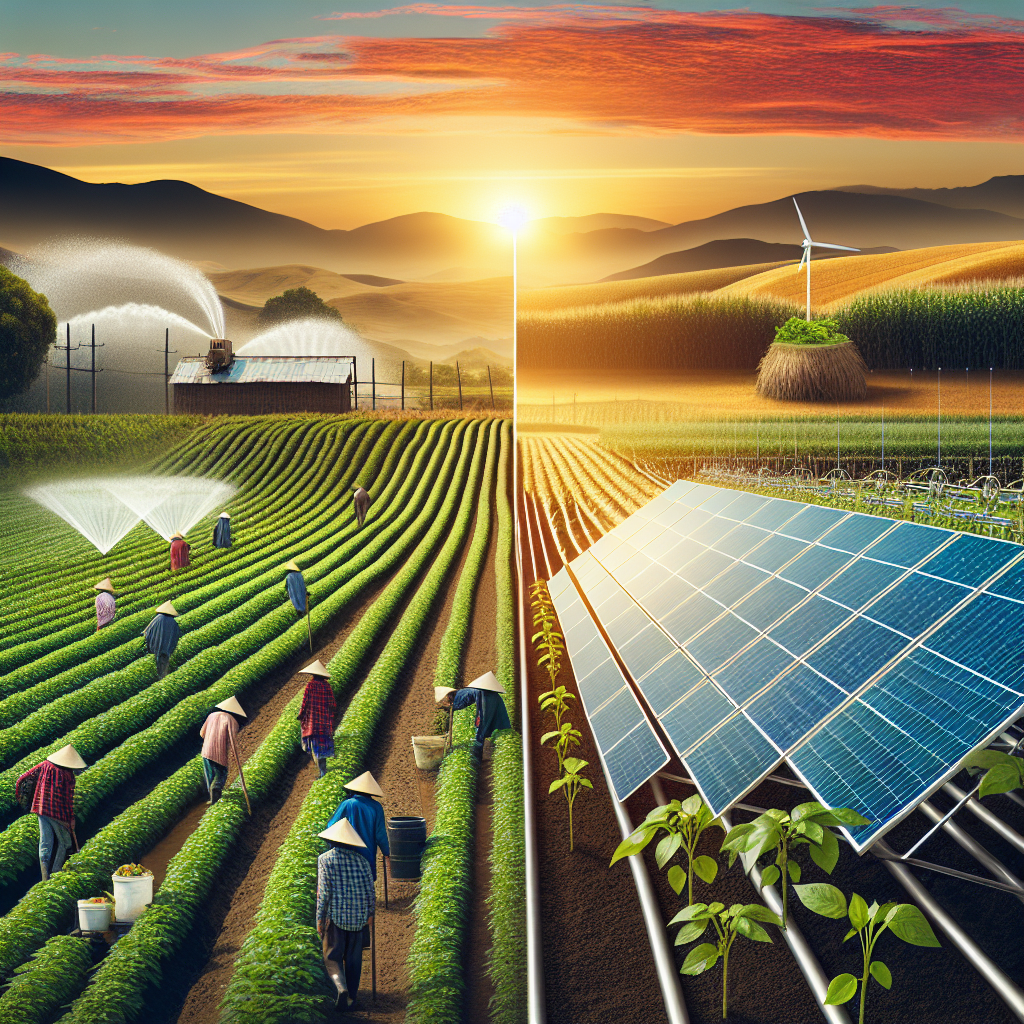
“Solar-Powered Irrigation Solutions …” from growingsolarmist.com and used with no modifications.
Make the Switch to Solar Irrigation Today
Solar-powered irrigation represents one of the most practical and financially rewarding renewable energy investments available to modern farmers. With system costs continuing to decline while energy prices rise, the economic case grows stronger each year. Beyond the financial benefits, these systems provide energy independence, environmental advantages, and often improved crop performance through more consistent and precise irrigation management.
The technology has matured significantly over the past decade, with proven reliability across diverse agricultural applications from small specialty crop operations to large commodity producers. Comprehensive support systems including specialized agricultural solar designers, financing programs, and maintenance providers have developed to support widespread adoption. For farmers seeking to reduce operating costs while improving sustainability, solar irrigation offers a compelling solution with demonstrable returns.
Is it a Good Idea?
For the vast majority of irrigation applications, solar power represents not just an environmentally preferable option but increasingly the most economical choice over the system’s lifetime. The technology has moved well beyond the experimental phase to become a mainstream solution with predictable performance and financial returns. When properly sized and configured for specific farm conditions, solar irrigation systems typically deliver payback periods of 3-10 years followed by decades of nearly free operation.
The question for most farmers is no longer whether solar irrigation makes sense, but rather which configuration best suits their specific needs and how to optimize the investment timing to capture maximum incentives. With flexible system designs ranging from simple direct-drive pumps for small operations to sophisticated battery-integrated systems for large-scale production, solar irrigation has evolved to address virtually every agricultural water delivery scenario.
Frequently Asked Questions
As farmers consider transitioning to solar-powered irrigation, common questions arise about system capabilities, requirements, and performance. Understanding these fundamental aspects helps in planning appropriate systems and setting realistic expectations for their operation.
The following answers address the most frequently asked questions based on real-world implementation experience across diverse agricultural settings. While specific details may vary based on local conditions, these general guidelines provide a solid foundation for system planning.
How many solar panels do I need to power an irrigation system?
Solar panel requirements depend primarily on water volume, pumping depth, and pressure needs. As a general guideline, drip irrigation systems typically require 1-1.5kW (3-5 panels) per acre for shallow water sources, while sprinkler systems might need 2-3kW (6-10 panels) per acre. Deep well applications require additional capacity – add approximately 0.1kW for every 10 feet of lift beyond 50 feet. A small farm pumping from a shallow well might need just 2kW (6-8 panels) for 3-5 acres of drip irrigation, while a larger operation with higher pressure needs might require 15-30kW (45-90 panels) for similar acreage.
System sizing should account for peak water requirements during the hottest part of the growing season rather than average needs. Working with an agricultural solar specialist to perform detailed calculations based on specific crop water requirements, local solar insolation data, and irrigation system specifications ensures appropriate sizing. Slightly oversizing the array (by 10-15%) provides a margin of safety for less-than-ideal solar conditions and potential future expansion.
Do solar-powered irrigation systems work at night?
Direct solar-powered systems without storage operate only during daylight hours, with peak performance occurring during midday when solar intensity is highest. For many applications, daytime-only operation proves sufficient as irrigation scheduled during peak sunlight hours maximizes system efficiency and often aligns with optimal watering times. For operations requiring night irrigation or consistent operation during cloudy periods, two primary solutions exist: battery storage or water storage. To explore more about solar power solutions for farms, check out solar power applications for a farm.
What maintenance does a solar irrigation system require?
Solar irrigation systems require minimal maintenance compared to conventional alternatives. Panel maintenance typically involves occasional cleaning to remove dust and debris – frequency varies by location, from monthly in dusty regions to just 2-3 times annually in areas with regular rainfall. Most manufacturers recommend annual inspection of electrical connections, mounting hardware, and pump components. Unlike diesel systems requiring regular fuel, filter, and oil changes, solar systems have few consumable components, significantly reducing both maintenance time and expense.
Can solar irrigation systems handle freezing temperatures?
Solar panels actually perform more efficiently in cold, sunny conditions than in extreme heat. However, the irrigation components require standard winterization in freezing climates – draining pipes, pumps, and filters to prevent freeze damage. Many solar irrigation controllers include freeze protection features that automatically drain systems when temperatures approach freezing. In cold climates, adjusting panel angles to steeper winter positions improves performance during shorter winter days while helping shed snow accumulation. For more information on how solar panels work, you can explore our detailed guide.
How long do solar-powered irrigation systems typically last?
Solar panels typically carry 25-year performance warranties but often continue producing at useful levels for 30+ years with gradual efficiency decline (approximately 0.5% annually). Pumps represent the component requiring most frequent replacement, with quality solar pumps typically lasting 7-15 years depending on water quality and operating conditions. Controllers and electrical components generally last 10-15 years, while mounting structures often match or exceed panel lifespan. Overall system life expectancy of 25+ years makes solar irrigation one of the most durable farm infrastructure investments available.
With proper component selection and installation, many farmers find their solar irrigation systems outperform and outlast conventional alternatives. The absence of combustion, lower operating temperatures, and reduced mechanical stress contribute to this exceptional longevity. When eventual component replacement becomes necessary, the modular nature of these systems allows upgrading individual elements rather than the entire installation.
- Solar panels: 25-30+ years (gradual efficiency decline of approximately 0.5% annually)
- Pumps: 7-15 years depending on water quality and runtime
- Controllers: 10-15 years
- Mounting structures: 25+ years
- Batteries (if included): 5-15 years depending on chemistry and usage patterns
The exceptional durability of solar irrigation components contributes significantly to their attractive lifetime economics. While initial investment exceeds conventional alternatives, the extended service life and minimal operating costs create compelling total cost of ownership advantages that improve with each passing year.







Leave a Reply