
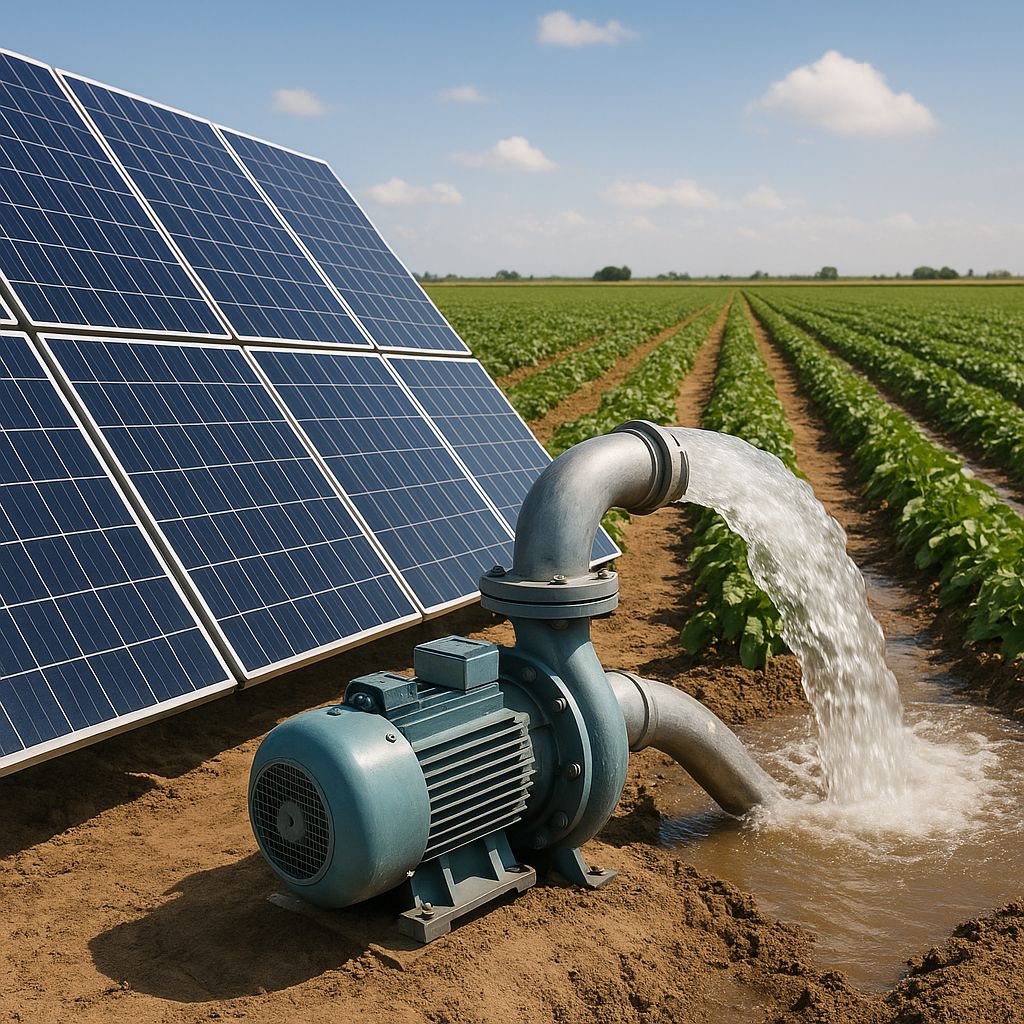
Article-At-A-Glance
- Solar-powered irrigation systems can reduce farm energy costs by 40-80% while providing reliable water access even in remote locations.
- Modern solar irrigation setups require specific components including panels, pumps, controllers, and optional battery storage for 24/7 operation.
- Farmers can expect a typical payback period of 3-8 years on solar irrigation investments, with systems lasting 25+ years.
- 8M Solar helps farmers navigate the technical aspects of transitioning to solar irrigation, offering custom solutions for farms of all sizes.
- Proper system sizing and placement are critical factors that determine the success of agricultural solar installations.
Irrigation is the lifeblood of modern farming, but the rising costs of powering water pumps are squeezing farm profits like never before. Solar panels offer a compelling solution, transforming free sunlight into the energy needed to keep crops hydrated without the ongoing expense of traditional power sources.
How Solar-Powered Irrigation Solves Rising Farm Energy Costs
The marriage between solar technology and agriculture isn’t just good environmental practice—it’s increasingly becoming essential for financial sustainability. With utility rates climbing yearly and weather patterns becoming less predictable, farmers need reliable, cost-effective power solutions that won’t leave them vulnerable to external pressures.
The Growing Energy Burden in Agriculture
Modern farming operations face unprecedented energy demands, with irrigation often accounting for 70-80% of a farm’s total electricity consumption. This energy burden has been steadily increasing as water tables drop and farmers need to pump from greater depths. In many rural areas, connection to the electrical grid can cost tens of thousands of dollars per mile, making conventional power sources prohibitively expensive for remote operations. The volatility of energy prices creates additional budget uncertainty, making it difficult for farmers to accurately forecast operating costs from season to season.
Why Traditional Irrigation Methods Are Becoming Unsustainable
- Rising electricity rates have increased irrigation costs by 20-30% in many regions over the past decade
- Diesel-powered pumps face increasing fuel costs and environmental regulations
- Grid dependency leaves farms vulnerable to power outages during critical growing periods
- Carbon taxes and emissions regulations are creating additional costs for fossil fuel-powered systems
- Water restrictions require more precise irrigation timing and control than many traditional systems provide
The limitations of conventional irrigation power sources become more apparent each growing season. Grid-dependent systems leave farmers at the mercy of utility companies, while diesel generators require constant refueling and maintenance. During peak growing seasons, power outages can lead to crop losses that far exceed the cost of implementing alternative energy solutions.
For farms in developing regions or remote locations, the challenges are even greater. Many rely on expensive, polluting diesel generators that require constant maintenance and fuel deliveries. The financial and logistical burdens of these systems create significant barriers to agricultural development and food security.
The Perfect Match: Solar Power and Water Pumping
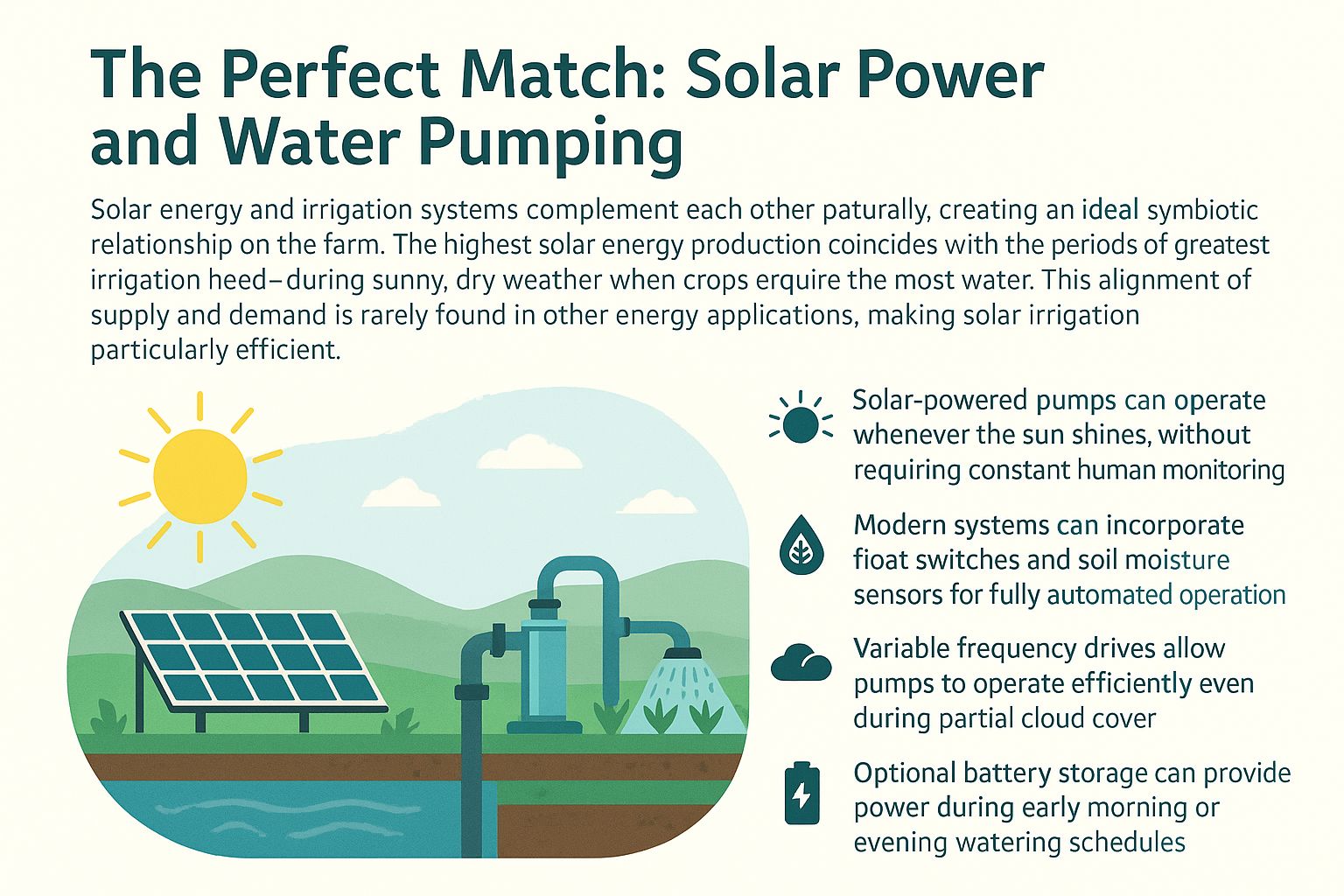
Solar energy and irrigation systems complement each other naturally, creating an ideal symbiotic relationship on the farm. The highest solar energy production coincides with the periods of greatest irrigation need—during sunny, dry weather when crops require the most water. This alignment of supply and demand is rarely found in other energy applications, making solar irrigation particularly efficient.
8M Solar has been at the forefront of helping farmers harness this natural match between solar production and irrigation needs. By designing systems that automatically adjust to available sunlight, these solar installations maximize water delivery during optimal growing conditions while conserving energy during cloudy periods.
Unlike many other farm operations that require energy around the clock, irrigation can often be scheduled during daylight hours, eliminating or reducing the need for expensive battery storage. This daytime operation pattern makes solar power an exceptionally cost-effective solution for irrigation compared to other farm energy needs.
- Solar-powered pumps can operate whenever the sun shines, without requiring constant human monitoring
- Modern systems can incorporate float switches and soil moisture sensors for fully automated operation
- Variable frequency drives allow pumps to operate efficiently even during partial cloud cover
- Optional battery storage can provide power during early morning or evening watering schedules
Components of a Solar Irrigation System
Understanding the essential elements of a solar irrigation system helps farmers make informed decisions when transitioning from conventional power sources. Each component plays a vital role in creating an efficient, reliable water delivery system that can operate for decades with minimal maintenance.
1. Solar Panel Types for Agricultural Applications
Not all solar panels are created equal when it comes to agricultural applications. Monocrystalline panels offer the highest efficiency (17-22%) and require less space, making them ideal for farms with limited mounting area. Polycrystalline panels provide a more budget-friendly option with slightly lower efficiency (13-17%), but perform adequately for most irrigation needs. Thin-film panels, while less efficient, can be ideal for curved surfaces or applications where flexibility is needed, though they require significantly more space for equivalent power output. For more information on how solar power is transforming modern farming, explore practical examples and activities.
For irrigation applications, durability matters as much as efficiency. Agricultural environments expose equipment to dust, moisture, and sometimes chemical drift from spraying operations. Premium panels with reinforced frames, specialized coatings, and higher wind/snow load ratings deliver better long-term performance in these challenging conditions. Some manufacturers now offer specialized “agrivoltaic” panels that allow partial light transmission, enabling dual-use installations above certain crops or grazing areas.
Choosing the right type of solar panel for your farm irrigation system is crucial. Consider the specific needs of your operations, the available space, and your budget. This below table will help you choose the right one:
|
Type of Solar Panel |
Advantages |
Disadvantages |
|---|---|---|
|
Monocrystalline Solar Panels | ||
|
– Performance drops slightly in extreme heat. 1 | ||
|
– Performs well in low-light conditions (cloudy days, mornings). 1, 2 | ||
|
Polycrystalline Solar Panels |
– Cost-effective option, suitable for large-scale installations. 1, 3 |
– Lower efficiency (13-17%) compared to monocrystalline panels. 1, 3 |
|
– Durable and handles heat well. 3 |
– Requires more space for the same energy output as monocrystalline panels. 3 | |
|
– Affordable initial investment, often offset by government incentives. 3 | ||
|
Thin-Film Solar Panels |
– Lightweight, flexible, and easy to install on unconventional surfaces (e.g., curved roofs)1, 5, 7 |
– Lowest efficiency (10-13%) among the options, requiring more space for equivalent output.5, 7 |
|
– Performs well in high temperatures and low-light conditions, ideal for diverse climates. 5, 7 |
– Shorter lifespan (10-20 years) compared to crystalline panels. 5, 7 | |
|
– Cost-effective with lower production and installation costs. 5, 7 |
– Bulkier installations needed for larger-scale energy production.5 |
This table provides a comparison of solar panel options for farmers, highlighting their suitability based on efficiency, cost, durability, and space requirements. Farmers should consider their specific energy needs, budget, and available installation area when making a decision.
2. Pump Selection and Sizing Requirements
The heart of any solar irrigation system is the pump, which must be properly matched to both water source conditions and solar power availability. DC pumps connect directly to solar panels without requiring an inverter, making them simpler and more efficient for smaller systems. AC pumps, while requiring an inverter, offer more power options and are often more readily available in larger sizes needed for substantial irrigation operations. Submersible pumps work well for deep wells, while surface pumps are appropriate for ponds, streams, or shallow wells with water tables less than 20 feet deep.
Sizing calculations must account for total dynamic head (vertical lift plus friction loss), daily water volume requirements, and available solar power throughout the day. Oversizing a pump wastes money on unnecessary equipment, while undersizing results in inadequate water delivery. Professional assessments consider seasonal variations in both water needs and solar availability to determine the optimal pump specifications for your specific situation.
3. Water Storage Solutions and Battery Backups
Water storage serves as the simplest form of energy storage in a solar irrigation system. By pumping water to elevated tanks during peak sunlight hours, gravity can then distribute that water during early morning or evening hours when solar generation decreases. This approach eliminates the need for expensive battery systems while providing flexibility in watering schedules. Aboveground tanks offer easier installation but take up valuable space, while buried cisterns preserve land use but require more extensive excavation during installation.
For farms requiring consistent power regardless of weather conditions, battery storage provides reliable backup. Lithium-ion batteries offer higher efficiency and longer lifespans than traditional lead-acid options, though at a higher initial cost. A properly sized battery bank can ensure critical irrigation continues during cloudy periods or enable night watering when evaporation losses are minimized. Many systems incorporate hybrid approaches, using modest battery storage alongside water storage to maximize flexibility while controlling costs.
4. Smart Controllers and Automation Options
Modern solar irrigation systems benefit enormously from intelligent control systems that optimize water use and energy management. Basic controllers handle fundamental timing functions, while advanced systems incorporate weather data, soil moisture readings, and crop-specific algorithms to deliver precisely the right amount of water at the optimal time. Some cutting-edge controllers even adjust irrigation schedules based on solar forecast data, maximizing water pumping during periods of anticipated high solar production.
- Remote monitoring capabilities allow system oversight from smartphones or computers
- Flow meters and pressure sensors detect leaks or clogs before they cause crop damage
- Zone control enables different watering schedules for various crops or soil types
- Data logging features track system performance and water usage over time
- Integration with weather services provides automatic adjustment for rainfall events
Setting Up Your Farm’s Solar Irrigation
Implementing solar irrigation requires thoughtful planning and execution to ensure optimal performance for your specific agricultural operation. The process involves several critical steps, from initial assessment through system design, installation, and final commissioning. Taking the time to properly evaluate your needs and conditions leads to systems that perform reliably for decades with minimal intervention.
Site Assessment: Finding the Optimal Panel Location
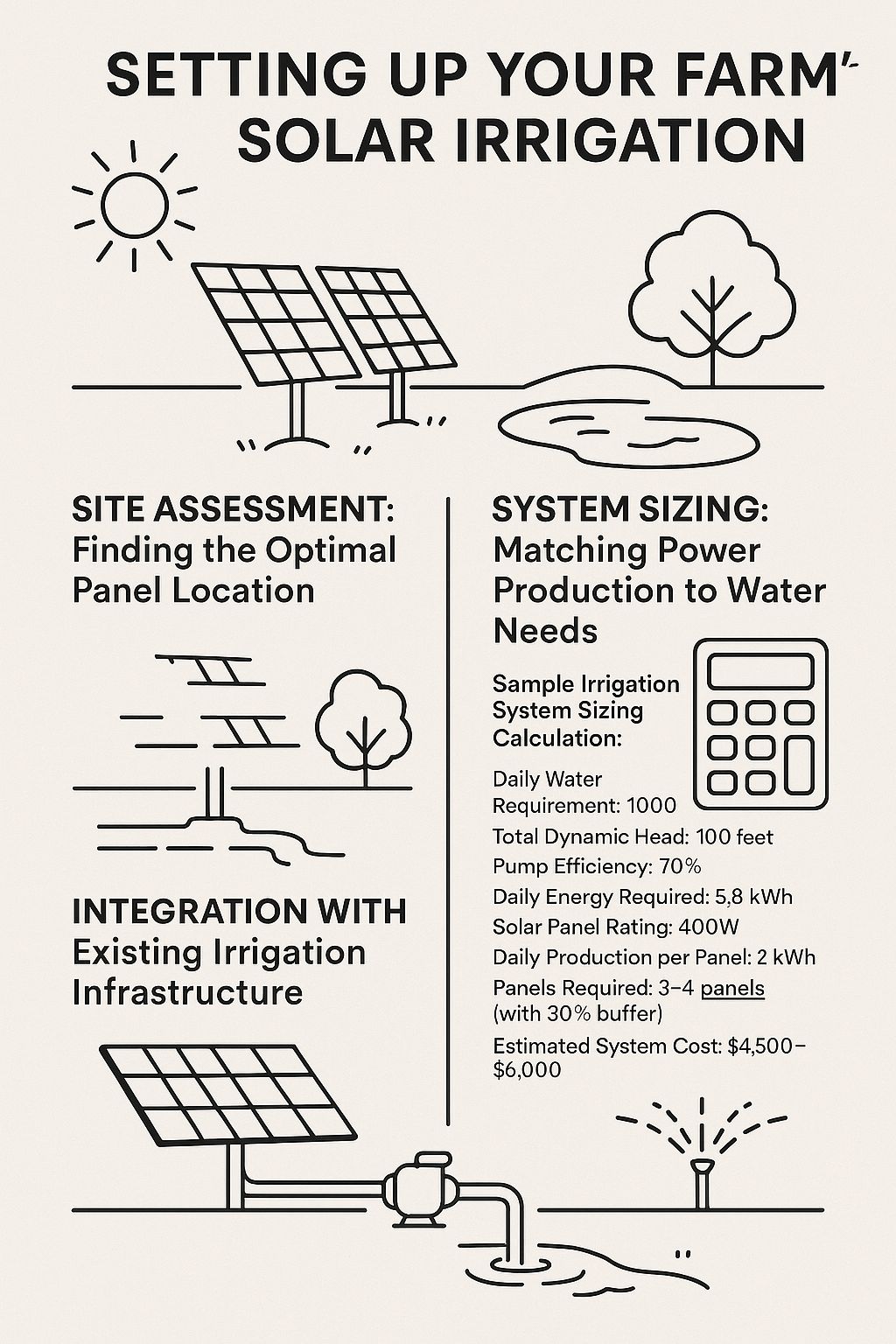
The ideal solar array location balances multiple factors including sunlight exposure, proximity to water sources, and protection from potential damage. Southern exposure (in the Northern Hemisphere) maximizes daily solar production, while areas free from shade throughout the day ensure consistent performance. Mounting options include ground mounts, which offer easier maintenance but require dedicated land area; pole mounts, which elevate panels above potential flooding or equipment traffic; and floating mounts for installation directly on irrigation ponds, which save land space while keeping panels cooler and more efficient.
Proper site selection must also consider soil stability for ground-mounted systems, potential snow accumulation patterns, and security concerns in remote locations. The distance between solar arrays and pumping locations affects wiring costs and system efficiency, with voltage drop becoming significant beyond certain distances. In some cases, multiple smaller arrays located near different water sources may prove more efficient than a single centralized system.
System Sizing: Matching Power Production to Water Needs
Sample Irrigation System Sizing Calculation:
Daily Water Requirement: 10,000 gallons
Total Dynamic Head: 100 feet
Pump Efficiency: 70%
Daily Energy Required: 5.8 kWh
Solar Panel Rating: 400W
Daily Production per Panel: 2 kWh
Panels Required: 3-4 panels (with 30% buffer)
Estimated System Cost: $4,500-$6,000. For more information, check out this guide on how solar can power your farm’s irrigation system.
Accurate system sizing begins with a comprehensive water audit that determines both peak daily requirements and seasonal variations. Undersized systems fail to deliver adequate water during critical growth periods, while oversized systems waste capital that could be better deployed elsewhere on the farm. Professional assessments consider not just current needs but anticipated expansions, crop rotations, and potential changes in water availability or depth over the system’s multi-decade lifespan.
Integration with Existing Irrigation Infrastructure
Most farms already have established irrigation systems, and solar power can typically be integrated without replacing the entire setup. The key is determining which components can be retained and which require modification or replacement. Existing pipelines, sprinklers, and distribution systems often need minimal changes, while pumps and control systems may need upgrades to operate efficiently with solar power.
Retrofit options include adding solar direct drive controllers to existing AC pumps, installing DC pump alternatives, or creating hybrid systems that can operate from both solar and conventional power sources. For pressurized systems like drip irrigation or pivot sprinklers, pressure regulators and accumulators may be necessary to maintain consistent water delivery despite fluctuations in solar power availability. Working with specialists who understand both conventional irrigation and solar power ensures a smooth transition that maximizes your existing investment.
The Economics of Solar Irrigation
The financial case for solar irrigation has never been stronger, driven by falling equipment costs, rising conventional energy prices, and enhanced incentive programs. Understanding the economic factors helps farmers make informed investment decisions that align with their long-term business strategies and cash flow requirements.
Initial Investment vs. Long-Term Savings
Solar irrigation systems typically require higher upfront capital than conventional electric or diesel alternatives, but offer dramatically lower operating costs throughout their lifespan. A properly sized system eliminates monthly electric bills or fuel costs for irrigation, providing predictable operating expenses for decades. Maintenance costs are also significantly lower, with solar systems having fewer moving parts and no fuel-related complications. For more information, check out this guide on solar irrigation systems.
The average cost for a complete solar irrigation system ranges from $2,500-$4,000 per kilowatt of capacity installed, depending on system complexity, location, and specific farm requirements. While this represents a substantial investment, the elimination of ongoing energy costs creates cumulative savings that typically surpass the initial investment within 3-8 years, depending on local utility rates and water requirements.
Payback Period Calculations
- Small market garden (1-2 acres): 3-5 year payback
- Medium vegetable farm (5-20 acres): 4-6 year payback
- Large field crop operation (50+ acres): 5-8 year payback
- Livestock watering systems: 2-4 year payback
- Remote locations with no existing grid connection: Immediate payback compared to grid extension costs
The financial benefits extend beyond simple energy savings. Solar irrigation provides protection against future utility rate increases, which have historically outpaced inflation. Systems with battery backup also provide insurance against crop losses during grid outages, which can justify the investment even in regions with relatively affordable electricity. For organic and sustainable farms, solar irrigation enhances brand value and supports premium pricing strategies that recognize environmentally responsible production methods.
Available Agricultural Solar Incentives and Grants
Federal, state, and local incentives can substantially reduce the net cost of solar irrigation systems. The federal Investment Tax Credit currently allows farmers to deduct a significant percentage of solar system costs from their tax liability, while accelerated depreciation provides additional tax benefits. USDA programs like REAP (Rural Energy for America Program) offer both grants and loan guarantees specifically for agricultural renewable energy projects, with small and mid-sized farms receiving priority consideration.
Many states and utilities offer additional incentives including rebates, performance-based incentives, and specialized agricultural grants. Some conservation districts provide cost-sharing for irrigation improvements that demonstrate water conservation benefits, which often include solar-powered precision systems. Environmental organizations occasionally partner with farms for demonstration projects, providing partial funding in exchange for educational access and data collection opportunities.
Energy Independence as a Financial Strategy
Beyond direct cost savings, solar irrigation provides valuable energy independence that protects farm operations from external disruptions. Climate-related grid failures, regional energy shortages, and rural power quality issues all pose threats to conventional irrigation systems. Solar power with appropriate storage provides reliability even when the broader energy infrastructure faces challenges, ensuring crops receive necessary water regardless of external conditions.
This independence creates operational flexibility that can translate to market advantages. The ability to maintain production during regional disruptions allows farmers to fulfill contracts while others may struggle, potentially commanding premium prices during shortages. For specialty crop producers with high-value harvests, this reliability insurance alone can justify the investment in solar irrigation, even before calculating direct energy savings.
Real Farm Success Stories
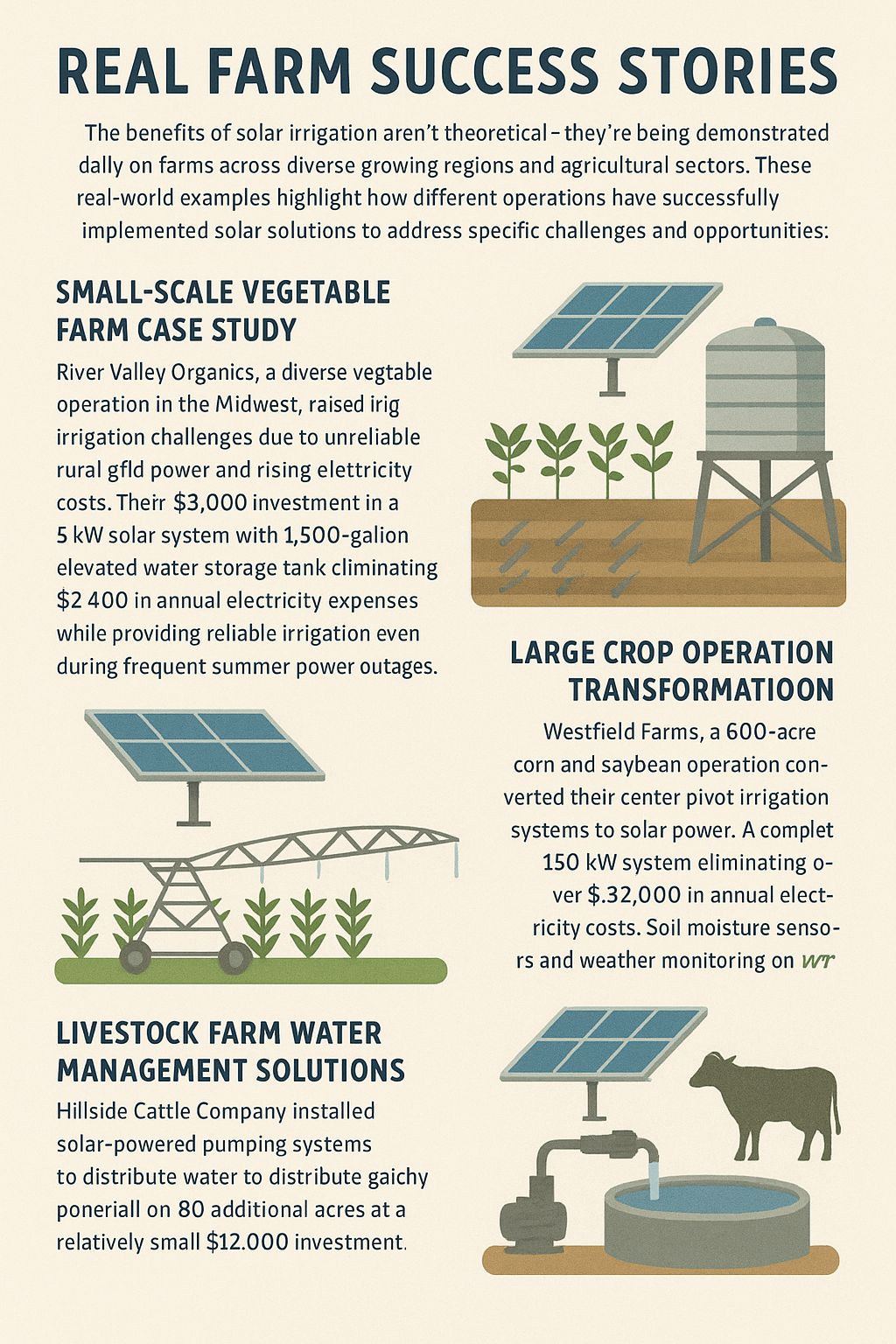
The benefits of solar irrigation aren’t theoretical—they’re being demonstrated daily on farms across diverse growing regions and agricultural sectors. These real-world examples highlight how different operations have successfully implemented solar solutions to address specific challenges and opportunities.
Small-Scale Vegetable Farm Case Study
River Valley Organics, a 5-acre diverse vegetable operation in the Midwest, faced irrigation challenges due to unreliable rural grid power and rising electricity costs. Their $18,000 investment in a 5kW solar system with a 1,500-gallon elevated water storage tank eliminated $2,400 in annual electricity expenses while providing reliable irrigation even during frequent summer power outages. The system powers drip irrigation zones through a programmable controller, delivering precise water amounts to different crop sections based on plant needs and soil conditions.
Beyond the direct energy savings, the farm reports enhanced crop quality and reduced losses during summer heat waves, when grid outages previously coincided with peak watering needs. The system achieved payback in just over 4 years when including available tax incentives and USDA grant funding. An unexpected benefit has been marketing value—customers specifically seek out their produce at farmers markets after learning about their sustainable irrigation practices.
Large Crop Operation Transformation
Westfield Farms, a 600-acre corn and soybean operation, converted their center pivot irrigation systems to solar power through a phased approach. The initial 30kW system powered a single pivot as a pilot project, followed by expansion to four additional pivots over three years. The complete 150kW system eliminated over $32,000 in annual electricity costs while providing reliable irrigation throughout the growing season. The system incorporates soil moisture sensors and weather monitoring to optimize watering schedules, resulting in 15-20% water savings compared to their previous fixed-schedule approach.
The operation reports that crop yields have increased by 7-12% since implementing solar irrigation, primarily due to more consistent soil moisture levels and the ability to irrigate during optimal time windows regardless of utility demand charges or time-of-use rates. The system’s modular design allowed for staged investment aligned with seasonal cash flow, while maintaining the flexibility to add capacity as the operation expands.
Livestock Farm Water Management Solutions
Hillside Cattle Company installed solar-powered pumping systems to distribute water to remote pastures, enabling rotational grazing across previously underutilized land. Their system includes multiple 1-2kW pumping stations that move water from central wells to elevated storage tanks, which then gravity-feed watering troughs across the property. The relatively small investment of $12,000 unlocked grazing potential on 80 additional acres without requiring costly utility extensions or diesel generator maintenance.
The simple, reliable system requires minimal maintenance while operating automatically year-round. Float switches in the storage tanks trigger pumping when levels drop, ensuring consistent water availability without human monitoring. During winter months, when water needs decrease, excess solar production is diverted to stock tank heaters, preventing freezing without additional energy costs. The system achieved payback within 3 years through increased carrying capacity and reduced supplemental feed requirements. For more insights, explore how solar can power your farm’s irrigation system and save you money.
Environmental Benefits Beyond Cost Savings
While financial considerations often drive the initial interest in solar irrigation, the environmental benefits create additional value that extends far beyond the farm boundaries. These sustainability advantages increasingly translate to market premiums, regulatory compliance, and enhanced community relations.
Carbon Footprint Reduction
Solar irrigation significantly reduces a farm’s carbon emissions by replacing fossil fuel-powered pumps or grid electricity that may be generated from coal or natural gas. A typical mid-sized farm irrigation system powered by solar can eliminate 20-30 tons of CO₂ emissions annually—equivalent to taking 4-6 cars off the road. This reduction helps farms meet voluntary sustainability targets or comply with emerging carbon regulations in certain markets.
Some regions now offer carbon credit programs that provide additional revenue streams for documented emissions reductions. These programs can create supplemental income that further improves the financial returns from solar irrigation investments. For export-focused operations, carbon footprint reduction increasingly helps meet international market requirements, particularly in European markets where environmental impact documentation is becoming mandatory.
Water Conservation Through Optimized Delivery
Solar-powered systems excel at efficient water management because they naturally encourage precise timing and distribution. The direct connection between available power and pumping capacity promotes irrigation during optimal daylight hours, reducing evaporative losses compared to night watering. Advanced solar irrigation controllers can adjust water delivery based on real-time soil conditions, plant needs, and weather forecasts, typically achieving 15-30% water savings compared to conventional timed systems.
This water efficiency creates multiple benefits: reduced withdrawal from groundwater or surface sources, decreased runoff and erosion, and minimized energy waste from pumping excess water. In regions facing water restrictions or allocation limits, these efficiency gains can allow continued production even under tightening regulations. Some water districts now offer rebates or prioritized allocations for farms demonstrating water-efficient technologies, including solar-powered precision irrigation.
Soil Health Improvements from Precision Irrigation
The precise water control offered by modern solar irrigation systems contributes significantly to soil health management. Maintaining optimal soil moisture—neither waterlogged nor excessively dry—supports beneficial microbial activity while reducing compaction, erosion, and nutrient leaching. Systems that deliver smaller amounts more frequently create ideal conditions for root development and nutrient cycling, particularly in sensitive crops or challenging soil types.
This improved soil management translates to measurable benefits including enhanced organic matter retention, better nutrient availability, and reduced fertilizer requirements. Many farms report that transitioning to solar-powered precision irrigation has allowed them to reduce fertilizer applications by 10-20% while maintaining or improving yields, creating additional operational savings while reducing potential environmental impacts.
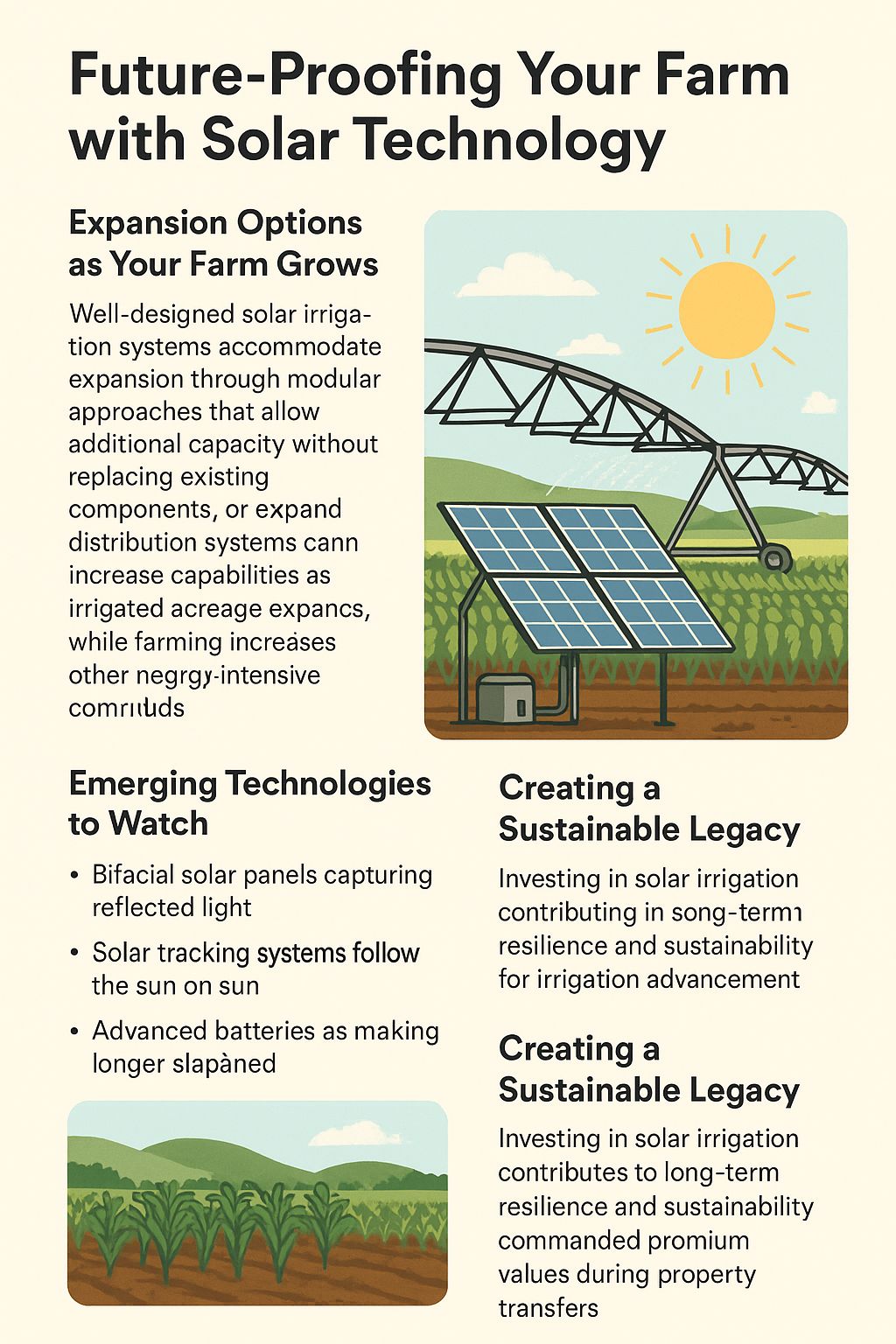
Future-Proofing Your Farm with Solar Technology
Investing in solar irrigation isn’t just about meeting today’s needs—it’s about positioning your operation for future agricultural trends and challenges. The modular nature of solar power allows for strategic growth and adaptation as your operation evolves, while emerging technologies continue to enhance system capabilities and efficiency.
Expansion Options as Your Farm Grows
Well-designed solar irrigation systems accommodate expansion through modular approaches that allow additional capacity without replacing existing components. Adding panels to existing arrays, incorporating additional pump stations, or extending distribution systems can increase capabilities as irrigated acreage expands. Modern charge controllers and inverters often have excess capacity built in, allowing additional panels to be added without replacing core electronics.
For operations considering broader renewable energy adoption, irrigation systems can serve as the foundation for farm-wide solar integration. The experience and infrastructure developed through irrigation projects provide valuable insights for expanding into other applications like greenhouse climate control, produce cooling, or general farm power needs. Many farms begin with irrigation as their first solar project, then systematically expand to address other energy-intensive aspects of their operation.
Emerging Technologies to Watch
The rapid pace of innovation in both solar and agricultural technology continues to create new opportunities for irrigation advancement. Bifacial solar panels that capture reflected light from both sides are showing 5-20% production increases in agricultural settings, while solar tracking systems that follow the sun throughout the day can boost energy harvest by 25-45% compared to fixed installations. Advanced batteries with longer lifespans and lower costs are making energy storage increasingly practical, enabling 24/7 irrigation capabilities regardless of immediate sunlight conditions.
Creating a Sustainable Legacy
Beyond the immediate operational benefits, investing in solar irrigation contributes to a farm’s long-term resilience and sustainability. Farms with established renewable energy infrastructure typically command premium values during property transfers, with solar assets recognized as valuable improvements that reduce operating costs for future owners. The infrastructure improvements associated with modern irrigation—including water storage, distribution systems, and monitoring equipment—create lasting value that transcends the renewable energy components themselves. For more information on how solar can power your farm’s irrigation system, check out this guide.
Many farm families view solar investments as part of their stewardship legacy, demonstrating commitment to both economic and environmental sustainability for future generations. The visible nature of these systems also serves as a powerful statement to the surrounding community about agriculture’s role in addressing climate challenges while maintaining productive, profitable operations.
Frequently Asked Questions
As farmers consider solar irrigation options, certain questions consistently arise during the planning process. Understanding these common concerns helps in making informed decisions that align with your specific agricultural context and goals.
How many solar panels do I need to power my irrigation system?
Panel requirements depend on water volume, pumping height, pressure needs, and local solar conditions. As a general guideline, a 1 horsepower pump (capable of delivering approximately 3,000 gallons per hour at moderate pressure) typically requires 2-3kW of solar capacity, equivalent to about 6-9 modern 350-watt panels. Systems incorporating storage—either battery or water—may need additional capacity to account for charging needs and efficiency losses. A professional assessment evaluating your specific water requirements, geographic location, and seasonal needs provides the most accurate sizing recommendations.
Can solar irrigation systems work during cloudy weather?
Yes, though with reduced output compared to full sunlight conditions. Modern panels typically generate 10-25% of their rated capacity during overcast conditions, which may be sufficient for reduced irrigation schedules. Systems can be designed with three approaches to address weather variability: oversizing the solar array to provide adequate power even during partial cloud cover; incorporating battery storage to accumulate energy during sunny periods for use during cloudy weather; or implementing water storage that allows pumping during peak sun hours while distributing water throughout the day and night. For more insights on solar applications in agriculture, explore solar power applications for a farm.
The best approach depends on your local climate patterns, irrigation timing flexibility, and budget considerations. In regions with predictable afternoon cloud patterns, morning-focused irrigation schedules may eliminate the need for storage solutions, while areas with extended cloudy periods may require more robust battery systems to maintain consistent operation.
What is the typical lifespan of a solar-powered irrigation system?
Quality solar panels typically carry 25-30 year warranties and often continue producing at 80%+ efficiency well beyond that timeframe. Pumps and controllers generally last 7-15 years depending on water quality and operating conditions, while batteries (if included) typically require replacement every 5-15 years depending on chemistry and usage patterns. The static components of the system—mounting structures, piping, and wiring—can last multiple decades with proper installation and periodic maintenance. This extended lifespan is a key factor in the favorable economics of solar irrigation, as the energy production infrastructure continues operating long after the initial investment has been recovered.
Do I need to completely replace my existing irrigation setup?
Most farms can retain significant portions of their existing irrigation infrastructure when transitioning to solar power. Distribution components—including pipes, sprinklers, drip lines, and control valves—typically require minimal modification. The primary changes involve the power source (solar panels and associated electronics) and potentially the pump itself if the existing unit isn’t compatible with solar operation. Hybrid approaches that allow operation from either solar or conventional power sources offer flexibility during the transition period and provide backup options during extreme weather events or unusual water demands.
How does seasonal variation affect solar irrigation performance?
Solar production naturally aligns with growing season needs in most agricultural regions, with maximum output occurring during summer months when irrigation requirements typically peak. This natural synchronization creates an ideal match between energy availability and water needs. Spring and fall shoulder seasons may have reduced solar production but also lower irrigation requirements, maintaining appropriate balance. System design should account for the lowest production month during which irrigation is still needed, ensuring adequate capacity during critical periods.
For winter crop production in suitable climates, panel tilt angles can be optimized for lower sun angles, or additional capacity may be required to compensate for shorter daylight hours. Some operations incorporate seasonal adjustment capabilities, including adjustable mounting systems that allow panel angles to be modified based on seasonal sun position, maximizing year-round production for extended growing operations. Learn more about solar power applications for a farm to enhance your farming practices.
By thoughtfully designing your system with seasonal variations in mind, you can ensure reliable irrigation throughout your growing season while maximizing the return on your renewable energy investment.
Ready to explore how solar irrigation can transform your farm’s operations? 8M Solar specializes in custom agricultural solar solutions that address the unique water and energy needs of modern farming operations. Discover how solar panels improve farm operations to optimize efficiency and sustainability.
Solar panels have revolutionized the way farms manage their energy needs, providing a sustainable and cost-effective solution. By harnessing the power of the sun, farmers can now power their irrigation systems, reducing reliance on traditional energy sources and lowering operational costs. This shift not only benefits the environment but also enhances the efficiency of farm operations. For more insights on this topic, check out how solar panels improve farm operations.

Leave a Reply