

Key Takeaways
- Drones can reduce solar panel inspection costs by up to 50% by minimizing manual labor.
- Farmers using solar-powered drones can extend flight times, increasing coverage and efficiency.
- Integrating drones with solar technology enhances real-time data collection, improving farm management.
- Solar-powered drones contribute to a 30% reduction in a farm’s carbon footprint.
- Initial investment for drone technology can range from $1,000 to $5,000, but offers significant long-term savings.
How Drones Are Enhancing Solar Panel Efficiency for Farmers
In the world of modern agriculture, innovation is key to staying ahead. One of the most exciting advancements is the use of drones to boost solar panel efficiency. This combination not only optimizes energy use but also enhances farm productivity. Let’s delve into how drones are making a difference in solar energy utilization on farms.
Drones Role in Modern Agriculture
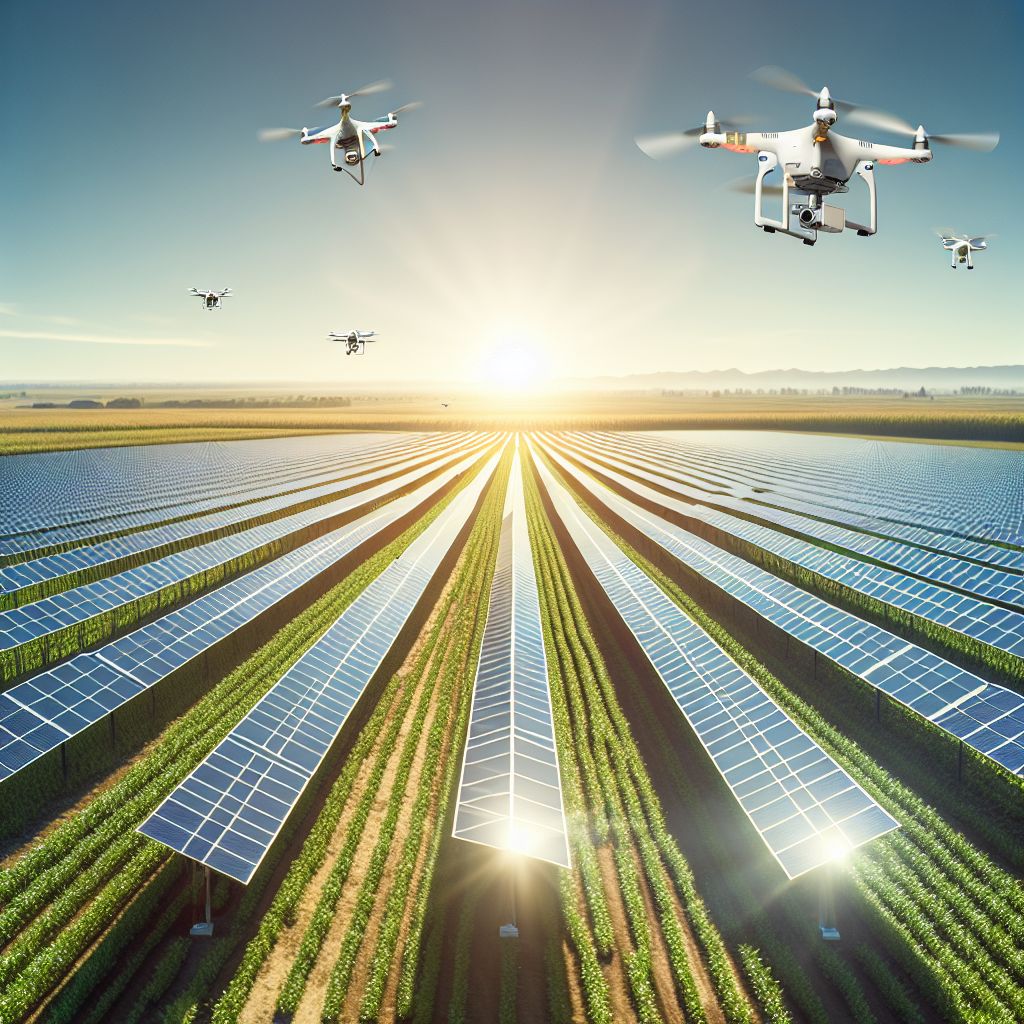
Drones have revolutionized how farmers manage their land. They offer a bird’s-eye view, providing insights that are hard to capture from the ground. For solar panels, drones can quickly scan large areas to identify issues like dirt accumulation or panel damage. This ensures that panels operate at peak efficiency, maximizing energy output.
“A farmer in California reported a 20% increase in solar panel efficiency after integrating drones into their maintenance routine.”
Besides that, drones can cover vast areas in a short time, making them indispensable for large farms. Their ability to capture high-resolution images and data means farmers can make informed decisions faster than ever before.
Impact on Farming Costs and Sustainability
Reducing operational costs is a priority for any farmer. By using drones, farmers can cut down on the labor required for solar panel maintenance. This not only saves money but also reduces the time spent on inspections. For example, a drone can inspect a solar field in a fraction of the time it would take a person to do the same job.
Furthermore, drones contribute to sustainability. They use less energy than traditional vehicles and can be powered by the very solar panels they help maintain. This synergy creates a sustainable cycle that benefits both the environment and the farmer’s wallet.
Benefits of Using Solar Energy
Solar energy is a clean and renewable resource, making it an excellent choice for farmers looking to reduce their carbon footprint. By harnessing the power of the sun, farmers can lower their reliance on fossil fuels, reducing greenhouse gas emissions. For more insights on this sustainable practice, explore the feasibility and benefits of solar panels for farm operations.
Moreover, solar energy provides a stable and predictable source of power. This reliability is crucial for farming operations that depend on consistent energy supplies. The combination of solar energy and drone technology offers a robust solution for modern agricultural challenges.
Here’s a table summarizing how drones can help boost solar panel efficiency for farmers:
|
Feature/Benefit |
Role of Drones |
Role of Solar Panels |
Combined Impact on Farm Efficiency |
|---|---|---|---|
|
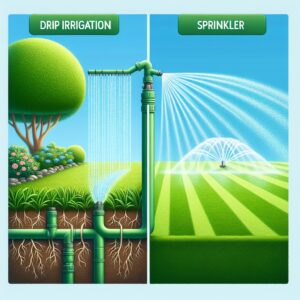
Precision Irrigation |
Drones use sensors and cameras to map field moisture and crop health for targeted watering. 2, 8 |
Solar panels power irrigation pumps sustainably. 8 |
Reduces water waste, improves crop yields, and optimizes resource use. 2, 8 |
|
Real-Time Monitoring |
Drones provide high-resolution, real-time imagery for crop and panel assessment. 5, 8 |
Solar energy enables continuous operation of irrigation and monitoring. 6 |
Enables quick response to issues, minimizing crop stress and downtime. 3, 5 |
|
Water Conservation |
Drones identify leaks, poor drainage, and uneven water distribution. 8 |
Solar-powered systems reduce reliance on fossil fuels for pumping. 7 |
Significant water and energy savings, lower operational costs. 1, 7 |
|
Energy Efficiency |
Drones powered by solar energy have longer flight times and lower emissions. 4, 8 |
Solar panels provide renewable energy for farm operations. 6 |
Reduces carbon footprint and energy expenses, boosts sustainability. 5, 6 |
|
Data Collection |
Drones gather data on crop health, pests, and soil conditions for analysis. 5, 8 |
Solar-powered sensors monitor fields continuously. 8 |
Supports data-driven decisions, improving farm productivity. 5, 8 |
|
Cost-Effectiveness |
Drones reduce labor and equipment costs for inspections and monitoring. 1, 5 |
Solar energy eliminates recurring fuel/electricity costs for irrigation. 7 | |
|
Sustainability |
Drones enable targeted application of water and inputs, reducing waste. 3, 8 |
Promotes environmental stewardship and resource conservation. 3, 8 |
This table demonstrates how integrating drones with solar panel systems allows farmers to maximize efficiency through precision agriculture, real-time monitoring, resource conservation, and sustainable practices, ultimately leading to higher yields, lower costs, and a reduced environmental impact. 1, 2, 8
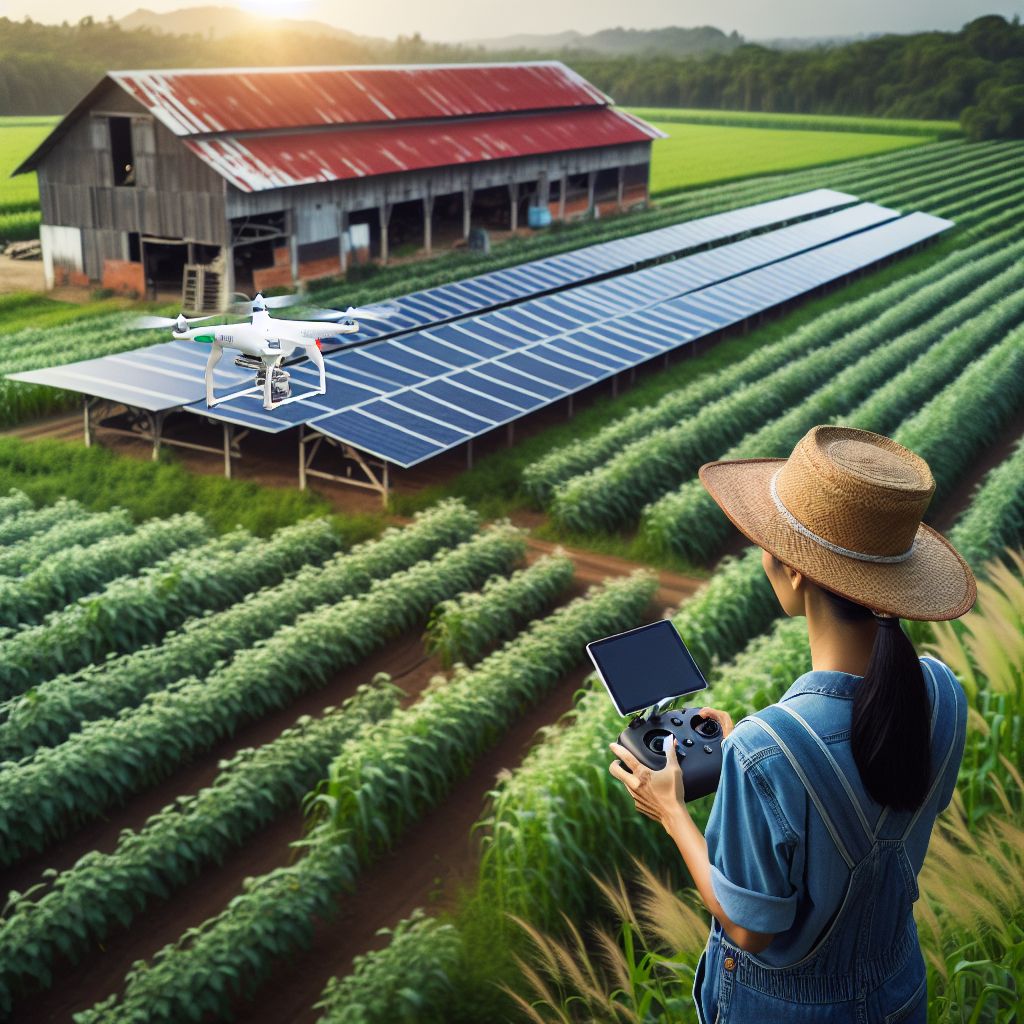
Drones in Solar Panel Inspections and Maintenance
The integration of drones into solar panel inspections and maintenance is a game-changer. It allows for more frequent checks without the associated increase in labor costs. This means that potential issues can be identified and resolved before they escalate, ensuring optimal panel performance.
Efficient Detection of Solar Panel Issues
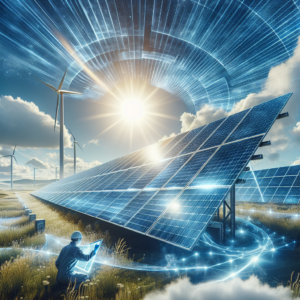
Drones equipped with infrared cameras can detect temperature variations on solar panels, indicating potential faults. This allows farmers to pinpoint issues like defective cells or faulty connections with precision. Addressing these problems promptly can prevent energy loss and extend the lifespan of solar panels.
With drones, the process of identifying and fixing solar panel issues becomes proactive rather than reactive. This shift in approach leads to more efficient energy production and less downtime.
Efficient Detection of Solar Panel Issues
Drones have the remarkable ability to detect issues with solar panels that might otherwise go unnoticed. Equipped with infrared cameras, drones can identify temperature anomalies on panels, which often signal defects or inefficiencies. This allows farmers to address problems like cracked cells or misaligned panels before they lead to significant energy losses.
Real-Time Data Collection and Analysis
One of the most powerful features of drones is their ability to collect data in real-time. This means that farmers can receive up-to-the-minute information about the condition of their solar panels. With this data, they can make quick decisions to optimize energy production.
For instance, if a drone detects a panel operating below optimal performance, farmers can immediately schedule maintenance or cleaning. This proactive approach prevents minor issues from becoming major setbacks and enhances the feasibility and benefits of solar panels for farm operations.
Moreover, drones can integrate with software platforms to analyze data trends over time. This analysis helps farmers understand patterns, predict future issues, and make informed decisions about their energy systems.
- Identify temperature anomalies with infrared cameras.
- Receive immediate alerts for maintenance needs.
- Analyze data trends for predictive maintenance.
Reducing Manual Labor and Operational Costs
Traditionally, inspecting solar panels required significant manual labor. Workers had to physically check each panel, a process that was both time-consuming and costly. Drones have drastically reduced the need for manual inspections. They can cover large areas quickly and provide detailed reports without the need for human intervention.
This reduction in labor not only cuts costs but also frees up workers to focus on other important tasks on the farm. By reallocating resources, farmers can improve overall operational efficiency.
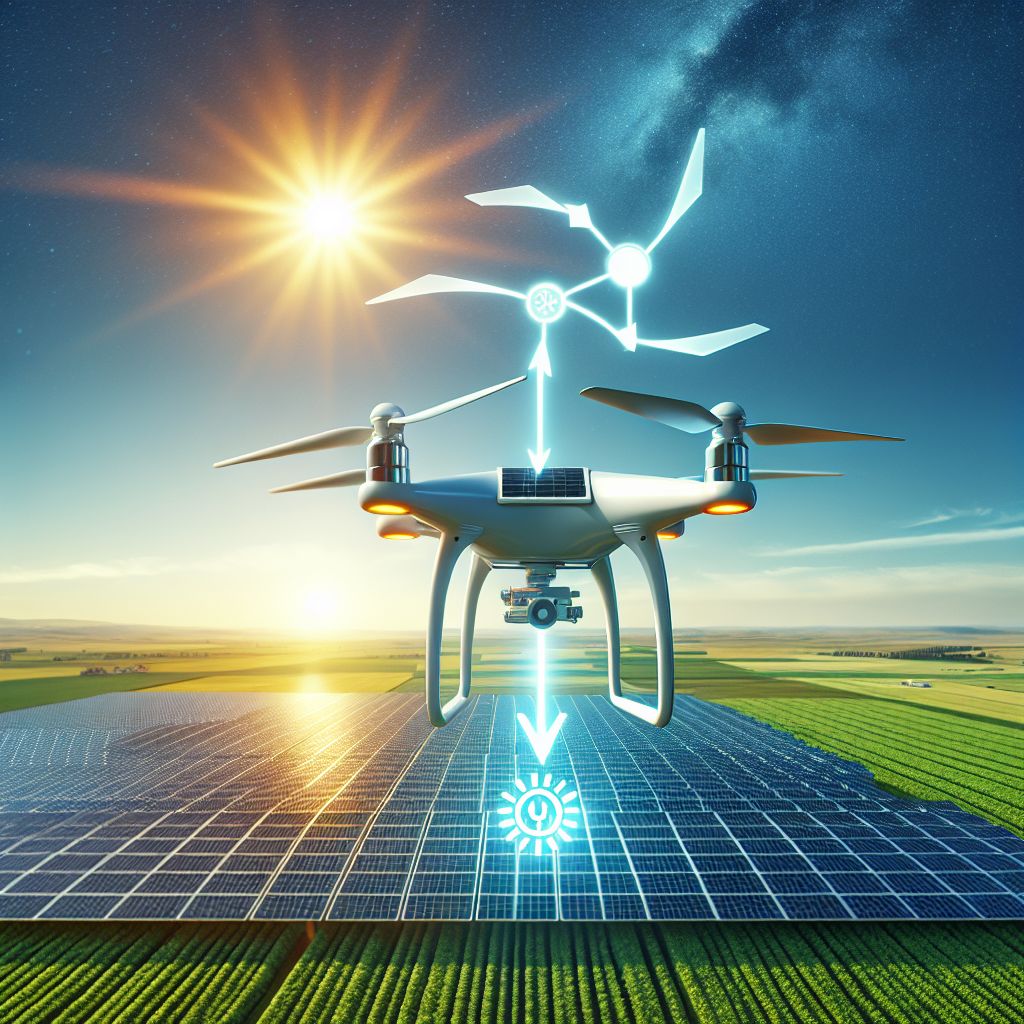
Integrating Solar Power with Drone Technology
Combining solar power with drone technology creates a sustainable and efficient energy ecosystem. By using solar panels to power drones, farmers can extend the operational time of these aerial devices, increasing their utility and effectiveness.
Sourcing Power: Solar Panels Powering Drones
Solar panels can directly power drones, eliminating the need for frequent battery replacements. This integration not only reduces costs but also ensures that drones can operate for extended periods without interruption.
Imagine a drone that can continuously survey a farm throughout the day, powered solely by the sun. This capability transforms how farmers monitor and manage their land, leading to more efficient energy use and better crop management. To explore more about how solar technology is enhancing agricultural practices, check out the benefits of solar panels for farm operations.
Prolonged Flight Time and Coverage Area
With solar-powered drones, flight times are significantly extended. This means that drones can cover larger areas in a single flight, providing comprehensive data and insights. For large farms, this is particularly beneficial as it ensures no part of the land is overlooked.
Environmental Benefits and Carbon Footprint Reduction
Using solar-powered drones contributes to reducing a farm’s carbon footprint. By relying on renewable energy, farmers can minimize their dependence on fossil fuels, leading to a cleaner and more sustainable operation. For more insights on how solar power can enhance farm operations, check out this article on solar panels for farm operations.
Furthermore, this approach aligns with global efforts to combat climate change. By adopting green technologies, farmers not only improve their operations but also contribute positively to the environment.
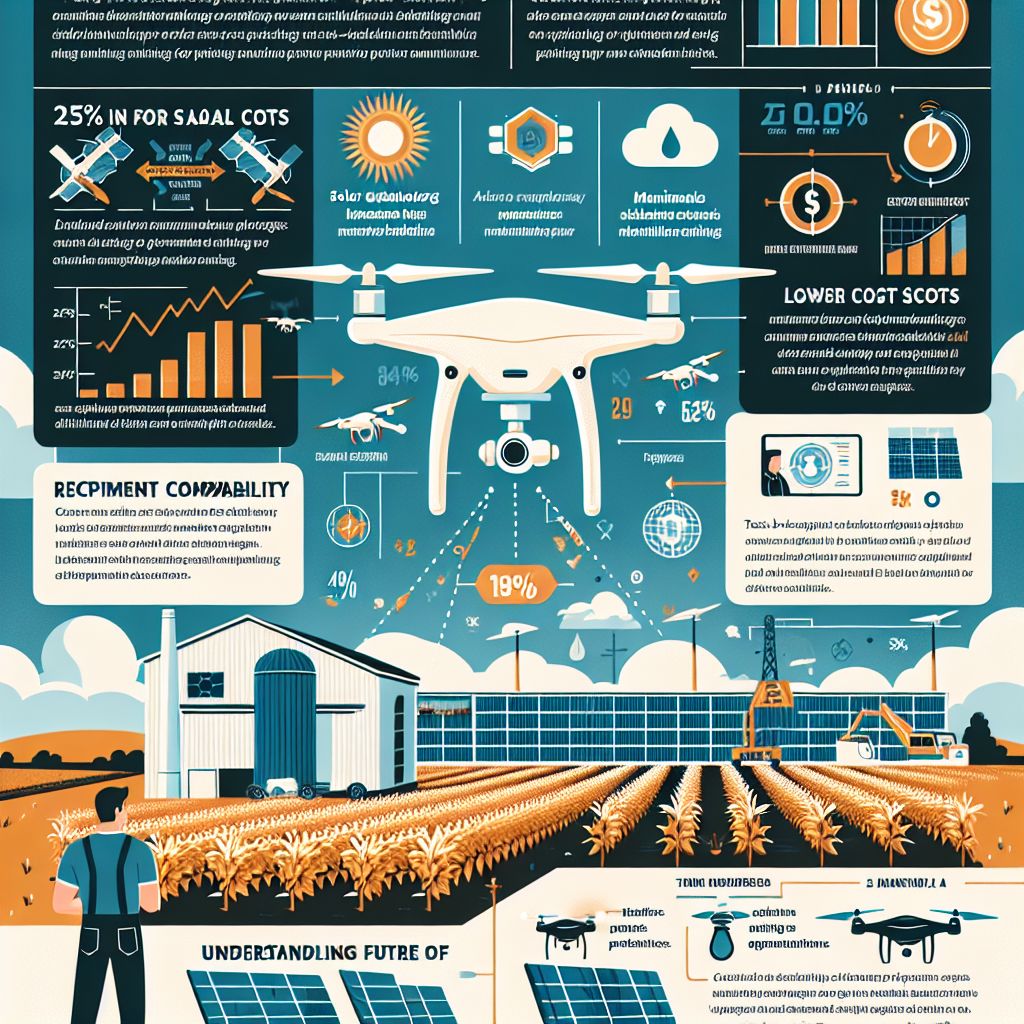
Case Studies: Successful Implementations
Real-world examples highlight the effectiveness of integrating drones with solar technology. These case studies provide valuable insights into how farmers can successfully adopt and benefit from this innovation.
In one case, a mid-sized farm in Texas reported a 25% increase in solar energy efficiency after implementing drone technology. The drones provided detailed data that allowed for precise adjustments and maintenance scheduling, optimizing the farm’s energy output.
Improved Crop Yield in Real-World Examples
Farmers who have adopted drone technology have seen notable improvements in crop yield. By optimizing energy use and ensuring that solar panels operate efficiently, these farmers have more resources to allocate towards irrigation and other critical farming activities.
Cost Savings for Small and Large Farms
Both small and large farms have realized significant cost savings by integrating drones with solar power. The initial investment in drone technology is quickly offset by the reduction in labor costs and increased energy efficiency.
For small farms, drones offer a cost-effective way to monitor solar panels without hiring additional staff. Large farms benefit from the ability to cover expansive areas quickly and efficiently.
Consider the following savings opportunities:
- Reduced labor costs due to automated inspections.
- Lower energy costs from optimized solar panel performance.
- Minimized downtime from proactive maintenance.
Innovations and Technology Adoption
The agricultural sector is rapidly adopting new technologies to improve efficiency and sustainability. Drones are at the forefront of this movement, offering innovative solutions to age-old farming challenges.
As more farmers embrace drone technology, we can expect to see continued advancements and improvements in how these devices are used. The future of farming is undoubtedly bright, with drones playing a pivotal role in driving progress.
In conclusion, the integration of drones with solar technology is a powerful tool for modern farmers. By enhancing solar panel efficiency, reducing costs, and promoting sustainability, drones are transforming the agricultural landscape.
Ensuring Equipment Compatibility and Safety
One of the key considerations when integrating drones with solar technology is ensuring equipment compatibility. Drones must be equipped with the right sensors and cameras to effectively monitor solar panels. Additionally, the software used to analyze data must be compatible with existing farm management systems.
Safety is another crucial factor. Farmers must ensure that drones are operated safely to prevent accidents or damage to equipment. This involves training personnel to handle drones properly and understanding the airspace regulations that apply to drone operations.
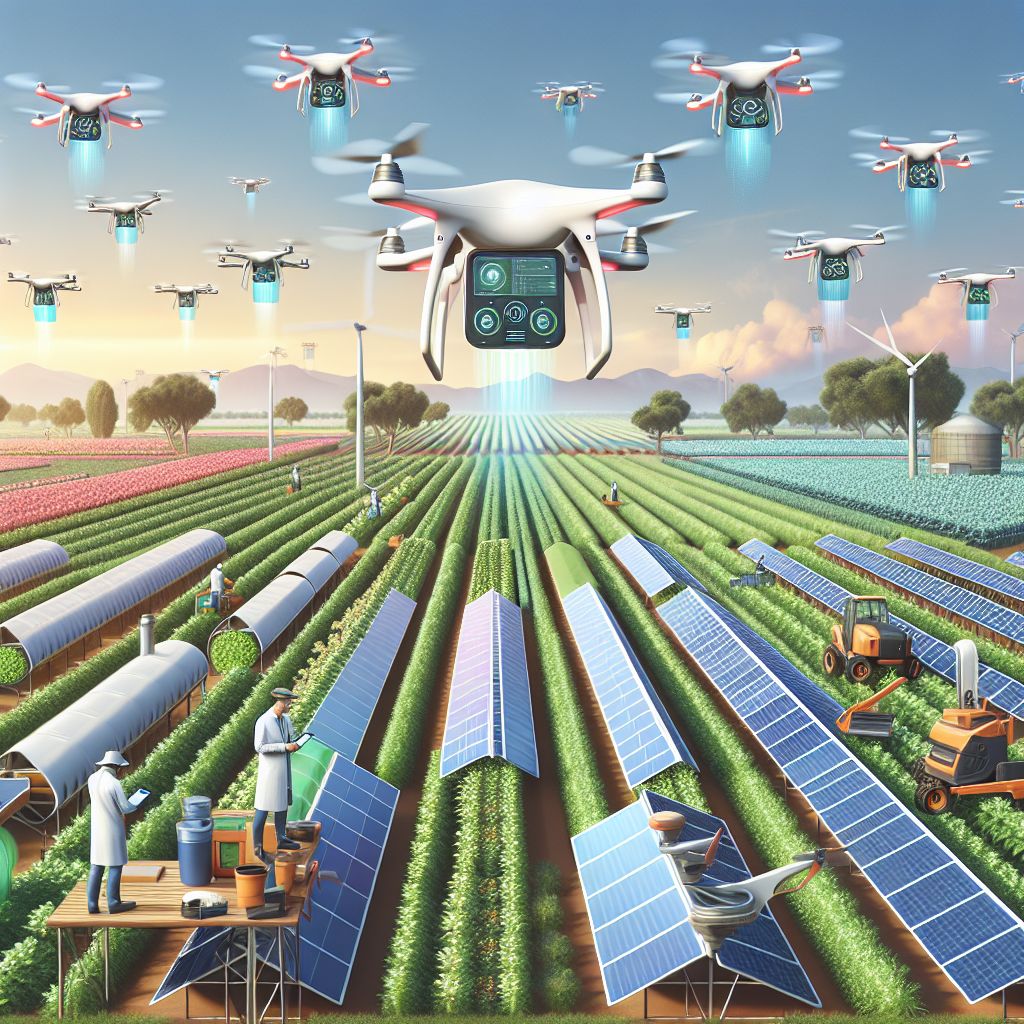
Future of Drones and Solar Technology in Agriculture
The future of agriculture is intertwined with technology, and drones are set to play a significant role. As drone technology advances, we can expect to see improvements in how these devices are used to enhance solar panel efficiency. Innovations in battery life, sensor technology, and data analytics will continue to drive progress.
Farmers who adopt these technologies early stand to benefit the most, as they will have a competitive edge in terms of efficiency and sustainability. The integration of drones and solar technology is not just a trend; it’s a transformative force in agriculture.
Potential Advancements in Tracking and Monitoring
Future advancements in drone technology will likely focus on improved tracking and monitoring capabilities. This includes better sensors that can detect even the smallest inefficiencies in solar panels and more sophisticated software for analyzing collected data.
These advancements will enable farmers to manage their solar energy systems with greater precision, leading to even higher efficiency and productivity. As technology continues to evolve, the possibilities for drone applications in agriculture are virtually limitless.
Long-Term Impact on Agricultural Practices
The long-term impact of drones and solar technology on agriculture is profound. By enhancing energy efficiency and reducing costs, these technologies allow farmers to allocate more resources to other critical areas of their operations, such as crop management and soil health.
Emerging Trends and Developments
Emerging trends in the agricultural sector indicate a growing interest in sustainability and technology integration. Farmers are increasingly looking to drones and solar technology to meet these demands, and as a result, we are seeing more innovations and developments in this space.
As these technologies become more accessible and affordable, we can expect to see wider adoption across farms of all sizes. This shift will lead to more sustainable and efficient agricultural practices, benefiting both farmers and the environment.
Conclusion
The integration of drones with solar technology is revolutionizing agriculture by enhancing solar panel efficiency and promoting sustainability. By reducing operational costs and improving energy use, drones offer farmers a powerful tool to optimize their operations. Learn more about solar power savings and how it can boost farmers’ bottom line.
Review of key facts
Drones can significantly reduce the cost and time associated with solar panel inspections. They provide real-time data that helps farmers make informed decisions about energy management. Additionally, solar-powered drones contribute to a reduction in carbon emissions, aligning with global sustainability goals.
Farmers can expect to see efficiency gains and cost savings, making the initial investment in drone technology worthwhile. By adopting these technologies, farmers can improve their operations and contribute to a more sustainable future.
Is using Drones to Boost Solar Panel Efficiency a Good Investment for Farmers?
Absolutely. The use of drones to enhance solar panel efficiency is a smart investment for farmers looking to optimize their energy use and reduce costs. The long-term benefits, including increased efficiency, sustainability, and productivity, far outweigh the initial investment.
Frequently Asked Questions
Many farmers have questions about how drones can improve their operations. Here are some of the most common inquiries:
How do drones improve solar panel inspections?
Drones equipped with infrared cameras can quickly identify issues like defective cells or dirt accumulation on solar panels. This allows for timely maintenance, ensuring panels operate at peak efficiency.
What efficiency gains can farmers expect?
Farmers can expect to see a 20-30% increase in solar panel efficiency by using drones for regular inspections and maintenance. This translates to more energy production and lower operational costs. For more information on the feasibility and benefits of solar panels for farm operations, check out this article.
Are there any environmental benefits to this technology?
Yes, using drones powered by solar energy reduces reliance on fossil fuels, decreasing a farm’s carbon footprint. This contributes to environmental sustainability and aligns with global efforts to combat climate change. Learn more about solar-powered drones and their impact.
Additionally, the efficient use of resources leads to less waste and more sustainable farming practices.
- Reduced carbon emissions due to renewable energy use.
- Minimized environmental impact from traditional inspection methods.
- Contribution to global sustainability goals.
What initial investment is required for farmers?
The initial investment for drone technology can range from $1,000 to $5,000, depending on the size of the farm and the complexity of the drone system. This cost is offset by the long-term savings and efficiency gains.
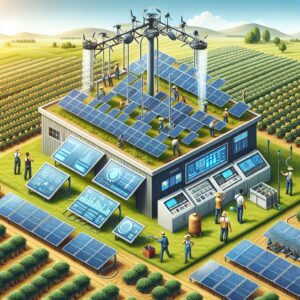
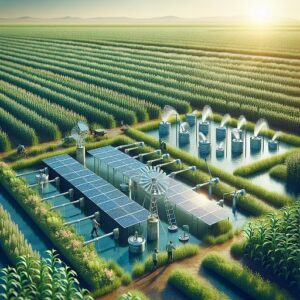
Farmers should consider this investment as a step towards modernizing their operations and improving their bottom line. For instance, using drones to enhance solar irrigation systems can lead to significant efficiency improvements.
In addition to the purchase cost, farmers should budget for training and maintenance to ensure drones are used effectively and safely.
Consider the following costs: implementing an efficient drone-assisted solar irrigation system can significantly reduce long-term expenses for farmers.
- Drone purchase: $1,000 – $5,000
- Training and certification: $500 – $1,000
- Annual maintenance: $200 – $500
“Investing in drone technology has transformed our farm operations, leading to significant cost savings and increased efficiency.” – A farmer in Iowa
How do regulations affect the use of drones in farming?
Regulations play a critical role in how drones are used in farming. Farmers must comply with airspace regulations, which govern where and how drones can be flown. This includes obtaining necessary permits and ensuring that drone operators are properly trained.
Staying informed about regulatory changes is essential for farmers to ensure compliance and avoid penalties. By working with regulatory bodies, farmers can maximize the benefits of drone technology while adhering to legal requirements.
Overall, the use of drones to boost solar panel efficiency offers farmers a powerful tool to enhance their operations. By investing in this technology, farmers can improve energy use, reduce costs, and contribute to a more sustainable agricultural future.

Leave a Reply