

Key Takeaways
- Agricultural solar systems can reduce farm energy expenses by 40-60%, providing significant long-term cost savings for operations of all sizes
- Modern solar installations offer farmers energy independence, protecting agricultural operations from grid outages and fluctuating utility rates
- Federal REAP grants can cover up to 25% of installation costs, while tax incentives can offset an additional 30% of the investment
- Energyscape Renewables provides customized solar solutions specifically designed for the unique power demands of farming operations
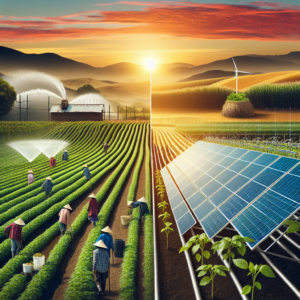
- Agrivoltaic systems allow farmers to generate solar power while simultaneously using the same land for crop production, maximizing land value
The modern farm faces constant pressure to reduce operational costs while maintaining productivity. Rising energy bills can quickly eat into already tight profit margins. Solar panels offer farmers a practical solution to this persistent challenge, transforming how agricultural operations manage their energy needs and budgets.
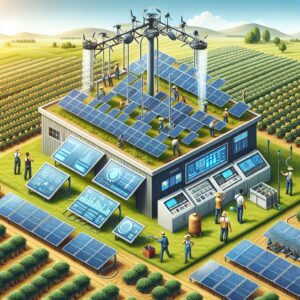
Today’s agricultural operations depend heavily on reliable power for everything from irrigation to climate control in livestock buildings. Energyscape Renewables helps farmers harness abundant sunlight to power these essential systems, creating energy self-sufficiency while dramatically reducing monthly utility costs. The company’s agricultural solar installations are specifically engineered to withstand harsh farm conditions while delivering decades of clean, affordable power.
How Solar Panels Cut Farm Energy Costs by 40-60%
Farm operations typically consume massive amounts of electricity to power irrigation systems, climate control for livestock buildings, milk cooling systems, and various processing equipment. These energy demands create a significant financial burden for agricultural businesses of all sizes. Solar panel systems strategically designed for agricultural applications can slash these costs by 40-60%, creating immediate positive cash flow improvements.
The cost savings come from multiple directions. First, generating your own electricity reduces or eliminates expensive utility bills that typically increase year after year. Second, many regions offer net metering programs that allow farmers to sell excess power back to the grid, creating additional revenue streams. Third, solar installations qualify for accelerated depreciation, creating significant tax advantages specifically beneficial to farm businesses.
Most importantly, solar panels provide predictable energy costs for 25+ years. While traditional utility rates continue climbing at 3-5% annually, farmers with solar installations lock in their energy costs, creating budget stability that’s increasingly rare in modern agriculture. Many farmers report complete system payback periods of just 4-7 years, with decades of essentially free electricity thereafter. To learn more about the benefits, check out this guide on using solar panels for farm power.
“After installing our 50kW system, our dairy operation’s monthly electric bill dropped from $1,200 to less than $200. The system will completely pay for itself in under 5 years, and we’re protected from rate increases for the next two decades.” – James Wilson, Clearview Dairy Farm
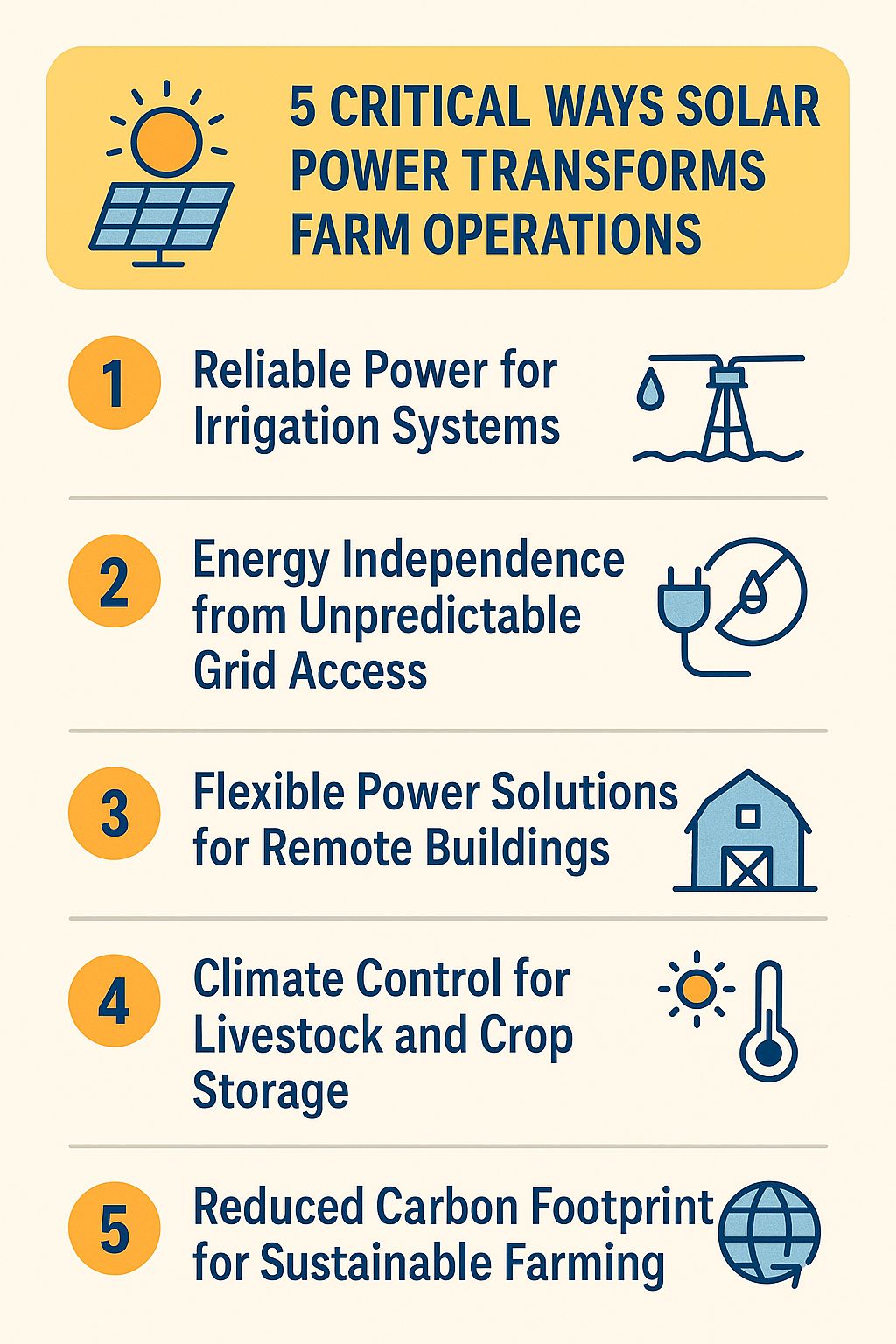
5 Critical Ways Solar Power Transforms Farm Operations
Beyond simple cost savings, solar power systems create operational advantages that traditional grid connections simply cannot match. These benefits address many of the persistent challenges modern farmers face daily.
Reliable Power for Irrigation Systems
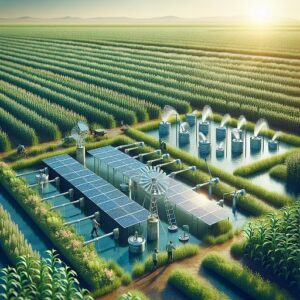
Irrigation represents one of the largest energy demands on most farms. Solar-powered irrigation systems eliminate fuel costs for diesel pumps while providing consistent, reliable water delivery exactly when crops need it most. Solar irrigation solutions can be designed as grid-connected or completely off-grid systems, giving farmers flexibility based on their specific operation and location.
These systems can be configured with battery storage components that ensure irrigation continues even during cloudy periods or nighttime hours. For farms in remote locations, solar irrigation eliminates the need for expensive grid extension projects that might otherwise cost tens of thousands of dollars per mile.
Energy Independence from Unpredictable Grid Access
Rural power outages can be devastating to farm operations, especially during critical harvest periods or extreme weather conditions. A single extended outage during summer heat can result in significant livestock stress or loss. Solar power systems with battery storage provide critical backup power that activates instantly when grid failures occur.
This energy independence also protects farms from the volatile price fluctuations that characterize traditional utility markets. While neighboring operations remain vulnerable to peak demand charges and seasonal rate increases, solar-powered farms enjoy stable, predictable energy costs year-round. This predictability creates significant advantages for long-term business planning and cash flow management.
For completely off-grid properties, solar represents the most cost-effective power solution available today. Modern systems can be designed to handle even the most demanding agricultural loads, from grain drying equipment to refrigeration systems, without requiring any connection to traditional utilities. For more insights, check out this off-grid farming guide.
Flexible Power Solutions for Remote Buildings
Remote farm buildings often present energy challenges that solar power elegantly solves. Whether you need to power equipment storage facilities, processing buildings, or worker housing, solar installations can be customized to meet these specific demands. Modular solar systems allow for strategic placement exactly where power is needed, eliminating costly trenching and underground wiring projects.
These distributed energy systems improve overall farm resilience by creating multiple power generation points rather than relying on a single connection. When one building’s system produces excess power, it can offset consumption elsewhere on the property through net metering arrangements, further maximizing the financial benefits of your solar investment.
Climate Control for Livestock and Crop Storage
Temperature management represents a major energy expense for livestock operations and crop storage facilities. Solar thermal systems can significantly reduce heating costs during winter months, while solar electric systems power cooling equipment during summer heat. These climate control applications often deliver the fastest return on investment of any agricultural solar application due to the high energy demands they replace.
For dairy operations, solar thermal systems can pre-heat water for cleaning equipment and facilities, cutting propane or natural gas expenses dramatically. In greenhouse operations, solar-powered ventilation and heating systems create ideal growing conditions year-round while slashing traditional energy costs. These specialized applications demonstrate how solar technology can be tailored to address agriculture’s most energy-intensive activities.
Reduced Carbon Footprint for Sustainable Farming
Beyond the immediate financial benefits, solar power significantly reduces a farm’s environmental impact. This sustainability advantage creates marketing opportunities for farms selling direct-to-consumer, where eco-conscious buyers increasingly favor products from environmentally responsible operations. Many farms successfully leverage their solar investments in marketing materials, creating premium pricing opportunities that further enhance return on investment.
Solar installations also provide visible evidence of a farm’s commitment to responsible environmental stewardship. For operations working toward organic or other sustainability certifications, renewable energy adoption often satisfies key requirements while simultaneously reducing operating costs. This dual benefit of marketing advantage and cost reduction makes solar particularly valuable for farms focusing on high-value specialty crops and products.
Solar power critically transforms farm operations across several dimensions, from financial and environmental impacts to innovation and resilience. Below is a table detailing the most important ways solar power is revolutionizing farming, with evidence from recent studies and real-world examples.
|
Transformation Area |
Impact on Farm Operations |
Source |
|---|---|---|
|
Increased Crop Yield |
Agrivoltaics can boost yields by shading crops, reducing heat stress, and optimizing growing conditions. | |
|
Reduced Energy Costs |
Solar-generated electricity powers lights, irrigation, machinery, and housing, saving on energy expenses. | |
|
Dual Revenue Streams |
Farmers generate income both from crops/livestock and solar energy by selling electricity to the grid. | |
|
Water-Use Efficiency |
Shading from solar panels reduces evaporation, protects crops, and decreases irrigation requirements. | |
|
Protection for Livestock |
Panels provide shade for grazing animals, improving welfare and productivity (less heat stress). | |
|
Improved Pollinator Habitat |
Solar sites can host native plants and flowers, supporting pollinators and boosting crop health. | |
|
Enhanced Climate Resilience |
Solar setups protect against drought, extreme heat, and volatile weather, making farms more adaptable. | |
|
Sustainable Drying Solutions |
Solar-powered equipment efficiently dries crops, protecting yields from pests and weather. | |
|
Soil Preservation |
Dual-use solar fields help prevent erosion, conserve soil moisture, and may even increase soil carbon. | |
|
Reduced Carbon Emissions |
Farms transition away from fossil fuels, lowering CO₂ output and contributing to climate mitigation. |
Each of these areas demonstrates how solar power contributes to both agricultural productivity and environmental stewardship, leading to healthier, more resilient, and financially secure farms (1, 2, 3, 4, 5, 6).
Real Farmers See Real Results: Solar Success Stories
The transformative power of agricultural solar is best demonstrated through real-world examples of farms that have successfully integrated this technology. These case studies reveal both the financial and operational impacts that well-designed solar systems deliver for diverse farming operations.
Dairy Farm Slashes Electric Bills with Solar Installation
Mountain View Dairy installed a 120kW solar system to power their milking parlor, cooling systems, and processing equipment. Their monthly electric bills dropped from $3,200 to just $450, representing an 86% reduction in grid energy costs. The system generates approximately 180,000 kWh annually, more than offsetting the farm’s substantial electricity demands. With USDA grant funding covering 25% of installation costs and additional tax incentives, the system achieved complete payback in just 4.5 years. Learn more about how solar panels can reduce energy costs for farms.
Beyond the direct savings, Mountain View reports improved reliability during summer thunderstorm season when grid outages previously disrupted milking operations. The battery backup component of their solar system now provides seamless power transitions during outages, eliminating milk losses that previously cost thousands of dollars annually. This reliability factor alone justified the investment, according to farm owner Michael Harrington.
Off-Grid Orchard Operations Powered Entirely by the Sun
Riverview Orchards faced prohibitive costs to extend utility lines to their remote 200-acre apple and peach operation. Instead, they invested in a comprehensive solar solution with substantial battery storage capacity. The 85kW system powers irrigation pumps, refrigerated storage, and on-site processing equipment with zero connection to traditional utilities. The system eliminated approximately $18,000 in annual diesel generator costs while providing significantly more reliable power.
The orchard reports additional benefits beyond direct energy savings. Their solar-powered refrigeration system maintains more consistent temperatures than the previous generator-based system, resulting in improved fruit quality and longer storage life. These quality improvements have helped the orchard secure premium pricing from wholesale buyers, creating revenue enhancements that complement their energy cost reductions.
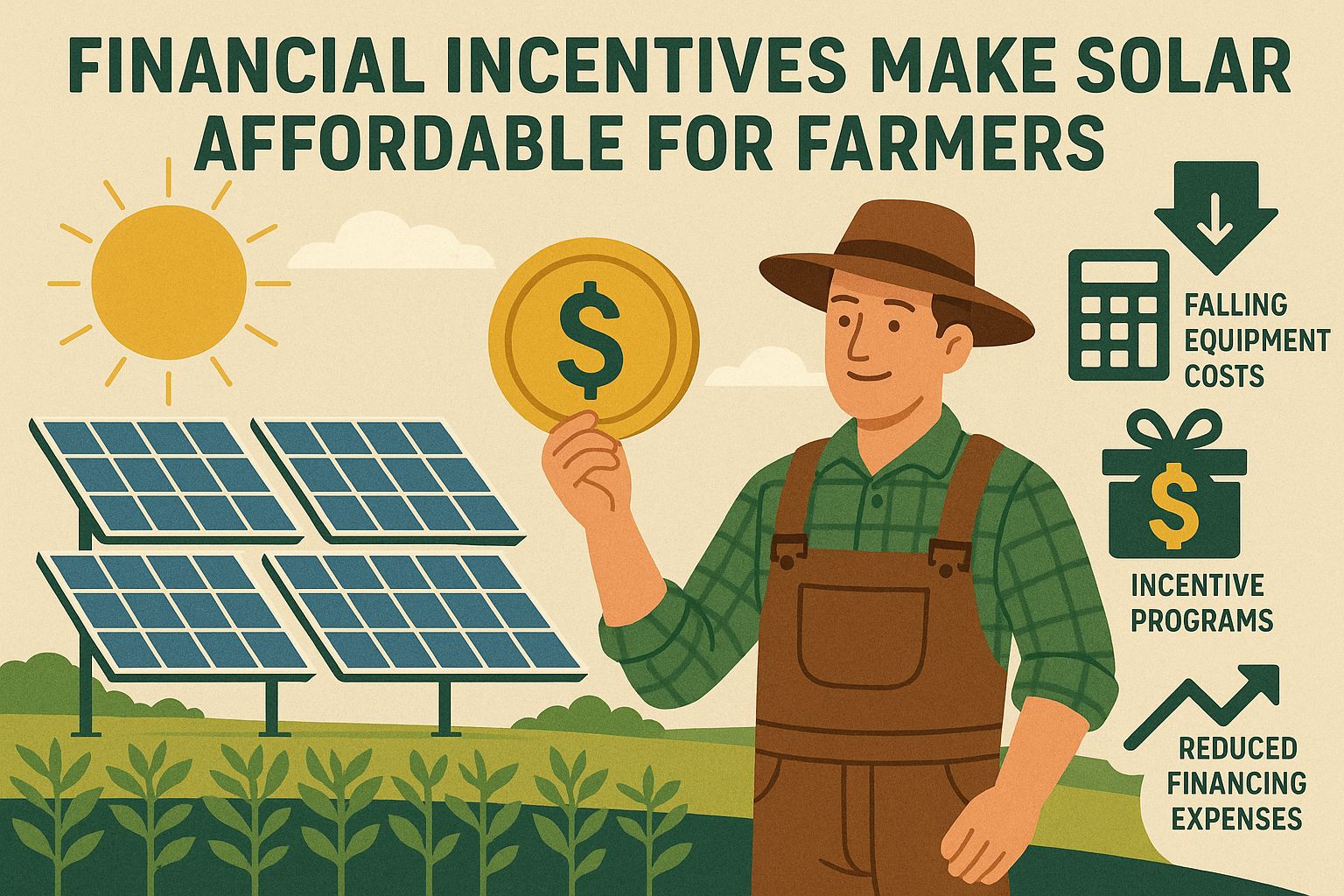
Financial Incentives Make Solar Affordable for Farmers
The economics of agricultural solar have improved dramatically in recent years thanks to both falling equipment costs and generous incentive programs specifically designed for farm operations. These financial supports significantly reduce both upfront costs and ongoing financing expenses, making solar increasingly accessible to operations of all sizes.
USDA REAP Grants Cover Up to 25% of Installation Costs
The USDA Rural Energy for America Program (REAP) offers grants specifically designed to help agricultural producers adopt renewable energy systems. These grants can cover up to 25% of eligible project costs, substantially reducing the initial investment required. The program provides both grants and loan guarantees, with funding cycles typically opening twice annually. Competition for these funds can be substantial, but farms with well-developed project plans and demonstrated energy needs consistently secure this valuable support.
Federal Tax Credits Lower Initial Investment
Current federal tax incentives provide a 30% investment tax credit for qualified solar installations, creating immediate tax liability reductions for profitable farming operations. This credit applies to the entire system cost including equipment, installation labor, and permitting fees. For farms unable to utilize the full credit in the installation year, carryforward provisions allow the benefits to extend to future tax years. These credits work alongside USDA grants, meaning a farm could potentially offset over 50% of project costs through combined incentive programs. For more insights on utilizing solar energy in farming, explore the benefits of solar panels for farms.
Accelerated Depreciation Benefits for Agricultural Businesses
Farm businesses can further enhance solar economics through accelerated depreciation opportunities. Current tax provisions allow for 100% bonus depreciation in year one for qualified solar equipment, creating substantial tax advantages beyond the direct investment credits. This accelerated schedule significantly improves project cash flows during the critical early years, effectively shortening payback periods and improving overall return on investment. When combined with other available incentives, these depreciation benefits can make solar installations cash-flow positive from day one for many agricultural operations.
State-Level Incentives That Boost Your Bottom Line
Beyond federal programs, many states offer additional incentives specifically designed to support agricultural solar adoption. These state-level programs vary widely but often include production-based incentives, property tax exemptions, sales tax exemptions, and specialized agricultural grants. Some states have created specific carve-outs for farm operations within their renewable portfolio standards, creating additional value streams for agricultural solar producers.
The combination of federal, state, and sometimes local incentives creates a powerful financial case for agricultural solar installations. Many farmers report that these layered incentives reduced their effective system costs by 60-75%, dramatically improving project economics. Working with solar providers experienced in agricultural applications ensures you capture all available incentives, as program requirements and application procedures can be complex. To understand the benefits of using solar panels on your farm, it’s crucial to be aware of all potential incentives and resources available.
Solar Panel Systems Designed Specifically for Farm Operations
Agricultural solar installations differ significantly from residential or commercial systems due to the unique demands of farm environments. From dust and debris considerations to specialized mounting options for agricultural buildings, farms require thoughtfully engineered systems that address their specific operational realities.
Ground-Mount vs. Roof-Mount: Which Works Better for Farms?
Farm operations typically have multiple installation options that urban or suburban properties lack. Ground-mounted systems allow for optimal orientation and angle without building constraints, maximizing energy production. These systems can be installed without disrupting active cropland by utilizing field borders, drainage areas, or less productive sections of property. Some mounting systems even allow for continued grazing underneath the panels, maximizing land use efficiency. For more insights, explore how solar panels impact farm power operations.
Roof-mounted systems utilize existing building footprints, preserving valuable land for agricultural production. Modern farm buildings with metal roofing often provide ideal solar mounting surfaces requiring minimal structural reinforcement. The best solution depends on your specific farm layout, available space, and energy requirements. Many farms ultimately implement a combination approach, with strategic placement of both ground and roof systems to maximize overall production and efficiency.
Battery Storage Options for 24/7 Power Reliability
Energy storage technologies have advanced dramatically in recent years, making battery backup systems increasingly practical for agricultural applications. These systems store excess daytime production for use during evening hours or cloudy periods, creating true energy independence. For critical farm systems like refrigeration or livestock ventilation, battery backup provides essential protection against outages that could otherwise cause significant losses.
Modern agricultural battery systems can be scaled to match specific farm needs, from small systems designed to power only essential equipment during outages to comprehensive solutions capable of taking entire operations off-grid. The economics of battery storage continue to improve as manufacturing scales up and technology advances, with costs dropping approximately 80% over the past decade. Many farmers now incorporate at least some storage capacity into new solar installations to enhance system resilience and maximize self-consumption.
Dual-Use Agrivoltaics: Grow Crops While Generating Power
Innovative agrivoltaic systems allow farmers to produce both electricity and crops on the same land simultaneously. These specialized installations elevate solar panels above cropland, allowing machinery access underneath while creating beneficial partial shade for certain crops. Research demonstrates that some crops actually perform better under these conditions, with reduced water requirements and protection from extreme heat or sun damage.
Agrivoltaic systems are particularly beneficial for high-value specialty crops that benefit from partial shade, including certain berries, leafy greens, and herbs. The dual income streams from both electricity generation and crop production significantly improve land-use economics, particularly on farms with limited acreage. For livestock operations, solar grazing programs allow animals to maintain vegetation under and around panels while benefiting from the shade they provide during hot weather.
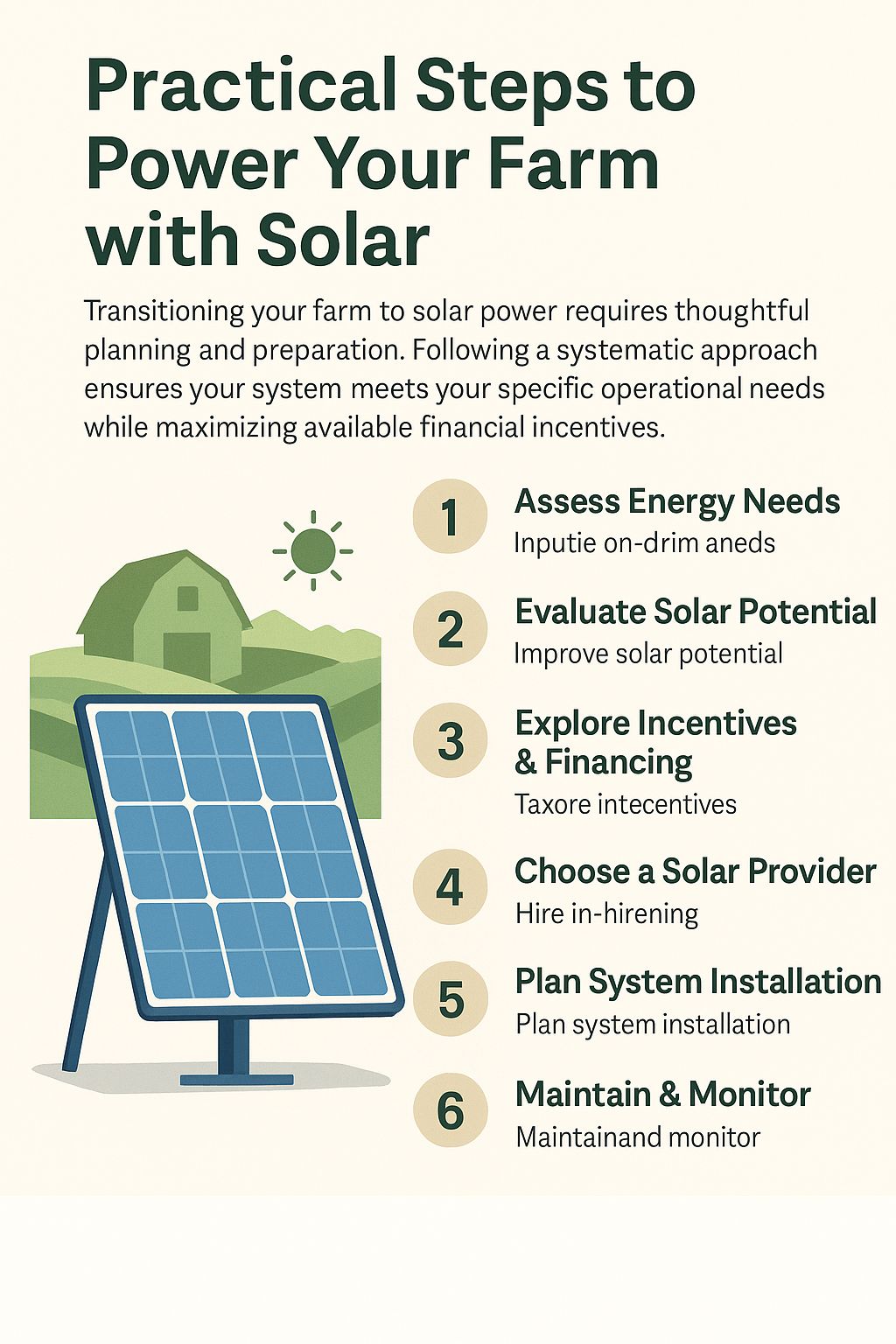
Practical Steps to Power Your Farm with Solar
Transitioning your farm to solar power requires thoughtful planning and preparation. Following a systematic approach ensures your system meets your specific operational needs while maximizing available financial incentives.
1. Energy Audit: Identify Your Farm’s Actual Power Needs
Before sizing a solar system, conduct a comprehensive energy audit to understand your farm’s exact consumption patterns. This audit should analyze at least 12 months of utility data to capture seasonal variations in energy use. Identify major loads and their operational schedules, paying particular attention to equipment with high startup power requirements. Understanding these patterns allows for precise system sizing that avoids expensive overcapacity while ensuring sufficient production.
Many utility companies offer free or subsidized energy audits specifically for agricultural operations. These professional assessments often identify efficiency improvements that can reduce your overall energy requirements before solar installation, potentially decreasing your necessary system size and initial investment. Simple upgrades like LED lighting or variable frequency drives on pumps and motors can substantially reduce your baseline energy needs.
2. System Design: Match Solar Capacity to Farm Requirements
Effective agricultural solar design balances energy production needs with available installation space and budget constraints. Your system should be engineered specifically for your operation’s consumption patterns, with capacity to handle peak demands during critical periods. The design process should consider future expansion plans, allowing for modular growth as farm operations evolve or energy needs increase.
Working with solar providers experienced in agricultural applications ensures your system addresses farm-specific considerations like dust management, equipment access, and compatibility with existing farm electrical systems. The design should maximize available incentives through strategic component selection and system sizing, as some programs have specific capacity thresholds or technology requirements.
3. Financing Options: Ways to Pay for Your Solar Installation
Agricultural operations have diverse financing options beyond traditional cash purchase or conventional loans. Specialized agricultural lenders offer solar-specific financing packages with terms structured around projected energy savings and available incentives. USDA loan guarantee programs can help secure favorable rates and terms even for farms with limited credit history.
Power purchase agreements (PPAs) represent another increasingly popular option, allowing farms to install solar with zero upfront cost. Under these arrangements, a third party owns and maintains the system while the farm purchases the generated electricity at a predetermined rate typically well below utility costs. After a specified period (usually 7-10 years), the farm typically has the option to purchase the system at a significantly reduced price, creating even greater long-term savings.
4. Installation Process: What to Expect on Your Farm
Agricultural solar installations typically require 2-6 weeks depending on system size and complexity. The process begins with site preparation and foundation work, followed by mounting structure installation, panel placement, and electrical integration. Professional installers will coordinate with your farm operations to minimize disruption during critical periods, often staging work around harvesting or planting schedules.
Utility interconnection represents a critical phase requiring coordination with your local power provider. This process includes safety inspections, meter installation, and final system commissioning. Experienced agricultural solar providers handle this complex paperwork and permitting process, navigating the specific requirements of rural electric cooperatives or municipal utilities that often serve farm communities.
Modern monitoring systems allow you to track production in real-time through smartphone apps or web interfaces, providing immediate visibility into system performance and energy generation. These monitoring platforms often identify potential issues before they impact production, allowing for proactive maintenance. For more insights, explore how drones boost solar irrigation efficiency for farmers.
5. Maintenance Requirements: Keep Your System Running Efficiently
Agricultural solar systems require minimal maintenance compared to other farm equipment. Regular panel cleaning represents the most important maintenance task, particularly in dusty farming environments or areas with limited rainfall. Most systems benefit from cleaning 2-4 times annually, using specialized equipment that won’t damage panel surfaces or mounting hardware.
Annual electrical inspections ensure optimal performance and identify any developing issues before they impact production. These inspections typically take just a few hours and can often be scheduled during slower farming periods to avoid operational disruptions. Many agricultural solar providers offer comprehensive maintenance packages that include regular cleaning, inspection, and performance verification for a single annual fee.
Future-Proof Your Farm with Solar Power
Investing in solar technology positions your farm for long-term sustainability in both environmental and financial terms. As agricultural input costs continue rising and climate challenges intensify, energy self-sufficiency provides a critical buffer against market volatility. Solar installations create predictable energy costs for decades, allowing for more accurate long-term business planning and budgeting than is possible with traditional utility connections.
The modular nature of solar technology allows for strategic expansion as farm operations grow or energy needs evolve. Initial installations can focus on powering your most critical or energy-intensive systems, with additional capacity added over time as capital becomes available. This scalability creates a practical path to energy independence even for farms with limited initial investment capacity.
Conclusion
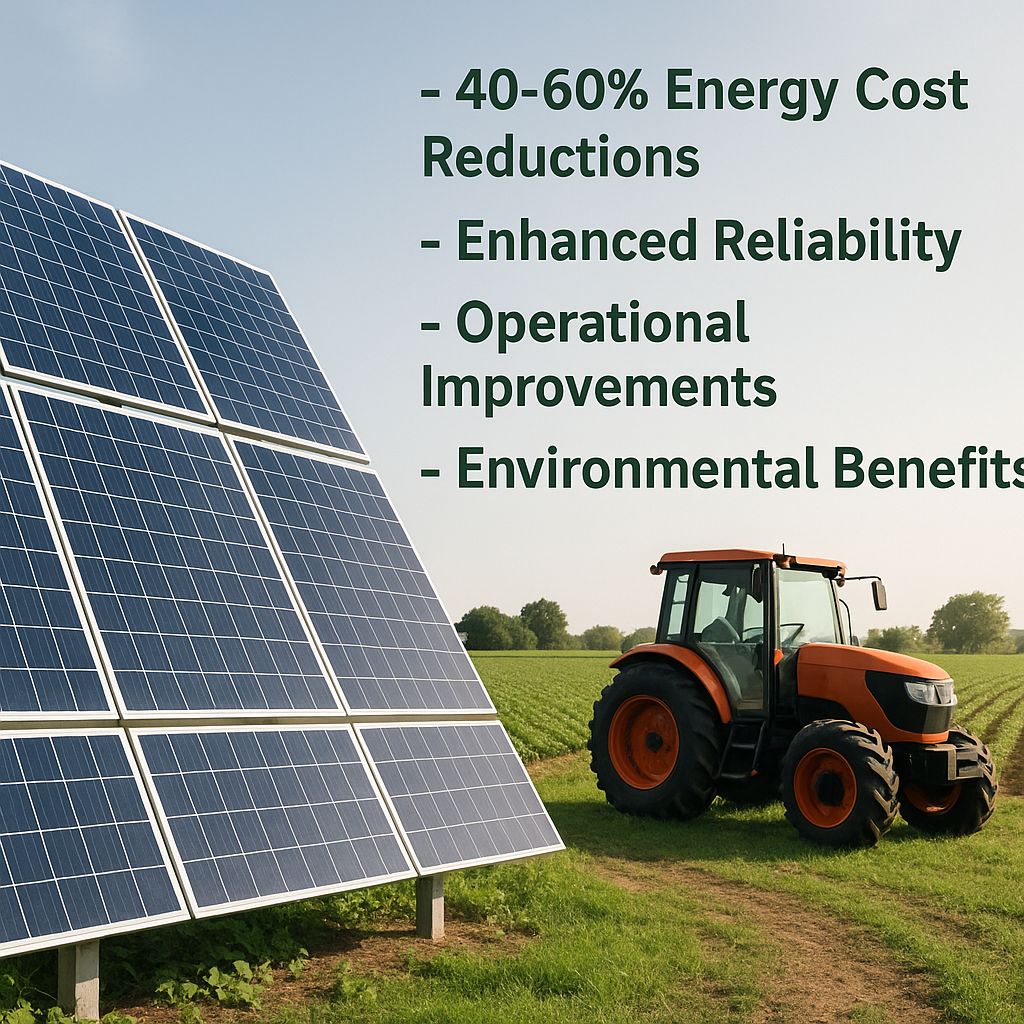
Solar power represents a transformative technology for modern agricultural operations, addressing multiple challenges simultaneously. The economic benefits alone – with 40-60% energy cost reductions – create a compelling case for adoption. When combined with enhanced reliability, operational improvements, and environmental benefits, the total value proposition becomes even stronger.
The technological advancements in agricultural solar have made these systems increasingly practical for farms of all sizes and types. From specialized mounting systems designed for agricultural buildings to integrated battery storage for critical systems, today’s solutions address the specific needs of modern farm operations. The financial incentive landscape further improves project economics, with multiple programs specifically targeting agricultural renewable energy adoption.
As agriculture faces growing pressure to simultaneously increase production while reducing environmental impact, solar power offers a proven solution that addresses both challenges. By generating clean, renewable energy on-site, farms reduce their carbon footprint while gaining energy independence and cost stability for decades to come. Learn more about how solar panels for farms can reduce energy costs.
With All These Benefits, Are Solar Panels Worth the Investment for the Farmer
For the vast majority of farm operations, solar panels represent one of the best available returns on investment among all potential farm improvements. With proper system design, available incentives, and appropriate financing, most agricultural solar installations achieve complete payback in 4-7 years while delivering 25+ years of productive life. Few other farm investments offer this combination of immediate positive cash flow, long-term returns, and operational benefits.
Frequently Asked Questions
Here are answers to common questions farmers ask when considering solar power for their operations.
How long does it take for a farm solar system to pay for itself?
Most agricultural solar systems achieve complete payback within 4-7 years, depending on electricity costs, available incentives, and system design. Operations with high electricity consumption and access to multiple incentive programs often see payback periods on the shorter end of this range. After this initial recovery period, systems typically provide 20+ additional years of essentially free electricity.
The financial calculation improves further when considering the rising costs of traditional electricity. While solar provides fixed energy costs for decades, utility rates typically increase 3-5% annually. This escalation means the effective savings grow each year as the gap between solar and utility costs widens.
Can solar panels withstand extreme weather conditions on farms?
Modern agricultural solar systems are engineered specifically to withstand harsh farm environments and extreme weather. Quality panels are tested to resist hail impact, high winds, snow loads, and temperature extremes. Most systems installed today can withstand winds of 120+ mph and hail up to 1 inch in diameter, making them suitable even for storm-prone regions. For more information on how to protect your farm, check out this farmers guide.
Mounting systems for agricultural applications utilize reinforced structural components designed specifically for exposed rural settings. Ground-mounted systems include deep foundations that prevent movement even in saturated soil conditions, while roof-mounted systems use specialized attachments for metal agricultural buildings.
Most agricultural solar equipment carries 25-30 year warranties, reflecting manufacturer confidence in long-term performance even in challenging environments. Insurance companies typically cover solar installations under standard farm policies with minimal premium increases, recognizing their durability and reliability.
“We installed our system just before a major derecho hit our region with 100+ mph winds. While we lost several outbuildings and significant crop damage, our solar array remained completely intact and operational. It was actually providing the only power we had for nearly two weeks after the storm.” – Robert Klein, Prairie Winds Farm
What happens to excess power my farm solar system generates?
Most agricultural solar installations connect to the grid through net metering arrangements that credit your account for excess production. During high-production periods (typically summer months), your system may generate more electricity than your farm consumes. This excess flows back to the grid, spinning your meter backward or generating credits on your utility account. These credits then offset consumption during lower-production periods or nighttime hours. To learn more about solar systems, you can read about off-grid farm solar panels.
The specific compensation structure for excess generation varies by state and utility. Some programs provide full retail value for excess production, while others use avoided cost rates that may be somewhat lower. Understanding your local net metering policies is critical when calculating potential returns on solar investments. For farms with significant seasonal variation in energy use, properly sized systems can effectively “bank” summer production to offset winter consumption. To further explore how to optimize your solar investment, consider reading about common efficiency killers on a farm’s solar panels.
Do I need to replace my entire electrical system to install solar?
In most cases, existing farm electrical systems require minimal modifications to accommodate solar power. The solar array connects to your electrical system at your main service panel or sometimes at a dedicated sub-panel for specific high-consumption equipment. This integration typically requires only modest adjustments to your existing infrastructure, preserving previous electrical investments.
However, older farm electrical systems might benefit from upgrades to maximize solar compatibility and efficiency. Farms with outdated service panels, insufficient capacity, or non-code-compliant wiring may require some modernization before solar installation. These improvements often qualify for the same incentive programs as the solar equipment itself, creating an opportunity to update aging infrastructure at significantly reduced cost.
How much land is typically required for a farm solar installation?
Land requirements depend entirely on system capacity and mounting configuration. As a general guideline, each kilowatt of ground-mounted solar capacity requires approximately 100-150 square feet of land area, including space between rows for maintenance access. For context, a 50kW system (suitable for many medium-sized farm operations) would require roughly 5,000-7,500 square feet, or approximately 0.1-0.2 acres.
Roof-mounted systems eliminate land use concerns by utilizing existing building footprints. Many agricultural buildings provide ideal solar mounting surfaces with their large, unobstructed roof areas. A typical equipment barn might support 20-30kW of solar capacity without requiring any additional land.
Innovative mounting approaches can minimize productive land use while maximizing generation capacity. Elevated systems allow for continued equipment access underneath panels, while tracking systems increase per-acre production through more efficient solar collection. Some farmers strategically place solar installations on less productive land areas, drainage setbacks, or buffer zones to preserve prime cropland while still generating renewable energy.
Agrivoltaic systems represent the ultimate land efficiency, allowing for simultaneous crop production and energy generation on the same acreage. These dual-use approaches are gaining popularity, particularly for specialty crops that benefit from partial shade conditions. Learn more about the benefits of using solar panels for farm operations.
For farms concerned about preserving productive land, solar developers can provide detailed site assessments that identify optimal installation locations based on both solar exposure and land quality considerations. This thoughtful approach ensures renewable energy generation complements rather than competes with agricultural production.
Solar panels are becoming increasingly popular among farmers as a sustainable energy solution. By harnessing solar power, farmers can significantly reduce their electricity costs and minimize their carbon footprint. Additionally, solar panels provide a reliable source of energy that can be used to power various farm operations, such as irrigation systems and machinery. For those looking to go completely off-grid, understanding the necessity of battery use in conjunction with solar panels is crucial. This combination ensures that energy is stored for use during cloudy days or at night, providing a continuous power supply.


Leave a Reply