
Key Takeaways
- Solar panels can reduce farm energy costs by 70-100%, creating significant long-term savings for agricultural operations of all sizes.
- Federal tax credits currently cover 30% of installation costs, with additional state and USDA incentives potentially covering up to 60% of your investment.
- Agrivoltaics—the practice of growing crops under solar panels—can increase certain crop yields by up to 30% while generating electricity simultaneously.
- Modern solar systems provide reliable backup power during grid outages, ensuring critical farm operations continue uninterrupted.
- The average payback period for farm solar systems ranges from 4-8 years, after which farmers enjoy essentially free electricity for 25+ years.
Solar Power Is Transforming Farms Across America
Farming has always been about harnessing natural resources—soil, water, and sunlight—to produce food and fiber. Today, an increasing number of American farmers are taking that relationship with the sun one step further. They’re capturing its energy not just for crops but to power their entire operations. This shift isn’t just about being environmentally conscious; it’s about dollars and cents.
The agricultural sector consumes over $10 billion in energy annually, with electricity making up a significant portion of those costs. For dairy farms running milk coolers, poultry operations maintaining climate control, or irrigated crops requiring constant water pumping, energy expenses can mean the difference between profit and loss. Solar installations are changing this equation dramatically.
In states from California to New York, farms are reducing monthly utility bills by 70-100% through strategic solar investments. What makes this particularly appealing for the agricultural sector is the perfect marriage between farm land availability and solar potential. With mtvSolar’s farm solutions, even modest installations can generate significant power while taking minimal land out of production.
From Energy Consumer to Energy Producer
The fundamental shift solar brings to farming operations cannot be overstated. For generations, farms have been energy consumers, at the mercy of utility companies and fuel suppliers. Every kilowatt-hour represented an unavoidable expense that cut directly into already thin profit margins. Solar panels flip this script entirely.
With properly sized solar installations, farms transform from energy consumers to energy producers. This transition creates a new revenue stream or cost offset that works 365 days a year, rain or shine. Modern solar technology delivers impressive efficiency even in cloudy conditions and northern climates, making it viable for virtually any agricultural operation in the country.
The beauty of this approach lies in its scalability. A small livestock operation might start with roof-mounted panels on existing structures, while larger commodity producers might dedicate several acres to ground-mounted arrays. Either way, the principle remains the same: capturing free solar energy to offset or eliminate purchased electricity.
“We installed solar three years ago on our dairy operation and it’s been the best farm investment we’ve made in 25 years. Our electric bill dropped from $4,200 to $175 per month, and we’re actually getting paid for excess production during sunny summer months.”
— Jim Kenyon, Kenyon Dairy Farm, Wisconsin
Cutting Costs While Boosting Sustainability
The economic case for farm solar installations continues to strengthen year after year. Installation costs have fallen by more than 70% over the past decade while panel efficiency has steadily improved. This favorable cost curve coincides with rising utility rates in most rural areas, creating a perfect storm of opportunity for agricultural producers.
Beyond pure economics, solar installations offer farms a meaningful way to reduce their carbon footprint without sacrificing productivity. Agriculture faces increasing pressure to address emissions and environmental impact. Solar power provides a practical response that actually improves the bottom line rather than adding costs. For farms marketing directly to consumers, this sustainability story can become a valuable selling point that differentiates products in the marketplace.
The long-term stability solar provides cannot be overlooked. While commodity prices fluctuate wildly and input costs seem to only rise, solar installations deliver predictable energy production for 25-30 years with minimal maintenance. This predictability allows for better farm budgeting and risk management in an industry where certainty is rare. Learn more about powering your farm with the sun.
How Solar Panels Work on Farms
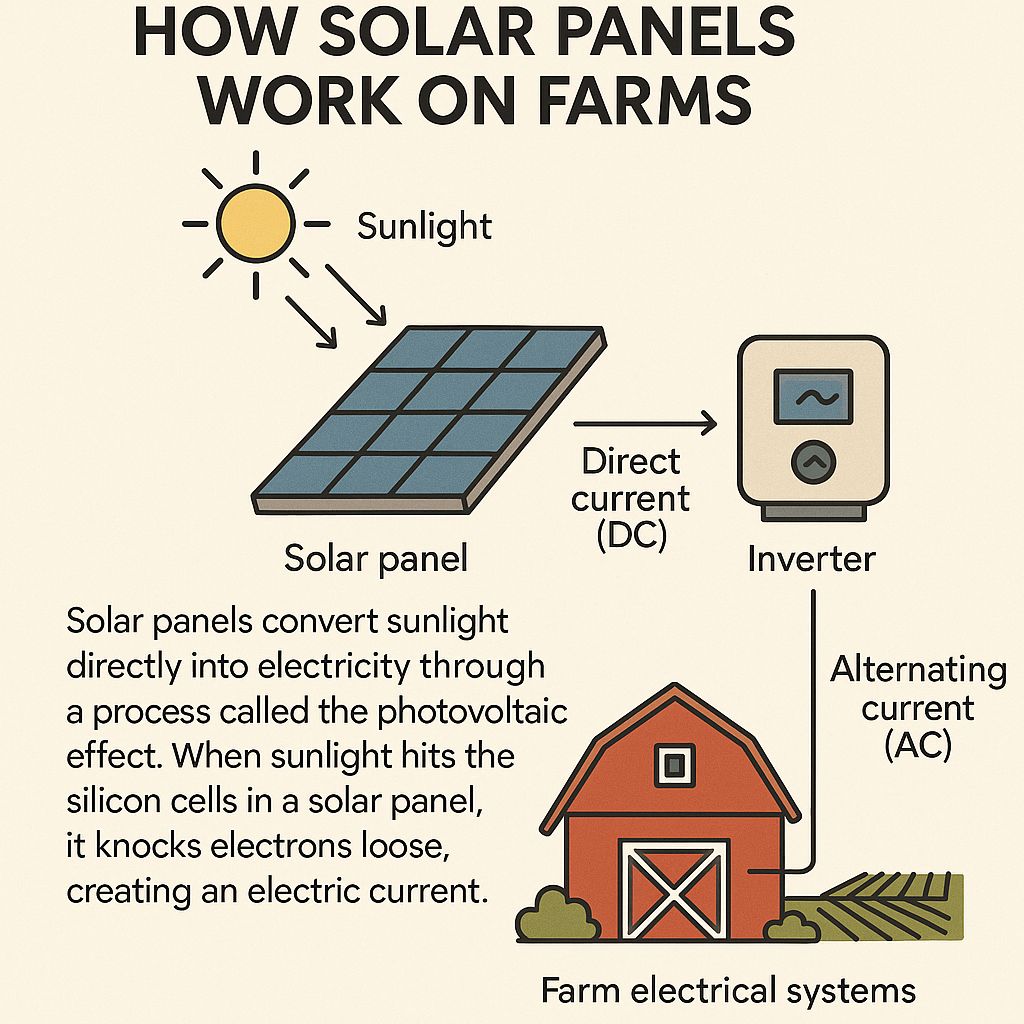
Solar panels convert sunlight directly into electricity through a process called the photovoltaic effect. When sunlight hits the silicon cells in a solar panel, it knocks electrons loose, creating an electric current. This direct current (DC) electricity is then converted to alternating current (AC) through an inverter, making it compatible with your farm’s electrical systems. The beauty of this technology is its simplicity – no moving parts means minimal maintenance and exceptional reliability in harsh farm environments.
A typical farm solar system consists of panels (typically mounted on rooftops or ground-mounted arrays), inverters, mounting hardware, and monitoring systems that track performance. The electricity generated either feeds directly into your farm’s electrical panel, offsetting the power you’d normally purchase from utilities, or in the case of battery systems, stores energy for later use.
Choosing the right type of solar panel for your farm is crucial. Consider the specific needs of your operations, the available space, and your budget. This below table will help you choose the right one:
|
Type of Solar Panel |
Advantages |
Disadvantages |
|---|---|---|
|
Monocrystalline Solar Panels | ||
|
– Performance drops slightly in extreme heat. 1 | ||
|
– Performs well in low-light conditions (cloudy days, mornings). 1, 2 | ||
|
Polycrystalline Solar Panels |
– Cost-effective option, suitable for large-scale installations. 1, 3 |
– Lower efficiency (13-17%) compared to monocrystalline panels. 1, 3 |
|
– Durable and handles heat well. 3 |
– Requires more space for the same energy output as monocrystalline panels. 3 | |
|
– Affordable initial investment, often offset by government incentives. 3 | ||
|
Thin-Film Solar Panels |
– Lightweight, flexible, and easy to install on unconventional surfaces (e.g., curved roofs)1, 5, 7 |
– Lowest efficiency (10-13%) among the options, requiring more space for equivalent output. 5, 7 |
|
– Performs well in high temperatures and low-light conditions, ideal for diverse climates. 5, 7 |
– Shorter lifespan (10-20 years) compared to crystalline panels. 5, 7 | |
|
– Cost-effective with lower production and installation costs. 5, 7 |
– Bulkier installations needed for larger-scale energy production. 5 | |
|
PERC Solar Panels |
– Enhanced efficiency (Up to 22% or higher) due to passivation layer, capturing more sunlight. 4 |
– Higher cost than traditional Monocrystalline panels, but prices are becoming comparable. 4 |
|
– Performs well in low-light and high-temperature conditions, ideal for varied climates. 2, 4 |
– Technology may be less familiar, requiring specialized installation expertise. 4 | |
|
– Maximizes energy output in limited space, suitable for farms with restricted installation areas. 4 |
Converting Sunlight into Farm Power
The conversion efficiency of modern solar panels has reached impressive levels, with many commercial systems converting 20-22% of available sunlight into usable electricity. For perspective, a 100kW system (roughly 250 panels) in average sunlight conditions can generate 10,000-13,000 kilowatt-hours monthly – enough to power substantial farm operations. Most importantly, this generation happens during daylight hours when many farm activities are at their peak.
Farm solar systems typically connect to the existing electrical infrastructure through a process called net metering. This allows excess power generated during sunny periods to flow back into the grid, essentially running your meter backward and creating credits against future electricity use. For farms with seasonal energy needs, this creates a perfect balance – banking energy credits during low-usage periods to offset higher consumption during planting, harvesting, or peak livestock production.
Grid-Tied vs. Off-Grid Systems for Agricultural Use
Farmers have two primary options when installing solar: grid-tied or off-grid systems. Grid-tied installations remain connected to utility lines, using the grid as a virtual battery. These systems are typically less expensive since they don’t require battery storage, and they leverage net metering to maximize financial returns. They’re ideal for farms with reliable grid service looking to reduce costs rather than achieve complete energy independence.
Off-grid systems, while more expensive upfront, provide complete energy autonomy by incorporating battery storage. These systems continue functioning during grid outages, making them valuable for operations where power interruptions could threaten livestock health or crop irrigation. The price of battery storage has fallen dramatically in recent years, making off-grid or hybrid systems increasingly practical for agricultural applications where reliability is paramount.
Battery Storage Options for 24/7 Power
Battery technology has evolved rapidly, providing farms with multiple storage options. Lithium-ion batteries offer excellent efficiency and longevity but come at a premium price. Alternative technologies like flow batteries provide longer cycle life for stationary applications like farms. Properly sized battery systems can store excess daytime solar production for use during evening hours or cloudy days, creating a resilient power supply for critical farm operations.
Most agricultural battery systems are designed to power essential loads during outages rather than the entire operation. This targeted approach maximizes the return on investment by protecting critical systems like water pumps, refrigeration, and climate control while minimizing battery capacity requirements. For many farms, even modest battery backup provides invaluable peace of mind during severe weather events.
5 Major Benefits of Solar for Your Farm
The advantages of solar power extend far beyond simple electricity generation. For agricultural operations, solar installations deliver multiple benefits that compound over the system’s 25+ year lifespan. From immediate cost savings to long-term sustainability improvements, solar power addresses many of the challenges facing modern farming operations.
1. Slash Your Energy Bills by 70-100%
The most immediate and tangible benefit of farm solar installations is dramatic reduction in monthly utility bills. Depending on system size and energy consumption patterns, many farms see electric bills drop by 70-100% after solar installation. For energy-intensive operations like dairies, poultry houses, or irrigated crops, this can translate to tens of thousands in annual savings. These reductions begin immediately after system commissioning and grow over time as utility rates inevitably increase.
Unlike many farm improvements that depreciate over time, solar installations typically increase in value as energy costs rise. A system that saves $15,000 annually today might save $20,000 or more five years from now as utility rates climb. This hedge against inflation provides a predictable cost structure that improves long-term farm planning and profitability.
2. Protect Against Rising Utility Rates
Over the past decade, agricultural electricity rates have increased approximately 3-5% annually in most regions – a trend expected to continue or accelerate. Solar installations effectively lock in your electricity costs at today’s levels, insulating farm operations from these ongoing increases. For long-term agricultural planning, this price stability represents a significant competitive advantage over farms facing ever-rising energy expenses.
Consider that a farm spending $20,000 annually on electricity today might face bills exceeding $33,000 in ten years at just a 5% annual increase rate. Solar systems sized appropriately eliminate most or all of this escalation, creating predictable operating costs. This is particularly valuable for operations with high cooling, heating, or pumping requirements where energy represents a major expense category.
3. Tax Credits and Incentives That Put Money in Your Pocket
The financial case for farm solar has never been stronger thanks to federal, state, and utility incentives. The federal Investment Tax Credit currently covers 30% of solar installation costs through 2032, essentially providing a dollar-for-dollar reduction in tax liability. For many farm operations structured as pass-through entities, this credit flows directly to owners’ personal tax returns, creating substantial tax savings.
Beyond federal incentives, many states offer additional tax credits, property tax exemptions, or production-based incentives for renewable energy. The USDA’s Rural Energy for America Program (REAP) provides grants covering up to 25% of project costs and guaranteed loan financing for the remainder. Combined, these incentives can reduce the effective cost of solar installations by 50-60%, dramatically improving return on investment figures.
USDA REAP Program Highlights for Farmers:
• Grants up to 25% of total eligible project costs
• Guaranteed loans up to 75% of total eligible project costs
• Combined grant and loan guarantee up to 75% of project costs
• Eligible applicants: agricultural producers with at least 50% of gross income from agricultural operations
• Application deadlines occur twice yearly (March 31 and October 31)
4. Reliable Power During Grid Outages
Power outages can be devastating for agricultural operations. Dairy farms need constant electricity for milking and milk cooling. Poultry houses require uninterrupted climate control. Irrigation systems must maintain precise watering schedules. When the grid fails, solar systems with battery backup continue operating critical systems, protecting livestock and crops during emergencies.
Modern solar installations can be configured with automatic transfer switches that seamlessly transition to battery power during outages. This resilience is increasingly valuable as climate change drives more frequent extreme weather events that threaten grid stability in rural areas. For many farmers, this reliability alone justifies the investment in solar technology.
5. Boost Your Farm’s Property Value
Solar installations typically increase farm property values by highlighting reduced operating costs and infrastructure improvements. Studies show that properties with owned (not leased) solar systems sell faster and command premium prices compared to similar properties without solar. For farm succession planning or potential future sales, this added value provides another dimension of return on investment.
Beyond pure financial calculations, solar installations demonstrate environmental stewardship and forward-thinking management—qualities increasingly valued in agricultural properties. As carbon accounting becomes more prevalent in agriculture, solar assets may provide marketable environmental attributes that further enhance property values.
Best Places to Install Solar Panels on Farms
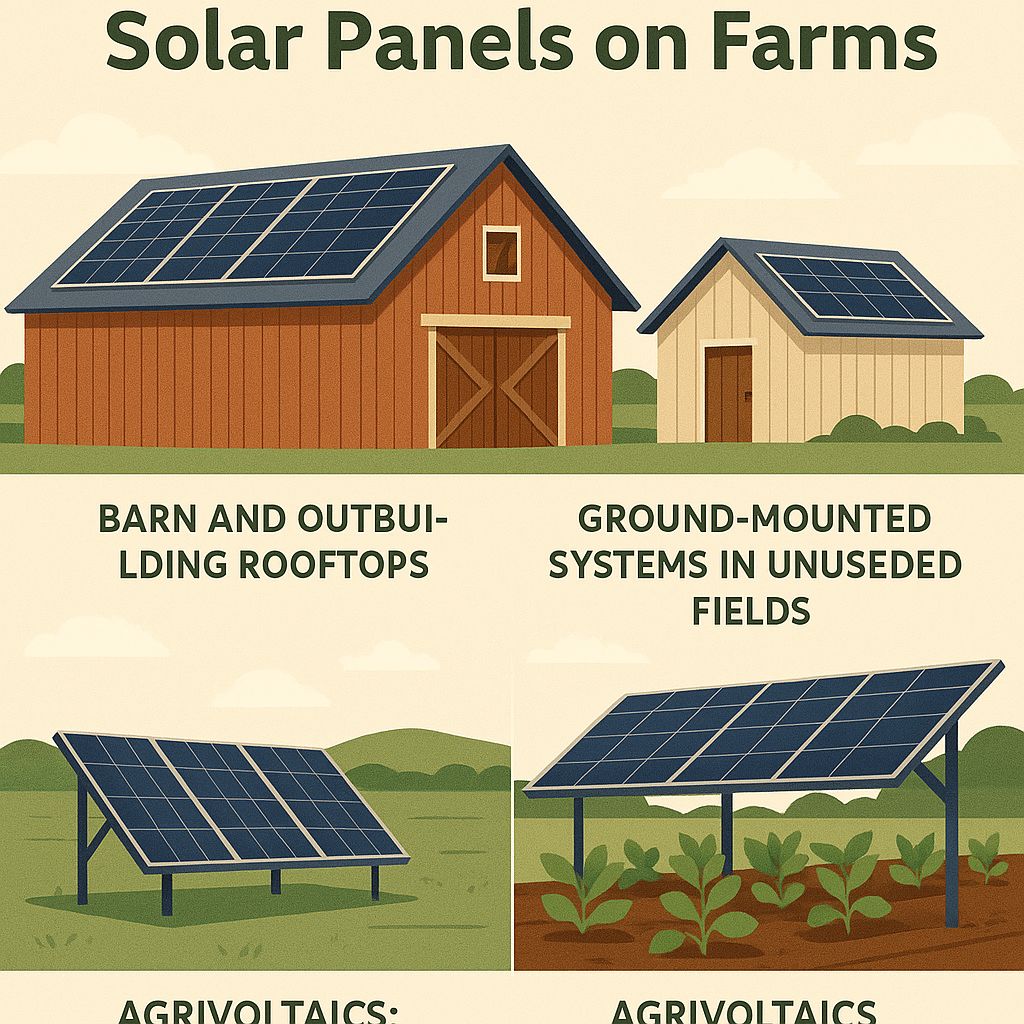
Barn and Outbuilding Rooftops
Farm buildings provide ideal solar mounting locations, converting otherwise unused roof space into power-generating assets. Modern mounting systems can adapt to virtually any roof type, from metal agricultural buildings to traditional shingled structures. Roof mounting minimizes land use impacts while placing panels out of the way of farm equipment and operations. For more insights on enhancing solar efficiency, consider exploring solar panel efficiency maintenance tips.
South-facing roofs deliver optimal production, but east and west orientations can still generate 80-90% of maximum potential output. Even north-facing roofs can be viable in certain situations using specialized mounting solutions. A comprehensive site evaluation can identify your farm’s best rooftop opportunities based on orientation, shading, and structural considerations.
Ground-Mounted Systems in Unused Fields
Ground-mounted solar arrays offer flexibility when roof space is limited or unsuitable. These systems can be placed on marginal land, along field borders, or in unused areas that aren’t optimal for cultivation. Ground mounting also allows precise orientation and tilt angles that maximize energy production regardless of existing building orientations.
Modern agricultural ground mounts use minimal concrete, allowing for future land use changes if needed. Some systems incorporate tracking technology that follows the sun throughout the day, increasing energy production by 20-30% compared to fixed installations. For larger farm operations, ground-mounted arrays often provide the most cost-effective solution for substantial energy needs.
Agrivoltaics: Growing Crops Under Solar Panels
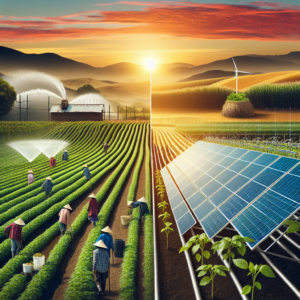
The innovative practice of agrivoltaics—growing crops beneath elevated solar panels—is revolutionizing land use efficiency on farms. Research from the University of Arizona and other institutions demonstrates that certain crops actually perform better under the partial shade of solar panels, especially in hot, dry regions. The panels create a microclimate that reduces water evaporation and provides shelter from extreme temperatures.
Crops like lettuce, spinach, broccoli, peppers, and certain berries have shown yield increases of 20-30% in agrivoltaic settings compared to conventional growing methods. Grazing applications are equally promising, with sheep and certain poultry thriving beneath panel arrays while naturally managing vegetation. This dual-use approach maximizes return per acre while maintaining agricultural production.
- Crop Benefits: Reduced water needs, protection from extreme heat, extended growing seasons
- Panel Benefits: Increased efficiency from cooler operating temperatures, reduced vegetation management costs
- Farm Benefits: Dual revenue streams from single land parcel, improved land use efficiency
Solar-Powered Farm Equipment That Saves Money
Irrigation Systems and Water Pumps
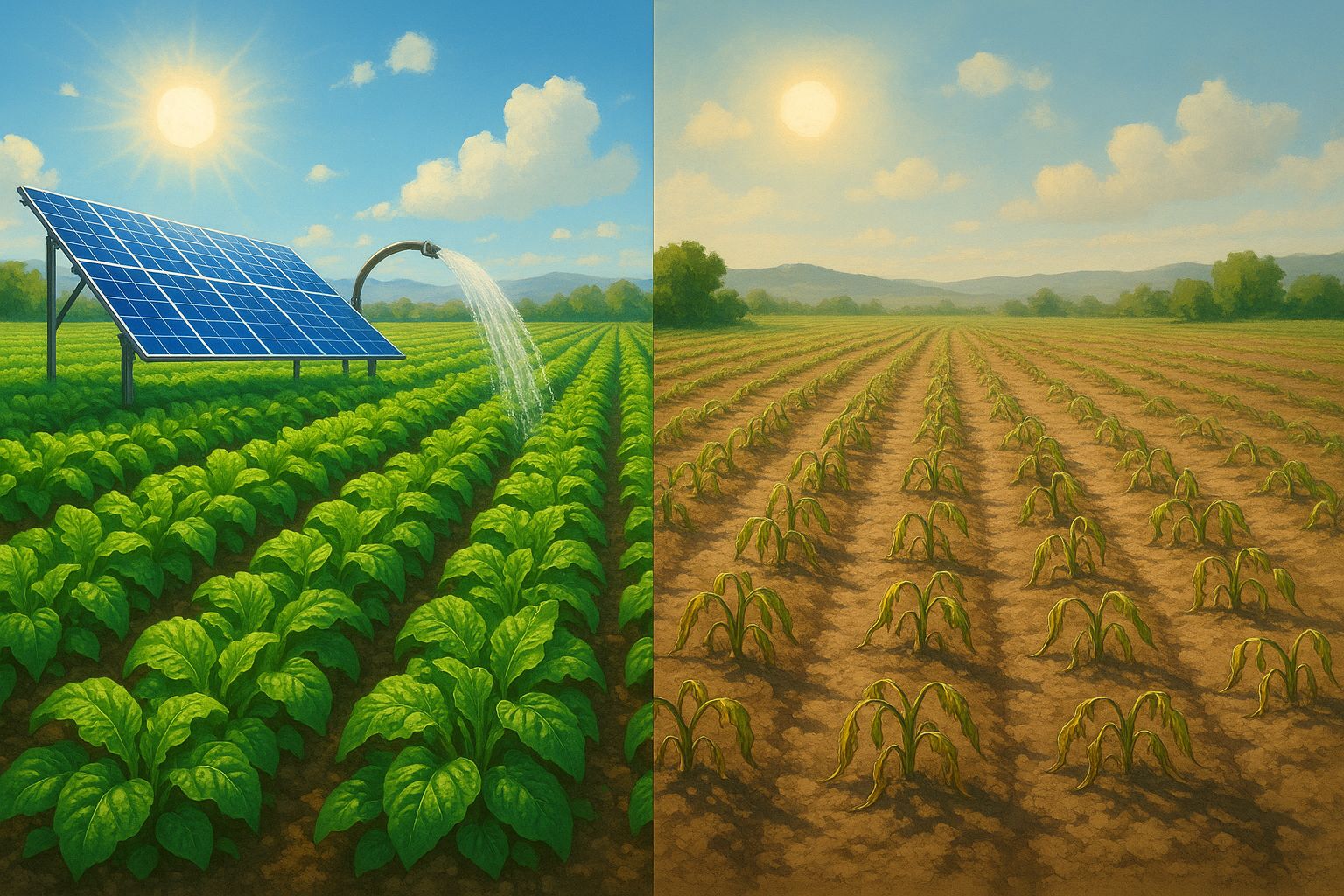
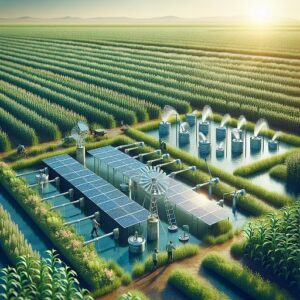
Water pumping represents one of the largest energy expenses on many farms. Solar-powered irrigation systems can dramatically reduce these costs while providing water exactly when crops need it. Direct solar-to-pump systems work during daylight hours when evaporation rates are highest, creating natural alignment between energy production and irrigation needs.
Modern solar irrigation controllers can optimize watering schedules based on available solar power, soil moisture readings, and weather forecasts. This intelligent approach not only saves energy but often improves water use efficiency. For remote fields without grid access, solar pumping eliminates the need for expensive utility line extensions or diesel generators.
Heating and Cooling for Livestock Buildings
Climate control in livestock facilities consumes substantial energy, particularly in dairy, poultry, and hog operations. Solar thermal systems can provide water and space heating at a fraction of conventional energy costs. For cooling applications, solar-powered ventilation systems maintain optimal temperatures without straining the utility grid during peak demand periods.
The alignment between solar production and cooling needs is particularly advantageous—maximum solar output occurs during hot, sunny days when cooling demands are highest. This natural synchronization maximizes the value of each kilowatt-hour generated and reduces strain on farm electrical systems during critical periods.
Electric Fencing and Security Lighting
Remote pastures and field boundaries benefit from solar-powered fencing systems that eliminate the need for lengthy power runs or regular battery replacements. Modern solar fence controllers are remarkably efficient, operating for weeks even during cloudy periods. This reliability improves livestock management while reducing ongoing maintenance requirements. For more insights on solar energy in agriculture, visit Ag Solar Solutions.
Security lighting represents another ideal application for solar power on farms. LED fixtures paired with solar panels and small batteries provide reliable illumination for barns, equipment yards, and access points. Motion-sensing capabilities further extend battery life while improving security by highlighting unusual activity.
Real Costs and Payback Period for Farm Solar
Initial Investment Range for Different Farm Sizes
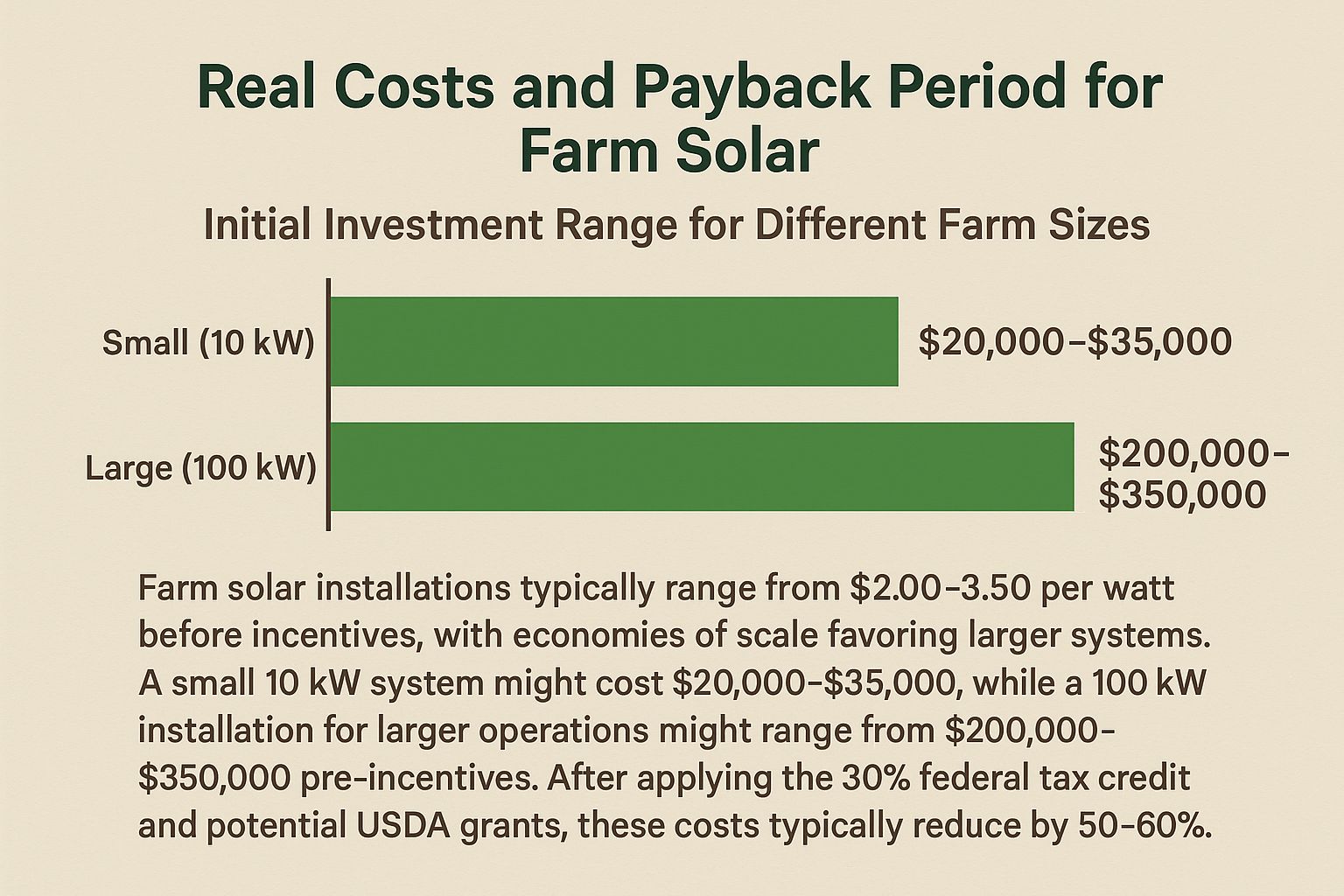
Farm solar installations typically range from $2.00-$3.50 per watt before incentives, with economies of scale favoring larger systems. A small 10kW system might cost $20,000-$35,000, while a 100kW installation for larger operations might range from $200,000-$350,000 pre-incentives. After applying the 30% federal tax credit and potential USDA grants, these costs typically reduce by 50-60%.
System size requirements depend primarily on your farm’s electricity consumption patterns. A small livestock operation might need just 10-20kW to offset most electrical usage, while dairy farms or irrigated crop operations often require 50-200kW or more. Professional solar assessments analyze your utility bills to determine optimal system sizing for maximum financial return. For those interested in irrigation, consider the benefits of a solar-powered linear sprinkler irrigation system to enhance efficiency.
Beyond the panels themselves, farm installations may require electrical upgrades, mounting systems, and monitoring equipment. These supporting components typically represent 30-40% of total project costs but are essential for system performance and longevity. Quality inverters and mounting hardware significantly reduce maintenance requirements and extend system life, improving long-term economics.
How Long Until Your System Pays for Itself
Most farm solar installations achieve payback in 4-8 years depending on electricity costs, available incentives, and system production. In high-cost electricity markets like California, Hawaii, or the Northeast, payback periods can be even shorter—sometimes under 4 years. After this initial recovery period, the system continues producing essentially free electricity for 25+ years, generating substantial positive cash flow for farm operations.
The financial analysis extends beyond simple payback calculations. When factoring in tax benefits, depreciation advantages, and protection against future rate increases, the internal rate of return for farm solar investments often exceeds 15-20%—far outperforming many traditional farm improvements. This exceptional return profile explains why solar adoption is accelerating rapidly across the agricultural sector.
Financing Options Designed for Farmers
The agricultural sector benefits from specialized financing options that make solar installations highly accessible. USDA-backed loans, farm credit services, and agricultural banks offer terms specifically structured for renewable energy projects, often with low interest rates and terms aligned with system payback periods. These agricultural-specific lending programs typically offer more favorable terms than general commercial solar financing.
Farm Success Story: The Johnson Family Dairy
When the Johnson family installed a 75kW solar array on their Wisconsin dairy farm in 2019, they were primarily motivated by reducing their $1,850 monthly electric bill. Their operation, milking 120 cows with robotic milkers, consumed significant electricity for milk cooling, water heating, and barn ventilation. The $180,000 system qualified for a 30% federal tax credit and a $40,000 USDA REAP grant, reducing their net investment to approximately $86,000.
Three years later, the Johnsons report their system has exceeded production estimates by 8% and virtually eliminated their electric bills through net metering. “The system is paying for itself faster than we projected,” notes David Johnson. “But the real benefit came during last summer’s heatwave when we had rolling blackouts in the area. Our battery backup kept the critical cooling systems running when neighboring farms were scrambling for generators. You can’t put a price on that kind of security when you’re responsible for livestock.”
Your Solar-Powered Future Starts Today
The transition to solar power represents one of the most significant opportunities for modern farm operations to reduce costs, improve resilience, and enhance sustainability. With current incentives at historically favorable levels and equipment costs continuing to decline, the economic case for agricultural solar has never been stronger. Farmers who act now position themselves advantageously against rising energy costs while building infrastructure that will deliver benefits for decades.
The first step toward your farm’s solar transformation is a professional assessment that analyzes your energy usage patterns, evaluates suitable installation locations, and develops customized system recommendations. mtvSolar specializes in agricultural installations, understanding the unique needs and opportunities of farm operations across diverse agricultural sectors.
Frequently Asked Questions
As you consider solar for your farm operation, you likely have questions about how the technology applies to your specific situation. Here are answers to the most common inquiries we receive from agricultural producers:
How much land do I need to dedicate to solar panels for my farm?
Ground-mounted solar arrays typically require approximately 8-10 acres per megawatt of capacity. However, most farm installations utilize existing structures or marginal land areas. A typical 100kW system (suitable for many mid-sized operations) requires only about 8,000-10,000 square feet—less than a quarter acre. Roof-mounted systems on barns and outbuildings often require no additional land commitment.
The land use calculation changes dramatically with agrivoltaic approaches where crops continue growing beneath panels. These dual-use systems effectively eliminate the land commitment by maintaining agricultural production while generating electricity from the same acreage. For livestock operations, grazing can continue normally beneath properly elevated panel arrays.
Will solar panels work during cloudy weather or winter months?
Modern solar panels generate electricity even during cloudy conditions, typically producing 10-25% of their rated capacity depending on cloud density. This production is factored into annual generation estimates that guide system sizing. While daily output varies with weather, annual production remains remarkably consistent year after year, making financial projections reliable.
Winter performance depends primarily on your location. Northern farms experience reduced winter production due to shorter days and lower sun angles, while snow cover can temporarily reduce output. However, these seasonal variations are offset by strong production during summer months. Net metering allows farms to bank excess summer production as credits against winter consumption, creating balanced economics across seasonal changes.
Can I sell excess solar power back to the grid from my farm?
Most states have net metering or similar programs allowing farms to receive credit for excess power sent to the grid. These programs effectively let you “bank” overproduction during sunny periods against future consumption. The specific compensation rates and structures vary by state and utility, but the fundamental ability to offset consumption with solar production exists nearly everywhere. Some states also offer additional production incentives or favorable feed-in tariffs that further enhance the economics of agricultural solar installations.
How do I maintain solar panels in dusty farm environments?
Solar panels are remarkably low-maintenance, but agricultural environments can present unique challenges from dust, pollen, and bird droppings. Most installations include a 5-10 degree tilt that allows natural rainfall to clear much of this accumulation. In particularly dusty regions or during extended dry periods, occasional cleaning may improve performance.
Modern monitoring systems track production in real-time, allowing you to identify when cleaning might be beneficial. Many farms schedule panel cleaning to coincide with seasonal equipment maintenance, typically requiring only 1-2 cleanings annually. Simple water rinsing with standard farm equipment is usually sufficient, though specialized solar cleaning attachments are available for larger installations.
Panel cleaning costs are minimal compared to the electricity value generated. A 10% production improvement from cleaning a 100kW system might represent $150-$250 in monthly electricity value—far exceeding the labor cost involved. Most solar providers can recommend maintenance schedules specific to your farm’s environmental conditions.
Are there special solar incentives specifically for agricultural businesses?
Agricultural operations benefit from all standard solar incentives plus several sector-specific programs. The USDA’s Rural Energy for America Program (REAP) provides grants covering up to 25% of project costs and loan guarantees for the remainder—benefits unavailable to most non-agricultural businesses. These agricultural-specific incentives can significantly improve project economics compared to standard commercial installations.
Many states offer additional agricultural solar incentives through departments of agriculture or rural development agencies. These programs may include grants, low-interest loans, or property tax exemptions specifically targeting farm renewable energy projects. State agricultural extension offices can typically provide guidance on available programs in your region. For farmers interested in enhancing their solar irrigation systems, exploring options like solar-powered linear sprinkler systems could be beneficial.
Beyond direct financial incentives, agricultural solar installations often qualify for accelerated depreciation under MACRS (Modified Accelerated Cost Recovery System), allowing for substantial tax benefits in the early years of system ownership. When combined with production-based incentives and net metering, these tax advantages create compelling economics for farm solar investments.
Farmers are increasingly turning to solar energy to power their irrigation systems. This shift not only reduces reliance on fossil fuels but also cuts down on operational costs. By utilizing solar pump inverters, farmers can efficiently harness solar power, ensuring a sustainable and eco-friendly approach to watering their crops.

Leave a Reply