
Key Takeaways
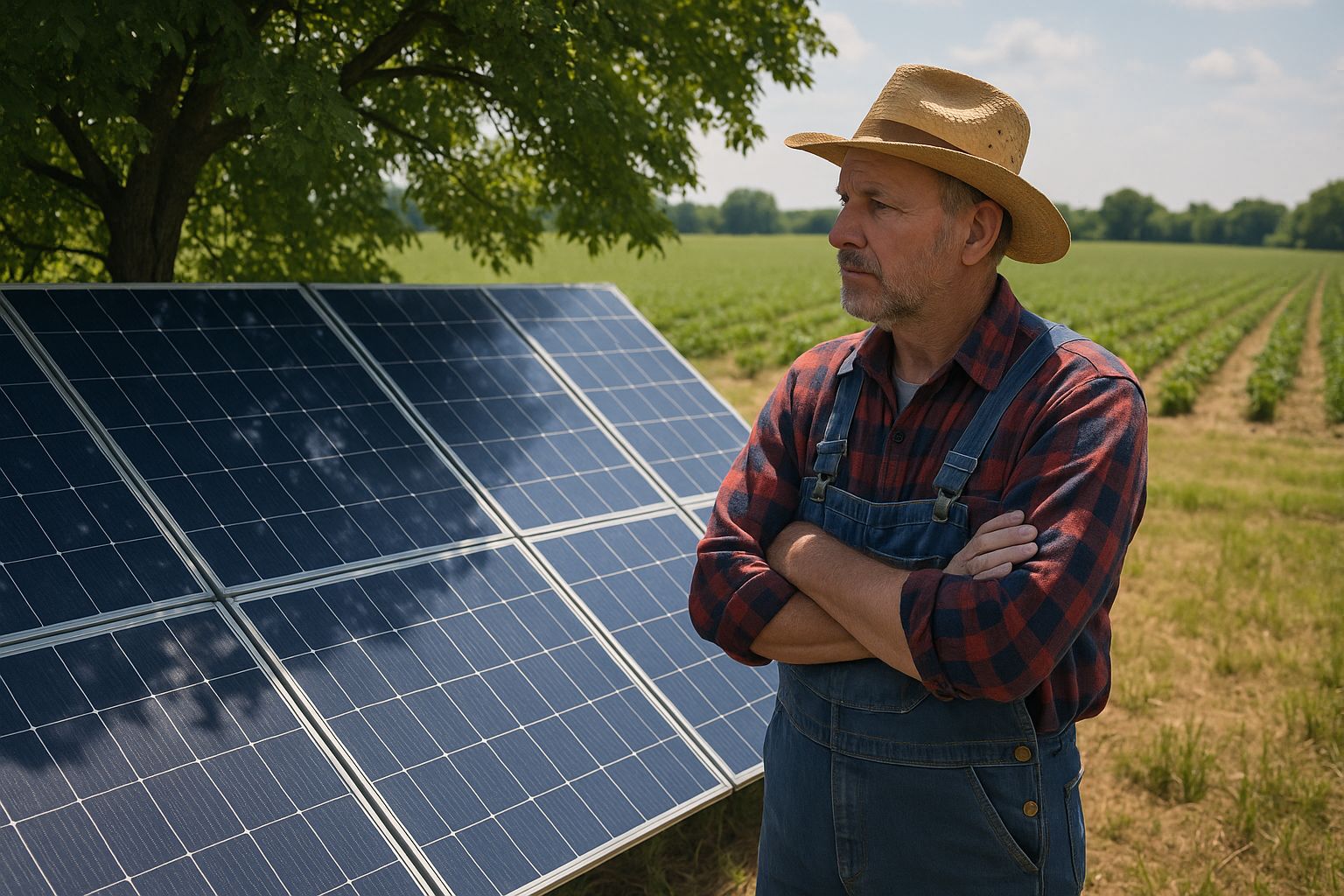
- Dust and debris can reduce farm solar panel efficiency by up to 25%, making regular cleaning essential for maintaining optimal energy production
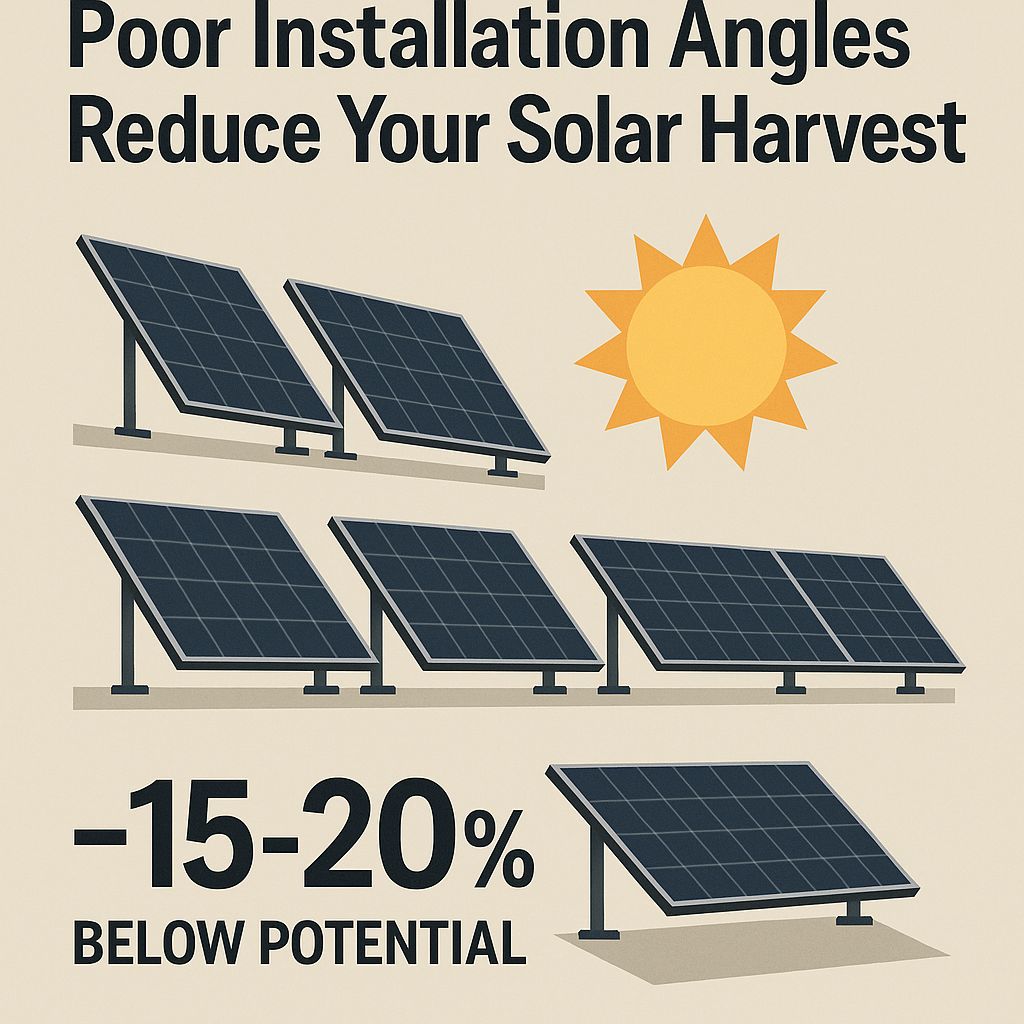
- Improper installation angles can significantly impact energy harvest – panels installed at incorrect tilt angles for your farm’s latitude may be operating at 15-20% below potential
- Even partial shade from trees, buildings, or equipment can dramatically reduce output as a single shaded cell affects an entire panel string
- Weather-related damage including microcracks from hail and performance degradation from extreme heat often goes undetected until production drops significantly
- SolarFarmPro’s monitoring systems can help identify efficiency issues before they cause major production losses, preventing thousands in lost revenue
Why Your Farm’s Solar Panels Aren’t Producing Enough Power
Your farm’s solar panels aren’t generating the power you expected, and you’re not alone. Many agricultural operations experience significant drops in solar efficiency that go undetected for months or even years. These hidden power losses directly impact your bottom line, reducing the return on your renewable energy investment. Understanding the common efficiency killers specific to farm environments is the first step to maximizing your system’s performance and ensuring energy independence for your operation.
Agricultural settings present unique challenges for solar panel systems that urban or suburban installations don’t face. From dust kicked up during field work to seasonal pollen from crops, your panels battle constant exposure to efficiency-reducing elements. SolarFarmPro analysis shows that most farms are losing 15-30% of potential energy production due to these common issues, many of which can be addressed with proper maintenance and adjustments.
Here’s a clear table outlining common efficiency killers for farm solar panels and why they matter:
|
Efficiency Killer |
How It Impacts Performance |
What Farmers Can Do |
Sources |
|---|---|---|---|
|
Dirt and Debris |
Dust, bird droppings, and crop residue block sunlight, reducing energy output by up to 25% or more. |
Schedule regular cleanings, especially during planting and harvest seasons when dust is high. | |
|
Shade |
Trees, grain silos, or even growing crops can partially shade panels, leading to major efficiency losses. |
Trim nearby trees, avoid placing panels near tall structures, and consider microinverters for shaded areas. | |
|
Poor Installation Angles |
Incorrect tilt or orientation decreases the amount of captured sunlight, lowering yearly energy yield. |
Work with certified installers and adjust tilt based on latitude and seasonal sun paths. | |
|
Weather Damage That Degrades Panel Performance |
Hail, strong winds, and heavy snow can crack panels or weaken frames, reducing long-term efficiency. |
Inspect panels after storms, invest in panels rated for local weather conditions, and clear snow safely. | |
|
Wiring and Connection Issues |
Loose or corroded connections can cause power losses or even fire hazards over time. |
Regular electrical inspections and preventive maintenance to catch issues early. | |
|
Inverter Problems That Slash Power Output |
Inverters may fail or degrade, preventing efficient conversion of DC to usable AC power. |
Monitor inverter performance, replace aging units proactively, and keep them in ventilated, shaded spaces. | |
|
Monitoring System Failures That Leave You in the Dark |
Without proper monitoring, performance dips go unnoticed, leading to long-term inefficiency. |
Use reliable monitoring software and review data regularly to spot sudden drops in output. | |
|
A Bad Solar Maintenance Schedule |
Irregular or reactive maintenance allows small issues to grow into big efficiency losses. |
Set a consistent maintenance calendar for cleaning, inspections, and servicing. |
Dirt and Debris: The #1 Enemy of Farm Solar Panels
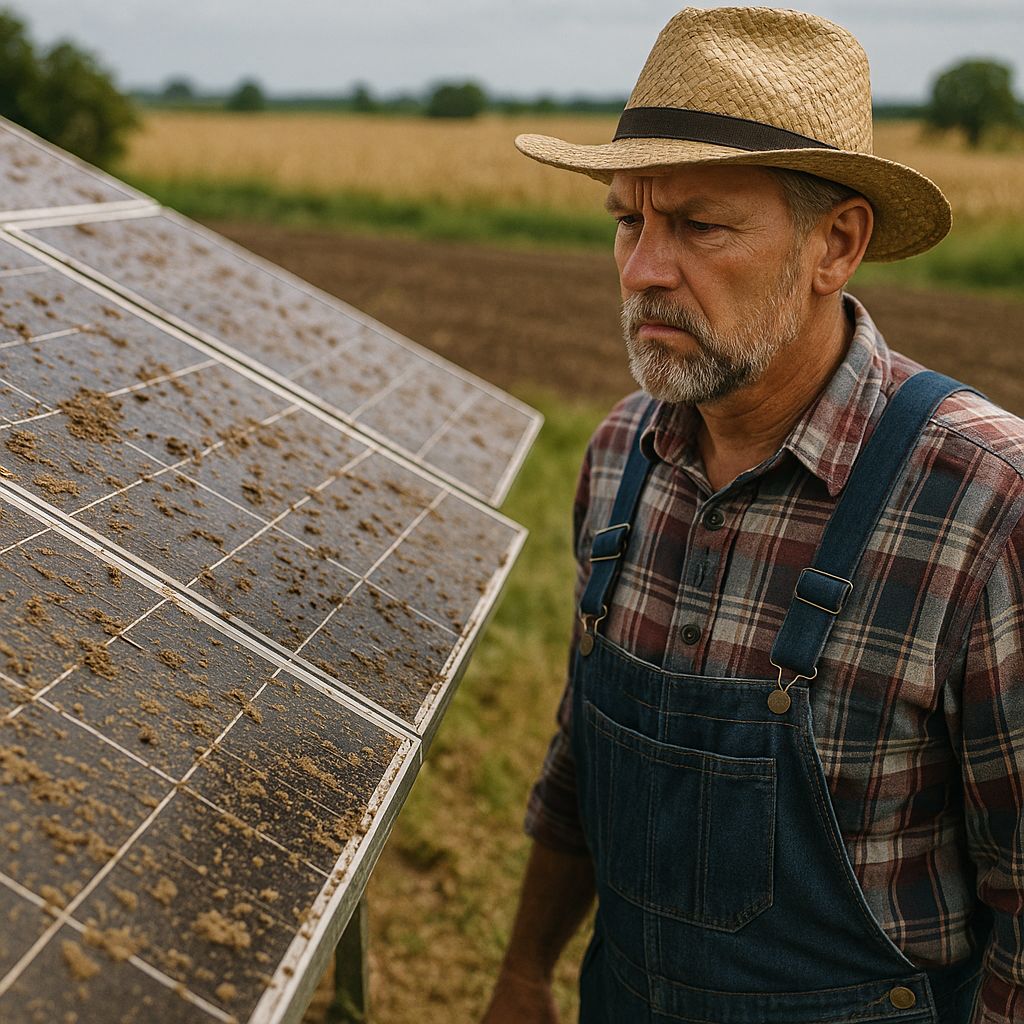
The leading culprit behind underperforming farm solar arrays is surprisingly simple: dirt. Unlike residential installations, agricultural settings expose panels to heightened levels of dust, pollen, and organic matter. Every tractor pass in a nearby field, every day of harvest, and every windy afternoon contributes to a layer of efficiency-killing residue on your panels. This accumulation creates a barrier between sunlight and the photovoltaic cells, essentially putting sunglasses on your energy system.
What makes farm soiling particularly problematic is its persistence and composition. Agricultural dust often contains sticky plant residues and pollen that adhere more stubbornly to panel surfaces than typical environmental dust. When morning dew or light rain hits these panels, instead of washing away debris, it often creates a cement-like crust that further blocks sunlight. This farm-specific soiling pattern requires more frequent and thorough cleaning than conventional installations.
How Dust Accumulation Cuts Energy Output by Up to 25%
Research conducted across multiple agricultural regions reveals a disturbing pattern: even a light dust coating can reduce energy output by 5-7%, while heavy soiling common in farm environments frequently leads to 20-25% production losses. These losses compound over time, as reduced output means less return on investment and longer payback periods for your solar system. The impact is most severe during peak production seasons when panels should be capturing maximum sunlight but are instead operating at diminished capacity due to accumulated farm debris.
Pollen, Bird Droppings, and Crop Residue Impact
Beyond ordinary dust, agricultural environments present unique contaminants that affect solar efficiency. During flowering seasons, pollen creates a sticky yellow film that adheres tenaciously to panel surfaces, requiring specialized cleaning techniques. Bird droppings present another farm-specific challenge, as many panel arrays attract birds looking for elevated perches. A single bird dropping can create a “hot spot” on a panel, where temperatures rise dramatically and potentially cause permanent damage to the cell structure beneath.
Crop residue represents a particularly insidious threat to farm solar systems. During harvest, especially of grains and similar crops, tiny plant particles become airborne and settle on panel surfaces. Unlike simple dust, these organic materials can decompose on your panels, creating stubborn stains that standard rain cannot remove. Irrigation systems can inadvertently spray mineral-laden water onto nearby panels, leaving mineral deposits that progressively reduce light transmission.
The combination of these agricultural contaminants creates a perfect storm for efficiency loss. What begins as a minor reduction in output can quickly escalate to significant production shortfalls if not addressed through regular maintenance. For example, corn harvest can reduce panel output by up to 15% within just a few days of nearby field activity if panels aren’t promptly cleaned.
- Dust from field operations can reduce efficiency by 5-7% within days
- Pollen seasons create sticky residues requiring specialized cleaning
- Bird droppings cause localized hot spots that damage cells
- Harvest debris contains organic matter that decomposes on panel surfaces
- Irrigation spray can leave mineral deposits that progressively worsen over time
Cleaning Schedule That Maximizes Efficiency
Implementing a strategic cleaning schedule tailored to your farm’s operations is essential for maintaining peak performance. Unlike residential systems where quarterly cleaning might suffice, farm installations often require monthly attention during peak agricultural seasons. Creating a cleaning calendar that aligns with your farm’s activities—scheduling panel maintenance after major field operations or harvest—prevents accumulated losses and protects your renewable energy investment.
Shade Problems That Are Costing You Money
Shade is the silent profit-killer of farm solar installations. Even partial shading from trees, equipment sheds, grain bins, or seasonal crop growth can dramatically reduce your system’s output. What makes shade particularly problematic is its disproportionate impact—a shadow covering just 5% of a panel can reduce its output by up to 25% due to how cells are interconnected. As the sun moves throughout the day, these shadows shift across your array, creating fluctuating production that’s difficult to diagnose without proper monitoring.
Many farmers are surprised to learn that temporary equipment placement can cause lasting efficiency problems. That grain truck parked near your ground-mounted array or the irrigation equipment casting afternoon shadows might be costing hundreds in lost energy production each month. Seasonal changes in vegetation and crop growth also create evolving shade patterns that require ongoing management rather than one-time solutions.
Trees and Buildings: Even Partial Shadows Kill Production
The physics of solar panels makes them particularly vulnerable to even minimal shading. Most agricultural panels are wired in series, meaning electricity flows through each panel sequentially. When shade falls on even one cell, it creates resistance that affects the entire string—similar to how one partially blocked pipe reduces flow through an entire irrigation system. This “bottleneck effect” means a single tree branch or the corner of a barn roof extending into your array’s space can impact dozens of panels simultaneously.
Farm buildings pose a particular challenge as their shadows extend much farther during winter months when the sun sits lower in the sky. A structure that causes no shading issues during summer planting season might create significant production losses during winter. Conducting a comprehensive shade analysis across all seasons before installation can prevent these costly surprises, but for existing systems, regular shade audits should become part of your energy management routine.
How a Single Shaded Cell Affects the Entire Panel
Solar panels operate on the principle that every cell must contribute to the overall electrical current. When a single cell becomes shaded, it transforms from a power producer into a power consumer, creating resistance that generates heat instead of electricity. This resistance affects the entire panel and potentially the whole string of connected panels. Modern panels include bypass diodes that attempt to mitigate this issue, but they can only partially compensate for the efficiency loss.
On farms, this cell-level vulnerability is particularly problematic because of transient shading from equipment, seasonal crop growth, and even wildlife. Bird droppings concentrated on a single cell can trigger this cascading efficiency loss across multiple panels. Regular visual inspections specifically looking for cell-level obstructions should be incorporated into your maintenance routine, especially after storms or periods of high bird activity near your arrays.
Best Panel Configurations to Minimize Shade Impact
Strategic configuration can significantly reduce shade-related losses on your farm. Micro-inverters or power optimizers allow each panel to operate independently, preventing the “weakest link” problem where one shaded panel compromises an entire string. Though these technologies add upfront cost, they typically deliver 10-15% higher lifetime production in farm environments where intermittent shading is unavoidable.
Physical panel arrangement also matters tremendously. East-west facing configurations (rather than due south) can actually produce more consistent power throughout the day on farms with partial shading issues. Additionally, increasing spacing between panel rows beyond standard recommendations may sacrifice some density but can prevent self-shading issues as the sun angle changes seasonally—a worthwhile tradeoff for many agricultural installations.
Poor Installation Angles Reduce Your Solar Harvest
One of the most common yet overlooked efficiency problems stems from improper installation angles. Panels installed at incorrect tilt angles for your farm’s specific latitude can operate at 15-20% below their potential year-round. This single installation error compounds daily, creating thousands of kilowatt-hours of lost production annually. Unlike issues that develop over time, angle inefficiencies are present from day one but often go unrecognized because the system still produces power—just significantly less than it should. For more insights, check out these solar tracking systems that can increase solar panel efficiency.
The challenge for agricultural installations is balancing optimal solar angles with practical mounting considerations. Ground-mounted systems common on farms offer more flexibility for perfect positioning but require more land area when properly spaced. Roof-mounted systems on barns or equipment sheds must often work within the constraints of existing roof pitches, creating inherent efficiency compromises unless adjustable mounting systems are employed.
Optimal Tilt Angles for Different Farm Latitudes
The ideal tilt angle for maximum annual production approximately equals your farm’s latitude. For example, a farm in central Iowa (latitude ~42°) would ideally have panels tilted at 42° from horizontal. This optimization captures maximum solar energy across the full year by balancing summer and winter sun angles. However, many installers use standardized mounting systems that don’t precisely match local conditions, leaving potential energy harvest unrealized.
Geographic specificity matters tremendously in agricultural settings where every kilowatt-hour contributes to operational profitability. Farms in northern regions benefit from steeper panel angles (latitude +10-15°) if winter production is prioritized, while southern operations might opt for shallower angles (latitude -10-15°) to maximize summer production when irrigation demands peak. Custom angle optimization based on your specific operational energy needs and seasonal patterns can increase annual production by 7-12% compared to standard installations.
Seasonal Adjustment Techniques for Maximum Yield
For ground-mounted systems common on farms, seasonal angle adjustments can increase annual energy production by 25-35% compared to fixed installations. The ideal approach involves quarterly adjustments: steeper angles during winter months to capture low-angle sunlight and flatter positioning during summer when the sun travels higher overhead. While adjustable mounting systems add initial cost, they typically pay for themselves within 3-5 years through increased production on agricultural operations.
Many farmers find that even semi-annual adjustments (spring/fall) deliver substantial benefits with manageable maintenance requirements. Simple manual adjustment systems using pin-and-hole designs allow for scheduled repositioning during regular maintenance visits. For larger operations, automated tracking systems that continuously optimize panel angles throughout the day can increase production by up to 45% compared to fixed installations, though these systems require greater initial investment and more maintenance attention.
Weather Damage That Degrades Panel Performance
Agricultural solar installations face harsher weather exposure than residential or commercial systems. Positioned in open fields with minimal wind breaks, farm arrays endure the full force of storms, temperature extremes, and precipitation. This environmental stress accelerates both visible and invisible degradation that progressively reduces efficiency. Unlike sudden failures that trigger alarms, weather-related efficiency losses typically occur gradually, making them difficult to detect without regular performance monitoring.
Farm operations face a perfect storm of weather-related challenges, from hail damage during growing seasons to heavy snow loads during winter months. The rural locations of most agricultural installations also mean greater exposure to lightning strikes and extreme temperature fluctuations. Implementing weather-specific protections and maintenance protocols is essential for preserving your solar investment against these continuous environmental stresses.
Hail Impact Microcracks: The Invisible Efficiency Killer
Hail events common in agricultural areas cause more damage than just the visible cracks that might be covered by insurance. Microscopic fractures invisible to the naked eye develop in the silicon substrate of solar cells after impacts, creating tiny barriers to electrical flow. These microcracks expand gradually with daily temperature fluctuations, progressively reducing panel output by 2-3% annually. A single severe hailstorm can initiate damage that compounds over years, often misdiagnosed as normal degradation rather than acute weather damage.
Thermal imaging has become an essential diagnostic tool for identifying these hidden efficiency killers. A panel with internal microcracks will show distinctive hot spots where damaged cells create resistance. Conducting thermal scans after significant weather events can identify affected panels before efficiency losses become severe. Some forward-thinking farms are now installing hail-resistant panels with specialized tempered glass and reinforced frames, which typically cost 15-20% more but deliver greater longevity in hail-prone regions.
Snow Load Management Strategies
Winter snow accumulation presents a unique challenge for farm solar installations. Unlike urban systems where snow might melt quickly due to ambient heat, rural arrays often remain snow-covered for extended periods, resulting in zero production for days or weeks. Most mounting systems aren’t designed to shed snow effectively, instead allowing it to build up until temperatures rise enough for melting. This winter production loss can represent 10-15% of annual energy harvest in northern agricultural regions.
Strategic panel positioning can dramatically improve winter performance. Increasing tilt angles to 50-60 degrees during winter months accelerates snow shedding through gravity. Some innovative farms have implemented simple snow removal systems using long-handled tools with rubber edges that can safely clear panels without requiring roof access. For ground-mounted systems, leaving adequate clearance beneath panels allows for easier snow removal and prevents panels from being buried by drifting snow during winter storms.
How Extreme Heat Reduces Panel Efficiency
While solar panels need sunlight, excessive heat actually reduces their efficiency significantly. For every degree Celsius above their rated temperature (typically 25°C/77°F), crystalline silicon panels lose approximately 0.4-0.5% of their efficiency. On farm installations where panels are often ground-mounted without the cooling benefit of roof air gaps, summer temperatures can easily push panels to 70-80°C (158-176°F), reducing performance by 20-25% during the hottest hours when electricity demands for irrigation and cooling are highest.
Heat management becomes critical for optimizing farm solar performance. Raising ground-mounted arrays higher off the ground improves airflow and cooling. Some agricultural installations have implemented innovative solutions like grazing sheep beneath panels, where the animals not only keep vegetation managed but their presence helps cool the underside of panels through both shade creation and evaporative cooling from respiration. White gravel beneath panels can also reduce ground temperature through increased albedo effect, lowering panel operating temperatures by 3-5°C.
Lightning Protection Systems Worth Installing
Rural solar installations face significantly higher lightning risk than urban systems due to their isolated positioning in open landscapes. Direct strikes are rare but devastating, while nearby strikes induce power surges that degrade components over time. The distributed nature of farm arrays—often covering substantial acreage—increases vulnerability by creating multiple potential strike points and longer wire runs that act as surge pathways.
Comprehensive lightning protection requires a systems approach. Beyond basic grounding, installing surge protection devices (SPDs) at multiple points—both at the array and at building entry points—creates layered defense. Lightning rods installed at array perimeters can provide preferential strike points, channeling energy safely to ground. These protective measures typically add 3-5% to system costs but can prevent catastrophic damage and the extended downtime that follows lightning events in rural areas where repair services may take weeks to respond. For more information on maintaining solar panel efficiency, check out our maintenance tips guide for farmers.
Wiring and Connection Issues Often Overlooked
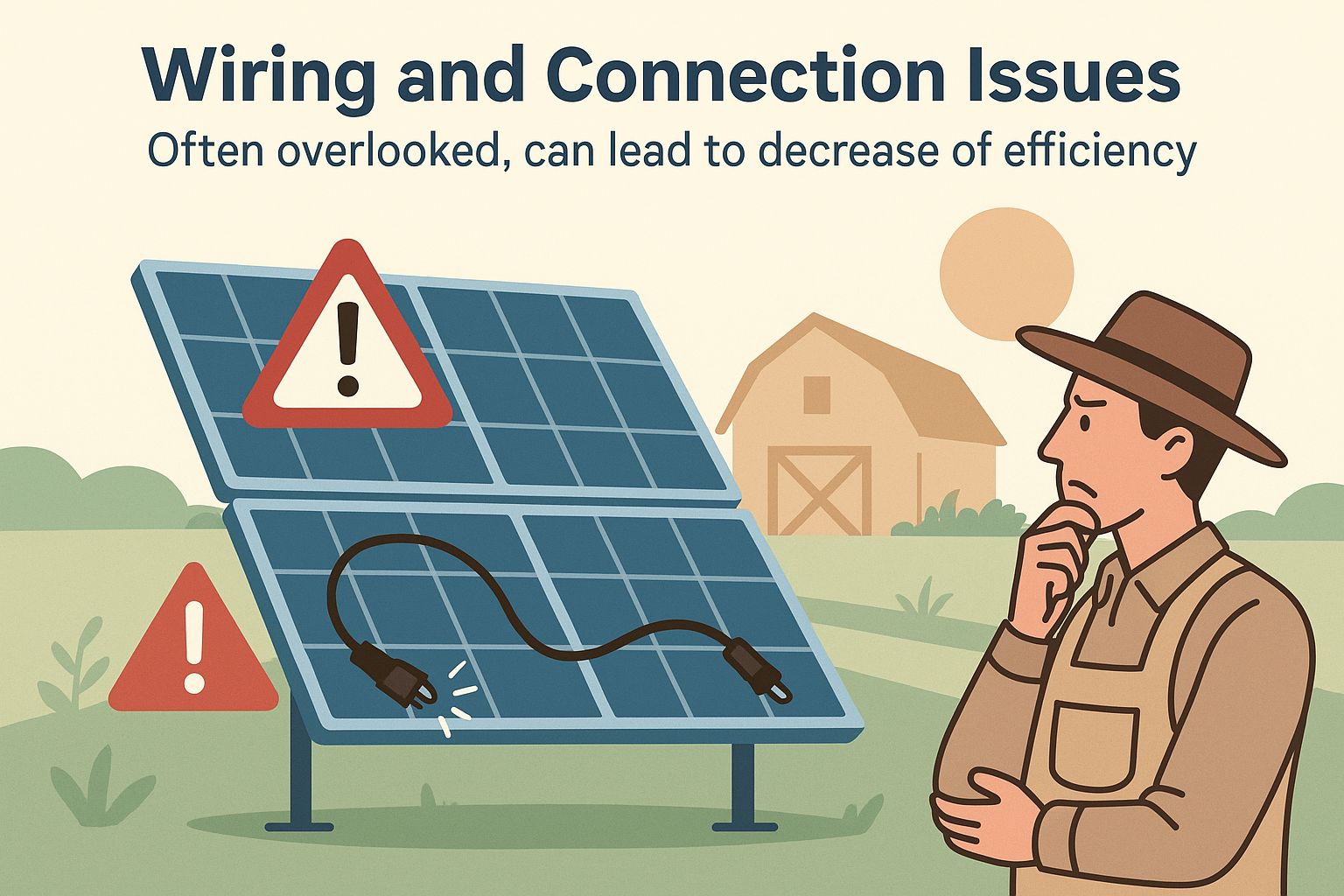
The invisible infrastructure connecting your solar panels often harbors efficiency losses that compound over time. Farms present particularly challenging environments for electrical connections due to constant exposure to moisture, temperature extremes, and corrosive agricultural chemicals. Degraded connections can reduce system output by 10-15% before becoming severe enough to trigger fault indicators. Regular inspection of these components should be part of every farm’s maintenance protocol, yet they’re frequently neglected until complete failures occur.
Connection issues typically develop gradually, making them difficult to identify without systematic testing. Annual thermal imaging of connection points can reveal resistance problems before they cause significant production losses. The investment in professional electrical inspection typically pays for itself many times over by preventing both energy losses and potential safety hazards that develop in aging farm solar systems.
Corrosion in Agricultural Environments
Agricultural settings expose solar equipment to unique corrosion accelerants. Ammonia from livestock operations, fertilizer dust, and even high humidity levels near irrigation systems create a perfect storm for connection degradation. These chemical exposures attack both the metallic conductors and their protective coatings, creating high-resistance connections that generate heat and reduce energy transfer efficiency. Corrosion typically begins at junction boxes and combiner connections where different metals meet, creating microscopic galvanic cells that accelerate the deterioration process.
Protective measures specific to farm environments can dramatically extend connection lifespan. Dielectric grease applications during installation and maintenance visits create moisture barriers that prevent corrosion initiation. Upgraded connection hardware using marine-grade components with enhanced corrosion resistance adds minimal cost during installation but provides substantial protection, particularly for systems near livestock facilities or fertilizer storage areas. Regular cleaning of junction boxes and connection points to remove accumulated agricultural dust prevents the moisture-holding debris that accelerates corrosion cycles.
Loose Connections That Develop Over Time
The daily thermal cycling of solar panels—heating during daylight and cooling at night—gradually loosens electrical connections through expansion and contraction. This effect is amplified in farm environments where temperature swings tend to be more extreme than urban settings due to open exposure. A connection that begins at proper torque gradually loosens over seasons, creating increasing resistance that manifests as heat generation and reduced energy harvest. Studies show that connection points can lose up to 30% of their initial torque within five years without maintenance intervention.
Implementing a scheduled re-torquing program for all electrical connections prevents this common efficiency drain. Using calibrated torque tools rather than manual tightening ensures connections remain at optimal pressure without over-tightening that can damage components. Documentation of these maintenance activities creates valuable system history that helps identify problem areas requiring more frequent attention. Some forward-thinking farms are now installing continuous connection monitoring systems that alert operators to resistance changes before they create significant efficiency losses.
Animal Damage Prevention Techniques
The rural location of farm solar installations makes them particularly vulnerable to wildlife interactions that urban systems rarely experience. Rodents chewing on wiring insulation, birds nesting in junction boxes, and even larger animals damaging ground-mounted arrays can create both immediate failures and long-term efficiency problems. This biological interference often goes undetected until significant damage has occurred, as the protected locations of most wiring and connection points prevents casual visual inspection. For more insights on maintaining solar panel efficiency, check out these solar panel efficiency maintenance tips.
Preventative measures provide the most cost-effective protection against animal damage. Screening all entry points to junction boxes and conduit runs with fine metal mesh prevents rodent access without impeding necessary airflow. Expanding foam sealants at conduit entry points create effective barriers against both moisture and small animals. For ground-mounted systems, perimeter fencing with buried extensions prevents burrowing animals from accessing the array undersides. Some farms have successfully implemented ultrasonic deterrent devices that discourage animal presence without creating habituation effects common with constant-tone units. For more tips on maintaining solar panel efficiency, check out this guide for farmers.
Inverter Problems That Slash Power Output
The inverter serves as the heart of your solar system, converting DC power from panels into usable AC electricity. When inverter efficiency drops, your entire system suffers regardless of how well your panels are performing. Farm environments place particular stress on inverters through dust exposure, temperature extremes, and power quality challenges from agricultural equipment. Most inverter issues develop gradually, creating progressive efficiency losses rather than complete failures that would trigger immediate attention.
The placement of inverters on farms often contributes to accelerated deterioration. Positioned for convenience rather than optimal operating conditions, many farm inverters experience excessive heat, dust infiltration, and even occasional moisture exposure that urban installations would never encounter. Implementing protective housings with appropriate ventilation and filtration can extend inverter lifespan and maintain peak efficiency despite challenging agricultural environments.
Warning Signs Your Inverter Is Underperforming
Early detection of inverter issues prevents both energy losses and potential system damage. Warning indicators include unusual noise during operation, which typically signals failing cooling fans or internal components under stress. Visible discoloration around ventilation ports suggests overheating episodes that accelerate component deterioration. Performance data showing conversion efficiency below the manufacturer’s specifications, particularly during peak production hours, indicates developing problems requiring attention before complete failure occurs. For more tips on maintaining your solar panels, check out our solar panel efficiency maintenance guide.
Monitoring inverter startup behavior provides valuable diagnostic insights. Delayed morning startup or premature evening shutdown effectively shortens your daily production window, reducing harvest by up to an hour daily in some cases. These timing anomalies often precede more serious performance issues and should trigger professional evaluation. Modern monitoring systems can automatically flag these behavioral changes, but even manual observation of system operation timing can identify developing problems before significant production losses occur.
Dust and Heat Management for Inverter Longevity
Inverters operate most efficiently within specific temperature ranges, typically 60-85°F (15-30°C). Farm installations frequently expose these sensitive components to temperatures well outside optimal ranges, particularly during summer months when both ambient temperatures and power production peak simultaneously. Every 10°C temperature increase above rated specifications approximately doubles the rate of electronic component degradation, significantly reducing inverter lifespan and conversion efficiency.
Strategic inverter placement represents the most cost-effective longevity enhancement. Positioning units on north-facing walls, under simple shade structures, or in ventilated enclosures can reduce operating temperatures by 15-20°C during critical summer months. Regular cleaning of cooling fins and ventilation ports prevents the dust accumulation common in agricultural settings that impedes heat dissipation. Some farms have implemented simple automated cleaning systems using compressed air pulses to maintain cooling efficiency without requiring manual intervention. These preventative measures typically extend inverter lifespan by 3-5 years while maintaining peak conversion efficiency throughout the component lifecycle.
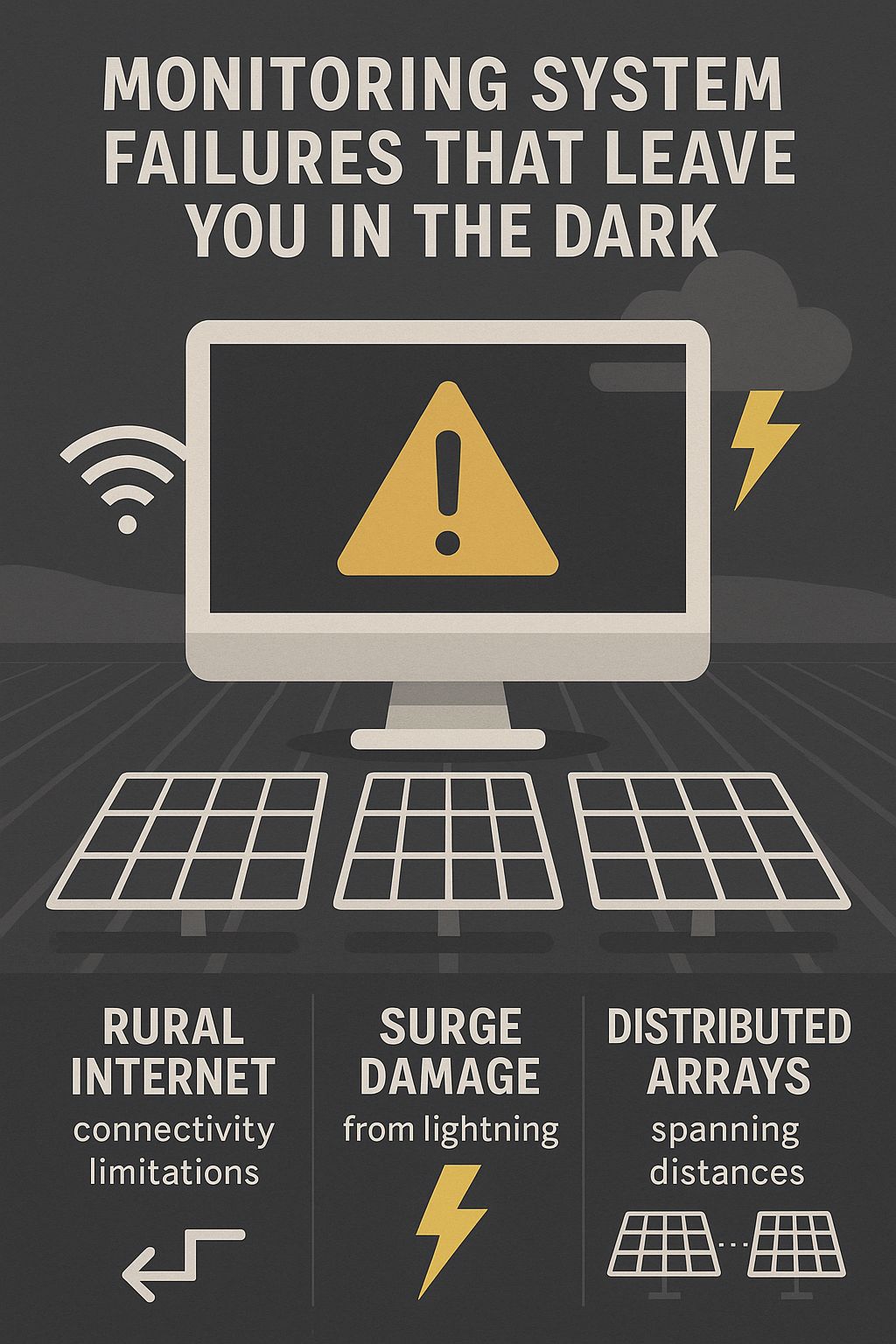
Monitoring System Failures That Leave You in the Dark
Effective monitoring provides your first line of defense against developing efficiency problems, yet monitoring systems themselves often fail without notice. When monitoring capabilities degrade, efficiency issues go undetected for extended periods, creating compounding energy losses. Farm installations face particular challenges maintaining reliable monitoring due to rural internet connectivity limitations, exposure to lightning-induced surge damage, and the distributed nature of agricultural arrays that may span significant distances.
The value of robust monitoring extends beyond simple failure alerts. Comprehensive monitoring systems track performance trends that identify developing issues before they cause significant production losses. Regular verification of monitoring system accuracy through manual comparison measurements ensures the data driving your maintenance decisions remains reliable. Implementing redundant monitoring pathways prevents single-point failures from leaving your system operating blind during critical production periods.
Simple Tests to Identify Underperforming Panels
Visual inspection remains your most accessible diagnostic tool for panel performance assessment. Discoloration, particularly yellowing or browning of the encapsulant material visible between cells, indicates UV degradation that reduces light transmission to the silicon beneath. Surface texture changes, such as microscopic crazing or crystallization in the protective glass, similarly reduce light penetration and energy conversion efficiency. Physical deformation of the panel frame or surface suggests internal structural compromises that typically correlate with reduced electrical performance and accelerated degradation rates.
When to Call a Professional vs. DIY Fixes
Many efficiency issues can be addressed through owner maintenance, while others require professional intervention. DIY approaches work well for cleaning, basic shade management, and visual inspections that identify developing problems before they become severe. Simple electrical tests using multimeters can verify proper voltage outputs and identify panels operating below specifications, though proper safety protocols must be followed when working with live electrical components. For more detailed guidance, check out these solar panel efficiency maintenance tips.
Professional assessment becomes necessary when issues involve internal panel damage, complex electrical problems, or inverter malfunctions. The investment in professional diagnostics typically pays for itself through both immediate performance improvements and prevention of cascading damage that develops when initial problems go unaddressed. Establishing relationships with solar maintenance professionals familiar with agricultural installations ensures faster response when issues require specialized expertise.
Your Farm Solar Maintenance Calendar
Implementing a structured maintenance schedule tailored to your farm’s specific conditions prevents many common efficiency problems before they develop. Unlike residential systems, agricultural solar installations require more frequent attention due to their exposure to farm operations and rural environmental challenges. A well-designed maintenance calendar incorporates both seasonal considerations and alignment with farm operational cycles to minimize interference with critical agricultural activities.
- Monthly visual inspections during growing season (April-October)
- Quarterly panel cleaning with additional cleaning after heavy pollen events
- Semi-annual electrical connection inspection and torque verification
- Seasonal angle adjustments (if using adjustable mounting systems)
- Annual professional inspection including thermal imaging
- Post-harvest cleaning to remove crop residue accumulation
- Winter snow management protocol implementation
Documentation creates the foundation for effective maintenance management. Recording both scheduled activities and unexpected issues builds a system history that helps identify recurring problems requiring more permanent solutions. Digital record-keeping with date-stamped photos provides valuable reference points for evaluating system changes over time. Many farms find that incorporating solar maintenance into existing equipment management systems streamlines the process and ensures critical tasks aren’t overlooked during busy agricultural periods.
Adapting maintenance timing to align with agricultural operations improves both efficiency and safety. Scheduling major solar maintenance during crop transition periods reduces potential conflicts with essential farm activities. Coordinating panel cleaning with irrigation system maintenance allows sharing of water resources and equipment. This integrated approach recognizes the solar array as a productive farm asset deserving the same structured maintenance attention as tractors, irrigation systems, and other critical agricultural equipment.
Seasonal Maintenance Tasks That Pay for Themselves
Spring maintenance focuses on preparing your system for peak production season. Thorough panel cleaning removes winter accumulation and pollen deposits before summer production peaks. Inspection of winter damage to mounting systems, particularly in snow-prone regions, identifies structural issues requiring attention before they affect panel alignment. Vegetation management around ground-mounted arrays prevents developing shade issues as plants enter active growth phases.
Fall maintenance prepares your system for winter challenges. Clearing gutters and drainage paths on roof-mounted systems prevents water backups that can damage both panels and mounting hardware during freeze-thaw cycles. Inspecting and reinforcing mounting hardware ensures panels remain secure during winter storm events. Preparing snow management equipment and verifying monitoring system communication paths ensures you’ll maintain visibility into system performance during challenging winter conditions when site access may become limited.
Tools Every Farm Needs for Solar Panel Upkeep
Essential cleaning equipment includes extension poles with soft brush attachments that remove surface contamination without scratching protective glass coatings. Microfiber cloths for detail cleaning prevent scratches while effectively removing stubborn residues. Spray systems that deliver deionized water provide streak-free cleaning without chemical residues that can attract dust. These specialized tools represent modest investments that prevent the surface degradation caused by improper cleaning techniques using standard farm equipment. For more tips on maintaining your solar panels, check out our solar panel efficiency maintenance guide.
Diagnostic tools provide early warning of developing efficiency issues. Digital multimeters with DC voltage capabilities verify proper panel output under various light conditions. Infrared thermometers identify hot spots indicating connection problems or internal panel damage. Solar irradiance meters measure actual light input, allowing accurate calculation of expected output versus actual production. These measurement tools enable quantitative assessment of system performance rather than subjective evaluation that might miss developing efficiency problems.
Safety equipment remains essential for all maintenance activities. Proper fall protection for roof-mounted systems prevents injuries during cleaning and inspection. Electrical insulating gloves and tools protect against shock hazards when checking connections. Properly rated eye protection shields against UV exposure during extended outdoor maintenance. These safety investments protect both personnel and equipment during maintenance operations that might otherwise be rushed or improperly performed due to safety concerns.
Maintenance Costs vs. Production Losses: The Math
The economic calculation strongly favors preventative maintenance over reactive repairs. A typical 100kW farm installation losing 15% efficiency through neglected maintenance forfeits approximately 20,250 kWh annually (assuming 1,350 kWh/kW average annual production). At average rural electric rates of $0.12/kWh, this represents $2,430 in lost production annually—significantly exceeding the cost of comprehensive maintenance programs that typically range from $800-1,200 annually for systems of this size.
Beyond direct production losses, neglected maintenance accelerates component degradation, effectively shortening system lifespan. Panels typically degrade at 0.5-0.7% annually under ideal conditions, but this rate more than doubles when maintenance is neglected. This accelerated degradation effectively reduces your system’s productive lifespan by 5-7 years, representing thousands in lost production value during years when the system should still be operating at high efficiency. Proper maintenance essentially extends your solar investment’s productive life, improving lifetime return on investment by 15-20% through both higher annual production and extended service life. For more insights, check out these solar panel efficiency maintenance tips.
Keep Your Farm Powered: Final Thoughts on Solar Efficiency
“The difference between a solar array that delivers 25+ years of peak performance and one that disappoints after just a decade often comes down to maintenance rather than equipment quality. The best panels in the world will underperform without proper care, while even mid-grade equipment can exceed expectations with diligent maintenance.”
Farm solar systems represent significant investments that deserve protection through proper maintenance and performance monitoring. The agricultural setting presents unique challenges for solar equipment, from dust and debris to extreme weather exposure, yet these challenges can be effectively managed through structured maintenance programs tailored to farm-specific conditions. The return on maintenance investment typically exceeds 300%, making it one of the most profitable farm activities on a per-hour basis. For more on how to increase solar panels’ efficiency in farm settings, consider tailored strategies that address these unique challenges.
Implementing the strategies outlined in this guide will help your farm capture the full potential of your solar investment. Beyond the immediate financial benefits of improved production, well-maintained solar systems contribute to farm sustainability goals, energy independence, and operational resilience during grid outages or price spikes. The small time investment in regular maintenance pays dividends both financially and in system reliability when you need power most. For more information on enhancing your solar setup, consider exploring ways to increase solar panels’ efficiency for farm irrigation systems.
Remember that solar technology continues evolving, with new panel designs, mounting systems, and monitoring capabilities regularly entering the market. Maintaining relationships with solar professionals familiar with agricultural applications ensures you’ll stay informed about upgrades or modifications that might improve your existing system’s performance. Your solar array represents both a current asset and a long-term investment in your farm’s energy future—protecting that investment through proper maintenance ensures it will continue powering your operation for decades to come. For more insights, check out these solar panel efficiency maintenance tips.
Frequently Asked Questions
The questions below address the most common concerns farmers express about maintaining solar efficiency. These practical answers provide starting points for addressing specific challenges your farm might face. Remember that local conditions, system configurations, and agricultural operations all influence the optimal approaches for your specific installation. Consulting with professionals familiar with agricultural solar applications can help refine these general guidelines for your particular situation.
When considering changes to your maintenance approach, start with small adjustments and carefully document results before implementing major modifications. This incremental approach allows you to identify which changes deliver the greatest efficiency improvements for your specific system and farm environment. The goal is developing a maintenance program that maximizes solar production while minimizing interference with core agricultural operations.
- How do seasonal farm activities affect solar panel efficiency?
- What cleaning methods are safest for agricultural solar installations?
- How do I coordinate solar maintenance with my farming calendar?
- What weather conditions most affect farm solar production?
- When should I consider upgrading components rather than continuing maintenance?
Many efficiency issues develop gradually, making them difficult to identify without structured monitoring protocols. Establishing baseline performance measurements when your system is new or freshly maintained provides valuable reference points for evaluating future performance. Regular documentation of both production data and maintenance activities creates a system history that helps identify developing problems before they cause significant production losses.
How often should I clean my farm’s solar panels?
Agricultural solar installations typically require more frequent cleaning than residential systems due to greater dust and debris exposure. For most farms, quarterly cleaning provides a minimum maintenance baseline, with additional cleaning after significant dust events such as nearby field cultivation, harvesting operations, or extended dry periods. During peak pollen seasons, particularly if your farm grows or is near flowering crops, monthly cleaning may become necessary to maintain optimal efficiency. The economic threshold that justifies cleaning occurs when efficiency drops by 5-7%, which typically happens every 60-90 days in most agricultural settings, though this interval varies widely based on local conditions and farm activities. To further enhance your farm’s solar energy use, consider exploring ways to increase solar panels efficiency.
Can I use regular water to clean solar panels or do I need special solutions?
Standard water works effectively for routine cleaning, particularly if panels are cleaned during early morning hours when they remain cool and water spotting is minimized. For areas with hard water, using deionized or distilled water prevents mineral deposits that can accumulate over time. Mild soap solutions (1/4 cup non-abrasive detergent per 5 gallons of water) help remove stubborn agricultural residues like pollen or crop dust, but must be thoroughly rinsed to prevent film formation that attracts new dust. Avoid high-pressure washing systems that can damage panel seals and potentially void warranties—gentle pressure with soft brushes provides effective cleaning without risking equipment damage.
What’s the average lifespan of solar panels in farm environments?
Properly maintained solar panels in agricultural settings typically deliver 25-30 years of productive service, though with gradually declining efficiency. Most manufacturers guarantee 80% of rated output at year 25, but actual field experience shows properly maintained farm installations often exceed these specifications. Environmental factors significantly influence longevity, with extreme temperature fluctuations, hail exposure, and high UV levels accelerating degradation. Systems exposed to ammonia from livestock operations or drift from chemical applications may experience accelerated seal deterioration unless specifically designed for agricultural environments.
The mounting system often determines practical lifespan in farm installations. Roof-mounted systems typically follow building lifespans, requiring disassembly and reinstallation when roofing needs replacement (typically 20-25 years for agricultural buildings). Ground-mounted systems frequently deliver longer service lives since they can be maintained or upgraded without building constraints, though they require more attention to structural integrity as components age. With appropriate component replacement and maintenance, many farm solar systems can remain productive for 35+ years, though with efficiency approximately 20-30% below initial ratings in later years.
Is it worth upgrading older panels or better to replace the entire system?
The upgrade versus replacement decision depends on several factors specific to your installation. Systems under 10 years old generally benefit more from targeted component upgrades rather than wholesale replacement, particularly focusing on inverter technology where efficiency improvements have been substantial. Replacing older central inverters with newer string inverters or microinverters can improve system efficiency by 8-12% while providing better performance monitoring and shade tolerance without panel replacement. For more insights on improving efficiency, check out these solar panel efficiency maintenance tips.
Component Age Decision Matrix:
Component Age
Recommended Action
Typical ROI Period
0-7 years
Maintenance only, no upgrades
Immediate (reduced losses)
8-12 years
Inverter upgrades, maintain panels
3-5 years
13-18 years
Selective panel replacement, new inverters
5-8 years
19+ years
Complete system replacement
7-10 years
For systems approaching or exceeding 15 years of service, technological advances may justify complete replacement. Modern panels deliver 30-40% higher output per square foot than older generations, potentially allowing significant production increases without expanding array footprint. Tax incentives and depreciation advantages sometimes make complete replacement financially advantageous even for functioning older systems, particularly when combined with farm business equipment tax provisions that may allow accelerated depreciation schedules.
Consider phased replacement approaches that balance immediate costs with production improvements. Replacing the poorest-performing 25% of panels annually over four years spreads capital requirements while progressively improving system output. This approach allows incorporation of newer technologies as they emerge rather than committing to a single technology generation in one replacement cycle.
How do I calculate the actual efficiency loss on my solar array?
Accurate efficiency loss measurement requires comparing current production to both original specifications and degradation expectations. Start by establishing your system’s performance ratio (PR)—the relationship between actual and theoretically possible energy outputs. Divide your measured kWh production by the calculated potential production based on actual solar irradiance during the measurement period. This calculation removes weather variations from your efficiency assessment, allowing accurate comparison across different time periods.
For practical field assessment, compare your current monthly production to the same month in previous years, adjusting for weather differences using data from local weather stations. Most systems should degrade at approximately 0.5-0.7% annually under normal conditions, so production declines significantly exceeding this rate indicate developing efficiency problems rather than normal aging. Monitoring production trends rather than absolute values provides the most accurate indication of developing issues, as seasonal variations can mask gradual efficiency losses when examining isolated measurements.
Advanced monitoring systems calculate normalized production values that account for actual sunlight input, allowing precise efficiency tracking regardless of weather conditions. These systems typically cost $1,500-3,000 for farm-scale installations but provide invaluable data for maintenance decision-making. The investment typically pays for itself through improved production resulting from earlier problem detection and more targeted maintenance interventions. For systems without advanced monitoring, manual logging of monthly production figures and regular comparison to previous periods provides a cost-effective alternative that still identifies significant efficiency changes requiring attention.
Solar panels on farms are a great way to harness renewable energy, but their efficiency can be impacted by several factors. Dust accumulation, improper angle, and shading from nearby objects can significantly reduce their output. To ensure optimal performance, it’s essential to regularly clean the panels and adjust their angle according to the sun’s position. Additionally, using solar tracking systems can help maximize energy absorption by automatically adjusting the panels’ orientation throughout the day.

Leave a Reply