
Key Takeaways
- Solar tracking systems can increase farm energy production by 30-45% compared to fixed solar panel installations, offering significant cost savings on monthly electricity bills.
- Dual-axis trackers provide maximum efficiency by following the sun on both horizontal and vertical planes, outperforming single-axis systems by up to 15% in most agricultural settings.
- The initial investment in tracking systems typically pays for itself within 5-8 years through increased energy production and available agricultural solar incentives.
- Solar tracking technology is particularly beneficial for powering irrigation systems, cold storage facilities, and processing equipment – all critical to modern farming operations.
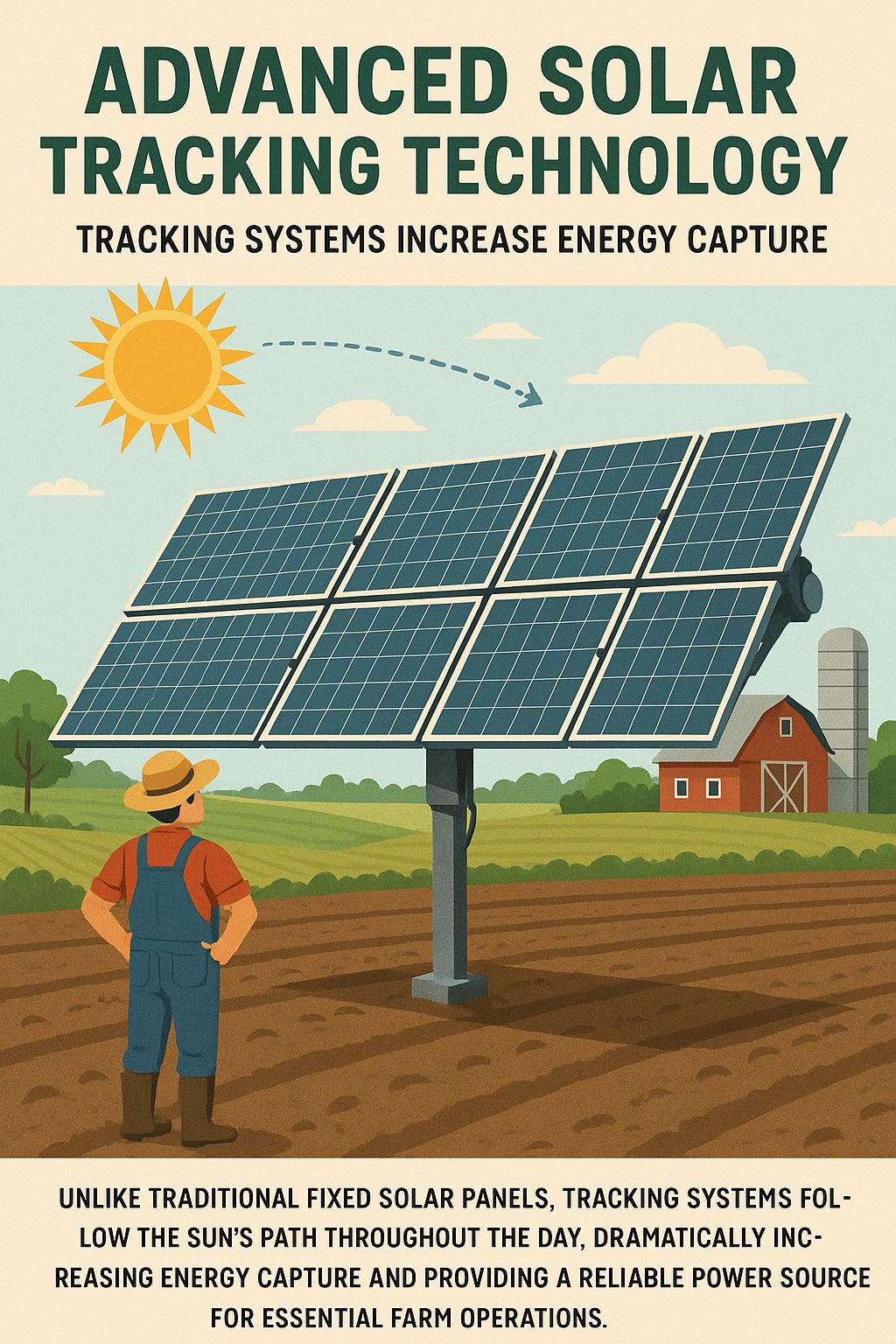
Farmers face rising energy costs that eat into already thin profit margins. The solution? Harnessing the sun more efficiently through advanced solar tracking technology. Unlike traditional fixed solar panels, tracking systems follow the sun’s path throughout the day, dramatically increasing energy capture and providing a reliable power source for essential farm operations.
How Solar Tracking Systems Boost Farm Energy Production by 45%
Solar tracking systems revolutionize farm energy production by constantly adjusting panel orientation to capture maximum sunlight. Unlike fixed panels that peak in efficiency only during midday hours, trackers maintain optimal sun exposure from dawn till dusk. This technological advantage translates to 30-45% higher energy yields compared to stationary systems, depending on your farm’s geographic location. Growing Solar Mist has documented numerous cases where properly installed tracking systems have reduced monthly energy bills by up to 40% for agricultural operations of various sizes.
The increased efficiency comes from simple physics – direct perpendicular exposure to sunlight maximizes energy conversion. When solar panels maintain this optimal angle throughout the day, they capture significantly more of the sun’s energy than fixed systems that only achieve ideal positioning for a short period. For farms with high daytime energy demands like irrigation or processing facilities, this consistent power generation aligns perfectly with operational needs.
What Are Solar Tracking Systems and Why Farmers Need Them
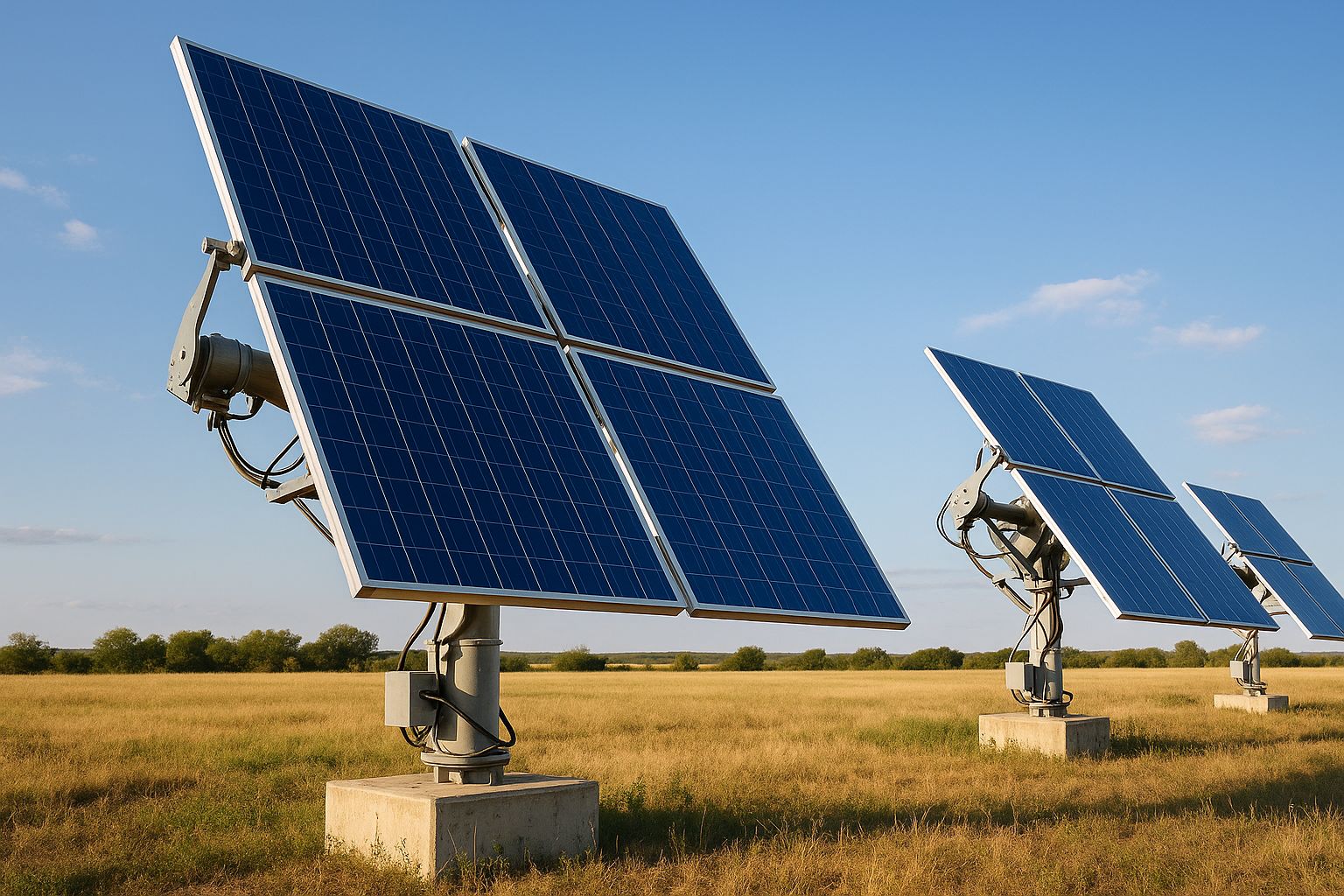
Solar tracking systems consist of motorized structures that automatically adjust the position of solar panels to follow the sun’s path across the sky. The technology utilizes sensors, motors, and sophisticated algorithms to determine the sun’s position and orient panels for maximum exposure throughout daylight hours. These systems effectively extend peak production hours, capturing more energy during early morning and late afternoon when fixed panels would be generating at significantly reduced capacity.
For farmers, the benefits extend beyond simple efficiency gains. Agricultural operations often have predictable energy-intensive activities that align with daylight hours – pumping water, running equipment, and maintaining climate control in buildings. Tracking systems provide stronger, more consistent power exactly when it’s needed most. Additionally, many farms have ample space for solar installations without sacrificing valuable cropland, making tracking systems a practical solution that doesn’t compete with primary farming activities.
The reliability factor also makes tracking systems attractive for rural operations where grid connectivity may be inconsistent. By maximizing energy production during all daylight hours, farms can reduce dependency on external power sources and maintain critical functions even during utility outages. This energy independence represents both financial savings and operational security for modern agricultural businesses.
Single-Axis vs. Dual-Axis Tracking: Which Is Right for Your Farm?
Single-axis tracking systems rotate along one axis, typically east to west, following the sun’s daily journey across the sky. These systems increase energy production by 25-35% compared to fixed installations and come with lower initial costs and maintenance requirements. They’re particularly effective in regions with consistent sun patterns and represent a solid middle-ground option for farms with moderate energy needs or budget constraints.
Dual-axis trackers, however, adjust on both horizontal and vertical planes to maintain perfect perpendicular alignment with the sun year-round. This additional movement captures optimal sunlight regardless of seasonal variations, delivering 35-45% more energy than fixed systems and 10-15% more than single-axis alternatives. The tradeoff comes in higher upfront costs, more complex maintenance, and greater land requirements for installation. For large operations with substantial energy demands, the additional investment typically justifies itself through significantly higher long-term production.
“After switching to dual-axis tracking for our 50kW system, our dairy operation saw a 42% increase in annual energy production compared to our previous fixed installation. The system now covers nearly 80% of our electricity needs, including milk cooling and processing equipment.” – James Henderson, Hillcrest Dairy Farm
This table provides a concise overview to help select the best solar tracking system for various farm scenarios:
|
Feature |
Single-Axis Tracking |
Dual-Axis Tracking |
|---|---|---|
|
Mechanism |
Tracks sun on one axis (East-West) |
Tracks on two axes (East-West & North-South) |
|
Energy Gain vs Fixed |
15–35% increase |
30–50% increase |
|
Cost |
Lower upfront and maintenance costs |
Higher upfront and ongoing costs |
|
Complexity |
Simple, fewer moving parts |
Complex, more moving parts |
|
Reliability/Lifespan |
Higher reliability, longer life |
More prone to technical issues |
|
Maintenance |
Lower routine maintenance |
Higher, requires skilled technicians |
|
Land Use Efficiency |
Good, but needs more space for same power |
Better, more output in less space |
|
Best Climate |
Sunny, stable solar angle, mild weather |
Variable sunlight, high latitude, changing weather |
|
Suitable Farm Size |
Small–medium, tight budgets |
Large, utility-scale, max output needed |
Sources for the table: 1, 2, 3, 4
- Single-axis trackers are ideal for small to medium farms, especially in sunny regions where the sun’s angle remains stable and cost-effectiveness is crucial.
- Dual-axis trackers are recommended for large projects, high-latitude farms, or areas with variable sunlight, as they can maximize output and optimize land use despite higher complexity and costs.
- Consider local climate, your energy needs, and available budget—dual-axis may pay off in energy yield for big operations, but single-axis will offer sufficient performance with lower risk and investment for most family farms.
How Tracking Systems Follow the Sun Throughout the Day
Modern solar tracking systems use a combination of light sensors, GPS data, and astronomical calculations to determine the sun’s precise position throughout the day. Microprocessors analyze this information and send signals to drive motors that adjust panel orientation accordingly. The most advanced systems make continuous micro-adjustments, keeping panels at the perfect angle to maximize energy capture from sunrise to sunset.
During dawn hours, tracking systems position panels to face eastward, capturing early morning light that fixed installations would miss entirely. As the day progresses, the trackers slowly rotate westward, maintaining optimal exposure. Dual-axis systems also adjust the vertical tilt to account for the sun’s changing height in the sky, a particularly valuable feature during winter months when the sun remains lower on the horizon.
The Real Energy Numbers: Tracking vs. Fixed Solar Panels
When comparing tracking systems to fixed panels, the numbers speak for themselves. While fixed systems typically convert sunlight at peak efficiency for only 4-6 hours per day, tracking systems maintain near-peak production for 8-10 hours daily. This extended productivity window translates to substantially higher energy yields and more consistent power availability throughout daylight hours.
The efficiency advantage becomes even more pronounced during spring and fall months when the sun’s path changes more dramatically. Fixed panels optimized for summer position will see significant drops in production during these transition seasons, while tracking systems automatically compensate for these changes, maintaining optimal energy capture year-round.
20-45% More Energy Production with Tracking Systems
The performance improvement from tracking technology isn’t marginal – it’s transformative. Single-axis tracking consistently delivers 20-30% more energy than fixed systems of the same size and specification. Dual-axis tracking pushes this advantage further, with documented improvements of 35-45% in most agricultural settings. For a typical 100kW farm installation, this efficiency boost can represent an additional 30,000-50,000 kWh annually – enough to power substantial agricultural operations or significantly reduce dependency on grid electricity.
The production advantage varies somewhat by latitude. Farms in southern regions with more direct overhead sun paths may see gains toward the lower end of the range, while northern operations often experience benefits at the higher end of the spectrum. This occurs because the sun travels a wider arc at higher latitudes, making the tracking function particularly valuable in capturing morning and evening sunlight.
Seasonal Performance Differences in Various Climates
Climate conditions significantly impact the relative advantage of tracking systems. In regions with distinct seasons, tracking systems demonstrate their greatest advantage during spring and fall when the sun’s position changes most dramatically. During these periods, fixed systems optimized for summer positioning may underperform by 15-25%, while tracking systems maintain consistent high output.
Winter performance presents another area where tracking systems shine. When the sun remains lower on the horizon for more of the day, dual-axis tracking systems can adjust both horizontally and vertically to maintain optimal exposure. This capability is particularly valuable for year-round farming operations that maintain substantial energy needs even during colder months.
Energy Output in Cloudy Conditions
Even during partially cloudy conditions, tracking systems maintain their efficiency advantage. Modern trackers use sophisticated light sensors and algorithms to identify the brightest areas of the sky and position panels accordingly, maximizing diffuse light capture. While the absolute advantage is reduced compared to clear days, tracking systems typically still outperform fixed installations by 10-15% during overcast conditions.
For farms in regions with variable weather patterns, this resilience provides more consistent energy production throughout the growing season. The ability to capture maximum available light regardless of conditions translates to more reliable power for critical farm operations, reducing dependency on backup systems or grid power during weather transitions.
Financial Benefits for Farm Operations
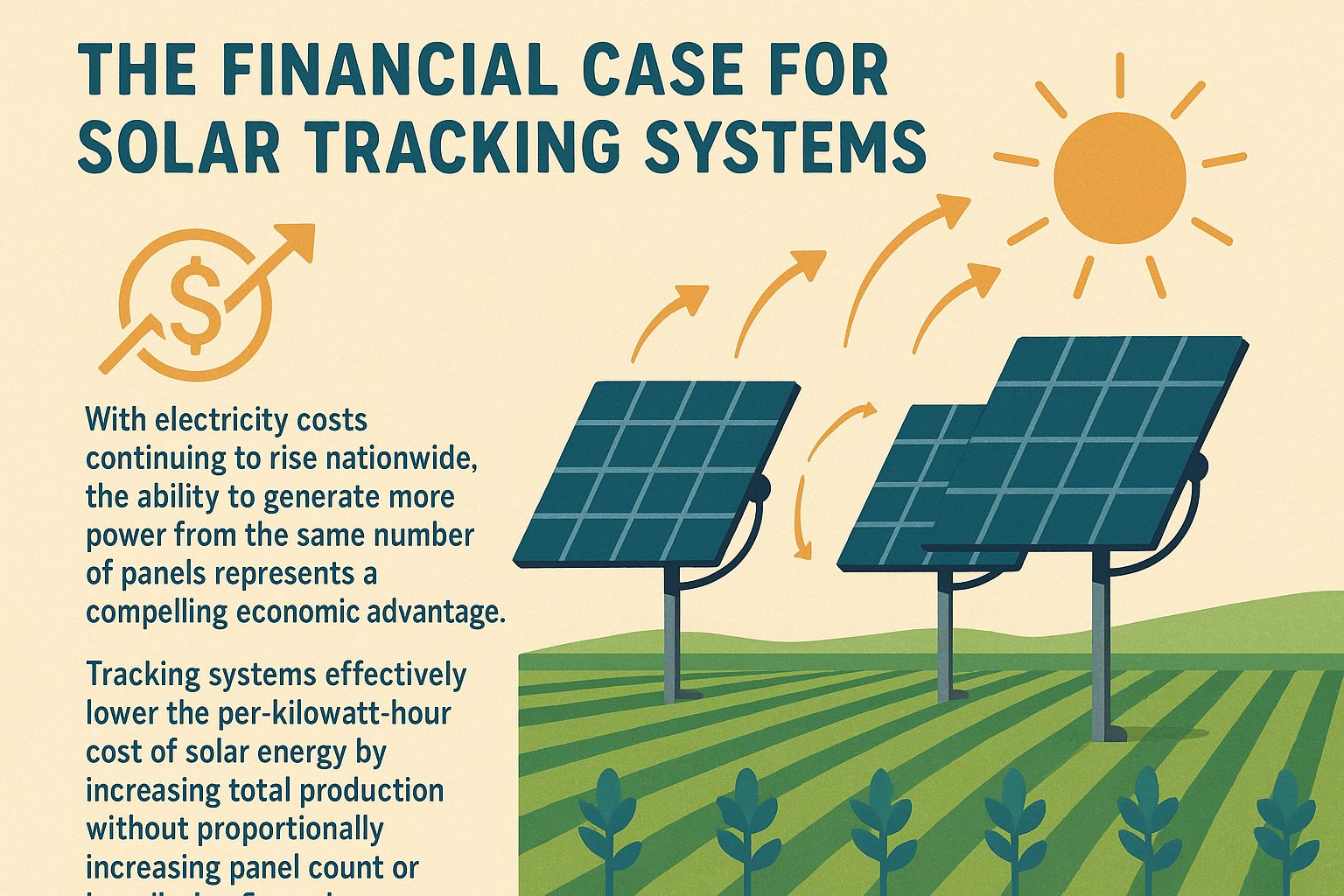
The financial case for solar tracking systems has never been stronger for agricultural businesses. With electricity costs continuing to rise nationwide, the ability to generate more power from the same number of panels represents a compelling economic advantage. Tracking systems effectively lower the per-kilowatt-hour cost of solar energy by increasing total production without proportionally increasing panel count or installation footprint.
While tracking systems do require additional investment compared to fixed installations – typically 15-30% more for single-axis and 30-45% more for dual-axis – the increased energy production more than compensates for this premium over the system’s lifespan. Most agricultural operations find that tracking systems deliver better long-term financial returns despite the higher initial cost.
Return on Investment Timeline: 5-8 Year Payback Period
The payback period for solar tracking systems on farms typically ranges from 5-8 years, depending on specific energy costs, available incentives, and system size. This timeline compares favorably with fixed systems, which often require 7-10 years to reach breakeven, despite their lower upfront costs. The accelerated return results directly from the increased energy production, which generates more savings or revenue each year.
After reaching payback, tracking systems continue generating value for 25+ years, with most components carrying warranties of 10-25 years. The motors and tracking mechanisms generally require replacement or major refurbishment only once during the system’s lifetime, typically after 12-15 years of operation. Even accounting for this maintenance cost, the financial advantage remains substantial compared to fixed installations.
Available Tax Credits and Agricultural Incentives
Farmers investing in solar tracking systems can access numerous financial incentives that significantly improve project economics. The federal Investment Tax Credit currently allows agricultural businesses to deduct 30% of the system cost from their taxes, substantially reducing the effective investment required. Many states offer additional tax credits, grants, or production-based incentives specifically for agricultural renewable energy projects.
Beyond direct incentives, farmers can often leverage USDA Rural Energy for America Program (REAP) grants and guaranteed loans to finance up to 75% of eligible project costs. These agricultural-specific funding mechanisms can dramatically improve project cash flow and reduce financial risk. Additionally, accelerated depreciation options allow farmers to capture tax benefits more quickly, further enhancing project economics.
Real-Life Energy Bill Reductions from Farmer Case Studies
Real-world examples demonstrate the transformative impact of solar tracking systems on farm economics. A 200-acre vegetable operation in California installed a 150kW dual-axis tracking system that reduced annual electricity costs by $32,000, representing a 68% decrease in their energy bills. In the Midwest, a 400-acre corn and soybean farm implemented a 75kW single-axis tracking system that cut irrigation pumping costs by 52%, paying for itself in just 6.3 years despite the region’s seasonal growing period.
Dairy operations show particularly strong results due to their consistent year-round energy needs. A 120-cow dairy farm in Wisconsin installed a 60kW dual-axis tracking system to power milk cooling, pasteurization, and barn operations, resulting in monthly savings of $1,850 and significantly stabilizing operational costs against seasonal utility rate fluctuations. The predictable energy savings have allowed these farms to better forecast operational expenses and allocate resources more effectively.
Best Applications for Tracking Systems on Farms
Not all farm operations benefit equally from solar tracking technology. The greatest returns come from applications with consistent daytime energy demands that align well with peak solar production hours. Understanding which farm operations derive the most value from solar tracking helps farmers prioritize investments and maximize returns on renewable energy projects.
Powering Irrigation Systems and Water Pumps
Irrigation represents one of the most energy-intensive aspects of modern farming, with pumping systems often running for 8+ hours during daylight periods. This operational pattern aligns perfectly with solar tracking production curves, making irrigation an ideal application for tracked solar power. Farms can often eliminate 70-90% of irrigation pumping electricity costs by pairing appropriately sized tracking systems with efficient pump controls and strategic watering schedules. Learn more about solar panels powering a farm’s irrigation system.
The benefits extend beyond direct cost savings. Solar-powered irrigation systems can be deployed in remote field locations without access to grid electricity, opening new cultivation possibilities. For farms using variable water pricing structures or facing pumping restrictions during peak utility hours, solar tracking provides energy independence that can transform irrigation economics and improve crop management flexibility.
Supporting Barn Operations and Equipment
Modern agricultural buildings require substantial energy for ventilation, lighting, and equipment operation. Dairy operations, poultry houses, and livestock facilities particularly benefit from the consistent daytime power generation of tracking systems. The extended production hours perfectly complement ventilation needs that increase during daylight warming periods and provide reliable power for feeding systems, waste management equipment, and environmental controls.
For facilities with significant climate control requirements, tracking systems paired with thermal energy storage can capture excess midday solar production and convert it to heating or cooling capacity for use during evening hours. This approach maximizes the value of solar generation by effectively “time-shifting” energy use to match production patterns.
Cold Storage and Processing Facilities
Post-harvest cooling and storage represent critical energy demands for many farm operations. Tracking systems provide maximum power during peak cooling periods when freshly harvested crops require rapid temperature reduction. This alignment of energy supply and demand creates ideal conditions for solar tracking economics. Processing facilities with daytime operations similarly benefit from the extended peak production hours that tracking systems provide.
Many produce operations have implemented innovative approaches that combine solar tracking with cold storage technologies to create efficient “solar cooling” systems. By generating maximum power during the hottest parts of the day when cooling demands peak, these integrated systems deliver particularly strong economic returns while ensuring product quality and extending market windows.
Installation Requirements and Land Considerations
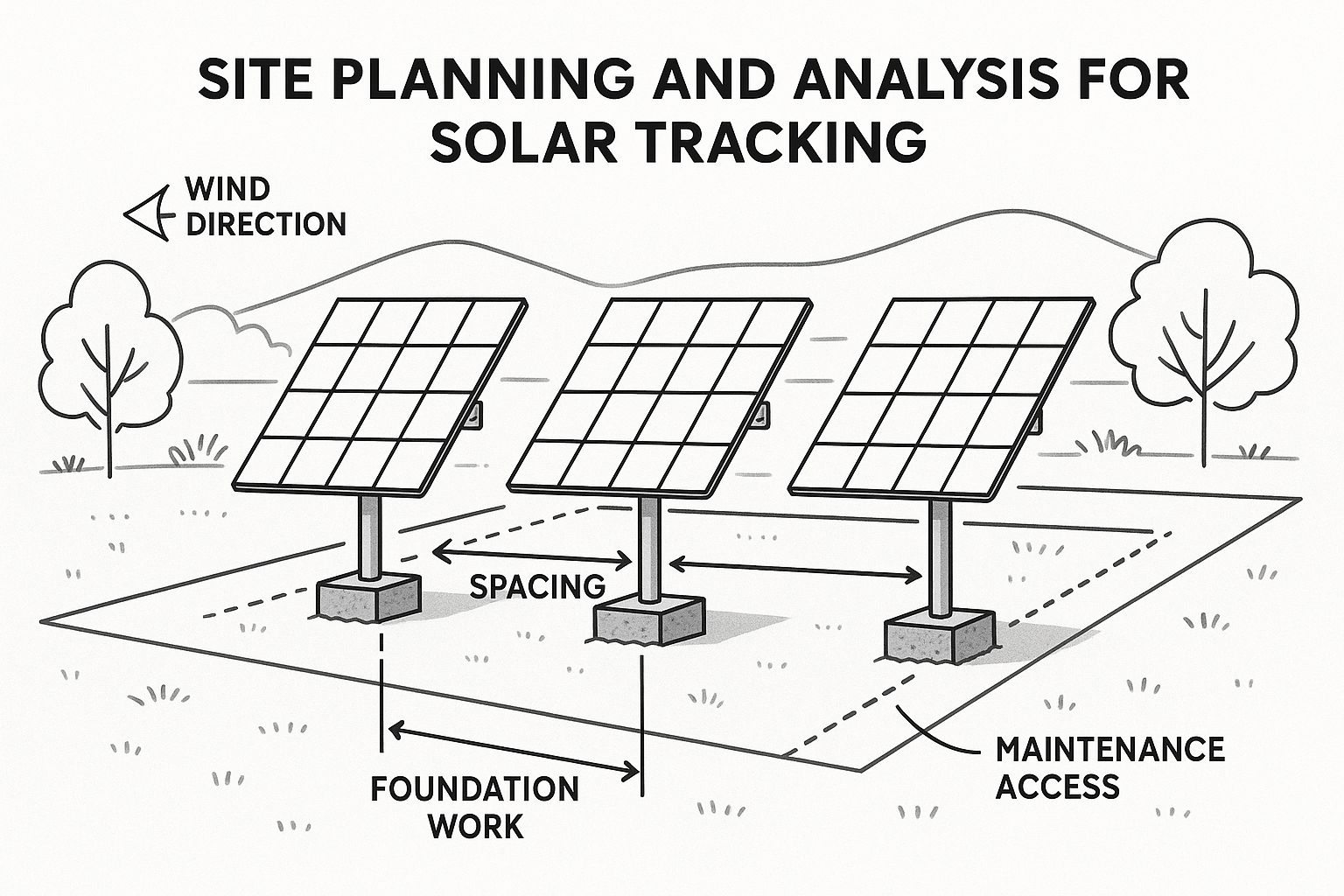
Successful implementation of solar tracking requires careful site planning and analysis. The physical requirements differ substantially from fixed solar installations, with specific needs for spacing, foundation work, and maintenance access. Understanding these requirements helps farmers evaluate whether tracking systems can be practically deployed on their properties.
Space Needed Compared to Fixed Systems
Tracking systems require more space than fixed installations of equivalent capacity due to shading considerations. While fixed panels can be installed relatively close together, tracking systems need sufficient clearance to prevent panels from shading each other as they move throughout the day. Typically, dual-axis tracking systems require 2-3 times more land area than fixed systems with the same power rating, while single-axis systems need approximately 1.5-2 times more space.
This increased land requirement makes site selection crucial for farm implementations. Ideal locations include field margins, underutilized pastures, or land with poor agricultural productivity but good solar access. Many farms successfully integrate tracking systems along access roads or between production areas, maximizing land use efficiency while maintaining necessary clearances.
Soil and Foundation Requirements
The dynamic movement of tracking systems creates structural demands that exceed those of fixed installations. Foundation requirements depend on soil conditions, system size, and local wind loads. Most agricultural installations utilize either concrete pier foundations or driven piles that extend 3-6 feet below grade to provide necessary stability. Proper geotechnical assessment is essential before installation to determine the most appropriate foundation approach.
Soil conditions significantly impact installation costs and methods. Sandy or loamy soils typically allow for simpler driven pile installations, while rocky or clay-heavy soils may require more extensive excavation and concrete work. Most tracking system vendors can provide preliminary foundation recommendations based on local soil maps, but site-specific testing is strongly recommended before proceeding with large installations.
Wind Resistance and Weather Protection Features
Modern solar trackers incorporate sophisticated wind protection features that prevent damage during extreme weather events. Most systems automatically move to a horizontal “stow” position when wind speeds exceed predetermined thresholds, typically around 30-40 mph. This position minimizes wind resistance and protects the mechanical components from excessive stress during storms.
For areas with severe weather concerns, many manufacturers offer reinforced tracking systems designed to withstand higher wind loads and more extreme conditions. These specialized systems may incorporate heavier structural components, additional bracing, or more robust drive mechanisms. While they carry higher initial costs, the enhanced durability often proves worthwhile for installations in tornado-prone regions or coastal areas subject to tropical storms.
Selecting the Right System for Your Farm Size
System selection should be guided by careful analysis of your farm’s energy needs, available installation space, and financial considerations. Different farm sizes and types benefit from specific approaches to solar tracking implementation, with system scale and configuration heavily influenced by operational requirements.
Small Farms (Under 50 Acres)
Small farm operations typically benefit most from compact, high-efficiency tracking systems in the 10-30kW range. These systems can often power essential operations like irrigation, basic processing, and building needs while requiring minimal land commitment. For farms with limited space, dual-axis trackers may provide the best solution despite higher costs, as they maximize production from smaller footprints. Modular systems that can be expanded over time often prove ideal for small farms with growth plans or phased implementation budgets.
Medium Operations (50-500 Acres)
Mid-sized farms generally require systems in the 30-100kW range to make meaningful impacts on their energy costs. At this scale, single-axis tracking often provides the best balance between performance and investment, delivering substantial efficiency gains at moderate cost premiums. These operations typically have more flexibility in siting options, allowing for optimal placement that maximizes solar exposure throughout the year.
Medium-sized operations often benefit from sectional implementation approaches that target high-value applications first. For example, installing tracking systems specifically sized for irrigation pumping or cooling equipment can provide immediate returns on the most energy-intensive operations while deferring complete energy independence to future phases. This staged approach often improves project economics by focusing initial investments where they generate the greatest savings.
Large Agricultural Enterprises
Large farming operations can achieve transformative energy benefits with systems exceeding 100kW, often implementing multiple tracking arrays distributed strategically throughout their properties. These substantial installations can support comprehensive energy needs including processing facilities, extensive irrigation networks, and climate-controlled storage. At this scale, custom-engineered solutions typically deliver the best results, with system designs specifically tailored to operational patterns and energy requirements.
For large operations, hybrid approaches combining both tracking and fixed systems often provide optimal economics. Critical loads requiring consistent daytime power may be served by tracking arrays, while background loads with less time-sensitivity can utilize more economical fixed installations. This balanced approach maximizes return on investment while ensuring that essential systems receive the most reliable renewable power.
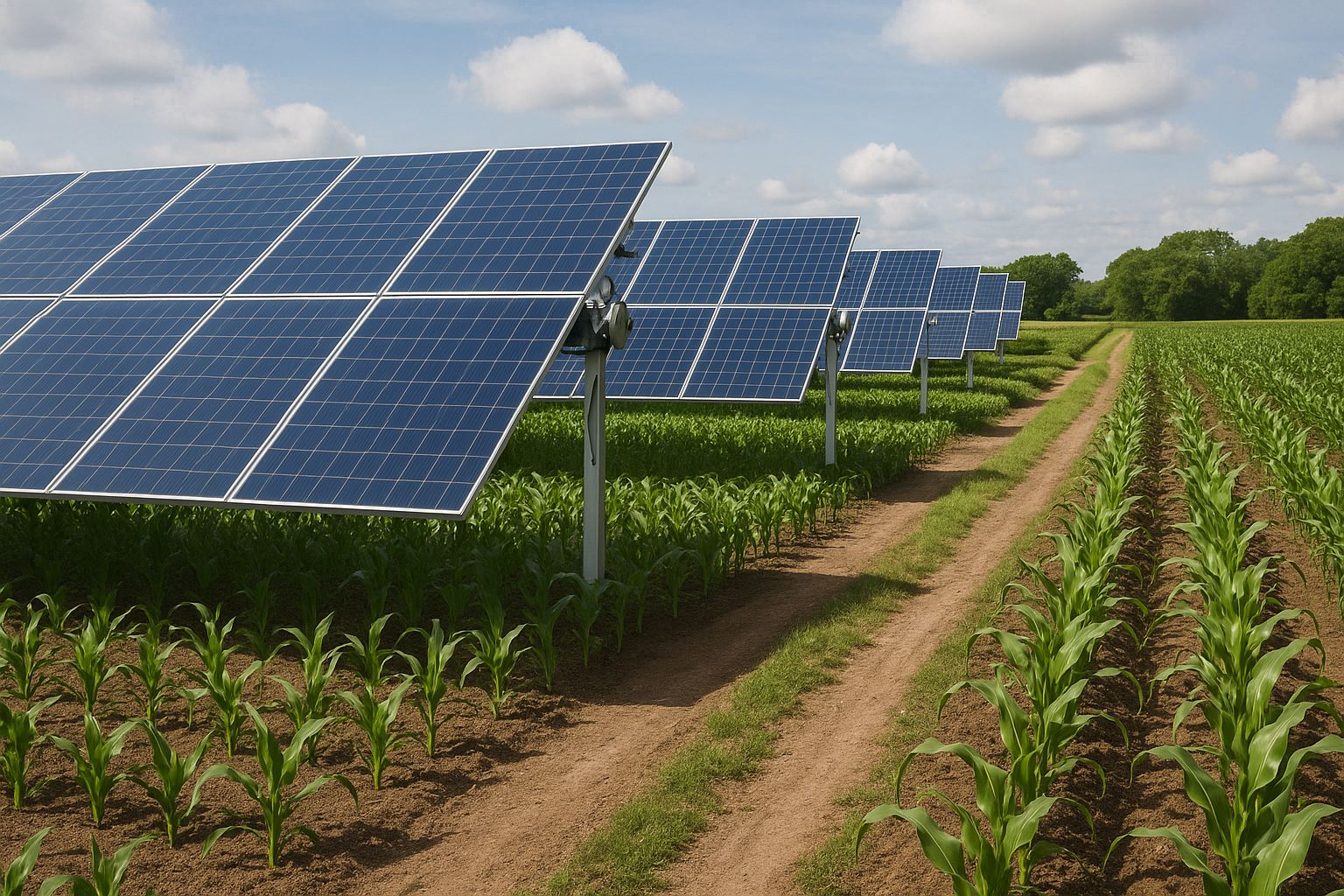
Take Your Farm Energy Independent with Solar Tracking
The path to energy independence begins with understanding your farm’s unique needs and opportunities. By strategically implementing solar tracking technology, agricultural operations of all sizes can dramatically reduce external energy dependencies while improving operational resilience and sustainability. The combination of increased production efficiency, declining equipment costs, and robust agricultural incentives has created unprecedented opportunities for farms to transform their energy economics through solar tracking technology.
Is the Solar Tracking System Worth the Investment for the Farmer
The economic case for solar tracking systems continues to strengthen as agriculture faces rising energy costs and increasing climate volatility. For most farm operations with suitable installation sites and significant daytime energy demands, tracking systems deliver superior long-term returns compared to both grid electricity and fixed solar installations. The 30-45% production advantage translates directly to either greater energy savings or more revenue from grid-tied systems, accelerating payback periods despite higher initial investments.
Beyond pure economics, tracking systems provide farms with energy security and predictability that carries substantial operational value. The ability to maintain critical functions during grid outages, avoid peak demand charges, and stabilize energy costs represents strategic advantages in an increasingly competitive agricultural landscape. For farmers planning long-term sustainability, solar tracking offers both immediate benefits and lasting value that extends well beyond simple financial calculations.
Frequently Asked Questions
As solar tracking technology becomes more prevalent in agricultural applications, farmers naturally have questions about implementation, performance, and practical considerations. Understanding these common concerns helps in making informed decisions about whether tracking systems are right for your specific farm situation.
Many questions focus on reliability and maintenance requirements, as farm operations require dependable power sources that don’t create additional management burdens. Others center on economic considerations, installation challenges, and compatibility with existing farm infrastructure. Addressing these questions provides valuable context for farmers evaluating tracking technology.
The answers provided below reflect real-world experience from hundreds of agricultural installations across diverse geographic regions and farm types. While specific situations may vary, these responses offer practical guidance based on demonstrated results in working farm environments. For more information on enhancing farm efficiency, explore the benefits of dual-axis solar panel trackers.
How much maintenance do solar tracking systems require?
Modern solar tracking systems require minimal routine maintenance, typically consisting of quarterly visual inspections and annual servicing of mechanical components. The moving parts – primarily motors, bearings, and drive mechanisms – are designed for weather exposure with appropriate lubricants and protective housing. Most manufacturers recommend a preventative maintenance schedule that includes lubricant replacement every 3-5 years and drive motor inspection or replacement after 10-15 years of operation.
Tracking controllers and sensors generally operate reliably for 10+ years with little attention required. The most common maintenance need involves occasional recalibration of position sensors, particularly after extreme weather events or power outages. Many modern systems perform self-diagnostics and can alert operators to potential issues before they affect performance. Remote monitoring options enable farmers to track system operation without regular physical inspections, further reducing the maintenance burden.
Can tracking systems be added to existing solar panel installations?
Converting existing fixed solar arrays to tracking systems is rarely practical or cost-effective. The structural requirements, wiring configurations, and spacing needs differ significantly between fixed and tracking installations. Most retrofit attempts result in substantial reconstruction costs that exceed the benefits gained. Farmers interested in adding tracking capabilities are generally better served by installing new tracking systems alongside existing fixed arrays, allowing each to operate optimally according to its design specifications. For more information on solar panel systems, check out this guide for farmers.
Do solar trackers work in areas with frequent snow or high winds?
Solar tracking systems can function effectively in regions with challenging weather conditions when properly specified and installed. Modern trackers incorporate snow-shedding features that adjust panel angles to facilitate snow removal, often returning to steeper angles after storms to help accumulated snow slide off more easily. For areas with heavy snowfall, systems can be programmed with winter operating parameters that prioritize snow clearing over perfect sun alignment during winter months.
- High-wind regions require tracking systems with robust stow capabilities that automatically move panels to their safest position when wind speeds exceed predetermined thresholds
- Cold-weather installations benefit from cold-rated lubricants and heating elements for critical components
- Areas with extreme weather variations may require specialized dual-axis systems with enhanced structural reinforcement
Agricultural installations in challenging climates often incorporate design modifications such as increased foundation depths, reinforced support structures, and enhanced wind sensors. These adaptations may increase initial costs but ensure reliable operation throughout diverse weather conditions. Most major manufacturers offer climate-specific versions of their tracking systems designed for regional weather challenges. For those interested in sustainable farming solutions, exploring solar-powered irrigation systems can provide further insights into efficient energy use.
Performance data from installations in northern agricultural regions shows that properly configured tracking systems maintain significant efficiency advantages even in challenging winter conditions. The ability to optimize position during limited winter daylight hours often provides even greater relative advantages compared to fixed systems during these periods.
For farms in extreme weather regions, consultation with experienced agricultural solar installers is particularly important. Local installation expertise often proves invaluable in selecting appropriate system configurations and implementing proper weather protection strategies for specific microclimates.
What’s the average lifespan of a solar tracking system?
Quality solar tracking systems typically operate effectively for 25-30 years, with the mechanical tracking components generally requiring one major refurbishment during this period. The solar panels themselves maintain similar lifespans to fixed installations, with performance warranties typically guaranteeing at least 80% of original output after 25 years. The electronic controls usually last 10-15 years before requiring replacement, while structural components often remain serviceable for the entire system lifespan with proper maintenance.
Are there specific crops that benefit more from solar tracking systems?
High-value crops with intensive irrigation or climate control requirements typically derive the greatest benefit from solar tracking technology. Specialty vegetable operations, vineyards, and orchards with significant pumping needs often see the strongest economic returns. These crops frequently require precisely timed irrigation during peak daylight hours when tracking systems generate maximum power, creating ideal alignment between energy production and agricultural demands.
Greenhouse operations represent another agricultural sector that pairs exceptionally well with tracking systems. The consistent daytime energy needs for ventilation, humidity control, and supplemental lighting align perfectly with tracking production curves. Many greenhouse growers have implemented innovative direct-drive systems where solar trackers power ventilation systems without requiring battery storage, significantly reducing both installation and operational costs.
Ultimately, the crop-specific benefits depend more on energy usage patterns than on the crops themselves. Farms that require significant daytime power for processing, refrigeration, or climate management will generally realize the greatest value from tracking technology, regardless of the specific crops grown. For operations with the flexibility to align high-energy activities with peak solar production periods, tracking systems can transform energy economics across virtually any agricultural sector.
For specialized agricultural applications or unique growing operations, Growing Solar Mist offers customized solar tracking solutions designed to maximize energy benefits for your specific crops and operations. Our agricultural energy specialists can analyze your farm’s energy usage patterns and recommend optimal system configurations that deliver maximum returns on your renewable energy investment. Learn more about our solar panels powering a farm’s irrigation system.







Leave a Reply