

Key Takeaways
- Solar-powered irrigation systems use the sun’s energy to pump and distribute water to crops, reducing reliance on fossil fuels.
- Integrating drones with these systems enhances efficiency by providing precise irrigation and monitoring crop health in real-time.
- Drones can help farmers save water and increase crop yields by identifying areas needing more or less water.
- The initial setup cost for a solar-powered irrigation system can range from $5,000 to $10,000, but it offers long-term savings.
- Overcoming challenges like initial costs and technical know-how is crucial for the widespread adoption of this technology.
Introduction to Solar-Powered Irrigation Systems and Drones
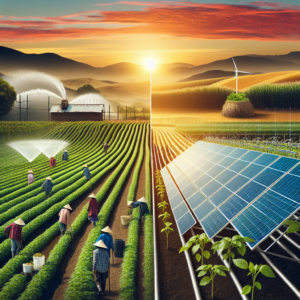
Imagine harnessing the power of the sun to water your crops while a drone hovers above, ensuring every inch of your field gets just the right amount of water. This isn’t science fiction; it’s the future of farming. Solar-powered irrigation systems, combined with drone technology, are transforming agriculture by making it more efficient and sustainable.
Defining Solar-Powered Irrigation Systems
At its core, a solar-powered irrigation system is a method of using solar panels to generate electricity that powers water pumps. These pumps draw water from a source like a well, river, or reservoir and distribute it across the fields. This approach reduces the need for traditional energy sources, which can be costly and environmentally damaging.
How Drones Fit into Agriculture
Drones are not just flying gadgets; they are advanced tools that can revolutionize farming. In agriculture, drones are used for various purposes, including surveying land, monitoring crop health, and even applying fertilizers. By integrating drones with solar-powered irrigation systems, farmers can achieve a level of precision and efficiency that was previously unimaginable.
Benefits of Combining Solar Power and Drones
Combining solar power with drone technology offers several benefits. Most importantly, it allows for precise irrigation, ensuring that water is distributed exactly where it’s needed. This precision helps conserve water and increase crop yields. Additionally, drones can provide real-time data on crop health, enabling farmers to make informed decisions quickly. For more insights, explore how drones and solar panels impact farm efficiency.

Understanding Solar-Powered Irrigation Systems
To fully appreciate the potential of solar-powered irrigation systems, it’s essential to understand how they work and what components are involved. Let’s delve into the details of these systems.
Components and Functionality
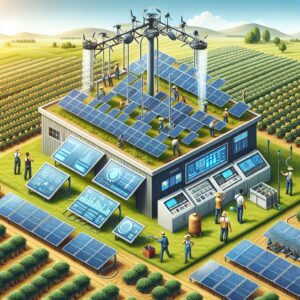
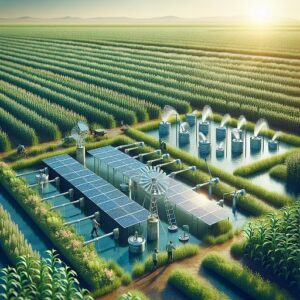
A typical solar-powered irrigation system consists of several key components:
- Solar Panels: These capture sunlight and convert it into electricity.
- Water Pumps: Powered by solar energy, these pumps move water from a source to the fields.
- Controllers: These regulate the flow of water and ensure efficient distribution.
- Piping and Sprinklers: These distribute water across the fields.
The functionality of these systems relies on the seamless integration of these components. Solar panels generate electricity, which powers the pumps. The pumps draw water and, through a network of pipes and sprinklers, distribute it evenly across the crops.
“Solar-powered irrigation systems can reduce water usage by up to 70% compared to traditional methods.” – Journal of Sustainable Agriculture
Here’s a table comparing the different solar panel you can use in with an irrigation system on a farm:
|
Solar Panel Type |
Efficiency |
Cost per Watt |
Pros |
Cons |
|---|---|---|---|---|
|
Monocrystalline |
17-22% |
$1.00 – $1.50 |
– Highest efficiency. 1, 3 |
– Most expensive option. 1, 3 |
|
Polycrystalline |
13-17% |
$0.90 – $1.20 |
– Lower cost than monocrystalline. 1, 3 |
– Slightly lower efficiency. 1, 3 |
|
Thin-Film |
10-13% |
$0.70 – $1.00 |
– Lowest cost. 1, 3 |
– Lowest efficiency. 1, 3 |
Monocrystalline panels are highly efficient and durable, making them ideal for high-performance irrigation systems that require consistent power output. Their higher cost is often offset by their superior performance in the long run 3.
Polycrystalline panels offer a good balance between cost and efficiency, making them suitable for medium-scale irrigation projects. They perform well in most conditions and are a popular choice for many agricultural applications 3.
Thin-film panels, while less efficient, are more affordable and flexible. They can be a good option for portable irrigation systems or installations where weight is a concern. Their lower efficiency means you may need more panels to achieve the same power output as crystalline options 3.
Environmental Advantages
Solar-powered irrigation systems stand out for their environmental benefits. By harnessing the sun’s energy, these systems significantly cut down on carbon emissions, making them a sustainable alternative to traditional irrigation methods. This shift not only helps combat climate change but also reduces the dependence on fossil fuels, which are both costly and finite. Moreover, because solar energy is renewable, farmers can rely on a consistent power source, even in remote areas without access to the electrical grid.
Existing Challenges in Efficiency
While solar-powered irrigation systems offer many advantages, they are not without challenges. One major hurdle is the initial cost. Installing solar panels and the necessary infrastructure can be expensive, ranging from $5,000 to $10,000, which can be a significant investment for small-scale farmers. Additionally, the effectiveness of these systems can be influenced by weather conditions. On cloudy days, solar panels may not generate enough power to operate the irrigation pumps efficiently. For more information on solar panel backup solutions for bad weather, visit our guide.
Another challenge lies in the technical know-how required to operate and maintain these systems. Farmers need to understand how to install the panels, connect the systems, and perform regular maintenance. Without proper training, the systems might not function at their optimal capacity, leading to inefficiencies and potential crop damage. For a comprehensive guide on these systems, check out this solar irrigation system components guide.
Drones in Agriculture: A New Frontier
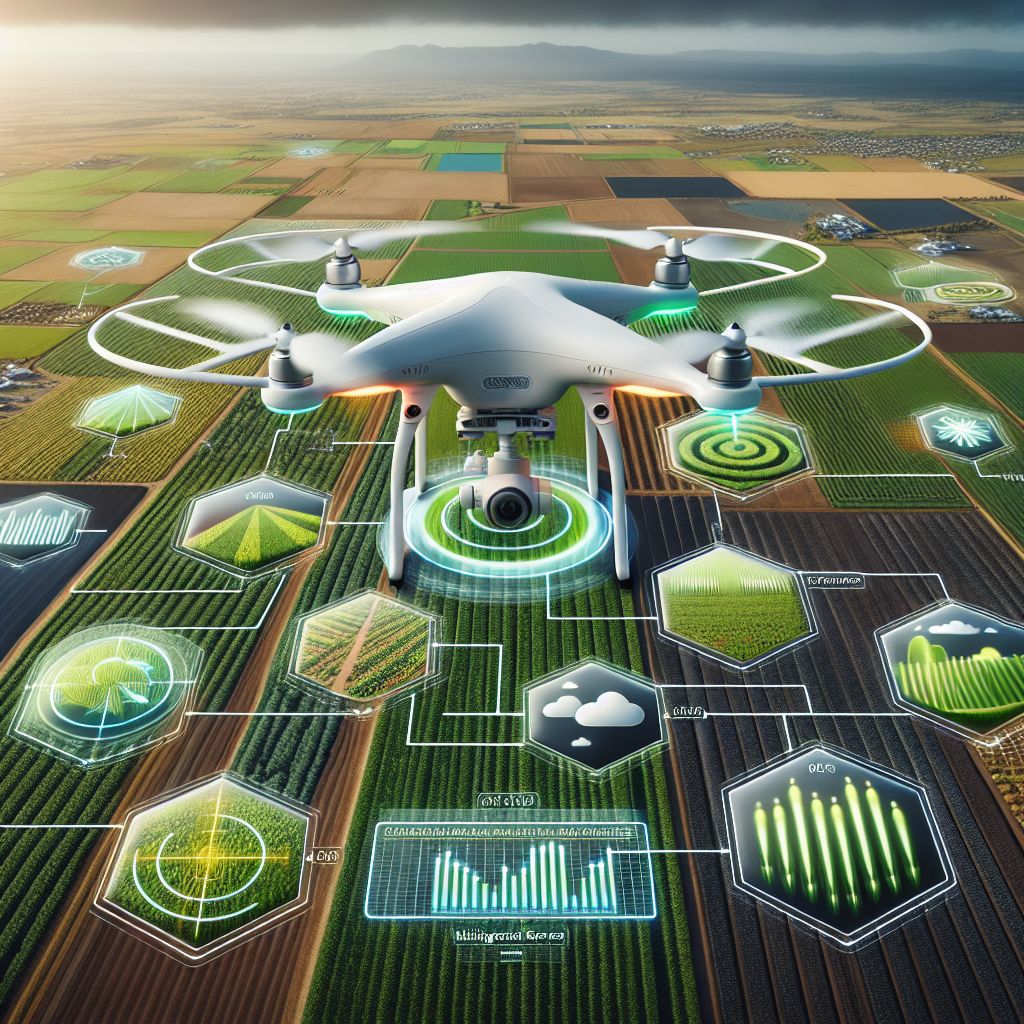
Enter drones, the new frontier in agricultural technology. These flying devices are revolutionizing the way farmers manage their fields, offering unprecedented levels of precision and control. With the ability to cover large areas quickly, drones can provide valuable insights into crop health, soil conditions, and irrigation needs.
Capabilities of Modern Agricultural Drones
Modern agricultural drones come equipped with a variety of advanced features. They can capture high-resolution images and videos, providing detailed views of the fields. Some drones are equipped with multispectral sensors that can analyze plant health by detecting variations in light absorption. This data helps farmers identify areas that need attention, such as sections that are overwatered or undernourished. For more insights on how drone technology is transforming global farming, explore revolutionizing agriculture.
Additionally, drones can map fields, providing precise measurements that aid in planning and resource allocation. With GPS technology, drones can create detailed maps that show elevation changes and field boundaries. This information is crucial for efficient water management and crop planning.
Role of Drones in Precision Agriculture
Precision agriculture is all about using technology to manage fields with accuracy and efficiency. Drones play a pivotal role in this approach by providing real-time data that helps farmers make informed decisions. For example, drones can identify pest infestations early, allowing for targeted pesticide application rather than blanket spraying. This not only saves resources but also minimizes environmental impact. Learn more about how drone technology and AI are transforming global farming practices.
Real-Time Monitoring and Data Collection
One of the most significant advantages of drones is their ability to monitor crops in real-time. They can fly over fields and collect data on plant health, soil moisture, and growth patterns. This information is invaluable for farmers who need to make quick decisions to protect their crops from adverse conditions. Learn more about how drone technology and AI are transforming global farming practices.
With real-time monitoring, farmers can adjust their irrigation schedules based on the current needs of their crops. This dynamic approach ensures that water is used efficiently, reducing waste and promoting healthy plant growth.

Enhancing Efficiency with Drones
Integrating drones with solar-powered irrigation systems takes agricultural efficiency to a new level. By combining the precision of drones with the sustainability of solar power, farmers can optimize their operations and maximize yields.
Water Management and Conservation
Drones play a crucial role in water management by identifying areas that require more or less water. With their aerial perspective, drones can spot inconsistencies in irrigation, ensuring that water is distributed evenly across the fields. This targeted approach reduces water waste and helps conserve this precious resource.
Improving Crop Yields
By providing real-time data and insights, drones help farmers improve crop yields. Early detection of issues like pest infestations or nutrient deficiencies allows for prompt intervention, preventing significant damage to crops. Additionally, drones enable precise irrigation, ensuring that plants receive the right amount of water at the right time.
For example, a farmer using drones to monitor a cornfield might discover that certain areas are receiving too much water, leading to root rot. By adjusting the irrigation system accordingly, the farmer can prevent crop loss and increase overall yield.
Moreover, drones can help farmers experiment with different planting patterns and techniques. By analyzing data collected by drones, farmers can identify which methods produce the best results, allowing them to optimize their practices for maximum productivity.
Energy and Cost Savings
While the initial investment in drones and solar-powered irrigation systems can be high, the long-term savings are significant. By reducing water waste and optimizing resource use, farmers can lower their operational costs. Additionally, the use of solar energy reduces reliance on expensive fossil fuels, further cutting costs.
Solar irrigation systems can significantly enhance their efficiency when integrated with drone technology. Drones provide real-time data collection, precision monitoring, and automated control capabilities that optimize water and energy use. Below is a detailed comparison of how this integration improves agricultural operations:
|
Aspect |
Role of Drones |
Efficiency Gains |
|---|---|---|
|
Soil Moisture Mapping |
Use multispectral sensors to create detailed moisture maps across fields. 4, 6 |
Reduces water waste by 20-30% through targeted irrigation only where needed. 1, 4 |
|
Solar Panel Monitoring |
Inspect solar arrays for dust/damage using thermal imaging cameras. 6 |
Maintains 15-25% higher energy output by ensuring optimal panel performance. 6 |
|
Crop Health Analysis |
Detect early signs of drought stress via infrared cameras. 3, 5 |
Enables 40% faster intervention, preventing yield loss. 3, 5 |
|
Irrigation Scheduling |
Integrate weather forecasts with soil data to automate watering cycles. 1, 6 |
Eliminates overwatering by aligning irrigation with rainfall predictions. 1, 4 |
|
Water Distribution |
Guide variable-rate irrigation systems using precision GPS mapping. 4, 6 |
Improves water use efficiency by 35% compared to traditional methods. 2, 6 |
|
System Maintenance |
Identify leaks in irrigation infrastructure via aerial surveys. 6 |
Reduces water loss by up to 50% through rapid repair prioritization. 6 |
|
Energy Optimization |
Monitor solar pump performance and energy storage levels. 6 |
Balances energy use between irrigation and farm operations for 24/7 efficiency. 1 |
This synergy between solar irrigation and drones creates a closed-loop system where real-time aerial data informs precise water delivery, while renewable energy powers both the irrigation infrastructure and data collection tools. Farmers using this integrated approach report 20-30% reductions in operational costs and 15-25% increases in crop yields compared to conventional methods. 1, 6
Case Studies and Success Stories
Real-world examples of solar and drone integration highlight the transformative potential of this technology. Farmers around the world are already reaping the benefits of combining solar power with drone technology, leading to increased efficiency and sustainability.
Real-World Examples of Solar and Drone Integration
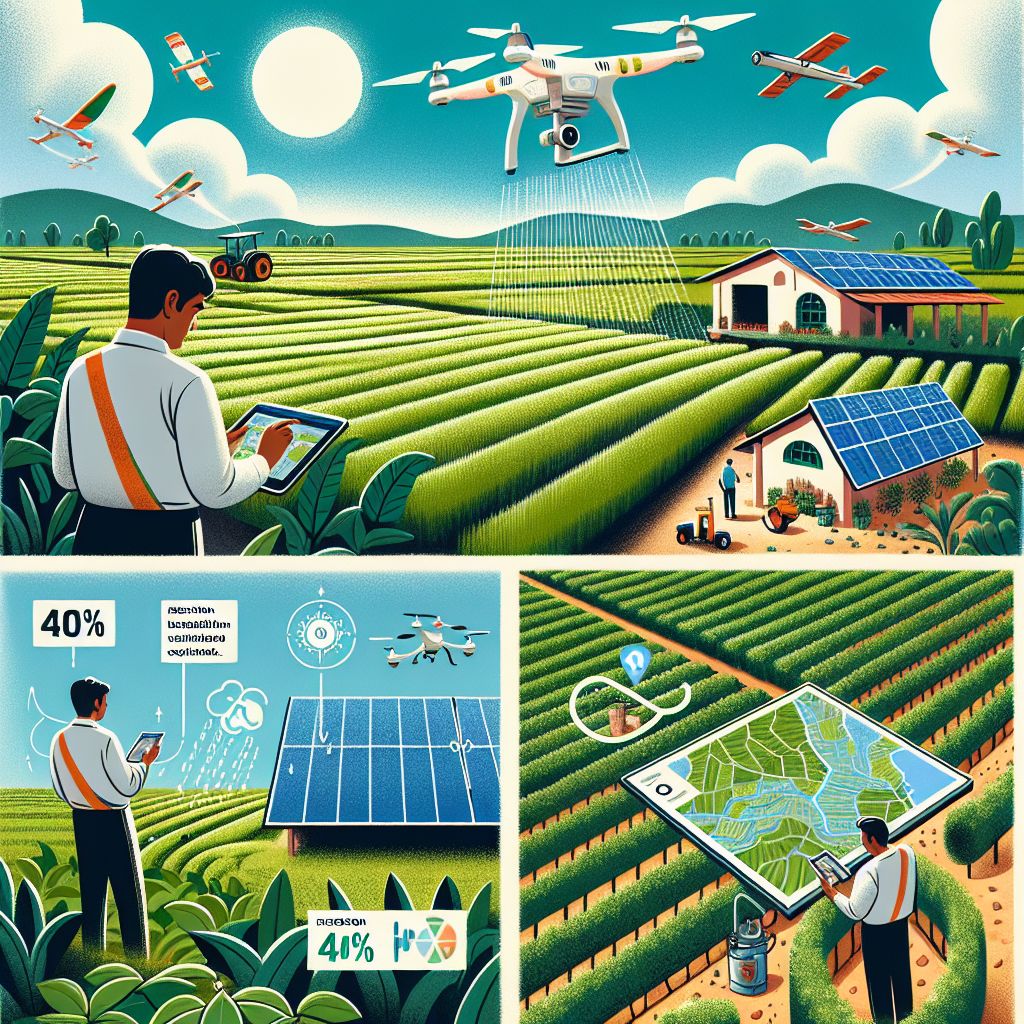
In India, a farmer named Rajesh transformed his rice farm by integrating solar-powered irrigation with drone technology. By using drones to monitor his fields, Rajesh was able to identify areas that needed more water and adjust his irrigation system accordingly. As a result, he reduced his water usage by 40% and increased his crop yield by 30%.
In another example, a vineyard in California adopted solar-powered irrigation and drones to manage their water resources. The drones provided detailed maps of the vineyard, highlighting areas that required more attention. This allowed the vineyard to optimize their irrigation schedule, saving water and improving grape quality.
Lessons Learned from Successful Implementations
These success stories highlight the importance of combining technology with traditional farming practices. By embracing innovation, farmers can overcome challenges and achieve greater efficiency. The key takeaway is that technology should be seen as a tool to enhance, not replace, the farmer’s expertise and intuition.
Challenges Overcome in Adoption
Adopting new technology is not without its challenges. Farmers must be willing to invest time and resources into learning how to use drones and solar-powered systems effectively. Training and support are essential to ensure that these technologies are implemented successfully.
Additionally, overcoming the initial cost barrier is crucial. Farmers can explore options like government grants, subsidies, or cooperative purchasing to make these technologies more accessible.
Future of Solar-Powered Irrigation and Drones
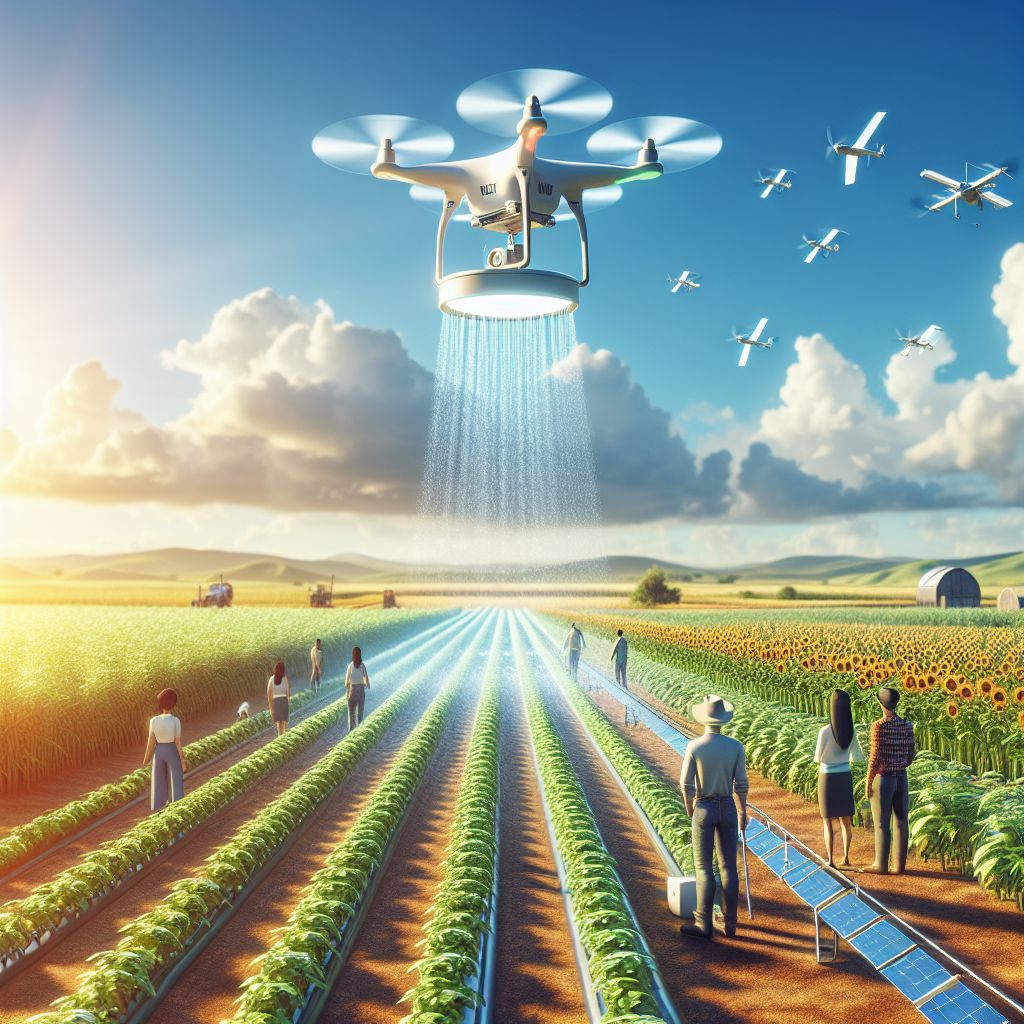
The future of agriculture is bright with the integration of solar-powered irrigation systems and drone technology. As we move forward, we can expect even more advanced systems that will further enhance efficiency and sustainability in farming. The potential for innovation in this field is immense, and it promises to transform the way we grow food.
One of the most exciting prospects is the development of autonomous drones that can operate independently, performing tasks like monitoring crops and adjusting irrigation systems without human intervention. These drones will be equipped with advanced sensors and artificial intelligence, allowing them to make decisions based on real-time data.
Moreover, as technology continues to evolve, we can anticipate the creation of more affordable and accessible solar-powered irrigation systems. This will make it easier for farmers worldwide to adopt these technologies and benefit from their advantages.
- Autonomous drones for independent operation
- Advanced sensors for real-time data analysis
- More affordable solar-powered systems
- Increased accessibility for farmers globally
Emerging Technologies and Innovations
New technologies are emerging that will further enhance the capabilities of solar-powered irrigation and drones. For instance, the integration of machine learning algorithms with drone technology will enable more precise data analysis and decision-making. This will allow drones to identify patterns and trends in crop growth, enabling farmers to optimize their practices.
Sustainability Impacts on Global Agriculture
The adoption of solar-powered irrigation systems and drones has the potential to significantly impact global agriculture. By reducing reliance on fossil fuels and promoting efficient water use, these technologies contribute to more sustainable farming practices. This is crucial in the face of climate change and increasing global food demand.
Furthermore, the use of drones for precision agriculture can help reduce the environmental impact of farming by minimizing the use of pesticides and fertilizers. This not only protects the environment but also improves the quality of food produced.
- Reduction in fossil fuel reliance
- Efficient water use and conservation
- Minimized pesticide and fertilizer usage
- Improved food quality and safety
These sustainability impacts will play a vital role in ensuring food security and environmental health for future generations.
Policy and Regulation Considerations
As the use of solar-powered irrigation systems and drones becomes more widespread, it’s essential to consider the policy and regulatory landscape. Governments and regulatory bodies must establish guidelines to ensure the safe and effective use of these technologies.
- Establishing safety standards for drone operation
- Creating incentives for adopting sustainable practices
- Providing training and support for farmers
- Ensuring equitable access to technology
These considerations will help create an environment where innovation can thrive, and farmers can adopt new technologies with confidence.
Overall, the future of solar-powered irrigation and drones looks promising. With continued innovation and supportive policies, these technologies have the potential to revolutionize agriculture and contribute to a more sustainable and food-secure world.
Conclusion: Bridging Technology and Sustainability in Farming
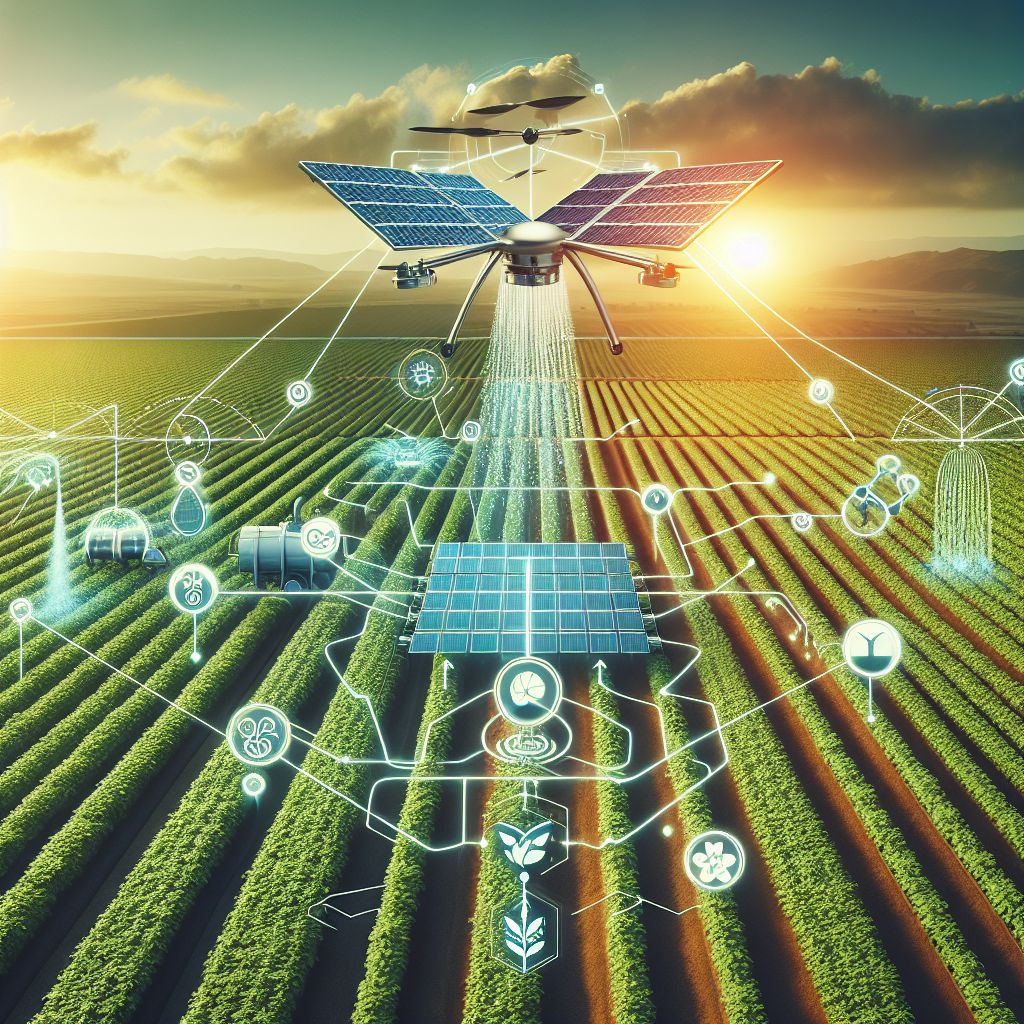
Solar-powered irrigation systems and drones represent a powerful combination that can bridge the gap between technology and sustainability in farming. By harnessing the sun’s energy and leveraging advanced drone technology, farmers can achieve unprecedented levels of efficiency and productivity.
Summary of Benefits
The benefits of integrating solar power with drone technology are clear. These systems offer precise irrigation, reduce water waste, and promote sustainable farming practices. They also provide real-time data that empowers farmers to make informed decisions, ultimately leading to higher crop yields and reduced environmental impact. For more insights, explore how drones and solar panels impact farming efficiency.
Moreover, the long-term cost savings associated with these technologies make them an attractive option for farmers looking to improve their operations.
Potential for Future Developments
As technology continues to advance, the potential for future developments in solar-powered irrigation and drones is immense. We can expect to see even more innovative solutions that will further enhance efficiency and sustainability in agriculture.
From autonomous drones to advanced data analysis, the future of farming is set to be more efficient, sustainable, and productive than ever before.
Is it a Good Idea for a Farmer to Use a Drone to Help with a Farm’s Efficiency?
Absolutely. Drones offer numerous benefits that can significantly enhance a farm’s efficiency. By providing real-time data and insights, drones enable farmers to make informed decisions that optimize resource use and improve crop yields. Additionally, the integration of drones with solar-powered irrigation systems offers a sustainable and cost-effective solution for modern agriculture.
Frequently Asked Questions (FAQ)
Here are some common questions about solar-powered irrigation systems and drones, along with detailed answers to help you understand their potential and implementation.
“How do drones specifically improve irrigation systems?”
Drones improve irrigation systems by providing real-time data on soil moisture levels and crop health. This information allows farmers to adjust their irrigation schedules and ensure that water is distributed efficiently across the fields.
By using drones, farmers can identify areas that require more or less water, reducing waste and promoting healthy plant growth.
What are the costs associated with implementing drone technology?
The costs of implementing drone technology can vary depending on the type and capabilities of the drones. Basic agricultural drones can cost between $1,000 and $3,000, while more advanced models with additional features can range from $5,000 to $10,000. Additionally, there may be costs associated with training and maintenance.
Can drones be used in all types of farming environments?
Drones are versatile tools that can be used in various farming environments, from small-scale farms to large commercial operations. However, factors like weather conditions, terrain, and local regulations can impact their effectiveness. It’s essential for farmers to assess their specific needs and conditions before implementing drone technology.
In areas with harsh weather conditions, drones with robust construction and advanced sensors may be necessary to ensure reliable performance.
“What training is required for farmers to operate drones?”
Farmers need to undergo training to operate drones safely and effectively. This training typically covers drone operation, data analysis, and maintenance. Many companies offer training programs and workshops to help farmers get started with drone technology.
By investing in training, farmers can maximize the benefits of drone technology and ensure its successful implementation on their farms.
How do solar-powered irrigation systems impact water conservation?
Solar-powered irrigation systems significantly impact water conservation by delivering water efficiently and reducing waste. These systems use precise irrigation techniques, ensuring that water is distributed only where it’s needed. This targeted approach helps conserve water and promotes sustainable farming practices.
Additionally, by using renewable energy sources, these systems reduce reliance on fossil fuels, further contributing to environmental sustainability.

Leave a Reply