

Key Takeaways
AI and IoT sensors in irrigation systems can reduce water usage by up to 30%, making them highly efficient for farmers.
Solar-powered irrigation systems offer a sustainable energy source, cutting down electricity costs significantly.
Real-time data from IoT sensors helps in precise water management, ensuring crops get the exact amount of water needed.
Initial setup costs for AI-integrated irrigation systems can be high, but they pay off through increased crop yields and resource savings.
Farmers can access predictive analytics to anticipate weather changes, optimizing irrigation schedules and improving crop health.
Introduction to Solar-Powered Smart Irrigation
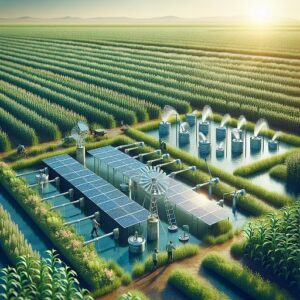
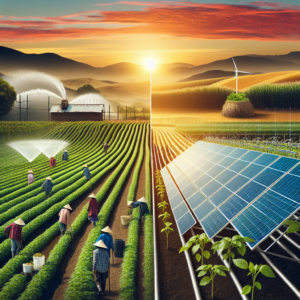
Imagine a world where farmers can water their crops with pinpoint accuracy, using just the right amount of water, and powered by the sun. This isn’t science fiction; it’s happening now with solar-powered smart irrigation systems. By integrating artificial intelligence (AI) and Internet of Things (IoT) sensors, these systems are transforming agriculture.
Why is this important? Because traditional irrigation methods are often inefficient, wasting water and energy. With the world’s population growing, the demand for food is increasing, and so is the need for sustainable farming practices. Smart irrigation systems, powered by renewable energy, are paving the way for a more efficient and environmentally friendly future in agriculture.
Current Challenges in Traditional Irrigation
Traditional irrigation systems often face numerous challenges that can hinder agricultural productivity. One major issue is the lack of precision in water distribution. Without precise control, these systems can either overwater or underwater crops, leading to wasted resources and reduced yields.
Benefits of AI and IoT Sensors in Agriculture
AI and IoT sensors bring a new level of efficiency to farming. These technologies can analyze vast amounts of data in real-time, providing farmers with insights that were previously unimaginable. By understanding soil moisture levels, weather conditions, and plant health, farmers can make informed decisions that enhance productivity.
Here’s how these technologies work together:
Data Collection: IoT sensors gather data from the field, including soil moisture, temperature, and humidity.
Data Analysis: AI algorithms process this data to determine the optimal irrigation schedule.
Actionable Insights: Farmers receive recommendations on when and how much to irrigate, ensuring efficient water use.
The Role of Solar Power in Smart Irrigation
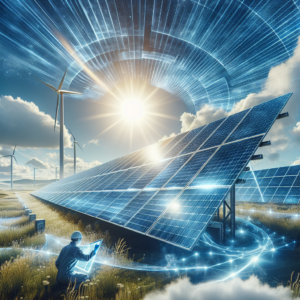
Solar power plays a crucial role in making smart irrigation systems sustainable. By harnessing the sun’s energy, farmers can reduce their reliance on non-renewable energy sources and lower their electricity costs. Solar panels provide a reliable power source, even in remote areas where electricity access may be limited.
Besides that, solar-powered systems are environmentally friendly, reducing carbon footprints and contributing to a cleaner planet. This integration of renewable energy with advanced technology is a win-win for both farmers and the environment. For farmers looking to implement these systems, understanding the solar irrigation guide can provide valuable insights and steps for effective farm implementation.
Challenges in Traditional Irrigation Methods
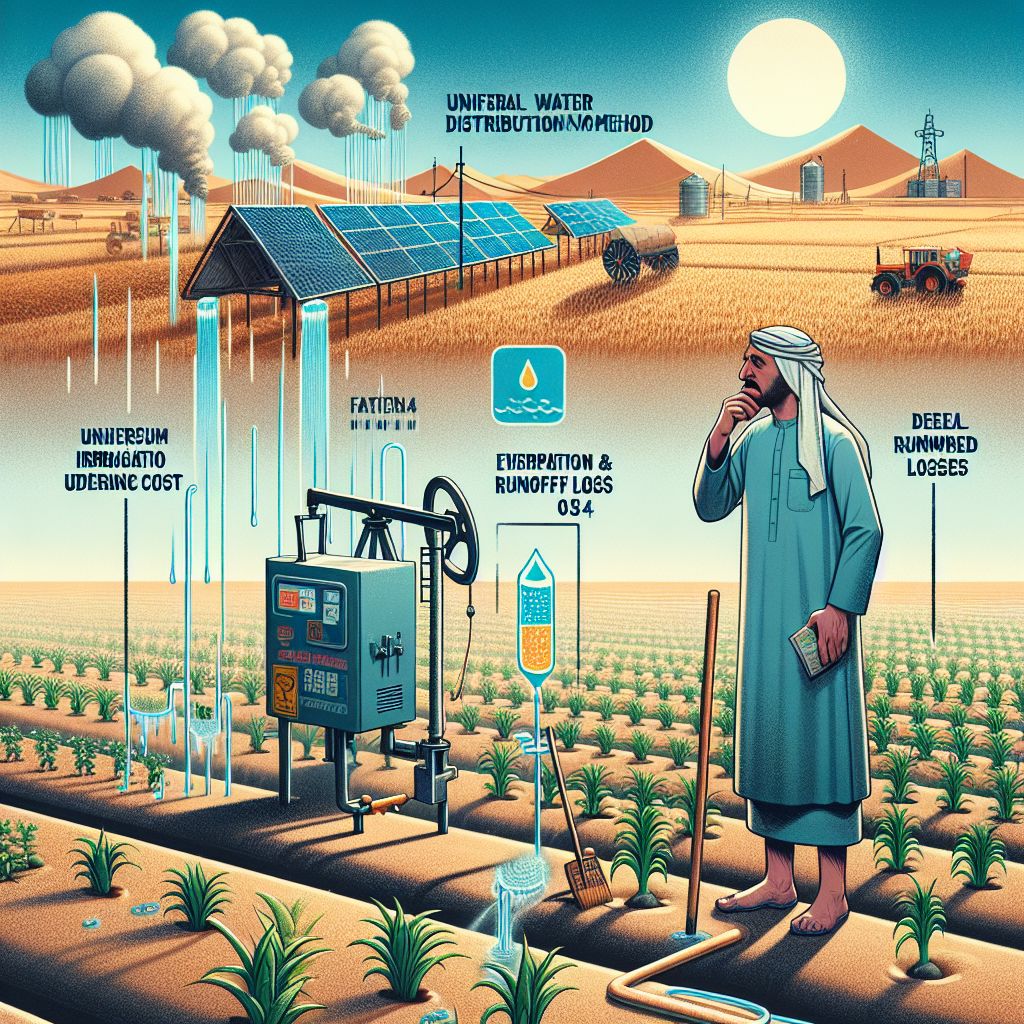
Despite its widespread use, traditional irrigation is fraught with challenges that limit its effectiveness and sustainability. Let’s delve into some of these issues to understand why a shift towards smarter solutions is essential.
Water Waste and Inefficiency
One of the most significant problems with traditional irrigation is water waste. Conventional systems often apply water uniformly across fields without considering the specific needs of different plants. This can lead to over-irrigation in some areas and under-irrigation in others. For more insights into how technology can address these issues, explore the role of Artificial Intelligence in smart irrigation systems.
In many regions, water is a precious resource. Wasting it not only impacts the environment but also increases costs for farmers. Therefore, improving water use efficiency is critical for sustainable agriculture.
Uniform Watering: Traditional systems do not account for variations in soil type and plant water requirements.
Evaporation Losses: Water applied during hot or windy conditions can evaporate before reaching plant roots.
Runoff: Excess water can lead to runoff, carrying away valuable nutrients and causing soil erosion.
Resource Management Issues in Agriculture
Apart from water, traditional irrigation systems also pose challenges in resource management. Farmers must manage labor, energy, and equipment maintenance, all of which add to the operational costs. Inefficient systems can strain these resources, making farming less profitable.
Moreover, the lack of real-time data means farmers often rely on intuition or outdated practices, which may not align with current environmental conditions. This can lead to suboptimal resource use and reduced crop yields.
The Cost of Running the Irrigation System
Running traditional irrigation systems can be costly, especially when factoring in energy consumption and maintenance. Electric or diesel-powered pumps are commonly used, and their operational costs can be significant, particularly in areas with high energy prices.
In contrast, solar-powered systems offer a more cost-effective solution. By reducing dependence on fossil fuels, farmers can lower their energy expenses and invest savings into other areas of their operations.
How AI Enhances Solar Irrigation Efficiency
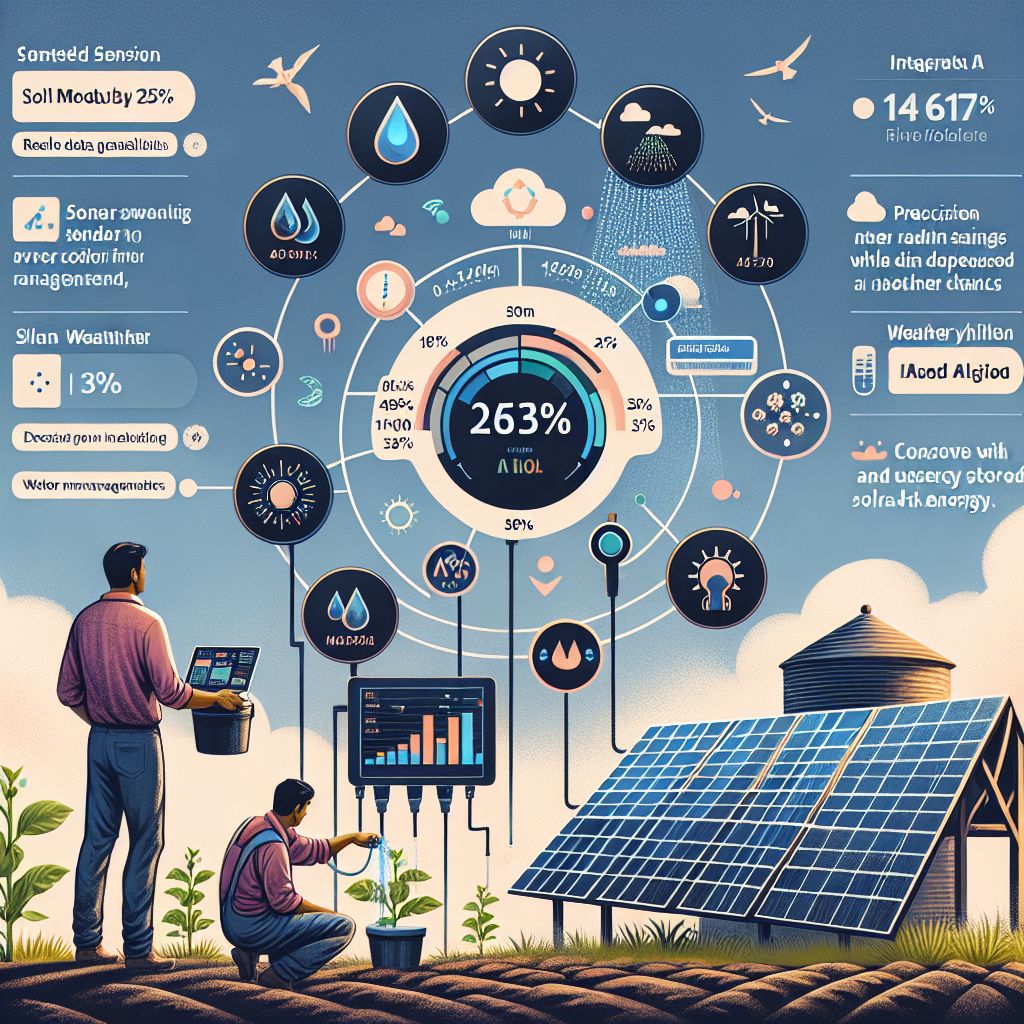
Integrating AI into solar irrigation systems can significantly enhance their efficiency and effectiveness. Let’s explore how AI technology can transform traditional irrigation practices and benefit farmers worldwide.
AI for Precision Water Management
AI algorithms can analyze data from IoT sensors to provide precision water management. By understanding the specific needs of each plant, AI systems can determine the optimal amount of water required at any given time.
This precision ensures that crops receive the exact amount of water they need, reducing waste and improving yields. Most importantly, it allows farmers to make data-driven decisions, optimizing their irrigation practices for maximum efficiency.
Consider the following example:
In a pilot project, a farm implemented AI-driven irrigation. The system analyzed soil moisture and weather data to adjust watering schedules. As a result, water usage decreased by 25%, while crop yields increased by 15%.
Real-Time Data Analysis and Decision Making
One of the key advantages of AI is its ability to process vast amounts of data in real-time. This capability allows farmers to receive up-to-the-minute insights into their fields’ conditions, enabling them to make informed decisions quickly. For more on integrating technology in agriculture, explore this solar irrigation system technology guide.
For example, if a sudden weather change occurs, the AI system can adjust irrigation schedules to account for the new conditions. This flexibility ensures that crops receive the right amount of water, regardless of external factors.
Energy Optimization with AI Algorithms
AI algorithms are revolutionizing energy optimization in solar irrigation systems. By analyzing data from various sensors, these algorithms can determine the most efficient use of energy resources. This means that the system can decide when to use stored solar energy and when to conserve it, ensuring that the irrigation process remains efficient even during periods of low sunlight.
Moreover, AI can predict energy consumption patterns based on historical data and current weather forecasts. This predictive capability allows the system to adjust its operations proactively, optimizing energy usage and minimizing waste. Therefore, farmers can rely on a more consistent and sustainable energy supply for their irrigation needs.
AI can significantly enhance solar irrigation efficiency in several key ways. Here’s a table summarizing how AI improves various aspects of solar-powered irrigation systems:
|
Aspect |
How AI Enhances Efficiency |
|---|---|
|
Water Usage |
AI analyzes soil moisture, weather patterns, and crop water requirements to optimize irrigation schedules, reducing water waste by up to 60% 1, 2. |
|
Energy Management |
AI predicts solar energy production and optimizes energy storage, ensuring efficient use of available power for irrigation 1. |
|
System Performance |
AI-based predictive maintenance identifies potential issues with solar panels or pumps before they become major problems, reducing downtime 1. |
|
Crop Yield |
AI analyzes crop health data and provides insights to farmers, helping optimize irrigation for increased crop yields 1. |
|
Cost Reduction |
By improving water and energy efficiency, AI helps reduce overall operational costs for farmers 2. |
|
Automation |
AI enables automated control of irrigation systems, reducing the need for manual intervention and increasing efficiency 1. |
|
Weather Adaptation |
AI algorithms analyze weather forecasts to adjust irrigation schedules in real-time, ensuring optimal water delivery 1, 2. |
|
System Design |
AI assists in optimizing the placement and angle of solar panels to maximize energy generation for irrigation 1. |
|
Remote Monitoring |
AI-powered systems allow farmers to monitor and control irrigation remotely via smartphones, improving convenience and responsiveness 2, 4. |
|
Data-Driven Decisions |
AI analyzes big data from field sensors to provide farmers with actionable insights for irrigation management 4. |

The Impact of IoT Sensors on Water Usage
IoT sensors play a crucial role in transforming water usage in agriculture. By providing real-time data on soil moisture, temperature, and humidity, these sensors enable farmers to make informed decisions about irrigation. This data-driven approach leads to more efficient water use, reducing waste and improving crop yields. For more insights on how technology is revolutionizing agriculture, explore our guide on solar irrigation system technology for farmers.
For instance, IoT sensors can detect when soil moisture levels are too low, triggering the irrigation system to deliver water only when necessary. This precision ensures that crops receive the right amount of water at the right time, preventing over-irrigation and conserving valuable resources.
Additionally, IoT sensors can monitor weather conditions, allowing farmers to adjust their irrigation schedules based on forecasts. This proactive approach helps prevent water wastage during rainy periods and ensures that crops remain adequately hydrated during dry spells.
A farmer in California implemented IoT sensors in their vineyard. By analyzing soil moisture and weather data, they reduced water usage by 20% and improved grape quality, resulting in higher wine production.
Monitoring Soil and Weather Conditions
Effective monitoring of soil and weather conditions is essential for optimizing irrigation practices. IoT sensors provide farmers with detailed insights into the environmental factors affecting their crops, allowing them to make data-driven decisions.
For example, soil moisture sensors can detect variations in water content across different areas of a field. This information enables farmers to apply water only where needed, reducing waste and ensuring uniform crop growth.
Weather sensors, on the other hand, provide real-time updates on temperature, humidity, and rainfall. By integrating this data with AI algorithms, farmers can adjust their irrigation schedules to align with current and forecasted weather conditions.
Soil Moisture Sensors: Measure the water content in the soil, providing data for precise irrigation.
Weather Sensors: Monitor temperature, humidity, and rainfall, helping farmers adapt to changing conditions.
Data Integration: Combines soil and weather data to optimize irrigation schedules and improve crop health.
Effective Leak Detection and Maintenance Alerts
One of the significant advantages of IoT sensors is their ability to detect leaks and send maintenance alerts. By continuously monitoring the irrigation system, these sensors can identify issues such as pipe leaks or blockages, which can lead to water waste and reduced efficiency.
When a leak is detected, the system can alert farmers immediately, allowing them to address the issue before it escalates. This proactive approach minimizes water loss and ensures that the irrigation system operates at peak efficiency.
Improvement in Water Conservation Practices
IoT sensors and AI technology significantly enhance water conservation practices in agriculture. By providing real-time data and insights, these technologies empower farmers to use water more efficiently, reducing waste and conserving resources.
Furthermore, by optimizing irrigation schedules based on soil and weather conditions, farmers can ensure that their crops receive the right amount of water at the right time. This precision not only conserves water but also promotes healthier crop growth and higher yields.
The Long-Term Saving for Using IoT Sensors with a Solar Irrigation System
Investing in IoT sensors and solar-powered irrigation systems offers long-term savings for farmers. While the initial setup costs may be higher, the reduction in water and energy usage leads to significant cost savings over time.
By optimizing resource use, farmers can lower their operational expenses and increase their profitability. Additionally, the environmental benefits of reduced water and energy consumption contribute to a more sustainable and eco-friendly farming operation.
Challenges of Implementing AI and IoT Systems
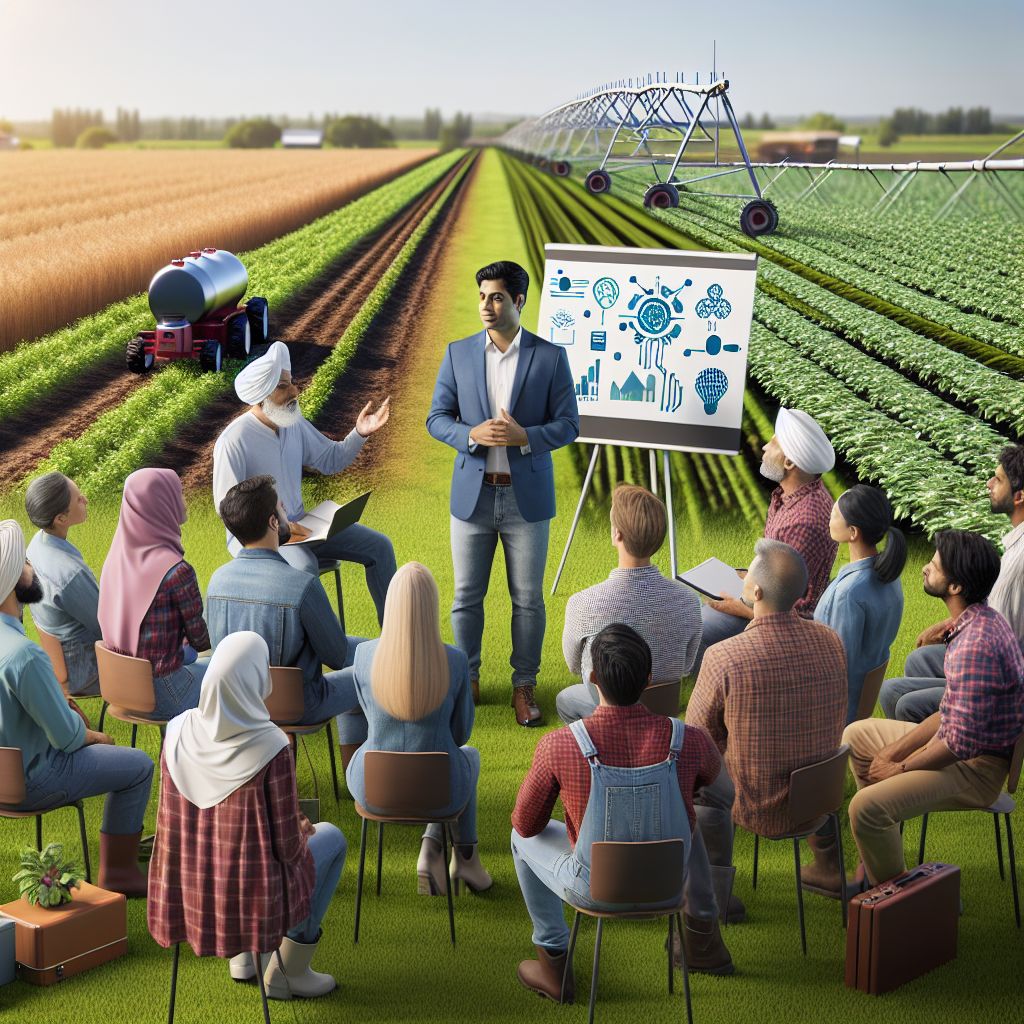
While the benefits of AI and IoT in irrigation are clear, there are challenges to implementing these technologies on farms. Understanding these challenges is essential for developing effective solutions and ensuring successful adoption.
Cost Considerations for Farmers
The initial investment required for AI and IoT systems can be a barrier for many farmers. Equipment costs, installation fees, and ongoing maintenance expenses can add up, making it difficult for small-scale farmers to adopt these technologies.
However, it’s important to consider the long-term savings and increased productivity that these systems offer. By reducing water and energy usage, farmers can lower their operational costs and improve their bottom line.
Technical Implementation Hurdles
Implementing AI and IoT systems requires technical expertise and infrastructure that may not be readily available in all regions. Farmers may face challenges in setting up and maintaining these systems, especially if they lack access to reliable internet connectivity.
To overcome these hurdles, it’s crucial to provide farmers with the necessary support and resources. This includes access to training programs, technical assistance, and reliable internet services to ensure seamless implementation. For more guidance, farmers can refer to this solar irrigation guide that offers tips and steps for effective farm implementation.
Need for Farmer Education and Training
Education and training are vital for the successful adoption of AI and IoT technologies in agriculture. Farmers need to understand how these systems work and how to use them effectively to maximize their benefits.
Training programs can provide farmers with the knowledge and skills needed to operate and maintain these systems. By empowering farmers with education, we can ensure that they can fully leverage the potential of AI and IoT in their operations.
Here’s a table summarizing the key challenges of implementing AI and IoT systems in irrigation:
|
Challenge |
Description |
|---|---|
|
Initial Investment |
High upfront costs for sensors, hardware, and software can be prohibitive for small-scale farmers 4. |
|
Technical Knowledge |
Farmers may lack the expertise to operate and maintain complex AI and IoT systems 4. |
|
Data Management |
Handling large volumes of data from various sensors and ensuring data quality can be challenging 1. |
|
Connectivity Issues |
Poor internet connectivity in rural areas can hinder real-time data transmission and system functionality 3. |
|
System Integration |
Integrating AI and IoT with existing irrigation infrastructure may be complex and time-consuming 3. |
|
Customization |
Adapting AI models to specific crop types, soil conditions, and local climate variations requires significant effort 1. |
|
Reliability |
Ensuring consistent performance of sensors and devices in harsh agricultural environments can be difficult 3. |
|
Data Privacy |
Protecting sensitive farm data from unauthorized access and cyber threats is a growing concern 3. |
|
Farmer Adoption |
Overcoming traditional farming practices and resistance to new technologies can be challenging 2. |
|
Scalability |
Scaling AI and IoT solutions from small test plots to large agricultural areas presents logistical challenges 1. |
|
Power Supply |
Ensuring a stable power supply for IoT devices in remote agricultural areas can be problematic3. |
|
Maintenance |
Regular upkeep and troubleshooting of AI and IoT systems may require specialized skills and resources 4. |
In conclusion, while there are challenges to implementing AI and IoT systems in agriculture, the benefits far outweigh the obstacles. By addressing these challenges and providing farmers with the necessary support, we can pave the way for a more efficient and sustainable future in farming.
Case Studies: Successful Implementation
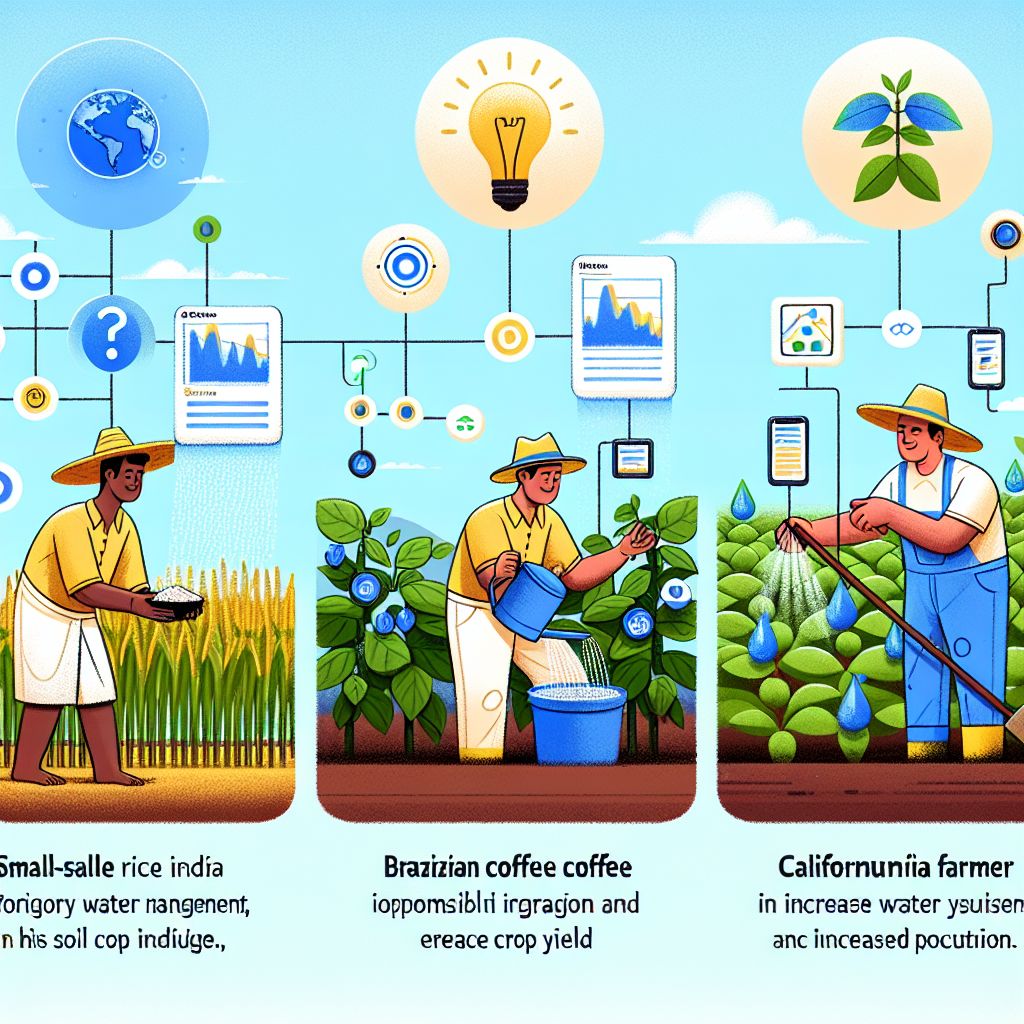
To illustrate the transformative impact of AI and IoT in irrigation, let’s explore some real-world case studies. These examples highlight how farmers have successfully implemented these technologies to improve their operations.
In India, a small-scale farmer adopted AI-driven irrigation to manage water use in his rice fields. By analyzing soil moisture and weather data, the system optimized irrigation schedules, resulting in a 30% reduction in water usage and a 20% increase in crop yield.
Farmers’ Experiences with AI and IoT in Irrigation
Farmers who have embraced AI and IoT technologies often report significant improvements in their operations. By leveraging real-time data and insights, they can make informed decisions that enhance productivity and sustainability.
For instance, a farmer in Brazil implemented IoT sensors to monitor soil moisture in his coffee plantation. The system provided real-time data, allowing him to optimize irrigation schedules and reduce water usage by 25%. As a result, the plantation’s coffee yield increased, leading to higher profits.
These success stories demonstrate the potential of AI and IoT to revolutionize agriculture. By empowering farmers with advanced technologies, we can create a more efficient and sustainable future for farming worldwide.
Quantifiable Results in Crop Yields and Resource Use
Farmers who have integrated AI and IoT technologies into their irrigation systems have observed remarkable improvements in crop yields and resource efficiency. For instance, by using AI-driven irrigation, a farmer in California reported a 20% increase in crop yield while simultaneously reducing water usage by 30%. This dual benefit highlights the potential of smart irrigation systems to enhance agricultural productivity while conserving valuable resources.
Moreover, the precision offered by AI and IoT allows for targeted water application, reducing the risk of over-irrigation and soil erosion. This precision not only conserves water but also maintains soil health, ensuring long-term sustainability for farming operations.
Lessons Learned and Best Practices
Implementing AI and IoT in irrigation requires careful planning and execution. One of the key lessons learned from successful implementations is the importance of customizing systems to meet the specific needs of each farm. Factors such as crop type, soil condition, and local climate should be considered when designing smart irrigation solutions.
Additionally, farmers have found that investing in quality sensors and reliable data analytics platforms is crucial for maximizing the benefits of AI and IoT. Regular maintenance and calibration of sensors ensure accurate data collection, leading to better decision-making and resource management.
Future Prospects of Smart Farming Technologies
The future of agriculture lies in the continued advancement and integration of smart technologies. As AI and IoT become more sophisticated, their applications in farming are expected to expand, offering new opportunities for efficiency and productivity gains. For instance, the use of solar irrigation systems is a promising area where technology can significantly enhance farm operations.
Advancements in Predictive Analytics
Predictive analytics is set to play a significant role in the future of smart farming. By leveraging historical data and real-time insights, predictive models can forecast weather patterns, pest outbreaks, and crop growth cycles. This information allows farmers to proactively plan their irrigation schedules, optimize resource use, and mitigate potential risks.
Furthermore, advancements in machine learning algorithms will enhance the accuracy and reliability of predictive analytics, providing farmers with even more precise and actionable insights.
The Growing Role of Machine Learning in Agriculture
Machine learning is poised to revolutionize agriculture by enabling more intelligent and automated decision-making. As machine learning models become more advanced, they can analyze complex datasets to identify patterns and trends that were previously undetectable.
For example, machine learning can be used to develop predictive models that optimize irrigation schedules based on real-time data from IoT sensors. These models can continuously learn and adapt, improving their accuracy and effectiveness over time.
Integration of AI with Other Emerging Technologies
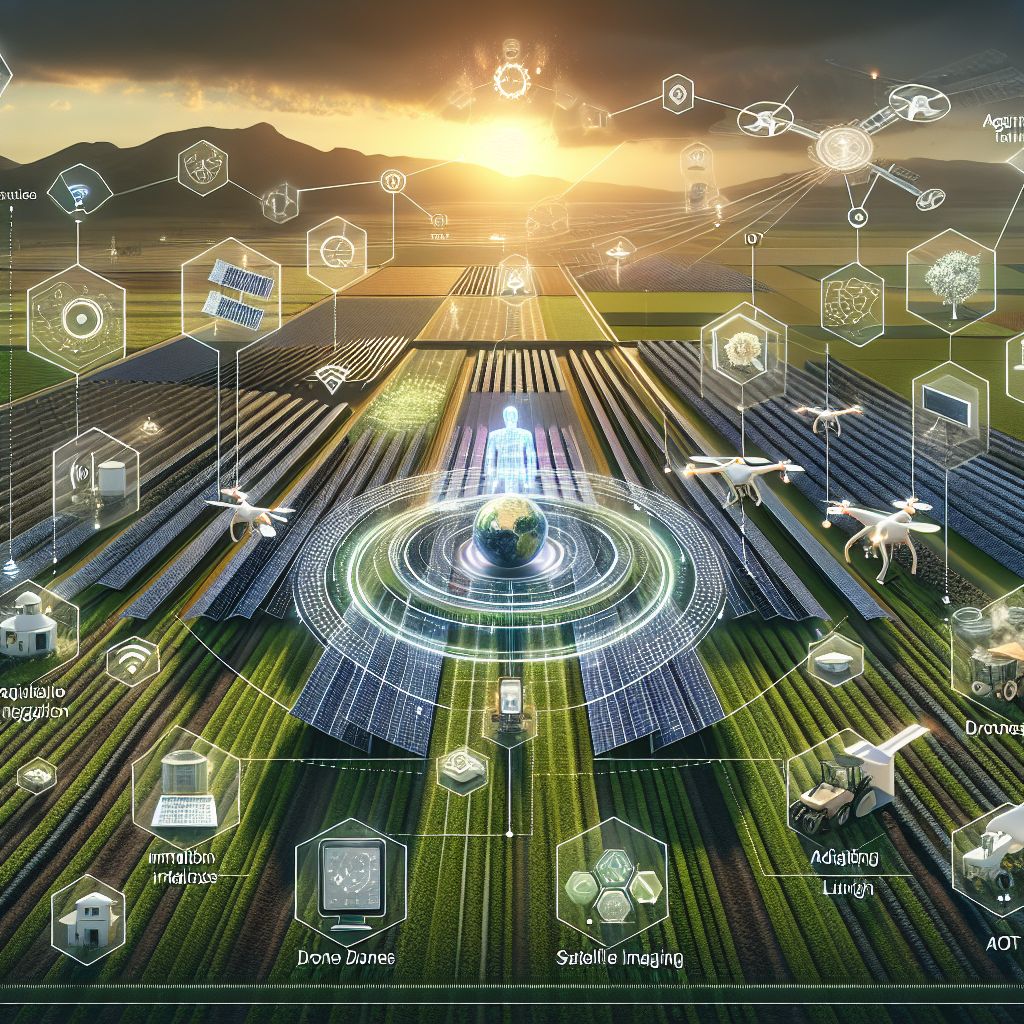
The integration of AI with other emerging technologies, such as drones and satellite imaging, holds immense potential for agriculture. By combining AI with aerial and remote sensing technologies, farmers can gain a comprehensive view of their fields, identifying areas that require attention and optimizing resource allocation.
This integration enables more precise monitoring and management of crops, leading to improved yields and reduced environmental impact. As these technologies continue to evolve, their applications in agriculture will expand, offering new possibilities for sustainable farming practices.
Frequently Asked Questions (FAQ)
As farmers consider adopting AI and IoT technologies in their irrigation systems, several common questions arise. For more insights, you can explore the role of Artificial Intelligence in smart irrigation systems. Here, we address some of the most frequently asked questions to provide clarity and guidance.
How do AI and IoT improve water efficiency in agriculture?
AI and IoT improve water efficiency by providing real-time data and insights that enable precise irrigation management. IoT sensors monitor soil moisture and weather conditions, while AI algorithms analyze this data to optimize irrigation schedules. This precision ensures that crops receive the right amount of water at the right time, reducing waste and conserving resources.
What are the initial costs of implementing AI in irrigation?
The role of Artificial Intelligence in smart irrigation systems can involve significant initial costs. These costs typically include the purchase of advanced sensors, IoT devices, and software platforms necessary to optimize water usage and improve crop yields.
The initial costs of implementing AI in irrigation can vary depending on the size of the farm and the complexity of the system. On average, the cost of AI and IoT sensors can range from $5,000 to $20,000, with additional expenses for installation and maintenance. However, these costs are often offset by the long-term savings achieved through reduced water and energy usage. For those looking to further optimize their irrigation systems, exploring solar irrigation implementation tips can provide additional insights.
Can small-scale farmers benefit from AI technologies? Small-scale farmers can indeed benefit from AI technologies, especially when integrated with solar irrigation systems. These technologies can help optimize water usage, reduce costs, and improve crop yields.
Yes, small-scale farmers can benefit significantly from AI technologies. While the initial investment may be a barrier, the long-term benefits of increased efficiency and productivity make it a worthwhile investment. Additionally, as AI and IoT technologies become more accessible and affordable, small-scale farmers will have more opportunities to adopt these innovations.
What types of crops benefit the most from AI-driven irrigation?
AI-driven irrigation can benefit a wide range of crops, but it is particularly advantageous for high-value crops that require precise water management, such as fruits, vegetables, and vineyards. These crops often have specific water needs that can be optimized with AI and IoT technologies, leading to improved yields and quality.
Fruits: Optimized irrigation schedules can enhance fruit quality and yield.
Vegetables: Precise water management reduces the risk of disease and promotes healthy growth.
Vineyards: AI-driven irrigation ensures consistent grape quality and yield.
How reliable is AI in running your farm’s irrigation systems?
AI is highly reliable in running farm irrigation systems, provided that the sensors and data analytics platforms are of high quality. Regular maintenance and calibration of sensors are essential to ensure accurate data collection and system performance. With the right setup and support, AI-driven irrigation systems can operate efficiently and consistently, delivering significant benefits to farmers.

Leave a Reply