
Key Takeaways
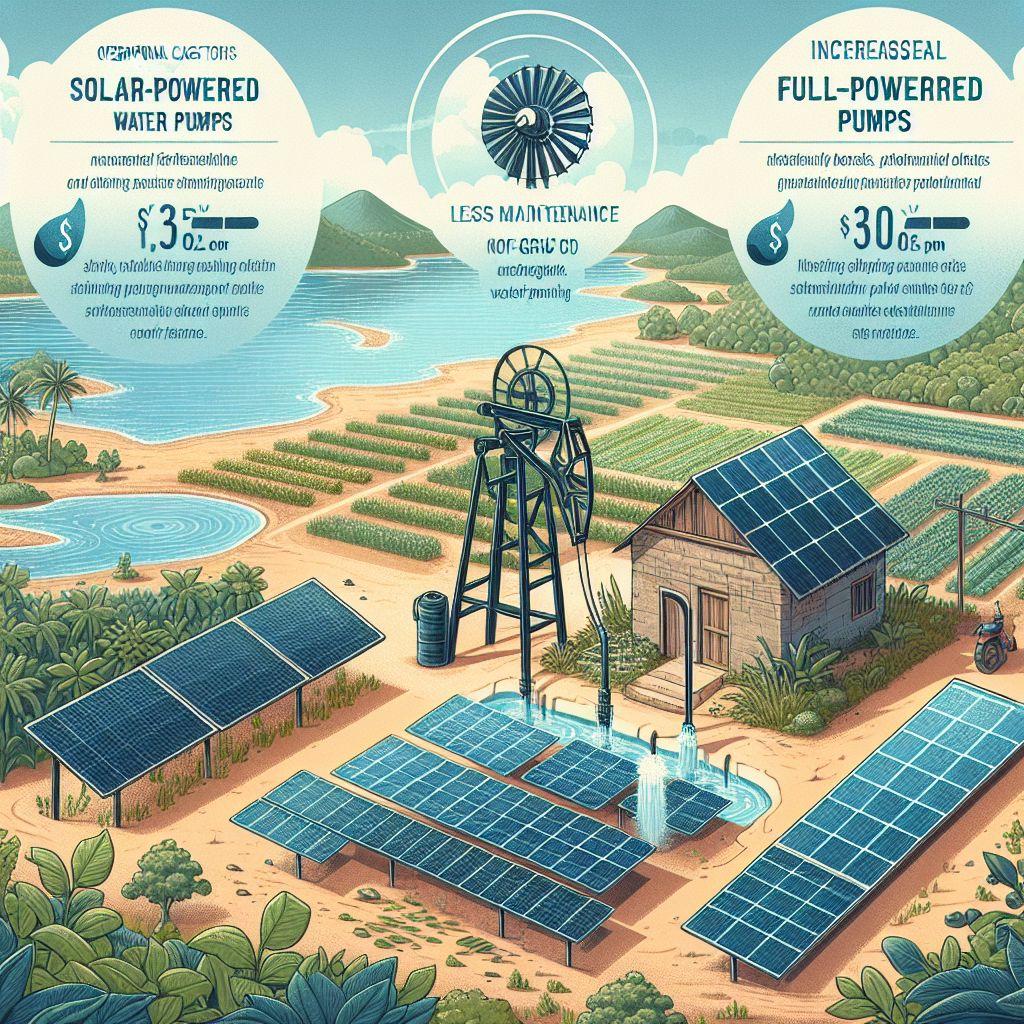
Solar-powered water pumps can significantly reduce operational costs by eliminating fuel expenses.
These pumps are ideal for off-grid locations, providing reliable water access where electricity is unavailable.
Solar water pumps require minimal maintenance, leading to long-term savings and reduced downtime.
Various types of solar panels, such as monocrystalline, polycrystalline, and thin-film, can be used based on specific needs and budgets.
Adopting solar-powered water pumps can lead to increased crop yields, higher income, and environmental benefits like reduced CO2 emissions.
Solar-Powered Water Pumps for Agriculture: Reduce Costs & Eliminate Fuel
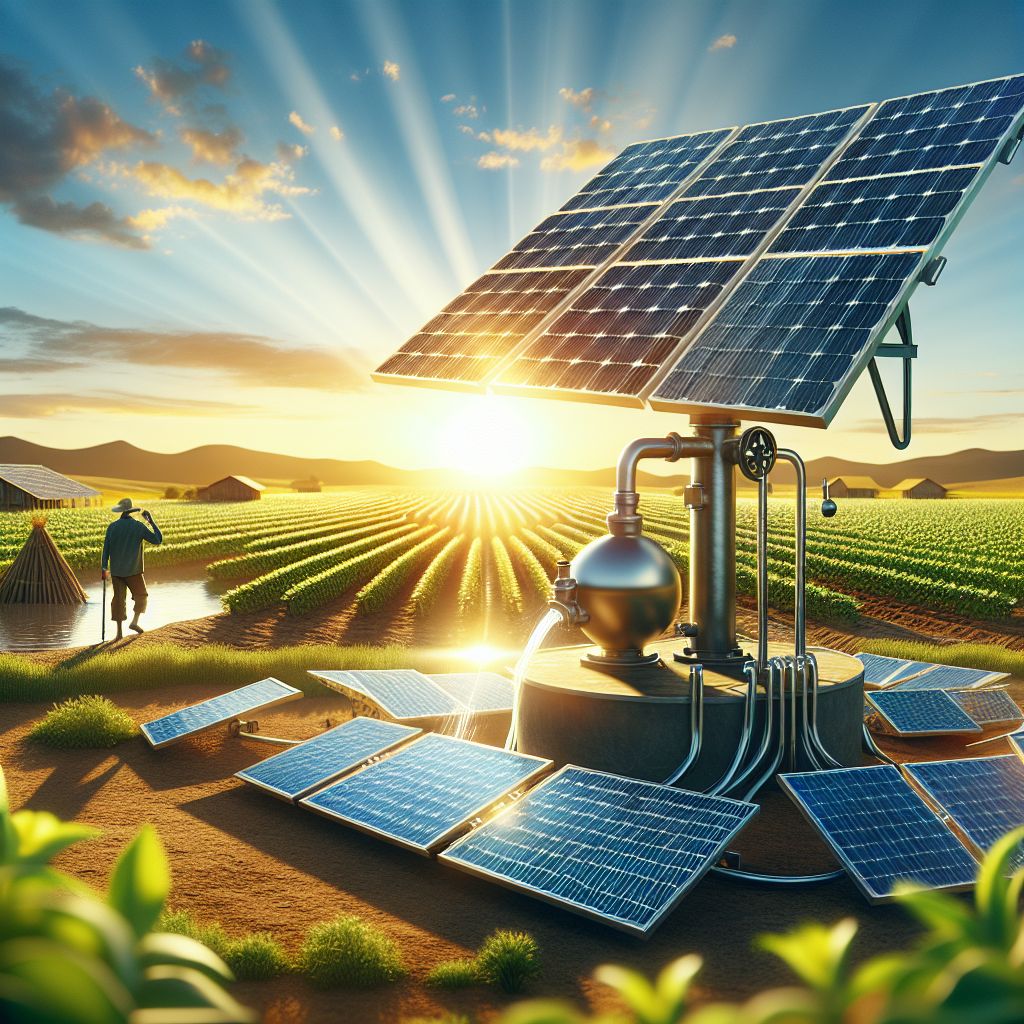
In an era marked by rapid technological advancements and a growing commitment to sustainability, agriculture is undergoing a transformative shift. One of the most significant innovations contributing to this change is the adoption of solar-powered water pumps. These efficient, eco-friendly systems are revolutionizing water management in farming landscapes, significantly reducing operational costs and eliminating the dependence on fossil fuels.
The transition to solar-powered water pumps in agriculture represents a significant step towards sustainable farming practices. By reducing costs and eliminating the reliance on fossil fuels, farmers can enhance their operational efficiency while contributing to environmental preservation. As awareness grows and technology advances, we are likely to see even more widespread adoption of these innovative systems.
Introduction
Imagine a world where farmers can water their crops without worrying about fuel costs or electricity bills. This isn’t a far-off dream; it’s a reality with solar-powered water pumps. These innovative systems use the sun’s energy to pump water, making them an eco-friendly and cost-effective solution for agricultural irrigation.
In this article, we’ll explore how solar-powered water pumps work, their benefits, and how they can transform farming practices. By the end, you’ll understand why these pumps are a smart investment for sustainable agriculture.
Off-Grid Capability
One of the most significant advantages of solar-powered water pumps is their ability to operate in off-grid locations. Many rural areas lack access to reliable electricity, making it challenging for farmers to irrigate their fields efficiently. Solar pumps solve this problem by harnessing the sun’s energy, which is abundant and free.
For instance, in remote villages in India, farmers have successfully used solar pumps to irrigate their crops, leading to increased agricultural productivity and improved livelihoods. These pumps provide a reliable water source, ensuring that crops receive the necessary hydration even in areas without electricity.
Low Maintenance
Solar-powered water pumps are designed to be low maintenance, which is a significant advantage for farmers. Unlike diesel pumps that require regular fuel refills and engine maintenance, solar pumps have fewer moving parts and don’t rely on fuel. This means fewer breakdowns and lower maintenance costs.
Additionally, most solar pump systems come with advanced monitoring and control features. Remote monitoring allows farmers to track pump performance, water levels, and energy production, enabling efficient management and timely maintenance. This reduces the need for frequent on-site inspections and ensures that the system operates smoothly. For more information on the benefits of these systems, check out MorcaPumps.
Scalability and Flexibility
Solar-powered water pumps are available in various sizes and capacities, making them suitable for different agricultural needs. Whether you have a small garden or a large farm, you can find a solar pump that meets your requirements. This scalability allows farmers to start small and expand their systems as needed. For more information on the economic advantages of solar water pump solutions, visit MorcaPumps.
Moreover, solar pumps can be easily integrated with existing irrigation systems. Whether you’re using drip irrigation, sprinklers, or flood irrigation, a solar pump can provide the necessary water pressure and flow rate. This flexibility makes it easier for farmers to adopt solar technology without overhauling their entire irrigation setup.
What are Water Pumps?
Definition and Function
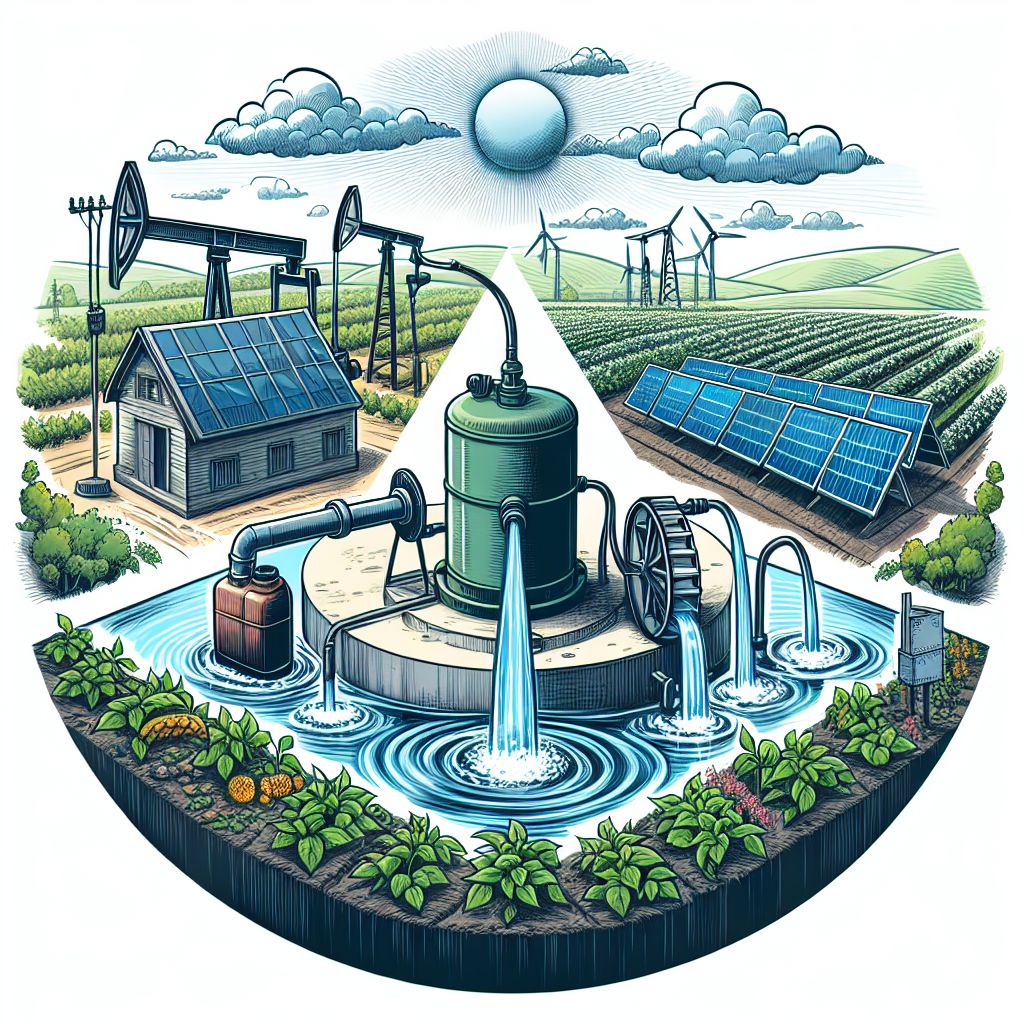
Water pumps are mechanical devices used to move water from one place to another. They play a crucial role in agriculture by ensuring that crops receive adequate water for growth and development. Water pumps can be powered by various energy sources, including electricity, diesel, and solar energy.
Types of Water Pumps
There are several types of water pumps used in agriculture, each with its own set of advantages and disadvantages:
Electric Pumps: Powered by electricity, these pumps are efficient and reliable but require access to the electrical grid.
Diesel Pumps: These pumps are powered by diesel fuel and are commonly used in areas without electricity. However, they have high operational costs and contribute to pollution.
Solar Pumps: These pumps use solar energy to operate, making them an eco-friendly and cost-effective option for irrigation.
Importance in Agriculture
Water pumps are essential in agriculture because they enable efficient irrigation, which is vital for crop growth. Without proper irrigation, crops can suffer from water stress, leading to reduced yields and lower quality produce. By providing a consistent water supply, water pumps help farmers optimize their production and improve their overall economic standing.
The Source of Power: The Different Types of Solar Panels you can Connect to a Water Pump
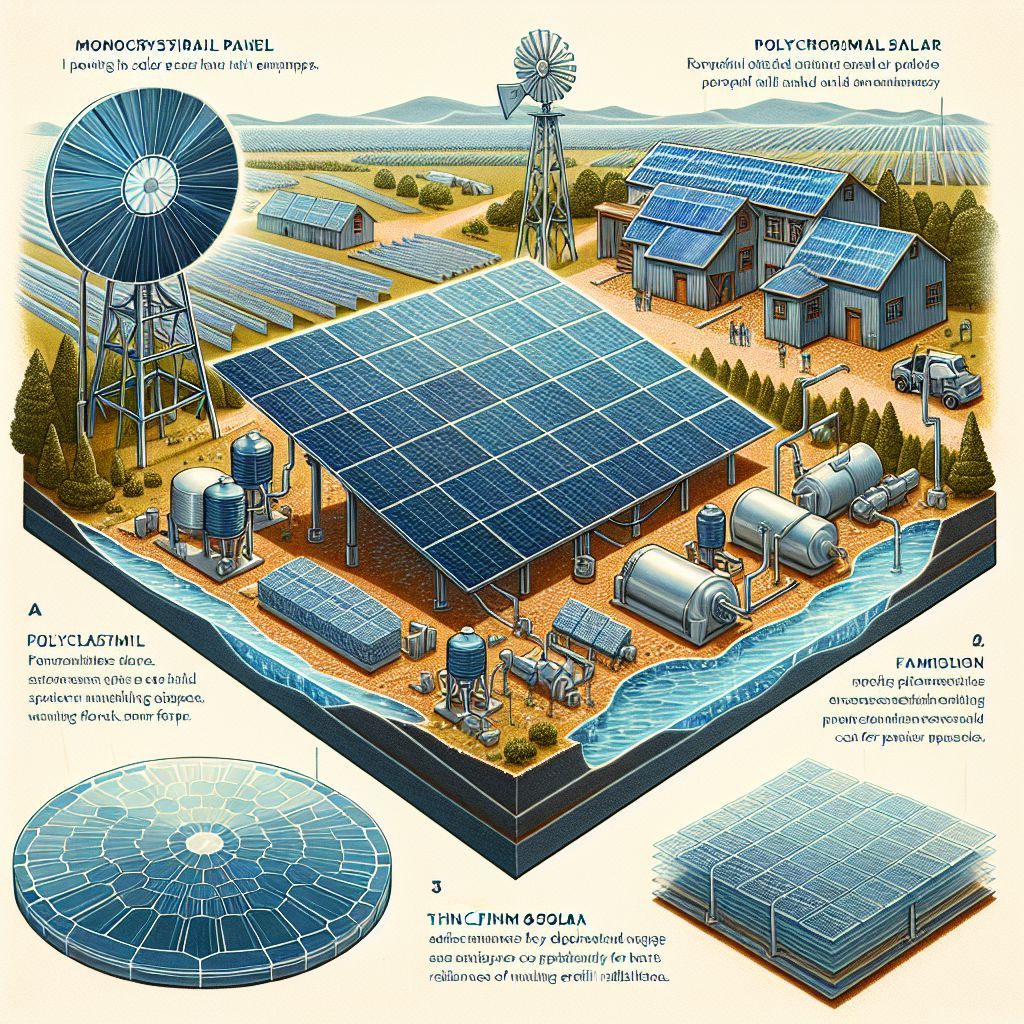
When it comes to powering solar water pumps, the type of solar panel you choose can significantly impact the system’s efficiency and cost. Let’s explore the different types of solar panels available:
Monocrystalline Solar Panels: High Efficiency in Limited Spaces
Monocrystalline solar panels are known for their high efficiency and long lifespan. They are made from a single crystal structure, which allows them to convert sunlight into electricity more effectively. These panels are ideal for farms with limited space because they generate more power per square meter than other types.
However, monocrystalline panels are typically more expensive than other options. If you have a small area but need a high power output, investing in monocrystalline panels might be the best choice.
Polycrystalline Solar Panels: Cost-Effective Energy Solution
Polycrystalline solar panels are made from multiple silicon crystals, making them less efficient than monocrystalline panels. However, they are also more affordable, making them a popular choice for many farmers. These panels are suitable for larger farms where space is not a constraint, and cost savings are a priority.
Thin-Film Solar Panels: Flexibility and Versatility
Thin-film solar panels are made by depositing thin layers of photovoltaic material onto a substrate. These panels are lightweight, flexible, and can be installed on various surfaces, including curved or irregularly shaped areas. While they have lower efficiency compared to crystalline panels, their versatility makes them an attractive option for unique installations.
Thin-film panels are also more resistant to high temperatures and shading, making them suitable for areas with harsh environmental conditions.
Here’s a table comparing solar panel types you can use with water pumps on a farm:
|
Solar Panel Type |
Efficiency |
Cost per Watt |
Pros |
Cons |
|---|---|---|---|---|
|
Monocrystalline |
15-22% |
$1.00 – $1.50 |
– Highest efficiency. 1, 3 |
– Most expensive option. 1, 3 |
|
Polycrystalline |
13-17% |
$0.90 – $1.20 |
– Lower cost than monocrystalline. 1, 3 |
– Slightly lower efficiency. 1, 3 |
|
Thin-Film |
10-13% |
$0.70 – $1.00 |
– Lowest cost. 1, 3 |
– Lowest efficiency. 1, 3 |
The Economics of Solar-Powered Water Pumps
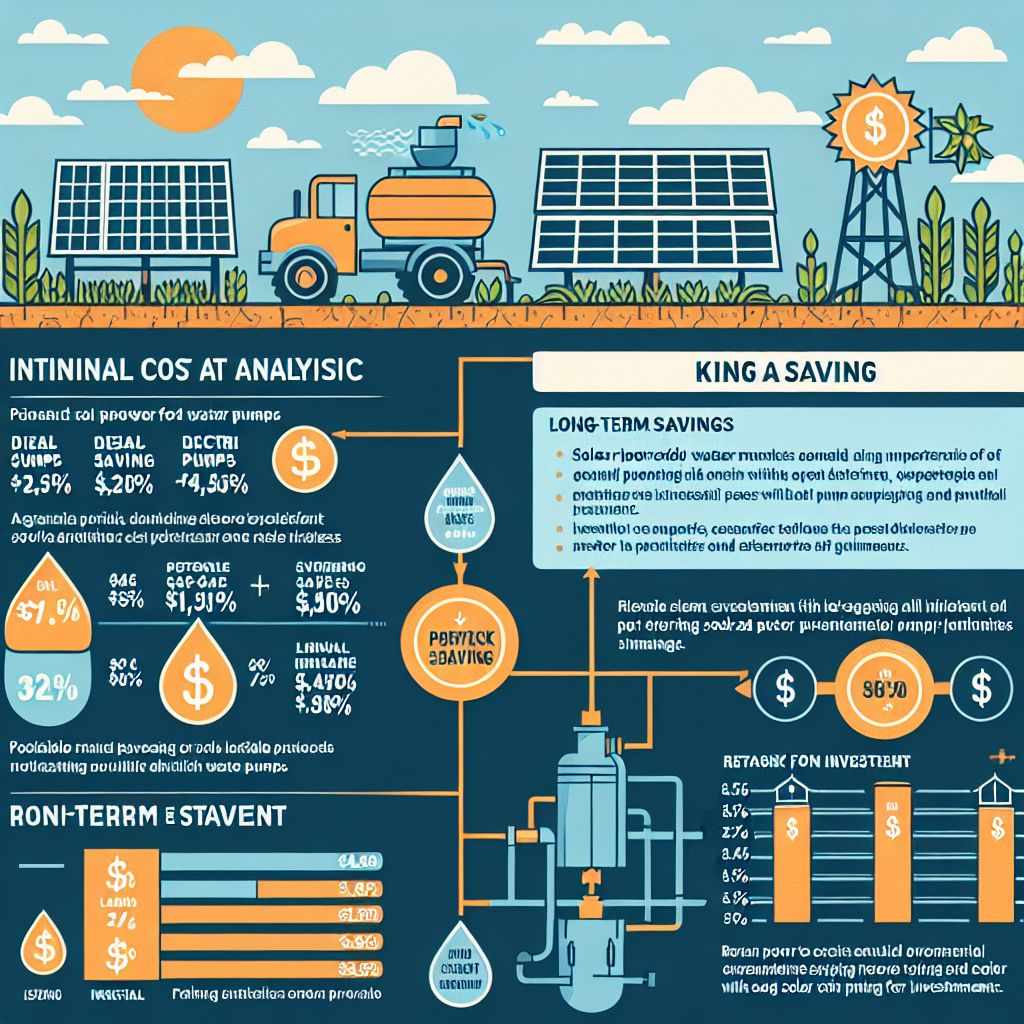
Investing in solar-powered water pumps can be a game-changer for farmers. These pumps offer a range of economic benefits that can improve the financial stability of agricultural operations. From reducing operational costs to providing long-term savings, solar-powered water pumps present a compelling case for sustainable farming.
Cost Analysis
One of the first things to consider when evaluating solar-powered water pumps is the initial cost. While the upfront investment for solar pumps can be higher compared to diesel or electric pumps, the long-term savings make them a more cost-effective choice. Solar pumps eliminate the need for fuel and electricity, leading to significant reductions in operational costs.
Let’s break down the costs:
|
Cost Component |
Solar Pump |
Diesel Pump |
Electric Pump |
Sources |
|---|---|---|---|---|
|
Initial Investment |
$3,000 – $5,000 |
$1,500 – $2,500 |
$1,000 – $2,000 | |
|
Operational Costs (Annual) |
$0 |
$500 – $1,000 |
$200 – $500 | |
|
Maintenance Costs (Annual) |
$50 – $100 |
$200 – $400 |
$100 – $200 |
Analysis of Cost Breakdown
This table summarizes the cost differences among solar-powered, diesel, and electric water pumps while providing credible sources for further reading:
Initial Investment:
Solar pumps have a higher upfront cost due to the investment in photovoltaic systems.
Diesel and electric pumps have lower initial costs but come with ongoing expenses.
Operational Costs (Annual):
Solar pumps incur no operational costs as they utilize free solar energy.
Diesel and electric pumps have significant annual fuel and electricity expenses.
Maintenance Costs (Annual):
Solar pumps require minimal maintenance due to fewer mechanical parts.
Diesel pumps have higher maintenance needs compared to both solar and electric options.
As you can see, while the initial investment for solar pumps is higher, the absence of fuel costs and lower maintenance expenses result in substantial long-term savings.
Long-Term Savings
The long-term savings associated with solar-powered water pumps are impressive. By eliminating fuel costs and reducing maintenance expenses, farmers can save thousands of dollars over the pump’s lifespan. This financial relief allows farmers to reinvest in their operations, purchase better-quality seeds, and adopt other sustainable farming practices.
Moreover, solar pumps have a long lifespan, typically ranging from 15 to 25 years. With proper maintenance, these systems can provide reliable water pumping solutions for decades, ensuring consistent savings and reducing the need for frequent replacements.
Fuel Savings: By using solar energy, farmers can save $500 to $1,000 annually on diesel fuel.
Maintenance Savings: Reduced maintenance needs can save an additional $150 to $300 per year.
Longevity: The long lifespan of solar pumps ensures consistent performance and savings over 15 to 25 years.
Return on Investment
Understanding the return on investment (ROI) is crucial when considering any new technology. Solar-powered water pumps offer a favorable ROI due to their long-term savings and low operational costs. While the initial investment may seem high, the payback period is relatively short, often ranging from 3 to 5 years.
For example, a farmer who invests $4,000 in a solar pump can expect to save approximately $800 to $1,200 annually on fuel and maintenance costs. Within 3 to 5 years, the savings will offset the initial investment, and the farmer will continue to benefit from reduced operational expenses for the pump’s remaining lifespan.

Environmental Benefits
Besides the economic advantages, solar-powered water pumps offer significant environmental benefits. By harnessing renewable energy from the sun, these pumps contribute to a more sustainable and eco-friendly farming practice.
Reduction in CO2 Emissions
One of the most important environmental benefits of solar-powered water pumps is the reduction in CO2 emissions. Diesel pumps release harmful greenhouse gases into the atmosphere, contributing to climate change and air pollution. In contrast, solar pumps produce zero emissions during operation, helping to reduce the carbon footprint of agricultural activities.
By switching to solar pumps, farmers can play a crucial role in mitigating climate change and promoting cleaner air quality. This shift not only benefits the environment but also aligns with global sustainability goals.
Water Conservation
Solar-powered water pumps can also contribute to water conservation efforts. Many solar pump systems come with advanced monitoring and control features that allow farmers to optimize water usage. By precisely controlling water flow and timing, farmers can reduce water waste and ensure that crops receive the right amount of hydration.
This efficient water management helps preserve valuable water resources, especially in regions facing water scarcity. It also promotes healthier crop growth by preventing over-irrigation and reducing the risk of soil erosion.
Reduced Reliance on Fossil Fuels
Another significant environmental benefit of solar-powered water pumps is the reduced reliance on fossil fuels. Traditional diesel pumps depend on non-renewable energy sources, which are finite and contribute to environmental degradation. Solar pumps, on the other hand, harness the sun’s renewable energy, providing a sustainable alternative. For more information on how solar panels can reduce energy costs, visit this guide on solar panels for irrigation systems.
By adopting solar technology, farmers can decrease their dependence on fossil fuels, reducing their impact on the environment and promoting a more sustainable energy future.
Zero emissions during operation
Efficient water management and conservation
Reduced reliance on non-renewable energy sources

Case Studies on Solar-Powered Water Pumps
To understand the real-world impact of solar-powered water pumps, let’s look at some case studies. These examples highlight the experiences of farmers who have adopted solar technology and the positive outcomes they’ve achieved.
Farmers’ Experiences
In a remote village in Jhunjhunu district, India, a farmer named Rajesh installed solar pumps on his farm in 2016. Before switching to solar, Rajesh relied on diesel pumps, which were expensive to operate and frequently broke down. The high fuel costs and maintenance issues limited his ability to irrigate his crops effectively.
“Since installing solar pumps, my irrigation costs have dropped significantly, and I no longer worry about fuel shortages. My crop yields have improved, and I can now invest more in other farming practices.” – Rajesh, Farmer
Rajesh’s experience demonstrates how solar-powered water pumps can transform farming operations by reducing costs and improving productivity.
Community Impact
In addition to individual farmers, entire communities can benefit from solar-powered water pumps. In a rural village in Kenya, a community-based solar irrigation project was implemented to provide water for farming and livestock. The project involved installing several solar pumps to serve the needs of multiple households.
This initiative led to increased agricultural productivity, improved food security, and better livelihoods for the community members. The solar pumps provided a reliable water source, enabling farmers to grow crops year-round and support their families.
Economic Outcomes
The economic outcomes of adopting solar-powered water pumps are evident in various case studies. In many instances, farmers have reported increased crop yields, higher income, and improved financial stability. The savings from reduced fuel and maintenance costs allow farmers to reinvest in their operations, purchase better-quality seeds, and adopt other sustainable farming practices.
For example, a study conducted in India found that farmers who switched to solar pumps experienced a 30% increase in crop yields and a 20% reduction in irrigation costs. These positive economic outcomes highlight the potential of solar-powered water pumps to enhance agricultural productivity and promote sustainable farming practices.

Challenges and Solutions
While solar-powered water pumps offer numerous benefits, there are also challenges that farmers may face when adopting this technology. Understanding these challenges and exploring potential solutions can help ensure a smooth transition to solar-powered irrigation.
Initial Investment Costs
The initial investment cost for solar-powered water pumps can be a significant barrier for many farmers. The higher upfront cost compared to diesel or electric pumps may deter some farmers from adopting this technology. However, several solutions can help overcome this challenge:
Government Incentives: Many governments offer subsidies, grants, and tax incentives to promote the adoption of solar technology in agriculture. Farmers can take advantage of these programs to reduce the initial investment cost.
Financing Options: Various financing options, such as low-interest loans and installment plans, can help farmers manage the upfront cost of solar pumps. These options allow farmers to spread the investment over time, making it more affordable.
Community-Based Projects: Collaborative projects involving multiple farmers or community groups can pool resources to invest in solar pumps. This approach reduces the financial burden on individual farmers and promotes shared benefits.
This table focuses on the initial investment costs for solar-powered water pumps, including potential solutions to overcome the high upfront costs.
|
Aspect |
Details |
Potential Solutions |
Sources |
|---|---|---|---|
|
Cost Range |
$3,000 – $5,000 for a typical small-scale system |
– Government subsidies and tax incentives | |
|
Factors Affecting Cost |
– System size and capacity |
– Proper system sizing | |
|
Financing Options |
– Cash purchase |
– Zero-down solar loans | |
|
Return on Investment |
Typically 3-5 years, depending on usage and local conditions |
– Maximizing system efficiency |
This table provides a comprehensive overview of the initial investment costs associated with solar-powered water pumps, breaking down various aspects that contribute to the overall cost. It also offers potential solutions to help farmers overcome the high upfront costs, making solar pump adoption more accessible.
Availability of Spare Parts
One of the challenges associated with solar-powered water pumps is the availability of spare parts. In some regions, finding replacement parts for solar pumps can be difficult, leading to prolonged downtime if the system requires repairs. This issue can be mitigated by working with reputable suppliers and manufacturers who offer comprehensive support and spare parts availability.
Farmers should also consider purchasing solar pumps from companies that provide warranties and after-sales service. This ensures that any issues can be promptly addressed, and necessary parts are readily available. Building relationships with local technicians trained in solar pump maintenance can also help minimize downtime and keep the system running smoothly.
Technical Skills Required
Basic understanding of solar technology and how solar panels work
Knowledge of irrigation systems and water management
Ability to perform routine maintenance and troubleshooting
Familiarity with monitoring and control systems for solar pumps
While solar-powered water pumps are designed to be user-friendly, some technical skills are required for installation and maintenance. Farmers may need to learn about solar technology, including how solar panels generate electricity and how to connect them to the pump system.
Understanding the basics of irrigation systems and water management is also essential. Farmers should know how to optimize water usage, monitor water levels, and ensure that the pump operates efficiently. Routine maintenance, such as cleaning solar panels and checking connections, is necessary to keep the system in good working condition.
Many solar pump systems come with monitoring and control features that allow farmers to track performance remotely. Familiarity with these systems can help farmers identify and address issues quickly, ensuring continuous operation and minimizing disruptions. For more information on how solar technology can benefit farm operations, check out this guide on solar panels for farms.

Future Prospects and Adoption Trends
The future of solar-powered water pumps in agriculture looks promising. As technology advances and costs continue to decrease, more farmers are likely to adopt solar pumps for their irrigation needs. Let’s explore some of the key trends and developments that will shape the future of solar-powered water pumps.
Advancements in Solar Technology
Ongoing advancements in solar technology are making solar pumps more efficient and affordable. Innovations in solar panel materials, energy storage solutions, and pump design are enhancing the performance and reliability of solar-powered water pumps. For example, the development of more efficient solar cells and battery storage systems allows for better energy capture and utilization.
Additionally, the integration of smart technology and IoT (Internet of Things) devices is enabling remote monitoring and control of solar pump systems. These advancements allow farmers to optimize water usage, track system performance, and receive real-time alerts for maintenance needs. For a comprehensive guide on implementing solar irrigation, check out this solar irrigation guide.
Government Incentives and Policies
Government incentives and policies play a crucial role in promoting the adoption of solar-powered water pumps. Many governments offer subsidies, grants, and tax incentives to encourage farmers to invest in solar technology. These programs help reduce the initial investment cost and make solar pumps more accessible to small and marginal farmers. For more information on the economic advantages, visit MorcaPumps.
For example, the Indian government’s PM-KUSUM scheme aims to install millions of solar pumps across the country, providing financial support to farmers. Similar initiatives are being implemented in other countries to promote sustainable agriculture and reduce reliance on fossil fuels.
Expected Growth in Usage
The adoption of solar-powered water pumps is expected to grow significantly in the coming years. As awareness of the environmental and economic benefits increases, more farmers are likely to transition to solar technology. The decreasing cost of solar panels and improved financing options will further drive adoption.
According to a report by the International Renewable Energy Agency (IRENA), the global market for solar-powered water pumps is projected to expand rapidly, with significant growth in regions such as Africa, Asia, and Latin America. This growth will contribute to increased agricultural productivity, improved livelihoods, and a more sustainable future for farming communities.
“The adoption of solar-powered water pumps is not just a trend; it’s a necessity for sustainable agriculture. By harnessing the power of the sun, farmers can reduce costs, increase yields, and contribute to a healthier planet.” – International Renewable Energy Agency (IRENA)
Conclusion
Solar-powered water pumps offer a transformative solution for sustainable agriculture. By harnessing the sun’s energy, these pumps provide a reliable and cost-effective means of irrigation, reducing operational costs and environmental impact. As technology advances and adoption increases, solar-powered water pumps will play a crucial role in shaping the future of farming.
Summary of Key Points
Solar-powered water pumps can significantly reduce operational costs by eliminating fuel expenses and requiring minimal maintenance. They are ideal for off-grid locations and can be scaled to meet various agricultural needs. The different types of solar panels, such as monocrystalline, polycrystalline, and thin-film, offer flexibility in terms of efficiency and cost.
The economic benefits include long-term savings and a favorable return on investment, while the environmental benefits encompass reduced CO2 emissions, water conservation, and decreased reliance on fossil fuels. Despite challenges such as initial investment costs and technical skills required, solutions like government incentives and financing options can help farmers adopt this technology.
Final Thoughts
Embracing solar-powered water pumps is a step towards a more sustainable and prosperous future for agriculture. By investing in this technology, farmers can enhance their productivity, improve their livelihoods, and contribute to environmental conservation. The journey towards sustainable farming begins with informed decisions and a commitment to adopting innovative solutions like solar-powered water pumps.
Frequently Asked Questions (FAQ)
Can solar pumps work in cloudy weather?
Yes, solar pumps can work in cloudy weather, but their efficiency may be reduced. Modern solar panels are designed to capture diffuse sunlight, allowing the pumps to operate even on cloudy days. However, performance may vary based on the intensity of sunlight and the specific solar panel used.
Are solar-powered water pumps suitable for all types of crops?
Yes, solar-powered water pumps can be used for various types of crops. They can be integrated with different irrigation systems, such as drip irrigation, sprinklers, and flood irrigation, to meet the specific water requirements of different crops. Farmers should choose the appropriate pump size and capacity based on their crop needs and field size.
How long do solar-powered water pumps typically last?
Solar-powered water pumps typically have a lifespan of 15 to 25 years, depending on the quality of the components and proper maintenance. Regular cleaning of solar panels, checking connections, and monitoring system performance can help extend the lifespan and ensure reliable operation. For more information on maintaining solar irrigation systems, check out this solar irrigation guide.
Is it possible to integrate solar pumps with an irrigation system on a farm?
Yes, solar pumps can be easily integrated with existing irrigation systems on a farm. Whether using drip irrigation, sprinklers, or flood irrigation, solar pumps can provide the necessary water pressure and flow rate. Farmers should consult with experts to ensure proper installation and compatibility with their irrigation setup.
In conclusion, solar-powered water pumps offer a sustainable and cost-effective solution for agricultural irrigation. By understanding the benefits, challenges, and future prospects, farmers can make informed decisions and embrace this technology to enhance their farming practices. The journey towards sustainable agriculture starts with adopting innovative solutions like solar-powered water pumps.







Leave a Reply