
Key Takeaways
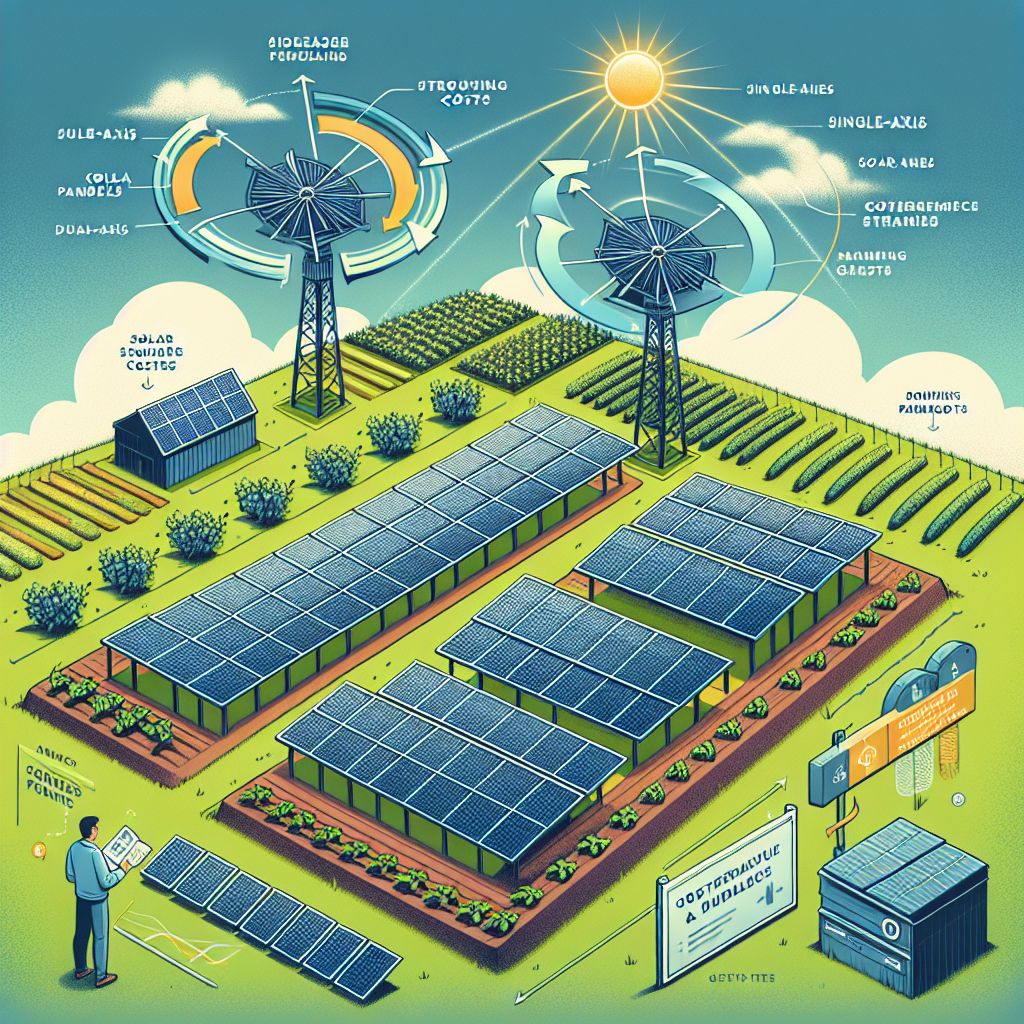
Solar trackers can boost crop yields by optimizing sunlight exposure, leading to healthier and more productive plants.
There are two main types of solar trackers: single-axis and dual-axis, each with unique benefits.
Implementing solar trackers can significantly reduce energy costs for farmers, making operations more sustainable.
Choosing the right solar panel type is crucial for maximizing the efficiency of solar trackers on farms.
Government grants and subsidies can help offset the initial costs of installing solar trackers.
The Power of Solar Trackers in Modern Farming
Farming is evolving, and renewable energy is at the heart of this transformation. Solar trackers, in particular, are changing how farmers harness the sun’s energy. These devices allow solar panels to follow the sun’s path, maximizing energy capture throughout the day. By doing so, they significantly enhance the efficiency of solar panels compared to stationary systems.
Maximizing Sunlight Exposure for Crops
Imagine a sunflower, constantly turning to face the sun. Solar trackers work in a similar way. They adjust the position of solar panels to follow the sun’s movement from dawn to dusk. This constant alignment ensures that the panels receive the maximum possible sunlight, which is especially beneficial for farms.
For crops, this means more consistent energy for irrigation systems and other farm operations. When plants get the right amount of water and sunlight, they thrive. Therefore, solar trackers indirectly contribute to better crop yields by powering the systems that keep farms running smoothly.
Impact on Energy Production and Efficiency
Solar trackers can increase the efficiency of solar panels by up to 40%. This boost is significant because it means farmers can generate more electricity without needing additional panels. The increased energy production can power more extensive irrigation systems, refrigeration for produce, and even farm machinery.
For instance, consider a farm that needs to power an irrigation system for its fields. With solar trackers, the farm can run the system longer and more efficiently, ensuring crops receive adequate water. This not only enhances crop growth but also reduces reliance on fossil fuels, leading to cost savings.
Environmental Benefits of Solar Tracking Technology
Besides improving energy efficiency, solar trackers contribute to environmental sustainability. By maximizing solar energy capture, they reduce the need for energy from non-renewable sources. This reduction helps decrease the farm’s carbon footprint, a critical step in combating climate change.
Moreover, by making farms more self-sufficient in terms of energy, solar trackers reduce the pressure on the national grid. This lessens the likelihood of power outages and helps stabilize energy supply in rural areas. In turn, this promotes a more sustainable agricultural practice, aligning with global efforts to create a greener planet.
Comparing Types of Solar Trackers
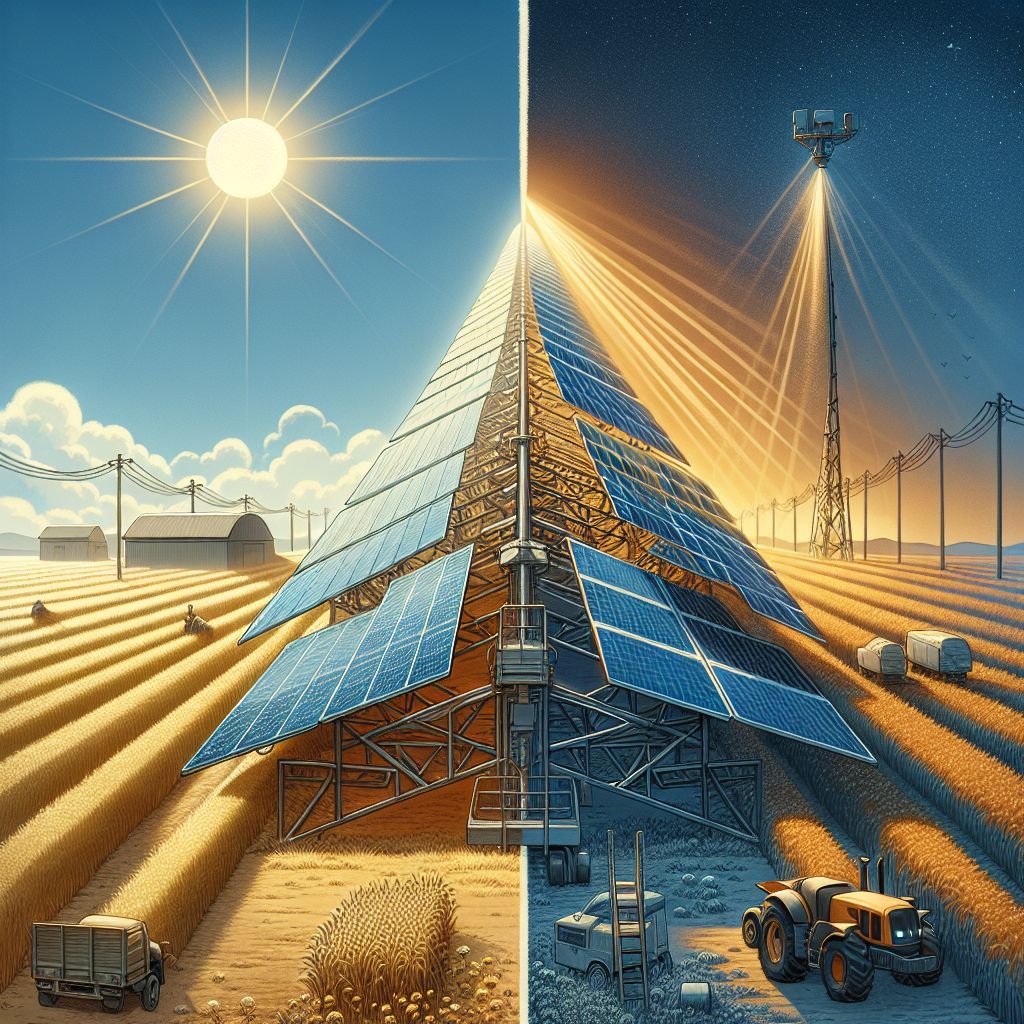
Choosing the right type of solar tracker is essential for maximizing benefits on a farm. There are two primary types: single-axis and dual-axis trackers. Each has distinct features and advantages, making them suitable for different farming needs.
Single-Axis Trackers: Features and Advantages
Single-axis trackers rotate on one axis, usually aligned north to south. They follow the sun’s path from east to west throughout the day. This type of tracker is simpler and generally more affordable than dual-axis systems. It provides a significant efficiency boost over fixed solar panels, making it a popular choice for many farmers.
The simplicity of single-axis trackers also means they require less maintenance. This makes them ideal for farms that want to improve energy capture without significantly increasing operational complexity. Additionally, they are well-suited for areas with a clear path of the sun across the sky.
Dual-Axis Trackers: Enhanced Solar Capture
Dual-axis trackers can rotate on two axes, allowing them to follow the sun more precisely. They adjust not only for the sun’s east-west movement but also for its elevation angle. This capability enables them to capture maximum sunlight throughout the year, even during shorter winter days. For farmers looking to optimize energy use, understanding the cost of solar panels and funding options can be crucial.
While dual-axis trackers are more complex and costly than single-axis systems, they offer superior energy capture. This makes them an excellent choice for farms in regions with variable sun paths or where maximizing energy production is crucial. For farms with high energy demands, the investment in dual-axis trackers can quickly pay off through increased efficiency.
Choosing the Right Tracker for Your Farm
When selecting a solar tracker, consider factors such as your farm’s location, energy needs, and budget. Single-axis trackers are often sufficient for areas with consistent sun paths and moderate energy requirements. However, if your farm experiences variable weather or has high energy demands, dual-axis trackers might be the better option.
Most importantly, evaluate the long-term benefits. Although dual-axis trackers have higher upfront costs, their enhanced efficiency can lead to greater energy savings over time. Assess your farm’s specific needs and consult with a solar energy expert to determine the best fit.
Here’s a table comparing solar trackers: No trackers vs. Single-axis trackers vs. Dual-axis trackers:
|
Feature |
No Trackers (Fixed) |
Single-Axis Trackers |
Dual-Axis Trackers |
|---|---|---|---|
|
Energy Output Increase |
Baseline | ||
|
Cost |
Lowest | ||
|
Complexity |
Simplest |
Moderate |
Most complex 1 |
|
Maintenance |
Minimal |
Low to moderate 5 | |
|
Space Efficiency |
Lowest |
Moderate |
Highest 3 |
|
Reliability |
Highest |
High (>99% uptime) 2 |
Moderate to high 2 |
|
Typical Application |
Residential, commercial |
Utility-scale projects 4 |
Commercial and industrial 2 |
|
Tracking Capability |
None |
East to West 1 |
East to West and North to South 1 |
Using the Right Solar Panels with your Tracker
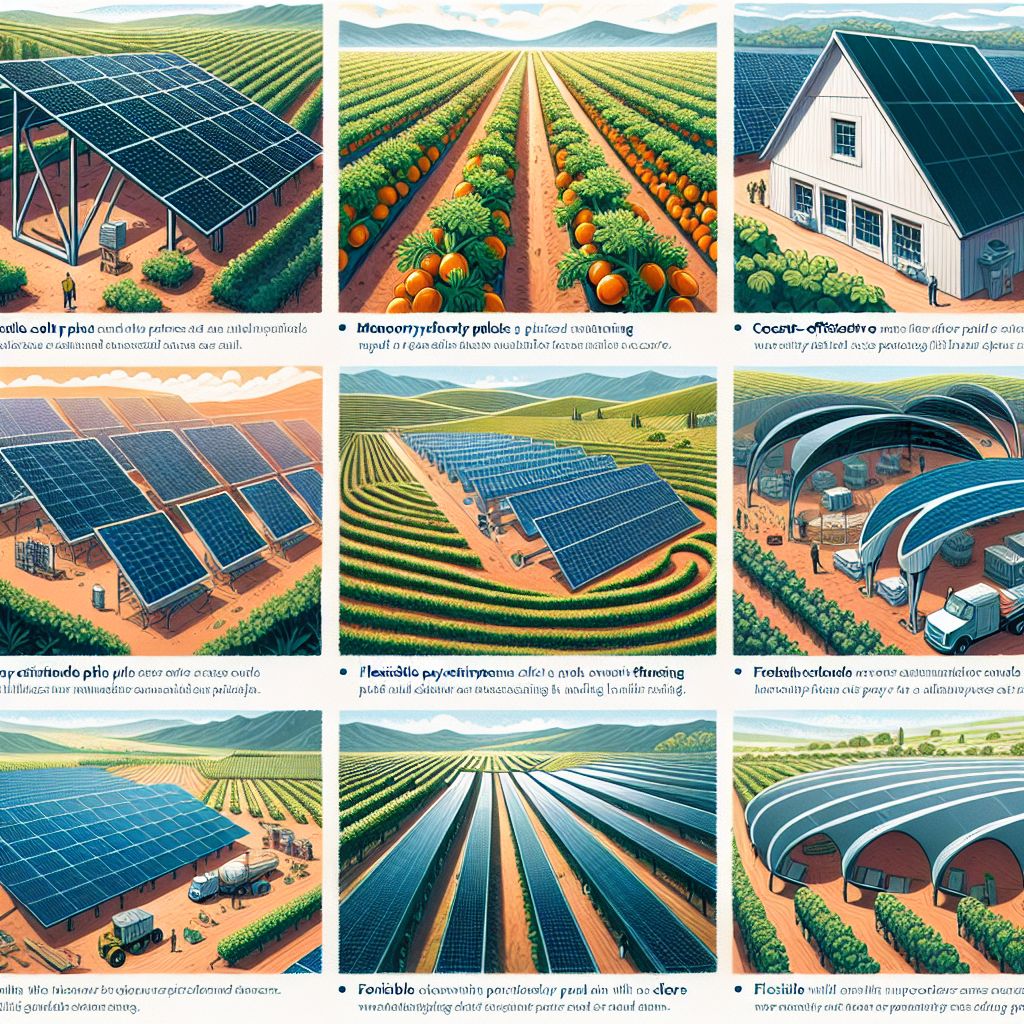
Pairing solar trackers with the right type of solar panels is crucial for maximizing efficiency. Different types of panels offer various benefits, and understanding these can help you make an informed decision.
Monocrystalline Panels: Known for their high efficiency and durability, making them a great choice for maximizing energy capture.
Polycrystalline Panels: More affordable than monocrystalline, suitable for farms with budget constraints.
Thin-Film Solar Panels: Offer flexibility in installation, ideal for unconventional farm layouts.
Monocrystalline Panels: Efficiency Meets Carrot Farming
Monocrystalline panels are made from single-crystal silicon, providing them with high efficiency and a long lifespan. They are ideal for farms looking to maximize energy capture, especially when space is limited. For example, a carrot farm with limited available land could benefit significantly from monocrystalline panels paired with solar trackers, ensuring the highest possible energy output.
Polycrystalline Solar Panels: Cost-Effective Energy Solution
Polycrystalline solar panels are made from multiple silicon crystals, making them less efficient than monocrystalline panels but more affordable. These panels are a cost-effective solution for farmers looking to balance efficiency and budget.
For instance, a medium-sized farm in India opted for polycrystalline panels on their solar trackers. The lower cost of the panels allowed the farm to invest in more trackers, increasing their overall energy production and providing a reliable energy source for their operations.
Thin-Film Solar Panels: Flexibility and Versatility
Thin-film solar panels are made from a variety of materials, including amorphous silicon, cadmium telluride, and copper indium gallium selenide. These panels are known for their flexibility and lightweight properties, making them suitable for a wide range of applications.
One of the key advantages of thin-film panels is their ability to perform well in low-light conditions. This makes them an excellent choice for farms located in areas with frequent cloud cover or shading. Additionally, their flexibility allows them to be installed on curved or irregular surfaces, providing more installation options.
For example, a vineyard in France installed thin-film panels on their solar trackers. The panels’ ability to capture energy in low-light conditions, combined with the trackers’ sun path tracing technology, resulted in a consistent and reliable energy source for the vineyard’s operations.
Here’s a table comparing solar panel types you can use with a tracker system on a farm:
|
Solar Panel Type |
Efficiency |
Cost per Watt |
Pros |
Cons |
|---|---|---|---|---|
|
Monocrystalline |
15-22% |
$1.00 – $1.50 |
– Highest efficiency. 1, 3 |
– Most expensive option. 1, 3 |
|
Polycrystalline |
13-17% |
$0.90 – $1.20 |
– Lower cost than monocrystalline. 1, 3 |
– Slightly lower efficiency. 1, 3 |
|
Thin-Film |
10-13% |
$0.70 – $1.00 |
– Lowest cost. 1, 3 |
– Lowest efficiency. 1, 3 |

Boosting Agricultural Productivity
Solar trackers have the potential to revolutionize agricultural productivity by providing a reliable and sustainable energy source. By optimizing the energy capture of solar panels, these devices ensure that farms can operate more efficiently and effectively. This increased energy availability can lead to improved irrigation systems, enhanced crop growth, and ultimately higher yields.
Improving Irrigation with Solar Energy
Irrigation is a critical component of successful farming. However, traditional irrigation systems can be energy-intensive and costly. Solar trackers offer a solution by providing a consistent and renewable energy source to power these systems. By aligning solar panels to capture the maximum amount of sunlight, solar trackers ensure that irrigation systems have the power they need to operate efficiently.
For example, a vegetable farm in a sunny region can utilize solar trackers to power its drip irrigation system. This ensures that crops receive a steady supply of water, even during peak sunlight hours when energy demand is highest. As a result, the farm can maintain optimal soil moisture levels, leading to healthier and more robust crops.
Effects on Crop Yield and Quality
The impact of solar trackers on crop yield and quality cannot be overstated. By providing a reliable energy source for irrigation and other farm operations, solar trackers help ensure that crops receive the necessary nutrients and care to thrive. This can lead to higher yields and improved crop quality, translating to increased revenue for farmers.
Consider a fruit orchard that uses solar trackers to power its irrigation and pest control systems. With consistent energy availability, the orchard can maintain optimal growing conditions, resulting in larger and more flavorful fruits. This not only enhances the farm’s profitability but also its reputation for producing high-quality produce.
Furthermore, solar trackers can help farms adapt to changing climate conditions by providing a sustainable energy source that reduces reliance on fossil fuels. This adaptability is crucial for maintaining productivity in the face of unpredictable weather patterns and environmental challenges.
Cost Savings and Increased Revenue
Implementing solar trackers can lead to significant cost savings for farmers. By reducing reliance on grid electricity and fossil fuels, farms can lower their energy expenses and improve their bottom line. Additionally, the increased efficiency and productivity resulting from solar trackers can lead to higher revenues, making the investment worthwhile.
For instance, a dairy farm that installs solar trackers to power its milking equipment can reduce its energy costs by a substantial margin. This reduction in expenses, combined with the increased productivity enabled by solar energy, can lead to a healthier profit margin and a more sustainable business model.
Here’s a chart highlighting more aspects of how solar trackers can boost agricultural productivity:
|
Aspect |
Benefit |
|---|---|
|
Land Use Efficiency |
Increases land use efficiency by 60-70% compared to conventional farming 3 |
|
Crop Yield |
Can increase biomass production by up to 92% for certain crops 2 |
|
Water Conservation |
Improves soil moisture retention by up to 328% 2 |
|
Microclimate Creation |
Creates beneficial shading and reduces water evaporation 1, 3 |
|
Crop Diversity |
Allows cultivation of shade-loving crops like lettuce, peppers, and even corn 3 |
|
Livestock Integration |
Provides shelter for animals, improving their welfare 2 |
|
Energy Production |
Generates up to 70% more energy compared to fixed solar systems 1 |
|
Farm Income |
Offers additional income through energy sales or land leasing 3 |
|
Soil Health |
Improves soil quality through increased moisture and reduced erosion 3 |
|
Equipment Access |
Elevated designs allow for tractor and machinery access 2 |
Solar trackers, particularly elevated dual-axis systems, offer significant advantages for agricultural productivity. They maximize both energy generation and crop yield while allowing for continued full use of the land1. This innovative approach to agrivoltaics not only enhances farm efficiency but also provides economic benefits and environmental sustainability.
Real-World Success Stories
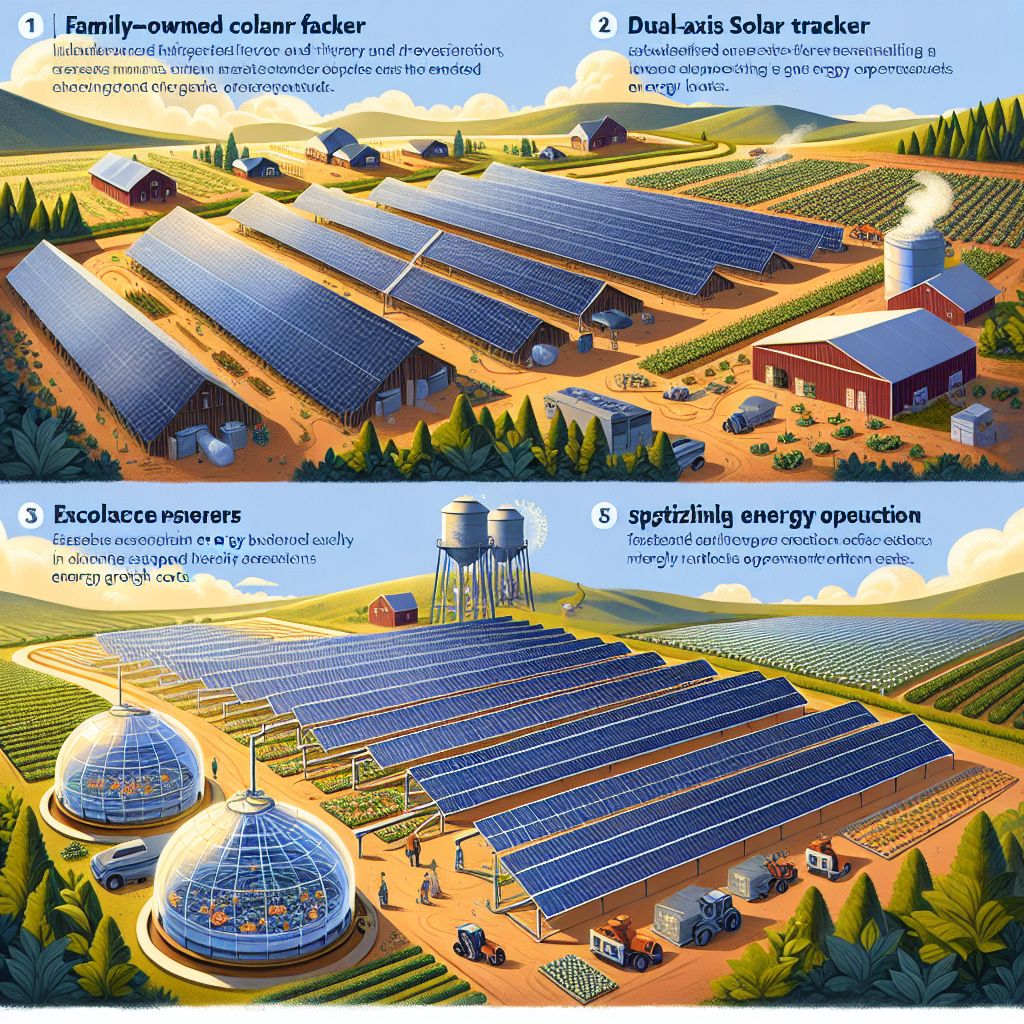
Across the globe, farms are experiencing the transformative benefits of solar trackers. These success stories highlight the potential of this technology to revolutionize agriculture and promote sustainable farming practices.
Case Study: Californian Family Farm Revolution
In California, a family-owned farm decided to invest in solar trackers to power its irrigation and refrigeration systems. The results were astounding. The farm saw a 30% increase in crop yields and a significant reduction in energy costs. The solar trackers allowed the farm to operate more sustainably, reducing its carbon footprint and enhancing its environmental stewardship.
Innovation in Colorado Vegetable Farms
In Colorado, a vegetable farm implemented dual-axis solar trackers to maximize energy capture. This decision paid off, as the farm experienced a 40% increase in energy production. The additional energy allowed the farm to expand its operations, adding new crops and increasing its overall productivity.
The farm’s owner reported that the solar trackers not only improved energy efficiency but also contributed to a more resilient and adaptable farming operation. By reducing reliance on traditional energy sources, the farm was better equipped to handle fluctuations in energy prices and availability. For more information on how solar panels can help reduce a farm’s carbon footprint, you can explore this guide on environmental sustainability in agriculture.
These stories demonstrate the tangible benefits of solar trackers for farmers, highlighting the potential for increased productivity and sustainability in agriculture.
High-Tech Greenhouses in the Netherlands
In the Netherlands, a cutting-edge greenhouse operation integrated solar trackers to optimize its energy use. The trackers provided a steady energy supply for climate control systems, ensuring optimal growing conditions year-round. This innovation resulted in a 25% increase in plant growth rates and a significant reduction in energy costs.
The greenhouse’s success showcases the potential of solar trackers to enhance agricultural productivity, even in regions with less consistent sunlight. By harnessing renewable energy, the greenhouse was able to maintain a competitive edge in the market, producing high-quality plants more efficiently.

Implementing Solar Trackers on Your Farm
Transitioning to solar trackers requires careful planning and consideration. To ensure a successful implementation, farmers should assess their farm’s specific needs and conditions. This includes evaluating sunlight availability, soil stability, and the overall energy demands of the farm.
Assessing Sunlight Availability and Soil Stability
Before installing solar trackers, it’s crucial to evaluate the farm’s sunlight availability. This involves analyzing the sun’s path and determining the best locations for tracker installation. Areas with unobstructed sunlight exposure are ideal for maximizing energy capture.
Soil stability is another important factor to consider. Solar trackers require stable ground to function effectively, so it’s essential to assess the soil’s composition and drainage capabilities. Ensuring a solid foundation will help prevent any potential issues with tracker stability and performance.
Installation Process and Considerations
The installation of solar trackers involves several steps, including site preparation, equipment installation, and system integration. It’s important to work with experienced professionals who can ensure a smooth and efficient installation process. Additionally, understanding the different types of solar panels can be beneficial for making informed decisions during installation.
During installation, consider the layout and spacing of the solar trackers to optimize energy capture. Proper alignment and orientation are key to maximizing the benefits of solar tracking technology. Additionally, ensure that the system is integrated seamlessly with existing farm operations to minimize disruptions.
Role of Grants and Subsidies
Government grants and subsidies can play a significant role in offsetting the initial costs of installing solar trackers. Many regions offer financial incentives for renewable energy projects, making it more accessible for farmers to adopt this technology. For more information on how solar panels can benefit farm operations, explore solar panels for farm operations.
Research available grants and subsidies in your area and consider applying for funding to support your solar tracker project. These financial resources can help reduce the upfront investment and make the transition to renewable energy more feasible for your farm.

Future of Farming with Solar Technology
As the demand for sustainable farming practices continues to grow, solar technology is set to play an increasingly important role in agriculture. By embracing solar trackers, farmers can enhance their productivity, reduce their environmental impact, and ensure long-term food security.
Embracing Sustainable Practices
Embracing sustainable practices is no longer just an option for farmers; it’s becoming a necessity. Solar trackers are at the forefront of this movement, offering a way to harness renewable energy efficiently. By aligning solar panels to capture maximum sunlight, trackers reduce reliance on non-renewable energy sources.
This shift towards sustainability is crucial for preserving our planet for future generations. Solar trackers not only decrease carbon emissions but also promote energy independence on farms. By adopting this technology, farmers can play a significant role in combating climate change and promoting a healthier environment.
Ensuring Long-Term Food Security
Food security is a pressing global issue, and sustainable farming practices are essential to addressing it. Solar trackers contribute to food security by ensuring that farms have a reliable and sustainable energy source. This energy can power irrigation systems, climate control, and other essential operations, leading to more consistent and productive harvests.
By optimizing energy capture, solar trackers help farms maintain optimal growing conditions, even in the face of climate variability. This resilience is vital for ensuring that food production can meet the demands of a growing population. As more farms adopt solar trackers, the agricultural sector will become better equipped to handle future challenges.
Reliable energy supply for irrigation and climate control.
Enhanced resilience to climate variability.
Increased agricultural productivity and food supply.
Financial Benefits and Environmental Impact
The financial benefits of solar trackers are clear. By reducing energy costs and increasing productivity, these devices offer a significant return on investment for farmers. The initial installation costs are often offset by the long-term savings in energy expenses and increased crop yields. For more insights, explore how solar panels provide cost-efficient solutions for farm operations.
Moreover, the environmental impact of solar trackers is profound. By reducing reliance on fossil fuels, they help decrease carbon emissions and promote a cleaner, more sustainable future. This dual benefit of financial savings and environmental stewardship makes solar trackers an attractive option for farmers worldwide.

Conclusion
Solar trackers are revolutionizing the agricultural industry by providing a sustainable and efficient energy solution. By maximizing sunlight capture, they enhance farm productivity, reduce energy costs, and contribute to environmental sustainability. As farmers continue to adopt this technology, the benefits will extend beyond individual farms to the broader agricultural sector and the environment.
Investing in solar trackers is a smart move for farmers looking to improve their operations and contribute to a sustainable future. With the support of government grants and subsidies, the transition to solar tracking technology is more accessible than ever. The future of farming is bright, and solar trackers are lighting the way.
What is the ROI For using a Tracker with your Solar Panels
The return on investment (ROI) for solar trackers can be substantial. While the initial costs may be higher than fixed solar systems, the increased efficiency and energy production often lead to significant savings over time. On average, farmers can expect an ROI of 20-30% within the first few years of installation.
These savings come from reduced energy costs and increased crop yields due to improved irrigation and climate control. By investing in solar trackers, farmers can enhance their profitability and ensure long-term sustainability.
Is Investing in a Tracker for Your Solar Panel a Good Investment for a Farmer
Investing in a solar tracker is generally a good decision for farmers, particularly those with high energy demands or located in regions with variable sun paths. The increased efficiency and energy capture provided by trackers can lead to significant cost savings and improved farm productivity.
Before making the investment, farmers should assess their specific needs and conditions. Factors such as budget, location, and energy requirements will influence the decision. Consulting with a solar energy expert can provide valuable insights and help determine the best solution for the farm.
Ultimately, the long-term benefits of solar trackers make them a worthwhile investment for most farmers. By enhancing energy efficiency and promoting sustainability, they contribute to a more resilient and profitable agricultural operation.
Frequently Asked Questions
Many farmers have questions about solar trackers and their benefits. Below are some of the most common inquiries and their answers.
“Solar trackers can increase solar panel efficiency by up to 40%, making them a valuable investment for farmers looking to optimize energy capture and reduce costs.” – Solar Energy Expert
Understanding the benefits and functionality of solar trackers can help farmers make informed decisions about adopting this technology.
What are the benefits of using solar trackers on farms?
Solar trackers offer several benefits for farms, including increased energy efficiency, reduced energy costs, and enhanced crop productivity. By maximizing sunlight capture, they provide a reliable energy source for irrigation, climate control, and other essential operations.
How do single-axis and dual-axis trackers differ?
Single-axis trackers rotate on one axis, typically following the sun’s east-west path. They are simpler and more affordable than dual-axis systems, making them a popular choice for many farms. Dual-axis trackers rotate on two axes, allowing them to follow the sun’s path more precisely and capture maximum sunlight.
While dual-axis trackers offer superior energy capture, they are more complex and costly. The choice between the two depends on the farm’s location, energy needs, and budget.
Can solar trackers be used in any geographical location?
Solar trackers can be used in most geographical locations, although their effectiveness may vary based on the sun’s path and weather conditions. Areas with clear, unobstructed sunlight exposure are ideal for maximizing energy capture.
In regions with variable weather or sun paths, dual-axis trackers may provide better performance due to their ability to adjust for both horizontal and vertical sun movements.
What is the typical ROI for solar tracker investments?
The typical ROI for solar tracker investments ranges from 20-30% within the first few years. This return is achieved through reduced energy costs, increased crop yields, and enhanced farm productivity. The specific ROI will depend on factors such as the farm’s location, energy needs, and the type of tracker used.
Reduced energy costs and increased crop yields.
Enhanced farm productivity and sustainability.
Government grants and subsidies can further improve ROI.
By carefully assessing their needs and conditions, farmers can maximize the benefits of solar tracker investments and achieve a strong ROI.
Are government grants available for solar trackers?
Yes, many regions offer government grants and subsidies for renewable energy projects, including solar trackers. These financial incentives can help offset the initial costs of installation and make the transition to solar tracking technology more accessible for farmers.
Farmers should research available grants and subsidies in their area and consider applying for funding to support their solar tracker project. These resources can significantly reduce the financial burden and make investing in solar trackers a more feasible option.
Solar trackers are an innovative technology that allows solar panels to follow the sun’s path across the sky, maximizing energy capture. This technology is particularly beneficial for farmers who rely on solar energy to power their operations. By utilizing solar trackers, farmers can significantly increase the efficiency of their solar panels, ensuring a more consistent and reliable energy supply. For those interested in understanding how solar panels can be integrated into various farming activities, this guide on solar panels for farm operations offers valuable insights.


Leave a Reply