
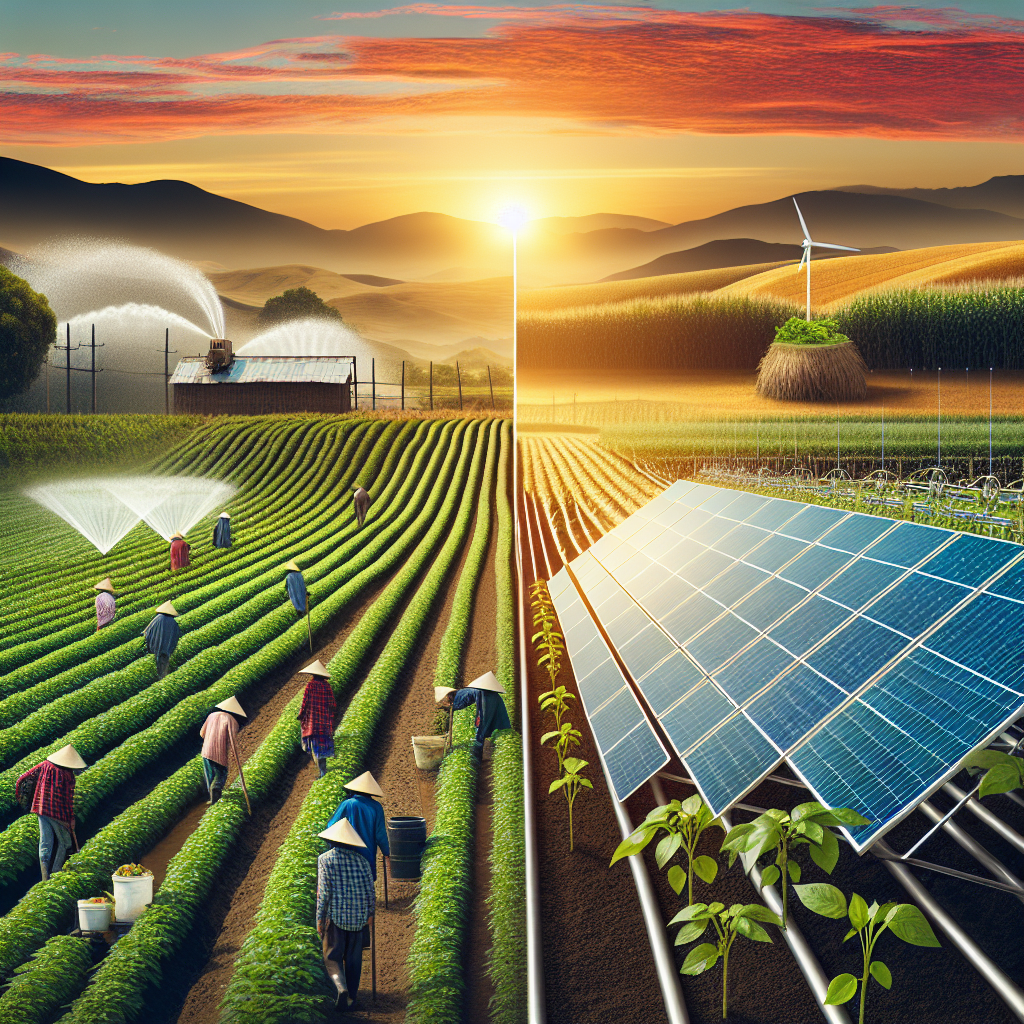
“Solar-Powered Irrigation Solutions …” from growingsolarmist.com and used with no modifications.
Key Takeaways
- Solar-powered sprinkler irrigation systems can reduce farm energy costs by 60-80% while providing energy independence during grid outages.
- Federal tax credits currently cover 30% of solar system installation costs, with additional USDA grants available for qualifying farms.
- The right solar setup depends on your specific irrigation needs, with most systems paying for themselves within 2-5 years.
- Modern sprinkler irrigation paired with solar power can improve water efficiency by up to 75% compared to flood irrigation methods.
- Growing Solar Mist provides turnkey solar irrigation solutions tailored specifically for agricultural applications with expert system sizing.
Farming has always been about balancing nature’s resources with economic viability. Today, as energy costs climb and climate concerns grow, solar-powered irrigation systems are transforming how we approach this balance. By harnessing the sun’s abundant energy to power sprinkler systems, farmers are finding a path to sustainability that actually improves their bottom line. Growing Solar Mist has been at the forefront of helping farmers make this transition, developing specialized solar solutions that integrate seamlessly with existing irrigation infrastructure.
The combination of solar power and modern sprinkler technology represents one of the most significant advances in farm efficiency in recent decades. While the initial investment requires careful consideration, the long-term benefits extend far beyond simple cost savings, creating resilient farm operations that can thrive even as conventional energy sources become increasingly expensive and unreliable.
Why is Solar Power Important to Farmers
Solar power addresses several critical challenges facing modern agriculture simultaneously. Beyond the obvious environmental benefits, solar energy provides farms with predictable energy costs for decades—something increasingly valuable in an era of volatile fuel prices. For remote operations far from reliable grid connections, solar can eliminate the need for diesel generators and their associated fuel deliveries, maintenance issues, and noise pollution.
- Energy independence reduces vulnerability to utility rate hikes and supply disruptions
- Consistent power supply ensures irrigation schedules remain unaffected by grid problems
- Clean energy production helps farms meet sustainability goals and certification requirements
- Solar installations can utilize unproductive land areas without interfering with crop production
- Modern systems can integrate with smart agriculture technologies for optimized water and energy use
The agricultural sector consumes massive amounts of electricity, particularly for irrigation. As farms seek to remain competitive while facing increasing pressure to reduce environmental impacts, solar power provides a unique solution that addresses both economic and ecological concerns simultaneously.
Skyrocketing Energy Costs Are Hurting Farm Profits
Agricultural operations have been hit particularly hard by rising energy costs in recent years. Many irrigation systems run on electricity with demanding power requirements, sometimes accounting for 30-50% of a farm’s total energy consumption. As utility rates continue their upward trend—with some regions seeing 15-25% increases in just the past two years—these costs are directly eroding farm profitability. For operations running multiple high-horsepower pumps throughout the growing season, even small rate increases can translate to thousands of dollars in additional annual expenses, creating significant pressure on already tight margins.
Solar Panels Cut Irrigation Expenses by 60-80%
The economics of solar power for irrigation have reached a tipping point, with most systems now capable of reducing irrigation energy expenses by 60-80%. This dramatic reduction comes from eliminating most or all grid electricity purchases for pump operation during the growing season. Modern photovoltaic panels have become remarkably efficient, with costs dropping more than 70% over the past decade while performance continues to improve. For a typical 10-horsepower irrigation pump operating six hours daily throughout a growing season, switching to solar can save $3,000-$5,000 annually in electricity costs. These savings accelerate for larger operations with multiple pumps or those in regions with higher than average electricity rates.
The return on investment timeline has shortened considerably, with most systems now paying for themselves within 2-5 years, while continuing to deliver savings for 25+ years with minimal maintenance. This creates a compelling financial case even before considering available incentives and tax benefits.
Weather-Proof Your Water Supply During Grid Outages
Power outages present a serious threat to crop health, particularly during critical growing periods when irrigation interruptions can cause significant damage. Solar-powered systems with battery storage provide critical resilience, continuing to operate when the grid fails. This independence is increasingly valuable as climate change leads to more frequent extreme weather events that can damage power infrastructure. During recent heatwaves across major agricultural regions, farms with solar-powered irrigation maintained consistent watering schedules while neighbors struggled with rolling blackouts and utility restrictions. This reliability can literally save entire crops during critical heat events when irrigation timing becomes essential.
Federal Tax Credits Cover 30% of System Costs
The economics of solar irrigation have been transformed by the federal Investment Tax Credit, which currently covers 30% of installation costs through 2032. This significant incentive dramatically improves return-on-investment calculations for farm operations. For a typical mid-sized system costing $50,000, this represents an immediate $15,000 reduction in net investment. When combined with accelerated depreciation benefits, farmers can recover nearly half their installation costs through tax advantages in the first year. Additional state-level incentives are available in many agricultural regions, further improving the financial picture for solar adoption.
Beyond federal incentives, many state agricultural departments and rural development agencies offer grants specifically targeting renewable energy for farming operations. The USDA’s Rural Energy for America Program (REAP) provides both grants and loan guarantees specifically designed to help agricultural producers implement renewable energy systems.
Carbon Footprint Reduction Opens Premium Markets
Beyond direct cost savings, solar-powered irrigation helps farms access premium markets increasingly focused on sustainability metrics. Major food companies and retailers are establishing carbon reduction requirements throughout their supply chains, creating both challenges and opportunities for producers. Farms with documented carbon footprint reductions from solar energy can qualify for sustainability certifications that open doors to higher-value markets. Some forward-thinking operations have successfully leveraged their solar investments into marketing advantages, commanding price premiums from environmentally conscious buyers and securing preferred supplier status with major food companies committed to reducing scope 3 emissions.
What is Sprinkler Irrigation
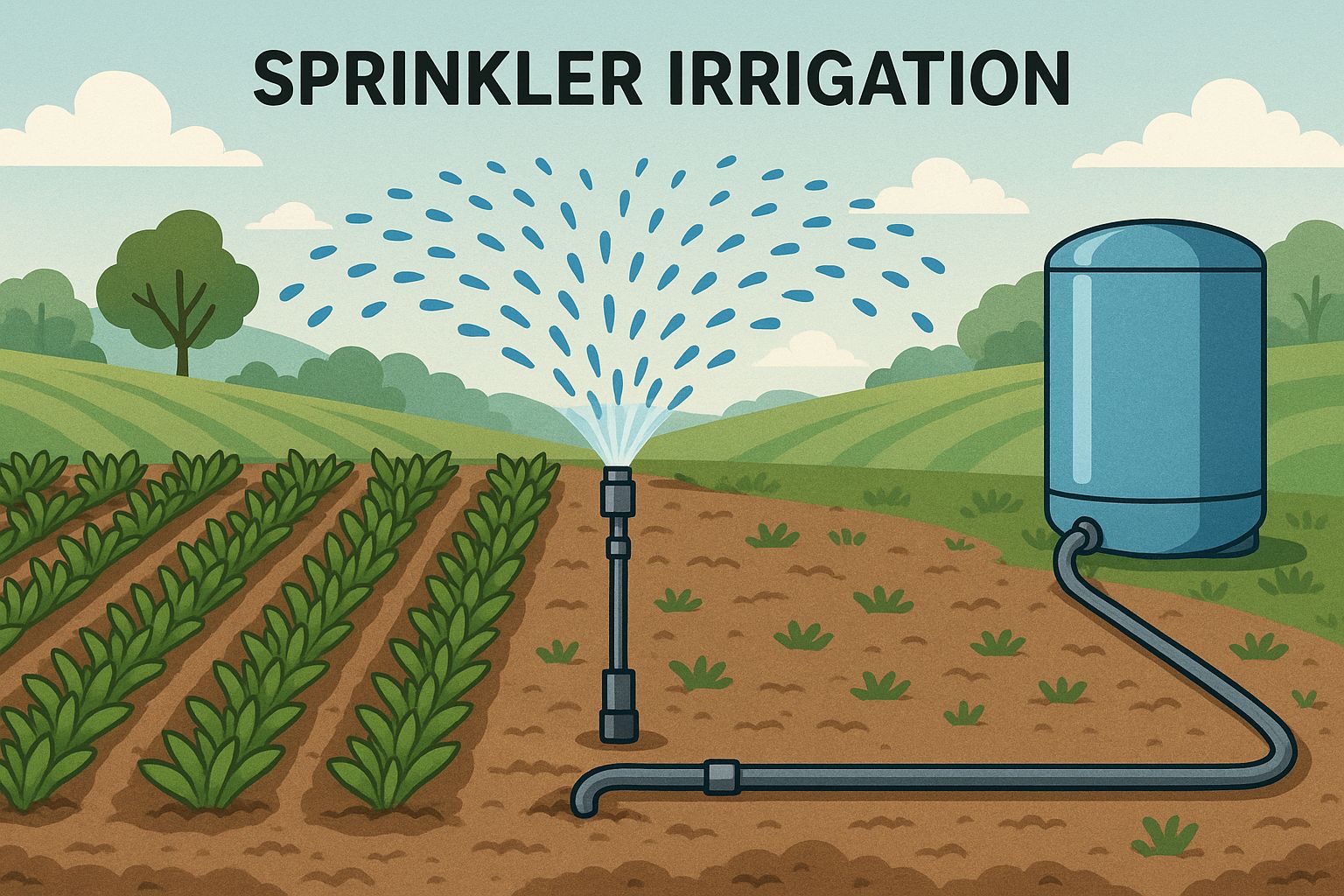
Sprinkler irrigation represents a major advancement over traditional flood irrigation methods, using mechanical devices to distribute water in patterns that mimic natural rainfall. These systems pressurize water and deliver it through pipes to sprinkler heads that break the flow into droplets, allowing for more precise application and significantly improved water efficiency. Modern sprinkler systems can be programmed to deliver specific amounts of water according to crop needs, soil conditions, and weather patterns, reducing waste while improving crop health.
The evolution of sprinkler technology has been dramatic, moving from simple impact sprinklers to sophisticated computer-controlled systems that can individually adjust application rates across different zones of a field. This precision has made sprinkler irrigation suitable for nearly all crop types and growing conditions, from orchards and vineyards to row crops and specialty produce.
While more water-efficient than flood irrigation, sprinkler systems do require energy to create the necessary water pressure—traditionally supplied by grid electricity or diesel pumps. This energy requirement creates both a challenge and an opportunity for solar integration, as the power needs are significant but generally align well with peak solar production hours.
“When we switched from flood to solar-powered sprinklers, we cut our water usage by 65% while increasing yield by 22%. The system paid for itself faster than expected because we hadn’t fully calculated the water savings in our initial projections.” — James Harmon, California Almond Grower
How Sprinkler Systems Deliver Water to Crops
Sprinkler irrigation systems operate by creating water pressure that forces water through distribution pipes to strategically placed sprinkler heads across a field. Unlike flood irrigation which simply inundates land with water, sprinklers break water into droplets that more closely mimic natural rainfall, improving absorption and reducing runoff. Water delivery begins at a pumping station that creates the necessary pressure (typically 30-70 PSI depending on the system type and field size). The pressurized water travels through a network of mainlines and lateral lines that may be permanently installed above or below ground, or temporarily set up as needed. At carefully calculated intervals, sprinkler heads or nozzles convert this pressurized flow into spray patterns designed to provide uniform coverage across the planted area, with computer controls often adjusting application rates based on soil moisture sensors and weather data. For an innovative approach, consider using solar panels for farm irrigation systems to enhance efficiency and sustainability.
4 Main Types of Agricultural Sprinkler Systems
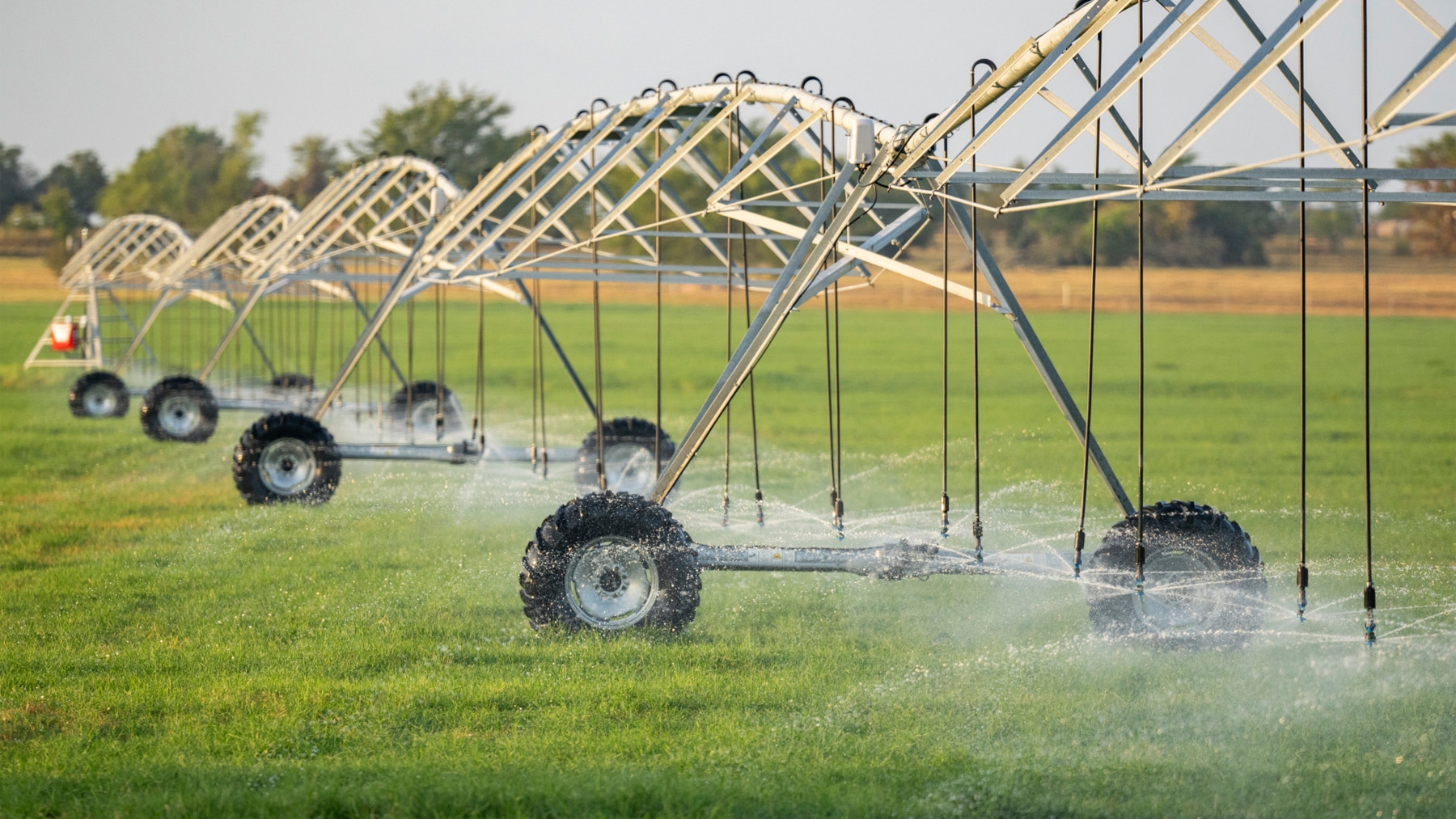
Center pivot systems represent the most recognizable form of sprinkler irrigation, with their long arms rotating around a central point to create the characteristic circular fields visible from the air. These systems can irrigate 120-500 acres with a single unit and are highly adaptable to solar power due to their consistent energy requirements. Fixed spray systems utilize permanent pipes with sprinkler heads positioned at regular intervals, ideal for smaller fields, orchards, and irregularly shaped areas where center pivots aren’t practical. Traveling gun systems feature a large sprinkler mounted on wheels or a cart that moves along a predetermined path, covering rectangular fields efficiently but requiring higher pressure and energy input than other options.
Micro-sprinkler systems deliver precise amounts of water at low pressure directly to the root zone of individual plants through small sprayers positioned near ground level. These systems are particularly valuable for tree crops, vineyards, and high-value specialty crops where water conservation is critical. Their lower pressure requirements make them especially well-suited for solar power, often needing 30-50% less energy than conventional sprinklers while improving water use efficiency by up to 90% compared to flood irrigation.
Energy Requirements That Drive Irrigation Costs
The energy consumption of sprinkler irrigation systems varies significantly based on system type, water source depth, required pressure, and field size. A typical center pivot system covering 120 acres might require a 75-100 horsepower pump drawing 50-75 kilowatts during operation—translating to substantial electricity costs during a growing season. Water source plays a crucial role in energy requirements, with deep wells often demanding twice the energy of surface water sources due to the additional lift needed. Required operating pressure also significantly impacts energy use, with high-pressure impact sprinklers consuming up to three times more energy than low-pressure systems like LEPA (Low Energy Precision Application) or drip irrigation.
For farmers facing high pumping costs, the transition to solar power becomes increasingly attractive as electricity rates rise above $0.10/kWh—a threshold already exceeded in many agricultural regions. The alignment between peak irrigation needs and peak solar production creates a natural synergy that maximizes the value of solar investments, especially when combined with more efficient, lower-pressure irrigation technologies.
Water Efficiency Compared to Traditional Methods
Modern sprinkler irrigation systems significantly outperform traditional flood irrigation in water efficiency, typically using 30-60% less water to achieve the same crop yields. This efficiency comes from more precise application patterns, reduced runoff, and lower evaporation rates—particularly important in water-stressed regions facing increasing restrictions on agricultural water use. By delivering water directly to crop root zones in controlled amounts, sprinkler systems minimize waste while improving crop health through more consistent soil moisture levels. The ability to precisely control application timing and amounts also allows farmers to implement deficit irrigation strategies during less critical growth stages, further improving water use efficiency without significantly impacting yields.
When powered by solar energy, these water savings translate to even greater benefits by reducing both water costs and the energy typically required to pump that water. For farms in regions with water allocations or restrictions, this improved efficiency can effectively expand irrigated acreage without requiring additional water rights—essentially creating “new” water through conservation. Learn more about solar-powered sprinkler irrigation systems and their benefits for farmers.
Combining Solar Power with Sprinkler Irrigation System
The integration of solar power with sprinkler irrigation creates a synergistic relationship that maximizes the benefits of both technologies. Solar energy production naturally aligns with irrigation needs—both reaching their peak during the sunniest, hottest parts of the growing season. This alignment means solar systems can often be sized smaller than might otherwise be required for year-round applications, improving economic returns. The modular nature of solar power also allows systems to be expanded incrementally as farm operations grow or as capital becomes available, providing flexibility not possible with conventional power sources.
Successful integration requires careful system design that considers both immediate needs and potential future expansion. The most effective implementations often incorporate some level of water storage alongside energy production, allowing for irrigation during early morning or evening hours when evaporation rates are lower. While the technical aspects may seem daunting, numerous agricultural solar specialists now offer turnkey solutions specifically designed for irrigation applications, handling everything from system sizing to installation and rebate processing.
Core Components Needed for a Solar Irrigation Setup
A complete solar irrigation system consists of several essential components working together to convert sunlight into the power needed for water delivery. Solar panels (typically mounted on ground structures) generate DC electricity when exposed to sunlight, with modern agricultural installations using high-efficiency monocrystalline panels rated between 400-550 watts each. This DC power passes through charge controllers that regulate voltage to prevent damage to batteries or pumps. For systems requiring AC power, inverters convert the DC electricity to grid-compatible AC power that can run standard irrigation pumps. The power then drives specially selected pumps (either surface-mounted or submersible) designed to operate efficiently with solar input, which may feature variable frequency drives (VFDs) that allow them to function even during periods of reduced sunlight.
Water storage components like tanks or reservoirs often complement solar irrigation, enabling water collection during peak solar hours for later use. Automated controls and monitoring systems optimize the entire operation, adjusting pump speeds based on available solar power and irrigation requirements while providing remote management capabilities through smartphone applications.
Sizing Your Solar Array to Match Pump Requirements
Accurate system sizing represents the most critical factor in successful solar irrigation implementation. Undersized systems will fail to meet water needs during critical periods, while oversized arrays waste capital that could be better deployed elsewhere on the farm. The sizing process begins with a detailed analysis of the irrigation pump’s power requirements, typically measured in horsepower or kilowatts. A general rule of thumb suggests installing approximately 1.5-2 kilowatts of solar capacity for each horsepower of pump requirement to account for efficiency losses and variable sun conditions. For more insights on the best power solutions, check out solar panels for farm irrigation systems. For example, a 10-horsepower (7.5kW) pump would require a 15-20kW solar array under typical conditions.
Local factors significantly influence this calculation, including solar insolation levels (how much sunlight your region receives), seasonal irrigation patterns, and temperature considerations. Professional solar designers use specialized software that incorporates local weather data, pump specifications, and daily water requirements to optimize system size. The goal is to balance upfront investment against water delivery capacity, with some farmers choosing to slightly oversize systems to accommodate future expansion or to generate excess electricity for other farm operations.
Battery Storage Options for Overnight Operation
Battery storage systems transform solar irrigation from a daylight-only operation to a 24-hour capable system, providing crucial flexibility for optimal farm management. Modern lithium iron phosphate (LiFePO4) batteries have become the standard for agricultural applications, offering superior cycle life (5,000+ cycles), higher depth of discharge capability, and better temperature tolerance compared to traditional lead-acid options. A properly sized battery bank allows farmers to pump during early morning or evening hours when evaporation rates are lower, improving water use efficiency while avoiding peak solar generation times that might be better used for selling excess electricity back to the grid in net-metering regions.
While batteries add significant cost to solar irrigation systems—typically $400-800 per kilowatt-hour of storage capacity—their prices continue to fall rapidly as manufacturing scales up. Many farmers find that even modest battery capacity (enough for 2-3 hours of pumping operation) provides substantial benefits by bridging cloudy periods and enabling more flexible irrigation scheduling. For critical applications where irrigation cannot be interrupted, hybrid systems combining solar with minimal battery storage and backup generators offer the most reliable solution while still capturing significant fuel savings.
Direct Drive vs. Battery-Based Systems: Which Works Better?
The choice between direct-drive and battery-based solar irrigation systems depends largely on specific farm requirements and water management strategies. Direct-drive systems connect solar panels directly to DC pumps, operating only when sufficient sunlight is available but eliminating the cost and complexity of batteries and inverters. These simpler systems cost 30-40% less initially and require minimal maintenance, making them ideal for operations that can schedule irrigation during daylight hours and where consistent daily watering is sufficient. Battery-based systems, while more expensive upfront, provide irrigation flexibility independent of immediate sunlight conditions, allowing for precise timing of water application based on crop needs rather than solar availability. Many successful implementations take a hybrid approach, using direct-drive for the bulk of water movement during sunny periods while incorporating modest battery storage to extend operating hours into early morning or evening when evaporation losses are reduced.
Best Placement for Maximum Solar Gain
Optimal solar array placement dramatically impacts system performance, with poorly positioned panels potentially reducing energy production by 20-30% compared to ideal installations. The primary consideration is orientation, with fixed arrays in the Northern Hemisphere facing true south (not magnetic south) and tilted at an angle approximately equal to the site’s latitude for best year-round performance. Agricultural installations often benefit from a slightly lower tilt angle (latitude minus 10-15 degrees) to maximize summer production during peak irrigation seasons. Proper spacing between rows of panels prevents self-shading while still making efficient use of available land, with most ground-mounted systems requiring approximately 2-3 acres per megawatt of capacity.
Site selection should prioritize locations free from shading by trees, buildings, or other obstructions, particularly during peak production hours (9am-3pm). Many farms utilize otherwise unproductive land areas for solar placement, including field margins, drainage areas, or land with poor soil quality. Elevated mounting systems can allow for dual use of land, with some crops or grazing animals utilizing the space beneath panels—a growing practice known as agrivoltaics that maximizes land productivity.
For larger installations, single-axis tracking systems that follow the sun’s daily east-to-west movement can increase energy production by 25-35% compared to fixed systems, though they add complexity and maintenance requirements. This improved production profile often aligns better with irrigation needs by extending useful pumping hours earlier and later in the day.
- Prioritize south-facing orientation (Northern Hemisphere) without obstructions
- Calculate optimal tilt based on latitude and seasonal irrigation requirements
- Consider tracking systems for installations over 25kW to maximize production
- Evaluate land dual-use potential for agrivoltaic approaches
- Position arrays near existing electrical infrastructure to minimize connection costs
- Ensure adequate access for maintenance equipment and panel cleaning
The Benefits for Powering a Sprinkler Irrigation Systems with Solar Panels
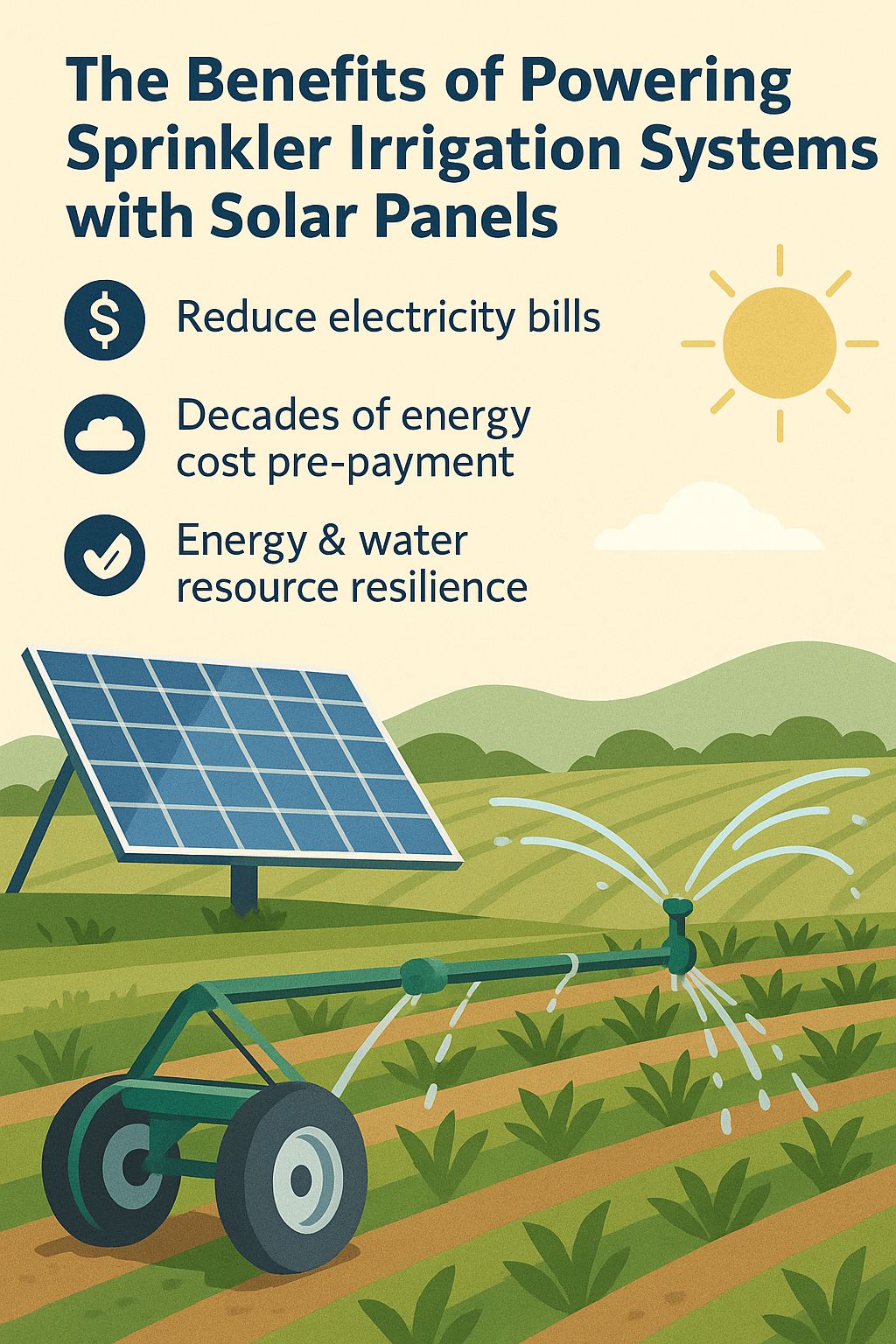
The convergence of solar power and sprinkler irrigation creates multiple layers of benefits that extend well beyond simple energy cost savings. When implemented correctly, these systems transform a farm’s relationship with both energy and water resources, creating resilience against multiple challenges facing modern agriculture.
The most immediate benefit is financial—eliminating or drastically reducing electricity bills associated with irrigation pumping. For farms with significant water needs, this often represents the single largest energy expense. A 30-horsepower pump operating 8 hours daily throughout a 120-day growing season can consume over $15,000 in electricity at average utility rates. Converting this same system to solar power effectively pre-pays decades of energy costs with the initial investment.
Environmental benefits create both immediate advantages and long-term sustainability. Solar-powered systems eliminate the carbon emissions associated with grid electricity or diesel pumps, reducing a farm’s carbon footprint while potentially qualifying products for premium markets focused on sustainability. The precise control possible with solar-powered sprinkler systems also minimizes water waste through optimized application, addressing increasing concerns about agricultural water usage.
|
Benefit Category |
Specific Advantages |
Impact on Farm Operations |
|---|---|---|
|
Financial |
60-80% reduction in energy costs, tax incentives, increased property value |
Improved profit margins, predictable energy costs, hedge against utility rate increases |
|
Operational |
Energy independence, reduced downtime, flexible irrigation scheduling |
Consistent crop production, improved risk management, better drought resilience |
|
Environmental |
Carbon reduction, decreased water usage, reduced chemical runoff |
Access to premium markets, compliance with regulations, improved sustainability certification |
|
Agronomic |
Optimized irrigation timing, consistent water delivery, improved soil health |
Higher yields, better crop quality, reduced disease pressure |
Operational reliability represents another significant advantage, particularly in regions with unstable grid infrastructure. Solar irrigation systems continue functioning during power outages that would otherwise shut down conventional electric pumps, potentially saving crops during critical growth stages when irrigation interruptions could cause permanent damage. This independence from grid reliability becomes increasingly valuable as climate change increases the frequency of extreme weather events that can damage utility infrastructure.
Are There Any down side of using Solar Panels to Power a Sprinkler System
Despite the numerous benefits, solar-powered irrigation systems do present several challenges that farmers should carefully consider before investment. The most significant hurdle remains the upfront capital cost, which typically ranges from $2,000-$3,000 per kilowatt of installed capacity. For a medium-sized farm requiring a 20kW system, this represents a $40,000-$60,000 initial investment before incentives—a substantial commitment even with favorable long-term economics.
Weather dependency creates another limitation, as system performance varies with sunlight availability. Direct-drive systems without battery storage can only operate during daylight hours with sufficient solar radiation, potentially limiting irrigation flexibility compared to grid-connected systems that can operate 24/7. This constraint requires more careful irrigation scheduling and may necessitate larger water storage capacity to compensate for periods of limited operation. For more information, explore solar panels for farm irrigation systems to find the best power solutions.
Space requirements can present challenges for farms with limited land availability or high land values. Ground-mounted solar arrays typically require approximately 100-150 square feet per kilowatt of capacity, meaning a 20kW system needs roughly 2,000-3,000 square feet of land area. While this represents a small fraction of most farms, the panels must be situated in unshaded locations that might otherwise be used for crop production. For more insights on maximizing solar energy usage, explore various solar power applications for farms.
Technical complexity introduces another consideration, as solar irrigation systems involve components and expertise that may be unfamiliar to many farmers. Proper maintenance and troubleshooting require either developing new skills or establishing relationships with qualified service providers who understand both agricultural requirements and solar technology. This complexity can be particularly challenging in remote areas where technical support may be limited.
Real-World Farm Success Stories
California Vineyard Cuts Irrigation Costs by 75%
Oakridge Vineyards in Sonoma County faced skyrocketing electricity rates that threatened the viability of their 120-acre operation. After analyzing their irrigation patterns, they installed a 48kW solar array with 10kWh of battery storage to power their drip irrigation system and small processing facility. The $135,000 system qualified for a 30% federal tax credit and accelerated depreciation, reducing the effective cost to approximately $80,000. Within the first year, their electricity bills dropped from $26,000 annually to just over $6,000—a 77% reduction that put them on track for complete payback within 4 years. The battery component allowed for strategic irrigation during early morning hours when evaporation losses are minimized, improving water efficiency by an additional 15% compared to their previous daytime watering schedule.
Kansas Wheat Farm’s 2-Year Payback Period
The Peterson family farm in western Kansas achieved an extraordinary two-year payback on their solar irrigation investment through a combination of favorable incentives and strategic implementation. Their 1,200-acre wheat operation relied on center pivot irrigation powered by diesel generators due to the prohibitive cost of extending utility lines to their remote location. By installing a 65kW solar array to power their three irrigation pumps, they eliminated diesel fuel costs averaging $32,000 annually while qualifying for USDA REAP grant funding that covered 25% of the installation cost. The system’s modular design allowed them to expand incrementally, starting with their most-used pivot and adding capacity as capital became available. Within five years, they had completely eliminated fossil fuel usage for irrigation while increasing total irrigated acreage by 15% using the same water allocation.
Georgia Peach Orchard Weathering Power Outages
Southern Ridge Orchards in central Georgia installed their solar irrigation system primarily as a response to increasingly frequent summer power outages that threatened their 85-acre peach operation. Severe thunderstorms regularly disabled grid power during critical ripening periods when irrigation timing directly impacts fruit quality and yield. Their 36kW system with 30kWh of battery storage provides complete energy independence for their micro-sprinkler irrigation network, allowing continuous operation regardless of grid conditions. During a particularly severe week-long outage following a major storm in 2022, neighboring orchards suffered significant crop losses while Southern Ridge maintained optimal soil moisture levels throughout. Beyond the risk mitigation benefits, the system reduces annual operating costs by approximately $14,000 and qualifies their operation for preferred supplier status with a premium organic grocery chain that prioritizes farms using renewable energy.
Small-Scale Vegetable Farm’s DIY Installation
Green Thumb Organics, a 12-acre diversified vegetable operation in Vermont, demonstrates how even small farms can benefit from solar irrigation. Owner Maria Sandoval, with a background in electrical engineering, designed and installed a 10kW system herself with weekend help from family members, significantly reducing installation costs. The $22,000 system powers both the farm’s drip irrigation and small walk-in cooler, qualifying for state agricultural grants that covered 40% of costs in addition to federal incentives. By handling the installation personally and sourcing components directly, Sandoval estimates she saved approximately $15,000 compared to turnkey installation quotes. The system’s flexible design allows for seasonal adjustments in panel angle, optimizing winter production for the farm’s greenhouse operation during low-sun months while maximizing summer output for irrigation needs.
Cost Breakdown and Return on Investment
Initial Investment Range for Different Farm Sizes
Solar irrigation system costs vary significantly based on farm size, water requirements, and system complexity. Small operations with modest water needs (5-10 acres) typically invest between $15,000-$40,000 for complete systems capable of powering 3-10 horsepower pumps. Medium-sized farms (10-100 acres) generally require investments ranging from $40,000-$120,000 for systems running 10-30 horsepower pumps, often with some battery storage capacity. Large-scale operations with substantial water requirements may invest $100,000-$500,000+ in comprehensive systems that power multiple high-capacity pumps across hundreds of acres, frequently incorporating advanced monitoring and automation capabilities.
Component costs follow typical distributions with solar panels representing 30-40% of system cost, mounting hardware 10-15%, inverters and electrical equipment 15-20%, batteries (if included) 15-25%, and installation labor 20-30%. Economies of scale become significant above 25kW, with per-watt costs typically decreasing 15-20% for larger systems due to reduced relative costs for design, permitting, and installation labor. Geographic location also influences costs, with remote farms facing higher transportation and labor expenses but often qualifying for additional rural development incentives.
Available USDA Grants and Federal Tax Incentives
The economics of solar irrigation have been transformed by an array of financial incentives specifically targeting agricultural applications. The federal Investment Tax Credit (ITC) remains the most significant, currently offering a 30% credit against the total system cost through 2032. This credit directly reduces tax liability dollar-for-dollar, effectively providing an immediate 30% discount for tax-paying farm operations. The USDA’s Rural Energy for America Program (REAP) offers both grants covering up to 25% of project costs and loan guarantees that facilitate financing for the remaining investment, with special priority for small and historically underserved producers.
Many states supplement these federal programs with additional agricultural solar incentives, including property tax exemptions for renewable energy equipment, sales tax exemptions on system components, and performance-based incentives that pay for each kilowatt-hour produced. Some utility companies offer special agricultural rates or rebates specifically for irrigation efficiency measures, which can be combined with solar incentives. For farms in particularly remote locations, the USDA’s High Energy Cost Grant Program provides additional funding specifically targeting areas with energy costs significantly above national averages, making solar particularly attractive for operations far from established grid infrastructure. Learn more about the benefits of solar panels for farmers.
Calculating Your Break-Even Point with Energy Savings
The financial return timeline for solar irrigation depends on several key variables that farmers should carefully evaluate for their specific operation. Current electricity costs establish the baseline value of energy displaced by solar production, with higher rates accelerating payback periods. A farm paying $0.18/kWh will reach break-even roughly twice as quickly as one paying $0.09/kWh, assuming identical systems and usage patterns. Annual irrigation energy consumption determines total potential savings, calculated by multiplying pump horsepower by hours of operation and conversion factors (approximately 0.746 kWh per horsepower-hour) to establish baseline energy usage. For more insights, explore the economic benefits of solar panels for farmers.
After accounting for available tax credits, grants, and depreciation benefits, most properly designed systems achieve break-even between years 3-7, with continued savings for the remaining 20+ years of system life. Farms in high-cost electricity regions or those replacing diesel pumps often see payback periods under 5 years, while those in lower-cost regions might extend to 7-10 years. This calculation improves further when factoring in the steadily rising cost of conventional energy—most utility rates increase 2-5% annually, effectively accelerating the payback timeline compared to static calculations. When water savings from improved irrigation efficiency are monetized, the economic case becomes even more compelling, particularly in regions with high water costs or restricted allocations.
Maintenance Costs Over the 25-Year System Lifespan
Solar irrigation systems offer remarkably low lifetime maintenance costs compared to conventional power sources, with most components designed for decades of reliable operation. Solar panels themselves typically carry 25-year manufacturer warranties guaranteeing at least 80% of original production capacity throughout this period, with actual field performance often exceeding these conservative ratings. Modern systems typically budget approximately 0.5% of initial system cost annually for routine maintenance, primarily covering periodic panel cleaning, electrical inspections, and minor repairs.
The most significant maintenance consideration involves battery replacement for systems incorporating energy storage. Lithium iron phosphate batteries, now standard for agricultural applications, typically require replacement after 10-15 years depending on usage patterns and depth of discharge cycles. This represents approximately 15-25% of the original system cost, a planned expense that should be incorporated into long-term financial projections. Inverters and charge controllers generally require replacement once during the system’s 25-year lifespan, typically between years 10-15, representing approximately 10-15% of original system cost. Pump maintenance requirements remain unchanged compared to conventionally powered irrigation, though some farmers report extended pump life due to the gentler startup characteristics of solar-powered variable frequency drives.

“Solar-Powered Sprinkler Irrigation …” from growingsolarmist.com and used with no modifications.
Conclusion
Solar-powered sprinkler irrigation represents one of the most practical and economically viable sustainability improvements available to modern farming operations. By aligning renewable energy production with essential water delivery, these systems simultaneously address multiple challenges facing agriculture—rising energy costs, water conservation requirements, carbon footprint concerns, and operational resilience. The technology has matured beyond experimental status to become a mainstream solution with proven performance across diverse agricultural settings and climate zones. For more insights on how solar power is transforming agriculture, explore these practical applications of solar power on farms.
The economics of solar irrigation have reached a tipping point where the financial case is compelling even without considering the substantial environmental benefits. With appropriate system design and available incentives, most farms can expect complete investment recovery within 3-7 years, followed by decades of essentially free energy production. This long-term perspective transforms irrigation energy from an unpredictable variable expense to a fixed capital investment with known returns—a significant advantage for agricultural planning and risk management.
Review key points of the Article
Solar-powered sprinkler irrigation combines two mature technologies to create farm systems greater than the sum of their parts. The alignment between peak solar production and peak irrigation needs creates natural synergy, while declining equipment costs and substantial incentives have dramatically improved financial returns. Properly designed systems reduce irrigation energy costs by 60-80% while increasing operational reliability and reducing environmental impact. The modular nature of solar technology allows for staged implementation that matches capital availability and irrigation priorities, making the transition accessible to farms of all sizes. Learn more about solar-powered sprinkler irrigation systems.
The technology continues to evolve, with improving battery storage options extending operation hours and enhancing system flexibility. Advanced monitoring systems now provide unprecedented visibility into both energy production and water application, allowing for optimization strategies that simultaneously improve crop outcomes and resource efficiency. As climate change increases both energy costs and water constraints, solar irrigation positions farms to thrive under challenging conditions while building resilience against future disruptions.
Is Using Solar Panels to power a Sprinkler Irrigation System a Good Investment for a Farmer
For most commercial farming operations with significant irrigation requirements, solar-powered sprinkler systems now represent one of the safest and most predictable agricultural investments available. The combination of mature technology, substantial incentives, rising conventional energy costs, and extended system lifespans creates compelling economics that few other farm improvements can match. While the specific return timeline varies based on local conditions, utility rates, and water requirements, the fundamental equation has shifted decisively in favor of solar adoption. Farmers considering irrigation system upgrades or facing significant energy costs should prioritize solar evaluation as part of their long-term sustainability and profitability strategy.
Frequently Asked Questions
As solar irrigation systems become increasingly common in agricultural settings, certain questions consistently arise from farmers evaluating this technology for their operations. The following responses address the most common concerns based on real-world implementation experience across diverse farming regions.
How many solar panels do I need to run my irrigation pump?
The number of solar panels required depends primarily on your pump’s horsepower rating, daily operating hours, and local solar conditions. As a general guideline, multiply your pump’s horsepower by 1,000 watts to determine approximate solar capacity needed for direct-drive systems (e.g., a 10HP pump requires roughly 10kW of solar capacity). For battery-based systems that operate outside peak sun hours, increase this by 25-50% to account for storage losses and ensure adequate charging capacity. Modern 400-500 watt panels mean a 10kW system typically requires 20-25 panels covering approximately 400-500 square feet. For precise sizing, professional designers analyze pump specifications, water requirements, seasonal variations, and site-specific solar radiation data to optimize the system for your particular needs.
Will my solar irrigation system work during cloudy weather?
Solar panels continue producing electricity during cloudy conditions, though at reduced capacity—typically generating 10-30% of their rated output depending on cloud density. Direct-drive systems without batteries will operate pumps at correspondingly reduced flow rates during these periods, which may extend irrigation cycles but still provide functional water delivery. For farms requiring consistent water pressure regardless of weather, battery storage systems provide the necessary buffer, charging during sunny periods to maintain full operation during cloud cover. Many agricultural systems incorporate hybrid designs with minimal grid connection or generator backup that activate only during extended low-sun periods, providing reliability while still capturing 80-90% of potential solar savings. Weather forecasting integration with modern control systems can also optimize irrigation scheduling around predicted solar availability, maximizing efficiency even with variable conditions. For more information on solar irrigation solutions, check out our guide on solar panels for farm irrigation systems.
Can I install a solar irrigation system myself or do I need professionals?
While technically savvy farmers with electrical experience can handle certain aspects of solar installation, professional design and at least partial professional installation is strongly recommended for irrigation systems. Critical system sizing calculations, equipment compatibility verification, and safety requirements demand specialized knowledge that directly impacts both performance and safety. Most successful DIY approaches involve professional system design and permitting, followed by farmer installation of mechanical components like mounting structures and panel placement, with final electrical connections completed by licensed professionals. This hybrid approach can reduce installation costs 15-30% while ensuring the system meets safety codes and performs as expected. Additionally, professional installation typically preserves full warranty coverage and facilitates easier approval for incentive programs that may require certified installation.
How long will a solar-powered irrigation system last on my farm?
Modern agricultural solar systems are engineered for exceptional longevity, with most components designed for 25+ years of operation. Solar panels carry 25-year manufacturer warranties guaranteeing at least 80% of original production capacity throughout this period, with actual field performance often showing only 0.5% annual degradation. Mounting structures, typically aluminum or galvanized steel, routinely exceed 30-year lifespans even in harsh agricultural environments. System components with shorter lifespans include inverters (10-15 years), charge controllers (10-15 years), and batteries (10-15 years for modern lithium iron phosphate), all of which represent planned replacement costs that should be incorporated into long-term financial projections. Proper maintenance significantly extends component life, with many early agricultural solar installations from the 2000s still operating at 85-90% of original capacity, demonstrating the technology’s exceptional durability compared to conventional power equipment.
What maintenance is required for solar panels in dusty farm environments?
Agricultural environments present unique maintenance challenges for solar equipment due to dust, pollen, and airborne particulates from field operations. Regular panel cleaning becomes the most critical maintenance task, with frequency depending on local conditions—typically ranging from monthly in extremely dusty regions to quarterly in less challenging environments. Simple cleaning using soft brushes and water (without harsh chemicals) typically restores full production capacity within minutes. Beyond cleaning, annual inspection of electrical connections, mounting hardware, and ground equipment by qualified personnel identifies potential issues before they impact performance. Modern monitoring systems provide real-time production data that quickly highlights any unusual performance decreases, allowing for targeted maintenance rather than fixed schedules. With these basic practices, most agricultural solar systems maintain peak performance with just 8-12 hours of annual maintenance—significantly less than conventional power sources requiring fuel, filter changes, and frequent servicing.
Ready to discover how solar-powered irrigation can transform your farm’s efficiency and sustainability? Growing Solar Mist specializes in agricultural solar solutions tailored to the unique needs of farms of all sizes.







Leave a Reply