

Key Takeaways
Sprinkler irrigation mimics natural rainfall, providing water evenly across fields.
There are several types of sprinkler systems, including cable tow, center pivot, linear move, traveling gun, and micro-sprinkler systems.
Solar panels can be effectively integrated with sprinkler systems, offering sustainable energy solutions.
Sprinkler systems are versatile and can be used for various crops and terrains.
Initial costs can be high, but long-term savings and environmental benefits are significant.
What Is Sprinkler Irrigation?
Basic Definition
Sprinkler irrigation is a method of applying water to crops in a manner that mimics natural rainfall. This system uses pressurized water distributed through a network of pipes and sprinkler heads, ensuring even coverage across the field.
How Sprinkler Irrigation Works
The system operates by pushing water through pipes using a pump. The water is then expelled through sprinkler heads, which can be adjusted to control the spray pattern and water flow. This method is ideal for providing consistent moisture to crops, especially in areas with irregular rainfall.
Advantages Over Traditional Methods
Sprinkler irrigation offers several benefits over traditional methods like flood irrigation. It conserves water by targeting specific areas, reduces soil erosion, and can be automated for efficiency. Additionally, it is suitable for various soil types and topographies, making it a versatile choice for many farmers.
The History of the Sprinkler
Early Innovations
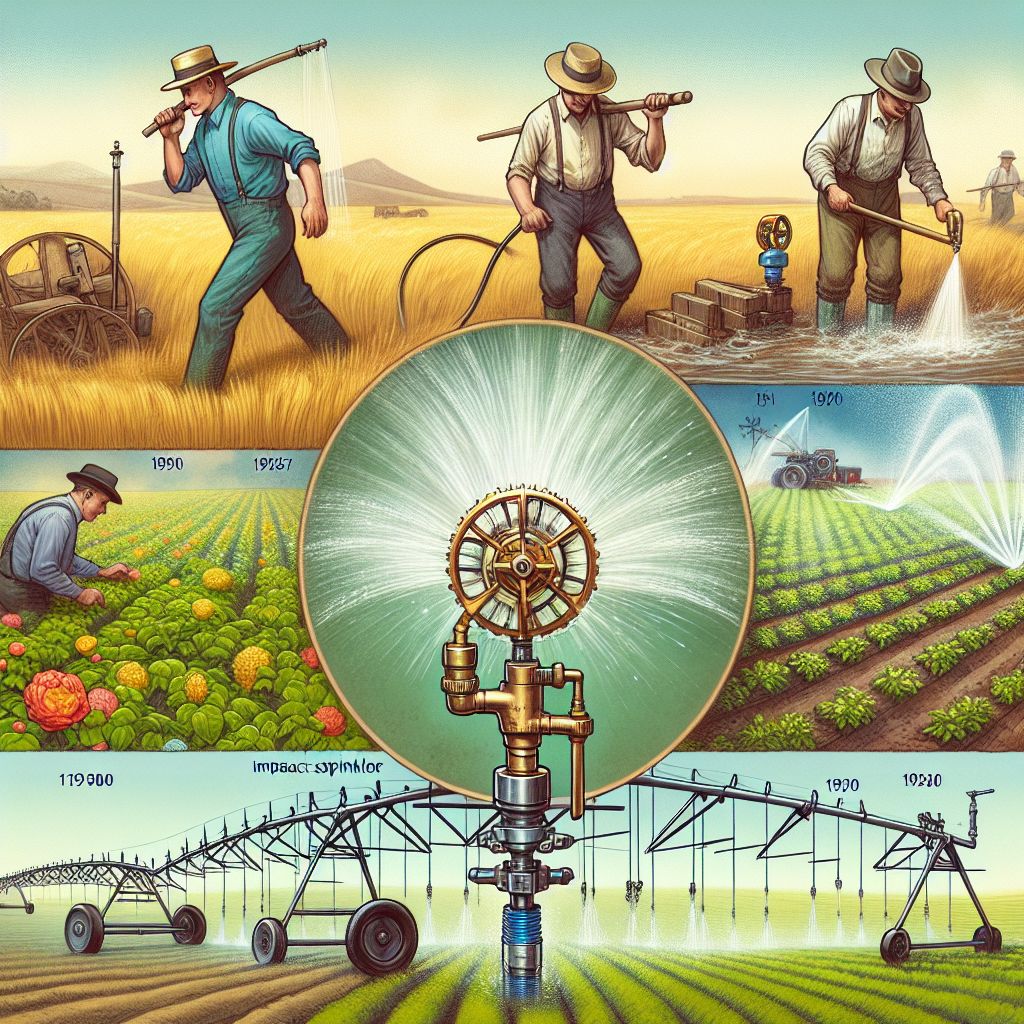
The concept of sprinkler irrigation dates back to the early 20th century when farmers sought more efficient ways to water their crops. Initial designs were simple and manually operated, but they laid the foundation for modern systems.
The Impact Sprinkler Head
One of the most significant advancements came with the invention of the impact sprinkler head in the 1930s. This device allowed for a more controlled and even distribution of water, revolutionizing the way farmers irrigated their fields.
Modern Advances in Sprinkler Technology
Today, sprinkler systems have evolved to include advanced features like automated controls, adjustable spray patterns, and energy-efficient pumps. These innovations have made sprinkler irrigation more accessible and effective for farmers worldwide.

Types of Sprinkler Irrigation Systems
There are several types of sprinkler irrigation systems, each with its own set of advantages and applications. Understanding these systems can help farmers choose the best option for their specific needs.
Cable Tow Systems
Cable tow systems are one of the earliest types of automated sprinkler systems. They consist of a sprinkler mounted on a movable frame that is pulled across the field by a cable. This system is suitable for large, rectangular fields and can cover a significant area with minimal labor.
“Cable tow systems offer a cost-effective solution for large-scale irrigation, reducing the need for multiple stationary sprinklers.”
Center Pivot Systems
Center pivot systems are widely used in large agricultural operations. These systems consist of a long, rotating arm anchored at a central point. The arm moves in a circular pattern, covering a large area efficiently. Center pivot systems are ideal for fields with uniform shapes and sizes.
Linear Move Systems
Linear move systems, also known as lateral move systems, are similar to center pivot systems but move in a straight line rather than a circular pattern. This makes them suitable for rectangular fields and allows for even water distribution across the entire area.
Traveling Gun Systems
Traveling gun systems use a high-pressure sprinkler mounted on a wheeled cart that moves across the field. These systems are versatile and can be used in various field shapes and sizes. They are particularly useful for areas with irregular terrain or obstacles.
Micro-Sprinkler Systems
Micro-sprinkler systems are designed for precision irrigation. They use low-pressure sprinklers that deliver water directly to the root zone of plants. This method conserves water and reduces evaporation, making it ideal for orchards, vineyards, and other high-value crops. Micro-sprinklers are typically classified together with drip irrigation because the system for delivery is the same.

The Pros of a Sprinkler Irrigation
Sprinkler irrigation systems offer numerous benefits that make them an attractive choice for many farmers.
Flexibility for Various Crops
One of the primary advantages of sprinkler irrigation is its flexibility. These systems can be adjusted to suit different crops, soil types, and field conditions. Whether you are growing vegetables, grains, or fruits, a well-designed sprinkler system can meet your irrigation needs.
Versatility in Application
Sprinkler irrigation systems are incredibly versatile. They can be used in various agricultural settings, from small gardens to large farms. This adaptability makes them suitable for different crops, including vegetables, grains, and fruits. Moreover, these systems can be tailored to fit unique field shapes and sizes, ensuring efficient water distribution.
The Cons of Sprinkler Irrigation
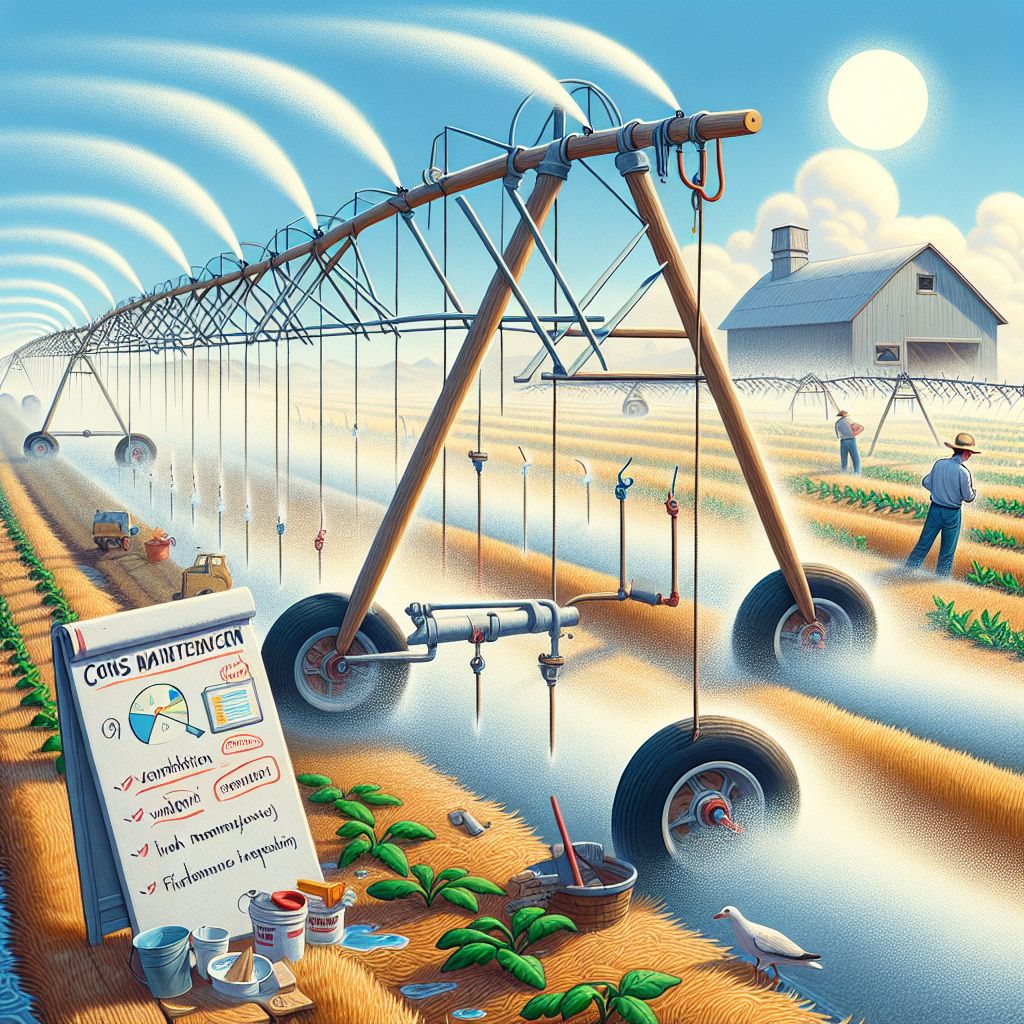
High initial investment
Regular maintenance requirements
Potential for water waste in windy conditions
Despite their many advantages, sprinkler irrigation systems do have some drawbacks. Understanding these can help farmers make informed decisions about their irrigation choices, especially when considering performance in bad weather.
Initial Cost and Maintenance
One of the main disadvantages of sprinkler irrigation systems is the high initial cost. Setting up a comprehensive system can be expensive, especially when compared to simpler methods like flood irrigation. Besides that, regular maintenance is necessary to keep the system running efficiently. This includes checking for leaks, ensuring sprinkler heads are functioning correctly, and servicing the pump.
“While the initial investment can be significant, solar irrigation can lead to substantial cost savings and energy independence.”
Potential for Water Waste
Sprinkler irrigation can lead to water waste, particularly in windy conditions. Wind can cause water to drift away from the target area, resulting in uneven distribution and higher water usage. To mitigate this, farmers can use windbreaks or choose low-pressure sprinklers designed to minimize drift.
Limitations in Extremely Windy Areas
Sprinkler systems may not be the best choice for regions with consistently high winds. The effectiveness of the irrigation can be significantly reduced, leading to water inefficiency and potential crop damage. In such cases, alternative irrigation methods like drip irrigation might be more suitable.

Components Required in Spray Irrigation System
A well-functioning sprinkler irrigation system requires several key components. Each part plays a crucial role in ensuring efficient water delivery to the crops.
Water Source
The first essential component is a reliable water source. This could be a well, a river, a reservoir, or even collected rainwater. The quality and availability of water will directly impact the effectiveness of the irrigation system.
Wells: Provide a consistent water supply but require energy to pump water.
Rivers: Offer abundant water but may need filtration and treatment.
Reservoirs: Store large quantities of water but require significant space and investment.
Rainwater: Sustainable option but dependent on weather conditions.
Pumping System
The pumping system is responsible for moving water from the source to the sprinkler heads. It must be powerful enough to maintain adequate pressure throughout the system. Pumps can be powered by electricity, diesel, or solar energy, each with its own advantages and disadvantages.
Piping and Nozzles
The network of pipes and nozzles is critical for distributing water evenly across the field. The pipes must be durable and resistant to corrosion, while the nozzles should be adjustable to control the spray pattern and water flow.
Polyethylene pipes: Flexible and resistant to chemicals.
PVC pipes: Strong and durable but less flexible.
Brass nozzles: Durable and resistant to clogging.
Plastic nozzles: Cost-effective and easy to replace.
Pressure Regulators
Pressure regulators ensure that water is delivered at a consistent pressure, preventing damage to the system and ensuring even water distribution. They are especially important in systems with varying elevations or long pipe runs. For more information on how solar panels can assist in farm operations, check out how solar panels help farm operations.
Timers and Controllers
Timers and controllers automate the irrigation process, allowing farmers to set specific schedules and durations for watering. This not only saves time but also ensures that crops receive the right amount of water at the right times.

Solar-Powered Sprinkler Irrigation Systems
Integrating solar power with sprinkler irrigation systems offers a sustainable and cost-effective solution for modern farming. Solar panels provide the necessary energy to operate the pumps, reducing reliance on traditional energy sources and lowering operational costs.
How Solar Panels Work
Solar panels convert sunlight into electricity through photovoltaic cells. This electricity can then be used to power the irrigation pump, ensuring a consistent and renewable energy supply. Solar panels are particularly beneficial in remote areas where access to the electrical grid is limited. For more information on solar irrigation systems, check out this resource.
Solar Panels a Farmer can Use with a Sprinkler Irrigation System
There are several types of solar panels that farmers can choose from, each with its own set of advantages. Learn more about the best solar irrigation systems and their benefits for farms.
Monocrystalline Solar Panels: High Efficiency in Limited Spaces
Monocrystalline solar panels are known for their high efficiency and long lifespan. They are made from a single crystal structure, which allows them to convert sunlight into electricity more effectively. These panels are ideal for farms with limited space but high energy needs.
Polycrystalline Solar Panels: Cost-Effective Energy Solution
Polycrystalline solar panels are made from multiple silicon crystals, making them less efficient than monocrystalline panels but more affordable. They are a cost-effective solution for farmers looking to balance efficiency and budget.
Lower initial cost
Moderate efficiency
Suitable for larger installations
Thin-Film Solar Panels: Flexibility and Versatility
Thin-film solar panels are lightweight and flexible, making them easy to install on various surfaces. They are less efficient than crystalline panels but can be a good option for farms with ample space and lower energy requirements. Learn more about solar irrigation systems and how they can benefit your farm.
Here’s a table describing the three types of solar panels and their advantages and disadvantages for powering an irrigation system on a farm:
|
Solar Panel Type |
Advantages |
Disadvantages |
|---|---|---|
|
Monocrystalline | – Highest efficiency (17-22%) 2, 3 |
– Most expensive option 2, 3 |
|
Polycrystalline |
– More affordable than monocrystalline 1, 3 |
– Lower efficiency compared to monocrystalline 3 |
|
Thin-Film |
– Cheapest option 1, 4 |
– Lowest efficiency (10-13%) 1, 4 – Shortest lifespan 4 – Requires the most space 1, 4 – Degrades faster than crystalline panels 1, |
Integrating Solar Panels with Sprinkler Systems
To integrate solar panels with a sprinkler irrigation system, follow these steps:
First, understand the different types of sprinkler irrigation systems available. This will help you choose the best system that can be powered by solar panels.
Select the appropriate type and number of solar panels based on your energy needs.
Install the panels in a location with maximum sun exposure.
Connect the panels to a solar charge controller to regulate the energy flow.
Attach the controller to a battery bank for energy storage, if needed.
Connect the battery bank to an inverter to convert the stored energy into usable electricity.
Power the irrigation pump with the converted electricity.
Benefits of Solar Power
Solar power offers numerous benefits for farmers looking to integrate it with their sprinkler irrigation systems. Firstly, it provides a renewable and sustainable energy source, reducing reliance on fossil fuels and lowering carbon emissions. Secondly, solar power can significantly reduce operational costs, as sunlight is free and abundant. This translates into long-term savings, especially in remote areas where electricity costs are high.
Moreover, solar-powered systems are often eligible for government incentives and grants, further reducing the initial investment. Lastly, solar panels have a long lifespan, typically lasting 25-30 years, ensuring a reliable energy source for decades.
Here’s a table showing the benefits of integrating solar power with sprinkler irrigation systems for farmers:
|
Benefit |
Description |
|---|---|
|
Energy Cost Savings |
Significantly reduces or eliminates electricity bills for irrigation. 1, 4 |
|
Environmental Sustainability |
Provides clean, renewable energy, reducing carbon footprint and greenhouse gas emissions. 3, 4 |
|
Improved Water Efficiency |
Enables precise irrigation scheduling, potentially reducing water usage. 2 |
|
Energy Independence |
Reduces reliance on grid electricity or fossil fuels, especially beneficial in remote areas. 1, 3 |
|
Low Maintenance |
Solar systems require minimal upkeep, reducing long-term operational costs. 1 |
|
Increased Crop Yield |
Reliable energy supply allows for consistent irrigation, potentially improving crop productivity. 2 |
|
Extended Growing Season |
Enables irrigation during dry periods, allowing for multiple cropping practices. 2 |
|
Government Incentives |
Potential access to subsidies or tax benefits for adopting solar technology. 1, 3 |
|
Scalability |
Systems can be expanded to meet growing energy needs of the farm. 3 |
|
Multi-purpose Applications |
Excess energy can be used for other farm operations like water filtration or cold storage. 4 |
|
Grid Security |
Protects against power outages, ensuring continuous irrigation. 4 |
|
Rural Development |
Promotes economic growth in agricultural areas by reducing energy costs. 3 |
Challenges and Solutions
Despite the many benefits, integrating solar power with sprinkler irrigation systems does come with challenges. One major challenge is the initial cost of solar panels and related equipment. However, the long-term savings and potential government incentives can offset this initial investment.
Another challenge is the variability of sunlight, which can affect the system’s efficiency. To address this, farmers can install battery storage systems to store excess energy generated during sunny periods for use during cloudy days or at night. Regular maintenance is also essential to ensure the system operates efficiently and to extend its lifespan. For more details on maintaining efficiency, check out this article on solar irrigation systems in bad weather.

Steps to Install a Solar-Powered Irrigation System
Installing a solar-powered irrigation system involves several steps. By following these steps, farmers can ensure a smooth and efficient installation process.
Selecting the Right Location
Choosing the right location for solar panels is crucial for maximizing energy generation. The panels should be installed in an area with maximum sun exposure, free from obstructions like trees or buildings. Ideally, the location should receive at least six hours of direct sunlight per day.
Choosing Suitable Solar Panels
Farmers should select solar panels based on their energy needs and budget. Monocrystalline panels offer high efficiency but are more expensive, while polycrystalline panels are more affordable but slightly less efficient. Thin-film panels provide flexibility and are suitable for large installations with ample space.
Connecting the System Components
Once the panels are installed, the next step is to connect the system components. This includes attaching the panels to a solar charge controller, which regulates the energy flow to prevent overcharging. The controller is then connected to a battery bank for energy storage, if needed. An inverter is used to convert the stored energy into usable electricity for the irrigation pump.
Maintenance Tips
Regular maintenance is essential to ensure the efficiency and longevity of the solar-powered irrigation system. This includes cleaning the solar panels to remove dust and debris, checking for any damage or wear, and ensuring all connections are secure. Additionally, farmers should periodically inspect the pump and other components to ensure they are functioning correctly.

Case Studies: Farmers and Solar-Powered Irrigation
Real-life examples of farmers who have successfully integrated solar power with their irrigation systems can provide valuable insights and inspiration. For instance, many solar irrigation systems for farms have shown significant benefits in terms of efficiency and sustainability.
California Vineyard Success
A vineyard in California successfully implemented a solar-powered sprinkler irrigation system, significantly reducing their energy costs and improving water efficiency. By installing monocrystalline solar panels, the vineyard was able to power their entire irrigation system using renewable energy. This not only lowered their operational costs but also enhanced their sustainability efforts, making them a leader in eco-friendly farming practices.
Kenyan Community Improvement
In Kenya, a community farming project utilized solar-powered irrigation to transform their agricultural practices. By installing polycrystalline solar panels and a micro-sprinkler system, the community was able to irrigate their crops more efficiently, leading to increased yields and improved food security. The project also provided employment opportunities and boosted the local economy.
Increased crop yields
Improved food security
Employment opportunities
Boosted local economy

Conclusion
Solar-powered sprinkler irrigation systems offer a sustainable and cost-effective solution for modern farming. By understanding the different types of sprinkler systems and how to integrate them with solar power, farmers can enhance their irrigation practices, reduce operational costs, and contribute to environmental conservation. While the initial investment may be high, the long-term benefits make it a worthwhile endeavor for any forward-thinking farmer.
FAQs
What is the lifespan of a solar panel used in irrigation?
Solar panels typically have a lifespan of 25-30 years, providing a reliable energy source for decades. Learn more about how solar panels help farm operations.
How much does it cost to install a solar-powered sprinkler system?
The cost can vary widely depending on the size and type of system. On average, farmers can expect to spend between $5,000 and $20,000 for a complete solar-powered irrigation setup.
Can solar-powered irrigation systems work during cloudy days?
Yes, solar-powered irrigation systems can work during cloudy days, especially if they are equipped with battery storage to store excess energy generated during sunny periods.

Leave a Reply