
Key Takeaways
- Agricultural solar panels typically achieve 15-22% efficiency rates, with monocrystalline panels offering the highest conversion rates for farm applications.
- Proper panel placement can reduce farm operating costs by 60-80%, with a typical ROI period of 5-8 years depending on efficiency factors.
- Weather conditions unique to agricultural settings (dust, pollen, crop shade) can reduce efficiency by up to 30% without proper maintenance.
- Agrivoltaic systems can maintain 85-90% of original panel efficiency while allowing continued farming underneath, creating dual revenue streams.
- Growing Solar Mist offers specialized solar solutions designed specifically for agricultural applications, with efficiency optimization services tailored to farm environments.
Solar Panel Efficiency: What Farmers Need to Know
When it comes to powering your farm with solar energy, efficiency isn’t just a technical specification—it’s money in your pocket. Solar panel efficiency represents the percentage of sunlight a panel can convert into usable electricity, with today’s agricultural installations typically ranging between 15-22%. Every percentage point matters, as higher efficiency means more power generation from the same amount of space—a crucial consideration when balancing energy production with valuable farmland.
The science behind solar efficiency has evolved dramatically in recent years, making what was once an expensive luxury into a practical farm investment. Modern panels use advanced photovoltaic materials that respond to broader light spectrums, enabling electricity generation even during overcast conditions common in many agricultural regions. This technological evolution has transformed solar from a supplementary power source to a primary energy solution capable of powering everything from irrigation systems to cold storage facilities.
The Direct Impact on Farm Operating Costs
Energy expenses typically represent 8-10% of a farm’s operating budget—a significant cost that directly impacts profitability. Solar installations with optimal efficiency ratings can reduce these energy expenses by 60-80%, creating immediate positive cash flow improvements. The impact becomes particularly noticeable for operations with high electricity demands such as dairy farms, which require consistent power for milking equipment, refrigeration, and ventilation systems.
Consider a mid-sized dairy operation consuming 150,000 kWh annually at $0.13 per kWh, facing $19,500 in yearly electricity costs. A properly sized 100kW solar array with panels operating at 20% efficiency could generate approximately 120,000 kWh annually, reducing the farm’s electric bill by $15,600. These savings aren’t merely theoretical—they represent real capital that can be reinvested into equipment upgrades, expansion, or simply improved margins in an industry where profitability often operates on razor-thin margins.
The stability of these savings creates another powerful advantage. While traditional energy costs fluctuate with market conditions, the electricity generated from your solar installation remains consistent in cost over decades. This predictability allows for more accurate long-term financial planning, something Growing Solar Mist clients particularly value when making infrastructure investment decisions. Additionally, solar panels can significantly reduce farm energy costs, further enhancing their appeal for farmers.
How Efficiency Affects Return on Investment
The efficiency rating of your solar panels directly influences how quickly your investment pays for itself. Higher efficiency panels typically cost more initially but generate more electricity over their lifetime, potentially accelerating your return on investment. A system using 20% efficient panels might cost 15-20% more upfront than one using 15% efficient panels, but can generate 33% more power from the same square footage—often justifying the premium especially on farms where space utilization must be optimized.
Most agricultural solar installations achieve complete return on investment within 5-8 years, with higher efficiency systems typically falling on the shorter end of that spectrum. After this payback period, the system essentially provides free electricity for the remainder of its 25-30 year operational lifespan, with only minimal maintenance costs. When calculating ROI, it’s also essential to factor in available incentives like the federal Investment Tax Credit, USDA REAP grants, accelerated depreciation, and state-specific agricultural solar incentives—all of which can substantially improve financial returns.
- Higher efficiency panels (20%+): 5-6 year typical ROI
- Mid-range efficiency panels (17-19%): 6-7 year typical ROI
- Standard efficiency panels (15-16%): 7-8 year typical ROI
- Thin-film technologies (10-12%): 8-10 year typical ROI
Why Location and Climate Matter
The geographical location of your farm significantly impacts solar efficiency in ways that extend beyond simple sunshine hours. While southern states receive more direct sunlight annually, cooler northern climates can sometimes achieve surprisingly good results because solar panels actually perform more efficiently in cooler temperatures. This counterintuitive fact means that a well-designed system in Wisconsin might outperform a poorly optimized one in Arizona despite receiving fewer annual sunshine hours.
Your local microclimate creates unique efficiency considerations that require agricultural-specific knowledge. Farms located in foggy coastal areas, for instance, benefit from bifacial panels that capture reflected light, while operations in high-altitude regions with intense direct sunlight might prioritize heat-resistant panel technologies. Seasonal variations in production also align differently with various farm operations—dairy farms with consistent year-round energy needs versus seasonal operations like grain drying that have concentrated energy demands.
“We installed our solar array specifically timed to match our peak irrigation season energy demands. The system generates maximum output precisely when our electricity bills would otherwise be highest, effectively eliminating our summer demand charges.” — Marcus Reinhardt, 400-acre vegetable farm, California Central Valley
Top Factors Affecting Agricultural Solar Performance
The farm environment presents unique challenges and opportunities for solar energy generation that differ substantially from residential or commercial installations. Agricultural solar systems contend with dust from field operations, pollen during flowering seasons, and complex shading patterns from buildings or windbreaks. Understanding these agricultural-specific factors allows for system designs that anticipate and mitigate efficiency losses before they occur.
Panel Technology Types: Monocrystalline vs. Polycrystalline vs. Thin Film vs. Bifacial
The foundation of any agricultural solar installation begins with selecting the right panel technology for your specific farm needs. Monocrystalline panels, made from single-crystal silicon, offer the highest efficiency rates (17-22%) and perform exceptionally well in limited space applications. Their superior performance in high-temperature environments makes them ideal for southern regions, though they command a premium price point that averages 15-20% higher than alternatives.
Polycrystalline panels strike a balance between cost and performance with efficiency ratings of 13-17%. These panels utilize multiple silicon crystals, making manufacturing more economical but slightly reducing efficiency. Many mid-sized farm operations find polycrystalline technology offers the optimal balance between upfront investment and long-term energy production, particularly in moderate climate regions where temperature-related efficiency losses are less pronounced.
Thin-film and bifacial technologies represent opposite ends of the specialized spectrum. Thin-film panels offer lower efficiency (10-13%) but can be more flexible and lightweight, making them suitable for installations where traditional mounting isn’t possible, such as curved barn roofs. Conversely, bifacial panels capture sunlight from both sides, potentially increasing energy production by 5-30% depending on installation conditions. These perform exceptionally well when mounted above light-colored surfaces like limestone gravel or even certain crops with high reflectivity.
Here is a table summarizing the main types of solar panels used for agricultural applications, highlighting their key characteristics, benefits, and limitations:
|
Solar Panel Type |
Key Features |
Best Uses in Agriculture |
Advantages |
Limitations |
|---|---|---|---|---|
|
Monocrystalline |
Single-crystal silicon, high efficiency, dark appearance |
Limited roof/land space; high-demand farms |
Highest efficiency (up to 22%), longest lifespan (25–30 years), reliable in smaller spaces |
Highest upfront cost, slightly less efficient in extreme heat |
|
Polycrystalline |
Multiple silicon crystals, bluish tone, moderate efficiency |
Large farm roofs/land, budget-conscious projects |
Lower cost per watt, stable performance, good for large-scale installations |
Lower efficiency (13–17%), needs more space, drops in high heat |
|
Thin-Film |
Flexible modules, thin, low weight, lower efficiency |
Curved/irregular surfaces, barns, greenhouse roofs |
Flexible installation, lightweight, better in low light/cloudy regions |
Shorter lifespan, lowest efficiency (<14%), requires most area |
|
Bifacial |
Absorbs sunlight from both sides, transparent back |
Open fields, reflective surfaces, agrivoltaics |
Can boost power output by up to 30% with good reflectivity (albedo); efficient land use |
Higher initial investment, requires careful ground preparation and mounting |
Orientation and Tilt Angle Considerations
Proper orientation and tilt angles can significantly boost energy production without additional panel costs. In the northern hemisphere, south-facing installations typically yield optimal results, though southeast or southwest orientations still achieve 95% of maximum potential output. The ideal tilt angle generally corresponds to your farm’s latitude, though seasonal adjustments can optimize production further—steeper angles (latitude plus 15°) maximize winter production while shallower angles (latitude minus 15°) enhance summer output.
Agricultural installations often benefit from specialized mounting systems that allow for seasonal adjustments or tracking systems that follow the sun’s path. Single-axis tracking systems, which adjust panels east to west throughout the day, can increase energy production by 25-35% compared to fixed installations. While these systems add approximately 10-20% to initial costs, they often deliver superior ROI for agricultural applications where land efficiency is crucial.
Shading Issues Unique to Farm Settings
Agricultural environments present unique shading challenges that require specialized planning. Even partial shading can disproportionately impact system performance, as modern panels connected in series can experience significant output reductions if just a small portion is shaded. Strategic panel placement relative to tree lines, equipment sheds, grain storage facilities, and seasonal crop growth patterns becomes essential to maximizing year-round efficiency. For more insights, explore solar panel efficiency factors for agricultural use.
Modern microinverter and power optimizer technologies can significantly mitigate shading issues by allowing each panel to operate independently. This means one shaded panel won’t drag down the performance of the entire array, a particular advantage in farm settings where complete shade elimination isn’t always practical. These technologies typically add 15-20% to system costs but can improve overall production by 5-25% in partially shaded conditions common to agricultural installations.
Dust, Dirt, and Pollen Management
Farm operations generate significantly more airborne particulates than residential or commercial settings, creating unique efficiency challenges. Field operations like plowing, harvesting, and crop spraying can coat solar panels with performance-reducing residue, potentially decreasing efficiency by 15-25% if left unaddressed. Seasonal pollen from both crops and surrounding vegetation compounds these issues, creating a sticky surface that attracts and holds dust particles.
Strategic panel placement relative to prevailing winds and dominant dust sources can naturally minimize accumulation. Additionally, specialized hydrophobic coatings—particularly those designed for agricultural applications—can reduce dust adhesion and leverage rainfall for natural cleaning. For maximum efficiency, most farm solar installations benefit from a seasonal cleaning schedule aligned with both key agricultural operations and natural rainfall patterns.
Temperature Effects on Output
Counterintuitively, solar panels actually lose efficiency as they get hotter, typically decreasing output by 0.3-0.5% for every degree Celsius above their rated temperature (usually 25°C or 77°F). This temperature effect has particular relevance for agricultural installations where panels might be mounted closer to heat-reflective surfaces like metal roofing or exposed to higher ambient temperatures in open fields without shade.
Adequate airflow beneath panels becomes crucial for maintaining efficiency, with proper mounting systems allowing at least 4-6 inches of clearance for cooling air circulation. Some agricultural installations benefit from elevated mounting systems that maximize airflow while simultaneously creating usable shade for certain livestock or crops. The temperature coefficient rating on panel specifications deserves special attention when selecting equipment for hot-climate agricultural applications, as this figure directly predicts real-world performance during peak summer conditions.

Optimizing Solar Panel Placement on Agricultural Land
Strategic placement of solar arrays within the farm landscape represents one of the most significant efficiency decisions. Beyond simple energy calculations, optimal placement must balance electrical production with agricultural operations, equipment accessibility, future expansion plans, and even aesthetic considerations that might impact farm property values.
Field Edges vs. Rooftop Installation Benefits
Field edge installations leverage otherwise underutilized land while keeping prime growing areas in production. These perimeter installations often benefit from unobstructed solar access and can be positioned to minimize impact on field operations while serving as windbreaks that reduce soil erosion and evaporation in adjacent growing areas. The elevated mounting systems typically used for field installations allow for better panel ventilation, reducing temperature-related efficiency losses during summer months.
Rooftop installations on existing farm structures offer distinct advantages, particularly for operations with substantial building infrastructure. Barn, equipment shed, and livestock facility rooftops represent zero-opportunity-cost mounting locations that don’t remove any land from production. These installations typically benefit from simplified electrical integration, reduced wildlife interference, and minimized security concerns. However, roof orientation, structural loading capacity, and potential shading from nearby structures require careful assessment during planning stages.
Agrivoltaic Systems: Dual-Use Land Applications
Agrivoltaics—the simultaneous use of land for both solar energy production and agriculture—represents one of the most promising efficiency innovations for farm operations. These systems typically elevate panels 8-12 feet above ground level, allowing for continued crop production or grazing beneath while generating electricity above. Research demonstrates that certain crops, particularly leafy greens and shade-tolerant varieties, can actually increase yields under the partial shade of properly designed solar arrays due to reduced water stress and optimized light conditions.
Distance to Farm Operations and Grid Connection Points
The physical distance between solar arrays and either electrical loads or grid connection points significantly impacts system efficiency through line losses. For every 100 feet of cable between panels and point of use, voltage drop typically reduces delivered power by 2-5% depending on wire sizing and system voltage. Strategic placement that minimizes these distances while maintaining optimal solar exposure creates the ideal balance, particularly for operations where major electrical loads like irrigation pumps, cold storage, or processing equipment have fixed locations.
Maintenance Requirements for Maximum Efficiency
Agricultural solar installations face more intensive maintenance challenges than residential systems due to higher dust levels, wildlife interactions, and potential equipment interference. Preventative maintenance protocols designed specifically for farm environments help maintain peak efficiency and extend system lifespan, ultimately maximizing return on investment.
The agricultural environment introduces unique maintenance considerations beyond those of standard installations. Bird droppings from species attracted to farm environments can create “hot spots” on panels that significantly reduce output and potentially damage cells. Similarly, rodents attracted to warm, sheltered spaces beneath ground-mounted systems may damage wiring if preventative measures aren’t implemented during installation. For more insights on how solar panels benefit farmers’ operations, consider exploring additional resources.
- Regular panel cleaning (2-4 times annually based on local conditions)
- Inspection of mounting hardware for weather-related loosening
- Vegetation management to prevent shading and wildlife habitation
- Electrical connection inspection and thermal imaging to identify potential hotspots
- Inverter filter cleaning and component inspection
- Production monitoring to identify performance declines requiring intervention
Implementing a comprehensive maintenance program typically costs 0.5-1% of the initial system cost annually but prevents efficiency losses that could otherwise reduce output by 15-30% over time. Many agricultural solar installations incorporate automated monitoring systems that alert owners to performance drops requiring attention, preventing extended periods of reduced efficiency.
Seasonal Cleaning Schedules
The agricultural environment demands a tailored approach to solar panel maintenance. Unlike residential systems, farm-based arrays encounter higher concentrations of dust, pollen, and crop residues that can significantly degrade performance. A quarterly cleaning schedule often provides the optimal balance between maintenance costs and performance benefits, with additional attention required during high-dust periods like harvest or planting seasons.
Timing your cleaning operations strategically can maximize efficiency with minimal effort. Early morning cleanings, when panels are cool and dew has softened accumulated debris, require less water and minimize thermal shock to the panels. Many farmers successfully integrate solar maintenance into existing equipment maintenance routines, creating efficiency in their operational workflow while ensuring consistent energy production.
Monitoring System Performance
Modern agricultural solar installations benefit tremendously from real-time monitoring systems that track performance against expected output. These systems, many now accessible via smartphone applications, can immediately alert farm operators to efficiency drops that might indicate maintenance needs or component failures. The performance data collected becomes increasingly valuable over time, allowing for pattern recognition that can predict seasonal variations and optimize maintenance schedules. For more insights on how solar panels can enhance farm resilience, visit solar panels in agricultural improvements.
Particularly valuable for remote farm installations, these monitoring systems can detect issues before they become visibly apparent. A 10-15% drop in expected output might not be noticeable to the naked eye but could indicate partial shading from growing vegetation, inverter issues, or the early stages of panel degradation. Early intervention in these cases often prevents more significant efficiency losses and extends system lifespan.
When to Call in Professional Service
While many maintenance tasks can be handled by farm personnel, certain situations warrant professional intervention to maintain peak efficiency. Annual professional inspections typically include thermal imaging to identify hot spots, electrical connection tightening, inverter performance verification, and structural integrity assessments—all specialized tasks that require technical expertise. These professional services typically cost $200-400 annually but can prevent efficiency losses worth thousands in lost production. For a deeper understanding of these processes, you can explore more about solar panel efficiency factors for agricultural use.
The signs indicating the need for immediate professional assessment include significant unexplained drops in energy production (>20% below expectations), visible panel discoloration, error messages from inverters, or physical damage from weather events. Acting promptly when these indicators appear prevents cascading efficiency losses and potential safety issues. Most reputable agricultural solar installers offer service contracts specifically designed for farm environments, with pricing that reflects the unique maintenance needs of these settings. For more insights on solar solutions for farms, explore best power solutions for farmers.
Financial Benefits of High-Efficiency Solar for Farms
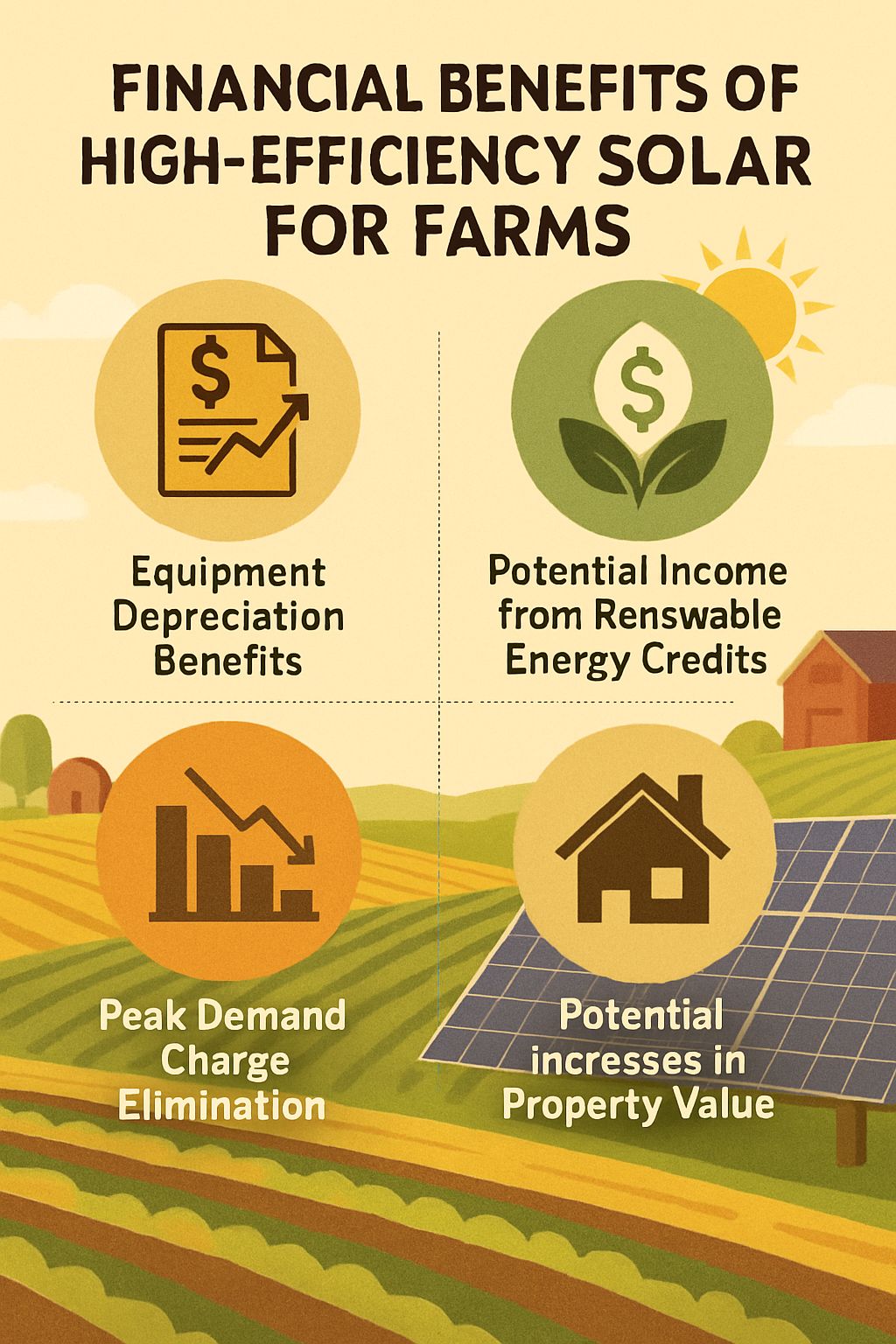
The economics of agricultural solar installations extend well beyond simple electricity bill reduction. Comprehensive financial analysis must account for equipment depreciation benefits, potential income from renewable energy credits, peak demand charge elimination, and even potential increases in property values. These combined benefits create a robust financial case even in regions with moderate electricity rates.
Utility Bill Reduction Potential
The most immediate financial benefit comes from direct reduction in monthly utility expenses. Agricultural operations typically see 60-90% reductions in electricity costs, with the variation largely dependent on system sizing, efficiency factors, and consumption patterns. Operations with high daytime electricity usage—such as dairy farms with continuous refrigeration needs or irrigated crops with daytime pumping—often achieve the highest percentage reductions since their consumption aligns naturally with solar production periods.
Beyond simple kilowatt-hour charges, many agricultural operations benefit substantially from demand charge reductions. These charges, based on peak usage rather than total consumption, often constitute 30-50% of commercial agricultural electric bills. Properly designed solar arrays can specifically target these peak demand periods, potentially eliminating these charges entirely and creating disproportionate financial benefits compared to the simple energy offset.
Available Agricultural Solar Incentives
The agricultural sector enjoys some of the most generous solar incentives available, often combining standard renewable energy programs with agriculture-specific funding opportunities. The federal Investment Tax Credit currently provides a 30% tax credit on the total system cost—a substantial benefit for farm operations with sufficient tax liability. For operations with limited tax appetite, this credit can often be monetized through partnership structures or carried forward to future tax years. Additionally, solar panels can create new revenue streams for farmers, enhancing their financial stability.
The USDA’s Rural Energy for America Program (REAP) offers both grants and guaranteed loans specifically for agricultural solar projects, potentially covering up to 25% of project costs through grants and securing favorable financing terms for the remainder. Many states supplement these federal programs with agriculture-specific renewable energy incentives, creating potential funding stacks that can cover 50-75% of initial system costs in optimal scenarios.
Depreciation and Tax Benefits
Solar installations on agricultural properties qualify for accelerated depreciation under Modified Accelerated Cost Recovery System (MACRS), allowing for complete depreciation within 5 years rather than the system’s 25-30 year lifespan. This accelerated schedule creates significant tax advantages in the early years of system ownership, effectively reducing the net system cost by an additional 15-30% depending on tax brackets. When combined with available tax credits, these depreciation benefits can reduce the effective system cost by 45-60% for profitable farm operations.
Many farmers also benefit from property tax exemptions for renewable energy improvements, preventing increased property tax assessments despite the added value solar installations bring to the property. These exemptions, available in most agricultural regions, remove what might otherwise be a financial disincentive to improvement investments, allowing the full financial benefits of efficiency upgrades to flow directly to the farm’s bottom line.
Income Opportunities from Excess Generation
Agricultural operations with suitable sites often generate significantly more electricity than they consume, creating income opportunities through various compensation mechanisms. Net metering programs allow excess generation to offset future consumption, effectively using the utility grid as a battery and maximizing the value of every kilowatt-hour produced. In regions without favorable net metering, feed-in tariffs or power purchase agreements may provide alternative compensation structures, though typically at rates lower than retail electricity prices.
Some innovative farms have developed complementary enterprises specifically designed to utilize excess solar generation during peak production periods. These include operations like small-scale food processing, refrigerated storage services for neighboring farms, or electric vehicle charging stations. These strategic diversifications convert excess electricity into value-added products or services rather than selling it back to the grid at wholesale rates, potentially doubling or tripling the effective value of that electricity. For more insights, explore the factors affecting solar panel efficiency in agricultural settings.
Future-Proofing Your Farm with Solar Technology
Beyond immediate financial returns, agricultural solar investments position farms for long-term resilience in a changing energy landscape. As traditional energy costs continue their historical upward trajectory, on-site generation provides essential insulation from market volatility. Additionally, as agricultural markets increasingly value sustainability metrics, documented renewable energy usage can create marketing advantages and access to premium market segments willing to pay more for sustainably produced agricultural products.
Battery Storage Integration
Battery storage systems represent the next frontier in agricultural solar efficiency, allowing farms to time-shift energy production to match consumption patterns perfectly. These systems capture excess midday solar production for use during evening hours or cloudy days, potentially increasing the effective utilization of generated electricity from 60-70% to 90-95%. While battery costs remain significant ($800-1,200 per kWh of storage capacity), agricultural applications often qualify for the same incentives as the solar panels themselves, improving economic viability.
Strategic battery deployment can specifically target high-value applications rather than attempting to store all generated energy. For example, sizing a battery system to cover critical loads like irrigation pumps during grid outages or to shift specific high-consumption processes to off-peak hours can create compelling returns without the expense of whole-farm storage capacity. Some innovative farms use mobile battery systems that follow seasonal operations, providing power where and when it’s most valuable throughout the agricultural calendar.
Scalable Systems for Growing Operations
Modern agricultural solar installations can be designed for phased implementation and future expansion, allowing farms to match renewable investments with operational growth. This scalable approach minimizes initial capital requirements while establishing the foundational infrastructure (appropriate inverter capacity, grid interconnection, and mounting systems) to accommodate additional panels as finances allow or farm energy needs increase. Many farmers find this incremental approach aligns better with agricultural cashflow patterns than large upfront capital expenditures.
When designing for future scalability, attention to initial component selection becomes crucial. Inverters with capacity for additional panel strings, oversized conduit runs that can accommodate future wiring, and structural systems designed for expansion minimize the incremental cost of future additions. This forward-thinking approach typically adds only 5-10% to initial system costs while potentially saving 25-40% on future expansion expenses.
Climate Resilience Benefits
On-site solar generation provides essential operational resilience against both short-term weather events and longer-term climate uncertainties. During grid disruptions from extreme weather events—increasingly common in many agricultural regions—solar arrays with appropriate storage or direct-drive capabilities can maintain critical operations like livestock ventilation, irrigation pumping, or refrigeration. This operational continuity prevents potentially catastrophic crop or livestock losses during external system failures.
Solar installations with appropriate mounting systems can also provide physical resilience benefits. Elevated arrays can create shaded areas that reduce water demand for certain crops or provide relief for livestock during extreme heat events. Some innovative installations incorporate rainwater collection systems that channel precipitation from panel surfaces to storage tanks, creating drought resilience while simultaneously keeping panels clean for maximum efficiency.
- Protection from rising utility rates (historically 2-5% annual increases)
- Operational continuity during grid disruptions or rolling blackouts
- Reduced vulnerability to fuel supply chain disruptions
- Enhanced marketing opportunities in sustainability-focused markets
- Demonstration of environmental stewardship for regulatory compliance
The intangible benefits of energy independence also merit consideration in comprehensive planning. As agricultural operations increasingly rely on electrified processes for precision agriculture, automated systems, and data management, consistent power quality becomes essential for optimal operation. On-site generation with appropriate conditioning equipment can provide superior power quality compared to rural grid connections, preventing equipment damage and operational disruptions from voltage fluctuations common in remote agricultural areas.
Making Smart Solar Investments for Your Farm
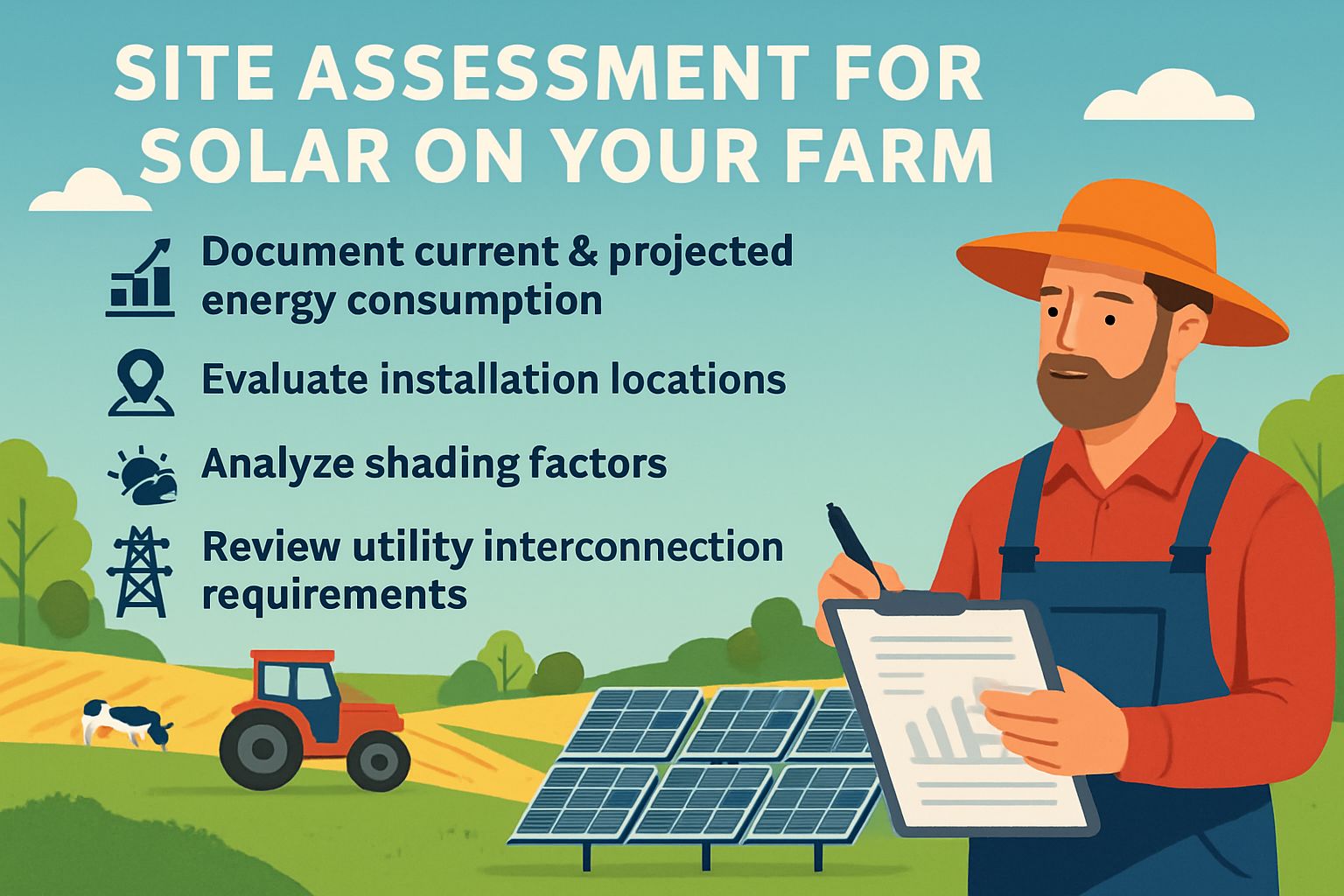
The path to maximizing solar efficiency on your farm begins with comprehensive site assessment that accounts for both technical and agricultural considerations. This assessment should document current and projected energy consumption patterns, evaluate available installation locations, analyze shading factors throughout the year, and review utility interconnection requirements specific to your location. This data-driven approach prevents costly mismatches between system design and actual farm needs while identifying the highest-value opportunities for initial implementation. For more insights on how solar can enhance farm operations, explore the benefits of solar panels for farmers.
Working with solar providers experienced specifically in agricultural applications rather than general residential or commercial installers often produces superior results. These specialized providers understand the unique demands of farm environments, including dust management, equipment clearances, seasonal operational changes, and agriculture-specific incentive programs. Their experience with similar operations creates efficiency in both system design and installation, typically delivering better long-term performance despite sometimes commanding slightly higher initial prices than general solar contractors.
Frequently Asked Questions (FAQ)
Agricultural producers exploring solar options typically share common questions about implementation details, performance expectations, and integration with existing operations. These practical considerations reflect the unique perspective of farmers who must balance innovation with operational reliability and financial prudence.
How long do agricultural solar panels typically last?
“We’re actually seeing better-than-expected performance from our system after 12 years. The panels have endured everything from hailstorms to dust storms, and while we’ve replaced two inverters, the panels themselves are still producing at about 92% of their original capacity. The manufacturer guaranteed 80% production after 25 years, so we’re well ahead of that degradation curve.” — Sarah Johannsen, Third-generation dairy farmer, Wisconsin
Modern agricultural-grade solar panels typically carry performance warranties of 25-30 years, guaranteeing at least 80% of original output capacity at warranty end. However, real-world experience indicates many quality systems continue producing significant energy well beyond these warranty periods, with 40+ year lifespans increasingly common for well-maintained installations. The most significant degradation typically occurs in the first year (2-3% reduction), followed by much slower annual decreases of 0.5-0.7% thereafter.
Component lifespans vary within the overall system. While panels demonstrate remarkable longevity, inverters typically require replacement every 10-15 years, representing approximately 10% of initial system cost. String inverters generally require complete replacement, while microinverter systems allow for individual component replacement as needed, potentially reducing lifetime maintenance costs despite higher initial investment.
Many agricultural installations actually outlast their original farms’ operational needs, creating intergenerational assets that continue providing value through ownership transitions or operational changes. This longevity should factor into financial calculations, particularly for family farms planning for succession or considering long-term lease arrangements where infrastructure improvements offer intergenerational benefits.
Will solar panels work during cloudy or rainy days on my farm?
Modern solar panels generate electricity even during overcast conditions, typically producing 10-25% of their rated capacity during heavy cloud cover and 30-60% during light overcast. This consistent production—even in non-ideal conditions—helps maintain base operations during weather events. Regions with frequent cloudy periods can still achieve excellent financial returns, though system sizing may need adjustment to compensate for reduced peak production.
Rainfall actually provides performance benefits by cleaning dust and debris from panel surfaces, often resulting in efficiency boosts of 5-10% immediately following precipitation events. Some agricultural installations in regions with distinct rainy seasons observe noticeable production increases during these periods despite reduced sunshine, highlighting the importance of regular cleaning in maintaining optimal efficiency during dry periods.
- Heavy overcast: 10-25% of rated capacity
- Light overcast: 30-60% of rated capacity
- Light rain with moderate cloud cover: 20-40% of rated capacity
- Morning fog that burns off by midday: Minimal impact on daily production
- Heavy snow coverage: Nearly complete production reduction until cleared
Seasonal production variations should align with farm consumption patterns for optimal financial performance. Operations with higher winter electricity needs, such as greenhouse operations or livestock confinement systems, may benefit from steeper panel tilt angles that optimize winter production despite some summer production sacrifice. Conversely, irrigation-intensive operations might prioritize summer production maximization through shallower mounting angles.
Can I still farm underneath or around solar panels?
Agrivoltaic systems specifically designed for agricultural integration maintain access to 65-90% of the land beneath panels, allowing for continued production of many crop types. Research indicates that certain crops—particularly leafy greens, shade-tolerant berries, and some root vegetables—actually perform better under the partial shade conditions created by elevated panels, showing yield increases of 10-30% in some studies while simultaneously reducing irrigation requirements. Livestock operations, particularly sheep grazing, integrate exceptionally well with solar installations, with the animals providing vegetation management while benefiting from shade during hot weather periods.
What’s the typical payback period for farm solar installations?
Agricultural solar installations typically achieve financial payback within 5-8 years depending on system efficiency, available incentives, and electricity rates. Operations with high daytime electricity usage—such as dairy processing, packing facilities, or irrigation—often experience faster payback periods due to direct offset of retail electricity rates rather than lower-value grid exports. When incorporating available tax benefits, USDA grants, accelerated depreciation, and state-specific agricultural incentives, some installations achieve break-even points in as little as 3-4 years, creating exceptional returns on investment compared to most farm infrastructure improvements.
Do I need to change my electrical system to accommodate solar power?
Most farms can integrate solar generation without significant electrical system modifications, particularly if the existing infrastructure has been maintained to current code standards. The interconnection process typically requires installation of a production meter, appropriate disconnect switches, and possibly updated circuit breakers depending on system size. Farms with older electrical systems might require service panel upgrades to accommodate bidirectional power flow, but these improvements often deliver additional benefits through improved reliability and capacity for future expansion. Working with installers experienced in agricultural applications ensures proper integration with specialized farm equipment that may have unique power quality requirements or surge characteristics not typically encountered in residential installations.
For operations considering future electrification of processes currently powered by fossil fuels (such as grain drying, equipment charging, or heating), planning for these transitions during initial solar design can prevent costly system modifications later. Incorporating capacity for these anticipated loads—even if initially oversized for current needs—often proves more economical than system expansion after initial installation.
The transition to solar energy represents not just a cost-saving measure but a fundamental shift toward agricultural self-sufficiency and sustainability. By understanding the efficiency factors that impact performance, farmers can make informed decisions that optimize their investment while contributing to both environmental stewardship and operational resilience.

Leave a Reply