
Article-At-A-Glance
- Monocrystalline solar panels offer 17-22% efficiency rates, making them the most productive option for powering farm operations
- These panels can slash farm energy costs by 40-60% while qualifying for federal tax credits and USDA REAP grants
- Their 25+ year lifespan and minimal maintenance requirements make them an excellent long-term investment for agricultural operations
- Strategic installation on barn roofs, ground mounts, or dual-use agrivoltaic systems maximizes both energy production and land utilization
- Modern monocrystalline panels perform exceptionally well in diverse weather conditions, including high heat and lower light environments
Farming operations consume substantial energy, from irrigation systems to livestock climate control, leaving many agricultural producers vulnerable to fluctuating utility costs. Monocrystalline solar panels offer a powerful solution to this persistent challenge, transforming your farm into a self-sustaining energy producer. Sunrise Energy’s agricultural solar specialists have helped hundreds of farms reduce operational costs while improving sustainability through precision-engineered monocrystalline systems designed specifically for agricultural applications.
The shift toward renewable energy in agriculture isn’t just about environmental responsibility—it’s about smart business. Farms implementing monocrystalline solar systems typically see payback periods of 5-7 years, followed by decades of significantly reduced energy costs. With thoughtful planning and strategic placement, these high-efficiency panels can transform underutilized farm spaces into powerful energy-generating assets.
Quick Guide: Solar Power for Your Farm
Monocrystalline solar panels stand apart from other panel types with their distinctive uniform black appearance and rounded edges. This aesthetic comes from their manufacturing process, where single-crystal silicon ingots are sliced into wafers, creating the highest purity silicon configuration available for commercial solar applications. This purity translates directly into superior efficiency and performance, particularly in the variable conditions typical across agricultural settings.
Beyond efficiency, monocrystalline panels provide farms with exceptional longevity, typically performing at 80%+ of their original capacity even after 25 years. This makes them particularly valuable for agricultural operations planning for long-term sustainability and fixed energy costs. Their superior heat tolerance also means they maintain higher output during summer months when farm energy demands often peak for irrigation and cooling systems.
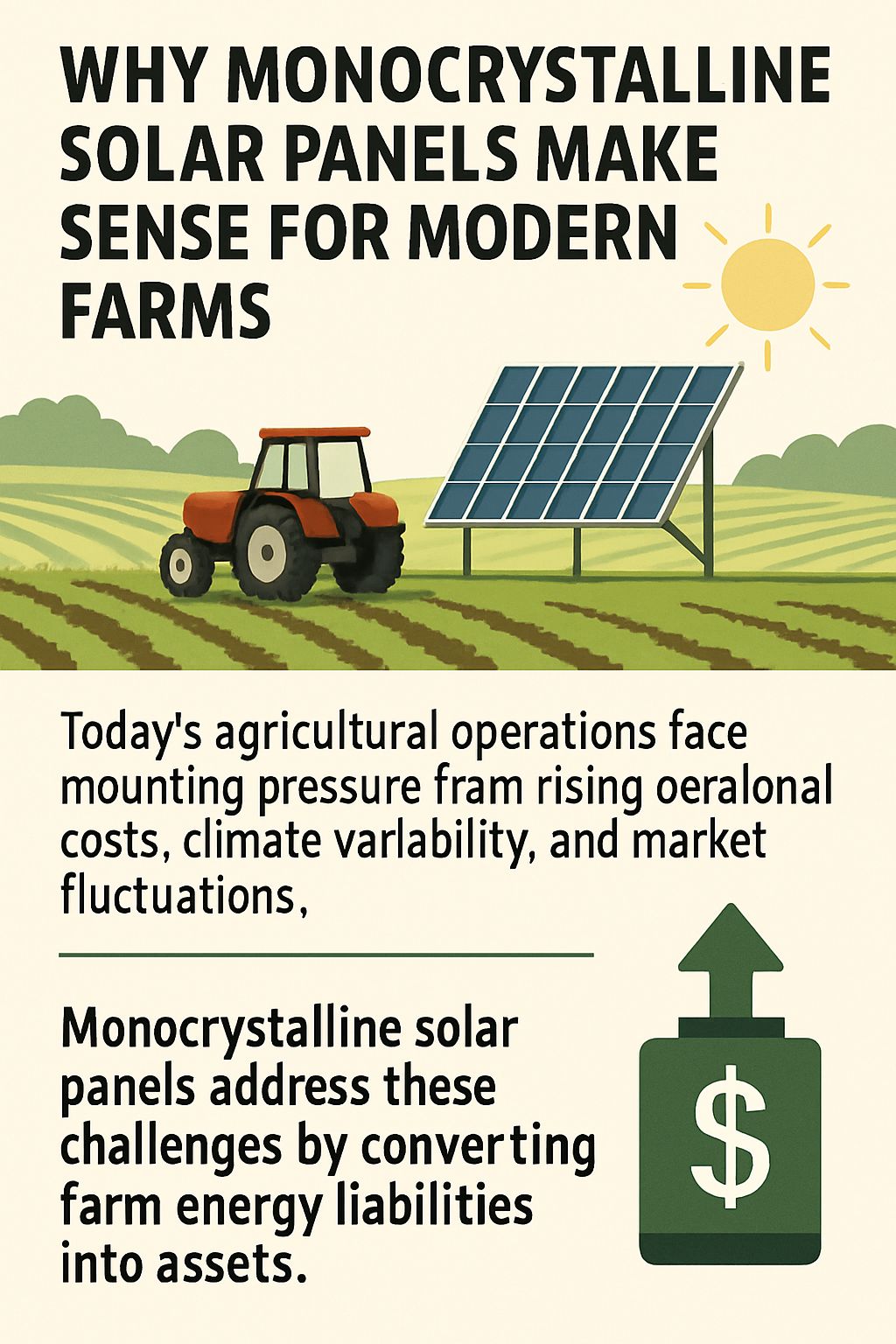
Why Monocrystalline Solar Panels Make Sense for Modern Farms
Today’s agricultural operations face mounting pressure from rising operational costs, climate variability, and market fluctuations. Monocrystalline solar panels address these challenges by converting farm energy liabilities into assets. The initial investment, while higher than other panel types, delivers superior returns through greater energy generation per square foot, reduced maintenance, and longer productive lifespans. For farms with limited installation space, the efficiency advantage becomes particularly valuable.
How Monocrystalline Panels Outperform Other Solar Options
When comparing solar technologies for agricultural applications, monocrystalline panels consistently demonstrate superior performance metrics. Their single-crystal silicon structure allows electrons greater freedom of movement, resulting in higher conversion rates of sunlight to electricity. While polycrystalline and thin-film alternatives offer lower upfront costs, they typically require 20-30% more surface area to generate equivalent power, a critical consideration for space-conscious farm operations.
Here is a detailed comparison table showing why monocrystalline solar panels make the most sense for modern farms compared to other types such as polycrystalline and thin-film panels:
|
Feature |
Monocrystalline Solar Panels |
Polycrystalline Solar Panels |
Thin-Film Solar Panels |
|---|---|---|---|
|
Efficiency |
17–23%; highest energy conversion rate, ideal for farms needing maximum output from limited land area. 1, 2 |
10–12%; lowest efficiency, mainly for large low-cost setups. 3 | |
|
Performance in Low Light |
Excellent; maintains output during cloudy or partially shaded conditions. 5 |
Fair; moderate power drop in shade. 4 |
Poor; performs weakly under low light. 3 |
|
Durability & Lifespan |
25–30 years; durable with low degradation (≈0.5%/year). 2, 5 |
20–25 years; slightly higher degradation rate. 4 |
10–20 years; higher wear under harsh weather. 3 |
|
Temperature Performance |
Strong; lower temperature coefficient (-0.35%/°C) ensures stable performance on hot farm days. 2 |
Highly affected by temperature fluctuations. 3 | |
|
Space Requirement |
Very low; fewer panels needed to meet energy needs—critical for compact or mixed-use farmland. 1, 2 |
Moderate; larger land area required. 4 |
High; large installations needed due to low output. 3 |
|
Maintenance |
Minimal; regular cleaning ensures peak efficiency. 1 |
Moderate; more panels mean higher upkeep. 4 |
Low; but panels degrade faster. 3 |
|
Best Applications on Farms |
Irrigation pumps, cold storage, lighting systems, high-load automated operations. 1, 5 |
Low-demand uses like animal fencing or small equipment. 4 |
Temporary greenhouses or low-cost agrivoltaic shading. 3 |
|
Initial Cost |
Highest; premium technology but pays off with efficiency and long-term savings. 1, 2 |
Moderate; affordable short-term solution. 4 |
Lowest; but least efficient and durable. 3 |
|
Environmental Benefit |
Excellent; lowest carbon footprint and maximum renewable energy utilization . 1, 5 |
Good; but lower efficiency means slower CO₂ reduction. 4 |
Fair; material production sometimes less eco-friendly. 3 |
Higher Efficiency Rates: 17-22% Conversion Capability
- Premium monocrystalline panels from manufacturers like SunPower and REC achieve efficiency ratings up to 22.8%, compared to 15-17% for typical polycrystalline options
- Higher efficiency translates to approximately 20% more power generation from the same roof or ground area
- Advanced N-type monocrystalline panels resist light-induced degradation, maintaining higher output over decades of farm use
- Bifacial monocrystalline options capture reflected light from both sides, increasing total energy harvest by 5-30% in appropriate farm installations
This efficiency advantage becomes particularly significant when powering energy-intensive farm operations like irrigation pumps, milk cooling systems, or climate-controlled livestock facilities. A 100kW monocrystalline system can generate approximately 12,000-16,000 more kilowatt-hours annually than a similarly sized polycrystalline installation, potentially saving thousands in operational costs each year.
Farm operations with seasonal fluctuations benefit further from monocrystalline’s superior performance in less-than-ideal conditions. During spring and fall when sunlight angles are lower, or during partial cloud cover, monocrystalline panels continue producing at higher rates than alternatives, ensuring more consistent power for critical farm systems throughout the year.
Space Efficiency for Limited Farm Real Estate
Agricultural operations must balance energy production against valuable land resources needed for crops and livestock. Monocrystalline panels help resolve this competition by generating more electricity per square foot than any other commercially available solar technology. This space efficiency allows farms to achieve energy goals while minimizing the footprint of their solar installation, preserving more land for productive agricultural use or future expansion.
For example, a dairy operation requiring 200,000 kWh annually would need approximately 15-20% less roof or ground space using monocrystalline technology compared to polycrystalline alternatives. This difference can be crucial when working with limited suitable installation areas or when preserving maximum productive farmland is a priority.
25+ Year Lifespan: Long-Term Farm Investment
Agricultural investments require careful consideration of longevity and reliability, particularly for infrastructure that supports daily operations. Premium monocrystalline panels typically carry 25-30 year power production warranties, but often continue functioning well beyond these periods. Their degradation rates—how quickly they lose production capacity—are typically just 0.3-0.5% annually, compared to 0.5-0.8% for polycrystalline alternatives.
This extended productive lifespan translates directly to improved return on investment for farm operations. While the initial purchase price may be 10-15% higher than polycrystalline alternatives, the additional energy production over decades of operation more than compensates for this premium, particularly as utility rates continue their historical upward trend.
Superior Performance in Low Light and High Heat
Farm operations often cannot pause during suboptimal weather conditions, making energy reliability crucial throughout varying seasons and weather patterns. Monocrystalline panels excel in both low-light and high-temperature environments, maintaining higher output when other technologies experience significant performance drops. This advantage comes from their higher-purity silicon structure, which allows for more efficient electron flow even in challenging conditions.

Best Placement Options for Farm Solar Installations
Strategic placement of monocrystalline panels significantly impacts their performance and return on investment for agricultural operations. The ideal installation location balances maximum sun exposure, proximity to power-consuming equipment, and minimal disruption to productive farmland. With proper planning, solar installations can actually complement farming activities rather than compete with them.
Barn Roof Installations: Utilizing Existing Structures
Barn roofs typically offer excellent solar potential, with their large, unobstructed surfaces and optimal orientation possibilities. Modern agricultural buildings constructed with engineered trusses can usually support solar arrays without significant structural modifications. For older barns, a structural assessment may recommend reinforcement to accommodate the additional 2-4 pounds per square foot that solar installations typically add.
South-facing roof sections receive the most direct sunlight in the northern hemisphere, making them prime locations for monocrystalline panels. East and west-facing installations can also be productive, generating power during morning and afternoon hours respectively. This split orientation can actually benefit farms with distributed power needs throughout the day rather than concentrated peak demands.
Ground Mounts for Optimal Sun Tracking
When suitable roof space is limited or improperly oriented, ground-mounted arrays offer maximum flexibility for positioning and angle optimization. These installations can incorporate single or dual-axis tracking systems that follow the sun’s path, increasing energy production by 25-40% compared to fixed installations. While tracking systems add cost and maintenance requirements, they significantly improve output, making them ideal for high-consumption farm operations.
Strategic ground mount placement along field edges, in buffer zones, or on less productive land minimizes impact on core agricultural activities. Some farmers successfully integrate ground-mounted systems with grazing areas for sheep or poultry, creating dual-purpose land utilization that maintains agricultural productivity while generating power.
Dual-Use Installations Above Crops and Livestock Areas
Agrivoltaics—the integration of solar panels with active agricultural production—represents an emerging opportunity for farms to generate electricity without sacrificing productive land. Elevated racking systems position panels several feet above crops or grazing areas, allowing continued agricultural use beneath the array. Research from the University of Massachusetts shows that certain crops, particularly leafy greens and some berries, actually benefit from the partial shade these systems provide, especially in regions experiencing increasing heat stress.
Livestock shelter systems combine shade structures with power generation, providing animals relief from sun exposure while producing electricity. These installations have shown particular success with poultry, sheep, and some cattle operations, improving animal comfort while offsetting energy costs for the farm.
Power These Farm Operations with Monocrystalline Panels
Modern farms operate numerous energy-intensive systems that can benefit from solar power integration. Identifying the highest consumption processes allows for strategic sizing and deployment of monocrystalline systems where they’ll deliver maximum financial return.
1. Irrigation Systems and Water Pumps
Irrigation represents one of the largest energy expenses on many farms, with pumping systems often running extensively during peak daylight hours. This operational pattern creates an ideal match with solar production cycles, as panels generate maximum power during the same hours irrigation is most needed. Monocrystalline panels can directly power AC or DC pump systems, significantly reducing or eliminating utility costs associated with water management.
Solar-powered irrigation offers particular advantages in remote field locations where utility infrastructure is limited or absent. By eliminating the need for grid extensions or diesel generators, these systems reduce both initial infrastructure costs and ongoing operational expenses. Variable frequency drives (VFDs) paired with solar arrays allow pumps to operate efficiently across different sunlight conditions, maximizing water delivery while optimizing energy usage.
2. Livestock Buildings: Ventilation and Climate Control
Modern livestock facilities require consistent ventilation, heating, and cooling to maintain animal health and productivity. These climate control systems often consume substantial electricity, particularly during summer months when cooling demands peak alongside solar production potential. Properly sized monocrystalline systems can offset 50-90% of the energy requirements for these critical systems, providing substantial operational savings while ensuring animal welfare isn’t compromised.
Battery storage systems paired with monocrystalline panels ensure continuous operation during grid outages or nighttime hours, adding a valuable layer of resilience to livestock operations. This backup capability often justifies the additional investment in battery technologies, particularly for operations where even brief power interruptions could impact animal welfare or production.
3. Milk Cooling and Processing Equipment
Dairy operations face significant energy demands from milk cooling systems, which must rapidly reduce temperatures to maintain product quality and safety. These cooling processes typically consume 25-40% of a dairy farm’s total electricity usage, representing a substantial operational cost. Monocrystalline solar arrays sized to these specific loads can dramatically reduce utility expenses while ensuring reliable power for this time-sensitive process.
The coincidence of peak milk cooling needs with peak solar production hours creates an especially favorable economic case for solar integration in dairy operations. Modern milk pre-cooling and heat recovery systems further enhance this efficiency, allowing farms to optimize both their energy generation and consumption patterns for maximum benefit.
4. Grain Drying and Storage Systems
Grain drying represents one of the most energy-intensive seasonal activities on many farms, often requiring substantial electricity or propane to reduce moisture content to safe storage levels. Monocrystalline solar systems can offset much of this consumption, particularly when designed with the seasonal nature of these operations in mind. Excess generation during non-drying periods can be credited against future utility costs through net metering agreements, essentially using the grid as a virtual battery.
5. Cold Storage for Produce
Fruit and vegetable operations rely heavily on refrigeration systems to maintain product quality and extend marketing windows. These cooling systems typically operate most intensively during summer harvest periods when solar generation is also at its peak, creating excellent synchronization between energy production and consumption. Monocrystalline panels paired with modern variable speed compressors and smart controllers can reduce refrigeration energy costs by 60-80% while maintaining precise temperature control.
6. Farmers Residence and Workers Living Quarters
On-farm residences and worker housing represent consistent year-round power consumers that can effectively utilize solar generation even during seasonal lulls in agricultural activities. This balanced consumption pattern helps maximize the financial returns from monocrystalline systems by ensuring productive use of generated electricity throughout the year. Many farmers prioritize powering these living spaces to improve quality of life and reduce household expenses alongside operational costs.
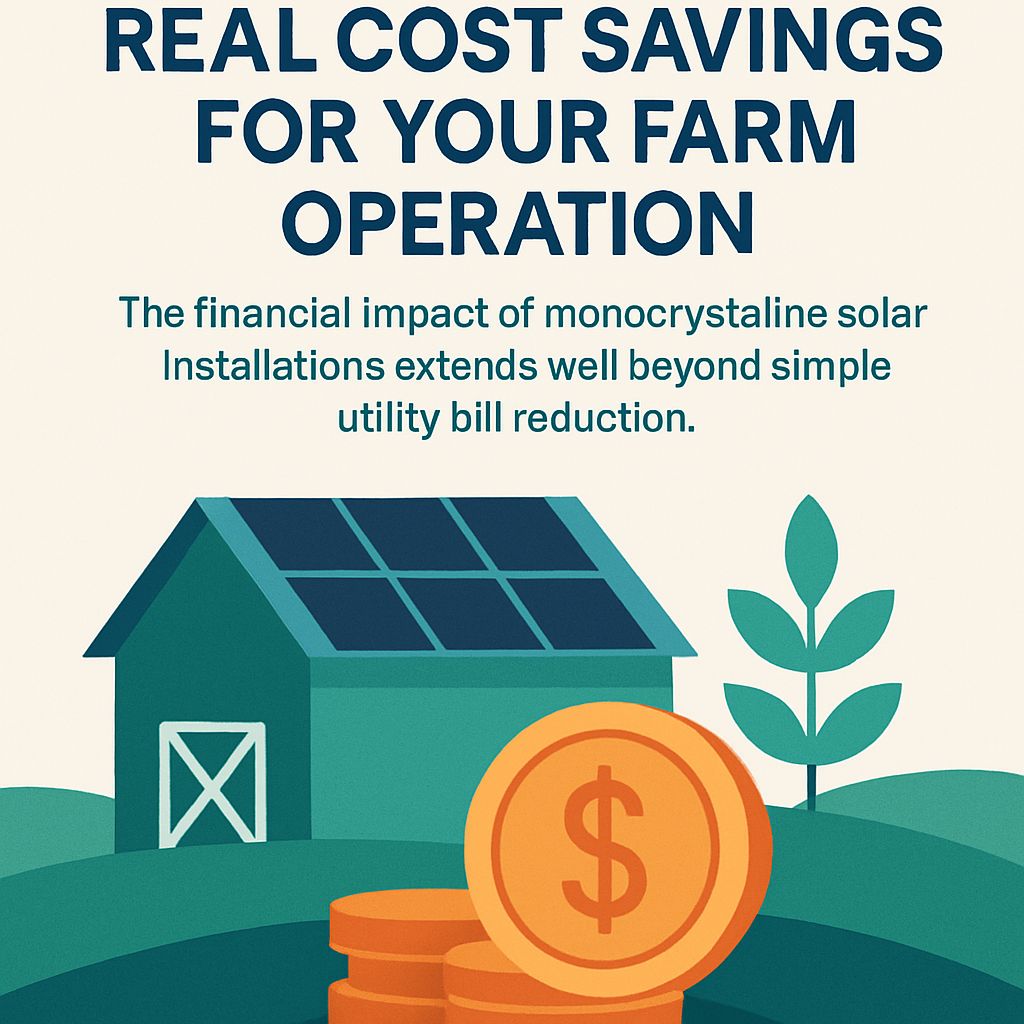
Real Cost Savings for Your Farm Operation
The financial impact of monocrystalline solar installations extends well beyond simple utility bill reduction. A comprehensive assessment includes multiple value streams, from immediate operational savings to long-term hedging against energy price volatility and valuable tax advantages. When properly analyzed, most agricultural solar installations demonstrate compelling returns on investment that compare favorably with other farm capital improvements.
Immediate Reduction in Monthly Energy Bills
Case Study: Johnson Family Dairy, Wisconsin
System Size: 75kW monocrystalline installation
Annual Production: 92,000 kWh
Previous Annual Electric Costs: $11,800
First-Year Savings: $9,200
25-Year Projected Savings: $348,000
The most immediate and visible benefit comes from reduced utility bills, which typically begin the first month after system commissioning. Farms with high daytime energy consumption patterns generally achieve the greatest savings, as they directly utilize solar production rather than exporting to the grid. Operations that can align energy-intensive activities with peak production hours (typically 10am-4pm) maximize these savings by reducing both energy consumption charges and demand fees.
Grid-connected systems with net metering allow excess daytime production to offset nighttime or seasonal usage, essentially using the utility grid as free energy storage. This arrangement maximizes the financial value of every kilowatt-hour produced, regardless of when farm consumption occurs. Even in utility territories with less favorable net metering policies, strategic system sizing focused on offsetting the highest-cost energy tiers delivers compelling returns.
For farms with high refrigeration or cooling loads, solar production aligns naturally with peak demand, as cooling requirements increase during the same sunny conditions that maximize panel output. This synchronization often allows for significant reductions in utility demand charges, which can constitute 30-50% of total electricity costs for many agricultural operations.
Protection Against Rising Utility Rates
Agricultural operations remain particularly vulnerable to energy price volatility, with farm electricity rates increasing approximately 3-5% annually in most regions. Monocrystalline solar installations effectively lock in electricity costs for 25+ years, providing predictable operating expenses that enhance long-term business planning. This protection becomes increasingly valuable as traditional energy costs continue their upward trajectory while solar production costs remain fixed after installation.
Many agricultural economists now recommend solar investments specifically as a hedging strategy against future energy price increases. A properly sized system essentially pre-purchases decades of electricity at a known fixed price, creating significant competitive advantages for operations with substantial energy requirements. Farms that implemented solar systems just five years ago are already experiencing energy costs 15-20% below market rates, with this gap expected to widen further as utility prices continue rising.
Federal Tax Credits and USDA REAP Grants
The financial case for farm solar installations is substantially strengthened by federal investment tax credits, which currently provide a 30% reduction in system costs through 2032. This direct tax credit, not merely a deduction, significantly improves project economics and accelerates payback periods. Additionally, accelerated depreciation schedules allow for capturing much of the system’s tax benefits within the first five years, further enhancing return on investment calculations.
Beyond tax incentives, the USDA’s Rural Energy for America Program (REAP) offers both grants and guaranteed loan financing to agricultural producers for renewable energy systems. These grants can cover up to 25% of total eligible project costs, potentially combining with tax credits to reduce net system costs by over 50%. Most working farms qualify for these programs, though application processes require careful attention to deadlines and documentation requirements.
How to Select the Right System for Your Farm
Choosing the optimal solar solution for your agricultural operation requires thorough assessment of your specific energy needs, installation site characteristics, and financial objectives. Working with solar providers experienced in agricultural applications ensures consideration of factors unique to farm operations, such as seasonal usage patterns, dust exposure, and compatibility with farm equipment and activities.
- Start with a comprehensive energy audit to identify consumption patterns and optimization opportunities
- Evaluate available installation spaces considering solar access, proximity to electrical infrastructure, and minimal interference with farm operations
- Analyze utility rate structures and net metering policies to optimize system sizing and financial returns
- Consider future farm expansion plans and potential changes in energy consumption
- Assess financing options including agricultural-specific loans, REAP program assistance, and traditional lending
The quality differential between economy and premium monocrystalline panels has narrowed substantially in recent years, though significant performance differences remain at temperature extremes and in degradation rates. Leading agricultural installations typically utilize middle-tier panels that balance initial cost against long-term performance, focusing investment on high-quality inverters and mounting systems that significantly impact system reliability and maintenance requirements.
System sizing decisions should consider both current and projected energy needs, typically aiming to offset 70-100% of annual consumption. Oversizing systems beyond annual usage may not be economically optimal in areas without favorable net metering policies, though farms anticipating electrification of currently fossil-fueled processes might justify larger initial installations.
For operations with significant seasonal variation in energy usage, such as grain drying facilities or seasonal processing operations, careful modeling of annual production and consumption patterns helps optimize system design. In some cases, deliberately undersizing relative to peak seasonal demand while covering baseline annual needs delivers the best financial returns.
Calculating Your Farm’s Energy Requirements
Precise energy requirement assessment forms the foundation of effective solar system design for agricultural operations. Begin with at least 12 months of utility bills to establish baseline consumption and identify seasonal patterns. Supplement this historical data with equipment-specific monitoring to identify major consumption sources and potential efficiency improvements that might reduce overall system size requirements. For operations planning expansion or electrification of current fossil fuel processes, factor these additional loads into sizing calculations to avoid premature system limitations.
Grid-Tied vs. Battery Storage Systems
Most agricultural solar installations remain grid-connected without battery storage, using net metering to balance production and consumption timing differences. This approach maximizes financial returns while maintaining power reliability. However, farms with critical systems vulnerable to outages, remote operations with weak grid connections, or locations with time-of-use billing structures may benefit from incorporating battery storage. Modern lithium iron phosphate (LFP) battery systems offer 10+ year operational lifespans with minimal maintenance, providing both emergency backup capability and the ability to shift solar production to higher-value evening hours in markets with time-differentiated rates.
Panel Quality Considerations
Panel quality significantly impacts system performance and longevity in agricultural settings, where dust exposure, temperature extremes, and potential mechanical stresses exceed those of residential installations. Premium monocrystalline panels typically offer better temperature coefficients (maintaining higher output during hot conditions), lower degradation rates, and more comprehensive warranty coverage. Leading agricultural installations now favor bifacial monocrystalline panels that capture reflected light from the ground or surrounding surfaces, increasing total energy harvest by 5-30% depending on installation specifics and ground reflectivity.
The distinction between n-type and p-type monocrystalline cells deserves attention for agricultural applications. N-type cells resist light-induced degradation and perform better in high-temperature environments typical of farm settings, justifying their modest price premium for many operations. Additionally, panel construction details like stronger frames, higher-quality backsheets, and more durable junction boxes become particularly important in agricultural environments where dust, moisture, and temperature fluctuations create challenging operating conditions.
While tempting to focus primarily on efficiency ratings, panel reliability metrics often prove more important for long-term agricultural investments. Manufacturers with established track records, robust warranty support, and substantial market presence provide important risk reduction even if their products show slightly lower efficiency than emerging competitors. The expected 25+ year operational lifespan makes manufacturer stability a critical consideration for farm installations.
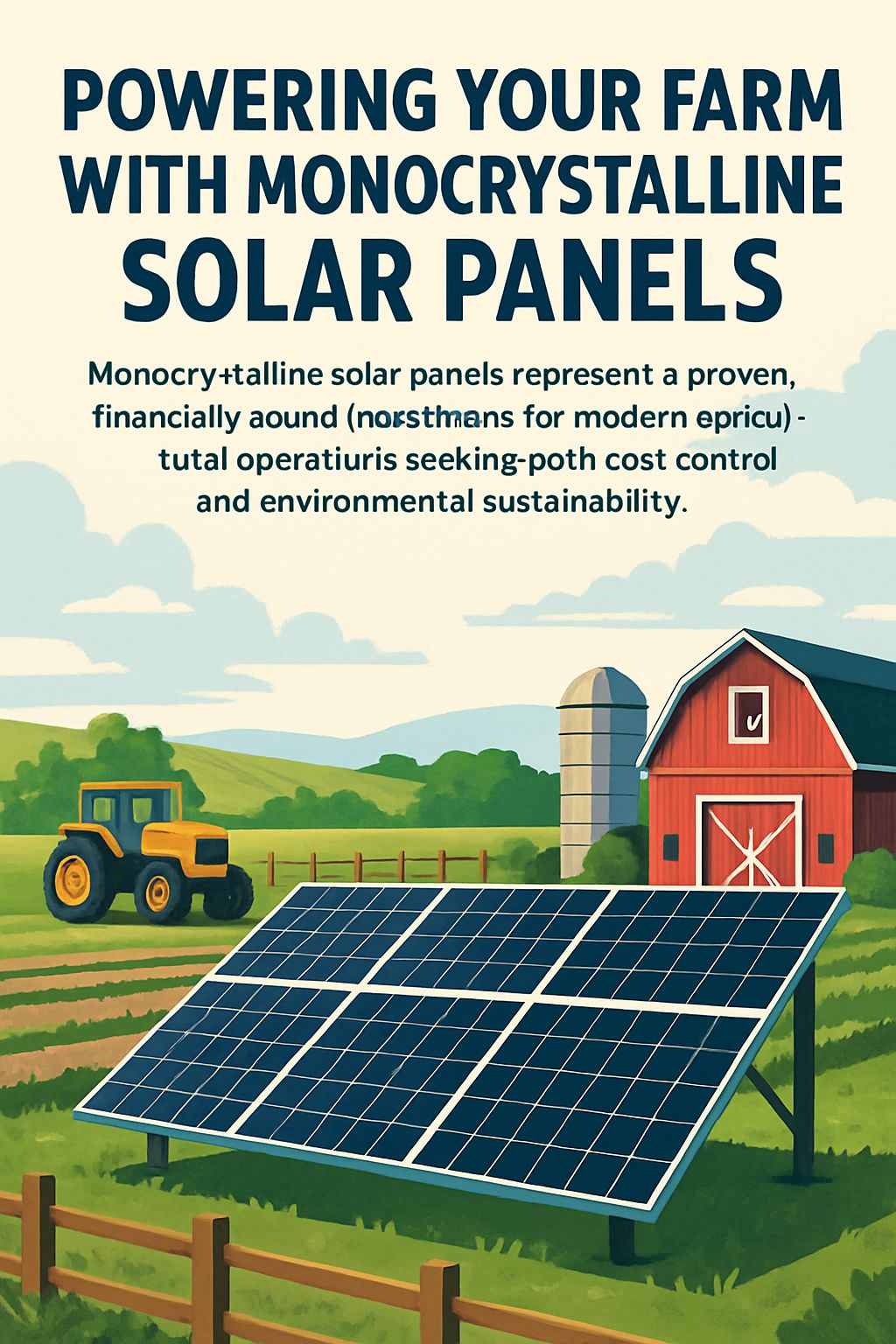
Conclusion: Powering Your Farm with Monocrystalline Solar Panels
Monocrystalline solar panels represent a proven, financially sound investment for modern agricultural operations seeking both cost control and environmental sustainability. Their superior efficiency, excellent performance in variable conditions, and exceptional longevity align perfectly with the operational needs and investment horizons typical of farm businesses. As agricultural energy demands continue growing while traditional energy costs rise, the case for monocrystalline solar integration becomes increasingly compelling.
The technology’s maturity means farms can implement these systems with confidence, supported by well-established installation practices, reliable performance projections, and solid warranty coverage. Unlike many agricultural investments with uncertain returns, properly designed solar systems deliver predictable financial benefits throughout their multi-decade operational life. Their minimal maintenance requirements and ability to operate without disrupting normal farm activities further strengthen their practical appeal. For more information on how solar panels can improve farm resilience, visit solar panels in agriculture.
For operations planning long-term sustainability and resilience, monocrystalline solar represents not merely a cost-saving measure but a strategic investment in energy independence. As climate variability increases and grid reliability concerns grow in many rural areas, the ability to generate substantial on-site power provides valuable operational security. When combined with appropriate storage technologies, these systems can ensure critical functions continue even during grid disruptions.
- Evaluate your farm’s energy profile to identify the optimal system size and configuration
- Consult with agricultural solar specialists familiar with farm-specific applications and challenges
- Explore all available incentives including tax credits, REAP grants, and state-specific programs
- Consider system expansion capability to accommodate future farm growth and increased electrification
- Incorporate solar planning into broader farm sustainability and resilience strategies
Is it a Good Investment for a Farmer to Use Monocrystalline Solar Panels to Power His Farm
For most agricultural operations, monocrystalline solar installations represent an excellent investment that combines immediate operating cost reduction with long-term financial returns and operational resilience. With current incentives, properly designed systems typically achieve simple payback periods of 5-8 years, followed by decades of substantially reduced energy costs. When evaluated using metrics like Internal Rate of Return (IRR), these projects frequently outperform many traditional farm capital investments while carrying significantly lower operational risk and maintenance requirements. Learn more about how solar panels improve a farm’s resilience.
Frequently Asked Questions
As farm solar adoption accelerates, agricultural producers naturally have questions about system performance, economics, and practical implementation considerations. These answers address the most common inquiries from farmers evaluating monocrystalline solar installations for their operations.
How much do monocrystalline panels cost for an average-sized farm?
Complete installed monocrystalline systems typically range from $1.80-$2.50 per watt before incentives, with agricultural installations usually benefiting from economies of scale compared to residential projects. A 50kW system suitable for a medium-sized operation with moderate energy consumption generally costs $90,000-$125,000 pre-incentive, reduced to $45,000-$65,000 after federal tax credits and potential USDA REAP grants. Larger operations requiring 100-500kW systems benefit from further economies of scale, with per-watt costs declining as system size increases.
These figures represent turnkey installed costs including panels, inverters, mounting hardware, electrical equipment, installation labor, permitting, interconnection, and commissioning. Farms with exceptionally simple installation conditions (ideal roof orientation, nearby electrical infrastructure, straightforward permitting) might see costs at the lower end of these ranges, while those with complex installation requirements might experience higher costs.
Can I install solar panels myself on my farm buildings?
While DIY installation might seem appealing for cost-conscious farmers accustomed to handling their own equipment work, commercial-scale solar installations involve significant electrical engineering, structural considerations, and utility interconnection requirements that typically necessitate professional implementation. Most agricultural insurance policies and utility interconnection agreements require professional installation with appropriate licensing and certifications. Additionally, manufacturer warranties and incentive programs generally require professional installation to maintain validity, making DIY approaches financially counterproductive despite apparent initial savings.
How do monocrystalline panels perform in extreme weather conditions?
Modern monocrystalline panels demonstrate excellent resilience across diverse agricultural environments. Quality systems are designed to withstand wind loads exceeding 140 mph, hail impacts up to 1″ diameter at terminal velocity, heavy snow loading (typically 50-75 lbs/sq ft), and temperature extremes from -40°F to 185°F. Their sealed construction prevents moisture intrusion during heavy precipitation, while tempered glass surfaces resist damage from most airborne debris common in farm environments.
Performance in high-temperature environments deserves special attention for agricultural installations, as panel output naturally decreases as cell temperatures rise. Monocrystalline panels typically have superior temperature coefficients compared to polycrystalline alternatives, losing approximately 0.3-0.4% of production per degree Celsius above standard test conditions (25°C), compared to 0.4-0.5% for polycrystalline panels. This difference becomes significant during summer months when panels might operate at 60-70°C, making monocrystalline technology particularly valuable for hot climate applications.
What maintenance do farm solar systems require?
Agricultural solar installations require minimal maintenance compared to most farm equipment, with no moving parts in the panels themselves. Typical maintenance involves periodic panel cleaning (frequency depending on local dust conditions and rainfall patterns), visual inspection of mounting hardware and electrical connections, and monitoring system performance data to identify any production anomalies. Most agricultural operations schedule cleaning 1-4 times annually, often coordinating with other routine maintenance activities to minimize additional labor requirements. Additionally, solar panels can significantly reduce farm energy costs, making them a valuable investment.
Inverters, which convert the panels’ DC electricity to AC for farm use, typically require replacement once during a system’s 25-30 year lifespan, usually between years 12-15. This predictable maintenance expense should be incorporated into financial projections. Modern monitoring systems alert operators to performance issues, often identifying potential problems before they impact production significantly. Many agricultural solar providers offer maintenance packages with scheduled inspections and cleaning services, simplifying ongoing care requirements for busy farm operations.
How quickly will I recoup my investment in monocrystalline panels?
Typical payback periods for agricultural monocrystalline installations currently range from 5-8 years, depending on local electricity rates, available incentives, and specific installation conditions. Operations with high daytime energy consumption patterns and electricity rates above $0.12/kWh generally experience the shortest payback periods. Locations with favorable net metering policies further accelerate returns by maximizing the financial value of all generated electricity, regardless of production and consumption timing alignment.
Beyond simple payback calculations, many agricultural financial advisors recommend evaluating solar investments using metrics like Internal Rate of Return (IRR) or Modified Internal Rate of Return (MIRR), which better capture the long-term value of these systems. When analyzed using these approaches over their 25+ year productive lifespan, quality monocrystalline installations typically demonstrate IRRs of 10-20%, comparing favorably with many traditional farm capital investments.
The investment security of solar installations also deserves consideration in financial analysis. Unlike many agricultural investments subject to market, weather, or biological risks, solar production remains remarkably predictable over decades. This certainty, combined with minimal operational requirements and maintenance expenses, makes these systems particularly valuable for operations seeking to diversify investment risk while reducing operating costs.
Sunrise Energy specializes in custom monocrystalline solar solutions designed specifically for agricultural applications, helping farms reduce operational costs while improving sustainability through precision-engineered systems.
Monocrystalline panels are a popular choice for farmers looking to optimize their energy usage and reduce costs. These panels are known for their efficiency and longevity, making them ideal for agricultural operations. By harnessing solar energy, farmers can significantly decrease their reliance on traditional power sources and lower their overall expenses. For those interested in further reducing farm energy costs, exploring solar panels benefits and savings can provide valuable insights.


Leave a Reply