
Key Takeaways
Solar irrigation systems can be highly dependent on weather conditions, affecting their reliability.
The initial setup costs for solar irrigation systems can be significantly high, often making them unaffordable for small farmers.
Regular maintenance and technical expertise are required to keep the systems running efficiently.
Solar panels require large spaces for installation, which can compete with arable land.
Dependence on reliable water sources can limit the effectiveness of solar irrigation systems in certain areas.
Downsides of Solar Irrigation Systems for Farms
Weather Dependency and Irrigation Challenges
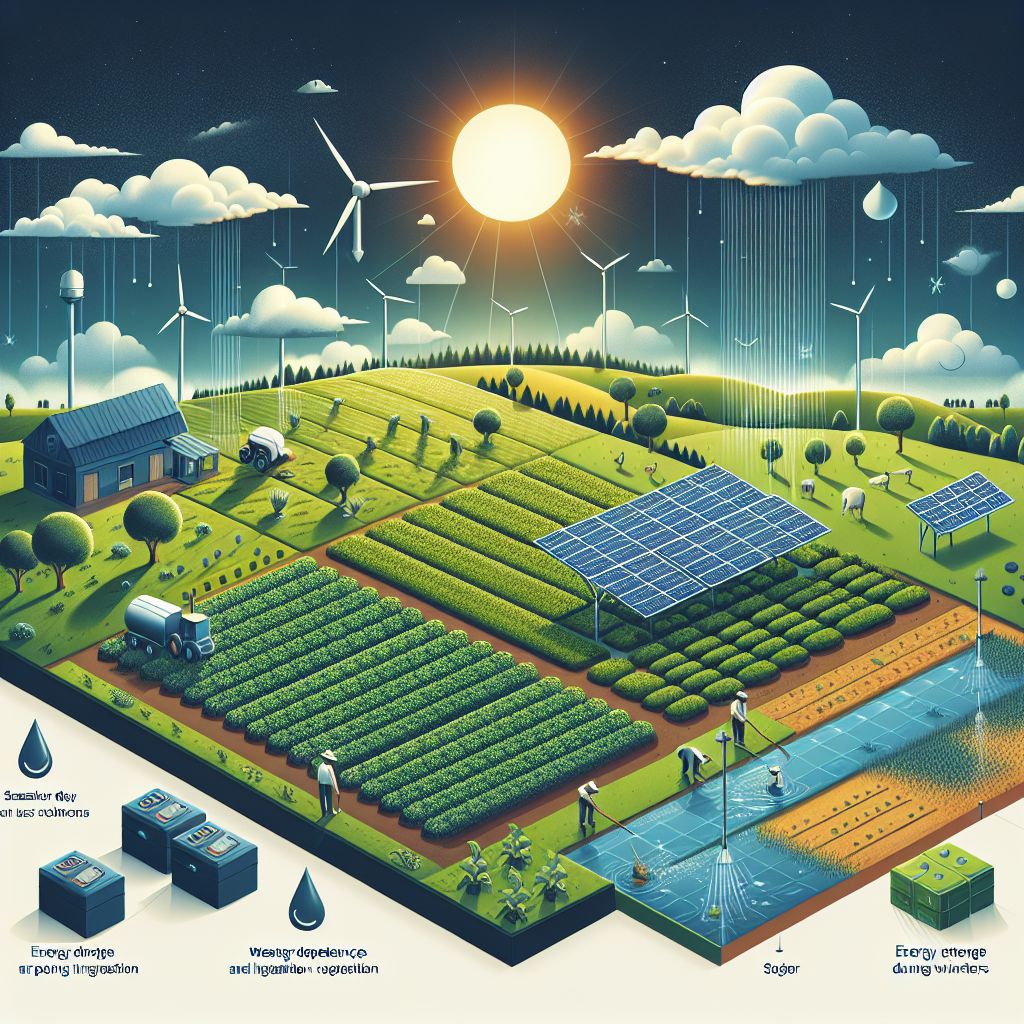
One of the biggest challenges with solar irrigation systems is their dependency on weather conditions. Solar panels generate electricity from sunlight, making them less effective on cloudy days or during nighttime. This can lead to inconsistent irrigation, which is critical for crop growth.
Besides that, seasonal variations can significantly impact the performance of solar irrigation systems. For instance, during winter months, shorter days and lower sun angles can reduce the efficiency of solar panels. This can be particularly challenging for farmers who need a consistent water supply throughout the year.
“Solar panels generate power through the sun, so weather dependency is another challenge for solar power irrigation.”
Cloud cover can also play a significant role in the effectiveness of solar irrigation systems. Even a few hours of cloud cover can disrupt the energy supply, leading to insufficient water for crops. This inconsistency can be detrimental to crop yields and overall farm productivity.
Initial Investment and Setup Costs
Setting up a solar irrigation system involves a substantial initial investment. The cost of solar panels, inverters, batteries, and other equipment can be prohibitive, especially for small-scale farmers. Additionally, the installation process itself can be costly and complex.
For example, a typical solar irrigation system can cost anywhere from $5,000 to $20,000, depending on the size and capacity. This initial investment can be a significant barrier for many farmers, particularly those in developing countries.
“Setup of a solar power irrigation system can be expensive, as the Initial Investment is the main challenge, especially for farmers.”
However, there are financial assistance programs and subsidies available to help offset these costs. Governments and NGOs often provide grants or low-interest loans to encourage the adoption of solar irrigation systems. Despite this, the upfront costs remain a significant hurdle for many farmers.
Maintenance and Technical Expertise Requirements
Maintaining a solar irrigation system requires regular upkeep and technical expertise. Solar panels need to be cleaned regularly to ensure they are operating at peak efficiency. Dust, dirt, and debris can accumulate on the panels, reducing their ability to generate electricity.
Moreover, the system’s components, such as inverters and batteries, require periodic checks and maintenance. This can be challenging for farmers who may not have the technical knowledge or access to skilled technicians.
“Regular maintenance and technical expertise are required to keep the systems running efficiently.”
Besides the maintenance, the long-term cost of keeping the system operational can add up. Replacement parts, repairs, and labor costs can be a financial burden for farmers, making solar irrigation systems less appealing in the long run.
Land Use and Space Requirements
Installing solar panels requires a significant amount of space, which can compete with available land for cultivation. This is particularly problematic for small-scale farmers who may already be struggling with limited arable land.
In some cases, farmers may need to sacrifice productive land to install solar panels, which can impact their overall crop yield. This trade-off can be a significant deterrent for farmers considering solar irrigation systems.
“It requires a large space to install a solar panel which may have to compete with available land for cultivation.”
One potential solution is the use of pooled or community solar irrigation systems. By sharing the costs and benefits, farmers can mitigate the space and financial challenges associated with individual solar installations. However, this requires cooperation and coordination among farmers, which can be difficult to achieve.
Weather Dependency and Irrigation Challenges
Day-Night Cycle and Solar Energy Generation
Solar panels generate electricity during the day when the sun is shining. However, this means they are ineffective at night. Farmers need to rely on energy storage solutions, such as batteries, to provide power for irrigation during nighttime hours. These batteries can be expensive and have a limited lifespan, adding to the overall cost and complexity of the system.
Seasonal Variations and Their Impact
Seasonal changes can also affect the performance of solar irrigation systems. During winter months, shorter days and lower sun angles can reduce the amount of solar energy generated. This can be particularly challenging for farmers who need a consistent water supply throughout the year. In some regions, seasonal variations can be so significant that adding batteries to solar irrigation systems may be necessary to ensure viability.
Cloud Cover and Irrigation Consistency
Cloud cover can have a significant impact on the effectiveness of solar irrigation systems. Even a few hours of cloud cover can disrupt the energy supply, leading to insufficient water for crops. This inconsistency can be detrimental to crop yields and overall farm productivity. Farmers need to have backup systems in place to ensure a reliable water supply during periods of low solar energy generation.
Initial Investment and Setup Costs
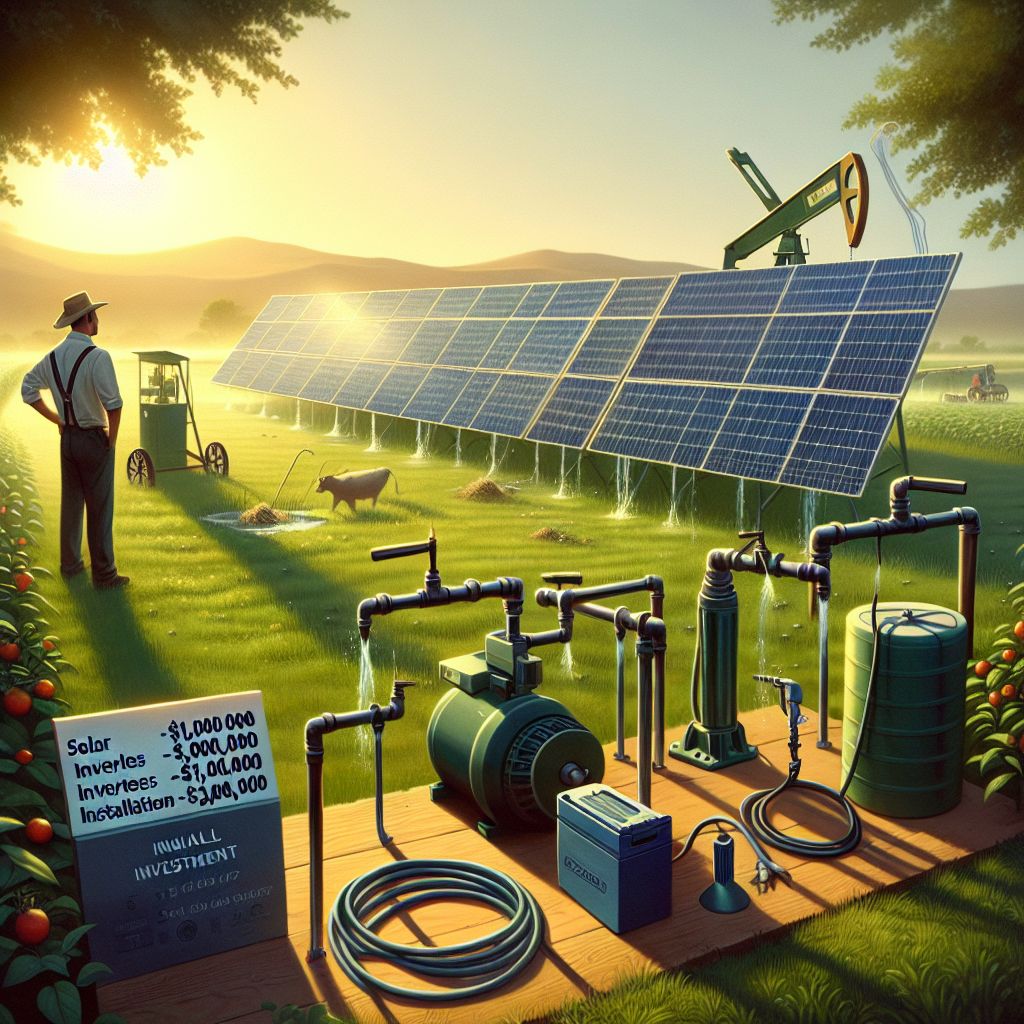
Setting up a solar irrigation system involves a substantial initial investment. The cost of solar panels, inverters, batteries, and other equipment can be prohibitive, especially for small-scale farmers. Additionally, the installation process itself can be costly and complex.
Here’s a table summarizing the cost of solar panels and equipment:
|
Component |
Average Cost Range |
|---|---|
|
Solar Panels |
$1.00 – $1.80 per watt (monocrystalline). 1 |
|
$0.80 – $1.00 per watt (polycrystalline). 1 | |
|
$0.50 – $1.00 per watt (thin-film). 1 | |
|
Inverter |
$1,500 – $3,000 installed. 1 |
|
Mounting Equipment |
Varies (part of installation costs). 1 |
|
Electrical Panel Upgrade |
$1,300 – $2,500 (if needed). 1 |
|
Battery Storage System |
$5,600 – $11,200 installed (after tax credits). 1 |
|
Total System Cost (6 kW) |
$17,430 – $23,870 (before tax credits) $12,138 – $16709 (after tax credits) 4 |
|
Total System Cost (10.8 kW) |
$29,926 (before tax credits) $20,948 (after federal tax credits). 2 |
For example, a typical solar irrigation system can cost anywhere from $5,000 to $20,000, depending on the size and capacity. This initial investment can be a significant barrier for many farmers, particularly those in developing countries. Adding batteries to solar irrigation systems can further increase the cost but also improve efficiency.
“Setup of a solar power irrigation system can be expensive, as the Initial Investment is the main challenge, especially for farmers.”
However, there are financial assistance programs and subsidies available to help offset these costs. Governments and NGOs often provide grants or low-interest loans to encourage the adoption of solar irrigation systems. Despite this, the upfront costs remain a significant hurdle for many farmers.
Availability of Financial Assistance
There are various financial assistance programs and subsidies available to help farmers offset the initial costs of setting up a solar irrigation system. Governments and non-governmental organizations (NGOs) often provide grants or low-interest loans to encourage the adoption of renewable energy solutions in agriculture.
For instance, in India, the government offers subsidies covering up to 60% of the total cost of solar irrigation systems for farmers. These subsidies can significantly reduce the financial burden on farmers, making solar irrigation systems more accessible.
Comparison with Traditional Irrigation Systems
When comparing solar irrigation systems with traditional irrigation systems, it’s essential to consider both the short-term and long-term costs. Traditional systems, such as diesel or electric pumps, may have lower initial costs but can be more expensive to operate and maintain over time due to fuel and electricity expenses.
On the other hand, solar irrigation systems have higher initial costs but can offer significant long-term savings. By generating their own energy, farmers can reduce their dependence on external power sources, leading to lower operating costs and increased energy independence.
Maintenance and Technical Expertise Requirements
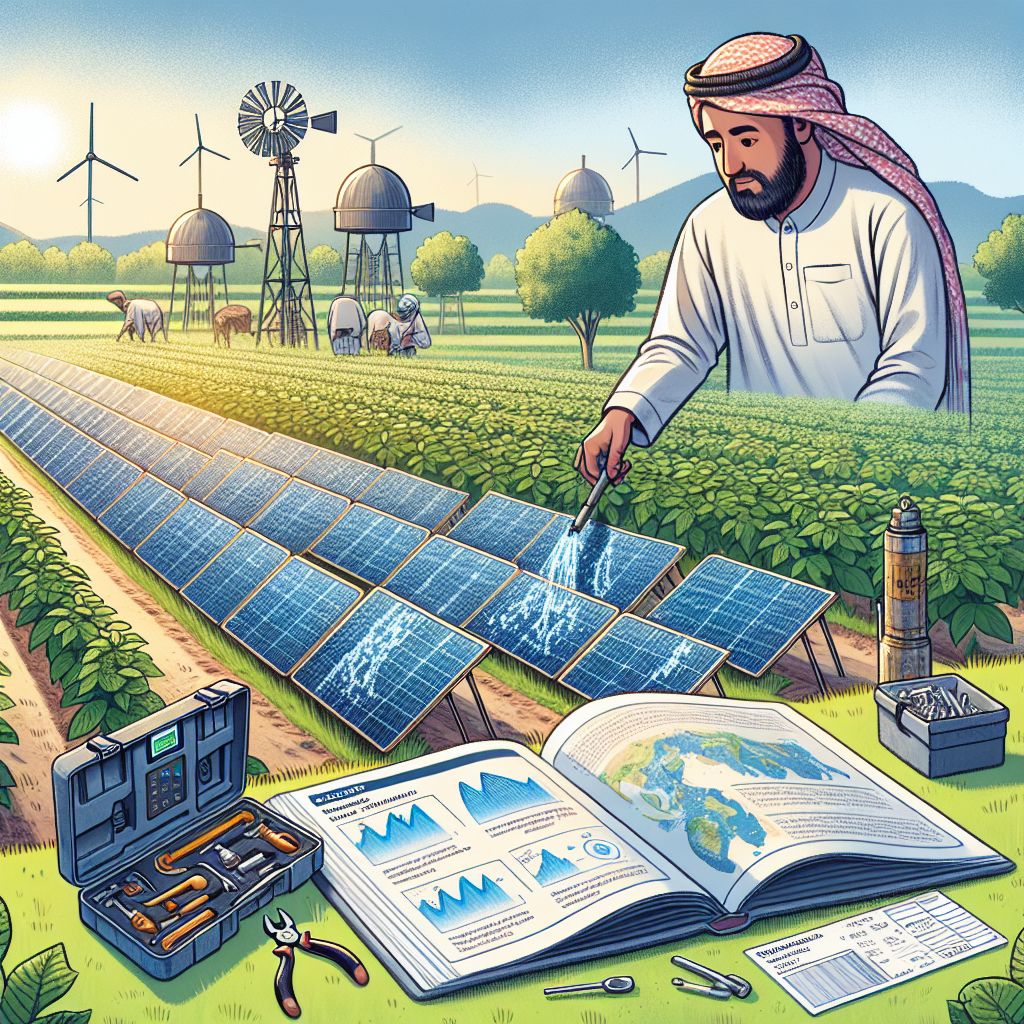
Maintaining a solar irrigation system requires regular upkeep and technical expertise. Solar panels need to be cleaned regularly to ensure they are operating at peak efficiency. Dust, dirt, and debris can accumulate on the panels, reducing their ability to generate electricity.
Need for Regular Maintenance
Solar irrigation systems require consistent and regular maintenance to function efficiently. This includes cleaning the solar panels to remove dust and debris that can block sunlight. Additionally, the entire system, including inverters and batteries, needs periodic checks to ensure everything is running smoothly. For more information on the advantages and disadvantages of these systems, you can refer to this detailed guide.
Without regular maintenance, the efficiency of the solar panels can decrease, resulting in less power generation and, consequently, less water for irrigation. This can directly affect crop yields and the overall productivity of the farm.
Access to Skilled Technicians
Another significant challenge is the need for skilled technicians who can handle the maintenance and repair of solar irrigation systems. Not all farmers have the technical knowledge required to manage these systems on their own.
In many rural areas, access to skilled technicians can be limited. This can lead to delays in repairs and maintenance, further impacting the efficiency and reliability of the irrigation system.
Farmers may need to undergo training or hire professionals to ensure their systems are well-maintained, adding to the overall cost and complexity of using solar irrigation systems.
Long-Term Cost of Maintenance
While solar irrigation systems can reduce long-term operating costs by eliminating fuel expenses, the maintenance costs can add up over time. Replacement parts, labor for repairs, and regular maintenance can be a financial burden for farmers.
For example, replacing a solar inverter can cost between $500 and $2,000, depending on the system’s size and capacity. Batteries, which are essential for storing energy, also need to be replaced every few years, costing between $1,000 and $3,000.
Land Use and Space Requirements
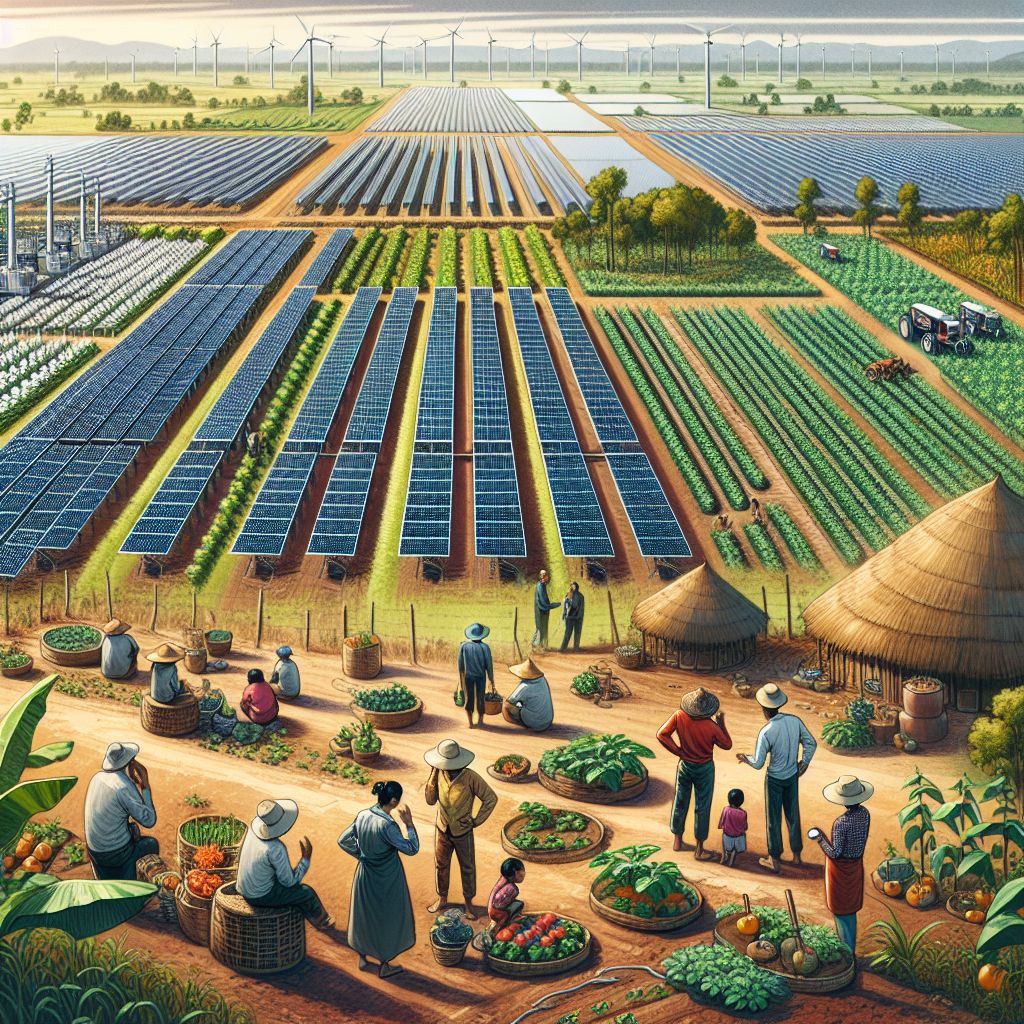
One of the significant downsides of solar irrigation systems is the amount of land required for installing solar panels. This can be a considerable challenge, especially for small-scale farmers with limited arable land.
Space Needed for Solar Panels
Solar panels require a substantial amount of space to generate enough power for irrigation. The more energy needed, the more panels required, and consequently, the more space needed for installation. Learn more about the materials that make thin-film solar panels which can be more space-efficient.
This can be problematic for farmers who need to balance the space between growing crops and installing solar panels. In some cases, farmers may need to sacrifice productive land to accommodate the solar panels, impacting their overall crop yield.
Competition With Cultivation Land
In regions where arable land is scarce, the competition between land use for cultivation and solar panel installation can be intense. Farmers need to carefully consider the trade-offs between using land for growing crops and generating solar power.
For example, a farmer with limited land may struggle to find enough space to install the necessary solar panels without compromising their crop production. This can be a significant deterrent for adopting solar irrigation systems.
Pooled or Community Systems as Alternatives
One potential solution to the space challenge is the use of pooled or community solar irrigation systems. By sharing the costs and benefits, farmers can mitigate the space and financial challenges associated with individual solar installations.
Community solar projects allow multiple farmers to share a single, larger solar installation, reducing the need for each farmer to have their own system. This can be particularly beneficial in areas with limited land availability.
Water Source Limitations
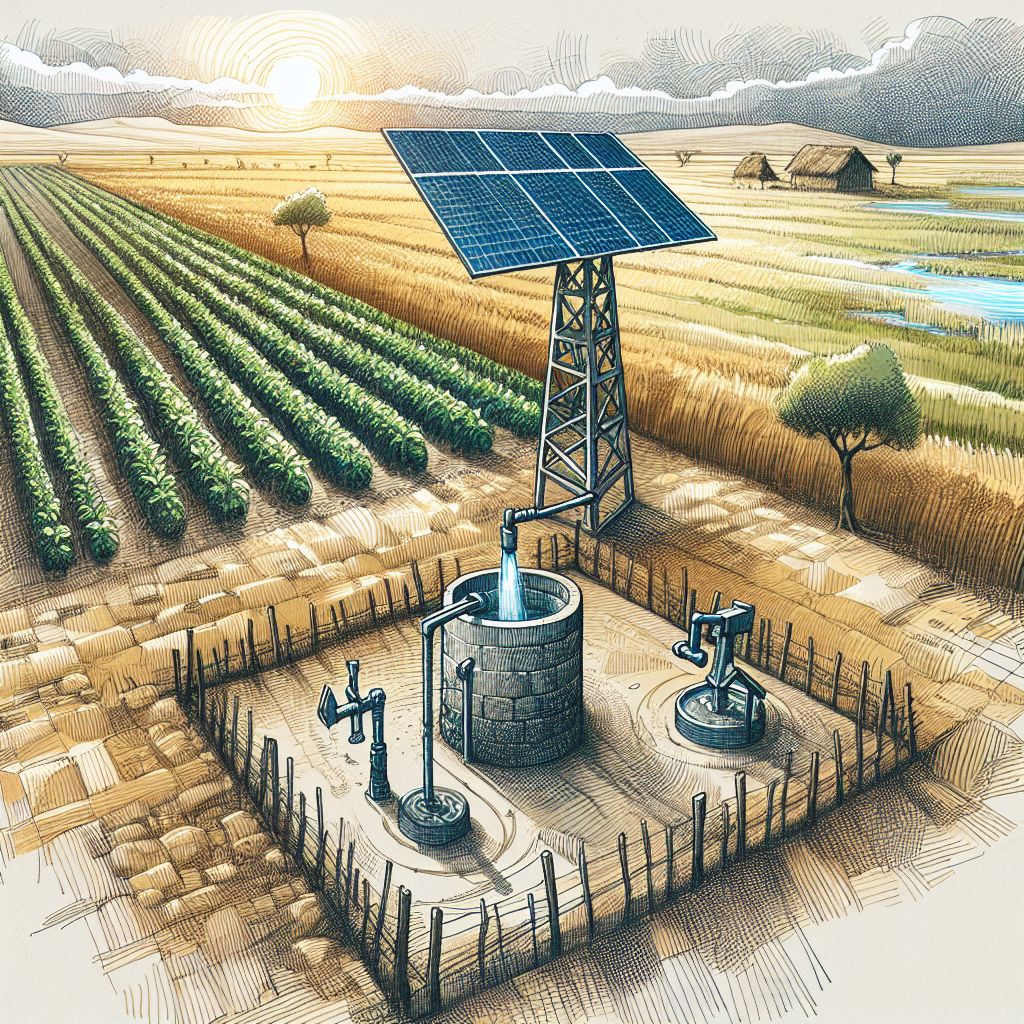
Solar irrigation systems rely on a consistent and reliable water source to function effectively. In areas where water availability is limited or inconsistent, these systems may not be the best option.
Dependence on Reliable Water Sources
For solar irrigation systems to work efficiently, they need access to a reliable water source. This can be a challenge in regions where water scarcity is an issue or where water sources are seasonal.
Without a consistent water supply, the effectiveness of the solar irrigation system can be compromised, leading to insufficient water for crops and reduced agricultural productivity.
Challenges in Drilling Wells
In some areas, drilling wells to access groundwater can be a solution to water scarcity. However, drilling wells can be expensive and may not always be feasible due to geological conditions or regulatory restrictions.
“Drilling wells can be expensive and may not always be feasible due to geological conditions or regulatory restrictions.”
Besides the cost, the process of drilling wells can also be time-consuming and require specialized equipment and expertise. This can add to the overall complexity and cost of setting up a solar irrigation system.
Limitations of Surface Water Accessibility
Surface water sources, such as rivers and lakes, can also be used for solar irrigation systems. However, these sources can be subject to seasonal variations and may not always provide a reliable water supply.
In regions where surface water is scarce or heavily regulated, farmers may face challenges in accessing sufficient water for their irrigation needs. This can limit the effectiveness of solar irrigation systems and impact overall farm productivity.
Solutions to Mitigate Downsides
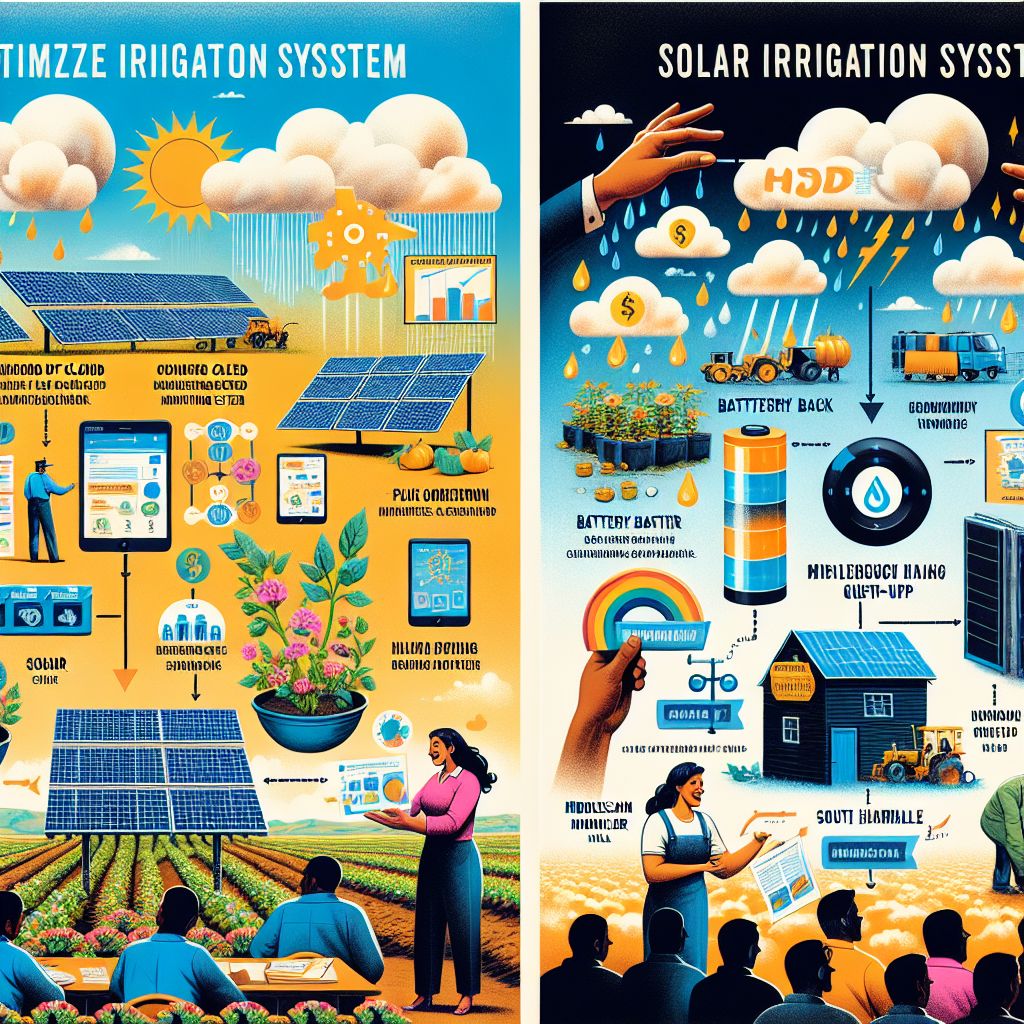
Despite the challenges, there are several solutions and strategies that farmers can adopt to mitigate the downsides of solar irrigation systems. By implementing these solutions, farmers can improve the efficiency and reliability of their systems.
Cloud-Based Irrigation Monitoring Systems
Use of Battery Back-Up for Bad Weather Days and Nights
Government Incentives and Subsidies
Training Programs for Farmers
These solutions can help address some of the key challenges associated with solar irrigation systems, making them a more viable option for farmers.
Cloud-based irrigation monitoring systems can provide real-time data on weather conditions, soil moisture levels, and water usage. This information can help farmers make informed decisions about when and how much to irrigate, improving the efficiency of their systems. For those interested in the types of solar panels that can power these systems, here’s a detailed comparison of monocrystalline vs. polycrystalline vs. thin-film panels.
Using battery back-up systems can ensure a consistent power supply for irrigation during cloudy days or nighttime hours. This can help mitigate the impact of weather dependency on solar irrigation systems.
Cloud-Based Irrigation Monitoring Systems
Cloud-based irrigation monitoring systems can provide real-time data on weather conditions, soil moisture levels, and water usage. This information can help farmers make informed decisions about when and how much to irrigate, improving the efficiency of their systems. For more information on the best solar panels for farmers, check out this guide.
These systems can also help farmers identify potential issues with their solar irrigation systems, such as low water levels or malfunctioning equipment, allowing them to address problems quickly and prevent crop damage.
Cloud-based irrigation monitoring systems can provide real-time data on weather conditions, soil moisture levels, and water usage. This information can help farmers make informed decisions about when and how much to irrigate, improving the efficiency of their systems.
These systems can also help farmers identify potential issues with their solar irrigation systems, such as low water levels or malfunctioning equipment, allowing them to address problems quickly and prevent crop damage. For more insights, check out the best reasons to add batteries to solar irrigation systems.
Use a Battery Back-Up for Bad Weather Days and Nights
Using battery back-up systems can ensure a consistent power supply for irrigation during cloudy days or nighttime hours. This can help mitigate the impact of weather dependency on solar irrigation systems.
Batteries store excess energy generated during sunny periods, which can then be used when sunlight is insufficient. While batteries can be expensive, they provide a reliable power source and can significantly improve the consistency of irrigation.
Government Incentives and Subsidies
Government incentives and subsidies can play a crucial role in making solar irrigation systems more accessible to farmers. Many governments offer financial assistance programs to help offset the initial costs of solar installations.
For example, in India, the government provides subsidies covering up to 60% of the total cost of solar irrigation systems for farmers. These subsidies can significantly reduce the financial burden and encourage the adoption of renewable energy solutions in agriculture.
Training Programs for Farmers
Training programs can equip farmers with the knowledge and skills needed to maintain and operate solar irrigation systems effectively. These programs can cover topics such as system installation, regular maintenance, troubleshooting, and optimizing energy usage.
By providing farmers with the necessary training, they can become more self-sufficient and capable of managing their solar irrigation systems, reducing their reliance on external technicians and improving the overall efficiency of their operations.
Conclusion and Future Outlook
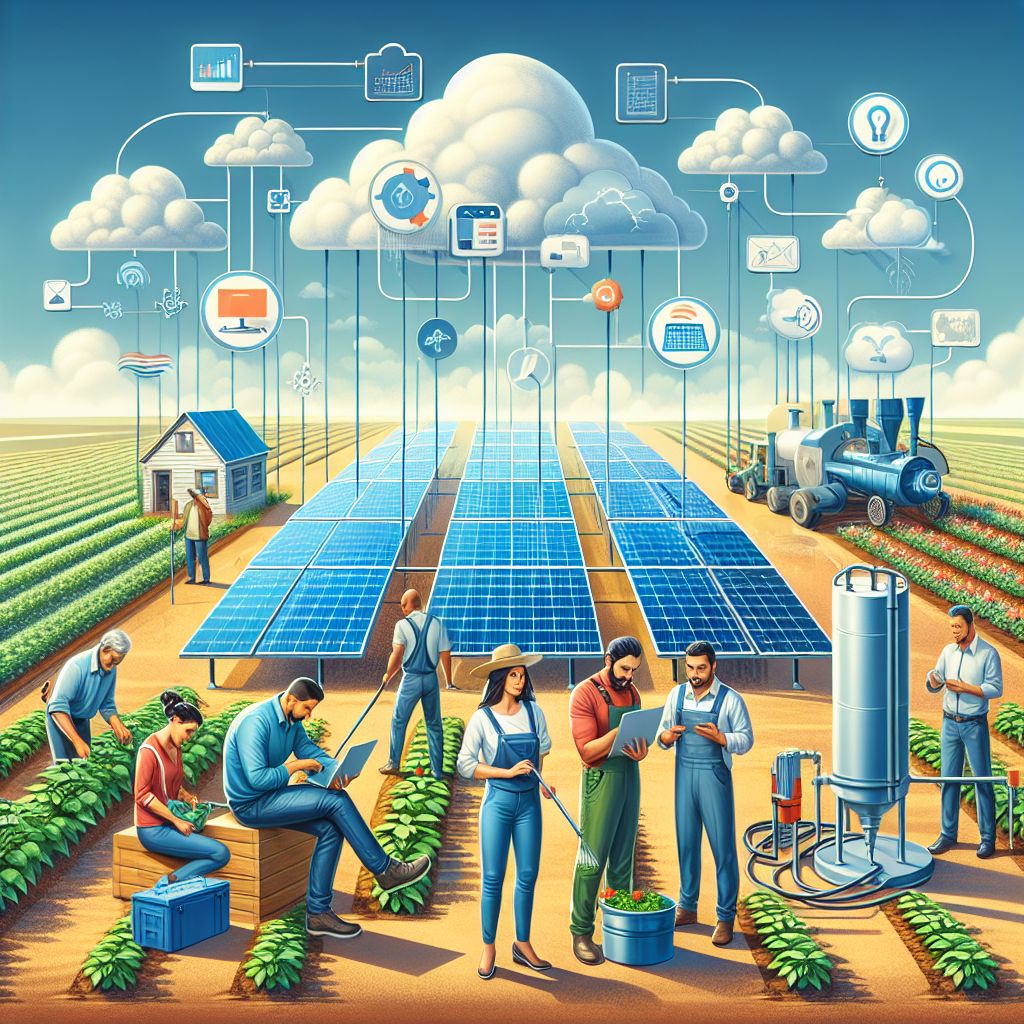
Solar irrigation systems offer numerous benefits, but they also come with several challenges that farmers need to consider. Understanding these downsides can help farmers make informed decisions and adopt strategies to mitigate the potential drawbacks, such as choosing the best solar panels for farmers.
Key Takeaways from the Downsides
Weather dependency, high initial costs, maintenance requirements, space constraints, and water source limitations are significant challenges associated with solar irrigation systems. However, with proper planning and support, these challenges can be addressed.
Even With all the Downside, is Using a Solar Irrigation System a Good Investment for a Farmer
Despite the downsides, solar irrigation systems can still be a valuable investment for farmers. They offer long-term savings, energy independence, and environmental benefits. By leveraging financial assistance, adopting innovative solutions, and participating in training programs, farmers can overcome the challenges and reap the benefits of solar irrigation.
Promising Solutions and Innovations
Emerging technologies and innovative solutions, such as cloud-based monitoring systems, battery back-up, and community solar projects, can help address the challenges of solar irrigation systems. Continued research and development in this field can lead to more efficient and cost-effective solutions for farmers.
Empowering Farmers for Sustainable Agriculture
Empowering farmers with the knowledge, resources, and support they need to adopt solar irrigation systems can contribute to more sustainable and resilient agricultural practices. By embracing renewable energy solutions, farmers can reduce their environmental impact, improve their productivity, and contribute to a more sustainable future.
FAQ
What are the main disadvantages of solar irrigation systems?
The main disadvantages include weather dependency, high initial setup costs, maintenance requirements, space constraints, and reliance on reliable water sources.
What are the initial costs of setting up a solar irrigation system?
The initial costs can range from $5,000 to $20,000, depending on the size and capacity of the system. This includes the cost of solar panels, inverters, batteries, and installation.
How does weather affect the performance of solar irrigation systems?
Solar irrigation systems are highly dependent on sunlight. Cloudy days, nighttime, and seasonal variations can reduce the efficiency of solar panels, leading to inconsistent power generation and irrigation.
Can solar irrigation systems be installed on small farms?
Yes, but space constraints can be a challenge. Small farms may need to balance the space between growing crops and installing solar panels. Pooled or community solar systems can be a viable alternative for small farms.
What kind of technical knowledge is required to maintain these systems?
Farmers need to have a basic understanding of solar technology, regular maintenance practices, and troubleshooting techniques. Training programs can help equip farmers with the necessary skills to manage their solar irrigation systems effectively.
Irrigation development is acknowledged as one of the key strategies for building climate resilience in agriculture. However, the adoption of solar irrigation systems comes with its own set of challenges. While solar power offers a sustainable and eco-friendly alternative to traditional energy sources, it also presents issues such as high initial costs and dependency on weather conditions. For a detailed analysis of these challenges, you can read more about the benefits and challenges of solar power irrigation systems.

Leave a Reply