

Key Takeaways
Thin film solar panels are made from materials like Cadmium Telluride (CdTe), Copper Indium Gallium Selenide (CIGS), Amorphous Silicon (a-Si), and Gallium Arsenide (GaAs).
CdTe is cost-effective and highly efficient in absorbing sunlight, making it a popular choice.
CIGS panels offer flexibility and high efficiency, suitable for various applications.
a-Si panels are lightweight and perform well in low light conditions.
GaAs panels, although more expensive, provide high efficiency and are ideal for space applications.
Materials That Make Thin Film Solar Panels
Solar energy is a rapidly growing sector in the renewable energy market, and thin film solar panels are a significant part of this growth. These panels are made from several materials, each with its unique properties and advantages. Understanding these materials can help you make informed decisions about the type of solar technology that best suits your needs.
Rapid Overview of Thin Film Solar Panels
Thin film solar panels are a type of photovoltaic solar panel made up of one or more thin layers of photovoltaic materials. These layers are much thinner than those used in traditional silicon solar panels, making them lightweight and sometimes even flexible. The main materials used in these panels are Cadmium Telluride (CdTe), Copper Indium Gallium Selenide (CIGS), Amorphous Silicon (a-Si), and Gallium Arsenide (GaAs).
Benefits of Thin Film Solar Technology
Thin film solar panels offer several advantages over traditional crystalline silicon panels:
They are lighter and can be flexible, making them easier to install on various surfaces.
They perform better in low light conditions and at higher temperatures.
They can be manufactured at a lower cost, depending on the materials used.
They are suitable for a wide range of applications, from large-scale solar farms to portable solar devices.

Common Materials Used in Thin Film Solar Panels
Cadmium Telluride (CdTe)
Cadmium Telluride (CdTe) is one of the most commonly used materials in thin film solar panels. It is known for its high efficiency and cost-effectiveness. CdTe panels are made by depositing a thin layer of cadmium telluride onto a substrate, usually glass or plastic.
CdTe panels are highly efficient in absorbing sunlight, which makes them one of the most effective types of thin film solar panels available. They also have a relatively low production cost, making them an attractive option for large-scale solar farms.
Copper Indium Gallium Selenide (CIGS)
Copper Indium Gallium Selenide (CIGS) is another popular material used in thin film solar panels. CIGS panels are made by depositing a thin layer of copper, indium, gallium, and selenium onto a substrate.
CIGS panels offer several advantages:
They are highly efficient, often outperforming traditional silicon panels in terms of efficiency.
They are flexible, making them suitable for a variety of applications, including building-integrated photovoltaics (BIPV) and portable solar devices.
They have a long lifespan and are resistant to environmental degradation.
Amorphous Silicon (a-Si)
Amorphous Silicon (a-Si) is a type of silicon that is not arranged in a regular crystalline structure. a-Si panels are made by depositing a thin layer of amorphous silicon onto a substrate.
a-Si panels are lightweight and perform well in low light conditions. They are also relatively inexpensive to produce, making them a cost-effective option for certain applications. However, they typically have lower efficiency compared to other types of thin film solar panels.
Emerging Material: Gallium Arsenide (GaAs)
Gallium Arsenide (GaAs) is an emerging material in the field of thin film solar technology. GaAs panels are made by depositing a thin layer of gallium arsenide onto a substrate.
GaAs panels are known for their high efficiency, often exceeding that of traditional silicon panels. They are also highly resistant to environmental degradation, making them ideal for use in harsh environments, such as space.

Advantages of Specific Materials
CdTe: Cost-Effectiveness and High Absorption
Cadmium Telluride (CdTe) panels are known for their cost-effectiveness and high absorption efficiency. This makes them an attractive choice for large-scale solar projects. CdTe can absorb sunlight at almost the ideal wavelength for photovoltaic conversion, which allows for a higher efficiency rate compared to some other materials. Additionally, the manufacturing process for CdTe panels is relatively straightforward and cost-effective, contributing to their popularity in the market.
One of the key benefits of CdTe panels is their ability to perform well in a variety of environmental conditions. They maintain efficiency even in low light and high-temperature scenarios, making them versatile for different geographic locations. However, there are concerns regarding the toxicity of cadmium, which necessitates careful handling and recycling processes.
CIGS: Flexibility and Efficiency
Copper Indium Gallium Selenide (CIGS) panels are celebrated for their flexibility and high efficiency. These panels can be produced on flexible substrates, which opens up a wide range of applications that rigid panels cannot accommodate. For instance, they can be integrated into building materials or used in portable solar devices.
CIGS panels also boast a high absorption coefficient, meaning they can absorb more sunlight and convert it into electricity more efficiently than some other types of solar cells. This makes them a strong contender in the solar market. However, the production of CIGS panels involves rare and expensive materials, which can drive up costs and limit their widespread adoption.
a-Si: Lightweight and Low Light Performance
Amorphous Silicon (a-Si) panels are known for their lightweight properties and good performance in low light conditions. Unlike crystalline silicon, amorphous silicon does not have a regular atomic structure, which allows it to be deposited in very thin layers on a variety of substrates.
This material is particularly useful for applications where weight and flexibility are critical factors. For example, a-Si panels are often used in portable solar chargers and building-integrated photovoltaics (BIPV). While they are less efficient than other types of solar panels, their low cost and versatility make them an attractive option for specific uses.
GaAs: High Efficiency and Space Applications
Gallium Arsenide (GaAs) panels are among the most efficient types of thin film solar panels available. GaAs has a high absorption coefficient and can convert a larger portion of sunlight into electricity compared to other materials. This makes GaAs panels ideal for applications where space and weight are at a premium, such as in satellites and other space technologies.
Despite their high efficiency, GaAs panels are expensive to produce, which limits their use to specialized applications. The complexity of the manufacturing process and the cost of raw materials contribute to the high price of these panels. Nevertheless, their superior performance in demanding environments makes them invaluable for certain industries.
Here’s a table showing the advantages and challenges of using various materials in thin-film solar panels:
|
Material |
Advantages |
Challenges |
|---|---|---|
|
Cadmium Telluride (CdTe) |
– Lower efficiency (10-11%) compared to silicon panels. 2, 4 | |
|
– Toxicity concerns due to cadmium content. 2 | ||
|
– Less affected by temperature changes. 5 |
– Limited tellurium supply. 5 | |
|
Copper Indium Gallium Selenide (CIGS) |
– Higher efficiency potential (up to 22.4% in lab conditions). 2, 7 | |
|
– Flexible substrate options. 7 |
– Use of rare and expensive materials (indium, gallium). 6 | |
|
– Better performance in low-light conditions. 7 |
– Efficiency drops in high temperatures. 6 | |
|
Amorphous Silicon (a-Si) |
– Very low efficiency (around 7%). 8 | |
|
– Less toxic materials used in production. 2 | ||
|
– Suitable for smaller solar applications. 2 |
– Requires larger surface area for equivalent power output. 8 | |
|
Gallium Arsenide (GaAs) |
– Extremely high production costs. 6 | |
|
– Excellent performance in space applications. 9 |
– Scarcity of gallium. 6 | |
|
– Resistant to radiation damage. 10 |
Challenges in Using These Materials
Toxicity and Environmental Concerns
One of the primary challenges associated with thin film solar panels is the toxicity of some of the materials used. For instance, cadmium, a key component in CdTe panels, is a toxic heavy metal that poses environmental and health risks. Proper handling, recycling, and disposal methods are essential to mitigate these risks. Failure to manage these materials responsibly can lead to soil and water contamination, posing long-term environmental hazards.
Besides cadmium, other materials like selenium and gallium also have environmental implications. The extraction and processing of these materials can result in environmental degradation if not managed correctly. Therefore, it is crucial to develop sustainable practices and technologies to minimize the environmental impact of thin film solar panels.
Material Scarcity and High Production Costs
The scarcity of certain raw materials used in thin film solar panels is another significant challenge. Materials like indium and gallium are not abundantly available, and their extraction is often expensive and environmentally taxing. This scarcity drives up the cost of producing panels that rely on these materials, such as CIGS and GaAs panels.
High production costs can be a barrier to the widespread adoption of these technologies. While advancements in manufacturing processes and material efficiency are helping to reduce costs, the reliance on scarce materials remains a concern. Investing in research and development to find alternative materials or improve the efficiency of existing ones is essential for the future of thin film solar technology.
Stability and Degradation Over Time
Stability and long-term performance are critical factors in the viability of solar panels. Some thin film materials, like amorphous silicon, are prone to degradation over time, which can reduce their efficiency and lifespan. This degradation is often due to exposure to environmental factors such as UV radiation, temperature fluctuations, and moisture. For more information on the benefits and setup of solar-powered systems, you can read about solar-powered center pivot irrigation systems.
Improving the stability of thin film solar panels is an ongoing area of research. Advances in encapsulation techniques and material formulations are helping to enhance the durability of these panels. However, ensuring long-term reliability remains a challenge that must be addressed to build consumer confidence and encourage broader adoption of thin film solar technology.

Innovations in Thin Film Solar Materials
The field of thin film solar technology is constantly evolving, with new materials and manufacturing techniques being developed to address existing challenges and improve performance. Innovations in this area hold the promise of making solar energy more accessible and efficient.
Inkjet-Printed Solar Cells
One exciting development is the use of inkjet printing technology to produce solar cells. This method allows for the precise deposition of photovoltaic materials onto a substrate, reducing waste and lowering production costs. Inkjet-printed solar cells can be produced quickly and at a lower cost compared to traditional methods, making them an attractive option for large-scale manufacturing.
This technology also enables the production of flexible and lightweight solar panels, which can be integrated into a variety of applications, from portable devices to building materials. As the technology matures, it has the potential to revolutionize the solar industry by making solar panels more affordable and versatile.
Organic and Nanostructured Materials
Researchers are also exploring the use of organic and nanostructured materials in thin film solar panels. Organic photovoltaic (OPV) cells use organic molecules or polymers to absorb sunlight and generate electricity. These materials can be processed using low-cost techniques, such as roll-to-roll printing, making them an attractive option for large-scale production.
Nanostructured materials, such as quantum dots and nanowires, offer unique properties that can enhance the efficiency and performance of solar cells. These materials can be engineered to have specific optical and electronic properties, allowing for the development of highly efficient and lightweight solar panels.

Applications of Thin Film Solar Panels
Perovskite Thin Films
Perovskite solar cells are a relatively new and promising technology in the field of thin film solar panels. Perovskites are a class of materials with a unique crystal structure that allows for high efficiency in converting sunlight into electricity. Perovskite solar cells have shown rapid improvements in efficiency over the past few years, making them a hot topic in solar research.
One of the key advantages of perovskite solar cells is their potential for low-cost production. They can be manufactured using simple and scalable techniques, such as solution processing and inkjet printing. Additionally, perovskite solar cells can be made flexible and lightweight, making them suitable for a wide range of applications.
Building-Integrated Photovoltaics (BIPV)
Building-Integrated Photovoltaics (BIPV) is an innovative application of thin film solar panels. BIPV involves integrating solar panels directly into the building materials, such as windows, roofs, and facades. This approach not only generates electricity but also enhances the aesthetic appeal of buildings.
For instance, thin film solar panels can be incorporated into glass windows, allowing them to generate power while still letting light into the building. This dual functionality makes BIPV an attractive option for modern, energy-efficient buildings. Additionally, BIPV systems can reduce the overall energy consumption of a building by providing a renewable source of electricity.
Portable and Wearable Solar Devices
Thin film solar panels are also used in portable and wearable solar devices. Their lightweight and flexible nature make them ideal for applications where traditional, rigid solar panels would be impractical. For example, thin film solar panels can be integrated into backpacks, tents, and clothing, providing a convenient way to generate power on the go.
These portable solar devices are particularly useful for outdoor enthusiasts, emergency responders, and military personnel. They offer a reliable source of power for charging electronic devices, such as smartphones, GPS units, and radios, even in remote locations where access to the electrical grid is limited.
Large-Scale Solar Farms
Large-scale solar farms are another significant application of thin film solar panels. These solar farms consist of vast arrays of solar panels that generate electricity on a large scale, which can be fed into the electrical grid. Thin film solar panels are well-suited for these applications due to their cost-effectiveness and ease of installation.
Solar farms can be built on land that is unsuitable for other purposes, such as deserts or brownfields, making efficient use of otherwise underutilized spaces. The electricity generated by these solar farms can help meet the growing demand for renewable energy, reducing reliance on fossil fuels and lowering greenhouse gas emissions.
Conclusion: The Future of Thin Film Solar Panels
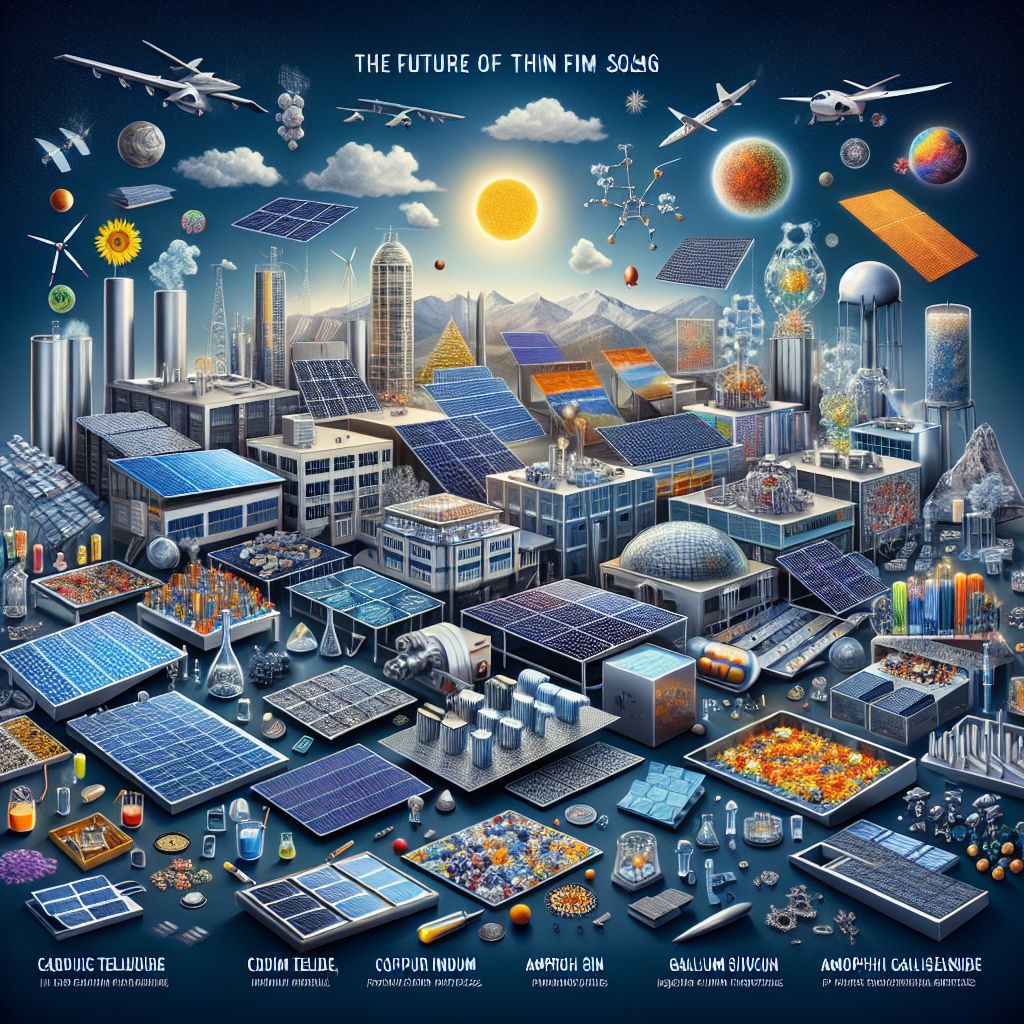
The future of thin film solar panels looks promising, with ongoing advancements in materials and manufacturing techniques. These innovations are making thin film solar technology more efficient, cost-effective, and versatile, opening up new applications and markets.
As the demand for renewable energy continues to grow, thin film solar panels will play an increasingly important role in meeting this demand. Their unique properties, such as flexibility, lightweight, and high efficiency, make them an attractive option for a wide range of applications, from building-integrated photovoltaics to portable solar devices and large-scale solar farms.
Key Takeaways and Industry Impact
Thin film solar panels offer several advantages over traditional crystalline silicon panels, including lightweight, flexibility, and better performance in low light and high-temperature conditions. The main materials used in these panels are Cadmium Telluride (CdTe), Copper Indium Gallium Selenide (CIGS), Amorphous Silicon (a-Si), and Gallium Arsenide (GaAs).
Each material has its unique properties and advantages, making them suitable for different applications. CdTe panels are cost-effective and highly efficient, CIGS panels offer flexibility and high efficiency, a-Si panels are lightweight and perform well in low light conditions, and GaAs panels provide high efficiency and are ideal for space applications.
Potential for Future Growth and Innovations
Innovations in thin film solar technology, such as inkjet-printed solar cells, organic and nanostructured materials, and perovskite thin films, hold the promise of making solar energy more accessible and efficient. These advancements are addressing existing challenges and improving the performance and cost-effectiveness of thin film solar panels.
As the technology continues to evolve, thin film solar panels will play a crucial role in the transition to a more sustainable and renewable energy future. Investing in research and development, as well as adopting sustainable practices, will be essential to realizing the full potential of this technology.
Frequently Asked Questions (FAQ)
What makes thin film solar panels different from traditional ones?
Thin film solar panels differ from traditional crystalline silicon panels in several ways. They are made from one or more thin layers of photovoltaic materials, making them lighter and sometimes flexible. This allows for a wider range of applications, such as building-integrated photovoltaics and portable solar devices. Additionally, thin film solar panels generally perform better in low light conditions and at higher temperatures, making them suitable for solar-powered irrigation systems.
Are thin film solar panels more environmentally friendly?
Thin film solar panels have both environmental advantages and challenges. On the one hand, they can be manufactured at a lower cost and with less material compared to traditional silicon panels. On the other hand, some materials used in thin film panels, such as cadmium, can be toxic and require careful handling and recycling. Overall, the environmental impact of thin film solar panels depends on the specific materials used and the practices employed in their production and disposal. For instance, using solar panels in drip irrigation systems can be a smart combination for farmers, highlighting the versatility and application of solar technology in various fields.
How efficient are thin film solar panels compared to crystalline silicon?
The efficiency of thin film solar panels can vary depending on the materials used. Generally, they have lower efficiency rates compared to traditional crystalline silicon panels. However, some thin film materials, such as Gallium Arsenide (GaAs), can achieve high efficiency levels, sometimes exceeding those of silicon panels. Advances in thin film technology are continuously improving their efficiency, making them a viable option for various applications.
How much do thin solar panels cost compared to traditional solar panels?
The cost of thin film solar panels can vary widely depending on the materials and manufacturing processes used. In general, they can be less expensive to produce than traditional silicon panels due to their lower material and production costs. However, some thin film materials, such as Gallium Arsenide (GaAs), are more expensive due to the complexity of their production and the cost of raw materials. Overall, the cost-effectiveness of thin film solar panels depends on the specific application and the materials used.





Leave a Reply