

Article-At-A-Glance: Why Solar Drip Irrigation is a Game-Changer for Farmers
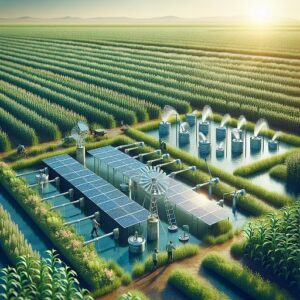
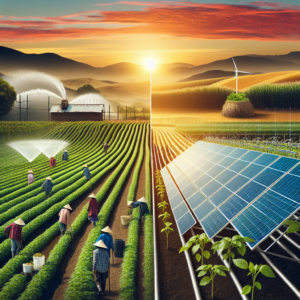
- Solar drip irrigation delivers water directly to plant roots using solar-powered pumps, cutting water usage by up to 70% compared to flood and sprinkler methods.
- Farmers in off-grid and water-scarce regions stand to gain the most, eliminating reliance on diesel generators and unpredictable utility costs.
- Government subsidies and incentives can dramatically reduce the upfront cost of installing a solar drip system — making it more accessible than most farmers realize.
- The combination of renewable energy and precision watering creates a measurable reduction in carbon footprint, supporting long-term sustainable farming goals.
- There’s one specific setup step that most farmers overlook during installation — and skipping it can cost you efficiency from day one. More on that below.
Solar drip irrigation is one of the most practical investments a farmer can make right now — and the numbers back it up.
Water scarcity is tightening its grip on agricultural regions worldwide, and the cost of conventional energy-powered irrigation keeps climbing. Farmers are being squeezed from both ends: rising input costs and shrinking water availability. Solar drip irrigation addresses both problems at once by combining precision water delivery with zero-cost solar energy. Growing Solar Mist is at the forefront of this shift, helping farmers transition to smarter, solar-powered growing systems that work with nature rather than against it.
What is a Drip Irrigation System
A drip irrigation system is a method of watering crops by delivering water slowly and directly to the root zone of each plant through a network of pipes, tubes, and small emitters. Instead of flooding a field or spraying water into the air, drip systems place water exactly where the plant can use it most efficiently.
How Water Moves from Source to Root
Water begins its journey at a source — a well, reservoir, pond, or municipal supply — and is pulled through the system by a pump. It travels through a main supply line, then into sub-main lines, and finally into the drip lines that run alongside each crop row. At precise intervals along these drip lines, small devices called emitters release water drop by drop at a controlled rate directly into the soil above the root zone. The water then percolates downward to where roots actively absorb it, minimizing surface evaporation entirely.
Core Components: Pipes, Emitters, and Filters
Every drip irrigation system relies on a few non-negotiable components working together. The quality and compatibility of these parts determine the long-term reliability of your entire setup. For more information on these essential irrigation system components, you can explore further resources.
- Main and sub-main supply lines: Typically made from UV-resistant polyethylene (PE) tubing, these carry water from the source to the field zones.
- Drip tape or drip lines: Thin-walled tubing with pre-installed emitters spaced at regular intervals, commonly 6, 8, or 12 inches apart depending on crop type.
- Emitters: Pressure-compensating emitters maintain a consistent flow rate — usually between 0.5 and 2 gallons per hour (GPH) — regardless of terrain changes.
- Filter system: A screen or disc filter (typically 120–200 mesh) prevents clogging of emitters, which is the single most common cause of drip system failure.
- Pressure regulator: Keeps system pressure within the operating range of your drip tape, usually between 8 and 15 PSI.
- Backflow preventer: Stops contaminated field water from reversing into the water source.
Skipping the filter or under-sizing it is the setup mistake that quietly kills efficiency. Even clean-looking water carries enough sediment and organic material to clog emitters within a single growing season if filtration is inadequate.
Drip Irrigation vs. Traditional Flood and Sprinkler Systems
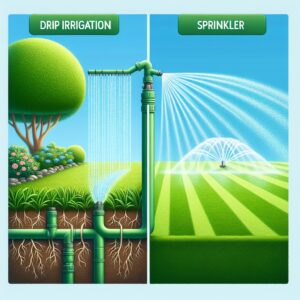
Flood irrigation, still used on roughly 85% of irrigated farmland globally according to the Food and Agriculture Organization (FAO), delivers water across entire field surfaces regardless of where plant roots actually sit. The result is massive evaporation loss, surface runoff, and soil compaction. Sprinkler systems improve on this but still lose significant water to wind drift and evaporation before it ever reaches the soil. Drip irrigation sidesteps both issues entirely by eliminating surface wetting and aerial delivery altogether. The efficiency difference is substantial — flood irrigation operates at roughly 40–60% efficiency, sprinklers at 70–75%, while well-designed drip systems consistently achieve 90–95% water use efficiency.

Integrating Solar Power Increases the Efficiency of the Drip Irrigation System
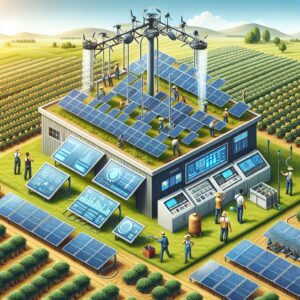
Pairing solar energy with drip irrigation doesn’t just replace the power source — it fundamentally changes the economics and reliability of the entire system. A solar-powered drip irrigation setup removes the two largest recurring costs in conventional irrigation: energy bills and fuel for diesel pumps.
How Solar Panels Power the Irrigation Pump
Solar panels convert sunlight into direct current (DC) electricity through photovoltaic (PV) cells. This DC power either feeds directly into a DC-powered submersible or surface pump, or passes through an inverter to power a standard AC pump. The pump then pressurizes the water supply line to the operating pressure required by the drip system — typically 10–30 PSI for most drip tape configurations. Here’s how the energy flow works step by step:
- Solar panels generate DC electricity from sunlight — typical farm setups use 200W to 1,000W panel arrays depending on pump demand.
- Charge controller regulates voltage flowing to the battery bank or pump, preventing overcharging and system damage.
- Battery bank (optional but recommended) stores excess solar energy for early morning or cloudy-day irrigation runs.
- DC or AC pump draws power from the solar source and pressurizes the drip irrigation mainline.
- Drip system receives pressurized water and distributes it through the emitter network to crop root zones.
DC pumps paired directly with solar panels are the most energy-efficient configuration. Eliminating the DC-to-AC conversion step removes the efficiency loss that inverters introduce — typically 5–15% of total energy generated. For small to mid-sized farms, a brushless DC centrifugal pump like the Grundfos SQFlex series is a proven choice that operates efficiently across variable solar input without requiring a battery bank for daytime-only irrigation schedules.
The system scales linearly — more panel capacity means more pumping capacity. A 400W solar array can typically power a pump moving 2–5 gallons per minute (GPM), sufficient for irrigating 1–3 acres of drip-irrigated vegetables. Scaling to 10 acres may require a 1,500–2,000W array and a higher-flow pump rated at 10–15 GPM.
Water Savings of Up to 70% Compared to Conventional Methods
The water savings figures associated with drip irrigation aren’t theoretical — they’re documented across large-scale field trials and small farm implementations alike. By delivering water only to the root zone at a rate the soil can absorb, drip systems virtually eliminate the three biggest sources of water waste in conventional irrigation: surface evaporation, deep percolation past the root zone, and runoff. Farmers switching from flood irrigation to solar drip systems routinely report water use reductions of 50–70%, with some specialty crop operations achieving reductions closer to 80% when combined with soil moisture monitoring.
Energy Independence: No Grid, No Diesel, No Problem
For farms located miles from the nearest utility connection, running power lines to an irrigation pump can cost anywhere from $15,000 to $50,000 per mile of line extension — before a single drop of water flows. Solar eliminates that infrastructure cost entirely. Diesel-powered irrigation pumps carry their own ongoing burden: fuel costs fluctuate with global oil markets, engines require regular maintenance, and supply chain disruptions can leave a farm without the fuel it needs at the worst possible time — peak growing season.
A solar-powered system, once installed, operates on free fuel indefinitely. The panels themselves carry manufacturer warranties of 25 years and typically maintain over 80% of their original output capacity by the end of that period. This energy independence is especially critical in developing agricultural regions, where grid reliability is low and diesel delivery is inconsistent. Owning your energy source means owning your irrigation schedule — no outages, no price spikes, no supply chains standing between your crops and water. For more insights, explore the benefits and advantages of solar-powered drip irrigation systems.
Which Farm Types Benefit Most from Solar Drip Systems
While virtually any irrigated farm can benefit from solar drip irrigation, certain operations see the most dramatic returns. Remote farms without grid access top the list — for them, solar isn’t just economical, it’s often the only practical option. Smallholder farms in semi-arid regions of sub-Saharan Africa, South Asia, and Latin America have seen transformational results, moving from rain-dependent subsistence farming to reliable year-round food production. Specialty crop operations — orchards, vineyards, berry farms, and vegetable producers — benefit from drip’s precision delivery, which supports consistent fruit sizing and quality that directly impacts market price. Organic operations also benefit since precise water control reduces disease pressure from wet foliage, cutting the need for fungicide inputs. For more information on how solar drip systems are transforming agriculture, check out this article on solar-powered drip irrigation system benefits.
Lower Carbon Footprint Through Renewable Energy Use
Conventional diesel irrigation pumps emit CO₂ with every hour of operation. A diesel pump running 6 hours per day through a 150-day growing season generates significant greenhouse gas output — entirely avoidable with solar. Solar PV systems produce electricity with near-zero operational emissions. Over a 25-year system lifespan, a single solar drip irrigation installation can offset tens of thousands of pounds of CO₂ compared to an equivalent diesel-powered system. For farmers participating in carbon credit programs or marketing products under sustainable or regenerative agriculture certifications, this measurable emissions reduction has direct financial value beyond the energy savings alone.
Financial Benefits for Farmers
The financial case for solar drip irrigation gets stronger every year — and not just because energy and water costs keep rising. The combination of reduced operating expenses, available government support, and longer system lifespan creates a return on investment profile that outperforms most other farm infrastructure upgrades.
Upfront Costs vs. Long-Term Savings
A complete solar drip irrigation system for a small farm — covering 1 to 5 acres — typically costs between $1,500 and $8,000 depending on panel capacity, pump selection, drip line footage, and whether battery storage is included. Larger operations scaling to 20–50 acres can expect system costs in the $15,000 to $40,000 range before incentives. These numbers sound significant upfront, but they need to be measured against what conventional irrigation actually costs over time.
A diesel pump running 6 hours per day through a 180-day growing season consumes roughly 540–900 gallons of diesel annually, depending on pump size. At current diesel prices, that alone represents $2,000–$4,000 per year in fuel costs — before maintenance, repairs, or unexpected breakdowns. A solar system with zero fuel cost and minimal moving parts typically pays for itself within 3 to 5 years, then continues delivering savings for the remaining 20+ years of its operational lifespan. The long-term math is difficult to argue with.
Government Subsidies and Incentives Available to Farmers
One of the most underutilized advantages of switching to solar drip irrigation is the financial support available through government programs. In the United States, the USDA’s Environmental Quality Incentives Program (EQIP) provides cost-share payments covering up to 50–75% of installation costs for qualifying irrigation efficiency upgrades. The Rural Energy for America Program (REAP) offers grants covering up to 25% of solar installation costs for agricultural producers, plus loan guarantees for the remaining balance. The federal Investment Tax Credit (ITC) allows farmers operating as businesses to deduct a percentage of their solar system cost directly from their federal tax liability.
Outside the U.S., programs vary significantly by country but are increasingly common. India’s PM-KUSUM scheme subsidizes solar pump installations for smallholder farmers at up to 90% of system cost in participating states. Kenya, Ethiopia, and several other Sub-Saharan African nations have active programs through partnerships with organizations like the International Fund for Agricultural Development (IFAD) providing subsidized or grant-funded solar irrigation equipment. Checking with your local agricultural extension office or rural development agency is always the fastest way to identify what’s currently available in your region.
How Reduced Water and Energy Bills Add Up Over Time
Beyond the fuel savings, water cost reductions compound the financial benefit significantly. Farmers on metered municipal or district water supplies paying per-gallon or per-acre-foot rates see immediate bill reductions when switching to drip. A 50–70% reduction in water consumption translates directly to a 50–70% reduction in water costs on metered systems. For a farm spending $5,000 annually on irrigation water, that’s $2,500 to $3,500 in annual savings from water bills alone — stacked on top of eliminated fuel costs.
There are also indirect savings that rarely get factored into initial calculations. Drip irrigation’s precision delivery reduces fertilizer leaching, meaning more of your applied nutrients stay in the root zone rather than washing past it. Farmers using fertigation — injecting liquid fertilizer directly into the drip system — report fertilizer use reductions of 25–50% compared to broadcast application methods. Reduced weed pressure is another quiet savings driver: drip systems only wet the root zone of your crops, leaving the dry inter-row spaces far less hospitable to weed germination and growth, which cuts labor and herbicide costs.

Practical Uses Across Different Crops and Climates
Solar drip irrigation isn’t a single-crop or single-climate solution — it’s a flexible system that adapts to an enormous range of agricultural contexts. From high-value berry operations in California to subsistence vegetable gardens in rural India, the same fundamental technology delivers reliable results when properly configured for the specific crop and environment. Learn more about the benefits and advantages of solar-powered drip irrigation systems.
Best Crops for Drip Irrigation: Vegetables, Fruits, and Row Crops
Drip irrigation performs best with crops that have defined, consistent root zones and high sensitivity to water stress or overwatering. Vegetables are the strongest performers — tomatoes, peppers, cucumbers, melons, lettuce, onions, and squash all respond exceptionally well to the steady, precise moisture that drip systems provide. Tree fruits and vine crops including grapes, apples, citrus, avocados, and stone fruits are well-established drip users, with many large commercial orchards having used the technology for decades. Strawberries and other berry crops are particularly well-suited because drip keeps foliage dry, dramatically reducing botrytis and other moisture-driven disease pressure that devastates yields in overhead-irrigated berry operations.
Row crops like corn, soybeans, and cotton can benefit from subsurface drip irrigation (SDI), where drip tape is buried 12–18 inches below the soil surface. While SDI requires higher installation investment, it completely eliminates surface evaporation and can be left in place across multiple growing seasons without being moved or reinstalled. Sugar cane operations in water-limited regions have adopted drip at scale with significant yield and water use results.
How Arid and Water-Scarce Regions Benefit Most
In regions where annual rainfall falls below 20 inches and aquifer levels are declining, drip irrigation isn’t just an efficiency upgrade — it’s often the difference between a viable farm and an abandoned one. The Middle East, North Africa, the southwestern United States, and large portions of sub-Saharan Africa all face chronic water scarcity that makes the 70% water savings from drip irrigation directly relevant to agricultural survival, not just profitability. Solar power amplifies this advantage in these same regions, which also tend to have the highest solar irradiance values globally — meaning solar panels in these areas generate more electricity per installed watt than in temperate climates.
How to Set Up a Solar Drip Irrigation System on Your Farm
Quick-Start Component Checklist
Component
Typical Specification
Notes
Solar Panel Array
200W – 2,000W
Size based on pump power draw and daily run hours needed
DC Pump (e.g., Grundfos SQFlex)
0.5 – 15 GPM flow rate
Match flow rate to total emitter output across all drip lines
Charge Controller
MPPT type recommended
MPPT controllers recover 10–30% more energy than PWM types
Battery Bank (optional)
100–400 Ah lithium or AGM
Required for pre-dawn or cloudy-day irrigation runs
Filter (Screen or Disc)
120–200 mesh
Non-negotiable — protects emitters from clogging
Pressure Regulator
8–15 PSI for drip tape
Prevents emitter blowouts on uneven terrain
Drip Tape / Drip Line
6–12 inch emitter spacing
Spacing determined by crop type and row width
Mainline Tubing
3/4 inch – 2 inch PE pipe
Size based on total flow rate and field distance from pump
Setting up a solar drip irrigation system is a step-by-step process that rewards careful planning at each stage. Rushing through the design phase is where most installation problems originate — components that are undersized, mismatched, or installed in the wrong sequence create inefficiencies that are expensive to correct after the fact.
The good news is that once a system is properly designed and installed, it requires minimal ongoing intervention. The absence of complex mechanical components — no combustion engines, no elaborate electrical systems — means there’s relatively little that can go wrong during routine operation. Most maintenance tasks are straightforward and can be handled without specialized technical knowledge once you understand how the system works.
1. Assess Your Water Source and Farm Layout
Before selecting a single component, you need two critical numbers: your available water flow rate (in gallons per minute) and your total water requirement (in gallons per day). Measure your water source output by timing how long it takes to fill a container of known volume. If your well or pump can only deliver 3 GPM, your entire drip system must be designed around that constraint — no amount of solar panel capacity changes the physics of your water supply.
Walk your field and document the elevation changes, total irrigated area, crop row lengths, and distance from your water source to the furthest point in the field. Elevation change matters because every 2.31 feet of elevation gain adds 1 PSI of back-pressure that your pump must overcome. A field with a 10-foot elevation rise from pump to far end requires your system to generate at least 4.3 additional PSI just to reach the far rows at adequate pressure — and that needs to be factored into pump sizing before purchase.
2. Choose the Right Solar Panel Capacity for Your System
Pump power draw (measured in watts) and your required daily run hours determine your minimum solar panel capacity. If your pump draws 300 watts and you need to run it for 5 hours each day, you need at least 1,500 watt-hours of daily solar generation. In a region averaging 5 peak sun hours per day, a 300W solar array would theoretically meet that need — but real-world losses from wiring, controller efficiency, temperature, and panel degradation mean you should design for 25–30% more capacity than the minimum calculation suggests. In this example, a 400W array is the more reliable specification.
Panel orientation and tilt angle also affect output significantly. In the Northern Hemisphere, panels should face true south at a tilt angle roughly equal to your latitude for year-round optimization. A 5-degree error in orientation can reduce annual output by 5–10%. For seasonal farming operations, adjusting panel tilt to match the sun’s position during your specific growing season rather than optimizing for year-round average output can recover meaningful additional energy during peak irrigation demand. For more insights on how farmers are switching to solar power, you can explore additional resources.
If you’re operating without battery storage — running irrigation only when the sun is actively powering the panels — factor in the daily solar window at your location. Irrigation systems designed for daytime-only operation in regions with 8–10 hours of daily sunlight can be sized more conservatively than systems in cloudier climates or those needing early-morning irrigation runs before sunrise.
3. Select Emitters and Drip Lines Based on Your Crop Type
Emitter selection is where drip system design gets crop-specific. The wrong emitter flow rate for your soil type and crop water demand leads to either under-watering — stressing plants — or over-watering, which drives root diseases and wastes the water savings you installed the system to achieve. The key variables are emitter flow rate (GPH), emitter spacing along the drip line, and drip line spacing between rows.
Soil type directly influences which emitter flow rate works best. Sandy soils drain quickly and spread water in a narrow vertical column, so they need higher-flow emitters (1.0–2.0 GPH) placed at closer spacing to ensure lateral water spread covers the full root zone. Clay soils absorb water slowly and spread it more horizontally — lower-flow emitters (0.5–1.0 GPH) at wider spacing prevent surface ponding and runoff while still delivering adequate moisture. Loam soils fall between these extremes and give you the most flexibility in emitter selection.
Drip tape is the most economical choice for annual vegetables and row crops, while thicker-walled drip line with pressure-compensating emitters is the better investment for permanent crops like orchards and vineyards that will use the same lines for 10–15 years. Mixing tape and line within the same system based on crop permanence is a practical approach that balances cost with durability where it matters most.
- Tomatoes, peppers, cucumbers: 12-inch emitter spacing, 0.5–1.0 GPH emitters, drip lines spaced at crop row width
- Strawberries and lettuce: 6–8 inch emitter spacing, 0.5 GPH emitters to maintain even moisture in shallow root zones
- Tree fruits and vines: 2–4 pressure-compensating emitters per tree or vine, 1.0–2.0 GPH each, placed to encircle the root zone
- Onions and garlic: 8-inch emitter spacing, 0.5 GPH — bulb crops are sensitive to excess moisture and benefit from conservative flow rates
- Corn and field crops (SDI): Buried drip tape at 12-inch emitter spacing, 0.5–1.0 GPH, tape buried 12–18 inches deep below tillage depth
Always calculate your total system flow requirement — the sum of all emitters running simultaneously — before finalizing your pump and solar panel specifications. A 2-acre tomato planting with drip lines every 5 feet and 0.5 GPH emitters at 12-inch spacing contains thousands of individual emitters, and their combined flow rate determines whether your pump and solar array are adequate for the job.
4. Install and Test the System Before Full Deployment
Run your mainline first and pressure-test it before connecting a single drip line. Cap all endpoints, pressurize the system to operating pressure, and walk every inch of mainline looking for leaks at fittings and connections. A small drip at a barbed fitting that loses 0.1 GPM might seem negligible, but across a 180-day season it wastes over 25,000 gallons of water — defeating a core purpose of the entire system. Fix every leak before proceeding. Once the mainline is confirmed tight, connect your sub-mains and flush them completely before attaching drip lines. Flushing removes pipe shavings, dirt, and debris introduced during installation that would otherwise clog your emitters within the first few irrigation cycles. For more information on integrating solar panels with irrigation systems, check out this guide on connecting a drip irrigation system to solar panels.
5. Monitor and Maintain for Peak Performance
Solar Drip Irrigation Maintenance Schedule
Task
Frequency
What to Check
Filter cleaning
Weekly during season
Remove and rinse screen or disc filter; inspect for damage
Emitter check
Every 2 weeks
Walk drip lines looking for dry spots (clogged) or wet spots (blowouts)
Solar panel cleaning
Monthly
Remove dust, bird droppings, and debris reducing panel output
Pressure check
Monthly
Verify operating pressure at system head and at field endpoints
Battery bank inspection
Monthly
Check charge level, terminal connections, and electrolyte levels if AGM
Mainline and fitting inspection
Monthly
Look for UV degradation, rodent damage, and loose fittings
End-of-season flush
Annually
Flush all drip lines completely; remove and store drip tape if reusable
Pump inspection
Annually
Check impeller wear, seals, and electrical connections at pump housing
The most common cause of drip system performance decline isn’t equipment failure — it’s deferred maintenance on the filter. A partially clogged screen filter reduces flow to the entire system simultaneously, creating a pressure drop that farmers often misdiagnose as a pump problem. Clean the filter weekly during peak growing season without exception. It takes five minutes and protects thousands of dollars of downstream equipment.
On the solar side, panel output degrades measurably when dust and debris accumulate on the glass surface. In arid farming regions — exactly where solar drip irrigation is most valuable — wind-driven dust can reduce panel output by 15–25% between cleanings. A simple rinse with clean water and a soft brush on a monthly schedule keeps your panels operating near their rated capacity throughout the season.
Soil moisture sensors add a layer of precision monitoring that takes solar drip irrigation to the next level. Devices like the Irrometer Watermark 200SS soil tension sensors placed at root depth give you real-time feedback on whether your irrigation schedule is delivering the right amount of water for actual soil conditions. Adjusting run times based on sensor data rather than fixed schedules can reduce water use by an additional 15–30% beyond what drip irrigation alone achieves — and it removes the guesswork that leads to both under- and over-irrigation during variable weather conditions.

Solar Drip Irrigation is the Future of Sustainable Farming
Agriculture is under pressure from every direction — water tables dropping, energy costs climbing, climate patterns becoming less predictable, and market demands for sustainably produced food growing louder every year. Solar drip irrigation doesn’t just address one of these pressures. It addresses all of them simultaneously. Precision water delivery reduces consumption by up to 70%. Solar energy eliminates fuel and grid electricity costs. The combination reduces carbon emissions, supports soil health by preventing waterlogging and erosion, and enables farming in regions where conventional irrigation has never been economically viable. This isn’t a niche technology for specialty farms — it’s the direction that productive, resource-efficient agriculture is moving across every climate zone and every scale of operation.
What makes solar drip irrigation particularly powerful as a long-term farming strategy is its compounding benefit structure. The system saves water and money in year one. Those savings compound over 20–25 years of operational life. Meanwhile, global energy costs trend upward, making the value of energy independence more significant with every passing year. The farmers who adopt this technology today are locking in their irrigation costs at near-zero for a generation — while their neighbors continue absorbing rising diesel and utility costs with no ceiling in sight.
Is Solar Drip Irrigation Worth the Investment for the Farmer
For the vast majority of irrigating farmers — especially those in sunny climates, off-grid locations, or water-scarce regions — the answer is an unambiguous yes. The payback period of 3–5 years, followed by 20+ years of dramatically reduced operating costs, puts solar drip irrigation among the strongest return-on-investment decisions available in modern farm management. Factor in available government subsidies that can cut upfront costs by 25–75%, and the financial case becomes even more compelling. The farms that will thrive over the next three decades are the ones that lock in resource efficiency now, and solar drip irrigation is one of the clearest paths to getting there.
The non-financial benefits — energy independence, reduced carbon footprint, improved crop consistency, lower disease pressure, and the ability to irrigate reliably regardless of grid outages or fuel supply disruptions — add a resilience dimension that pure financial analysis doesn’t fully capture. In an era of increasing climate volatility and supply chain uncertainty, that resilience has real value that only becomes more apparent when conventional systems fail and solar drip systems keep running.
Frequently Asked Questions
These are the questions farmers most commonly ask when evaluating solar drip irrigation for the first time. The answers are based on real system performance data and field experience across a range of farm types and climates.
How Much Does a Solar Drip Irrigation System Cost?
A small-scale system covering 1–5 acres typically runs between $1,500 and $8,000 for a complete installation including solar panels, pump, controller, filter, pressure regulator, and drip lines. Mid-sized operations covering 10–20 acres generally fall in the $12,000–$25,000 range before incentives. After applying available programs like USDA EQIP cost-share or REAP grants in the U.S., net costs can be reduced by 25–75% depending on eligibility. Payback periods consistently land in the 3–5 year range when measured against eliminated diesel and water costs, with the system then generating savings for the remaining 20+ years of its operational lifespan.
Can Solar Drip Irrigation Work During Cloudy Days?
Yes — with some important nuance. Solar panels continue generating electricity on cloudy days, but at reduced output — typically 10–25% of their rated capacity under heavy overcast conditions. For systems without battery storage running on direct solar power, heavy cloud cover may reduce pump output enough to affect irrigation pressure and flow rate during those specific hours. This is why properly sizing your solar array with a 25–30% capacity buffer above your minimum calculated requirement matters — that buffer provides meaningful performance headroom on partially cloudy days.
Systems with a battery bank handle cloudy days without any operational disruption. The batteries, charged during previous sunny periods, supply consistent power to the pump regardless of current solar conditions. For farms in climates with frequent cloud cover, incorporating even a modest battery bank — 100–200 Ah of lithium iron phosphate (LiFePO4) storage — provides the reliability buffer needed to maintain irrigation schedules through multi-day overcast periods without stress.
Is Solar Drip Irrigation Suitable for Small-Scale Farms?
Small-scale farms are actually among the best candidates for solar drip irrigation. The technology scales down effectively — a 200W solar panel paired with a small DC pump can reliably irrigate a half-acre market garden with no grid connection required. The proportional savings on water and energy are just as significant at small scale as at large scale, and the simplicity of smaller systems means installation and maintenance are well within reach for individual farmers without engineering support.
For smallholder farmers in developing regions, solar drip irrigation has been genuinely transformational. Organizations including the International Fund for Agricultural Development (IFAD) and the Food and Agriculture Organization (FAO) have documented cases of smallholder farmers in sub-Saharan Africa and South Asia moving from rain-dependent single-crop seasons to reliable two or three-crop annual production cycles after adopting solar drip systems — with corresponding increases in household income and food security.
The entry point for a functional small farm system is lower than most people expect. A basic but complete solar drip setup for a quarter-acre kitchen garden or small market plot can be assembled for under $800 using quality components — a 100W panel, a small brushless DC pump, a basic filter and pressure regulator, and one or two rolls of quality drip tape. That investment, even without subsidies, pays for itself in a single growing season for most irrigated vegetable operations.
Small Farm Solar Drip System: Example Sizing
Farm Size
Estimated System Cost
Panel Capacity
Typical Payback Period
Quarter-acre market garden
$600 – $1,000
100W
1–2 seasons
1-acre vegetable operation
$1,500 – $3,000
200–400W
2–3 years
3-acre mixed crop farm
$3,500 – $6,000
400–800W
3–4 years
5-acre specialty crop farm
$6,000 – $10,000
800–1,200W
3–5 years
Cost estimates before government subsidies or incentive programs. Actual costs vary by region, water source type, and terrain.
How Long Do Solar Drip Irrigation Systems Last?
The two main system components have different but predictable lifespans. Quality solar panels from established manufacturers carry 25-year performance warranties and typically retain over 80% of their original output capacity at the end of that period — meaning they continue generating useful electricity well beyond their warranty term. DC pumps like the Grundfos SQFlex series are rated for 25,000+ hours of operation, which translates to 15–20 years of normal agricultural use. MPPT charge controllers typically last 10–15 years with basic maintenance. Battery banks, if included, are the shortest-lived component — quality lithium iron phosphate batteries carry 10-year warranties and are rated for 3,000–5,000 charge cycles before significant capacity degradation.
Drip tape is the component that requires the most frequent replacement — standard drip tape for annual vegetables typically lasts 3–8 seasons depending on UV exposure, mechanical handling, and soil chemistry. Thicker-walled drip line used in permanent orchards and vineyards routinely lasts 15–20 years with proper maintenance. The practical reality is that the core solar and pump infrastructure of a well-built system will outlast two to three generations of drip lines, making the ongoing tape replacement cost the primary recurring expense after initial installation. For more information on how solar panels can enhance the efficiency of your irrigation system, consider connecting a drip irrigation system to solar panels.
Does Solar Drip Irrigation Work for All Soil Types?
Solar drip irrigation works across all major soil types — the system design simply needs to be adjusted to match the specific water movement characteristics of your soil. The fundamental drip delivery mechanism is the same regardless of soil type, but emitter flow rate, emitter spacing, and irrigation run duration must be calibrated to how your soil actually moves and holds water. For more information on integrating these systems, consider connecting a drip irrigation system to solar panels.
Sandy soils require higher emitter flow rates and more frequent shorter irrigation cycles because water moves quickly downward and doesn’t spread laterally. Running a sandy soil system with low-flow emitters and long run times risks pushing water below the root zone before lateral spread can wet the full root area — wasting water and stressing plants simultaneously. The fix is straightforward: use 1.0–2.0 GPH emitters at closer spacing and run the system in multiple short cycles per day rather than one long daily run.
Clay soils present the opposite challenge. Water moves slowly through clay and spreads more horizontally than vertically — which sounds helpful but creates surface ponding and runoff when emitter flow rate exceeds the soil’s intake rate. Low-flow emitters at 0.5 GPH or less, combined with longer but less frequent irrigation cycles, allow clay soils to absorb water at their natural rate without ponding. Pulse irrigation — running the system in several short bursts with rest periods between — is particularly effective on heavy clay soils.
Loam soils are the most forgiving and perform well across a wide range of emitter configurations. If you’re farming on loam, you have the most flexibility in system design and are least likely to encounter soil-type-related performance problems. For mixed-soil farms where soil type changes across different field zones, consider dividing your drip system into independently controlled zones so you can tailor the irrigation schedule for each soil area rather than running the entire field on a single uniform schedule that is inevitably wrong for part of it. Learn more about connecting a drip irrigation system to solar panels for enhanced efficiency.
Growing Solar Mist helps farmers navigate exactly these kinds of decisions — from system design through ongoing optimization — so that every acre gets the water it needs, efficiently and sustainably.

Leave a Reply