
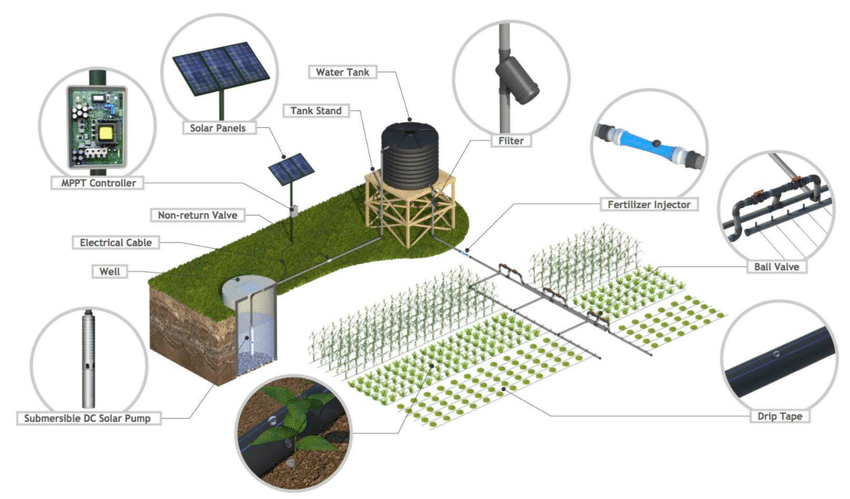
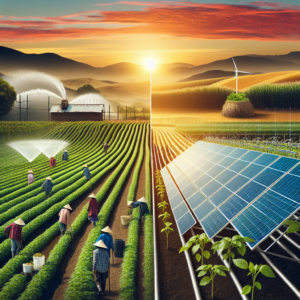
“Solar Powered Irrigation Systems …” from dasenergie.com and used with no modifications.
Key Takeaways
- Solar irrigation systems can reduce farming operation costs by up to 80% compared to diesel pumps while providing a sustainable, long-term water solution.
- The four main components of a solar irrigation system include solar panels, pumps, controllers, and water distribution equipment—each requiring careful selection based on your specific farm needs.
- DC pumps are ideal for small to medium farms with minimal power requirements, while AC pumps paired with inverters offer greater power for larger operations.
- Water storage solutions are essential components that bridge the gap between sunlight availability and irrigation needs, allowing for 24/7 watering capabilities.
- SunHub’s solar irrigation systems are specifically designed to maximize crop yields while minimizing resource usage in diverse agricultural settings.
Solar Irrigation: A Game-Changer for Modern Farmers
Water scarcity and rising energy costs are pushing farmers worldwide to seek innovative solutions. Solar irrigation systems represent not just a technological upgrade but a complete paradigm shift in how we approach agricultural water management. By harnessing the sun’s abundant energy, these systems allow farmers to irrigate crops efficiently without dependency on the electrical grid or fossil fuels.
The beauty of solar irrigation lies in its simplicity and adaptability. Whether you’re managing a small family farm or extensive agricultural operations, solar components can be scaled and configured to meet your specific needs. Today’s systems combine cutting-edge photovoltaic technology with efficient water pumping and distribution mechanisms to create solutions that work in virtually any climate or growing condition.
What makes these systems truly revolutionary is their ability to transform previously unproductive land into fertile growing spaces. In regions where grid electricity is unavailable or unreliable, solar irrigation systems from SunHub are opening new possibilities for agricultural development and food security. Understanding the core components of these systems is essential for farmers looking to make this powerful transition.
The Hidden Costs of Traditional Irrigation Methods
Traditional irrigation methods carry a hefty price tag that extends far beyond the monthly utility bill. Diesel-powered pumps require constant fuel purchases, frequent maintenance, and eventual replacement—creating a never-ending cycle of expenses. Electric pumps, while cleaner, tie farmers to fluctuating energy markets and rising utility rates that cut directly into profit margins.
The environmental costs are equally significant. Diesel pumps release harmful carbon emissions that contribute to climate change, while both diesel and electric options deplete non-renewable resources. This environmental impact eventually circles back as economic pressure through carbon taxes, stricter regulations, and changing consumer preferences for sustainably grown products.
Traditional vs. Solar Irrigation: 10-Year Cost Comparison
Diesel Pump System: $32,000+ (including fuel, maintenance, replacements)
Grid Electricity System: $25,000+ (depending on local rates)
Solar Irrigation System: $15,000-20,000 (primarily upfront costs)
*Based on average 5-acre farm with moderate water requirements
Perhaps the most overlooked cost of conventional irrigation is the opportunity cost. Farmers restricted by fuel availability or power outages face irrigation delays that can devastate crops during critical growing periods. When irrigation depends on external factors, farmers lose the autonomy to make optimal agricultural decisions.
Why Solar Irrigation Is Taking Over Farms Worldwide
The global shift toward solar irrigation isn’t just about environmental consciousness—it’s driven by compelling practical advantages. First and foremost is the dramatic reduction in operating costs. After the initial investment, solar irrigation systems run on free sunlight, eliminating the recurring expenses of fuel or electricity that traditionally eat up to 30% of farming operational budgets.
Reliability stands as another major advantage. In regions with consistent sunlight, solar irrigation provides dependable water supply without the vulnerabilities of fuel shortages or power outages. This reliability translates directly to crop security and predictable harvests. For remote farms or those in developing regions, solar irrigation eliminates the need for grid connection or fuel delivery infrastructure altogether.
The scalability of solar systems makes them uniquely adaptable to farms of all sizes. Small-scale farmers can start with basic panel-and-pump setups, while larger operations can implement sophisticated systems with battery storage, automation, and remote monitoring. This flexibility allows farmers to start small and expand their solar capacity as their irrigation needs grow or as additional capital becomes available. For those considering the financial aspect, understanding the financial benefits of solar panels can be crucial in making informed decisions.
Government incentives have also accelerated adoption, with many countries offering tax credits, grants, or subsidized financing for agricultural solar investments. These programs can significantly reduce the initial cost barrier, making solar irrigation financially accessible to a broader range of farmers. As climate change intensifies water scarcity and extreme weather events, the resilience provided by independent solar irrigation systems becomes increasingly valuable.
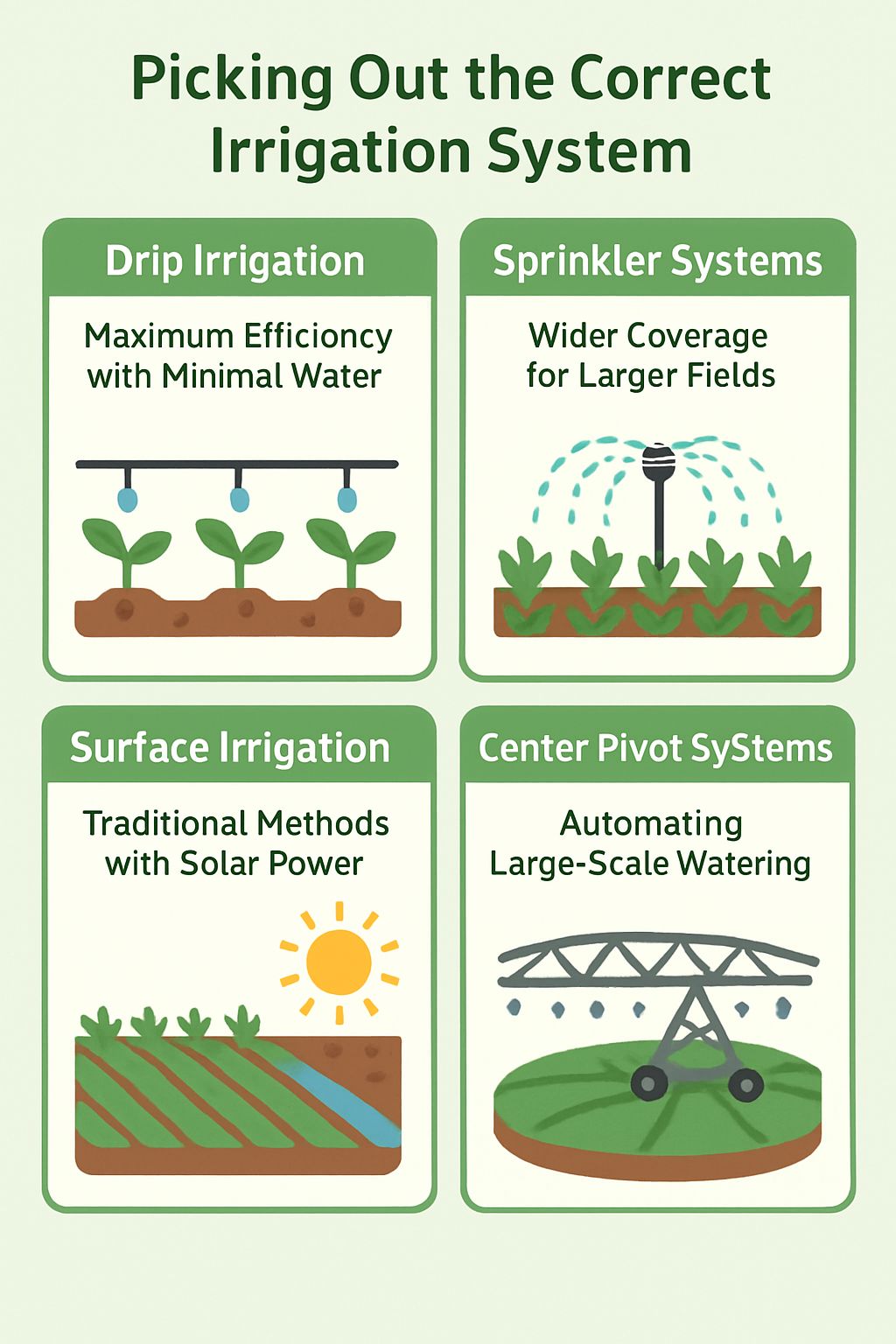
Picking Out the Correct Irrigation System
Before diving into solar components, it’s crucial to match your irrigation method to your specific agricultural needs. The efficiency of your solar setup depends heavily on choosing the right water delivery system for your crops, soil type, climate, and terrain. Each irrigation method requires different pressure and flow rates, which directly impact your solar component selection.
1. Drip Irrigation: Maximum Efficiency with Minimal Water
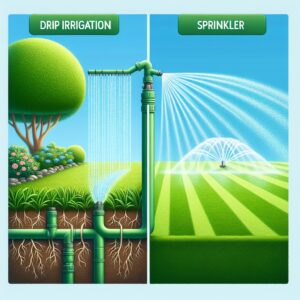
Drip irrigation stands as the most water-efficient option, delivering moisture directly to plant root zones through a network of tubes and emitters. This precision approach reduces water consumption by up to 60% compared to conventional methods, making it ideal for pairing with solar power systems. The low pressure requirements (typically 15-30 PSI) mean smaller pumps and fewer solar panels are needed, reducing your initial investment.
This system excels in row crops, orchards, vineyards, and greenhouse applications where targeted watering enhances plant health and productivity. Because water is delivered slowly and directly to roots, soil erosion and nutrient leaching are minimized, while weed growth between rows is discouraged due to dry surface soil. For areas experiencing water scarcity or drought conditions, drip irrigation powered by solar energy represents the most sustainable water management approach available.
The main drawback is the higher initial setup cost and maintenance requirements—filters must be regularly cleaned to prevent clogging, and lines need periodic inspection for damage. However, when properly maintained, a drip system can last 10-15 years, making it a sound long-term investment for sustainable farming operations.
2. Sprinkler Systems: Wider Coverage for Larger Fields
Sprinkler irrigation systems distribute water through pressurized pipes to rotating sprinkler heads that create a rainfall-like effect across crops. This method works exceptionally well for medium to large fields with uniform crops like grains, turf, or pasture. Sprinklers provide excellent coverage for broad areas and can be designed for various field shapes and topographies.
When powered by solar energy, sprinkler systems typically require more substantial pump capacity and higher pressure (30-70 PSI) than drip systems, translating to larger solar arrays. The water distribution is less precise than drip irrigation, with inevitable losses to evaporation and wind drift, but modern low-pressure sprinklers have significantly improved efficiency.
One significant advantage of sprinkler systems is their adaptability—portable systems can be moved between fields, while permanent installations can be zoned for sequential watering to maximize solar power usage throughout the day. For crops that benefit from foliage washing or for areas where frost protection is needed, sprinklers provide additional functionality beyond basic irrigation.
3. Surface Irrigation: Traditional Methods with Solar Power
Surface irrigation—including furrow, basin, and border methods—relies on gravity to distribute water across fields. Despite being the oldest irrigation technique, it remains widely used and can be effectively modernized with solar-powered delivery systems. These methods require minimal pressure but substantial water volume, making them suitable for solar setups with high-volume, low-pressure pumps.
The primary advantage of pairing solar with surface irrigation is the relatively low technical complexity. Farmers can often adapt existing gravity-based systems by simply replacing conventional pumps with solar alternatives, providing an accessible entry point to renewable energy. Surface methods work particularly well for closely spaced crops in level fields with soil types that allow moderate water infiltration.
However, surface irrigation typically has lower water efficiency than pressurized systems, with more runoff and evaporation losses. To maximize efficiency, modern solar-powered surface irrigation often incorporates automated gates, soil moisture sensors, and precise flow controls that ensure water is delivered only when and where needed.
4. Center Pivot Systems: Automating Large-Scale Watering
Center pivot irrigation represents the intersection of efficiency and scale, making it ideal for large commercial operations. These systems consist of long pipes mounted on wheeled towers that rotate around a central pivot point, creating the distinctive circular crop patterns visible from above. Modern pivots can cover fields exceeding 500 acres with a single system, providing uniform water distribution with minimal labor.
Powering center pivots with solar energy presents both challenges and opportunities. The substantial power requirements—for both pumping and moving the structure—necessitate larger solar installations, often 20kW or more. However, the consistent operation and predictable power needs make these systems excellent candidates for dedicated solar arrays that can be precisely sized to match operational requirements.
The latest solar-powered center pivots incorporate variable frequency drives, intelligent controls, and remote management capabilities that optimize water and energy usage. These smart systems can adjust application rates based on crop stage, soil conditions, and weather forecasts, delivering remarkable water efficiency despite their large scale.
Essential Solar Panel Components for Irrigation Systems
The foundation of any solar irrigation system begins with the photovoltaic panels that convert sunlight into electrical energy. These panels represent the largest physical component and typically the most significant portion of your investment. Understanding the different types, configurations, and mounting options is crucial for maximizing both performance and longevity in agricultural settings.
Monocrystalline vs. Polycrystalline vs. Thin-Film vs. Bifacial Solar Panels: Which Works Best on Farms
Monocrystalline solar panels offer the highest efficiency rates (20-22%) and require less space for the same power output, making them ideal for farms with limited installation area. Their sleek black appearance comes with premium pricing, but their superior performance in high temperatures and low-light conditions often justifies the additional cost for irrigation systems that must perform reliably during peak growing seasons.
Polycrystalline panels provide a more budget-friendly alternative with slightly lower efficiency (15-17%). The blue-hued panels perform admirably in full-sun conditions but experience more significant efficiency drops in extreme heat or partial shading. For larger farms with ample mounting space and good sun exposure, polycrystalline panels often deliver the best value proposition for irrigation systems.
Thin-film panels, while less efficient (10-13%), offer distinct advantages for certain agricultural applications. Their flexibility and lightweight design make them suitable for mounting on curved structures or temporary installations. Their superior performance in high temperatures and diffuse light conditions makes them worth considering for tropical or frequently cloudy regions, despite requiring approximately twice the surface area of crystalline panels.
Bifacial panels represent the cutting edge for farm applications, capturing light reflected off the ground on their undersides as well as direct sunlight on their front surfaces. When installed over highly reflective surfaces like light-colored soil, gravel, or even certain crops, bifacial panels can generate 5-30% more electricity than standard panels of the same rating. This makes them particularly effective for irrigation systems in areas with high reflection potential.
Here is a comparison table of the four best solar panel types for agricultural use — focusing on features, efficiency, and suitability for farms.
|
Solar Panel Type |
Efficiency Range |
Cost per Watt (Approx.) |
Key Advantages for Agriculture |
Limitations |
Best Farm Applications |
|---|---|---|---|---|---|
|
Monocrystalline Panels |
17–22% 1 |
$0.90–$1.50 2 |
High efficiency, compact design, long lifespan, performs well in all climates |
Higher upfront cost |
Space-limited farms, rooftops, and irrigation systems 1 |
|
Polycrystalline Panels |
13–17% 3 |
$0.70–$1.00 3 |
Lower cost, durable, long lifespan, strong in direct sunlight |
Requires more space, less efficient in cloudy conditions | |
|
Thin-Film Panels |
10–13% 5 |
$0.50–$0.90 2 |
Lightweight, flexible, better low-light/shaded performance |
Lower efficiency, shorter lifespan |
Greenhouses, barns, shaded or irregular terrain 5 |
|
Bifacial Panels |
18–22% 6 |
$1.00–$1.60 6 |
Captures light from both sides, high energy yield, great for reflective surfaces like grass or soil |
Higher cost, more complex installation |
Agrivoltaics (dual-use with crops), open-field installations 6 |
These four types of solar panels represent the most effective options for agricultural operations, allowing farmers to select between high efficiency (monocrystalline, bifacial) and lower-cost scalability (polycrystalline, thin-film) depending on land availability, sunlight exposure, and budget.
Panel Wattage Requirements Based on Farm Size
Determining the appropriate solar array capacity depends primarily on your water requirements, pumping lift height, and system pressure needs. As a general guideline, small farms (1-5 acres) typically require 1-3kW systems, medium operations (5-20 acres) need 3-10kW arrays, while large commercial farms may require 10kW or more depending on irrigation method and water source depth.
- Small Farm (1-3kW): Capable of pumping approximately 15,000-40,000 gallons daily from shallow sources, sufficient for 1-5 acres using efficient drip irrigation.
- Medium Farm (3-10kW): Can deliver 40,000-100,000+ gallons daily, supporting 5-20 acres depending on crop water requirements and irrigation efficiency.
- Large Commercial Operation (10kW+): Customized systems capable of moving 100,000+ gallons daily for extensive irrigation networks covering 20+ acres.
When calculating specific wattage requirements, you’ll need to account for your pump’s power rating (typically measured in horsepower or watts), daily run time, and system inefficiencies. A professional solar installer can provide precise calculations, but as a rough estimate, multiply your pump’s power requirement by 1.3 to account for system losses, then multiply by planned daily run hours to determine daily watt-hour requirements.
Mounting Options: Fixed vs. Tracking Systems
Fixed mounting systems secure solar panels at a predetermined angle facing the equator (south in the Northern Hemisphere, north in the Southern Hemisphere). This simple, low-maintenance approach requires no moving parts or additional power consumption. For irrigation purposes, fixed mounts are often angled to optimize spring and summer production when water demands are highest, rather than for maximum annual production. To learn more about optimizing solar panel placement for agricultural efficiency, explore our guide on strategic solar panel placement.
Single-axis tracking systems rotate panels from east to west throughout the day, following the sun’s path across the sky. These systems can increase daily energy production by 25-35% compared to fixed installations, particularly during the longer summer days when irrigation demands peak. The additional complexity and maintenance requirements are often justified for medium to large irrigation systems where maximizing daily water pumping capacity is essential.
Dual-axis tracking systems adjust both the east-west orientation and the tilt angle, optimizing panel position regardless of season or time of day. While these systems can increase energy production by up to 40%, their significantly higher cost and maintenance requirements make them less common for agricultural applications except in specialized high-value operations where maximum water pumping capability is critical regardless of cost.
Weather-Proofing Features for Harsh Farm Environments
Farm environments present unique challenges for solar equipment, from dust and pollen to severe weather events. Panels rated IP65 or higher offer essential protection against dust and water ingress, critical for maintaining performance in agricultural settings. High-quality solar glass with self-cleaning properties helps maintain efficiency by shedding dust during rainfall and resisting buildup between cleaning sessions.
In regions prone to hail, panels with reinforced tempered glass that can withstand impacts from 1-inch hailstones at terminal velocity provide necessary durability. The mounting system should be engineered for your region’s maximum wind loads—typically 90-120 mph for most agricultural areas, with higher ratings required in hurricane-prone regions.
Temperature fluctuations significantly impact solar panel performance, with most panels losing approximately 0.4% efficiency for each degree Celsius above their rated temperature (usually 25°C/77°F). Look for panels with lower temperature coefficients for hot climates, and ensure adequate airflow behind panels by maintaining at least 4-6 inches of clearance between panels and mounting surfaces to minimize heat buildup.
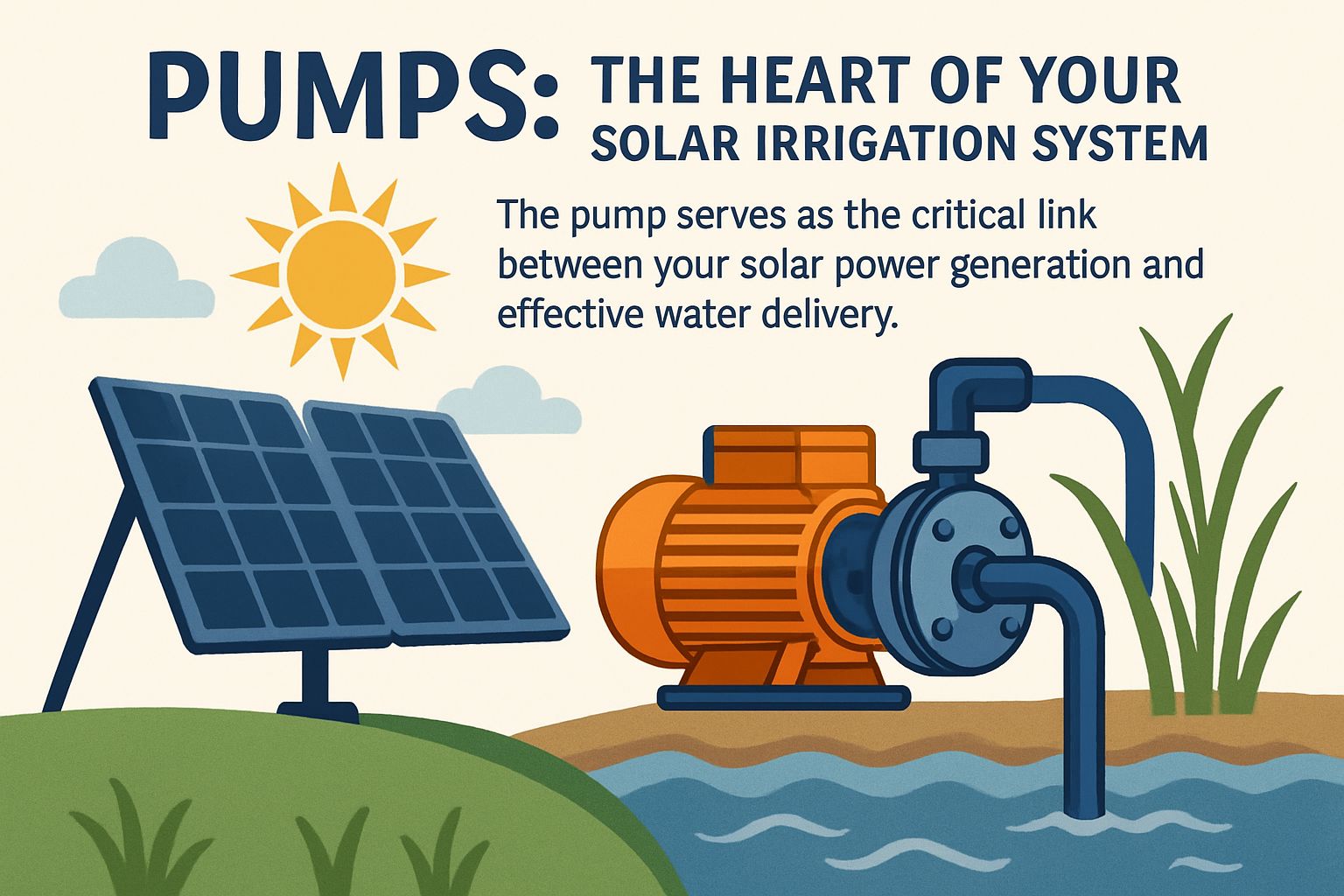
Pumps: The Heart of Your Solar Irrigation System
The pump serves as the critical link between your solar power generation and effective water delivery. Selecting the right pump type, size, and configuration is perhaps the most consequential decision in designing a solar irrigation system. Unlike conventional electric pumps that can draw unlimited grid power, solar pumps must operate efficiently within the constraints of available sunlight.
DC Pumps: Perfect for Small to Medium Farms
DC pumps connect directly to solar panels without requiring an inverter, making them the most energy-efficient option for solar irrigation. These pumps start working with minimal sunlight and gradually increase output as sunlight intensifies throughout the day. For small farms up to 5 acres, DC submersible pumps ranging from 1/2 to 1 horsepower typically provide sufficient water flow for most crop needs while operating on relatively modest 1-3kW solar arrays.
The simplicity of DC pump systems translates to fewer components that could potentially fail, reducing maintenance requirements and extending system lifespan. Most quality DC pumps are designed with built-in protection against dry running, over-voltage, and under-voltage conditions—critical safeguards for solar applications where power supply fluctuates with weather conditions. Some advanced models even incorporate maximum power point tracking (MPPT) technology that optimizes power draw based on available sunlight.
The main limitation of DC pumps is their power ceiling—typically maxing out around 3 horsepower for most commercially available models. This restricts their application to relatively shallow water sources (under 200 feet) and moderate flow requirements. For farms with deeper wells or higher volume requirements, AC pumps or multiple DC pumps working in parallel may be necessary.
AC Pumps: When to Choose This Option
AC pumps become the preferred choice for larger agricultural operations requiring greater horsepower and water volume. These systems incorporate an inverter that converts the DC power from solar panels into AC power compatible with standard pump motors. While this conversion introduces some efficiency loss (typically 5-10%), it enables the use of powerful pumps capable of drawing from deeper water sources and serving extensive irrigation networks across larger acreage. For farmers considering the investment, understanding the financial benefits of solar panels can be crucial.
The primary advantage of AC pump systems is their scalability and compatibility with existing infrastructure. Farmers can often repurpose conventional AC pumps they already own by adding solar panels and an appropriate inverter, creating a hybrid system that can run on either solar power or grid electricity. This flexibility proves invaluable during extended cloudy periods or for operations requiring 24-hour irrigation capability.
When selecting an inverter for AC pump applications, opt for models specifically designed for motor starting, as pumps require 3-4 times their running power during startup. Variable frequency drive (VFD) inverters offer additional benefits by gradually ramping up motor speed based on available solar power, allowing pumps to start earlier in the morning and run later into the evening than standard inverters.
Submersible vs. Surface Pumps: Pros and Cons
Submersible pumps operate while fully submerged in the water source, making them ideal for deep wells, boreholes, and reservoirs. By pushing water from below rather than pulling it from above, these pumps eliminate priming requirements and vapor lock issues that can plague surface pumps. Modern solar submersibles can reach depths exceeding 800 feet while maintaining good efficiency, though power requirements increase substantially with depth.
Surface pumps mount above the water source and draw water through suction, limiting their practical lift capacity to approximately 25 feet (theoretical maximum of 33 feet at sea level). Despite this limitation, surface pumps offer significant advantages for certain applications, including easier maintenance access, typically lower cost, and often higher efficiency for shallow water sources. They excel in scenarios involving ponds, streams, storage tanks, and shallow wells.
Hybrid configurations sometimes provide the best solution, particularly for complex irrigation systems. For example, a submersible pump might draw water from a deep well into a storage tank, from which a more efficient surface pump then distributes water through the irrigation system at appropriate pressure. This arrangement optimizes both energy efficiency and water delivery while providing buffer capacity for periods of limited sunlight.
Flow Rate and Lift Capacity: Getting These Numbers Right
Accurately calculating your required flow rate and lift capacity is essential for proper pump sizing. Flow rate, measured in gallons per minute (GPM) or liters per second (L/s), should be determined based on your total daily water requirement divided by the expected solar pumping hours (typically 6-8 hours of good sunlight). For drip irrigation, 2-3 GPM per acre is often sufficient, while sprinkler systems may require 5-10 GPM per acre depending on design and crop needs.
Lift capacity, or total dynamic head (TDH), measures the vertical distance and pressure the pump must overcome, expressed in feet or meters of head. This calculation includes not just the vertical lift from water source to field level, but also friction losses in pipes, pressure requirements of the irrigation system, and elevation changes across your land. Underestimating TDH is a common error that results in insufficient water delivery, while overestimating leads to unnecessary expenditure on oversized equipment. For more information on optimizing your irrigation system, check out this article on irrigation systems and solar panels.
When comparing pump specifications, look for performance curves that map flow rates against head pressure, not just maximum values of each. The ideal operating point for your system lies somewhere on this curve, with most solar irrigation systems designed to optimize performance when sunlight is strongest. Remember that pump performance with solar power will vary throughout the day as available power changes with the sun’s position, so sizing should accommodate this variability while meeting minimum crop water requirements.
Controllers and Automation Equipment
Modern solar irrigation systems leverage sophisticated controllers that maximize efficiency by managing the relationship between available solar power, pump operation, and irrigation scheduling. These devices range from basic pump controllers to comprehensive farm management systems that integrate weather data, soil moisture readings, and crop-specific algorithms.
Basic Pump Controllers: Features and Limitations
Entry-level solar pump controllers provide essential functions like soft-starting (ramping up pump speed gradually to prevent damaging current spikes), low-water shutoff, and basic power management. These controllers typically monitor solar array output and adjust pump operation to match available power, ensuring efficient operation even in variable sunlight conditions. Most include simple timers that can activate pumping during specified hours, though they lack the intelligence to adapt to changing environmental or crop conditions. For those interested in how solar technology can further enhance agricultural efficiency, explore how solar panels transform modern farming operations.
While basic controllers are sufficient for small-scale operations with consistent watering needs, they require manual adjustment as seasons change and crop water requirements evolve. Their primary limitation is their inability to integrate with soil moisture sensors or weather data, meaning irrigation schedules must be manually optimized by the farmer based on observation and experience.
For farmers seeking reliability with minimal complexity, basic controllers paired with appropriate water storage provide a practical solution. The controller ensures efficient pumping during sunlight hours, filling storage tanks that then supply gravity-fed irrigation systems according to crop needs, regardless of time of day or weather conditions.
Smart Controllers with Remote Monitoring Capabilities
Advanced solar irrigation controllers transform farming operations through integrated monitoring and automated decision-making capabilities. These systems connect to various sensors—soil moisture probes, weather stations, flow meters—to create irrigation schedules that respond dynamically to actual field conditions. The result is precision water application that can increase yields while reducing water consumption by 20-30% compared to timer-based systems.
Remote monitoring capabilities represent perhaps the most significant advancement, allowing farmers to observe and control irrigation systems via smartphone apps or web interfaces. These platforms typically provide real-time data on system performance, water usage, soil conditions, and forecasted irrigation needs. When problems occur, automatic alerts notify farmers immediately, often enabling remote troubleshooting without requiring a physical trip to the field. For more information on sustainable solutions, check out solar-powered irrigation.
The data collection capabilities of smart controllers also support continuous improvement through detailed historical records. By analyzing patterns in water usage, crop response, and system performance over time, farmers can make evidence-based decisions about irrigation strategies, crop selection, and future system expansions. While these advanced controllers represent a higher initial investment, the combination of water savings, yield improvements, and reduced management time typically delivers strong returns.
Variable Speed Drives: Maximizing Efficiency in Changing Conditions
Variable speed drives (VSDs) or variable frequency drives (VFDs) serve as critical components for maximizing solar irrigation efficiency by allowing pumps to operate across a wide range of power availability. Unlike conventional pump setups that require full rated power to operate effectively, VSD-equipped systems can run pumps at reduced speeds when sunlight is limited, extending daily pumping hours significantly. For more insights on how solar technology can benefit agriculture, explore the combined benefits of agrivoltaics.
This variable operation matches pump performance to both available power and actual irrigation needs, eliminating the inefficiency of over-pressurized systems. Modern drives incorporate maximum power point tracking (MPPT) algorithms that continuously adjust electrical parameters to extract the maximum available power from solar panels as lighting conditions change throughout the day.
For complex irrigation systems serving multiple zones or crop types, advanced VSDs can integrate with soil moisture sensors and scheduling systems to deliver precisely the required pressure and flow for each specific application. This capability is particularly valuable for operations running both drip and sprinkler systems, which have significantly different pressure requirements, from a single pumping station.

“Solar Irrigation Works …” from growingsolarmist.com and used with no modifications.
Water Storage Solutions
Water storage components serve as the bridge between the intermittent nature of solar power and the consistent water needs of crops. Well-designed storage solutions transform a solar irrigation system from daylight-dependent to 24/7 capable, providing critical resilience against cloudy periods and enabling night watering when evaporation losses are minimized. For more insights on integrating solar power into agriculture, explore this sustainable solution for agriculture.
Above-Ground Tanks: Quick Setup Options
Above-ground storage tanks provide the most straightforward and rapidly deployable water storage solution for solar irrigation systems. These tanks—available in plastic, fiberglass, galvanized steel, or concrete—can be installed with minimal site preparation and connected to existing irrigation infrastructure quickly. For smaller operations, polyethylene tanks ranging from 1,000-5,000 gallons offer an excellent balance of cost, durability, and ease of installation, often requiring just a level, reinforced base.
The elevated position of above-ground tanks creates natural water pressure through gravity—approximately 0.433 PSI per foot of height difference between tank and irrigation point. This gravity-fed pressure can often eliminate the need for additional distribution pumps in drip irrigation systems, further reducing energy requirements and system complexity. For every 2.31 feet of elevation, you gain approximately 1 PSI of pressure, allowing farmers to strategically position tanks to achieve desired operating pressures naturally.
While above-ground tanks offer visibility for easy monitoring and access for maintenance, they do occupy valuable farm space and remain vulnerable to temperature extremes. In cold climates, insulation or heating systems may be necessary to prevent freezing, while in hot regions, algae growth can become problematic without proper tank design or treatment protocols. Despite these challenges, their rapid deployment capability and scalability make above-ground tanks the preferred choice for most small to medium solar irrigation applications.
Underground Cisterns: The Space-Saving Alternative
Underground cisterns provide substantial water storage capacity without consuming valuable surface area, making them ideal for farms where space constraints are significant. Typically constructed from reinforced concrete or specialized plastic designed for burial, these systems can range from modest 5,000-gallon installations to massive 100,000+ gallon reservoirs serving extensive irrigation networks. Beyond space efficiency, underground storage maintains more stable water temperatures, reducing freezing risk in winter and minimizing evaporation and algae growth in summer. For farmers looking to enhance their irrigation systems, exploring solar-powered farm equipment can be a beneficial addition.
The primary drawbacks of underground systems include higher installation costs (often 2-3 times that of equivalent above-ground storage), limited visibility for monitoring water levels, and more complex maintenance when repairs are needed. Additionally, most underground systems require a distribution pump to deliver water to irrigation systems, as they cannot utilize gravity pressure in the same way elevated tanks can.
For farms in regions with distinct wet and dry seasons, large-scale underground cisterns can capture and store rainwater or seasonal stream flow for use during dry periods, effectively extending the growing season and reducing dependency on groundwater sources. This approach, sometimes called water harvesting, represents one of the most sustainable approaches to irrigation water management when properly integrated with solar pumping systems.
Sizing Your Water Storage Based on Irrigation Needs
Properly sizing water storage requires balancing daily water requirements against system cost and available space. As a general guideline, storage capacity should cover at least 3-5 days of irrigation needs to provide resilience during cloudy periods. Calculate your daily water requirement based on crop type, growing stage, soil conditions, and climate—typically ranging from 2,000-3,000 gallons per acre daily for most vegetable crops during peak growing season using efficient delivery methods.
Consider seasonal variations in both water needs and solar availability when determining optimal storage capacity. Many successful systems are designed with modular storage that can be expanded or reduced seasonally, adapting to changing requirements throughout the growing cycle. This approach minimizes initial investment while maintaining system flexibility for future expansion.
Beyond volume considerations, elevation plays a crucial role in system design when utilizing gravity pressure. For every foot of elevation between storage and field level, you gain 0.433 PSI of pressure at the delivery point. Most drip irrigation systems require 10-20 PSI for proper operation, meaning tanks should ideally be positioned 23-46 feet above field level. When such elevation differences aren’t naturally available, consider constructing elevated platforms or using small booster pumps to achieve required pressures.
Battery Storage: Do You Really Need It?
The question of whether to include battery storage in a solar irrigation system hinges on specific farm requirements, budget constraints, and operational patterns. While batteries can extend pumping hours beyond daylight and provide system stability, they also significantly increase initial cost, system complexity, and maintenance requirements. For many farms, well-designed water storage represents a more cost-effective solution than electrical storage, effectively “storing sunlight” as elevated water ready for irrigation. Learn more about how solar panels transform modern farming operations and the impact they have on efficiency.
Battery Types for Solar Irrigation Systems
Lead-acid batteries have traditionally dominated the solar storage market due to their relatively low initial cost and established technology. Deep-cycle varieties specifically designed for solar applications can provide 3-5 years of service when properly maintained, though they require regular monitoring of electrolyte levels, controlled charging rates, and protection from extreme temperatures. Their lower depth of discharge (typically limited to 50% to preserve battery life) means systems require roughly twice the nominal capacity of actual energy storage needs.
Lithium-ion batteries have revolutionized solar storage with their longer lifespan (8-15 years), higher efficiency (95%+ compared to 80-85% for lead-acid), deeper discharge capacity (80-100%), and minimal maintenance requirements. While their upfront cost remains 2-3 times higher than equivalent lead-acid systems, the total lifecycle cost often proves lower when considering longevity, efficiency, and reduced maintenance. For irrigation systems requiring frequent cycling or substantial power delivery, lithium technology’s superior performance typically justifies the higher initial investment.
Emerging technologies worth monitoring include flow batteries, which offer potentially unlimited cycling capability and independent scaling of power and energy capacity—particularly valuable for larger agricultural operations. Sodium-ion batteries are also showing promise as a more environmentally friendly and potentially lower-cost alternative to lithium for stationary applications like farm irrigation systems, though commercial availability remains limited.
Battery-Free Options: How They Work
Direct-drive solar irrigation systems operate without batteries by pumping water during daylight hours into elevated storage tanks or reservoirs that then supply irrigation systems as needed, regardless of sunlight availability. This approach dramatically simplifies system design, reduces initial costs by 30-40%, and eliminates the ongoing maintenance and replacement cycles associated with batteries. The water itself becomes the energy storage medium, with gravity providing the pressure needed for distribution.
For operations that cannot accommodate water storage due to space limitations or terrain constraints, direct solar-to-irrigation systems can still function effectively through careful crop planning and irrigation scheduling. These systems are designed to provide maximum water during peak sunlight hours, with crops and soil serving as natural water storage. Soil moisture management becomes particularly important in these setups, with mulching and other conservation practices helping maintain adequate moisture levels between solar pumping periods.
Hybrid approaches that combine minimal battery capacity with primary water storage often provide the best balance of cost, complexity, and functionality. In these systems, a small battery bank supports critical controls, sensors, and monitoring equipment continuously while possibly providing limited pump operation during brief cloudy periods, but the majority of energy storage occurs in the form of pumped water ready for distribution.
Calculating Battery Capacity for Nighttime Operations
If your irrigation strategy requires nighttime watering—beneficial for reducing evaporation losses or for crops that respond poorly to daytime irrigation—battery sizing becomes critical to system success. Begin by determining your pump’s power consumption in watts, then multiply by the number of hours you need to operate beyond daylight. For example, a 1 horsepower pump (approximately 750 watts) running for 4 nighttime hours would require 3,000 watt-hours of usable battery capacity.
Account for system inefficiencies and battery discharge limitations by dividing your calculated need by the battery’s usable capacity percentage (typically 50% for lead-acid, 80% for lithium) and then by the inverter efficiency (typically 90-95%). For our example, using lead-acid batteries would require approximately 6,315 watt-hours of nominal battery capacity (3,000 ÷ 0.5 ÷ 0.95), while lithium batteries would need only about 3,947 watt-hours (3,000 ÷ 0.8 ÷ 0.95). For more information on integrating solar panels with irrigation systems, you can explore irrigation systems and solar panels.
Consider future system expansion when sizing battery banks, as undersized electrical storage represents one of the most common failure points in solar irrigation systems. Many successful installations incorporate modular battery systems that can be expanded incrementally as farm operations grow or as budget allows for system enhancements. This approach minimizes initial capital outlay while preserving the option for increased capacity without requiring complete system redesign. For more insights on how solar technology is transforming agriculture, explore the impact and benefits of solar panels in modern farming operations.

“Solar Irrigation System Parts …” from growingsolarmist.com and used with no modifications.
Piping and Distribution Components
The distribution network that delivers water from your pump to your crops constitutes a critical yet often underappreciated component of solar irrigation systems. Proper selection and configuration of pipes, fittings, and emission devices significantly impact system efficiency, water conservation, and ultimately crop productivity.
PVC vs. Polyethylene Pipes: Making the Right Choice
PVC (polyvinyl chloride) pipes offer superior pressure handling capabilities and structural rigidity, making them ideal for mainlines and applications requiring resistance to high pressure or physical impacts. Their smooth interior walls reduce friction losses, allowing more efficient water transport over longer distances. For permanent installations, particularly buried mainlines, UV-resistant PVC provides excellent durability with expected lifespans exceeding 25 years when properly installed and protected from direct sunlight.
Polyethylene pipes provide flexibility that simplifies installation, especially in uneven terrain or applications requiring frequent reconfiguration. Available in both low-density (LDPE) and high-density (HDPE) formulations, these pipes offer excellent freeze resistance and remarkable durability even when exposed to direct sunlight. For secondary lines and field laterals, polyethylene’s ability to expand slightly under pressure surges helps protect connected components from damage, while its flexibility allows for installation with minimal fittings.
When designing your distribution system, consider using a hybrid approach—PVC for fixed mainlines delivering water from pumps to fields, transitioning to polyethylene for field laterals and final distribution lines. This combination maximizes efficiency in high-flow sections while providing flexibility and resilience where needed. Regardless of material choice, proper sizing is crucial—oversized pipes waste resources and create sluggish flow, while undersized pipes create excessive friction losses that waste precious pumping energy.
Drip Lines, Emitters, and Sprinklers: Matching to Your Crops
Emission devices represent the final and most crucial link in the irrigation chain, determining how water reaches your crops. For row crops, vegetables, and orchards, drip irrigation typically offers the highest efficiency with options including pressure-compensating emitters (maintaining consistent flow regardless of line pressure variations), porous soaker hose (for uniform wetting of entire rows), and micro-sprinklers (providing slightly wider coverage for tree crops). Match emitter spacing and flow rates to specific crop root structures—closely spaced low-flow emitters for shallow-rooted crops, wider-spaced higher-flow emitters for deep-rooted plants.
Sprinkler systems come in various configurations, from fixed spray heads to rotating impact sprinklers and gear-driven rotors. Low-pressure options specifically designed for solar applications can operate effectively at 20-30 PSI, significantly reducing pumping energy requirements compared to conventional sprinklers requiring 40-60 PSI. When selecting sprinklers, consider not just coverage area but also droplet size—larger droplets reduce wind drift and evaporation losses but can damage delicate crops or cause soil compaction, while finer sprays provide gentler application but increase evaporation losses. For more insights on how solar technology is transforming agriculture, explore how solar panels transform modern farming operations.
For maximum efficiency in mixed cropping operations, consider zone-based designs that allow different emission devices to operate sequentially rather than simultaneously. This approach reduces peak flow requirements and allows smaller pumps and pipes to serve larger areas effectively. Modern controllers can automate zone sequencing based on crop water needs, soil moisture levels, and available solar energy, ensuring each crop receives appropriate irrigation despite varying requirements.
Filtration Systems: Preventing Clogs and System Failure
Effective filtration represents the primary defense against system failure in solar irrigation, particularly for drip and micro-irrigation systems with small emission pathways easily blocked by particles, organic matter, or mineral deposits. The appropriate filtration level depends on both water source and emission device requirements—typically 200 mesh (74 micron) filtration for drip emitters and 100 mesh (149 micron) for micro-sprinklers. Surface water sources generally require more extensive filtration than groundwater, though all systems benefit from properly sized filters. For more insights on optimizing farm systems, consider exploring strategic solar panel placement for maximum farm yields.
Sand media filters provide exceptional cleaning capability for water containing organic material, algae, or fine particles. These systems trap contaminants throughout a bed of crushed silica sand and can be cleaned through backwashing when pressure differential indicates clogging. For larger systems or particularly challenging water sources, automatic backwashing controls can maintain filtration efficiency without manual intervention, though they require additional power that must be considered in system design.
Screen and disc filters offer more compact solutions appropriate for groundwater sources or secondary filtration. Screen filters use stainless steel mesh to trap particles, while disc filters employ stacked grooved discs that capture contaminants in their intersection points. Both types require periodic cleaning, with manual systems needing regular inspection and maintenance to prevent excessive pressure loss. For solar installations, consider oversizing filtration components to reduce cleaning frequency and minimize pressure losses that waste pumping energy.
Installation Hardware and Accessories
- Structural Components: Panel mounting racks, pump mounting brackets, and hardware designed for agricultural environments with appropriate corrosion resistance
- Electrical Components: DC disconnect switches, properly sized wiring, grounding equipment, and junction boxes with appropriate weatherproofing
- Hydraulic Components: Check valves, pressure regulators, air release valves, and water meters for system monitoring
- Safety Equipment: Lightning protection, pump dry-run protection, high-pressure shutoff valves, and system monitoring devices
Quality installation hardware often represents less than 10% of total system cost but accounts for a disproportionate number of system failures when inferior components are used. Agricultural environments present particular challenges—exposure to chemicals, fertilizers, extreme weather, and occasionally wildlife or livestock damage requires components specifically designed for these conditions. Marine-grade stainless steel fasteners, UV-stabilized cable ties, and weatherproof electrical enclosures represent minimum standards for long-term reliability.
Proper installation technique proves equally important as component quality. Solar panels mounted too low may become shaded by growing crops or accumulate dust and debris more rapidly. Panels installed without adequate airflow beneath them operate at higher temperatures, reducing efficiency and accelerating degradation. Pumps installed without proper vibration isolation can develop premature bearing wear, while electrical connections made without appropriate weather sealing quickly deteriorate in agricultural environments.
When planning your system, allocate sufficient budget for quality installation hardware and professional installation if you lack specific experience. The modest additional cost typically pays dividends through reduced maintenance, fewer system failures, and longer component lifespan. For DIY installations, consider having your work inspected by a qualified solar professional before commissioning the system to identify any potential issues before they lead to problems.
Mounting Brackets and Frames
Solar panel mounting systems for agricultural applications must withstand decades of exposure to weather extremes while maintaining proper panel orientation and structural integrity. Ground-mounted systems typically utilize either driven piles (steel pipes driven directly into soil) or concrete foundation blocks with attached racks. For installations in active fields, elevated mounting systems that allow farming equipment to pass underneath can maximize land use efficiency, though they require more substantial structural components to ensure stability.
Material selection significantly impacts both cost and longevity. Aluminum mounting systems offer excellent corrosion resistance and light weight but at premium prices, while galvanized steel provides good durability at moderate cost. Stainless steel fasteners should be used regardless of frame material, as these connection points often become failure points when lower-quality hardware corrodes. For areas with high wind loads, additional bracing or deeper foundations may be necessary to prevent damage during extreme weather events.
Adjustable mounting systems that allow seasonal tilt changes can increase annual energy production by 5-15% compared to fixed-tilt installations. For irrigation systems that operate primarily during growing seasons, setting optimal tilt angles for spring and summer months rather than annual averages can further improve performance during peak water demand periods. Some farms implement simple manual adjustment systems that allow changing panel angles quarterly to maximize seasonal production without the complexity and cost of tracking systems.
Wiring, Connectors, and Junction Boxes
Electrical components for solar irrigation systems must be specifically rated for outdoor agricultural applications, where exposure to moisture, chemicals, UV radiation, and temperature extremes accelerates degradation of standard materials. Use direct-burial rated wiring with additional conduit protection for underground runs, particularly in areas with rodent activity or where farming equipment operates. For aboveground wiring, UV-resistant cable designed for solar applications provides the necessary durability, while proper cable management prevents chafing, cracking, and premature failure.
Pressure Regulators and Water Meters
Pressure regulation is essential for efficient operation of most irrigation emission devices, which are designed to operate within specific pressure ranges. Properly sized and positioned regulators ensure consistent water delivery while protecting downstream components from damage. Install master regulators at the pump output to protect the entire system from pressure spikes, with additional zone regulators where different sections have varying pressure requirements or elevation changes create significant pressure differentials. For more on how technology aids farming efficiency, explore solar panel science helping farmers.
Adjustable pressure regulators allow fine-tuning system operation to match actual field conditions, often improving water distribution uniformity significantly compared to fixed-pressure devices. For solar applications where available pressure varies with sunlight intensity, pressure-compensating emission devices work synergistically with good regulation to maintain consistent water application despite changing conditions. This consistency is particularly important for precision irrigation of high-value crops where uniform soil moisture is critical for quality and yield.
Water meters provide essential data for both system management and crop planning, allowing precise tracking of applied water and early identification of system problems. Flow meters installed at the pump discharge point track total system usage, while zone meters enable detailed analysis of water application by crop or field section. Modern digital meters with pulse outputs can connect to irrigation controllers or data loggers, creating automated records that support water conservation efforts and regulatory compliance where water reporting is required.
Safety Valves and Shut-Off Systems
Automatic safety systems represent a critical but often overlooked component of well-designed solar irrigation installations. Master shut-off valves allow rapid system isolation during emergencies or for maintenance, while check valves prevent potentially damaging backflow when pumps stop operating. For systems with significant elevation changes, air release/vacuum breaker valves prevent water hammer and pipe collapse by allowing air to enter or escape lines during filling and draining cycles. Learn more about how solar panels transform modern farming operations and enhance irrigation systems.
Low-pressure cut-off switches protect pumps from damage due to dry running or intake blockage, automatically shutting down the system when pressure drops below predetermined thresholds. Similarly, high-pressure shut-offs prevent damage from blocked outlets or frozen lines. These protective devices are particularly important for solar systems that may start and stop multiple times daily as available sunlight changes, creating more frequent pressure fluctuations than conventional irrigation systems.
Remote shutdown capabilities provide additional protection and convenience, allowing operators to deactivate systems from anywhere using mobile applications. This functionality proves especially valuable for distant fields or during emergency situations when physical access might be delayed. Advanced systems can even incorporate automated shutdown based on weather forecasts, preventing irrigation when rain is imminent and conserving both water and pumping energy.
- System Monitoring Tools: Pressure gauges at key points, flow indicators, battery state-of-charge meters (if applicable)
- Maintenance Equipment: Filter cleaning tools, spare parts kit, system documentation, and troubleshooting guides
- Winterization Components: Drain valves at low points, blowout ports for compressed air system clearing, and freeze protection for exposed components
- Security Features: Lockable enclosures for controllers and electrical components, anti-theft mounting hardware for solar panels
Comprehensive system documentation represents perhaps the most valuable accessory for long-term system success. Detailed plans showing buried component locations, electrical diagrams, component manuals, and maintenance schedules ensure that systems can be properly maintained even as farm personnel changes over time. For systems intended to operate for decades, this documentation proves invaluable for troubleshooting and eventual system upgrades or modifications.

“Solar Powered Irrigation Systems: Types …” from growingsolarmist.com and used with no modifications.
Your Solar Irrigation Shopping List: What to Buy First
Implementing a solar irrigation system represents a significant investment that often requires phased implementation for many farms. Begin with a professional site assessment and system design that accounts for your specific water requirements, crop types, climate conditions, and budget constraints. This foundation ensures subsequent component purchases work together effectively rather than requiring costly modifications later. Initial investments should focus on properly sized core components—solar panels, pump, and basic controls—with appropriate quality to ensure reliability, even if this means starting with a smaller system that can be expanded as budget allows.
Is A Solar Irrigation System Worth the Investment for the Farm
When evaluating the financial case for solar irrigation, consider both immediate and long-term perspectives. Initial investment typically ranges from $5,000-$10,000 for small systems serving 1-3 acres to $20,000-$50,000+ for larger installations, representing a significant capital expenditure. However, operational costs drop dramatically compared to diesel pumping (often 80-90% savings) or grid electricity (typically 60-70% savings), creating cumulative benefits that compound over the system’s 25+ year lifespan.
Beyond direct financial returns, solar irrigation delivers additional values difficult to quantify precisely—independence from fluctuating fuel prices, reduced downtime from power outages, decreased environmental impact, and often improved crop quality through more consistent irrigation. Many farmers report that the ability to irrigate without fuel deliveries or utility connections has allowed cultivation of previously unproductive land, effectively expanding their operation’s capacity without acquiring additional property. When all factors are considered, most agricultural operations achieve complete return on investment within 4-7 years, followed by decades of reduced operating costs.
Frequently Asked Questions
As you consider implementing a solar irrigation system, you likely have specific questions about how these systems work in real-world conditions. The following answers address the most common concerns farmers raise when evaluating solar irrigation for their operations.
How much does a complete solar irrigation system cost for a small farm?
For a small farm of 1-5 acres using drip irrigation, expect to invest $7,000-$15,000 for a complete system including solar panels (1-3kW), DC submersible pump, controller, basic water storage, and distribution components. Factors significantly impacting cost include water source depth, daily volume requirements, and component quality tier. Government incentives, agricultural grants, and tax benefits can reduce out-of-pocket expenses by 30-50% in many regions, making these systems substantially more affordable than the sticker price suggests.
Can solar irrigation systems work during cloudy days?
Solar irrigation systems continue functioning during cloudy conditions at reduced capacity—typically delivering 10-30% of their clear-sky performance depending on cloud density. Modern controllers automatically adjust pump speed to match available power, maintaining operation albeit at lower flow rates. For consistent irrigation regardless of weather, incorporate water storage sized to meet 3-5 days of irrigation needs, effectively bridging cloudy periods with water pumped and stored during sunny days.
Advanced systems may incorporate weather-responsive controllers that adjust irrigation schedules based on both current conditions and forecasts, automatically increasing pumping during sunny periods in anticipation of upcoming cloudy weather. This predictive approach maximizes system resilience without requiring oversized components or excessive storage capacity.
How long do solar panels and pumps typically last in farm environments?
Quality solar panels typically maintain at least 80% of their original production capacity for 25-30 years even in demanding agricultural settings, with many manufacturers providing 25-year performance warranties. Solar pumps demonstrate more variable longevity, with well-maintained DC pumps typically operating 7-15 years before requiring significant service, while AC pumps often achieve 10-20 years of reliable operation. Controller components generally need replacement every 8-12 years due to electronic component aging, though premium models with robust environmental protection may last considerably longer. For more information, visit irrigation systems and solar panels.
Do I need special permits to install a solar irrigation system?
Permit requirements vary significantly by location but typically include electrical permits for larger systems (particularly those with batteries or grid connection), water extraction permits for new wells or surface water sources, and occasionally structural permits for large ground-mounted arrays or elevated water storage. Many agricultural areas offer streamlined permitting for solar installations under certain size thresholds, recognizing these systems as standard farm equipment rather than major construction projects. Consulting with local agricultural extension services often provides valuable guidance on navigating permit requirements specific to your region.
Can I integrate a solar irrigation system with my existing traditional setup?
Existing irrigation infrastructure can typically be adapted to solar power through strategic modifications rather than complete replacement. For electric pump systems, adding appropriately sized solar arrays and controllers often allows dual-power operation, switching automatically between solar and grid power based on availability. Diesel pumping systems can be supplemented with parallel solar pumps that handle irrigation during sunny conditions while keeping conventional equipment for backup or peak demand periods.
This hybrid approach often represents the most practical transition path, allowing farmers to gradually increase solar capacity while maintaining operational reliability. As comfort with solar technology grows and initial components prove their reliability, many operations progressively expand solar capacity until traditional power sources become purely backup systems used only in exceptional circumstances.
For farms with substantial existing irrigation equipment investment, consider starting with a solar-powered feeder system that fills storage tanks during daylight hours, then uses conventional pumps for final distribution. This arrangement preserves familiar irrigation methods while introducing solar benefits with minimal disruption to established practices.

Leave a Reply