

Article-At-A-Glance
- Solar panels can reduce a farm’s energy costs by up to 70% while providing a stable, predictable expense structure for decades
- Modern photovoltaic technology converts sunlight to electricity with 20-22% efficiency, sufficient to power irrigation systems, lighting, and climate control equipment
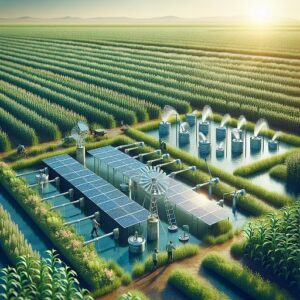
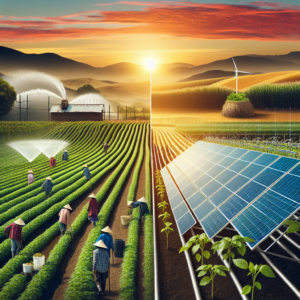
- Agrivoltaics allows farmers to simultaneously grow crops or graze livestock beneath solar arrays, maximizing land use efficiency
- Government incentives currently cover up to 30% of installation costs through the Investment Tax Credit, with additional USDA grants available specifically for agricultural applications
- Growing Solar Mist provides comprehensive solar solutions specifically designed for agricultural settings that address farmers’ unique power requirements
How Solar Panels Transform Modern Farming Operations
The modern farm faces unprecedented energy challenges. Between irrigation systems, climate-controlled buildings, and processing equipment, agricultural operations have become increasingly electricity-dependent. This rising demand comes at a time when utility rates continue to climb, creating a perfect storm for farmers seeking stable, affordable power solutions.
Solar energy offers a compelling alternative for agricultural operations looking to control costs while moving toward sustainability. By harnessing the abundant sunlight that already nourishes crops, farmers can generate clean electricity right where they need it most. Growing Solar Mist specializes in designing solar solutions specifically for farming applications, addressing the unique power requirements that differ significantly from residential or commercial installations.
Beyond simple cost savings, agricultural solar installations provide multiple benefits that align perfectly with farming operations. From enabling remote power access to creating new revenue streams, the technology represents a fundamental shift in how farms can approach energy management while improving operational resilience.
“Agricultural operations are uniquely positioned to benefit from solar energy. Farms typically have abundant open space, high energy demands for irrigation and climate control, and business models that benefit from predictable long-term expenses. Solar investments allow farmers to lock in energy costs for decades while potentially generating additional income through net metering or community solar programs.” — American Farm Bureau Federation

The Energy Challenge Facing Today’s Farmers
Modern agricultural operations face growing energy demands as technology and automation become increasingly integrated into farming practices. From automated milking systems to advanced irrigation equipment, these technological improvements enhance productivity but simultaneously drive electricity usage upward—creating a significant operational expense that directly impacts a farm’s financial health. To tackle these challenges, many farmers are exploring the financial benefits of solar panels as a sustainable solution.
Rising Electricity Costs in Agricultural Settings
Utility rates have increased at approximately 3-5% annually over the past decade, outpacing inflation and creating significant pressure on farm profit margins. For operations with high electricity demands, these rising costs can represent tens of thousands of dollars in additional annual expenses without corresponding increases in commodity prices. Many farmers report that energy now constitutes their third-highest operational cost, trailing only labor and land.
Seasonal demands create additional challenges, with peak energy usage often coinciding with the utility’s highest rate periods. This alignment magnifies cost impacts, especially for irrigation-heavy operations that require maximum power during summer months when electricity rates typically surge due to broader cooling demands on the grid.
Irrigation Demands and Power Consumption
Water pumping represents one of agriculture’s most electricity-intensive processes. A typical irrigation pump consumes between 5-30 kilowatt-hours per acre-foot of water delivered, with larger operations potentially using hundreds of thousands of kilowatt-hours annually just for irrigation. This essential function often operates during daylight hours—precisely when solar generation peaks—creating a natural synchronization between energy production and consumption.
Climate change further complicates irrigation requirements, with many regions experiencing longer dry periods and more variable rainfall patterns. As water management becomes more critical, the energy required to operate irrigation systems continues to grow, creating additional pressure on farm operating budgets.
The weight of these combined factors makes energy management a critical consideration for maintaining profitable agricultural operations. Farms that implement effective strategies to control electricity costs gain significant competitive advantages in increasingly challenging markets. For more insights on how solar energy is revolutionizing farming, check out this article on harvesting the sun.
Grid Reliability Issues in Rural Areas
Many farming operations exist in remote locations where utility infrastructure is aging or inadequate. These areas frequently experience power outages, voltage fluctuations, and service disruptions that can damage equipment or interrupt critical processes. For livestock operations or facilities with climate-sensitive requirements, even brief power interruptions can have severe consequences.
The Science Behind Solar Power for Farms
Solar energy generation represents one of humanity’s most elegant technological achievements—directly converting abundant, renewable sunlight into usable electricity without moving parts, fuel consumption, or emissions. Understanding the fundamental science behind photovoltaic systems helps explain why this technology offers particularly compelling benefits for agricultural applications where space is abundant and daytime energy demands are high.
The remarkable technological advances in solar technology over the past decade have transformed what was once a niche alternative into a mainstream energy solution. Today’s solar panels deliver significantly higher efficiency, longer lifespans, and dramatically lower costs than earlier generations, making them economically viable across virtually all agricultural contexts.
- Modern solar panels convert 20-22% of sunlight into electricity (up from 12-14% a decade ago)
- Most agricultural solar systems achieve payback periods of 4-8 years with 25+ year operational lifespans
- Solar installations qualify for accelerated depreciation, reducing taxable farm income
- Panel prices have fallen approximately 70% over the past decade while efficiency has increased
Photovoltaic Technology: Converting Sunlight to Electricity
At its core, solar power generation relies on the photovoltaic effect – a physical phenomenon where certain materials produce an electric current when exposed to light. Modern solar panels use silicon semiconductors that absorb photons from sunlight, generating electron movement that creates direct current (DC) electricity. This current flows through an inverter which converts it to alternating current (AC) compatible with farm equipment and the electrical grid.
The semiconductor material in solar cells contains two layers with different electrical properties. When sunlight strikes these materials, it energizes electrons, allowing them to break free from their atomic bonds. The specially designed cell structure then forces these electrons to travel in a specific path, generating usable electric current that powers everything from irrigation pumps to barn lighting.
This relatively simple process has been refined over decades of research, resulting in panels that can withstand harsh agricultural environments while reliably converting sunlight to electricity for 25-30 years with minimal degradation. For farmers concerned about long-term investments, the proven durability of modern solar technology provides confidence in multi-decade returns.
Panel Efficiency and Farm Energy Production
Today’s agricultural solar installations typically use monocrystalline or polycrystalline silicon panels with conversion efficiencies between 18-22%. This means they can convert about one-fifth of the sunlight that hits them into usable electricity – more than sufficient for most farm operations when properly sized. A typical 100kW farm system in moderate sunshine conditions can generate approximately 140,000 kilowatt-hours annually – enough to offset substantial portions of agricultural energy use.
Farm-based installations benefit from unobstructed access to sunlight and available land area, allowing for optimal panel placement and orientation. Unlike urban installations that may contend with shade from buildings or trees, agricultural settings often provide ideal conditions for maximum solar production. This advantage translates directly to enhanced system performance and superior financial returns compared to more constrained environments.
- Monocrystalline panels offer highest efficiency (20-22%) with smaller footprint but higher cost
- Polycrystalline panels provide good efficiency (18-20%) with moderate cost structure
- Thin-film technologies offer flexibility for specialized applications like barn roofs
- Bifacial panels that capture reflected light from both sides are increasingly popular in agricultural settings
Battery Storage Solutions for 24/7 Power Access
Modern agricultural solar systems increasingly incorporate battery storage to address the intermittent nature of solar generation. These storage systems capture excess daytime production for use during evening hours or cloudy days, providing consistent power availability regardless of weather conditions. For livestock operations requiring constant climate control or refrigeration needs, this capability proves particularly valuable in ensuring uninterrupted operation.
The economics of battery storage have transformed dramatically in recent years, with costs dropping over 80% in the past decade. Today’s lithium-ion systems can deliver thousands of charge-discharge cycles with minimal maintenance, providing reliable backup power during grid outages while also enabling strategic electricity usage patterns that maximize financial returns. For remote agricultural operations, these systems can eliminate the need for diesel generators, reducing both fuel costs and maintenance requirements.
Tracking Systems to Maximize Energy Harvest
While fixed-mount solar arrays remain most common, tracking systems that follow the sun’s path throughout the day can increase energy production by 25-45% depending on location. These systems use motors to gradually adjust panel orientation, maximizing exposure to direct sunlight from morning through evening. Though they require additional investment, tracking installations often deliver superior returns for farms with higher energy demands or limited installation space.
Single-axis trackers follow the sun’s east-to-west movement, while dual-axis systems adjust for both daily and seasonal changes in the sun’s position. The decision between fixed or tracking systems involves balancing increased energy production against higher initial costs and additional maintenance requirements. Local sunlight patterns, available space, and specific energy needs all factor into determining the optimal approach for each farm’s unique circumstances.

4 Ways Solar Panels Cut Farm Operating Costs
In today’s agricultural industry, managing operating costs is more important than ever. Rising energy prices, unpredictable utility rates, and the need for sustainable solutions have led many farmers to explore renewable energy options. One increasingly popular choice is solar power. Beyond its environmental benefits, solar energy can deliver significant financial advantages to farming operations. Here are four key ways solar panels help reduce farm operating costs.
1. Reduced Monthly Energy Bills
“Our 200kW solar array reduced our dairy operation’s monthly electricity bills by approximately 68% from day one. The system powers our milking equipment, refrigeration, and primary barn functions while excess generation credits offset our residence and outbuilding usage. After accounting for all available incentives, we expect complete payback within 5.2 years while the system continues producing for decades thereafter.” – Robert Miller, Sunshine Dairy Farm, Wisconsin
The most immediate benefit of solar installation comes through direct reduction of purchased electricity. Properly sized systems can offset 50-90% of a farm’s energy consumption, dramatically reducing or sometimes eliminating monthly utility bills. This reduction translates to thousands or even tens of thousands of dollars annually depending on operation size and energy intensity.
Net metering arrangements, available in most states, allow farmers to receive credit for excess electricity fed back to the grid when production exceeds immediate needs. These credits can then offset consumption during nighttime or cloudy periods, effectively using the utility grid as a battery. For seasonal operations with varying energy demands, these programs provide valuable flexibility by allowing credits earned during low-consumption periods to offset costs during high-demand seasons.
The direct savings achieved through solar generation create immediate positive cash flow that strengthens a farm’s financial position. Unlike many agricultural investments that require multiple seasons to realize returns, solar installations begin generating value immediately upon commissioning, making them particularly attractive during periods of tight farm economics.
2. Protection Against Future Utility Rate Increases
Energy costs are not only high—they’re unpredictable. Utility rates often fluctuate due to fuel prices, infrastructure upgrades, and regulatory changes. With solar panels, farms can lock in a portion of their energy production at no cost after installation. This acts as a hedge against future rate hikes, giving farmers greater financial stability and allowing them to plan more effectively for the future.
3. Minimal Maintenance Requirements
Unlike many pieces of farm equipment that require constant upkeep, solar panels have very low maintenance needs. Once installed, they typically require only periodic cleaning and routine inspections to ensure optimal performance. Most modern solar systems are designed to last 25 years or more, meaning farmers can enjoy decades of reliable energy production with minimal ongoing effort or expense.
4. Tax Incentives and Depreciation Benefits
Governments often provide financial incentives to encourage renewable energy adoption, and farms are in a prime position to take advantage of these programs. Tax credits, rebates, and accelerated depreciation schedules can significantly reduce the upfront cost of installing solar panels. For example, the U.S. federal Investment Tax Credit (ITC) allows qualifying businesses to deduct a percentage of installation costs from their taxes, while the Modified Accelerated Cost Recovery System (MACRS) offers additional depreciation benefits. These programs can make solar energy not only environmentally responsible but also financially strategic.
Agrivoltaics: Dual Land Use for Maximum Efficiency
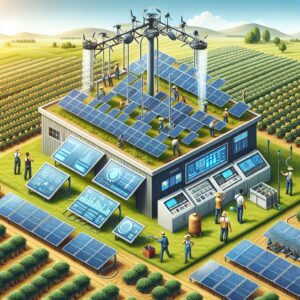
Agrivoltaics—the practice of integrating solar energy production with agricultural activities—represents one of the most promising innovations in modern farming. Rather than choosing between energy generation and food production, this approach enables farmers to utilize the same land for both purposes simultaneously, maximizing overall land productivity while creating complementary benefits between the two systems. For more insights on this, explore the top benefits of solar panels for farming.
- Studies show crop yields under partial solar shading can increase by 10-30% for certain plant varieties
- Land efficiency increases by 60-70% when measuring combined energy and agricultural output
- Water requirements can decrease by 20-40% due to reduced evaporation
- Panel efficiency improves 1-3% through cooler operating temperatures created by plant evapotranspiration
The fundamental principle behind agrivoltaics involves thoughtful design that balances light distribution between panels and plants. Modern installations typically elevate panels 8-12 feet above ground level and space them strategically to allow sufficient sunlight to reach crops below. This arrangement creates a microclimate that benefits both energy production and plant growth throughout the growing season.
For livestock operations, the shade created by solar arrays provides natural cooling that reduces heat stress during summer months. Cattle, sheep, and poultry all demonstrate improved weight gain and overall health when provided access to shade in hot climates, making solar arrays a dual-purpose investment that generates both electricity and animal welfare benefits.
The economics of agrivoltaics are particularly compelling when considering the combined revenue streams from both energy and agricultural production. Rather than viewing solar as taking land out of production, this integrated approach actually enhances total per-acre returns while reducing certain input costs like irrigation water and cooling energy.
Growing Crops Under Solar Arrays
Research from multiple universities has identified numerous crop varieties that thrive in the partial shade environment created by solar arrays. Leafy greens like lettuce, spinach, and kale often show higher yields and quality when grown under panels, benefiting from reduced leaf burn and slower bolting in hot weather. Similarly, many berries, herbs, and cool-season vegetables demonstrate improved performance in these modified light conditions, often extending their growing seasons in both directions. Discover more about the benefits of solar panels for farming.
Grazing Livestock Around Panel Installations
Sheep have emerged as ideal partners for solar grazing, naturally maintaining vegetation around panels without damaging infrastructure. A single acre of solar land can support 3-4 sheep while simultaneously producing clean energy, creating complementary revenue streams from both wool/meat production and electricity generation. This approach eliminates mowing costs while providing nutritious forage for livestock—a true win-win arrangement that enhances overall farm economics.
|
Livestock Type |
Benefits Under Solar Arrays |
Considerations |
|---|---|---|
|
Sheep |
Ideal size, natural grazers, won’t damage panels |
Require minimal adjustments to standard solar design |
|
Poultry |
Protection from predators, natural shade |
May require additional fencing, potential for bird droppings |
|
Cattle |
Heat stress reduction, increased grazing time |
Panels must be elevated higher, stronger mounting required |
The American Solar Grazing Association reports that incorporating sheep grazing into solar operations reduces vegetation management costs by 30-60% compared to mechanical mowing while simultaneously generating additional farm income. This approach requires minimal modifications to standard solar designs—primarily raising the lowest edge of panels to approximately 24-30 inches above ground level to prevent animal contact.
Several solar developers now specifically design “grazing-compatible” installations that accommodate livestock needs while maintaining optimal energy production. These systems feature raised panel heights, reinforced mounting structures, and specialized fencing to create safe environments for animals while protecting valuable solar infrastructure.
Water Conservation Benefits from Partial Shading
The partial shade created by solar panels significantly reduces soil evaporation rates, leading to measurable water conservation benefits. Research from the University of Arizona found that crops grown beneath solar arrays required 15-40% less irrigation water to achieve equivalent or better yields compared to those in full sun. This water efficiency becomes increasingly valuable as climate change intensifies drought conditions across agricultural regions.
Beyond simple water quantity benefits, the modified microclimate beneath panels improves irrigation efficiency by reducing evaporative losses during water application. This allows more moisture to reach plant root zones rather than being lost to the atmosphere, improving overall water use efficiency—a critical advantage in regions with limited water resources or high irrigation costs.

Solar as a Revenue Stream for Farmers
Beyond reducing operational costs, solar installations create multiple potential revenue streams that can significantly enhance farm profitability. These income opportunities range from straightforward utility bill savings to more sophisticated arrangements involving energy sales, land leases, or community solar participation.
For many agricultural operations experiencing volatile commodity prices, solar revenue provides a welcome source of stable, predictable income that operates independently from traditional farming cycles. This diversification strengthens overall farm financial resilience while providing cash flow stability during agricultural downturns.
Selling Excess Power Back to the Grid
Net metering programs enable farmers to sell surplus electricity back to utility companies at retail or near-retail rates, effectively turning their electrical meters backward when production exceeds consumption. Most agricultural operations experience varying energy demands throughout the year, making this arrangement particularly valuable during low-consumption periods when solar generation can create significant credit balances. These credits then offset costs during high-demand seasons, improving overall annual energy economics.
Community Solar Opportunities
Community solar programs allow farmers to develop larger solar installations that sell electricity to multiple subscribers in the surrounding area. Under this model, the farmer serves as the host site for a solar array while neighboring homes and businesses purchase portions of its output, creating a steady revenue stream without requiring direct energy consumption by the farm itself. Learn more about the investment benefits for farmers.
This approach enables development of optimal-sized solar installations regardless of the farm’s personal energy needs, maximizing land productivity while serving broader community clean energy goals. Farmers typically receive either fixed lease payments or a percentage of energy sales, creating predictable income that complements traditional agricultural revenue.
Power Purchase Agreements as Steady Income
Long-term power purchase agreements (PPAs) with utilities or corporate buyers offer perhaps the most stable solar revenue model for farmers. Under these arrangements, the farmer hosts solar infrastructure and sells the generated electricity at a predetermined price for 15-25 years. The contracted rates typically include annual escalators that protect against inflation, creating a reliable income stream with minimal volatility.
For farmers approaching retirement or seeking to diversify income sources, PPAs offer particularly attractive stability. The guaranteed revenue can support succession planning, fund retirement needs, or simply provide financial cushioning during agricultural market downturns, creating valuable flexibility within the broader farm business model.
Real-World Results from Solar-Powered Farms
Across the country, thousands of farms have already implemented solar solutions with compelling economic and operational results. These real-world examples demonstrate how properly designed agricultural solar installations deliver measurable benefits across diverse farming operations, climates, and agricultural sectors.
Case Study: California Almond Orchard Saves $34,000 Annually
Sunrise Orchards installed a 150kW ground-mounted solar array adjacent to their processing facility and main irrigation pumps in 2018. The system generates approximately 265,000 kWh annually, offsetting nearly 85% of their electrical consumption. With utility rates in their region averaging $0.15/kWh and rising at 4.5% annually, the installation saves approximately $34,000 in first-year energy costs with increasing benefits as rates continue to climb. After applying the 30% federal tax credit and accelerated depreciation, their net investment of $213,000 is projected to reach payback within 6.2 years while continuing to generate savings for decades thereafter.
Beyond simple cost savings, the orchard reports significant operational benefits from reduced grid dependence. Their processing facility previously experienced 3-4 significant power outages annually during peak harvest season, each causing substantial disruption and potential product loss. The solar installation now provides emergency backup power during grid failures, protecting critical refrigeration systems and enabling continued processing operations during utility interruptions.
Case Study: Nebraska Cattle Ranch Achieves Energy Independence
Double Creek Ranch implemented a comprehensive solar solution incorporating both electricity generation and solar thermal water heating for their 600-head cattle operation. Their 80kW photovoltaic system powers facility lighting, water pumping, and feed processing equipment, while roof-mounted solar thermal collectors provide hot water for equipment sanitation and livestock facility cleaning. The combined system eliminated approximately $23,000 in annual propane and electricity expenses while qualifying for both USDA REAP grant funding and federal tax incentives, reducing payback period to under 5 years while significantly improving the ranch’s environmental footprint and operational resilience.

Smart Power Management for Maximum Farm Benefits
Maximizing solar benefits requires thoughtful integration with farm operations through intelligent power management systems. Modern agricultural solar installations increasingly incorporate automated load controllers, battery storage, and smart inverters that optimize when and how energy is used or stored. These systems can automatically shift non-essential power consumption to high-production periods, store excess electricity for evening use, or export power to the grid when utility payment rates peak.
The most successful agricultural solar implementations align energy production patterns with consumption needs while maintaining flexibility to adapt to changing weather conditions or operational requirements. This intelligent approach transforms solar from simple electricity generation into a comprehensive energy management strategy that enhances overall farm operations while maximizing financial returns on the solar investment.
Frequently Asked Questions
As agricultural solar adoption continues accelerating, farmers naturally have questions about system performance, economics, and integration with existing operations. Here are answers to the most common inquiries based on current research and real-world implementation experience.
How long do solar panels last on agricultural properties?
Modern solar panels installed on farms typically carry 25-year manufacturer warranties but have expected operational lifespans of 30-40 years. Performance gradually decreases at approximately 0.5% annually, meaning panels still produce about 85% of their original output after 30 years. The mounting structures, wiring, and connection components are designed for similar longevity, with inverters typically requiring replacement after 12-15 years. This extended operational lifespan significantly enhances lifetime return on investment, as systems continue generating value long after reaching their financial payback point.
Can solar panels withstand harsh weather conditions on farms?
“Our ground-mounted solar array has survived three major windstorms exceeding 70 mph, golf ball-sized hail, and heavy snow loads without damage or significant production losses. The engineering standards these systems are built to exceed typical agricultural building codes, and we’ve found them more resilient than many of our farm structures. The peace of mind knowing our power generation system can withstand extreme weather has been an unexpected benefit beyond the financial returns.” – James Hardin, Five Oaks Farm, Iowa
Agricultural solar installations are engineered to withstand extreme weather conditions commonly encountered in farming regions. Modern panels are tested to withstand 1-inch hailstones at terminal velocity, snow loads of 50-60 pounds per square foot, and wind speeds of 140+ mph when properly mounted. The tempered glass surfaces resist impact while specialized mounting systems distribute loads safely to ground anchors or roof attachment points.
For areas prone to specific weather challenges, system designs can incorporate additional reinforcement such as stronger mounting rails, deeper foundation elements, or specialized hail-resistant panel models. These enhancements ensure decades of reliable operation even in regions experiencing severe storms, high winds, or heavy snow loads.
Many agricultural insurance policies now offer specific coverage for solar equipment, providing additional protection against unusual weather events or accidents. These policies typically add minimal premium costs while providing valuable coverage for these significant investments. For more on the financial benefits of solar panels, explore how they are powering the farmers’ operations.
What size solar system does a typical farm need?
System sizing depends entirely on specific energy consumption patterns, available installation space, and financial objectives. Small livestock operations might require only 10-30kW, while large dairy or poultry farms with substantial climate control and processing needs might implement 200-500kW systems. The optimal approach involves analyzing 12-24 months of historical electricity consumption data, identifying potential efficiency improvements, then designing a system that addresses 70-100% of the remaining demand. Growing Solar Mist provides comprehensive energy audits and consumption analysis to determine ideal system sizing for each unique agricultural operation.
Do solar panels work during cloudy or winter days?
Solar panels generate electricity whenever light reaches them, even on cloudy days or during winter months. Production decreases proportionally with light intensity, typically delivering 10-30% of rated capacity during heavy cloud cover and 50-60% on moderately overcast days. Winter performance varies by location but generally reaches 40-70% of summer production due to lower sun angles and shorter daylight hours. Modern system design accounts for these seasonal and weather variations by incorporating appropriate oversizing, storage options, or grid interconnection to ensure consistent power availability year-round regardless of weather conditions.
How do USDA grants apply to solar installations?
The USDA Rural Energy for America Program (REAP) provides both grants and loan guarantees specifically for agricultural renewable energy projects. These grants can cover up to 25% of eligible project costs with maximum awards of $500,000. The application process requires energy audits, financial projections, and comprehensive project plans, typically prepared by qualified solar developers familiar with agricultural requirements. Funding priority often goes to smaller farms, first-time applicants, and projects demonstrating significant energy efficiency improvements alongside renewable generation.
Beyond REAP, many states offer additional agricultural energy programs through departments of agriculture or energy offices. These programs frequently provide technical assistance, supplemental financial incentives, or specialized low-interest financing options specifically designed for farm energy improvements. Combining these state resources with federal incentives can reduce initial solar investment by 40-60% in many regions. For more information on how solar energy is revolutionizing farming, visit this article.
For comprehensive guidance on agricultural solar solutions designed specifically for farming operations, explore Growing Solar Mist’s dedicated agricultural services. Our team specializes in maximizing both energy production and financial returns for farms of all sizes while ensuring systems integrate seamlessly with existing agricultural operations.

Leave a Reply