
Article-At-A-Glance
- Solar panels can reduce farm energy costs by 50-80%, providing significant relief from rising operational expenses
- Agricultural operations typically achieve payback on solar investments within 5-7 years through various tax incentives and grants
- Dual-use farming (agrivoltaics) allows farmers to grow crops while generating clean energy on the same land
- Growing Solar Mist helps farmers implement sustainable energy solutions that boost profitability while reducing environmental impact
- Solar-powered irrigation and climate control systems can operate off-grid, providing energy independence for remote farm operations
Farming has always been about harnessing the power of the sun. Now, innovative farmers are taking this relationship to the next level by capturing solar energy not just for crops, but for powering their entire operations. With energy costs representing one of agriculture’s most significant expenses, solar power offers a compelling solution for modern farmers looking to control costs and boost sustainability.
The integration of solar panels into agricultural operations represents one of the most significant technological advancements in modern farming. By converting abundant sunlight into electricity, farmers can dramatically reduce operating costs while creating more resilient and sustainable agricultural systems. Growing Solar Mist has helped hundreds of farmers transform their operations through customized solar solutions that address the unique energy challenges of agricultural production.
Farm Energy Costs Are Skyrocketing: Solar Offers Relief
Agricultural operations face unprecedented pressure from rising energy costs. Irrigation, climate control, equipment operation, and processing facilities all demand substantial power, creating a significant drain on farm budgets. These essential functions can account for up to 30% of total operational costs on modern farms, with utility rates continuing to climb at 3-5% annually in most regions.
Solar power provides immediate relief by generating electricity on-site, dramatically reducing or eliminating monthly utility bills. Most agricultural solar installations can offset 70-90% of a farm’s electricity needs, freeing up capital that can be reinvested in other aspects of the operation. This financial benefit becomes even more significant for energy-intensive operations like dairy farms, where electricity powers milk cooling, pasteurization, and sanitation systems.
“Solar energy represents one of the most significant opportunities for farmers to reduce operational costs while maintaining or increasing productivity. The average farm can offset 70-90% of its electricity needs through properly sized solar installations.” – American Farm Bureau Federation
The economics of agricultural solar have improved dramatically over the past decade, with panel efficiency increasing and system costs decreasing. Today’s agricultural solar installations typically cost 60-70% less than equivalent systems from just a decade ago, while generating more electricity from the same footprint. This dramatic improvement in cost-effectiveness has fueled a 300% increase in solar adoption among U.S. farms since 2012.
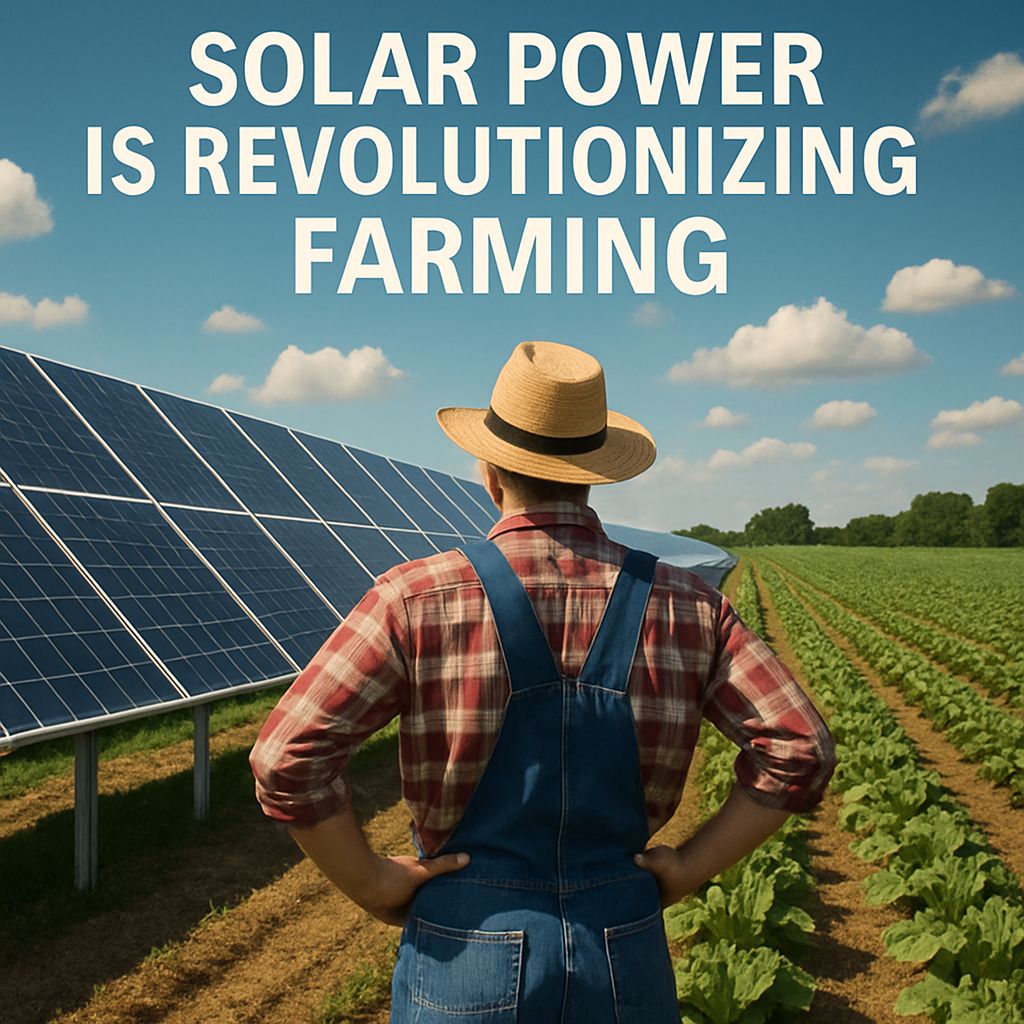
“Solar Power Boosts Farm Efficiency …” from growingsolarmist.com and used with no modifications.
How Solar Panels Are Revolutionizing Modern Farming
Beyond simple cost savings, solar technology is transforming agricultural operations in fundamental ways. Modern farming increasingly relies on technology—from automated milking systems to computer-controlled irrigation and climate monitoring. These advances improve efficiency but increase electricity demand, creating both challenges and opportunities for energy management.
Solar power systems provide the reliable, clean energy needed to power these technological innovations while insulating farmers from utility rate increases. The synergy between solar power and precision agriculture technologies creates a multiplier effect, where improved energy management enables more sophisticated farming approaches that further optimize resource use.
Farmers are discovering that solar installations can serve multiple purposes beyond electricity generation. Strategic panel placement can provide shade for livestock, reduce water evaporation from irrigation ponds, and even create microclimate benefits for certain crops. These secondary benefits compound the value proposition of agricultural solar investments.
Cut Farm Energy Costs by 50-80% With Solar Power
The most immediate and tangible benefit of solar power is the dramatic reduction in monthly utility bills. Agricultural operations typically see electricity cost reductions of 50-80% after installing appropriately sized solar systems. For energy-intensive operations like dairy farms, which use electricity for milk cooling, water heating, and ventilation, these savings can amount to tens of thousands of dollars annually. Vegetable operations using refrigerated storage and packing facilities similarly benefit from substantial energy cost reductions that directly improve profit margins.
Typical Payback Period: 5-7 Years with Available Incentives
The financial case for agricultural solar has never been stronger, with most installations achieving complete payback within 5-7 years. This attractive return timeline is made possible through a combination of energy savings and government incentives specifically designed for agricultural producers. The federal Investment Tax Credit (ITC) reduces the upfront cost of going solar by nearly one-third, dramatically improving project economics and shortening the payback period. Additionally, USDA programs like REAP (Rural Energy for America Program) offer grants covering up to 25% of system costs for agricultural producers, further enhancing investment returns.
5 Ways Solar Panels Slash Farm Operating Costs
For farmers facing tight profit margins, controlling costs is often the difference between success and struggle. Solar power addresses several key expense categories simultaneously, providing a comprehensive approach to financial sustainability. Understanding these cost-saving mechanisms helps farmers make informed decisions about solar investments for their unique operations.
Beyond the immediate energy savings, solar installations create financial resilience by reducing exposure to price volatility in energy markets. This stability allows for more accurate long-term planning and budgeting, a crucial advantage in an industry where margins can fluctuate dramatically with input costs.
1. Reduced Monthly Electricity Bills
The most visible benefit of agricultural solar is the immediate reduction in monthly electricity costs. Properly sized systems can offset 70-90% of a farm’s electricity consumption, creating predictable energy expenses regardless of utility rate fluctuations. For operations with high cooling demands, such as dairy farms or greenhouse operations, these savings can exceed $20,000 annually for medium-sized farms.
2. Protection Against Rising Energy Prices
Solar power effectively locks in electricity rates for decades, providing insurance against future utility price increases that have historically outpaced inflation. With most agricultural solar systems designed to operate for 25+ years, farmers gain long-term predictability for one of their most volatile expense categories. This protection becomes increasingly valuable as grid infrastructure ages and utilities pass modernization costs on to consumers through higher rates.
3. Tax Credits and Incentives for Agricultural Operations
Agricultural producers benefit from multiple incentive programs specifically designed to encourage renewable energy adoption in rural areas. Beyond the federal Investment Tax Credit, many states offer additional incentives including property tax exemptions for solar equipment, production-based incentives, and accelerated depreciation schedules. These programs significantly improve project economics, allowing farmers to recoup their investment more quickly while maintaining strong cash flow.
4. Lower Water Pumping Costs
Irrigation represents one of agriculture’s largest energy expenses, with pumping systems consuming substantial electricity during growing seasons. Solar-powered pumping systems can dramatically reduce or eliminate these costs while providing reliable water delivery exactly when crops need it most. Modern solar irrigation systems incorporate smart controls that optimize water use based on soil moisture and weather conditions, creating additional efficiency benefits beyond energy savings. For more information on how technology can enhance solar efficiency, explore how drones boost farm solar panel efficiency.
5. Decreased Cooling and Ventilation Expenses
Climate control for livestock housing, produce cooling, and product storage requires significant energy input year-round. Solar systems can power these critical functions while reducing operating expenses by 50-80%. For dairy operations, where milk cooling represents up to 30% of total energy consumption, solar power provides substantial cost advantages that directly improve profit margins.
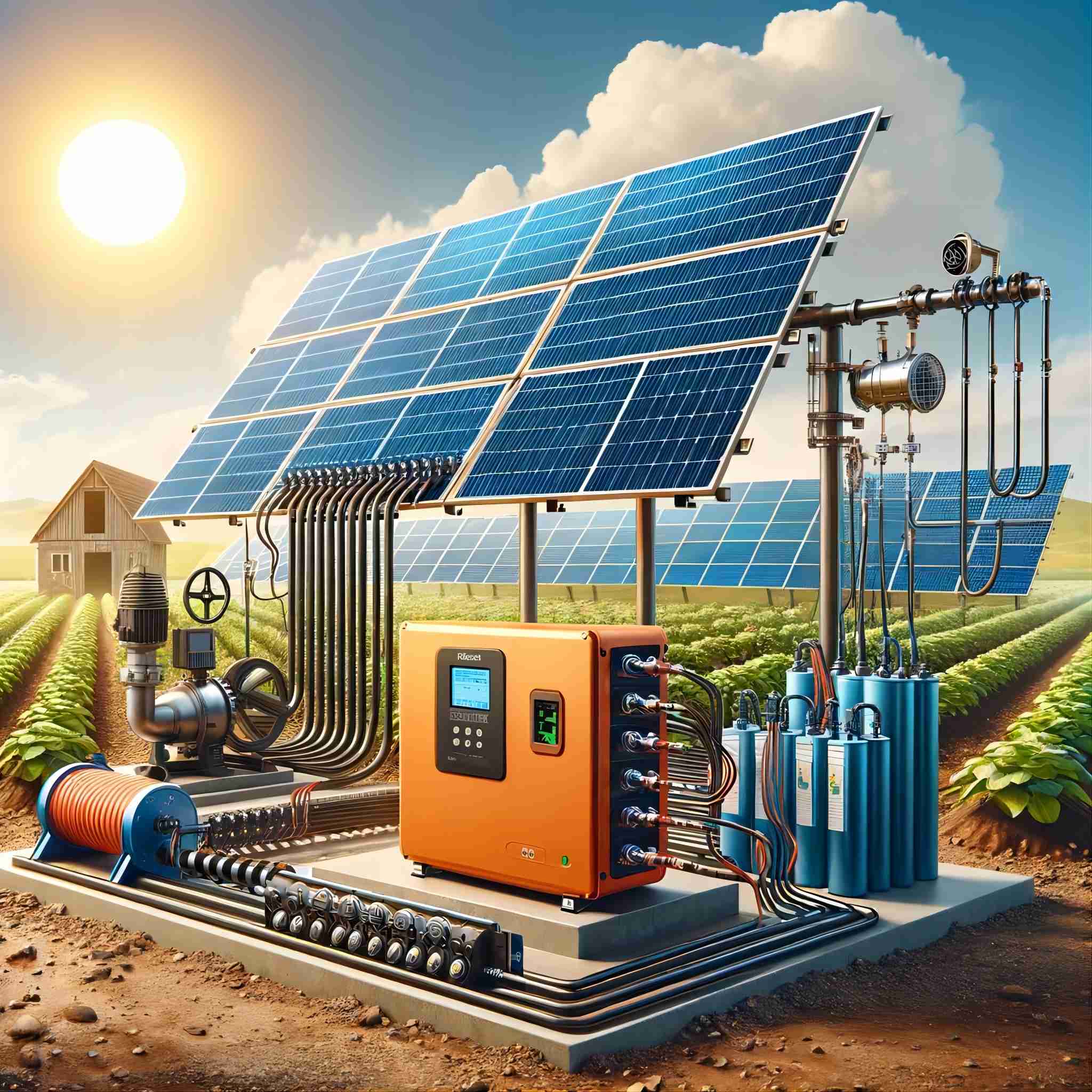
“DIY Off-Grid Farm Irrigation System …” from carspa.cc and used with no modifications.
Solar Powers Remote Farm Operations Without Grid Access
Many agricultural operations extend beyond reliable grid infrastructure, creating challenges for powering essential equipment in remote locations. Solar technology offers elegant solutions for these scenarios, eliminating the need for expensive grid extensions or inefficient generators. These applications transform previously unproductive or difficult-to-manage areas into valuable production zones. For more information on how off-grid solar panels can power farm operations, explore our detailed guide.
Solar-Powered Irrigation Systems
Modern agriculture requires precise water management, even in remote field locations. Solar-powered irrigation eliminates the need for grid connections or diesel generators at pump sites, providing clean, reliable power exactly where it’s needed. These systems can be designed with battery storage to ensure consistent operation regardless of cloud cover, delivering water on optimal schedules for crop development.
The latest solar irrigation technologies incorporate weather monitoring and soil moisture sensors that automatically adjust watering schedules based on real-time conditions. This precision not only saves energy but significantly reduces water consumption by applying irrigation only when and where crops actually need it. For farmers in regions facing water restrictions or drought conditions, these systems provide crucial efficiency advantages.
Off-Grid Solutions for Field Equipment
Remote monitoring stations, electric fencing, lighting systems, and communications equipment can all operate independently using small-scale solar setups. These distributed power solutions eliminate the maintenance headaches and fuel costs associated with traditional portable generators. Modern agricultural operations increasingly rely on sensor networks and IoT devices to monitor field conditions – solar power makes these deployments practical even in areas miles from the nearest power line.
Solar-powered charging stations for electric equipment are becoming increasingly valuable as more farm implements offer battery-electric options. These charging points can be strategically positioned throughout larger operations, extending the practical range of electric utility vehicles and small equipment without requiring operators to return to central facilities for refueling.
Mobile Solar Units for Seasonal Needs
Temporary power needs for seasonal operations can be met through portable solar generators that provide clean, quiet electricity anywhere on the farm. These units combine solar panels with battery storage in transportable packages that eliminate the noise, maintenance, and fuel costs of traditional generators.
“We deployed mobile solar units during our harvest operations last season, powering our sorting equipment and worker facilities completely off-grid. The system eliminated approximately 900 gallons of diesel consumption while providing more reliable power than our previous generators. The units were completely silent, which made communication easier and improved working conditions substantially.” – California Organic Berry Farm Operator
The versatility of these systems makes them particularly valuable for operations that move between different fields or production areas throughout the growing season. Rather than establishing permanent infrastructure at each location, farmers can simply relocate their power generation as operational needs shift.
Mobile solar units also provide emergency backup capabilities during grid outages, protecting critical systems like refrigeration, ventilation, and water pumping when conventional power fails. This resilience prevents crop and livestock losses during increasingly frequent severe weather events that can disrupt utility service for extended periods.
Dual-Use Farming: Grow Crops While Generating Power
The innovative practice of combining solar energy production with active farming represents one of the most exciting developments in sustainable agriculture. This approach, known as agrivoltaics or dual-use farming, maximizes land productivity by generating both food and energy from the same acreage. Rather than forcing farmers to choose between crops and energy production, this integrated approach creates synergistic benefits for both.
Land efficiency increases dramatically with dual systems, with research showing 60-70% greater combined productivity compared to separate farming and solar installations. This efficiency gain becomes particularly valuable in regions where agricultural land faces development pressure or where farm profitability challenges threaten continued agricultural use.
Agrivoltaics: The Science Behind Growing Under Panels
Contrary to conventional expectations, many crops actually benefit from the partial shade provided by elevated solar arrays. The filtered light creates microclimate effects that reduce water stress, moderate extreme temperatures, and protect sensitive plants from excessive sun exposure. Research from the University of Arizona demonstrates that certain crops grown under solar panels require 40% less water while maintaining or improving yields.
Modern agrivoltaic systems feature adjustable panels that can optimize light penetration based on crop needs during different growth stages. This dynamic light management allows farmers to fine-tune growing conditions throughout the season, providing more direct sunlight during establishment phases and increasing shade during peak summer heat.
The elevation and spacing of panels in agricultural installations differ significantly from conventional solar farms, with structures designed specifically to accommodate farm equipment passage and maintenance access. These specialized designs ensure that normal farming activities can continue with minimal adaptation, maintaining operational efficiency while adding energy production. For more information on optimizing solar setups, explore the best solar panel placement for farm efficiency.
Which Crops Thrive in Partial Shade Conditions
- Leafy greens (lettuce, spinach, kale) often show yield increases of 20-30% under partial shade
- Berry crops (strawberries, blackberries, blueberries) benefit from reduced heat stress and extended growing seasons
- Herbs and medicinal plants typically develop stronger flavor profiles and higher concentrations of beneficial compounds
- Certain varieties of peppers, tomatoes and beans show improved quality and reduced sunscald in filtered light conditions
- Pasture grasses maintain productivity longer into hot summer months, extending grazing periods
The selection of compatible crops depends on regional climate factors, with warmer regions seeing more dramatic benefits from solar shade effects. Local agricultural extension services can provide guidance on crop varieties that perform well in these modified light environments, helping farmers optimize their agrivoltaic systems for maximum productivity.
Beyond crop selection, the height and density of panel arrays can be customized to create ideal conditions for specific agricultural activities. Lower density arrays with greater spacing between panels provide more direct light penetration, suitable for crops with higher light requirements, while closer arrangements create cooler, more humid microclimates beneficial for shade-tolerant species. For more insights on optimizing solar panel placement, check out best solar panel placement for farm efficiency.
The integration of pollinator-friendly plantings among solar installations creates additional ecological benefits while supporting healthy crop production. Research shows enhanced pollination services in dual-use systems, with native flowering plants between panel rows providing habitat for beneficial insects that improve crop yields and quality.
Land Efficiency Increases of 60-70% With Dual Systems
The economic case for agrivoltaics becomes compelling when analyzing total land productivity. Studies from the National Renewable Energy Laboratory (NREL) demonstrate that dual-use systems can increase total economic output per acre by 60-70% compared to single-use approaches. This productivity gain allows farmers to maintain agricultural production while generating substantial new revenue from the same land base.
For farms facing economic viability challenges, this diversification of income streams can make the difference between continuing agricultural operations and selling land for development. The stable, predictable revenue from solar generation complements the seasonal and sometimes volatile returns from crop production, creating greater financial resilience for farm businesses. To optimize this balance, understanding the best solar panel placement is crucial.
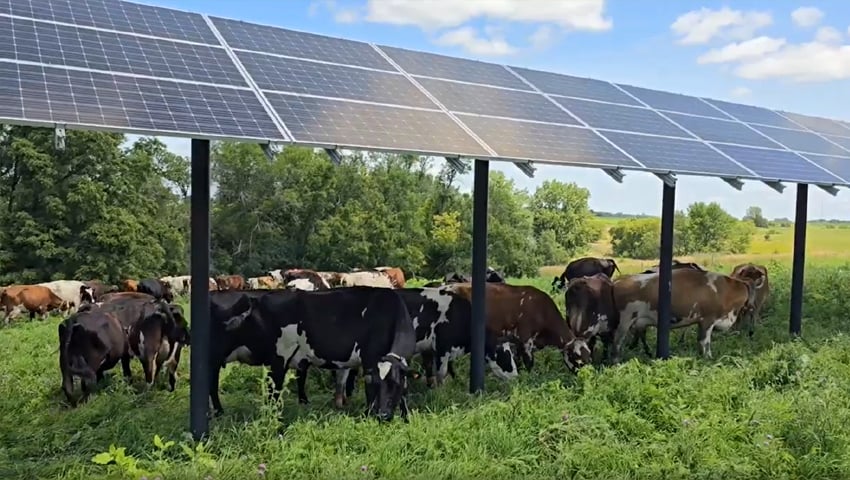
“Agrivoltaics: Integrating solar energy …” from 8point9.com and used with no modifications.
Solar Technology Enhances Livestock and Poultry Operations
The benefits of agricultural solar extend well beyond crop production, with substantial applications in livestock and poultry operations. Animal agriculture often requires significant energy inputs for climate control, water systems, and processing facilities. Solar installations can dramatically reduce these operating costs while improving animal welfare and production efficiency.
Modern livestock and poultry facilities increasingly integrate solar technology directly into building design, with roof-mounted systems that serve dual purposes of energy generation and improved thermal performance. These integrated approaches maximize return on investment while creating more comfortable environments for animals and workers alike. For more information on how solar power benefits agriculture, you can explore the benefits of solar power in agriculture.
Climate Control for Animal Housing
Maintaining optimal temperatures in livestock housing represents one of animal agriculture’s most significant energy expenses. Solar-powered ventilation, heating, and cooling systems can substantially reduce these costs while providing more consistent climate control. For poultry operations, where precise temperature management directly impacts bird health and production efficiency, solar-powered environmental controls offer both economic and performance advantages.
The reliability of solar-plus-storage systems provides critical backup power for ventilation systems during grid outages, preventing catastrophic losses that can occur when climate control systems fail during extreme weather events. This resilience factor has become increasingly valuable as climate change increases the frequency of severe weather and associated power disruptions.
Dairy Farm Applications
Dairy operations represent some of agriculture’s most energy-intensive systems, with electricity powering milk cooling, water heating, vacuum pumps, and cleaning systems. Solar installations can offset 70-90% of this consumption, significantly improving operational profitability. The predictable daily rhythm of dairy operations aligns well with solar generation patterns, with peak electricity production occurring during daily milking and processing activities.
Advanced dairy operations increasingly incorporate heat recovery systems that capture waste heat from milk cooling processes and repurpose it for water heating needs. When powered by solar electricity, these integrated energy management approaches can reduce total energy costs by up to 80% while decreasing the operation’s carbon footprint.
Environmental Benefits That Matter to Farmers
While economic considerations typically drive initial interest in agricultural solar, the environmental benefits provide significant additional value. Farmers understand better than most the importance of climate stability, resource conservation, and sustainable production practices. Solar energy addresses multiple environmental concerns simultaneously, helping farmers become better stewards of their land while improving operational resilience.
The environmental advantages of agricultural solar extend beyond the farm boundary, creating positive impacts throughout the broader ecosystem and community. These benefits increasingly translate into tangible market advantages as consumers and food companies place greater emphasis on sustainably produced agricultural products.
Reducing Farm Carbon Footprint
Agricultural operations that adopt solar energy dramatically reduce their carbon emissions by replacing fossil fuel-generated electricity with clean renewable power. A typical 100kW farm solar installation prevents approximately 150 tons of CO2 emissions annually – equivalent to removing 30 cars from the road or planting 3,500 trees. For operations marketing directly to consumers or supplying sustainability-focused food companies, this verifiable carbon reduction creates meaningful differentiation and potential price premiums.
Beyond marketing advantages, reduced carbon emissions help agriculture prepare for potential future carbon regulations or carbon pricing mechanisms. Farms that have already transitioned to renewable energy will face less disruption and lower compliance costs if such policies are implemented, creating strategic advantages in increasingly regulated markets.
Soil Conservation Advantages
- Decreased soil erosion under panel arrays due to reduced rainfall impact and wind exposure
- Improved soil moisture retention in partially shaded areas, reducing irrigation requirements
- Enhanced soil organic matter development through modified microclimate effects
- Reduced soil temperature extremes that help maintain healthy microbial populations
- Protection from compaction in areas where panels prevent heavy equipment access
Research from the University of Massachusetts found that soil under agrivoltaic systems retained approximately 15% more moisture than comparable open field conditions. This improved moisture profile not only reduces irrigation requirements but creates more favorable conditions for soil microorganisms that contribute to long-term soil health and fertility.
The partial shading provided by solar arrays moderates soil temperature extremes, particularly during summer months. This temperature regulation helps prevent heat stress to soil microbiota and reduces water loss through evaporation, creating more stable growing conditions that benefit both soil health and crop productivity.
In regions facing increased drought frequency due to climate change, these soil moisture conservation effects provide valuable resilience benefits. Farms with agrivoltaic systems typically maintain productive growing conditions longer during dry periods, reducing crop losses and irrigation costs during challenging weather patterns.
Water Conservation Through Solar-Powered Precision Systems
Solar-powered irrigation systems enable precise water management that significantly reduces consumption while improving crop outcomes. When combined with soil moisture sensors, weather monitoring stations, and automated controls, these systems apply water only when and where it’s needed. The resulting efficiency improvements typically reduce irrigation water use by 20-40% compared to conventional approaches, conserving precious resources while reducing pumping costs.
The energy independence provided by solar power allows irrigation systems to operate optimally regardless of time-of-day electricity pricing or demand charges. This flexibility enables scheduling based entirely on agronomic needs rather than energy cost considerations, improving crop outcomes while using water more efficiently.

“Excess Solar Energy Back to the Grid …” from insightdistributedenergy.com and used with no modifications.
Solar Panels Create New Revenue Streams for Farmers
Beyond cost savings, agricultural solar installations open entirely new revenue opportunities for farm businesses. These income streams complement traditional agricultural production, creating financial diversification that reduces overall business risk. For many farms, particularly those with marginal land or facing economic challenges, these additional revenue sources can make the difference between financial viability and insolvency.
The predictability of solar revenue provides particular value in agricultural contexts, where crop production income can fluctuate dramatically with weather conditions, market prices, and input costs. This stable financial foundation supports long-term planning and investment while helping farms weather challenging production years.
Selling Excess Power Back to the Grid
Most agricultural solar installations are designed to participate in net metering programs, which allow farmers to sell excess electricity back to the utility grid. During peak production periods, particularly in spring and early summer when solar output is high but irrigation demands haven’t yet peaked, farms often generate significantly more electricity than they consume. This excess production creates direct revenue through credits or payments from utility companies.
Some regions offer additional premium payments for solar electricity through feed-in tariffs or solar renewable energy credits (SRECs). These incentive programs can substantially enhance the financial returns from agricultural solar installations, providing income above and beyond direct utility savings. Farmers working with experienced solar developers can optimize system design to maximize these revenue opportunities while still meeting on-farm energy needs.
Agricultural Solar Leasing Programs
Farmers with suitable land can participate in solar leasing programs that generate steady income with minimal disruption to agricultural operations. These arrangements typically involve leasing land to solar developers who construct and operate commercial-scale installations, providing annual lease payments that often exceed what the same acreage would generate in crop production. Modern dual-use designs allow continued agricultural activity beneath and between panel arrays, maintaining productive farming while adding substantial energy income.
Is it Worth a Farmer to Future-Proof his Farms Investment with Solar Power
The transition to solar power represents more than just immediate cost savings – it’s a strategic investment in the future viability of agricultural operations. As energy costs continue to rise, climate challenges intensify, and markets increasingly reward sustainable production, solar-powered farms will enjoy significant competitive advantages. The 25+ year operational lifespan of quality solar installations provides decades of financial benefits while positioning agricultural operations for success in rapidly evolving markets and regulatory environments. For forward-thinking farmers committed to multi-generational sustainability, solar power isn’t just an energy decision – it’s a foundational investment in the farm’s long-term resilience and profitability. Learn more about solar panel placement for farm efficiency to maximize these benefits.
Frequently Asked Questions
Farmers considering solar investments typically have practical questions about implementation details, system performance, and integration with farming activities. Here are answers to the most common questions farmers ask when evaluating solar installations.
How long do solar panels last on agricultural buildings?
Quality agricultural solar installations are designed to operate reliably for 25-30 years, with most manufacturers providing 25-year performance warranties. Panels typically retain at least 80% of their original production capacity after this period, continuing to generate valuable electricity beyond the warranty period. The mounting systems, racking components, and electrical infrastructure are engineered specifically for agricultural environments, using corrosion-resistant materials and reinforced designs that withstand the challenging conditions common to farm environments.
Will installing solar panels affect my farm insurance rates?
Most farm insurance providers now have established protocols for covering solar installations, typically with minimal premium increases relative to the value added. Many insurance companies actually offer discounts for farms with professional solar installations, recognizing the reduced risk profile created by decreased dependence on grid electricity. The key to favorable insurance treatment lies in working with experienced agricultural solar installers who understand farm-specific code requirements and can provide comprehensive documentation for insurance purposes.
Can solar panels withstand extreme weather conditions on farms?
Modern agricultural solar systems are engineered to withstand severe weather conditions, including high winds, heavy snow loads, and hail impacts. Quality installations on farms typically use reinforced mounting systems that exceed standard residential specifications, with wind ratings of 120+ mph and snow load capacities appropriate for local climate conditions. The panels themselves undergo rigorous testing for impact resistance, with most agricultural-grade panels rated to withstand one-inch hail at terminal velocity without damage.
What maintenance do farm solar systems require?
Agricultural solar installations require minimal maintenance, typically limited to occasional panel cleaning and routine electrical inspections. In most regions, natural rainfall provides adequate cleaning for tilted arrays, though dusty farming operations may benefit from seasonal cleaning to maintain optimal production. The systems have no moving parts except for optional tracking mechanisms, dramatically reducing maintenance requirements compared to other farm equipment. Most agricultural solar providers include monitoring systems that automatically alert owners to any performance issues, allowing immediate identification and resolution of rare technical problems.
Is battery storage necessary for agricultural solar installations?
While not essential for grid-connected systems, battery storage provides valuable benefits for many farm operations. Energy storage solutions allow farms to use solar electricity during evening hours, power critical systems during grid outages, and optimize energy consumption to avoid expensive demand charges. For operations with high power requirements at specific times – such as irrigation pumping, produce cooling, or dairy operations – strategic battery deployment can significantly enhance the financial returns from solar investments by shifting energy use to optimal time periods.
Battery technology has advanced dramatically in recent years, with agricultural storage systems now offering 10+ year operational lifespans and significantly improved economics. For farms in regions with time-of-use electricity rates, unreliable grid service, or limited net metering programs, integrated storage solutions typically provide compelling financial returns while enhancing operational resilience.
The decision to include storage should be based on specific farm energy use patterns, local utility rate structures, and resilience requirements. An experienced agricultural solar provider can analyze these factors to determine if battery storage makes economic sense for your specific operation.


Leave a Reply