

Key Takeaways
- Solar panels provide essential shade, significantly reducing heat stress in farm animals, which enhances their well-being and productivity.
- By using solar power, farmers can cut down on energy expenses, leading to substantial cost savings over time.
- Solar-powered water systems ensure a reliable and sustainable water supply for livestock, crucial for maintaining animal health.
- Implementing solar energy reduces reliance on fossil fuels, promoting environmental sustainability and resilience in farming operations.
- Government incentives and subsidies are often available to support the transition to solar energy, making it a viable option for many farmers.
Solar Energy Enhances Animal Welfare on Farms
Solar energy is not just a clean source of power; it’s a game-changer for livestock and animal farmers. By integrating solar panels into farming operations, we can create a more sustainable and comfortable environment for animals. This not only boosts their health but also enhances overall farm productivity. Let’s explore how solar energy can specifically improve animal welfare on farms.
The Role of Solar Panels in Providing Shade
Most importantly, solar panels can provide much-needed shade for farm animals. During the hot summer months, animals are prone to heat stress, which can severely impact their health and productivity. By strategically placing solar panels, we can offer shade that protects them from the scorching sun. This simple act can make a huge difference in their comfort and well-being.
Stabilizing Temperatures for Livestock
Beyond providing shade, solar panels help stabilize temperatures around livestock areas. When panels are installed, they create a microclimate that reduces temperature fluctuations. This is crucial because consistent temperatures help maintain animal health and reduce stress. By minimizing temperature extremes, we ensure that animals remain comfortable throughout the year, regardless of external weather conditions.
Enhancing Animal Welfare Through Renewable Energy
Solar energy contributes to a more sustainable farming model. By reducing dependency on fossil fuels, we lower the carbon footprint of farm operations. This shift not only benefits the environment but also aligns with growing consumer demand for eco-friendly farming practices. When we adopt solar power, we are not just improving animal welfare; we are paving the way for a more resilient and sustainable agricultural future.

Promoting Animal Health and Comfort with Solar Power
Solar power offers a multitude of benefits that directly enhance the health and comfort of farm animals. By utilizing solar energy, we can address several critical aspects of animal care, from water supply to ventilation and security. Let’s dive into how solar power can revolutionize these essential elements.
Using Solar Power for Water Pumping Systems
A reliable water supply is crucial for any livestock operation. Solar-powered water pumping systems ensure that animals have constant access to fresh water, even in remote areas. These systems harness solar energy to pump water from wells or other sources, providing a sustainable and cost-effective solution. By securing a steady water supply, we support the health and hydration of our animals, which is vital for their overall well-being.
Powering Ventilation and Lighting in Animal Housing
Ventilation and lighting are critical components of animal housing. Solar power can efficiently run fans and lighting systems, creating an optimal environment for livestock. Proper ventilation helps control humidity and temperature, reducing the risk of respiratory issues and heat stress. Additionally, solar-powered lighting extends daylight hours, improving animal behavior and productivity. By investing in solar technology, we enhance the living conditions of our animals, leading to healthier and more productive livestock.
Providing Power to Electric Fences and Security Camera for Safety
Safety is paramount in livestock farming. Solar power provides an efficient way to ensure that security measures like electric fences and cameras remain operational at all times. By using solar panels to power these systems, farmers can maintain a secure perimeter without the worry of power outages. This continuous power supply deters predators and prevents livestock from wandering off, ensuring their safety and security.
Moreover, solar-powered security systems are cost-effective and require minimal maintenance. They operate independently from the grid, which means that even during power failures, your farm remains secure. By investing in solar technology for security, we not only protect our animals but also enhance the overall safety of the farm.
Impact on Health: Reducing Heat Stress and Agitation
Heat stress is a significant concern for livestock, particularly during hot weather. It can lead to decreased productivity, health issues, and even mortality in severe cases. Solar panels help alleviate this problem by providing shade and reducing ambient temperatures. This cooling effect is crucial for maintaining animal comfort and preventing heat-related illnesses.
In addition to reducing heat stress, solar energy can also power cooling systems like fans and misters, further enhancing animal comfort. By keeping temperatures stable, we minimize agitation and stress in livestock, which leads to improved health and productivity. It’s a simple yet effective way to promote animal welfare on the farm.
Solar Energy’s Contribution to Cleaner Farm Environments
Solar energy contributes significantly to creating cleaner farm environments. By reducing reliance on fossil fuels, we lower emissions and decrease pollution. This shift not only benefits the environment but also improves air quality on the farm, which is essential for both animal and human health.

Benefits of Using Solar Power in Livestock Operations
The advantages of solar power in livestock operations are manifold. From cost savings to environmental sustainability, solar energy provides a reliable and efficient solution for modern farming challenges. Let’s explore some of the key benefits that make solar power an attractive option for farmers.
One of the most compelling reasons to adopt solar power is the potential for significant cost savings. By generating their own electricity, farmers can reduce or even eliminate their energy bills. This financial relief allows them to allocate resources to other essential areas of farm management.
Reducing Operational Costs and Energy Expenses
Solar power drastically cuts down operational costs by providing a renewable energy source. Once installed, solar panels require minimal maintenance and generate free electricity for years. This translates to lower energy expenses and increased profitability for farmers.
Consider this: a typical solar panel system can reduce energy bills by up to 70%. Over time, these savings can add up to thousands of dollars, which can be reinvested into farm improvements or expansion. By choosing solar power, we make a smart financial decision that benefits both the farm and the environment.
Additionally, many governments offer incentives and tax breaks for adopting solar energy. These programs can further reduce installation costs and expedite the return on investment. By taking advantage of these opportunities, farmers can transition to solar power with minimal financial burden.
Minimizing Dependency on Fossil Fuels and Grid Power
By harnessing solar energy, farmers reduce their dependency on fossil fuels and grid power. This independence is crucial for maintaining operations during power outages or fuel shortages. Solar power in livestock farming ensures a consistent energy supply, regardless of external circumstances.
Consider the advantages of a self-sustaining energy system. Not only does it provide reliability, but it also shields farmers from fluctuating energy prices. This stability allows for better financial planning and reduces the risk of unexpected expenses.
Furthermore, by minimizing fossil fuel use, we contribute to a cleaner environment. This transition supports global efforts to combat climate change and promotes sustainable farming practices. It’s a win-win for both farmers and the planet.
“By choosing solar power, farmers can cut energy expenses by up to 70%, leading to substantial cost savings over time.”
Environmental Sustainability and Farm Resilience
Solar energy enhances farm resilience by promoting environmental sustainability. By reducing greenhouse gas emissions, we mitigate the impact of climate change and preserve natural resources. This proactive approach ensures that farming remains viable for future generations.
Here’s a table discussing how solar panels can benefit farm animals:
|
Benefit |
Description |
|---|---|
|
Shade Provision |
Solar panels provide essential shade for livestock, reducing heat stress and improving overall comfort, especially during hot summer months. 1, 4 |
|
Temperature Regulation |
Cows grazing under solar panels have shown lower internal body temperatures compared to those in full sun, indicating improved thermal comfort. 4 |
|
Extended Grazing Time |
The shade from solar panels allows animals to graze for longer periods, even during hotter parts of the day. 3 |
|
Improved Well-being |
Research suggests that sheep with access to solar panel-equipped fields were happier and healthier overall. 1 |
|
Enhanced Resting Behavior |
Animals spend more time resting and less time standing idle under solar panels, which can be an indicator of improved welfare. 1 |
|
Water Availability |
Solar-powered irrigation systems ensure consistent water supply for livestock, even in remote areas or during droughts. 2 |
|
Cooler Environment |
Solar panels create microclimates, providing cooler areas for animals to rest and graze. 8 |
|
Increased Productivity |
The improved comfort from shade can lead to better feed intake, weight gain, and potentially increased milk production in dairy animals. 2, 4 |
|
Habitat Diversity |
Solar panel installations can create diverse habitats, supporting various plant species and insects, which can benefit grazing animals1. |
|
Reduced Veterinary Costs |
The improved environmental conditions can lead to better animal health, potentially reducing the need for veterinary interventions. 2 |
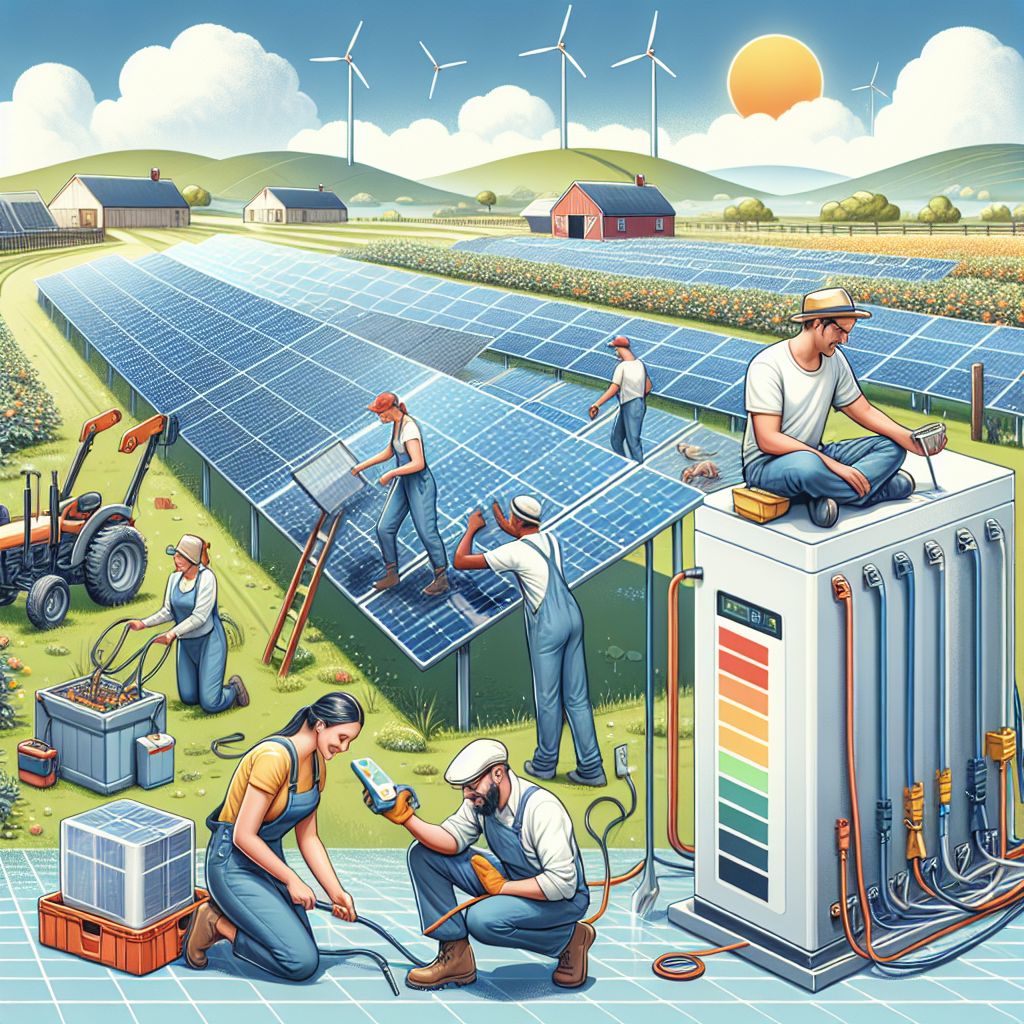
Challenges and Solutions in Adopting Solar Power
While the benefits of solar power are clear, adopting this technology comes with its own set of challenges. However, with the right strategies and solutions, these obstacles can be effectively managed. For more insights, you can explore solar power in livestock farming to understand how others are overcoming these challenges. Let’s explore the common challenges and how we can overcome them.
Overcoming Initial Investment and Installation Hurdles
The initial cost of installing solar panels can be daunting for many farmers. However, it’s important to view this as a long-term investment. The savings on energy bills and potential government incentives often offset these upfront costs.
Maintenance and Management of Solar Systems
Once installed, solar panels require minimal maintenance. Regular cleaning and inspections are usually sufficient to keep them operating efficiently. By following a simple maintenance schedule, we can ensure that the system remains in optimal condition. For more information on how solar panels work, check out this guide on solar panel functionality.
It’s also important to monitor energy output and address any issues promptly. By staying proactive, we can maximize the efficiency and lifespan of our solar systems. This vigilance ensures that we continue to reap the benefits of solar energy for years to come.
Solutions for Maximizing Efficiency and Output
To get the most out of solar power, it’s essential to optimize the system’s efficiency. This includes proper panel placement, regular maintenance, and the use of energy-efficient appliances. By taking these steps, we can enhance energy output and maximize cost savings.
Additionally, integrating battery storage can further improve efficiency. By storing excess energy, we ensure a consistent power supply, even during periods of low sunlight. This innovation provides added security and reliability for farm operations.
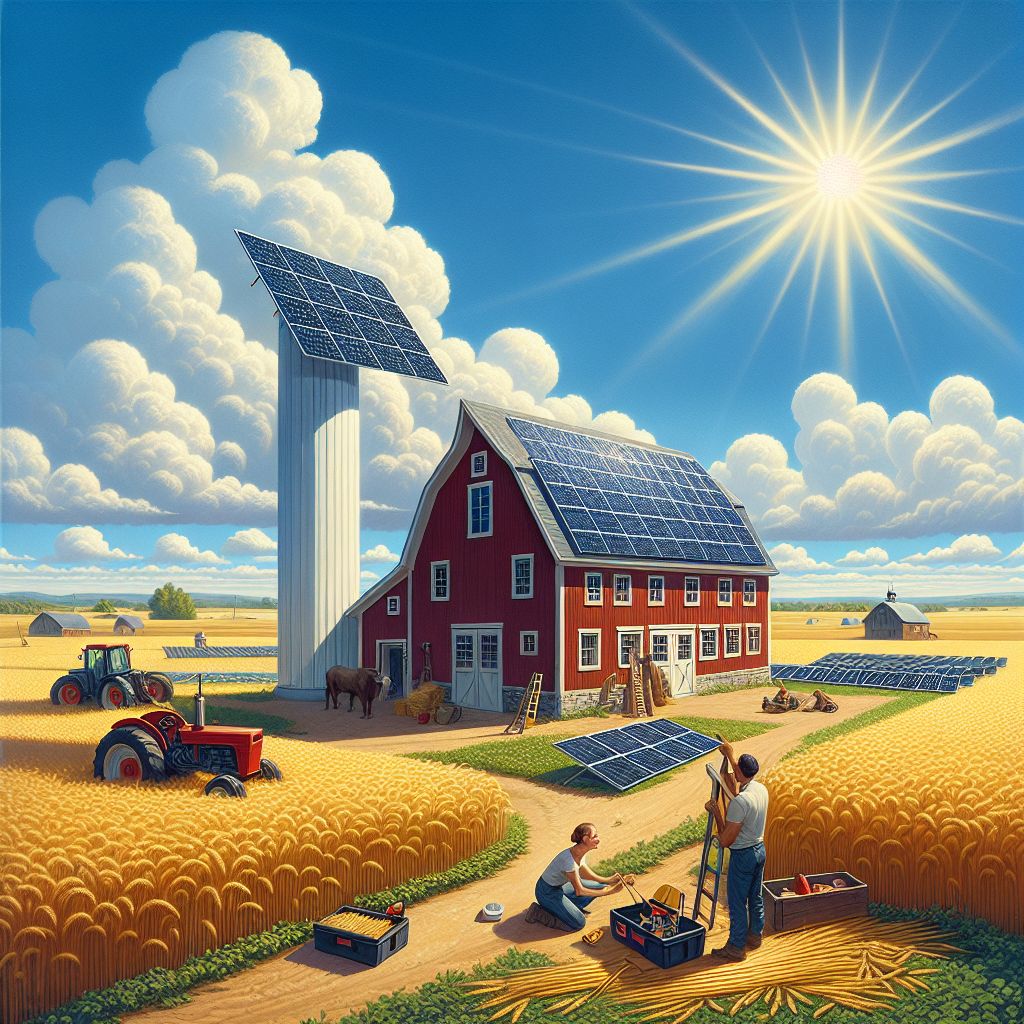
Setting Up Solar Power on Your Farm
Transitioning to solar power requires careful planning and execution. By following a structured approach, we can ensure a smooth and successful implementation. Let’s explore the steps involved in setting up solar power on your farm.
Conducting an Energy Assessment on the Farm
The first step in adopting solar power is conducting an energy assessment. This involves evaluating current energy usage and identifying areas for improvement. By understanding our energy needs, we can design a solar system that meets our specific requirements. For a comprehensive guide, check out this step-by-step guide to installing solar panels on your farm.
It’s also important to consider future energy needs and potential expansion. By planning ahead, we can ensure that the solar system remains scalable and adaptable. This foresight allows us to make informed decisions and avoid costly modifications later on.
Evaluating Government Incentives and Subsidies
Many governments offer incentives and subsidies to support the transition to solar power. These programs can significantly reduce installation costs and improve the return on investment. By researching available options, we can take full advantage of these opportunities. For more information on how solar power can benefit farming, check out this guide on solar power in livestock farming.
Choosing the Right Solar System
Selecting the right solar system for your farm is crucial to maximizing efficiency and cost savings. Start by assessing your farm’s energy needs. Calculate the total energy consumption and identify peak usage times. This information will help you determine the size and capacity of the solar system required.
Consider the type of solar panels that best suit your farm’s conditions. Monocrystalline panels are highly efficient and perform well in low-light conditions, making them a popular choice for many farmers. However, polycrystalline panels offer a cost-effective alternative with good performance in sunny areas. By weighing these options, you can choose a system that aligns with your budget and energy goals.
Here’s a table comparing the different solar panel you can use on a farm:
|
Solar Panel Type |
Efficiency |
Cost per Watt |
Pros |
Cons |
|---|---|---|---|---|
|
Monocrystalline |
17-22% |
$1.00 – $1.50 |
– Highest efficiency. 1, 3 |
– Most expensive option. 1, 3 |
|
Polycrystalline |
13-17% |
$0.90 – $1.20 |
– Lower cost than monocrystalline. 1, 3 |
– Slightly lower efficiency. 1, 3 |
|
Thin-Film |
10-13% |
$0.70 – $1.00 |
– Lowest cost. 1, 3 |
– Lowest efficiency. 1, 3 |
Monocrystalline panels are highly efficient and durable, making them ideal for high-performance irrigation systems that require consistent power output. Their higher cost is often offset by their superior performance in the long run 3.
Polycrystalline panels offer a good balance between cost and efficiency, making them suitable for medium-scale irrigation projects. They perform well in most conditions and are a popular choice for many agricultural applications 3.
Thin-film panels, while less efficient, are more affordable and flexible. They can be a good option for portable irrigation systems or installations where weight is a concern. Their lower efficiency means you may need more panels to achieve the same power output as crystalline options 3.
Installation Steps Every Farmer Should Know
Once you’ve selected the right solar system, it’s time to move on to installation. Here are the key steps every farmer should know: For a detailed guide, check out this step-by-step guide on solar panel installation.
- Site Assessment: Conduct a thorough site assessment to identify the best location for solar panel installation. Consider factors like sun exposure, shading, and proximity to the main power connection.
- Permits and Approvals: Obtain the necessary permits and approvals from local authorities. This step ensures compliance with zoning regulations and building codes.
- Installation: Hire a professional installer to ensure the system is set up correctly. Proper installation is crucial for optimal performance and safety.
- System Testing: After installation, test the system to verify that it’s functioning as expected. This includes checking the energy output and ensuring all connections are secure.
By following these steps, you can ensure a smooth and successful solar system installation on your farm.
Maintaining Your Solar Setup
Maintaining your solar setup is essential to prolong its lifespan and maintain efficiency. Here are some maintenance tips to keep your system in top shape:
- Regularly clean the solar panels to remove dust and debris that can reduce efficiency.
- Inspect the system for any signs of damage or wear, such as loose connections or cracked panels.
- Monitor energy output to ensure the system is performing optimally. If you notice a drop in efficiency, investigate potential issues.
- Schedule annual inspections with a professional to identify and address any maintenance needs.
By staying proactive with maintenance, you can ensure that your solar system continues to provide reliable energy for years to come. For more insights, check out this guide on solar power in livestock farming.

“Livestock, and Solar Panels …” from www.mdpi.com and used with no modifications.
Future Trends in Agrivoltaics and Animal Farming
The future of agrivoltaics and animal farming looks promising, with innovations that enhance sustainability and efficiency. As technology advances, we can expect to see even more benefits from integrating solar power into farming operations.
One exciting trend is the development of bifacial solar panels, which capture sunlight from both sides, increasing energy output. These panels are particularly useful in agricultural settings where light is reflected off the ground.
Innovative Agrivoltaic Solutions for Livestock
Innovations in agrivoltaics are opening new possibilities for livestock farming. For example, solar panels can be integrated into grazing areas, providing shade and reducing heat stress for animals. This dual-use approach optimizes land use and enhances animal welfare.
Advancing Solar Technologies for Better Efficiency
Advancements in solar technology continue to improve efficiency and reduce costs. For instance, thin-film solar panels are lightweight and flexible, making them ideal for unconventional installations. As these technologies become more accessible, farmers can harness solar power more effectively.
Emerging Practices in Sustainable Farming
Sustainable farming practices are evolving, with solar energy playing a central role. By integrating solar power, farmers can reduce their environmental impact and promote resilience. This shift aligns with consumer demand for eco-friendly products and supports long-term farm viability.
As we embrace these emerging practices, we pave the way for a more sustainable and productive future in agriculture.
Frequently Asked Questions (FAQ)
Here are some common questions about solar power benefits for livestock and animal housing farmers:
How do solar panels benefit animal welfare directly?
Solar panels provide shade and stabilize temperatures, reducing heat stress in animals. This leads to improved health and productivity, enhancing overall animal welfare.
What are the cost implications of installing solar systems on farms?
While the initial installation cost can be high, solar systems offer significant long-term savings by reducing energy bills. Many governments also offer incentives to offset costs.
Are there any government programs to support solar energy in agriculture?
Yes, many governments provide incentives and subsidies to encourage the adoption of solar energy in agriculture. These programs can help reduce installation costs and expedite the return on investment.
How does solar power improve environmental conditions on farms?
Solar power reduces reliance on fossil fuels, lowering emissions and improving air quality. This shift supports environmental sustainability and promotes cleaner farm environments. For more insights, check out this guide on solar power in livestock farming.
What is agrivoltaics and how is it related to livestock farming?
Agrivoltaics involves integrating solar panels with agricultural activities, such as livestock farming. This approach optimizes land use, providing shade for animals while generating renewable energy.

Leave a Reply