

Key Takeaways
- Solar farms can significantly reduce greenhouse gas emissions by harnessing clean, renewable energy from the sun.
- They conserve water resources, as solar energy production uses less water compared to traditional power generation.
- Solar farms can provide a stable income source for landowners, often earning $250 to $1,000 per acre annually.
- Community solar farms allow local residents to benefit from solar energy without installing panels on their own properties.
- Utility-scale solar farms are capable of powering thousands of homes, contributing to energy independence and grid stability.
An In-Depth Look at Solar Farms and Their Advantages
Solar farms are transforming the way we think about energy. They capture the sun’s rays and convert them into electricity, helping us move away from fossil fuels. But what exactly are solar farms, and how do they benefit the environment and communities? Let’s explore this in detail.
Introduction to Solar Farms
Imagine fields of solar panels stretching across the horizon, soaking up sunlight and turning it into power. That’s a solar farm. These installations come in different sizes, from small community projects to massive utility-scale farms. They all share a common goal: to provide clean energy and reduce our carbon footprint.
Immediate Environmental Impact
Solar farms have an immediate and positive impact on the environment. By replacing fossil fuels with solar energy, they reduce harmful emissions that contribute to climate change. For example, a single solar farm can offset thousands of tons of carbon dioxide each year.

What Defines a Solar Farm?
At its core, a solar farm is a large-scale solar installation designed to generate electricity for distribution through the power grid. Unlike residential solar panels that power individual homes, solar farms produce energy on a much larger scale.
Components of a Solar Farm
Several key components make up a solar farm:
- Photovoltaic Panels: These are the solar panels that capture sunlight and convert it into electricity.
- Inverters: They convert the direct current (DC) generated by the panels into alternating current (AC) used by the power grid.
- Mounting Structures: These hold the panels in place, often allowing them to track the sun’s movement for maximum efficiency.
- Transformers: They adjust the voltage of the electricity for safe and efficient distribution.
Types of Solar Farms
Solar farms can be categorized into two main types: utility-scale and community solar farms. Each serves a different purpose and audience.
Utility-Scale Solar Power
Utility-scale solar farms are like the powerhouses of the solar industry. These large installations are often built on vast stretches of land, sometimes in remote areas where space is abundant. The primary goal of these solar farms is to generate electricity on a massive scale, enough to supply power to entire cities or regions. Because of their size, they can take advantage of economies of scale, making the cost per unit of electricity generated lower compared to smaller installations.
Community Solar Farms
Community solar farms are designed with a more localized approach in mind. They enable people who cannot install solar panels on their own rooftops—perhaps due to shading issues, roof orientation, or because they rent their homes—to still benefit from solar energy. By buying or leasing a portion of a community solar farm, participants can receive credits on their electricity bills, reducing their overall energy costs. This model democratizes access to solar power, making it more inclusive and cost-effective.

Environmental Benefits of Solar Farms
Solar farms are champions of the environment, offering a multitude of benefits that extend beyond clean energy production. Let’s delve into some of the key environmental advantages.
Reduction in Greenhouse Gas Emissions
One of the most significant environmental benefits of solar farms is their ability to reduce greenhouse gas emissions. Unlike fossil fuel-based power plants, solar farms do not emit carbon dioxide or other harmful pollutants during electricity generation. This reduction in emissions helps combat climate change, which is crucial for preserving our planet for future generations. For more information on how solar energy can cut operational costs in agriculture, visit our detailed guide.
For instance, according to the National Renewable Energy Laboratory, a typical utility-scale solar farm can offset about 0.85 pounds of carbon dioxide per kilowatt-hour of electricity produced. This means a solar farm producing 100 megawatts of electricity can prevent the emission of approximately 372,000 tons of carbon dioxide annually.
Conservation of Water Resources
Solar farms also play a vital role in conserving water resources. Traditional power generation methods, such as coal or nuclear plants, require vast amounts of water for cooling purposes. In contrast, solar farms use minimal water, primarily for cleaning the panels to maintain efficiency.
In arid regions, where water is a scarce resource, the water-saving advantage of solar farms becomes even more pronounced. By reducing the demand for water in power generation, solar farms help ensure that more water remains available for agricultural, industrial, and personal use.
- Solar energy production requires little to no water.
- Reduces stress on local water supplies.
- Helps preserve aquatic ecosystems by preventing water diversion.
Preservation and Dual Use of Land
Solar farms often utilize land that is otherwise unsuitable for agriculture or development, such as brownfields or desert areas. By doing so, they preserve more fertile land for farming and other productive uses. Moreover, some solar farms integrate dual-use strategies, where land beneath and around the panels is used for grazing livestock or growing crops. This approach maximizes land efficiency and supports biodiversity.
Agrivoltaics and Crop Integration
Agrivoltaics is an innovative approach where solar panels and agriculture coexist on the same land. This integration can benefit both energy production and farming. Solar panels provide shade, reducing soil moisture evaporation and helping crops thrive in hotter climates. At the same time, the presence of vegetation can help cool the panels, potentially increasing their efficiency.
Here’s a table discussing more environmental benefits of solar farms:
|
Benefit |
Description |
|---|---|
|
Reduced Greenhouse Gas Emissions |
Solar farms significantly reduce carbon dioxide emissions compared to fossil fuels. A 100 MW solar farm can reduce carbon emissions by approximately 200,000 tons each year, equivalent to taking nearly 40,000 cars off the road. 2 |
|
Clean Energy Production |
Solar farms generate electricity without direct emissions of greenhouse gases or air pollutants during operation, unlike fossil fuel power plants. 1, 5 |
|
Improved Air Quality |
By replacing fossil fuel-based electricity generation, solar farms help reduce air pollution, potentially adding 2.3 years to average human life expectancy. 1 |
|
Land Use Efficiency |
Solar farms can be co-located with agricultural activities in a practice known as “agrovoltaics,” allowing for dual land use. 3 |
|
Water Conservation |
Solar PV systems require minimal water for operation compared to traditional power generation methods, helping conserve water resources. 1 |
|
Biodiversity Support |
When properly managed, solar farms can contribute to land biodiversity and maintain soil quality. 3 |
|
Renewable Resource Utilization |
Solar energy harnesses an inexhaustible resource – sunlight – reducing dependence on finite fossil fuels. 3 |
|
Low Life Cycle Emissions |
The life cycle emissions of solar PV are significantly lower than fossil fuels, with rooftop solar producing about 12-20 times less emissions than natural gas or coal.1 |
|
Carbon Sequestration Comparison |
An acre of solar panels reduces approximately 204-231 times more carbon dioxide per year than an acre of forest. 4 |
|
Long-Term Environmental Benefits |
Solar farms have a lifespan of 25-30 years, providing sustained environmental benefits with minimal degradation in performance. 2 |

Economic Advantages of Solar Farms
Besides environmental benefits, solar farms offer several economic advantages. They create jobs, stabilize energy costs, and provide a reliable income for landowners. To learn more about the costs and benefits, you can read this article on are solar farms worth it.
Job Creation and Economic Growth
The solar industry is a major driver of job creation. Solar farms require a workforce for planning, construction, and maintenance. According to the Solar Foundation, the solar industry employed over 250,000 workers in the United States alone in 2019, with many of these jobs being in the construction and installation sectors.
Furthermore, solar farms can stimulate local economies by attracting investments and increasing demand for goods and services. For example, a new solar farm project might require local contractors for construction, boosting the area’s economy. Additionally, the presence of a solar farm can increase property values and contribute to community development.
- Creates construction and maintenance jobs.
- Attracts investments and boosts local economies.
- Increases property values and community development.
Stabilizing and Lowering Energy Costs
By generating electricity from a free and renewable resource—the sun—solar farms can help stabilize and lower energy costs over time. As technology advances and solar becomes more efficient, the cost of solar energy continues to decrease. This reduction in costs benefits consumers, who may see lower electricity bills as a result.
Income for Landowners
For landowners, hosting a solar farm can provide a steady income stream. Solar developers often lease land for solar farms, offering landowners annual payments ranging from $250 to $1,000 per acre. This arrangement can be particularly beneficial for landowners with underutilized or marginal land, providing a reliable income without the need to sell or develop the property.
Besides financial benefits, landowners can take pride in contributing to clean energy production and supporting the transition to a more sustainable future.
Here’s a table discussing the economic advantages of solar farms:
|
Economic Advantage |
Description |
|---|---|
|
Job Creation |
Solar farms generate employment opportunities across various sectors, including installation, engineering, sales, and maintenance. The U.S. solar industry employed 279,447 workers as of December 2023, marking a 5.9% increase from the previous year. 6 |
|
Reduced Energy Costs |
Solar farms can significantly lower electricity prices for local consumers and businesses, making energy more affordable and stable. 3 |
|
Additional Revenue Streams |
Farmers can generate extra income by selling excess energy back to the grid through net metering and participating in renewable energy credit programs. 1 |
|
Tax Incentives and Grants |
Government programs like the federal Investment Tax Credit (ITC) and USDA REAP Grant provide substantial financial support for solar installations, reducing initial costs. 1 |
|
Increased Property Value |
Solar-equipped properties become more attractive to buyers and renters, potentially increasing the overall value of farms and local real estate. 1 |
|
Local Economic Growth |
Solar projects attract new investments, stimulate local economies, and contribute to economic diversification. 5 |
|
Energy Independence |
Communities can reduce dependence on external energy sources and fossil fuels, enhancing energy security and price stability. 3, 5 |
|
Cost Savings for Businesses |
As solar costs decrease and fossil fuel prices increase, businesses can benefit from long-term energy cost reductions. 5 |
|
Community Ownership Opportunities |
Community solar programs allow residents to invest in shared solar systems, promoting broader access to solar benefits. 5 |
|
Infrastructure Development |
Solar farm projects often lead to improvements in local infrastructure, benefiting the broader community. 3 |
This table highlights the diverse economic advantages that solar farms can bring to communities, businesses, and individuals, showcasing their potential for driving sustainable economic growth and energy independence.
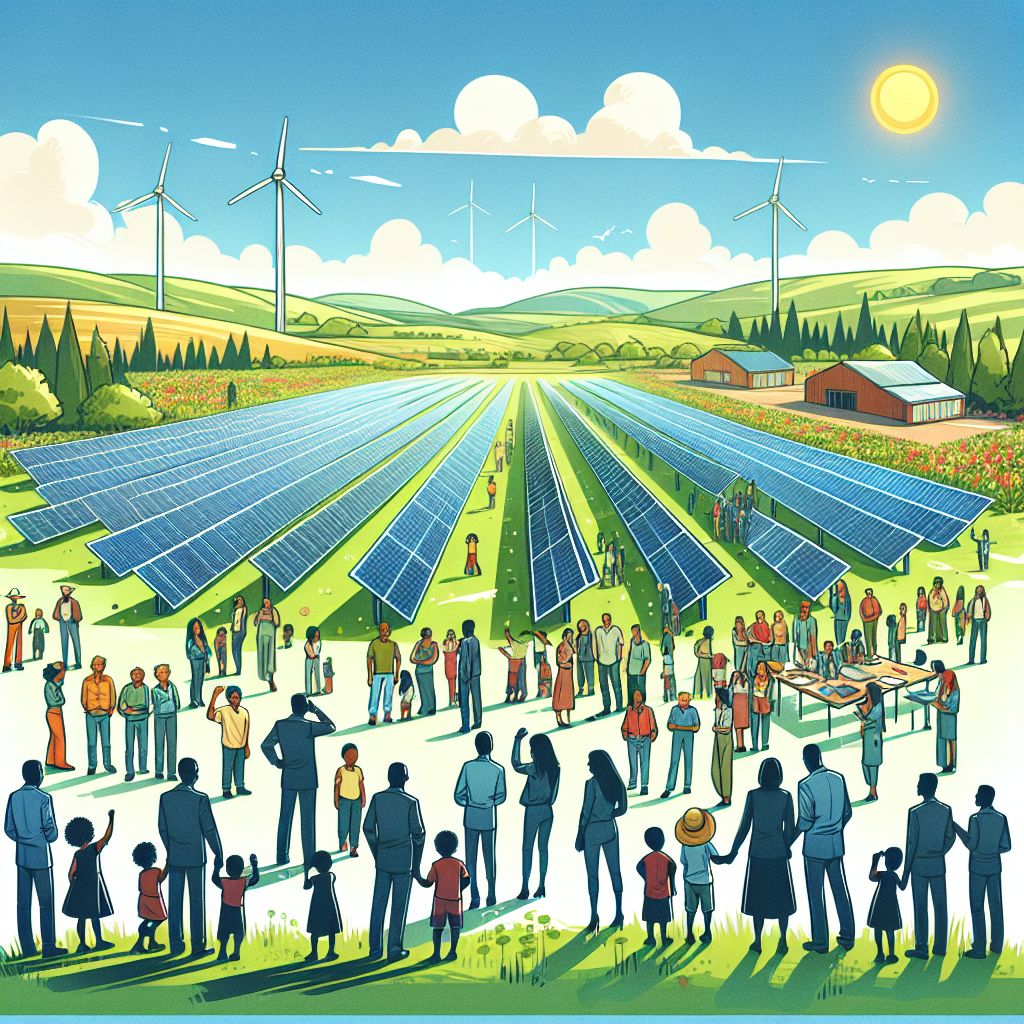
Social and Community Benefits
“Solar farms are not just about energy; they are about community empowerment and resilience.”
Solar farms bring numerous social and community benefits, enhancing quality of life and fostering a sense of pride and ownership in renewable energy projects.
By providing local communities with access to clean energy, solar farms help reduce reliance on fossil fuels and promote energy independence. They also offer educational opportunities, raising awareness about the importance of renewable energy and inspiring the next generation of environmental stewards.
Moreover, solar farms can strengthen community relationships by creating shared goals and fostering collaboration among residents, local governments, and businesses. This sense of unity can lead to more resilient and sustainable communities.
Community Energy Independence
Solar farms contribute to community energy independence by reducing reliance on external energy sources. This independence can protect communities from energy price fluctuations and supply disruptions, providing a more stable and secure energy future.
Education and Awareness
Solar farms can serve as educational platforms, offering schools and community groups the opportunity to learn about renewable energy firsthand. By hosting tours and workshops, solar farms can inspire curiosity and foster a deeper understanding of the role of clean energy in combating climate change.
Positive Community Relationships
When communities come together to support and develop solar projects, they build strong, positive relationships. These relationships can lead to collaborative efforts in other areas, such as sustainability initiatives, conservation projects, and local economic development.
Here’s a table discussing a more detailed list of social and community benefits of a solar farm:
|
Benefit |
Description |
|---|---|
|
Affordable Energy |
Solar farms can reduce energy costs for households and businesses, providing significant savings over time and alleviating financial burdens for community members. 2 |
|
Job Creation |
Solar farms generate employment opportunities in development, construction, and maintenance, contributing to lower local unemployment rates and economic stability. 2, 4 |
|
Community Education |
Solar projects often include informational programs, workshops, and events to teach residents about renewable energy and sustainability, fostering a culture of environmental awareness. 2 |
|
Environmental Impact |
By reducing reliance on fossil fuels, solar farms help decrease greenhouse gas emissions and combat climate change, contributing to a cleaner environment for the community. 1 |
|
Local Economic Growth |
Solar farms stimulate local economies by creating jobs, supporting local businesses, and increasing tax revenue for local governments. 1, 4 |
|
Energy Independence |
Communities can reduce dependence on external energy sources, fostering resilience and stability in local energy supply3. |
|
Grid Resilience |
Solar farms contribute to a more stable electricity grid, helping to balance energy supply and demand, especially during peak usage times. 2 |
|
Equitable Clean Energy |
Community solar provides access to renewable energy for those who may not have suitable properties for individual solar installations, promoting environmental justice. 3 |
|
Health Benefits |
By replacing fossil fuels with solar power, communities can experience improved air quality, positively impacting the health of residents. 3 |
|
Wildlife Protection |
Solar farms can indirectly help protect wildlife by reducing the need for more environmentally disruptive forms of energy production 3 |
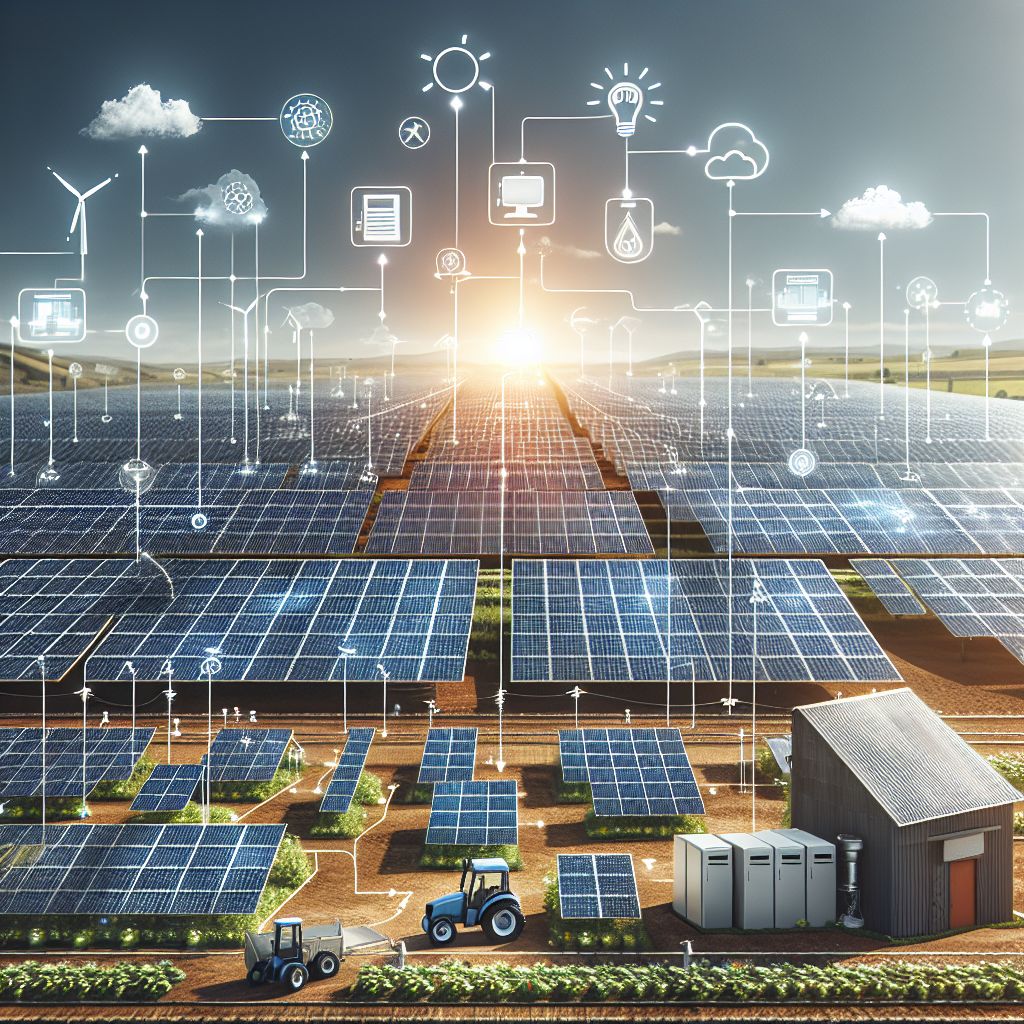
How Solar Farms Operate
Understanding how solar farms operate is essential to appreciating their benefits. At their core, solar farms convert sunlight into electricity through a series of steps, each crucial to the overall process.
Solar panels, or photovoltaic cells, capture sunlight and convert it into direct current (DC) electricity. Inverters then change this DC electricity into alternating current (AC), which is compatible with the power grid. The electricity is then transmitted to the grid, where it can be distributed to homes and businesses. For more information on how solar panels can lead to cost savings, you can explore the benefits they offer.
Electricity Generation Process
Solar farms harness sunlight using photovoltaic (PV) panels, which consist of numerous solar cells made from silicon. When sunlight hits these cells, it excites electrons, creating an electric current. This process, known as the photovoltaic effect, generates direct current (DC) electricity. The DC electricity is then converted into alternating current (AC) using inverters, making it suitable for use in homes and businesses. To learn more about how solar panels can increase farm efficiency, check out this guide.
Grid Integration and Distribution
Once the electricity is converted to AC, it is transmitted to the power grid. This integration involves transformers that adjust the voltage for efficient distribution. The electricity is then distributed across the grid, supplying power to homes, businesses, and other consumers. This seamless integration ensures that the energy produced by solar farms is effectively utilized, reducing the need for fossil fuel-based power generation.
Monitoring and Maintenance
Solar farms require regular monitoring and maintenance to ensure optimal performance. Monitoring systems track the output of each panel, identifying any issues such as shading, dirt, or technical malfunctions. Maintenance involves cleaning the panels, repairing damaged components, and ensuring that the inverters and transformers function correctly. Regular maintenance not only maximizes efficiency but also extends the lifespan of the solar farm.
For instance, a well-maintained solar farm can operate efficiently for 25 to 30 years, providing a reliable source of clean energy throughout its lifecycle.
What is the Difference of Running a Solar Farm then Using Solar Panels to Power a Farming Operation
Running a solar farm focuses on large-scale energy production for distribution, whereas using solar panels to power a farming operation is more localized. In a solar farm, the primary goal is to generate electricity for the grid, benefiting a broad area. Conversely, when solar panels power a farming operation, they are typically used to meet the energy needs of the farm itself, such as powering irrigation systems, machinery, and buildings.
Therefore, while both utilize solar technology, the scale, purpose, and impact differ significantly. Solar farms contribute to the broader energy grid, whereas on-site solar installations directly support agricultural activities.
The Future of Solar Farms
The future of solar farms is bright, driven by technological advancements, supportive policies, and increasing global adoption. These factors are set to enhance the efficiency and reach of solar energy, making it a cornerstone of sustainable development.
Technological Innovations
Technological innovations are continually improving the efficiency and cost-effectiveness of solar farms. Advances in solar panel technology, such as bifacial panels that capture sunlight from both sides, can significantly increase energy output. Additionally, improvements in energy storage solutions, like advanced batteries, allow solar farms to store excess energy for use during cloudy days or at night, further enhancing reliability.
Policy and Investment Support
Governments worldwide are implementing policies and incentives to promote solar energy adoption. These include tax credits, grants, and feed-in tariffs that make solar projects more financially viable. Investment in solar infrastructure is also increasing, with both public and private sectors recognizing the long-term benefits of renewable energy. This support is crucial for the continued growth and expansion of solar farms globally.
Global Adoption Trends
As awareness of climate change grows, more countries are committing to renewable energy targets, leading to increased adoption of solar farms. Regions with abundant sunlight, such as the Middle East and Africa, are particularly well-positioned to benefit from solar energy. However, even countries with less favorable climates are investing in solar technology, leveraging advancements that allow solar farms to operate efficiently in diverse conditions.
Conclusion
Solar farms are an essential component of the transition to a sustainable energy future. They offer significant environmental, economic, and social benefits, from reducing greenhouse gas emissions to providing jobs and stabilizing energy costs. As technology advances and global support for renewable energy grows, solar farms will play an increasingly vital role in meeting our energy needs while protecting the planet.
By understanding and supporting the development of solar farms, we can contribute to a cleaner, more sustainable future for all.
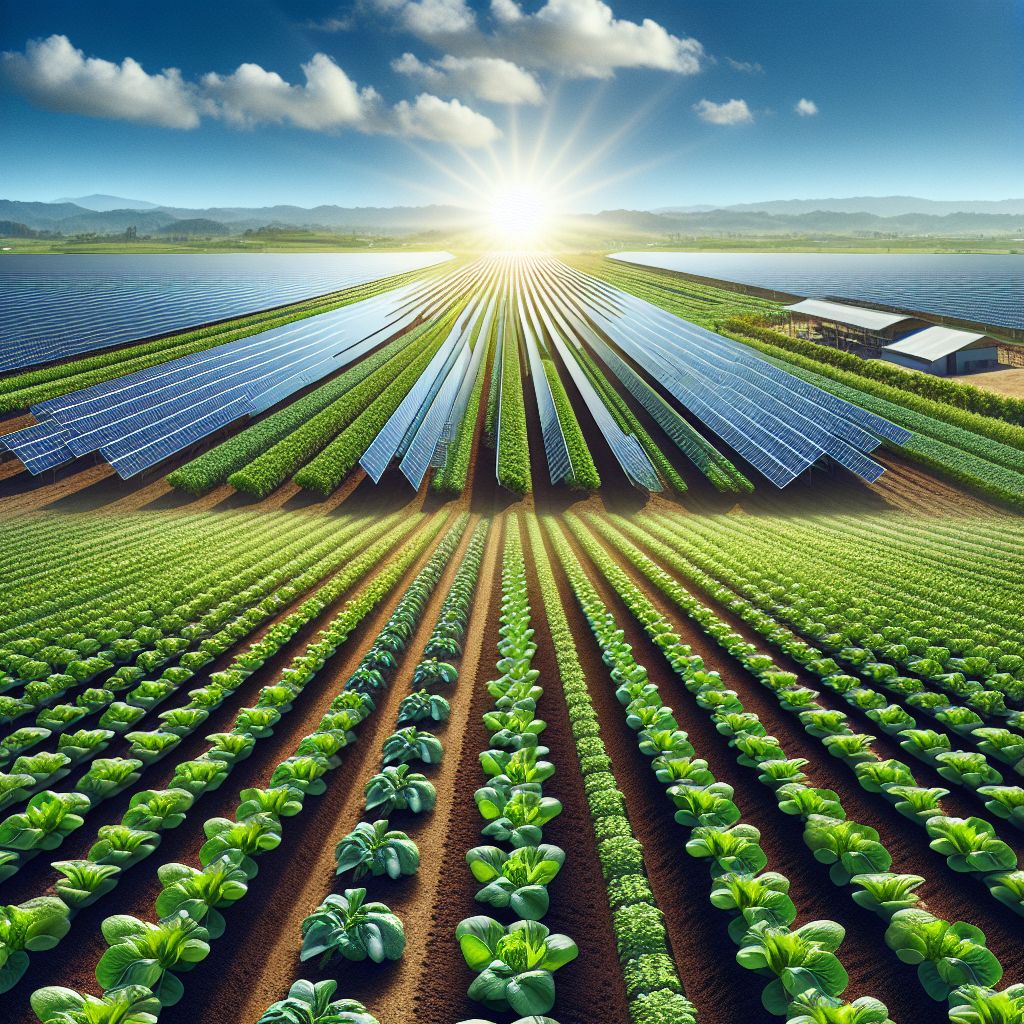
Can a Solar Farm Coexist on the Same Land of a Regular Farms Operations of Growing Crops
Yes, solar farms can coexist with traditional farming operations through a practice known as agrivoltaics. This approach involves integrating solar panels with agricultural activities, allowing crops and energy production to share the same land. Solar panels provide shade that can reduce soil moisture evaporation, benefiting certain crops. At the same time, the presence of vegetation can help keep the panels cool, potentially increasing their efficiency.
Frequently Asked Questions
Here are some common questions about solar farms, along with concise answers to help you better understand this renewable energy solution.
How long do solar farms take to set up?
The setup time for a solar farm can vary based on size and location, but it typically ranges from several months to a year. This timeline includes planning, permitting, construction, and connection to the grid.
Can solar farms work in cloudy areas?
Yes, solar farms can operate in cloudy areas, although their efficiency may be reduced compared to sunny regions. Technological advancements, such as more efficient panels and energy storage solutions, help mitigate this impact.
What happens to land under solar panels?
Land under solar panels can still be used for various purposes, such as grazing livestock or growing certain crops. This dual-use approach maximizes land efficiency and supports biodiversity.
Are there concerns with wildlife and solar farms?
While solar farms generally have a low impact on wildlife, it’s essential to conduct environmental assessments and implement mitigation measures to minimize any potential harm to local ecosystems.
What’s the lifespan of a solar panel on a farm?
Solar panels on a farm typically have a lifespan of 25 to 30 years. Regular maintenance can help ensure they operate efficiently throughout their lifecycle, providing a reliable source of clean energy.
By understanding these aspects of solar farms, we can better appreciate their role in shaping a sustainable energy future.
Solar farms are becoming increasingly popular due to their numerous benefits. They provide a sustainable source of energy that reduces reliance on fossil fuels, thereby decreasing greenhouse gas emissions. Additionally, solar farms can lead to significant cost savings for farmers by lowering electricity bills and even generating additional income through selling excess power back to the grid. For those interested in understanding the cost savings for farmers from solar panels, it’s a worthwhile investment that also contributes to environmental conservation.



Leave a Reply