

Key Takeaways
- Solar-powered irrigation systems can reduce operational costs by up to 30% compared to traditional systems.
- Farmers can see a return on investment increase by 20%–30% after transitioning to solar irrigation.
- Solar irrigation systems provide energy independence, reducing reliance on external energy sources.
- Government incentives and grants are available to help offset the initial costs of solar irrigation systems.
- Switching to solar-powered irrigation contributes to environmental sustainability by significantly reducing carbon emissions.
How Solar-Powered Irrigation Boosts Farmers’ Profits
For many farmers, managing operational costs is a constant challenge. With traditional irrigation systems, these costs can become overwhelming, especially in regions where energy prices are high. Enter solar-powered irrigation systems, a game-changer in the agricultural world. These systems not only reduce costs but also increase profitability and sustainability.
How a Solar Powered Irrigation Works for Farmers
At its core, a solar-powered irrigation system uses solar panels to capture sunlight and convert it into electricity. This electricity powers water pumps, which then distribute water to crops. Unlike traditional systems that rely on fossil fuels or grid electricity, solar systems harness the free and abundant energy from the sun.
Farmers in sunny regions benefit the most, as they have consistent access to solar energy. However, even in areas with less sunlight, solar systems can be effective when combined with battery storage solutions. This ensures that water can be pumped even when the sun isn’t shining.
Reducing Operating Costs with Solar Energy
One of the most compelling reasons for farmers to switch to solar-powered irrigation is the potential for cost savings. Traditional irrigation systems often depend on expensive diesel or electricity. These costs can fluctuate, making budgeting unpredictable.
Solar-powered systems, on the other hand, provide a stable and predictable energy source. Once installed, the energy they generate is free. This means farmers can significantly reduce their energy bills, often seeing a reduction of up to 30% in operational costs. Over time, these savings can add up, allowing farmers to reinvest in their operations and increase their profitability.
Enhancing Return on Investment
“Farmers can increase their return on investment by 20%–30% with solar irrigation systems.”
Switching to solar-powered irrigation isn’t just about saving money; it’s also about making money. By reducing operational costs and improving efficiency, solar systems enhance the overall return on investment (ROI) for farmers. This is especially true in areas where energy costs are high or where farmers have large-scale operations.
For instance, a farmer who spends $10,000 annually on diesel for irrigation can save up to $3,000 per year by switching to solar. Over ten years, this amounts to $30,000 in savings, not to mention the potential for increased crop yields and improved quality due to more reliable irrigation.
Energy Independence from Solar Irrigation
Energy independence is another significant advantage of solar-powered irrigation systems. Farmers are no longer at the mercy of fluctuating energy prices or supply disruptions. Instead, they can rely on the sun, a consistent and renewable energy source.
This independence not only reduces financial stress but also provides peace of mind. Farmers can focus on what they do best—growing crops—without worrying about energy costs or availability. Moreover, in remote areas where access to the grid is limited, solar irrigation can be a lifeline, enabling farmers to irrigate their crops efficiently and sustainably.
|
Economic Impact Area |
Solar-Powered Irrigation Systems: Impact for Farmers |
Supporting Evidence |
|---|---|---|
|
Operational Cost Savings |
Solar irrigation reduces operational costs by 21%–90% compared to traditional diesel or electric pumps, with small farms saving up to $394 per hectare per year. | |
|
Return on Investment (ROI) |
Farmers experience increased ROI, ranging from 20%–315%, with payback periods as low as 2.9–5 years due to lower running costs and improved yields. | |
|
Profit Margins |
Lower energy costs translate directly to higher profit margins, allowing farmers to reinvest in their operations and improve income. | |
|
Energy Independence |
Solar systems reduce dependence on the grid and fossil fuels, insulating farmers from price fluctuations and power outages. | |
|
Crop Yield and Productivity |
Reliable, efficient water delivery increases yields by 20%–35% and allows for crop diversification, further boosting income. | |
|
Environmental Sustainability |
Solar irrigation cuts CO₂ emissions and reduces reliance on fossil fuels, enhancing the farm’s environmental profile and marketability. | |
|
Long-Term Financial Security |
Solar systems have long lifespans, minimal maintenance costs, and are often supported by government incentives or subsidies. | |
|
Challenges |
High initial investment, need for technical know-how, and maintenance can be barriers, but are often offset by grants and long-term savings. | |
|
Potential Revenue Streams |
Excess solar power can sometimes be sold back to the grid (net metering), creating additional income. |
Summary:
Solar-powered irrigation systems offer substantial economic benefits for farmers, including significant reductions in operational costs, higher profit margins, improved crop yields, and greater energy independence. While the initial investment can be high, government incentives and long-term savings make solar irrigation a financially attractive and sustainable choice for both small and large-scale farmers. 2, 6, 7
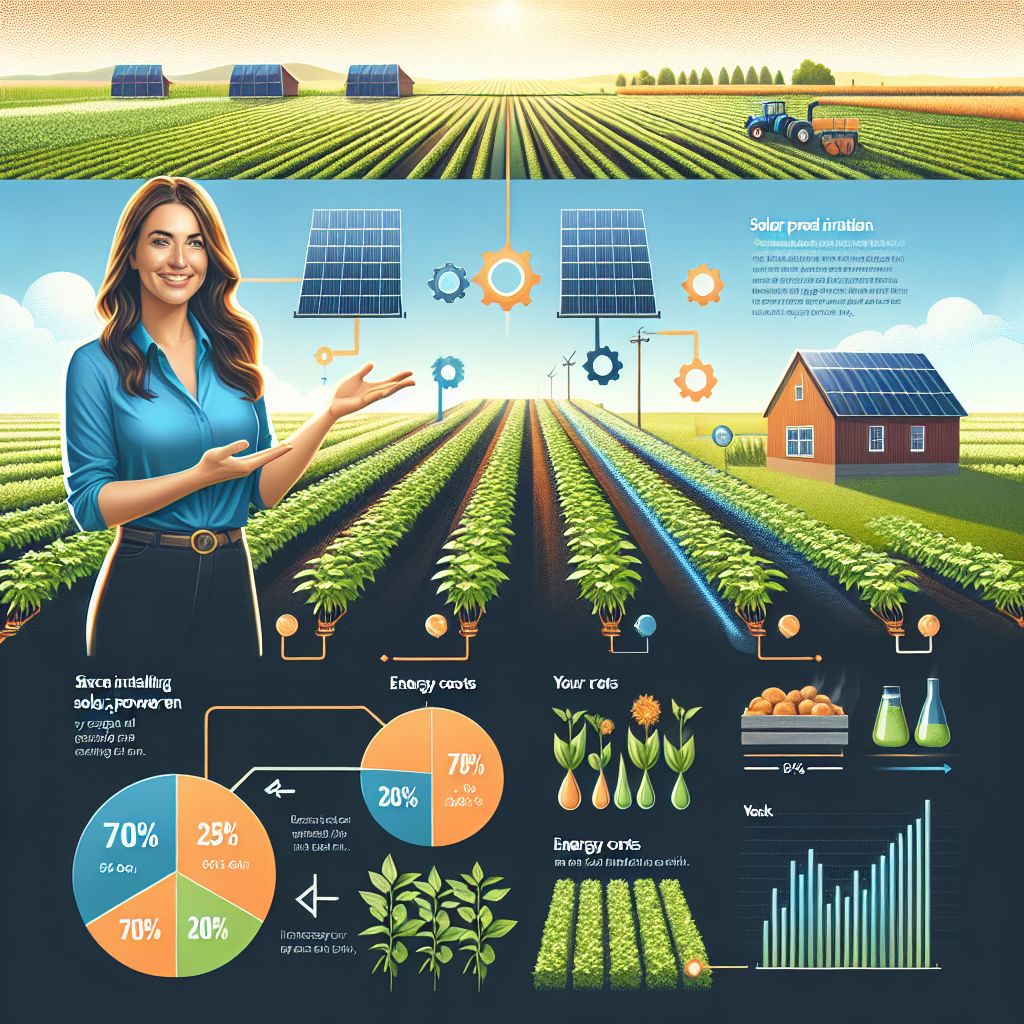
“Solar Powered Furrow Irrigation Systems …” from growingsolarmist.com and used with no modifications.
Cost Analysis of Traditional vs. Solar Irrigation Systems
When considering a switch to solar-powered irrigation, it’s essential to understand the cost implications. While the initial investment can be higher, the long-term savings often justify the expense. Let’s delve into the cost comparison between traditional and solar systems.
Comparative Operating Costs
When comparing the operating costs of traditional and solar-powered irrigation systems, it’s clear that solar offers a significant advantage. Traditional systems often depend on fossil fuels or grid electricity, both of which can be expensive and subject to price fluctuations. These systems typically have ongoing costs related to fuel purchases, maintenance, and repairs.
In contrast, solar-powered systems require minimal maintenance and have no fuel costs once installed. The sun’s energy is free, which means that after the initial investment, the operational costs are almost negligible. This reduction in ongoing expenses makes solar systems particularly attractive for farmers looking to cut costs and improve their bottom line. For more insights, explore the economics of using a solar irrigation system in commercial farming.
Long-Term Financial Benefits
“By switching to solar irrigation, farmers can save thousands of dollars annually on energy costs, leading to a rapid return on investment.”
The long-term financial benefits of solar-powered irrigation systems are substantial. While the upfront costs can be higher than traditional systems, the savings over time make solar a smart investment. Farmers can expect to see a return on investment within a few years, thanks to reduced energy costs and potential increases in crop yields.
Moreover, solar systems often increase property values. A farm equipped with a modern, sustainable irrigation system is more attractive to potential buyers, should the farmer decide to sell. This added value can further enhance the financial benefits of switching to solar.
Additionally, many solar systems have a lifespan of 20 to 25 years, meaning that the financial benefits continue to accrue long after the initial investment has been recouped. Over time, the cumulative savings can be significant, providing a stable and predictable financial outlook for farmers.

“Solar Irrigation System for a Farm: Top …” from growingsolarmist.com and used with no modifications.
Initial Investment and Financial Support
While the long-term benefits of solar irrigation are clear, the initial investment can be a hurdle for some farmers. Understanding the costs and available financial support can help farmers make informed decisions and take advantage of this sustainable technology.
Understanding Upfront Costs
The upfront costs of solar-powered irrigation systems can vary based on factors such as the size of the farm, water needs, and local climate. On average, a solar irrigation system can cost anywhere from $5,000 to $20,000, depending on these variables.
It’s important for farmers to conduct a thorough cost-benefit analysis to determine the best system for their needs. This analysis should consider not only the initial costs but also the long-term savings and potential increases in productivity.
Government Incentives and Grants
To help offset the initial costs, many governments offer incentives and grants for farmers who switch to solar irrigation. These programs can significantly reduce the financial burden and make solar systems more accessible.
Incentives can include tax credits, rebates, and low-interest loans. For example, in the United States, the federal Investment Tax Credit (ITC) allows farmers to deduct a percentage of the cost of installing a solar system from their federal taxes. Additionally, many states have their own incentive programs that can further reduce costs.
Case Study: Successful Implementation of Solar Irrigation
Consider the case of a small farm in California that switched to solar-powered irrigation. The farm, which primarily grows vegetables, faced high energy costs due to its reliance on diesel-powered pumps. By transitioning to solar, the farm reduced its energy costs by 25% within the first year.
“The switch to solar not only saved us money but also improved our overall efficiency. We can now irrigate more consistently, leading to better crop yields.”
The farm took advantage of state and federal incentives to reduce the upfront costs. Within three years, the savings on energy expenses covered the initial investment, and the farm continues to benefit from lower operating costs and improved productivity.
This example illustrates the potential for solar irrigation to transform farming operations, providing both economic and environmental benefits.

“Solar-Powered Irrigation Enhances Crop …” from growingsolarmist.com and used with no modifications.
Environmental Advantages of Solar-Powered Irrigation
Beyond the economic benefits, solar-powered irrigation systems offer significant environmental advantages. By reducing reliance on fossil fuels, these systems contribute to a more sustainable and eco-friendly agricultural sector.
Reducing Carbon Emissions
Traditional irrigation systems that rely on diesel or electricity from fossil fuels contribute to carbon emissions, which are a major driver of climate change. In contrast, solar-powered systems generate clean energy, significantly reducing the carbon footprint of farming operations.
This reduction in emissions is not only beneficial for the environment but also aligns with global efforts to combat climate change. By adopting solar irrigation, farmers can play a crucial role in these efforts while also reaping economic benefits.
Contributing to Sustainable Farming Practices
Solar-powered irrigation systems align with the principles of sustainable farming, which emphasize resource efficiency and environmental stewardship. By reducing energy consumption and emissions, solar systems support the long-term health of the land and surrounding ecosystems.
Moreover, solar systems can be integrated with other sustainable practices, such as rainwater harvesting and drip irrigation, to further enhance water efficiency and reduce environmental impact. This holistic approach to farming not only benefits the environment but also enhances the resilience and productivity of agricultural operations.
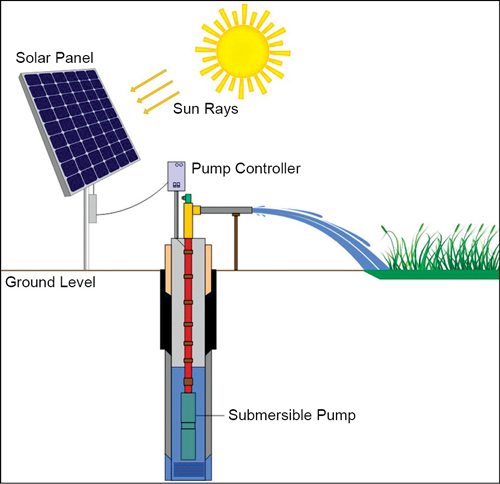
“Solar Power Irrigation System …” from www.electronicsforu.com and used with no modifications.
Impact on Water-Stressed Regions
In regions where water scarcity is a pressing issue, solar-powered irrigation systems can be a lifeline. By providing a reliable and efficient means of water distribution, these systems can help address water stress and support agricultural productivity. For more information on how solar panels can power farms and offer agricultural solutions, you can explore Topcon solar panels.
Increasing Agricultural Productivity
Water-stressed regions often struggle with inconsistent or inadequate water supply, which can limit agricultural productivity. Solar-powered irrigation systems offer a solution by providing a reliable and efficient means of water distribution.
By ensuring that crops receive the right amount of water at the right time, solar systems can enhance yields and improve crop quality. This is particularly important in regions where food security is a concern and agricultural productivity is crucial for local economies.
Improving Food Security
In water-scarce regions, ensuring food security is a critical challenge. Solar-powered irrigation systems can play a key role in addressing this challenge by enabling consistent and efficient water use.
- Reliable water supply ensures consistent crop yields.
- Increased productivity supports local economies and livelihoods.
- Reduced reliance on external energy sources enhances resilience.
By improving water management and supporting agricultural productivity, solar systems can help ensure a stable and sufficient food supply, contributing to the overall well-being of communities in water-stressed regions.
Case Study: Solar Irrigation in Arid Areas
In arid regions of Africa, solar-powered irrigation systems have been transformative. Farmers who previously struggled with unreliable water supply now have consistent access to water, enabling them to grow crops year-round.
“Solar irrigation has changed our lives. We can now grow enough food to feed our families and sell the surplus, improving our livelihoods.”
This example highlights the potential for solar irrigation to address water scarcity and support sustainable development in regions where traditional irrigation methods are not feasible. By providing a reliable and efficient means of water distribution, solar systems empower farmers to overcome the challenges of water scarcity and improve their quality of life.
“Solar-Powered Irrigation Solutions …” from growingsolarmist.com and used with no modifications.
Actionable Steps for Farmers to Transition to Solar Irrigation
Transitioning to solar irrigation requires careful planning and execution. By following a structured approach, farmers can successfully implement solar systems and enjoy the economic and environmental benefits they offer.
Assessing Farm Needs and Resources
The first step in transitioning to solar irrigation is to assess the specific needs and resources of the farm. This involves evaluating the size of the farm, the types of crops grown, and the water requirements. Understanding these factors will help determine the appropriate size and configuration of the solar system.
Farmers should also consider the availability of sunlight in their region, as this will impact the efficiency and effectiveness of the solar panels. By conducting a thorough assessment, farmers can ensure that their solar irrigation system is tailored to meet their unique needs.
Implementing Solar Irrigation Systems
Once the farm’s needs have been assessed, the next step is to implement the solar irrigation system. This involves selecting the right solar panels, pumps, and other components. It’s important to work with a reputable supplier or installer who can provide guidance and support throughout the process.
Installation should be carried out by professionals to ensure that the system is set up correctly and safely. Proper installation is crucial for maximizing the efficiency and lifespan of the solar system.
Farmers should also consider integrating their solar irrigation system with other sustainable practices, such as rainwater harvesting or drip irrigation, to further enhance water efficiency and environmental benefits.
Maximizing Efficiency and Benefits
After installation, it’s important to monitor and maintain the solar irrigation system to ensure it operates at peak efficiency. Regular maintenance, such as cleaning the solar panels and checking the pumps, can help prevent issues and extend the system’s lifespan.
Farmers should also track the system’s performance and savings to assess the return on investment and identify opportunities for further improvements. By staying proactive and informed, farmers can maximize the benefits of their solar irrigation system.
Conclusion
Solar-powered irrigation systems offer significant economic and environmental benefits for farmers. By reducing operational costs, increasing return on investment, and contributing to sustainable farming practices, these systems provide a compelling alternative to traditional irrigation methods.
- Assess your farm’s needs and resources before transitioning to solar irrigation.
- Take advantage of government incentives and grants to offset initial costs.
- Work with reputable suppliers and installers for proper system implementation.
- Regularly maintain and monitor your solar system to ensure optimal performance.
- Consider integrating solar irrigation with other sustainable practices for maximum benefits.
By following these steps, farmers can successfully transition to solar irrigation and enjoy the numerous benefits it offers. Whether you’re looking to reduce costs, increase productivity, or contribute to a more sustainable future, solar-powered irrigation is a smart investment for any farm.
With the right approach and support, solar irrigation can transform farming operations and empower farmers to achieve greater success.
Is it Economically Smart for a Farmer to Use a Solar Irrigation System on Their Farm
Absolutely. The economic advantages of solar-powered irrigation systems are clear. By reducing energy costs and increasing return on investment, these systems provide a financially sound alternative to traditional methods. Moreover, with available government incentives and the potential for increased crop yields, the financial benefits often outweigh the initial investment.
For farmers looking to enhance their profitability and sustainability, solar irrigation is a smart and forward-thinking choice.
Frequently Asked Questions
Farmers often have questions about solar-powered irrigation systems. Here are some of the most common inquiries and answers to help guide your decision-making process.
What are the main benefits of solar-powered irrigation for farmers?
Solar-powered irrigation systems offer several key benefits, including reduced operational costs, increased return on investment, energy independence, and environmental sustainability. By harnessing the power of the sun, farmers can enjoy a reliable and cost-effective source of energy for their irrigation needs.
- Lower energy expenses
- Improved crop yields and quality
- Reduced carbon emissions
- Enhanced resilience and independence
These benefits make solar irrigation an attractive option for farmers seeking to improve their operations and contribute to a more sustainable future.
How does solar irrigation compare to traditional methods in terms of cost?
While the initial costs of solar irrigation systems can be higher than traditional methods, the long-term savings on energy expenses often outweigh the initial investment. Solar systems, such as HJT and Topcon solar panels, eliminate fuel costs and reduce maintenance expenses, resulting in significant cost savings over time.
Are there any financial aids available for switching to solar irrigation?
Yes, many governments offer financial incentives and grants to support farmers in transitioning to solar irrigation. These programs can include tax credits, rebates, and low-interest loans, which can significantly reduce the upfront costs of solar systems.
What environmental benefits do solar irrigation systems offer?
Solar-powered irrigation systems contribute to environmental sustainability by reducing carbon emissions and reliance on fossil fuels. By generating clean energy, these systems support sustainable farming practices and help combat climate change.
How can solar-powered irrigation help in water-scarce regions?
In water-scarce regions, solar-powered irrigation systems provide a reliable and efficient means of water distribution, enhancing agricultural productivity and food security. By ensuring consistent water supply, these systems support sustainable development and improve livelihoods in regions facing water challenges.







Leave a Reply