
Key Takeaways
- PERC solar panels are typically more affordable, making them a great choice for budget-conscious farmers.
- TOPCon panels offer higher efficiency rates, ranging from 24% to 28%, compared to PERC’s 20% to 24.5%.
- Both PERC and TOPCon panels are suitable for different types of farms, depending on specific energy needs and budget constraints.
- Investing in solar energy can significantly reduce long-term energy costs for farmers.
- Solar panels contribute to sustainable farming by reducing carbon footprints and promoting renewable energy use.
PERC and TOPCon: Harnessing Solar Power for Farmers
In the world of farming, efficiency and sustainability are key. The sun, an ever-present resource, offers a powerful solution through solar energy. Farmers are increasingly looking at solar panels as a way to cut costs and enhance sustainability. Among the options available, PERC and TOPCon solar panels stand out. Each has unique advantages that can be leveraged to meet the diverse needs of agricultural operations.
Importance of Renewable Energy in Agriculture
Renewable energy, particularly solar power, is becoming a cornerstone of modern agriculture. It helps farmers reduce their dependency on fossil fuels, which can be both expensive and harmful to the environment. By harnessing solar energy, farmers can decrease their operational costs and contribute to environmental conservation.
Moreover, solar energy ensures a more stable energy supply, especially in remote areas where traditional power grids might be unreliable. This stability is crucial for operations that require consistent energy, such as irrigation systems and temperature-controlled storage.
Introduction to PERC and TOPCon Solar Panels
Before diving into which solar panel might be best for your farm, it’s essential to understand what PERC and TOPCon panels are. PERC, or Passivated Emitter and Rear Cell, technology enhances the efficiency of solar panels by improving light capture and reducing electron recombination. This makes PERC panels a popular choice for those seeking a cost-effective solution.
On the other hand, TOPCon, or Tunnel Oxide Passivated Contact, panels represent the next step in solar efficiency. They offer higher efficiency rates due to their advanced design, which allows better electron flow and less energy loss. While they might come with a higher price tag, the long-term savings and efficiency gains can be substantial.
Why Farmers Should Consider Solar Solutions
Solar energy offers numerous benefits for farmers, making it an attractive option. Most importantly, it provides a way to significantly reduce electricity bills. By generating their own power, farmers can protect themselves from fluctuating energy prices. For more insights, check out why farmers should consider using solar panels to power their farm operations.
Besides that, solar panels require minimal maintenance once installed, freeing up time and resources for other farm activities. Additionally, solar energy systems can be scaled to fit the size and energy needs of any farm, from small family-run operations to large commercial farms.
Efficiency and Performance
When considering solar panels, efficiency and performance are crucial factors. They determine how much energy you can harness from the sun and how well the panels will perform over time. Both PERC and TOPCon panels offer distinct benefits in these areas.
Efficiency Ratings: PERC vs. TOPCon
Efficiency is a measure of how well a solar panel converts sunlight into usable electricity. PERC panels typically have efficiency rates between 20% and 24.5%. This level of efficiency is sufficient for many agricultural applications, especially where initial investment cost is a significant consideration.
TOPCon panels, however, offer superior efficiency, ranging from 24% to 28%. This means they can generate more electricity from the same amount of sunlight, which is particularly beneficial for farms with limited space for panel installation.
Performance in Varied Weather Conditions
Farmers must also consider how solar panels perform under different weather conditions. PERC panels are known for their robust performance in standard conditions, making them reliable for most farming environments.
TOPCon panels, with their higher efficiency, also perform well in less-than-ideal conditions. They can capture more sunlight during cloudy days or in areas with less intense sunlight, ensuring a more consistent energy supply.
Longevity and Degradation Rates
The lifespan of solar panels is another critical factor. Both PERC and TOPCon panels are designed to last for decades, often with warranties that guarantee performance for 25 years or more. However, the degradation rate, or how much the panel’s efficiency decreases over time, can vary.
PERC panels generally have a slightly higher degradation rate compared to TOPCon panels. This means that over the years, TOPCon panels may retain their efficiency better, offering more consistent performance throughout their lifespan.
Cost-Effectiveness and Budget Considerations of Both PERC and TOPCon
When it comes to choosing solar panels for your farm, cost-effectiveness is a major factor. While the initial investment might seem significant, the long-term savings can be substantial. Both PERC and TOPCon panels offer different financial advantages depending on your budget and energy needs. For a detailed comparison of options, explore the best solar panels for farm power.
Understanding the cost implications is essential for making an informed decision. Let’s break down the costs associated with both types of panels and see how they align with your farm’s financial goals.
Initial Investment and Installation Costs
Initial costs can vary widely depending on the size of the solar installation and the type of panels chosen. PERC panels are generally more affordable upfront, with prices typically ranging from $0.20 to $0.40 per watt. This makes them an attractive option for farmers looking to minimize their initial expenditure.
In contrast, TOPCon panels, due to their advanced technology, come with a higher initial cost, often between $0.30 and $0.50 per watt. However, the higher efficiency and long-term benefits can justify this investment, especially for farms with higher energy demands or limited space for panel installation. For more information on selecting the best solar panels for farm power, explore different types and options available for farmers.
Long-Term Cost Savings and ROI
While the upfront cost is important, the long-term savings are where solar panels truly shine. Both PERC and TOPCon panels can significantly reduce electricity bills, leading to substantial savings over their lifespan.
TOPCon panels, with their higher efficiency, can offer greater energy savings over time. This means that while the initial investment might be higher, the return on investment (ROI) can be quicker, especially for farms with high energy consumption. PERC panels, though less efficient, still provide excellent ROI, particularly for smaller farms with lower energy needs.
Maintenance Costs for PERC and TOPCon Panels
Maintenance is a crucial consideration for any solar installation. Fortunately, both PERC and TOPCon panels require minimal maintenance, primarily involving regular cleaning and occasional inspections to ensure optimal performance.
“Maintenance costs for solar panels are generally low, averaging around $150 to $300 annually, depending on the size and location of the installation.”
Given the low maintenance costs, the savings from reduced energy bills can quickly outweigh these expenses, making solar panels a financially sound investment for farmers.
Applications and Suitability for Farming
Choosing the right type of solar panel also depends on the specific needs and characteristics of your farm. Both PERC and TOPCon panels have applications that make them suitable for different farming operations.
Large-Scale Farming Operations
For large-scale farming operations, energy demands are typically high. This makes TOPCon panels an excellent choice due to their superior efficiency and performance. The ability to generate more electricity from a smaller area can be a significant advantage when space is limited or when maximizing energy output is a priority.
Additionally, the long-term cost savings and quicker ROI associated with TOPCon panels can be particularly beneficial for large farms with substantial energy expenditures.
Small to Medium-Sized Farms
Small to medium-sized farms can benefit greatly from PERC panels. Their affordability and adequate efficiency make them a practical choice for farmers looking to manage costs while still benefiting from solar energy.
PERC panels provide a reliable energy source that can meet the needs of smaller farms without requiring a significant upfront investment, making them a cost-effective option for many agricultural operations.
Off-Grid and Remote Areas
For farms located in remote or off-grid areas, solar panels can be a game-changer. Both PERC and TOPCon panels can provide a reliable energy source where traditional power lines are not available or feasible. To explore the best option for your farm, consider the differences between off-grid vs. on-grid solar power.
In these situations, the higher efficiency of TOPCon panels can be particularly advantageous, ensuring consistent energy supply even in areas with less sunlight or more challenging weather conditions.
Choosing Between PERC and TOPCon
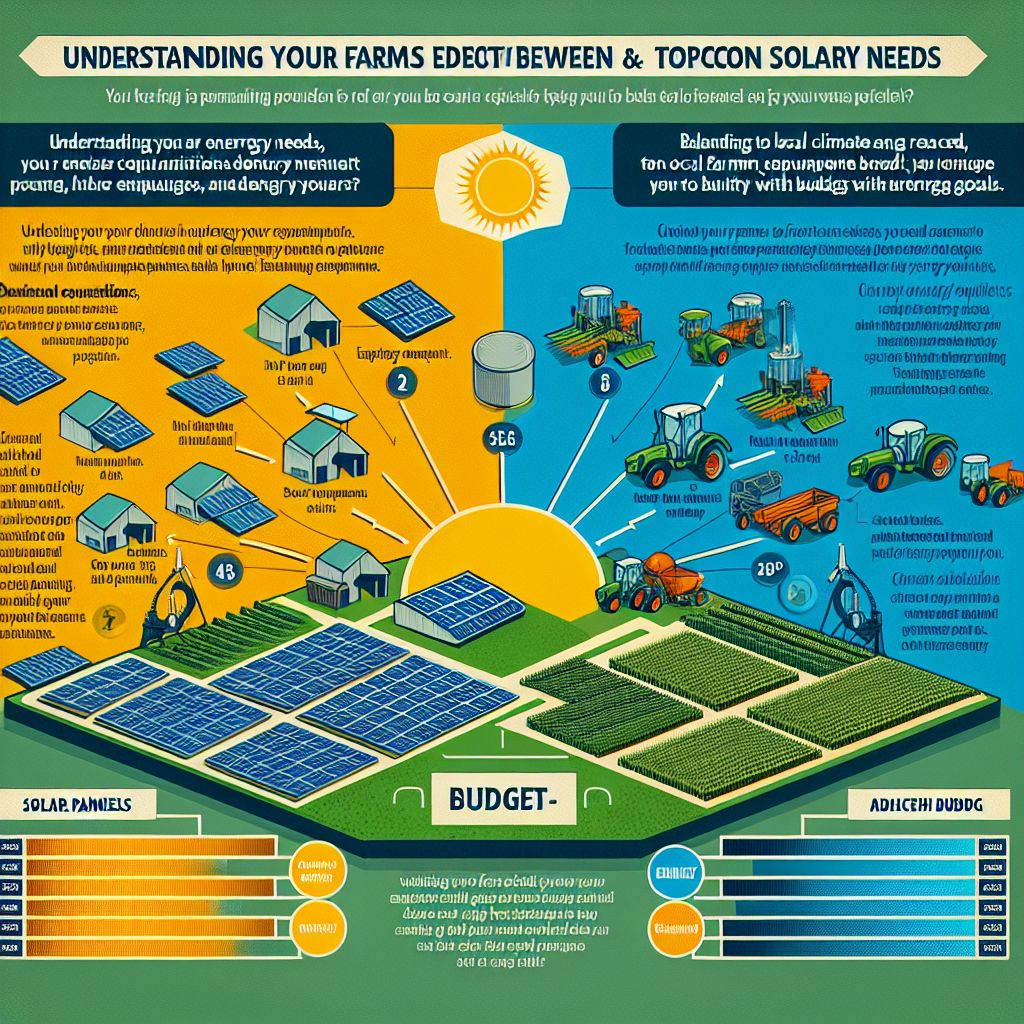
The decision between PERC and TOPCon panels ultimately comes down to your farm’s specific needs and goals. By considering factors such as budget, energy requirements, and location, you can make an informed choice that will provide the most benefits.
For farmers with limited budgets or smaller energy needs, PERC panels offer a cost-effective solution. However, if maximizing efficiency and long-term savings is your priority, TOPCon panels might be the better option despite the higher initial cost.
Analyzing Your Farm’s Energy Needs
- Assess the total energy consumption of your farm, considering all machinery and equipment.
- Identify peak energy usage times and how solar energy can cover these periods.
- Consider future expansions or additional energy needs that may arise.
Understanding your farm’s energy needs is crucial in selecting the right solar panel system. Start by examining your current electricity bills to gauge how much energy your farm consumes monthly. Consider the types of equipment you use and their energy demands. This will help you determine the size and capacity of the solar panel system required.
It’s also essential to think about peak energy usage times. For example, irrigation systems might require more power during certain seasons. Knowing these patterns can help you decide whether a more efficient system like TOPCon might be beneficial, or if a cost-effective PERC setup will suffice.
Finally, consider any future expansions or additional energy needs. If you’re planning to expand your operations or add new technology, ensure your solar panel system can accommodate these changes. This forward-thinking approach will save you from needing costly upgrades later on.
Adapting to Local Climate and Geography
The climate and geographical location of your farm play a significant role in the effectiveness of solar panels. In areas with high sunlight exposure, both PERC and TOPCon panels will perform optimally. However, in regions with frequent cloud cover or harsh weather conditions, the higher efficiency of TOPCon panels might be more advantageous.
Balancing Budget with Energy Goals
Balancing your budget with your energy goals is key to a successful solar panel investment. If your primary goal is to reduce upfront costs, PERC panels offer an affordable solution. But if long-term savings and efficiency are more important, investing in TOPCon panels might be the better choice. Consider the potential savings on energy bills over time and how they compare to the initial investment.
Here is a comparison table between PERC and TOPCon solar panels for powering a farm:
|
Feature |
PERC Solar Panels |
TOPCon Solar Panels |
|---|---|---|
|
Efficiency |
Up to 24.5% efficiency, slightly lower than TOPCon. 3 |
Higher efficiency, up to 28%, allowing more electricity generation per area. 5, 6 |
|
Low-Light Performance |
Good performance in low-light conditions. 3 | |
|
Temperature Tolerance |
Performs well in high temperatures, but less efficient than TOPCon. 2, 3 |
Lower temperature coefficient; maintains efficiency better in hot climates. 5, 6 |
|
Durability |
Reliable with passivation layer reducing electron recombination. 1, 2 |
Lower degradation over time and longer lifespan, making it more durable. 5, 6 |
|
Bifacial Capability |
Typically monofacial; less suited for capturing sunlight from both sides. 1 |
Bifacial design allows energy generation from both sides, increasing output. 5, 6 |
|
Cost |
Slightly cheaper upfront cost; good value for moderate efficiency needs. 1, 3 |
Higher upfront cost but better long-term value due to higher efficiency and durability. 5, 6 |
|
Agricultural Integration |
Well-suited for agrivoltaic systems and powering irrigation or machinery. 1, 2 |
Ideal for agrivoltaic systems, with added benefits like crop drying and water pumping. 5 |
|
Space Efficiency |
Requires more panels for the same output compared to TOPCon. 1, 3 |
Higher efficiency reduces space requirements for installations. 5, 6 |
Which is the Better Choice?
- TOPCon solar panels are the better choice if your farm prioritizes high energy output, durability, and performance under varying conditions (e.g., low light or high heat). They are ideal for maximizing electricity generation in limited space and ensuring long-term reliability.
- PERC solar panels, while slightly less efficient, offer a cost-effective solution for farms with moderate energy needs and are still suitable for agricultural applications like irrigation systems and machinery.
If your budget allows, TOPCon panels provide superior benefits over time, making them a more sustainable investment.
Final Recommendations
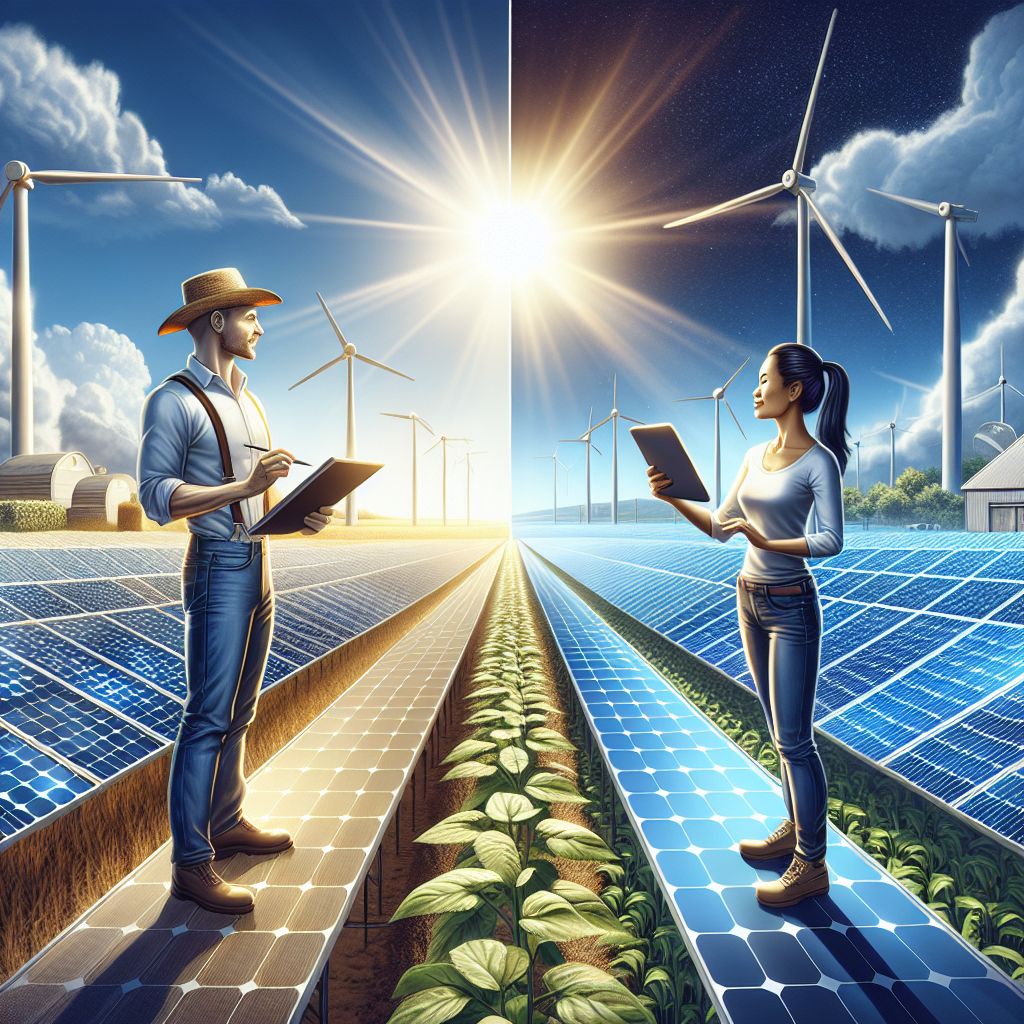
Choosing the right solar panels for your farm is a significant decision that can impact your operations for years to come. By carefully analyzing your energy needs, considering local climate conditions, and balancing your budget with energy goals, you can select the solar solution that best fits your farm’s unique requirements. For further insights, consider exploring solar panel options for farmers to ensure you make an informed decision.
Summarizing the Key Advantages for Farmers
Both PERC and TOPCon solar panels offer unique advantages that can benefit farmers. PERC panels provide a cost-effective solution for those looking to minimize initial expenses while still enjoying the benefits of solar energy. Their efficiency is sufficient for many farming applications, making them a practical choice for budget-conscious farmers.
TOPCon panels, with their higher efficiency, are ideal for farms with higher energy demands or those located in areas with less sunlight. The long-term savings and quicker ROI can justify the higher initial investment, especially for large-scale operations.
Ultimately, the choice between PERC and TOPCon panels depends on your farm’s specific needs and goals. By considering all these factors, you can make an informed decision that supports your farm’s sustainability and profitability.
Is Either One of These Solar Panels a Good Choice for a Farmer?
Yes, both PERC and TOPCon solar panels are excellent choices for farmers, depending on their specific needs and circumstances. PERC panels are suitable for those who prioritize affordability and have moderate energy requirements. In contrast, TOPCon panels are perfect for farmers seeking maximum efficiency and long-term savings.
Frequently Asked Questions (FAQ)
To help you make the best decision, here are answers to some common questions about PERC and TOPCon solar panels.
What are the main benefits of PERC solar panels for farmers?
PERC solar panels offer several benefits, including affordability, ease of installation, and adequate efficiency for most farming operations. They are a practical choice for farmers looking to reduce their energy bills without a significant upfront investment.
How does the efficiency of TOPCon panels compare to PERC?
TOPCon panels are generally more efficient than PERC panels, with efficiency rates ranging from 24% to 28%, compared to PERC’s 20% to 22%. This higher efficiency means TOPCon panels can generate more electricity from the same amount of sunlight, making them ideal for farms with higher energy needs.
What factors should farmers consider when choosing between these two types of panels?
Farmers should consider their energy needs, budget, local climate conditions, and future expansion plans when choosing between PERC and TOPCon panels. Evaluating these factors will help determine which panel type best suits their farm’s requirements.
Additionally, consider the availability of space for installation and the potential for long-term savings. Both factors can influence the overall cost-effectiveness of the solar panel system.
Can these solar panels function efficiently in areas with limited sunlight?
Yes, both PERC and TOPCon panels can function efficiently in areas with limited sunlight. However, TOPCon panels, with their higher efficiency, are better suited for regions with less intense sunlight or frequent cloud cover.
In such conditions, the superior performance of TOPCon panels can ensure a more consistent energy supply, making them a worthwhile investment for farmers in these areas.
“In regions with limited sunlight, TOPCon panels can provide a more reliable energy source due to their higher efficiency and ability to capture more sunlight.”
Choosing the right type of panel can ensure your farm remains energy-efficient and sustainable, regardless of the local climate.
What is the typical lifespan of PERC and TOPCon panels?
Both PERC and TOPCon panels have a typical lifespan of 25 to 30 years. This long lifespan, coupled with warranties that often guarantee performance for 25 years, makes them a reliable and long-term investment for farmers.
The degradation rates of the panels are also important to consider. TOPCon panels generally have a lower degradation rate, meaning they maintain their efficiency better over time compared to PERC panels.
Investing in solar panels can provide farmers with a sustainable and cost-effective energy solution that supports their operations for decades. By carefully considering the options and choosing the right type of panel, farmers can enhance their sustainability and profitability.


Leave a Reply