

Key Takeaways
Mono-PERC solar panels are more efficient in low-light and high-temperature conditions compared to traditional monocrystalline panels.
These panels maximize energy output, making them ideal for farms with limited space.
Investing in Mono-PERC panels can lead to significant cost savings and improved water management on farms.
Understanding the installation and maintenance requirements is crucial for maximizing the benefits of solar panels.
Mono-PERC panels are a viable option for sustainable farming practices, offering long-term energy efficiency and ROI.
Introduction to Solar Panels in Farm Irrigation
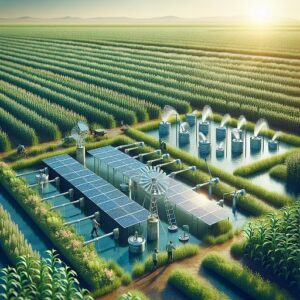
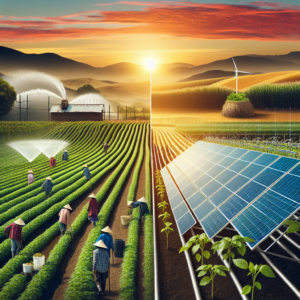
Imagine turning sunlight into a powerful ally for your farm’s irrigation system. That’s exactly what solar panels do. As farmers, we are always looking for ways to improve efficiency and reduce costs. Solar energy offers a sustainable solution, especially when it comes to irrigation. By harnessing the sun’s power, we can provide a consistent water supply to crops without relying heavily on traditional energy sources.
Why Solar Panels are Important for Farmers
Farming relies heavily on energy. Whether it’s powering irrigation pumps or running machinery, energy costs can quickly add up. Solar panels provide an alternative that not only cuts down on these costs but also reduces the farm’s carbon footprint. By using solar energy, farmers can take control of their energy supply and reduce dependency on the grid.
Besides that, solar panels offer a reliable energy source. Unlike other renewable sources, solar panels work even in low-light conditions, making them a dependable option for farms in various climates. This consistency is crucial for maintaining steady irrigation, especially during dry seasons.
The Role of Mono-PERC Technology in Agriculture
Mono-PERC technology stands out in the solar panel world. It offers higher efficiency rates than traditional panels, which means more energy production for the same surface area. For farmers, this translates to more power for irrigation systems without needing additional land for panel installation.
Most importantly, Mono-PERC panels perform exceptionally well in low-light and high-temperature conditions. This makes them ideal for farms located in areas with fluctuating weather patterns. By choosing Mono-PERC technology, farmers can ensure their irrigation systems remain operational, regardless of external conditions. For more information on solar technology in agriculture, explore the rise of solar irrigation in modern farming.
What is Mono-PERC Technology
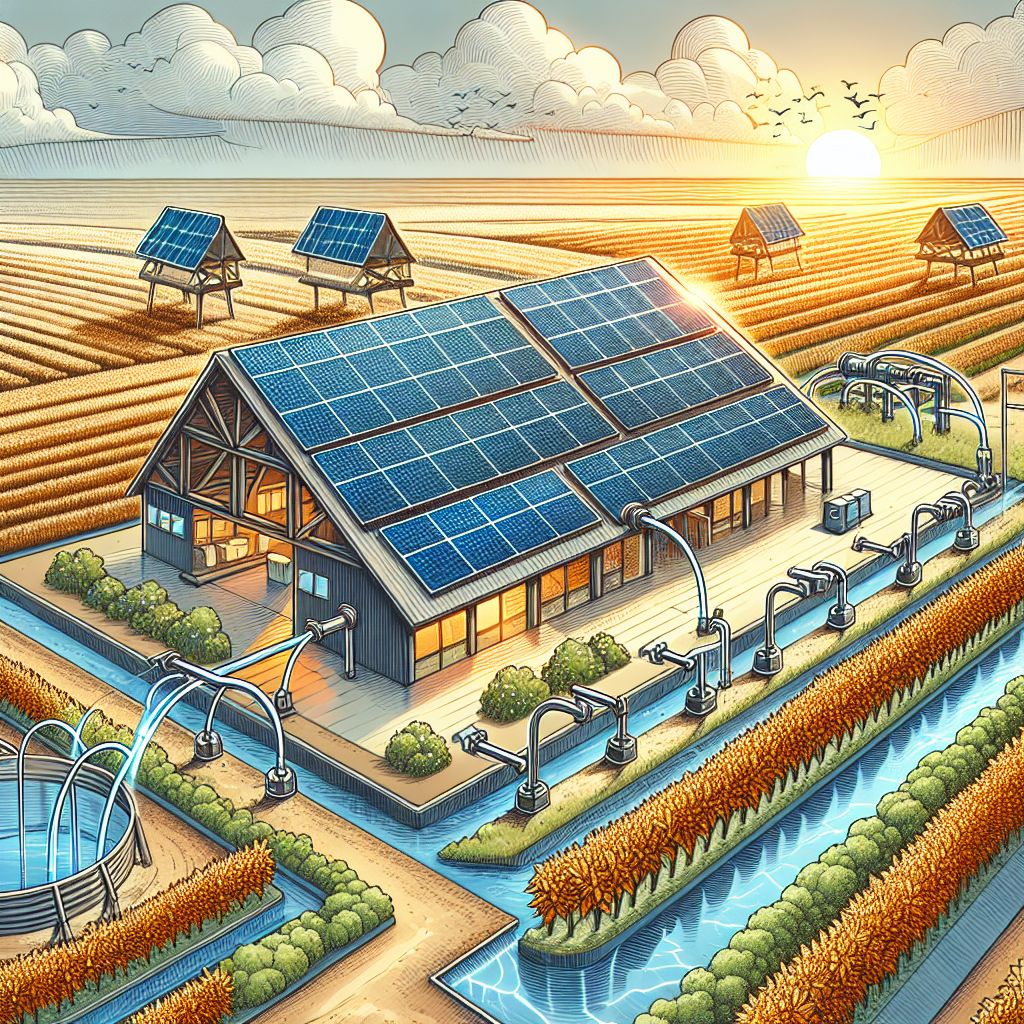
Mono-PERC stands for Monocrystalline Passivated Emitter and Rear Contact. It’s a type of solar panel that includes a special layer on the back of the cells. This layer reflects sunlight that passes through the cells, giving it a second chance to be absorbed and converted into energy. This process increases the overall efficiency of the panel.
Compared to traditional monocrystalline panels, Mono-PERC panels can generate more electricity from the same amount of sunlight. This makes them particularly useful for farms that need to maximize energy output from a limited installation area.
Advantages of Mono-PERC Solar Panels
When it comes to choosing the right solar panel for farm irrigation, Mono-PERC panels offer several advantages. Their design and efficiency make them a top choice for farmers looking to optimize their energy use.
Efficiency in Low Light and High Temperatures
Mono-PERC panels excel in low-light conditions. This means they can produce energy even on cloudy days, ensuring a steady power supply for irrigation systems. This is a significant advantage over other types of solar panels, which may see a drop in efficiency during such conditions. For more information on choosing the right solar panels for your farm, visit this guide on efficient farm irrigation.
Moreover, these panels perform better at higher temperatures. Many solar panels lose efficiency as temperatures rise, but Mono-PERC panels maintain their performance. This is especially beneficial for farms in hot climates, where maintaining energy production is crucial for continuous irrigation.
Space Utilization on Farms with Limited Area
Space is often a limiting factor for farms when it comes to installing solar panels. Mono-PERC panels address this issue by offering higher energy output per square foot. This means farmers can generate the same amount of energy with fewer panels, freeing up valuable land for other agricultural activities. For more insights on optimizing solar energy in agriculture, explore the right solar panels for farm irrigation.
Therefore, for farms with limited space, Mono-PERC panels provide an efficient solution that doesn’t compromise on energy production. They allow farmers to optimize their available land while still benefiting from solar energy.
Cost Considerations and Return on Investment
Investing in solar panels requires careful consideration of costs and potential returns. Mono-PERC panels, while slightly more expensive upfront than traditional panels, offer a higher return on investment due to their increased efficiency and durability.
Over time, the energy savings from using Mono-PERC panels can offset the initial investment. This makes them a cost-effective choice for farmers looking to reduce energy expenses and enhance their irrigation systems. By choosing Mono-PERC technology, farmers can enjoy long-term savings and sustainability.
Comparing Mono-PERC and Monocrystalline Panels
Understanding the differences between Mono-PERC and traditional monocrystalline panels is essential for making an informed decision. Each type has its strengths and weaknesses, and the right choice depends on the specific needs of your farm.
Energy Output and Land Utilization Between these Systems
Mono-PERC panels generally offer higher energy output compared to monocrystalline panels. This means they can produce more electricity per unit area, which is crucial for farms with limited space. By maximizing energy production, farmers can ensure their irrigation systems receive a consistent power supply.
Besides that, the improved efficiency of Mono-PERC panels allows for better land utilization. Farmers can install fewer panels while still meeting their energy needs, leaving more land available for cultivation.
Understanding these differences helps farmers choose the best panel type for their specific requirements, ensuring optimal energy production and land use.
Durability and Lifespan in Agricultural Settings
When it comes to solar panels, durability and lifespan are critical factors for farmers to consider. Mono-PERC panels are known for their robust construction, which makes them highly durable even in harsh agricultural environments. This means they can withstand extreme weather conditions, such as high winds, heavy rain, and intense sunlight, without compromising their performance.
Typically, Mono-PERC panels have a lifespan of 25 to 30 years, making them a long-term investment for any farm. This longevity ensures that farmers can rely on a consistent energy source for decades, reducing the need for frequent replacements and repairs. To understand more about the cost and funding options, check out this guide on solar panels for agriculture.
Durability: Withstand extreme weather conditions.
Lifespan: Typically 25-30 years.
Maintenance: Minimal maintenance required over the years.
These panels require minimal maintenance, which further adds to their appeal. Regular cleaning and occasional inspections are usually sufficient to keep them functioning optimally. This low-maintenance requirement is particularly beneficial for farmers who may not have the time or resources to perform frequent upkeep.
By investing in Mono-PERC panels, farmers can ensure a reliable and long-lasting energy solution for their irrigation systems, ultimately enhancing their overall agricultural productivity
Cost-effectiveness and Initial Investment Between the 2 Solar Panels
Cost-effectiveness is crucial when choosing between Mono-PERC and traditional monocrystalline panels. Although Mono-PERC panels may have a higher initial cost, their increased efficiency and energy output often result in greater savings over time. These savings come from reduced energy bills and lower maintenance costs due to the panels’ durability.
Therefore, while the upfront investment might be higher, the long-term benefits make Mono-PERC panels a cost-effective choice for farmers. By weighing the initial costs against the potential savings, farmers can make informed decisions that align with their financial and energy goals.
Here’s a table comparing Mono-PERC and Monocrystalline solar panels for use on a farm:
|
Feature |
Mono-PERC |
Monocrystalline |
|---|---|---|
|
Efficiency |
Up to 22% or higher 1, |
17% to 22% 3 |
|
Performance in low light |
Good 2 | |
|
Heat performance | ||
|
Space efficiency |
Higher power output per square foot 1 |
High power output per square foot 3 |
|
Typical lifespan | ||
|
Appearance |
Black color 3 | |
|
Cost | ||
|
Suitability for limited space |
Excellent 1 |
Very good 3 |
|
Performance on hot days | ||
|
Power generation |
Higher1 |
High 3 |
Efficiency: Mono-PERC panels have a slight edge in efficiency due to their advanced technology. 1 This higher efficiency can be particularly beneficial for farms with limited roof or ground space for panel installation.
Low Light Performance: Mono-PERC panels perform better in low-light conditions. 1 This can be advantageous for farms in areas with frequent overcast days or during early morning and late afternoon hours.
Heat Performance: Mono-PERC panels have better thermal coefficients, meaning they maintain higher efficiency in hot conditions. 1 This is particularly important for farms in warm climates or during hot summer months.
Cost: While both types are considered premium options, Mono-PERC panels are generally more expensive due to their advanced technology. 1, 3 However, their higher efficiency and better performance in various conditions may offset the initial cost difference over
Implementing Mono-PERC Panels in Irrigation Systems
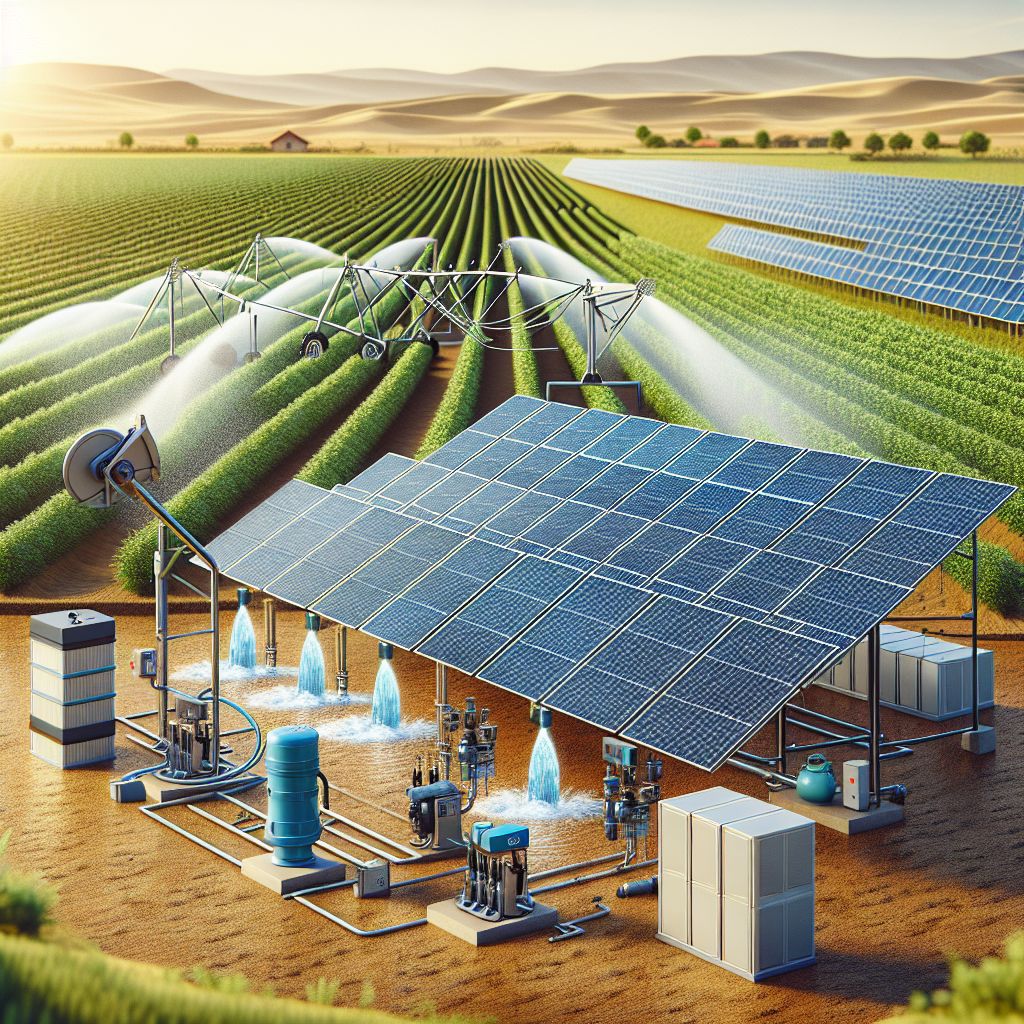
Integrating Mono-PERC panels into your farm’s irrigation system requires careful planning and execution. The process involves selecting the right panel size, determining the optimal installation location, and ensuring compatibility with existing infrastructure.
To get started, it’s essential to assess your farm’s energy needs and evaluate the available space for panel installation. This assessment will help you determine the number of panels required to meet your irrigation system’s power demands.
Steps to Install and Maintain
Installing Mono-PERC panels involves several key steps. First, choose a location that receives maximum sunlight exposure throughout the day. This will ensure optimal energy production and efficiency.
Next, secure the panels on a sturdy mounting structure to withstand wind and weather conditions. It’s crucial to follow the manufacturer’s installation guidelines to prevent any damage and ensure the panels’ longevity.
Once installed, regular maintenance is essential to keep the panels operating at peak efficiency. This includes cleaning the panels to remove dust and debris, inspecting for any signs of damage, and checking electrical connections to prevent energy loss.
Integration with Existing Irrigation Infrastructure
Integrating Mono-PERC panels with existing irrigation systems requires careful consideration of compatibility and connectivity. Start by evaluating your current irrigation setup and identifying areas where solar power can enhance efficiency.
Most importantly, ensure that the solar panels are compatible with the irrigation pumps and controllers. This may involve consulting with a solar energy expert or technician to make necessary adjustments and optimize the system’s performance.
Consider implementing an energy storage solution, such as batteries, to store excess solar power for use during cloudy days or nighttime. This will ensure a consistent energy supply for irrigation, regardless of weather conditions.
Evaluate your current irrigation system and identify areas for solar integration.
Ensure compatibility between solar panels and irrigation components.
Consult with a solar energy expert for system optimization.
Consider adding energy storage solutions for consistent power supply.
Case Studies: Successful Applications
Many farmers have successfully implemented Mono-PERC panels in their irrigation systems, achieving significant energy savings and improved water management. One such example is a farm in California that installed Mono-PERC panels to power its drip irrigation system. The farm reported a 30% reduction in energy costs within the first year, allowing them to reinvest savings into expanding their operations.
Another example comes from a vineyard in Italy, where Mono-PERC panels were used to power a solar water pump. The vineyard experienced increased efficiency in water distribution, leading to healthier crops and higher yields. This success story highlights the potential of Mono-PERC technology to transform agricultural practices.
“By switching to Mono-PERC panels, we not only reduced our energy bills but also improved our water management practices, leading to better crop yields.” – Farmer from California
Overcoming Challenges with Mono-PERC Technology
While Mono-PERC technology offers numerous benefits, farmers may face certain challenges when implementing these panels. Understanding these challenges and how to address them is essential for maximizing the benefits of solar energy.
Managing performance in extremely hot climates is one such challenge. Although Mono-PERC panels perform well at high temperatures, it’s important to monitor their performance and make necessary adjustments to prevent overheating.
Regularly monitor panel performance during hot weather.
Ensure proper ventilation around panels to prevent overheating.
Consult with experts for advice on optimizing panel performance.
Managing Performance in Extremely Hot Climates
In hot climates, solar panels can experience a drop in efficiency due to overheating. To manage this, it’s crucial to ensure proper ventilation around the panels. This can be achieved by installing the panels at an angle that allows air to circulate freely underneath.
Besides that, consider using reflective coatings on nearby surfaces to reduce heat absorption. This will help maintain optimal temperatures and ensure consistent energy production.
Handling Initial Investment Barriers
The initial investment required for Mono-PERC panels can be a barrier for some farmers. To overcome this, explore available incentives and financing options for renewable energy projects. Many governments and organizations offer grants, tax credits, and low-interest loans to support the adoption of solar technology in agriculture. For more information, check out this cost and funding guide for solar panels in agriculture.
Additionally, consider partnering with other farmers or forming cooperatives to share the costs and benefits of solar installations. This collaborative approach can make the transition to solar energy more accessible and financially viable.
Beyond Solar: Sustainability Practices in Farming
While solar energy is a powerful tool for sustainable farming, it’s just one piece of the puzzle. Implementing other sustainability practices can further enhance farm efficiency and environmental impact.
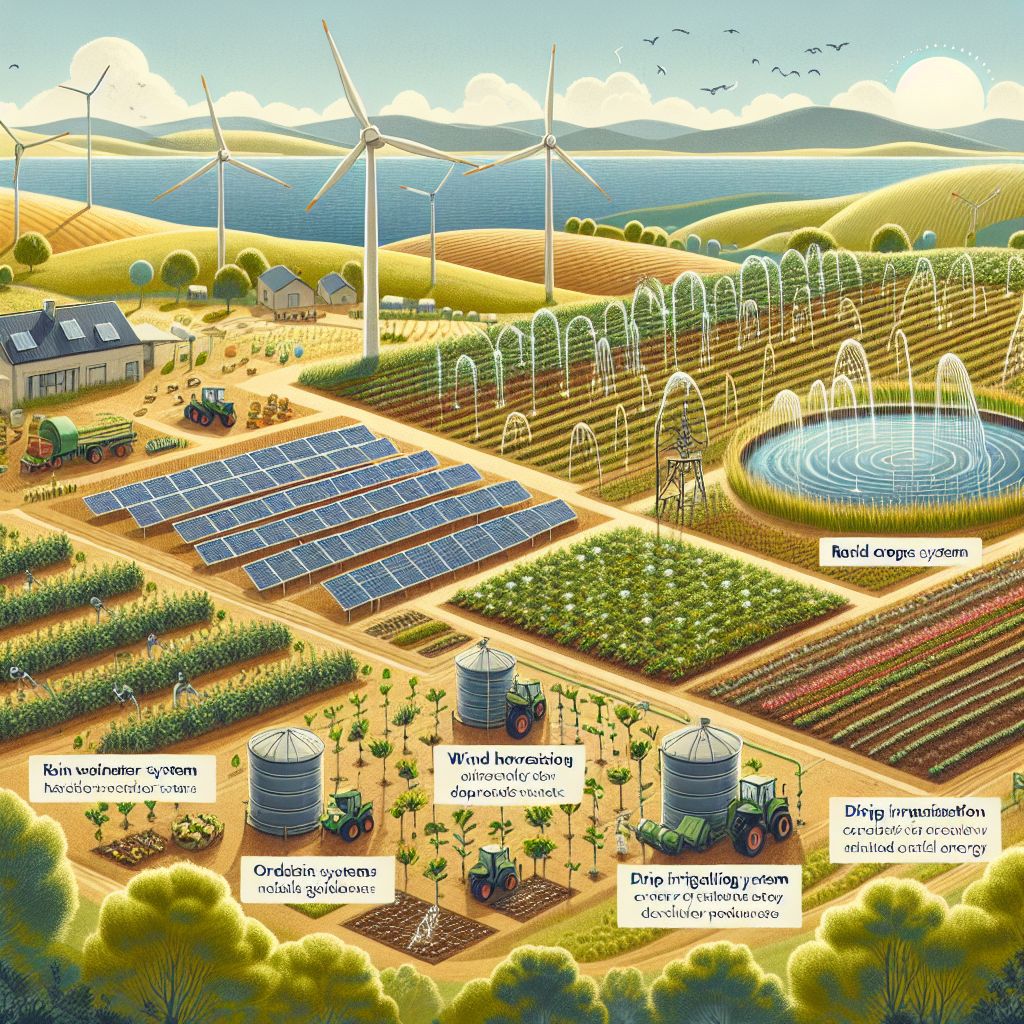
Consider incorporating water conservation techniques, such as rainwater harvesting and efficient irrigation systems, to complement your solar-powered setup. These practices can help reduce water usage and improve resource management.
Implement rainwater harvesting systems to supplement irrigation.
Use efficient irrigation techniques, such as drip or sprinkler systems.
Adopt crop rotation and cover cropping to improve soil health.
Explore other renewable energy sources, such as wind or biomass.
By combining solar energy with other sustainability practices, farmers can create a more resilient and eco-friendly agricultural system that benefits both the environment and their bottom line. For more information, explore cost-effective solar-powered water pumps as a sustainable farm water management solution.
Other Renewable Energy Applications in Agriculture
Beyond solar energy, agriculture can benefit from other renewable energy sources to enhance sustainability and efficiency. Wind energy, for example, can be harnessed using wind turbines to generate electricity. This energy can power farm equipment and contribute to the overall energy mix, reducing reliance on fossil fuels.
Biomass energy is another viable option for farms. By converting organic waste into energy, farmers can reduce waste disposal costs and generate a renewable energy source. This practice not only supports energy production but also contributes to a circular economy by utilizing agricultural by-products.
Combining Solar Panels with Water Conservation Techniques
To maximize the benefits of solar panels in agriculture, combining them with water conservation techniques is essential. Implementing efficient irrigation systems, such as drip or sprinkler irrigation, can significantly reduce water usage while maintaining crop health.
Additionally, rainwater harvesting systems can supplement irrigation by collecting and storing rainwater for later use. This reduces the demand on solar-powered irrigation systems and ensures a consistent water supply during dry periods.
Final Thoughts on Solar Panel Selection for Farms
Choosing the right solar panels for farm irrigation is a critical decision that impacts energy efficiency, cost savings, and sustainability. Mono-PERC solar panels offer numerous advantages, including higher efficiency, better performance in diverse weather conditions, and space-saving benefits.
Is using Mono-PERC Solar Panels the Best Choice for a Farm’s Irrigation Systems
Ultimately, whether Mono-PERC solar panels are the best choice depends on the specific needs and conditions of your farm. For farms with limited space and a need for consistent energy output, Mono-PERC panels provide an ideal solution. Their efficiency and durability make them a worthwhile investment for long-term sustainability.
However, it’s essential to consider all factors, including cost, available incentives, and compatibility with existing infrastructure, before making a decision. By carefully evaluating these aspects, farmers can choose the solar solution that best aligns with their goals and resources.
Frequently Asked Questions
What is the lifespan of Mono-PERC solar panels?
Can Mono-PERC panels be installed on all types of farm structures?
How much space do Mono-PERC panels need compared to others?
What maintenance is required for solar panels on farms?
Are there incentives for using solar panels in agriculture?
Let’s address some common questions about Mono-PERC solar panels to provide further clarity and guidance for farmers considering this technology.
What is the lifespan of Mono-PERC solar panels?
Mono-PERC solar panels typically have a lifespan of 25 to 30 years. This long lifespan ensures a reliable energy source for decades, making them a cost-effective choice for farm irrigation systems.
Can Mono-PERC panels be installed on all types of farm structures?
Yes, Mono-PERC panels can be installed on various farm structures, including rooftops, ground-mounted systems, and even floating installations on ponds or reservoirs. The key is to ensure that the chosen location receives adequate sunlight for optimal energy production.
How much space do Mono-PERC panels need compared to others?
Mono-PERC panels are more efficient than traditional panels, meaning they require less space to generate the same amount of energy. This makes them ideal for farms with limited installation area, allowing for more efficient land use. For more insights on how to choose the right solar panels for your farm, explore our detailed guide.
By maximizing energy output per square foot, farmers can optimize their available space while still benefiting from solar energy.
What maintenance is required for solar panels on farms?
Regular maintenance is crucial to keep solar panels operating efficiently. This includes cleaning the panels to remove dust and debris, inspecting for any signs of damage, and checking electrical connections to prevent energy loss. Routine maintenance ensures that the panels continue to provide reliable energy for irrigation systems.
Additionally, monitoring panel performance and addressing any issues promptly can help extend the lifespan of the panels and maximize their benefits.
Are there incentives for using solar panels in agriculture?
Yes, many governments and organizations offer incentives to encourage the adoption of solar technology in agriculture. These incentives may include grants, tax credits, and low-interest loans to support renewable energy projects. Farmers should explore available programs and take advantage of these opportunities to reduce the cost of solar installations.
By leveraging these incentives, farmers can make the transition to solar energy more affordable and financially viable, contributing to a more sustainable and energy-efficient agricultural system.


Leave a Reply