

Key Takeaways
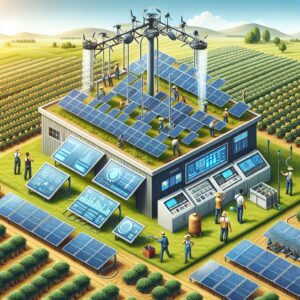
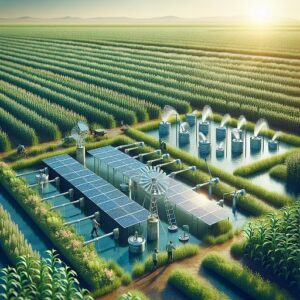
Solar irrigation systems use solar panels, batteries, and pumps to efficiently deliver water to crops.
Solar panels should be strategically placed to maximize sunlight exposure and efficiency.
Choosing the right type of pump—submersible or surface—depends on your water source depth.
Batteries store excess solar energy, ensuring irrigation even on cloudy days.
Regular maintenance of solar components extends their lifespan and performance.
Introduction to Solar Irrigation Systems
In recent years, solar irrigation systems have emerged as a game-changer for farmers seeking sustainable solutions. By harnessing the power of the sun, these systems provide an eco-friendly alternative to traditional irrigation methods, reducing dependency on fossil fuels and cutting down electricity costs. Solar irrigation not only benefits the environment but also boosts farm productivity by ensuring a reliable water supply.
Benefits of Solar Irrigation
The advantages of solar irrigation are numerous. First and foremost, it drastically reduces energy costs. Since solar panels convert sunlight into electricity, there’s no need to rely on expensive grid power. This can result in significant savings over time, especially for large-scale farms.
Besides cost savings, solar irrigation systems are environmentally friendly. They produce no emissions, making them a cleaner option compared to diesel or electric-powered systems. This not only helps in reducing the carbon footprint but also aligns with global sustainability goals.
“Installing a solar irrigation system is a big step towards sustainability and efficiency on your farm.”
Moreover, solar irrigation systems offer independence and reliability. With a well-designed setup, farmers can ensure a consistent water supply, even in remote areas with limited access to electricity.
Why Choose Solar Over Traditional Methods
Traditional irrigation methods often rely on fossil fuels or electricity, both of which can be costly and environmentally harmful. Solar irrigation, on the other hand, leverages renewable energy, making it a more sustainable choice. By choosing solar, farmers not only reduce their operational costs but also contribute to a healthier planet.
Additionally, solar systems are scalable and adaptable. Whether you have a small garden or a large farm, solar irrigation can be tailored to meet your specific needs. This flexibility is particularly beneficial for farmers looking to expand their operations without incurring significant additional costs.
The Impact on Farm Productivity and Environment
Solar irrigation systems can significantly enhance farm productivity. By providing a reliable and consistent water supply, these systems help ensure that crops receive the necessary hydration, leading to healthier plants and higher yields. This is particularly important in regions prone to drought or water scarcity.
Environmentally, solar irrigation systems offer a sustainable solution. By reducing reliance on fossil fuels, they help decrease greenhouse gas emissions. Furthermore, solar panels have a long lifespan, often exceeding 20 years, making them a long-term investment in both productivity and sustainability.
Solar Panels as the Main Energy Source
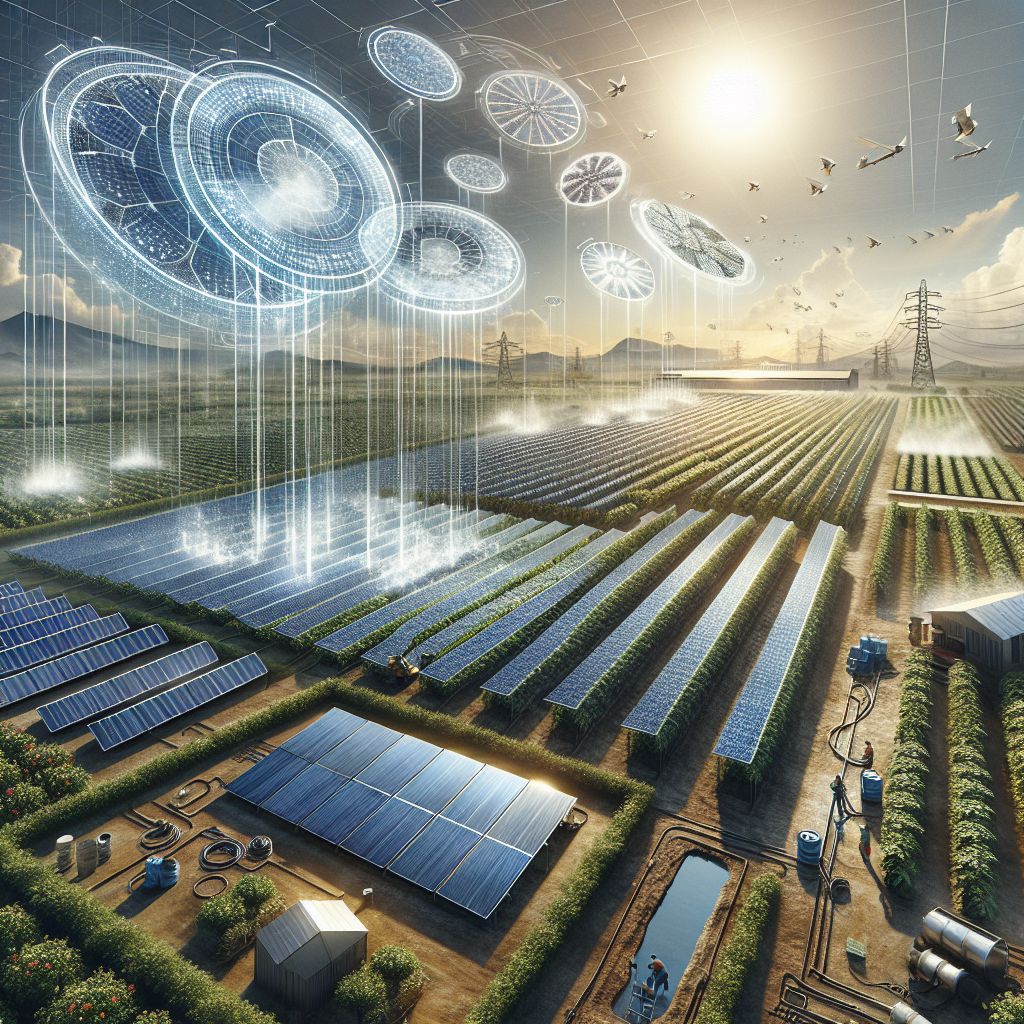
At the heart of any solar irrigation system are the solar panels. These panels capture sunlight and convert it into electricity, powering the entire irrigation setup. Selecting the right type of solar panel is crucial for maximizing efficiency and ensuring the system meets your farm’s needs. For more information on the different types of solar panels, consider exploring various options available.
Types of Solar Panels and Their Efficiency
There are several types of solar panels available, each with its own efficiency level and cost. The most common types include monocrystalline, polycrystalline, and thin-film panels.
Monocrystalline panels are known for their high efficiency and durability. They are made from a single crystal structure, which allows them to convert more sunlight into electricity compared to other types. However, they tend to be more expensive.
Polycrystalline panels are slightly less efficient than monocrystalline panels but are more affordable. They are made from multiple crystal structures, which results in lower production costs. For more details on the different types of solar panels, including their efficiencies and costs, check out this article on solar panels for farm irrigation.
Thin-film panels are the least efficient but are lightweight and flexible. They are ideal for installations where weight and flexibility are important considerations.
Here’s a table comparing solar panel types you can use with an irrigation system on a farm:
|
Solar Panel Type |
Efficiency |
Cost per Watt |
Pros |
Cons |
|---|---|---|---|---|
|
Monocrystalline |
17-22% |
$1.00 – $1.50 |
– Highest efficiency. 1, 3 |
– Most expensive option. 1, 3 |
|
Polycrystalline |
13-17% |
$0.90 – $1.20 |
– Lower cost than monocrystalline. 1, 3 |
– Slightly lower efficiency. 1, 3 |
|
Thin-Film |
10-13% |
$0.70 – $1.00 |
– Lowest cost. 1, 3 |
– Lowest efficiency. 1, 3 |
Factors Influencing Solar Panel Efficiency
Several factors can affect the efficiency of solar panels. One of the most critical is sunlight exposure. To maximize efficiency, panels should be installed in areas that receive the most sunlight throughout the day. This often means placing them on rooftops or open fields, free from obstructions like trees or buildings.
Temperature also plays a role. Solar panels perform better in cooler conditions. Therefore, ensuring proper ventilation and avoiding overheating can help maintain efficiency.
Additionally, regular cleaning and maintenance are essential. Dust, dirt, and debris can accumulate on the panels, reducing their ability to capture sunlight. Regularly cleaning the panels can help maintain optimal performance. For more information on maintaining solar panels, check out this guide on solar-powered farm irrigation systems.
Installation and Placement Tips
When installing solar panels, proper placement is key. Panels should be oriented to capture the maximum amount of sunlight, which usually means facing them towards the equator. In the northern hemisphere, this means a south-facing orientation, while in the southern hemisphere, panels should face north. For more detailed guidance, explore our solar irrigation guide.
The angle of the panels is also important. Ideally, they should be tilted at an angle equal to the latitude of the location. This ensures optimal sunlight exposure throughout the year.
Finally, consider potential shading issues. Even partial shading can significantly reduce panel efficiency. Ensure that trees, buildings, or other structures do not cast shadows on the panels during peak sunlight hours.
Energy Storage: The Role of Batteries
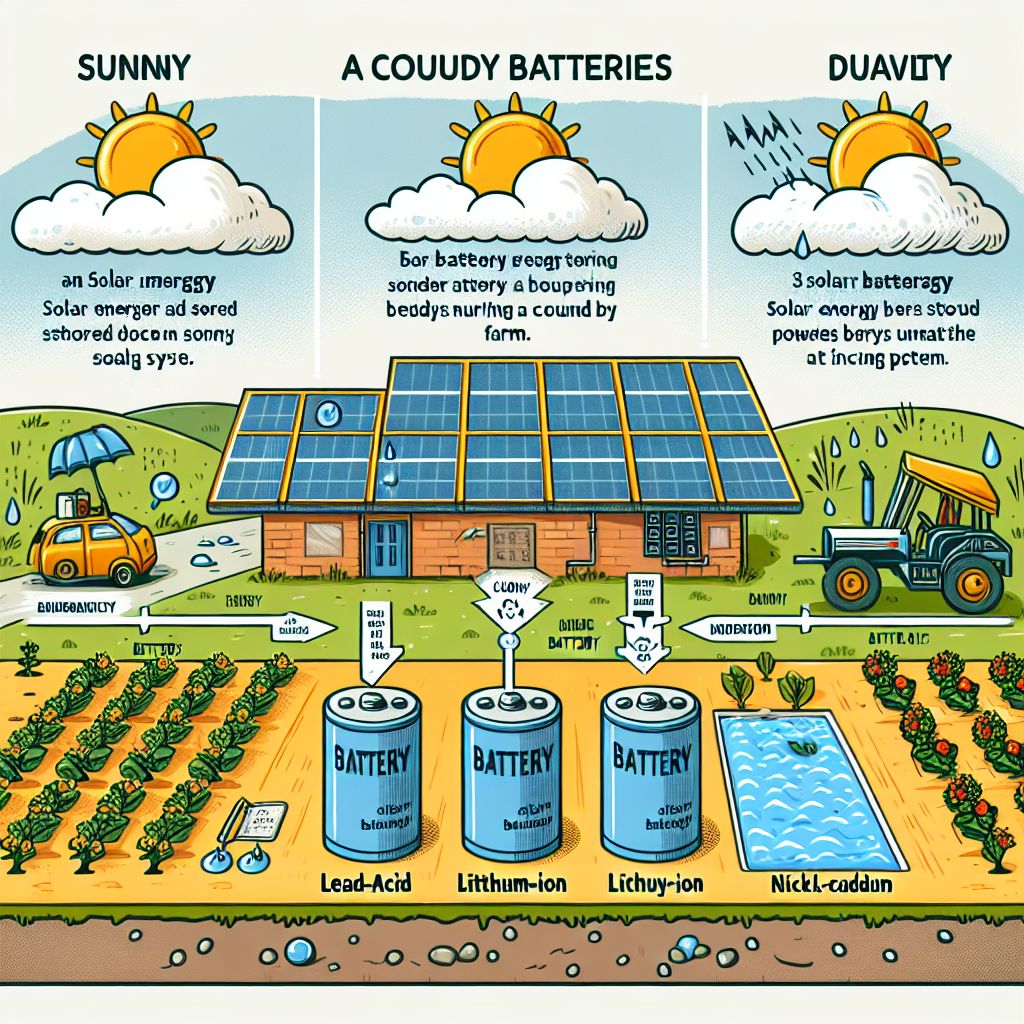
Batteries play a vital role in solar irrigation systems by storing excess energy generated during sunny periods. This stored energy can then be used during cloudy days or at night, ensuring a consistent water supply for your crops. Learn more about how weather conditions affect solar panels and the reliability of energy storage.
Lead-acid batteries are a popular choice due to their affordability and reliability.
Lithium-ion batteries offer higher efficiency and longer lifespan but come at a higher cost.
Nickel-cadmium batteries are durable and perform well in extreme temperatures, though they are less common.
Choosing the right battery depends on your specific needs and budget. Lead-acid batteries are the most economical option, while lithium-ion batteries provide the best performance and longevity.
Here’s a chart comparing different types of batteries used for energy storage:
|
Battery Type |
Advantages |
Disadvantages |
Typical Lifespan |
Energy Density |
|---|---|---|---|---|
|
Lead-Acid |
– Low cost |
– Heavy |
3-5 years 3 |
30-50 Wh/kg 2 |
|
Lithium-Ion |
– High energy density |
– Higher upfront cost |
10-15 years 3 |
100-265 Wh/kg 2 |
|
Nickel-Cadmium |
– Durable |
– Toxic materials |
15-20 years 2 |
45-80 Wh/kg 2 |
|
Flow |
– Scalable |
– Low energy density |
20+ years 3 |
20-70 Wh/kg 3 |
|
Sodium-Sulfur |
– High energy density |
– High operating temperature |
10-15 years 5 |
150-240 Wh/kg 5 |
Application requirements: Determine the specific needs of your energy storage system, such as capacity, discharge rate, and cycle frequency.
Cost: Evaluate both upfront and long-term costs, including maintenance and replacement expenses.
Lifespan and durability: Consider the expected lifespan and the battery’s ability to withstand environmental conditions.Efficiency: Look at the round-trip efficiency of the battery system to maximize energy utilization.
Safety: Assess the safety features and potential risks associated with each battery type.Environmental impact: Consider the recyclability and environmental footprint of the battery technology.
By carefully evaluating these factors, you can choose the most appropriate battery type for your energy storage needs, balancing performance, cost, and sustainability. 1, 2, 3, 4, 5Types of Batteries for Solar Irrigation
Understanding the different types of batteries is crucial for selecting the right one for your solar irrigation system. Lead-acid batteries, for instance, are widely used due to their cost-effectiveness and reliability. They are suitable for most applications and offer a good balance between performance and price.
Lithium-ion batteries, on the other hand, are more efficient and have a longer lifespan. They can store more energy and are lighter, making them ideal for systems where weight and space are considerations. However, they are more expensive upfront.
Nickel-cadmium batteries are known for their durability and ability to withstand extreme temperatures. They are less common in solar irrigation systems but can be a good option in harsh environments.
Ensuring Longevity and Performance
To ensure your batteries last as long as possible, regular maintenance is key. Keep them clean and dry, and avoid exposing them to extreme temperatures. Overcharging or completely discharging batteries can also shorten their lifespan, so it’s important to use a charge controller to regulate the charging process.
Monitoring the battery’s state of charge is also essential. This helps prevent over-discharge and ensures the system operates efficiently. Most modern systems come with built-in monitoring tools, making it easier to keep track of battery performance.
Alternatives to Battery Storage
While batteries are a common choice for energy storage, there are alternatives. For instance, some systems use water storage tanks to hold excess water pumped during sunny periods. This stored water can then be used during cloudy days or at night.
Another option is to connect the solar system to the grid. This allows excess energy to be fed back into the grid, providing a credit that can be used when solar production is low. However, this requires access to the electrical grid, which may not be available in all locations. For a deeper understanding of how solar systems work in various conditions, explore our guide on solar panel reliability.
Solar Pumps for Efficient Water Movement
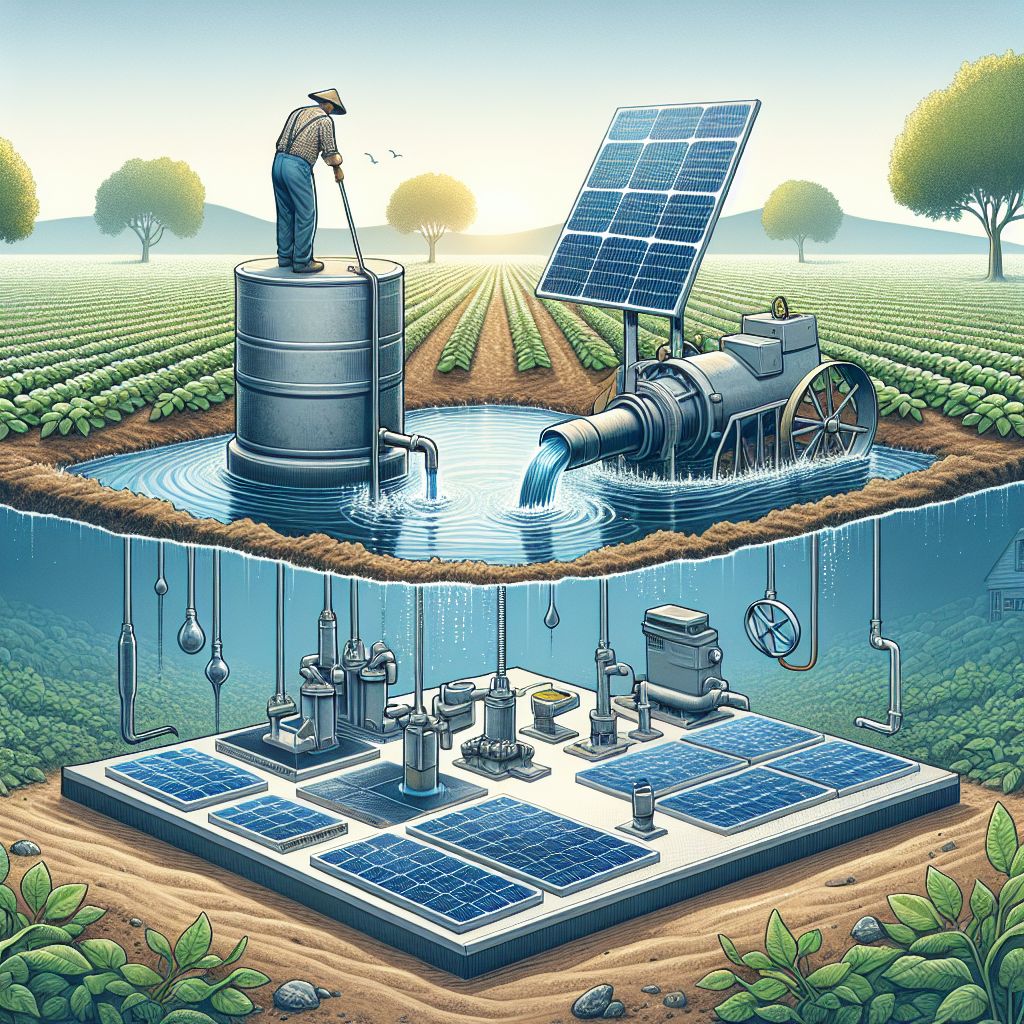
Solar pumps are an integral component of solar irrigation systems. They are responsible for moving water from the source to the crops, ensuring efficient and reliable irrigation. Choosing the right type of pump is crucial for optimal system performance.
Submersible vs. Surface Pumps
When it comes to solar pumps, the two main types are submersible and surface pumps. Each type has its own set of advantages and is suited for different water sources and depths. Understanding the differences can help you make the best choice for your farm’s needs. For more information on the components of a solar-powered farm irrigation system, visit Growing Solar Mist.
Submersible pumps are designed to be submerged in water and are ideal for deep water sources such as wells or boreholes. They are efficient and can handle large volumes of water, making them suitable for farms with significant water needs. These pumps operate quietly and are protected from the elements, reducing the risk of damage.
Surface pumps, on the other hand, are installed above ground and are best suited for shallow water sources like ponds or rivers. They are easier to access for maintenance and repairs, but they may not be as efficient for deep water extraction. Surface pumps are generally more affordable than submersible pumps.
Choosing between a submersible and a surface pump depends on your water source’s depth and the specific requirements of your irrigation system. Consider factors such as water volume, depth, and accessibility when making your decision.
|
Feature |
Submersible Pump |
Surface Pump |
|---|---|---|
|
Installation |
Underwater |
Above ground |
|
Best for |
Deep water sources |
Shallow water sources |
|
Maintenance |
More challenging |
Easier access |
|
Cost |
Generally higher |
More affordable |
Selecting the Right Pump for Your Farm
Selecting the right pump involves considering several factors beyond just the type of pump. You need to evaluate the flow rate and pressure required for your irrigation system. This will depend on the size of your farm and the type of crops you are growing. Make sure the pump you choose can handle the necessary volume of water without straining its capacity. For more information on the components of a solar-powered farm irrigation system, check out this guide on solar irrigation components.
It’s also important to consider the pump’s energy efficiency. An efficient pump will use less power, which is crucial for solar-powered systems where energy is a limited resource. Look for pumps with a high efficiency rating to ensure you’re getting the most out of your solar energy.
Maintenance and Troubleshooting Tips
Regular maintenance is key to ensuring your solar pump operates efficiently and lasts as long as possible. Check for any signs of wear or damage regularly, and clean the pump to prevent clogs or blockages. Keeping the pump in good condition will help maintain its performance and prevent costly repairs.
If you encounter issues with your pump, such as reduced water flow or unusual noises, it’s important to troubleshoot the problem promptly. Start by checking for blockages in the intake or discharge pipes. If the issue persists, consult the pump’s manual or contact a professional for assistance.
Water Storage Solutions
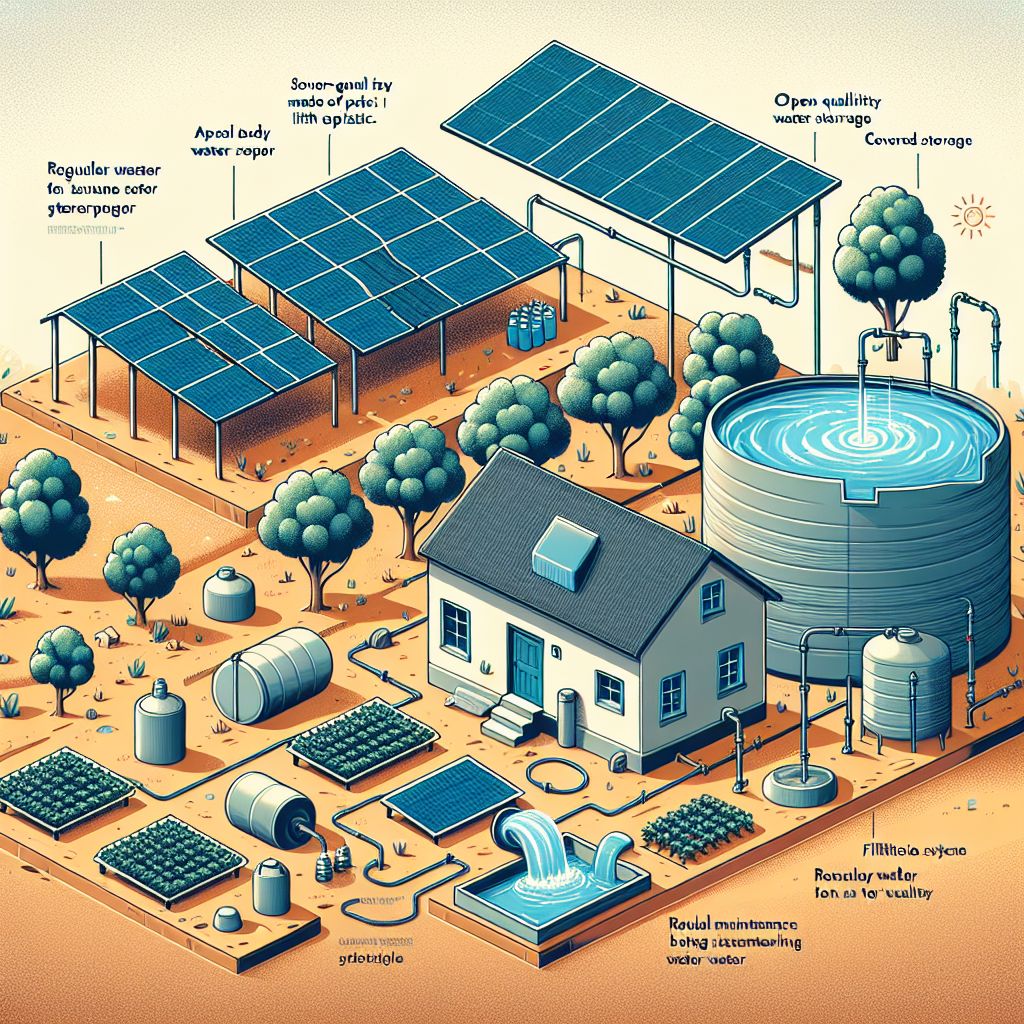
Water storage is an essential component of solar irrigation systems. It ensures that water is available when needed, even during periods of low solar energy production. There are various storage solutions available, each with its own advantages and considerations.
Choosing the right storage solution depends on your farm’s water needs and the available space for installation. Proper planning and capacity assessment are crucial to ensure you have enough water stored for your crops.
Types of Storage Systems: Tanks vs. Reservoirs
The two primary types of water storage systems are tanks and reservoirs. Tanks are typically made of materials like plastic, metal, or concrete and can be placed above or below ground. They are ideal for smaller farms or when space is limited. For farmers looking to enhance their water management, exploring cost-effective solar-powered water pumps can be a sustainable solution.
Reservoirs, on the other hand, are larger and often constructed as open bodies of water. They are suitable for larger farms with ample space and can store significant volumes of water. Reservoirs are often used in conjunction with surface pumps to facilitate water extraction.
This table will compare a different water storage solution for a solar irrigation system:
|
Storage Type |
Advantages |
Disadvantages |
Typical Capacity |
Best Use Cases |
|---|---|---|---|---|
|
Elevated Tanks |
– Gravity-fed distribution |
– Limited capacity |
1,000-10,000 liters 2 |
– Small to medium farms |
|
Ground-Level Tanks |
– Larger capacity |
– May require pumping for distribution |
5,000-100,000 liters 2 |
– Medium to large farms |
|
Lined Reservoirs |
– Very large capacity |
– Significant land use |
100,000+ liters 1 |
– Large farms |
|
Underground Tanks |
– Temperature stable |
– Expensive installation |
5,000-50,000 liters 2 |
– Areas with limited space |
|
Bladder Tanks |
– Flexible installation |
– Limited capacity |
1,000-20,000 liters 1 |
– Temporary storage needs |
When choosing a water storage solution for your solar irrigation system, consider the following factors:
Storage capacity: Calculate the volume of water needed based on crop requirements, irrigation frequency, and system downtime.
Land availability: Assess the space available for storage and choose a solution that fits your land constraints.
Topography: Consider the terrain and elevation differences when deciding between elevated tanks and ground-level storage.
Climate: Factor in local weather conditions, such as freezing temperatures or high evaporation rates.
Water quality: Ensure the storage solution maintains water quality and prevents contamination.
Cost: Evaluate both initial installation costs and long-term maintenance expenses.
Scalability: Choose a storage system that can be expanded as your irrigation needs grow.
Local regulations: Check for any legal requirements or restrictions on water storage in your area.
By carefully considering these factors and using the comparison table above, you can select the most appropriate water storage solution for your solar irrigation system, ensuring efficient water management and reliable crop irrigation.
Capacity Planning Based on Water Needs
Determining the right capacity for your water storage system is crucial. This involves calculating your farm’s daily water needs and ensuring your storage solution can meet those requirements. Consider factors such as crop type, irrigation method, and climate when planning your capacity. For more insights, explore this solar irrigation guide to enhance your farm’s efficiency.
Importance of Maintaining Water Quality
Maintaining water quality is essential for the health of your crops and the efficiency of your irrigation system. Poor water quality can lead to clogs, reduced efficiency, and even crop damage. Regularly test your water for contaminants and take steps to address any issues that arise.
“Regular maintenance is the key to a long-lasting solar irrigation system. Just like any other farming equipment, your solar components need to be cared for to ensure they continue to operate efficiently.”
Implementing filtration systems can help maintain water quality by removing debris and contaminants. Additionally, ensure your storage tanks or reservoirs are covered to prevent contamination from external sources.
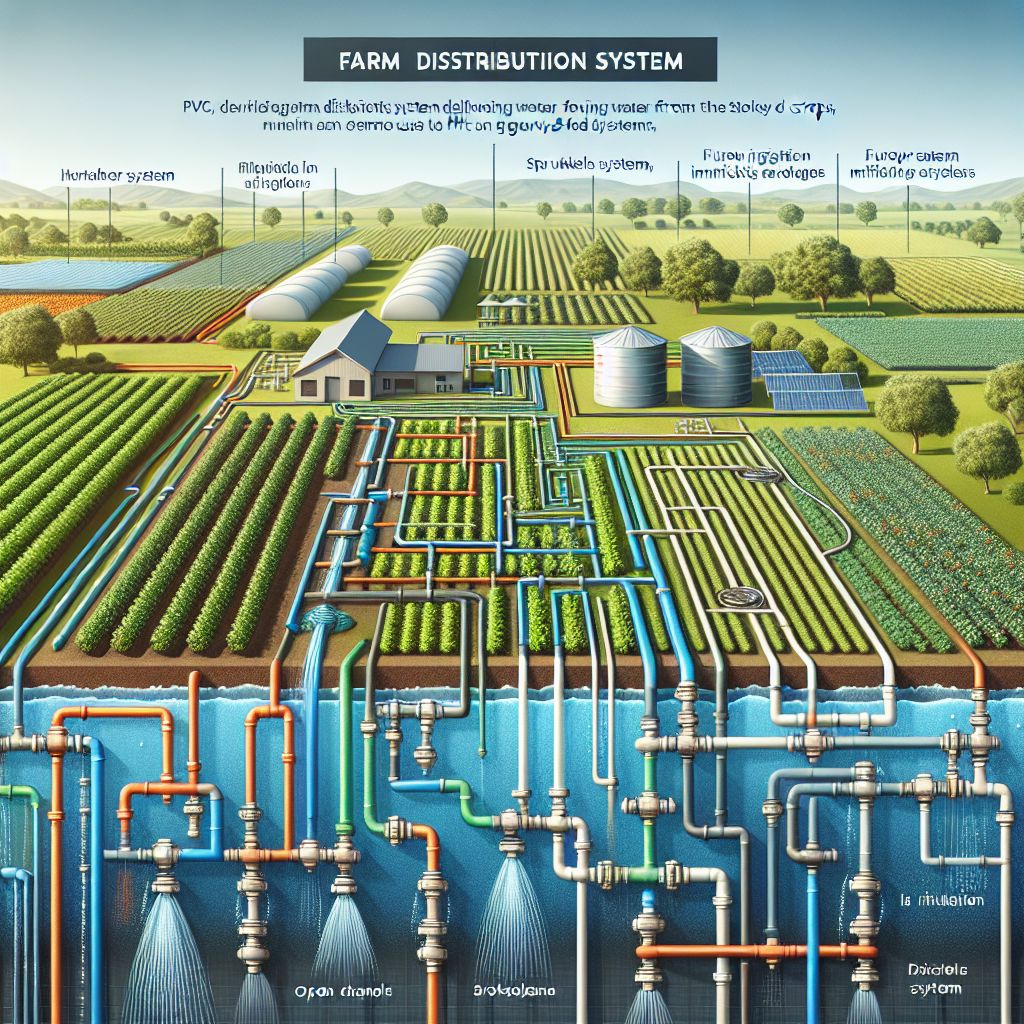
Distribution Systems: Delivering Water to Crops
The distribution system is responsible for delivering water from your storage solution to your crops. It’s crucial to design an efficient system that minimizes water loss and ensures even distribution across your farm.
There are various piping and channel options available, each suited for different types of farms and irrigation methods. Selecting the right distribution system is key to optimizing your irrigation setup. For more information on essential components, you can explore solar-powered farm irrigation systems.
Piping and Channel Options
Piping is the most common method for distributing water across a farm. It offers flexibility and can be customized to fit the layout of your fields. Common materials for irrigation piping include PVC, polyethylene, and metal.
Channels, or open ditches, are another option for water distribution. They are often used in gravity-fed systems and can be a cost-effective solution for large farms. However, they may result in higher water loss due to evaporation and seepage.
Irrigation Methods: Drip, Sprinkler, and Furrow
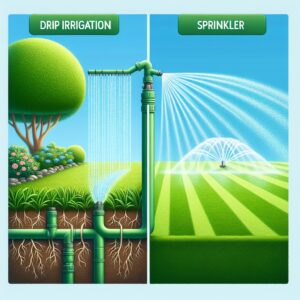
Choosing the right irrigation method depends on your farm’s specific needs and crop types. Drip irrigation delivers water directly to the roots of plants, minimizing water loss and maximizing efficiency. It’s ideal for high-value crops and areas with limited water supply.
Sprinkler systems mimic natural rainfall and are suitable for a wide range of crops. They provide even coverage but may result in higher evaporation losses. For a comprehensive understanding of how these systems can be integrated into sustainable farming practices, explore the components for solar-powered farm irrigation systems.
Furrow irrigation involves creating shallow channels along crop rows and allowing water to flow through them. It’s a traditional method that works well for row crops but requires careful management to prevent waterlogging.
Optimizing Efficiency to Minimize Water Loss
To optimize the efficiency of your distribution system, it’s important to regularly check for leaks and repair any damaged pipes or channels. Properly designed and maintained systems can significantly reduce water loss and improve overall irrigation performance.
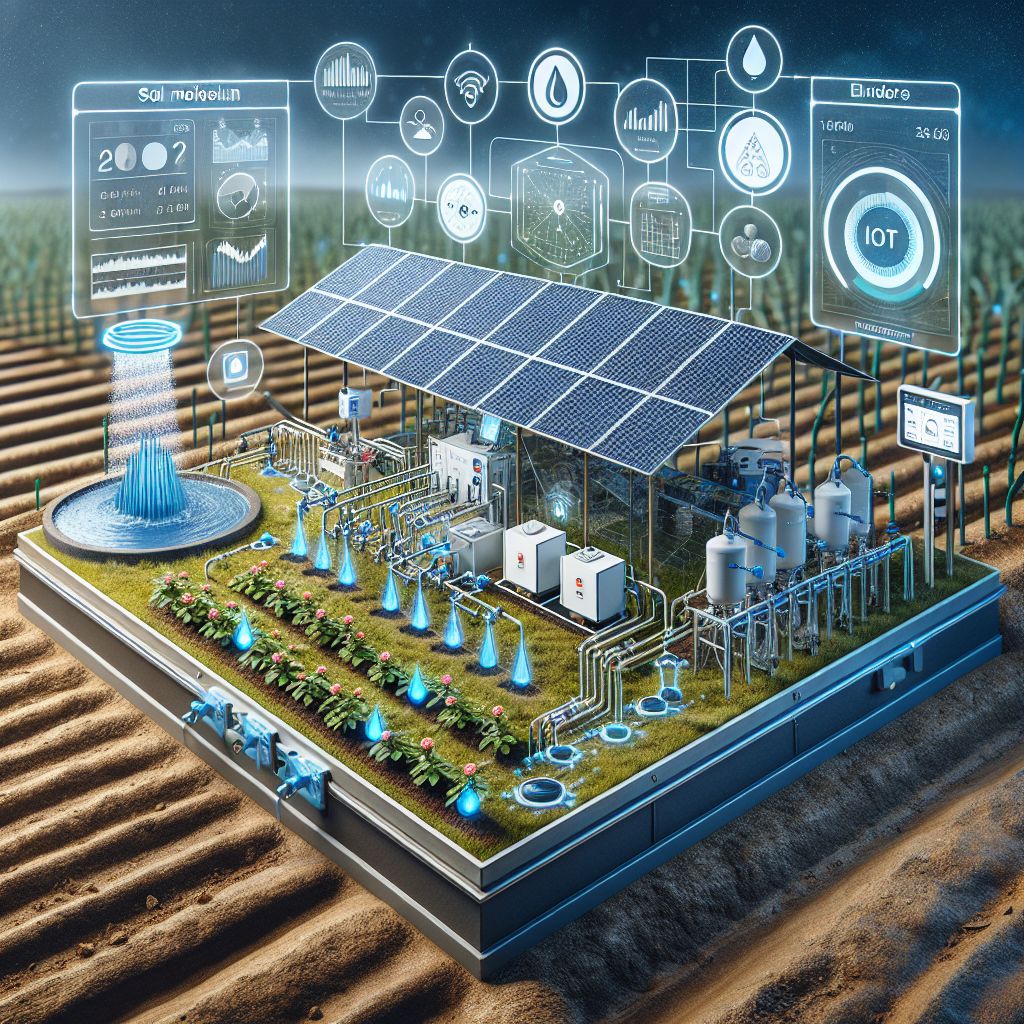
Control Systems and Monitoring
Implementing control systems and monitoring technologies is essential for maximizing the efficiency of your solar irrigation system. These tools help automate the irrigation process, ensuring your crops receive the right amount of water at the right time. For a deeper understanding of the components for solar-powered farm irrigation systems, explore additional resources.
Importance of Automated Controls
Automated controls allow you to set schedules and control the flow of water based on your farm’s needs. This reduces the need for manual intervention and ensures consistent irrigation, even when you’re not on-site. For more details on implementing efficient systems, check out this solar irrigation guide.
Advanced Monitoring Technologies
Advanced monitoring technologies provide real-time data on your irrigation system’s performance. This includes information on water usage, solar energy production, and system efficiency. By analyzing this data, you can make informed decisions to optimize your irrigation setup and improve crop yields.
Integrating IoT in Solar Irrigation
Integrating Internet of Things (IoT) technology into solar irrigation systems can revolutionize how we manage water resources on farms. IoT devices, such as sensors and smart controllers, provide real-time data on soil moisture levels, weather conditions, and system performance. This data allows farmers to make informed decisions about when and how much to irrigate, optimizing water usage and improving crop yields.
For example, soil moisture sensors can detect when the soil is too dry, triggering the irrigation system to activate automatically. This ensures that crops receive the right amount of water without over-irrigation, which can lead to water wastage and soil erosion. Additionally, IoT-enabled systems can be monitored and controlled remotely, providing farmers with flexibility and convenience.
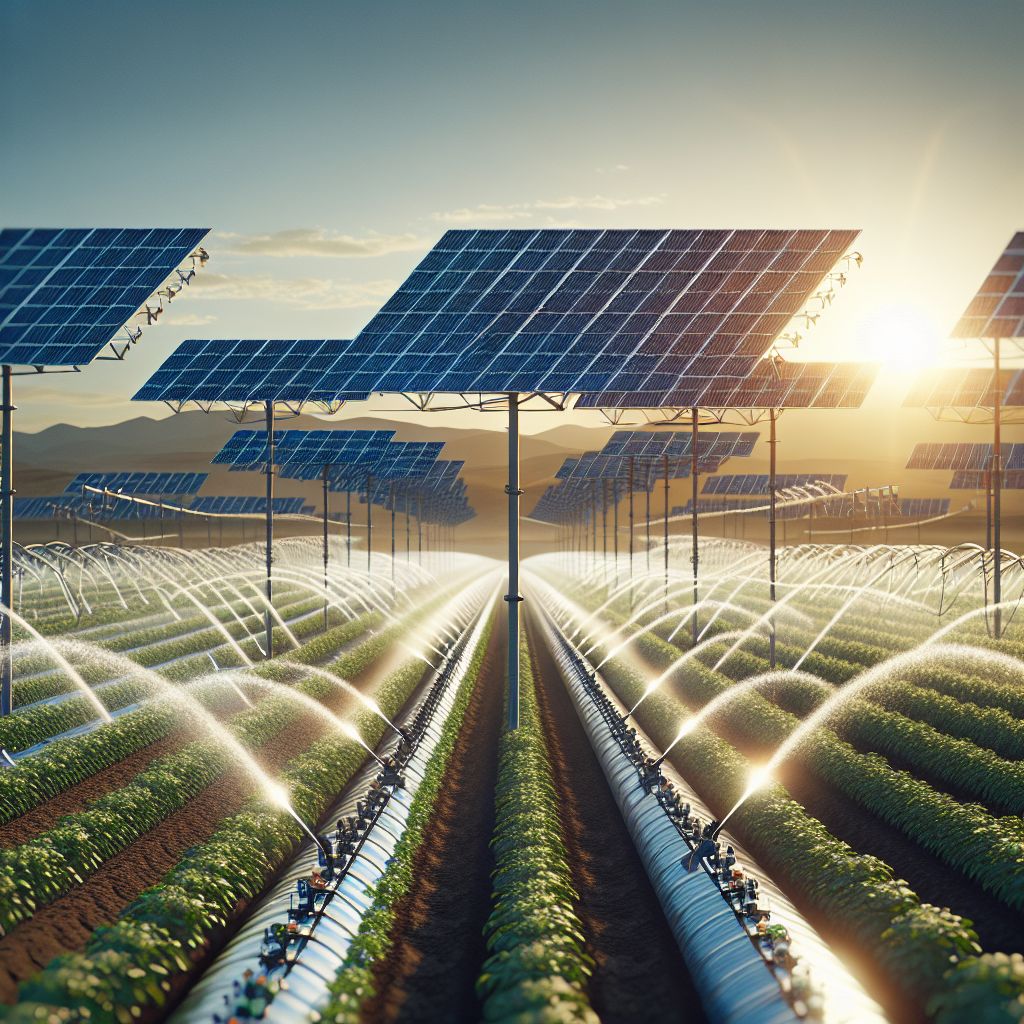
Economic and Environmental Impact
Solar irrigation systems offer significant economic and environmental benefits. By reducing reliance on fossil fuels and grid electricity, these systems lower operational costs for farmers, leading to increased profitability. Moreover, they contribute to environmental sustainability by decreasing greenhouse gas emissions and conserving water resources. For more information on the components of these systems, check out the components for solar-powered farm irrigation systems.
The initial investment in a solar irrigation system can be offset by long-term savings on energy costs. Many farmers find that the reduction in utility bills, combined with potential government incentives, makes solar irrigation a financially viable option. Additionally, the environmental benefits align with global efforts to combat climate change and promote sustainable agriculture.
Cost-Effectiveness of Solar Irrigation Systems
The cost-effectiveness of solar irrigation systems depends on several factors, including the size of the farm, the type of crops grown, and the local climate. While the initial setup costs can be high, the long-term savings on energy bills often outweigh these expenses. Additionally, many regions offer financial incentives, such as tax credits or rebates, to encourage the adoption of renewable energy systems.
For example, a farmer with a 10-acre farm may spend around $10,000 on a solar irrigation system. However, with an average energy savings of $1,500 per year, the system can pay for itself in less than a decade. This makes solar irrigation a smart investment for farmers looking to reduce costs and increase sustainability.
Environmental Benefits
Solar irrigation systems offer numerous environmental benefits. By harnessing solar energy, they reduce the need for fossil fuels, leading to lower carbon emissions. This contributes to cleaner air and helps mitigate the effects of climate change. Additionally, solar irrigation promotes efficient water use, reducing water waste and preserving this precious resource for future generations.
Moreover, solar systems have minimal impact on the surrounding environment. Unlike traditional irrigation methods, they do not produce noise pollution or harmful emissions. This makes them an ideal choice for eco-conscious farmers looking to minimize their environmental footprint.
Conclusion and Future Prospects
Solar irrigation systems represent a promising future for sustainable agriculture. As technology advances and costs decrease, more farmers are likely to adopt these systems, leading to increased efficiency and reduced environmental impact. By embracing solar irrigation, farmers can contribute to a more sustainable and resilient food system. For those interested in implementing these technologies, a comprehensive solar irrigation guide can provide valuable insights and steps for farm implementation.
The future of solar irrigation looks bright, with ongoing research and development aimed at improving system efficiency and reducing costs. Innovations such as IoT integration and advanced battery storage solutions are set to enhance the capabilities of solar irrigation systems, making them even more accessible and effective for farmers worldwide.
Is Installing a Solar Irrigation System Worth It
Installing a solar irrigation system is a worthwhile investment for many farmers. The long-term savings on energy costs, combined with environmental benefits, make it an attractive option for those looking to improve sustainability and reduce operational expenses. While the initial setup costs can be high, the potential for financial incentives and energy savings often justifies the investment.
Scalability and Adaptability of Solar Irrigation
Solar irrigation systems are highly scalable and adaptable, making them suitable for farms of all sizes. Whether you have a small family garden or a large commercial farm, solar irrigation can be tailored to meet your specific needs. This flexibility allows farmers to expand their operations without incurring significant additional costs, making solar irrigation a smart choice for the future.
Frequently Asked Questions (FAQ)
Many farmers considering solar irrigation have questions about costs, maintenance, and system performance. Here are some of the most common questions and their answers.
What are the costs involved in setting up a solar irrigation system?
The costs of setting up a solar irrigation system can vary widely based on the size of the farm and the complexity of the system. On average, you can expect to spend between $5,000 and $20,000. However, financial incentives and energy savings can help offset these costs over time. For more details, explore this comprehensive guide on solar panels for farm irrigation.
How long do solar panel systems typically last?
Solar panels are designed to last for 20 to 25 years, with many manufacturers offering warranties within this range. With proper maintenance, panels can continue to produce electricity efficiently for even longer, making them a reliable long-term investment.
Other components, such as pumps and batteries, may have shorter lifespans but can be replaced as needed to maintain system performance.
Can solar irrigation systems work during cloudy days?
Yes, solar irrigation systems can work during cloudy days, although their efficiency may be reduced. Batteries play a crucial role in storing excess solar energy generated during sunny periods, ensuring a consistent water supply even when sunlight is limited. For more information on solar irrigation, check out this solar irrigation guide.
Additionally, some systems are designed to be hybrid, allowing them to draw energy from the grid when solar production is low.
What maintenance do the components require?
Regular maintenance is essential to keep solar irrigation systems running smoothly. This includes cleaning solar panels to remove dust and debris, checking pumps for signs of wear or damage, and monitoring battery performance. Routine inspections can help identify potential issues before they become major problems.
Are there financial incentives for using solar irrigation systems on a farm?
Yes, many regions offer financial incentives to encourage the adoption of solar irrigation systems. These can include tax credits, rebates, and grants, which can significantly reduce the initial setup costs. It’s important to research the specific incentives available in your area and take advantage of them when installing a solar irrigation system.
By investing in solar irrigation, farmers can enjoy long-term savings, increased efficiency, and a reduced environmental impact, making it a smart choice for sustainable agriculture.

Leave a Reply