
Article-At-A-Glance
- Agrivoltaics combines solar energy production with agriculture on the same land, maximizing efficiency and creating dual revenue streams for farmers
- Crops grown under solar panels can experience up to 20% water savings and protection from extreme weather, leading to increased yields for many shade-tolerant varieties
- Solar panels installed over agricultural land operate more efficiently due to the cooling effect from plants, boosting electricity production by 3-10%
- Sheep grazing under solar panels provides natural vegetation management while creating additional farm income without chemical inputs
- Agrivoltaic systems help preserve farmland while contributing to renewable energy goals and farm resilience in changing climates
Harvesting Sun Twice: How Agrivoltaics Transforms Land Use
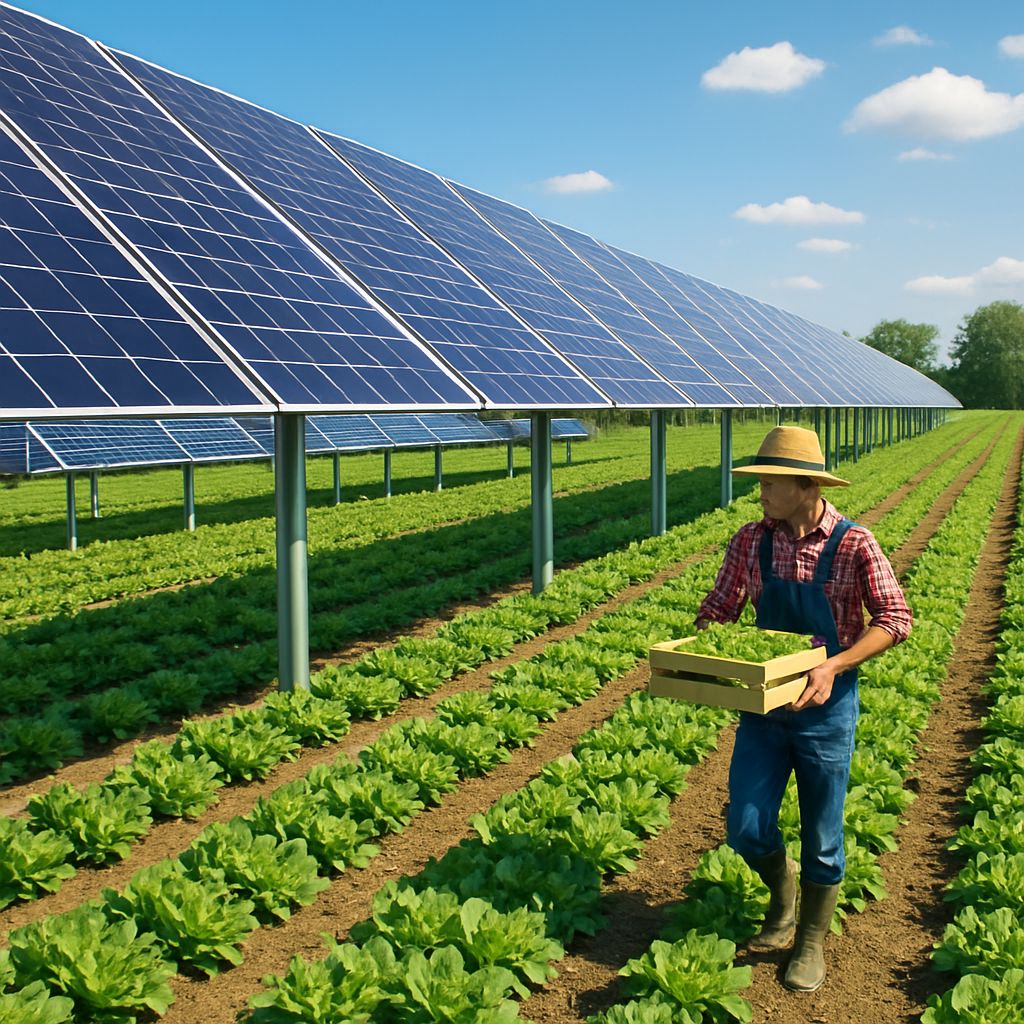
Farmers no longer need to choose between growing food and generating clean energy. Agrivoltaics—the practice of integrating solar panels with agricultural production—is revolutionizing how we use land while addressing both energy and food security challenges. This innovative approach allows farmers to harvest the sun twice: once for crops and again for electricity generation, creating a symbiotic relationship that benefits both activities.
Across the country, forward-thinking farmers are discovering that carefully designed solar arrays can coexist with and even enhance agricultural production. GreenFarms Solar, a leader in agricultural solar integration, has been helping farmers implement these dual-purpose systems with remarkable results for soil health, crop yields, and farm income stability.
What Makes Agrivoltaics a Game-Changer for Farmers and Energy Producers
The agricultural sector faces mounting pressures from climate change, water scarcity, and economic volatility. Meanwhile, the renewable energy industry continues to expand, requiring substantial land resources. Agrivoltaics offers a elegant solution to these parallel challenges by integrating rather than separating these essential functions.
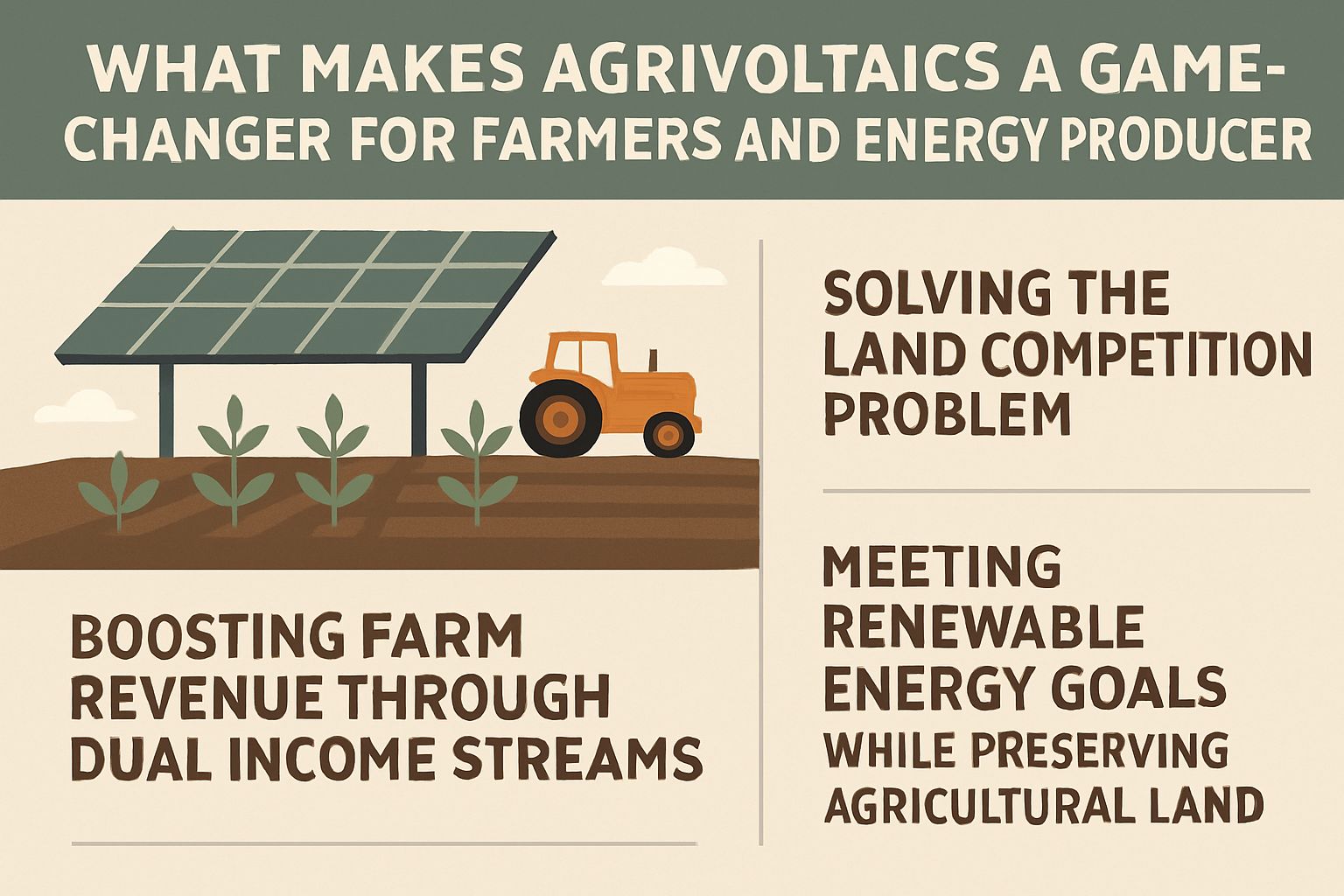
Solving the Land Competition Problem
Traditional ground-mounted solar farms typically require dedicated land that might otherwise be used for farming. This creates a perceived conflict between food production and clean energy generation. Agrivoltaic systems eliminate this competition by enabling both activities on the same plot of land. Research from the National Renewable Energy Laboratory indicates that agrivoltaic systems can maintain 60-100% of conventional crop production while generating substantial clean electricity, effectively doubling land productivity.
Boosting Farm Revenue Through Dual Income Streams
The economics of farming can be precarious, with commodity prices fluctuating and weather events threatening harvests. Agrivoltaics provides farmers with a stable secondary income through solar leasing or energy sales that helps weather these uncertainties. A typical agrivoltaic arrangement can generate $500-$1,500 per acre annually in energy income while maintaining agricultural production. This diversification creates financial resilience for farm operations facing increasing climate and market volatility.
For many family farms, this supplemental revenue stream can make the difference between continuing operations or selling to developers. The steady income from solar production helps smooth seasonal cash flow challenges while allowing agricultural traditions to continue.
Meeting Renewable Energy Goals While Preserving Agricultural Land
As communities establish ambitious renewable energy targets, concerns about solar development displacing valuable farmland have emerged. Agrivoltaic designs address these concerns by maintaining agricultural productivity while contributing to renewable energy goals. These dual-use systems can help rural communities preserve their agricultural character and economy while participating in the clean energy transition.
Local zoning boards increasingly recognize agrivoltaics as a preferred approach to solar development in agricultural areas, as it maintains land in agricultural use rather than converting it entirely to industrial energy production. This compromise approach satisfies both agricultural preservation advocates and renewable energy supporters.
How Agrivoltaic Systems Work
Successful agrivoltaic systems require thoughtful design that balances the needs of both solar equipment and agricultural activities. Three main configurations have emerged, each with specific advantages for different farming operations. For more information on how solar panels can benefit agricultural practices, check out the top benefits of solar panels for farming.
Elevated Panel Designs That Allow Farming Underneath
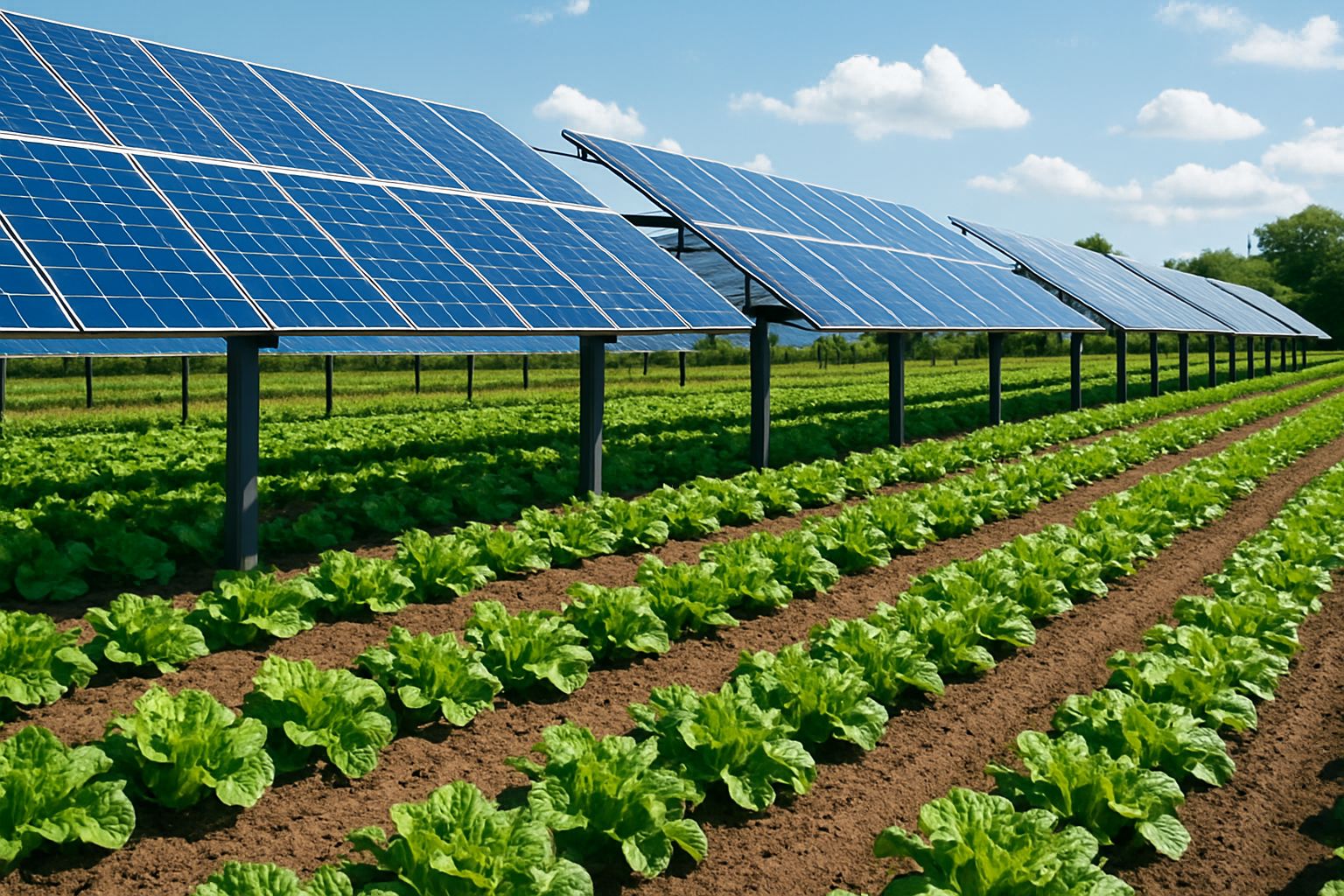
The most common agrivoltaic approach utilizes elevated mounting systems that raise solar panels at least 6-8 feet above ground level. This configuration creates a protected growing environment underneath while allowing farm equipment access. Panels are typically mounted on steel poles with foundations designed to minimize soil disturbance and maximize growing space. The height adjustment allows for cultivation, harvesting, and even grazing to continue with minimal disruption to normal farming operations.
Strategic Panel Spacing for Optimal Light Distribution
Beyond height considerations, panel spacing plays a crucial role in successful agrivoltaic systems. Unlike conventional solar arrays that maximize panel density, agrivoltaic designs intentionally incorporate wider spacing between panel rows. This strategic arrangement creates light patterns that alternate between full sun and partial shade throughout the day, catering to diverse crop needs.
Most commercial agrivoltaic installations utilize tracking systems that rotate panels to follow the sun, creating dynamic shade patterns. These movable systems can be programmed to prioritize crop growth during critical development periods by adjusting the angle of panels to allow more direct sunlight when needed. The light distribution can be customized based on specific crop requirements, seasons, and local climate conditions. For more insights on how solar panels are revolutionizing farm operations, check out this article on solar panels’ impact and benefits.
Some innovative installations even use semi-transparent bifacial panels that allow a percentage of light to filter through while capturing solar energy from both sides. This technology further enhances the compatibility between energy generation and plant growth, especially for crops that thrive in diffused light conditions. To learn more about this technology, explore the advancements in dual-use solar agrivoltaics.
Water Management and Collection Systems
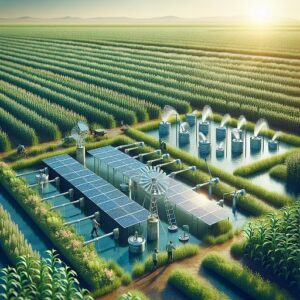
One of the most valuable aspects of agrivoltaic designs is their ability to improve water efficiency. Solar panels naturally channel rainwater to their edges, creating concentrated water flow patterns that can be harvested. Smart agrivoltaic systems incorporate gutters and collection systems that capture this runoff for irrigation purposes.
The shade created by panels significantly reduces evaporation from soil, decreasing irrigation requirements by 15-30% compared to open-field cultivation in many regions. This water conservation benefit becomes increasingly valuable in drought-prone areas where water restrictions and rising costs threaten agricultural viability. The panels also shield crops from extreme precipitation events, reducing soil erosion and nutrient runoff during heavy rainstorms. For a comprehensive comparison, check out this guide on solar irrigation systems.
Many farmers report that this improved moisture management creates more consistent growing conditions and reduces weather-related stress on plants. The combination of rainwater harvesting and reduced evaporation creates a more resilient agricultural system, particularly in regions experiencing climate-driven water challenges.
5 Major Benefits of Agrivoltaics for Crops
The integration of solar panels with agriculture doesn’t just enable dual production—it can actively enhance crop performance in several measurable ways. Research from multiple universities has documented specific advantages that make agrivoltaics particularly attractive for certain farming operations. For more insights, check out this article on the top benefits of solar panels for farming.
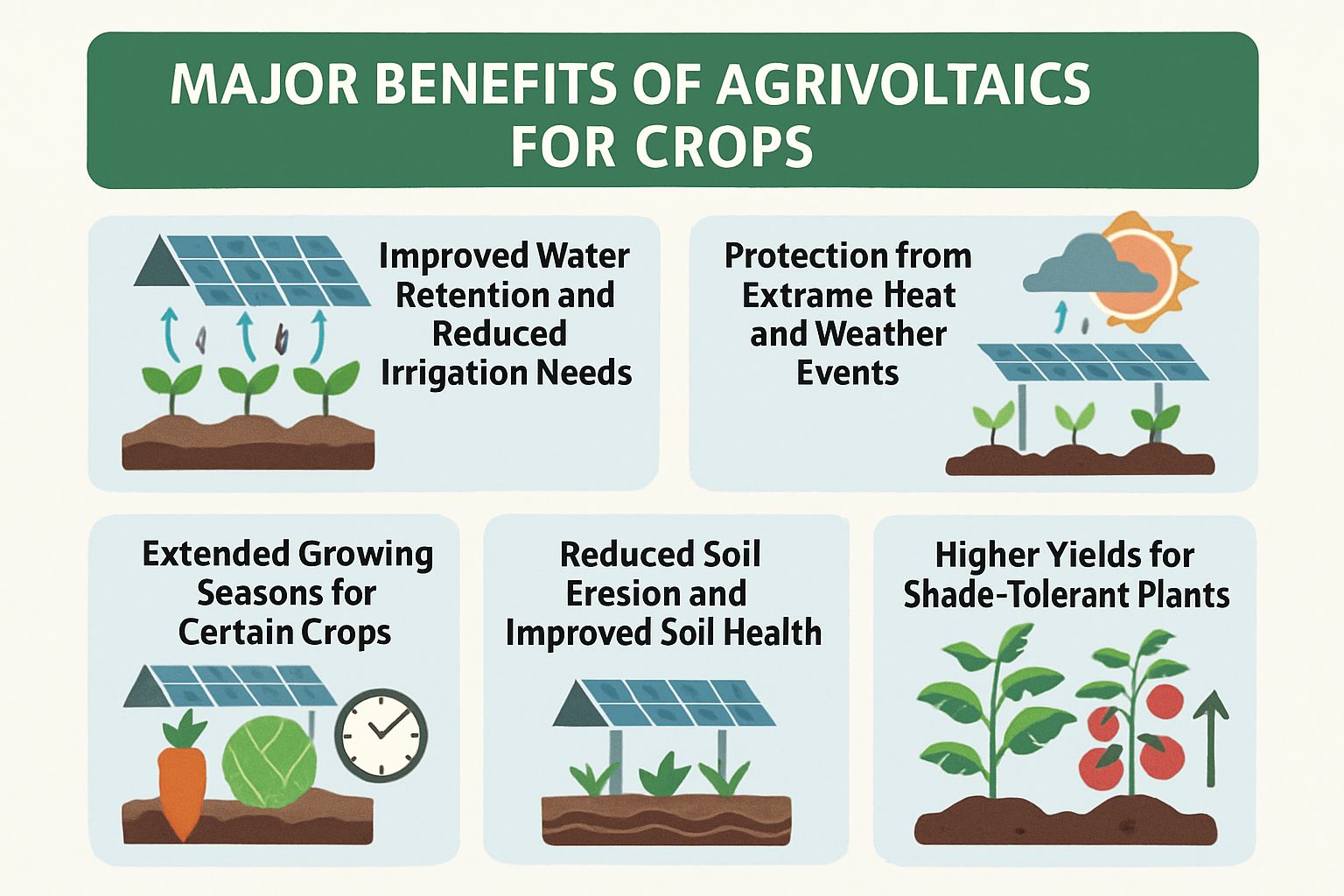
1. Improved Water Retention and Reduced Irrigation Needs
Studies conducted at the University of Arizona have demonstrated that crops grown under solar panels require significantly less irrigation water to achieve comparable yields. The partial shade created by panels reduces soil surface temperature and slows evaporation, keeping moisture available to plants for longer periods. This microclimate effect is particularly beneficial in arid and semi-arid regions where water conservation is critical.
Field trials showed that tomato crops under agrivoltaic systems used approximately 20% less water while maintaining production levels. For water-intensive crops, this reduction represents both environmental and economic benefits, reducing pumping costs and preserving increasingly scarce water resources. Discover how solar irrigation systems can further enhance these benefits.
2. Protection from Extreme Heat and Weather Events
The structural canopy provided by solar arrays offers physical protection from damaging weather events. Hail, excessive rain, and damaging winds are partially blocked by the panels, reducing crop damage during severe weather. This protective effect can be particularly valuable for high-value specialty crops that are vulnerable to weather damage.
Additionally, the shade provided during peak temperature hours helps prevent heat stress in many crops. Research at Oregon State University found that lettuce varieties grown under partial shade from solar panels showed less bolting and heat damage during summer months, extending their productive season. As climate change brings more frequent extreme weather events, this protective function adds significant value to the agrivoltaic approach.
“We’ve seen remarkable resilience in our agrivoltaic plots during heat waves. While conventional fields suffered significant losses, crops under panels maintained productivity even during record temperatures.” — Dr. Maria Chen, Agricultural Research Station
3. Extended Growing Seasons for Certain Crops
The modified microclimate beneath solar panels can effectively extend growing seasons in both directions. The panels provide protection from early and late-season frost by trapping radiant heat and blocking direct exposure to cold night skies. This protective effect can allow earlier spring planting and later fall harvests for many crops.
In hot regions, the partial shade enables cultivation of heat-sensitive crops during summer months that would typically be too intense for optimal growth. This seasonal extension increases annual productivity and allows farmers to access premium pricing by bringing crops to market earlier or later than conventional fields.
Some agrivoltaic farms have reported 2-4 week extensions to their growing seasons, allowing additional harvest cycles or access to higher market prices during shoulder seasons. This timing advantage can significantly impact farm profitability beyond the direct benefits of energy generation.
4. Reduced Soil Erosion and Improved Soil Health
The physical presence of solar mounting structures and the modified precipitation patterns they create can substantially reduce soil erosion compared to open fields. Panel arrays break the impact of heavy rainfall, preventing soil compaction and allowing more gradual water infiltration. The reduced evaporation rates also maintain more consistent soil moisture, creating favorable conditions for soil microorganisms. To explore more about this innovative approach, learn about agrivoltaics and its benefits.
Many agrivoltaic systems incorporate perennial plantings between rows that further stabilize soil and build organic matter. These permanent plantings establish deep root systems that improve soil structure while sequestering carbon. Over time, these practices can rehabilitate degraded agricultural land while generating clean energy.
5. Higher Yields for Shade-Tolerant Plants
Contrary to conventional wisdom that all crops need full sun, many plants actually perform better with partial shade. Leafy greens like kale, spinach, and lettuce have demonstrated yield increases of 20-30% under agrivoltaic systems compared to full-sun conditions in regions with intense summer heat. The moderated light and temperature conditions create less stress on these plants, allowing them to photosynthesize more efficiently throughout the day.
Research conducted at multiple universities has documented that certain varieties of berries, herbs, and root vegetables maintain or improve production when grown under properly designed solar arrays. The key factor is matching appropriate crop selections with the specific light patterns created by the panel configuration. When properly matched, these symbiotic relationships can actually increase total land productivity compared to either solar or agriculture alone.
Livestock Integration: Perfect Partners for Solar Farms
Beyond crop production, livestock integration represents one of the most successful applications of agrivoltaics. The synergies between grazing animals and solar infrastructure create multiple benefits for both systems while reducing maintenance costs.
Sheep Grazing as Natural Vegetation Management
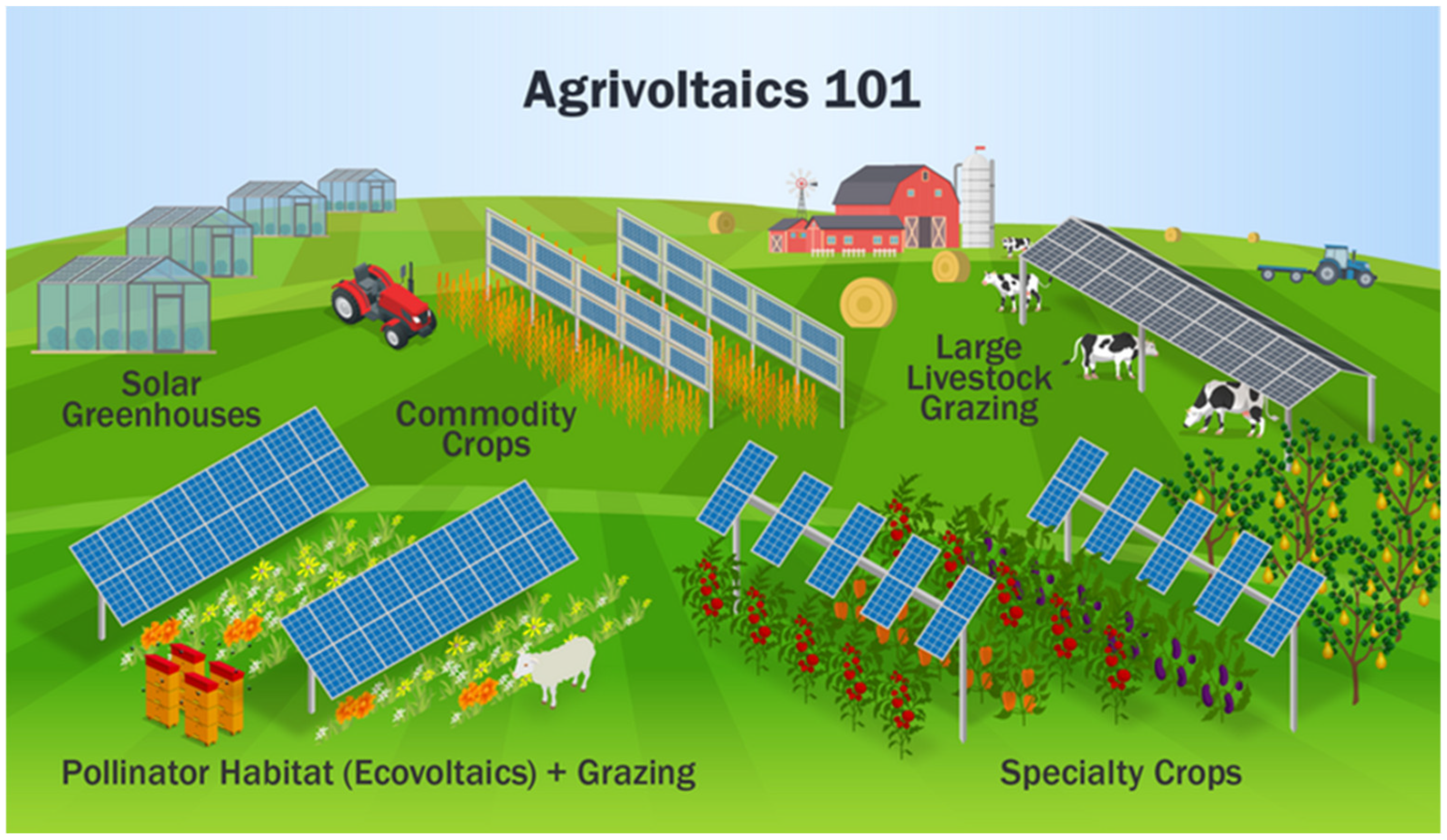
Sheep have emerged as the ideal maintenance crew for solar farms, naturally controlling vegetation without damaging panel infrastructure. Their grazing patterns keep grass and weeds from shading panels while eliminating the need for mechanical mowing or herbicide applications. This natural approach reduces maintenance costs by $300-500 per acre annually compared to conventional vegetation management practices.
Solar sheep grazing creates additional farm income through meat and wool production while providing a valuable service to solar operators. Several specialized “solar grazing” companies have emerged, contracting their flocks to multiple solar installations throughout the growing season. This arrangement allows shepherds to manage larger flocks by accessing multiple grazing sites without needing to own or lease all the necessary land.
The solar infrastructure provides valuable shade for the animals during hot weather, improving their welfare and reducing heat stress. Many sheep producers report better weight gain and wool quality in animals grazing under panels compared to open pastures, particularly during summer months.
Chicken Pasturing Between Panel Rows
Free-range poultry production pairs exceptionally well with solar installations. Chickens benefit from the protective cover that panels provide from aerial predators and harsh weather while controlling insects and fertilizing the soil. Mobile chicken tractors or rotational grazing systems can be implemented between panel rows, creating premium “solar-pastured” egg and poultry products.
The birds actively contribute to system maintenance by consuming weed seeds and insect pests that might otherwise affect panel operation or crop production. Their scratching behavior helps incorporate organic matter into the soil while spreading their manure evenly across the landscape. Some operations have reported that integrating chickens eliminates the need for supplemental fertilization in associated cropping systems. For more information on how solar panels can be beneficial in such systems, check out the environmental benefits of solar panels for farmers.
Shade Benefits for Animal Welfare
All livestock species benefit from access to shade during hot weather, and solar panels provide this critical infrastructure while generating energy. Research has shown that providing adequate shade can improve weight gain, reproductive performance, and milk production in many livestock species. Solar arrays create shade patterns that move throughout the day, encouraging animals to rotate their grazing patterns and distribute impact more evenly across the landscape.
During heat waves, these shade resources can be lifesaving for animals while maintaining energy production during peak demand periods. The growing concern for animal welfare in livestock production makes this aspect of agrivoltaics increasingly valuable to conscientious producers and consumers alike.
“Agrivoltaics Research …” from www.mdpi.com and used with no modifications.
Solar Performance Advantages of Agricultural Integration
The benefits of agrivoltaics aren’t limited to agricultural improvements—the solar components also perform better when integrated with living systems. These reciprocal advantages create a truly symbiotic relationship that exceeds the performance of either system alone.
Cooler Panels Mean Higher Electricity Output
Solar panels lose efficiency as they heat up, with typical efficiency losses of 0.3-0.5% per degree Celsius above optimal operating temperature. The evaporative cooling created by transpiring plants beneath panels can lower panel temperature by 5-10°C during hot weather, increasing electricity production by 3-10% compared to panels over bare ground or gravel. Learn more about the top benefits of solar panels for farming.
This natural cooling effect is most pronounced during peak summer conditions when electricity demand and value are typically highest. The improved performance during these high-demand periods enhances the economic returns from solar generation while requiring no additional technological inputs. Some utility-scale developers have begun incorporating agricultural elements specifically to capture this performance advantage in hot climates.
Reduced Maintenance Costs Through Natural Vegetation Control
Conventional solar farms require regular maintenance to control vegetation that might shade panels or create fire hazards. Integrating grazing animals or selecting appropriate companion plants can substantially reduce these maintenance costs while creating additional value streams. Sheep grazing alone typically saves $300-500 per acre annually compared to mechanical mowing regimes.
Agricultural integration also reduces or eliminates herbicide use, addressing environmental concerns and reducing chemical costs. This ecological approach improves groundwater protection and creates wildlife habitat while maintaining solar performance—a significant advantage when seeking community support for solar developments.
Enhanced Public Support for Solar Projects
Solar developers increasingly recognize that agrivoltaic designs receive stronger community and regulatory support than conventional solar farms. The multifunctional land use addresses concerns about removing land from agricultural production while creating more aesthetically pleasing landscapes. Many communities that have restricted conventional solar development have made exceptions for agrivoltaic designs that maintain agricultural activity.
This improved public perception translates into faster permitting processes, reduced legal challenges, and stronger community relationships for project developers. The additional investment in agrivoltaic design elements often pays for itself through reduced development timelines and conflicts. For many projects, this social license to operate represents one of the most valuable aspects of agricultural integration.
Best Crops for Agrivoltaic Systems
Not all crops perform equally well under solar panels, and successful agrivoltaic systems require thoughtful crop selection based on light requirements, growth habits, and market value. The most successful operations carefully match crops to the specific light patterns created by their panel configurations.
Leafy Greens and Salad Vegetables
Leafy vegetables like lettuce, spinach, kale, and Swiss chard consistently demonstrate excellent performance in agrivoltaic settings. These crops naturally evolved in forest edge environments and can efficiently utilize diffused light. The reduced light intensity under panels prevents bolting and bitter flavors during hot weather, often extending the productive season by several weeks compared to open-field production.
Research at multiple universities has documented yield increases of 20-30% for many leafy greens grown under optimized agrivoltaic systems compared to full-sun conditions, particularly during summer months. The quality improvements in texture and flavor can also command premium prices in local markets, further enhancing economic returns.
Berry Varieties That Thrive in Partial Shade
Many berry crops naturally evolved as understory or woodland edge plants and perform excellently in the dappled light conditions created by solar arrays. Blueberries, blackberries, currants, and certain strawberry varieties have all demonstrated successful production in agrivoltaic systems. These high-value crops can generate significant revenue from relatively small areas, making them ideal companions for solar installations.
The protective canopy provided by solar panels shields berries from excessive heat, sunscald, and bird predation—all common challenges in conventional production. Some producers report extended harvest seasons and reduced irrigation requirements, further enhancing the economic advantages of these pairings.
Herbs and Specialty Crops with Premium Market Value
Culinary and medicinal herbs represent another high-value category that performs well under partial shade conditions. Mint, oregano, thyme, cilantro, and many other herbs command premium prices while tolerating or even preferring the moderated light and temperature conditions beneath solar panels. These compact crops require minimal equipment for harvesting and processing, making them compatible with the physical constraints of solar infrastructure.
Pollinator-Friendly Plants That Boost Ecosystem Health
Many agrivoltaic installations incorporate flowering plants specifically selected to support pollinators and beneficial insects. These plantings improve ecological resilience while potentially enhancing yields of nearby fruit crops through improved pollination services. Native wildflower mixes adapted to local conditions require minimal maintenance once established while providing valuable habitat for threatened pollinator species.
Real-World Success Stories
Across the country and around the world, pioneering farmers and researchers are demonstrating the practical benefits of agrivoltaics. These early adopters provide valuable insights into best practices and realistic expectations for those considering similar approaches.
Jack’s Solar Garden in Colorado
This 5-acre research and production site near Boulder, Colorado represents one of America’s largest commercially active agrivoltaic systems. The farm integrates vegetables, flowers, and pollinator habitat beneath an elevated 1.2-megawatt solar array. Researchers from Colorado State University, the National Renewable Energy Laboratory, and the University of Arizona actively study the system’s performance while the operation produces market crops.
The project has documented water savings of approximately 20% across multiple crop types while maintaining or improving yields compared to control plots. The farm regularly hosts educational tours and has become a valuable demonstration site for farmers and solar developers interested in agrivoltaic applications. Their research continues to refine best practices for the semi-arid western climate where water conservation delivers particularly valuable benefits.
Oregon State University’s Research Farm
Oregon State University has established one of the most comprehensive agrivoltaic research programs in the country. Their installations test multiple panel configurations and dozens of crop varieties to identify optimal combinations for Pacific Northwest conditions. Research has demonstrated particular success with raspberry production, showing both increased berry yield and improved solar output compared to conventional approaches.
Their studies have specifically quantified the “dual-yield advantage” that properly designed systems can achieve—producing more combined value than separate agricultural and solar installations would generate independently on the same land area. This research provides valuable guidance for farmers considering agrivoltaic adoption while helping policymakers understand the true potential of integrated systems.
European Models That Maximize Both Yields
European countries have pioneered many agrivoltaic applications, with France, Italy, and Germany leading development of commercial-scale systems. These projects benefit from supportive policy frameworks that specifically incentivize dual-use approaches. The Agrovoltaico project in northern Italy integrates cherry and apple orchards with overhead solar panels, reporting improved fruit quality through reduced sunscald and hail damage.
German systems have demonstrated particular success with berry crops and specialized vegetables, developing modular designs that allow farmers to customize light penetration based on specific crop needs. These mature European systems provide valuable long-term performance data that helps refine economic projections and engineering specifications for agrivoltaic applications worldwide.
French policies specifically supporting agrivoltaics have driven rapid adoption, with dedicated research institutes helping farmers optimize configurations for regional conditions. Their tiered incentive structure rewards designs that maintain high agricultural productivity, ensuring that energy production complements rather than displaces food production.
Overcoming Installation and Management Challenges
Despite its promising benefits, agrivoltaics presents unique challenges that require thoughtful planning and sometimes specialized equipment. Understanding these challenges helps farmers and solar developers create successful implementations while avoiding costly mistakes. For more insights, explore how solar panels are revolutionizing farm operations.
The integration of agricultural activities with solar infrastructure requires interdisciplinary expertise that bridges traditionally separate domains. Successful projects typically involve collaboration between solar engineers, agronomists, and experienced farmers to address all aspects of system performance. This collaborative approach ensures that neither agricultural nor energy production is sacrificed in the integrated design.
Higher Upfront Costs vs. Long-Term Returns
Agrivoltaic systems typically require 15-25% higher initial investment than conventional ground-mounted solar arrays due to elevated racking, wider spacing, and agricultural accommodations. However, these additional costs are generally offset by improved system performance, agricultural returns, and maintenance savings over the project lifetime. Careful financial modeling that accounts for all revenue streams and operational savings is essential for accurately evaluating the true return on investment.
Adapting Farm Equipment for Solar Array Navigation
Standard farm equipment must often be modified or replaced with specialized machinery designed to operate within the constraints of solar infrastructure. Narrower implements, adjustable working widths, and precise guidance systems may be required depending on the specific panel configuration. Some farmers utilize smaller tractors or even battery-electric equipment specifically sized for operation between panel rows.
For livestock integration, modified fencing systems and specialized handling equipment may be necessary to prevent damage to solar components. These adaptations represent additional costs and learning curves that must be considered in project planning. Working closely with equipment dealers who understand both agricultural and solar requirements helps identify practical solutions to these mechanical challenges.
Creating Effective Maintenance Schedules
Successful agrivoltaic systems require coordinated maintenance planning that addresses both agricultural and solar needs without conflicts. Timing of agricultural operations must be synchronized with solar maintenance schedules to prevent interference between activities. Clear communication protocols and shared digital calendars have proven essential for operations with multiple stakeholders managing different aspects of integrated systems.
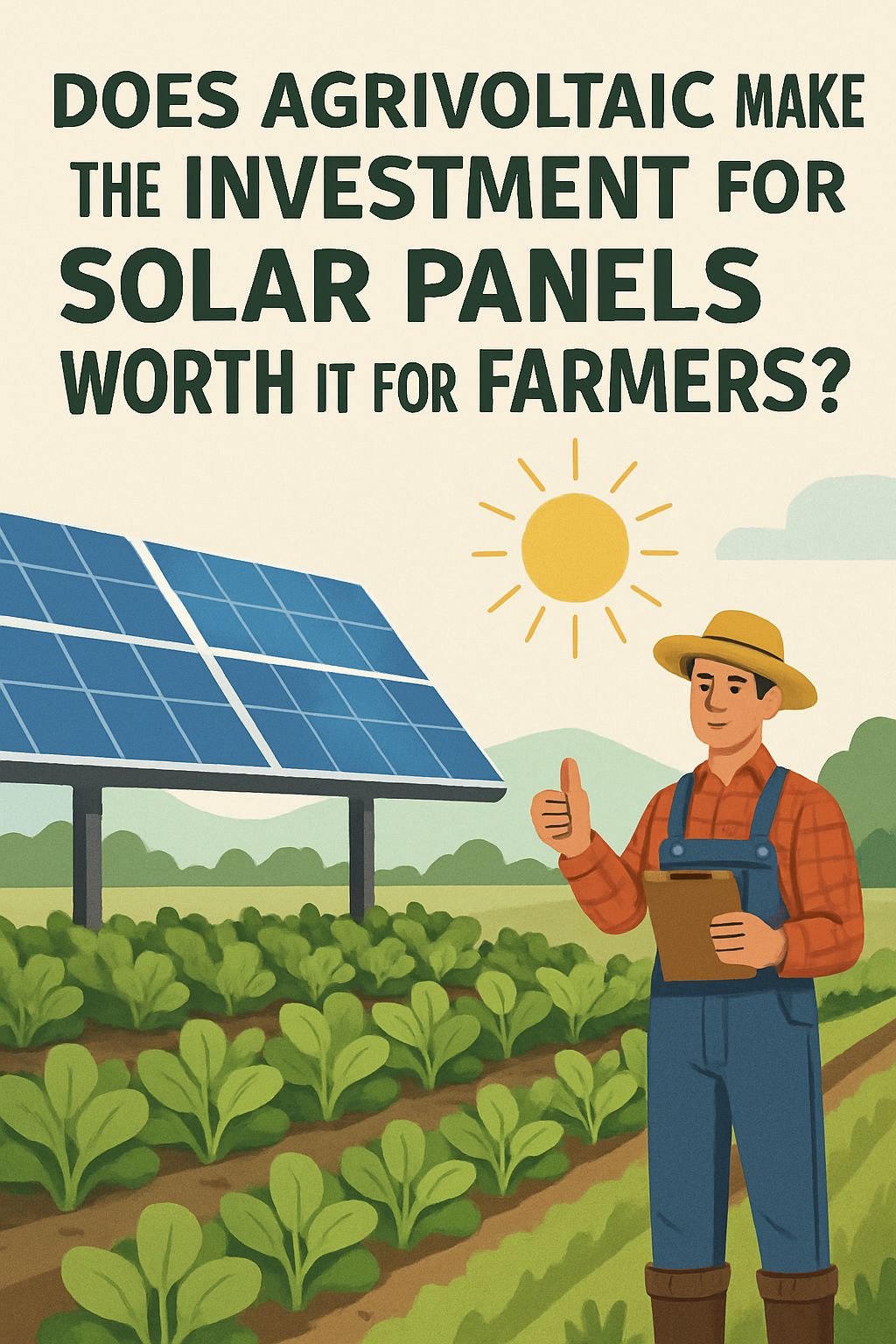
Does Agrivoltaic Make the Investment for Solar Panels Worth it for Farmers
For most farmers facing high energy costs, uncertain commodity prices, and climate challenges, agrivoltaics presents a compelling value proposition. The combination of energy savings, new revenue streams, and agricultural benefits typically provides returns exceeding either solar or farming alone. The most successful implementations align panel design with existing farm enterprises and capabilities, creating truly integrated operations rather than simply co-locating separate activities. For farmers committed to maintaining productive land while diversifying income, agrivoltaics offers a sustainable path forward that supports both clean energy transitions and food security.
Frequently Asked Questions
As agrivoltaics gains attention, many farmers and landowners have similar questions about implementation, economics, and practical considerations. These common questions address the most frequent concerns about transitioning to integrated solar-agricultural systems.
How much does an agrivoltaic system typically cost compared to traditional solar?
Agrivoltaic systems generally cost 15-25% more than conventional ground-mounted solar installations of equivalent capacity due to elevated mounting structures, wider spacing, specialized foundations, and agricultural accommodations. For a typical 1MW system, this might represent an additional $150,000-300,000 in upfront costs. However, these systems often recover the additional investment through improved panel efficiency, reduced maintenance costs, and continued agricultural production.
The economic equation varies significantly based on specific designs, regional incentives, and agricultural enterprises. Many agrivoltaic installations qualify for additional incentives or preferred interconnection terms that improve their financial performance relative to standard solar installations. Working with experienced developers who understand both agricultural and energy aspects is essential for accurate financial modeling.
Can all types of crops grow successfully under solar panels?
Not all crops perform equally well under partial shade conditions. Crops with high light requirements (like corn, wheat, and many fruiting vegetables) typically experience yield reductions in agrivoltaic settings. However, many high-value specialty crops including leafy greens, herbs, berries, and certain root vegetables maintain or even improve production under properly designed arrays. The key is matching appropriate crops to the specific light patterns created by the panel configuration and local climate conditions.
Are there government incentives specifically for agrivoltaic projects?
Many regions now offer specialized incentives for agrivoltaic systems beyond standard solar incentives. The 2022 Inflation Reduction Act includes specific provisions that can benefit agrivoltaic projects, particularly those in rural communities. Some states have created dedicated grant programs or preferential interconnection terms for dual-use systems that maintain agricultural production. Additionally, USDA programs including REAP (Rural Energy for America Program) and EQIP (Environmental Quality Incentives Program) can provide substantial financial support for on-farm renewable energy systems including agrivoltaics.
How much land is needed for an agrivoltaic system to be economically viable?
Viable project sizes vary widely depending on energy costs, available incentives, and specific agricultural enterprises. Most commercial agrivoltaic systems range from 2-20 acres, though both smaller and larger installations exist. For most farms, starting with 2-5 acres provides sufficient scale to establish viable operations while managing implementation challenges. Systems sized to offset on-farm energy use (typically 100-500kW) often provide the most favorable economics due to retail-rate savings rather than wholesale power sales.
Will agrivoltaics damage my farm equipment or make harvesting more difficult?
Properly designed agrivoltaic systems are engineered to accommodate necessary farm equipment and operations, though some adaptation is typically required. Most systems elevate panels at least 8-10 feet to allow equipment passage, and row spacing is planned based on specific machinery requirements. Many farms utilize specialized implements or smaller equipment specifically selected for operation within solar infrastructure.
Hand-harvested specialty crops often represent the simplest integration, while mechanically harvested crops require more careful design considerations. Working with designers who understand your specific equipment needs and operational patterns is essential for creating functional integrated systems.
As climate and economic pressures intensify for both energy and food systems, agrivoltaics offers a promising path forward that serves multiple essential needs without forcing difficult tradeoffs. By harvesting the sun twice, these integrated systems represent not just a compromise but a synergistic improvement over single-purpose land use.

Leave a Reply