
Article At-A-Glance
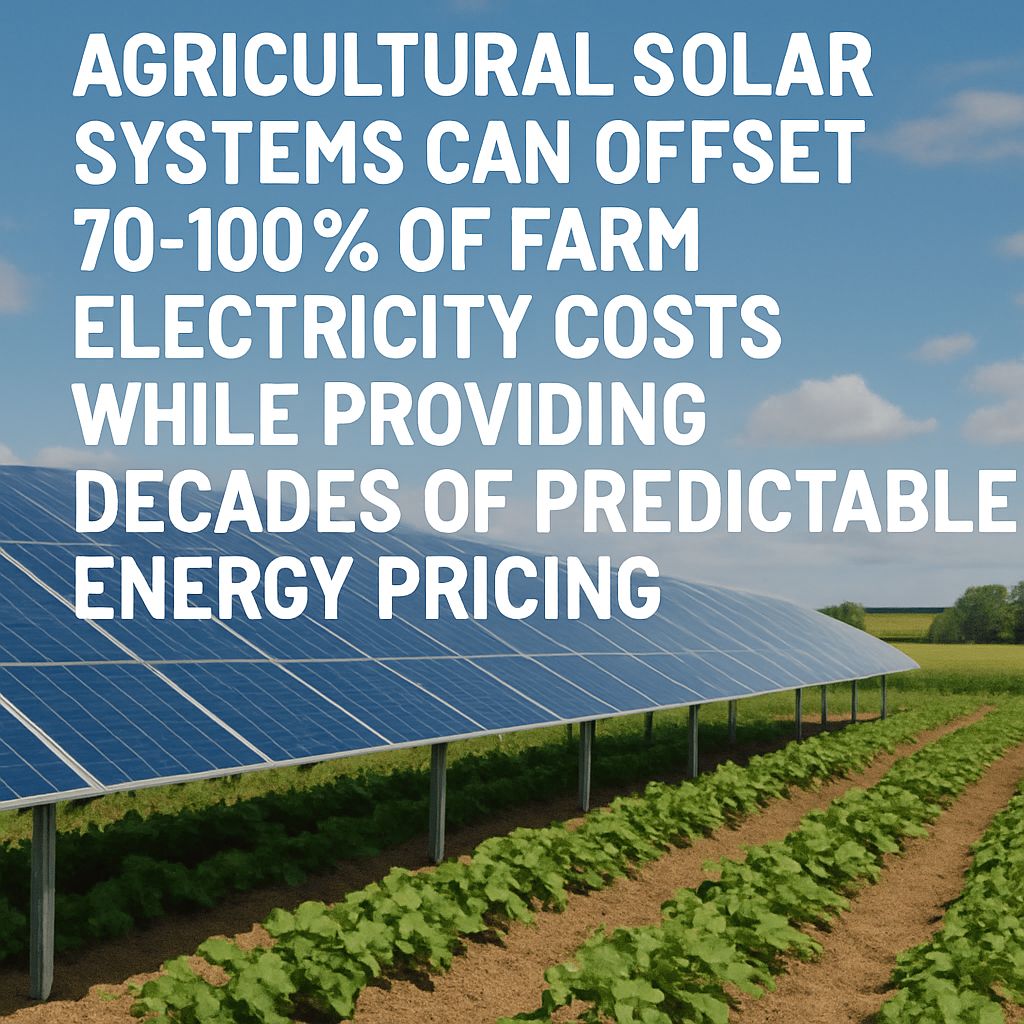
- Agricultural solar systems can offset 70-100% of farm electricity costs while providing decades of predictable energy pricing
- USDA REAP grants cover up to 25% of solar system costs, with additional tax advantages through accelerated depreciation
- Strategic panel placement including tracking systems can increase energy yields by 25-45% compared to fixed installations
- Agrivoltaic systems allow for dual land use, generating electricity while maintaining crop production underneath panels
- Modern solar panels achieve 20-22% efficiency, converting more sunlight into usable power than ever before
Farmers across America are discovering that their fields can harvest more than crops. With electricity rates climbing 5-7% annually in many rural areas, the sun’s free energy has become agriculture’s newest cash crop. Through efficient solar technology, farms are transforming abundant sunlight into reliable power while slashing operating costs.
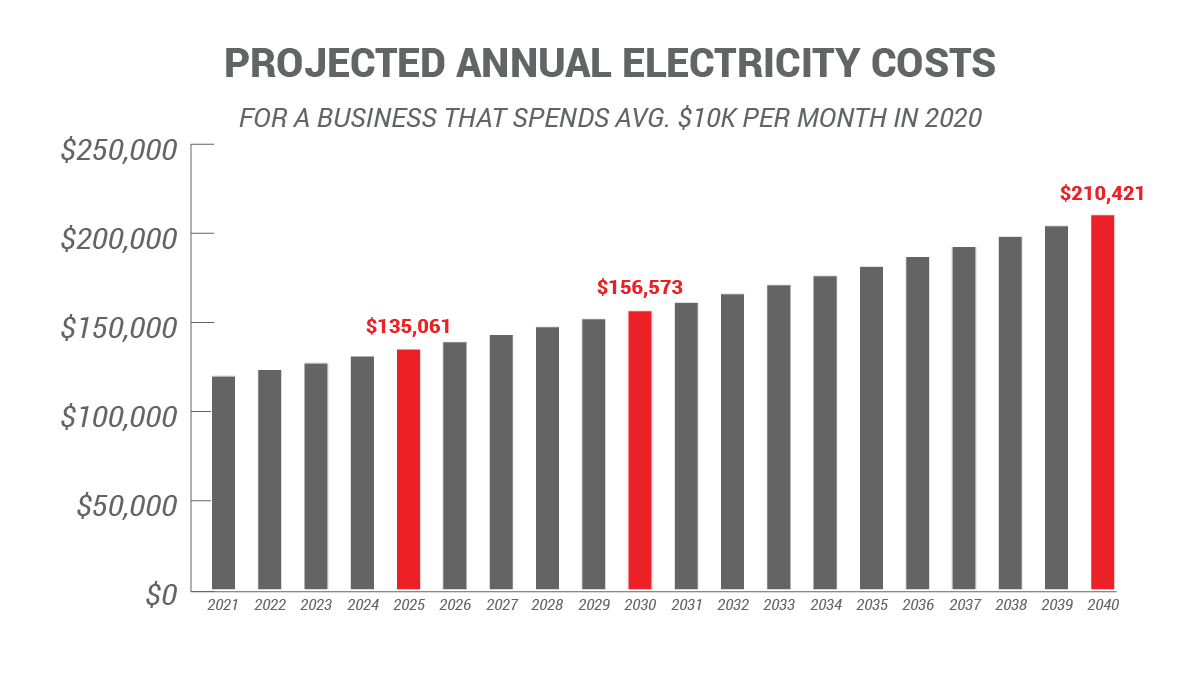
“Future Agricultural Energy Costs …” from revel-energy.com and used with no modifications.
Why Farm Energy Costs Are Skyrocketing (And What It Means For You)
The agricultural sector faces a perfect storm of energy challenges. While production demands increase to feed a growing population, the infrastructure supporting rural power grids continues aging. This combination leaves farmers especially vulnerable to the volatile energy market.
The Hidden Impact of Rising Electricity Rates on Farm Operations
Electricity often represents 7-15% of total operating expenses for modern farms, with irrigation alone consuming thousands of kilowatt-hours monthly. These energy costs directly impact food prices, farm profitability, and long-term agricultural sustainability. Many operations face steep demand charges during peak usage periods, particularly during summer irrigation when the grid is already strained.
For dairy operations, consistent power is non-negotiable. Milking systems, refrigeration units, and ventilation all require reliable electricity 24/7. Even brief outages can compromise milk quality, animal welfare, and ultimately, farm income. This constant demand for power creates an ideal scenario for on-site generation through solar installations.
When analyzing your farm’s electric bills, look beyond the basic rate. Demand charges, time-of-use pricing, and seasonal adjustments often hide the true cost of farm power. Many agricultural operations discover they’re paying premium rates for electricity used during peak daylight hours—precisely when solar generation performs at its maximum.
Weather-Related Grid Failures: A Growing Threat to Agricultural Stability
Extreme weather events have increased 400% since the 1980s, putting traditional power infrastructure under unprecedented stress. Rural farms often sit at the end of utility lines, meaning they’re typically the last to have power restored after outages. These interruptions can prove catastrophic during critical seasons.
- Irrigation pumps failing during drought conditions
- Ventilation systems shutting down in livestock facilities
- Cold storage units losing power during harvest
- Processing equipment downtime causing production backlogs
- Data and monitoring systems going offline
How Solar Technology Transforms Sunlight into Farm Power
The beauty of solar power lies in its elegant simplicity. With no moving parts in most systems, solar offers remarkably reliable power generation with minimal maintenance requirements—a perfect match for busy agricultural operations where equipment reliability is paramount.
The Photovoltaic Effect: Simple Science Behind Solar Energy
Solar panels work through the photovoltaic effect, where specially designed semiconductor materials (primarily silicon) release electrons when struck by sunlight. This process converts solar radiation directly into direct current (DC) electricity. An inverter then transforms this DC power into alternating current (AC) that can power farm equipment, buildings, and can be fed back into the grid.
“We’ve been farming this land for three generations, but nothing has transformed our operation like solar power. Our irrigation system now runs nearly free all summer, and we’re insulated from the rate increases hitting our neighbors. The panels will be fully paid off in about 6 years, then it’s all profit for the next 20+ years.” – James Peterson, 5th-generation farmer, Iowa
The efficiency of this conversion process has improved dramatically in recent years. Early solar cells converted just 6-8% of available sunlight into electricity. Today’s agricultural-grade panels achieve 20-22% efficiency, with premium models pushing even higher. This improved performance means fewer panels are needed to power essential farm operations.
Modern Panel Efficiency: More Power from Less Space
Agricultural solar installations benefit tremendously from advancing panel technology. Modern bifacial panels capture direct sunlight on the front face while also absorbing reflected light from the ground on their rear surface, increasing total energy yield by 5-30% depending on installation conditions. These efficiency gains mean farms can generate more power with fewer panels, reducing both initial investment and land use requirements.
Monocrystalline silicon panels, which offer the highest efficiency ratings commercially available, have become increasingly affordable for agricultural applications. Their sleek black appearance and compact footprint make them ideal for installations where space efficiency matters. For larger ground-mounted systems where space is less constrained, polycrystalline panels offer slightly lower efficiency but at a more budget-friendly price point, maximizing return on investment.

“Best Solar Panel Placement for Farm …” from growingsolarmist.com and used with no modifications.
Strategic Solar Panel Placement for Maximum Farm Yields
Where you place your solar panels dramatically impacts system performance. Unlike residential installations, farms often have multiple viable location options, each with distinct advantages. The ideal configuration balances energy production with continued agricultural operations. To explore more, consider the benefits of solar panels for farming and how they can enhance your farm’s efficiency.
Ground-Mounted vs. Roof Systems: Which Works Best for Farms?
Roof-mounted systems utilize existing structures without consuming additional land, making them ideal for dairy barns, equipment sheds, and storage facilities. These elevated installations naturally avoid shadowing issues and keep panels safely above potential damage from equipment or livestock. Installation costs also tend to be lower than ground-mounted alternatives, provided the existing roof structure can support the additional weight.
Ground-mounted systems offer superior flexibility in orientation, angle, and accessibility for maintenance. They can be optimally positioned for maximum solar exposure regardless of existing building orientations. Many farms install these systems on marginal lands unsuitable for cultivation, converting previously unproductive acreage into energy-generating assets. The elevated design of most ground mounts also allows for continued land use underneath for grazing smaller livestock like sheep, which naturally maintain vegetation without requiring mechanical mowing.
Tracking Systems: 25-45% More Energy from the Same Panels
Single-axis tracking systems, which rotate panels east to west following the sun’s daily path, increase energy production by 25-35% compared to fixed installations. Dual-axis trackers, which also adjust for seasonal sun height variations, can boost yields by 35-45% but come with higher upfront and maintenance costs. For agricultural operations with high daytime energy demands, these tracking systems often deliver compelling financial returns despite their higher initial investment. Discover the top benefits of solar panels for farming to maximize energy efficiency.
|
Mounting System |
Energy Yield |
Land Use Compatibility |
Maintenance Requirements |
Initial Cost |
|---|---|---|---|---|
|
Fixed Roof Mount |
Baseline |
No additional land use |
Low |
$$$ |
|
Fixed Ground Mount |
100-110% of roof mount |
Limited grazing/cultivation |
Low |
$$$ |
|
Single-Axis Tracker |
125-135% of fixed mount |
Limited grazing only |
Medium |
$$$$ |
|
Dual-Axis Tracker |
135-145% of fixed mount |
Limited grazing only |
High |
$$$$$ |
|
Elevated Agrivoltaics |
95-105% of fixed mount |
Full cultivation possible |
Medium |
$$$$ |
Agrivoltaics: Grow Crops and Generate Power on the Same Land
Agrivoltaic systems represent the cutting edge of agricultural solar integration, designing installations specifically to allow continued farming beneath the panels. These systems typically feature higher clearance (8-12 feet), wider spacing between panel rows, and sometimes semi-transparent panels. Research shows certain crops actually perform better under the partial shade of solar panels, particularly in hot, dry regions where reduced evaporation and solar stress improve yields. Lettuce, spinach, broccoli, and various berries have shown promising results in agrivoltaic trials, while simultaneously generating substantial electricity.
Financial Benefits That Make Farm Solar Worth It
The economics of solar power have fundamentally shifted over the past decade. What was once primarily an environmental choice has become a compelling financial decision for farm operations of all sizes. System costs have declined over 70% since 2010, while efficiency and reliability continue improving.
Most agricultural solar installations achieve full payback within 5-8 years, then continue producing essentially free electricity for 20+ additional years. For operations planning long-term sustainability, few investments offer comparable returns with such low risk.
“My grandfather would have called me crazy for putting ‘those fancy panels’ on the farm. But when I showed him we’re saving $34,000 annually on electricity with a system that’ll pay for itself in under 7 years, even he had to admit it makes perfect business sense.” – Maria Gonzalez, Organic Vegetable Farmer, California
The financial advantages extend beyond direct electricity savings. Solar installations increase property values without raising property taxes in many jurisdictions. They also provide a hedge against future utility rate increases, essentially locking in electricity costs for decades.
When comparing financing options, many farmers discover that monthly loan payments for solar systems are actually less than their previous electric bills, creating positive cash flow from day one. This immediate financial benefit removes one of the biggest historical barriers to renewable energy adoption.
USDA REAP Grants Cover Up to 25% of System Costs
The USDA’s Rural Energy for America Program (REAP) offers game-changing financial support specifically designed for agricultural operations. These grants cover up to 25% of total system costs, dramatically improving project economics. The application process requires detailed energy audits and system designs but can deliver hundreds of thousands of dollars in non-repayable funding for larger operations.
Success rates for REAP applications increase dramatically when farmers partner with solar developers experienced in agricultural projects. These specialists understand both the technical requirements and the specific documentation needed to secure maximum funding. Many reputable installers include REAP application assistance as part of their service package, removing this potential complexity from farmers’ already full plates.
Tax Advantages: Accelerated Depreciation and Investment Credits
The federal Investment Tax Credit (ITC) currently allows farm businesses to deduct 30% of solar system costs directly from their tax liability. Unlike tax deductions that merely reduce taxable income, this credit represents a dollar-for-dollar reduction in taxes owed. For profitable operations with significant tax exposure, this incentive alone can recover nearly a third of project costs immediately.
Accelerated depreciation through Modified Accelerated Cost Recovery System (MACRS) enables agricultural businesses to depreciate the remaining system value (after applying the ITC) over just 5 years instead of the system’s 25-30 year functional lifespan. This front-loaded tax benefit improves cash flow during the crucial early years of system operation when farmers are recouping their initial investment.
Payback Periods: When Your System Starts Making Money
When all incentives are properly applied, agricultural solar systems typically reach payback in 5-8 years, depending on local electricity rates and available sunlight. This represents an annual return on investment of 12-20% – significantly outperforming many traditional farm investments. The remaining 20+ years of system life then generate essentially free electricity, creating decades of positive financial impact.
Smart sizing ensures your system aligns perfectly with your operation’s energy profile. Undersized systems leave money on the table by failing to offset expensive utility power. Oversized systems can face diminishing returns in areas without favorable net metering policies. Experienced agricultural solar designers analyze 12-24 months of electricity usage data to recommend optimal system capacities that maximize financial performance for your specific operation.
Net Metering: Selling Excess Power Back to the Grid
Net metering policies allow farms to receive credit for excess electricity sent back to the grid when production exceeds on-site needs. These policies effectively turn the utility grid into a giant battery, banking overproduction during sunny periods for use during nighttime or cloudy days. While specific net metering terms vary by state and utility, favorable policies dramatically improve solar economics by ensuring every kilowatt-hour generated creates value.
- Full retail value net metering provides 100% credit for each kWh exported
- Avoided cost policies pay wholesale rates (typically 30-50% of retail value)
- Time-of-use net metering can provide premium rates during peak demand periods
- Annual true-up policies allow seasonal operations to bank credits for months
- Feed-in tariffs guarantee fixed payments for solar production over extended periods
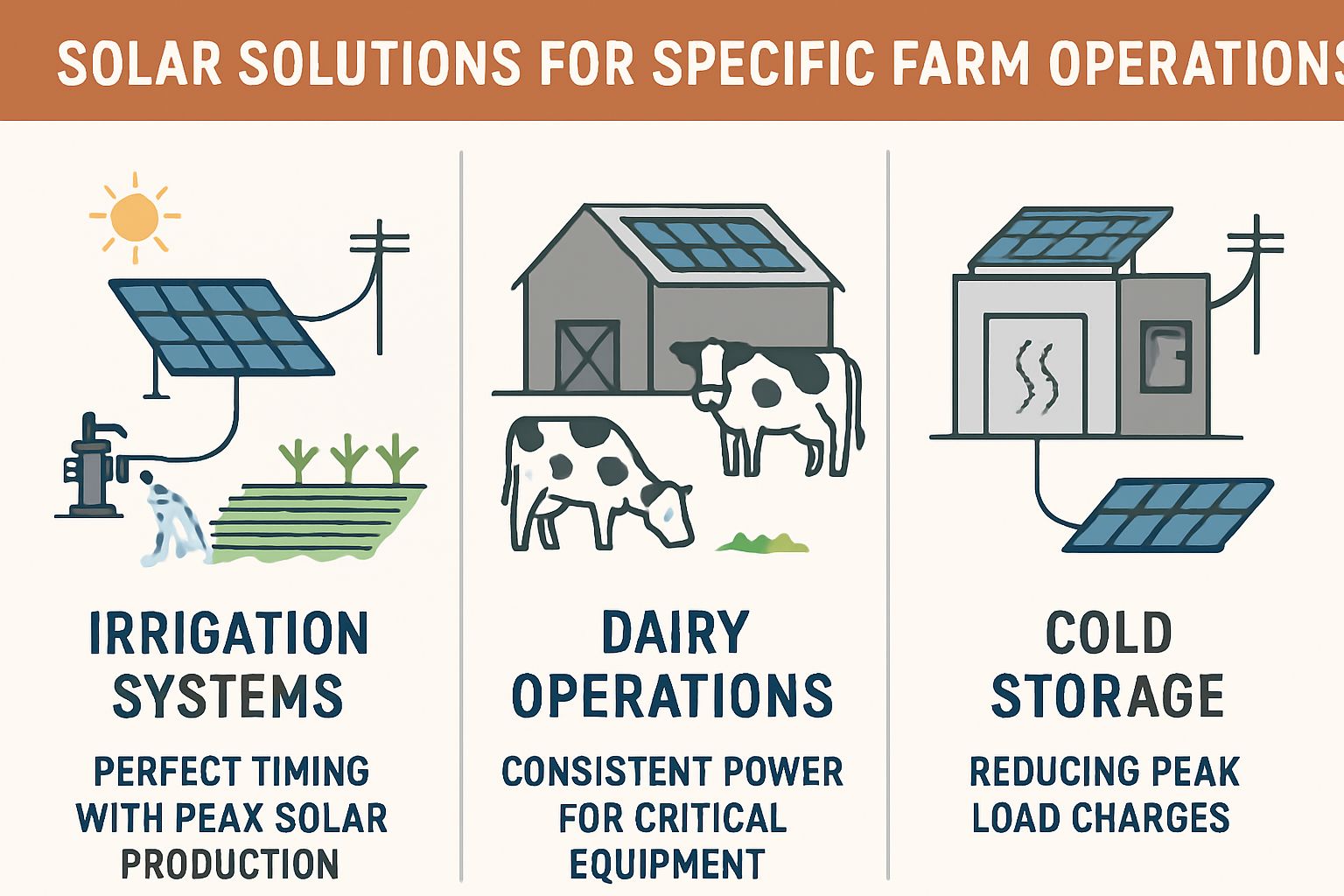
Solar Solutions for Specific Farm Operations
Different agricultural enterprises have unique energy profiles that influence optimal solar configurations. Understanding these patterns helps maximize return on investment for each farm type. To learn more about the benefits of solar panels, you can explore how they run farm operations efficiently.
Irrigation Systems: Perfect Timing with Peak Solar Production
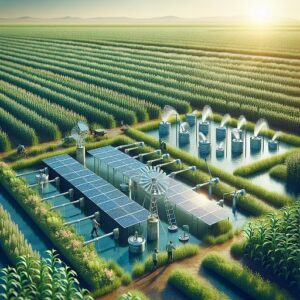
Irrigation represents the ideal solar application for many farms. Pumping demands typically peak during summer months when solar production is highest, creating natural alignment between generation and consumption. Direct-coupled solar irrigation systems can operate pumps directly from solar panels without batteries, further reducing system costs. Many farmers find they can eliminate 70-90% of irrigation electricity costs through strategic solar deployment.
Variable frequency drives (VFDs) paired with solar arrays allow irrigation pumps to operate efficiently even during partially cloudy conditions when solar output fluctuates. This technology maximizes daily pumping hours by enabling systems to run at reduced capacity rather than shutting down completely during brief cloud cover, ensuring consistent water delivery while maximizing solar utilization.
Dairy Operations: Consistent Power for Critical Equipment
Dairy farms face unique challenges with their constant, year-round electricity demand. Milking systems, milk cooling, ventilation, and lighting create baseline power needs that never cease. Solar installations for dairy operations typically incorporate battery backup for critical systems while using net metering to balance seasonal variations in production. The predictable daily rhythm of dairy operations makes these farms excellent candidates for time-of-use optimization, scheduling energy-intensive activities when solar production peaks.
Thermal applications represent an often-overlooked opportunity for dairy operations. Solar thermal systems can provide hot water for cleaning and sanitization at significantly lower cost than photovoltaic systems generating electricity to power electric water heaters. Many dairy farms implement hybrid approaches, using solar thermal for water heating while solar PV powers motors, compressors, and other equipment.
Cold Storage: Reducing Peak Load Charges
Refrigerated storage facilities often face punishing demand charges based on their highest 15-minute power consumption each month. Solar arrays coupled with intelligent load management can substantially reduce these peaks by supplying power precisely when cooling systems face their greatest demands. For operations with seasonal cold storage needs coinciding with harvest periods, solar power’s production curve aligns naturally with cooling demand.
Phase change materials and thermal mass strategies can further enhance solar-powered cold storage by shifting cooling loads to periods of peak solar production. These systems essentially “store cold” rather than electricity, using less expensive materials than battery systems while achieving similar load-shifting benefits. For crops requiring precise temperature control, these integrated approaches ensure product quality while minimizing energy costs.
Battery Storage: Keep Critical Systems Running During Outages
Grid reliability challenges are pushing more agricultural operations toward solar-plus-storage solutions. While adding batteries increases initial system costs, the operational security they provide proves invaluable during increasingly common power outages. Modern battery systems can seamlessly transition from grid-connected to island mode in milliseconds, keeping critical systems running without interruption when utility power fails.
Beyond emergency backup, batteries enable strategic load shifting to maximize solar self-consumption and minimize expensive on-peak utility purchases. They also provide power quality improvements by smoothing voltage fluctuations that can damage sensitive equipment – a growing concern in rural areas with aging grid infrastructure.
- Backup for critical systems during grid outages
- Demand charge reduction by limiting peak draws
- Increased self-consumption of solar generation
- Participation in utility demand response programs
- Power quality improvement for sensitive equipment protection
While battery costs have fallen significantly, they still represent a substantial investment. Most agricultural operations benefit from targeted approaches that backup only essential systems rather than attempting to power everything during outages. This selective strategy dramatically reduces battery capacity requirements while still providing operational security for critical functions.
How Much Storage You Actually Need
Determining appropriate battery capacity requires careful analysis of both critical loads and expected outage durations. Most farms find that 4-12 hours of backup for essential systems strikes the optimal balance between resilience and cost-effectiveness. This typically means protecting irrigation controls, refrigeration, ventilation, and security systems while leaving non-essential loads unpowered during outages.
Battery sizing should incorporate some growth margin while avoiding excessive overcapacity. An experienced agricultural solar designer will analyze your specific operation to recommend appropriate storage capacity based on local grid reliability history, critical system requirements, and budget constraints. This tailored approach ensures your investment delivers maximum value without unnecessary expenditure on rarely-used capacity.
Battery Technologies: Which Options Last Longest
Lithium iron phosphate (LiFePO4) batteries have emerged as the preferred chemistry for agricultural applications due to their exceptional safety profile, 10+ year lifespan, and ability to deliver 6,000+ cycles at 80% depth of discharge. Their higher upfront cost compared to lead-acid alternatives is offset by superior longevity, minimal maintenance requirements, and better performance across temperature extremes common in agricultural settings.

“Solar Power Is Transforming Modern …” from growingsolarmist.com and used with no modifications.
Future-Proof Your Farm with Solar Power
The transition to renewable energy represents more than just immediate cost savings – it positions agricultural operations for long-term success in a rapidly changing energy landscape. As traditional energy costs continue rising and grid reliability challenges increase, farms with robust solar infrastructure gain significant competitive advantages through predictable energy costs, operational resilience, and reduced environmental impact. Whether you’re planning generational succession or considering property value enhancement, solar installations provide decades of financial and operational benefits that will serve your farm well into the future. When you’re ready to explore how solar can transform your agricultural operation, Growing Solarmist can help you navigate available incentives and design a system optimized for your specific needs.
Frequently Asked Questions
Below are answers to the most common questions farmers ask when considering solar investments. These insights address both technical concerns and practical implementation challenges specific to agricultural applications.
For additional information tailored to your specific operation, consulting with an agricultural solar specialist can provide valuable guidance through the evaluation and implementation process.
How long do agricultural solar panel systems typically last?
Modern agricultural-grade solar panels carry 25-year manufacturer’s warranties guaranteeing at least 80% of original power output after 25 years of operation. In practice, many systems continue producing useful electricity for 30-35 years with minimal degradation. The aluminum frames and tempered glass construction withstand decades of environmental exposure, including hail, high winds, and temperature extremes common in agricultural settings.
Inverters typically carry 10-15 year warranties, making them the most likely component to require replacement during the system’s lifetime. Many farmers plan for one inverter replacement during their solar system’s operational life. Mounting hardware, wiring, and connections are engineered for multi-decade deployment with minimal maintenance when properly installed to agricultural specifications.
Can I still farm underneath solar panels?
Absolutely – agrivoltaic systems are specifically designed to allow continued agricultural production beneath and between solar panels. Research demonstrates that certain crops actually benefit from the partial shading panels provide, especially in hot, dry regions where reduced evaporation and solar stress improve yields. Leafy greens, root vegetables, berries, and many other crops have shown successful production in agrivoltaic settings, while simultaneously generating substantial electricity from the same land area.
For livestock operations, solar arrays can provide valuable shade and shelter for animals while producing power. Sheep grazing under panels has become particularly popular, as the animals naturally maintain vegetation without risking damage to system components. This dual-use approach eliminates mowing expenses while creating additional livestock shelter benefits, effectively generating both food and energy from the same acreage.
What maintenance do farm solar systems require?
Agricultural solar systems require minimal maintenance compared to most farm equipment. Quarterly visual inspections and annual professional system checks are typically sufficient to ensure optimal performance. Panel cleaning needs vary by location – dusty or pollen-heavy environments may benefit from occasional washing, while areas with regular rainfall often self-clean adequately. Ground-mounted systems require standard vegetation management, though many farms incorporate grazing animals to naturally maintain these areas.
Will solar panels work during winter or cloudy days?
Yes, solar panels continue generating electricity during winter and on cloudy days, though at reduced output compared to clear summer conditions. Modern panels generate approximately 10-25% of their rated capacity during heavy overcast, capturing diffuse light that penetrates cloud cover. Snow typically slides off tilted panels once accumulation reaches sufficient weight, though occasional manual clearing may maximize winter production in heavy snow regions.
Winter production benefits from several compensating factors that partially offset shorter days and lower sun angles. Panels operate more efficiently in cooler temperatures, increasing output per unit of sunlight. Snow reflection can actually boost performance through the “albedo effect,” where surrounding snowpack reflects additional light onto panels. Many agricultural operations also experience reduced electricity demand during winter months, aligning well with seasonal solar production patterns.
Solar production variations are predictable and follow seasonal patterns that can be accurately modeled during system design. Properly sized systems account for these natural fluctuations, ensuring reliable performance throughout the year. Net metering programs enable farms to bank excess summer production as credits against winter consumption, effectively using the grid as seasonal storage.
For operations requiring consistent year-round power regardless of weather, hybrid systems incorporating multiple generation sources provide the highest reliability. Solar-plus-storage configurations with generator backup ensure continuous power availability even during extended low-production periods, while still delivering substantial renewable energy benefits during typical conditions.
“We installed our solar system right before three weeks of cloudy weather, and I was worried we’d made a mistake. But even on the gloomiest days, we were still generating 15-20% of our normal output – enough to run critical systems. Once clear weather returned, we quickly made up the difference. Over the full year, production has exceeded the installer’s estimates by almost 7%.” – Michael Wilson, Poultry Farmer, Georgia
How do I find qualified solar installers who understand agricultural needs?
The best agricultural solar installers combine extensive renewable energy expertise with genuine understanding of farm operations. Look for companies with demonstrated experience in agricultural installations specifically, as these projects differ significantly from residential or commercial systems. Ask potential installers for agricultural references and arrange conversations with farmers operating similar systems. Qualified installers should readily provide detailed information about previous agricultural projects, including system performance data and customer testimonials.
Industry certifications provide additional verification of installer qualifications. North American Board of Certified Energy Practitioners (NABCEP) certification represents the gold standard for solar professionals. State agricultural extension offices often maintain lists of solar contractors with farm experience, providing valuable pre-screened options. Many agricultural equipment dealers have also developed partnerships with solar installers experienced in farm applications, creating natural referral networks within the agricultural community.
When evaluating proposals, prioritize comprehensive designs that address your specific operational needs rather than simply focusing on lowest initial cost. The most valuable agricultural solar systems integrate seamlessly with existing farm operations while providing decades of reliable service and maximizing available incentives. With proper design and installation from qualified professionals who understand agricultural applications, your solar investment will deliver exceptional returns for generations to come.

Leave a Reply