

“Solar Panels Benefits for Farmers …” from growingsolarmist.com and used with no modifications.
Key Takeaways
- Solar panels can reduce farm energy costs by 50-70%, creating significant operational savings for agricultural businesses
- Federal tax credits cover 30% of solar installation costs, while USDA REAP grants can fund up to 50% of eligible project expenses
- Different farm types (dairy, poultry, crop, and livestock) can customize solar solutions to meet their specific operational needs
- Solar investments typically reach payback within 3-7 years depending on farm size, with systems lasting 25-30 years
- Beyond cost savings, solar panels provide energy independence during grid outages and reduce a farm’s carbon footprint
The rising cost of energy is squeezing farm profits like never before. With utility rates climbing 3-5% annually, many agricultural operations now spend $10,000-$50,000 yearly just to keep the lights on and equipment running. Solar power offers a proven solution that’s transforming farm economics across America. Sustainable energy solutions are becoming essential for modern farmers looking to maintain profitability while reducing environmental impact.
Today’s farmers face unprecedented energy challenges that directly impact their bottom line. From irrigation pumps that run constantly during growing seasons to climate-controlled barns requiring year-round power, agriculture demands reliable, affordable electricity. The volatility of traditional energy markets means budgeting becomes increasingly difficult, with unexpected rate hikes potentially devastating profit margins.
Farm Energy Costs Are Draining Your Profits
The modern farm operates on electricity – lots of it. Dairy operations run milking equipment multiple times daily. Poultry houses maintain precise temperature and lighting schedules. Crop farms power irrigation systems, grain dryers, and processing equipment. This constant demand creates substantial energy bills that eat away at already thin agricultural profit margins.
Consider this: energy costs typically represent 7-15% of a farm’s total operating expenses. For a mid-sized operation, that can translate to $20,000-$30,000 annually – funds that could otherwise go toward equipment upgrades, land improvements, or simply staying afloat during challenging market conditions. With utility rates increasing faster than agricultural commodity prices, this financial pressure continues to intensify.
Weather extremes further complicate the energy equation. Drought conditions demand more irrigation pumping, while severe heat and cold require additional climate control for livestock facilities. These fluctuating energy needs create budget uncertainty that makes financial planning exceptionally difficult for farm managers and owners. To address these challenges, some farms are exploring off-grid solar panels as a sustainable energy solution.
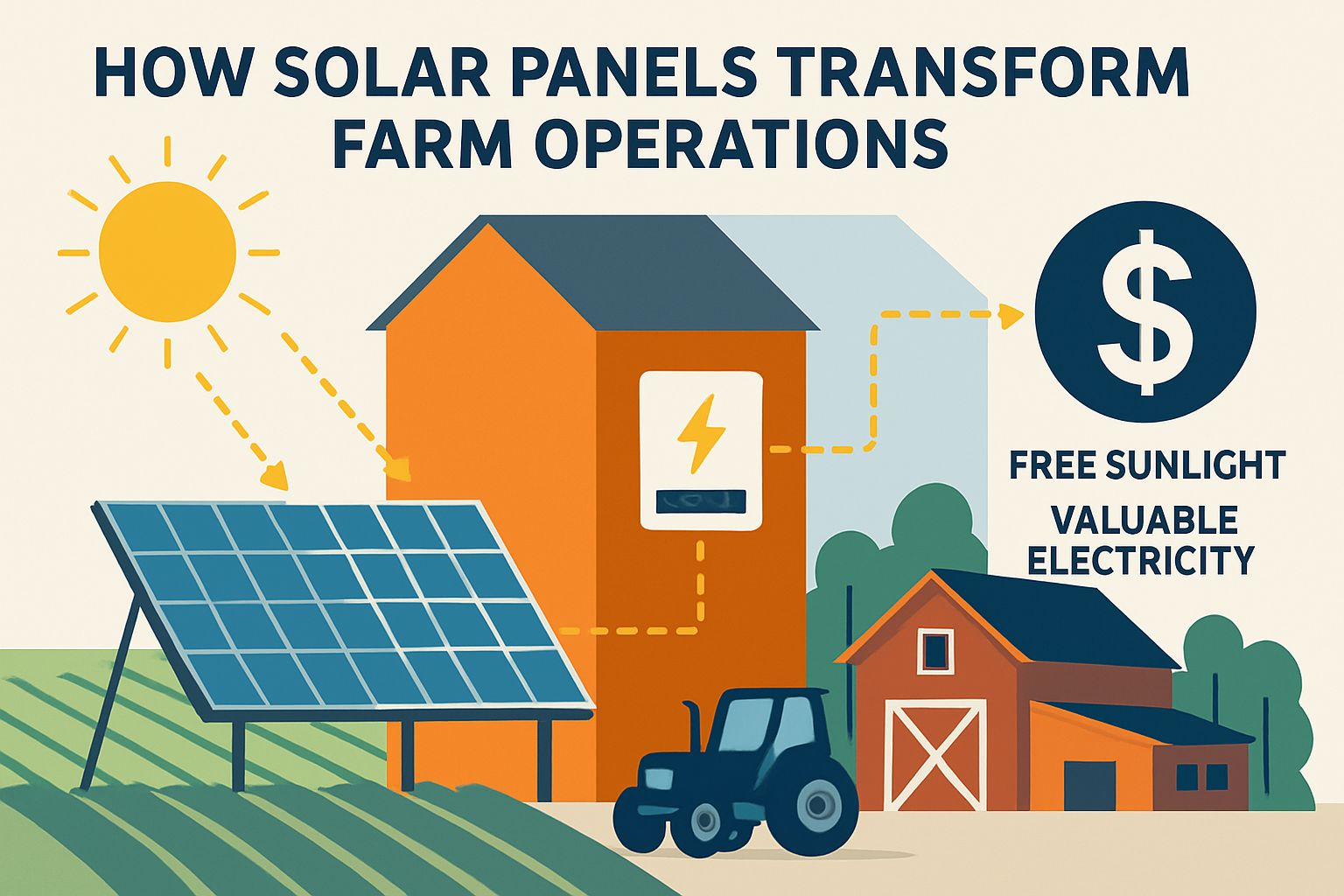
How Solar Panels Transform Farm Operations
Solar energy systems fundamentally change farm energy economics by converting free sunlight into valuable electricity. Modern agricultural solar installations typically include photovoltaic panels mounted on available roof space or ground-mounted arrays strategically positioned to maximize sun exposure while minimizing interference with farm operations.
Most farm solar systems connect to the electric grid through net metering arrangements, allowing excess power generated during sunny periods to flow back to the utility grid in exchange for credits. These credits offset electricity drawn during nighttime or cloudy conditions, creating a balanced energy equation that significantly reduces or eliminates traditional utility bills.
Slashing Monthly Energy Bills by 50-70%
The most immediate benefit farmers notice after solar installation is dramatically reduced electric bills. Properly sized systems typically cut monthly energy costs by 50-70%, creating substantial operational savings. For a farm previously spending $2,500 monthly on electricity, this represents $15,000-$21,000 in annual savings – capital that can be reinvested elsewhere in the agricultural business. For further insights on optimizing your solar setup, check out this guide on best solar panel placement.
Solar energy production aligns well with many agricultural needs, particularly during summer months when longer daylight hours generate maximum solar output precisely when cooling, irrigation, and ventilation demands peak. This natural synchronization between production and consumption enhances the value proposition for farm solar installations.
Case Study: Williams Family Dairy
The Williams’ 150-cow operation in Wisconsin installed a 75kW solar array in 2020. Their annual electricity costs dropped from $32,400 to $9,800 – a 70% reduction. With incentives covering 45% of installation costs, their system will reach complete payback in just 4.2 years.
Protection Against Rising Utility Rates
While immediate cost reductions are compelling, the long-term value of farm solar systems becomes even more significant when considering future utility rate increases. By locking in energy costs through solar generation, farmers gain predictability in a crucial operational expense category. For more insights on best solar options for farms, explore this detailed guide.
Historical data shows electricity rates rising approximately 3-5% annually – a trend expected to continue as utilities invest in aging infrastructure and transition to cleaner generation sources. A solar installation effectively pre-purchases decades of electricity at today’s prices, creating a powerful hedge against these inevitable increases. For those interested in off-grid solar panels, this can be an excellent way to stabilize costs over the long term.
Energy Independence During Grid Outages
For farms that can’t afford downtime, solar systems with battery backup provide crucial resilience during power outages. Dairy operations can continue milking schedules, ventilation systems keep running in poultry houses, and irrigation pumps maintain water delivery regardless of grid conditions. This operational security proves invaluable during severe weather events or regional power disruptions.
Many farmers report that this energy independence provides peace of mind that far exceeds the monetary value of the system. When regional storms or equipment failures knock out power to neighboring properties, solar-equipped farms maintain essential functions without missing a beat. For livestock operations in particular, where animal welfare depends on consistent environmental controls, this reliability can prevent significant losses.
Reducing Carbon Footprint While Boosting Productivity
Solar energy dramatically reduces the environmental impact of farm operations while simultaneously improving production economics. The average 50kW farm solar system offsets approximately 70 tons of carbon dioxide annually – equivalent to removing 15 cars from the road or planting 1,200 trees. This environmental benefit enhances sustainability credentials that increasingly matter to consumers, distributors, and regulators.
Many farmers find that their solar investment complements other sustainability initiatives like water conservation, soil health programs, and precision agriculture. Together, these approaches create a holistic sustainability profile that can open doors to premium markets and specialized certification programs that reward environmental stewardship with higher commodity prices.
Perfect Solar Solutions for Different Farm Types
Agricultural solar solutions aren’t one-size-fits-all. Each farming operation has unique energy needs, physical layouts, and financial considerations that shape the ideal solar configuration. Working with agricultural solar specialists who understand farm operations ensures systems that maximize both energy production and operational compatibility.
Dairy Farms: Powering Milk Production Equipment
Dairy operations present ideal conditions for solar integration due to their consistent, year-round energy demands. Vacuum pumps, milk cooling systems, water heaters, and automated feeding equipment create predictable electrical loads that solar systems can reliably offset. The typical dairy farm uses 800-1,200 kWh per cow annually, creating substantial savings opportunities through solar generation.
Many dairy facilities also offer excellent roof space on barns, milking parlors, and equipment sheds – providing ready-made mounting locations that don’t consume valuable production land. The regular cash flow from milk sales aligns perfectly with the consistent returns from solar investments, creating predictable financial benefits.
Poultry Operations: Climate Control and Lighting Systems
Poultry facilities demand precise environmental control with substantial energy requirements for ventilation, heating, cooling, and lighting systems. Modern poultry houses often consume 25,000-50,000 kWh annually per building, with electricity representing 40-50% of production costs beyond feed expenses. Solar installations can dramatically reduce these operating costs while maintaining critical environmental conditions.
The long, unobstructed roofs typical of poultry houses provide ideal mounting surfaces for solar arrays. Many producers integrate solar systems during facility construction or renovation, incorporating the investment into broader financing packages. The combination of energy-efficient equipment upgrades with solar generation creates powerful synergies that maximize return on investment.
Crop Production: Irrigation Pumps and Grain Dryers
For crop producers, irrigation systems and grain dryers represent the most energy-intensive operations. Large irrigation pumps can consume 25-30 kWh per hour of operation, while commercial grain dryers might use 3,500-5,000 kWh to process a single batch. These seasonal but intensive energy needs align well with peak solar production periods during summer and harvest seasons.
Ground-mounted solar arrays can be strategically positioned to avoid interference with equipment movement while maximizing production. Some innovative farmers are exploring agrivoltaics – the practice of growing shade-tolerant crops beneath elevated solar panels, effectively doubling land productivity.
Livestock Facilities: Water Systems and Electric Fencing
Livestock operations benefit from solar power for water pumping, electric fencing, security lighting, and outbuilding power needs. These distributed energy requirements are often ideal for smaller, targeted solar solutions rather than single large arrays. Solar-powered water pumping systems prove particularly valuable for remote pastures and rotational grazing operations where utility connections would be prohibitively expensive.
The flexibility of modern solar equipment allows livestock producers to develop customized solutions that match their specific operational patterns. From solar-direct pumping systems that operate without batteries to comprehensive power systems for remote handling facilities, these targeted applications often provide the fastest payback periods among agricultural solar investments.
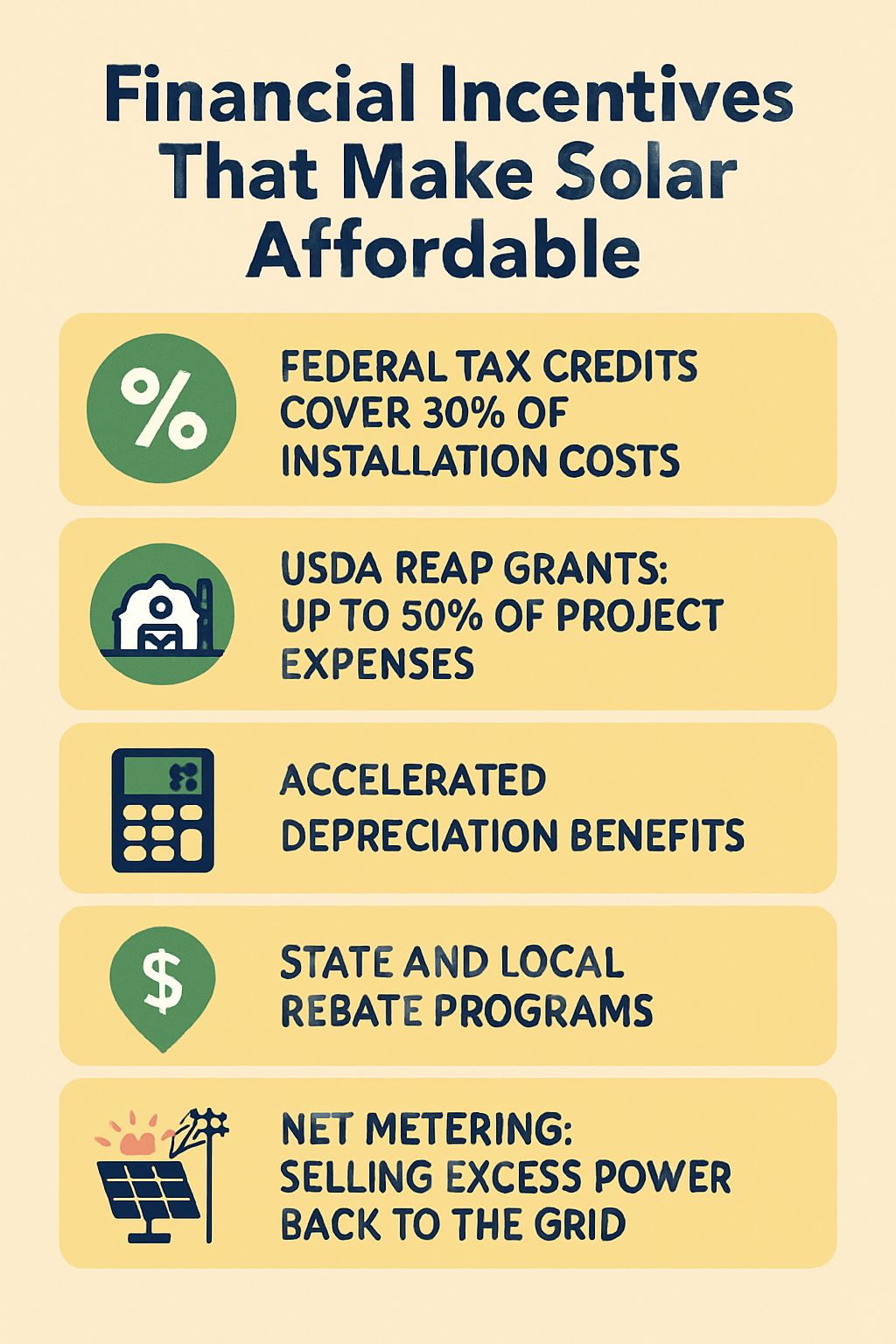
Financial Incentives That Make Solar Affordable
The economics of farm solar have improved dramatically through various incentive programs specifically designed for agricultural producers. When combined, these financial benefits can reduce the effective cost of solar installations by 50-75%, dramatically accelerating return on investment timelines.
Federal Tax Credits Cover 30% of Installation Costs
The federal Investment Tax Credit (ITC) currently provides a dollar-for-dollar reduction in tax liability equal to 30% of solar system costs. This substantial incentive directly reduces the effective price of farm solar installations, often representing $20,000-$50,000 in tax savings for typical agricultural systems. The credit applies to all system components, including panels, inverters, mounting hardware, and installation labor.
For farms organized as pass-through entities like partnerships or S-corporations, these credits flow directly to owners’ personal tax returns. Operations structured as C-corporations can apply the credits against corporate tax liability. Importantly, unused credits can carry forward for up to 20 years, ensuring farms capture the full benefit even in low-profit years.
- Credit covers 30% of total system costs through 2032
- No maximum credit amount – applies to systems of any size
- Can be combined with other incentives and depreciation benefits
- Available for both roof-mounted and ground-mounted systems
- Applies to battery storage when installed with solar panels
To maximize this benefit, farms should consult with agricultural tax specialists familiar with renewable energy incentives. Proper tax planning ensures operations capture the full value of available credits while maintaining compliance with IRS requirements. Many solar providers partner with agricultural financial advisors to help farms navigate these considerations.
The stability of this incentive through 2032 provides valuable planning certainty for farm operations considering phased solar implementations over multiple years. Each installation qualifies for the credit in the year it’s placed in service, allowing strategic deployment that matches cash flow availability.
USDA REAP Grants: Up to 50% of Project Expenses
The USDA’s Rural Energy for America Program (REAP) offers agricultural producers both grants and loan guarantees specifically for renewable energy projects. Grants can cover up to 25% of total eligible project costs, while guaranteed loans can finance up to 75% of project expenses. When combined with federal tax credits, these programs can reduce out-of-pocket costs to a fraction of the total system price. For those interested in maximizing efficiency, understanding the factors affecting solar panels efficiency is crucial.
REAP grants are competitive, with scoring criteria favoring projects that demonstrate energy efficiency improvements, innovative technology applications, and clear economic benefits. Farms in rural areas receive priority consideration, making this program particularly valuable for operations outside metropolitan regions. Application windows typically open twice yearly, with technical assistance available through local USDA Rural Development offices.
Accelerated Depreciation Benefits
Beyond direct incentives, farms can utilize accelerated depreciation schedules for solar equipment through Modified Accelerated Cost Recovery System (MACRS). This approach allows businesses to deduct the cost of solar assets over just 5 years rather than the 25+ year actual system lifespan. For farms in higher tax brackets, this front-loaded depreciation schedule creates substantial tax savings in the early years after installation.
When combined with first-year bonus depreciation provisions, which currently allow 80% of system costs to be depreciated immediately, the tax benefits become even more significant. This combination of regular and bonus depreciation can reduce taxable income by $50,000-$100,000 for typical farm solar installations in the first year alone.
State and Local Rebate Programs
Beyond federal incentives, many states and utilities offer additional programs specifically for agricultural solar adoption. These range from direct cash rebates based on system capacity to performance-based incentives that pay for each kilowatt-hour produced. In states with strong renewable energy policies, these programs can provide $10,000-$30,000 in additional benefits for farm solar installations.
Agricultural extension offices often maintain comprehensive listings of available state and local incentives. Working with solar providers familiar with agricultural operations ensures farmers maximize available benefits, as program requirements and application procedures vary significantly by location. Many states also offer sales tax exemptions for solar equipment purchases and property tax exclusions for the added value solar brings to farm properties.
Net Metering: Selling Excess Power Back to the Grid
Net metering policies allow farms to receive credit for excess electricity fed back to the grid during high-production periods. These credits offset electricity purchased during nighttime or low-production times, effectively using the utility grid as a “battery” that stores production value for later use. For seasonal operations like grain drying or intensive irrigation, this arrangement allows solar credits earned during low-use periods to offset heavy consumption during peak activity.
The specific value of net metering varies by utility and state policy. Most programs credit excess production at retail rates, though some utilities have moved toward avoided-cost pricing models that reduce the value of exported electricity. Examining your utility’s specific net metering policies is crucial when calculating potential returns from agricultural solar investments.
Setting Up Your Farm Solar System
Developing an effective farm solar installation requires thoughtful planning that considers both energy production potential and agricultural operational needs. The best systems maximize electricity generation while minimizing interference with daily farm activities. This balance typically involves decisions about mounting location, system sizing, and potential energy storage options.
Roof-Mounted vs. Ground-Mounted Options
Roof-mounted systems utilize existing structures like barns, equipment sheds, and livestock buildings, preserving valuable land for agricultural production. These installations typically cost 10-15% less than ground-mounted alternatives but may face constraints related to roof condition, orientation, and structural capacity. Most agricultural buildings constructed in the past 20 years can support solar arrays with minimal reinforcement.
Ground-mounted systems offer optimal orientation and tilt angles that can increase production by 10-20% compared to roof installations. They also provide easier access for maintenance and cleaning. While they consume some land area, innovative farmers are finding ways to integrate these installations with agricultural activities – from grazing sheep beneath elevated panels to growing shade-tolerant crops in the partial protection they provide.
Battery Storage for 24/7 Power Access
Adding battery storage systems to farm solar installations creates true energy independence, allowing operations to maintain critical functions during grid outages. Modern agricultural battery systems typically store 10-30 kWh of electricity – enough to power essential equipment for hours or days depending on consumption patterns. The federal Investment Tax Credit now extends to battery systems installed with solar panels, covering 30% of these costs.
Batteries provide particularly valuable protection for livestock operations where ventilation, watering, or temperature control interruptions could threaten animal welfare. Many dairy, poultry, and swine producers consider this insurance aspect of battery backup systems to be their primary value, with daily load-shifting benefits offering additional economic returns.
Sizing Your System Based on Energy Needs
Properly sizing an agricultural solar system begins with comprehensive energy usage analysis. Most solar providers will examine 12-24 months of utility bills to identify consumption patterns, seasonal variations, and peak demand periods. This analysis ensures systems match actual farm requirements rather than generic agricultural estimates that might result in over or under-sized installations. For more insights, explore the factors affecting solar panels efficiency for farmers.
For many farms, offsetting 70-90% of annual electricity consumption provides the optimal economic return, as the first kilowatt-hours offset carry the highest value. Systems sized for 100% offset often include significant excess production during high-generation periods that may receive lower compensation through net metering programs.
“Solar calculator review: which tools …” from www.anernstore.com and used with no modifications.
Real-World Payback Periods for Farm Solar Investments
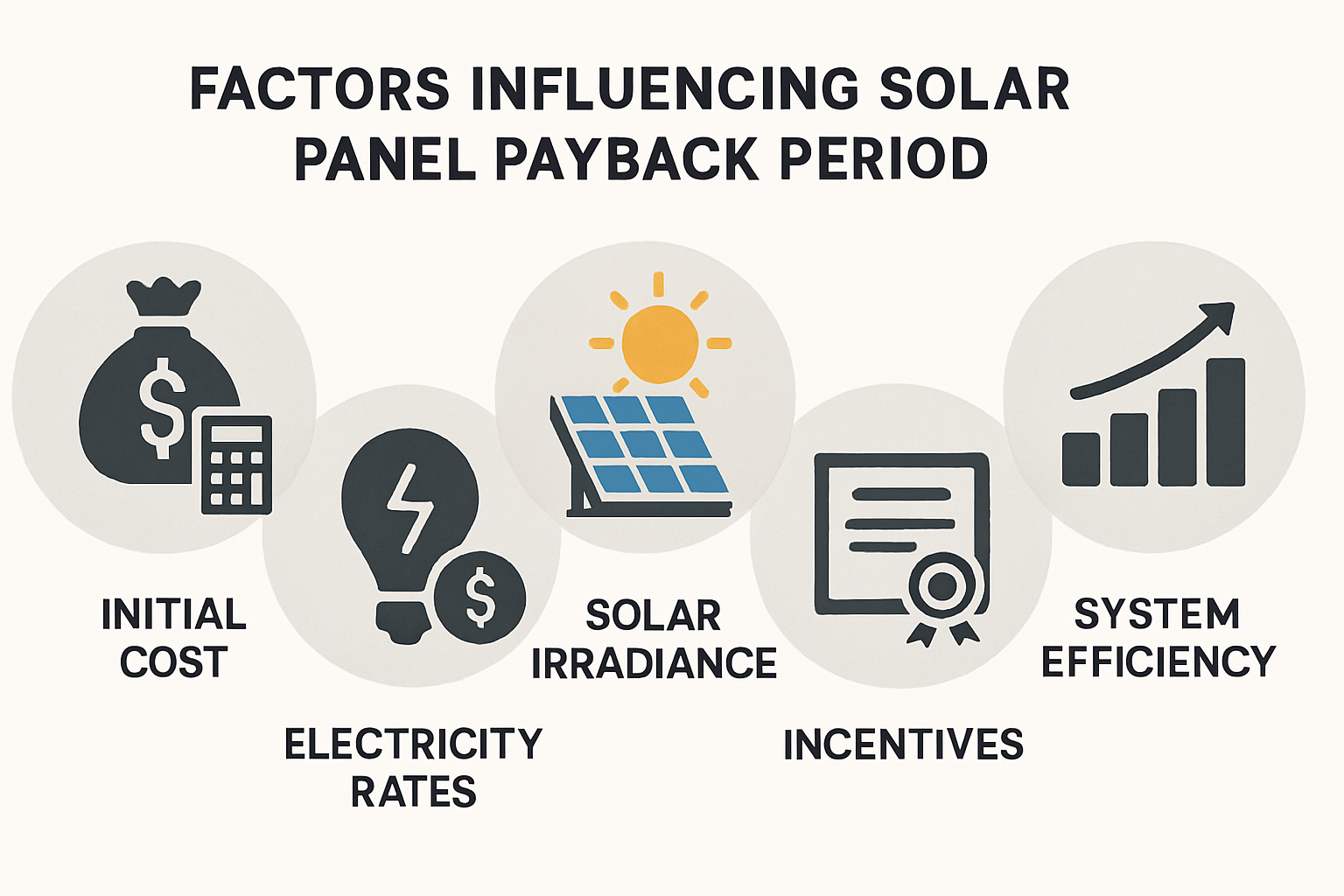
When evaluating solar investments, farmers naturally focus on payback periods – the time required for energy savings to recover the initial investment. These timelines vary based on farm size, energy consumption patterns, available incentives, and utility rates. However, clear patterns emerge across different agricultural operation categories.
Small Farms: 5-7 Year ROI Timeline
Small diversified farms and specialty crop operations typically see payback periods of 5-7 years on solar investments. These operations often have lower total energy consumption but higher per-unit costs, as they don’t qualify for industrial rate structures available to larger producers. Their systems typically range from 10-30kW in capacity with investment costs of $30,000-$90,000 before incentives.
The economic returns accelerate significantly after the payback period, with systems typically delivering 15-20 years of nearly free electricity beyond the initial investment recovery. For small farms focused on long-term sustainability, this extended benefit period substantially improves overall farm economics.
Mid-Size Operations: 3-5 Year Breakeven Point
Mid-sized commercial farms – including operations with 100-500 dairy cows, 2-5 poultry houses, or 500-2,000 acres of cropland – typically achieve payback within 3-5 years. Their higher energy consumption creates economies of scale in system installation while maximizing available incentives. These operations generally install 30-100kW systems with pre-incentive costs of $90,000-$300,000.
The substantial tax benefits available through federal credits and accelerated depreciation often provide first-year returns equivalent to 40-50% of the system cost for these mid-sized operations. This dramatic upfront benefit significantly improves project economics and reduces effective payback periods. For those considering solar, understanding the best solar panel placement can further enhance the economic advantages.
Large Agricultural Businesses: Fastest Returns
The largest agricultural operations – including commercial dairies with 500+ cows, integrated poultry operations with 10+ houses, and grain producers farming thousands of acres – typically see the fastest investment returns, often achieving breakeven within 2-4 years. These operations can implement systems exceeding 100kW capacity, creating substantial economies of scale in equipment and installation costs.
Many large producers implement solar through Power Purchase Agreements (PPAs) that eliminate upfront investment entirely. These arrangements allow third-party owners to install solar on farm property, selling the electricity to the farm at predetermined rates significantly below utility costs. While PPAs sacrifice some long-term benefits, they eliminate capital requirements and maintenance responsibilities while still reducing energy costs by 15-30%. For those considering additional options, it’s worth exploring off-grid solar panels to further enhance farm operations.
Maintenance Made Simple
Agricultural solar systems require minimal maintenance compared to other farm equipment, with no moving parts beyond optional tracking systems. Modern installations typically function for decades with basic care and monitoring, allowing farmers to focus on their core agricultural activities rather than energy system management. Additionally, using drones to boost solar panel efficiency can further simplify the maintenance process.
Most agricultural solar providers include monitoring systems that track production in real-time, alerting both the farm and service provider to any performance issues. This proactive approach identifies potential problems before they significantly impact energy production, ensuring consistent returns on the solar investment.
Annual Cleaning Requirements
Panel cleaning represents the most common maintenance need for farm solar systems, particularly in areas with dust from field operations or bird activity from nearby livestock facilities. Most installations benefit from 1-2 cleanings annually, using either specialized equipment or basic water spray methods that many farmers can handle themselves. In regions with regular rainfall, natural cleaning often suffices, requiring intervention only during extended dry periods.
Monitoring System Performance
Digital monitoring platforms provide comprehensive visibility into system performance, comparing actual production against expected output based on weather conditions. These systems track energy production by day, month, and year, creating valuable documentation for warranty claims if panels underperform manufacturer specifications. Most platforms offer mobile apps that allow farmers to check production from anywhere, integrating solar monitoring into regular farm management activities. For more insights, you can explore the best solar options for farms.
For systems with battery storage, monitoring extends to charge levels and discharge patterns, optimizing battery life by preventing excessive cycling or complete depletion. These systems can also manage automatic load-shedding during outages, ensuring critical farm systems receive available power while deferring optional equipment until grid service returns.
Inverters – the components that convert solar DC electricity to usable AC power – typically require replacement once during a system’s lifetime, usually after 10-15 years of service. This predictable maintenance event costs approximately 10% of the original system price and extends overall system life to its full 25-30 year potential.
- Daily performance monitoring through web/mobile interfaces
- Automated alerts for production anomalies or system errors
- Annual inspection of electrical connections and mounting hardware
- Inverter replacement typically scheduled at 10-15 year mark
- Panel cleaning 1-2 times annually depending on environmental conditions
Most agricultural solar providers offer maintenance agreements that cover regular inspections, cleaning, and component replacement for systems they install. These service packages typically cost $200-$500 annually depending on system size, a minimal expense compared to the maintenance requirements of most farm equipment.
Expected Panel Lifespan of 25-30 Years
Quality solar panels installed on farms today carry manufacturer warranties of 25 years, with expected functional lifespans extending to 30+ years. These warranties typically guarantee at least 80% of rated production capacity at the 25-year mark, with actual field experience showing many panels exceeding these conservative specifications. This remarkable durability means solar investments continue delivering returns for decades, often spanning multiple farm generations. For insights on optimizing solar panel efficiency, explore best solar panel placement strategies.
The extended productive lifespan dramatically improves lifetime economics compared to most farm equipment investments. While tractors, irrigation systems, and processing equipment typically depreciate to minimal value within 7-10 years, solar installations continue producing valuable electricity for three times that duration. This long-term perspective makes solar particularly attractive for farm succession planning, providing energy cost certainty for the next generation.

“Solar Power Boosts Farm Efficiency …” from growingsolarmist.com and used with no modifications.
Future-Proof Your Farm with Solar Power
Agricultural solar adoption represents more than just current cost savings – it positions farms for success in an increasingly energy-intensive and sustainability-focused market environment. As precision agriculture, electric equipment, and automated systems expand their role in farming, controlling energy costs becomes increasingly crucial to maintaining competitive production economics. Today’s solar investment creates a foundation for tomorrow’s agricultural innovations by providing affordable, reliable power for decades to come.
Is it Worth the Investment for the Farmer
When all factors are considered – immediate cost savings, tax benefits, protection against rising energy costs, system longevity, and sustainability advantages – solar power represents one of the most reliable investments available to modern agricultural operations. Unlike many farm improvements that depend on volatile commodity prices for their return, solar delivers predictable financial benefits regardless of agricultural market conditions. For farms focused on long-term viability and intergenerational transfer, few investments offer comparable certainty and durability.
Frequently Asked Questions
As solar adoption accelerates across agricultural regions, common questions arise from farmers considering these systems. The following responses address the most frequent concerns based on real-world experience with hundreds of farm solar installations nationwide.
Understanding these practical considerations helps farmers evaluate whether solar makes sense for their specific operation and what implementation approach might best serve their needs.
Will solar panels work during cloudy days on my farm?
Solar panels continue producing electricity during cloudy conditions, typically generating 10-25% of their rated capacity depending on cloud density. Modern systems account for this variability in their design, sizing installations to meet annual needs rather than depending on perfect daily conditions. Grid-connected systems use net metering to balance these natural fluctuations, drawing from the utility when needed and exporting excess during high-production periods.
How much farmland do I need to sacrifice for ground-mounted solar?
- A 25kW ground-mounted system typically requires 1,500-2,000 square feet (about 0.05 acres)
- 50kW systems occupy approximately 3,500-4,000 square feet (0.08-0.1 acres)
- 100kW installations need roughly 7,000-8,000 square feet (0.16-0.18 acres)
- Large 500kW systems require about 1 acre of land area
- Agrivoltaic designs can maintain partial agricultural productivity beneath panels
Most ground-mounted systems use less than 1% of total farm acreage while offsetting a significant portion of energy costs. Strategic placement near farm buildings minimizes the impact on productive land while reducing wire runs and trenching expenses.
Many farmers utilize marginal areas for solar installation – land near buildings, odd corners of fields, or areas with poor soil quality or drainage issues. This approach maximizes the productive value of challenging farm sections while preserving prime agricultural land for its highest use. For more insights, explore the factors affecting solar panels’ efficiency for farmers.
Emerging agrivoltaic approaches – which combine solar production with compatible agricultural activities beneath panels – are reducing the effective land use “cost” of solar even further. From grazing sheep that provide natural vegetation management to growing shade-tolerant crops like certain berries or mushrooms, innovative farmers are finding ways to double-crop their solar acreage.
Can I install solar panels myself to save on costs?
While technically possible, DIY solar installation sacrifices valuable incentives, warranties, and safety assurances that professional installation provides. Most rebate programs, interconnection agreements, and manufacturer warranties require certified installation by licensed professionals. The complexity of system design, electrical integration, and utility interconnection creates significant technical challenges that exceed most farmers’ expertise, with mistakes potentially leading to reduced system performance, accelerated component failure, or even fire hazards. For more insights, explore the factors affecting solar panels’ efficiency for farmers.
What happens to excess energy my farm solar system produces?
Through net metering programs, excess electricity flows to the utility grid, spinning your meter backward to create credits that offset future energy purchases. These arrangements effectively allow farmers to “bank” excess production from sunny summer days for use during darker winter months, or store daytime overproduction for nighttime use. The specific compensation varies by utility, with most crediting excess production at retail rates up to the farm’s total annual consumption.
How do I know if my farm buildings can support solar panels?
Most agricultural buildings constructed in the past 30 years can support solar arrays with minimal or no structural modifications. Qualified solar installers will evaluate roof age, orientation, structural capacity, and shading factors to determine suitability. Metal roofs common on modern farm buildings provide ideal mounting surfaces with expected lifespans that match or exceed solar panel warranties.
For older structures, structural engineering assessments can identify any reinforcement needs before installation. These evaluations typically cost $500-$1,500 and provide documentation necessary for building permits and insurance requirements. Many installations on older buildings incorporate strategic reinforcement during the solar mounting process, improving overall structural integrity while providing secure attachment points.
Remember, evaluating your specific farm’s solar potential starts with an assessment from qualified agricultural solar providers who understand both energy systems and farming operations. For more insights, explore the best solar options for farms to discover how solar can transform your farm’s energy economics while supporting a sustainable agricultural future.


Leave a Reply