
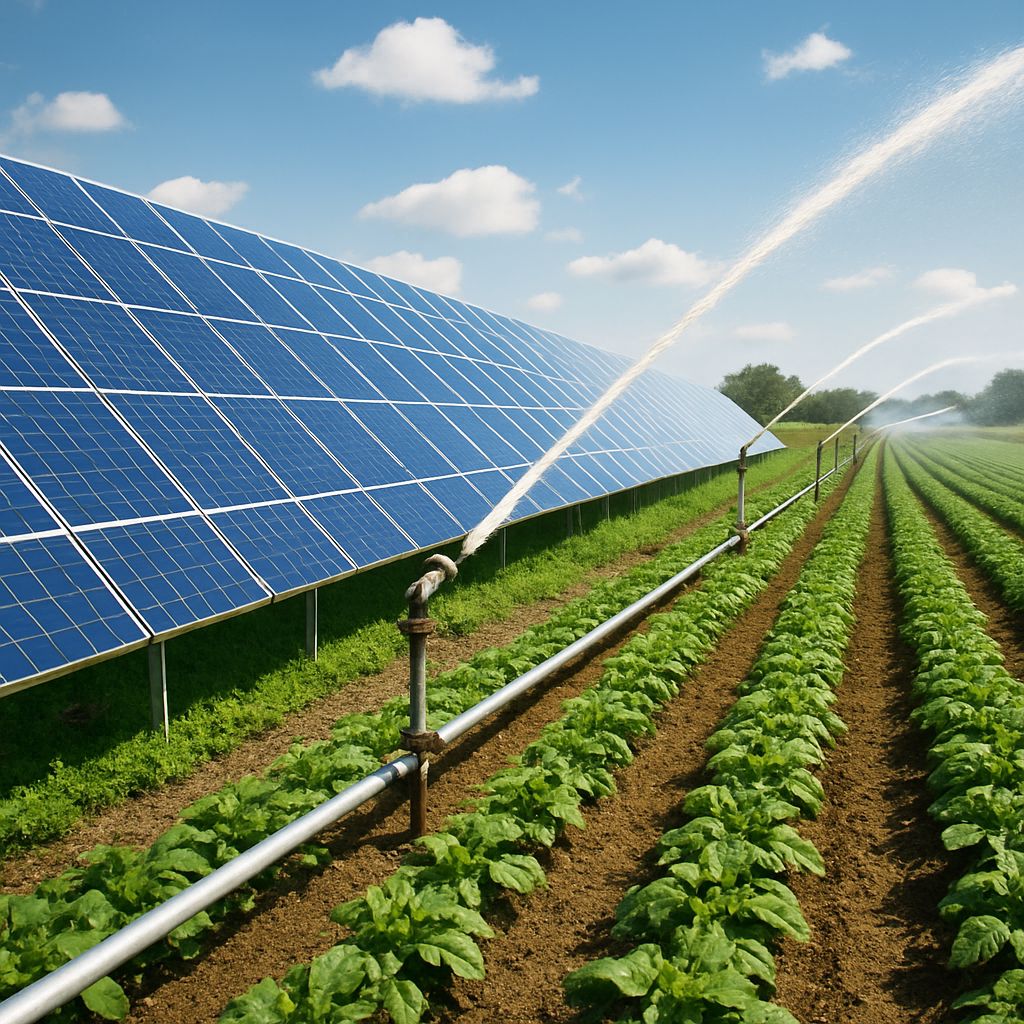
Key Takeaways
- Solar-powered sprinkler irrigation systems can reduce farm operating costs by 40-80% compared to conventional systems, with typical payback periods of 3-7 years.
- These integrated systems offer both water conservation benefits through precise application and energy independence by harnessing renewable solar power.
- While upfront costs range from $5,000-$25,000+ depending on farm size, government incentives and tax benefits can significantly offset this investment.
- Weather dependency remains a challenge, but battery storage solutions can provide reliable operation even during cloudy periods.
- Growing Solar Mist specializes in helping farmers transition to sustainable irrigation solutions that maximize both environmental and economic benefits.
Integrating solar panels with sprinkler irrigation systems represents one of the most significant advancements in sustainable farming technology today. The marriage of renewable energy with precision water application is revolutionizing how farms operate, especially in regions facing water scarcity and high energy costs. Growing Solar Mist has been at the forefront of this agricultural transformation, helping farmers reduce their environmental footprint while improving their bottom line through efficient irrigation solutions.
The concept is straightforward yet powerful: use energy from the sun to power the pumps and controllers that operate your sprinkler irrigation system. What makes this approach so compelling is that irrigation needs typically align perfectly with solar energy availability – the sunniest, hottest days when crops need water most are precisely when your solar panels generate maximum power.
This synchronicity creates an elegant system where nature itself helps balance resource needs. But beyond the poetic harmony, there are practical considerations, challenges, and benefits that farmers must understand before making this significant investment.
Solar-Powered Sprinklers: The Future of Sustainable Farming
“Solar-powered sprinkler systems represent a critical evolution in agriculture, allowing farmers to maintain productivity while dramatically reducing both water and energy consumption. This is not just good farming—it’s essential farming for our changing world.” — American Sustainable Agriculture Association
Agriculture accounts for approximately 70% of global freshwater usage, while also consuming significant energy to power irrigation systems. Traditional electric or diesel-powered irrigation systems contribute to both resource depletion and greenhouse gas emissions. Solar-powered sprinkler systems address both issues simultaneously, offering a path toward truly sustainable agricultural practices without sacrificing productivity.
Modern solar irrigation systems can be scaled to operations of any size, from small market gardens to vast commercial farms. The flexibility of these systems allows for customization based on water requirements, land topography, crop type, and budget constraints. As component costs continue to decrease and efficiency increases, we’re seeing adoption rates climb dramatically among forward-thinking agricultural operations.
The technology has matured significantly over the past decade. Early adopters faced reliability issues and limited capacity, but today’s systems offer robust performance with sophisticated features like remote monitoring, automated scheduling based on soil moisture levels, and integration with weather forecasting data. These advancements have transformed solar irrigation systems from an idealistic concept to a practical, economical solution for modern farming challenges.

How Solar-Powered Sprinkler Systems Actually Work
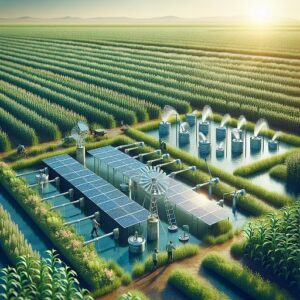
At their core, solar-powered sprinkler systems convert sunlight into electricity that powers water pumps and control systems. The process begins with photovoltaic (PV) panels that generate DC electricity when exposed to sunlight. This electricity either directly powers DC pumps or passes through an inverter to convert to AC power for conventional irrigation equipment. The electricity drives pumps that pressurize water through distribution lines to sprinklers positioned throughout the field, delivering precisely timed and measured irrigation. For more insights, explore solar irrigation systems and their benefits for farmers.
The beauty of these systems lies in their simplicity and reliability. With fewer moving parts than conventional power generation equipment and no fuel requirements, solar-powered systems offer exceptional durability with minimal maintenance needs. Most systems can operate completely autonomously once properly programmed and calibrated.
Solar Panels to Water Flow: The Complete Process
The journey from sunlight to sprouting plants involves several key stages in a solar-powered sprinkler system. First, solar panels capture photons from sunlight and convert them to electricity through the photovoltaic effect. This DC electricity flows to a controller that manages the system’s operation. Depending on system design, the electricity may pass through an inverter (for AC pumps) or directly power DC pumps. The pumps create pressure that propels water from the source (well, pond, or reservoir) through filtration systems and into distribution lines. Finally, sprinkler heads convert this pressurized flow into the spray patterns designed to maximize crop irrigation efficiency while minimizing water waste.
Key Components You’ll Need
A complete solar-powered sprinkler irrigation system requires several critical components working in harmony. The foundation is a properly sized solar array, typically mounted on ground-based racks or poles that can be adjusted seasonally for optimal sun exposure. You’ll need appropriately matched pumps (either DC or AC with inverters) capable of delivering your required water volume and pressure. A controller serves as the system’s brain, managing irrigation schedules and monitoring performance. Water filtration systems protect sprinkler components from clogging, while pressure regulators ensure consistent water delivery across your field. Finally, the distribution network includes pipes, valves, and sprinkler heads configured to your specific crop and field requirements.
Proper component sizing is absolutely critical for system performance. Undersized solar arrays will fail to generate sufficient power during cloudy periods, while oversized systems unnecessarily increase costs. Similarly, pump capacity must match both your water source capabilities and irrigation requirements. Working with experienced system designers like those at Growing Solar Mist ensures your components work together efficiently without costly overbuilding or performance-limiting bottlenecks.
Direct vs. Battery-Backed Systems
Solar-powered irrigation systems generally come in two main configurations: direct-drive and battery-backed systems. Direct-drive systems operate only when the sun is shining, with pumps running at variable speeds depending on available sunlight intensity. These systems are simpler, less expensive, and require minimal maintenance, but they can only irrigate during daylight hours and may underperform on cloudy days. Battery-backed systems, on the other hand, store excess energy for use during cloudy periods or nighttime irrigation, offering greater flexibility and reliability regardless of immediate sunlight conditions. For more insights, explore the benefits of solar irrigation systems.
The choice between these configurations depends largely on your specific farming needs. Direct-drive systems work well in regions with predictable sunshine and where daytime irrigation is acceptable for your crops. Battery-backed systems provide superior reliability but increase system complexity, cost, and maintenance requirements. Many farmers opt for hybrid approaches, using primarily direct-drive operation with modest battery backup for critical periods or to extend irrigation into early evening hours when evaporation losses are reduced.
Smart Controllers and Automation Options
Modern solar irrigation systems offer sophisticated control options that dramatically improve water use efficiency. Smart controllers can integrate with soil moisture sensors, weather forecasts, and evapotranspiration data to deliver precisely the right amount of water at optimal times. Some advanced systems allow remote monitoring and control via smartphone apps, enabling farmers to manage irrigation from anywhere with internet access. These automation features not only save precious water resources but also free up farmer time for other critical farm operations.
The most advanced controllers can even “learn” from historical data, automatically adjusting irrigation schedules based on seasonal patterns and specific crop growth stages. This machine learning capability continues to improve system efficiency over time, maximizing both water conservation and crop yields. For farms with variable soil conditions or multiple crop types, zone-based controllers allow for customized irrigation programs that address the specific needs of different areas within a single field.
7 Major Benefits of Solar-Powered Sprinkler Irrigation
The advantages of solar-powered sprinkler systems extend far beyond simple environmental benefits. These systems represent a comprehensive approach to solving multiple agricultural challenges simultaneously. From economic improvements to operational advantages, solar irrigation offers compelling benefits that continue to drive adoption across diverse farming operations worldwide.
1. Significant Energy Cost Savings
Perhaps the most immediate benefit farmers notice after installation is the dramatic reduction in energy costs. Traditional irrigation systems often rely on grid electricity or diesel generators, both of which represent significant ongoing operational expenses. Solar-powered systems eliminate these recurring costs almost entirely, with typical energy savings ranging from 40% to 80% compared to conventional systems. For large operations, these savings can translate to tens of thousands of dollars annually, significantly improving farm profitability.
The economics become even more favorable over time as traditional energy costs continue to rise while solar equipment costs decrease. Most farmers report complete return on investment within 3-7 years, after which the system essentially provides “free” energy for the remainder of its 25+ year lifespan. This predictable energy cost structure also helps farmers budget more effectively, removing the uncertainty of fluctuating utility or fuel prices.
2. Water Conservation Through Precision Control
Solar-powered systems typically incorporate advanced control mechanisms that optimize water usage through precise timing and flow regulation. By delivering water only when and where it’s needed, these systems can reduce water consumption by 20-50% compared to conventional methods. The combination of pressure regulation, precision sprinkler heads, and smart controllers ensures uniform water distribution and minimizes losses from evaporation, runoff, and deep percolation below the root zone.
This water efficiency becomes increasingly valuable as climate change intensifies drought conditions and water restrictions become more common in agricultural regions. Farms equipped with solar irrigation systems gain competitive advantages through reduced vulnerability to water shortages and lower water acquisition costs. Additionally, precision irrigation improves crop quality by maintaining optimal soil moisture levels throughout the growing season.
3. Reduced Carbon Footprint
Sustainable agriculture increasingly requires attention to carbon emissions, and solar irrigation provides substantial environmental benefits in this regard. By replacing fossil fuel-powered pumps or grid electricity (often generated from coal or natural gas), solar systems can eliminate several tons of CO2 emissions annually per irrigated acre. This reduction helps farms meet sustainability goals, qualify for carbon credit programs, and appeal to environmentally conscious markets and consumers.
Beyond direct emissions reductions, solar irrigation systems also reduce the environmental impacts associated with power transmission and fuel transportation to remote farming operations. The environmental benefits extend throughout the entire system lifecycle, as solar panels are increasingly manufactured using sustainable practices and are almost entirely recyclable at end-of-life.
4. Independence from the Power Grid
One of the most compelling advantages of solar-powered irrigation is liberation from grid dependency. Many agricultural operations are located in remote areas where power infrastructure is unreliable or entirely absent. Solar systems provide energy autonomy, eliminating the vulnerabilities associated with grid outages that can threaten crops during critical irrigation periods. This independence is particularly valuable in developing regions where grid infrastructure is inconsistent or nonexistent, allowing productive farming in previously challenging locations.
Grid independence also eliminates the expenses and complications of running power lines to remote fields. The cost of extending utility lines can run $15,000-$50,000 per mile in rural areas, making solar the economically superior option for fields beyond existing infrastructure. For operations with multiple, geographically dispersed fields, solar systems can be installed precisely where needed without costly utility extensions.
5. Low Maintenance Requirements
Solar irrigation systems feature remarkably low maintenance needs compared to conventional alternatives. With no fuel to purchase, store, or handle, and significantly fewer moving parts than gas or diesel systems, maintenance requirements are minimal. Most systems require only occasional panel cleaning, basic electrical inspections, and standard pump maintenance. The solar panels themselves typically carry 25-year warranties and can function efficiently for 30+ years with minimal degradation, providing exceptional long-term reliability.
This reduced maintenance translates directly to labor savings and increased operational reliability. Farmers spend less time servicing equipment and more time focusing on crop production. The simplicity of solar systems also means fewer potential failure points during critical growing periods, providing peace of mind during peak irrigation seasons when system reliability is paramount.
6. Government Incentives and Tax Benefits
Financial incentives significantly improve the economics of solar irrigation investments. Many governments offer substantial subsidies, tax credits, and accelerated depreciation options for renewable energy technologies. In the United States, the federal Investment Tax Credit (ITC) can reduce system costs by 26%, while USDA programs like REAP (Rural Energy for America Program) provide both grants and guaranteed loans specifically for agricultural solar projects. At the state level, additional incentives often include rebates, property tax exemptions, and performance-based incentives.
These financial incentives dramatically improve project economics, often reducing payback periods by 30-50%. Working with knowledgeable providers like Growing Solar Mist ensures you maximize available incentives, as program requirements and application procedures can be complex. Proper documentation and system certification are essential for qualifying for these valuable financial benefits.
7. Extended System Lifespan
Solar-powered irrigation systems typically outlast conventional alternatives by a significant margin. High-quality solar panels routinely perform efficiently for 25-30 years or more, compared to the 10-15 year typical lifespan of diesel pumps. This extended operational life dramatically improves the lifetime value proposition of solar systems. Additionally, because solar systems operate at lower stress levels than continuously-running conventional pumps, the irrigation components themselves often experience less wear and enjoy longer service lives.
This longevity makes solar irrigation a genuine long-term investment rather than a recurring expense. While traditional systems require regular replacement and upgrading, solar systems continue delivering reliable performance with minimal degradation for decades. Smart designs also allow for system expansion and modification as farm needs evolve, providing flexibility without requiring complete replacement.
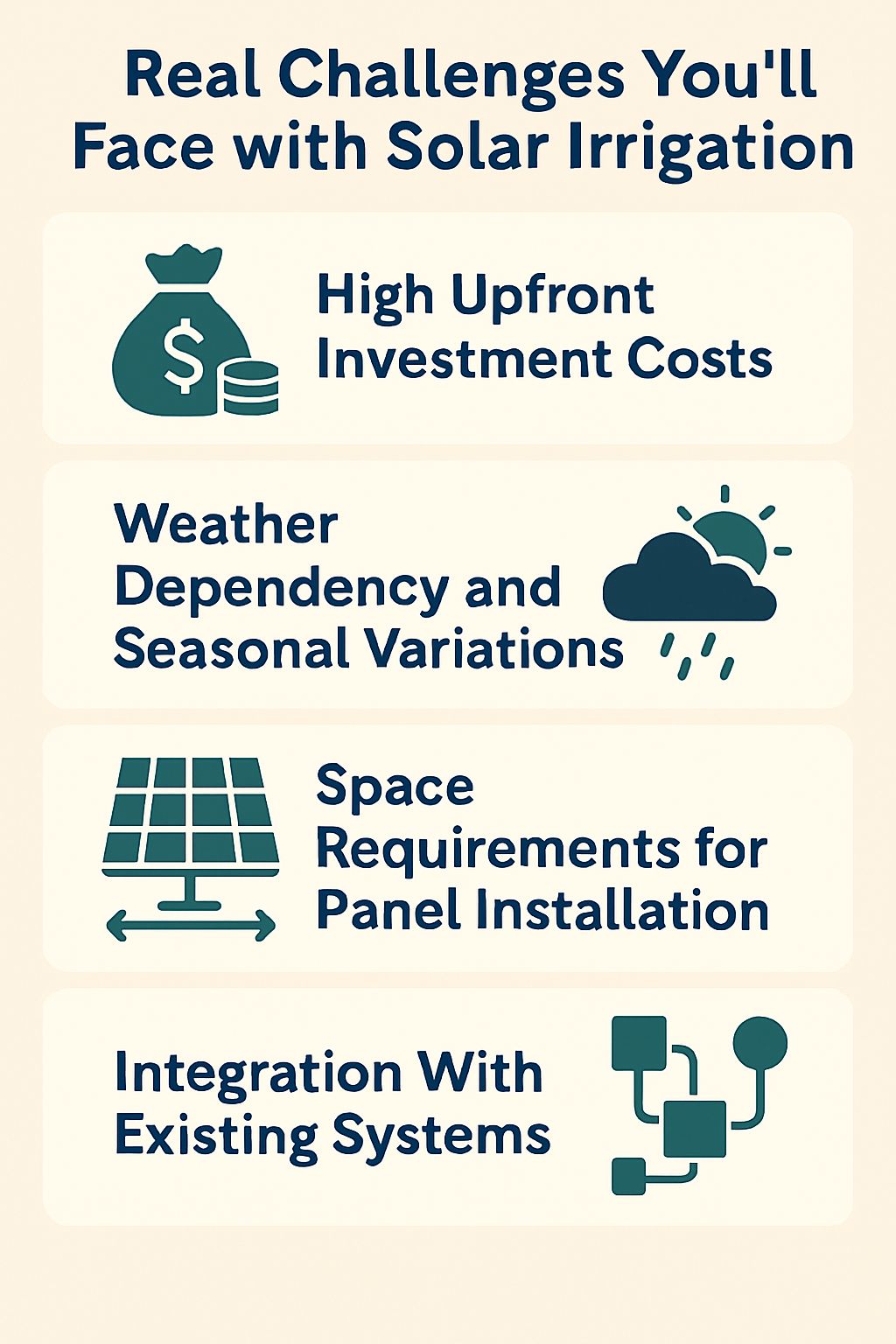
Real Challenges You’ll Face with Solar Irrigation
High Upfront Investment Costs
The most significant barrier to adoption remains the substantial initial investment required for solar irrigation systems. Depending on size and complexity, costs typically range from $5,000 for small operations to $25,000+ for larger systems. This represents a significant capital expenditure compared to conventional alternatives, requiring careful financial planning and often necessitating financing solutions. The good news is that financing options have expanded dramatically, with many lenders now offering specific agricultural solar loan products with favorable terms.
While the long-term economics strongly favor solar irrigation, the upfront costs can be prohibitive for operations with limited capital reserves or those facing challenging financial circumstances. A thorough cost-benefit analysis is essential, accounting for your specific energy requirements, water needs, local incentives, and financing options. Many farmers find phased implementation approaches help manage costs while still capturing substantial benefits from solar conversion.
Weather Dependency and Seasonal Variations
Solar irrigation systems’ performance inherently depends on available sunlight, creating challenges during extended cloudy periods or in regions with highly variable weather patterns. Direct-drive systems may deliver inconsistent performance during partial cloud cover, potentially compromising irrigation quality. These limitations can be particularly problematic for crops with minimal drought tolerance or during critical growth stages when irrigation timing precision is essential.
Battery storage mitigates these weather-related challenges but adds significant cost and complexity. Proper system sizing becomes crucial, often requiring oversizing solar arrays to ensure adequate power generation even during suboptimal conditions. Hybrid systems incorporating minimal conventional backup power represent another solution, providing reliability insurance during extended adverse weather while still capturing most solar benefits.
Space Requirements for Panel Installation
Solar arrays require substantial space for optimal performance, typically 100-200 square feet per kilowatt of capacity depending on panel efficiency. Finding suitable locations that receive full sun exposure without creating shadows from trees, buildings, or other obstacles can prove challenging on some farms. Panel placement must balance proximity to irrigation infrastructure against optimal solar exposure, sometimes requiring compromise between ideal positioning and practical implementation.
Creative mounting solutions can help address space constraints. Options include pole mounts that elevate panels above crop height, allowing dual land use; tracking systems that maximize energy generation on smaller footprints; and even floating solar arrays for farms with irrigation ponds. For operations with limited ground space, some systems can be mounted on existing farm structures like equipment sheds or barn roofs, though this may increase installation complexity and cost.
Integration With Existing Systems
Retrofitting existing irrigation infrastructure for solar compatibility often presents technical challenges. Conventional AC pumps may require inverters or replacement with DC alternatives. Pressure requirements, flow rates, and control systems must be carefully matched to ensure compatibility. Older irrigation distribution systems may require upgrades to maximize the efficiency benefits of solar power. These integration considerations can add complexity and cost to solar conversion projects.
Successful integration typically requires comprehensive system assessment by experienced designers familiar with both conventional irrigation and solar power systems. A thoughtful conversion plan often includes staged implementation, allowing portions of the system to be converted while maintaining operational capability throughout the transition. Complete system redesigns may yield optimal long-term performance but require greater initial investment and potential operational disruptions during implementation.
Success Stories: Farms Thriving with Solar-Powered Sprinklers Irrigation
Small-Scale Market Gardens
The Rodriguez family’s five-acre organic vegetable operation in California’s Central Valley represents a perfect case study in small-scale solar irrigation success. Facing water restrictions and rising electricity costs that threatened their farm’s viability, they installed a 4kW solar system powering micro-sprinklers throughout their diversified vegetable plots. The $12,000 system, partially offset by a USDA grant, eliminated their $2,800 annual irrigation electricity bill completely. More importantly, the precision control offered by the solar system reduced their water consumption by 35%, allowing them to maintain full production despite regional water allocation reductions. Their experience demonstrates how even modest-sized operations can achieve transformative benefits from right-sized solar irrigation systems.
Medium-Sized Diversified Farms
Hillcrest Farm, a 120-acre operation in the Midwest growing a rotation of corn, soybeans, and specialty vegetables, implemented a 15kW solar irrigation system with battery backup to power their center pivot sprinklers. The $45,000 investment initially raised eyebrows among neighboring conventional farms, but the economics proved compelling within the first two seasons. The system eliminated $8,500 in annual diesel costs while extending irrigation capability into evening hours when evaporation losses are minimized. Farm owner Sarah Jenkins reports that the system paid for itself within five years through combined energy savings, water efficiency gains, and improved crop quality resulting from more consistent irrigation.
What makes Hillcrest’s approach particularly noteworthy is their phased implementation strategy. They began with a modest system powering a single field, then expanded incrementally as capital became available and as they gained experience with the technology. This measured approach minimized risk while allowing them to optimize each expansion phase based on lessons learned. Their success has inspired five neighboring farms to begin their own solar irrigation conversions.
Large Commercial Operations
Western Orchards, managing 1,200 acres of apple and pear trees in Washington state, demonstrates the scalability of solar irrigation for large commercial operations. Their comprehensive 180kW system powers multiple irrigation zones through a combination of sprinkler and drip technologies, all centrally controlled through a sophisticated management platform. The $320,000 system represented a significant capital investment, but the operation reports 60% reduction in energy costs and 40% water savings compared to their previous diesel-powered system. Perhaps most significantly, the precision irrigation control has improved fruit quality and size uniformity, allowing them to market a higher percentage of their harvest in premium categories. Their experience proves that solar irrigation can scale effectively for large commercial operations when properly designed and implemented.

“Solar Powered Irrigation Systems: Types …” from growingsolarmist.com and used with no modifications.
Solar-Powered Sprinkler Irrigation System Worth a Farmers Investment
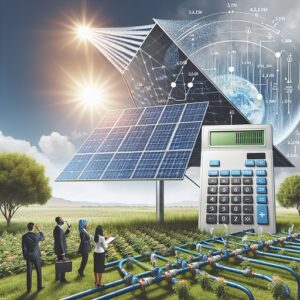
When evaluating the worthiness of investing in solar-powered sprinkler irrigation, farmers must consider both quantifiable returns and intangible benefits. The direct financial calculation involves comparing upfront costs against ongoing savings from eliminated energy expenses, reduced water costs, maintenance savings, and potential crop yield/quality improvements. For most operations, this analysis reveals payback periods of 3-7 years, followed by decades of essentially free operation. The enhanced reliability and reduced operational complexity provide additional value that, while harder to quantify, significantly improves overall farm operations and reduces stress during critical growing periods.
Beyond pure economics, solar irrigation represents strategic positioning for agriculture’s future. As regulatory pressures around water usage and carbon emissions intensify, farms with established sustainable irrigation infrastructure gain competitive advantages. Markets increasingly reward sustainably produced crops, while climate resilience becomes essential amid growing weather volatility. A thoughtfully designed solar irrigation system addresses these emerging challenges while delivering immediate operational benefits, making it not merely a worthwhile investment but increasingly an essential one for forward-thinking agricultural operations aiming for long-term viability.
Frequently Asked Questions
As farmers consider transitioning to solar-powered sprinkler systems, certain questions consistently arise during the evaluation process. These frequently asked questions address the most common concerns and considerations that influence decision-making around solar irrigation investments. Understanding these fundamentals helps establish realistic expectations and proper planning for successful system implementation.
The answers provided represent general guidelines based on typical installations, but it’s important to recognize that specific circumstances can significantly influence outcomes for individual farms. Factors like geographic location, crop water requirements, existing infrastructure, and available incentives all affect the optimal system design and expected performance. Professional assessment of your specific situation remains the best path to accurate projections and proper system sizing.
How long does it take to recoup the investment in a solar-powered sprinkler system?
Most agricultural operations experience payback periods between 3-7 years for solar-powered irrigation systems, though this timeline varies based on several factors. Operations replacing diesel generators or expensive utility power typically see faster returns than those with access to subsidized electricity. System size, available financial incentives, water costs, and crop value all influence this calculation significantly. The best approach involves developing a comprehensive ROI analysis specific to your operation, accounting for all direct savings (energy, water, maintenance) and potential indirect benefits (crop quality improvements, extended growing seasons, carbon credit eligibility). Remember that systems continue delivering value for 25+ years after reaching payback, representing two decades or more of essentially free operation.
Can solar irrigation systems work in cloudy or rainy climates?
Yes, solar irrigation systems can function effectively even in regions with less-than-ideal solar conditions, though proper system design becomes particularly crucial in these environments. In cloudy climates, systems typically require larger solar arrays (25-40% oversized compared to sunny regions) and often incorporate battery storage to maintain reliable operation during extended low-light periods. Many farms in the Pacific Northwest, northern Europe, and other cloudy regions successfully operate solar irrigation by implementing these design accommodations.
It’s worth noting that irrigation needs typically decrease during cloudy or rainy periods, creating a natural alignment between system capacity and water requirements. Sophisticated controllers can further optimize performance by adjusting irrigation schedules based on weather forecasts and soil moisture readings. For regions with extreme seasonal variations in sunshine, hybrid systems incorporating minimal conventional backup provide the reliability insurance needed for critical periods while still capturing substantial solar benefits during favorable conditions.
Do I need to replace my entire irrigation system when switching to solar power?
No, complete replacement is rarely necessary, though some modifications are typically required for optimal performance. Most existing sprinkler distribution systems can be retained while replacing or adapting the power source and pumping components. DC pumps offer the highest efficiency for direct solar-powered systems, but existing AC pumps can often be retained by incorporating appropriate inverters. Pressure regulators, filtration systems, or control mechanisms might need upgrading to maximize the benefits of variable pressure operation common in solar systems. The extent of required modifications depends largely on the age, type, and condition of your existing system, with newer installations typically requiring fewer changes than older infrastructure.
How much maintenance do solar-powered sprinklers require?
Solar-powered irrigation systems require minimal maintenance compared to conventional alternatives. The solar panels themselves need occasional cleaning (1-4 times annually depending on local dust/pollen conditions), which can be accomplished with simple water rinsing in most cases. Electrical connections should be inspected annually for corrosion or damage. The pumps require standard maintenance similar to conventional irrigation pumps, though often at reduced intervals due to the variable operation that causes less continuous wear. Battery-backed systems require additional maintenance attention, with batteries typically needing replacement every 5-10 years depending on quality and usage patterns. Overall, most farmers report 50-75% reduction in maintenance requirements and costs compared to fossil-fuel alternatives.
Are there specific crops that benefit more from solar-powered irrigation?
High-value specialty crops typically derive the greatest economic benefit from solar irrigation’s precision and reliability. Fruits, vegetables, and specialty crops with specific timing-sensitive water requirements see significant quality and yield improvements from the consistent, precisely controlled irrigation that solar systems provide. These crops also generally produce sufficient revenue per acre to justify the initial investment more easily than commodity crops. Additionally, crops grown in organic or sustainable certification programs benefit from solar irrigation’s alignment with certification requirements and marketing advantages. That said, even conventional commodity crops like corn, soybeans, and wheat can achieve meaningful production cost reductions through the energy and water savings solar irrigation provides, particularly in regions with high energy costs or water restrictions.
The key factor isn’t necessarily crop type but rather irrigation sensitivity and value proposition. Crops where irrigation timing precision significantly impacts yield or quality will demonstrate more immediate and noticeable benefits from solar conversion. Similarly, operations marketing directly to consumers or through premium channels may capture additional value from the sustainability credentials that solar irrigation provides.

Leave a Reply