
Key Takeaways
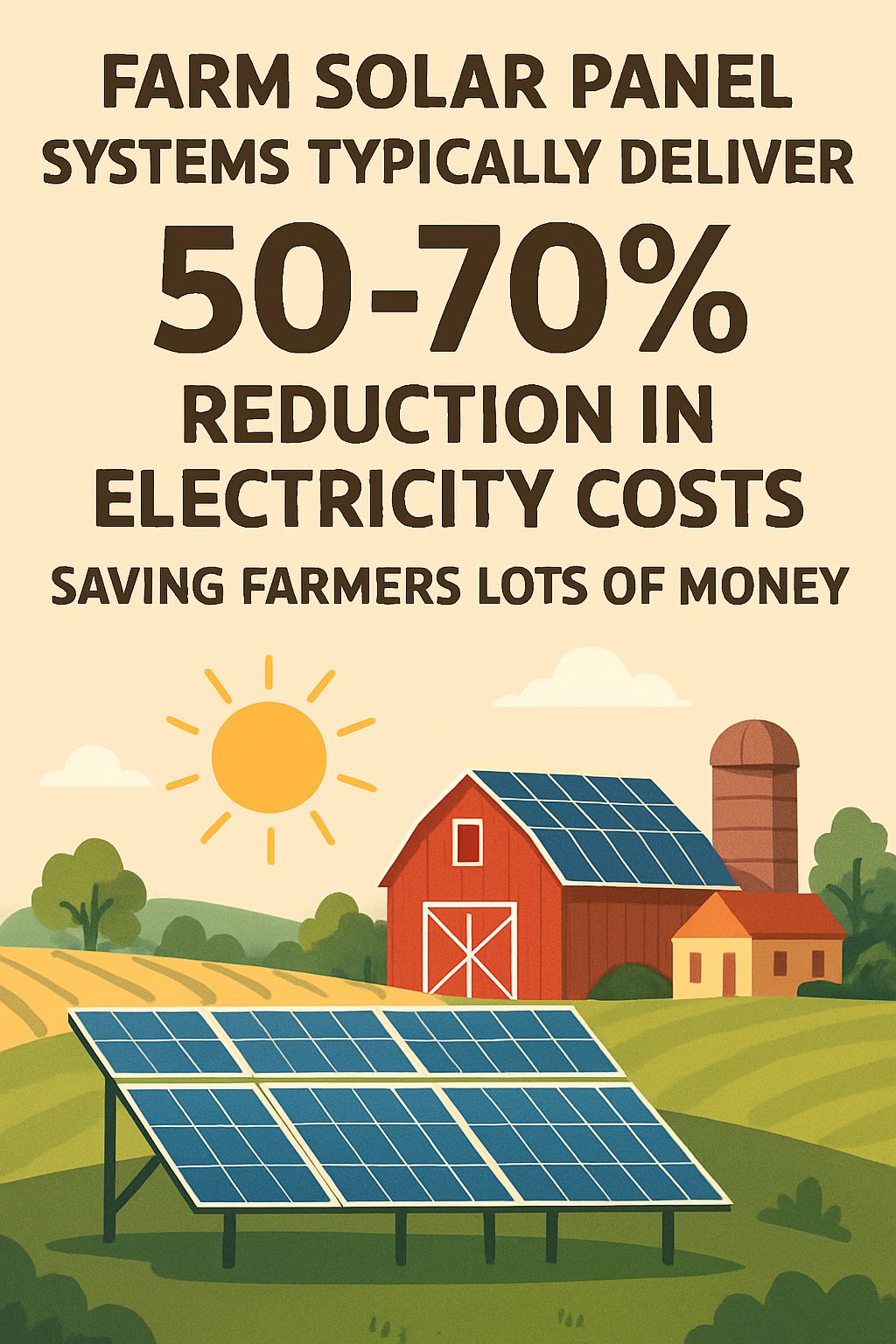
- Farm solar panel systems typically deliver 50-70% reduction in electricity costs, with annual savings of $10,000-$14,000 for operations previously spending $20,000 on power.
- The initial investment ranges from $60,000 to $500,000 after incentives, but delivers 15-25% annual returns—outperforming many traditional farm investments.
- Agricultural solar installations offer exceptional ROI with typical payback periods of 5-8 years, followed by decades of virtually free electricity.
- The USDA REAP program can cover up to 25% of system costs, while the federal tax credit offers an additional 30% off installation expenses.
- Beyond direct cost savings, solar systems protect farms against rising utility rates and can generate additional income through net metering programs.
Rising energy costs are squeezing farm profit margins tighter every year. For operations relying on grid electricity to power irrigation systems, dairy equipment, and climate controls, these escalating expenses can make the difference between a profitable season and a loss. Solar power offers a proven solution that’s transforming agricultural economics nationwide.
Farmers Can Cut Energy Bills by 50-70% With Solar Panels
The math is straightforward: solar panels generate free electricity after the initial investment. Most agricultural operations see their electric bills slashed by 50-70% immediately after installation. In many cases with properly sized systems, farms can eliminate their electricity costs entirely during peak production months. This dramatic reduction creates thousands in monthly savings that go straight to your bottom line.
Consider a typical dairy operation spending $20,000 annually on electricity. After installing an appropriately sized solar array, that same farm could reduce costs to just $6,000-$10,000 in the first year alone. As utility rates inevitably rise in coming years, these savings compound while your solar production costs remain fixed. Growing Solar Mist has helped hundreds of farms achieve this kind of financial transformation through custom-designed solar solutions that match specific agricultural needs.
The benefits extend beyond simple cost reduction. Solar systems also provide energy independence, insulating your operation from grid outages and price volatility that can disrupt critical farm functions. During summer heatwaves when electricity demand peaks and utility companies implement surge pricing, your solar array continues producing consistent, affordable power exactly when you need it most.
The True Cost of Solar Panels for Farm Operations
Understanding the real economics of farm solar means looking beyond sticker prices to evaluate long-term returns. While the initial investment is significant, when calculated properly, few farm improvements deliver comparable financial benefits. For those interested in the solar panels power generation process, it is crucial to consider these long-term advantages.
Average Installation Costs for Agricultural Solar Systems
Farm solar systems typically range from $60,000 to over $500,000 after incentives, depending on size and configuration. This wide range reflects the diversity of agricultural energy needs—from small specialty crop operations to large-scale dairy or poultry farms with substantial electricity demands. On a per-watt basis, most agricultural installations cost between $1.80 and $2.50 per watt after incentives are applied. For more information on choosing the best solar panel types for farms, explore our detailed guide.
A mid-sized 100kW system capable of offsetting much of the electricity for a moderate dairy operation might cost approximately $180,000 after incentives. While this represents a substantial investment, it’s important to evaluate this expense against the alternatives: continuing to pay ever-increasing utility bills with no return on investment. The solar system becomes a productive farm asset that generates reliable returns through energy savings for decades.
Size Requirements Based on Farm Energy Consumption
Proper system sizing is crucial for maximizing return on investment. The goal isn’t necessarily to eliminate 100% of grid electricity, but to optimize the balance between system cost and energy production. Most agricultural solar installations are designed to offset 70-90% of annual electricity consumption, which typically delivers the best financial returns. For those interested in exploring the best solar panel types for farms, there are various options that can be tailored to specific energy needs.
- Small operations (30-50kW systems): Suitable for farms spending $500-1,000 monthly on electricity
- Medium operations (50-200kW systems): Ideal for farms with $1,000-4,000 monthly electric bills
- Large operations (200kW+ systems): Appropriate for operations spending over $4,000 monthly on electricity
Your specific energy consumption patterns matter tremendously when designing an effective system. Seasonal operations like grain drying create unique demand profiles that require specialized system designs. The most cost-effective installations account for these patterns and optimize production to match your farm’s specific energy usage throughout the year.
Maintenance Expenses Over a 25-30 Year Lifespan
One of solar’s most compelling advantages is its minimal maintenance requirements. Modern agricultural solar installations are engineered to produce clean energy for 25-30 years with remarkably few ongoing costs. Unlike tractors, irrigation systems, or other farm equipment requiring regular maintenance, solar panels have no moving parts and need minimal attention after installation.
Annual maintenance costs typically run just 0.5-1% of the initial system cost, primarily covering occasional panel cleaning and inverter maintenance. For a $200,000 system, this translates to roughly $1,000-2,000 annually—a fraction of the $20,000-30,000 in electricity savings the system generates each year. Most manufacturers provide 25-year production warranties, guaranteeing at least 80% of original output even after decades of operation. This predictable, low-maintenance performance creates exceptional long-term value compared to other farm investments.
5 Financial Incentives That Make Solar Affordable for Farmers
The sticker shock of solar installations often masks the reality: after incentives, agricultural solar systems are more affordable than most farmers realize. Several programs specifically target the agricultural sector, recognizing farms as ideal candidates for renewable energy adoption. These incentives can reduce upfront costs by 50-75% in many cases.
1. USDA REAP Grants Cover Up to 25% of System Costs
The Rural Energy for America Program (REAP) represents one of the most valuable opportunities for agricultural operations considering solar. These grants cover up to 25% of eligible project costs with no repayment required. For a $200,000 solar installation, this translates to $50,000 in free funding that dramatically improves project economics. While the application process requires careful preparation, success rates for well-prepared applications exceed 70% in many regions. For more insights, you can explore the efficiency and performance factors of agricultural solar panels.
REAP also offers guaranteed loan programs that can finance up to 75% of project costs with favorable terms. Combining grants with loans creates a powerful financial package that minimizes out-of-pocket expenses while maximizing long-term benefits. The program consistently receives strong congressional support and funding allocations have increased in recent years, making this an exceptionally reliable incentive for agricultural operations.
2. Federal Investment Tax Credit (30% Through 2032)
The federal Investment Tax Credit (ITC) provides a dollar-for-dollar reduction in income taxes owed, equal to 30% of the total solar system cost. This credit applies to both the equipment and installation costs, effectively reducing a $200,000 system to $140,000 after the credit is applied. Unlike deductions that only reduce taxable income, this credit directly reduces your tax liability, creating significant value for operations with tax obligations.
Congress recently extended this credit at the full 30% rate through 2032, providing a decade of certainty for planning purposes. The credit applies to both new installations and battery storage additions to existing systems. For farmers with substantial tax liabilities, this incentive alone can transform marginal solar projects into compelling investments with exceptional returns. Learn more about the best solar panel types for farms to maximize these benefits.
3. Accelerated Depreciation for Farm Business Equipment
Agricultural operations can utilize accelerated depreciation schedules for solar equipment, allowing you to deduct the entire system value from taxable income in as little as one year. This front-loaded tax benefit significantly improves cash flow during the critical early years of system operation. When combined with the ITC, these depreciation benefits can reduce effective system costs by an additional 15-25% depending on your tax bracket.
The Modified Accelerated Cost Recovery System (MACRS) allows businesses to depreciate solar assets over just 5 years, despite their 25+ year operational lifespan. For farms with significant tax obligations, this acceleration of tax benefits dramatically improves project economics and shortens payback periods. Consult with a qualified tax professional to maximize these benefits for your specific situation.
4. State-Specific Agricultural Solar Incentives
Many states offer additional incentives specifically targeting agricultural solar installations. These programs vary widely but can provide substantial additional value through tax credits, rebates, or performance-based incentives. California’s Net Energy Metering Aggregation (NEMA) program, for instance, allows farms to offset electricity used across multiple meters with a single solar array, dramatically improving project economics for operations with distributed energy usage.
Some states offer production-based incentives that pay a premium for each kilowatt-hour of solar electricity generated, creating an additional revenue stream beyond direct energy savings. Others provide property tax exemptions ensuring your solar investment doesn’t increase your property tax burden. Check with your state department of agriculture or energy to identify programs specific to your region.
5. Net Metering: Getting Paid for Excess Energy Production
Net metering policies require utilities to credit you for excess electricity your solar system feeds back to the grid. This effectively turns the utility grid into free battery storage, allowing you to build credit during high production periods and draw from that credit during low production times. For agricultural operations with seasonal energy needs, this creates tremendous value by maximizing the financial return from each kilowatt-hour your system produces.
While net metering rules vary by state and utility, most programs credit excess production at retail or near-retail rates. This arrangement transforms your meter into a financial instrument that literally runs backward when you’re producing more than you’re consuming. For farms with suitable roof space or unused land areas, oversizing systems to maximize net metering benefits can create additional income streams beyond direct energy savings.
How Solar Panels Directly Boost Farm Profitability
Beyond the immediate reduction in utility bills, solar installations improve farm profitability through multiple financial mechanisms. When properly structured, these systems function as both cost-reduction tools and revenue-generating assets that strengthen your operation’s financial foundation. The compounding effects of these benefits create exceptional long-term value that few other farm investments can match.
Long-Term Protection Against Rising Utility Rates
Utility rates have risen an average of 3-5% annually over the past decade, significantly outpacing inflation. By installing solar, you essentially pre-purchase 25+ years of electricity at today’s prices, creating a powerful hedge against future rate increases. This fixed-cost energy production becomes increasingly valuable as market rates continue their upward trajectory, with each passing year magnifying your savings compared to grid-dependent operations.
Reduced Operating Costs for Energy-Intensive Operations
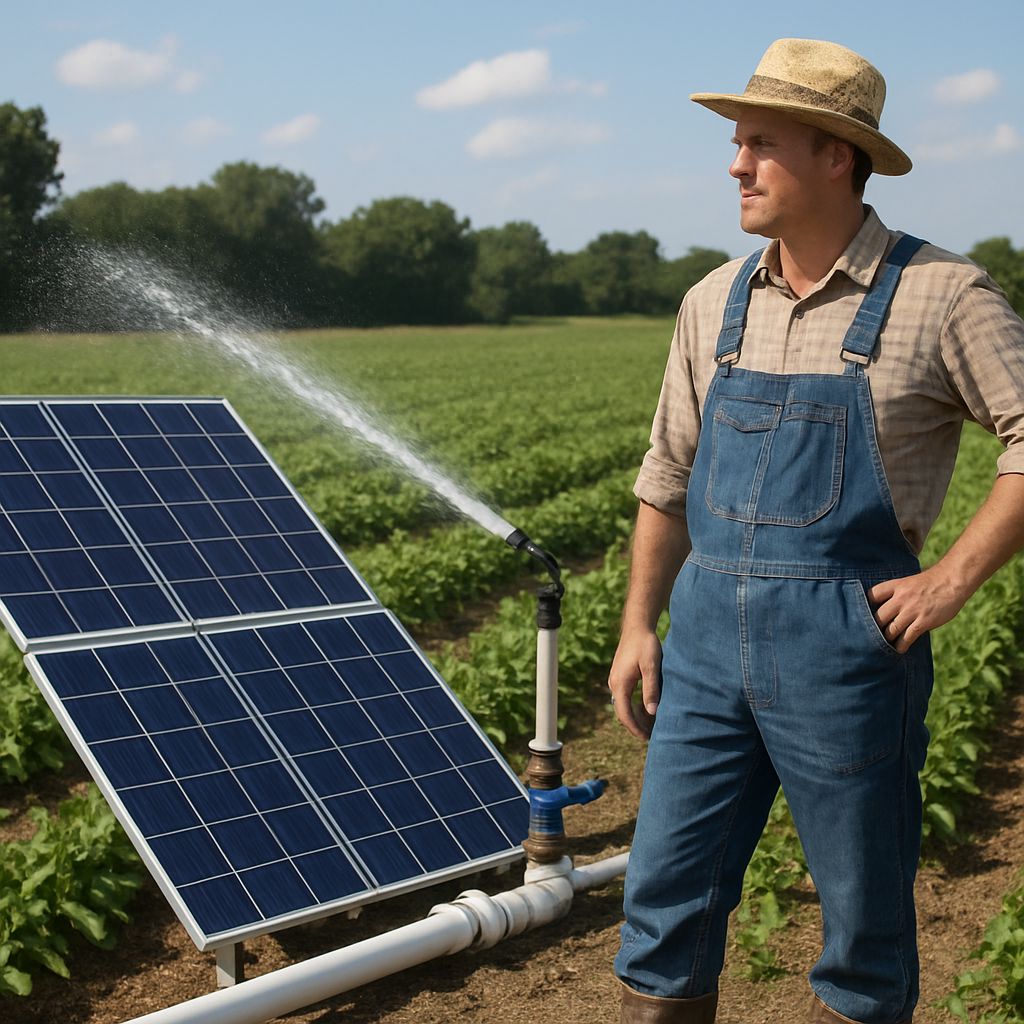
Energy-intensive farming operations such as dairy, poultry, or irrigated crops see the most dramatic benefits from solar adoption. Electricity often represents 15-30% of operating costs for these farms, making solar’s impact on profitability particularly significant. By converting this variable expense into a fixed investment with predictable returns, these operations gain valuable financial stability and improved margins even during challenging market conditions.
Income Generation Through Solar Renewable Energy Credits
Many states have Renewable Portfolio Standards requiring utilities to source a percentage of their electricity from renewable sources. These mandates create markets for Solar Renewable Energy Credits (SRECs) that your system generates alongside electricity. Each megawatt-hour produced by your system can generate an SREC worth $10-300 depending on your market, creating an additional revenue stream beyond direct energy savings.
Best Solar Panel Options for Different Farm Types
Finding the right solar solution for your specific operation can dramatically impact both performance and return on investment. Different agricultural activities create unique energy demand profiles that require tailored approaches to system design and equipment selection.
Dairy Farms: High-Efficiency Systems for Constant Power Needs
Dairy operations typically have relatively steady electricity demand throughout the year, with high consumption from milk cooling, vacuum pumps, and lighting systems. These consistent loads make dairy farms ideal candidates for solar installations that prioritize maximum year-round production. Monocrystalline panels with efficiency ratings above 20% typically deliver the best returns for dairy applications by maximizing production in limited space.
For dairy operations, system reliability is paramount given the critical nature of milk cooling and processing equipment. Investing in premium inverters with extended warranties and optional battery backup capabilities can provide valuable protection against equipment losses during grid outages. Many dairy farms find that roof-mounted systems on existing barn structures offer the most economical installation approach, avoiding any loss of productive land while utilizing otherwise unused roof space.
Crop Farms: Seasonal Energy Solutions with Battery Storage
Row crop operations often face highly seasonal energy demands centered around irrigation, grain drying, and processing activities. This uneven consumption pattern creates unique challenges and opportunities for solar design. Systems that incorporate battery storage can capture excess production during low-demand periods and deploy that energy during intensive seasonal activities like harvest.
Ground-mounted systems often prove most practical for crop operations, as they can be placed on marginal land areas that aren’t ideal for cultivation. Single-axis tracking systems that follow the sun’s daily path can increase production by 15-25% compared to fixed installations, often making them cost-effective for crop farms with available land. When paired with modern variable frequency drive irrigation pumps, these systems can dramatically reduce both energy costs and water consumption simultaneously.
Livestock Operations: Specialized Remote Power Systems
Livestock facilities present unique energy challenges, particularly for operations in remote locations with unreliable grid service. Ventilation, water pumping, and lighting systems require consistent power to maintain animal health and productivity. Hybrid solar systems that incorporate battery storage and optional generator backup provide valuable resilience for these critical operations.
For remote livestock watering stations or rotational grazing operations, small off-grid solar systems can eliminate costly utility line extensions while providing reliable power for pumps and electric fencing. These specialized systems typically range from 2-10kW and can dramatically improve pasture utilization while reducing infrastructure costs. Rugged, frameless solar modules are often preferred for these applications due to their durability in challenging farm environments.
Farm Solar System Payback Period: When You’ll Break Even
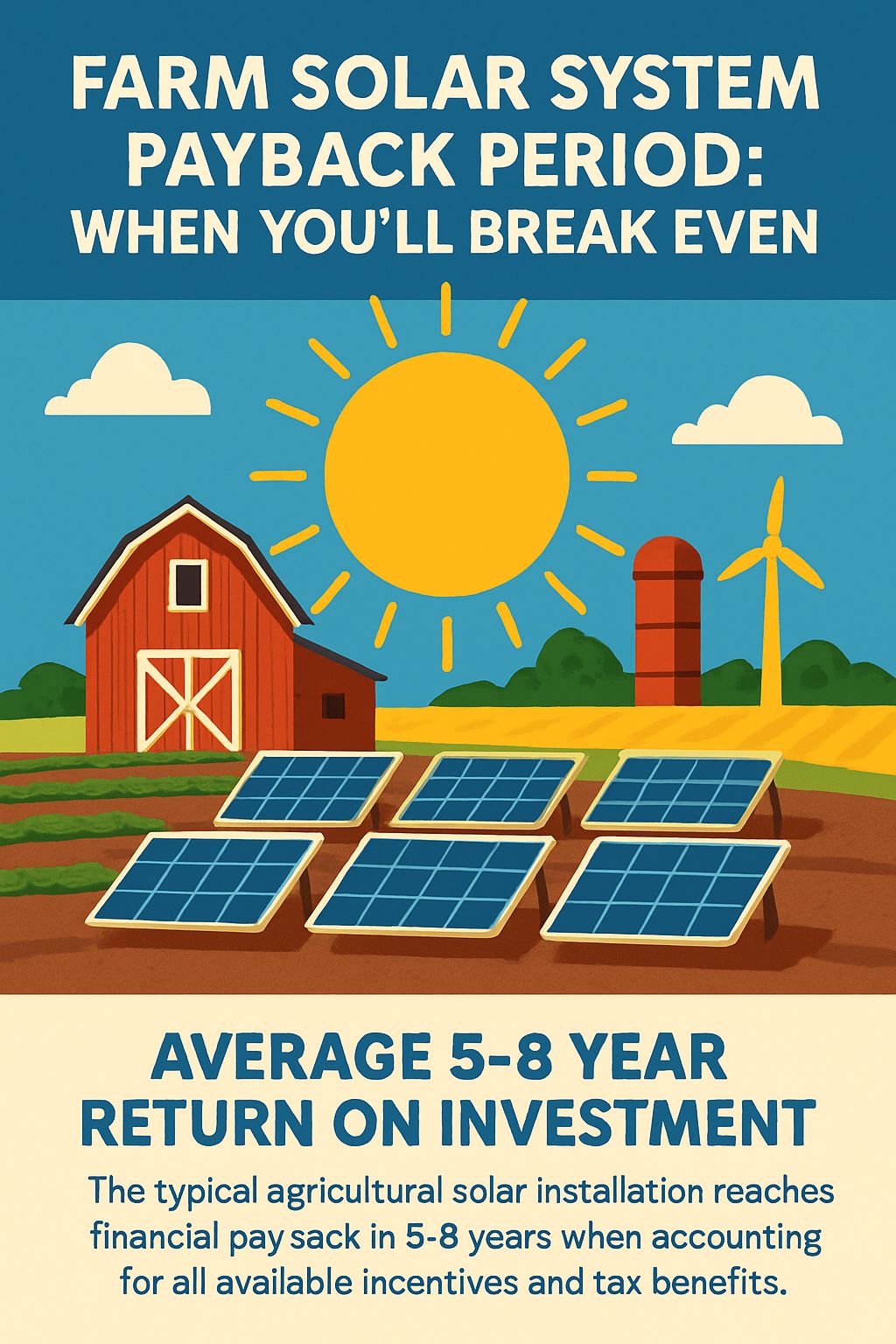
Average 5-8 Year Return on Investment
The typical agricultural solar installation reaches financial payback in 5-8 years when accounting for all available incentives and tax benefits. This calculation represents the point at which cumulative energy savings and incentives equal the initial investment cost. After this breakeven point, your system essentially generates free electricity for the remainder of its 25-30 year operational lifespan, creating decades of positive returns.
This payback timeline significantly outperforms many traditional farm improvements and equipment purchases. While tractors and implements typically depreciate over their useful lives, solar arrays appreciate in effective value as electricity rates rise. A system that breaks even in year 6 will continue generating increasingly valuable electricity for an additional 20+ years, creating exceptional lifetime returns often exceeding 15-25% annually.
Calculating Your Specific Payback Timeline
Your farm’s unique payback period depends on several critical factors that vary by operation. Understanding these variables allows you to accurately forecast your specific return on investment.
- Current electricity rate: Higher utility rates create faster payback periods
- Available incentives: REAP grants, tax credits, and state programs dramatically impact returns
- System production: Your location’s solar resource and system design affect annual output
- Financing costs: Interest rates on solar loans directly impact payback calculations
- Electricity usage patterns: How well your production aligns with consumption affects value
Most agricultural solar installers can provide detailed financial models showing projected cash flows across the system lifecycle. Request multiple proposals with comprehensive financial analyses that account for your specific utility rates, tax situation, and available incentives. These projections should clearly demonstrate annual cash flows, cumulative savings, and key metrics like internal rate of return (IRR) and net present value (NPV).
Remember that faster payback isn’t always better if it comes at the expense of long-term production. Premium equipment with longer warranties might extend payback by a few months but provide significantly higher lifetime returns through improved reliability and production. Focus on maximizing total lifetime returns rather than minimizing initial payback period. For more information on the benefits of premium equipment, check out this guide on monocrystalline panels for farmers.
Hidden Financial Benefits Beyond Direct Energy Savings
Many agricultural solar analyses focus exclusively on direct electricity savings, overlooking several valuable secondary benefits. These additional advantages can significantly enhance overall returns and should be considered in comprehensive financial evaluations.
Agricultural property with owned solar assets typically experiences market value increases approximating 3-4% of the system cost. Unlike many farm improvements that depreciate over time, well-maintained solar arrays retain much of their value throughout their operational lives. This appreciation creates additional equity that can improve borrowing capacity and strengthen your farm’s balance sheet.
Solar installations can also provide marketing advantages for direct-to-consumer operations. Consumers increasingly prefer products from sustainable farms, with surveys showing willingness to pay 5-10% premiums for goods produced using renewable energy. For operations with agritourism, farm stores, or direct marketing programs, solar installations become valuable promotional assets that strengthen brand identity and consumer loyalty.
Tax benefits often extend beyond the federal ITC to include state incentives and depreciation advantages. In many cases, these benefits can be monetized even by operations with limited tax liability through creative structures like partnership flips or sale-leaseback arrangements. Consult with a qualified agricultural tax professional to identify all available tax optimization strategies for your specific situation.
Case Study: Willow Creek Dairy Farm Financials
Previous annual electricity cost: $36,000
System size: 200kW ground mount
Total installation cost: $400,000
REAP grant: -$100,000 (25%)
Federal tax credit: -$90,000 (30% of net cost)
Depreciation benefit: -$42,000
Net cost after incentives: $168,000To learn more about how solar can benefit your farm, check out solar farming benefits.
Annual electricity savings: $29,000
Annual SREC income: $4,200
Total annual benefit: $33,200
Simple payback period: 5.1 years
25-year ROI: 467%
Internal rate of return: 19.7%
Real Farmers Share Their Solar Success Stories
James Wilson, a fourth-generation dairy farmer in Wisconsin, installed a 150kW system in 2019 that transformed his operation’s finances. “We were spending over $2,500 monthly on electricity before solar,” Wilson explains. “That bill’s now down to about $500 in the worst winter months, and during summer, the utility actually pays us. The system will completely pay for itself in about 5 years, but it’s already improved our cash flow dramatically. With milk prices so volatile, having one major expense essentially eliminated gives us stability we never had before. If I’d known how straightforward the process would be, I’d have done this ten years sooner.”
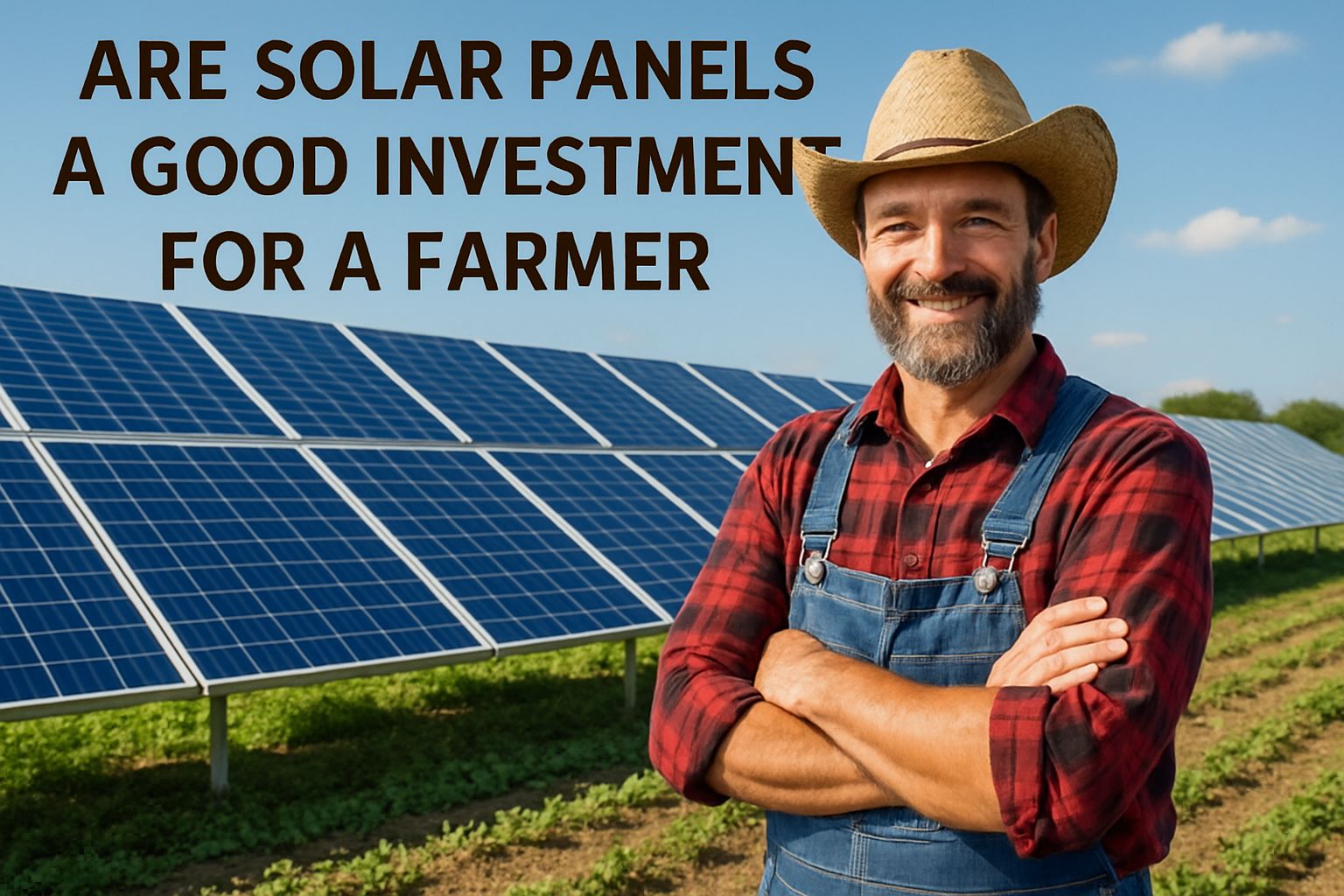
Conclusion: Are Solar Panels a Good Investment for a Farmer
For most agricultural operations, solar panels represent one of the most financially sound investments available. Few farm improvements deliver comparable returns with such predictable, low-risk performance. The combination of direct energy savings, valuable incentives, and protection against future rate increases creates compelling economics that strengthen your operation’s long-term viability.
The key to maximizing returns lies in proper system sizing, taking full advantage of available incentives, and selecting equipment optimized for agricultural applications. Working with installers experienced in farm applications ensures your system design addresses the unique requirements of agricultural operations while navigating the specialized incentive programs available to farmers. Growing Solar Mist specializes in helping farmers evaluate their options and implement systems that deliver maximum financial benefits while improving sustainability and energy independence.
Frequently Asked Questions
The following questions address the most common concerns farmers have when considering solar investments. These practical answers help clarify the real-world implications of adding renewable energy to your agricultural operation.
Each farm’s situation is unique, and personalized analysis is crucial for making informed decisions. We recommend consulting with agricultural solar specialists who understand the specific challenges and opportunities within the farming sector.
How much do solar panels typically cost for a small farm operation?
Small farm operations typically require 30-50kW systems costing between $60,000-$100,000 before incentives. After applying the 30% federal tax credit and potential USDA REAP grants covering 25% of costs, net out-of-pocket expenses often range from $30,000-$50,000. These systems generally offset electricity bills of $500-1,000 monthly, creating payback periods of 5-7 years for most small operations. Financing options specifically designed for agricultural solar can often create positive cash flow from the first month by structuring payments lower than the electricity savings generated.
Will my farm qualify for USDA REAP grants for solar installation?
Most working farms and agricultural businesses qualify for REAP funding, provided they meet basic eligibility requirements. To qualify, your operation must derive at least 50% of gross income from agricultural production and be located in an eligible rural area. The application process requires detailed project specifications, energy audits or assessments, and financial projections demonstrating project viability. For more information on how solar energy can benefit your farm, visit Paradise Solar Energy’s blog.
Application success rates increase dramatically when working with experienced agricultural solar developers familiar with USDA requirements. The most competitive applications clearly demonstrate both financial viability and energy savings impacts while meeting all technical submission requirements. Many successful applicants begin the REAP application process 3-6 months before planned installation to ensure optimal timing with grant award cycles.
Can I install solar panels myself to save on costs?
While DIY installation might seem appealing from a cost perspective, it generally doesn’t maximize financial returns for agricultural systems. Professional installation ensures eligibility for manufacturer warranties, utility interconnection approval, and critical incentive programs that often require certified installers. Most USDA REAP grants and many state incentives specifically require professional installation by certified contractors.
The technical complexity of farm-scale systems typically exceeds DIY capabilities, involving specialized electrical engineering, structural considerations, and utility interconnection requirements. Mistakes in system design or installation can significantly impact production and may create safety hazards or code violations that prove costly to remedy.
A more effective approach to controlling costs is securing multiple competitive bids from qualified agricultural solar installers. Price differences of 10-20% between comparable proposals are common, creating significant savings opportunities without sacrificing quality or incentive eligibility. Focus on total lifetime returns rather than minimizing upfront costs.
- Request detailed production guarantees and performance monitoring
- Compare equipment warranties and installer workmanship guarantees
- Verify experience with agricultural installations and REAP applications
- Check references from other farmers who’ve worked with each installer
What happens to my solar system during power outages?
Standard grid-tied solar systems without battery storage will shut down during utility outages for safety reasons, regardless of available sunlight. This protection prevents your system from accidentally energizing utility lines while workers make repairs. For farms with critical loads that require uninterrupted power, battery storage systems or specialized inverters with limited backup capabilities can maintain essential operations during outages. These solutions add 20-40% to system costs but provide valuable resilience for operations where equipment failures could result in significant losses.
How do I find reputable solar installers with agricultural experience?
Start by contacting your state’s agricultural extension service, rural electric cooperative, or farm bureau for referrals to installers with proven agricultural experience. These organizations often maintain relationships with qualified contractors who understand farm-specific requirements and available agricultural incentives. The USDA also maintains lists of technical service providers who have successfully completed REAP-funded projects.
Request evidence of previous agricultural installations including references from farm clients with systems that have operated for at least 1-2 years. Experienced agricultural solar installers should demonstrate familiarity with farm-specific design considerations like dust mitigation, equipment placement that doesn’t interfere with operations, and electrical integration with three-phase farm equipment.
Growing Solar Mist specializes in agricultural solar systems designed specifically for farm operations. Our team understands the unique challenges and opportunities within the agricultural sector and can help you navigate the entire process from initial assessment through incentive applications and installation. Contact our agricultural specialists today for a customized analysis of your farm’s solar potential and expected financial returns.


Leave a Reply